Episode Description

So many women hit their 40s, step into perimenopause, and suddenly realize that what used to work for weight loss… doesn’t anymore. If that sounds familiar, you’re not alone — and this new episode of the Functional Moms Podcast dives straight into why.

I had the chance to join the show and share my personal story of losing over 80 pounds in my mid-40s, during one of the most hormonally challenging seasons of a woman’s life. What I discovered on that journey changed everything I thought I knew about health, weight loss, and midlife.

This episode isn’t about quick fixes. It’s about understanding your hormones, nervous system, nutrition, and emotional patterns — and rebuilding your strength from the inside out.

In this episode, we talk about:

  • How I lost 80 pounds during perimenopause without extreme dieting or overtraining
  • Why emotional eating keeps so many women stuck — and how to finally break the cycle
  • How to balance fat loss and muscle gain after 40 (yes, it is possible)
  • Why macronutrients matter, especially protein, for energy, metabolism, and body composition
  • The non-negotiable role of strength training in midlife health
  • How to enjoy foods like chocolate without sabotaging progress or triggering binges

As a certified nutritionist, hormone coach, and personal trainer, I now help women over 40 create sustainable, realistic habits that support long-term health — not just short-term results.

If you’re feeling stuck, frustrated, or convinced your body “just won’t change anymore,” this episode will give you hope and a clear path forward.

Links:

Episode on Spotify

Episode on Youtube

Episode on Apple

HostsKristin Brucker & Raquel B. Cartagena from Functional Moms Podcast

Why “Comfort Food” Might Be the Missing Piece in Your Weight Loss Strategy

For more recipes like this, check out our brand new macro-based nutrition cookbook.

For years, women have been told that weight loss requires restriction.

Eat less. Cut carbs. Avoid anything that feels indulgent.

But here’s what actually happens in real life—especially in midlife:

  • You try to follow a “clean” plan.
  • You remove the foods you love.
  • You rely on willpower.

And eventually… you burn out.

This strategy is just not sustainable.

The truth is: Sustainable weight loss requires a different strategy. Rather than removing comfort or our favorite foods, we can redefine them. 

Especially, when we learn how to create meals that are:

  • High in protein
  • High in volume
  • Nutrient-dense
  • And deeply satisfying

It stops feeling like you’re “on a diet” and starts becoming a way of eating you can actually maintain. And that’s the key to losing weight and keeping it off.

The Science: Why High-Protein Comfort Foods Work for Weight Loss

Before we get into the recipes, let’s break down why this approach works because this is where most women are missing the mark.

1. Protein Reduces Hunger and Cravings

Protein is the most satiating macronutrient.

Research consistently shows that higher protein intake:

  • Reduces hunger hormones like ghrelin
  • Increases fullness hormones like peptide YY
  • Helps control cravings later in the day

This is especially important in midlife, where hormonal changes can increase appetite and decrease satiety signals.

2. High-Volume Foods Let You Eat More (Not Less)

One of the biggest mistakes women make is trying to eat less food overall.

Instead, the goal should be: Eat more food… BUT fewer calories. This is where high volume meals come in.

Foods like:

  • Vegetables
  • Broth-based meals
  • Fiber-rich ingredients

Allow you to eat large, satisfying portions without exceeding your calorie needs.

Research on energy density shows that people naturally eat fewer calories when meals are lower in calorie density even when portions are larger.

3. Protein Helps Preserve Muscle (and Metabolism)

As women enter perimenopause and menopause:

  • Muscle mass naturally declines
  • Metabolic rate can decrease

Higher protein intake combined with strength training helps:

  • Preserve lean muscle
  • Support metabolic health
  • Improve body composition

4. Comfort = Consistency (and Consistency = Results)

This is the piece no one talks about.

You don’t lose weight because of the “perfect” plan. You lose weight because of the plan you can stick to.

And let’s be honest. No one sticks to grilled chicken and steamed broccoli forever.

When your meals feel satisfying, warm, familiar, and enjoyable, you’re more likely to stay consistent long term.

So lets check out the recipes:

3 High-Protein Comfort Foods That Support Weight Loss

These are not “diet foods.”

These are real meals but we have reimagined them to support your weight loss goals.

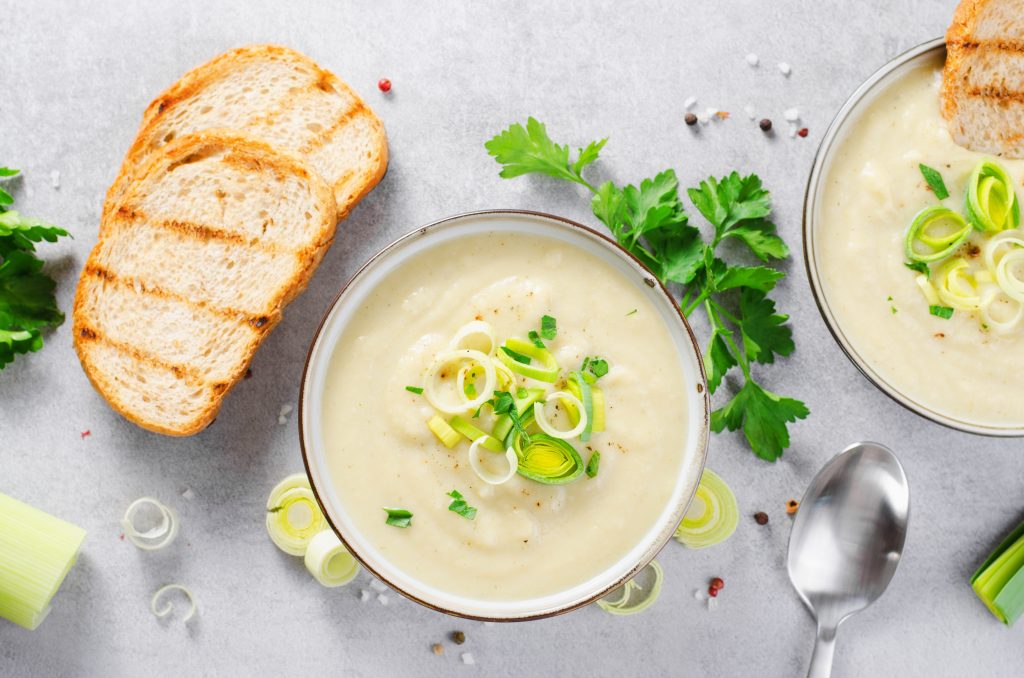
1. High-Protein “Loaded” Cauliflower Potato Soup

High-Protein “Loaded” Cauliflower Potato Soup

What it is:
A lighter version of traditional potato soup using a mix of potatoes + cauliflower, blended with Greek yogurt or fat-free cheese and topped with lean turkey bacon.

Why it works for weight loss:

  • High volume, low calorie density:
    Cauliflower significantly lowers total calories while maintaining portion size. Research shows that low-energy-dense foods help reduce overall calorie intake without increasing hunger
  • Protein improves satiety:
    Adding Greek yogurt or lean protein increases fullness and reduces subsequent calorie intake
  • Comfort factor = adherence:
    Sustainable weight loss depends on consistency. Familiar, satisfying meals increase long-term adherence more than restrictive diets.

Ingredients (Serves 4–6)

  • 2 medium potatoes, peeled and chopped
  • 1 large head cauliflower, chopped
  • 1 small onion, diced
  • 3–4 cloves garlic, minced
  • 4 cups low-sodium chicken or vegetable broth
  • ½ cup plain nonfat Greek yogurt (or blended cottage cheese)
  • ½ cup reduced-fat shredded cheese (cheddar or similar)
  • 4 slices turkey bacon, cooked and crumbled
  • Salt, pepper to taste
  • Optional: parsley, chives, spinach

Instructions

  1. Boil base:
    Add potatoes and cauliflower to a large pot with broth. Bring to a boil, then simmer for 15–20 minutes until soft.
  2. Sauté aromatics:
    In a separate pan, sauté onion and garlic until translucent (about 5 minutes).
  3. Blend:
    Add everything to a blender (or use an immersion blender). Blend until smooth and creamy.
  4. Add protein + creaminess:
    Stir in Greek yogurt and shredded cheese. Mix until fully incorporated.
  5. Season:
    Add salt, pepper, and any herbs.
  6. Top + serve:
    Top with turkey bacon, herbs, and optional greens.

Simple THOR-style upgrade: 

Add:

  • Blended cottage cheese for extra protein
  • Collagen peptides (unflavored) for a subtle boost
  • Chopped greens (spinach or kale) for added fiber

2. Protein Mac & Cheese (Greek Yogurt or Cottage Cheese Base)

Protein Rich Cauliflower Mac and Cheese Recipe.jpg

What it is:
Classic mac & cheese made with high-protein pasta (like chickpea or lentil pasta) and a sauce built from blended cottage cheese or Greek yogurt instead of heavy cream.

Why it works for weight loss:

  • Higher protein = better appetite control:
    Protein intake is consistently linked to reduced hunger and improved weight management
  • Improved body composition:
    Higher-protein diets help preserve lean muscle during weight loss, which supports metabolic rate.
  • Lower calorie swaps without sacrificing taste:
    Replacing heavy cream and butter with dairy-based proteins reduces calories while maintaining a creamy texture.

Ingredients (Serves 3–4)

  • 8 oz chickpea or lentil pasta
  • 1 cup low-fat cottage cheese
  • ½ cup unsweetened almond milk (or milk of choice)
  • ¾ cup reduced-fat shredded cheddar cheese
  • 1–2 tbsp nutritional yeast (optional, for flavor)
  • 1 tsp garlic powder
  • Salt + pepper
  • Optional add-ins: grilled chicken, broccoli, zucchini

Instructions

  1. Cook pasta:
    Cook according to package directions. Drain and set aside.
  2. Make sauce:
    Blend cottage cheese + milk until completely smooth.
  3. Heat sauce:
    Pour mixture into a saucepan over medium heat. Stir in shredded cheese, nutritional yeast, and seasonings.
  4. Combine:
    Add cooked pasta to the sauce and stir until fully coated.
  5. Add extras (optional):
    Mix in cooked chicken or vegetables.
  6. Serve warm

Simple THOR-style upgrade

Add:

  • Grilled chicken, shirmp, lobster or turkey for additional protein
  • Broccoli, cauliflower or zucchini for volume
  • Nutritional yeast for a richer “cheesy” flavor with added nutrients


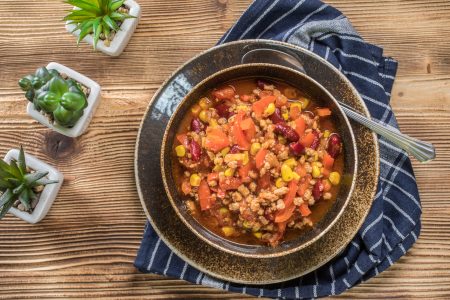
3. Lean Turkey or Chicken “Comfort Chili”

Lean Turkey or Chicken “Comfort Chili”

What it is:
A hearty chili made with lean ground turkey or chicken, beans, tomatoes, and vegetables.

Why it works for weight loss:

  • Protein + fiber = powerful satiety combo:
    Combining protein with fiber-rich foods (like beans) significantly increases fullness and reduces overeating
  • Thermic effect of food (TEF):
    Protein requires more energy to digest than carbs or fat, slightly increasing daily calorie burn.
  • Blood sugar stability:
    Balanced meals with protein and fiber help prevent spikes and crashes, which are associated with cravings and overeating.

Key benefits for weight loss

  • Long-lasting fullness: Protein + fiber slows digestion
  • Reduced cravings: Stable blood sugar throughout the day
  • Meal prep friendly: Makes consistency easier

Ingredients (Serves 4–6)

  • 1 lb lean ground turkey or chicken
  • 1 can kidney beans (drained and rinsed)
  • 1 can black beans (optional)
  • 1 large can crushed tomatoes
  • 1 cup chicken broth
  • 1 onion, diced
  • 1 bell pepper, chopped
  • 2 cloves garlic, minced
  • 1 zucchini, chopped (optional for volume)
  • 1–2 tbsp chili powder
  • 1 tsp cumin
  • Salt + pepper
  • Optional toppings: Greek yogurt, avocado, cilantro

Instructions

  1. Cook protein:
    In a large pot, cook ground turkey/chicken until browned.
  2. Add vegetables:
    Add onion, garlic, and pepper. Cook 5–7 minutes until softened.
  3. Add remaining ingredients:
    Stir in beans, tomatoes, broth, zucchini, and spices.
  4. Simmer:
    Let cook on low for 25–40 minutes, stirring occasionally.
  5. Adjust seasoning
  6. Serve + top:
    Add Greek yogurt, herbs, or avocado.

Simple THOR-style upgrade

Add:

  • Extra vegetables (peppers, zucchini, mushrooms)
  • Bone broth instead of water for added nutrients
  • Greek yogurt instead of sour cream for topping

How to Start Using This Approach Immediately

You don’t need to overhaul your entire diet.

Start here:

Step 1: Pick 1–2 comfort meals you already love

Pasta, soup, chili, casseroles anything goes.

Step 2: Modify, don’t eliminate

  • Add protein
  • Increase volume (vegetables)
  • Swap high-calorie ingredients

Step 3: Build meals that keep you full for 4–5 hours

If you’re constantly hungry, the meal isn’t working.

The Bigger Picture: This Is About Rewiring Your Identity, Not Just Food

This approach isn’t just about calories or macros.

It’s about becoming the woman who:

  • Nourishes her body
  • Eats with intention
  • Doesn’t feel out of control around food
  • And doesn’t need to “start over” every Monday

Because when your meals support you…

Everything else becomes easier.

Final Takeaway

High-protein comfort foods aren’t a hack. They’re a strategy rooted in science and sustainability.

When you combine:

  • Protein
  • Volume
  • Nutrient density
  • And satisfaction

You create a way of eating that supports fat loss without feeling restrictive.

And that’s the difference between temporary results and lasting transformation.

Remember, this way of fueling your body in midlife is not a temporary patch. This is for life.

For more recipes like this, check out our brand new macro-based nutrition cookbook.


At some point, you’ve probably asked yourself this:

“Do I need a coach… or do I need a therapist?”

And if we’re being honest, it’s not always clear.

Because from the outside, they can sound kind of similar.
Both involve talking.
Both involve growth.
Both promise some version of “change.”

But in reality: they’re very different.

And choosing the wrong one can leave you feeling even more stuck.

So let’s make this simple.

First: Why This Even Matters

If you’re in your 40s or beyond, you’ve probably already noticed:

What used to work… doesn’t work anymore.

You can’t just “push harder” and expect results.
You can’t ignore your stress and hope it goes away.
And you definitely can’t rely on motivation alone.

Something deeper is happening.

And this is usually where people start looking for support.

But here’s where things go sideways:

  • Some women need structure but go to therapy
  • Some women need healing but hire a coach

And then they wonder why nothing is changing.

Let’s Start With Coaching (What It Actually Feels Like)

Coaching is for the woman who says:

“I know what I should be doing… I just can’t seem to stay consistent.”

It’s forward-focused.
It’s practical.
It’s about getting you from where you are → to where you want to be.

The International Coaching Federation defines coaching as a process that helps you maximize your potential.

But here’s what that really looks like in your life:

  • You set clear goals
  • You create a plan
  • You check in regularly
  • You adjust when things aren’t working
  • You stay accountable

It’s not about talking for the sake of talking.

It’s about doing something with it.

What Coaching Helps You Do

Coaching is incredibly powerful if you’re trying to:

  • Lose weight and actually keep it off
  • Build strength and confidence
  • Create consistent habits
  • Follow through on things you keep starting

It’s where a lot of women finally say:

“Oh… this is what consistency actually feels like.”

But Here’s What Coaching Does NOT Do

This part matters.

Coaching is not designed to:

  • Heal trauma
  • Treat anxiety or depression
  • Process deep emotional pain
  • Diagnose mental health conditions

And it shouldn’t try to.

Now Let’s Talk About Therapy (In Real Terms)

Therapy is for the woman who says:

“I don’t feel like myself… and I don’t fully understand why.”

It’s not about pushing forward right away.

It’s about slowing down enough to understand what’s going on underneath.

The American Psychological Association defines therapy as a process that helps improve emotional and mental well-being.

But here’s what that actually feels like:

  • You start connecting patterns
  • You understand your emotional triggers
  • You process past experiences
  • You learn how to regulate your nervous system

It’s less about “doing more” and more about feeling and understanding more clearly.

What Therapy Helps You With

Therapy is incredibly important if you’re dealing with:

  • Anxiety or constant overwhelm
  • Burnout that doesn’t go away
  • Emotional eating patterns
  • Past experiences that still affect you
  • Feeling stuck for reasons you can’t explain

There’s strong research supporting this.

For example, Cognitive Behavioral Therapy (CBT) has been shown to significantly reduce anxiety and depression symptoms (Hofmann et al., 2012).

The Simplest Way to Understand the Difference

If all of this still feels a little blurry, here’s the cleanest way to look at it:

  • Coaching helps you move forward
  • Therapy helps you understand what’s holding you back

Or even simpler:

  • Coaching = action
  • Therapy = awareness

How to Know Which One You Need

Let’s make this very real.

You may benefit from coaching if:

  • You keep falling off track
  • You know what to do but don’t do it
  • You want structure, accountability, and results
  • You’re ready to take action: you just need guidance

You probably need therapy if:

  • You feel overwhelmed more often than not
  • You’re anxious, burned out, or emotionally exhausted
  • You’re carrying things from the past that still affect you
  • You don’t understand why you feel stuck

Here’s the Truth Most People Don’t Talk About

It’s not always one or the other.

A lot of women actually need both.

Because:

  • You can understand yourself deeply… and still not take action
  • You can take action… and still feel internally stuck

Research supports both sides:

  • Coaching improves performance and goal achievement (Theeboom et al., 2014)
  • Therapy improves emotional and mental health (Cuijpers et al., 2013)

But together?

That’s where things really shift.

Why This Hits Differently in Midlife

Because at this stage, you’re not just trying to change your body.

You’re trying to figure out:

  • Who you are now
  • What you actually want
  • What you’re no longer willing to tolerate

And that’s deeper than a meal plan or a workout program.

The THOR Way of Looking at This

Here at THOR, we focus on coaching with an integrative support. This means it’s not just about workouts or meal plans. It’s a fully integrative lifestyle medicine support system designed to help women rebuild their health, identity, and lifestyle from the inside out. Real transformation doesn’t happen in isolation. It happens when the body, mind, and environment are aligned.

What “Integrative Support” Actually Means

Integrative support is rooted in the understanding that health is multidimensional.

Instead of treating symptoms in silos (weight, stress, energy, habits), we look at how everything is connected:

  • Metabolism is influenced by sleep, stress, and hormones
  • Nutrition is shaped by behavior, environment, and emotional patterns
  • Fitness is impacted by nervous system regulation and recovery
  • Consistency is driven by identity, mindset, and support systems

This approach aligns with the principles of Lifestyle Medicine, which emphasizes addressing the root causes of chronic conditions through sustainable behavior change.

The THOR Integrative Framework

1. Physical Optimization

We build strength, mobility, and metabolic health through:

  • Strength training
  • Yoga & Pilates for nervous system regulation and recovery
  • Strategic cardio (not burnout-based)

2. Nutrition with Context

Instead of rigid dieting, we use:

  • Personalized macro-based nutrition
  • Flexible structure (not restriction)
  • Real-life application (travel, events, family life)

3. Nervous System & Stress Regulation

Because willpower is not the problem. Physiology is.

We address:

  • Chronic stress
  • Overstimulation
  • Emotional eating patterns

Using:

  • Breathwork
  • Somatic practices
  • Recovery protocols

4. Behavioral & Identity Coaching

We don’t just change habits. We change self-concept.

Through:

  • Accountability systems
  • Cognitive reframing
  • Pattern awareness

5. Environment & Lifestyle Design

Your results are shaped by your environment.

We optimize:

  • Daily routines
  • Food environment
  • Social support
  • Time structure

But we’re also very honest about this:

  • Coaching is not a replacement therapy
  • And therapy is not coaching

They’re two different tools.

And knowing when to use each one is where real power comes from. The most powerful transformation happens when women are supported both emotionally and strategically.

Why This Works (When Other Programs Don’t)

Most programs focus on:

  • Calories
  • Workouts
  • Short-term outcomes

THOR focuses on:

  • Systems
  • Patterns
  • Long-term identity

That’s the difference between:  Temporary results vs Sustainable transformation

If You’re Still Not Sure…

Ask yourself this:

“Do I need help understanding myself… or do I need help following through?”

That answer will tell you everything.

The Real Outcome

This isn’t just about weight loss.

It’s about becoming a woman who:

  • Trusts her body again
  • Knows how to regulate her energy and emotions
  • Feels strong, capable, and in control
  • Has a system she can sustain for life

Final Thought

There’s nothing wrong with needing support.

In fact, most women wait way too long before getting it.

But the shift happens when you stop trying to force the wrong solution…

…and start choosing the one that actually meets you where you are.

Because the goal isn’t just to change.

It’s to become someone who can sustain that change long-term.

References

American Psychological Association. (n.d.). Understanding psychotherapy and how it works. Retrieved from https://www.apa.org/topics/psychotherapy

Cuijpers, P., van Straten, A., Andersson, G., & van Oppen, P. (2008). Psychotherapy for depression in adults: A meta-analysis of comparative outcome studies. Journal of Consulting and Clinical Psychology, 76(6), 909–922. https://doi.org/10.1037/a0013075

Grant, A. M. (2014). The efficacy of executive coaching in times of organisational change. Journal of Change Management, 14(2), 258–280.

Hofmann, S. G., Asnaani, A., Vonk, I. J. J., Sawyer, A. T., & Fang, A. (2012). The efficacy of cognitive behavioral therapy: A review of meta-analyses. Cognitive Therapy and Research, 36(5), 427–440. https://doi.org/10.1007/s10608-012-9476-1

International Coaching Federation. (n.d.). What is coaching? Retrieved from https://coachingfederation.org/about

Theeboom, T., Beersma, B., & van Vianen, A. E. M. (2014). Does coaching work? A meta-analysis on the effects of coaching on individual level outcomes in an organizational context. The Journal of Positive Psychology, 9(1), 1–18. https://doi.org/10.1080/17439760.2013.837499

van der Kolk, B. A. (2014). The body keeps the score: Brain, mind, and body in the healing of trauma. New York, NY: Viking.

After spending months (or years) dieting, many women feel uneasy about the idea of eating more food—especially intentionally. But here’s the truth: staying in a constant deficit isn’t sustainable, and it can actually hold you back from achieving the strong, toned, healthy body you’re working for.

This is where the building phase comes in. Far from being “bulking” in the old-school sense, the building phase is a strategic period of eating at maintenance—or slightly above—to fuel strength, muscle growth, energy, and long-term metabolic health.

What Is the Building Phase?

The building phase is a planned period of fueling your body with enough calories to support strength, muscle, and metabolic health. Instead of focusing on restriction, the goal is to provide your body with the energy and nutrients it needs to grow stronger, recover better, and create the physique you want.

Why You May Need a Building Phase

You may benefit from a building phase if you:

  • Have been dieting for months and feel low energy or stalled progress

  • Want to build muscle definition and improve body composition

  • Struggle with plateaus in fat loss (a stronger metabolism breaks plateaus)

  • Notice declines in workout performance, sleep, or recovery

  • Are in perimenopause or menopause, when maintaining lean muscle is critical for bone, metabolic, and hormonal health

The Benefits of a Building Phase

  1. Builds Lean Muscle
    Muscle is metabolically active tissue. More muscle = more calories burned at rest, better insulin sensitivity, and a stronger, more toned look.
  2. Boosts Metabolism
    Feeding your body properly increases energy expenditure, making future fat loss phases easier and more effective.
  3. Improves Energy & Mental Focus
    Eating enough carbs and fats restores energy, sharpens focus, and reduces food preoccupation.
  4. Enhances Recovery & Sleep
    More fuel = faster repair of muscle tissue, better hormone regulation, and deeper, restorative sleep.
  5. Creates Long-Term Sustainability
    Learning to thrive at maintenance helps you ditch yo-yo dieting and build a body (and habits) you can sustain for life.

How to Do the Building Phase

  • Length: Typically 3–6 months (or longer, depending on goals)
  • Calories: Increase to at least maintenance; small surplus (+100–300 calories/day) may be added for lean muscle gain
  • Macros: High protein remains a priority; carbs are key for training and recovery
  • Training: Prioritize progressive overload strength training; cardio kept moderate
  • Mindset: Expect the scale to shift slightly as muscle and glycogen increase—focus on body composition, not just weight

What Happens After a Building Phase?

After fueling and training through a building phase, you’ll emerge stronger, with more lean muscle, improved metabolic health, and a body better primed for fat loss (if that’s your next goal). Most women find they look leaner after a build because muscle creates shape and definition—even at a slightly higher weight.

Final Thought

The building phase isn’t about “gaining weight”—it’s about gaining strength, health, and freedom. It’s a critical step in escaping the endless cycle of dieting and creating the strong, energized body you deserve.

👉 If you’re ready to enter your building phase with confidence, I can help design a personalized plan tailored to your body, hormones, and goals in my private women’s weightloss & lifestyle coaching group.

When you think of protein sources, nutritional yeast probably isn’t the first thing that comes to mind. In fact, it might not even be on your radar at all. But as a nutritionist and weight loss coach who’s helped hundreds of women over 40 reclaim their health, I can tell you: nutritional yeast (aka “nooch”) deserves a spot in your pantry.

This golden flake packs a surprising protein punch, offers an impressive list of health benefits, and is versatile enough to sneak into everyday meals. Whether you’re plant-based, dairy-free, or just looking to boost your protein in creative ways, keep reading—you’re going to want this ingredient in your life.

What is Nutritional Yeast?

Nutritional yeast is a deactivated yeast (usually Saccharomyces cerevisiae) that is grown on molasses or sugar beets, harvested, heated, and dried. Unlike baking yeast or brewer’s yeast, nutritional yeast doesn’t cause dough to rise and it won’t ferment anything. It has a naturally cheesy, nutty, savory flavor, making it a favorite among vegans and health-conscious eaters.

It’s available in both flake and powder form, and you can typically find it in the bulk aisle or natural foods section of your local grocery store. Popular brands include Bragg, Bob’s Red Mill, and Red Star.

Nutritional Breakdown: Why Nooch is a Protein Powerhouse

Here’s where nutritional yeast really shines. Just 2 tablespoons of fortified nutritional yeast provide:

  • 8-10 grams of complete protein
  • 3-4 grams of fiber
  • High levels of B-vitamins (including B12 in fortified versions)
  • Zinc, magnesium, selenium, and manganese
  • Zero sugar and minimal carbs/fat

What Makes It a Complete Protein?

Nutritional yeast contains all nine essential amino acids, making it one of the rare plant-based complete protein sources. That means your body can actually use it efficiently for building muscle, supporting metabolism, and keeping you full longer.

Comparing Nutritional Yeast to Other Protein Sources

Protein Source Serving Size Protein per Serving Complete Protein?
Nutritional Yeast 2 tbsp (16g) 8–10g Yes
Egg 1 large 6g Yes
Chickpeas 1/2 cup 7g No
Almonds 1 oz 6g No
Quinoa 1 cup cooked 8g Yes

Health Benefits Backed by Science

Let’s look at the science behind nutritional yeast’s benefits:

1. Supports Lean Muscle and Fat Loss

Thanks to its high protein content, nooch can help preserve muscle mass during weight loss. According to a study published in Nutrients, consuming adequate protein increases satiety, supports metabolic rate, and protects lean muscle during calorie restriction (Nutrients, 2019).

2. Boosts Energy and Brain Function

Fortified nutritional yeast is rich in B-complex vitamins, especially B12, which is essential for energy production, cognitive health, and red blood cell formation. A study published in the American Journal of Clinical Nutrition found that adequate B12 intake is linked to better mood and energy levels, especially in older adults (AJCN, 2010).

3. Immune System Support

Beta-glucans in nutritional yeast have been shown to stimulate immune cells and enhance the body’s defense mechanisms. A 2013 clinical trial found that athletes who supplemented with nutritional yeast had fewer upper respiratory infections (British Journal of Nutrition, 2013).

4. Gut Health and Digestion

The fiber in nutritional yeast feeds healthy gut bacteria and helps regulate digestion. While it’s not a probiotic itself (it’s deactivated), it can play a role in promoting better gut balance.

Ways to Use Nutritional Yeast

This is where nutritional yeast shines: it’s a stealthy flavor enhancer and protein booster. Here are my favorite ways to sneak it in:

1. Sprinkle It On:

Popcorn (hello, cheesy flavor with no dairy!)

Roasted vegetables

Baked potatoes

Avocado toast

Scrambled eggs or tofu

2. Blend It In:

Smoothies (trust me, just a tsp blends right in)

Salad dressings

Dips like hummus or guacamole

Vegan sauces and soups

3. Cook With It:

Stir into mashed potatoes or cauliflower mash

Mix into pasta or zoodles with olive oil

Add to grain bowls for extra flavor and nutrients

Recipes Featuring Nutritional Yeast

1. Vegan “Cheesy” Sauce

Ingredients:

1/2 cup cashews (soaked for 2 hours)

1/4 cup nutritional yeast

1 clove garlic

1/2 tsp turmeric

1 tbsp lemon juice

3/4 cup water

Salt to taste

Instructions: Blend all ingredients until creamy. Use over steamed veggies, grain bowls, or pasta.

2. Protein-Packed Salad Dressing

Ingredients:

2 tbsp nutritional yeast

1 tbsp tahini

1 tbsp apple cider vinegar

1 tsp Dijon mustard

1 tbsp olive oil

2 tbsp water

Instructions: Whisk together or blend for a creamy, high-protein dressing. Great on kale or quinoa salads.

3. Cheesy Roasted Chickpeas

Ingredients:

1 can chickpeas (drained and rinsed)

1 tbsp olive oil

2 tbsp nutritional yeast

1/2 tsp garlic powder

Salt and pepper to taste

Instructions: Roast at 400F for 30-35 mins until crispy. Makes a great snack or salad topper.

Can You Supplement With Nutritional Yeast?

Yes—but moderation is key. While it’s packed with nutrients, some people may be sensitive to the compounds in yeast, especially those with yeast allergies or IBD. Look for fortified versions to ensure you’re getting B12 if you follow a plant-based diet. A daily serving (1-2 tbsp) is plenty to reap the benefits without overdoing it.

Who Should Consider Adding It?

  • Vegans/vegetarians looking for complete proteins
  • Women over 40 needing more B12 and lean protein support
  • Anyone looking to boost their protein intake creatively
  • Individuals seeking immune and energy support

Things to Watch Out For

  • MSG concerns: Nutritional yeast contains naturally occurring glutamic acid, but it is not the same as synthetic MSG.
  • Fortification: Make sure your brand is fortified with B12 if you need it.
  • Storage: Store in a cool, dry place to keep it fresh for 6-12 months.
  • Final Thoughts: Nooch is the Unsung Hero of the Pantry

How Nutritional Yeast Supports a Vegan or Vegetarian Diet

For anyone following a vegan or vegetarian lifestyle, getting enough complete protein, vitamin B12, and savory umami flavor can be a challenge. Nutritional yeast—aka “nooch”—checks all those boxes and more.

1. It’s a Rare Plant-Based Complete Protein

Most plant-based proteins are incomplete, meaning they lack one or more essential amino acids. Nutritional yeast is a complete protein, providing all 9 essential amino acids your body needs to build and repair tissues, support metabolism, and maintain muscle mass.

This makes it especially valuable for vegans and vegetarians who may not get enough amino acid diversity from plants alone.

2. It’s a Vegan-Friendly Source of Vitamin B12

Vitamin B12 is almost exclusively found in animal products, which puts vegans at risk of deficiency. Fortified nutritional yeast contains 100–200% of your daily B12 needs in just one tablespoon, making it an easy and effective way to support energy, mood, and nervous system health.

🌿 Tip: Always check the label—not all brands are B12-fortified.

3. It Adds Cheesy, Savory Flavor—Without the Dairy

One of the most beloved uses of nutritional yeast is as a cheese alternative. It brings a rich, umami depth to foods without needing Parmesan or cheddar. Perfect for anyone who’s lactose intolerant, avoiding dairy, or just wants a healthier swap.

Use it in:

  • Vegan mac and cheese sauces
  • Creamy cashew dips
  • Pesto without the cheese
  • Vegan Alfredo sauce
  • Mashed potatoes or cauliflower

4. It Helps Boost Daily Protein Without Protein Powders

If you’re aiming for 60–100+ grams of protein per day on a plant-based diet, every bit counts. Sprinkling 1–2 tablespoons of nooch into meals adds 8–10 grams of protein with virtually no prep or cleanup.

  • Pair it with other plant-based proteins like:
  • Lentils
  • Chickpeas
  • Tofu or tempeh
  • Whole grains like quinoa or farro

5. It’s Versatile & Easy to Add to Almost Any Meal

Think of it as a seasoning and a supplement. You can add it to:

  • Pasta dishes
  • Popcorn
  • Avocado toast
  • Vegan egg scrambles (tofu or chickpea-based)
  • Salads and grain bowls
  • Smoothies (yes, just a little blends right in)

If you’re looking for an easy, nutrient-dense way to boost your protein intake, nutritional yeast is a powerhouse hiding in plain sight. With its cheesy flavor, high bioavailable protein, and immune-boosting benefits, it’s an ideal companion in any midlife nutrition strategy—especially if you’re trying to lose weight, manage energy levels, or cut back on animal products.

As always, balance is key. Use it to complement your meals, not replace other whole-food proteins. And if you’re unsure how to integrate it into your daily routine, that’s where a coach (hi, that’s me!) can help.

Sources:

https://pmc.ncbi.nlm.nih.gov/articles/PMC8780597/
https://pmc.ncbi.nlm.nih.gov/articles/PMC4012169/
https://fdc.nal.usda.gov/food-details/2411476/nutrients
https://ajcn.nutrition.org/article/S0002-9165(23)23981-7/fulltext