How much of the wellness advice we hear today do we actually need?
I recently joined Missy Miculka on The Menopause Midwife for an honest conversation about midlife fitness, nutrition, and cutting through the noise that often makes health feel more complicated than it needs to be.
As a certified nutritionist and personal trainer, I’m passionate about helping women understand that they don’t need every trending wellness habit, expensive product, or restrictive diet to feel stronger and healthier.
In this episode, Missy and I get real about what actually matters when it comes to supporting your body through midlife.
In This Episode, We Discuss:
Why so many trending wellness habits fall short
How properly fueling your body can transform how you feel
Why macro tracking can be a powerful tool without strict deprivation
The importance of progressive strength training for building lasting muscle
How strength training supports mobility and confidence
Why simplifying your approach to health can be more effective than chasing every new trend
How to focus on sustainable habits instead of quick fixes
Simplify Your Approach to Midlife Health
You don’t need to spend a fortune or follow every new wellness trend to take care of your body.
Sometimes, the most powerful approach is getting back to the basics: fuel your body well, build strength, stay consistent, and stop making health more complicated than it needs to be.
If you’re ready to cut through the wellness noise and rethink how you approach fitness and nutrition in midlife, I hope you’ll tune in to my conversation with Missy on The Menopause Midwife.
Your health doesn’t have to be complicated to be effective.
Let’s Talk About the Olive Oil Shots Trend Everyone Is Trying
If you’ve been on social media lately, you’ve probably seen it. Women taking a shot of olive oil first thing in the morning.
Some swear it helps with their glowing skin, digestion and moving things along if you catch my drift, weight loss and systemic inflammation. And so naturally, the question in my mind becomes:
But I also want to bring it back to reality. Because like most things in wellness:
it’s not about the trend
it’s about how it actually works in your body
Are Olive Oil Shots Good for You?
Let’s start here. From a nutrition standpoint:
No food is inherently “good” or “bad.”
What matters is:
portion
context
your goals
Olive oil is absolutely a high-quality, nutrient-dense fat. But it is also calorically dense.
Just 1 tablespoon = ~120 calories and 14g of fat
So when you take it as a shot, you’re adding calories quickly without much volume or satiety.
So… is it a good idea?
It depends.
It can be helpful if:
you need more healthy fats in your diet
you’re not actively trying to lose weight
you struggle with digestion or constipation
you’re supporting skin health
It may not be ideal if:
you’re trying to stay in a calorie deficit
you’re already consuming enough fats
you’re using it as a “magic fix”
And this is where most women get tripped up. Just because something is healthy doesn’t mean it’s calorie-free and it doesn’t mean MORE is better.
Why Olive Oil Shots Are So Good for Skin (Especially After 40)
This is honestly one of the biggest reasons olive oil is trending right now. And yes, there is science behind it.
Olive oil is rich in:
monounsaturated fats
vitamin E
polyphenols
These compounds help:
protect against oxidative stress
support skin barrier function
reduce inflammation
improve hydration
Research shows that diets rich in olive oil (like the Mediterranean diet) are associated with better skin aging outcomes and reduced oxidative damage (Buckley & Howe, 2010).
What women actually notice when they start eating more olive oil:
This comes from both personal experience and coaching clients:
skin feels more hydrated
less dryness
more “glow”
improved elasticity over time
But here’s the key:
You don’t need to take it as a shot to get these benefits.
What’s likely happening beneath the surface is that olive oil supports the structure and function of your skin at a cellular level. The fats in olive oil become part of your cell membranes, helping them stay flexible and better able to retain moisture, while its antioxidant compounds help protect skin cells from daily environmental stressors like UV exposure and pollution. Over time, this creates a more resilient skin barrier which is why the changes feel gradual, natural, and long-lasting rather than immediate or superficial.
The Real Health Benefits of Olive Oil
Let’s zoom out beyond the trend. Olive oil especially extra virgin olive oil (EVOO) has been extensively studied. Research-backed benefits include:
Heart Health
The cardiovascular benefits of olive oil are largely driven by its high content of monounsaturated fatty acids, particularly oleic acid, which has been shown to help improve lipid profiles by lowering LDL (“bad”) cholesterol and maintaining or even increasing HDL (“good”) cholesterol. In addition, olive oil contains bioactive compounds that support endothelial function, the health of your blood vessels, helping them remain flexible and responsive. This combination contributes to improved circulation and reduced atherosclerotic risk over time, which is why it plays such a central role in heart-protective dietary patterns like the Mediterranean diet.
Blood Sugar Regulation
Olive oil can influence how your body processes glucose by slowing gastric emptying and modulating the release of glucose into the bloodstream after meals. This leads to a more gradual rise in blood sugar rather than sharp spikes. Additionally, its fatty acid profile may enhance insulin signaling pathways, allowing cells to respond more effectively to insulin. This improved efficiency can help stabilize energy levels and reduce the likelihood of blood sugar crashes, which is particularly relevant for women experiencing midlife metabolic changes.
Reduced Inflammation
The anti-inflammatory effects of olive oil are largely attributed to its polyphenols, including compounds like oleocanthal, which has been shown to act in a similar way to certain nonsteroidal anti-inflammatory drugs by inhibiting inflammatory pathways in the body. Chronic, low-grade inflammation is a key driver of many age-related conditions, and regularly consuming these compounds can help modulate the body’s inflammatory response. Over time, this creates a more balanced internal environment that supports overall health and recovery.
Brain Health
Olive oil supports brain health through multiple mechanisms, including its antioxidant content, which helps protect neurons from oxidative stress, a major contributor to cognitive decline. It may also support the integrity of neuronal cell membranes, which are essential for efficient communication between brain cells. Emerging research suggests that compounds in olive oil may help reduce the accumulation of proteins associated with neurodegenerative diseases, while also supporting blood flow to the brain, both of which are critical for maintaining cognitive function with age.
Nutrient Absorption
Fat-soluble vitamins A, D, E, and K, require dietary fat to be properly absorbed in the digestive tract, and olive oil provides an efficient vehicle for this process. When consumed with foods rich in these nutrients, olive oil stimulates the formation of micelles in the gut, which are necessary for transporting these vitamins across the intestinal lining into the bloodstream. Without sufficient fat, a significant portion of these nutrients may pass through unabsorbed, which is why including olive oil in meals can meaningfully enhance the nutritional value of the foods you’re already eating.
The Part No One Talks About About Olive Oil Shots: Calories Still Matter
This is where I want to be very clear. Because this is where social media gets it wrong. Olive oil is healthy. Bu it is still calorie-dense.
So if your goal is weight loss, adding olive oil shots without adjusting your intake elsewhere can:
slow progress
stall fat loss
create confusion
This is why context matters. Inside THOR, we teach macro-based nutrition to women over 40 because it removes guessing. You can absolutely include olive oil. But it should fit into your overall plan.
(Not be added on top of everything else.)
What to Look for in a High-Quality Olive Oil Shots
Not all olive oils are created equal. Here’s what actually matters:
Extra Virgin Olive Oil (EVOO)
Extra virgin olive oil is produced without the use of heat or chemical refining, which means it retains its natural structure and bioactive compounds. Because it undergoes minimal processing, it preserves higher levels of beneficial nutrients like polyphenols and vitamin E. In contrast, more refined oils lose a significant portion of these compounds during processing, which reduces both their nutritional value and protective health effects.
Origin & Single-Source Olive Oils
Where your olive oil comes from matters more than most people realize. Single-origin or single-estate olive oils are produced from olives grown in one specific region or even one farm, which allows for greater traceability, quality control, and consistency. When oils are blended from multiple countries, it becomes harder to verify freshness, harvesting practices, and overall purity. Climate, soil (terroir), and olive variety all influence the oil’s nutrient profile and polyphenol content, so knowing the origin gives you insight into both flavor and quality. In general, single-source oils from reputable producers tend to be fresher, less processed, and more transparent and that makes them a more reliable choice if you’re looking for both taste and health benefits.
Cold-Pressed
Cold-pressing refers to extracting oil from olives without excessive heat, typically keeping temperatures below a certain threshold to prevent degradation. Heat can break down delicate antioxidant compounds and alter the chemical structure of fats, reducing their stability and health benefits. By avoiding heat, cold-pressed oils maintain a higher concentration of polyphenols and preserve the integrity of the fatty acids, making the oil both more nutritious and more stable.
Dark Glass Bottle
Olive oil is highly sensitive to light, which can trigger oxidation—a chemical reaction that degrades both flavor and nutritional quality. Exposure to light accelerates the breakdown of antioxidants and can lead to the formation of harmful free radicals. Dark glass bottles act as a protective barrier, reducing light exposure and helping to preserve the oil’s freshness, potency, and shelf life.
Freshness
Olive oil is not like wine—it does not improve with age. Over time, oxygen exposure leads to oxidation, which gradually degrades its beneficial compounds and alters its flavor profile. Fresher olive oil contains higher levels of active antioxidants and retains its intended nutritional properties. This is why looking for a recent harvest date is important, as it gives a better indication of the oil’s current quality and effectiveness.
Taste Profile
The slightly peppery or bitter taste found in high-quality olive oil is not a flaw—it’s a sign of its potency. These sensory characteristics are linked to the presence of polyphenols, particularly compounds like oleocanthal, which are responsible for many of olive oil’s anti-inflammatory and antioxidant effects. That subtle “bite” in the back of your throat is actually an indicator that the oil contains these beneficial compounds in meaningful amounts.
Should You Take It as a Shot?
Let’s talk practically. Because this is what everyone wants to know. There is no magic in the “shot” itself. Your body doesn’t respond differently just because you took it quickly.
But there are some use cases
Some women find that: taking 1 tbsp in the morning helps digestion, bowel regulariy and gut motility. Especially in midlife when things start to get a bit unpredictable.
Olive Oil Shot Recipe From My Mediterranean Grandmother (and yes, it works)
I want to share this in a way that feels real because this isn’t something I learned from a trend or a study first. This is something I grew up with.
If you had told my grandmother this would become a “wellness trend” on social media, she probably would’ve laughed. Because for us, this wasn’t trendy.
It was normal.
It was preventative.
It was just what you did when you wanted to take care of your body.
This was the olive oil shot recipe I grew up with:
1 tbsp extra virgin olive oil
fresh lemon juice
grated ginger
turmeric
black pepper
raw honey
cinnamon
Taken in the morning, on an empty stomach. Not every single day. Not obsessively. Just when your body needed a little extra support.
Why this combination works (the science behind it)
Each ingredient on its own has benefits but together, they create a powerful synergy.
Olive Oil
Provides monounsaturated fats and polyphenols that support anti-inflammatory pathways and help absorb fat-soluble compounds.
Lemon Juice
Stimulates digestive enzymes and gastric acid production, which can support more efficient breakdown of food and nutrient absorption.
Ginger
Has been shown to support gastric motility and reduce nausea by influencing digestive signaling pathways. It can help move things along—especially helpful when digestion feels sluggish.
Turmeric + Black Pepper
Turmeric contains curcumin, a compound with well-documented anti-inflammatory and antioxidant effects.
Black pepper contains piperine, which has been shown to increase curcumin absorption by up to 2000% (Shoba et al., 1998).
Raw Honey
Contains small amounts of antioxidants and antimicrobial compounds, while also making the mixture more palatable and soothing to the digestive tract.
Cinnamon
May help regulate blood sugar levels by improving insulin sensitivity and slowing carbohydrate breakdown.
A Better Way to Use Olive Oil (For Most Women)
If your goal is health + body composition + sustainability, then this may works better for you: pair it with whole foods
salads
vegetables
sauces
with protein
with fiber
make your own dressings
This approach improves:
overall satiety
other nutrient absorption
and overall nutritional balance
This is the difference between: intentional nutrition vs accidental overeating.
Why Olive Oil Works Better as a Base (Not Just on Its Own) Plus Two of my Favorite Olive Oil Based Recipes included in our weight loss cookbook for women over 40:
Olive oil is powerful on its own—but it becomes even more effective when used as a base for nutrient-dense recipes like pesto or chimichurri. When you combine olive oil with herbs, greens, garlic, nuts, and spices, you’re not just adding flavor—you’re creating a synergistic effect where nutrients work together to enhance absorption and overall health benefits. The fat in olive oil helps your body absorb fat-soluble compounds found in these ingredients—like carotenoids from herbs and greens, vitamin K from leafy vegetables, and antioxidant compounds from garlic and spices. This means you’re getting more nutritional value from the same foods simply by pairing them correctly.
There’s also a practical benefit: when olive oil is used as a sauce or dressing, it’s naturally distributed across a meal, which helps with satiety and portion awareness. Instead of taking in a concentrated dose of fat all at once (like a shot), you’re slowing down digestion, stabilizing blood sugar, and creating a more balanced eating experience. This can help prevent energy crashes and support more consistent fueling throughout the day.
Why Pesto and Chimichurri Are So Powerful for Heart Health – A Little Goes a Long Way!
Both pesto and chimichurri are excellent examples of how traditional foods naturally support cardiovascular health—without needing to be labeled as “functional.”
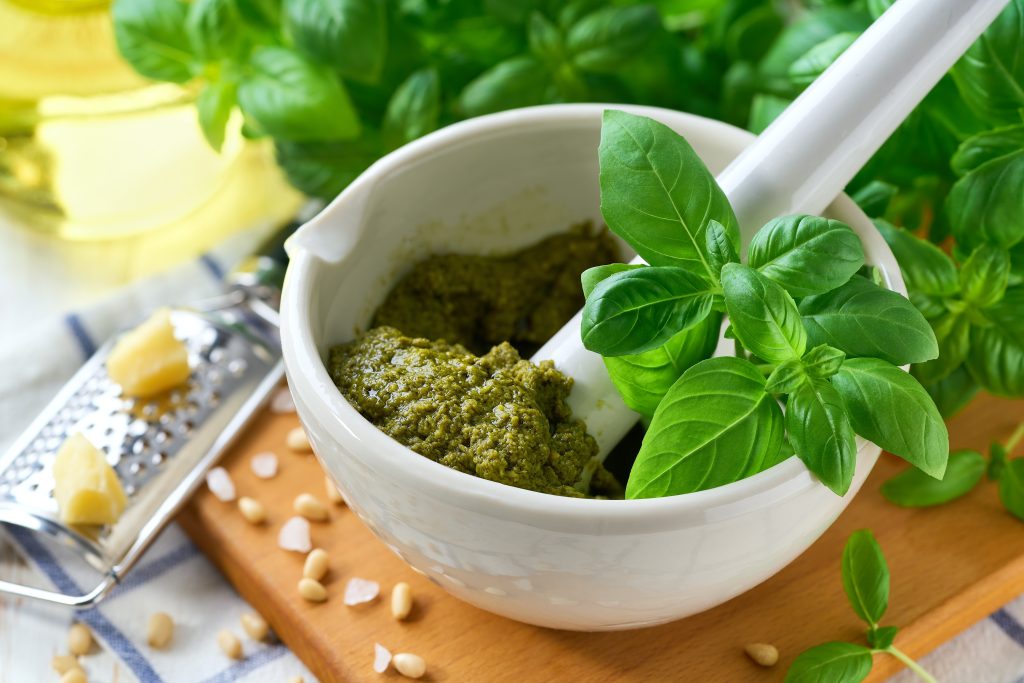
Our BasilPesto is made with olive oil, basil, garlic, and pine nuts and sometimes cheese. This combo provides multiple heart-supportive compounds. The olive oil provides monounsaturated fats that help improve cholesterol levels, while nuts contribute additional healthy fats, magnesium, and plant sterols that support vascular health. Basil and garlic bring in antioxidants and sulfur-containing compounds that may help reduce oxidative stress and support healthy blood pressure levels. Use a small amount – 10-15 grams per serving to add immense flavor to any meal.
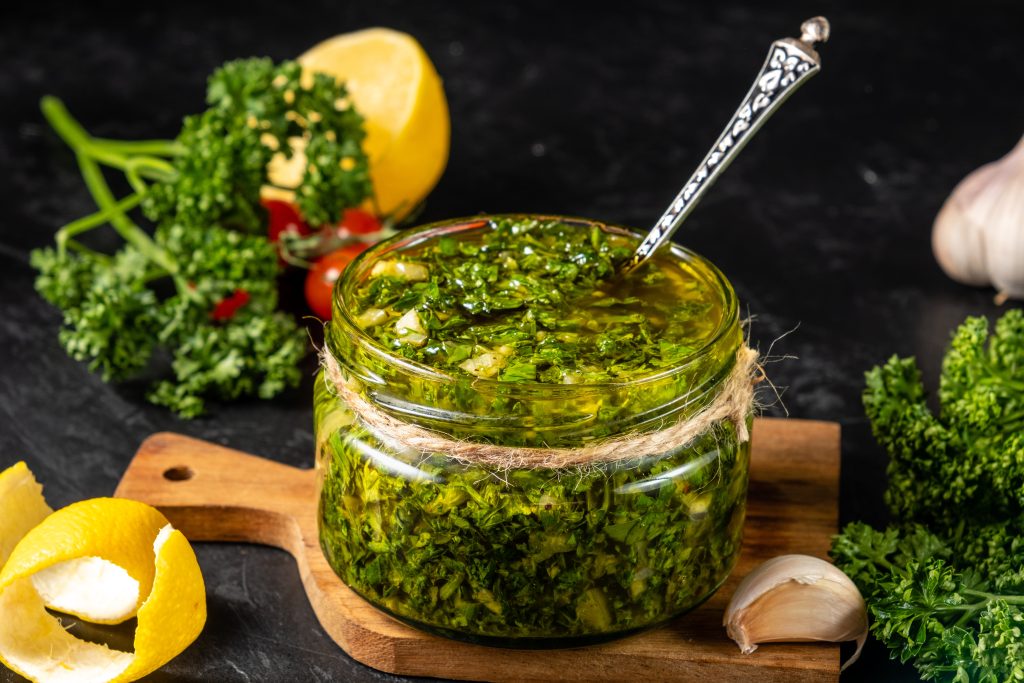
Our Chimichurri recipe is made with olive oil again, parsley, garlic, vinegar, and herbs and it is similarly powerful. Parsley is rich in vitamin K and antioxidants that support blood vessel health, while garlic has been studied for its potential to help regulate blood pressure and improve circulation. The combination of these ingredients, paired with olive oil, creates a nutrient-dense, anti-inflammatory sauce that supports heart health from multiple angles. Again, use a small amount – 10-15 grams per serving to add immense flavor to any meal.
This is something I see often: We focus on oils and other trends but forget some of the most basic needs: hydration. I am so guilty of this myself. But for skin health, you need both:
internal fats
AND hydration
This is why I always emphasize hydration strategies (and why we created our non-alcoholic drinks recipe book). I also have the ultimate hydration formula included in this book to help you make your own electrolytes at home.
What’s happening beneath the surface is that your skin relies on both lipids (fats) and water balance to maintain its structure and appearance. The fats from olive oil help reinforce the skin’s lipid barrier, which keeps moisture from escaping, while proper hydration ensures your skin cells are adequately filled and functioning optimally. When one is missing, the other can’t do its job effectively—so even if you’re consuming healthy fats, dehydration can still leave your skin looking dull or dry. But when both are in place, you support skin from both angles—helping it appear smoother, more resilient, and visibly more hydrated over time.
Where This Fits Into Your Life
At THOR, we don’t isolate foods. We integrate them into a full lifestyle.
Because one habit won’t change your life but a system will.
Do you need to take it as a shot? Not necessarily.
Because the real question is not: “Is this healthy?”
The real question is: “Is this right for me, my body, and my goals at this time in my life?”
Olive Oil Shots: Frequently Asked Questions
Is taking olive oil daily good for you?
Yes, olive oil can absolutely be part of a healthy daily routine when used in moderation. It’s rich in monounsaturated fats and polyphenols, which have been associated with heart health, reduced inflammation, and overall metabolic support. However, because it is calorie-dense, portion size matters especially if your goal is weight management. The key is not just adding olive oil in, but making sure it fits within your overall nutrition so you’re supporting your body without unintentionally increasing total caloric intake.
Do olive oil shots help with weight loss?
There is no strong scientific evidence to suggest that taking olive oil as a shot leads to weight loss. While olive oil is a healthy fat, it still contains calories, and consuming it in addition to your regular meals can actually increase your total intake and slow fat loss progress. Weight loss ultimately comes down to overall energy balance, so olive oil can be included but it should be accounted for as part of your daily nutrition, not used as a standalone strategy.
Is olive oil good for skin health?
Yes, olive oil can support skin health from the inside out due to its content of vitamin E, healthy fats, and antioxidants. These nutrients help protect skin cells from oxidative stress, support the skin barrier, and improve moisture retention. Over time, this can contribute to skin that feels more hydrated, appears more supple, and shows improved elasticity. The benefits are most noticeable when olive oil is used consistently as part of a balanced diet rather than as a one-off addition.
Should you take olive oil on an empty stomach?
Some people choose to take olive oil on an empty stomach, particularly for digestive support, but there is no strong evidence that this timing significantly enhances its benefits compared to consuming it with meals. In fact, pairing olive oil with food can improve the absorption of certain nutrients, especially fat-soluble vitamins. Ultimately, the timing matters less than consistency and overall dietary context, so it’s best to use it in a way that feels sustainable for you.
What is the healthiest olive oil?
The healthiest olive oil is typically extra virgin, cold-pressed, stored in a dark glass bottle, and relatively fresh. This type of oil undergoes minimal processing, which helps preserve its natural antioxidants and beneficial compounds. Freshness is especially important, as these compounds degrade over time with exposure to light, heat, and oxygen. Choosing a high-quality oil ensures you’re getting the full nutritional and health benefits olive oil has to offer.
Can olive oil help digestion?
Yes, olive oil may support digestion by helping stimulate bile production, which aids in the breakdown and absorption of fats. It can also support gut motility, meaning it may help food move more smoothly through the digestive tract. For some individuals, especially in midlife, this can contribute to improved regularity and reduced constipation when used in moderate amounts as part of a balanced diet.
How much olive oil should I consume daily?
For most people, about 1-2 tablespoons of olive oil per day fits well within a balanced diet and allows you to benefit from its healthy fats without overdoing calorie intake. The exact amount can vary depending on your individual energy needs, activity level, and goals. The most effective approach is to use olive oil intentionally incorporating it into meals rather than adding it on top of everything so it supports your overall nutrition without throwing it off balance.
There’s a new wellness trend all over TikTok, and surprisingly, it’s not another restrictive diet, detox tea, or extreme protocol.
It’s fiber.
More specifically, “fibermaxxing.”
At first glance, it sounds almost too simple to be effective. Add more fiber, feel fuller, improve digestion, lose weight, stabilize blood sugar.
But like most viral trends, the question isn’t just what it is. But rather whether it actually works, and if there’s a smarter way to approach it.
Let’s break it down.
What Is “Fibermaxxing”?
Fibermaxxing is the intentional effort to maximize daily fiber intake, often by adding high-fiber foods or supplements to meals.
You’ll see people:
adding chia seeds to everything
swapping low-fiber foods for whole grains
loading up on legumes and vegetables
using fiber powders or supplements
The goal is usually some combination of:
better digestion
reduced cravings
improved gut health
weight management
And in theory, this makes sense.
Because fiber is one of the most under-consumed nutrients in modern diets.
Why Is Everyone Suddenly Talking About Fiber?
Because people are starting to realize something important:
👉 Hunger isn’t always about willpower
👉 It’s often about what your body is missing
Most ultra-processed diets are:
low in fiber
low in volume
high in calories
Which creates the perfect storm for:
constant hunger
blood sugar spikes
overeating
Fiber flips that equation.
It slows digestion. It stabilizes blood sugar. It increases fullness.
And for a lot of people – and especially for women in midlife – this is the missing piece.
What Does Fiber Actually Do in the Body?
Fiber isn’t just about digestion. It impacts multiple systems at once.
According to research from organizations like the Academy of Nutrition and Dietetics and the Harvard T.H. Chan School of Public Health, fiber plays a key role in:
1. Blood Sugar Regulation
Fiber slows how quickly food is digested and absorbed.
This helps prevent rapid spikes and crashes in blood sugar—which are often responsible for:
energy dips
cravings
irritability
This is especially important in midlife, when insulin sensitivity can begin to decline.
2. Appetite Control and Satiety
High-fiber foods take longer to digest and increase feelings of fullness.
That means:
👉 fewer cravings
👉 less snacking
👉 more stable energy
Without needing extreme calorie restriction.
3. Gut Health and the Microbiome
Certain types of fiber act as prebiotics, feeding beneficial gut bacteria.
A healthy gut microbiome has been linked to:
improved digestion
stronger immune function
better metabolic health
And even mood regulation.
4. Heart Health
Soluble fiber can help reduce LDL cholesterol levels.
Higher fiber intake is associated with lower risk of cardiovascular disease.
5. Weight Management
Multiple studies show that higher fiber intake is associated with:
lower body weight
improved metabolic markers
Not because fiber “burns fat”—but because it helps regulate appetite and energy intake.
Can You Overdo Fiber?
This is where fibermaxxing can go wrong.
Because more is not always better—especially if your body isn’t used to it.
The Most Common Mistake: Increasing Fiber Too Quickly
If someone goes from:
👉 10 grams per day → 40+ grams overnight
They’re likely to experience:
bloating
gas
abdominal discomfort
constipation
Yes—constipation. Even though fiber is supposed to help with digestion.
This happens because fiber needs time (and water) to work properly.
Who Needs to Be More Careful?
Certain individuals should approach high-fiber intake more cautiously:
People with Irritable Bowel Syndrome
Those with Crohn’s Disease or Ulcerative Colitis
Individuals with sensitive digestion
In these cases, the type of fiber matters:
soluble fiber is often better tolerated
insoluble fiber may aggravate symptoms
Hydration Matters More Than People Think
Fiber absorbs water.
If you increase fiber without increasing fluid intake, you can actually worsen digestion.
👉 More fiber = more water needed
How Much Fiber Should You Actually Be Eating?
According to the Dietary Guidelines for Americans:
Women under 50: ~25 grams/day
Women over 50: ~21 grams/day
Men: ~30–38 grams/day
But here’s the reality:
👉 Most people are getting far less than this
A practical, effective range for most adults:
👉 25–35 grams per day
The key is not hitting a perfect number—it’s consistency over time.
The Best High-Fiber Foods to Focus On
If you’re going to increase fiber, whole foods should be your foundation.
Top Fiber-Rich Foods
Seeds
Chia seeds
Flaxseeds
Legumes
Lentils
Chickpeas
Black beans
Fruits
Raspberries
Pears
Apples (with skin)
Vegetables
Broccoli
Brussels sprouts
Carrots
Whole grains
Oats
Quinoa
Brown rice
Supplements vs Whole Foods: What’s Better?
Fiber supplements can be helpful—but they shouldn’t replace real food.
Whole foods provide:
vitamins
minerals
antioxidants
additional satiety
Supplements can be useful when:
intake is very low
someone struggles to meet needs through food alone
But relying solely on powders misses the bigger picture.
Why Fiber Matters Even More in Midlife
This is where fibermaxxing actually has real potential—when applied correctly.
For women over 40 and 50:
Hormonal shifts can increase fat storage
Appetite regulation may change
Blood sugar control becomes more important
Fiber helps address all of these.
It supports:
satiety
metabolic health
digestive function
Which is why many women notice significant improvements when they increase fiber intake—without extreme dieting.
The Smarter Way to Approach Fibermaxxing
Instead of going all-in overnight, think of this as a gradual upgrade.
Step 1: Add, Don’t Restrict
Start by adding fiber to meals you’re already eating.
Add chia seeds to yogurt
Add vegetables to lunch and dinner
Swap refined carbs for whole grains
Step 2: Increase Slowly
Add:
👉 5–10 grams per week
Let your body adjust.
Step 3: Prioritize Variety
Different fibers support different bacteria in the gut.
The goal isn’t just more fiber—it’s diverse fiber sources.
Step 4: Drink More Water
This is non-negotiable.
Step 5: Pay Attention to Your Body
More fiber should feel:
satisfying
stabilizing
Not:
bloating
uncomfortable
The Real Problem Fibermaxxing Is Trying to Solve
At its core, this trend is addressing a bigger issue:
👉 Modern diets are disconnected from how our bodies are designed to function
Low fiber intake is a symptom of that.
And when people increase fiber, they often feel better—not because it’s a “hack,” but because they’re correcting a deficiency.
The Bottom Line
Fibermaxxing isn’t a magic solution.
But it’s also not just another trend to ignore.
👉 The concept is valid
👉 The benefits are real
👉 The execution matters
If I had to simplify it:
Most people need more fiber
Almost no one needs extreme amounts
The best approach is gradual, consistent, and food-first
Final Thought
You don’t need to overhaul your entire diet overnight.
You don’t need to track every gram obsessively.
You just need to start building meals that actually support your body.
Because when you give your body what it needs, it becomes a lot easier to feel satisfied, energized, and in control again.
For years, women have been told that weight loss requires restriction.
Eat less. Cut carbs. Avoid anything that feels indulgent.
But here’s what actually happens in real life—especially in midlife:
You try to follow a “clean” plan.
You remove the foods you love.
You rely on willpower.
And eventually… you burn out.
This strategy is just not sustainable.
The truth is: Sustainable weight loss requires a different strategy. Rather than removing comfort or our favorite foods, we can redefine them.
Especially, when we learn how to create meals that are:
High in protein
High in volume
Nutrient-dense
And deeply satisfying
It stops feeling like you’re “on a diet” and starts becoming a way of eating you can actually maintain. And that’s the key to losing weight and keeping it off.
Free Macro Calculator
Personalized to your body, goals, and measurements. You will receive detailed macros for meals, sample day of eating, food selection guidance, hydration + daily supplement suggestions, and more.
You don’t lose weight because of the “perfect” plan. You lose weight because of the plan you can stick to.
And let’s be honest. No one sticks to grilled chicken and steamed broccoli forever.
When your meals feel satisfying, warm, familiar, and enjoyable, you’re more likely to stay consistent long term.
So lets check out the recipes:
3 High-Protein Comfort Foods That Support Weight Loss
These are not “diet foods.”
These are real meals but we have reimagined them to support your weight loss goals.
Free Macro Calculator
Personalized to your body, goals, and measurements. You will receive detailed macros for meals, sample day of eating, food selection guidance, hydration + daily supplement suggestions, and more.
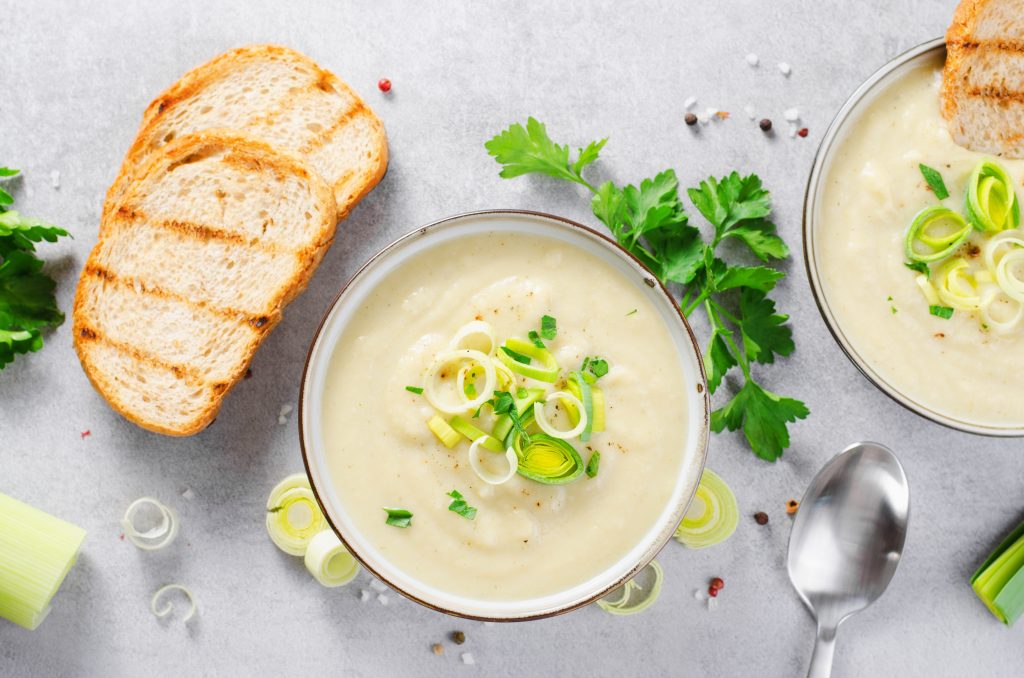
What it is: A lighter version of traditional potato soup using a mix of potatoes + cauliflower, blended with Greek yogurt or fat-free cheese and topped with lean turkey bacon.
Why it works for weight loss:
High volume, low calorie density: Cauliflower significantly lowers total calories while maintaining portion size. Research shows that low-energy-dense foods help reduce overall calorie intake without increasing hunger
Protein improves satiety: Adding Greek yogurt or lean protein increases fullness and reduces subsequent calorie intake
Comfort factor = adherence: Sustainable weight loss depends on consistency. Familiar, satisfying meals increase long-term adherence more than restrictive diets.
Ingredients (Serves 4–6)
2 medium potatoes, peeled and chopped
1 large head cauliflower, chopped
1 small onion, diced
3–4 cloves garlic, minced
4 cups low-sodium chicken or vegetable broth
½ cup plain nonfat Greek yogurt (or blended cottage cheese)
½ cup reduced-fat shredded cheese (cheddar or similar)
4 slices turkey bacon, cooked and crumbled
Salt, pepper to taste
Optional: parsley, chives, spinach
Instructions
Boil base: Add potatoes and cauliflower to a large pot with broth. Bring to a boil, then simmer for 15–20 minutes until soft.
Sauté aromatics: In a separate pan, sauté onion and garlic until translucent (about 5 minutes).
Blend: Add everything to a blender (or use an immersion blender). Blend until smooth and creamy.
Add protein + creaminess: Stir in Greek yogurt and shredded cheese. Mix until fully incorporated.
Season: Add salt, pepper, and any herbs.
Top + serve: Top with turkey bacon, herbs, and optional greens.
Simple THOR-style upgrade:
Add:
Blended cottage cheese for extra protein
Collagen peptides (unflavored) for a subtle boost
Chopped greens (spinach or kale) for added fiber
2. Protein Mac & Cheese (Greek Yogurt or Cottage Cheese Base)
What it is: Classic mac & cheese made with high-protein pasta (like chickpea or lentil pasta) and a sauce built from blended cottage cheese or Greek yogurt instead of heavy cream.
Why it works for weight loss:
Higher protein = better appetite control: Protein intake is consistently linked to reduced hunger and improved weight management
Improved body composition: Higher-protein diets help preserve lean muscle during weight loss, which supports metabolic rate.
Lower calorie swaps without sacrificing taste: Replacing heavy cream and butter with dairy-based proteins reduces calories while maintaining a creamy texture.
Cook pasta: Cook according to package directions. Drain and set aside.
Make sauce: Blend cottage cheese + milk until completely smooth.
Heat sauce: Pour mixture into a saucepan over medium heat. Stir in shredded cheese, nutritional yeast, and seasonings.
Combine: Add cooked pasta to the sauce and stir until fully coated.
Add extras (optional): Mix in cooked chicken or vegetables.
Serve warm
Simple THOR-style upgrade
Add:
Grilled chicken, shirmp, lobster or turkey for additional protein
Broccoli, cauliflower or zucchini for volume
Nutritional yeast for a richer “cheesy” flavor with added nutrients
Free Macro Calculator
Personalized to your body, goals, and measurements. You will receive detailed macros for meals, sample day of eating, food selection guidance, hydration + daily supplement suggestions, and more.
Cook protein: In a large pot, cook ground turkey/chicken until browned.
Add vegetables: Add onion, garlic, and pepper. Cook 5–7 minutes until softened.
Add remaining ingredients: Stir in beans, tomatoes, broth, zucchini, and spices.
Simmer: Let cook on low for 25–40 minutes, stirring occasionally.
Adjust seasoning
Serve + top: Add Greek yogurt, herbs, or avocado.
Simple THOR-style upgrade
Add:
Extra vegetables (peppers, zucchini, mushrooms)
Bone broth instead of water for added nutrients
Greek yogurt instead of sour cream for topping
How to Start Using This Approach Immediately
You don’t need to overhaul your entire diet.
Start here:
Step 1: Pick 1–2 comfort meals you already love
Pasta, soup, chili, casseroles anything goes.
Step 2: Modify, don’t eliminate
Add protein
Increase volume (vegetables)
Swap high-calorie ingredients
Step 3: Build meals that keep you full for 4–5 hours
If you’re constantly hungry, the meal isn’t working.
Free Macro Calculator
Personalized to your body, goals, and measurements. You will receive detailed macros for meals, sample day of eating, food selection guidance, hydration + daily supplement suggestions, and more.
I write 3 essays per week on Lifestyle Medicine for women in midlife on what is happening in the body and what to do about it. No fluff, no hype. Free.
At some point, you’ve probably asked yourself this:
“Do I need a coach… or do I need a therapist?”
And if we’re being honest, it’s not always clear.
Because from the outside, they can sound kind of similar. Both involve talking. Both involve growth. Both promise some version of “change.”
But in reality: they’re very different.
And choosing the wrong one can leave you feeling even more stuck.
So let’s make this simple.
First: Why This Even Matters
If you’re in your 40s or beyond, you’ve probably already noticed:
What used to work… doesn’t work anymore.
You can’t just “push harder” and expect results. You can’t ignore your stress and hope it goes away. And you definitely can’t rely on motivation alone.
Something deeper is happening.
And this is usually where people start looking for support.
But here’s where things go sideways:
Some women need structure but go to therapy
Some women need healing but hire a coach
And then they wonder why nothing is changing.
Let’s Start With Coaching (What It Actually Feels Like)
Coaching is for the woman who says:
“I know what I should be doing… I just can’t seem to stay consistent.”
It’s forward-focused. It’s practical. It’s about getting you from where you are → to where you want to be.
The International Coaching Federation defines coaching as a process that helps you maximize your potential.
But here’s what that really looks like in your life:
You set clear goals
You create a plan
You check in regularly
You adjust when things aren’t working
You stay accountable
It’s not about talking for the sake of talking.
It’s about doing something with it.
What Coaching Helps You Do
Coaching is incredibly powerful if you’re trying to:
Lose weight and actually keep it off
Build strength and confidence
Create consistent habits
Follow through on things you keep starting
It’s where a lot of women finally say:
“Oh… this is what consistency actually feels like.”
But Here’s What Coaching Does NOT Do
This part matters.
Coaching is not designed to:
Heal trauma
Treat anxiety or depression
Process deep emotional pain
Diagnose mental health conditions
And it shouldn’t try to.
Now Let’s Talk About Therapy (In Real Terms)
Therapy is for the woman who says:
“I don’t feel like myself… and I don’t fully understand why.”
It’s not about pushing forward right away.
It’s about slowing down enough to understand what’s going on underneath.
The American Psychological Association defines therapy as a process that helps improve emotional and mental well-being.
But here’s what that actually feels like:
You start connecting patterns
You understand your emotional triggers
You process past experiences
You learn how to regulate your nervous system
It’s less about “doing more” and more about feeling and understanding more clearly.
What Therapy Helps You With
Therapy is incredibly important if you’re dealing with:
Anxiety or constant overwhelm
Burnout that doesn’t go away
Emotional eating patterns
Past experiences that still affect you
Feeling stuck for reasons you can’t explain
There’s strong research supporting this.
For example, Cognitive Behavioral Therapy (CBT) has been shown to significantly reduce anxiety and depression symptoms (Hofmann et al., 2012).
The Simplest Way to Understand the Difference
If all of this still feels a little blurry, here’s the cleanest way to look at it:
Coaching helps you move forward
Therapy helps you understand what’s holding you back
Or even simpler:
Coaching = action
Therapy = awareness
How to Know Which One You Need
Let’s make this very real.
You may benefit from coaching if:
You keep falling off track
You know what to do but don’t do it
You want structure, accountability, and results
You’re ready to take action: you just need guidance
You probably need therapy if:
You feel overwhelmed more often than not
You’re anxious, burned out, or emotionally exhausted
You’re carrying things from the past that still affect you
You don’t understand why you feel stuck
Here’s the Truth Most People Don’t Talk About
It’s not always one or the other.
A lot of women actually need both.
Because:
You can understand yourself deeply… and still not take action
You can take action… and still feel internally stuck
Research supports both sides:
Coaching improves performance and goal achievement (Theeboom et al., 2014)
Therapy improves emotional and mental health (Cuijpers et al., 2013)
But together?
That’s where things really shift.
Why This Hits Differently in Midlife
Because at this stage, you’re not just trying to change your body.
You’re trying to figure out:
Who you are now
What you actually want
What you’re no longer willing to tolerate
And that’s deeper than a meal plan or a workout program.
The THOR Way of Looking at This
Here at THOR, we focus on coaching with an integrative support. This means it’s not just about workouts or meal plans. It’s a fully integrative lifestyle medicine support system designed to help women rebuild their health, identity, and lifestyle from the inside out. Real transformation doesn’t happen in isolation. It happens when the body, mind, and environment are aligned.
What “Integrative Support” Actually Means
Integrative support is rooted in the understanding that health is multidimensional.
Instead of treating symptoms in silos (weight, stress, energy, habits), we look at how everything is connected:
Metabolism is influenced by sleep, stress, and hormones
Nutrition is shaped by behavior, environment, and emotional patterns
Fitness is impacted by nervous system regulation and recovery
Consistency is driven by identity, mindset, and support systems
This approach aligns with the principles of Lifestyle Medicine, which emphasizes addressing the root causes of chronic conditions through sustainable behavior change.
The THOR Integrative Framework
1. Physical Optimization
We build strength, mobility, and metabolic health through:
Strength training
Yoga & Pilates for nervous system regulation and recovery
Strategic cardio (not burnout-based)
2. Nutrition with Context
Instead of rigid dieting, we use:
Personalized macro-based nutrition
Flexible structure (not restriction)
Real-life application (travel, events, family life)
3. Nervous System & Stress Regulation
Because willpower is not the problem. Physiology is.
We address:
Chronic stress
Overstimulation
Emotional eating patterns
Using:
Breathwork
Somatic practices
Recovery protocols
4. Behavioral & Identity Coaching
We don’t just change habits. We change self-concept.
Through:
Accountability systems
Cognitive reframing
Pattern awareness
5. Environment & Lifestyle Design
Your results are shaped by your environment.
We optimize:
Daily routines
Food environment
Social support
Time structure
But we’re also very honest about this:
Coaching is not a replacement therapy
And therapy is not coaching
They’re two different tools.
And knowing when to use each one is where real power comes from. The most powerful transformation happens when women are supported both emotionally and strategically.
Why This Works (When Other Programs Don’t)
Most programs focus on:
Calories
Workouts
Short-term outcomes
THOR focuses on:
Systems
Patterns
Long-term identity
That’s the difference between: Temporary results vs Sustainable transformation
If You’re Still Not Sure…
Ask yourself this:
“Do I need help understanding myself… or do I need help following through?”
That answer will tell you everything.
The Real Outcome
This isn’t just about weight loss.
It’s about becoming a woman who:
Trusts her body again
Knows how to regulate her energy and emotions
Feels strong, capable, and in control
Has a system she can sustain for life
Final Thought
There’s nothing wrong with needing support.
In fact, most women wait way too long before getting it.
But the shift happens when you stop trying to force the wrong solution…
…and start choosing the one that actually meets you where you are.
Because the goal isn’t just to change.
It’s to become someone who can sustain that change long-term.
Cuijpers, P., van Straten, A., Andersson, G., & van Oppen, P. (2008). Psychotherapy for depression in adults: A meta-analysis of comparative outcome studies. Journal of Consulting and Clinical Psychology, 76(6), 909–922. https://doi.org/10.1037/a0013075
Grant, A. M. (2014). The efficacy of executive coaching in times of organisational change. Journal of Change Management, 14(2), 258–280.
Hofmann, S. G., Asnaani, A., Vonk, I. J. J., Sawyer, A. T., & Fang, A. (2012). The efficacy of cognitive behavioral therapy: A review of meta-analyses. Cognitive Therapy and Research, 36(5), 427–440. https://doi.org/10.1007/s10608-012-9476-1
Theeboom, T., Beersma, B., & van Vianen, A. E. M. (2014). Does coaching work? A meta-analysis on the effects of coaching on individual level outcomes in an organizational context. The Journal of Positive Psychology, 9(1), 1–18. https://doi.org/10.1080/17439760.2013.837499
van der Kolk, B. A. (2014). The body keeps the score: Brain, mind, and body in the healing of trauma. New York, NY: Viking.
Many women enter midlife feeling confused about nutrition.
They try cutting carbs, skipping meals, detox diets, or endless cardio, yet their energy drops, their metabolism feels slower, and their body composition doesn’t change the way they hoped.
The issue is rarely effort.
The issue is order.
Nutrition works best when you understand the hierarchy of what matters most.
When you fix the right things first, everything else becomes easier.
For women navigating their 40s and 50s, five layers of nutrition matter most:
Calories
Macronutrients
Micronutrients
Electrolytes
Hormonal support through nutrition and lifestyle
Let’s break down how each layer works.
Free Macro Calculator
Personalized to your body, goals, and measurements. You will receive detailed macros for meals, sample day of eating, food selection guidance, hydration + daily supplement suggestions, and more.
At the most fundamental level, body weight is governed by energy balance.
Energy balance refers to the relationship between calories consumed and calories burned through metabolism, daily activity, and exercise.
Research in metabolic physiology consistently demonstrates that weight change occurs when energy intake differs from energy expenditure.
The basic equation
If you consistently eat more calories than you burn:
➡ weight tends to increase
If you consistently eat fewer calories than you burn:
➡ weight tends to decrease
If intake and expenditure stay roughly equal:
➡ weight tends to remain stable
This is sometimes misunderstood online, but energy balance remains the primary driver of weight change.
However, calories alone don’t determine how your body looks, performs, or feels.
That’s where macronutrients come in.
2. Macronutrients Determine Body Composition
Macronutrients include the nutrients your body needs in larger amounts:
Protein
Carbohydrates
Fat
While calories affect weight, macronutrients influence muscle mass, fat storage, and physical performance.
For women in midlife, this distinction becomes important because aging naturally affects muscle mass and metabolism.
Protein: Essential for Muscle and Metabolism
Protein supplies amino acids needed to repair and build muscle tissue.
Multiple studies show that higher protein intake supports muscle retention during weight loss and increases lean mass when combined with resistance training.
This matters because adults begin losing muscle mass around their 30s and 40s through a process called sarcopenia.
Muscle is metabolically active tissue. Maintaining it helps support:
metabolic health
strength
functional mobility
healthy aging
Carbohydrates: Fuel for Performance
Carbohydrates are the body’s primary fuel source during moderate-to-high intensity exercise.
Glucose derived from carbohydrates supports:
brain function
workout performance
muscle recovery
Sports nutrition research shows that carbohydrate availability significantly influences exercise capacity and training intensity.
For women who strength train, do yoga, hike, or stay active, adequate carbohydrate intake can help support performance and energy levels.
Fat: Critical for Hormones and Recovery
Dietary fats help produce hormones and support cell membrane health.
Extremely low-fat diets have been associated with reduced testosterone levels and altered hormone production in some populations.
Healthy fat sources include:
eggs
fatty fish
olive oil
nuts and seeds
grass-fed meats
Why Some People Feel “Skinny-Fat”
If someone eats very few calories but also consumes low protein and does little resistance training, they may lose both fat and muscle.
The result can be:
lower muscle mass
higher body fat percentage
a softer body composition despite lower weight
This is why macronutrient balance matters just as much as calories.
Free Macro Calculator
Personalized to your body, goals, and measurements. You will receive detailed macros for meals, sample day of eating, food selection guidance, hydration + daily supplement suggestions, and more.
3. Micronutrients Influence Energy, Mood, and Health
Micronutrients include vitamins and minerals required in smaller amounts but essential for human physiology.
Examples include:
iron
vitamin D
magnesium
zinc
B vitamins
iodine
These nutrients help regulate:
metabolism
immune function
neurotransmitters
digestion
sleep cycles
Dietary patterns rich in whole foods tend to provide greater micronutrient density than highly processed diets.
Large population studies show that diets rich in fruits, vegetables, whole foods, and seafood are associated with lower rates of chronic disease and improved metabolic health.
When micronutrient intake is low, people may experience symptoms such as:
fatigue
brain fog
low mood
poor recovery
Often the body simply needs better nourishment, not stricter dieting.
4. Electrolytes Support Hydration and Performance
Electrolytes are minerals that regulate fluid balance and nerve signaling.
Key electrolytes include:
sodium
potassium
magnesium
These minerals help control:
muscle contractions
nerve impulses
hydration levels
During exercise, sweating causes electrolyte losses.
Without proper replacement, symptoms may include:
fatigue
headaches
muscle cramps
reduced performance
The American College of Sports Medicine notes that sodium replacement may be necessary during prolonged exercise or heavy sweating.
For women who exercise regularly, maintaining proper hydration and electrolyte balance can improve both performance and recovery.
5. Hormones Influence Energy, Mood, and Motivation
Hormones regulate many functions including appetite, metabolism, sleep, and mood.
During midlife, women often experience hormonal changes associated with perimenopause and menopause.
Chronic under-eating can disrupt endocrine function.
Energy deficiency has been shown to alter reproductive hormones and metabolic signals in active individuals.
Sleep Quality
Sleep deprivation affects hormones that regulate hunger.
Research shows reduced sleep increases ghrelin (hunger hormone) and decreases leptin (satiety hormone).
Nutrient-Dense Foods
Dietary patterns that include healthy fats, whole foods, and adequate protein help support endocrine health and metabolic function.
Eat Like an Athlete, Not a Chronic Dieter
One of the most powerful mindset shifts for women in midlife is moving away from restrictive dieting toward performance-focused nutrition.
Athletes focus on fueling their bodies to support training, recovery, and performance.
That approach often looks like:
eating whole foods
prioritizing protein
supporting training with carbohydrates
maintaining hydration and electrolytes
avoiding chronic under-eating
Research shows that resistance training combined with balanced nutrition can significantly improve body composition and metabolic health during aging.
Free Macro Calculator
Personalized to your body, goals, and measurements. You will receive detailed macros for meals, sample day of eating, food selection guidance, hydration + daily supplement suggestions, and more.
When these layers work together, many women experience improvements in:
energy levels
strength and muscle tone
metabolic health
mood and mental clarity
Consistency matters far more than perfection.
Ready to Apply This in Your Life?
If you want personalized guidance on nutrition, strength training, and sustainable habits during midlife, explore the Age With Strength™ coaching program. 👉 Learn More About Our Women’s Coaching Program Here
For women who want a deeper transformation experience, the THOR wellness retreats combine strength training, yoga, nutrition education, and community support in immersive locations. 👉 Check out our women’s yoga & hiking retreats
Free Macro Calculator
Personalized to your body, goals, and measurements. You will receive detailed macros for meals, sample day of eating, food selection guidance, hydration + daily supplement suggestions, and more.
After spending months (or years) dieting, many women feel uneasy about the idea of eating more food—especially intentionally. But here’s the truth: staying in a constant deficit isn’t sustainable, and it can actually hold you back from achieving the strong, toned, healthy body you’re working for.
This is where the building phase comes in. Far from being “bulking” in the old-school sense, the building phase is a strategic period of eating at maintenance—or slightly above—to fuel strength, muscle growth, energy, and long-term metabolic health.
Free Macro Calculator
Personalized to your body, goals, and measurements. You will receive detailed macros for meals, sample day of eating, food selection guidance, hydration + daily supplement suggestions, and more.
The building phase is a planned period of fueling your body with enough calories to support strength, muscle, and metabolic health. Instead of focusing on restriction, the goal is to provide your body with the energy and nutrients it needs to grow stronger, recover better, and create the physique you want.
Why You May Need a Building Phase
You may benefit from a building phase if you:
Have been dieting for months and feel low energy or stalled progress
Want to build muscle definition and improve body composition
Struggle with plateaus in fat loss (a stronger metabolism breaks plateaus)
Notice declines in workout performance, sleep, or recovery
Are in perimenopause or menopause, when maintaining lean muscle is critical for bone, metabolic, and hormonal health
The Benefits of a Building Phase
Builds Lean Muscle Muscle is metabolically active tissue. More muscle = more calories burned at rest, better insulin sensitivity, and a stronger, more toned look.
Boosts Metabolism Feeding your body properly increases energy expenditure, making future fat loss phases easier and more effective.
Improves Energy & Mental Focus Eating enough carbs and fats restores energy, sharpens focus, and reduces food preoccupation.
Enhances Recovery & Sleep More fuel = faster repair of muscle tissue, better hormone regulation, and deeper, restorative sleep.
Creates Long-Term Sustainability Learning to thrive at maintenance helps you ditch yo-yo dieting and build a body (and habits) you can sustain for life.
How to Do the Building Phase
Length: Typically 3–6 months (or longer, depending on goals)
Calories: Increase to at least maintenance; small surplus (+100–300 calories/day) may be added for lean muscle gain
Macros: High protein remains a priority; carbs are key for training and recovery
Mindset: Expect the scale to shift slightly as muscle and glycogen increase—focus on body composition, not just weight
What Happens After a Building Phase?
After fueling and training through a building phase, you’ll emerge stronger, with more lean muscle, improved metabolic health, and a body better primed for fat loss (if that’s your next goal). Most women find they look leaner after a build because muscle creates shape and definition—even at a slightly higher weight.
Free Macro Calculator
Personalized to your body, goals, and measurements. You will receive detailed macros for meals, sample day of eating, food selection guidance, hydration + daily supplement suggestions, and more.
The building phase isn’t about “gaining weight”—it’s about gaining strength, health, and freedom. It’s a critical step in escaping the endless cycle of dieting and creating the strong, energized body you deserve.
👉 If you’re ready to enter your building phase with confidence, I can help design a personalized plan tailored to your body, hormones, and goals in my private women’s weightloss & lifestyle coaching group.
What Is Reverse Dieting? The Complete Guide for Women
Most women who reach a goal weight after months of dieting are unprepared for what comes next. The diet has to end at some point, and the question of what to eat afterward is often left out of every plan, every coaching call, and every Instagram before-and-after post. This is where most weight loss is undone. The metabolism has adapted to the deficit, the appetite has built up suppressed cues, and going back to “normal eating” usually means gaining the weight back faster than it came off in the first place.
Reverse dieting is the framework that bridges the deficit and maintenance phases. It is a slow, structured increase in calories over weeks that lets the metabolism recover, the hormones rebalance, and the body settle into a higher intake without the rebound weight gain that most women have come to expect. This guide covers what reverse dieting is, why it matters specifically for women, the five benefits backed by research, a five-step protocol, a six-week calorie progression table, a seven-day sample meal plan, the mistakes to avoid, and what happens when the reverse diet is complete.
Free Macro Calculator & Lifestyle Blueprint
Personalized to your body, goals, and measurements. You will receive detailed macros for meals, sample day of eating, food selection guidance, hydration + daily supplement suggestions, and more.
Reverse dieting is the practice of slowly increasing daily calorie intake after a period of calorie restriction, with the goal of restoring metabolic rate and hormone balance without regaining the lost weight. The increases are typically 50 to 100 calories per week, sustained over four to twelve weeks depending on the depth of the previous deficit and the individual response.
The thermostat analogy is the one I use most often with clients. Think of the metabolism as a house heating system that has been turned down to conserve energy through a long winter. Blasting the heat back on all at once shocks the system. Slowly turning the thermostat up a few degrees at a time allows the system to recalibrate without overshooting. Reverse dieting is the slow turn of the thermostat after months of running cold.
Metabolic adaptation is the underlying mechanism. When the body has been in a sustained calorie deficit, several measurable shifts happen. Thyroid hormone production decreases. Leptin (the satiety hormone) drops. Ghrelin (the hunger hormone) increases. Resting energy expenditure declines. Non-exercise activity drops, often subconsciously. The body becomes more efficient at running on less, which is a survival adaptation that worked well for our ancestors and works against most modern women trying to maintain a lower body weight. Reverse dieting addresses each of these adaptations in turn, by slowly increasing energy availability over weeks rather than days.
Why You May Need a Reverse Diet
Women have specific biological reasons to take reverse dieting seriously, and these reasons get more important after age 40.
Cortisol.
Sustained calorie restriction elevates cortisol, the body’s primary stress hormone. Chronically elevated cortisol disrupts sleep, increases abdominal fat storage, suppresses thyroid function, and contributes to insulin resistance. Coming off a deficit by slowly increasing food intake lowers the cortisol load and allows the body to begin recovering from the stress of the deficit itself.
Thyroid.
Calorie restriction reduces T3 (the active thyroid hormone) production, which directly slows metabolic rate. Most women who lose weight quickly experience some degree of T3 suppression, and the suppression can persist for months after the diet ends if the transition out of the deficit is not handled carefully. Reverse dieting allows T3 to recover gradually, which protects long-term metabolic rate.
Estrogen.
Body fat plays a role in postmenopausal estrogen production, and aggressive caloric restriction in midlife can suppress hormonal balance further at a time when the body is already navigating significant hormonal change. Coming off a deficit slowly gives the endocrine system time to adjust without compounding the stress of the perimenopausal or menopausal transition itself.
Sex differences in metabolism matter here too.
Women have lower absolute resting metabolic rates than men, more sensitivity to energy availability, and more menstrual and reproductive consequences from chronic underfeeding. The general pattern across the research is that women respond more dramatically to both deficits and surpluses than men, which means the transition out of a deficit needs to be handled with more care.
If you have not yet built the nutritional foundation that supports this work, the fundamentals of the macro diet for women over 50 is the companion piece that lays the macro framework underneath the reverse diet protocol below. The free Macro Calculator is the tool that gives you your specific starting numbers.
Free Macro Calculator
Personalized to your body, goals, and measurements. You will receive detailed macros for meals, sample day of eating, food selection guidance, hydration + daily supplement suggestions, and more.
The primary benefit of reverse dieting is the recovery of resting metabolic rate. Several studies have documented that gradual increases in calorie intake after sustained deficits allow thyroid hormone production, leptin levels, and non-exercise activity to return toward pre-diet baselines. Women who go straight from a deficit back to maintenance calories often find that the maintenance calories now produce weight gain, because the metabolic rate has not recovered. Reverse dieting closes that gap.
Prevents Rebound Weight Gain
The most well-documented pattern in the weight loss literature is the rebound. Most women who lose weight on a conventional diet regain it within one to two years. The mechanism involves the metabolic adaptations described above, combined with the rapid reintroduction of higher-calorie eating that the suppressed appetite hormones make difficult to control. Reverse dieting addresses both halves of the rebound, by restoring metabolism and by giving the appetite system time to recalibrate to higher intake.
Increases Energy and Workout Performance
Energy availability for training improves as calorie intake increases. Women in deficit phases often report low workout intensity, slow recovery between sessions, and a sense of dragging through workouts that used to feel easy. As calories increase during the reverse, glycogen stores refill, recovery improves, and strength training in particular tends to feel sharply different within two to three weeks of starting the reverse.
Reduces Hunger and Cravings
Suppressed leptin and elevated ghrelin during a deficit produce the relentless hunger and food preoccupation that most women experience at the end of a successful cut. Reverse dieting raises leptin levels and lowers ghrelin gradually, which reduces the constant background hunger and food noise without flipping the switch back to full appetite all at once. Most women report a noticeable shift in cravings within the first three weeks of the reverse.
Supports Hormonal Balance
The combined effect of restored thyroid function, lowered cortisol, recovered leptin, and adequate energy availability is a more balanced overall endocrine state. This is especially valuable for women approaching, in, or past menopause, where the hormonal background is already shifting. Reverse dieting is one of the most practical nutritional interventions available for protecting hormonal health after a sustained dieting phase.
Free Macro Calculator
Personalized to your body, goals, and measurements. You will receive detailed macros for meals, sample day of eating, food selection guidance, hydration + daily supplement suggestions, and more.
The starting point of any reverse diet is knowing what you are currently eating. Track your food for five to seven days at the end of your deficit phase, using a tracking app or a notebook, and calculate the average daily calorie intake. This number is your baseline. Most women coming off a successful cut are eating somewhere between 1,200 and 1,600 calories per day, and the reverse begins from wherever the deficit ended. The Macro Calculator gives you a personalized estimate of where your maintenance should ultimately land, which becomes the target endpoint of the reverse.
Step 2: Add 50 to 100 Calories Per Week
Once your baseline is established, increase total daily calories by 50 to 100 each week. Beginners and women who lost weight quickly should use the lower end (50 calories per week). Women who lost weight slowly and feel relatively recovered can use the higher end (100 calories per week). The increase comes from a combination of carbohydrates and fats, with protein staying high throughout (more on this below).
Step 3: Prioritize Protein and Fats
Protein intake should stay high throughout the reverse, in the range of 0.8 to 1.0 grams per pound of bodyweight per day. This protects lean muscle during the metabolic recovery and supports satiety. The added calories each week come primarily from carbohydrates (which refill glycogen, support thyroid recovery, and improve training performance) and fats (which support hormone production, especially in women over 40). A practical split is roughly 60 percent of the added calories from carbohydrates and 40 percent from fats, though this varies by individual.
Step 4: Track Weight & Measurements (Not Just the Scale)
The scale will fluctuate during a reverse, primarily because higher carbohydrate intake increases muscle glycogen and water retention. A 1 to 3 pound increase in the first two weeks is normal and is not fat gain. Track body measurements (waist, hips, chest) weekly alongside the scale, and take progress photos every two weeks. The combination gives a clearer picture of what is actually happening than the scale alone.
Step 5: Know When to Stop
The reverse is finished when you arrive at a sustainable maintenance calorie level where you feel strong, energetic, and stable on the scale week over week. For most women, this is roughly 200 to 500 calories above where the deficit ended, reached over 4 to 12 weeks of slow increases. The endpoint is not a specific number written in stone. It is the calorie level at which your body composition is stable, your energy is high, your training is strong, and your appetite is regulated.
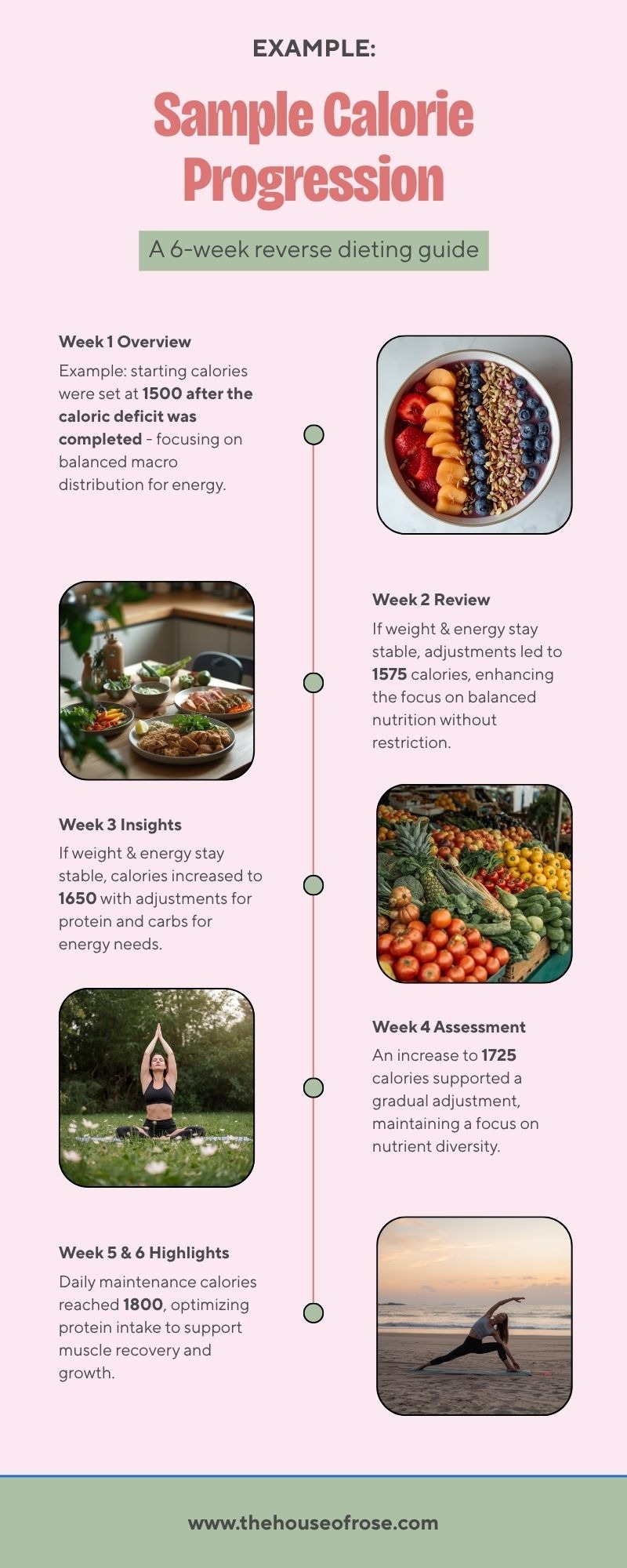
Sample 6-Week Reverse Diet Calorie Progression
The table below shows a representative 6-week calorie progression for a woman who finished her deficit at 1,500 calories per day and is reverse dieting toward an estimated maintenance of approximately 1,850 calories per day.
Week
Daily Calories
Protein (g)
Carbs (g)
Fats (g)
1
1,500
130
130
50
2
1,575
135
145
55
3
1,650
140
160
55
4
1,725
140
175
60
5
1,800
145
190
60
6
1,850
150
195
65
The increases are deliberately small. The protein stays anchored. The carbs and fats rise together. By week six, the same body that was running on 1,500 calories is now stable on 1,850 calories, with restored metabolism, improved energy, and no meaningful change in body composition.
Free Macro Calculator & Lifestyle Blueprint
Personalized to your body, goals, and measurements. You will receive detailed macros for meals, sample day of eating, food selection guidance, hydration + daily supplement suggestions, and more.
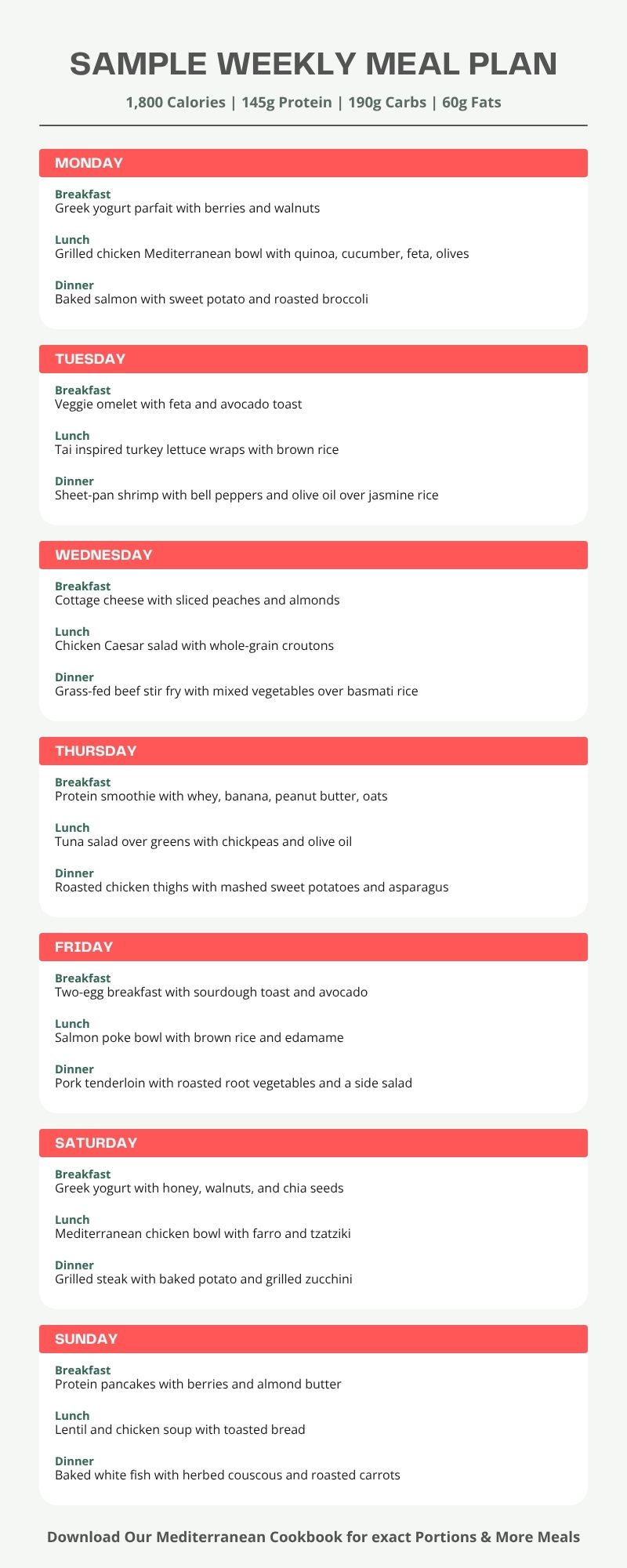
The seven-day plan below shows what a sustainable reverse diet looks like in practice, at approximately the week 5 target of 1,800 calories per day. The plan is designed around real food, midlife-appropriate protein at every meal, and the kind of slow carbohydrates and healthy fats that support hormonal recovery. Adjust portions up or down based on your specific calorie target. The Macro Miracle Mediterranean Cookbook is the kitchen-side companion if you want the full recipes for these meals.
Sample Reverse Diet Macro Breakdown Per Day (7 Days)
Day
Calories
Protein (g)
Carbs (g)
Fats (g)
Sample Meals
Mon
1,800
145
190
60
Greek yogurt parfait with berries and walnuts. Grilled chicken Mediterranean bowl with quinoa, cucumber, feta, olives. Baked salmon with sweet potato and roasted broccoli.
Tue
1,800
145
190
60
Veggie omelet with feta and avocado toast. Turkey lettuce wraps with brown rice. Sheet-pan shrimp with bell peppers and olive oil over jasmine rice.
Wed
1,800
145
190
60
Cottage cheese with sliced peaches and almonds. Chicken Caesar salad with whole-grain croutons. Grass-fed beef stir fry with mixed vegetables over basmati rice.
Thu
1,800
145
190
60
Protein smoothie with whey, banana, peanut butter, oats. Tuna salad over greens with chickpeas and olive oil. Roasted chicken thighs with mashed sweet potatoes and asparagus.
Fri
1,800
145
190
60
Two-egg breakfast with sourdough toast and avocado. Salmon poke bowl with brown rice and edamame. Pork tenderloin with roasted root vegetables and a side salad.
Sat
1,800
145
190
60
Greek yogurt with honey, walnuts, and chia seeds. Mediterranean chicken bowl with farro and tzatziki. Grilled steak with baked potato and grilled zucchini.
Sun
1,800
145
190
60
Protein pancakes with berries and almond butter. Lentil and chicken soup with crusty bread. Baked white fish with herbed couscous and roasted carrots.
The meal plan is intentionally diverse across days to support adherence and to keep micronutrient variety high. None of the meals require complex preparation. The carbohydrates lean toward slower-digesting sources (quinoa, brown rice, sweet potato, oats, lentils, sourdough) which support steadier energy and better recovery. Healthy fats come from olives, olive oil, avocado, nuts, fatty fish, and full-fat dairy, all of which are well tolerated by most women in midlife.
Reverse Dieting Mistakes to Avoid
Five mistakes show up consistently and undo otherwise good reverse diets.
The first is adding too many calories at once. Jumping from 1,500 to 1,800 calories in week one is a recipe for fast water weight gain, blood sugar swings, and a discouraged return to restriction. The slow increase is the entire point.
The second is ignoring protein. Protein is the anchor of the reverse. Letting it drop while carbohydrates and fats climb is the fastest way to lose lean muscle during what should be a recovery phase. Hit your protein target every day, then add the increase on top.
The third is panicking at water weight. Carbohydrates pull water into muscle for glycogen storage. A 2-pound jump on the scale in the first ten days of a reverse is almost always water and glycogen, not fat. Track measurements and photos alongside the scale to keep the picture honest.
The fourth is going back to old eating patterns instead of following the plan. The reverse is a structured process. Returning to whatever pattern produced the original weight gain is the most common way women undo their loss. The structure protects the result.
The fifth is stopping the reverse too soon. Many women add 100 calories for two weeks and call the reverse complete. The full restoration of metabolism, hormones, and energy typically takes 4 to 12 weeks. Cutting the process short leaves the metabolism stuck somewhere between deficit and maintenance, which is the worst of both worlds.
The diet break framework is the related concept worth reading if you want the full picture of how strategic refeeds and longer maintenance phases fit into a sustainable approach.
Free Macro Calculator & Lifestyle Blueprint
Personalized to your body, goals, and measurements. You will receive detailed macros for meals, sample day of eating, food selection guidance, hydration + daily supplement suggestions, and more.
When the reverse is complete, you arrive at maintenance. The maintenance phase is where the recovered metabolism, the restored hormones, and the rebuilt energy reserves all live, and where most of the long-term work happens.
Maintenance is not a holding pattern. It is the phase where the body composition results actually stabilize, the relationship with food becomes sustainable, and the lessons learned during the deficit become permanent.
Once you’ve successfully reversed, your calories should be back at maintenance or even higher if you’ve built lean muscle along the way. This means:
A faster metabolism than when you started
Improved energy and performance in daily life and workouts
Confidence in maintaining weight without constant restriction
The option to continue in maintenance mode or begin another fat loss phase later with a healthier, more resilient metabolism
Many women find that they can stay at maintenance indefinitely, especially if they have built a solid foundation around protein, slow carbohydrates, healthy fats, strength training, sleep, and the foundational supplement stack that supports midlife health. Some women eventually choose to enter another deficit phase after several months at maintenance, in which case the reverse becomes a regular part of their longer-term nutrition cycle. Whether to do another cut depends on your goals, your current body composition, and how your hormones are responding to the current intake.
Maintenance is also where immersive coaching environments deliver their highest value. The Deeply Restorative Yoga and Nature Retreat at our Smoky Mountains property is one of the places where women learn the maintenance phase by living inside it for five days, with the food, the movement, and the integration support all built around the body’s recovered state. If you want hands-on nutrition coaching after a reverse diet, the retreat is the most concentrated experience available. The Monthly Personal Training and Nutrition Coaching Program is the longer-arc option that gives you 1:1 support through every phase, including the reverse itself.
Final Thought
Reverse dieting isn’t about losing more—it’s about protecting the results you’ve already worked so hard for.
It’s a bridge between fat loss and maintenance that allows you to keep your progress, rebuild your metabolism, and feel stronger, healthier, and more energized in the process.
Personalized to your body, goals, and measurements. You will receive detailed macros for meals, sample day of eating, food selection guidance, hydration + daily supplement suggestions, and more.
Most reverse diets run between 4 and 12 weeks. The exact duration depends on how long you spent in a deficit, how deep the deficit was, your current age and hormonal state, and how your body responds to the weekly calorie increases. Women who lost weight slowly over a few months typically need 4 to 6 weeks. Women who spent a year or more in a deficit, or who experienced significant metabolic suppression, usually need 8 to 12 weeks.
Will I gain weight while reverse dieting?
A small increase on the scale is normal in the first two weeks, typically 1 to 3 pounds, and it is almost entirely water and glycogen rather than fat. Beyond the first two weeks, a properly executed reverse diet should produce minimal or no fat gain. If the scale continues climbing significantly after the first three weeks, the calorie increases are too large or too fast, and slowing the pace usually solves the issue.
Can I reverse diet without counting macros?
Reverse dieting can be done without precise macro tracking if you build the structure around regular high-protein meals at consistent timing and gradually increase portion sizes of carbohydrates and healthy fats over weeks. The success rate is higher with tracking because the calorie increases are small and easy to miss. For women new to reverse dieting, I generally recommend tracking through at least the first month to build the felt sense of what 50 to 100 added daily calories looks like in real food.
What is the difference between reverse dieting and intuitive eating?
Reverse dieting is a structured protocol with specific calorie and macro increases week over week. Intuitive eating is a non-prescriptive approach that relies on hunger and fullness cues to guide intake without numerical tracking. The two are not opposed and can be used in sequence. Many women reverse diet with tracking through the recovery phase, then transition into intuitive eating once metabolism, appetite hormones, and the relationship with food have all stabilized.
Is reverse dieting safe during menopause?
Reverse dieting is generally safe and often particularly valuable during perimenopause and menopause. The hormonal shifts of midlife make sustained calorie restriction harder on the body, and the reverse diet protocol is one of the most evidence-supported ways to come off a deficit without further stressing the endocrine system. Women with thyroid conditions, adrenal issues, or active medical concerns should work with a qualified coach or healthcare provider during the reverse diet to make sure the pacing fits their individual situation.
I write 3 essays per week on Lifestyle Medicine for women in midlife on what is happening in the body and what to do about it. No fluff, no hype. Free.
References
Trexler, E. T., Smith-Ryan, A. E., & Norton, L. E. (2014). Metabolic adaptation to weight loss: implications for the athlete. Journal of the International Society of Sports Nutrition, 11(1), 7.
Müller, M. J., Enderle, J., & Bosy-Westphal, A. (2016). Changes in energy expenditure with weight gain and weight loss in humans. Current Obesity Reports, 5(4), 413–423.
Rosenbaum, M., & Leibel, R. L. (2010). Adaptive thermogenesis in humans. International Journal of Obesity, 34(Suppl 1), S47–S55.
Fothergill, E., Guo, J., Howard, L., et al. (2016). Persistent metabolic adaptation 6 years after “The Biggest Loser” competition. Obesity, 24(8), 1612–1619.
Leidy, H. J., Clifton, P. M., Astrup, A., et al. (2015). The role of protein in weight loss and maintenance. American Journal of Clinical Nutrition, 101(6), 1320S–1329S.
Phillips, S. M., & Van Loon, L. J. C. (2011). Dietary protein for athletes: from requirements to optimum adaptation. Journal of Sports Sciences, 29(Suppl 1), S29–S38.
Bauer, J., Biolo, G., Cederholm, T., et al. (2013). Evidence-based recommendations for optimal dietary protein intake in older people: a position paper from the PROT-AGE Study Group. Journal of the American Medical Directors Association, 14(8), 542–559.
Helms, E. R., Aragon, A. A., & Fitschen, P. J. (2014). Evidence-based recommendations for natural bodybuilding contest preparation: nutrition and supplementation. Journal of the International Society of Sports Nutrition, 11, 20.
Maltais, M. L., Desroches, J., & Dionne, I. J. (2009). Changes in muscle mass and strength after menopause. Journal of Musculoskeletal and Neuronal Interactions, 9(4), 186–197.
Lovejoy, J. C., Champagne, C. M., de Jonge, L., Xie, H., & Smith, S. R. (2008). Increased visceral fat and decreased energy expenditure during the menopausal transition. International Journal of Obesity, 32(6), 949–958.
Camps, S. G., Verhoef, S. P., & Westerterp, K. R. (2013). Weight loss, weight maintenance, and adaptive thermogenesis. American Journal of Clinical Nutrition, 97(5), 990–994.
Doucet, E., Imbeault, P., St-Pierre, S., et al. (2000). Appetite after weight loss by energy restriction and a low-fat diet-exercise follow-up. International Journal of Obesity, 24(7), 906–914.
Sumithran, P., Prendergast, L. A., Delbridge, E., et al. (2011). Long-term persistence of hormonal adaptations to weight loss. New England Journal of Medicine, 365(17), 1597–1604.
Boyle, N. B., Lawton, C., & Dye, L. (2017). The effects of magnesium supplementation on subjective anxiety and stress: a systematic review. Nutrients, 9(5), 429.
Heymsfield, S. B., Aronne, L. J., Eneli, I., et al. (2021). Clinical perspectives on obesity treatment: challenges, gaps, and promising opportunities. NAM Perspectives, 21(1).
Ravussin, E., Smith, S. R., & Ferrante, A. W. (2014). Physiology of energy intake in the regulation of energy balance. American Journal of Clinical Nutrition, 99(2), 469S–471S.
Disclaimer: Always consult with a healthcare professional before starting any new routines, programs, or nutrition plans to ensure you receive the best medical advice and strategy for your specific individual needs.
By clicking “Submit” you agree to receive emails from The House of Rose and accept our web terms of use and privacy and cookie policy.
Your Privacy, our Priority.
In accordance with the current EU data protection laws, pelase take a minute to review the terms & conditions for using our services. Our terms describe how we use data and the options available to you.