This week, I joined Lara Portelli on the Midlife Unplugged TV Show for one of the most honest conversations I’ve had about midlife – messy symptoms, emotional spirals, medical gaslighting, and all.
If you’ve ever rushed to the ER convinced something was seriously wrong only to be told “it’s just stress”, this episode will feel painfully familiar. I’ve lived those moments too—the racing heart, the “am I losing it?” panic, the feeling that your body is betraying you with no explanation.
Lara and I dive into the topics so many women whisper about but rarely say out loud:
• Hormone chaos and how it impacts mood, energy, and identity
• Fear and confusion around HRT
• Doctors who dismiss symptoms or blame everything on “stress”
• Letting go of people-pleasing to protect your mental and physical health
• The emotional toll of feeling unheard, unseen, or misunderstood
If you’re navigating your 30s or 40s and wondering what’s happening to your body, this conversation is a breath of relief, honesty, and sisterhood.
There’s a new wellness trend all over TikTok, and surprisingly, it’s not another restrictive diet, detox tea, or extreme protocol.
It’s fiber.
More specifically, “fibermaxxing.”
At first glance, it sounds almost too simple to be effective. Add more fiber, feel fuller, improve digestion, lose weight, stabilize blood sugar.
But like most viral trends, the question isn’t just what it is. But rather whether it actually works, and if there’s a smarter way to approach it.
Let’s break it down.
What Is “Fibermaxxing”?
Fibermaxxing is the intentional effort to maximize daily fiber intake, often by adding high-fiber foods or supplements to meals.
You’ll see people:
adding chia seeds to everything
swapping low-fiber foods for whole grains
loading up on legumes and vegetables
using fiber powders or supplements
The goal is usually some combination of:
better digestion
reduced cravings
improved gut health
weight management
And in theory, this makes sense.
Because fiber is one of the most under-consumed nutrients in modern diets.
Why Is Everyone Suddenly Talking About Fiber?
Because people are starting to realize something important:
👉 Hunger isn’t always about willpower
👉 It’s often about what your body is missing
Most ultra-processed diets are:
low in fiber
low in volume
high in calories
Which creates the perfect storm for:
constant hunger
blood sugar spikes
overeating
Fiber flips that equation.
It slows digestion. It stabilizes blood sugar. It increases fullness.
And for a lot of people – and especially for women in midlife – this is the missing piece.
What Does Fiber Actually Do in the Body?
Fiber isn’t just about digestion. It impacts multiple systems at once.
According to research from organizations like the Academy of Nutrition and Dietetics and the Harvard T.H. Chan School of Public Health, fiber plays a key role in:
1. Blood Sugar Regulation
Fiber slows how quickly food is digested and absorbed.
This helps prevent rapid spikes and crashes in blood sugar—which are often responsible for:
energy dips
cravings
irritability
This is especially important in midlife, when insulin sensitivity can begin to decline.
2. Appetite Control and Satiety
High-fiber foods take longer to digest and increase feelings of fullness.
That means:
👉 fewer cravings
👉 less snacking
👉 more stable energy
Without needing extreme calorie restriction.
3. Gut Health and the Microbiome
Certain types of fiber act as prebiotics, feeding beneficial gut bacteria.
A healthy gut microbiome has been linked to:
improved digestion
stronger immune function
better metabolic health
And even mood regulation.
4. Heart Health
Soluble fiber can help reduce LDL cholesterol levels.
Higher fiber intake is associated with lower risk of cardiovascular disease.
5. Weight Management
Multiple studies show that higher fiber intake is associated with:
lower body weight
improved metabolic markers
Not because fiber “burns fat”—but because it helps regulate appetite and energy intake.
Can You Overdo Fiber?
This is where fibermaxxing can go wrong.
Because more is not always better—especially if your body isn’t used to it.
The Most Common Mistake: Increasing Fiber Too Quickly
If someone goes from:
👉 10 grams per day → 40+ grams overnight
They’re likely to experience:
bloating
gas
abdominal discomfort
constipation
Yes—constipation. Even though fiber is supposed to help with digestion.
This happens because fiber needs time (and water) to work properly.
Who Needs to Be More Careful?
Certain individuals should approach high-fiber intake more cautiously:
People with Irritable Bowel Syndrome
Those with Crohn’s Disease or Ulcerative Colitis
Individuals with sensitive digestion
In these cases, the type of fiber matters:
soluble fiber is often better tolerated
insoluble fiber may aggravate symptoms
Hydration Matters More Than People Think
Fiber absorbs water.
If you increase fiber without increasing fluid intake, you can actually worsen digestion.
👉 More fiber = more water needed
How Much Fiber Should You Actually Be Eating?
According to the Dietary Guidelines for Americans:
Women under 50: ~25 grams/day
Women over 50: ~21 grams/day
Men: ~30–38 grams/day
But here’s the reality:
👉 Most people are getting far less than this
A practical, effective range for most adults:
👉 25–35 grams per day
The key is not hitting a perfect number—it’s consistency over time.
The Best High-Fiber Foods to Focus On
If you’re going to increase fiber, whole foods should be your foundation.
Top Fiber-Rich Foods
Seeds
Chia seeds
Flaxseeds
Legumes
Lentils
Chickpeas
Black beans
Fruits
Raspberries
Pears
Apples (with skin)
Vegetables
Broccoli
Brussels sprouts
Carrots
Whole grains
Oats
Quinoa
Brown rice
Supplements vs Whole Foods: What’s Better?
Fiber supplements can be helpful—but they shouldn’t replace real food.
Whole foods provide:
vitamins
minerals
antioxidants
additional satiety
Supplements can be useful when:
intake is very low
someone struggles to meet needs through food alone
But relying solely on powders misses the bigger picture.
Why Fiber Matters Even More in Midlife
This is where fibermaxxing actually has real potential—when applied correctly.
For women over 40 and 50:
Hormonal shifts can increase fat storage
Appetite regulation may change
Blood sugar control becomes more important
Fiber helps address all of these.
It supports:
satiety
metabolic health
digestive function
Which is why many women notice significant improvements when they increase fiber intake—without extreme dieting.
The Smarter Way to Approach Fibermaxxing
Instead of going all-in overnight, think of this as a gradual upgrade.
Step 1: Add, Don’t Restrict
Start by adding fiber to meals you’re already eating.
Add chia seeds to yogurt
Add vegetables to lunch and dinner
Swap refined carbs for whole grains
Step 2: Increase Slowly
Add:
👉 5–10 grams per week
Let your body adjust.
Step 3: Prioritize Variety
Different fibers support different bacteria in the gut.
The goal isn’t just more fiber—it’s diverse fiber sources.
Step 4: Drink More Water
This is non-negotiable.
Step 5: Pay Attention to Your Body
More fiber should feel:
satisfying
stabilizing
Not:
bloating
uncomfortable
The Real Problem Fibermaxxing Is Trying to Solve
At its core, this trend is addressing a bigger issue:
👉 Modern diets are disconnected from how our bodies are designed to function
Low fiber intake is a symptom of that.
And when people increase fiber, they often feel better—not because it’s a “hack,” but because they’re correcting a deficiency.
The Bottom Line
Fibermaxxing isn’t a magic solution.
But it’s also not just another trend to ignore.
👉 The concept is valid
👉 The benefits are real
👉 The execution matters
If I had to simplify it:
Most people need more fiber
Almost no one needs extreme amounts
The best approach is gradual, consistent, and food-first
Final Thought
You don’t need to overhaul your entire diet overnight.
You don’t need to track every gram obsessively.
You just need to start building meals that actually support your body.
Because when you give your body what it needs, it becomes a lot easier to feel satisfied, energized, and in control again.
If you’ve ever wondered why men and women often respond differently to stress, emotion, or overwhelm, neuroscience offers some helpful insights.
This isn’t about stereotypes or rigid rules. Every individual nervous system is unique. But decades of research in neuroscience, endocrinology, and psychology show that biological differences in hormones, brain connectivity, and stress regulation can shape how male and female nervous systems tend to operate on average.
Free 28-Day Fascia Reset Email Course
Get our Free 28-day email course series to help with 1 or 2 exercises per day to release your fascia. One short lesson per day. Two minutes to read each.
Understanding these differences can be empowering—especially for women navigating midlife, hormonal shifts, and increased stress. When we understand the biology behind our responses, we can stop blaming ourselves for how our bodies react and instead learn how to support our nervous systems more effectively.
Let’s explore what science tells us.
The Nervous System: Your Body’s Master Control Center
The nervous system is responsible for coordinating everything in the body, from breathing and digestion to emotional responses and stress reactions.
A key component is the autonomic nervous system (ANS), which operates automatically and regulates how the body reacts to both internal and external environments.
The autonomic nervous system has two major branches:
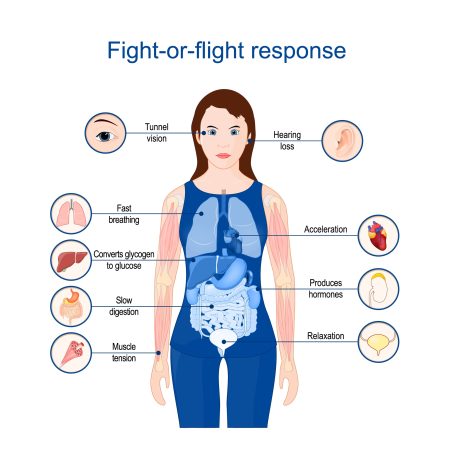
Sympathetic Nervous System
Activates during stress
Often called the “fight or flight” system
Increases heart rate, alertness, and energy mobilization
Parasympathetic Nervous System
Responsible for recovery and repair
Known as the “rest and digest” system
Slows heart rate and promotes relaxation
Both men and women rely on this same system. But research suggests there are average differences in how these systems are activated and regulated.
Stress Responses: Fight-or-Flight vs Tend-and-Befriend
One of the most well-known differences between male and female nervous system responses relates to stress.
The traditional explanation of stress response has long been the fight-or-flight model, first described by physiologist Walter Cannon in the early 20th century.
When the brain perceives danger, the body releases stress hormones such as:
adrenaline
norepinephrine
cortisol
These hormones prepare the body to either confront a threat or escape from it.
This response is present in both men and women.
However, research suggests women often display an additional pattern.
Psychologist Dr. Shelley Taylor at UCLA proposed what she called the “tend-and-befriend” response in a landmark study published in Psychological Review (2000).
Instead of responding primarily with aggression or withdrawal, women under stress often show a tendency to:
seek social support
nurture relationships
protect children or close family members
strengthen social bonds
This behavior appears to be influenced by the hormone oxytocin, which increases during stress and promotes bonding behaviors.
Estrogen enhances oxytocin activity, which may partly explain why social connection can have such a powerful calming effect for many women.
In practical terms, this means something important.
When women reach out to friends, talk through stress, or seek community support during difficult moments, this isn’t weakness.
It is a biologically supported nervous system regulation strategy.
Hormones Shape the Female Nervous System
One of the biggest differences between male and female nervous systems lies in hormonal influence.
The male hormonal environment tends to be more stable day-to-day.
The female hormonal environment, however, is dynamic and cyclical.
Hormones such as estrogen and progesterone interact directly with the brain, influencing neurotransmitters and neural networks involved in mood, cognition, and emotional regulation.
Research shows estrogen affects several important brain chemicals including:
serotonin (mood regulation)
dopamine (motivation and reward)
GABA (calming signals in the brain)
brain-derived neurotrophic factor (BDNF), which supports brain plasticity
According to neuroscience research, estrogen can enhance synaptic connections in the hippocampus and prefrontal cortex—regions involved in memory, learning, and emotional regulation (McEwen & Milner, 2017).
Progesterone also plays a role.
Metabolites of progesterone interact with GABA receptors, which can have calming and sedative effects on the brain.
These hormonal influences mean the female nervous system is constantly adjusting across:
the menstrual cycle
pregnancy
postpartum
perimenopause
menopause
This dynamic regulation can create periods of heightened sensitivity or resilience depending on hormonal shifts.
For many women, this becomes especially noticeable during perimenopause, when estrogen fluctuations become more unpredictable and the nervous system may feel more reactive to stress.
Free 28-Day Fascia Reset Email Course
Get our Free 28-day email course series to help with 1 or 2 exercises per day to release your fascia. One short lesson per day. Two minutes to read each.
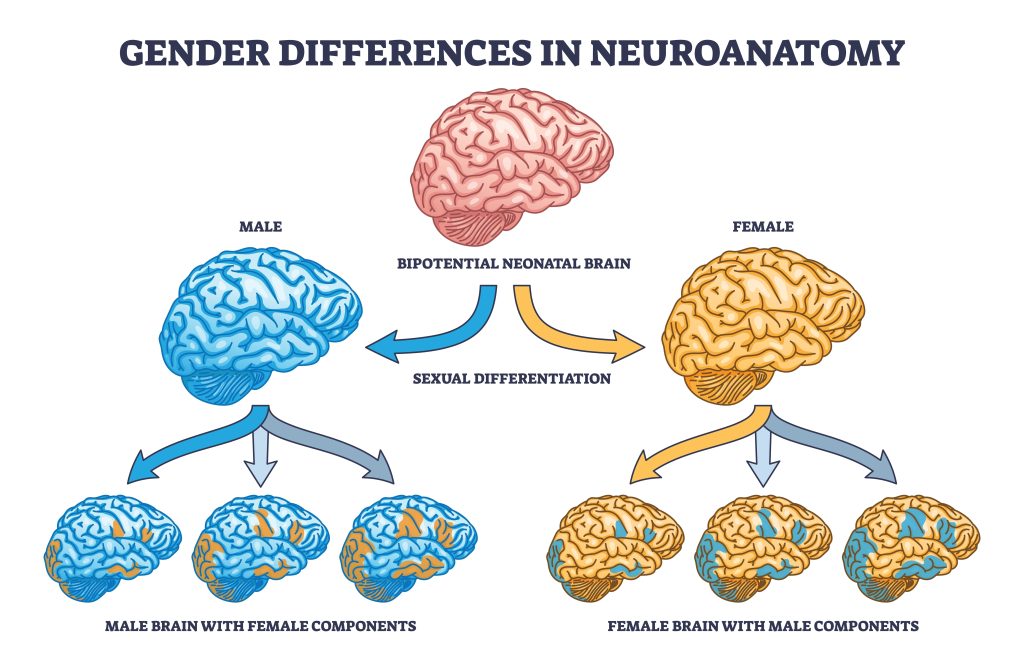
Brain imaging studies have also explored structural differences between male and female brains.
A large neuroimaging study from the University of Pennsylvania analyzed brain connectivity in over 900 individuals using diffusion tensor imaging.
The findings, published in Proceedings of the National Academy of Sciences in 2014, showed interesting patterns.
On average:
Male brains showed stronger connections within each hemisphere.
This type of wiring supports coordination between perception and action and may facilitate tasks involving motor skills and spatial navigation.
Female brains showed stronger connections between the two hemispheres.
This pattern may support integration between analytical and emotional processing networks.
Researchers suggested this connectivity could contribute to strengths in areas such as:
communication
emotional interpretation
memory integration
multitasking
It is important to emphasize that these are statistical patterns across large populations. Many individuals show mixed connectivity patterns.
Still, these findings highlight how brain organization can differ subtly between sexes.
Emotional Processing and Empathy
Functional MRI research has also examined how the brain processes emotional information.
Studies indicate that women often show greater activation in certain limbic regions when processing emotional stimuli, including:
the amygdala
anterior cingulate cortex
insula
These regions are involved in emotional awareness, empathy, and threat detection.
This does not necessarily mean women experience stronger emotions.
Rather, the nervous system may be more finely tuned to detect emotional cues and relational dynamics.
This heightened sensitivity can be advantageous in social environments, caregiving roles, and leadership positions that require emotional intelligence.
However, it may also contribute to increased emotional fatigue when stress levels are high.
Sensory Awareness and Environmental Sensitivity
Research also suggests women often display higher interoceptive awareness, which refers to the ability to sense internal bodily signals.
This can include awareness of:
heartbeat
hunger
fatigue
emotional shifts
subtle physical discomfort
This sensitivity is partly linked to the insula, a brain region that integrates bodily sensations with emotional awareness.
Greater sensory awareness can help individuals respond quickly to internal cues.
But it can also make environments with high stimulation—noise, multitasking, digital overload—feel overwhelming more quickly.
Many women report this type of sensory saturation during periods of high stress or hormonal shifts.
Stress Recovery Patterns
Another interesting area of research examines how men and women recover from stress.
Some studies suggest men may experience larger immediate spikes in cortisol, the primary stress hormone.
Women, however, may experience longer emotional processing periods, especially when stress involves relationships or social evaluation.
Psychologist Susan Nolen-Hoeksema’s research on rumination found that women are statistically more likely to engage in repetitive thinking about stressful events.
Rumination can prolong nervous system activation and delay recovery from stress.
However, it is important to note that social support and emotional expression can also act as powerful stress-reduction tools for women.
Free 28-Day Fascia Reset Email Course
Get our Free 28-day email course series to help with 1 or 2 exercises per day to release your fascia. One short lesson per day. Two minutes to read each.
Research has also identified differences in pain perception.
Women often report:
greater sensitivity to certain types of pain
stronger immune responses
higher rates of some autoimmune conditions
Estrogen interacts with immune signaling and inflammatory pathways, which may contribute to these differences.
Increased pain sensitivity may also relate to stronger interoceptive awareness.
While this can make discomfort more noticeable, it also means many women are highly attuned to early signals from their bodies.
This awareness can be valuable when learning to regulate stress, adjust habits, and support long-term health.
The Most Important Takeaway
It’s tempting to reduce these findings to simple statements like “men are logical and women are emotional.”
But neuroscience tells a much more nuanced story.
Both male and female nervous systems are incredibly sophisticated.
They simply emphasize different adaptive strategies.
A helpful way to think about it is this:
On average, the male nervous system prioritizes rapid mobilization and action.
The female nervous system prioritizes sensing, connection, and integration.
Both strategies have clear evolutionary advantages.
And both are necessary for a balanced, functioning society.
Why This Matters for Women in Midlife
Understanding nervous system biology becomes especially important for women navigating midlife transitions.
Hormonal shifts during perimenopause can influence:
stress resilience
sleep quality
emotional regulation
sensory sensitivity
energy levels
When women suddenly feel more reactive, overwhelmed, or emotionally sensitive during this stage of life, it is often not a failure of discipline.
It is the nervous system adapting to hormonal changes.
This is why practices that support nervous system regulation become so important in midlife.
These may include:
strength training
yoga and breathwork
adequate protein intake
restorative sleep
time in nature
supportive social relationships
Each of these habits influences the nervous system’s ability to shift back into parasympathetic recovery mode.
The Future of Women’s Health
For decades, most neuroscience research focused primarily on male subjects.
Today, scientists are increasingly recognizing the importance of studying the female brain and nervous system independently.
As this research expands, we are gaining a deeper understanding of how hormones, social dynamics, and biology interact to shape women’s health across the lifespan.
This knowledge allows women to approach wellness not from a place of self-criticism, but from a place of biological awareness and self-support.
Because when you understand how your nervous system works, you can finally start working with it instead of fighting against it.
I write 3 essays per week on Lifestyle Medicine for women in midlife on what is happening in the body and what to do about it. No fluff, no hype. Free.
References
Cahill L. (2006). Why sex matters for neuroscience. Nature Reviews Neuroscience.
Ingalhalikar M. et al. (2014). Sex differences in the structural connectome of the human brain. Proceedings of the National Academy of Sciences.
McEwen B. S., & Milner T. A. (2017). Understanding the broad influence of sex hormones on brain function. Nature Reviews Neuroscience.
Taylor S. E. et al. (2000). Biobehavioral responses to stress in females: Tend-and-befriend. Psychological Review.
Nolen-Hoeksema S. (2012). Emotion regulation and psychopathology: The role of gender differences. Annual Review of Clinical Psychology.
The smallest things can trigger disproportionate irritation or emotional reactions.
Many women wonder:
“Why does everything suddenly feel harder than it used to?”
The answer is rarely just one thing.
Midlife is a unique physiological and psychological transition that combines:
hormonal shifts
accumulated life stress
peak responsibility years
changes in sleep and metabolism
and the constant stimulation of modern life.
When these factors converge, the nervous system can become chronically overstimulated.
Understanding the signals your body is sending can help you recognize when your nervous system needs recovery rather than pushing harder.
Below are 10 common signs that overstimulation and stress may be affecting your nervous system during midlife.
What Is Nervous System Overstimulation?
Nervous system overstimulation occurs when the brain receives more sensory and emotional input than it can effectively process.
The body shifts into a prolonged stress response driven by the sympathetic nervous system.
This state can cause symptoms such as:
irritability
difficulty focusing
sleep disruption
emotional reactivity
sensory sensitivity
physical tension
Research shows that chronic stress alters brain regions involved in emotional regulation and executive function, particularly the prefrontal cortex.
Hormonal fluctuations during perimenopause can also influence neurotransmitters such as serotonin, dopamine, and GABA, which regulate mood, attention, and stress resilience.
This combination makes many midlife women especially vulnerable to nervous system overload.
1. Irritability Over Small Things
One of the first signs of overstimulation is disproportionate irritation over minor stressors.
Normal background noise suddenly feels overwhelming.
Small interruptions trigger frustration.
Clutter or multitasking becomes intolerable.
When the nervous system is stressed, the brain becomes less capable of filtering stimulation efficiently.
The result is reduced tolerance for environmental input.
2. Feeling “Touched Out” or Needing Physical Space
Another common midlife symptom is feeling physically overwhelmed by normal touch.
This may include:
needing personal space
feeling irritated by physical contact
wanting distance after a long day.
Heightened sensory sensitivity often occurs when cortisol levels remain elevated and the nervous system becomes hyper-responsive to stimulation.
Your body is essentially signaling that it needs less input and more recovery.
3. Difficulty Focusing or Making Decisions
Many women notice a sudden increase in decision fatigue.
Simple tasks feel mentally draining.
Planning meals, responding to emails, or organizing schedules requires more effort than it once did.
Estrogen fluctuations during perimenopause can influence dopamine pathways in the brain that support executive functioning and motivation.
When cognitive bandwidth decreases, decision-making feels exhausting.
4. A Strong Urge to Withdraw or Be Alone
Overstimulation often leads to a desire to withdraw from environments that feel too demanding.
You may feel the urge to:
cancel social plans
step away from conversation
seek quiet environments.
This response is not always depression.
Often it reflects sensory and emotional saturation.
Your nervous system simply needs fewer inputs.
5. Sleep Disruption Despite Physical Exhaustion
A common midlife paradox is feeling completely exhausted while struggling to sleep.
Stress hormones such as cortisol can interfere with the body’s ability to transition into restorative sleep cycles.
Hormonal changes during menopause are also associated with insomnia and disrupted sleep patterns.
When sleep quality declines, nervous system resilience decreases further.
6. Sensitivity to Noise, Light, or Digital Input
Modern environments expose us to constant stimulation.
Phones, screens, emails, background noise, and artificial lighting create an ongoing stream of sensory input.
When the brain reaches its processing capacity, even normal environments can feel overwhelming.
This can show up as:
intolerance to bright lights
irritation from background noise
discomfort with multiple conversations.
Reducing sensory load is often one of the fastest ways to calm an overstimulated nervous system.
7. Emotional Reactivity Followed by Guilt
Many women describe emotional reactions that feel stronger than the situation warrants.
This may include sudden:
anger
tears
frustration.
Moments later, confusion or guilt appears.
Hormonal changes combined with stress can temporarily reduce emotional regulation capacity.
This does not mean something is wrong with you.
It means your nervous system may be over capacity.
8. Physical Symptoms With No Clear Medical Cause
Stress does not only affect mood and focus.
It also appears through physical sensations.
Common symptoms include:
headaches
jaw clenching
digestive discomfort
chest tightness
shallow breathing.
These responses occur because chronic stress activates physiological threat systems that influence multiple body systems.
Your body is reacting to sustained pressure.
9. Loss of Patience for Multitasking
Many women spend years successfully juggling multiple responsibilities.
But during periods of nervous system overload, multitasking becomes exhausting.
The brain has limited processing capacity.
When stress consumes much of that capacity, additional tasks quickly become draining.
This is a signal to simplify demands rather than push harder.
10. Craving Silence, Darkness, or Stillness
Perhaps the clearest signal of nervous system overload is the desire for quiet and rest.
You may crave:
silence
dim lighting
time alone
stillness.
This instinct reflects the body’s attempt to shift away from chronic stimulation and toward regulation.
Your nervous system is asking for recovery.
Why Midlife Women Experience More Overstimulation
Several factors converge during this stage of life.
Hormonal Changes
Estrogen interacts with neurotransmitters involved in mood, attention, and emotional regulation.
Fluctuations during perimenopause can temporarily reduce stress resilience.
Chronic Stress Load
Many women in midlife are managing multiple roles simultaneously:
career demands
parenting
caregiving for aging parents
financial responsibilities.
This sustained pressure can overwhelm the nervous system.
Constant Digital Stimulation
Modern life introduces far more sensory input than previous generations experienced.
Phones, notifications, and screens keep the brain continuously engaged.
Without intentional breaks, the nervous system rarely resets.
How to Calm an Overstimulated Nervous System
Recovery does not require drastic life changes.
Often it begins with small shifts that restore regulation.
Helpful strategies include:
prioritizing sleep quality
limiting unnecessary sensory input
scheduling quiet recovery periods
spending time outdoors
engaging in movement or exercise
practicing breathwork or meditation
Lifestyle practices that support the nervous system can significantly improve resilience and emotional regulation.
Midlife Is Not Breakdown – It Is a Biological Signal
Feeling overstimulated does not mean you are weak.
It means your body is signaling a need for different rhythms of stress and recovery.
Midlife can become an opportunity to redesign your lifestyle in ways that support long-term health, energy, and emotional stability.
When women learn to recognize nervous system signals early, they often regain clarity, patience, and resilience.
The key is learning to listen.
I write 3 essays per week on Lifestyle Medicine for women in midlife on what is happening in the body and what to do about it. No fluff, no hype. Free.
By clicking “Submit” you agree to receive emails from The House of Rose and accept our web terms of use and privacy and cookie policy.
Your Privacy, our Priority.
In accordance with the current EU data protection laws, pelase take a minute to review the terms & conditions for using our services. Our terms describe how we use data and the options available to you.