Download Your 7-Day Menopause Diet Plan
Instant download a nutritionist-approved 7-day menopause diet meal plan to balance hormones, ease hot flashes, and support bone health. These downloadable guides provide daily menus, macro-tracking, and grocery lists to take the guesswork out of your nutrition.
The Menopause Diet Plan: A 7-Day Meal Plan, Expert Nutrition Guide & Foods That Help
If you’re navigating menopause and feel like your body is suddenly playing by different rules, you’re not imagining it. The hormonal shifts that happen during perimenopause and menopause, particularly the decline in estrogen, change how your body processes food, stores fat, builds muscle, and even regulates your mood and sleep.
The good news?
A well-designed menopause diet plan can make a meaningful difference. Research shows that the right combination of nutrients can reduce hot flashes by up to 40%, support bone density, improve sleep quality, and help manage the stubborn weight gain that so many women struggle with during this transition.
In this guide, we’ll walk you through exactly what to eat (and what to avoid), share a complete 7-day menopause diet meal plan with macros and calorie counts, give you quick recipes you can make in under 20 minutes, and show you how to calculate the right macro balance for your body. Whether you’re in early perimenopause or well into postmenopause, this plan is designed to help you feel like yourself again.
What Happens to Your Body During Menopause (And Why Diet Matters Now)
Menopause isn’t just about hot flashes and missed periods. It’s a fundamental metabolic shift. When estrogen levels drop, which typically begins in your early to mid-40s during perimenopause and continues through menopause (defined as 12 consecutive months without a period), your body undergoes a cascade of changes that directly affect how you should eat.
The Estrogen-Metabolism Connection
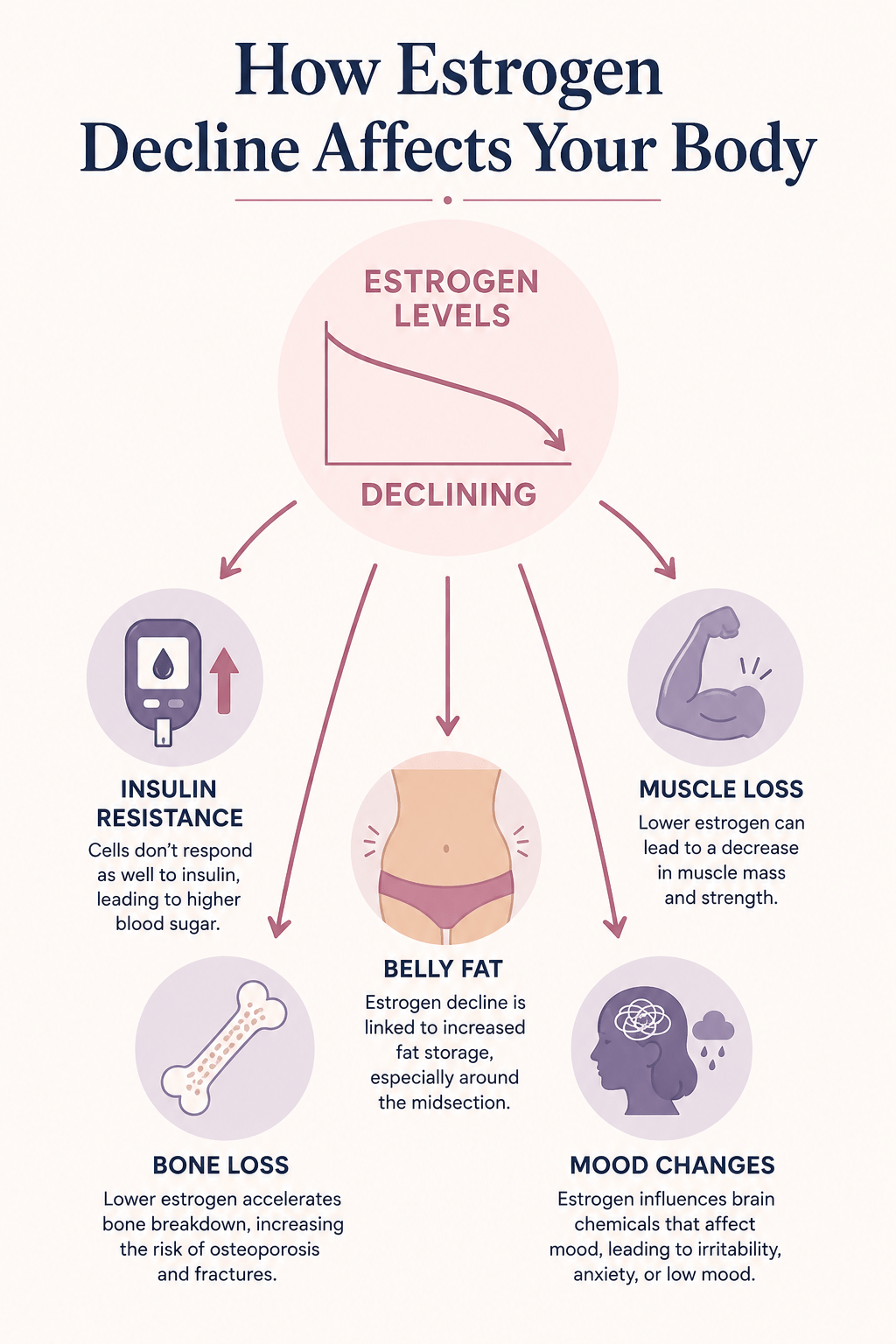
Estrogen plays a surprising role in metabolism. It helps regulate insulin sensitivity, supports lean muscle mass, and influences where your body stores fat. As estrogen declines:
Insulin resistance increases.
Your cells become less responsive to insulin, making it easier to gain weight and harder to lose it—even if you haven’t changed your eating habits.
Muscle mass decreases.
Without estrogen’s protective effect, you lose muscle faster. Since muscle burns more calories at rest than fat, your resting metabolic rate drops.
Fat redistribution shifts to the abdomen.
Instead of storing fat in the hips and thighs (which estrogen promotes), your body begins storing visceral fat around the midsection. This isn’t just a cosmetic concern—visceral fat is linked to heart disease, type 2 diabetes, and inflammation.
Bone density declines.
Estrogen helps maintain bone. Without it, bone loss accelerates, making dietary calcium, vitamin D, and weight-bearing exercise essential.
Serotonin & sleep are disrupted.
Estrogen supports serotonin production, so its decline can contribute to mood swings, anxiety, and poor sleep—all of which affect food choices and cravings.
This is precisely why the diet that worked in your 30s may not work now. Your body’s nutritional needs have genuinely changed—and a menopause diet plan accounts for those changes instead of fighting against them.
Download Your 7-Day Menopause Diet Plan
Instant download a nutritionist-approved 7-day menopause diet meal plan to balance hormones, ease hot flashes, and support bone health. These downloadable guides provide daily menus, macro-tracking, and grocery lists to take the guesswork out of your nutrition.
The Best Diet for Menopause: Key Principles
There’s no single “menopause diet” that works for everyone, but research consistently points to a few core principles that form the foundation of effective menopause nutrition. Think of these as your non-negotiables.
Prioritize Protein at Every Meal
Protein is the single most important macronutrient during menopause. It preserves lean muscle mass (which is actively declining), keeps you fuller longer, and has a higher thermic effect than carbs or fat—meaning your body burns more calories digesting it. Aim for 25–35 grams of protein per meal, or roughly 1 gram per pound of your ideal body weight per day.
Embrace Anti-Inflammatory Foods
Menopause increases systemic inflammation, which worsens joint pain, brain fog, and fatigue. A Mediterranean-style eating pattern—rich in olive oil, fatty fish, colorful vegetables, nuts, and herbs—has been shown in multiple studies to reduce menopausal symptoms and lower cardiovascular risk. This is arguably the best overall diet framework for menopause.
Don’t Fear Healthy Fats. They Support Your Hormones
Healthy fats are essential for hormone production and absorption of fat-soluble vitamins (A, D, E, K). Omega-3 fatty acids from salmon, walnuts, and flaxseed are particularly beneficial—they’ve been linked to reduced hot flash frequency and improved mood. Don’t cut fat below 25% of your daily calories.
Reduce Refined Carbs, Not All Carbs
Carbohydrates aren’t the enemy. But refined carbs (white bread, pastries, sugary cereals) spike blood sugar and worsen insulin resistance. Focus on complex carbohydrates—sweet potatoes, quinoa, oats, legumes, and whole fruits—which provide steady energy, fiber, and essential nutrients.
Hydration and Fiber Are Non-Negotiable
Declining estrogen can affect your body’s ability to retain moisture, making dehydration more common. Aim for at least 8 glasses of water daily. Fiber (25–30g/day) supports gut health, helps manage cholesterol, and keeps digestion regular—a common complaint during menopause. Bonus: fiber-rich foods also feed beneficial gut bacteria that help metabolize estrogen.
Recommended Macro Ranges for Menopause
|
Macronutrient |
% of Daily Calories |
Why It Matters |
|
Protein |
30–35% |
Preserves muscle, boosts satiety, supports metabolism |
|
Carbohydrates |
35–40% |
Provides energy and fiber; choose complex carbs |
|
Healthy Fats |
25–30% |
Supports hormones, brain health, reduces inflammation |
|
Fiber |
25–30g/day |
Gut health, cholesterol, blood sugar regulation |
For a deeper dive into macros for women over 50, read our complete guide here.
Foods to Eat During Menopause
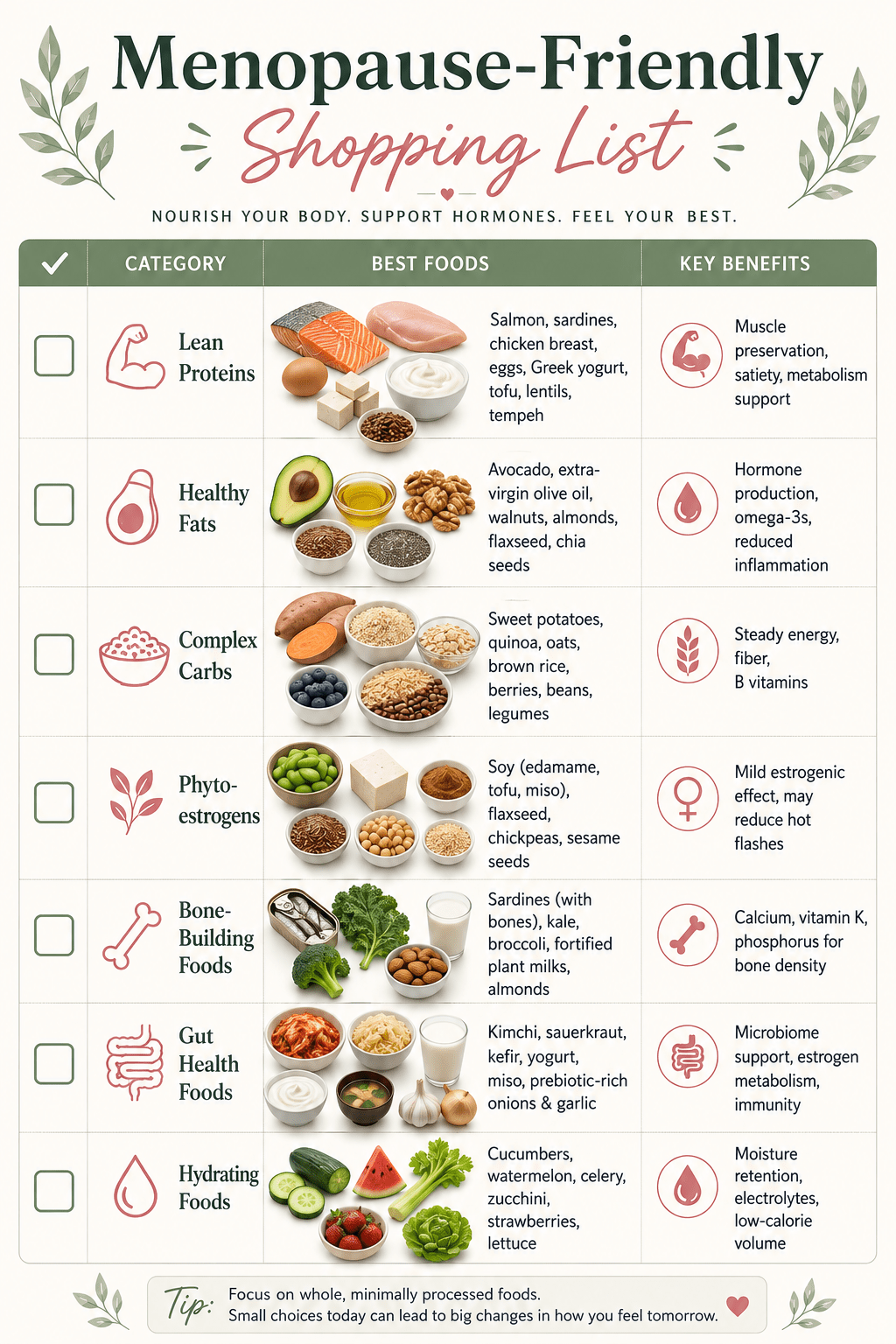
What you put on your plate can directly influence the severity of menopause symptoms. Here’s a category-by-category breakdown of the most beneficial foods to include in your menopause diet plan.
|
Category |
Best Foods |
Key Benefits |
|
Lean Proteins |
Salmon, sardines, chicken breast, eggs, Greek yogurt, tofu, lentils, tempeh |
Muscle preservation, satiety, metabolism support |
|
Healthy Fats |
Avocado, extra-virgin olive oil, walnuts, almonds, flaxseed, chia seeds |
Hormone production, omega-3s, reduced inflammation |
|
Complex Carbs |
Sweet potatoes, quinoa, oats, brown rice, berries, beans, legumes |
Steady energy, fiber, B vitamins |
|
Phytoestrogens |
Soy (edamame, tofu, miso), flaxseed, chickpeas, sesame seeds |
Mild estrogenic effect, may reduce hot flashes |
|
Bone-Building Foods |
Sardines (with bones), kale, broccoli, fortified plant milks, almonds |
Calcium, vitamin K, phosphorus for bone density |
|
Gut Health Foods |
Kimchi, sauerkraut, kefir, yogurt, miso, prebiotic-rich onions & garlic |
Microbiome support, estrogen metabolism, immunity |
|
Hydrating Foods |
Cucumbers, watermelon, celery, zucchini, strawberries, lettuce |
Moisture retention, electrolytes, low-calorie volume |
Download Your 7-Day Menopause Diet Plan
Instant download a nutritionist-approved 7-day menopause diet meal plan to balance hormones, ease hot flashes, and support bone health. These downloadable guides provide daily menus, macro-tracking, and grocery lists to take the guesswork out of your nutrition.
Spotlight: Phytoestrogens: Nature’s Hormone Helpers
Phytoestrogens are plant compounds that can weakly mimic estrogen in the body. Research suggests they may help reduce hot flash frequency and intensity, particularly soy isoflavones. Japanese women, who consume significantly more soy, report far fewer menopausal symptoms than Western women. Including 1–2 servings of soy-based foods daily (edamame, tofu, miso soup) is a simple, food-first approach to symptom management.
Flaxseed is another powerhouse—just 2 tablespoons daily provides lignans (a type of phytoestrogen), omega-3 ALA, and 4 grams of fiber. Grind it fresh and add to smoothies, oatmeal, or yogurt.
Foods to Avoid or Limit During Menopause
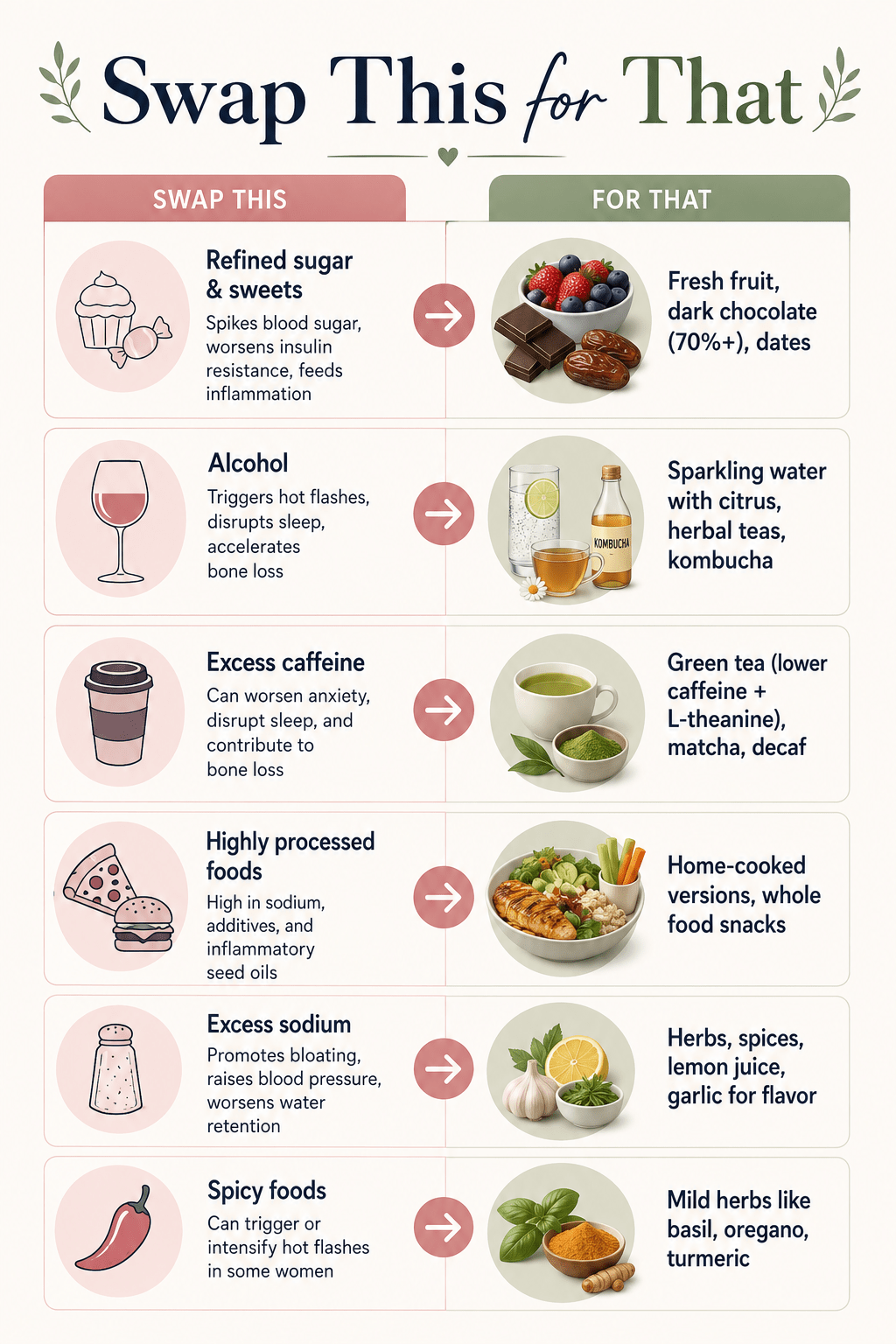
Just as certain foods can ease your menopause journey, others can make symptoms noticeably worse. You don’t need to eliminate these entirely, but being mindful about them can make a real difference.
|
Food/Category |
Why to Limit |
Better Swap |
|
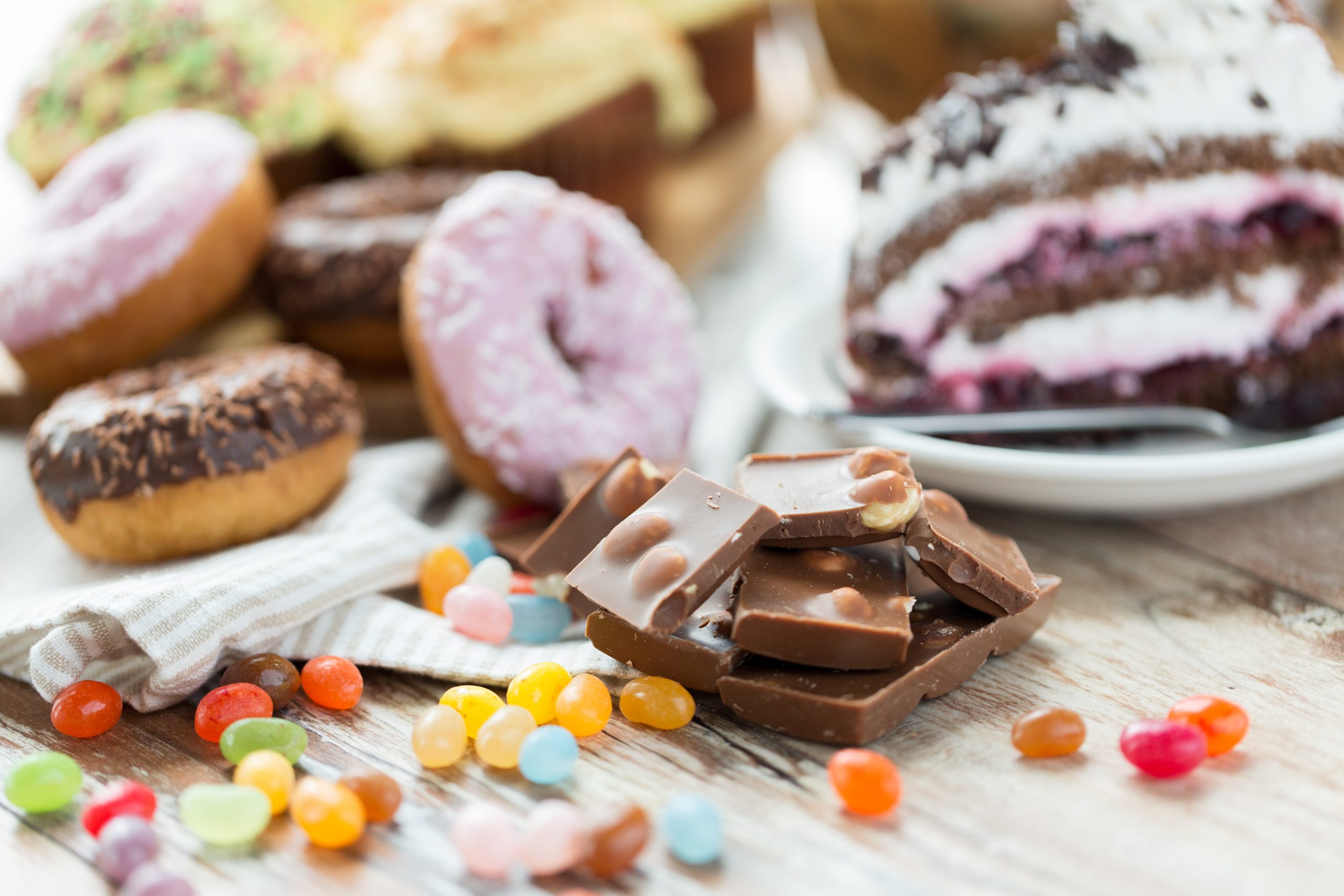
Refined sugar & sweets |
Spikes blood sugar, worsens insulin resistance, feeds inflammation |
Fresh fruit, dark chocolate (70%+), dates |
|
Alcohol |
Triggers hot flashes, disrupts sleep, accelerates bone loss |
Sparkling water with citrus, herbal teas, kombucha |
|
Excess caffeine |
Can worsen anxiety, disrupt sleep, and contribute to bone loss |
Green tea (lower caffeine + L-theanine), matcha, decaf |
|
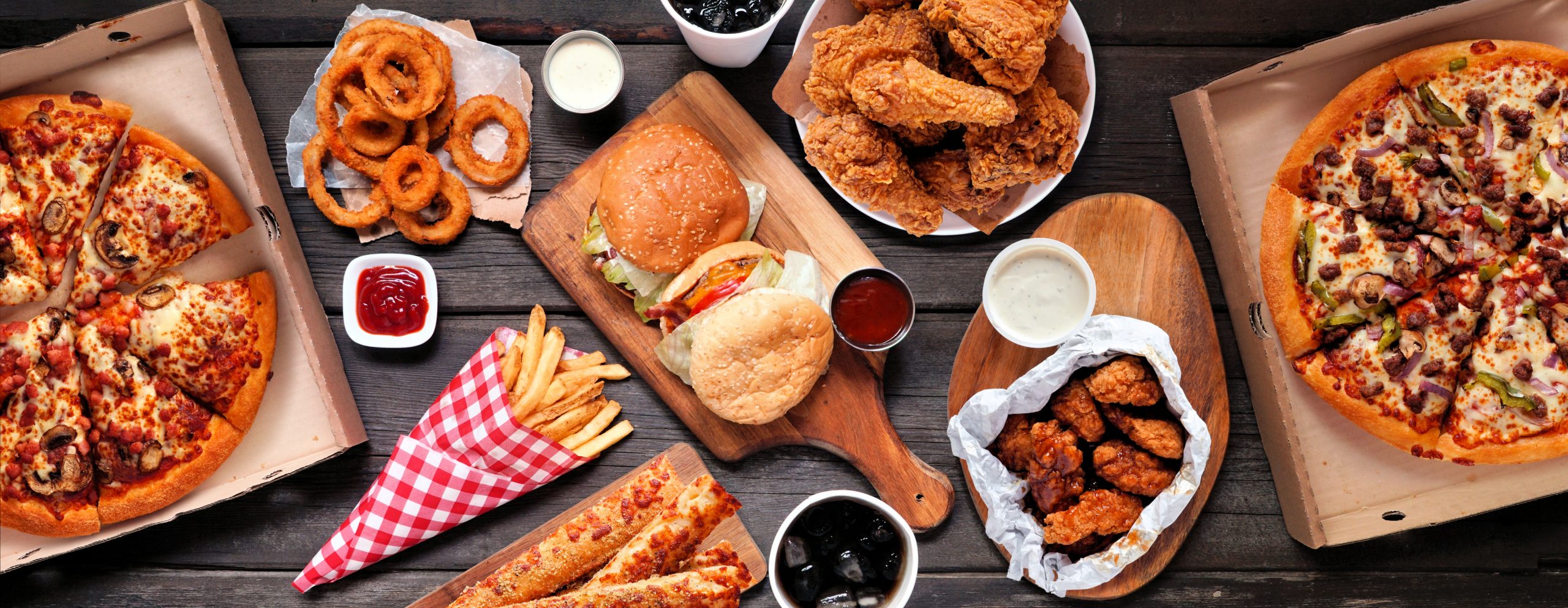
Highly processed foods |
High in sodium, additives, and inflammatory seed oils |
Home-cooked versions, whole food snacks |
|
Excess sodium |
Promotes bloating, raises blood pressure, worsens water retention |
Herbs, spices, lemon juice, garlic for flavor |
|
Spicy foods |
Can trigger or intensify hot flashes in some women |
Mild herbs like basil, oregano, turmeric |
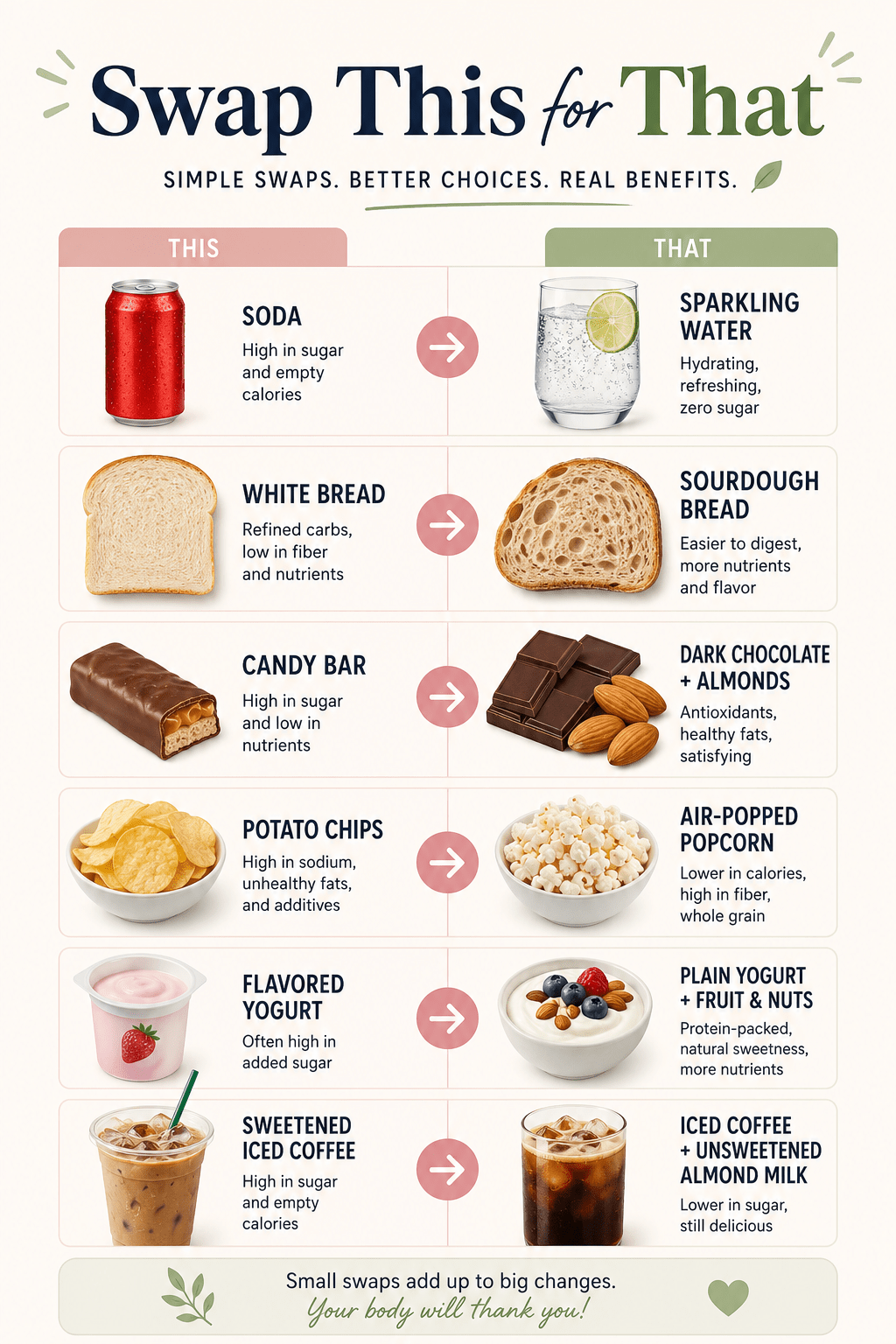
A practical approach: keep a simple food diary for two weeks. Note when hot flashes, poor sleep, or bloating occur and what you ate in the previous 4–6 hours. Patterns often emerge quickly, helping you identify your personal triggers.
Another smart approach is to re-create some of your favorite calorically dense meals and create your own version. For example, our loaded Big Mac protein bowl has all the cheeseburger flavors and a homemade Big Mac sauce, seasoned ground beef, sharp cheddar, pickles and it’s only at 450 calories and 30g protein per serving. So we still get the flavor we like without the added calories. For more ideas like this, check out our Menopause Friendly Mediterranean Recipe book with all the bells and whistles.
The 7-Day Menopause Diet Meal Plan
This 7-day menopause meal plan is designed around 1,600–1,800 calories per day with at least 90g of protein daily. Each day targets a specific menopause concern while providing balanced nutrition. Adjust portions up or down based on your individual calorie needs (see Section 6 for how to calculate your macros).
Download Your 7-Day Menopause Diet Plan
Instant download a nutritionist-approved 7-day menopause diet meal plan to balance hormones, ease hot flashes, and support bone health. These downloadable guides provide daily menus, macro-tracking, and grocery lists to take the guesswork out of your nutrition.
Day 1: Fiber & Protein Power
|
Meal |
What to Eat |
|
Breakfast |
Overnight oats with chia seeds, Greek yogurt, walnuts, and blueberries (380 cal, 24g protein) |
|
AM Snack |
Hard-boiled egg + handful of almonds (220 cal, 14g protein) |
|
Lunch |
Grilled chicken salad with quinoa, chickpeas, cucumber, tomato, feta, and olive oil dressing (480 cal, 38g protein) |
|
PM Snack |
Apple slices with 2 tbsp almond butter (200 cal, 5g protein) |
|
Dinner |
Baked salmon with roasted sweet potatoes and steamed broccoli (450 cal, 34g protein) |
|
Daily Totals |
~1,730 cal | 115g protein | 32g fiber |
Day 2: Bone Health Focus
|
Meal |
What to Eat |
|
Breakfast |
Spinach and feta omelet (3 eggs) with whole-grain toast (420 cal, 28g protein) |
|
AM Snack |
Kefir smoothie with frozen berries and ground flaxseed (200 cal, 12g protein) |
|
Lunch |
Sardine and avocado toast on sourdough with arugula salad (460 cal, 30g protein) |
|
PM Snack |
Edamame pods, lightly salted (180 cal, 17g protein) |
|
Dinner |
Turkey meatballs with marinara, sautéed kale, and brown rice (440 cal, 32g protein) |
|
Daily Totals |
~1,700 cal | 119g protein | 28g fiber |
Day 3: Hot Flash & Mood Support
|
Meal |
What to Eat |
|
Breakfast |
Tofu scramble with turmeric, spinach, bell peppers, and avocado (360 cal, 22g protein) |
|
AM Snack |
Greek yogurt with ground flaxseed and a drizzle of honey (210 cal, 18g protein) |
|
Lunch |
Miso soup with tofu + brown rice bowl with edamame and sesame-ginger vegetables (470 cal, 26g protein) |
|
PM Snack |
Trail mix: walnuts, pumpkin seeds, dark chocolate chips (200 cal, 6g protein) |
|
Dinner |
Grilled chicken breast with roasted Mediterranean vegetables and quinoa (440 cal, 36g protein) |
|
Daily Totals |
~1,680 cal | 108g protein | 30g fiber |
Day 4: Hormonal Balance
|
Meal |
What to Eat |
|
Breakfast |
Smoothie bowl: banana, spinach, protein powder, flaxseed, almond milk, topped with granola and berries (400 cal, 30g protein) |
|
AM Snack |
Cottage cheese with sliced peaches (180 cal, 16g protein) |
|
Lunch |
Lentil and vegetable soup with a side of whole-grain bread and hummus (460 cal, 24g protein) |
|
PM Snack |
Celery sticks with 2 tbsp tahini (150 cal, 5g protein) |
|
Dinner |
Baked cod with roasted Brussels sprouts, cherry tomatoes, and olive oil (420 cal, 34g protein) |
|
Daily Totals |
~1,610 cal | 109g protein | 34g fiber |
Day 5: Weight Management
|
Meal |
What to Eat |
|
Breakfast |
Egg white veggie frittata (mushrooms, tomatoes, zucchini) with a side of berries (320 cal, 26g protein) |
|
AM Snack |
Protein shake with almond milk and 1 tbsp peanut butter (250 cal, 28g protein) |
|
Lunch |
Grilled shrimp over mixed greens with avocado, black beans, corn, and lime vinaigrette (440 cal, 32g protein) |
|
PM Snack |
Sliced cucumber with tzatziki (100 cal, 4g protein) |
|
Dinner |
Lean beef stir-fry with broccoli, snap peas, bell peppers over cauliflower rice (430 cal, 36g protein) |
|
Daily Totals |
~1,540 cal | 126g protein | 26g fiber |
Day 6: Anti-Inflammatory
|
Meal |
What to Eat |
|
Breakfast |
Chia pudding made with coconut milk, topped with mango, shredded coconut, and hemp seeds (380 cal, 14g protein) |
|
AM Snack |
2 hard-boiled eggs with cherry tomatoes (200 cal, 14g protein) |
|
Lunch |
Wild-caught tuna poke bowl with brown rice, avocado, cucumber, edamame, and sesame (490 cal, 34g protein) |
|
PM Snack |
Handful of walnuts + a few dried apricots (180 cal, 4g protein) |
|
Dinner |
Turmeric-spiced chicken thighs with roasted cauliflower and chickpeas (440 cal, 36g protein) |
|
Daily Totals |
~1,690 cal | 102g protein | 29g fiber |
Day 7: Gut Health & Reset
|
Meal |
What to Eat |
|
Breakfast |
Kefir parfait with layered granola, mixed berries, ground flaxseed, and a drizzle of raw honey (380 cal, 20g protein) |
|
AM Snack |
Miso soup with seaweed and tofu (120 cal, 8g protein) |
|
Lunch |
Tempeh and vegetable grain bowl with kimchi, pickled red onion, tahini dressing, and mixed greens (470 cal, 28g protein) |
|
PM Snack |
Apple with 1 tbsp almond butter (180 cal, 4g protein) |
|
Dinner |
Herb-baked salmon with sauerkraut, roasted beets, and steamed asparagus (440 cal, 35g protein) |
|
Daily Totals |
~1,590 cal | 95g protein | 32g fiber |
Download Your 7-Day Menopause Diet Plan
Instant download a nutritionist-approved 7-day menopause diet meal plan to balance hormones, ease hot flashes, and support bone health. These downloadable guides provide daily menus, macro-tracking, and grocery lists to take the guesswork out of your nutrition.
How to Calculate Your Macros for Menopause Weight Loss
The meal plan above is set at approximately 1,600–1,800 calories, but your individual needs depend on your age, height, weight, activity level, and goals. Here’s a simple method to find your personalized starting point.
Step 1: Estimate Your Basal Metabolic Rate (BMR)
Use the Mifflin-St Jeor equation, which is the most accurate for women over 40:
BMR = (10 × weight in kg) + (6.25 × height in cm) – (5 × age) – 161
Step 2: Apply Your Activity Multiplier
|
Activity Level |
Multiplier |
Example |
|
Sedentary (desk job, no exercise) |
BMR × 1.2 |
Office work, minimal walking |
|
Lightly active (1–3 days/week) |
BMR × 1.375 |
Yoga, walking, light weights |
|
Moderately active (3–5 days/week) |
BMR × 1.55 |
Regular gym, hiking, cycling |
|
Very active (6–7 days/week) |
BMR × 1.725 |
Intense training, manual labor |
This gives you your Total Daily Energy Expenditure (TDEE).
Step 3: Set Your Calorie Target
• To maintain weight: eat at your TDEE
• To lose weight gradually: subtract 250–500 calories from TDEE (a 0.5–1 lb/week loss)
• Important: Don’t go below 1,200 calories without medical supervision. Extreme restriction slows metabolism and accelerates muscle loss—the opposite of what you want during menopause.
Step 4: Divide Into Macros
Example: 55-year-old woman, 150 lbs, 5’5″, moderately active, goal is gradual weight loss at 1lbs per week:
|
Step |
Calculation |
Result |
|
BMR |
(10 × 68) plus (6.25 × 165) divided by (5 × 55) minus 161 |
1,341 cal |
|
TDEE |
1,341 × 1.55 |
2,079 cal |
|
Target (−400 cal) |
2,079 – 400 |
1,679 cal |
|
Protein (30%) |
1,679 × 0.30 divided by 4 |
126g |
|
Carbs (38%) |
1,679 × 0.38 divided by 4 |
160g |
|
Fat (32%) |
1,679 × 0.32 divided by 9 |
60g |
Download Your 7-Day Menopause Diet Plan
Instant download a nutritionist-approved 7-day menopause diet meal plan to balance hormones, ease hot flashes, and support bone health. These downloadable guides provide daily menus, macro-tracking, and grocery lists to take the guesswork out of your nutrition.
Menopause Diet Recipes: Our 5 Quick Macro-Friendly Protein-Rich Favorites
These recipes are designed specifically for menopause nutrition. They are high in protein, rich in phytoestrogens and anti-inflammatory compounds, and ready in 20 minutes or less.
1. Turmeric-Ginger Salmon Bowl
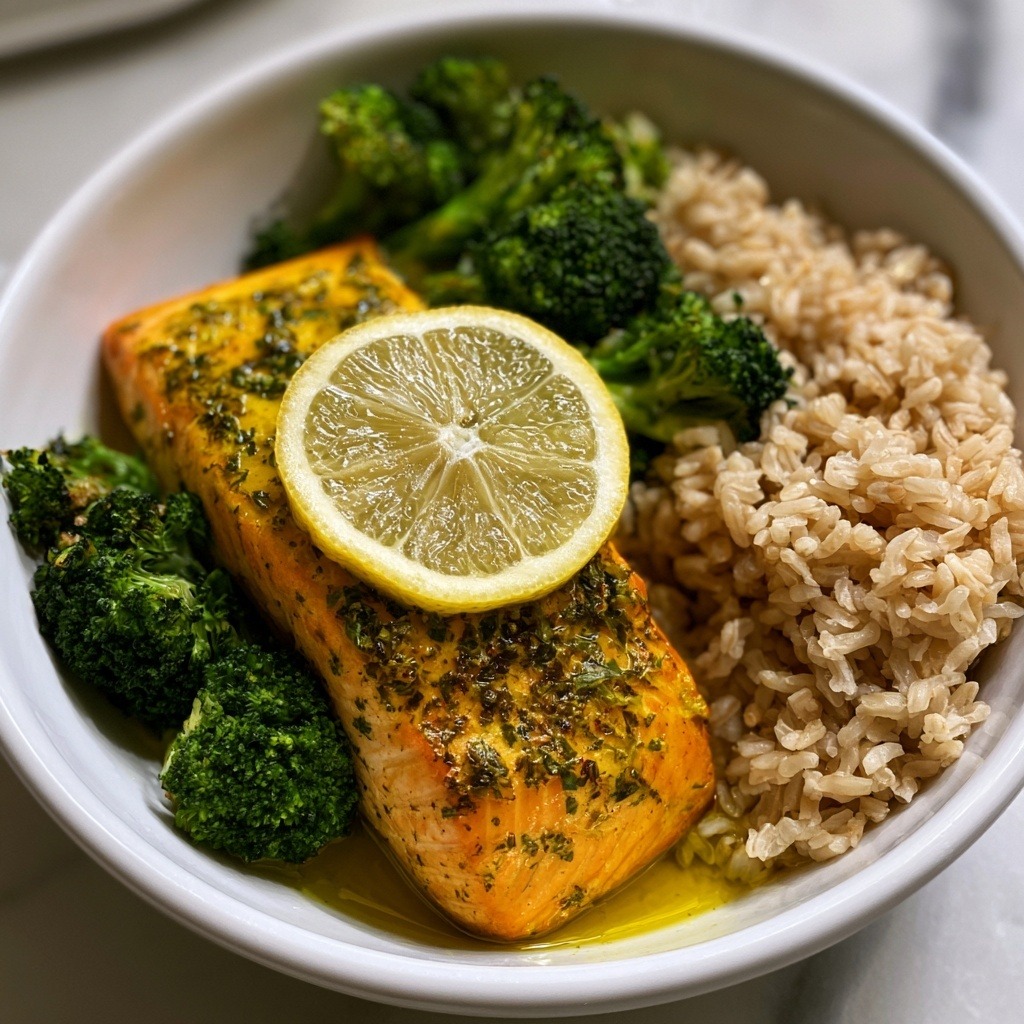
Supports: Anti-inflammation, omega-3s, hot flash reduction
Prep time: 18 min
Nutrition: 420 cal | 34g protein | 18g fat | 32g carbs
Ingredients: 4 oz salmon fillet, 1 tsp turmeric, ½ tsp ginger, ½ cup brown rice, 1 cup steamed broccoli, 1 tbsp olive oil, lemon juice, salt and pepper.
Directions: 1) Season salmon with turmeric, ginger, salt, pepper. Pan-sear in olive oil 4 min per side. 2) While salmon cooks, steam broccoli and warm pre-cooked brown rice. 3) Assemble bowl. Squeeze lemon over top. Serve immediately.
2. Flaxseed Power Smoothie
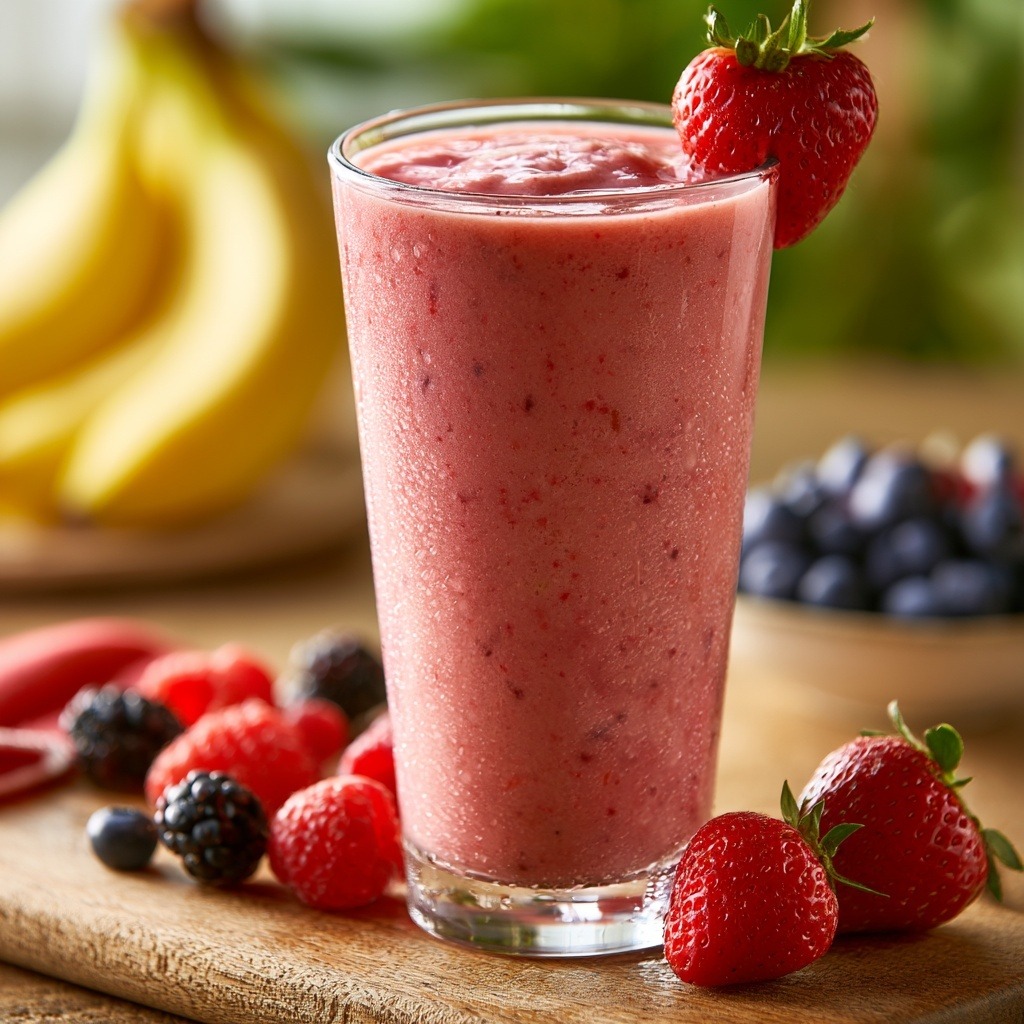
Supports: Phytoestrogens, fiber, bone health
Prep time: 5 min
Nutrition: 340 cal | 28g protein | 12g fat | 30g carbs
Ingredients: 1 scoop vanilla protein powder, 1 cup unsweetened almond milk, 2 tbsp ground flaxseed, ½ banana, ½ cup frozen mixed berries, 1 tbsp almond butter, handful of spinach.
Directions: 1) Add all ingredients to blender. 2) Blend on high for 60 seconds until smooth. 3) Pour and enjoy immediately. Add ice if you prefer it thicker.
3. Mediterranean Chickpea Salad
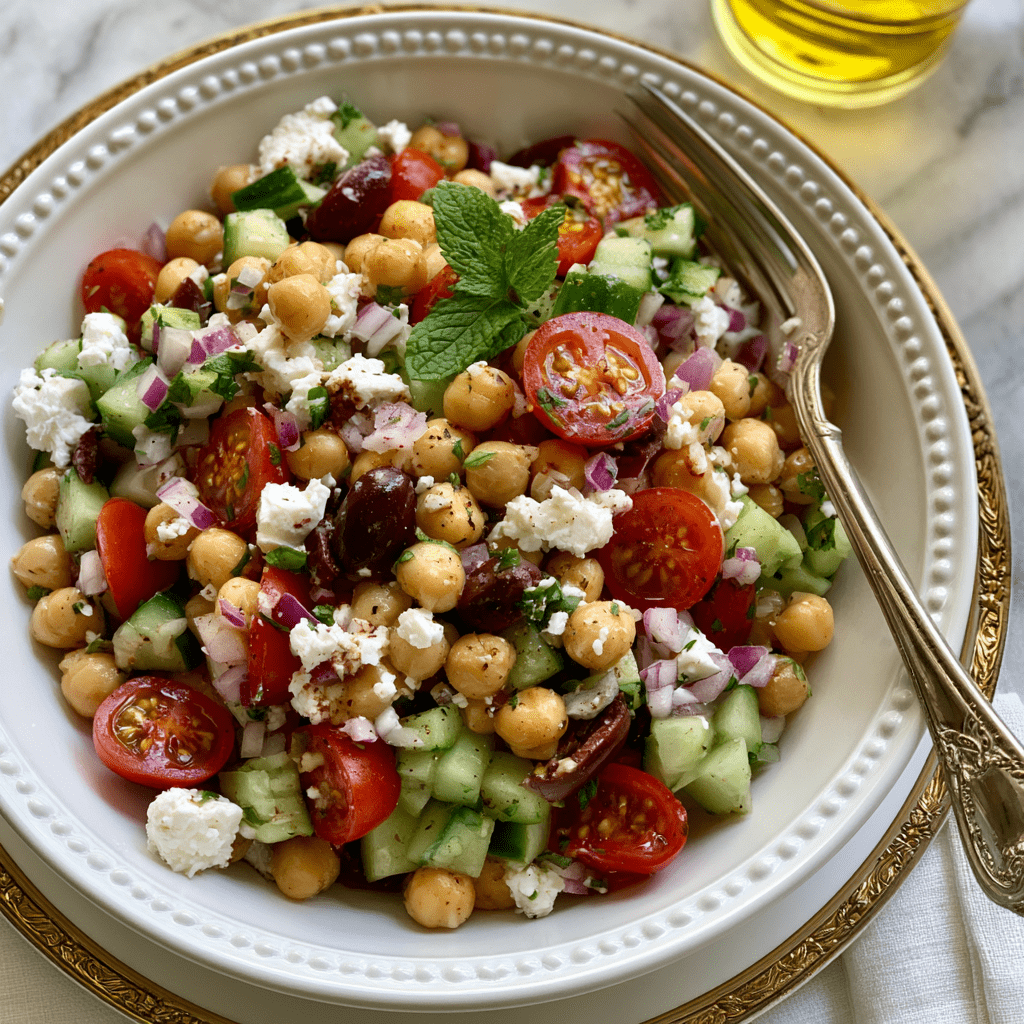
Supports: Phytoestrogens, gut health, weight management
Prep time: 10 min
Nutrition: 380 cal | 18g protein | 16g fat | 42g carbs
Ingredients: 1 can (15 oz) chickpeas (drained), 1 cucumber (diced), 1 cup cherry tomatoes (halved), ¼ red onion (diced), ¼ cup kalamata olives, 2 oz feta cheese, 2 tbsp extra-virgin olive oil, 1 tbsp red wine vinegar, fresh oregano.
Directions: 1) Combine chickpeas, cucumber, tomatoes, onion, and olives in a large bowl. 2) Whisk olive oil, vinegar, and oregano for dressing. Toss. 3) Crumble feta on top. Serves 2. Keeps refrigerated for 3 days.
Download Your 7-Day Menopause Diet Plan
Instant download a nutritionist-approved 7-day menopause diet meal plan to balance hormones, ease hot flashes, and support bone health. These downloadable guides provide daily menus, macro-tracking, and grocery lists to take the guesswork out of your nutrition.
4. Miso-Glazed Tofu Stir-Fry
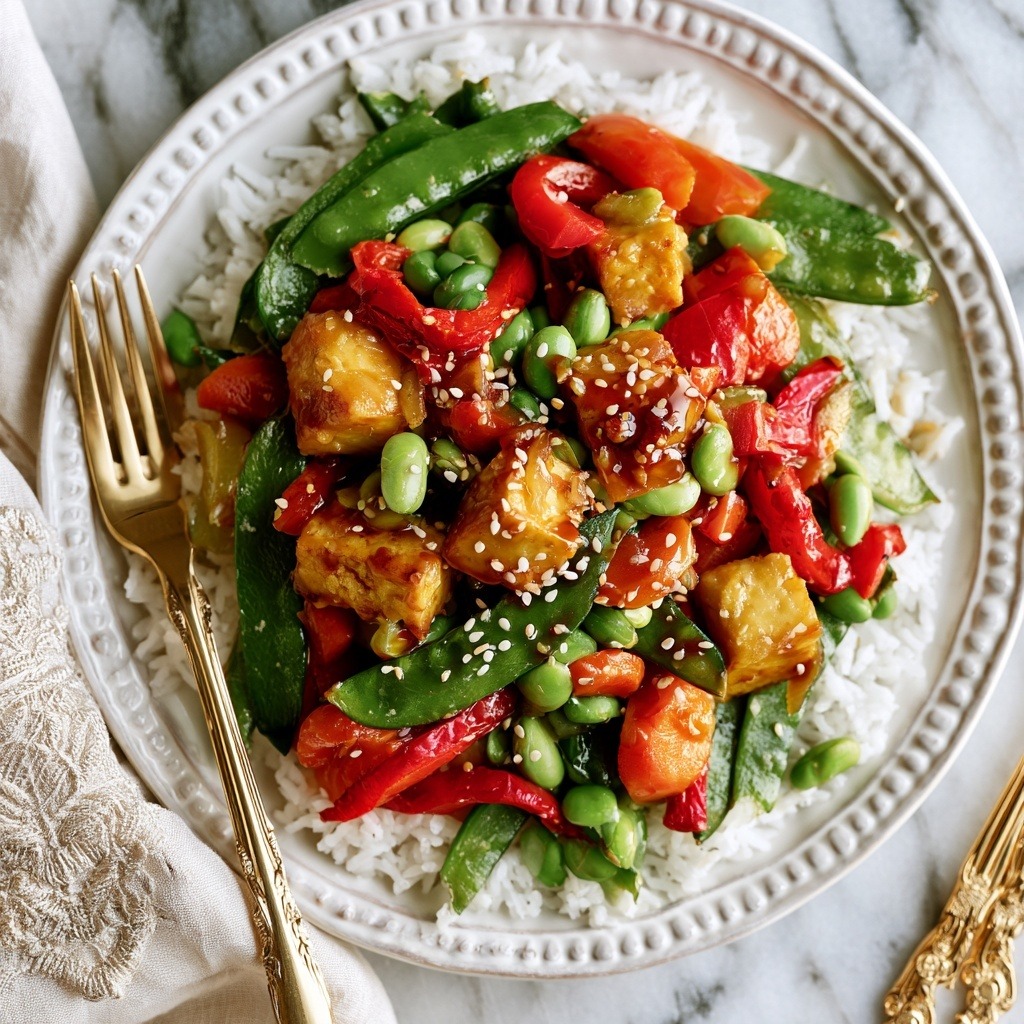
Supports: Phytoestrogens, hormonal balance, gut health
Prep time: 15 min
Nutrition: 360 cal | 24g protein | 14g fat | 36g carbs
Ingredients: 7 oz extra-firm tofu (pressed and cubed), 1 tbsp white miso paste, 1 tsp sesame oil, 1 tsp soy sauce, 1 tsp rice vinegar, 2 cups mixed stir-fry vegetables (snap peas, bell peppers, carrots), ½ cup edamame, sesame seeds.
Directions: 1) Mix miso, sesame oil, soy sauce, and vinegar into a glaze. 2) Pan-fry tofu cubes until golden (5 min), add vegetables and edamame, cook 3 min. 3) Drizzle glaze, toss to coat, sprinkle with sesame seeds. Serve over rice or solo.
5. Bone-Builder Egg Muffins (Meal Prep)
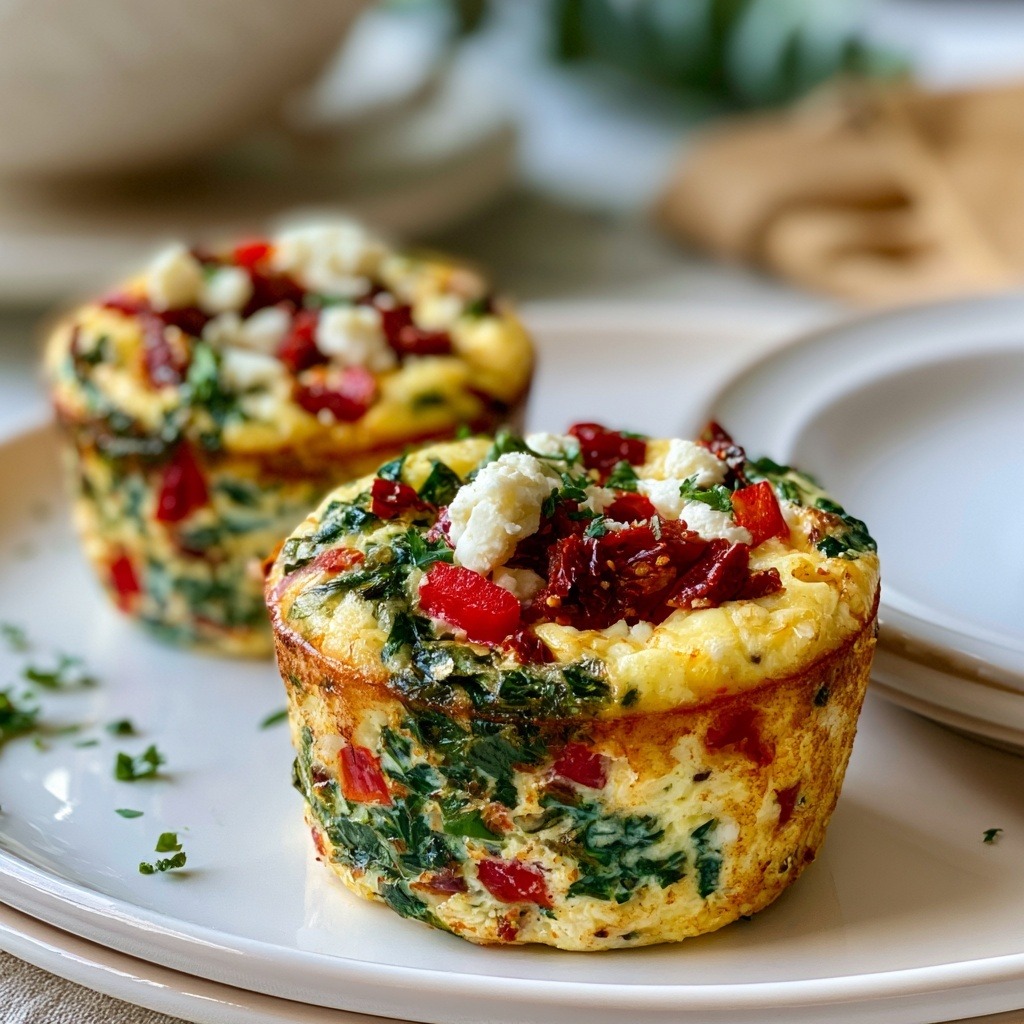
Supports: Bone health, weight management, protein
Prep time: 20 min (makes 6)
Nutrition: Per 2 muffins: 240 cal | 20g protein | 14g fat | 6g carbs
Ingredients: 6 eggs, ¼ cup chopped kale, ¼ cup diced bell peppers, 2 tbsp crumbled feta, 2 tbsp sun-dried tomatoes (chopped), salt, pepper, cooking spray.
Directions: 1) Preheat oven to 375°F. Spray 6-cup muffin tin. Divide vegetables, feta, and tomatoes evenly among cups. 2) Whisk eggs with salt and pepper, pour evenly into cups. 3) Bake 18–20 min until set. Store refrigerated up to 4 days. Reheat 30 sec in microwave.
Supplements That Support a Menopause Diet
A solid menopause diet plan should cover most of your nutritional needs through whole foods. But a few supplements have strong evidence behind them for women going through this transition—especially when dietary intake alone may fall short.
|
Supplement |
Recommended Dose |
Why During Menopause |
|
Vitamin D3 |
1,000–2,000 IU/day |
Essential for calcium absorption and bone density; most women over 50 are deficient |
|
Calcium |
1,200 mg/day (food and supplement) |
Bone loss accelerates after menopause; split into 2 doses for better absorption |
|
Magnesium Glycinate |
200–400 mg/day |
Supports sleep quality, reduces muscle cramps, helps with anxiety |
|
Omega-3 (EPA/DHA) |
1,000–2,000 mg/day |
Anti-inflammatory, supports heart and brain health, may reduce hot flashes |
|
Probiotics |
Multi-strain, 10B+ CFU |
Supports gut health and estrogen metabolism via the estrobolome |
|
Collagen Peptides |
10–15g/day |
Supports skin elasticity, joint health, and may help with bone density |
** Important: Always consult your healthcare provider before starting supplements, especially if you’re on hormone replacement therapy (HRT) or other medications. Quality matters—look for third-party tested brands (USP, NSF, or ConsumerLab verified).
🔗 Link to THOR shop supplement products if applicable — natural commercial integration
Download Your 7-Day Menopause Diet Plan
Instant download a nutritionist-approved 7-day menopause diet meal plan to balance hormones, ease hot flashes, and support bone health. These downloadable guides provide daily menus, macro-tracking, and grocery lists to take the guesswork out of your nutrition.
The Menopause Belly Fat Problem & What Works
Let’s address the elephant in the room: the stubborn midsection weight gain that seems to appear overnight during menopause. If you’ve been Googling “menopause belly fat” at 2 AM, you’re in good company—it’s one of the top concerns women have during this transition.
Why It Happens
The shift from subcutaneous fat (under the skin) to visceral fat (around organs) during menopause is driven by multiple factors: declining estrogen redirects fat storage to the abdomen, increased cortisol from stress and poor sleep promotes belly fat specifically, and declining muscle mass lowers your metabolic rate.
What Works (Evidence-Based)
Protein-forward eating (this article’s foundation).
Higher protein intake preserves lean muscle, which is your primary metabolic engine. Studies show women over 50 who eat 1g protein per pound of ideal body weight lose significantly more visceral fat than those on standard diets.
Strength training 2–3x per week.
This is non-negotiable. Cardio alone won’t cut it. Resistance training builds and preserves the muscle mass that keeps your metabolism humming. Even bodyweight exercises such as squats, push-ups, lunges – to make a difference.
Strength training 2–3x per week.
This is non-negotiable. Cardio alone won’t cut it. Resistance training builds and preserves the muscle mass that keeps your metabolism humming. Even bodyweight exercises such as squats, push-ups, lunges – to make a difference.
Download Your 7-Day Menopause Diet Plan
Instant download a nutritionist-approved 7-day menopause diet meal plan to balance hormones, ease hot flashes, and support bone health. These downloadable guides provide daily menus, macro-tracking, and grocery lists to take the guesswork out of your nutrition.
Prioritize Sleep – 7 to 8 hours.
Poor sleep increase ghrelin (the hunger hormone), it decreases leptin (the sateity hormone) and it elevates cortisol. This creates a triple threat for fat accumulation. A consistent sleep routine is a great weight-management tool.
Manage stress actively.
Chronic stress equals chronic cortisol which equals visceral fat storage. Practices like walking in nature, meditation, breathework and daily unstructured downtime can directly impact cortisol levels.
Cut refined carbs and alcohol.
These are the two. biggest dietary contributors to visceral fat in midlife. You dont have to eliminate them completely but reducing them will have a disproportional impact on belly fat specifically.
Our wellness and yoga retreats for women offer an immersive reset that combines nutrition coaching, movement and stress management in a support environment.
Frequently Asked Questions about Menopause Weight Management
What is the best diet for menopause weight loss?
A Mediterranean-style diet rich in lean protein, healthy fats, vegetables, and whole grains is consistently supported by research as the best overall eating pattern for menopause weight loss. The key is adequate protein (30–35% of calories) to preserve muscle, anti-inflammatory foods to reduce systemic inflammation, and enough fiber (25–30g/day) to support gut health and blood sugar regulation. Avoid extreme calorie restriction—it backfires during menopause by slowing an already-declining metabolism.
How many calories should a menopausal woman eat per day?
It depends on your age, height, weight, and activity level, but most menopausal women need between 1,400–1,800 calories for gradual weight loss and 1,800–2,200 for maintenance. Use the Mifflin-St Jeor equation in Section 6 to calculate your personalized target. The most important factor isn’t total calories—it’s the quality and macro balance of those calories.
Can you lose belly fat after menopause?
Yes, but it requires a different approach than what worked before. The combination of higher protein intake, strength training 2–3 times per week, adequate sleep, and stress management is the evidence-based formula for reducing menopausal belly fat. Spot reduction doesn’t work—you need to reduce visceral fat systemically through nutrition and lifestyle changes.
Is intermittent fasting good during menopause?
The evidence is mixed. Some women report benefits from a gentle 12:14 or 14:10 fasting window (simply not snacking after dinner and delaying breakfast slightly). However, aggressive fasting patterns (16:8 or longer) can increase cortisol levels, worsen sleep, and trigger binge eating in some menopausal women. If you try it, start with a mild 12-hour overnight fast and monitor how your body responds. Prioritize adequate protein and nutrition quality over fasting duration.
What foods trigger menopause symptoms?
Common triggers include alcohol (hot flashes, disrupted sleep), excess caffeine (anxiety, bone loss), refined sugar (blood sugar crashes, inflammation), spicy foods (hot flashes), and highly processed foods (inflammation, bloating). However, triggers vary by individual—keeping a food diary for 2 weeks can help identify your personal sensitivities.
Download Your 7-Day Menopause Diet Plan
Instant download a nutritionist-approved 7-day menopause diet meal plan to balance hormones, ease hot flashes, and support bone health. These downloadable guides provide daily menus, macro-tracking, and grocery lists to take the guesswork out of your nutrition.
Does the Mediterranean diet help with menopause?
Yes. Multiple large studies have found that a Mediterranean diet reduces the severity of menopausal symptoms including hot flashes, mood disturbances, and sleep disruption. It’s also associated with lower cardiovascular risk, better bone density, and healthier body composition in postmenopausal women. The emphasis on olive oil, fatty fish, vegetables, nuts, and legumes provides the anti-inflammatory and nutrient-dense foundation that menopausal bodies need.
How much protein do I need during menopause?
Most nutrition experts recommend 1.0–1.2 grams of protein per kilogram of body weight for menopausal women, or roughly 25–35 grams per meal spread across 3–4 eating occasions. If you’re actively strength training (which you should be), aim for the higher end. Protein sources should be varied—include both animal (fish, eggs, poultry, dairy) and plant-based (tofu, lentils, chickpeas, tempeh) options.
Your Next Steps
Menopause is a transition. And while you can’t control the hormonal changes your body is going through, you have enormous power over what you feed it. A thoughtful menopause diet plan, combined with regular movement, adequate sleep, and stress management, can transform how you feel during this chapter.
Here’s where to start:
1. Download the 7-day meal plan PDF and follow it for one week. Just one week. Notice how your energy, sleep, and mood respond.
2. Calculate your personal macros using the formula in Section 6. Knowing your numbers removes the guesswork.
3. Add one phytoestrogen-rich food daily like ground flaxseed in your morning smoothie or a serving of edamame with lunch.
4. Start strength training if you haven’t already. Even 20 minutes, 2–3 times per week, makes a measurable difference in metabolism and body composition.
And if you’re ready for an immersive reset where nutrition coaching, fitness programming, and wellness support come together in a transformative experience, you can also explore our women’s wellness retreats.
They’re designed specifically for women navigating this exact transition.
Download Your 7-Day Menopause Diet Plan
Instant download a nutritionist-approved 7-day menopause diet meal plan to balance hormones, ease hot flashes, and support bone health. These downloadable guides provide daily menus, macro-tracking, and grocery lists to take the guesswork out of your nutrition.

 While stroke incidence is lower in women, transitioning to menopause is when estrogen levels drop and