

Our Summer Flash Sale is On!
Get the discount code below:
Wellness & Yoga Women’s Retreats Near Knoxville,TN and the Smoky Mountains: A Founder’s Insight Guide
If you have been searching for a wellness retreat near Knoxville or anywhere in the Smoky Mountains, you have already done the most important part of the work, which is recognizing that your body needs something more than a weekend off. This guide covers what makes the Knoxville and Smoky Mountain region one of the strongest wellness retreat destinations in the country, what separates a properly built midlife retreat from a softer weekend getaway, the geography that does half the healing work before you ever unroll a mat, and the full picture of what we built at The House of Rose for women in perimenopause, menopause, and post-menopause.
I am Terry Tateossian, founder of THOR. I built our retreat property in the Smoky Mountains specifically because I went through early-onset menopause at 41, lost 80 pounds in midlife, ran a global creative agency, raised two children, and could not find a single retreat in the United States that was actually built for the body I was in. The retreat I built is the one I wish had existed for me a decade ago.
This article is the founder’s honest guide. Read it as a comparison framework for any retreat you are considering, even if you decide THOR is not the right fit. The criteria below apply universally.
1. Why Knoxville and the Smoky Mountains Became a Top Wellness Retreat Destination
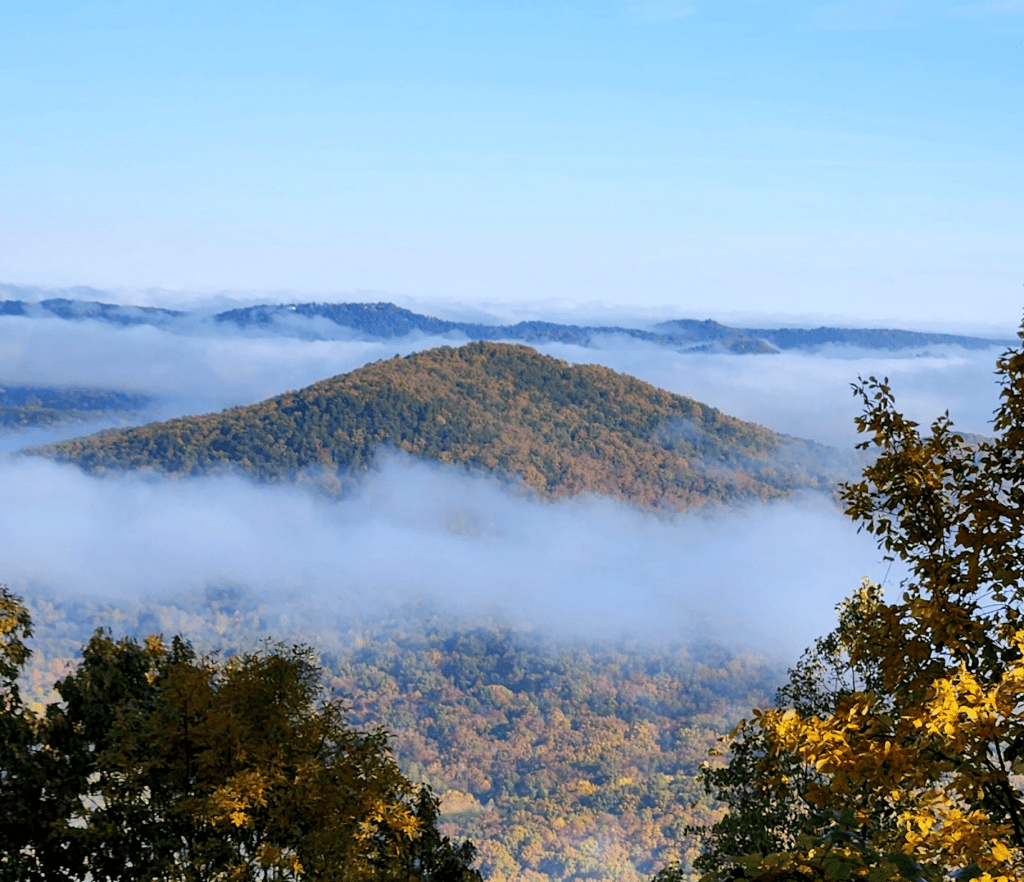
Five years ago, if you searched for a wellness retreat near Knoxville, the results were sparse. The state was not on the wellness map. That has shifted, and the shift has happened for specific reasons that matter if you are choosing a retreat for the first time.
The first reason is geography.
The Smoky Mountains in the eastern part of Tennessee are the oldest mountain range in North America, with one of the densest forest canopies in the world. Published research on time spent in dense forest shows real biological effects on cortisol, autonomic nervous system balance, immune function, and sleep architecture. The Cherokee called this region the place of the blue smoke for the mist that rises from the trees in the mornings. For a body that has been operating in chronic sympathetic activation, the forest itself becomes part of the medicine.
The second reason is accessibility.
Knoxville (airport code TYS) sits within a 90-minute flight of roughly 70 percent of the United States population. You can land at TYS from most major cities without a connection, which matters when you are trying to do a five-day restorative reset without losing a full day at each end to travel.
The third reason is cost.
A five-night all-inclusive wellness retreat in East Tennessee typically runs about half of what an equivalent stay would cost in California or Sedona, with comparable or better food, slower service, and zero international travel risk.
The fourth reason is one of the most underrated advantages of the region.
East Tennessee is one of the few places in the United States where you can put a retreat in actual wilderness and still have a working hospital, ER, and pharmacy within 25 minutes. For women in their forties, fifties, and sixties, this is not a small consideration. Most of us have something going on, whether it is blood pressure, thyroid, autoimmune flare-ups, or perimenopause symptoms that can show up unexpectedly on day three of a trip. The wilderness-meets-infrastructure setup of the Knoxville region is a quiet selling point that almost no other retreat destination offers.

2. What Makes a Wellness Retreat Near Knoxville Actually Worth the Trip
The Knoxville and Smoky Mountain region has a wide range of properties marketing themselves as wellness retreats. The differences between them are large, and the wrong choice can leave a midlife woman more depleted than when she arrived. Here is the comparison framework I use both as a founder and as a coach.
A properly built midlife wellness retreat should hit most or all of the following criteria. Use this as a checklist for any retreat you are considering, including ours.
|
Criteria |
What to Look For |
What to Avoid |
|
Group size |
Capped at 12 women per session |
Open enrollment or groups of 20+ |
|
Food |
30 to 40 grams of protein per meal, real vegetables, slow carbohydrates, healthy fats |
Juice cleanses, smoothie bowls as main meals, intermittent fasting protocols, low-protein menus |
|
Yoga style |
Restorative and yin yoga as the foundation, with optional stronger sessions |
Hot vinyasa or power yoga as the primary practice |
|
Schedule |
Flexible afternoon sessions, built-in rest time, optional rather than mandatory attendance |
Back-to-back demanding sessions with no breaks |
|
Recovery modalities |
Massage, fascia work, lymphatic drainage, sauna, red light, cold water included or accessible |
Recovery work sold only as expensive add-ons |
|
Founder presence |
Founder lives in the work and is on the property |
Founder unreachable, never on site, or unnamed |
|
Integration support |
Post-retreat coaching access and a home practice you can keep |
Drop-off at the airport with no follow-up |
|
Published schedule |
Day-by-day schedule available before you book |
Vague marketing copy with no operational detail |
|
Maximum group size disclosed |
Yes, publicly |
No cap published |
|
Founder credentials |
Named, with relevant certifications and lived experience |
Anonymous or generic “expert team” framing |
Insight from Terry Tateossian, founder of The House of Rose: “I built the criteria in that checklist after spending years comparing what worked for the women in my coaching practice against what most retreats actually deliver. The gap is wider than most people realize. A retreat marketed as ‘wellness’ can still be built for a 28-year-old yoga teacher’s body, and a midlife woman will pay full price to leave more depleted than she arrived. The single highest predictor of whether a retreat will work for a midlife body is whether the founder has lived inside that body herself.”
3. The Geography Advantage: Why the Smoky Mountains Heal the Nervous System
The geography of the Smoky Mountains is a meaningful part of what makes a retreat in this region different from a retreat anywhere else. The following points apply to any property in the East Tennessee mountain region, including ours.
Forest density.
The Great Smoky Mountains have one of the densest forest canopies in the world. Published research on shinrin-yoku (the Japanese practice of forest bathing) consistently shows reduced cortisol, reduced sympathetic nervous system activity, increased parasympathetic activity, and increased natural killer cell activity after time spent in dense forest. The biological effect is real and measurable.
Elevation.
The property elevations across the East Tennessee retreat region generally sit between 1,500 and 4,000 feet, which is the sweet spot for women in midlife. High enough to slightly boost red blood cell production and improve sleep quality. Low enough that altitude headaches and insomnia are not a problem.
Our Summer Flash Sale is On!
Get the discount code below:
Air quality.
The deep Smoky Mountain region has some of the cleanest air in the eastern United States. There is published research linking air quality to inflammation markers, sleep quality, and hot flash frequency in perimenopausal women.
Water.
The streams and springs of the East Tennessee mountains run cold and mineral-rich. Cold water on the face and neck has well-documented vagal effects.
Seasonality.
The Smoky Mountains have a particular sweet spot in late spring (mid-April through mid-June) and early fall (mid-September through October) when the weather is mild, the bug pressure is low, the forest is at peak activity, and the light is mood-elevating. These are the windows where wellness retreats in this region work the hardest for guests.
Spotlight: The Lived Experience of Forest Immersion
Most women who arrive at a Smoky Mountain retreat report a felt shift within the first 24 to 48 hours, where sleep gets noticeably deeper, the chest unclamps, and the mental looping that has been running for years quiets down. The biology behind this is real. Forest immersion shifts the autonomic nervous system into parasympathetic dominance within hours, not days. The five days of a properly built retreat compound this initial shift into something that the body actually remembers after the guest goes home.
4. Inside The House of Rose: The Deeply Restorative Yoga & Nature Retreat
“Our Deeply Restorative Yoga and Nature Retreat at THOR is the retreat I built because I needed it and could not find it. Below is the full picture of what is included and what makes the program different from a generic wellness weekend.” ~ Terry Tateossian
The retreat runs five days and four nights. The group is capped at 12 women per session. The property is approximately 75 minutes from Knoxville (TYS) airport, deep in the Smoky Mountains. All meals are included. Airport transport is available. The recovery and spa modalities are available to be added into the program.
The five practices the program is built around:
- Slow arrival on day one, with gentle transport from the airport, a low-key check-in, a real first meal, and an early lights-out. The first 24 hours are designed to let the body recognize it is somewhere different from home.
- Real whole food at every meal, with 30 to 40 grams of protein, real vegetables, slow carbohydrates, and healthy fats. No juice cleanses, no fasting protocols, no smoothie-bowls-as-main-meals.
- Body work that actually changes the tissue. Foam rolling, fascia release, lymphatic brushing, massage, red light therapy, and cold water exposure are integrated into the schedule.
- Community without performance. Twelve women per retreat is the ceiling. The group is small enough that everyone is seen, heard, and known by the end of day one.
- Integration support extending 30 days after the retreat. A daily home practice. The Macro Calculator framework. Follow-up coaching access. The option of joining our Monthly Personal Training and Nutrition Coaching Program or the sixteen-week Age With Strength Program for sustained 1:1 work afterward.
Insight from Terry Tateossian, founder of The House of Rose: “The first 48 hours of any retreat we run are designed around one principle. The body has to recognize it is safe before it will let go of anything. We slow the transport, the check-in, the first meal, the first yoga session, and the first night of sleep. By day three, the women in the group are sleeping through the night for the first time in years. That is the foundation everything else is built on, and it is the part most retreats skip because they are trying to look like they are delivering value through activity.”
5. The Schedule: A Day-by-Day Look at Five Days at THOR
The schedule is designed for midlife bodies. The pace is intentional. Each day has a different theme, and the cumulative effect of five days is what produces the reset.
|
Day |
Morning |
Midday |
Afternoon |
Evening |
|
Day 1 |
Airport pickup from Knoxville (TYS). Slow arrival, check-in. |
Welcome snack with introductions. |
Optional gentle restorative post-travel yoga, property tour, forest walk. |
Real dinner. Early lights-out. |
|
Day 2 |
Diaphragmatic breathwork, gentle morning yoga, breakfast, mountain / nature walk. |
Protein-forward lunch. Rest window. |
Choose: fascia workshop, massage, lymphatic protocol, forest bathing, journaling workshop, macro nutrition workshop, midlife protocols workshops. |
Yin-storative yoga & group dinner. Rest. |
|
Day 3 |
Breakfast, Strength foundations session, breathwork, morning gentle Vinyasa yoga. |
Lunch. Quiet hour. |
Choose: red light therapy, Tai Chi class, cold water immersion in waterfall, hike. |
Restorative yoga & dinner. |
|
Day 4 |
Breakfast, morning gentle yoga, movement and nervous system integration. |
Lunch. Rest window. |
Spa block: massage, facial work, body therapies. |
Group dinner, restorative yoga, integration conversation, early lights-out. |
|
Day 5 |
Breakfast, closing yoga & pilates class, breathwork, integration practice. |
Goodbyes. |
Airport transport back to Knoxville (TYS). |
Home with daily practice and follow-up access. |
The schedule is built with the flexibility most midlife women need. Sessions are optional rather than mandatory. If a woman wakes up at 8 a.m. instead of 6 because she had hot flashes from 3 to 5 a.m., she sleeps until 10 and joins the group at lunch. The retreat is designed around the possibility that the body might need to override the schedule.
Our Summer Flash Sale is On!
Get the discount code below:
6. What Is Included & What Is Not
Here is the full picture of what comes with a five-night stay.
Included:
- Five nights of accommodation in the main lodge
- All meals (breakfast, lunch, dinner, snacks) and beverages (non-alcoholic)
- All yoga, breathwork, and movement sessions
- All fascia release, lymphatic, and integration sessions
- One massage and one body work session
- Forest walks and hiking with the team
- Infrared sauna, red light therapy, and cold exposure access
- Welcome packet, home practice guide, and integration coaching access for six weeks after
Not Included (available as add-ons):
- Additional massages or extended spa work beyond the included sessions
- Airport transport from Knoxville (TYS) and back
- Personal training sessions one-on-one with the THOR team
- Private nutrition consultation extending past the retreat
- Extended stays at the property (one extra night, two extra nights)
- Optional excursions outside the property (curated, when available)
Important: Always consult your healthcare provider before participating in any structured wellness program, especially if you have a chronic condition, are taking medications that interact with body temperature regulation, are on hormone replacement therapy, or have any cardiovascular concerns. We screen for these conditions during the application process and adapt the program when needed.
7. Recovery & Spa Modalities Built Into the Program
The recovery work at THOR is integrated into the retreat schedule rather than sold as luxury add-ons. The reason is simple. In a midlife body, the recovery is the medicine. The yoga, the food, and the forest provide the conditions. The recovery work is where the tissue actually changes.
The modalities we use:
Fascia release.
Self-myofascial release with rollers, balls, and structured stretching. Daily practice during the retreat and the home practice you take back with you.
Lymphatic drainage.
Dry brushing protocols, manual drainage techniques, and the lymphatic-friendly movement (rebounding, walking, breathwork) that supports fluid clearance from working tissues.
Massage.
One full session included, additional sessions available. Sports, deep tissue, Swedish, and restorative options.
Infrared sauna.
Daily access. Published research on infrared sauna supports cardiovascular health, inflammation reduction, and recovery from exertion.
Red light therapy.
Full-body panel sessions for mitochondrial support, skin health, and recovery.
Cold water exposure.
Optional cold plunge for women who tolerate it well. Vagal tone shift in minutes.
Body work and facial therapies.
Bentonite clay facials, herbal compresses, and the slower spa modalities that the body in midlife responds to better than aggressive treatments.
8. The Food: Built Around Midlife Metabolism
Every meal at THOR is calibrated for the midlife body. The kitchen is one of the hardest parts of the operation and one of the most important.
Protein anchors every meal in the 30 to 40 gram range. Real vegetables and fiber from leafy greens, cruciferous vegetables, peppers, mushrooms, and the slow carbohydrates the body in midlife responds best to (sweet potato, quinoa, brown rice, oats, sourdough). Healthy fats from extra virgin olive oil, avocado, nuts, seeds, and fatty fish. Fermented foods for gut microbiome support. Adequate hydration with mineral-rich spring water and herbal tea.
Sample three meals from the retreat:
|
Meal |
Sample Dish |
Calories |
Protein |
|
Breakfast |
Greek yogurt parfait with berries, ground flax, chia, walnuts, raw honey |
380 |
28g |
|
Lunch |
Wild salmon with quinoa, mixed greens, olive oil dressing, roasted vegetables |
480 |
38g |
|
Dinner |
Grass-fed beef stir fry with broccoli, ginger, brown rice, side salad |
510 |
42g |
The framework underneath the food is the macro structure we send every guest home with. The free Macro Calculator is the tool. The Macro Miracle Mediterranean Cookbook is the kitchen-side companion for the meals after the retreat. The foundational supplement collection is the layer underneath the food.
Insight from Terry Tateossian: “The kitchen is where a midlife retreat lives or dies. I have seen women arrive after years of under-eating, hit the protein target at breakfast on day one, and start crying at lunch because they did not realize how hungry they had actually been. The food at a real menopause-aware retreat is restorative in a way that cannot be replicated by any other element of the program.”
9. Travel Logistics: Getting to THOR from Knoxville (TYS)
The Knoxville airport is the right gateway. Most major US cities have direct flights to TYS, and from the airport, the THOR property is approximately 45 minutes by car. Airport transport is included in your retreat package.
If you are driving from within a six-hour radius (Atlanta, Charlotte, Nashville, Cincinnati, Louisville, Birmingham, Lexington, Richmond), driving is often the better option. You arrive on your own schedule, decompress on the way in, and have a car for the integration day if you want to take a side trip on the way out.
Our Summer Flash Sale is On!
Get the discount code below:
Booking lead time: For peak seasons (spring and fall), book two to four months in advance. Small group retreats fill faster than people expect because the cap is real. Off-peak (summer, winter), six to eight weeks of lead time is usually sufficient.
Travel insurance: We recommend it. Mid-tier travel insurance with cancellation protection covers most of what could go wrong in the six to twelve weeks before your retreat date.
10. How to Compare Retreats (A Checklist You Can Use Anywhere)
The framework below is the one I would hand to any woman comparing retreat options, including comparing ours against others. The criteria are objective enough to apply to any retreat you are considering.
|
FAQ: Question |
Why It Matters |
|
Is there a published cap on group size? |
Anything over 12 is too large for a real midlife reset. |
|
Is the founder named and on the property? |
Lived experience from inside a midlife body changes everything about the program. |
|
Is the daily schedule published before you book? |
Vague marketing copy without operational detail is a flag. |
|
Does the food include 30+ grams of protein per meal? |
Under-protein is the most common midlife retreat failure. |
|
Are restorative and yin yoga on the schedule? |
Hot vinyasa as primary practice signals the wrong audience. |
|
Are recovery modalities included or sold as upsells? |
Included signals the operator understands midlife needs. |
|
Is there post-retreat integration support? |
Without it, most of the retreat benefit fades in two weeks. |
|
Is the property within 30 minutes of a hospital? |
For midlife women, this matters more than it sounds. |
|
Is the price between $2,500 and $4,500 for five nights? |
Below this range, corners get cut. Above it, premium pricing without comparable program quality. |
|
Are the testimonials specific and verifiable? |
Generic praise is a flag. Specific stories with names and contexts are real. |
If a retreat you are considering meets eight or more of these criteria, the operator is taking midlife seriously. If it meets fewer than six, look elsewhere or come to THOR. We meet all ten.
Your Next Steps
If the framework in this article resonates and you are ready to take action, here are the four next steps in order of friction.
- Read the philosophy. What The House of Rose Means is the founder note on the deeper meaning of THOR and the practice of self-love as a daily concrete framework.
- Start the nutrition foundation. The free Macro Calculator gives you your personalized starting numbers. The Macro Miracle Mediterranean Cookbook is the kitchen-side companion.
- Look at retreat dates. The Deeply Restorative Yoga and Nature Retreat page has current dates and pricing. Most retreats fill four to six months in advance for peak season.
- Schedule a call. If you want to talk through whether THOR is the right fit before booking, schedule a discovery call with our team. We will be honest with you about whether the program is right for where you are.
Frequently Asked Questions for Women’s Yoga & Wellness Retreat near Knoxville:
What is the closest wellness retreat to Knoxville?
The Deeply Restorative Yoga and Nature Retreat at The House of Rose sits approximately 75 minutes from Knoxville (TYS) airport, deep in the Smoky Mountains. The drive itself is part of the experience because you climb into the forest the entire way. Airport transport from TYS can be added with every retreat booking.
How much does a wellness retreat near Knoxville typically cost?
A five-night all-inclusive women’s wellness retreat in the Knoxville and Smoky Mountain region usually runs between $2,500 and $4,500 per person depending on accommodation level, group size, and inclusions.
What is the best time of year for a wellness retreat in East Tennessee?
Late spring (mid-March through mid-June) and early fall (mid-September through October) are the strongest windows. The weather is mild, bug pressure is low, the forest is at peak activity, and the light is mood-elevating.
What should I look for to confirm a wellness retreat is actually built for midlife women?
Look for a published group size cap of 12 or fewer, 30 to 40 grams of protein per meal, restorative and yin yoga on the schedule rather than only vinyasa or hot yoga, recovery modalities integrated into the program rather than sold as upsells, a named founder with lived experience in midlife, a published daily schedule on the website, and integration support extending past the retreat. See the comparison checklist in Section 10 above.
What is the difference between a wellness retreat and a yoga retreat near Knoxville?
A yoga retreat usually centers daily practice as the spine of the schedule. A wellness retreat often includes yoga but balances it more equally with movement, nutrition, spa work, and nervous system practices. For most women in perimenopause and menopause, a wellness retreat with yoga as one of several pillars is the better fit than a yoga-only retreat.
Our Summer Flash Sale is On!
Get the discount code below:
How do I know if a retreat is built for women over 40 versus women in their 20s and 30s?
The food is the fastest test. A retreat menu of smoothie bowls, juice cleanses, and 200 to 300 calorie lunches is built for a younger body. A retreat menu with 30 to 40 grams of protein at every meal, real vegetables, and slow carbohydrates is built for midlife metabolism. The yoga schedule is the second test. Hot vinyasa as the primary practice signals a younger audience. Restorative and yin yoga signal a midlife audience.
Can I do a wellness retreat near Knoxville if I am brand new to yoga?
Most quality retreats in this region welcome beginners, and the best midlife-focused programs do not assume prior yoga experience because the practice on the property is mostly restorative and slow. If you can walk for 20 to 30 minutes on uneven ground, you can do most of the program at the better retreats.
What should I pack for a wellness retreat in the Smoky Mountains?
Layered clothing for the mountain climate. Real walking shoes for the trails. A sleep kit (earplugs, eye mask, melatonin if you use it). A water bottle that holds at least 32 ounces. A real paper journal. Comfortable clothes for movement and rest. Your usual supplements in a labeled organizer. Leave expensive jewelry at home.
Is THOR the only women’s wellness retreat near Knoxville?
There are several retreat properties in the broader Knoxville and East Tennessee region. The criteria in Section 10 above will help you compare any of them. The Deeply Restorative Yoga and Nature Retreat at THOR is built specifically for women in perimenopause, menopause, and post-menopause, with a small group cap, integrated recovery work, a founder on the property, and integration support extending past the retreat itself. If those features match what you are looking for, THOR is likely the right fit.
How does THOR support women after the retreat ends?
Every guest goes home with a daily practice she can keep, the Macro Calculator framework, the foundational supplement stack recommendations, six weeks of follow-up access to our team, and the option of joining the Monthly Personal Training and Nutrition Coaching Program or the sixteen-week Age With Strength Program for sustained 1:1 work after the retreat.
Can I bring my partner, friend, sister, or daughter?
The Deeply Restorative Yoga and Nature Retreat at THOR is currently women-only because the work in the room benefits from the shared life-stage context. Many women come with a friend, sister, or adult daughter. Both formats (alone and with a companion) work. A good retreat creates community within the first 24 hours regardless.
How do I book a retreat at THOR?
Visit the Deeply Restorative Yoga and Nature Retreat product page to see current dates and pricing. Select a date that fits your calendar and complete the booking and intake forms. Our team reaches out within 24 hours to confirm and begin the pre-retreat onboarding.
Our Summer Flash Sale is On!
Get the discount code below:
References
- Antonelli, M., Donelli, D., & Barbieri, G. (2019). Effects of forest bathing (shinrin-yoku) on levels of cortisol as a stress biomarker: a systematic review and meta-analysis. International Journal of Biometeorology, 63(8), 1117–1134.
- Park, B. J., Tsunetsugu, Y., Kasetani, T., Kagawa, T., & Miyazaki, Y. (2010). The physiological effects of shinrin-yoku (taking in the forest atmosphere or forest bathing): evidence from field experiments in 24 forests across Japan. Environmental Health and Preventive Medicine, 15(1), 18–26.
- Li, Q. (2010). Effect of forest bathing trips on human immune function. Environmental Health and Preventive Medicine, 15(1), 9–17.
- Cramer, H., Lauche, R., Langhorst, J., & Dobos, G. (2018). Yoga for menopausal symptoms: a systematic review and meta-analysis. Maturitas, 109, 13–25.
- Innes, K. E., Selfe, T. K., & Vishnu, A. (2010). Mind-body therapies for menopausal symptoms: a systematic review. Maturitas, 66(2), 135–149.
- Newton, K. M., Reed, S. D., Guthrie, K. A., et al. (2014). Efficacy of yoga for vasomotor symptoms: a randomized controlled trial. Menopause, 21(4), 339–346.
- Hopper, S. I., Murray, S. L., Ferrara, L. R., & Singleton, J. K. (2019). Effectiveness of diaphragmatic breathing for reducing physiological and psychological stress in adults: a quantitative systematic review. JBI Database of Systematic Reviews and Implementation Reports, 17(9), 1855–1876.
- Phillips, S. M., & Van Loon, L. J. C. (2011). Dietary protein for athletes: from requirements to optimum adaptation. Journal of Sports Sciences, 29(Suppl 1), S29–S38.
- Bauer, J., Biolo, G., Cederholm, T., et al. (2013). Evidence-based recommendations for optimal dietary protein intake in older people: a position paper from the PROT-AGE Study Group. Journal of the American Medical Directors Association, 14(8), 542–559.
- Boyle, N. B., Lawton, C., & Dye, L. (2017). The effects of magnesium supplementation on subjective anxiety and stress: a systematic review. Nutrients, 9(5), 429.
- Hannuksela, M. L., & Ellahham, S. (2001). Benefits and risks of sauna bathing. American Journal of Medicine, 110(2), 118–126.
- Hamblin, M. R. (2017). Mechanisms and applications of the anti-inflammatory effects of photobiomodulation. AIMS Biophysics, 4(3), 337–361.
- Maltais, M. L., Desroches, J., & Dionne, I. J. (2009). Changes in muscle mass and strength after menopause. Journal of Musculoskeletal and Neuronal Interactions, 9(4), 186–197.
- Lovejoy, J. C., Champagne, C. M., de Jonge, L., Xie, H., & Smith, S. R. (2008). Increased visceral fat and decreased energy expenditure during the menopausal transition. International Journal of Obesity, 32(6), 949–958.
- Maki, P. M., Kornstein, S. G., Joffe, H., et al. (2018). Guidelines for the evaluation and treatment of perimenopausal depression: summary and recommendations. Menopause, 25(10), 1069–1085.
- Bondarev, D., Sipilä, S., Finni, T., et al. (2018). The role of physical activity in the link between menopausal status and mental well-being. Menopause, 25(7), 757–765.
- Antonelli, M., Barbieri, G., & Donelli, D. (2019). Effects of forest bathing on physiological and psychological responses: a systematic review. Acta Bio-Medica, 90(3), 397–408.
Disclaimer: Always consult with a healthcare professional before starting any new routines, programs, or nutrition plans to ensure you receive the best medical advice and strategy for your specific individual needs.

