Menopause Yoga Retreats Near Knoxville and Nashville, Tennessee: How to Choose the Right One
If you have been searching for a menopause yoga retreat near Knoxville or Nashville and feeling overwhelmed by the options, I want to make this easier for you. I am Terry, the founder of The House of Rose, and I built our retreat property in the Smoky Mountains of East Tennessee specifically because I went through early-onset menopause, lost 80 pounds in midlife, and could not find a single retreat that actually understood what a hormonally shifting body needs. Most of them were either too intense, too generic, or marketed at women in their twenties with a soft “everyone welcome” disclaimer slapped on top.
Tennessee has quietly become one of the best retreat destinations in the country for women in perimenopause and menopause. The combination of geography, pace, and cost relative to California or Sedona makes it a strong option for midlife wellness. The catch is that not every yoga or wellness retreat near Knoxville or Nashville is built for a midlife body, and the wrong choice can leave you more depleted than when you arrived.
This is the guide I wish someone had handed me a decade ago. It covers what to look for, how to choose between the Knoxville gateway and the Nashville gateway, what the Smoky Mountain region offers that nowhere else in the South does, and also how to tell a real menopause-aware retreat from one that just changed its marketing copy.
I am writing this from inside the industry, not from the outside. So I am going to be specific.
I will also be honest about what THOR offers and where we sit in the Tennessee retreat landscape, because pretending I do not run a retreat would be insulting to your intelligence. 🙂
Why Tennessee Has Become a Top Destination for Menopause Yoga Retreats
Five years ago, if you typed “yoga retreat Tennessee” into a search bar, you got mostly Bible Belt women’s gatherings, a handful of yoga teacher trainings in Nashville, and maybe one or two spa weekends in the mountains. The state was not on the wellness map.
That has shifted, and it has shifted for specific reasons that matter if you are looking for the right menopause yoga retreat near Knoxville or Nashville.
The first reason is geography.
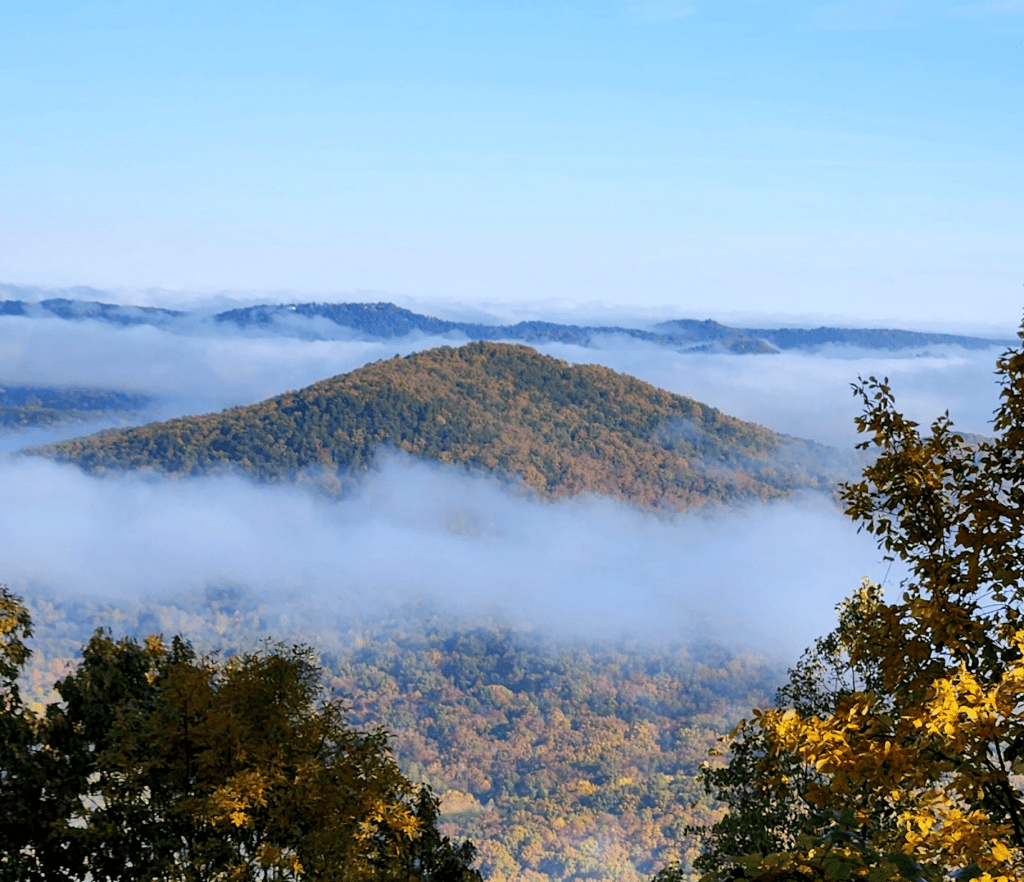
Tennessee sits at an elevation, climate, and biodiversity sweet spot that most of the country does not. The Smoky Mountains in the eastern part of the state are the oldest mountain range in North America, with one of the densest forest canopies in the world. Time in dense forest has been shown in published research to lower cortisol, drop heart rate, and shift autonomic balance toward the parasympathetic side. For a woman in perimenopause or menopause, where cortisol is often chronically high and the nervous system is stuck in fight-or-flight, that biological backdrop is doing half the work before you even unroll a mat.
The second reason is accessibility.
Tennessee is within a 90 minute flight of roughly 70% of the United States population. You can get to Knoxville (TYS) or Nashville (BNA) from most major cities without a connection, which matters when you are trying to do a 5 day reset and not lose a full day on each end to airports.
The third reason is cost.
A 5 night all-inclusive menopause yoga retreat in Tennessee typically runs about half of what an equivalent stay would cost in Sedona, Big Sur, or Tulum, with comparable or better food, slower service, and zero travel days lost to international logistics.
What Makes a Yoga Retreat Actually Menopause-Friendly
A lot of yoga retreats put the word “menopause” or “midlife” into their marketing without changing a single thing about their program. The schedule is still built for a 25 year old, the food is still salad-heavy with no real protein, the breathwork is still designed to stoke heat in a body that is already overheating, and the schedule has zero rest blocks. A program like that is a regular yoga retreat with a midlife filter on the website, and the difference matters once you arrive.
A real menopause-friendly yoga retreat near Knoxville or Nashville will do most or all of the following.
It will give you actual protein at every meal. Women in perimenopause and menopause need significantly more protein than the average woman, somewhere around 1.0 to 1.2 grams per pound of bodyweight per day, to preserve lean muscle as estrogen drops. If the retreat menu is a string of “plant-based bowls” with chickpeas and quinoa for protein, that is not going to support hormonal recovery. It might sound healthy, but it leaves most midlife women under-fueled and crashing by day three. (For a deeper read on this, check out protein for women over 40 and our free Macro Calculator are good places to start before you book any retreat.)
It will offer restorative and yin yoga alongside vinyasa rather than only vinyasa or hot yoga. Hot vinyasa on day one of a menopause yoga retreat tends to spike cortisol and can trigger night sweats by day two. A midlife-aware retreat front-loads the slow practices and brings in stronger work only after the nervous system has down-regulated.
It will build in nervous system reset modalities. Look for things like guided breathwork that emphasizes longer exhales, vagus nerve work, lymphatic practices, forest bathing, and cold exposure if the woman wants it. These modalities are how a midlife body actually shifts state, and they belong on the schedule rather than as luxury add-ons billed separately.
It will have flexible scheduling with optional sessions because menopause is unpredictable. You might wake up on day two with a hot flash that ran from 3 a.m. to 5 a.m. and need to sleep until 10. A well-built menopause yoga retreat designs the schedule around the possibility that you might need to skip a session and rest, while a retreat that demands attendance for every session is operating more like a yoga teacher training than a midlife reset.
It will pair the yoga with actual recovery work. Fascia release, lymphatic drainage, massage, infrared sauna, red light therapy, and sleep optimization belong in a midlife yoga retreat in a way that they do not need to be at a 28 year old’s bachelorette weekend. If the retreat does not include or offer these, it is missing a piece. THOR includes most of them, but the more important point is that you should not book any menopause yoga retreat in Tennessee that does not have at least three of these on offer.
It will have a maximum group size. A real midlife retreat will not put 30 women in a room with one teacher and call it intimate. Twelve is roughly the ceiling for any retreat where you actually get personal attention.
Knoxville vs Nashville: Which Tennessee Gateway Works Best for Your Retreat
The practical decision most women face is not whether to choose a Knoxville yoga retreat or a Nashville yoga retreat. The better question is what kind of post-menopause recovery you actually need, and which gateway city sets up that experience best.
Nashville (BNA) as your retreat gateway
Nashville is the bigger airport, with more direct flights from most US cities. If you are coming from the West Coast, Texas, or anywhere in the Midwest, Nashville is often easier and cheaper to fly into.
The trade-off is that retreats reachable from Nashville tend to be in Middle Tennessee, the rolling hill country and farmland west of the Cumberland Plateau. That region is beautiful, but it does not have the same forest density, elevation, or wilderness pull as the Smoky Mountain region in the east. You also do not get the same scientific nervous-system-reset effect because the canopy is lighter and the topography is gentler.
Nashville-based retreats are often a good fit for women who want a softer landing, who like a barn-style or working-farm setting, who want food-and-wine country adjacency, and who do not need the dramatic mountain environment. If your stress profile is “low-grade chronic” rather than “burnout crisis,” Middle Tennessee might be perfect.
The other consideration is that Nashville itself has a strong wellness scene, which means some women combine a Nashville-area retreat with a day or two in the city for shopping, music, food, or restorative spa work. Knoxville does not give you that, because the closest comparable downtown is Knoxville itself, which is smaller.
Knoxville (TYS) as your retreat gateway
Knoxville is smaller, but the airport is closer to the actual mountain retreats. From Knoxville you can be at most Smoky Mountain region retreats within 30 to 60 minutes, and the drive itself is part of the decompression because you are climbing into the forest the entire way.
This gateway is better suited for women who want what I would call a deep reset rather than a softer weekend recharge. The Smoky Mountains are not a gentle terrain. They are old, dense, and the forest absorbs you in a way that flatter geography does not. For a woman who is dealing with full-blown midlife burnout, perimenopause cortisol crisis, sleep loss, or what I call the “tired in ways sleep cannot fix” pattern, the Smoky Mountain region delivers something that Middle Tennessee cannot.
The flight options into Knoxville are fewer and sometimes more expensive on a per-flight basis, but you save money on the back end because you do not need a long ground transfer or a rental car. Most retreats in the Knoxville orbit include or sell airport transfers as an add-on. (At THOR, our airport transport line is one of our most-booked retreat add-ons. It is not a glamorous detail, but it is one of the things that makes the difference between a retreat that starts the moment you land and one that starts after a tense 2 hour drive in an unfamiliar rental car.)
The Smoky Mountains Advantage: Why Geography Matters for Hormonal Recovery
A few specific reasons the Smoky Mountain region deserves consideration if you are choosing a menopause yoga retreat near Knoxville.
The forest density of the Great Smoky Mountains is among the highest in the world. The published research on shinrin-yoku, which translates roughly to “forest bathing,” consistently shows reduced cortisol, reduced sympathetic nervous system activity, increased parasympathetic activity, and increased natural killer cell activity after time spent in dense forest. For a perimenopausal or menopausal woman whose nervous system is often stuck in the sympathetic gear and whose immune system is shifting with estrogen loss, that is meaningful.
The elevation in the Smoky Mountains is moderate, generally 1,500 to 4,000 feet for most retreat properties, which is the sweet spot for women in midlife. High enough to slightly boost red blood cell production and improve sleep quality, but not so high that you are dealing with altitude headaches or insomnia like you would in Sedona or Colorado retreats.
The air quality in the deep Smoky Mountain region is exceptional. Tennessee’s eastern mountains have some of the cleanest air in the eastern United States, and there is published research linking air quality to inflammation markers, sleep quality, and even hot flash frequency in perimenopausal women.
The water in the East Tennessee mountain region runs cold and mineral-rich. If your retreat includes any cold exposure work, hydrotherapy, or natural water immersion, that is part of the medicine. The vagal effect of cold water on the face and neck is well-documented and especially useful for women whose nervous systems are stuck in overdrive.
The seasonality matters too. The Smoky Mountains hit a particular sweet spot in late spring (April through mid-June) and early fall (mid-September through October) where the weather is mild, the bug pressure is low, the forest is at its most active, and the light shifts in ways that are subtly mood-elevating. These are the seasons I would most recommend for a menopause yoga retreat in Tennessee.
What to Look For in a Menopause Yoga Retreat Schedule
When you are reading a retreat schedule, you are reading the body’s request for the next five days. A good menopause yoga retreat schedule should have certain patterns. Look for these:
- A slow first day. Day one of a retreat should be arrival, gentle yoga, a nervous system reset session, a beautiful meal, and an early lights-out. A day one that opens with a sweaty 90 minute vinyasa signals the retreat is built for a different audience than midlife.
- Morning practices that emphasize breath and slow movement. Menopausal bodies do not need to be jolted out of sleep with cardio. A morning that opens with breathwork, fascia release, gentle mobility, and a slow-build yoga practice sets up a totally different chemistry than an early HIIT session.
- A real lunch with adequate protein. The lunch on a menopause yoga retreat is one of the truest tests. If lunch is a tiny salad with two ounces of chicken, you are looking at a retreat that has not actually thought about midlife metabolism. You want protein in the 30 to 40 gram range per meal, fiber from real vegetables, healthy fat, and a slow carbohydrate.
- Afternoon options instead of demands. A real menopause retreat will offer a 2 p.m. massage, a 3 p.m. fascia workshop, a 4 p.m. nature walk, and tell you to pick one (or none). A retreat that runs three back-to-back sessions in the afternoon is overstuffed.
- A dinner that supports sleep. Heavy, late dinners interfere with menopausal sleep almost every time. A well-thought-out retreat finishes dinner by 6:30 or 7 p.m., keeps it moderate in size, and includes the kind of magnesium-rich, tryptophan-supporting foods that help sleep onset.
- An evening wind-down that is not a “fun” group activity. Menopause retreats need real wind-down time, not an evening soundbath that lasts until 10 p.m. and leaves everyone wired. Yin yoga, restorative work, or a guided sleep protocol is the better fit.
- A built-in integration day. Day five of a retreat should not be packed. It should be the day where the group rests, reflects, and prepares for re-entry. The best retreats build that day in deliberately.
The Practices That Help in Perimenopause and Menopause
Not every yoga or wellness practice is equally effective for the midlife body. The following are the ones with the strongest published evidence for women in perimenopause and menopause, and the ones I would most want to see on the schedule of any Tennessee retreat you are considering.
- Yin yoga and restorative yoga have published evidence supporting their effects on cortisol regulation, sleep quality, and symptom severity in perimenopausal women. These are the slow, ground-based practices that hold poses for 3 to 5 minutes at a time.
- Diaphragmatic breathing with extended exhales has been shown to shift the autonomic nervous system toward parasympathetic dominance within minutes. For hot flashes, sleep, and overall stress reactivity, this practice is one of the most underused tools in midlife wellness.
- Fascia work, including self-myofascial release with tools and structured stretching, has emerging research support for its role in lymphatic drainage and tissue mobility in midlife women. (Chck out our article on unlocking tight fascia and lymphatic flow.)
- Strength work, even at moderate loads, is now considered foundational for menopause health. Estrogen decline accelerates muscle and bone loss, and the research on resistance training in this population is unambiguous. A menopause retreat that includes some form of strength work, even if it is bodyweight-based, is doing more for your long-term health than one that is yoga-only.
- Cold exposure, including cold water face immersion and brief cold showers, has documented effects on vagal tone, mood, and inflammation. Even 60 seconds at the end of a warm shower has measurable benefits.
- Forest bathing has published research support specifically for stress hormone reduction, immune function, and mood. The Smoky Mountains are one of the most forest-bathing-ready environments in the country.
- Magnesium supplementation, particularly magnesium glycinate or threonate, has solid evidence for sleep quality, muscle relaxation, and mood support in midlife women. Most women in perimenopause are deficient.
What is generally not as helpful are things like juice cleanses, fasting protocols longer than 14 hours for most women in midlife, and intense ayahuasca or psychedelic retreats. Some of these are great for the right person in the right phase. But most are not appropriate as the foundation of a menopause retreat.
Red Flags: Yoga Retreats That Are Not Aligned for Menopausal Bodies
A short list of things that should make you think twice.
- A schedule with two hot vinyasa sessions per day is built for the wrong audience and will tax a menopausal body more than it restores one.
- A 7-day juice cleanse retreat marketed with promises of rapid change usually elevates cortisol exactly when a midlife body needs the opposite.
- A retreat that advertises “no phones, no contact with the outside world” as the main feature is the wrong fit for women with aging parents, teenagers, businesses to run, or perimenopause symptoms that might require a check-in with a doctor. Full isolation amplifies stress for most women in midlife rather than relieving it.
- A retreat with no posted schedule on the website. If a property will not show you what the days look like, the team is hiding something.
- A retreat where the founder or lead teacher is not visible on the website. If you cannot find a real, named human running it, the experience tends to reflect that.
- A retreat that lists “weight loss” as a primary goal. Sustainable weight loss for midlife women does not happen in 5 days, and any retreat that promises it is selling you a story.
- A retreat that does not specify maximum group size. Without a published cap, the program is usually being run as a revenue machine rather than a curated experience.
- A retreat with menus that look like 2010-era fitness influencer plates. Smoothie bowls, raw vegan dinners, and 200-calorie lunches will leave a menopausal body under-fueled by day three.
What to Pack for a Menopause Yoga Retreat in East Tennessee
This section is less about gear and more about not making the trip harder than it needs to be. The Smoky Mountains have a mountain climate, which means layers, weather shifts, and surprising humidity in summer and chill at night even in late spring.
- Bring layers in every season. A light long-sleeve, a sweatshirt or sweater, and a real warm layer all earn their place even in summer because mountain mornings drop into the 50s well into June.
- Bring real walking shoes rather than yoga slippers. The Smoky Mountain trails are uneven, sometimes muddy, and the elevation gain is significant even on the shorter trails.
- Build a sleep kit. Earplugs, an eye mask, your own pillowcase if you are picky, melatonin if you use it, and the magnesium you take at home all belong in the bag. Try not to rely on the retreat to have everything you need for night one.
- Bring a water bottle that holds at least 32 ounces. Hydration matters more at elevation, and mountain air dehydrates faster than most women expect.
- Bring a real paper journal rather than relying on the notes app on your phone. The part of your brain that does deep reflection responds differently to paper than it does to a screen.
- Pack comfortable clothes you can move and sit in. Yoga pants are the obvious base layer, and things you can hike in, sit by a fire in, and sleep in round out the rest.
- Leave expensive jewelry at home. A retreat is the wrong setting for it, and most properties do not have safes designed to protect it.
- Bring your own supplements in a labeled organizer with your morning and evening stack so the schedule stays clean. If you do not yet have a foundational stack, the vitamins and supplements collection has the basics most women in midlife should consider.
Travel Logistics: Getting to Knoxville vs Nashville
Travel logistics determine whether your retreat starts on day one or day two, which is why I am giving them their own section.
Flying into Nashville works well if you are landing from the West Coast, Texas, or much of the Midwest. The trade-off is that Nashville-to-Smoky-Mountains is roughly a 3.5 to 4 hour drive east. If you want a Smoky Mountain retreat, do not fly into Nashville. If you want a Middle Tennessee or Cumberland Plateau retreat, Nashville is fine.
Flying into Knoxville works well for any East Tennessee retreat. From TYS you are about 60 minutes from most Smoky Mountain retreat properties. Direct flights are available from major hubs but the menu of nonstops is smaller than Nashville’s. Booking 8 to 12 weeks ahead usually unlocks the best flight pricing.
The third option is flying into Asheville (AVL) in western North Carolina. Asheville is about 75 to 90 minutes east of most Smoky Mountain Tennessee retreats. It is a smaller airport but worth checking if your home city has a direct.
The fourth option is driving. If you are within a 6 hour drive of East Tennessee, the drive is often the better choice. You arrive on your own schedule, you decompress on the way in, and you have a car for the integration day if you want to take a side trip on the way out.
Airport transport is one of the most underrated retreat add-ons. A good retreat will arrange ground transport from the airport that doubles as a transition window. You are met, your bags are handled, the playlist is intentional, and by the time you arrive at the property the retreat has already begun. If your retreat does not offer ground transport, ask why.
The Integration Window: What Happens When You Get Home
The integration window is the part of the retreat experience the industry talks about least, and it tends to determine whether your menopause yoga retreat in Tennessee shifts something durable or just gives you a nice five days.
The integration window is the 3 to 6 weeks after a retreat where the changes you made on the property either take root in your daily life or vanish. The biology behind this is real. Your nervous system has spent 5 days in a different state, your sleep has reset to a different pattern, your eating has shifted, and your sense of what is possible has expanded. If you crash back into the exact same morning routine, the exact same evening scroll, and the exact same diet on day six, most of the reset will fade within 14 days.
The best menopause yoga retreats in Tennessee build integration support into the offer. Look for:
A pre-retreat onboarding call or questionnaire so the staff knows your specific midlife pattern before you arrive.
A daily home practice you can take with you, ideally 20 to 40 minutes long, designed to be sustainable.
A nutrition framework you can keep using. (Our Macro Calculator is the foundation we send guests home with, paired with the Macro Miracle Mediterranean Cookbook for the meals that fit the framework.)
A post-retreat check-in or community access, ideally 2 to 4 weeks after you get home.
An optional 1:1 coaching path for women who want to keep working with the team. (THOR offers the Monthly Personal Training & Nutrition Coaching Program and the 16 week Age With Strength Program for women who want personalized support after the retreat. Both are designed for midlife body composition and hormone-aware recovery, not generic fitness coaching.)
The Real Cost of a Menopause Yoga Retreat in Tennessee
A 5 night all-inclusive menopause yoga retreat in Tennessee usually falls in the $2,500 to $4,500 range per person, depending on accommodation level, group size, and inclusions. Day-only or weekend retreats run lower, and luxury 7 night experiences run higher.
What is worth the money:
- Smaller group sizes (10 to 12 max). The personalization that comes from a small group is worth more than thread count.
- Real protein at meals. If the food is built for midlife metabolism, you will leave feeling stronger, not just lighter.
- A founder or lead teacher with lived experience in midlife. Twenty-eight year old yoga teachers are great. They are not the right teacher for a menopausal nervous system.
- Spa, body work, and recovery modalities. Massage, fascia work, red light, and infrared sauna are not luxuries on a menopause retreat. They are part of the chemistry of the reset.
- Integration support after you leave. This alone is worth several hundred dollars of the retreat price.
What is not worth the money:
- A name brand wellness chain that runs a generic version of the retreat in 12 cities.
- Imported teachers who fly in for the week and leave. The team that lives the work is the team you want.
- Crystal-heavy aesthetic packaging without substance.
- A spa-resort overlay where the yoga is an amenity rather than the foundation.
Why I Built THOR in the Smoky Mountains for Women in Midlife
The rest of this article has been general guidance. This section is the founder note, because the rest of the piece would feel incomplete without it. The House of Rose sits in the Smoky Mountains of East Tennessee, about 45 minutes from Knoxville (TYS) airport, and I built it because I went through what most of you are going through.
I had early-onset menopause in my early forties, lost 80 pounds in midlife, ran a global creative agency, raised two children, and watched my body do things I had no language for. I tried every retreat I could find in the United States, Europe, and Asia, and none of them were built for the body I was in at that stage. The programs were generally built for younger women, for women in active illness, or for women looking for escape, and none of them addressed a body in hormonal transition that needed to come back online. So I built the kind of property and program I had been looking for.
The Deeply Restorative Yoga and Nature Retreat at THOR runs 5 days and 4 nights, capped at 12 women per session, all-inclusive, with the food, the spa, the fascia work, the lymphatic protocols, the strength work, the integration support, and the airport transport built in. The schedule is what I am describing in this article because this article is how we built it.
If you want to look at it, the Deeply Restorative Yoga and Nature Retreat has the dates, the pricing, the included add-ons, and the actual photos of the property. If you want to talk it through with someone before you book, you can schedule a call and one of us will get on with you.
If THOR turns out not to be the right fit, the framework in this article still applies to any retreat you choose, and the checklist works as a comparison tool against other options. The right menopause yoga retreat in Tennessee near Knoxville or Nashville or anywhere in between is the one that meets your body where it is in this season of life, with a program designed for the hormonal phase you are actually in.
FAQs
What is the best time of year for a menopause yoga retreat in Tennessee?
Late spring (mid-April through mid-June) and early fall (mid-September through October) are the two strongest windows in East Tennessee. The weather is mild, bug pressure is low, the forest is most active, and the light is at its most mood-elevating. Summer can work but humidity and heat can be uncomfortable for women dealing with hot flashes. Winter retreats can be beautiful but require a different mindset and bring slightly more travel risk from weather.
How far is a Smoky Mountain yoga retreat from Knoxville?
Most Smoky Mountain wellness retreat properties are between 30 and 60 minutes from Knoxville (TYS) airport. The drive itself is part of the experience because you climb into the forest the entire way. THOR is about 45 minutes from TYS.
How far is a Smoky Mountain yoga retreat from Nashville?
Roughly 3.5 to 4 hours by car. If your goal is a Smoky Mountain region retreat, flying into Knoxville is almost always the better choice. Nashville works well for Middle Tennessee retreats but is a long ground transfer for East Tennessee retreats.
What should I look for to confirm a yoga retreat is actually menopause-friendly?
Look for protein at every meal in the 30 to 40 gram range, restorative and yin yoga on the schedule rather than only vinyasa or hot yoga, optional rather than mandatory afternoon sessions, a small group size of 12 or fewer, a published schedule on the website, a named founder or lead teacher with midlife experience, and recovery modalities like fascia work, lymphatic drainage, massage, and sauna integrated into the program.
Are yoga retreats in Tennessee safe for women in perimenopause with health conditions?
Most quality retreats in East Tennessee are within 25 to 45 minutes of a working hospital and ER, which is one of the underrated advantages of this region. Always disclose any conditions during the retreat application or onboarding process so the team can plan around your needs. If a retreat will not ask about your health status before you arrive, that is a flag.
What is the typical cost of a menopause yoga retreat near Knoxville or Nashville?
A 5 night all-inclusive retreat usually runs $2,500 to $4,500 per person depending on accommodation, inclusions, and group size. Day-only and weekend formats run lower, around $400 to $1,200 depending on the operator. Luxury 7 night formats can run $5,000 and up.
Can I do a menopause yoga retreat in Tennessee if I am brand new to yoga?
Yes, and the best retreats specifically welcome beginners. A real menopause-focused retreat will not assume yoga experience because the yoga in a midlife reset is mostly restorative, slow, and accessible. If a retreat is positioned as “advanced practice” or “intermediate to advanced,” it is the wrong setting for a first-time retreat goer.
Do I need to be a certain fitness level for a Tennessee yoga retreat?
For most well-designed menopause retreats, no. The pace is built around restoration. The optional hikes or walks usually have shorter and longer options. The strength work, when offered, is scaled. If you can walk for 20 to 30 minutes on uneven ground, you can do most of the program at the better retreats.
What is the difference between a yoga retreat and a wellness retreat in Tennessee?
A yoga retreat usually centers daily practice as the spine of the schedule. A wellness retreat often includes yoga but also weights movement, nutrition, spa, and nervous system work more equally. For most women in perimenopause and menopause, a wellness retreat with yoga as one of several pillars is the better fit than a yoga-only retreat.
Are there any yoga retreats in Tennessee specifically for women over 50?
Yes, and the number is growing. Look for language like “midlife,” “menopause,” “perimenopause,” “women over 40,” or “women over 50” in the retreat description. The most curated options cap at 12 women, focus on hormonal recovery, and include real strength and nervous system work alongside the yoga.
Should I do a retreat alone or bring a friend?
Either option works depending on what you need. Coming alone has the advantage of fewer obligations and a deeper inward experience, while coming with a friend gives you a shared integration partner when you get home. A well-run retreat creates community within the first 24 hours regardless, so you do not have to bring one to find one.
What is the integration support that comes with the best Tennessee retreats?
The best retreats include some combination of a pre-arrival onboarding call, a home practice you can take with you, a nutrition framework you can apply, post-retreat group access or check-ins, and an optional 1:1 coaching path. Without integration, most of the retreat benefit fades within 2 weeks of returning home.
How early should I book a menopause yoga retreat in Tennessee?
For peak seasons (spring and fall), book 4 to 6 months ahead. Small-group retreats fill faster than people expect because the cap is real. Off-peak (summer, winter) you can sometimes book 6 to 8 weeks out, but the calendar moves fast.
Can I bring my own supplements and medications?
Yes, and you should. Bring a clear daily organizer and a small first-aid kit. A good retreat will accommodate any dietary restrictions, supplement schedules, or medication timing without making it a thing. Always disclose what you are taking during the onboarding so the kitchen and the staff can plan around it.
References
- Antonelli, M., Donelli, D., & Barbieri, G. (2019). Effects of forest bathing (shinrin-yoku) on levels of cortisol as a stress biomarker: a systematic review and meta-analysis. International Journal of Biometeorology, 63(8), 1117–1134.
- Sliwinski, J. R., Johnson, A. K., & Elkins, G. R. (2014). Memory decline in peri- and post-menopausal women: the potential of mind-body medicine to improve cognitive performance. Integrative Medicine Insights, 9, 17–23.
- Innes, K. E., Selfe, T. K., & Vishnu, A. (2010). Mind-body therapies for menopausal symptoms: a systematic review. Maturitas, 66(2), 135–149.
- Jeong, J. Y., Jeong, Y. G., Lee, M. Y., et al. (2015). Effects of yoga on stress, stress adaption, and heart rate variability among mental health professionals. Asian Nursing Research, 9(4), 1–6.
- Cramer, H., Lauche, R., Langhorst, J., & Dobos, G. (2018). Yoga for menopausal symptoms: a systematic review and meta-analysis. Maturitas, 109, 13–25.
- Newton, K. M., Reed, S. D., Guthrie, K. A., et al. (2014). Efficacy of yoga for vasomotor symptoms: a randomized controlled trial. Menopause, 21(4), 339–346.
- Hopper, S. I., Murray, S. L., Ferrara, L. R., & Singleton, J. K. (2019). Effectiveness of diaphragmatic breathing for reducing physiological and psychological stress in adults: a quantitative systematic review. JBI Database of Systematic Reviews and Implementation Reports, 17(9), 1855–1876.
- Jerath, R., Crawford, M. W., Barnes, V. A., & Harden, K. (2015). Self-regulation of breathing as a primary treatment for anxiety. Applied Psychophysiology and Biofeedback, 40(2), 107–115.
- Phillips, S. M., & Van Loon, L. J. C. (2011). Dietary protein for athletes: from requirements to optimum adaptation. Journal of Sports Sciences, 29 Suppl 1, S29–S38.
- Bauer, J., Biolo, G., Cederholm, T., et al. (2013). Evidence-based recommendations for optimal dietary protein intake in older people: a position paper from the PROT-AGE Study Group. Journal of the American Medical Directors Association, 14(8), 542–559.
- Beasley, J. M., LaCroix, A. Z., Neuhouser, M. L., et al. (2010). Protein intake and incident frailty in the Women’s Health Initiative Observational Study. Journal of the American Geriatrics Society, 58(6), 1063–1071.
- Maddock, J., Geoffroy, M. C., Power, C., & Hyppönen, E. (2013). 25-Hydroxyvitamin D and cognitive performance in mid-life. British Journal of Nutrition, 110(11), 2129–2138.
- Boyle, N. B., Lawton, C., & Dye, L. (2017). The effects of magnesium supplementation on subjective anxiety and stress: a systematic review. Nutrients, 9(5), 429.
- Park, B. J., Tsunetsugu, Y., Kasetani, T., Kagawa, T., & Miyazaki, Y. (2010). The physiological effects of shinrin-yoku (taking in the forest atmosphere or forest bathing): evidence from field experiments in 24 forests across Japan. Environmental Health and Preventive Medicine, 15(1), 18–26.
- Li, Q. (2010). Effect of forest bathing trips on human immune function. Environmental Health and Preventive Medicine, 15(1), 9–17.
- Maki, P. M., Kornstein, S. G., Joffe, H., et al. (2018). Guidelines for the evaluation and treatment of perimenopausal depression: summary and recommendations. Menopause, 25(10), 1069–1085.
- Santoro, N., Epperson, C. N., & Mathews, S. B. (2015). Menopausal symptoms and their management. Endocrinology and Metabolism Clinics of North America, 44(3), 497–515.
- Bondarev, D., Sipilä, S., Finni, T., et al. (2018). The role of physical activity in the link between menopausal status and mental well-being. Menopause, 25(7), 757–765.