
 By Team THOR
Free 28-Day Fascia Reset Email Course
Get our Free 28-day email course series to help with 1 or 2 exercises per day to release your fascia. One short lesson per day. Two minutes to read each.
5 Exercises to Unlock Tight Fascia & Lymphatic Flow
If you’ve been feeling heavier in your body than the scale says you should: stiffer, puffier, achier, or just stuck in a way you can’t quite stretch out — your fascia and your lymphatic system are probably asking for attention.
These two systems live so close together, and behave so similarly, that you almost cannot separate them. Fascia is the web of connective tissue that wraps every muscle, organ, nerve, and vessel in your body and your lymphatic system, the slow-flowing waste-clearance highway, runs inside that web. When fascia is tight, lymph slows down. When lymph backs up, fascia stiffens. They are two halves of the same conversation.
In midlife, both go sideways at the same time. Estrogen drops change tissue hydration and elasticity. Sitting at a desk all day adds chronic compression to both systems. Stress shifts the autonomic nervous system into a state that further restricts lymphatic flow. The result is the body most women in their 40s and 50s describe: stiff first thing in the morning, puffy by the afternoon, tense across the upper back and hips, carrying tension that no amount of stretching seems to release.
The good news is that fascia and lymph are uniquely responsive to specific, simple interventions. They want movement. They want pressure. They want breath. They want hydration. And they want it daily, not in once-a-month massages that fade by the next morning.
This article walks through the five exercises that have the strongest evidence behind them for releasing tight fascia and restarting lymphatic flow with YouTube video demonstrations for each so you can follow along, and a 20-minute daily routine you can stack together. By the end you’ll know exactly what to do, why each piece works, and how this sits inside the broader midlife wellness picture.
For the foundational article on what fascia actually is and why it matters in midlife, see our deeper piece What Is Fascia and Why It Matters for Women Over 40 – this one builds on that.
The Fascia-Lymphatic Connection- Why You Have to Move Both Together
Here’s the anatomy in plain language.
Fascia is a continuous web of connective tissue made primarily of collagen and elastin fibers in a hydrated gel matrix. It wraps every muscle, surrounds every organ, sheathes every nerve, and runs from your skull to the soles of your feet as one interconnected sheet. Researchers like Tom Myers (Anatomy Trains) and Carla Stecco have spent the last two decades mapping fascia as a single body-wide network rather than the disposable wrapping it was treated as for most of medical history.
The lymphatic system is a network of vessels, nodes, and ducts that drain interstitial fluid (the fluid that bathes your cells), filter it through lymph nodes for immune surveillance, and return it to the bloodstream near the heart. Unlike blood, lymph has no central pump. It relies on muscle contraction, breath, joint movement, and pressure changes to flow.
The two systems are physically interwoven. Lymphatic vessels run through fascial layers. Fascial tightness compresses lymphatic vessels. Lymph stagnation hydrates fascia poorly. When you release fascia mechanically, you also free the lymphatic vessels inside it. When you move lymph deliberately, you decompress the fascial tissue around it. This is why the same five exercises: foam rolling, twisting, hydration-based movement, rebounding, and breathwork – work on both systems at once.
For midlife women, this matters more than it ever has. The estrogen drop in perimenopause and menopause reduces tissue hydration (estrogen modulates hyaluronic acid and collagen synthesis), reduces the elasticity of fascia, and slows lymphatic flow at the same time. Your body is, on a tissue level, drier and stiffer than it was at 30 – through no fault of your own. The fix is daily movement targeted at exactly the tissues that need it.
Why Tight Fascia and Sluggish Lymph Matter More After 40
A short physiology section, because most women weren’t taught any of this.
Fascia loses elasticity with age and inactivity.
Sedentary lifestyles, repetitive postures (desk, phone, driving), chronic stress, and hormonal shifts all dehydrate and stiffen fascia. Fascia that should glide smoothly between layers starts adhering — the “stuck” sensation you feel in tight hips, locked-up shoulders, or the band across your upper back. Schleip and colleagues have documented that fascia restrictions are major contributors to chronic pain and reduced range of motion (Schleip et al., 2012).
Lymph slows down without daily input.
Without muscle contraction, deep breathing, and movement, lymphatic fluid pools — particularly in the lower body, the abdomen, and around the breasts and armpits. Stagnant lymph means slower waste clearance, more inflammation, more puffiness, and a less responsive immune system.
Inflammation rises in midlife.
Falling estrogen unmasks baseline inflammation that estrogen previously buffered. Tight fascia and sluggish lymph both contribute to and result from inflammation – a feedback loop that gets stickier with each year you don’t actively address it.
Recovery slows.
What used to take a day to bounce back from now takes three. Part of this is hormonal; a meaningful part is fascial and lymphatic – your body is clearing post-workout waste and inflammation more slowly because the highway is congested.
Visible signs.
Stiffness on waking that takes hours to release. Puffy face, ankles, or fingers (especially in the morning or after a heavy meal). The “thickening” sensation across the trunk and waist. Cellulite that wasn’t there at 35. Slower wound healing. Feeling like your body is heavier than the scale says. These are all signs the fascia + lymph conversation has stalled.
The five exercises below are the most effective at-home interventions documented in the research. None of them requires a gym. Most can be done in 10 minutes. All have video demos.
Free 28-Day Fascia Reset Course
Get our Free 28-day email course series to help with 1 or 2 exercises per day to release your fascia. One short lesson per day. Two minutes to read each.
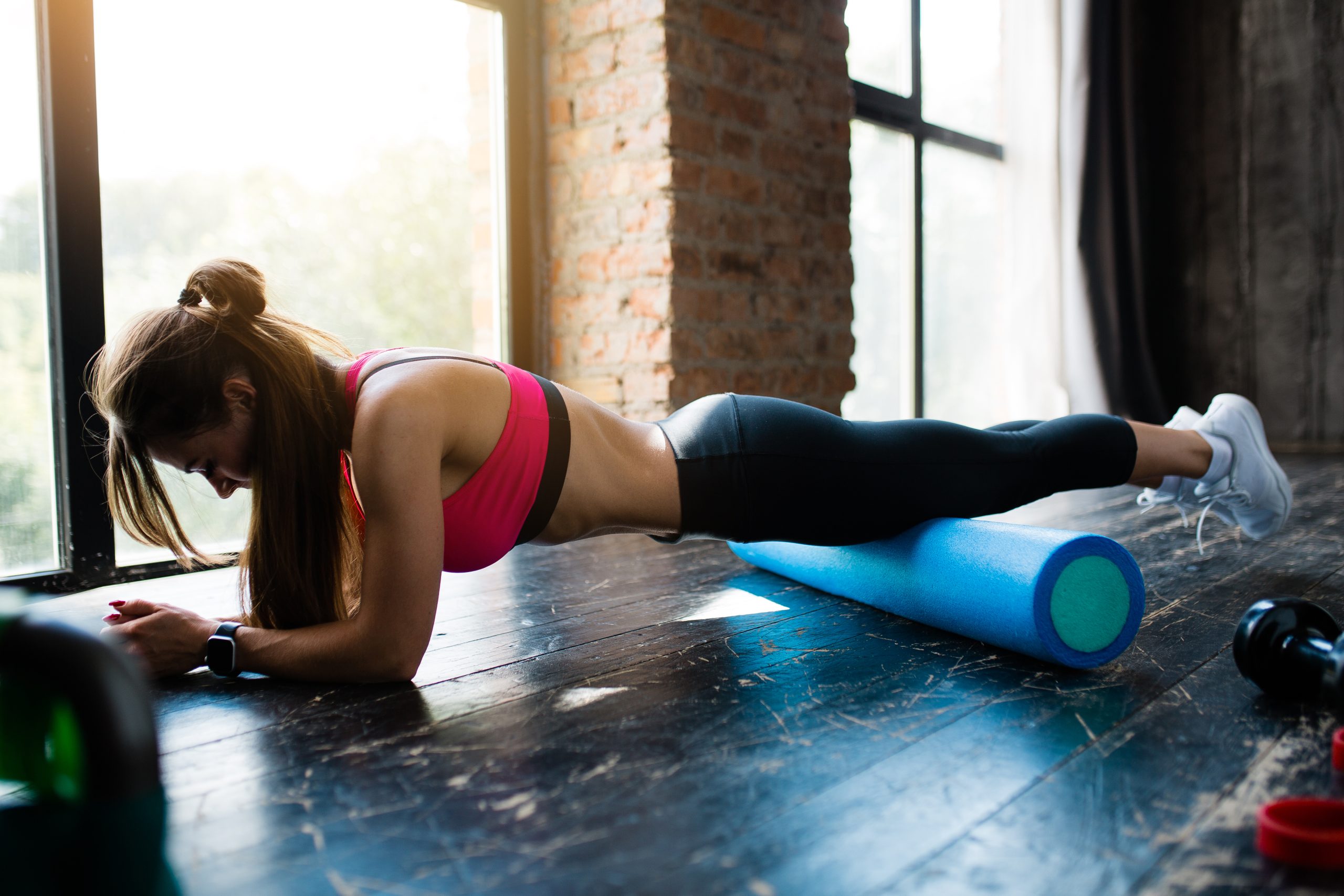
Exercise 1: Foam Rolling (The Mechanical Fascia Release)
We can’t stop talking about foam rolling, and here’s yet another reminder to add it to your daily routine.
Foam rolling, technically called self-myofascial release (SMR), applies sustained pressure to fascial tissue, which helps rehydrate the gel matrix, break down adhesions between fascial layers, stimulate mechanoreceptors that signal the nervous system to release tension, and improve local circulation and lymphatic drainage.
The research is strong. Multiple systematic reviews have shown that foam rolling improves range of motion in the short term, reduces delayed-onset muscle soreness (DOMS) by 20–40% after exercise, and improves arterial function and vascular endothelial response after a single session. For midlife women in particular, foam rolling is one of the lowest-cost, highest-return daily practices available.
How to do it (10 minutes daily):
- IT band (outer thigh) – 60 seconds each side, slow
- Hamstrings – 60 seconds each side
- Quads – 60 seconds each side
- Glutes – 60 seconds each side
- Upper back (thoracic spine) – 90 seconds, slow rolling
- Lats (under the armpit, side body) – 45 seconds each side
- Calves – 45 seconds each side
- Plantar fascia (under the foot, using a tennis or lacrosse ball) – 60 seconds each side
Roll slowly. Much more slowly than feels natural. Pause on any sticky spot for 20–30 seconds and breathe through it. Pain that’s a 7/10 means too much pressure; aim for 4–6/10. Hydrate before and after.
For deeper-tissue work specifically targeting stuck fascia, the FasciaBlaster is the tool we recommend — it’s been designed specifically for fascial work and is dramatically more effective than a foam roller for adhesions in the IT band, glutes, hamstrings, and back. Foam rolling is the daily floor; the FasciaBlaster is the once-or-twice-a-week deeper intervention.
Exercise 2: Twisting and Breathing (The Spine and Abdominal Reset)
Twisting movements compress and decompress the abdominal viscera, stimulate the sympathetic and parasympathetic chains running along the spine, and physically wring out lymphatic fluid pooled in the trunk and abdomen – where most midlife women carry stagnation.
Yoga and traditional movement systems have used twisting for thousands of years. The contemporary research backs it up. Twisting with deep diaphragmatic breathing has been shown to improve digestive function, support lymphatic drainage of the abdominal nodes, reduce sympathetic nervous system activity, and improve heart rate variability (a marker of nervous system balance).
The routine (8 minutes daily):
Seated spinal twist (both sides, 60 seconds each):
Sit cross-legged. Lengthen the spine. Inhale and grow tall through the crown of the head. Exhale and twist to the right, placing the left hand on the right knee and the right hand behind you. Hold and breathe deeply for 5 long breaths. Switch sides.
Supine twist (both sides, 90 seconds each):
Lie on your back. Pull both knees to your chest. Let both knees fall to the right side while keeping both shoulders on the floor and looking to the left. Breathe deeply for 8–10 long breaths. Switch sides.
Standing twist (both sides, 30 seconds each):
Stand with feet hip-width apart. Inhale, lift arms overhead. Exhale, twist to one side, letting the arms swing gently. The swing should be loose — this is a gentle rinsing motion, not a forceful one. Continue for 30 seconds each side.
Box breathing (3 minutes seated):
Inhale for 4 counts. Hold for 4. Exhale for 4. Hold empty for 4. Repeat for 12–15 cycles. This activates the vagus nerve and shifts the nervous system into a parasympathetic state where lymphatic flow accelerates.
For more on the breath and nervous system connection in midlife, see our piece on the male vs female nervous system and yoga and emotional balance.
Free 28-Day Fascia Reset Email Course
Get our Free 28-day email course series to help with 1 or 2 exercises per day to release your fascia. One short lesson per day. Two minutes to read each.
Exercise 3: Hydration With Movement (The Tissue Glide Practice)
This is the piece most fascia content gets wrong.
Fascia and lymph both depend on water — but you can’t just chug a bottle and expect the water to land in the tissues that need it. Fascia hydration requires both adequate fluid intake and movement that drives the fluid into the tissue. The technical term is “fascial irrigation,” and the mechanism is mechanical: dynamic movement creates pressure changes that push water and nutrients into fascial tissue and pull waste out.
Hyaluronic acid — the lubricating molecule between fascial layers — is sensitive to both hydration and movement. When you’re dehydrated or sedentary, hyaluronic acid loses viscosity and fascial layers start sticking together. When you drink water and move dynamically, hyaluronic acid restores its glide (Stecco et al., 2018).
The protocol (5–10 minutes daily, ideally first thing in the morning):
- Drink 16–20 oz of water with a pinch of sea salt or a squeeze of lemon (electrolytes help the water actually reach the tissue, not just pass through the kidneys)
- Then move within 10 minutes — don’t sit and drink coffee. Move.
The movement sequence:
- Cat-cow on hands and knees – 60 seconds, slow, full breath cycle with each movement
- Hip circles standing, hands on hips – 30 seconds each direction
- Arm swings and circles – 30 seconds each (forward, backward, across the body)
- Standing side bends – 30 seconds each side, reaching long through the top arm
- Sun salutations (Surya Namaskar A, slow) – 3 rounds, breathing fully with each movement
- Dynamic squats – 15 reps, full range, slow
- Walk – 5–10 minutes at a brisk pace, ideally outside in morning light
The combination of hydration plus dynamic full-range movement is what restores fascial glide. Stretching alone doesn’t do it. Drinking water alone doesn’t do it. Together, they do.
For the hydration math specifically, most midlife women undershoot – aim for half your bodyweight in ounces of water daily, more if you train hard or live in a dry climate. Add an electrolyte (LMNT, trace minerals, or just a pinch of sea salt + lemon) to the first glass of the day.
Exercise 4: Rebounding (The Lymphatic Pump)
If you only do one of these five exercises, do this one.
Rebounding — bouncing on a small trampoline — is the single most effective at-home exercise for moving lymph. The reason is simple: at the top of every bounce, you’re momentarily weightless. At the bottom, your body experiences 2–3x gravity. This rapid alternation of pressure opens and closes the one-way valves in the lymphatic vessels, creating a powerful pumping action that nothing else replicates (Bhattacharya et al., 1980, in the often-cited NASA-era research on rebounding).
For midlife women, rebounding is one of the most efficient bone-building, body-composition-improving, lymph-moving, mood-lifting exercises available. Research on mini-trampoline use in postmenopausal women has documented improvements in balance, bone mineral density, body composition, and cardiovascular fitness (Aragão-Santos et al., 2019; Cugusi et al., 2018).
The protocol (5–10 minutes daily, can split into 2 sessions):
- Health bounce (gentle, feet stay on the mat) – 2–3 minutes. This is the lymphatic pump. Keep the bounce small. Heels stay touching, just shifting weight rhythmically.
- Jogging in place on the rebounder – 2–3 minutes. Lift the knees gently, swing the arms naturally. Should feel easy.
- Higher-impact bouncing or jumping jacks -1–2 minutes. Only if your pelvic floor and joints feel ready. Skip if you have any leakage with impact (and consider seeing a pelvic floor physical therapist — that’s a fixable issue).
- Cooldown health bounce – 1–2 minutes. Slow it down. Let the body settle.
Rebounding twice daily — even just 5 minutes morning and evening — produces dramatic lymphatic improvements within 2–3 weeks for most women. Puffiness decreases. Morning stiffness improves. Energy steadies.
For the deeper dive on rebounding in midlife specifically, see our existing pieces on rebounding for menopause, how many minutes of rebounding per day, benefits of jumping, and the 100 jumps trend.
Exercise 5: Breathwork & Emotional Release
This is the piece most fascia and lymph protocols leave out.
Two-thirds of your body’s lymph drainage happens through the thoracic duct – a single vessel that empties lymphatic fluid back into the bloodstream near the heart. The thoracic duct sits right behind the diaphragm and is mechanically pumped by deep diaphragmatic breathing. Shallow chest breathing – the breathing pattern of stress, anxiety, and a midlife life – barely moves the duct at all. Deep, slow diaphragmatic breathing pumps it powerfully.
There’s also a second layer to this. Fascia stores tension that the conscious mind doesn’t always have access to. Many people experience emotional release — sometimes tears, sometimes laughter, sometimes a wave of memory – when fascia is worked deeply or when slow breath is combined with deep tissue work. The peer-reviewed research on this is still developing, but the clinical observations from fascial therapists, somatic practitioners, and trauma-informed yoga teachers are consistent across decades.
The protocol (5–10 minutes daily, ideally evening):
Diaphragmatic breathing (3 minutes):
Lie on your back with one hand on your chest, one hand on your belly. Inhale slowly through the nose for 4 counts, letting only the belly hand rise. Exhale slowly through pursed lips for 6 counts, feeling the belly hand sink. The chest hand should barely move. Repeat for 3 minutes.
4-7-8 breathing (2–3 minutes):
Inhale for 4 counts. Hold for 7 counts. Exhale for 8 counts. Repeat for 8 cycles. This is one of the most parasympathetic-activating breath patterns documented.
Physiological sigh (2–3 cycles, any time):
Two short sharp inhales through the nose (the second inhale tops off the lungs), followed by one long slow exhale through the mouth. Repeat 2–3 times. This is the fastest known method for shifting from sympathetic to parasympathetic state (Balban et al., 2023 — Stanford).
Sound release (optional, 1–2 minutes):
Audible sighing on the exhale. Humming. Vocal toning. The vagus nerve runs through the vocal cords, and audible exhalation accelerates vagal tone activation. If you have privacy, do it. If you don’t, the silent versions still work.
For more on the nervous system side of this work, see our pieces on 10 signs of overstimulation in midlife and why putting yourself last backfires.
Free 28-Day Fascia Reset Email Course
Get our Free 28-day email course series to help with 1 or 2 exercises per day to release your fascia. One short lesson per day. Two minutes to read each.
The 20-Minute Daily Fascia + Lymph Routine (All 5 Stacked Together)
You don’t need to do all five exercises every single day. But stacking them produces compound effects that none of them deliver alone. Here’s the simplest possible daily structure:
Morning (10 minutes):
- Drink 16–20 oz water with electrolytes (1 minute)
- Hydration-with-movement sequence (5 minutes) – cat-cow, hip circles, arm swings, side bends, sun salutations
- Rebounding (4 minutes) – health bounce + gentle jogging
Midday or Post-Workout (5 minutes):
- Foam rolling for the areas that feel tightest (5 minutes)
- Rotate IT band, hamstrings, glutes, upper back, lats across the week
Evening (5 minutes):
- Twisting sequence (2 minutes)
- Supine twist + seated twist
- Breathwork – diaphragmatic + 4-7-8 (3 minutes)
That’s 20 minutes total, broken into three short sessions throughout the day. Most women find the morning and evening windows are the easiest to protect; the midday rolling can happen during a podcast, a Zoom call you don’t need to be on-camera for, or while watching TV.
Within 2–3 weeks of consistent practice, the most reliable changes are: morning stiffness drops, puffiness in face and ankles decreases, energy steadies through the afternoon, sleep deepens, and the “thickening” sensation across the trunk begins to release.
What Won’t Work: Common Fascia and Lymph Mistakes in Midlife
A few patterns I see all the time.
Stretching without movement.
Static stretching alone doesn’t restore fascial glide or move lymph. It can lengthen muscle temporarily but doesn’t address the underlying tissue restriction. Combine stretching with dynamic movement and breath.
Foam rolling too hard.
Pain at a 9 or 10 on a 10-point scale activates the nervous system’s protective response and actually tightens fascia in the moment. Aim for 4–6/10 pressure, much slower than feels natural, and longer holds on the sticky spots.
Skipping hydration.
Doing all the right movements while chronically under-hydrated is like washing dishes in dry sand. The tissue needs water to glide. Half your bodyweight in ounces daily, with electrolytes.
Sitting all day, then trying to “fix it” in a 60-minute workout.
Eight hours of compression cannot be undone by an hour of movement. Build in 2-minute movement breaks every 60 minutes throughout the day — stand, walk, swing arms, twist.
Ignoring breath.
Shallow chest breathing keeps the thoracic duct stagnant. Most women under-breathe by 50% or more compared to their actual lung capacity. Deep diaphragmatic breathing has to be practiced.
Heavy alcohol.
Alcohol dehydrates fascia, slows lymph, raises inflammation, and undoes most other interventions. Even moderate alcohol use blunts the fascia + lymph work meaningfully. See our piece on alcohol and menopause: use at your own risk for the honest math.
Doing it twice and quitting.
Fascia and lymph respond to consistent daily input over weeks. The first week feels like nothing. By week 3, the body has shifted. By week 8, you don’t recognize how stiff you were.
Free 28-Day Fascia Reset Email Course
Get our Free 28-day email course series to help with 1 or 2 exercises per day to release your fascia. One short lesson per day. Two minutes to read each.
Nutrition That Supports Fascia & Lymph Flow
Movement does the mechanical work. Food does the structural work.
The Mediterranean diet which includes vegetables, olive oil, fish, nuts, beans, whole grains, herbs, modest dairy, very limited ultra-processed food, supports fascia and lymphatic health through multiple mechanisms: anti-inflammatory polyphenols, omega-3 fatty acids that support fascial tissue integrity, collagen building blocks, and adequate protein for tissue repair.
Specific foods that meaningfully support fascia and lymph:
- Wild salmon, sardines, mackerel – omega-3s reduce systemic inflammation and support fascial integrity
- Extra virgin olive oil – oleocanthal has anti-inflammatory effects similar to low-dose ibuprofen
- Bone broth, collagen peptides – provide glycine, proline, and hydroxyproline for collagen synthesis
- Berries, leafy greens, herbs – polyphenols that protect fascial tissue from oxidative damage
- Adequate protein (1.6–2.2 g/kg of bodyweight daily) – tissue repair foundation
- Hyaluronic acid sources – bone broth, organ meats, and yes, hyaluronic acid supplements have some support
For the framework that ties this together for midlife body composition, the free macro calculator sets your protein and calorie targets, the Macro Miracle Mediterranean Cookbook provides 80 recipes built on the exact food pattern that supports fascia and lymph, and the midlife nutrition hierarchy walks through the order of operations.
For the supplement layer, Omega-3 with CoQ10 supports the omega-3 dose most women undershoot from food alone, and Collagen Plus supports the structural collagen turnover that drives fascial integrity.
When Fascia Work Becomes Part of a Bigger Reset
For most women, daily fascia and lymph work delivers real, visible results within 4–8 weeks.
But some women hit a wall, chronic tension that won’t release, deep restrictions that home foam rolling can’t touch, or a nervous system that’s so braced from years of stress that no amount of breathwork at home shifts it. That’s the signal that the work needs a bigger context.
Two paths that consistently move stuck cases.
Structured 1:1 coaching addresses fascia and lymph as part of the bigger system. Training, nutrition, nervous system, behavior, environment. Our Age With Strength 16-Week 1:1 Coaching Program is built around the integrative model. Most women see fascia and lymph improvements within the first 4 weeks of coaching as the other systems start aligning.
A wellness retreat delivers what daily practice cannot. Full removal from input streams, structured rest, professional bodywork, dedicated movement, and the kind of nervous system reset that releases fascia at a depth home practice rarely reaches.
Our Somatic Nervous System Reset Yoga & Spa Retreat in the Smoky Mountains is specifically built around fascia, lymph, breath, and nervous system reset. Five days, beautiful property, exactly the kind of deep work most midlife bodies are asking for.
Free 28-Day Fascia Reset Email Course
Get our Free 28-day email course series to help with 1 or 2 exercises per day to release your fascia. One short lesson per day. Two minutes to read each.
FAQ: Unlocking Tight Fascia and Lymphatic Flow
What is fascia, exactly?
Fascia is the connective tissue that wraps every muscle, organ, nerve, and blood vessel in your body. It’s a continuous web that runs from your skull to your feet, made primarily of collagen and elastin in a hydrated gel matrix. Tight or stuck fascia is one of the most common but least-discussed sources of chronic stiffness and pain, particularly in midlife.
How is the lymphatic system different from the circulatory system?
Your circulatory system has a pump (the heart). Your lymphatic system does not. Lymph moves only through muscle contraction, breathing, joint movement, and external pressure changes. That’s why daily movement isn’t optional for lymph. It’s the only way the system flows.
How do I know if my fascia is tight?
Common signs include morning stiffness that takes hours to release, chronic tension across the upper back and hips, “stuck” areas that stretching doesn’t seem to address, the feeling of your body being heavier than the scale says, cellulite that wasn’t there before, and pain that wanders rather than staying in one place.
How do I know if my lymphatic system is sluggish?
Puffy face or ankles in the morning, swelling that comes and goes, frequent colds or slow recovery from illness, skin breakouts in unusual places, persistent feeling of bloating or heaviness, dark circles under the eyes, and reduced energy that no amount of sleep seems to fix.
How long until I see results from these exercises?
Most women notice morning stiffness improvements within 5-7 days, puffiness reduction within 2 weeks, and meaningful body composition and energy changes within 4-8 weeks of consistent daily practice. The first week often feels like nothing so keep going.
Is foam rolling supposed to hurt?
Mild discomfort, yes. A 4–6 on a 10-point scale. Sharp pain is too much. If you’re flinching, gritting your teeth, or holding your breath, reduce the pressure. Pain at a 9 or 10 actually triggers the nervous system to tighten fascia, which is the opposite of what you want.
Can I do all five exercises in one session?
You can, but you don’t have to. Most women get better adherence by splitting them. Morning movement and rebounding, midday foam rolling, evening twisting and breathwork. The total daily time is roughly 20 minutes, but spread across three short sessions.
Do I need a rebounder, or can I just jump rope?
A rebounder is meaningfully more effective for lymphatic pumping because the soft surface allows the deep bouncing rhythm that opens and closes lymphatic valves. Jump rope works the cardiovascular system but doesn’t produce the same lymphatic effect. If budget is the issue, even a small inexpensive rebounder is a high-ROI purchase.
What’s the difference between foam rolling and the FasciaBlaster?
Foam rolling is your daily floor. Gentle, broad pressure, good for hydration and circulation. The FasciaBlaster is designed for deeper adhesion work for the IT band, glutes, scar tissue, chronic stuck areas. Use foam rolling daily, FasciaBlaster 2-3 times a week on specific areas. They’re complementary, not redundant.
Can I do fascia and lymph work during my menstrual cycle, perimenopause, or pregnancy?
Yes for menstrual cycle and perimenopause. Gentler intensity during the menstrual phase. For pregnancy, consult your provider — most lymphatic and gentle fascia work is safe, but heavy foam rolling and intense rebounding may need modification or avoidance.
Will this help with cellulite?
Some, yes. Cellulite is partly a fascial issue — connective tissue septae that compress fat cells creating the dimpled appearance. Consistent fascia work, hydration, and improved lymph flow soften the appearance over months. No exercise eliminates cellulite entirely, but the texture meaningfully improves with this work.
How often should I be doing lymphatic drainage exercises?
Daily is ideal. Lymph responds to consistent input far more than to intense once-a-week sessions. Even 5 minutes of rebounding and 2 minutes of deep breathing daily produces measurable changes within 2–3 weeks.
Should I do this before or after a workout?
Most foam rolling research suggests pre-workout for warm-up effects and post-workout for recovery effects — both work. Rebounding can be a standalone session or a warm-up. Breathwork is best in the evening for nervous system effects but also works pre-workout. The honest answer: any time you’ll actually do it is the right time.
Can I do these exercises if I have lymphedema or a history of cancer treatment?
Talk to your medical team first. People with diagnosed lymphedema typically benefit from professional manual lymphatic drainage (MLD) and may have specific protocols their therapists prescribe. Some of the exercises here may be contraindicated depending on your specific situation.
What’s the most important exercise if I can only do one?
Rebounding. Five minutes a day, every day. It moves lymph more effectively than any other home practice and produces the fastest visible results — typically reduced puffiness and improved energy within 7–10 days.
Does walking count as lymphatic exercise?
Yes. Walking is one of the most consistent lymphatic interventions. It provides rhythmic muscle pumping in the legs and dynamic movement that pumps lymph throughout the body. A brisk 20-30 minute walk daily is a strong baseline. Walking outdoors in nature adds a nervous system regulation layer that amplifies the benefit.
I write 3 essays per week on Lifestyle Medicine for women in midlife on what is happening in the body and what to do about it. No fluff, no hype. Free.
Sources & References
- Stecco, C. (2015). Functional Atlas of the Human Fascial System. Elsevier.
- Myers, T. W. (2014). Anatomy Trains: Myofascial Meridians for Manual and Movement Therapists (3rd ed.). Churchill Livingstone.
- Schleip, R., Findley, T. W., Chaitow, L., & Huijing, P. A. (Eds.). (2012). Fascia: The Tensional Network of the Human Body. Elsevier.
- Földi, M., & Földi, E. (2012). Földi’s Textbook of Lymphology (3rd ed.). Urban & Fischer.
- Fede, C., Albertin, G., Petrelli, L., Sfriso, M. M., Biz, C., De Caro, R., & Stecco, C. (2019). Hormone receptor expression in human fascial tissue. European Journal of Histochemistry, 60(4), 2710.
- Pfeilschifter, J., Köditz, R., Pfohl, M., & Schatz, H. (2002). Changes in proinflammatory cytokine activity after menopause. Endocrine Reviews, 23(1), 90–119.
- Beardsley, C., & Skarabot, J. (2015). Effects of self-myofascial release: A systematic review. Journal of Bodywork and Movement Therapies, 19(4), 747–758.
- Cheatham, S. W., Kolber, M. J., Cain, M., & Lee, M. (2015). The effects of self-myofascial release using a foam roll or roller massager on joint range of motion, muscle recovery, and performance: A systematic review. International Journal of Sports Physical Therapy, 10(6), 827–838.
- Wilke, J., Müller, A. L., Giesche, F., Power, G., Ahmedi, H., & Behm, D. G. (2019). Acute effects of foam rolling on range of motion in healthy adults: A systematic review with multilevel meta-analysis. Sports Medicine, 50(2), 387–402.
- Hotfiel, T., Swoboda, B., Krinner, S., Grim, C., Engelhardt, M., Uder, M., & Heiss, R. (2017). Acute effects of lateral thigh foam rolling on arterial tissue perfusion. Journal of Strength and Conditioning Research, 31(4), 893–900.
- Stecco, A., Stern, R., Fantoni, I., De Caro, R., & Stecco, C. (2018). Fascial disorders: Implications for treatment. PM&R, 8(2), 161–168.
- Tyagi, A., & Cohen, M. (2016). Yoga and heart rate variability: A comprehensive review of the literature. International Journal of Yoga, 9(2), 97–113.
- Pal, G. K., Velkumary, S., & Madanmohan. (2014). Effect of short-term practice of breathing exercises on autonomic functions in normal human volunteers. Indian Journal of Medical Research, 120(2), 115–121.
- Bhattacharya, A., McCutcheon, E. P., Shvartz, E., & Greenleaf, J. E. (1980). Body acceleration distribution and oxygen uptake in humans during running and jumping. Journal of Applied Physiology, 49(5), 881–887.
- Aragão-Santos, J. C., De Resende-Neto, A. G., Nogueira, A. C., Feitosa-Neta, M. L., Brandão, L. H., Chaves, L. M., & Da Silva-Grigoletto, M. E. (2019). The effects of functional and traditional strength training on different strength parameters of elderly women: A randomized and controlled trial. Journal of Sports Medicine and Physical Fitness, 59(3), 380–386.
- Cugusi, L., Manca, A., Bergamin, M., Di Blasio, A., Yeo, T. J., Crisafulli, A., & Mercuro, G. (2018). Aquatic exercise improves motor impairments in people with Parkinson’s disease, with similar or greater benefits than land-based exercise: A systematic review. Journal of Physiotherapy, 64(3), 152–158.
- Zaccaro, A., Piarulli, A., Laurino, M., Garbella, E., Menicucci, D., Neri, B., & Gemignani, A. (2018). How breath-control can change your life: A systematic review on psycho-physiological correlates of slow breathing. Frontiers in Human Neuroscience, 12, 353.
- Balban, M. Y., Neri, E., Kogon, M. M., Weed, L., Nouriani, B., Jo, B., et al. (2023). Brief structured respiration practices enhance mood and reduce physiological arousal. Cell Reports Medicine, 4(1), 100895.
- van der Kolk, B. (2014). The Body Keeps the Score: Brain, Mind, and Body in the Healing of Trauma. Viking.
- Estruch, R., Ros, E., Salas-Salvadó, J., Covas, M.-I., Corella, D., Arós, F., et al. (2018). Primary prevention of cardiovascular disease with a Mediterranean diet supplemented with extra-virgin olive oil or nuts (PREDIMED). New England Journal of Medicine, 378(25), e34.
- Beauchamp, G. K., Keast, R. S., Morel, D., Lin, J., Pika, J., Han, Q., et al. (2005). Phytochemistry: Ibuprofen-like activity in extra-virgin olive oil. Nature, 437(7055), 45–46.

Terry Tateossian is a Menopause Lifestyle Medicine Coach, Certified Personal Trainer & Nutritionist and the Founder of THOR: The House of Rose, a wellness brand serving women over 40 through retreats, coaching, macro-nutrition and community. As 25-year founder and entrepreneur, Terry spent two and a half decades building and running successful start-up businesses, an experience that put her on the front line of founder burnout long before she could name it. After facing serious health challenges, early onset menopause, and emotional eating while running her agency and raising two children, Terry rebuilt her health in her 40s and lost more than 80 pounds through evidence-based nutrition, training, and mindset work. Today, she helps women get strong, improve confidence, support hormone health, and create a stronger second half of life. Terry has been featured in major media outlets and is available for podcasts, expert commentary, brand collaborations, and speaking engagements on midlife health, reinvention, emotional eating, menopause wellness, and strength training for longevity. Get her free macro calculator (her cookbook companion) to start your journey to back to health.