By Team THOR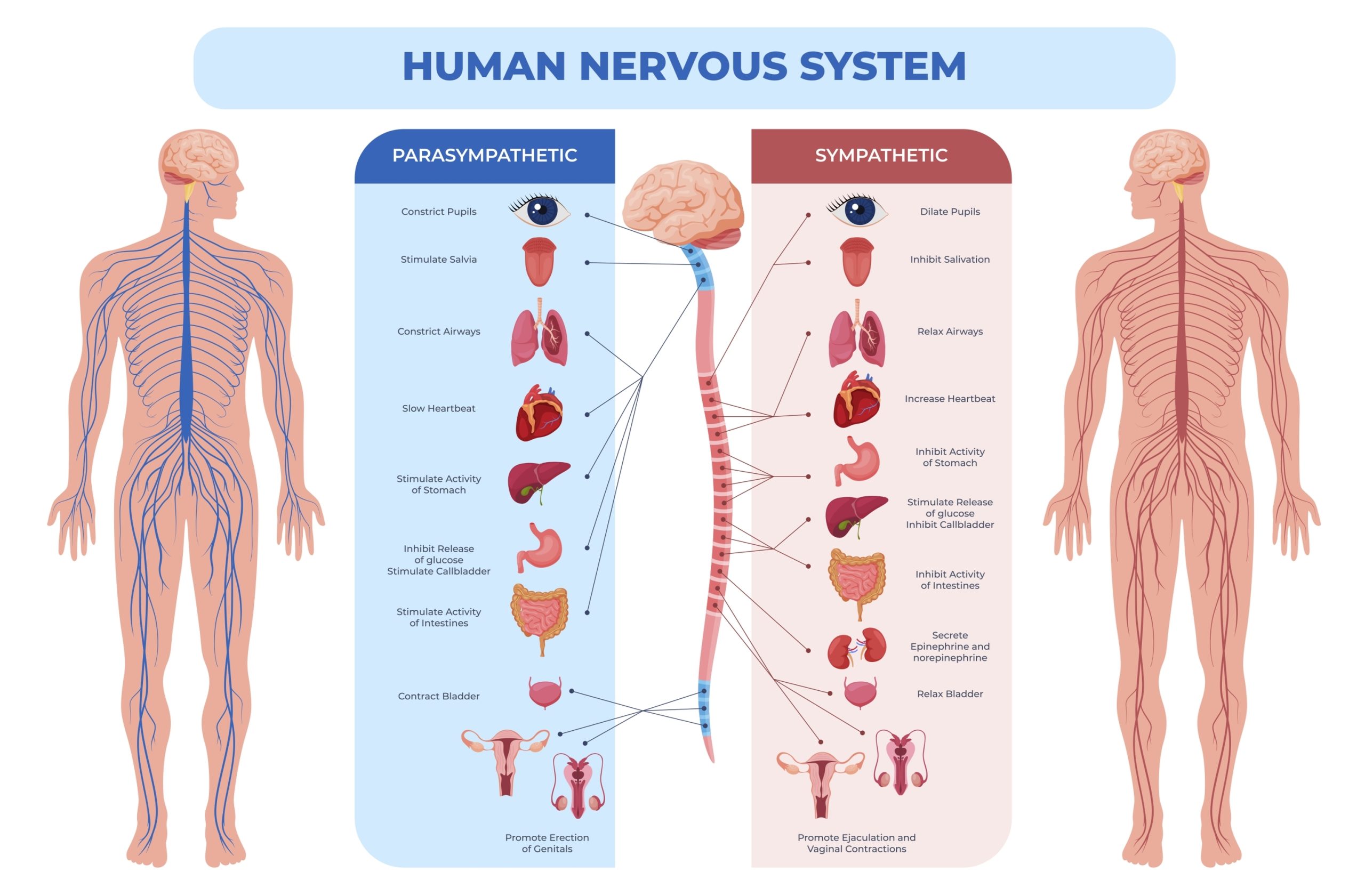
This isn’t about stereotypes or rigid rules. Every individual nervous system is unique. But decades of research in neuroscience, endocrinology, and psychology show that biological differences in hormones, brain connectivity, and stress regulation can shape how male and female nervous systems tend to operate on average.
Understanding these differences can be empowering—especially for women navigating midlife, hormonal shifts, and increased stress. When we understand the biology behind our responses, we can stop blaming ourselves for how our bodies react and instead learn how to support our nervous systems more effectively.
Let’s explore what science tells us.
Table of Contents
ToggleThe Nervous System: Your Body’s Master Control Center
The nervous system is responsible for coordinating everything in the body, from breathing and digestion to emotional responses and stress reactions.
A key component is the autonomic nervous system (ANS), which operates automatically and regulates how the body reacts to both internal and external environments.
The autonomic nervous system has two major branches:
Sympathetic Nervous System
-
Activates during stress
-
Often called the “fight or flight” system
-
Increases heart rate, alertness, and energy mobilization
Parasympathetic Nervous System
-
Responsible for recovery and repair
-
Known as the “rest and digest” system
-
Slows heart rate and promotes relaxation
Both men and women rely on this same system. But research suggests there are average differences in how these systems are activated and regulated.
Stress Responses: Fight-or-Flight vs Tend-and-Befriend
One of the most well-known differences between male and female nervous system responses relates to stress.
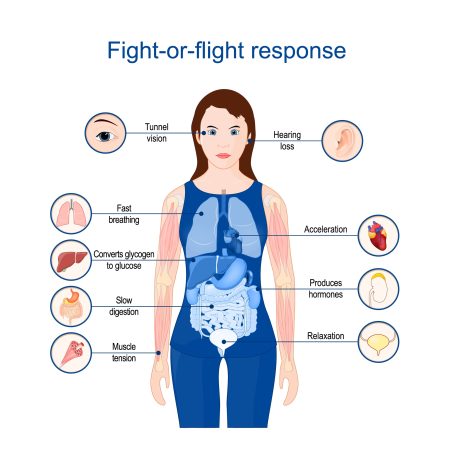
The traditional explanation of stress response has long been the fight-or-flight model, first described by physiologist Walter Cannon in the early 20th century.
When the brain perceives danger, the body releases stress hormones such as:
-
adrenaline
-
norepinephrine
-
cortisol
These hormones prepare the body to either confront a threat or escape from it.
This response is present in both men and women.
However, research suggests women often display an additional pattern.
Psychologist Dr. Shelley Taylor at UCLA proposed what she called the “tend-and-befriend” response in a landmark study published in Psychological Review (2000).
Instead of responding primarily with aggression or withdrawal, women under stress often show a tendency to:
-
seek social support
-
nurture relationships
-
protect children or close family members
-
strengthen social bonds
This behavior appears to be influenced by the hormone oxytocin, which increases during stress and promotes bonding behaviors.
Estrogen enhances oxytocin activity, which may partly explain why social connection can have such a powerful calming effect for many women.
In practical terms, this means something important.
When women reach out to friends, talk through stress, or seek community support during difficult moments, this isn’t weakness.
It is a biologically supported nervous system regulation strategy.
Hormones Shape the Female Nervous System
One of the biggest differences between male and female nervous systems lies in hormonal influence.
The male hormonal environment tends to be more stable day-to-day.
The female hormonal environment, however, is dynamic and cyclical.
Hormones such as estrogen and progesterone interact directly with the brain, influencing neurotransmitters and neural networks involved in mood, cognition, and emotional regulation.
Research shows estrogen affects several important brain chemicals including:
-
serotonin (mood regulation)
-
dopamine (motivation and reward)
-
GABA (calming signals in the brain)
-
brain-derived neurotrophic factor (BDNF), which supports brain plasticity
According to neuroscience research, estrogen can enhance synaptic connections in the hippocampus and prefrontal cortex—regions involved in memory, learning, and emotional regulation (McEwen & Milner, 2017).
Progesterone also plays a role.
Metabolites of progesterone interact with GABA receptors, which can have calming and sedative effects on the brain.
These hormonal influences mean the female nervous system is constantly adjusting across:
-
the menstrual cycle
-
pregnancy
-
postpartum
-
perimenopause
-
menopause
This dynamic regulation can create periods of heightened sensitivity or resilience depending on hormonal shifts.
For many women, this becomes especially noticeable during perimenopause, when estrogen fluctuations become more unpredictable and the nervous system may feel more reactive to stress.
Brain Connectivity Differences
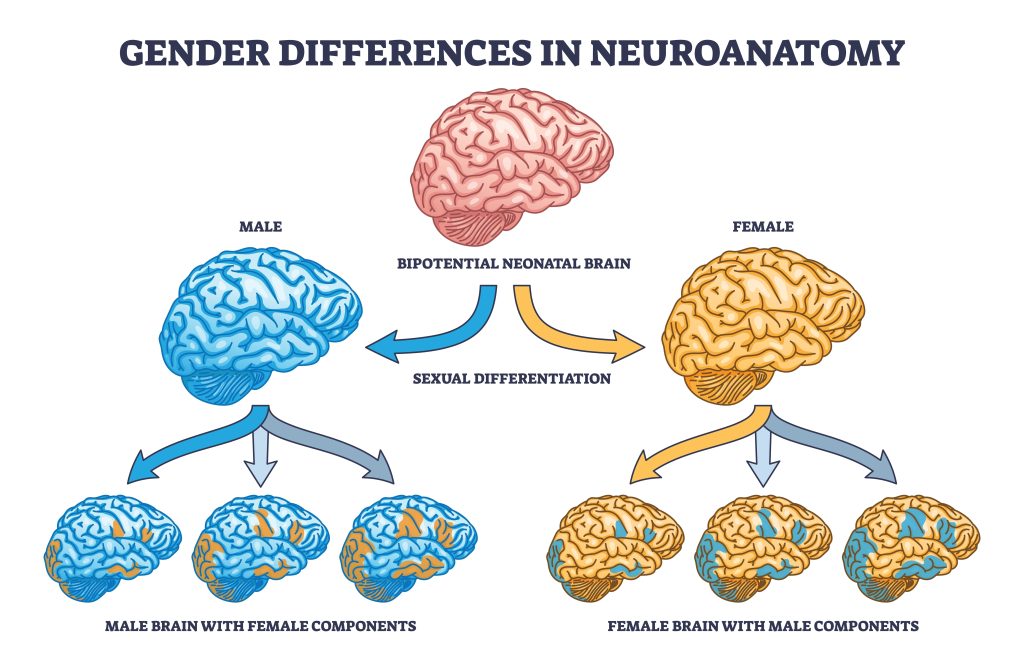
Brain imaging studies have also explored structural differences between male and female brains.
A large neuroimaging study from the University of Pennsylvania analyzed brain connectivity in over 900 individuals using diffusion tensor imaging.
The findings, published in Proceedings of the National Academy of Sciences in 2014, showed interesting patterns.
On average:
Male brains showed stronger connections within each hemisphere.
This type of wiring supports coordination between perception and action and may facilitate tasks involving motor skills and spatial navigation.
Female brains showed stronger connections between the two hemispheres.
This pattern may support integration between analytical and emotional processing networks.
Researchers suggested this connectivity could contribute to strengths in areas such as:
-
communication
-
emotional interpretation
-
memory integration
-
multitasking
It is important to emphasize that these are statistical patterns across large populations. Many individuals show mixed connectivity patterns.
Still, these findings highlight how brain organization can differ subtly between sexes.
Emotional Processing and Empathy
Functional MRI research has also examined how the brain processes emotional information.
Studies indicate that women often show greater activation in certain limbic regions when processing emotional stimuli, including:
-
the amygdala
-
anterior cingulate cortex
-
insula
These regions are involved in emotional awareness, empathy, and threat detection.
This does not necessarily mean women experience stronger emotions.
Rather, the nervous system may be more finely tuned to detect emotional cues and relational dynamics.
This heightened sensitivity can be advantageous in social environments, caregiving roles, and leadership positions that require emotional intelligence.
However, it may also contribute to increased emotional fatigue when stress levels are high.
Sensory Awareness and Environmental Sensitivity
Research also suggests women often display higher interoceptive awareness, which refers to the ability to sense internal bodily signals.
This can include awareness of:
-
heartbeat
-
hunger
-
fatigue
-
emotional shifts
-
subtle physical discomfort
This sensitivity is partly linked to the insula, a brain region that integrates bodily sensations with emotional awareness.
Greater sensory awareness can help individuals respond quickly to internal cues.
But it can also make environments with high stimulation—noise, multitasking, digital overload—feel overwhelming more quickly.
Many women report this type of sensory saturation during periods of high stress or hormonal shifts.
Stress Recovery Patterns
Another interesting area of research examines how men and women recover from stress.
Some studies suggest men may experience larger immediate spikes in cortisol, the primary stress hormone.
Women, however, may experience longer emotional processing periods, especially when stress involves relationships or social evaluation.
Psychologist Susan Nolen-Hoeksema’s research on rumination found that women are statistically more likely to engage in repetitive thinking about stressful events.
Rumination can prolong nervous system activation and delay recovery from stress.
However, it is important to note that social support and emotional expression can also act as powerful stress-reduction tools for women.
Pain Perception and Body Awareness
Research has also identified differences in pain perception.
Women often report:
-
greater sensitivity to certain types of pain
-
stronger immune responses
-
higher rates of some autoimmune conditions
Estrogen interacts with immune signaling and inflammatory pathways, which may contribute to these differences.
Increased pain sensitivity may also relate to stronger interoceptive awareness.
While this can make discomfort more noticeable, it also means many women are highly attuned to early signals from their bodies.
This awareness can be valuable when learning to regulate stress, adjust habits, and support long-term health.
The Most Important Takeaway
It’s tempting to reduce these findings to simple statements like “men are logical and women are emotional.”
But neuroscience tells a much more nuanced story.
Both male and female nervous systems are incredibly sophisticated.
They simply emphasize different adaptive strategies.
A helpful way to think about it is this:
On average, the male nervous system prioritizes rapid mobilization and action.
The female nervous system prioritizes sensing, connection, and integration.
Both strategies have clear evolutionary advantages.
And both are necessary for a balanced, functioning society.
Why This Matters for Women in Midlife
Understanding nervous system biology becomes especially important for women navigating midlife transitions.
Hormonal shifts during perimenopause can influence:
-
stress resilience
-
sleep quality
-
emotional regulation
-
sensory sensitivity
-
energy levels
When women suddenly feel more reactive, overwhelmed, or emotionally sensitive during this stage of life, it is often not a failure of discipline.
It is the nervous system adapting to hormonal changes.
This is why practices that support nervous system regulation become so important in midlife.
These may include:
-
strength training
-
yoga and breathwork
-
adequate protein intake
-
restorative sleep
-
time in nature
-
supportive social relationships
Each of these habits influences the nervous system’s ability to shift back into parasympathetic recovery mode.
The Future of Women’s Health
For decades, most neuroscience research focused primarily on male subjects.
Today, scientists are increasingly recognizing the importance of studying the female brain and nervous system independently.
As this research expands, we are gaining a deeper understanding of how hormones, social dynamics, and biology interact to shape women’s health across the lifespan.
This knowledge allows women to approach wellness not from a place of self-criticism, but from a place of biological awareness and self-support.
Because when you understand how your nervous system works, you can finally start working with it instead of fighting against it.
References
Cahill L. (2006). Why sex matters for neuroscience. Nature Reviews Neuroscience.
Ingalhalikar M. et al. (2014). Sex differences in the structural connectome of the human brain. Proceedings of the National Academy of Sciences.
McEwen B. S., & Milner T. A. (2017). Understanding the broad influence of sex hormones on brain function. Nature Reviews Neuroscience.
Taylor S. E. et al. (2000). Biobehavioral responses to stress in females: Tend-and-befriend. Psychological Review.
Nolen-Hoeksema S. (2012). Emotion regulation and psychopathology: The role of gender differences. Annual Review of Clinical Psychology.