This is where retreats like THOR stand out. Instead of focusing only on stretching, you’re guided through a complete approach to midlife health that includes strength, mobility, and recovery.
6. The Food Supports Your Body (Without Being Restrictive)
Another common fear: “Am I going to be eating salad and green juice all week?”
People have some interesting ideas about retreats. That everyone is extremely flexible.
That the food is only green juice. That everyone else already knows each other.
After four years of hosting retreats, I can tell you something honestly… most of those assumptions aren’t actually true.
And more importantly those assumptions are often the exact thing that stops someone from going… when a retreat might be exactly what they need.
So let’s clear the air. Because what people think a retreat is… and what it actually feels like when you’re there… are usually two very different experiences.
Why Yoga Retreats Feel So Intimidating (Before You Go)
Before we get into the myths, it’s important to understand why these assumptions exist in the first place.
Our brains are wired to anticipate uncertainty as risk.
When something is unfamiliar for example: traveling alone, being around new people, trying something like yoga for the first time, your nervous system fills in the blanks with worst-case scenarios.
This is called predictive processing, a well-established concept in neuroscience where the brain uses past experiences and assumptions to “predict” future outcomes.
So if you’ve never been on a retreat before, your brain creates a story.
And that story often sounds like: “I won’t fit in.”
“Everyone else will be better than me.” “It’s going to feel awkward”.
But once you’re actually there? That story usually dissolves within the first 24 hours.
Myth #1: Everyone Else Will Know What They’re Doing
Reality: Most people are figuring it out as they go.
You can always tell on the first day.
People quietly watching where others leave their shoes.
Looking around before rolling out their mat.
Wondering if they’re in the right place.
And then someone asks a question… and suddenly everyone exhales.
Because the truth is: no one arrives as an expert.
Retreats are one of the few environments where not knowing is actually the norm.
Myth #2: You Have to Be “Good at Yoga”
Reality: There is no such thing—and many people are complete beginners.
Let’s clear this up right now. “Good at yoga” isn’t a thing.
Yoga is not performance-based. It’s awareness-based.
In fact, research shows that yoga improves flexibility, strength, and balance over time, regardless of starting level (Field, 2016).
Translation? You don’t need experience. You just need a willingness to show up.
And yes—someone will always whisper:
“Am I doing this right?”
And the answer will always be:
“You’re doing great.”
Myth #3: Everyone Already Knows Each Other
Reality: Most people arrive alone.
This is one of the biggest fears and one of the biggest surprises.
The first dinner? A little quiet. A little unsure.
By the third? Inside jokes. Shared stories. People saving seats for each other.
There’s something powerful about a group of people choosing to step outside of their normal lives at the same time.
It creates connection faster than almost anything else.
Research on shared novel experiences shows they accelerate bonding and increase feelings of closeness even among strangers .
Which is why retreat friendships often feel deeper, faster.
Myth #4: Retreats Are Only for “Spiritual” People
Reality: Most people just want a break.
Not everyone is coming for a spiritual awakening. Many people come because they are:
Tired
Burned out
Overstimulated
Constantly “on”
And they want something simple.
Sleep.
Quiet mornings.
A few days without constant notifications.
There’s actual science behind why this matters.
Chronic stress keeps the body in a sympathetic (fight-or-flight) state, increasing cortisol and disrupting sleep, digestion, and mood.
Retreat environments that include nature, slower pace, reduced input, help shift the body into a parasympathetic (rest-and-digest) state, which supports recovery and healing.
In simple terms?
You don’t need to be spiritual.
You just need to be human.
Myth #5: You Have to Join Every Activity
Reality: The best retreats are flexible.
Someone always skips sunrise yoga.
Someone always finds the hammock.
And someone always takes a nap instead of going on the group hike.
And all of that is completely normal.
In fact, autonomy and the ability to choose how you spend your time, is strongly linked to well-being and motivation. So we encourage that.
Which means forcing yourself to do everything? Actually defeats the purpose.
Frequently Asked Questions About Yoga Retreats for Women Over 50
Do I need to be flexible to attend a yoga retreat for women over 50?
No. Flexibility is not a requirement. In fact, many women attend our yoga retreats specifically to improve mobility and reduce stiffness. Yoga meets you where you are.
Am I too old to go on a yoga retreat?
Not at all. Many women attend their first retreat in their 50s, 60s, and beyond. Our retreats are designed to support your body not push it beyond its limits.
Are yoga retreats for women over 50 beginner-friendly?
Yes. Our yoga retreats are intentionally designed for mixed levels, including complete beginners and women returning after years away from movement.
What if I haven’t exercised in years?
That’s more common than you think. Our retreats offer women a safe and supportive environment to ease back into movement without pressure or judgment.
Is it awkward to go on a yoga retreat alone?
It might feel that way before you arrive but most of our guests attend solo. Shared experiences create connection quickly, and many people leave with meaningful friendships.
What is a typical day like at a yoga retreat?
A typical day may include morning movement (like yoga or walking), meals, optional activities, and free time. The pace is slower and more flexible than a traditional vacation.
Will I have free time to rest?
Yes. The best retreats are not rigid. You can participate in as much or as little as you’d like, including taking time to rest, nap, or simply be still.
What are the benefits of yoga retreats for women over 50?
Research shows retreats can improve stress levels, sleep quality, mood, and overall well-being. These benefits are especially important during midlife hormonal changes.
Can yoga help with menopause symptoms?
Yes. Studies suggest yoga may help reduce symptoms like stress, sleep disturbances, and mood fluctuations during menopause by supporting nervous system regulation.
Do I have to participate in every activity?
No. Participation is always optional. Choosing what your body needs in the moment is part of the experience.
What kind of yoga is practiced at retreats?
Our retreats offer accessible and adaptive styles such as gentle yoga, vinyasa or restorative practices. Our classes are typically adaptable for different levels and needs.
Will I be the least fit person there?
Highly unlikely. Retreat groups are diverse, with a mix of fitness levels, ages, and backgrounds. There is no “standard” level you need to meet.
Are yoga retreats only for spiritual people?
No. Many women attend retreats simply to relax, reset, and step away from daily stress—not for spiritual reasons.
What should I bring to a yoga retreat?
Comfortable clothing, walking or hiking shoes, personal essentials, and anything that helps you feel relaxed. Our retreats provide all the yoga equipment you need.
Will I be disconnected from my phone the entire time?
No. At our retreats, we encourage reduced screen time but of course provide you ample time and space to check in with family or handle important matters if needed. We also have free WiFi.
Are meals included, and will they meet my dietary needs?
Our retreats include 3 meals per day – breakfast, lunch and dinner as well as snacks and we can accommodate dietary preferences such as gluten-free, dairy-free, or vegetarian options.
Is a yoga retreat worth the cost?
For many women, the structured environment, support, and ability to fully disconnect from daily stress provide long-lasting mental and physical benefits.
How long does it take to feel comfortable at a retreat?
For most people, the initial discomfort fades within the first 24 hours as routines settle and connections begin to form.
What if I feel anxious before going?
That’s completely normal. Anticipation and uncertainty are common, especially when trying something new. Most people feel significantly more at ease once they arrive.
Will I see results after attending a retreat?
Many of our guests report improved sleep, reduced stress, increased clarity, and a stronger connection to their body even after just a few days. Many also continue their yoga practice and fitness journey once they are home.
For more content like this, subscribe to our newsletter.
It’s about being with yourself: fully, honestly, and without distraction.
Stepping out of survival mode and back into presence.
Back into awareness. Back into alignment.
Because when your nervous system is regulated… everything changes.
And that might be the most powerful journey we can ever take.
Frequently Asked Questions: Solo Travel for Women
Is solo travel safe for women?
Solo travel for women can be very safe when approached with awareness and preparation. Choosing reputable accommodations, sharing your itinerary with someone you trust, and selecting destinations known for safety can significantly reduce risk. Wellness retreats are often one of the safest options, as they provide structured environments, vetted locations, and built-in community support.
What are the benefits of solo travel for women?
Solo travel for women offers powerful mental, emotional, and physical benefits. It creates space to disconnect from daily stress, improve self-awareness, build confidence, and reset the nervous system. Many women also report increased clarity, better decision-making, and a deeper sense of independence after traveling alone.
Why are wellness retreats ideal for solo female travelers?
Wellness retreats are ideal for solo travel for women because they remove the stress of planning and logistics while providing a safe, structured environment. With curated activities like yoga, hiking, and mindfulness practices, retreats support relaxation, personal growth, and meaningful connection—without the overwhelm of traditional travel.
How does solo travel help regulate the nervous system?
Solo travel—especially wellness-focused travel—helps shift the body out of a chronic stress state (fight-or-flight) into a more regulated “rest and digest” state. Reducing screen time, engaging in movement like yoga or walking, and spending time in nature can lower cortisol levels, improve emotional regulation, and create a greater sense of calm and clarity.
What is slow travel and why is it important for solo travelers?
Slow travel focuses on experiencing fewer places more deeply rather than rushing through multiple destinations. For solo travel for women, this approach reduces stress, minimizes decision fatigue, and allows for more meaningful experiences. It supports presence, relaxation, and a deeper connection to both the destination and yourself.
Do I have to be experienced to try solo travel?
No experience is required to start solo travel. Many women begin with structured environments like wellness retreats, which provide guidance, safety, and community while still allowing for independence. Starting small and choosing supportive environments can make the transition into solo travel much easier and more enjoyable.
What should I pack for a solo wellness retreat?
Packing for a solo wellness retreat is simple and intentional. Focus on comfortable clothing for movement (like yoga or walking), personal essentials, a journal, and any items that help you relax. Unlike traditional travel, retreats are designed to reduce decision-making, so you don’t need to overpack.
Can solo travel help with burnout or stress?
Yes, solo travel—especially wellness-driven travel—can be highly effective for reducing burnout and stress. By removing daily pressures, lowering stimulation, and supporting the nervous system through rest, movement, and nutrition, solo travel creates the conditions for recovery, clarity, and emotional reset.
Is solo travel lonely for women?
Solo travel does not have to be lonely. In fact, many women find it deeply fulfilling. Wellness retreats and intentional travel environments often create opportunities for connection with like-minded people, while still allowing space for solitude and self-reflection.
What is the best way to start solo travel for women?
The best way to start is by choosing a destination or experience that feels safe and supportive. Wellness retreats are one of the easiest entry points because they offer structure, community, and guidance while still allowing you to experience the benefits of traveling alone.
For more content like this, subscribe to our newsletter.
Early Menopause: Does It Shorten Lifespan? There’s a moment that stops a lot of women in their tracks.
They hear the words: “You’re in early menopause.”
And the next thought is often immediate and heavy:
“What does early onset menopause mean for my health… and my life expectancy?”
Free Macro Calculator
Personalized to your body, goals, and measurements. You will receive detailed macros for meals, sample day of eating, food selection guidance, hydration + daily supplement suggestions, and more.
Let’s answer that honestly, based on research not fear, not internet myths, not guesswork.
Because the truth is far more empowering than most women are told.
What Is Early or Premature Menopause?
Before we talk about outcomes, we need to define the terms:
Premature menopause: before age 40
Early menopause: between ages 40–44
Average menopause: ~51
Only about ~3% of women experience menopause before 40 and about 6% between 40–44
So while it’s not the norm, it’s far from rare and it’s often under-discussed.
The Big Question: Does Early Onset Menopause Shorten Lifespan?
Let’s strip away the noise and go straight to the data and see what the research actually shows:
Women with premature menopause have about a 46–53% higher risk of all-cause mortality
Early menopause (40–44) still carries increased risk, though smaller
On average, studies show ~2 years shorter lifespan compared to women with later menopause
That’s the key point most people misunderstand:
The risk is real.
But the average reduction in lifespan is relatively modest.
This is not a diagnosis of dramatically shortened life.
It’s a signal of increased long-term health risk especially if unmanaged.
Why Early Menopause Affects Health
The driver behind these risks is not menopause itself. It’s the earlier loss of estrogen.
Estrogen plays a critical role in multiple systems:
1. Cardiovascular Protection (the biggest factor)
Women with menopause before 40 have about a ~40% higher lifetime risk of coronary heart disease
Estrogen helps:
Maintain healthy blood vessels
Regulate cholesterol
Reduce inflammation
When it drops earlier → risk accumulates over decades.
2. Metabolic and Inflammatory Changes
Research shows estrogen decline contributes to:
Increased insulin resistance
Higher inflammation
Greater metabolic dysfunction
These are foundational drivers of:
Heart disease
Diabetes
Chronic illness
3. Bone Health Decline
Earlier menopause = longer time without estrogen support which may lead to increased risk of osteoporosis and higher fracture risk
4. Increased Disease Risk
Some studies show:
Higher risk of death from heart disease and cancer
Greater overall chronic disease burden
The Most Important Reframe (This Changes Everything)
Here’s where most conversations go wrong.
👉 Early menopause is NOT a life sentence.
👉 It’s a risk marker not a destiny.
Because:
The majority of long-term outcomes are modifiable. And this is where the opportunity lies.
Free Macro Calculator
Personalized to your body, goals, and measurements. You will receive detailed macros for meals, sample day of eating, food selection guidance, hydration + daily supplement suggestions, and more.
The Science-Backed Strategy: How to Approach Early Menopause
If you want to shift outcomes, the research is clear:
👉 You don’t “treat menopause”
👉 You optimize your physiology after estrogen decline
Let’s break this down into evidence-based pillars.
1. Hormone Therapy (When Appropriate)
What the research says:
Hormone therapy can significantly reduce mortality risk in early menopause
One study found women using HRT had ~50% lower risk of death from cancer and other causes
Medical guidelines (including major menopause societies) support:
👉 HRT until the average age of menopause (~50–51) for women with early menopause unless contraindicated.
Why it matters
Hormone therapy helps:
Restore estrogen levels
Protect cardiovascular health
Preserve bone density
Support cognitive function
Important note
It’s not one-size-fits-all. HRT should always be:
Personalized
Clinically supervised
Risk-assessed
2. Strength Training (Non-Negotiable)
This is one of the most powerful interventions and one of the most overlooked.
Strength training:
Improves insulin sensitivity
Builds muscle (metabolic protection)
Increases bone density
Reduces inflammation
These directly counter the risks created by early menopause.
Recommendation
3–4 sessions per week
Progressive overload
Focus on:
Lower body strength
Core stability
Functional movement
3. Cardiovascular Training (Longevity Lever)
Since cardiovascular disease is the #1 driver of increased mortality, this is critical.
Evidence-backed approach
150–300 minutes per week moderate activity
OR
75–150 minutes vigorous activity
(Aligned with major public health guidelines)
What works best
Walking (especially post-meal)
Incline treadmill
Cycling
Interval training
Consistency matters more than intensity.
4. Protein Intake & Muscle Preservation
After menopause, women experience:
Accelerated muscle loss (sarcopenia)
Reduced anabolic response
This impacts:
Metabolism
Strength
Longevity
Evidence-based protein targets
Research suggests: 1.2–1.6 g/kg body weight/day for midlife women
This supports:
Muscle retention
Recovery
Metabolic health
5. Bone Health Strategy
Early menopause increases lifetime osteoporosis risk.
What the data supports
Resistance training
Adequate calcium intake
Vitamin D sufficiency
These are foundational for:
Bone mineral density
Fracture prevention
6. Cardiometabolic Monitoring
This is where proactive women change their trajectory.
Track regularly:
Lipid profile
Blood pressure
Fasting glucose / HbA1c
Body composition
Because:
👉 Early menopause shifts your baseline risk earlier
👉 So your monitoring needs to shift earlier too
Free Macro Calculator
Personalized to your body, goals, and measurements. You will receive detailed macros for meals, sample day of eating, food selection guidance, hydration + daily supplement suggestions, and more.
These compound the risks already elevated by early menopause.
What This Means for Life Expectancy (Real Talk)
Let’s bring it all together. The evidence-based truth:
Early menopause is associated with:
Increased mortality risk
Higher chronic disease risk
Average lifespan reduction:
~1–3 years (population level)
But…
👉 With proper intervention, this gap can be reduced—and potentially eliminated.
The THOR Perspective (The Part That Actually Matters)
There is no need to fear early menopause. But we can benefit from responding to it correctly.
Because what the research shows is this:
👉 The risk is not in the diagnosis
👉 The risk is in doing nothing about it
The Real Opportunity
Women who experience early menopause often:
Become more proactive
Prioritize strength and health earlier
Build better long-term habits
And in many cases they often outperform their peers in long-term health outcomes because they start paying attention sooner.
Free Macro Calculator
Personalized to your body, goals, and measurements. You will receive detailed macros for meals, sample day of eating, food selection guidance, hydration + daily supplement suggestions, and more.
European Congress of Endocrinology – mortality risk & HRT findings
The Lancet – chronic disease risk with early menopause
Buck Institute – early menopause and disease risk
Mayo Clinic data on prevalence of early menopause
Frequently Asked Questions About Early Menopause
What is early menopause?
Early menopause usually refers to menopause that happens between ages 40 and 44. If menopause happens before age 40, it is typically called premature menopause.
Does early menopause shorten life expectancy?
Research suggests that early menopause is associated with a modest increase in long-term health risks, including cardiovascular disease and all-cause mortality. But it does not determine an individual woman’s exact lifespan.
Why can early menopause affect long-term health?
The main reason is earlier loss of estrogen. Estrogen helps support heart health, bone density, metabolism, and other important systems in the body.
What are the biggest health risks linked to early menopause?
The biggest concerns tend to be cardiovascular disease, bone loss, osteoporosis, and shifts in metabolic health.
Can women with early menopause still live long and healthy lives?
Yes. Early menopause is not a sentence. It is a signal to become more proactive. With the right support and evidence-based habits, many women can protect both lifespan and healthspan.
Should women with early menopause consider hormone therapy?
For many women, hormone therapy may be recommended until the average age of natural menopause, unless there is a medical reason not to use it. This should always be discussed with a qualified healthcare professional.
What is the best exercise approach for women with early menopause?
The most evidence-based approach usually includes strength training, cardiovascular exercise, mobility work, and daily movement.
How much protein should women in early menopause eat?
Protein needs vary, but many experts recommend a higher-protein approach during midlife to support muscle retention, recovery, and metabolic health.
What lifestyle habits matter most after early menopause?
The most important habits are regular strength training, enough daily movement, adequate protein, good sleep, stress management, bone-supportive nutrition, and regular medical check-ins.
When should someone talk to a doctor about early menopause?
A woman should speak with a doctor if her periods stop unusually early, become very irregular, or if she develops symptoms like hot flashes, night sweats, sleep disruption, vaginal dryness, or mood changes before the average age of menopause.
Free Macro Calculator
Personalized to your body, goals, and measurements. You will receive detailed macros for meals, sample day of eating, food selection guidance, hydration + daily supplement suggestions, and more.
There’s a new wellness trend all over TikTok, and surprisingly, it’s not another restrictive diet, detox tea, or extreme protocol.
It’s fiber.
More specifically, “fibermaxxing.”
At first glance, it sounds almost too simple to be effective. Add more fiber, feel fuller, improve digestion, lose weight, stabilize blood sugar.
But like most viral trends, the question isn’t just what it is. But rather whether it actually works, and if there’s a smarter way to approach it.
Let’s break it down.
What Is “Fibermaxxing”?
Fibermaxxing is the intentional effort to maximize daily fiber intake, often by adding high-fiber foods or supplements to meals.
You’ll see people:
adding chia seeds to everything
swapping low-fiber foods for whole grains
loading up on legumes and vegetables
using fiber powders or supplements
The goal is usually some combination of:
better digestion
reduced cravings
improved gut health
weight management
And in theory, this makes sense.
Because fiber is one of the most under-consumed nutrients in modern diets.
Why Is Everyone Suddenly Talking About Fiber?
Because people are starting to realize something important:
👉 Hunger isn’t always about willpower
👉 It’s often about what your body is missing
Most ultra-processed diets are:
low in fiber
low in volume
high in calories
Which creates the perfect storm for:
constant hunger
blood sugar spikes
overeating
Fiber flips that equation.
It slows digestion. It stabilizes blood sugar. It increases fullness.
And for a lot of people – and especially for women in midlife – this is the missing piece.
What Does Fiber Actually Do in the Body?
Fiber isn’t just about digestion. It impacts multiple systems at once.
According to research from organizations like the Academy of Nutrition and Dietetics and the Harvard T.H. Chan School of Public Health, fiber plays a key role in:
1. Blood Sugar Regulation
Fiber slows how quickly food is digested and absorbed.
This helps prevent rapid spikes and crashes in blood sugar—which are often responsible for:
energy dips
cravings
irritability
This is especially important in midlife, when insulin sensitivity can begin to decline.
2. Appetite Control and Satiety
High-fiber foods take longer to digest and increase feelings of fullness.
That means:
👉 fewer cravings
👉 less snacking
👉 more stable energy
Without needing extreme calorie restriction.
3. Gut Health and the Microbiome
Certain types of fiber act as prebiotics, feeding beneficial gut bacteria.
A healthy gut microbiome has been linked to:
improved digestion
stronger immune function
better metabolic health
And even mood regulation.
4. Heart Health
Soluble fiber can help reduce LDL cholesterol levels.
Higher fiber intake is associated with lower risk of cardiovascular disease.
5. Weight Management
Multiple studies show that higher fiber intake is associated with:
lower body weight
improved metabolic markers
Not because fiber “burns fat”—but because it helps regulate appetite and energy intake.
Can You Overdo Fiber?
This is where fibermaxxing can go wrong.
Because more is not always better—especially if your body isn’t used to it.
The Most Common Mistake: Increasing Fiber Too Quickly
If someone goes from:
👉 10 grams per day → 40+ grams overnight
They’re likely to experience:
bloating
gas
abdominal discomfort
constipation
Yes—constipation. Even though fiber is supposed to help with digestion.
This happens because fiber needs time (and water) to work properly.
Who Needs to Be More Careful?
Certain individuals should approach high-fiber intake more cautiously:
People with Irritable Bowel Syndrome
Those with Crohn’s Disease or Ulcerative Colitis
Individuals with sensitive digestion
In these cases, the type of fiber matters:
soluble fiber is often better tolerated
insoluble fiber may aggravate symptoms
Hydration Matters More Than People Think
Fiber absorbs water.
If you increase fiber without increasing fluid intake, you can actually worsen digestion.
👉 More fiber = more water needed
How Much Fiber Should You Actually Be Eating?
According to the Dietary Guidelines for Americans:
Women under 50: ~25 grams/day
Women over 50: ~21 grams/day
Men: ~30–38 grams/day
But here’s the reality:
👉 Most people are getting far less than this
A practical, effective range for most adults:
👉 25–35 grams per day
The key is not hitting a perfect number—it’s consistency over time.
The Best High-Fiber Foods to Focus On
If you’re going to increase fiber, whole foods should be your foundation.
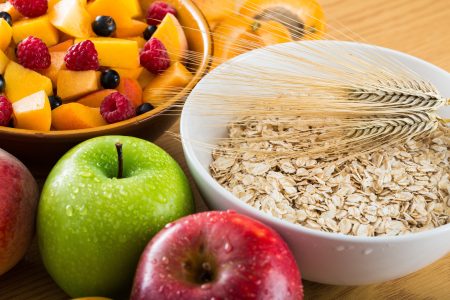
Top Fiber-Rich Foods
Seeds
Chia seeds
Flaxseeds
Legumes
Lentils
Chickpeas
Black beans
Fruits
Raspberries
Pears
Apples (with skin)
Vegetables
Broccoli
Brussels sprouts
Carrots
Whole grains
Oats
Quinoa
Brown rice
Supplements vs Whole Foods: What’s Better?
Fiber supplements can be helpful—but they shouldn’t replace real food.
Whole foods provide:
vitamins
minerals
antioxidants
additional satiety
Supplements can be useful when:
intake is very low
someone struggles to meet needs through food alone
But relying solely on powders misses the bigger picture.
Why Fiber Matters Even More in Midlife
This is where fibermaxxing actually has real potential—when applied correctly.
For women over 40 and 50:
Hormonal shifts can increase fat storage
Appetite regulation may change
Blood sugar control becomes more important
Fiber helps address all of these.
It supports:
satiety
metabolic health
digestive function
Which is why many women notice significant improvements when they increase fiber intake—without extreme dieting.
The Smarter Way to Approach Fibermaxxing
Instead of going all-in overnight, think of this as a gradual upgrade.
Step 1: Add, Don’t Restrict
Start by adding fiber to meals you’re already eating.
Add chia seeds to yogurt
Add vegetables to lunch and dinner
Swap refined carbs for whole grains
Step 2: Increase Slowly
Add:
👉 5–10 grams per week
Let your body adjust.
Step 3: Prioritize Variety
Different fibers support different bacteria in the gut.
The goal isn’t just more fiber—it’s diverse fiber sources.
Step 4: Drink More Water
This is non-negotiable.
Step 5: Pay Attention to Your Body
More fiber should feel:
satisfying
stabilizing
Not:
bloating
uncomfortable
The Real Problem Fibermaxxing Is Trying to Solve
At its core, this trend is addressing a bigger issue:
👉 Modern diets are disconnected from how our bodies are designed to function
Low fiber intake is a symptom of that.
And when people increase fiber, they often feel better—not because it’s a “hack,” but because they’re correcting a deficiency.
The Bottom Line
Fibermaxxing isn’t a magic solution.
But it’s also not just another trend to ignore.
👉 The concept is valid
👉 The benefits are real
👉 The execution matters
If I had to simplify it:
Most people need more fiber
Almost no one needs extreme amounts
The best approach is gradual, consistent, and food-first
Final Thought
You don’t need to overhaul your entire diet overnight.
You don’t need to track every gram obsessively.
You just need to start building meals that actually support your body.
Because when you give your body what it needs, it becomes a lot easier to feel satisfied, energized, and in control again.
Get our Free 28-day email course series to help with 1 or 2 exercises per day to release your fascia. One short lesson per day. Two minutes to read each.
How To Get 10K Steps: Micro Walks for Women Over 40: The Behavioral Science Behind the Trend That Actually Works
A wellness trend called “micro walking” has moved from TikTok into mainstream awareness over the past two years, and for once the underlying science actually supports the trend. The premise is simple. Instead of trying to squeeze one long walk into your day to hit a step count target, you take several short walks (5 to 15 minutes at a time) throughout the day and let the steps accumulate naturally. At first glance it sounds almost too easy to make a difference. The published research shows the opposite. For women in perimenopause, menopause, and post-menopause specifically, this pattern may be one of the most effective and most sustainable movement interventions available.
This article is the lifestyle medicine translation of the micro walking research, written for midlife women. We are going to cover what micro walks actually are, why the 10,000-step goal backfires for so many women, the behavioral science that explains why micro walks succeed where longer workout plans fail, the metabolic case studies that document the physiological benefits, why the practice is particularly suited to women over 40, and the practical architecture for building it into your day.
I am Terry Tateossian, founder of The House of Rose and a certified lifestyle medicine coach who works with women in midlife through 1:1 coaching, group programs, and immersive wellness retreats at our Smoky Mountains property.
Important: Always consult with a healthcare professional before starting any new exercise routine, especially if you have cardiovascular conditions, joint issues, or any chronic health concerns. The recommendations below are general guidance, not individualized medical advice.
What Is a Micro Walk?
A micro walk is a short, intentional bout of walking, typically lasting 5 to 15 minutes, performed multiple times across the day. The exact length is less important than the pattern. Several short walks distributed throughout the day add up to meaningful movement volume without ever requiring the time block of a traditional walking session.
The framing change is what makes the practice work. Instead of thinking, “I need an hour to go for a walk,” you shift to, “Where can I add movement into my day?” That second question opens up dozens of small windows that the first question closes off entirely.
Common micro walk patterns:
A 10 to 15-minute walk after each main meal (three walks, 30 minutes total)
A quick loop around the block between meetings or work blocks
Walking while taking a phone call
A short stroll to reset energy when you feel an afternoon slump
A walking break instead of a coffee break
A walk to the mailbox at the end of the driveway and back, taken twice a day
Individually each one feels small. The accumulation across a week produces 30 to 60 minutes of daily movement that most women would never schedule as a single session.
Why the 10,000-Step Goal Backfires for Most Women in Midlife
The 10,000-step target has been around for so long that most people assume it came from medical research, but it did not. The target originated in a 1965 Japanese marketing campaign for a pedometer called the manpo-kei, which translates roughly as “10,000-step meter.” The number was chosen because the character for 10,000 in Japanese visually resembles a walking person. The science came later, and the science has been mixed about the specific target.
For most women, hitting 10,000 steps requires roughly 4 to 5 miles of walking, or 90 minutes to two hours per day of dedicated time. That is a meaningful time commitment, and when the daily target requires that much continuous time, the practice tends to fall into an all-or-nothing pattern. You either hit the target on the days when life cooperates, or you do nothing at all on the days when it does not.
The behavioral problem this creates is significant. Habit research consistently shows that consistency matters more than intensity for any lifestyle behavior. A daily practice of 15 minutes outperforms an occasional 90-minute session across nearly every measurable outcome (adherence, biological markers, sustainable behavior change, and self-reported satisfaction). When the daily target is set so high that most women miss it more days than they hit it, the all-or-nothing pattern erodes the behavioral foundation that any lasting practice depends on.
Micro walks solve this problem by lowering the threshold for what counts. A 5-minute walk after lunch counts. A 10-minute call taken while walking counts. The practice becomes accessible on every day rather than only on the days when the schedule is generous.
The Behavioral Science Behind Why Micro Walks Work
The deeper reason micro walks succeed where long structured walking plans fail comes from the behavioral science of habit formation. Several research streams converge on the same conclusion.
The friction principle.
BJ Fogg’s behavior model at Stanford established that any behavior is more likely to happen when the friction required to start it is low. Walking for 90 minutes requires clearing 90 minutes from a calendar, putting on workout clothes, often driving somewhere, mentally committing to the duration, and accepting that the rest of the day’s tasks will need to bend around the walk. Walking for 5 minutes requires standing up. The friction differential is enormous, and the daily behavior pattern follows the friction.
Implementation intentions.
Research by Peter Gollwitzer at NYU showed that linking a new behavior to a specific cue (“when X happens, I will do Y”) produces dramatically higher follow-through rates than general intentions. A 1997 meta-analysis of implementation intention research found that this single technique increased behavioral follow-through by an average of 0.65 standard deviations across many study populations. Micro walks fit this framework naturally. “When I finish lunch, I take a 10-minute walk” is an implementation intention. “I should walk more this week” is not.
Habit stacking.
James Clear’s work synthesizing decades of habit research popularized the concept of habit stacking, where a new behavior is anchored to an existing reliable behavior. Walking after meals is a textbook habit stack because meals happen on a predictable rhythm three times a day, providing an automatic cue and anchor. The new behavior (walking) inherits the consistency of the existing behavior (eating lunch).
The action threshold.
Research on exercise initiation consistently shows that the hardest part of any movement session is the first three to five minutes. Once the body is moving, the perceived effort drops, the energy increases, and the session feels easier than expected. Long walks ask the brain to overcome the activation threshold once and then sustain effort for an hour. Micro walks ask the brain to overcome a much smaller version of the same threshold five times across the day, which sounds harder but is psychologically easier because each instance involves a tiny commitment rather than a large one.
The completion effect.
Behavioral research on goal pursuit consistently shows that completed small wins produce more sustained motivation than progress toward a large goal. Five completed 10-minute walks across the day produce five distinct “I did the thing” moments. One incomplete attempt at a 90-minute walk produces a single failure marker even if 60 minutes were completed.
Taken together, these behavioral mechanisms make micro walks one of the most psychologically supported movement practices available. The practice is built around how habit formation actually works rather than around what the body theoretically needs.
“The pattern I see most often in midlife women is the all-or-nothing trap. They commit to an ambitious workout plan in January, hit it for ten days, and then life happens and they fall off completely for three weeks. The micro walks practice is the opposite of this. The threshold is so low that the day life happens, you still get the walk in between the dropoff and the next meeting. After a few months, that pattern of small daily consistency produces results the ambitious plan never would have.” ~ Terry Tateossian
The Metabolic Case Studies: What the Research Shows
The metabolic research on micro walking and its close cousin (breaking up sedentary time with short bouts of activity) is substantial and consistent. The most important studies for midlife women are summarized below.
The DiPietro post-meal walking trial.
A 2013 randomized crossover study published in Diabetes Care by DiPietro and colleagues followed older adults at risk for type 2 diabetes. Participants completed three different walking protocols on separate occasions: 45 minutes of continuous walking in the morning, 45 minutes of continuous walking in the afternoon, or three 15-minute walks performed within 30 minutes after each of three meals. The three short post-meal walks produced significantly better 24-hour glucose control than either of the longer continuous walks. The post-dinner walk in particular reduced glucose excursions by an amount comparable to several diabetes medications.
For midlife women dealing with the insulin resistance that often accompanies perimenopause and menopause, this finding has direct daily implications. Three 15-minute walks distributed across breakfast, lunch, and dinner produced better blood sugar outcomes than 45 minutes of continuous walking, with less total time investment and a much lower behavioral threshold.
Free 28-Day Fascia Reset Email Course
Get our Free 28-day email course series to help with 1 or 2 exercises per day to release your fascia. One short lesson per day. Two minutes to read each.
A 2012 study in Diabetes Care by Dunstan and colleagues at the Baker IDI Heart and Diabetes Institute investigated whether breaking up prolonged sitting with short bouts of activity would affect blood sugar and insulin responses. Participants completed three conditions: continuous sitting for five hours, the same five-hour period with 2-minute light walking breaks every 20 minutes, and the same five-hour period with 2-minute moderate walking breaks every 20 minutes. Both walking break conditions reduced post-meal blood glucose and insulin responses by 24 to 30 percent compared to continuous sitting. The total walking time was only 30 minutes broken into 15 short bouts, but the metabolic benefit was substantial.
This is the research that produced the term “active couch potato.” A person who exercises regularly but sits for most of the rest of the day still accumulates the metabolic risks associated with sedentary time. Micro walks function as a direct interruption to prolonged sitting and produce measurable benefits independent of any structured exercise.
The Paluch step count and mortality research.
A 2021 meta-analysis published in JAMA Network Open by Paluch and colleagues followed nearly 50,000 adults across multiple cohort studies to examine the relationship between daily step count and all-cause mortality. The findings nuanced the 10,000-step target significantly. Mortality risk dropped sharply between 2,500 and 7,500 steps per day. The benefit continued past 7,500 but with progressively diminishing returns. The optimal range for most middle-aged adults was 7,000 to 9,000 steps per day. Going above 10,000 produced minimal additional mortality benefit.
For midlife women specifically, this research suggests that the marginal benefit of pushing from 7,500 steps to 10,000 is small, while the behavioral cost of trying to hit 10,000 every day is large. The practical target for most women is somewhere in the 6,000 to 8,500 range, which is much more achievable through micro walks distributed across the day.
The post-meal walking and triglyceride research.
A 2009 study in Medicine and Science in Sports and Exercise found that even short walks (15 minutes) after meals reduced postprandial triglyceride concentrations by approximately 30 percent in midlife adults. This is relevant because elevated post-meal triglycerides are an independent cardiovascular risk factor that becomes more common in the menopausal transition.
The light intensity activity and mood research.
A 2018 study in the Journal of Psychophysiology found that brief bouts of low-intensity walking (5 to 10 minutes at a comfortable pace) improved energy and reduced fatigue more effectively than caffeine consumption or remaining sedentary. The effect was particularly strong in adults who reported chronic afternoon fatigue, a pattern that overlaps heavily with the perimenopausal and menopausal experience.
Why Micro Walks Are Particularly Suited for Midlife Women Over 40
The hormonal and metabolic changes of perimenopause and menopause make micro walks unusually well-matched to the midlife body. Several specific mechanisms apply.
Insulin sensitivity declines.
As estrogen drops, insulin sensitivity decreases in most women. The DiPietro post-meal walking research becomes more relevant in this phase, because the post-meal blood sugar excursions that walking suppresses are larger and more consequential than they were earlier in life.
Cortisol patterns shift.
The menopausal transition often produces extended evening cortisol elevation, which disrupts sleep, increases abdominal fat storage, and amplifies stress reactivity. Light walking has a well-documented parasympathetic activation effect that helps shift cortisol patterns back toward a healthier rhythm.
Joint and connective tissue tolerance.
Higher-intensity exercise becomes harder on midlife joints and connective tissue. Walking is one of the few movement practices that produces measurable metabolic and cardiovascular benefits without imposing significant joint stress. For women dealing with the connective tissue changes that follow estrogen decline (covered in our plantar fascia stretches article and in our fascia and lymphatic flow article), walking is often the most sustainable cardiovascular practice available.
Sleep architecture changes.
Sleep becomes more fragmented in perimenopause and menopause. A daily walking practice has been shown to improve sleep quality more reliably than most other interventions in this population, and the effect appears to be most pronounced when the walking is distributed across the day rather than concentrated into a single session.
Free 28-Day Fascia Reset Email Course
Get our Free 28-day email course series to help with 1 or 2 exercises per day to release your fascia. One short lesson per day. Two minutes to read each.
Midlife is often the most demanding life stage logistically, with aging parents, late-stage parenting demands, career peaks, and the accumulated weight of years of caregiving and self-sacrifice. A movement practice that fits inside the cracks of a full day is fundamentally different from one that asks for an open 90-minute block. The accessibility of the practice is the practice’s most important property for this audience.
The Five Specific Benefits Backed by Research
The benefits of micro walking for midlife women cluster into five categories, each supported by published research.
Improved blood sugar control.
Three 15-minute walks distributed across meals produce better glucose outcomes than 45 minutes of continuous walking, per the DiPietro 2013 trial. The cumulative effect across weeks and months supports insulin sensitivity, reduces abdominal fat accumulation, and lowers the risk of progression toward type 2 diabetes that increases sharply in the menopausal transition.
Reduced sedentary damage.
The Dunstan 2012 research established that breaking up prolonged sitting with short walks produces metabolic benefits independent of structured exercise. The “active couch potato” effect describes the metabolic risks that accumulate in adults who exercise regularly but sit for most of the rest of the day. Micro walks directly interrupt this pattern.
Better energy and reduced afternoon fatigue.
Short walks increase blood flow, oxygen delivery, and mental alertness. The effect is faster and more sustainable than the caffeine response and does not produce the subsequent crash. For midlife women dealing with the chronic fatigue that often accompanies perimenopause, the afternoon micro walk is one of the most reliable energy interventions available.
Mood and stress regulation.
Light walking has documented effects on mood, anxiety, and cognitive clarity through both biochemical mechanisms (cortisol regulation, BDNF release, parasympathetic activation) and behavioral mechanisms (a sense of accomplishment from a completed action, a brief mental break from cognitive load). The effect is amplified when the walk happens outdoors with exposure to natural light, which also supports circadian rhythm regulation.
Behavioral consistency.
This is the benefit most often overlooked and the most important for long-term outcomes. Micro walks are sustainable because they remove the friction that derails larger exercise commitments. You do not need special clothes, a gym, a planned route, or a 90-minute block. You need a few minutes and a doorway. When something feels easy to start, the long-term completion rate climbs dramatically, and the accumulated benefit across years dwarfs anything an unsustainable ambitious plan can produce.
How Many Steps Per Day Do You Need (and What the Latest Research Says)
How Many Steps Per Day Do You Need
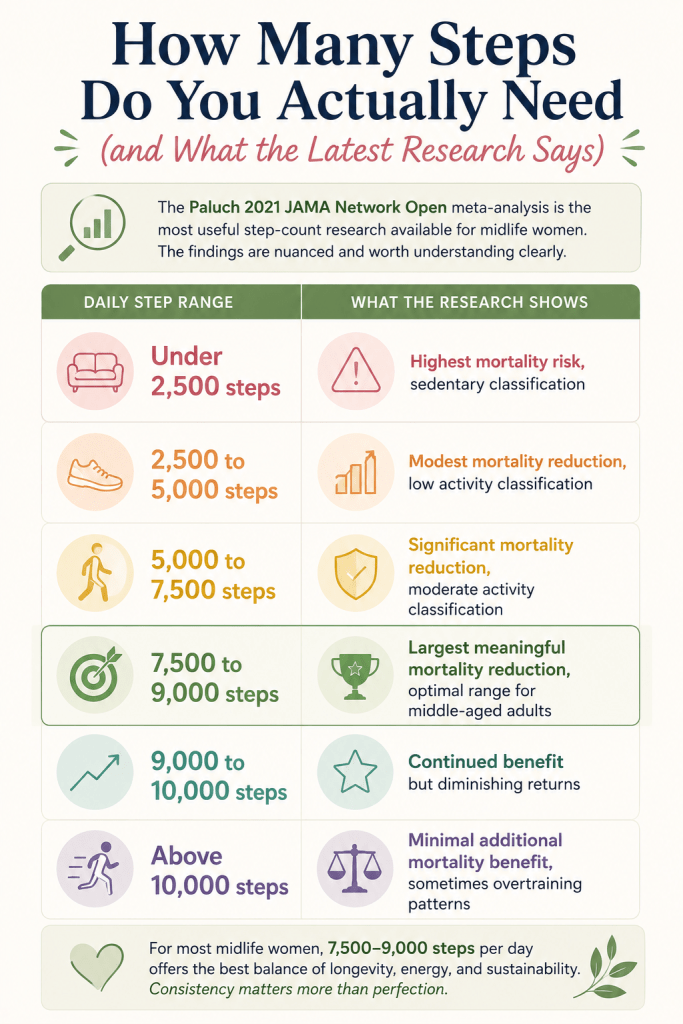
The Paluch 2021 JAMA Network Open meta-analysis is the most useful step-count research available for midlife women. The findings are nuanced and worth understanding clearly.
Largest meaningful mortality reduction, optimal range for middle-aged adults
9,000 to 10,000 steps
Continued benefit but diminishing returns
Above 10,000 steps
Minimal additional mortality benefit, sometimes overtraining patterns
Free 28-Day Fascia Reset Email Course
Get our Free 28-day email course series to help with 1 or 2 exercises per day to release your fascia. One short lesson per day. Two minutes to read each.
The practical takeaway for most midlife women is that the optimal target sits in the 7,000 to 8,500 range rather than at 10,000. Hitting that range through five 15-minute walks distributed across the day is dramatically more achievable than hitting 10,000 through a single session, and the metabolic benefit at the lower target is nearly identical.
The deeper point is that focusing on a specific step number is less useful than focusing on the question: am I moving more than I was last week? Consistency of upward trend matters more than hitting any specific arbitrary number.
“When I work with coaching clients on movement, I rarely set a step number target. The number itself is not what produces the outcome. What produces the outcome is the underlying pattern of regular daily movement, and that pattern is established by lowering the threshold for what counts as movement until the daily practice is impossible to skip. Once the daily practice is in place, the step count takes care of itself. Most of my clients who stopped chasing 10,000 steps and started chasing five 10-minute walks per day are now consistently hitting 7,000 to 9,000 steps without ever counting them.” ~ Terry Tateossian
The Behavioral Architecture That Makes “Micro Walks” Stick
The research-supported tactics for building micro walks into your daily life:
Stack each walk to a meal.
The three reliable meals are the strongest anchors for habit stacking. “After breakfast, I walk for 10 minutes” inherits the consistency of breakfast itself. Use the same anchor for at least four weeks before adding additional walks.
Use implementation intentions.
Write down (or save in your notes app) the specific if-then statement for each walk. “When I finish lunch, I put on my shoes and walk for 10 minutes before sitting back down at my desk.” The specificity is what produces the behavioral lock-in.
Lower the friction.
Keep walking shoes by the door rather than in a closet. Have a podcast or music playlist queued so the start of the walk is one tap rather than five. Leave a jacket near the door so you do not have to find one when the weather turns cool. Each small friction removed makes the daily completion more likely.
Track completion, not duration.
A simple check mark on a calendar for each completed walk is more behaviorally useful than tracking minutes or steps. The completion check produces the small win that sustains motivation. Counting minutes invites comparison and underperformance feelings.
Build in walks that double up.
Phone calls, podcast listening, audiobook listening, and walking meetings all let the walk happen alongside another activity you were already going to do. The walk becomes free time rather than time taken from something else.
Start with one walk per day for two weeks.
Add a second walk only after the first has stuck. Trying to install five walks at once almost always fails because the cognitive load is too high. The slow build matches how habit formation actually works.
Spotlight: The Two-Minute Rule
For the days when even a 10-minute walk feels impossible, James Clear’s two-minute rule applies. The minimum viable version of the practice is to put on your shoes and walk to the end of the block and back, and that absolutely counts. The point is to maintain the daily completion check rather than to accumulate steps on a hard day. The brain treats the completed minimum and the completed full version as the same kind of action, which keeps the habit installed during the periods when life intervenes.
Free 28-Day Fascia Reset Email Course
Get our Free 28-day email course series to help with 1 or 2 exercises per day to release your fascia. One short lesson per day. Two minutes to read each.
What Micro Walking 10K Steps Per Day Looks Like in Real Life
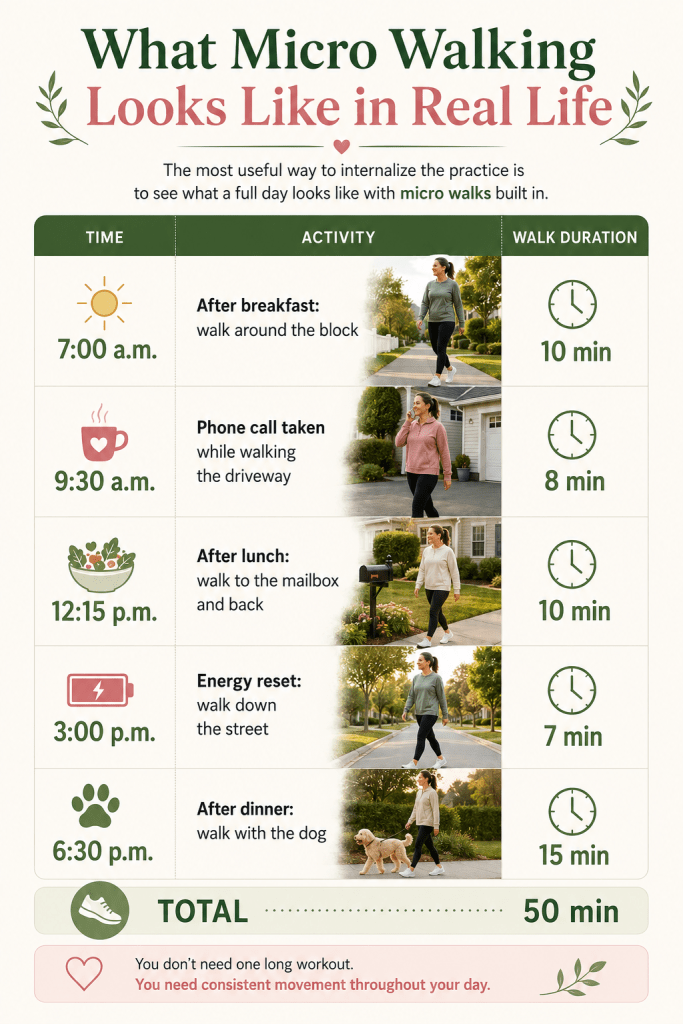
The most useful way to internalize the practice is to see what a full day looks like with micro walks built in.
Time
Activity
Walk Duration
7:00 a.m.
After breakfast: walk around the block
10 min
9:30 a.m.
Phone call taken while walking the driveway
8 min
12:15 p.m.
After lunch: walk to the mailbox and back
10 min
3:00 p.m.
Energy reset: walk down the street
7 min
6:30 p.m.
After dinner: walk with the dog
15 min
Total
50 min
The total movement is 50 minutes, distributed in five small sessions that fit naturally into the existing structure of the day. None of them required a workout, special clothes, or a calendar block. The total step count for a woman walking at a comfortable pace would be approximately 5,500 to 6,500 steps from just these walks, with additional steps from normal household activity bringing the daily total into the 7,000 to 9,000 range that the Paluch research identifies as optimal.
The pattern is sustainable across days when work is busy, family demands are heavy, weather is cold, or energy is low. The threshold for each individual walk is so low that even partial completion (three walks instead of five) still produces meaningful daily movement.
Common Mistakes That Undermine Micro Walking
Five mistakes consistently undermine the practice in the first 60 days.
Treating the walk as optional.
The walks need to be installed as if they were appointments, not as something to do when other things are finished. The default has to be that the walk happens unless something explicitly displaces it. The reverse default (the walk happens if there is time) almost always fails.
Trying to install five walks immediately.
Habit formation research is clear that adding one new behavior at a time produces dramatically higher success rates than adding several at once. Start with the post-lunch walk, install it for two weeks, then add a second walk.
Underestimating the impact.
Many women dismiss micro walks because they do not feel like exercise. The research shows that they produce metabolic, mood, and behavioral benefits regardless of how they feel. Trust the accumulated data rather than the felt sense of any single walk.
Skipping on days that already have structured exercise.
The Dunstan research shows that breaking up sedentary time produces metabolic benefits independent of any structured exercise. A morning workout does not replace the micro walks that interrupt the rest of the day’s sitting.
Only doing it when the weather is perfect.
Plan for the weather rather than waiting for it. Indoor walking (around the house, up and down a hallway, in a covered area) counts. Treadmill walking counts. Walking in light rain with a jacket counts. The practice needs to be weather-resilient because most weeks in most climates include at least a few imperfect days.
Free 28-Day Fascia Reset Email Course
Get our Free 28-day email course series to help with 1 or 2 exercises per day to release your fascia. One short lesson per day. Two minutes to read each.
How Micro Walks Fit Into the Broader THOR Lifestyle Framework
Micro walks are one piece of the larger lifestyle medicine framework I teach at THOR. The framework has five components, and micro walks support several of them.
Nutrition foundation.
The free Macro Calculator gives you your personalized starting numbers. The Macro Miracle Mediterranean Cookbook is the kitchen-side companion. Post-meal micro walks pair with this nutrition foundation to produce the blood sugar control that drives both energy stability and body composition outcomes.
Daily movement.
Micro walks sit alongside strength training (two to three sessions per week) as the foundation of the daily movement piece. Strength training preserves the lean muscle that protects metabolic rate. Micro walks interrupt sedentary time and produce the metabolic and mood benefits documented above. Together they form a movement pattern that fits the midlife body and the midlife schedule.
Sleep optimization.
A daily walking practice has documented effects on sleep architecture, particularly when walks happen outdoors with light exposure. Sleep is the foundation underneath every other lifestyle medicine intervention.
The foundational supplement collection supports the nutrients (magnesium, omega-3, vitamin D, B-complex) that movement, sleep, and recovery all depend on.
For women who want sustained 1:1 support on the full framework, the Monthly Personal Training and Nutrition Coaching Program provides personalized programming with the THOR team. For women who want an immersive reset that installs all five components simultaneously over five days, the Deeply Restorative Yoga and Nature Retreat at our Smoky Mountains property concentrates the practice into a structured immersion.
“I want to be honest about what micro walks can and cannot do. They will not single-handedly transform body composition, hormone levels, or sleep architecture. What they will do is install a daily movement pattern that supports every other piece of the framework. They are the connective practice. The macro calculator, the supplement stack, the strength training, and the sleep work all produce stronger results when daily walking is in place underneath them. The micro walks are the foundation that makes the rest of the work measurable.” ~ Terry Tateossian
Your Next Steps to Hitting 10K Steps Per Day
If the framework in this article resonates and you want to act on it, the four next steps in order of friction:
Install the post-lunch walk. Tomorrow, after lunch, walk for 10 minutes. Just one walk, one day. The 14-day commitment is to install this single walk before adding anything else.
Track completion with a simple check mark. Use a calendar, a notes app, or a sticky note on the fridge. The point is the visible accumulation of completed walks across days, not the time or step count.
Add the post-dinner walk in week three. Only after the post-lunch walk has stuck for two weeks. Same principle of installing one anchor at a time.
Get our Free 28-day email course series to help with 1 or 2 exercises per day to release your fascia. One short lesson per day. Two minutes to read each.
Frequently Asked Questions: How To Get 10K Steps Per Day With Micro Walks
How long should a micro walk be?
A micro walk typically lasts between 5 and 15 minutes. The exact length matters less than the consistency. A 7-minute walk completed daily outperforms a 30-minute walk completed twice a week across most metabolic, mood, and behavioral outcomes.
How many micro walks should I do per day?
Three to five micro walks distributed across the day is the target range. Most women find that three walks (after each main meal) is the most reliable starting point because the meals themselves provide the behavioral anchor. Adding a midmorning, midafternoon, and evening walk on top of meal-anchored walks brings the total to five.
Do micro walks burn as many calories as one long walk?
The total energy expenditure across five 10-minute walks is nearly identical to one 50-minute walk. The difference is the metabolic effect on blood sugar and insulin, which appears to be stronger when walking is distributed around meals than when it is concentrated in one session.
Can I do micro walks indoors?
Indoor walking works as well as outdoor walking for most of the benefits. Walking around the house, up and down a hallway, in a covered patio, on a treadmill, or in a gym all count. Indoor walking is the right backup for weather days, very cold or very hot climates, and high-pollution days. The metabolic and behavioral benefits do not require outdoor walking, although outdoor walking adds the mood, vitamin D, and circadian rhythm benefits of light exposure.
What pace should I walk at?
A comfortable pace where you can hold a conversation but feel slightly elevated breathing. This is sometimes called zone 2 cardio in fitness circles. For most midlife women, the pace works out to roughly 2.5 to 3.5 miles per hour, depending on fitness. The pace does not need to be fast for the metabolic and behavioral benefits.
Are post-meal walks better than other timing?
The DiPietro 2013 trial established that post-meal walks (within 30 minutes after eating) produce significantly better blood sugar control than the same total walking time done in the morning or afternoon outside of meal windows. For blood sugar specifically, the post-meal timing matters. For mood, energy, and behavioral consistency, any timing works.
Should I track my steps?
Tracking is optional but generally helpful in the first 30 to 60 days. Most modern smartphones and wearables count steps automatically. The point of tracking is to confirm that the daily micro walks are accumulating into the 7,000 to 9,000 step range that the research identifies as optimal. After the practice is installed, tracking can be reduced or stopped without losing the benefit.
Can micro walks replace structured exercise?
Micro walks complement structured exercise rather than replacing it. The Dunstan research is clear that breaking up sedentary time produces metabolic benefits independent of any structured exercise. Strength training two to three times per week remains essential for preserving lean muscle in midlife, and micro walks support the metabolic and recovery work that strength training depends on.
Are micro walks safe during pregnancy or with chronic conditions?
For most healthy adults, walking is one of the safest forms of physical activity available. Always consult your healthcare provider before starting any new exercise program, particularly if you have cardiovascular conditions, joint issues, balance concerns, or are pregnant. Modify pace, duration, and frequency as appropriate for your specific situation.
Do I need special shoes?
Comfortable walking shoes with reasonable support are enough. You do not need running shoes, hiking boots, or specialized walking shoes. The most important features are good fit, reasonable cushioning, and shoes that have not worn out (walking and running shoes typically lose their support at 300 to 500 miles, which is roughly 6 to 9 months of daily wear).
How long does it take to see results?
Most women notice energy and mood improvements within the first week. Blood sugar improvements show up on continuous glucose monitor readings within days for women using them. Sleep improvements typically become noticeable in the second to third week. Body composition changes (when paired with appropriate nutrition) take 6 to 12 weeks to become visible. The behavioral changes (consistent daily movement becoming automatic) typically take 30 to 60 days to fully install.
What if I miss a day?
One missed day has no meaningful effect on the practice or the outcomes. The research on habit formation is clear that missing one day does not break the habit. Missing two days in a row makes recovery harder. Missing three or more consecutive days requires deliberately restarting the practice from week one. The single most important principle is that you never miss twice in a row.
Free 28-Day Fascia Reset Email Course
Get our Free 28-day email course series to help with 1 or 2 exercises per day to release your fascia. One short lesson per day. Two minutes to read each.
Micro walks contribute to a body composition framework rather than producing weight loss on their own. The post-meal walks improve insulin sensitivity, the cumulative daily movement supports metabolic rate, and the behavioral consistency installs the foundation for sustained body composition work. Combined with adequate protein (1.0 grams per pound of bodyweight), strength training, and good sleep, micro walks are one component of the menopause weight management framework that produces results.
How does this connect to the broader THOR framework?
Micro walks are the daily movement foundation underneath the broader five-component lifestyle framework I teach at THOR (nutrition, daily movement, sleep, nervous system regulation, supplement support). They support every other piece. The free Macro Calculator, the Mediterranean cookbook, the supplement collection, and the coaching program all work harder when daily walking is in place underneath them. The Deeply Restorative Yoga and Nature Retreat installs all five components together in a five-day immersion.
References
DiPietro, L., Gribok, A., Stevens, M. S., Hamm, L. F., & Rumpler, W. (2013). Three 15-min bouts of moderate postmeal walking significantly improves 24-h glycemic control in older people at risk for impaired glucose tolerance. Diabetes Care, 36(10), 3262–3268.
Dunstan, D. W., Kingwell, B. A., Larsen, R., et al. (2012). Breaking up prolonged sitting reduces postprandial glucose and insulin responses. Diabetes Care, 35(5), 976–983.
Paluch, A. E., Bajpai, S., Bassett, D. R., et al. (2021). Daily steps and all-cause mortality: a meta-analysis of 15 international cohorts. Lancet Public Health, 7(3), e219–e228.
Loprinzi, P. D., & Smit, E. (2014). Light-intensity activity is associated with reduced all-cause mortality among middle-aged and older adults. American Journal of Health Promotion, 29(4), 243–246.
Fogg, B. J. (2019). Tiny Habits: The Small Changes That Change Everything. Houghton Mifflin Harcourt.
Clear, J. (2018). Atomic Habits: An Easy and Proven Way to Build Good Habits and Break Bad Ones. Avery.
Gollwitzer, P. M. (1999). Implementation intentions: strong effects of simple plans. American Psychologist, 54(7), 493–503.
Gollwitzer, P. M., & Sheeran, P. (2006). Implementation intentions and goal achievement: a meta-analysis of effects and processes. Advances in Experimental Social Psychology, 38, 69–119.
Wood, W., & Neal, D. T. (2007). A new look at habits and the habit-goal interface. Psychological Review, 114(4), 843–863.
Lally, P., van Jaarsveld, C. H. M., Potts, H. W. W., & Wardle, J. (2010). How are habits formed: modelling habit formation in the real world. European Journal of Social Psychology, 40(6), 998–1009.
Sjogaard, G., Sejersted, O. M., Winkel, J., et al. (2009). Effect of short-term post-meal walking on lipid metabolism in healthy adults. Medicine and Science in Sports and Exercise, 41(5), 1100–1106.
Aibar, A., Bois, J. E., Generelo, E., & Zaragoza, J. (2018). Effects of physical activity on positive and negative affect, anxiety and depression in adolescents: a systematic review. Journal of Psychophysiology, 32(2), 53–64.
Reynolds, A. N., Mann, J. I., Williams, S., & Venn, B. J. (2016). Advice to walk after meals is more effective for lowering postprandial glycaemia in type 2 diabetes mellitus than advice that does not specify timing: a randomised crossover study. Diabetologia, 59(12), 2572–2578.
World Health Organization. (2020). Guidelines on physical activity and sedentary behaviour. WHO Press.
Centers for Disease Control and Prevention. (2018). Physical Activity Guidelines for Americans, 2nd Edition. U.S. Department of Health and Human Services.
Maltais, M. L., Desroches, J., & Dionne, I. J. (2009). Changes in muscle mass and strength after menopause. Journal of Musculoskeletal and Neuronal Interactions, 9(4), 186–197.
Lovejoy, J. C., Champagne, C. M., de Jonge, L., Xie, H., & Smith, S. R. (2008). Increased visceral fat and decreased energy expenditure during the menopausal transition. International Journal of Obesity, 32(6), 949–958.
Boyle, N. B., Lawton, C., & Dye, L. (2017). The effects of magnesium supplementation on subjective anxiety and stress: a systematic review. Nutrients, 9(5), 429.
Disclaimer: Always consult with a healthcare professional before starting any new routines, programs, or nutrition plans to ensure you receive the best medical advice and strategy for your specific individual needs.
Free 28-Day Fascia Reset Email Course
Get our Free 28-day email course series to help with 1 or 2 exercises per day to release your fascia. One short lesson per day. Two minutes to read each.
For years, women have been told that weight loss requires restriction.
Eat less. Cut carbs. Avoid anything that feels indulgent.
But here’s what actually happens in real life—especially in midlife:
You try to follow a “clean” plan.
You remove the foods you love.
You rely on willpower.
And eventually… you burn out.
This strategy is just not sustainable.
The truth is: Sustainable weight loss requires a different strategy. Rather than removing comfort or our favorite foods, we can redefine them.
Especially, when we learn how to create meals that are:
High in protein
High in volume
Nutrient-dense
And deeply satisfying
It stops feeling like you’re “on a diet” and starts becoming a way of eating you can actually maintain. And that’s the key to losing weight and keeping it off.
Free Macro Calculator
Personalized to your body, goals, and measurements. You will receive detailed macros for meals, sample day of eating, food selection guidance, hydration + daily supplement suggestions, and more.
You don’t lose weight because of the “perfect” plan. You lose weight because of the plan you can stick to.
And let’s be honest. No one sticks to grilled chicken and steamed broccoli forever.
When your meals feel satisfying, warm, familiar, and enjoyable, you’re more likely to stay consistent long term.
So lets check out the recipes:
3 High-Protein Comfort Foods That Support Weight Loss
These are not “diet foods.”
These are real meals but we have reimagined them to support your weight loss goals.
Free Macro Calculator
Personalized to your body, goals, and measurements. You will receive detailed macros for meals, sample day of eating, food selection guidance, hydration + daily supplement suggestions, and more.
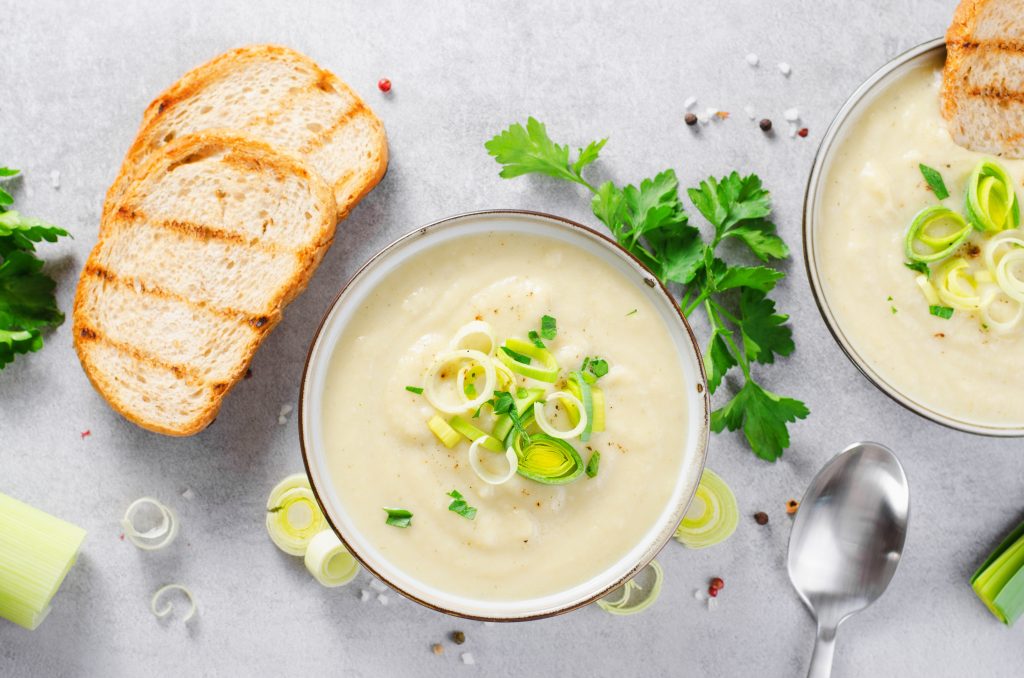
What it is: A lighter version of traditional potato soup using a mix of potatoes + cauliflower, blended with Greek yogurt or fat-free cheese and topped with lean turkey bacon.
Why it works for weight loss:
High volume, low calorie density: Cauliflower significantly lowers total calories while maintaining portion size. Research shows that low-energy-dense foods help reduce overall calorie intake without increasing hunger
Protein improves satiety: Adding Greek yogurt or lean protein increases fullness and reduces subsequent calorie intake
Comfort factor = adherence: Sustainable weight loss depends on consistency. Familiar, satisfying meals increase long-term adherence more than restrictive diets.
Ingredients (Serves 4–6)
2 medium potatoes, peeled and chopped
1 large head cauliflower, chopped
1 small onion, diced
3–4 cloves garlic, minced
4 cups low-sodium chicken or vegetable broth
½ cup plain nonfat Greek yogurt (or blended cottage cheese)
½ cup reduced-fat shredded cheese (cheddar or similar)
4 slices turkey bacon, cooked and crumbled
Salt, pepper to taste
Optional: parsley, chives, spinach
Instructions
Boil base: Add potatoes and cauliflower to a large pot with broth. Bring to a boil, then simmer for 15–20 minutes until soft.
Sauté aromatics: In a separate pan, sauté onion and garlic until translucent (about 5 minutes).
Blend: Add everything to a blender (or use an immersion blender). Blend until smooth and creamy.
Add protein + creaminess: Stir in Greek yogurt and shredded cheese. Mix until fully incorporated.
Season: Add salt, pepper, and any herbs.
Top + serve: Top with turkey bacon, herbs, and optional greens.
Simple THOR-style upgrade:
Add:
Blended cottage cheese for extra protein
Collagen peptides (unflavored) for a subtle boost
Chopped greens (spinach or kale) for added fiber
2. Protein Mac & Cheese (Greek Yogurt or Cottage Cheese Base)
What it is: Classic mac & cheese made with high-protein pasta (like chickpea or lentil pasta) and a sauce built from blended cottage cheese or Greek yogurt instead of heavy cream.
Why it works for weight loss:
Higher protein = better appetite control: Protein intake is consistently linked to reduced hunger and improved weight management
Improved body composition: Higher-protein diets help preserve lean muscle during weight loss, which supports metabolic rate.
Lower calorie swaps without sacrificing taste: Replacing heavy cream and butter with dairy-based proteins reduces calories while maintaining a creamy texture.
Cook pasta: Cook according to package directions. Drain and set aside.
Make sauce: Blend cottage cheese + milk until completely smooth.
Heat sauce: Pour mixture into a saucepan over medium heat. Stir in shredded cheese, nutritional yeast, and seasonings.
Combine: Add cooked pasta to the sauce and stir until fully coated.
Add extras (optional): Mix in cooked chicken or vegetables.
Serve warm
Simple THOR-style upgrade
Add:
Grilled chicken, shirmp, lobster or turkey for additional protein
Broccoli, cauliflower or zucchini for volume
Nutritional yeast for a richer “cheesy” flavor with added nutrients
Free Macro Calculator
Personalized to your body, goals, and measurements. You will receive detailed macros for meals, sample day of eating, food selection guidance, hydration + daily supplement suggestions, and more.
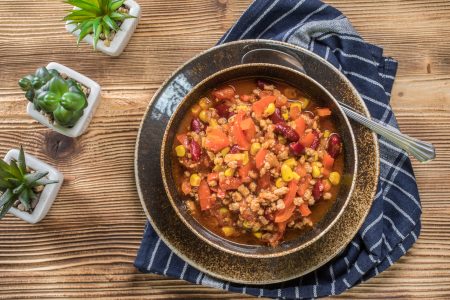
Cook protein: In a large pot, cook ground turkey/chicken until browned.
Add vegetables: Add onion, garlic, and pepper. Cook 5–7 minutes until softened.
Add remaining ingredients: Stir in beans, tomatoes, broth, zucchini, and spices.
Simmer: Let cook on low for 25–40 minutes, stirring occasionally.
Adjust seasoning
Serve + top: Add Greek yogurt, herbs, or avocado.
Simple THOR-style upgrade
Add:
Extra vegetables (peppers, zucchini, mushrooms)
Bone broth instead of water for added nutrients
Greek yogurt instead of sour cream for topping
How to Start Using This Approach Immediately
You don’t need to overhaul your entire diet.
Start here:
Step 1: Pick 1–2 comfort meals you already love
Pasta, soup, chili, casseroles anything goes.
Step 2: Modify, don’t eliminate
Add protein
Increase volume (vegetables)
Swap high-calorie ingredients
Step 3: Build meals that keep you full for 4–5 hours
If you’re constantly hungry, the meal isn’t working.
Free Macro Calculator
Personalized to your body, goals, and measurements. You will receive detailed macros for meals, sample day of eating, food selection guidance, hydration + daily supplement suggestions, and more.
I write 3 essays per week on Lifestyle Medicine for women in midlife on what is happening in the body and what to do about it. No fluff, no hype. Free.
By clicking “Submit” you agree to receive emails from The House of Rose and accept our web terms of use and privacy and cookie policy.
Your Privacy, our Priority.
In accordance with the current EU data protection laws, pelase take a minute to review the terms & conditions for using our services. Our terms describe how we use data and the options available to you.