
 By Team THOR
The Midlife Sleep Stack: Best Supplements for Sleep for Women Over 40
I cannot tell you how many women I meet at my wellness retreats and through my 1:1 coaching program who say they have not slept for more than 5-6 hours for months. They have tried the 10 p.m. bedtime, the magnesium spray, the melatonin gummies, the blue-light glasses, the cold room, the weighted blanket. Sometimes they sleep more than 6 hours. Sometimes not and usually they wake up at 2:47 a.m. and lie there staring at the ceiling until 5.
If that is you, you have found your tribe. When our hormones are shifting, sleep is the first system that tells you about it. The good news, and I mean this, is that sleep in your 40s and 50s is not a lost cause. It just needs a different toolkit than the one that worked in your 30s.
This is the midlife sleep stack I talk through with clients. It is four supplements at the core, a few optional add-ons depending on what is keeping you up, and a set of timing and behavior rules that make the whole thing actually work. Everything is backed by peer-reviewed research, and everything I list comes from published studies on women in roughly your stage of life. Use this as a starting point to discuss with your doctor. Your body is your own, and anything you add to your routine should be run past a clinician who knows your history.
Ready? Let’s figure out why you cannot sleep, and what to do about it.
What Is a “Midlife Sleep Stack” and Why Do Women Over 40 Need One?
A sleep stack is just a combination of supplements taken together to support the different parts of falling asleep and staying asleep. Think of it less as a sedative and more as a set of small nudges, one ingredient relaxes the nervous system, another slows your brain waves, another supports the neurotransmitters that let your brain drop into deep sleep, another signals to your circadian rhythm that the day is over.
Why do women over 40 need a sleep stack instead of just one pill? Because midlife sleep disruption is almost never one problem. It is usually three or four, stacked on top of each other:
- Dropping progesterone, which was acting like a natural sedative and anxiolytic
- Lower estrogen, which was helping regulate body temperature and serotonin
- A rising cortisol curve that shifts earlier in the morning
- Lower melatonin production, because melatonin production declines with age
- Sometimes lower magnesium status from decades of stress and mineral depletion
A single supplement cannot fix four overlapping problems. A small, well-chosen stack could, and without the hangover, rebound insomnia, or dependence that comes with prescription sleep meds.
Why Midlife Women Have Trouble Sleeping: The Hormonal Truth
Before we get into what to take, you need to understand what is actually happening in your body. This part matters because it is going to tell you which supplements to prioritize.
Progesterone is your natural sedative.
Progesterone is converted in the brain to allopregnanolone, which binds to GABA-A receptors the same way benzodiazepines do — basically a gentle, built-in sleep aid. In perimenopause, progesterone is the first hormone to fall, and it falls steeply. Research published in the Journal of Clinical Endocrinology & Metabolism shows that progesterone begins declining in the late 30s and drops sharply in the decade before menopause. This is why women who have never had a sleep issue in their life suddenly cannot stay asleep in their early 40s.
Estrogen drops change your temperature regulation and your serotonin.
Estrogen influences the hypothalamus (which controls body temperature) and supports serotonin availability (which is a precursor to melatonin). When estrogen drops, night sweats wake you up, and your brain makes less melatonin to begin with. The 2017 Study of Women’s Health Across the Nation (SWAN) found that 40% to 60% of women in the menopause transition report sleep disturbance, with frequency increasing as estrogen levels drop.
Cortisol shifts earlier in the morning.
Normally cortisol is lowest around midnight and peaks around 7 to 8 a.m. In perimenopause, that curve often shifts — cortisol starts rising at 3 or 4 a.m. instead. This is why 3 a.m. is the most common wake time my clients describe. It is not “anxiety.” It is biology.
Melatonin declines with age.
Pineal melatonin production peaks in your 20s and drops steadily through midlife. By age 50, most women produce about half the melatonin they made at 25. Without enough melatonin, your sleep-wake cycle loses its clearest signal.
Add in the usual suspects — a stressful job, kids in their teens, aging parents, a glass of wine with dinner, a phone on the nightstand — and you have the perfect storm. Supplements alone will not fix a chaotic sleep environment, but they can rebuild the chemistry that used to happen automatically.
The Science of Sleep Architecture After 40: What Your Body Is Losing
When researchers hook midlife women up to polysomnography (the gold-standard sleep study), they find a specific pattern of change. Deep sleep ( stage N3 slow-wave sleep) starts shrinking. REM sleep fragments. Sleep onset takes longer, and sleep becomes lighter overall.
This matters because deep sleep is when growth hormone releases, when your body repairs tissues, when memory consolidates, and when the glymphatic system clears metabolic waste from the brain. You can lie in bed for eight hours, but if you are not getting enough N3, you will wake up exhausted and foggy. Every woman I know who is reverse dieting or training hard in midlife needs deep sleep to actually benefit from her effort.
The good news is that several supplements in the stack below have been shown to lengthen deep sleep and shorten sleep onset specifically. We are not just trying to knock you out — we are trying to restore the architecture that lets sleep actually recover you.
The Core Four: The Best Supplements for Sleep for Women Over 40
These are the four I recommend to almost every 1:1 client who comes to me with sleep complaints. If you are going to try one stack, start here.
1. Magnesium Glycinate (or Magnesium Threonate)
Magnesium is the backbone of any midlife sleep stack. It binds to GABA receptors, supports melatonin production, regulates the HPA (stress) axis, and relaxes smooth and skeletal muscle — all of which matter for sleep. Multiple clinical trials have found that supplemental magnesium improves insomnia severity index scores and sleep onset latency in older adults.
Two forms are worth knowing:
Magnesium glycinate is magnesium bound to glycine (an amino acid, covered next). It is exceptionally well tolerated, does not cause the laxative effect of magnesium citrate, and the glycine component itself is calming. This is my default for sleep.
Magnesium L-threonate (brand name Magtein) is a form engineered to cross the blood-brain barrier more effectively. A small MIT-led human trial published in 2016 found that magnesium L-threonate supported sleep quality and cognitive function in older adults. It is more expensive but many of my clients notice a clearer mental edge with this form.
2. Glycine
Glycine is a non-essential amino acid that acts as an inhibitory neurotransmitter. It lowers core body temperature, which is one of the strongest signals your body has for sleep onset. Studies published in Sleep and Biological Rhythms and Frontiers in Neurology have shown that 3 grams of glycine taken before bed improves sleep quality, shortens sleep onset, and reduces daytime fatigue — without residual grogginess the next morning.
For midlife women specifically, glycine is useful because temperature regulation is one of the first things to go sideways in perimenopause. Night sweats, hot flashes, waking up kicking the covers off — a lot of this is thermostat dysregulation, and glycine helps your body run cooler at night.
3. L-Theanine
L-theanine is an amino acid originally isolated from green tea. It does not make you sleepy, but it shifts brain wave activity toward alpha — the relaxed-but-awake state you want in the 30 minutes before you try to fall asleep. A 2019 review in Nutrients summarized clinical evidence showing that L-theanine reduces subjective stress and improves sleep quality, particularly in adults with stress-related sleep disturbance.
The reason L-theanine belongs in a midlife stack is that it targets the “wired but tired” problem — the one where you are physically exhausted but your brain is still reviewing the grocery list, the work email, and something your sister said in 2003. L-theanine quiets the chatter.
4. Low-Dose Melatonin (Emphasis on LOW)
Melatonin is the most misunderstood sleep supplement on the market. The drugstore aisles are full of 5 mg, 10 mg, and even 20 mg doses — which is 10 to 40 times more melatonin than your body has ever produced at peak. At those doses, melatonin stops acting like a circadian signal and starts acting like a blunt sedative, which is why so many women wake up foggy on melatonin gummies.
Research from the Brigham and Women’s Hospital sleep lab, including work led by Charles Czeisler and colleagues, has consistently shown that the most effective dose of melatonin for circadian phase shifting and sleep onset is 0.3 mg to 1 mg — not 5 or 10. A 2001 study in the Journal of Clinical Endocrinology & Metabolism by Zhdanova et al. specifically showed that 0.3 mg restored sleep efficiency in insomnia patients better than higher doses.
Optional Add-Ons: Targeting Specific Sleep Issues
Once you have the core four running reliably, you can layer in a targeted add-on depending on what your specific sleep problem is.
If you cannot fall asleep because your mind races: Apigenin
Apigenin is a flavonoid found in chamomile that binds to benzodiazepine receptors without the dependence liability. Andrew Huberman has popularized 50 mg apigenin as a sleep aid, and the research on chamomile extract (standardized to apigenin) is reasonable — a 2017 trial in Complementary Therapies in Medicine found that chamomile extract improved sleep quality in older adults. A cup of strong chamomile tea also counts.
If you wake up at 3 a.m. with your heart pounding: Ashwagandha or Phosphatidylserine
If the problem is a cortisol spike in the early morning, you need something that blunts cortisol. Ashwagandha (a herbal adaptogen) has been shown in multiple trials to lower cortisol and improve sleep quality. A 2019 trial in Cureus found that 300 mg of KSM-66 ashwagandha twice daily for 8 weeks improved sleep onset latency and sleep efficiency in insomnia patients. Phosphatidylserine (300 mg before bed) is another tool that has shown to blunt an over-active HPA axis.
Note that ashwagandha is contraindicated if you have thyroid issues — talk to your clinician before adding it.
If night sweats are the culprit: Support estrogen and temperature regulation
No supplement will replace missing estrogen, and hot flashes are a conversation for you and your doctor — many midlife women do very well with bioidentical hormone therapy, which is safer than the fear-mongering headlines suggest. But in the meantime, black cohosh has clinical support for reducing night sweats, and keeping a cool bedroom (65°F / 18°C is ideal) plus a glycine-loaded dinner can help.
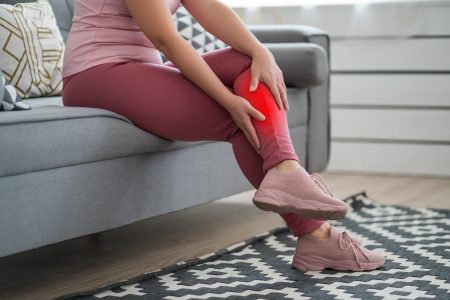
If you have restless legs or cramps: Magnesium malate or potassium
Restless legs syndrome and nocturnal leg cramps are often magnesium or potassium related. If standard magnesium glycinate does not resolve it, try adding magnesium malate during the day, or a potassium citrate supplement. Iron status is also worth checking — low ferritin is a known cause of restless legs.
If you are eating too late or drinking alcohol: Fix the upstream cause first
No sleep stack will overcome a late-night cheese plate or a second glass of wine. Alcohol fragments REM sleep severely, and late meals raise core body temperature at the exact moment your body is trying to lower it. If either of these is happening, start by moving dinner to 6:30 or 7 p.m. and cutting alcohol for 14 days. Then layer the stack on top. You can read more about this in our deep dive on alcohol and menopause and how alcohol affects weight loss.
What a Sleep Stack Can’t Fix and When to Investigate Further
Supplements are not magic. There are a handful of sleep issues that need more than a better bedtime routine:
Sleep apnea.
If you snore loudly, wake gasping, have a thick neck circumference, or your partner notices breathing pauses — this is not something magnesium will fix. Postmenopausal women have dramatically higher rates of obstructive sleep apnea than premenopausal women, and it is wildly underdiagnosed. Get a home sleep study. It is covered by most insurance.
Thyroid dysfunction.
Hyperthyroidism keeps you wired and awake; hypothyroidism fragments sleep. If you have not had a full thyroid panel (TSH, free T3, free T4, reverse T3, and antibodies) in the last year, get one.
Iron deficiency / low ferritin.
Restless legs and middle-of-night waking can both be ferritin-related. Most labs will call a ferritin of 20 “normal” — for sleep and hair, you want it closer to 70 to 100.
Undiagnosed perimenopause or POI.
If you are in your late 30s and sleep has gone off a cliff, perimenopause may have started earlier than you think. Our primer on 20 signs of perimenopause walks through what to look for, and our piece on early-onset menopause covers what happens when it arrives a decade early.
Chronic stress or unresolved trauma.
No supplement will out-perform a dysregulated nervous system. If you are living in a sustained fight-or-flight state, the sleep stack will help on the margin but the real work is the nervous system. We cover this in depth in 10 signs you are overstimulated in midlife and in Burnout to Balance.
Beyond Supplements: The Behaviors That Make a Sleep Stack Actually Work
A great stack on top of bad behaviors is still bad sleep. The foundational habits:
Light.
Morning sunlight in your eyes within 30 minutes of waking (10 minutes outdoors, no sunglasses) sets your circadian rhythm for the whole day. Blue light blocking after 8 p.m. helps protect evening melatonin.
Temperature.
Cool bedroom, 65–68°F. Warm hands and feet, cool core. A warm shower 90 minutes before bed actually lowers core temperature afterward and helps sleep onset.
Food timing.
Eat dinner 3 hours before bed. Include protein (supports the tryptophan-to-serotonin-to-melatonin pathway) and slow carbs (stabilize overnight blood sugar). Our Macro Miracle Mediterranean Cookbook is built around dinners that do exactly this.
Movement.
Strength training and walking boost sleep quality dramatically — but cap intense cardio by early evening. Our deep dive on sleep and why it matters covers the exercise-sleep loop.
Alcohol.
Every woman I work with who fixes her sleep cuts evening alcohol. Period. It is the single biggest lever. See alcohol and menopause for the mechanisms.
Routine.
Same bedtime, same wake time. Seven days a week for at least a month. Your circadian rhythm is a creature of habit.
If you want a deeper walk-through of the hormonal, nutritional, and training pieces of midlife health, we cover the full system inside Age With Strength 1:1 coaching — sleep is one of the first things we triage.
A Realistic Timeline: What to Expect From a Sleep Stack
I want you to have realistic expectations. Here is what the research, and my coaching experience, says you can expect.
Night 1 to 3:
You may feel calmer in the hour before bed. Sleep onset may shorten slightly. Some women notice a noticeable improvement in a single night, especially if they were magnesium-deficient. Most do not — and that is fine.
Week 1 to 2:
Deep sleep duration increases. Mid-night wakings may still happen but feel less intense. You may wake once at 3 a.m. and fall back asleep quickly, whereas before you were awake for an hour.
Week 3 to 4:
Sleep architecture is remodeling. Morning energy improves even if total sleep time is the same. HRV (if you track it) typically climbs.
Month 2 to 3:
This is when most women tell me sleep “just works” again. They stop thinking about it. They fall asleep within 15 minutes, sleep through most nights, and wake up feeling rested.
If after 6 to 8 weeks of consistent stack use plus solid sleep hygiene you are still not sleeping, it is time to investigate the deeper issues — apnea, thyroid, iron, HPA dysregulation, hormones. That is the point where 1:1 coaching or a good functional-medicine doctor is worth every dollar.
Frequently Asked Questions for Best Supplements for Sleep in Perimenopause
Is it safe to take magnesium, glycine, L-theanine, and melatonin every night?
Magnesium, glycine, and L-theanine are generally considered safe for long-term nightly use in healthy adults at the doses listed here. They do not create dependence. Melatonin is better used strategically rather than chronically — many sleep physicians recommend cycling it or using it only on nights when you need a circadian nudge. Always confirm with a clinician if you have medical conditions or take prescription medications.
Can I just use a pre-made “sleep stack” product instead of individual bottles?
A well-formulated sleep stack bundle can be convenient and cost-effective, especially if the doses are evidence-based. The tradeoff is you cannot adjust individual components. For most women, starting with individual bottles of magnesium glycinate and glycine, then adding a pre-formulated stack for the more specialized ingredients, is the right move. Products like the Sleep Stack in the THOR supplements catalog were formulated specifically for midlife women.
Will melatonin make me gain weight or mess with my hormones?
Low-dose melatonin (0.3 to 1 mg) has not been shown to cause weight gain or meaningful hormonal disruption in women. The concerns usually come from very high doses (5 to 10 mg) or prolonged unbroken use, which can blunt your body’s own melatonin production. Keep the dose low and cycle off periodically.
Can I take these if I’m on HRT (estrogen or progesterone)?
Most of the core four are compatible with HRT. Progesterone (especially oral micronized progesterone) is itself sleep-supportive for many women, and magnesium and glycine pair well with it. Melatonin has some estrogenic activity at high doses, so keep it low. Run any supplement plan past your HRT-prescribing clinician.
What’s the difference between magnesium glycinate, citrate, oxide, and threonate for sleep?
Glycinate is gentle and calming (ideal for sleep). Citrate is more laxative (better for constipation than sleep). Oxide has poor bioavailability — skip it. Threonate crosses the blood-brain barrier more effectively and has cognitive benefits. For sleep, glycinate is the default; threonate is the upgrade for women who also want mental clarity.
How long until I should see improvement?
Most women notice something within the first 3 to 7 nights. Full remodeling of sleep architecture takes 4 to 8 weeks. If you see zero improvement after 4 weeks of consistent, appropriately-dosed supplementation plus basic sleep hygiene, it is time to look at other factors — thyroid, iron, apnea, cortisol curve, hormones.
Do I need to take these forever?
No. Most women benefit from using a full stack for 2 to 6 months while their body rebuilds a sleep rhythm. After that, many can taper down to just magnesium glycinate as a maintenance dose. HRT, if you pursue it, often resolves a lot of the underlying hormonal driver and can reduce your supplement load significantly.
Can I take this if I’m reverse dieting or in a building phase?
Absolutely — and you should. Sleep is where your body makes the adaptations of training and recovery. If you are reverse dieting after 50 or in a building phase, your sleep stack should stay in place. Stable blood sugar from appropriate macros plus these supplements give you the best shot at deep sleep.
What about magnesium spray, melatonin patches, or CBD gummies?
Topical magnesium absorption is modest and inconsistent, better to take oral magnesium glycinate. Melatonin patches deliver the same melatonin your pineal makes, but oral low-dose is fine for most people. CBD is reasonable evidence-based for anxiety, and some women sleep better with it — but product quality varies wildly. If you want to try CBD, always source from a third-party-tested brand.
Is this stack safe during perimenopause? Postmenopause?
Yes, at the doses listed, and this stack is actually designed for exactly that life stage. The hormonal drivers of midlife insomnia do not go away after the last period — many postmenopausal women continue to benefit from the core four for years.
What if I wake up between 2 and 4 a.m. specifically?
This is often a cortisol curve or blood sugar issue, not a magnesium issue. Try a small protein-fat snack 30 minutes before bed (not a big meal), keep the supplement stack, and consider adding phosphatidylserine or a low-dose ashwagandha if cortisol is the driver. Blood sugar stability through the night is also a macro-composition issue — something we dig into in 1:1 coaching.
The Bottom Line: Your Midlife Sleep Stack Starter Protocol
If you take nothing else from this piece, take this:
- Magnesium glycinate, 200–400 mg elemental, 30–60 minutes before bed
- Glycine, 3 g powder, 30–60 minutes before bed
- L-theanine, 200 mg, 30–60 minutes before bed
- Low-dose melatonin (0.3–1 mg), only if needed
Layer in one at a time. Pair with a cool dark room, morning sunlight, no alcohol, dinner 3 hours before bed, and a consistent bedtime. Give it 4 to 8 weeks.
Sleep in your 40s and 50s is absolutely reclaimable. It just takes a more deliberate approach than it did at 28. Start with the stack, fix the upstream behaviors, and get curious about the underlying hormones.
If you want the full protocol dialed in around your specific lifestyle, training, and stress, that is exactly what we do together inside Age With Strength 1:1 coaching. And for anyone in need of a full-body reset: sleep, nutrition, movement, nervous system, a few days at a THOR women’s wellness retreat rebuilds more rhythm than you would believe.
Good sleep is the lever.
Everything else gets easier from there.
References and Sources
- Bailey M, Silver R. (2014). Sex differences in circadian timing systems: implications for disease. Frontiers in Neuroendocrinology, 35(1), 111-139.
- Baker FC, de Zambotti M, Colrain IM, Bei B. (2018). Sleep problems during the menopausal transition: prevalence, impact, and management challenges. Nature and Science of Sleep, 10, 73-95.
- Hachul H, Bittencourt LR, Soares JM Jr, Tufik S, Baracat EC. (2009). Sleep in post-menopausal women: differences between early and late post-menopause. European Journal of Obstetrics & Gynecology and Reproductive Biology, 145(1), 81-84.
- Kryger MH, Roth T, Dement WC. (2016). Principles and Practice of Sleep Medicine, 6th ed. Elsevier.
- Zhdanova IV, Wurtman RJ, Regan MM, Taylor JA, Shi JP, Leclair OU. (2001). Melatonin treatment for age-related insomnia. Journal of Clinical Endocrinology & Metabolism, 86(10), 4727-4730.
- Abbasi B, Kimiagar M, Sadeghniiat K, Shirazi MM, Hedayati M, Rashidkhani B. (2012). The effect of magnesium supplementation on primary insomnia in elderly: a double-blind placebo-controlled clinical trial. Journal of Research in Medical Sciences, 17(12), 1161-1169.
- Liu G, Weinger JG, Lu ZL, Xue F, Sadeghpour S. (2016). Efficacy and Safety of MMFS-01, a Synapse Density Enhancer, for Treating Cognitive Impairment in Older Adults. Journal of Alzheimer’s Disease, 49(4), 971-990.
- Yamadera W, Inagawa K, Chiba S, Bannai M, Takahashi M, Nakayama K. (2007). Glycine ingestion improves subjective sleep quality in human volunteers, correlating with polysomnographic changes. Sleep and Biological Rhythms, 5(2), 126-131.
- Bannai M, Kawai N, Ono K, Nakahara K, Murakami N. (2012). The effects of glycine on subjective daytime performance in partially sleep-restricted healthy volunteers. Frontiers in Neurology, 3, 61.
- Williams JL, Everett JM, D’Cunha NM, Sergi D, Georgousopoulou EN, Keegan RJ, et al. (2020). The Effects of Green Tea Amino Acid L-Theanine Consumption on the Ability to Manage Stress and Anxiety Levels: a Systematic Review. Plant Foods for Human Nutrition, 75(1), 12-23.
- Hidese S, Ogawa S, Ota M, Ishida I, Yasukawa Z, Ozeki M, Kunugi H. (2019). Effects of L-theanine administration on stress-related symptoms and cognitive functions in healthy adults: A randomized controlled trial. Nutrients, 11(10), 2362.
- Langade D, Kanchi S, Salve J, Debnath K, Ambegaokar D. (2019). Efficacy and Safety of Ashwagandha (Withania somnifera) Root Extract in Insomnia and Anxiety: A Double-blind, Randomized, Placebo-controlled Study. Cureus, 11(9), e5797.
- Hirotsu C, Tufik S, Andersen ML. (2015). Interactions between sleep, stress, and metabolism: From physiological to pathological conditions. Sleep Science, 8(3), 143-152.
- Adam K, Oswald I. (1984). Sleep helps healing. British Medical Journal, 289(6456), 1400-1401.
- Xie L, Kang H, Xu Q, et al. (2013). Sleep drives metabolite clearance from the adult brain. Science, 342(6156), 373-377. (Glymphatic system clearance during sleep.)
- Study of Women’s Health Across the Nation (SWAN). Kravitz HM, Joffe H. (2011). Sleep during the perimenopause: a SWAN story. Obstetrics and Gynecology Clinics of North America, 38(3), 567-586.

Terry Tateossian is a Menopause Lifestyle Medicine Coach, Certified Personal Trainer & Nutritionist and the Founder of THOR: The House of Rose, a wellness brand serving women over 40 through retreats, coaching, macro-nutrition and community. As 25-year founder and entrepreneur, Terry spent two and a half decades building and running successful start-up businesses, an experience that put her on the front line of founder burnout long before she could name it. After facing serious health challenges, early onset menopause, and emotional eating while running her agency and raising two children, Terry rebuilt her health in her 40s and lost more than 80 pounds through evidence-based nutrition, training, and mindset work. Today, she helps women get strong, improve confidence, support hormone health, and create a stronger second half of life. Terry has been featured in major media outlets and is available for podcasts, expert commentary, brand collaborations, and speaking engagements on midlife health, reinvention, emotional eating, menopause wellness, and strength training for longevity. Get her free macro calculator (her cookbook companion) to start your journey to back to health.