
 By Team THOR
Best Creatine for Women Over 40: The Midlife Guide Backed by Science (Not Gym-Bro Folklore)
If you’re a woman over 40 who has ever walked past the creatine tub at the supplement store and thought, “That’s not for me,” we need to talk. The science around creatine for women over 40 has shifted dramatically in the last three years, and most of it points the same direction — this is the single most studied, lowest-risk, best-value supplement for midlife muscle, bone, and brain. And almost nobody is telling you about it.
At THOR, we work with women navigating perimenopause and menopause every day. In our coaching calls, in our retreats, in the Midlife Method workshop — the conversation has shifted. Three years ago, nobody asked about creatine. Now, it’s one of the top questions we get. Good. Because creatine for menopause is one of the most practical tools we’ve ever added to our women’s wellness toolkit.
Here’s the thing: creatine isn’t a gym-bro supplement. It’s a molecule your body already makes. You already eat it every time you have a piece of beef or fish. The “supplement” version is just a way to top up what your midlife body needs more of but makes less of. And the research specifically in women over 40, perimenopausal, and postmenopausal? It’s stronger than the research on most of the things in your medicine cabinet.
This is a long article, so grab something warm to drink. By the end, you’ll know exactly what creatine for women over 40 does, how much to take, which form to buy, and how to fit it into the life you actually have — not some bodybuilder’s idealized routine. Let’s get into it.
Why Creatine for Women Over 40 Isn’t Just for Gym Bros
Let me back up for a second. Creatine is a naturally occurring compound your body uses to regenerate ATP — the energy currency of every cell you have. About 95% of it lives in your skeletal muscle, but your brain also uses a huge amount. Your body makes roughly 1 gram of creatine per day from amino acids, and you get another 1–2 grams from food — mostly red meat, poultry, and fish.
Here’s where it gets interesting for women over 40. Research published in Nutrients by Smith-Ryan and colleagues in 2021 — “Creatine Supplementation in Women’s Health: A Lifespan Perspective” — found that women have roughly 70–80% lower intramuscular creatine stores than men, and those stores drop further with age and hormonal changes. So when you hit perimenopause and your estrogen starts fluctuating, your muscle creatine reserves are running on fumes even before we talk about supplementation.
This isn’t about lifting heavier. It’s about whether your body has what it needs to:
- Rebuild muscle after everyday activities
- Protect bone density as estrogen drops
- Think clearly during a hot flash or after a bad night of sleep
- Recover from stress, surgery, illness, or a hard workout
And the reason the supplement industry has ignored women over 40 for so long is the same reason most research has — historically, the studies were done on young men. That changed. A 2025 review published in the Journal of the International Society of Sports Nutrition — “Creatine in women’s health: bridging the gap from menstruation through pregnancy to menopause” — laid out the evidence across every life stage. The take-home for women 40+ was clear: creatine is safe, evidence-based, and more relevant to us than to the 22-year-old guy at the gym.
Free Macro Calculator
Personalized to your body, goals, and measurements. You will receive detailed macros for meals, sample day of eating, food selection guidance, hydration + daily supplement suggestions, and more.
If you’ve read our piece on the fundamentals of macro diet for women over 50, you already know we take a science-first approach to midlife nutrition. Creatine fits that same framework. It’s not magic. It’s a carefully studied molecule that your midlife body uses better than it can make.
How Creatine Works in a Menopausal Body (and Why You Feel It Within Weeks)
Here’s the simple version. Every time you move — walking up stairs, lifting a grocery bag, standing up from the couch — your cells need to regenerate ATP. Creatine phosphate is the express lane for that. More creatine phosphate in your muscle = faster ATP regeneration = more usable energy for force production, recovery, and repair.
Now add the menopause piece. As estrogen declines, three things happen that are relevant to creatine:
Muscle protein turnover slows down. Estrogen is anabolic — it helps you maintain muscle. Without enough of it, you lose muscle faster than you build it. That’s why sarcopenia (age-related muscle loss) accelerates for women in perimenopause. Creatine partially offsets this by giving your muscle cells a better energy environment for protein synthesis.
Brain energy metabolism shifts. Your brain is the second-hungriest tissue in your body, and it relies on phosphocreatine to handle energy dips. During perimenopause, when sleep gets unreliable and brain fog becomes a part-time job, having more creatine in your neurons seems to help. A 2025 randomized trial published in the Journal of the American Nutrition Association on creatine HCl in perimenopausal and menopausal women found that a medium dose of creatine hydrochloride improved reaction time and increased frontal brain creatine levels compared with placebo.
Bone remodeling changes. Your bones are living tissue that constantly break down and rebuild. Estrogen loss shifts the balance toward breakdown. Here’s where the muscle–bone conversation gets important: muscle pulls on bone during resistance training, which is the primary signal that tells your bones to strengthen. If creatine helps you produce more force in training, it helps your bones indirectly by making the training itself more productive.
This is why women report “feeling” creatine in a way they don’t feel, say, vitamin D. The lift comes from a bunch of small nudges — better training, better recovery, clearer thinking, fewer “I can’t even” moments.
The Best Creatine for Women Over 40: Monohydrate, HCl, and the Forms That Actually Work
Walk into any supplement store and you’ll see creatine monohydrate, creatine HCl, creatine ethyl ester, buffered creatine, creatine magnesium chelate, liquid creatine, gummies, and a dozen other variations. It’s overwhelming. Here’s the truth, stripped down.
Creatine monohydrate is the gold standard. More than 500 peer-reviewed studies have used this form. The 2017 International Society of Sports Nutrition position stand on creatine — one of the most comprehensive reviews of the compound — concluded that creatine monohydrate is the “most effective ergogenic nutritional supplement currently available” for muscle performance, and that no other form has demonstrated superior results. It’s cheap, it’s safe, it mixes easily in water or a smoothie, and it’s what almost every long-term trial has used.
Creatine HCl (hydrochloride) dissolves more easily in water, so some women with sensitive stomachs prefer it. The 2025 CONCRET-MENOPA trial used creatine HCl specifically in perimenopausal and menopausal women and found meaningful cognitive benefits at 1,500 mg/day. That’s a lower dose than monohydrate studies, because HCl is more bioavailable per gram. The trade-off: HCl is significantly more expensive, and the long-term evidence base is smaller than for monohydrate.
Creatine ethyl ester, buffered creatine, liquid creatine, and gummies — skip them. The research on these forms is weaker or, in some cases, suggests they’re actually less effective than plain monohydrate.
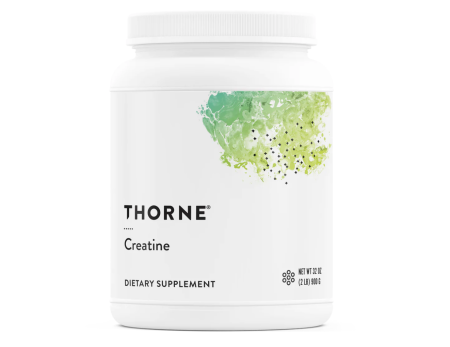
For the vast majority of women over 40, creatine monohydrate is the best creatine to start with. It’s what we recommend at THOR, and it’s what we stock in the shop. The creatine we carry at our shop is NSF Certified for Sport, which means it’s third-party tested for contaminants — a standard we insist on for anything we put in our bodies at THOR.
If you have a genuinely sensitive stomach and monohydrate doesn’t sit well even with food, creatine HCl is a reasonable second choice. But try monohydrate first. Dissolve it in warm water or a smoothie, take it with food like a yogurt bowl or overnight oats, and most digestive issues disappear.
Free Macro Calculator
Personalized to your body, goals, and measurements. You will receive detailed macros for meals, sample day of eating, food selection guidance, hydration + daily supplement suggestions, and more.
A quick word on “creatine for women” branded products
You’ve probably seen creatine marketed specifically for women, often in a pink tub at three times the price. Most of these are just creatine monohydrate with a premium on the label. Check the ingredients. If it’s creatine monohydrate, you’re paying extra for the pink tub. If it’s a proprietary blend, you’re paying more and getting less information about what you’re actually taking. Stick with well-studied, third-party-tested creatine monohydrate. Your wallet and your muscles will both thank you.
Creatine for Perimenopause: Benefits You’ll Notice Within the First 8 Weeks
Perimenopause — the years leading up to menopause, when your periods are still happening but getting irregular — is where women most often tell us, “Something is off and I can’t put my finger on it.” If you’re reading this and you recognize yourself in that sentence, please know: you’re not imagining it, and you’re not alone. Hormones are genuinely shifting, fluctuating, and your body’s rhythm is working harder to do the things it used to do automatically.
Creatine for perimenopause tends to show up first in three places women notice:
Recovery between workouts.
You know how you used to be able to work out Monday, Tuesday, Wednesday and feel fine, but now by Wednesday you need a nap and an ibuprofen? That’s partly about muscle creatine stores draining and not refilling fast enough. Supplementing with 3–5 grams of creatine monohydrate daily tops up those stores, and most women feel the difference within two to four weeks.
Energy through the afternoon.
Perimenopausal sleep is often fragmented — more awakenings, less deep sleep, wild temperature swings. Your brain runs on phosphocreatine during the dips. Multiple small trials have found that creatine supplementation modestly improves cognitive performance during sleep deprivation and periods of stress. Again, this isn’t a stimulant effect. It’s your brain having a better energy buffer.
Mood stability and mental clarity.
The 2025 perimenopause/menopause creatine HCl trial found improvements in reaction time and brain creatine levels after 8 weeks. Other small studies have found creatine supplementation reduced depressive symptoms when added to standard treatment — promising enough that creatine is now being studied as an adjunct to SSRIs in several active clinical trials.
None of this is pitched as a cure. It’s pitched as a foundational layer — something that makes everything else you’re doing work a little better. Combine creatine with resistance training, with proper protein intake (we cover that in detail in our post on the fundamentals of macro diet for women over 50), with sleep protection, and the compound effect is real.
If perimenopause has you feeling like you’re running a marathon with a pebble in your shoe, creatine takes out one pebble. It’s not the whole answer. But when you combine it with the rest of our Age With Strength Program™ Coaching Program — movement, muscle, nutrition, sleep, and metabolism — the difference adds up.
Creatine for Menopause and Postmenopause: Bone Density, Fat Loss, and the 2-Year Study
This is where the research gets really compelling. If you’re postmenopausal, there’s a specific trial you need to know about.
In 2023, researchers published a 2-year randomized controlled trial in Medicine & Science in Sports & Exercise following 237 postmenopausal women who were randomized to either 0.14 g/kg/day of creatine monohydrate or a placebo, combined with resistance training and walking for 24 months. That’s a serious study — long duration, real dose, real population. The primary outcome was femoral neck bone mineral density, which is the hip measurement that matters most for fracture risk.
Results? The creatine group preserved femoral neck bone mineral density better than placebo. In an earlier 12-month Canadian study by the same research group, postmenopausal women doing resistance training lost only 1.2% of femoral neck bone mass on creatine compared with nearly 4% on placebo.
Let me translate that. Losing 4% of bone at the femoral neck in a year is the kind of number that puts you on a fast track toward osteopenia or osteoporosis. Cutting that loss to 1.2% is the difference between staying out of a fracture zone and drifting into one. And the intervention is cheap, safe, and fits in a shaker bottle.
Bone density isn’t the only postmenopausal benefit. A 2025 meta-analysis published in the Journal of the International Society of Sports Nutrition on creatine in menopausal women found favorable effects on body composition (more lean mass, less fat mass), strength, and sleep when creatine was combined with resistance training. The effect sizes aren’t massive — nothing in this space is — but they’re real, and they compound over years.
For context, if you look at our work on women’s wellness retreats and our Age With Strength Program™ Coaching Program, we’re constantly talking about the three M’s — movement, muscle, and metabolism. Creatine lands in the middle of all three. It makes the movement more productive. It protects the muscle you build. And it supports the metabolism that your muscle depends on.
Free Macro Calculator
Personalized to your body, goals, and measurements. You will receive detailed macros for meals, sample day of eating, food selection guidance, hydration + daily supplement suggestions, and more.
The Right Creatine Dosage for Women Over 40 (and Why You Don’t Need a Loading Phase)
Here’s where most women get tripped up. The internet is full of complicated protocols — “load with 20 grams for five days, then drop to 5 grams.” That protocol was designed for young male athletes trying to maximize performance for a specific competition window. For women over 40 with everyday goals, it’s both unnecessary and slightly uncomfortable (the loading phase causes bloating in a lot of people).
Here’s the simple framework that works:
Starting dose: 3–5 grams of creatine monohydrate per day, every day. Take it whenever you’ll remember — it does not matter if it’s morning, post-workout, or with dinner. What matters is daily consistency over weeks and months.
Mix it into water, coffee (yes, really), tea, a smoothie, or yogurt. Creatine monohydrate doesn’t fully dissolve in cold water, so warm or room-temperature liquids work better. It’s flavorless.
Timing is a rounding error. Older research sometimes suggested pre- or post-workout timing. Larger, more recent analyses have found total daily intake matters far more than timing. Take it when it’s easiest to remember.
You’ll saturate muscle creatine stores in about three to four weeks at 3–5 grams per day. A loading phase shortens that to about a week, but the end state is identical. For 99% of women over 40, skipping the load is fine.
Higher-dose protocols — for example, the ISSN Position Stand on Nutritional Concerns of the Female Athlete (Sims et al., 2023) has noted that postmenopausal women may experience additional benefits in muscle and bone at higher doses of 0.3 g/kg/day. For a 150-pound (68 kg) woman, that’s about 20 grams/day. This is substantially higher than typical recommendations, and the higher-dose work is mostly in specific populations. Most women do very well on the simple 5 grams/day protocol. If you’re working on specific bone density or muscle outcomes with a healthcare provider, it’s worth discussing whether a higher dose is right for you.
Hydrate. Creatine pulls a small amount of water into muscle cells. That’s part of how it works. If you’re chronically underhydrated (and many midlife women are), add an extra glass or two of water when you start.
What about cycling off? No. Creatine does not need to be cycled. Your body doesn’t “stop making it” because you supplement — that effect is small and fully reverses when you stop. Consistent daily use is the norm in the research.
One more note: creatine works best with resistance training. If you’re not lifting anything heavier than groceries, start there. Our coaching clients at THOR get a structured strength template as part of the Midlife Method because creatine without resistance training is like buying premium fuel for a car you never drive.
Creatine Side Effects in Women Over 40: What’s Real, What’s Myth
Let’s talk about the elephant in the room. Creatine has been surrounded by myths for 30 years — “it causes kidney damage,” “it makes women bulky,” “it makes you hold water,” “it’s a steroid.” I want to address each of these directly because they stop women over 40 from trying one of the best-researched supplements available to us.
Kidney damage?
The International Society of Sports Nutrition, after reviewing hundreds of studies, has stated that creatine monohydrate at recommended doses is safe for healthy individuals with no evidence of kidney harm. If you have pre-existing kidney disease, talk with your doctor before starting anything. For everyone else with normal kidney function, this is a settled question. A small, transient rise in serum creatinine on routine lab work can happen — that’s a breakdown product of creatine, not a sign of kidney damage. Make sure your doctor knows you’re supplementing so they interpret labs correctly.
“It will make me bulky.”
Creatine does not make you bulky. Women in perimenopause and postmenopause do not have the hormonal environment to build massive muscle. What creatine does is help you keep the muscle you have, or slowly add a pound or two over months of consistent training. That’s the kind of lean mass that makes your jeans fit better, your back stop hurting, and your metabolism more stable. You will not wake up looking like a bodybuilder.
Water retention.
Creatine pulls a small amount of water into muscle cells — intracellular water, not the bloated “I look puffy” kind. Some women see a 1–2 pound weight bump in the first week or two. That’s water inside muscle, which is a good thing, not bad. It often shows up as “I feel fuller” in the muscle. The visible “bloated” water retention that women fear is rare with monohydrate at 3–5 grams per day.
Hair loss.
This one comes from a single study that found a temporary rise in DHT in young rugby players. The rise was within normal range, it wasn’t replicated in later studies, and there’s no evidence creatine causes hair loss in women. If you have a family history of hair loss, you can watch it, but don’t avoid creatine on this basis alone.
Stomach upset.
Some women get mild digestive discomfort when starting creatine, particularly if they take a large dose on an empty stomach. Start with 3 grams/day, take it with food, use warm water to dissolve, and this usually resolves within a week.
Interactions.
Creatine is remarkably clean in terms of drug interactions. That said, if you take medications that stress the kidneys (some NSAIDs, certain diabetes drugs, certain antibiotics), loop your doctor or pharmacist in before starting. This is a “tell your team” situation, not a “don’t do it” situation.
If you’ve ever looked at creatine and thought, “Is this safe for me?” — for the vast majority of women over 40 in good general health, the answer is yes. The risk profile is comparable to vitamin D, and the evidence base is much stronger.
Free Macro Calculator
Personalized to your body, goals, and measurements. You will receive detailed macros for meals, sample day of eating, food selection guidance, hydration + daily supplement suggestions, and more.
How to Combine Creatine with Resistance Training for Midlife Body Composition
Creatine without resistance training is like leaving a nice pair of running shoes in the closet — technically useful, practically pointless. The synergy is where the magic happens.
Here’s the combination we use with our Midlife Method coaching clients at THOR:
Three strength sessions per week, 30–45 minutes each. Compound movements: squats, hinges, pushes, pulls, carries. Start with bodyweight or light dumbbells if you’re new. Add weight slowly.
Progressive overload. Every two weeks, try to add a pound, a rep, or a set to something. Your muscle only rebuilds stronger if you give it a reason.
Protein at every meal. Aim for 25–40 grams per meal, ideally from whole food sources. Our macro diet for women over 50 guide walks through exactly how to structure this without obsessing.
Creatine daily. 3–5 grams, same time each day, mixed into whatever’s easiest. Our favorite is creatine is unflavored and mixes into nearly anything.
Impact work. This is where the bone benefits really compound. Ten minutes of rebounding, a few sets of box jumps, or even just walking on stairs count. We wrote a whole piece on why 100 jumps a day transforms midlife bodies — it’s one of our most-read posts for a reason.
Sleep and stress. Creatine is not a substitute for rest. Your body builds muscle and bone while you sleep. Prioritize it like it matters, because it does.
Within 8–12 weeks of this combination, most of our Midlife Method women notice:
- Clothes fitting differently (not necessarily on the scale)
- More energy in the afternoon
- Fewer aches after everyday activities
- Better mental clarity
- More confidence in their body
That’s the picture. Creatine on its own will move the needle a little. Creatine plus smart training plus adequate protein plus sleep plus stress management? That’s what changes a decade.
Foods That Contain Creatine (and Why You Still Need a Supplement)
Creatine isn’t only in a tub. It’s in food — mostly animal proteins. Here’s roughly how much creatine you’d get from whole food sources:
- Beef (6 oz): ~2 grams of creatine
- Salmon (6 oz): ~2 grams
- Chicken breast (6 oz): ~1 gram
- Pork (6 oz): ~1.5 grams
- Herring (6 oz): ~3 grams
- Cod (6 oz): ~1.5 grams
To hit the research-supported dose of 3–5 grams per day from food alone, you’d need roughly a pound of red meat or fatty fish daily. That’s a lot of cooking, a lot of saturated fat intake (depending on your cuts), and frankly, a lot of money.
If you’re vegetarian or vegan, your dietary intake is near zero, and muscle creatine stores are typically 20–50% lower than in omnivores. Supplementation is even more valuable in that case. Creatine monohydrate is synthesized in a lab and contains no animal products — both the Thorne creatine we stock and most other reputable creatine monohydrate powders are vegan-friendly.
The practical answer for most women over 40: eat whole food sources of creatine when you can (the beef, the fish, the eggs), and use a 3–5 gram daily supplement to top up. This combined approach consistently delivers saturated muscle stores without asking you to eat beef for every meal.
What to Look for When Choosing the Best Creatine for Menopause
If you’re going to start, pick something worth starting. Here’s the THOR checklist:
Third-party tested. Look for NSF Certified for Sport, Informed Sport, or USP Verified. These certifications mean an independent lab has checked the product for banned substances and label accuracy. Our favorite creatine — available at shop.thehouseofrose.com/products/creatine — is NSF Certified for Sport, which is the standard we hold to for our retreat supply.
Pure creatine monohydrate. Check the ingredient panel. If it says “creatine monohydrate” and nothing else, you’re good. If it lists a “proprietary blend” or adds a bunch of other compounds, skip it. You want to know exactly what you’re taking.
No added sugar or artificial colors. You don’t need a neon-blue creatine smoothie. You’re a grown woman; you can stir 5 grams of powder into water.
Unflavored or very lightly flavored. Creatine is tasteless in monohydrate form. Heavily flavored creatines usually hide filler ingredients.
A reasonable price. Creatine is one of the cheapest effective supplements on the market. If you’re paying over $1 per serving for plain creatine monohydrate, you’re being overcharged.
Packaging that protects the product. A sealed, resealable container that keeps moisture out. Creatine is moisture-sensitive; if it clumps into rocks in the tub, it’s been exposed to humidity (still safe to take, just inconvenient).
This is the short list. Don’t overcomplicate it.
The THOR Creatine Protocol for Women Over 40
Putting this all together, here’s how we actually recommend our clients to start:
Weeks 1–2: Take 3 grams of creatine monohydrate per day, mixed in warm water or a smoothie, with food. Pay attention to how you feel.
Weeks 3–4: If everything’s feeling good, move to 5 grams per day. Continue daily, consistently, no skips.
Weeks 5–12: Pair the creatine with 3 strength sessions per week, hit your protein target, protect your sleep. This is where most women start to notice real changes.
Months 3–6: This is where bone and body composition changes start to show up on measurements and in how clothes fit. Stay the course. The research on postmenopausal bone density was measured at 12 and 24 months — the long game matters.
Ongoing: Stay on creatine daily. No need to cycle off. Adjust dose upward only in consultation with a coach or clinician who knows your specific goals.
If you want more structure — progressive strength templates, macro guidance customized to your body, and 1:1 support from someone who gets midlife — that’s exactly what we do inside THOR coaching. Reach out through thehouseofrose.com to talk. And if you just want to get the creatine itself, we keep it in stock.
Free Macro Calculator
Personalized to your body, goals, and measurements. You will receive detailed macros for meals, sample day of eating, food selection guidance, hydration + daily supplement suggestions, and more.
Creatine for Women Over 40: Frequently Asked Questions
Is creatine safe for women over 40?
For healthy women with normal kidney function, creatine monohydrate at 3–5 grams per day is among the most-studied and safest supplements on the market. The International Society of Sports Nutrition, after reviewing hundreds of studies, has repeatedly affirmed its safety. If you have pre-existing kidney disease, talk with your physician before starting. If you’re taking medications that affect kidney function, make sure your care team knows about the supplement so they can interpret lab results correctly.
What is the best creatine for women over 40?
Creatine monohydrate is the most-researched, most-cost-effective, and most-reliable form. Look for a product that’s third-party tested (NSF Certified for Sport, Informed Sport, or USP Verified), lists only creatine monohydrate in the ingredients, and comes from a brand with a track record. At THOR, we use and stock creatine monohydrate because it’s NSF Certified for Sport and has the quality controls we trust for our retreat participants. You can find it at shop.thehouseofrose.com/products/creatine.
How much creatine should a woman over 40 take per day?
The research-backed starting dose is 3–5 grams of creatine monohydrate per day, every day, consistently. No loading phase is necessary for most women — you’ll saturate your muscle creatine stores in three to four weeks at that dose. Some postmenopausal women may benefit from higher doses (up to 0.3 g/kg/day) under a coach or clinician’s guidance, but 3–5 grams/day is the foundation that covers most benefits for most women.
How long does it take to feel the effects of creatine?
Most women notice changes within 2–4 weeks — usually in recovery between workouts, afternoon energy, and mental clarity. Body composition and strength changes show up more clearly at 8–12 weeks of consistent use combined with resistance training. Bone density changes take 6–12 months to measure. Creatine is a long game that also has short-term wins; patience pays off.
Can creatine help with perimenopause symptoms?
Creatine won’t directly change your hormonal picture, but it can help soften some of the downstream effects of perimenopause. A 2025 randomized trial in the Journal of the American Nutrition Association found creatine HCl improved reaction time and increased frontal brain creatine levels in perimenopausal and menopausal women over 8 weeks. Many women also report better energy, mood stability, and workout recovery. Pair it with sleep protection, strength training, and proper protein intake for compounding benefits.
Does creatine cause weight gain in women?
Creatine causes a small amount of intramuscular water retention — typically a 1–2 pound scale bump in the first week or two. This is water inside muscle cells (which is where you want it), not bloating or fat gain. Over months, most women on creatine actually see improved body composition: slightly more lean mass, slightly less body fat, and tighter-fitting clothes. The scale can lie in the short term; measurements and how clothes fit tell the longer story.
Does creatine cause hair loss?
The hair-loss concern comes from one small study in young men that found a temporary DHT rise within normal range. That finding hasn’t been replicated in follow-up research, and there’s no evidence that creatine causes hair loss in women. If you have a strong family history of female-pattern hair loss, you can monitor it, but the current evidence does not support avoiding creatine for this reason.
Can I take creatine with other supplements?
Yes. Creatine stacks cleanly with protein powder, omega-3s, vitamin D, magnesium, collagen, and most other common supplements. The combination many of our coaching clients use at THOR is creatine + adequate protein + vitamin D + magnesium, which is a well-rounded foundation for midlife muscle and bone health.
Should I take creatine on rest days?
Yes. Daily consistency matters more than workout timing. Take creatine on training days, rest days, travel days, holidays — every day. Your muscle stores maintain saturation only with consistent daily intake.
What about creatine and caffeine?
Older research suggested caffeine might blunt creatine’s effects, but that’s been largely disproven in more recent trials. Plenty of women mix creatine directly into their morning coffee without issue. Do what’s easiest for daily consistency.
Can vegetarians or vegans benefit from creatine?
Absolutely — in fact, they often benefit the most. Vegetarians and vegans typically have lower baseline muscle creatine stores because they’re not getting it from red meat or fish. A daily 3–5 gram creatine monohydrate supplement (which is vegan by default, since it’s synthesized in a lab) brings vegetarian and vegan women up to the same muscle saturation as omnivores.
What if I forget to take creatine for a few days?
Not a big deal. Muscle creatine stores deplete slowly — over several weeks. Pick it back up when you remember. If you’ve been off for more than a couple of weeks, just restart your 3–5 gram/day routine; no need to “re-load.”
Does creatine help with brain fog and cognitive function during menopause?
Promising early evidence says yes. The 2025 CONCRET-MENOPA trial on creatine HCl in perimenopausal and menopausal women found improvements in reaction time and increased frontal brain creatine levels. The effect size wasn’t enormous, but it was real. Other small studies have found creatine may support mood and cognitive function during sleep deprivation or high-stress periods. We tell our Midlife Method coaching clients not to expect a miracle — but many do notice a gentler, steadier head on creatine than off of it.
Free Macro Calculator
Personalized to your body, goals, and measurements. You will receive detailed macros for meals, sample day of eating, food selection guidance, hydration + daily supplement suggestions, and more.
Can creatine help with bone density after menopause?
This is one of the stronger evidence bases. A 2-year randomized controlled trial in 237 postmenopausal women found creatine monohydrate (0.14 g/kg/day) combined with resistance training preserved femoral neck bone mineral density better than placebo. An earlier 12-month study from the same research group found only 1.2% bone loss in the creatine group versus nearly 4% in placebo. Creatine alone isn’t a bone drug — it works by supporting the resistance training that signals bone remodeling — but the combined effect is real and repeatable in the research.
How do I know if creatine is working?
Track three things: how you feel during and after workouts (energy, recovery), how clothes fit (body composition over weeks to months), and simple strength markers (can you lift a little heavier, do a little more, carry groceries without effort). If you’re pairing creatine with consistent strength training and protein intake, most women see meaningful changes within 8–12 weeks.
The Bottom Line on Creatine for Women Over 40
Creatine is one of the few supplements that walks the talk. It’s cheap. It’s safe. It has a huge body of research behind it, and the research specifically in women — perimenopausal, menopausal, postmenopausal — has gotten much stronger in just the last few years. It’s not a magic powder. It’s a foundational tool that makes strength training more productive, bone protection more effective, and midlife feel a little more possible.
If you’ve been on the fence, here’s our honest nudge: try it for 12 weeks. Pair it with three strength sessions a week, adequate protein, and sleep you actually prioritize. Then judge. We think you’ll feel the difference. Our retreat and Midlife Method women feel it all the time.
And if you want to start with the exact Thorne creatine we use at THOR — NSF Certified for Sport, unflavored, clean — you can grab it at shop.thehouseofrose.com/products/creatine. Your midlife body is worth the tub. We promise.
Sources and References
- Smith-Ryan AE, Cabre HE, Eckerson JM, Candow DG. “Creatine Supplementation in Women’s Health: A Lifespan Perspective.” Nutrients. 2021;13(3):877. https://pmc.ncbi.nlm.nih.gov/articles/PMC7998865/
- de Guingand DL, Palmer KR, Snow RJ, Davies-Tuck ML, Ellery SJ. “Creatine in women’s health: bridging the gap from menstruation through pregnancy to menopause.” Journal of the International Society of Sports Nutrition. 2025. https://www.tandfonline.com/doi/full/10.1080/15502783.2025.2502094
- Sims ST, Kerksick CM, Smith-Ryan AE, et al. “International society of sports nutrition position stand: nutritional concerns of the female athlete.” Journal of the International Society of Sports Nutrition. 2023;20(1). https://pmc.ncbi.nlm.nih.gov/articles/PMC10210857/
- Kreider RB, Kalman DS, Antonio J, et al. “International Society of Sports Nutrition position stand: safety and efficacy of creatine supplementation in exercise, sport, and medicine.” Journal of the International Society of Sports Nutrition. 2017;14:18. https://pmc.ncbi.nlm.nih.gov/articles/PMC5469049/
- Chilibeck PD, Candow DG, Gordon JJ, et al. “A 2-year Randomized Controlled Trial on Creatine Supplementation during Exercise for Postmenopausal Bone Health.” Medicine & Science in Sports & Exercise. 2023. https://pubmed.ncbi.nlm.nih.gov/37144634/
- Chilibeck PD, Candow DG, Landeryou T, Kaviani M, Paus-Jenssen L. “Effects of Creatine and Resistance Training on Bone Health in Postmenopausal Women.” Medicine & Science in Sports & Exercise. 2015;47(8):1587–95. https://pmc.ncbi.nlm.nih.gov/articles/PMC10487398/
- Candow DG, Forbes SC, Chilibeck PD, et al. “Effectiveness of Creatine Supplementation on Aging Muscle and Bone: Focus on Falls Prevention and Inflammation.” Journal of Clinical Medicine. 2019;8(4):488.
- Cabre HE, Gould LM, Smith-Ryan AE, et al. “Impact of creatine supplementation on menopausal women’s body composition, cognition, estrogen, strength, and sleep.” Journal of the International Society of Sports Nutrition. 2025. https://pmc.ncbi.nlm.nih.gov/articles/PMC12291186/
- “The Effects of 8-Week Creatine Hydrochloride and Creatine Ethyl Ester Supplementation on Cognition, Clinical Outcomes, and Brain Creatine Levels in Perimenopausal and Menopausal Women (CONCRET-MENOPA): A Randomized Controlled Trial.” Journal of the American Nutrition Association. 2025. https://pubmed.ncbi.nlm.nih.gov/40854087/
- Lobo DM, Tritto AC, da Silva LR, et al. “Effects of long-term low-dose dietary creatine supplementation in older women.” Experimental Gerontology. 2015. https://www.sciencedirect.com/science/article/abs/pii/S0531556515300206
- “Creatine and Cognition in Aging: A Systematic Review of Evidence in Older Adults.” Nutrition Reviews. 2025. https://academic.oup.com/nutritionreviews/advance-article/doi/10.1093/nutrit/nuaf135/8253584
Related Reading on THOR
- The Fundamentals of Macro Diet for Women Over 50
- Benefits of Jumping: Why 100 Jumps a Day Transforms Midlife Bodies
- What Is Creatine and How Does It Benefit Women Over 40
- Benefits of Creatine for Women over 40
- Women’s Wellness Retreats in Tennessee
- Why Putting Yourself Last Backfires
Disclaimer: This article is for educational purposes and is not medical advice. Consult a qualified healthcare provider before starting any new supplement, especially if you have kidney disease, take prescription medications, or are pregnant or nursing.

Terry Tateossian is a Menopause Lifestyle Medicine Coach, Certified Personal Trainer & Nutritionist and the Founder of THOR: The House of Rose, a wellness brand serving women over 40 through retreats, coaching, macro-nutrition and community. As 25-year founder and entrepreneur, Terry spent two and a half decades building and running successful start-up businesses, an experience that put her on the front line of founder burnout long before she could name it. After facing serious health challenges, early onset menopause, and emotional eating while running her agency and raising two children, Terry rebuilt her health in her 40s and lost more than 80 pounds through evidence-based nutrition, training, and mindset work. Today, she helps women get strong, improve confidence, support hormone health, and create a stronger second half of life. Terry has been featured in major media outlets and is available for podcasts, expert commentary, brand collaborations, and speaking engagements on midlife health, reinvention, emotional eating, menopause wellness, and strength training for longevity. Get her free macro calculator (her cookbook companion) to start your journey to back to health.