
 By Team THOR
Free Macro Calculator
Personalized to your body, goals, and measurements. You will receive detailed macros for meals, sample day of eating, food selection guidance, hydration + daily supplement suggestions, and more.
Mediterranean Diet for Menopause: The Science-Backed Guide for Women Over 50
If you’ve been to a doctor’s appointment in the last five or so years about menopause weight gain, hot flashes, brain fog, or heart health, there’s a good chance somebody told you to “eat Mediterranean.” It’s the single most-recommended dietary pattern in modern medicine, and for good reason. But here’s what nobody tells you in the 12-minute visit: a generic Mediterranean diet isn’t automatically a menopause-friendly diet. You can do it half-right and feel worse than before.
At THOR, we’ve coached hundreds of women through the transition, and the Mediterranean framework is absolutely the backbone we build on. The research on it is stronger than any other dietary pattern in midlife — for heart health, for brain, for bone, for inflammation, for weight regulation. But the way most women apply it — lots of pasta, a splash of olive oil, salad for lunch, a glass of wine at dinner — misses the three things a menopausal body actually needs most: enough protein, the right ratio of fats, and the specific polyphenol doses that change inflammation markers.
This is a long article, and I’m going to walk you through the real version. What the science says, the pillars that matter, the mistakes that sabotage it, a 30-day on-ramp, the macro framework that turns it into a menopause-specific plan, and a sample full day on the plate. Grab tea. Let’s do this properly.
Why the Mediterranean Diet for Menopause Works (When Other Diets Don’t)
Let me start with the why. Because if you understand the mechanism, you stop getting talked out of it by the next internet fad.
The Mediterranean dietary pattern is built around extra virgin olive oil, vegetables, legumes, nuts, fish, whole grains, and moderate amounts of dairy, with small amounts of meat and wine. It’s the way people in southern Italy, Greece, and coastal Spain traditionally ate — not because they were trying to diet, but because that’s what grew there and that’s what the culture ate together.
The landmark research is the PREDIMED trial, published in the New England Journal of Medicine by Estruch and colleagues in 2013 and re-analyzed in 2018. Nearly 7,500 participants at high cardiovascular risk, randomized to either a Mediterranean diet with added olive oil, a Mediterranean diet with added mixed nuts, or a low-fat control diet. After five years, the Mediterranean groups had roughly a 30% reduction in major cardiovascular events — heart attacks, strokes, cardiovascular death — compared to the low-fat group. That’s a bigger effect than most pharmaceutical interventions.
Since then, the Mediterranean pattern has been tied to lower risk of type 2 diabetes, lower all-cause mortality, slower cognitive decline, better mood, and more favorable bone density outcomes. For women in the menopause transition specifically, published studies in the journal Menopause and in Nutrients have shown associations with fewer hot flashes, better sleep quality, lower depression scores, and healthier body composition.
There are five mechanisms doing most of the work. I’ll walk through each because they matter for how you actually apply this diet in a midlife body.
Anti-inflammatory polyphenols.
The oleocanthal in extra virgin olive oil, the resveratrol in moderate red wine and grapes, the flavonoids in vegetables and herbs — these compounds measurably lower inflammatory markers like C-reactive protein and IL-6. Menopause is a chronic low-grade inflammatory state because estrogen is anti-inflammatory and it’s leaving the building. A polyphenol-rich diet partially offsets that.
Monounsaturated fats instead of refined seed oils.
Olive oil and nuts replace the industrial oils that drive inflammation. A 2022 meta-analysis in the American Journal of Clinical Nutrition on dietary fat composition and menopausal symptoms found monounsaturated fat intake associated with fewer vasomotor symptoms. The quality of fat matters as much as the quantity.
Fiber and legumes for insulin sensitivity.
Menopausal women become more insulin resistant, which is one of the reasons belly fat accumulates. Legumes, whole grains, and vegetables slow glucose absorption and feed the gut bacteria that regulate blood sugar.
Fatty fish for omega-3s.
EPA and DHA from sardines, salmon, and mackerel support brain, joint, skin, and cardiovascular tissue. Omega-3 intake is particularly relevant in menopause when cognitive fog and mood shifts are common.
Fermented dairy and calcium for bone.
Yogurt and aged cheeses contribute to the calcium and protein intake that matters most for postmenopausal bone density — together with vitamin D and resistance training.
If you’ve already read our piece on the fundamentals of macro diet for women over 50, you know we take macros seriously. The Mediterranean diet gives us the food quality layer. Macros give us the quantity layer. Put them together and you have the whole picture.
Free Macro Calculator
Personalized to your body, goals, and measurements. You will receive detailed macros for meals, sample day of eating, food selection guidance, hydration + daily supplement suggestions, and more.
The Specific Physiology That Makes This Diet Menopause-Friendly
Let’s get into the body-system level for a minute, because understanding what’s happening makes the “why eat this way” obvious.
When estrogen declines, several things shift at once. Your cardiovascular disease risk rises — the protective effect of estrogen on arteries goes away, and cholesterol levels often worsen. Your bone density drops as osteoclast activity outpaces osteoblast activity. Your insulin sensitivity falls, which means your pancreas has to work harder to keep blood sugar stable. Your baseline inflammation climbs. Your body composition shifts toward visceral fat. Your cognitive processing slows, and neurotransmitter systems that depend on estrogen — like serotonin — wobble.
Now look at the Mediterranean diet again. It’s almost purpose-built for this list.
Monounsaturated fats and omega-3s support cholesterol profiles and artery health. Dairy and leafy greens deliver calcium and vitamin K for bone. Fiber and polyphenols dampen insulin spikes. Polyphenols lower inflammatory markers. Fish, nuts, and olive oil support satiety and body composition. Omega-3 DHA supports brain structure and function. The total pattern nudges every one of the menopause-challenged systems in a better direction.
That’s why the research is so consistent. It’s not that Mediterranean foods are magic. It’s that the dietary pattern happens to hit the physiological pressure points of menopause in a way few other patterns do.
The Mediterranean Diet Pillars — What Actually Goes on the Plate
The Mediterranean diet gets watered down in mainstream coverage. Let me give you the real pillars, grounded in how the original populations ate.
Extra virgin olive oil as the primary fat.
Not butter as default. Not seed oils as default. Extra virgin olive oil, used on salads, drizzled over cooked vegetables, stirred into beans, finished on fish. Aim for 2 to 4 tablespoons per day. This is the pillar that correlates most strongly with outcomes in the PREDIMED data. The benefits of olive oil shots for women over 40 piece breaks down whether taking it as a morning shot is a useful way to hit your daily intake or whether incorporating it into meals is better — it’s worth reading if you want to understand what your body actually does with a concentrated dose.
Vegetables at lunch and dinner, aim for 5 to 7 servings a day.
Leafy greens, tomatoes, peppers, zucchini, eggplant, broccoli, cauliflower, artichokes. Cooked in olive oil or raw with olive oil and lemon. Fresh herbs liberally.
Legumes 3 to 5 times a week.
Chickpeas, lentils, white beans, fava. This is the sneaky star of the diet. Legumes deliver fiber, plant protein, B vitamins, and resistant starch that feeds your gut microbiome.
Whole grains instead of refined.
Farro, bulgur, barley, whole-grain sourdough, brown rice. The traditional Mediterranean pattern includes grains, but in whole form and modest portions, not in the bottomless-pasta-bowl form American Mediterranean copycats sell.
Fatty fish 2 to 3 times a week.
Sardines, mackerel, salmon, anchovies, tuna. Canned is fine and often better than “fresh” fish of uncertain origin. The omega-3 content is what matters.
Nuts and seeds daily.
A small handful. Almonds, walnuts, pistachios, pumpkin seeds. Nuts were the second intervention in PREDIMED and the group that got nuts did just as well as the olive oil group.
Fruit for dessert.
Not cookies. Not cake. Fresh fruit, seasonal, often paired with a little cheese or nuts.
Dairy in moderation, preferably fermented.
Greek yogurt, kefir, feta, fresh cheeses, aged sheep or goat cheeses. A few servings a day.
Meat sparingly.
Red meat a few times a month. Poultry a few times a week. The emphasis is plants and fish, not animal protein as centerpiece at every meal. For menopausal women, though, we do have to protein-load more than a traditional Mediterranean eater did — which is one of the adaptations I’ll walk through below.
Moderate red wine, optional.
One small glass with dinner. If you don’t drink, do not start — the benefit at moderate intake is modest and is not worth introducing alcohol where it wasn’t before.
Water as the primary beverage.
Herbal teas and espresso are part of the culture. Sugary drinks are not.
Free Macro Calculator
Personalized to your body, goals, and measurements. You will receive detailed macros for meals, sample day of eating, food selection guidance, hydration + daily supplement suggestions, and more.
Olive Oil Is the Engine: Why (and How to Use It)
I want to spend a minute here because olive oil is the Mediterranean pillar that produces the biggest single nutritional shift for most American women.
A typical U.S. pantry uses vegetable oil, canola, corn, or a seed-oil blend for most cooking. Swapping those out for extra virgin olive oil measurably changes the fatty acid profile of the tissues in your body over 6 to 12 weeks. The monounsaturated fats replace some of the omega-6s that drive inflammation. The polyphenols in good olive oil add antioxidant capacity. Oleocanthal, the compound in fresh extra virgin olive oil that creates the throat-tickle when you taste it, behaves like a natural anti-inflammatory — a 2005 study published in Nature by Beauchamp and colleagues identified it as a COX inhibitor similar in mechanism to ibuprofen.
What to actually do:
Buy extra virgin olive oil in a dark bottle or tin with a harvest date within the last 12 months. Country of origin matters less than freshness. Store it in a cool, dark cupboard — not next to the stove.
Use it as your default fat. Cook vegetables in it. Dress salads with it. Finish fish and soups with a drizzle. Keep a small bottle on the table the way Italians do.
Do not fear heat. Contrary to internet myth, extra virgin olive oil is stable at normal home cooking temperatures. Studies on thermal oxidation show that high-quality olive oil holds up to sautéing and even shallow frying better than most refined oils.
Daily target: 2 to 4 tablespoons a day, split across meals. That’s where the intake in the positive-outcome studies clustered.
If you’re curious whether a morning shot of olive oil is a smart way to hit your daily target, our are olive oil shots healthy article goes deep on the mechanism for women over 40 specifically, including what the research says about digestion, weight, skin, and the “trending but unproven” claims.
Mediterranean Diet and Menopause Weight Loss — The Real Story
Here’s where I’ll push back on some of the marketing around this diet.
A Mediterranean diet is not a weight-loss diet. It’s an anti-disease, longevity-supporting dietary pattern. Weight loss happens for some women on it because they’re trading ultra-processed food for whole food, their satiety improves, and their hormonal environment gets less inflammatory. But you can absolutely gain weight on a Mediterranean diet if your portions, protein, and macros don’t match your body’s needs.
The research is mixed, and I want you to have the real picture.
A 2018 systematic review in Nutrients examined Mediterranean diet interventions in postmenopausal women and found modest weight loss on average — roughly 3 to 8 pounds over 12 to 24 months — with more consistent improvements in waist circumference and visceral fat than in total body weight. In other words, body composition often improves even when the scale doesn’t move much.
A 2022 study in the American Journal of Clinical Nutrition compared Mediterranean diet plus exercise to exercise alone in postmenopausal women and found significantly greater reductions in visceral fat and inflammatory markers in the Mediterranean + exercise group, even at similar total weight change.
The takeaway: the Mediterranean pattern is excellent for fat distribution, metabolic health, and inflammation. It is only sometimes and only modestly a weight-loss tool on its own. If weight loss is your primary goal, you need to pair the Mediterranean framework with a calorie deficit, a high protein target, and resistance training. That’s why our coaching framework blends Mediterranean food quality with precision macro programming — one without the other underdelivers.
Our reverse dieting after menopause piece is the companion article to this one if you’ve been chronically under-eating. You may need to spend 12 to 16 weeks rebuilding your metabolism at Mediterranean maintenance calories before any cut makes sense.
Free Macro Calculator
Personalized to your body, goals, and measurements. You will receive detailed macros for meals, sample day of eating, food selection guidance, hydration + daily supplement suggestions, and more.
How to Start a Mediterranean Diet After 50 (A 30-Day On-Ramp)
Don’t try to change everything on Monday. This is the step-by-step on-ramp I walk new coaching clients through.
Week 1: Swap your cooking fat. Pour out the vegetable oil and canola. Get a good extra virgin olive oil in a dark bottle. Cook every stovetop meal this week in olive oil. Make one salad dressing from scratch — olive oil, lemon or vinegar, salt, pepper, a pinch of oregano. Notice how much better food tastes when the fat is good.
Week 2: Add one legume meal and one fish meal. One night this week, make a white bean and tomato stew, or a lentil and spinach soup, or a chickpea and cucumber salad. Separately, one night this week, make a salmon fillet, or open a tin of sardines and eat them on toast with olive oil, or broil mackerel with lemon. Two new meals. That’s it.
Week 3: Cut back refined grains by 50%. If you normally eat white bread, pasta, or refined crackers daily, cut it in half. Replace with farro, whole-grain sourdough, brown rice, or whole-wheat pasta. Not zero. Half. Your gut and your blood sugar will start to adjust.
Week 4: Vegetables at lunch and dinner, every day. This is the non-negotiable. Every lunch and every dinner has at least one plate’s worth of vegetables. Prepped in olive oil, raw with olive oil and lemon, roasted, or in soups and stews. This is the single highest-value habit in the whole pattern.
After 30 days, most women tell us they feel lighter, more energetic, and less bloated. Their skin looks better. Their digestion works better. Their cravings have calmed. This is the Mediterranean framework starting to land in the body. You keep going from there.
Macros & the Mediterranean Diet — How They Actually Fit Together
This is the part that most Mediterranean diet articles skip. A traditional Mediterranean eater in Crete in 1960 ate a lot more plant food and less protein than the typical American woman needs today. She also didn’t have the menopausal hormonal context we do, and she walked ten miles a day carrying olive branches. We have to adapt.
For women over 50, I recommend hitting these targets within the Mediterranean framework:
Protein: 30–35% of calories, or roughly 0.8–1.0 grams per pound of goal body weight. That’s 100–140 grams for most women. This is higher than a historical Mediterranean intake because menopausal women are anabolically resistant and need more protein to maintain and build muscle. Hit protein with fish, Greek yogurt, eggs, legumes, cottage cheese, poultry, and modest portions of red meat.
Carbohydrates: 40–45% of calories. Yes, carbs. The Mediterranean diet is not low-carb. It’s quality-carb. Vegetables, whole grains, legumes, and fruit. Menopause does NOT require you to eliminate carbs — that’s internet mythology, and it’s one of the reasons so many menopausal women feel tired, cold, and cranky on keto.
Fats: 25–30% of calories, emphasizing monounsaturated. Extra virgin olive oil as the primary fat. Nuts and seeds. Avocado. Fatty fish. This is where the Mediterranean diet diverges from a generic “balanced diet” — the fat is not incidental, it’s a hero.
If you want your exact numbers, plug your stats into our free macro calculator. It’s built specifically for women 40+ and defaults to menopause-friendly ratios. You’ll get a target calorie number plus a protein, carb, and fat breakdown in grams.
Free Macro Calculator
Personalized to your body, goals, and measurements. You will receive detailed macros for meals, sample day of eating, food selection guidance, hydration + daily supplement suggestions, and more.
Mediterranean Diet Breakfast, Lunch, and Dinner for Women Over 50 (Sample Day)
Here’s what a real Mediterranean menopause-friendly day looks like for a woman eating around 1,800 calories with 120 grams of protein. This is one template — there are dozens of variations in the THOR cookbook.
Breakfast. Two scrambled eggs with sautéed spinach and tomatoes, cooked in a tablespoon of extra virgin olive oil. A small bowl of Greek yogurt (150 grams, full-fat or 2%) topped with a tablespoon of walnuts and a quarter cup of berries. Coffee or herbal tea. Approximately 30 grams of protein, balanced fats, minimal refined carbs.
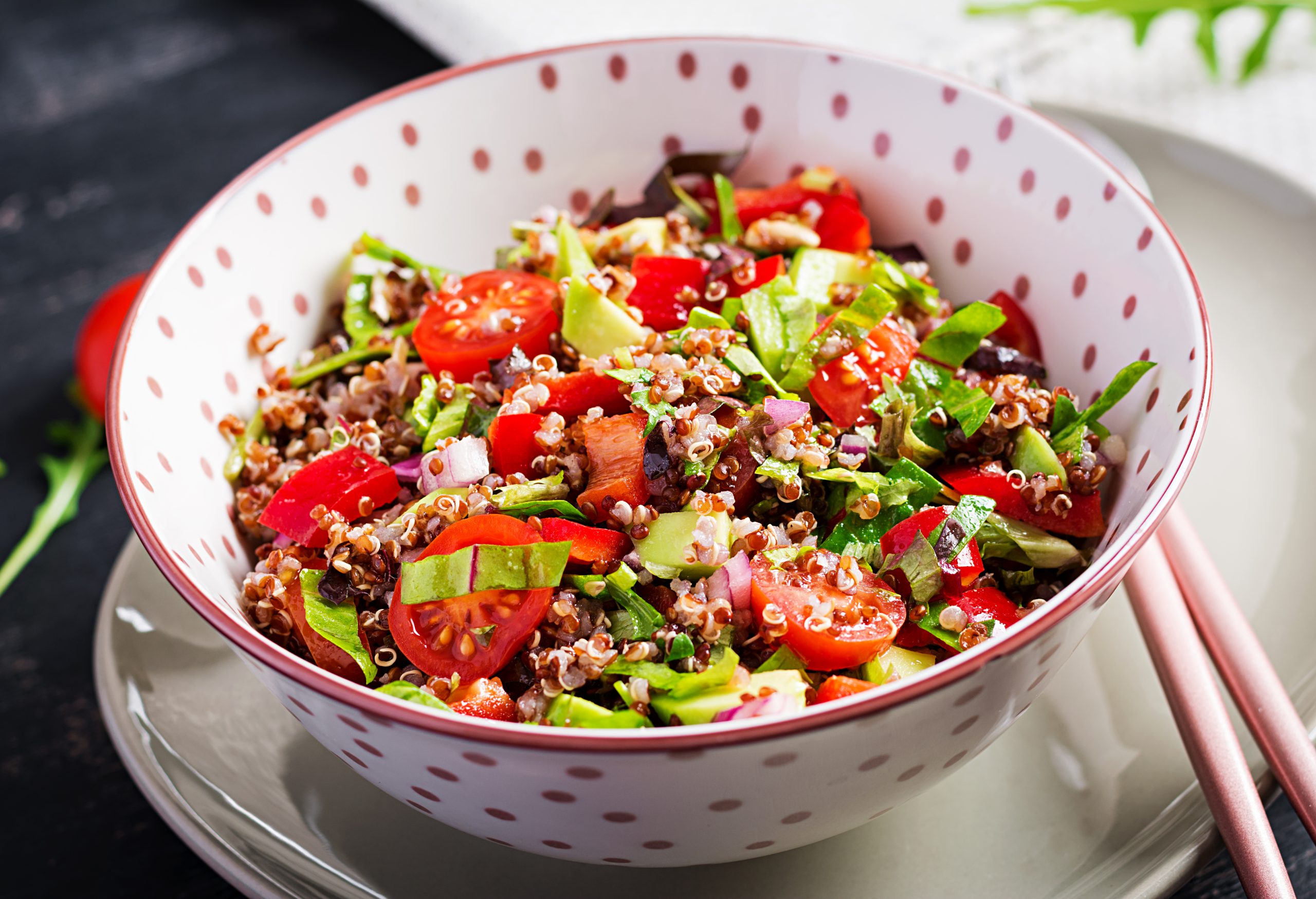
Lunch. A bowl with a half cup of farro, a half cup of white beans, a big handful of mixed greens, cucumbers, tomatoes, cubed feta, and 4 ounces of canned tuna or salmon, dressed with extra virgin olive oil and lemon. Fresh herbs. Approximately 35 grams of protein.
Afternoon snack. A handful of almonds and an apple. Or a hard-boiled egg with cucumber slices and a drizzle of olive oil.
Dinner. A 5-ounce broiled salmon fillet, a serving of roasted eggplant with tahini, a side of lentil and spinach soup, a small piece of whole-grain sourdough dipped in olive oil. One small square of dark chocolate for dessert. Approximately 40 grams of protein.
Optional. One small glass of red wine with dinner, if you drink.
This hits the protein target, stays in the Mediterranean fat and carb ratios, and delivers all the pattern’s key nutrients. And it’s delicious — which matters, because a diet you don’t enjoy isn’t a diet you keep.
If you want 30 days of pre-built menopause-friendly Mediterranean recipes that hit these macro targets, the THOR cookbook collection is designed exactly for this — breakfast, lunch, and dinner plates that keep the Mediterranean pillars intact while hitting the protein numbers a midlife body needs.
Mediterranean Diet and Menopause Symptoms — What the Research Shows
Beyond weight and cardiovascular risk, the research on specific menopause symptoms is encouraging.
Hot flashes. A 2020 study published in Menopause by Herber-Gast and Mishra on dietary pattern and vasomotor symptoms found that women closer to a Mediterranean pattern reported 20% fewer moderate-to-severe hot flashes than those on a typical Western pattern. Omega-3 intake from fish and monounsaturated fat from olive oil were the strongest correlates.
Sleep quality. Multiple observational studies, including data from the Women’s Health Initiative, have linked Mediterranean-pattern adherence with better self-reported sleep quality in postmenopausal women. Plausible mechanisms include stabilized blood sugar overnight, higher magnesium intake from nuts and greens, and lower inflammation.
Mood and depression. The SMILES trial published in BMC Medicine in 2017 by Jacka and colleagues tested a Mediterranean-style dietary intervention for moderate-to-severe depression and found a clinically meaningful reduction in symptoms versus the social support control. In menopausal women specifically, this matters because depression and mood shifts are common, and many women don’t want another medication.
Cognitive function. The MIND diet, which is a hybrid of Mediterranean and DASH, was associated with a 53% lower risk of Alzheimer’s in the original 2015 study by Morris and colleagues. Follow-up work has consistently found Mediterranean and Mediterranean-adjacent patterns protective against cognitive decline — especially relevant as estrogen’s neuroprotective effects taper.
Bone density. Observational data on Mediterranean diet scores and bone mineral density in postmenopausal women is consistent. Women with higher adherence have lower fracture risk. The mechanism is a mix of better calcium and vitamin K intake, higher protein from fish, and lower inflammation.
Gut health. Mediterranean diets dramatically increase fiber, fermented foods, and polyphenol intake, which feeds the gut microbiome. Midlife women often experience shifts in gut bacteria that correlate with symptoms, and a Mediterranean pattern is one of the better interventions for restoring diversity.
Common Mistakes in a Mediterranean Diet for Menopause
Four things I see over and over in the coaching office.
Mistake 1: Not enough protein. Women read “Mediterranean” and think “pasta and bread.” They end up at 60 grams of protein a day, half of what a menopausal body needs to maintain muscle. If you don’t protein-load within the Mediterranean pattern, you will lose muscle and feel tired.
Mistake 2: Cheap or rancid olive oil. Much of the extra virgin olive oil on U.S. grocery shelves is old, adulterated, or not actually extra virgin. If you’re paying $6 a gallon for it, it’s probably not good oil. Look for a harvest date on the label and a third-party quality certification. A good oil will have a peppery, slightly bitter finish. Cheap oil is flat and greasy.
Mistake 3: Treating “Mediterranean” as a cuisine rather than a pattern. White pasta drowning in tomato sauce with meatballs is not Mediterranean. Pizza is not Mediterranean. Grilled cheese paninis are not Mediterranean. The dietary pattern is mostly vegetables, legumes, olive oil, fish, and whole grains — not the Italian-American restaurant menu.
Mistake 4: Ignoring total calories. Olive oil is calorie-dense. Nuts are calorie-dense. Cheese is calorie-dense. The Mediterranean diet can easily run to 2,500+ calories a day if you’re not paying attention. For body composition goals in midlife, calories still matter. Run the numbers through the macro calculator so you know your target.
Mediterranean Diet & Strength Training — The Hidden Partnership
One more piece. Food quality matters, but food without movement doesn’t produce the body composition outcomes most women are after in midlife.
The Mediterranean diet’s protein and polyphenol profile is tailor-made for recovery from resistance training. The monounsaturated fats support hormone production. The carbs fuel workouts. The omega-3s reduce joint inflammation. It pairs almost perfectly with the kind of strength programming we teach in the Midlife Method.
If you’re currently doing cardio-heavy exercise without progressive resistance training, you’re leaving the Mediterranean benefits on the table. Our benefits of jumping piece covers the plyometric and rebounding side of training that complements strength work, and creatine for women over 40 covers the supplement layer.
The full stack in midlife: Mediterranean-quality food, protein at menopause levels, strength training 2–4 times a week, walking daily, creatine if you want the extra edge, sleep seven to nine hours, and stress support. Each piece multiplies the others.
Free Macro Calculator
Personalized to your body, goals, and measurements. You will receive detailed macros for meals, sample day of eating, food selection guidance, hydration + daily supplement suggestions, and more.
Frequently Asked Questions About the Mediterranean Diet for Menopause
Is the Mediterranean diet good for menopause weight loss?
It’s better for body composition than for pure scale weight loss. Postmenopausal women on Mediterranean patterns consistently lose visceral fat, waist circumference, and inflammation — even when total weight change is modest. For faster weight loss, combine the pattern with a structured macro plan and a small calorie deficit.
How quickly does the Mediterranean diet work for menopause symptoms?
Most women notice energy, digestion, and skin improvements within 2 to 4 weeks. Hot flash and sleep improvements often take 8 to 12 weeks. Cardiovascular markers and body composition changes show at 3 to 6 months. Bone density changes take a year or more to measure.
Do I need to cut out alcohol on a Mediterranean diet?
Not necessarily. One small glass of red wine with dinner is within the traditional pattern. But in menopause, alcohol disrupts sleep, worsens hot flashes, and interferes with recovery. Many of my clients drop alcohol entirely or keep it to special occasions and feel dramatically better. If you drink, go low and slow, and pay attention to what your body tells you the next day.
Is the Mediterranean diet expensive?
It can be, but doesn’t have to be. The pantry basics — dried legumes, canned fish, seasonal vegetables, whole grains, olive oil — are some of the least expensive nutrient-dense foods in the grocery store. The expensive version is fancy fresh fish and imported cheese. The everyday version is lentils, canned sardines, cabbage, and a good olive oil.
Can I do the Mediterranean diet if I’m vegetarian?
Yes. The traditional pattern is already mostly plant-based. You’ll need to replace the fish omega-3s with algae-based supplementation and be more attentive to protein quantity from legumes, dairy, eggs, and possibly a plant-based protein powder. Vegan Mediterranean is harder but possible with more planning.
What about intermittent fasting with the Mediterranean diet?
They can combine, but I’d prioritize hitting your protein target over any eating window. Narrow windows (under 10 hours) tend to crowd out the protein volume menopausal women need. If you do fast, keep the window to 12 to 14 hours, not 16 to 18, and finish eating earlier in the evening rather than skipping breakfast.
Does the Mediterranean diet help with belly fat in menopause?
Yes. Visceral fat responds particularly well to the diet’s fiber, polyphenol, and monounsaturated fat content. Combined with strength training and adequate protein, it’s one of the better tools for the “menopause belly” that many women are frustrated by.
What’s the best olive oil for a Mediterranean diet?
Extra virgin olive oil (EVOO) with a harvest date within the past 12 months, stored in a dark bottle or tin. Look for a third-party quality certification (COOC in California, PDO in Europe). Country of origin matters less than freshness. Budget $15 to $25 for a 500ml bottle of something genuinely good. Our benefits of olive oil shots for women over 40 guide has a buying breakdown.
Can the Mediterranean diet replace hormone replacement therapy?
No. HRT is a medication with specific indications, and diet is a nutritional pattern. They work well together, but they do different jobs. A Mediterranean diet can make HRT more effective and can ease symptoms for women who can’t or don’t want to take HRT — but it doesn’t replace it.
Do I need to track macros on the Mediterranean diet?
For the first 4 to 12 weeks, yes — especially if your goal is body composition change or weight loss. Tracking teaches you what portions actually look like in the Mediterranean pattern and ensures you hit protein. After that, most women can eat intuitively within the framework.
Is the Mediterranean diet good for perimenopause?
Yes, ideally you’d start it in perimenopause, not wait for full menopause. The earlier you build the dietary pattern, the more protective it is across the transition. Perimenopause is when hormone volatility is highest and inflammatory load is climbing — the exact window the Mediterranean pattern helps most.
Can the Mediterranean diet help with hot flashes?
Research suggests modest improvement. Women on Mediterranean patterns report roughly 20% fewer moderate-to-severe hot flashes than women on Western patterns. It’s not a cure, but it’s one of the few dietary interventions with evidence for this specific symptom.
How does the Mediterranean diet compare to keto for menopause?
Keto can produce faster scale weight loss in some menopausal women, but the long-term research favors Mediterranean for cardiovascular, bone, cognitive, and all-cause mortality outcomes. Keto also tends to be harder to sustain socially and can worsen sleep and energy for many women. Most practitioners now recommend Mediterranean as the default and use keto selectively for specific goals.
Do I have to eat fish every day?
No. Two to three fatty fish meals a week is the target. If you don’t like fish, an algae-based omega-3 supplement closes the gap.
What if I’m dairy-free?
The Mediterranean pattern works without dairy. You’ll need to pay more attention to calcium (from greens, tahini, fortified plant milks) and protein (from fish, eggs, legumes, and protein powder). Some traditional Mediterranean cultures ate very little dairy, so this is historically consistent.
How does the Mediterranean diet fit with reverse dieting or a diet break?
Very well. The Mediterranean pattern is ideal for the food-quality layer while you’re working on the quantity layer (eating up in a reverse, holding at maintenance in a break). Use Mediterranean foods to hit the macro targets we discussed earlier.
Your Next Step for a Mediterranean Diet for Menopause
Here’s where I leave you. The Mediterranean diet isn’t a trend. It’s the most research-backed dietary pattern we have for midlife and postmenopausal women. But it only works when you adapt it to your menopausal physiology — enough protein, the right fat quality, adequate carbs, and real attention to total intake.
Three actions to move forward today:
- First, plug your numbers into our free macro calculator so you know your target protein, carbs, and fats.
- Second, order or grab a good extra virgin olive oil and start the one-swap-per-week on-ramp I laid out above.
- Third, if you want a 30-day menu of macro-friendly Mediterranean recipes built specifically for women over 50, our cookbook collection takes the guesswork out of hitting both the food-quality and the protein targets.
- If you want someone walking you through all of this — meal planning, protein targets, training, sleep, stress — that’s what our 1:1 Midlife Women Coaching program is for, and it’s the full framework we run at every THOR retreat.
The Mediterranean diet is the one dietary pattern that research has been telling us about for fifty years and will still be telling us about in another fifty.
Do it right in midlife, and you’re setting up the rest of your life.
Free Macro Calculator
Personalized to your body, goals, and measurements. You will receive detailed macros for meals, sample day of eating, food selection guidance, hydration + daily supplement suggestions, and more.
Sources and Further Reading
- Estruch, R., Ros, E., Salas-Salvadó, J., et al. (2018). Primary prevention of cardiovascular disease with a Mediterranean diet supplemented with extra-virgin olive oil or nuts (PREDIMED). New England Journal of Medicine, 378(25), e34. https://pubmed.ncbi.nlm.nih.gov/29897866/
- Herber-Gast, G. C., & Mishra, G. D. (2013). Fruit, Mediterranean-style, and high-fat and -sugar diets are associated with the risk of night sweats and hot flushes in midlife: results from a prospective cohort study. American Journal of Clinical Nutrition, 97(5), 1092–1099. https://pubmed.ncbi.nlm.nih.gov/23553160/
- Beauchamp, G. K., Keast, R. S., Morel, D., et al. (2005). Phytochemistry: ibuprofen-like activity in extra-virgin olive oil. Nature, 437(7055), 45–46. https://pubmed.ncbi.nlm.nih.gov/16136122/
- Jacka, F. N., O’Neil, A., Opie, R., et al. (2017). A randomised controlled trial of dietary improvement for adults with major depression (the SMILES trial). BMC Medicine, 15, 23. https://pubmed.ncbi.nlm.nih.gov/28137247/
- Morris, M. C., Tangney, C. C., Wang, Y., et al. (2015). MIND diet associated with reduced incidence of Alzheimer’s disease. Alzheimer’s & Dementia, 11(9), 1007–1014. https://pubmed.ncbi.nlm.nih.gov/25681666/
- Silva, T. R., Oppermann, K., Reis, F. M., & Spritzer, P. M. (2021). Nutrition in menopausal women: a narrative review. Nutrients, 13(7), 2149. https://www.ncbi.nlm.nih.gov/pmc/articles/PMC8308420/
- Monserrat-Mesquida, M., Quetglas-Llabrés, M., Bouzas, C., et al. (2022). Effects of adherence to the Mediterranean diet on lipid profile and inflammation biomarkers. Antioxidants, 11(8), 1592. https://pubmed.ncbi.nlm.nih.gov/36009311/
- Schwingshackl, L., & Hoffmann, G. (2015). Adherence to Mediterranean diet and risk of cancer: an updated systematic review and meta-analysis of observational studies. Cancer Medicine, 4(12), 1933–1947. https://pubmed.ncbi.nlm.nih.gov/26471010/
- Moore, D. R., Churchward-Venne, T. A., Witard, O., et al. (2015). Protein ingestion to stimulate myofibrillar protein synthesis requires greater relative protein intakes in healthy older versus younger men. Journals of Gerontology: Series A, 70(1), 57–62. https://pubmed.ncbi.nlm.nih.gov/25056502/
- North American Menopause Society. (2022). The 2022 Hormone Therapy Position Statement of The North American Menopause Society. Menopause, 29(7), 767–794. https://pubmed.ncbi.nlm.nih.gov/35797481/
- Mazza, E., Ferro, Y., Pujia, R., et al. (2021). Mediterranean diet in healthy aging. Journal of Nutrition, Health & Aging, 25(9), 1076–1083. https://pubmed.ncbi.nlm.nih.gov/34725665/

Kara Krysinski is a yoga teacher (in training) and retreats coordinator at THOR Yoga Retreats, where she brings a deep understanding of movement, nourishment and dietary sensitivity into her work. She is the co-author of The Macro Miracle Mediterranean Cookbook – 80 Macro-Friendly Recipes for Fat Loss, Strength, Metabolism & Health. Her passion lies in creating flavorful, satisfying gluten-free meals that allow people to enjoy food without compromise. After developing a severe gluten allergy that led to a seven-day hospitalization, Kara began reimagining her relationship with food from both a personal and practical standpoint. What started as necessity evolved into purpose: developing gluten-free recipes that are nourishing, accessible, and genuinely enjoyable. Many of the recipes in her cookbook are her original creations, inspired by her own journey of healing and adaptation. Kara is currently working on furthering her studies and culinary creativity using evidence-based macro-based nutrition principles, as well as strength training and growth mindset. Her work reflects a belief that dietary restrictions do not have to mean restriction in pleasure, connection or quality of life. Get her free macro calculator for her cookbook here.