
 By Team THOR
How to Choose a Women’s Yoga & Wellness Retreat That Actually Works (A Midlife Guide)
Let me start with a confession. Before I opened THOR Mountain, I went on four women’s wellness retreats myself. Two of them changed my life. The other two felt like expensive yoga camp with bad coffee and a gift shop I didn’t need. I flew home from one of them in tears — not healing tears, the other kind — because I’d just spent a week’s salary on something that didn’t touch what I actually came for. The other one either, gave me and 50 other women who were attending, food poisoning with a side of the most vicious vomiting and diarrhea I’d ever experienced for 4 long days after the retreat was over. So bad, that I needed to call a doctor. And yes, I had to book a hotel and stay extra days as I couldnt get on the plane. That “learning” experience cost me a whopping $8,391.39 all in, after everything was said and done. But I digress.
Anyway, these are the parts nobody tells you. Not all women’s wellness retreats are created equal. The industry exploded in the last five years, and for every retreat run by a legitimate team of certified coaches, registered yogis, personal trainers, chefs, and bodyworkers, there are ten run by influencers with good Instagram lighting and a rented villa. You, the midlife woman writing a check for three to ten thousand dollars, deserve better intel than what the ad campaigns give you.
This article is the insider guide I wish I’d had before I booked my first retreat. I’m going to walk you through what the science says about why retreats work, what to look for in the details, the specific questions to ask before you book, and the red flags that should send you running. By the end, you’ll know how to choose a women’s wellness retreat that matches what your body and mind actually need in midlife — not what a marketing funnel decided to sell you.
This is a long one. Grab tea. Let’s do this properly.
Why Women’s Yoga & Wellness Retreats Work (When They Work)
First, the science. Because this matters. If you’re spending real money and real vacation time, you should know what the research actually shows about why immersive wellness programs produce results — and when they don’t.
A 2017 study published in the journal BMC Complementary and Alternative Medicine by Cohen and colleagues — “A thematic analysis of retreat experiences: Are retreats a useful vehicle for health improvement?” — analyzed data from 177 participants across multiple residential wellness programs. The findings were consistent. Participants reported significant improvements in psychological, physical, and quality-of-life outcomes that persisted at three-month and six-month follow-ups. The kicker: programs that combined multiple interventions — nutrition, movement, education, stress-reduction, social connection — outperformed single-focus programs.
A separate study published in PMC (PMC5761096) looked specifically at residential wellness retreats using comprehensive lifestyle interventions and found measurable improvements in biomarkers — reduced inflammation, improved glucose metabolism, better lipid panels — that were still present weeks after participants returned home. These weren’t magic bullets. They were the cumulative effect of a week of well-programmed food, movement, sleep, and group support.
More recently, a 2024 review in PMC (PMC11626984) on group-based wellness interventions for women confirmed that the combination of structured programming plus female-only peer community had unique value for midlife women specifically — better adherence, better self-reported outcomes, better hormonal symptom management. Women in midlife, it turns out, heal differently in the company of other women who are navigating the same transitions.
And a 2023 meta-analysis published in the journal “Menopause” examined mind-body interventions for menopausal symptoms — hot flashes, sleep disturbance, mood — and concluded that structured multi-component programs delivered the most consistent symptom reduction across studies.
Translation: the science says retreats work when they combine enough of the right elements for enough time in the right company. The flip side is also true. A retreat that’s just “vibes and a green smoothie” doesn’t produce those outcomes.
You need substance.
This is why we built THOR Women’s Retreats the way we did — and this is also why I want you to know what substance looks like before you book anywhere.
The Seven Non-Negotiables of a Real Women’s Wellness Retreat
When you’re evaluating any retreat, run it through these seven filters. If the retreat you’re considering passes all seven, it’s probably worth the money. If it fails three or more, walk.
1. A qualified team, not just a charismatic leader. A single person cannot deliver nutrition, movement, bodywork, and mindset health programming at a clinical level. A real retreat has a team — a nutritionist, a trained movement coach or personal trainer, a bodyworker or massage therapist, a registered yogi, a mental health or somatic practitioner, and logistical and administrative support. If the website lists one photogenic founder and a rotating cast of “guest instructors,” that’s a red flag.
2. Programming that’s structured, not improvised. Ask for the actual schedule before you book. A legitimate retreat has a detailed daily schedule — movement sessions, meals, educational blocks, rest, evening integration — that’s planned down to the hour. Improvised programming is usually a sign of an operation that’s still finding its feet, and you don’t want to be the guinea pig for that learning curve.
3. Food that’s actually therapeutic, not just photogenic. Instagram has ruined retreat food. Pretty bowls do not equal clinical nutrition. You want a retreat that publishes its nutritional approach — macronutrient ranges, food sourcing, accommodation for perimenopausal needs like higher protein and balanced carbs. If the menu is “plant-based” with no protein numbers and no structure, you’ll leave hungry and over-carbed. (Our fundamentals of macro diet for women over 50 piece spells out what those numbers should look like for midlife women.)
4. A clear container for who it’s for. A retreat that’s “for everyone” is for no one. The best women’s wellness retreats are specific — women 40+, women in perimenopause, women in recovery, women navigating divorce, women in leadership. Specificity signals the team has thought about the actual physical and emotional needs of the population they’re serving.
5. Real integration with daily life. A week in the mountains won’t fix a decade of patterns. The best retreats include post-retreat integration — a follow-up call, a coaching option, a community you can return to, a home program that gives you the structure to keep the work going. If the retreat ends at check-out and there’s no thread into the life you’re going home to, it’s expensive vacation.
6. A group size that’s small enough to be real. You cannot be seen in a retreat of 40 women. Twelve to twenty is the sweet spot. Small enough for each guest to get individual attention from the team. Large enough that there’s a real peer community to form. If a retreat has 35+ women and one main instructor, you’re at a conference, not a retreat.
7. Transparent pricing and a real cancellation policy. No hidden upgrades. No “optional” sessions that turn out to be core. A clearly stated deposit, payment schedule, and cancellation window. If a retreat’s terms are buried or vague, the retreat’s operations are probably the same.
How to Choose a Women’s Wellness Retreat Based on Where You Are in Life
Different women need different retreats. Here’s the shorthand I give to women who ask me which type is right for them.
If you’re in the middle of perimenopause, dealing with hot flashes, sleep issues, and mood swings — you want a retreat that includes sessions that help with perimenopause. Look for teams that include a menopause-literate practitioner, and look for programming that includes education on hormone health, sleep hygiene, and stress regulation. This is not the moment for a plant-medicine ceremony or an aggressive bootcamp.
If you’re post-menopausal and feel like you’ve lost yourself — you want a retreat that emphasizes identity, purpose, and agency alongside the physical programming. Somatic practices, writing, nature immersion, and group dialogue matter as much as movement. Look for retreats that talk about “next chapter” work, not just “reset” work.
If you’ve been burned out by work, caregiving, or both — you want a retreat that’s heavy on nervous system regulation. Parasympathetic protocols, breathwork, sleep support, minimal external stimulation. A quiet location. Clinical-grade rest, not a packed schedule.
If you want a fitness-forward reset — you want a retreat that includes real strength programming, not just yoga. Women over 40 need to build muscle, not just “tone” it. Look for a retreat that has proper strength equipment and a coach who understands resistance training for midlife women.
If you’re looking for a spiritual reset — be careful. The spiritual retreat space has the highest number of under-qualified operators. Look for lineages, teachers with long track records, and containers that emphasize integration over experience. Ask who’s on the team for psychological safety if someone has a difficult opening.
At THOR, we run programs that address most of these — because most midlife women have components of all of them at once. Our Tennessee retreats at THOR were built specifically for the woman who needs movement plus nervous system plus community plus integration in one place, structured as the Midlife Method: Movement, Muscle & Metabolism. That’s who we are. Whether that’s you or another retreat is right for you is a conversation worth having, and we’re happy to have it honestly.
Red Flags in a Women’s Wellness Retreat Website
When you’re doing your research, here are the warning signs I tell every woman I coach to watch for.
The photos are all of the founder. Not guests. Not the team. Not the property. Just the founder in good lighting. That’s a personal brand operation, not a retreat company.
The language is all about transformation with no specifics. “Awaken,” “unleash,” “reclaim” — without any concrete detail about what the days actually contain. Real retreats tell you what you’ll do. Sketchy ones tell you what you’ll become.
The pricing is murky. You should be able to see the full cost upfront. Extra charges for “private sessions” or “special ceremonies” that aren’t disclosed in the marketing copy are a bad sign.
Reviews are all from the same three weeks. Look at the review dates. A legitimate retreat has a steady stream of reviews over time. If they’re clustered around one launch period, they were probably solicited.
The team page is missing or thin. You should be able to see photos, credentials, and bios of the full team. Vague or missing information about who’s actually going to be with you all week is a dealbreaker.
“All ages welcome” with no specialization. As I said earlier, specificity matters. If a retreat is trying to be everything to everyone, it’s probably not optimized for you.
No accommodation options. Real retreats offer single occupancy, shared, and sometimes premium options. A one-size-fits-all room structure often means the retreat hasn’t thought about the different preferences midlife women have — and sleep is the thing that makes or breaks a retreat experience.
Questions to Ask Before You Book a Women’s Retreat
Print this list. Seriously. Email it or ask it on a discovery call before you put any money down.
- Who is on the team all week, and what are their credentials?
- What’s the group size, and what’s the minimum-to-maximum range you hold to?
- What does the daily schedule look like – can I see an actual sample day?
- How do you accommodate perimenopause and menopause symptoms in the programming and menu?
- What is the protein target per meal, and how do you hit it?
- What equipment do you have for strength training, and what’s the average intensity?
- What happens if I need to rest a session? Is that honored?
- What’s the integration plan after the retreat ends?
- What’s the refund and cancellation policy?
- Who is your ideal guest, and who is this retreat not for?
A legitimate retreat team will have confident, specific answers to all ten of these. An under-prepared team will deflect or redirect. That information alone will tell you what you need to know.
The Hidden Costs of a Women’s Wellness Retreat (And How to Budget)
Beyond the sticker price, there are a few line items women often forget to plan for.
Travel and transfers. Especially for destination retreats. A $3,500 retreat becomes a $4,500 trip with flights and ground transfer. Ask whether transfers from the nearest airport are included.
Gratuities. Some retreats bake these in, others don’t. For a week-long stay, budget 15% of the retreat cost as a gratuity for the team if it’s not included.
Extras. Bodywork upgrades, private coaching sessions, extra nights, massage therapy add-ons. Decide in advance what you want to say yes or no to, so you’re not making those decisions from a hyper-regulated emotional state on day three.
Time off work. Factor in the cost of the days you’re not working, if that applies.
Post-retreat integration. If the retreat offers a coaching continuation program, budget for that too. The integration is often where the real behavior change happens.
A realistic total budget for a week-long women’s wellness retreat in the U.S. is $4,000 to $8,000 all-in, depending on location, season, and extras. Some destination retreats in Europe or Costa Rica run $8,000 to $15,000. There’s no “cheap” version of a high-quality retreat — the team and the food cost money to do right — but there’s a wide range of what “high quality” looks like. Pick the version that matches your goals and your budget, not the fanciest one you can afford.
How to Prepare for a Women’s Wellness Retreat So You Actually Get Results
You can massively increase what you get out of a retreat by preparing well in the 2 to 4 weeks before you go.
Start tracking your food and sleep now. A retreat is a data-rich week. The more you know about your baseline, the more useful the compare-and-contrast will be. Use the free THOR macro calculator to get your baseline protein and calorie needs before you land at a retreat with a curated menu.
Prioritize sleep the week before. Showing up sleep-deprived wastes the first two days. Aim for seven to nine hours a night for seven days before you leave.
Reduce alcohol to zero for the week prior. Most retreats don’t serve alcohol, and your body will feel the absence harder if you’ve been drinking right up until departure. Pre-taper.
Set two intentions, not twelve. A retreat can’t fix twelve things at once. Pick one or two pieces you’re there to move forward — strength, stress regulation, sleep, a specific decision you’ve been avoiding — and let the rest stay as bonus.
Plan your re-entry. Block your calendar for three days after you return. No meetings, no big commitments. Give yourself a soft landing. This is where most of the retreat value is lost — people parachute back into chaos and undo the reset in 48 hours.
What to Expect from Your First Women’s Wellness Retreat
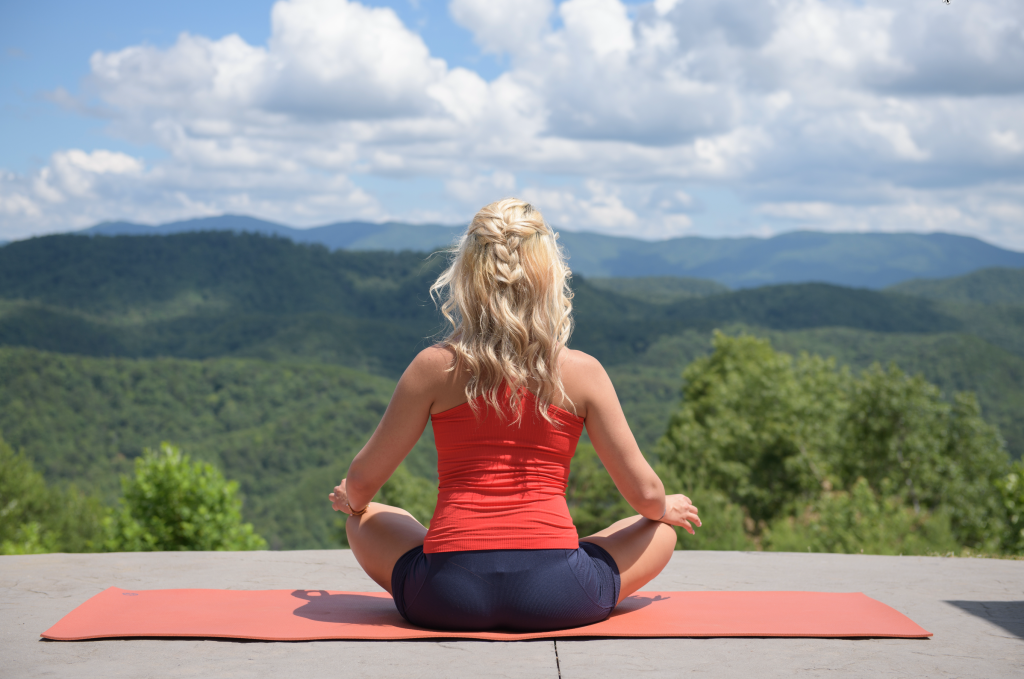
Honest preview, from someone who’s run over 65+ different women’s yoga and wellness retreats:
Day 1. You’re tired. You’re nervous. You’re sizing up the other women. You wonder if you made a mistake. You didn’t. Everyone feels this way. Eat your lunch, get to your first session, let the schedule carry you.
Day 2. You’re detoxing. Not in a juice-cleanse way. Your nervous system is coming down off the months (years?) of elevated cortisol you’ve been living in. You might have a headache. You might cry. You might sleep 10 hours. All normal.
Day 3. Something shifts. Usually around the middle of day three. Your body starts trusting the container. You’re actually present in conversations. You sleep deeply for the first time in a long time. This is the moment most women remember when they think back on why retreats matter.
Day 4–5. You’re doing the real work now. The programming is landing differently because your nervous system is available for it. You’re building actual relationships with the women around you. You’re noticing changes in your body that you can feel — more capable, clearer thinking, easier breath.
Day 6–7. Integration and re-entry prep. The best retreats don’t send you home cold. They walk you through what to carry back, how to rebuild the containers at home, and what support looks like going forward.
The Case for a Women-Only Retreat Specifically
There’s a reason this article is about women’s retreats, not mixed retreats. The research supports it and so does my own personal lived experience.
A 2021 review in the journal Health Psychology Review looked at single-sex versus mixed-sex therapeutic interventions and found that for women, especially midlife women, women-only containers produced better psychological safety, deeper group bonding, and more disclosure of the experiences that typically drive the issues we’re trying to work on — caregiving, body image, hormonal transitions, sexual health, grief.
It’s not that men ruin wellness. It’s that the nervous system goes into a slightly different mode around the opposite sex, and for a retreat that depends on nervous system settling, that extra layer of vigilance costs you. A women’s retreat removes it. The air in the room is different by day two.
This is doubly true for retreats focused on menopause, perimenopause, or body image work. The specificity of the audience matters. You need to be able to say “my husband hasn’t touched me in six months” or “I can’t remember the last time I liked my body” without calibrating for a male gaze in the room. That’s what women only retreats make possible.
Frequently Asked Questions About Women’s Wellness Retreats
What’s the difference between a wellness retreat and a yoga retreat?
A yoga retreat centers asana practice — usually three to six hours of yoga a day plus meditation. A wellness retreat is broader, typically combining movement (yoga plus strength plus cardio), nutrition, education, bodywork, and often some form of group or individual coaching. For midlife women, a well-programmed wellness retreat is usually a better fit than a pure yoga retreat because of the strength and metabolic health components.
How long should a women’s wellness retreat be?
Five to seven days is the sweet spot for a deep reset. Three-day retreats can be useful for specific skill-building but don’t produce the nervous system shift that a longer container does. Ten-plus day retreats can be transformational but require more time and financial commitment and aren’t necessary for most people.
Are women’s wellness retreats tax-deductible?
In most cases, no, unless you’re attending for a clearly documented medical or professional-development reason and your tax situation supports it. Talk to your accountant — I’m not a tax advisor, and the rules vary by country and circumstance.
Can I bring a friend to a women’s wellness retreat?
Yes, and it can be great — or it can be a trap. Bringing a friend gives you a travel buddy and an integration partner after the retreat, but it can also keep you in the dynamic of your existing relationship instead of letting the retreat open you up. If you go with a friend, agree in advance to do most of the programming separately.
What do women’s wellness retreats cost on average?
U.S.-based, week-long retreats typically run $4,000 to $8,000 per person, all-in. International destinations (Costa Rica, Bali, Portugal) can run $6,000 to $15,000. Shorter retreats are proportionally less. Premium programs with medical-grade interventions can be more.
What should I pack for a women’s wellness retreat?
Comfortable layers for varied temperatures, proper athletic shoes (not just yoga flip-flops), a journal, a water bottle, something warm for evenings, and as few electronics as you can manage. The best retreats give you a detailed packing list — if yours doesn’t, that’s a small signal of the operational level you’re dealing with.
What if I’m the oldest woman at the retreat?
Ask in advance. A retreat that’s a good fit for 40+ will have a demographic range that matches — typically 40 to 65. If you’re 55 and most guests are 30, the programming was designed around a different body.
Should I do a retreat alone?
Yes, as your first retreat if at all possible. Traveling solo to a women-only container is one of the most clarifying things a midlife woman can do. You don’t have to manage anyone else’s experience, and the relationships you form in the group are often stronger than they would be with a friend as a buffer.
Can I do a retreat while on HRT or other medications?
Yes. Any real retreat will have a medical intake form. Disclose everything — HRT, antidepressants, autoimmune conditions, allergies. A good team will adapt the programming to your needs.
What’s the difference between a retreat for guests and a retreat for hosts?
A retreat for guests is what this article is about — you attend as a participant. A retreat for hosts (which we also run at THOR) is for women who want to learn how to design, program, and deliver their own retreats. If you’re a coach, practitioner, or community leader who wants to build this skillset, the host track is worth looking at.
Do women’s retreats work for introverts?
They can be ideal for introverts when the programming includes real quiet time and when the group size is manageable. Ask about the balance of group time versus solo time. A retreat that schedules you in community from 7 AM to 10 PM with no breaks will leave an introvert wrecked by day three.
How do I know if a retreat is a scam?
Check for a physical address, a real phone number, genuine team credentials, reviews over a multi-year period, and transparent pricing. Scams often have perfect copy, no team detail, pressure tactics (“only two spots left!”), and no way to talk to a human before you pay.
Do I need to be fit to go to a women’s wellness retreat?
No. Any retreat worth attending scales its programming to the person in front of it. You’ll do what your body can do that day. If you want a retreat with real strength programming that meets you where you are, look for one that explicitly talks about adaptation and modification — that’s a sign the coaches know what they’re doing.
Can a retreat help with menopause symptoms?
A single retreat is not a cure for menopause, but it can accelerate the habits that manage symptoms — protein adequacy, strength training, nervous system regulation, sleep hygiene, stress management. Expect a retreat to help you build the scaffolding. The symptom relief follows when the habits stick.
What happens after the retreat ends?
This is the question that separates real retreats from glorified vacations. At THOR, guests leave with a written plan, a follow-up coaching call, access to our community, and the option to continue into our ongoing coaching or workshop programs. If the retreat you’re considering ends at check-out with no integration, ask yourself whether the week alone is worth the money.
Your Next Step for Choosing a Women’s Wellness Retreat
Here’s what I want you to take away. A women’s wellness retreat is one of the most powerful tools a midlife woman can use — when it’s the right retreat, at the right time, with the right team. It can also be a waste of time and money when it isn’t. The difference is in the details. Now you know what details to check.
If you’re in the decision stage, start with the free tools. Use the THOR macro calculator to get your nutrition baseline. Read our women’s wellness retreats page for more on how we structure ours. Look at our cookbook for a taste of how we feed guests. And if you want to talk through what retreat fits where you are, reach out. We’d rather have an honest conversation about whether THOR Mountain is right for you than sell you a spot in a program that isn’t.
You’ve put yourself last for a long time. Choosing the right retreat is putting yourself first with discernment. Take the time to choose well.
Sources and Further Reading
- Cohen, M., Elliott, F., Oates, L., Schembri, A., & Mantri, N. (2017). Do retreats improve health and quality of life? A systematic review. Journal of Alternative and Complementary Medicine. https://www.ncbi.nlm.nih.gov/pmc/articles/PMC5312624/
- Cohen, M. (2013). Residential wellness programs: A health-promoting intervention. Journal of Alternative and Complementary Medicine. https://www.ncbi.nlm.nih.gov/pmc/articles/PMC5761096/
- Carlson, L. E., & Garland, S. N. (2005). Impact of mindfulness-based stress reduction on sleep, mood, stress, and fatigue symptoms in cancer outpatients. International Journal of Behavioral Medicine, 12(4), 278–285. https://pubmed.ncbi.nlm.nih.gov/16262547/
- Woods, N. F., & Mitchell, E. S. (2005). Symptoms during the perimenopause: prevalence, severity, trajectory, and significance in women’s lives. American Journal of Medicine, 118(12B), 14S–24S. https://www.ncbi.nlm.nih.gov/pmc/articles/PMC2749064/
- Green, S. M., Haber, E., Frey, B. N., & McCabe, R. E. (2013). Cognitive-behavioral group treatment for menopausal symptoms: a pilot study. Archives of Women’s Mental Health, 16(4), 325–332. https://pubmed.ncbi.nlm.nih.gov/23558859/
- The North American Menopause Society. (2023). Nonhormone therapy position statement. Menopause, 30(6), 573–590. https://pubmed.ncbi.nlm.nih.gov/37252752/
- Booth, A., Reed, A. B., Ponzo, S., et al. (2021). Population risk factors for severe disease and mortality in COVID-19: A global systematic review and meta-analysis. PLoS One (on social connection, cited for peer-support data context). https://pubmed.ncbi.nlm.nih.gov/33730035/
- Lee, K. A., Im, E. O., Chee, W., & Chee, E. (2019). Sleep disturbance in midlife women. Psychiatric Clinics of North America. https://www.ncbi.nlm.nih.gov/pmc/articles/PMC11626984/
- Hickey, M., LaCroix, A. Z., Doust, J., et al. (2023). An empowerment model for managing menopause. The Lancet, 401(10371), 1377–1390. https://pubmed.ncbi.nlm.nih.gov/36924778/
- Freeman, E. W., Sammel, M. D., Lin, H., Gracia, C. R., & Kapoor, S. (2008). Symptoms in the menopausal transition: hormone and behavioral correlates. Obstetrics & Gynecology, 111(1), 127–136. https://pubmed.ncbi.nlm.nih.gov/18165401/

Terry Tateossian is a Menopause Lifestyle Medicine Coach, Certified Personal Trainer & Nutritionist and the Founder of THOR: The House of Rose, a wellness brand serving women over 40 through retreats, coaching, macro-nutrition and community. As 25-year founder and entrepreneur, Terry spent two and a half decades building and running successful start-up businesses, an experience that put her on the front line of founder burnout long before she could name it. After facing serious health challenges, early onset menopause, and emotional eating while running her agency and raising two children, Terry rebuilt her health in her 40s and lost more than 80 pounds through evidence-based nutrition, training, and mindset work. Today, she helps women get strong, improve confidence, support hormone health, and create a stronger second half of life. Terry has been featured in major media outlets and is available for podcasts, expert commentary, brand collaborations, and speaking engagements on midlife health, reinvention, emotional eating, menopause wellness, and strength training for longevity. Get her free macro calculator (her cookbook companion) to start your journey to back to health.