
 By Team THOR
Free Macro Calculator
Personalized to your body, goals, and measurements. You will receive detailed macros for meals, sample day of eating, food selection guidance, hydration + daily supplement suggestions, and more.
Best Probiotics for Women Over 40: The Strains That Actually Matter in Midlife
If you’ve been bloated more days than not lately, can’t tell if it’s a meal, a hormone, or your gut, and you’re staring at a wall of probiotic bottles wondering which one is actually worth the money, you’re in the right place.
Let me say something up front, because the supplement aisle does not say it: the probiotic with the biggest CFU number on the front of the bottle is not automatically the best probiotic for women over 40. The strain matters more than the count. The food you eat alongside it matters more than the bottle. And the reason your gut changed after 40 has very little to do with probiotics in the first place — it has to do with estrogen.
Once you understand that, the whole conversation changes.
In this guide we’re going to walk through what actually shifts in your microbiome around perimenopause and menopause, why bloating and brain fog and that stubborn midsection get worse for so many of us, which probiotic strains have real research behind them for women over 40, and how to choose a product without falling for the marketing. We’ll talk about food, supplements, timing, and what to do if probiotics seem to make you feel worse instead of better. By the end you’ll know exactly what to put in your cart and what to leave there.
What Changes in Your Gut After 40 (and Why Probiotics Suddenly Matter)
Before perimenopause, most women don’t think much about their gut. After 40 — sometimes after 38, sometimes after 45 — it starts asking for attention.
Here’s what’s actually happening underneath.
Your microbiome is the community of bacteria, fungi, and other microbes living mostly in your large intestine. By weight, it’s around three to four pounds of organisms doing real metabolic work — making vitamins (K2, B12, biotin, folate), training your immune system, producing short-chain fatty acids that feed your colon lining, regulating your nervous system through the vagus nerve, and metabolizing hormones, including estrogen.
That last piece is the one most women never hear about. There’s a subset of your gut bacteria called the estrobolome — gut microbes that produce an enzyme called beta-glucuronidase that helps recycle estrogen back into circulation. When the estrobolome is balanced, estrogen detoxification works smoothly. When it’s not balanced — too little of certain microbes, too much of others — estrogen metabolism gets messy. That can show up as PMS, heavy or erratic periods in perimenopause, more intense menopause symptoms, and a harder time losing weight.
So when your hormones start shifting in your forties, your gut isn’t just along for the ride — it’s directly involved.
Three things happen in midlife that put real pressure on the microbiome:
Estrogen drops. Estrogen has a protective effect on gut diversity. As it falls, microbial diversity tends to fall with it. Less diversity, less resilience.
Stress climbs. Cortisol shifts gut motility, thins the mucosal barrier, and feeds opportunistic species. Most women in midlife are running higher cortisol than they were ten years ago — see our deep dive on cortisol and menopause weight gain for the full picture.
Diversity narrows naturally with age. Even in healthy adults, gut diversity quietly drops decade by decade unless you’re actively feeding it.
Add in years of hormonal birth control, antibiotics, low-fiber diets, alcohol, and the chronic-low-grade-stress life most of us live, and the midlife gut is often running on fumes by the time we notice symptoms.
Internal link: this connects directly to our piece on hormonal changes and emotional eating in menopause — gut health is the missing third leg of that conversation.
The Symptoms That Probiotics Can Actually Help in Midlife
Probiotics are not a miracle. Anyone who tells you they are is selling you something. But they do have evidence behind them for specific symptoms that tend to flare in women over 40.
Here’s what the research supports, in plain language.
Bloating and gas. Multiple strains — particularly Bifidobacterium lactis HN019 and Lactobacillus plantarum 299v — have been shown in randomized controlled trials to reduce bloating and improve transit time in adults with functional gastrointestinal symptoms. For more on what’s driving midlife bloat, see why your stomach feels bloated all the time in menopause.
Constipation. B. lactis HN019 and Lactobacillus rhamnosus GG have evidence for stool frequency and transit, which is gold in midlife when motility tends to slow.
Mood and anxiety. This is the one most women don’t expect. So-called “psychobiotics” — strains like Lactobacillus helveticus R0052 and Bifidobacterium longum R0175 — have small but real effects on anxiety scores and HPA-axis activity in clinical trials (Messaoudi et al., 2011). The gut-brain axis is not woo. It’s a vagus nerve and a steady stream of neurotransmitters.
Vaginal and urinary tract health. Lactobacillus rhamnosus GR-1 and Lactobacillus reuteri RC-14 are the two strains with the strongest body of evidence for restoring vaginal flora and reducing recurrent UTIs — something that becomes far more common after estrogen drops (Reid et al., 2003).
Immunity. Lactobacillus paracasei and B. lactis strains have shown modest reductions in cold/flu duration and severity, helpful in the years where sleep and stress already tax the immune system.
Bone health, indirectly. A 2018 randomized controlled trial in older women found Lactobacillus reuteri 6475 slowed bone loss in the lumbar spine over 12 months — small effect, but the first real data we have on probiotics and postmenopausal bone.
What probiotics will not reliably do, no matter what the label says: melt belly fat on their own, balance your hormones single-handedly, replace fiber, replace sleep, or fix a diet built on ultra-processed food. They are a piece of the puzzle. A real piece — but a piece.
Free Macro Calculator
Personalized to your body, goals, and measurements. You will receive detailed macros for meals, sample day of eating, food selection guidance, hydration + daily supplement suggestions, and more.
Best Probiotic Strains for Women Over 40 (the Short List That Actually Has Evidence)
Here’s the practical version of the strains worth looking for on a label. Specific strain names matter — “Lactobacillus acidophilus” alone is meaningless without a strain code, the same way “ibuprofen” tells you something but “200mg ibuprofen tablet vs 800mg” matters very differently.
Bifidobacterium lactis HN019 — bloating, constipation, transit time. Workhorse strain. Show me a midlife probiotic without this and I get suspicious.
Lactobacillus rhamnosus GG — the most-studied probiotic strain in the world. Broad GI support, immunity, antibiotic-associated diarrhea recovery.
Lactobacillus plantarum 299v — bloating, abdominal pain, IBS-pattern symptoms. Strong evidence in women specifically.
Lactobacillus helveticus R0052 + Bifidobacterium longum R0175 — the “psychobiotic” pair. Mood, anxiety, stress reactivity.
Lactobacillus rhamnosus GR-1 + Lactobacillus reuteri RC-14 — vaginal flora, urinary tract. Often missing from generic women’s probiotics. Worth seeking out in midlife.
Bifidobacterium longum BB536 — broader GI and immune support, well-tolerated.
Lactobacillus reuteri 6475 — bone health in postmenopausal women. The newer kid; promising.
Saccharomyces boulardii — technically a yeast, not a bacterium. Excellent for travel diarrhea, antibiotic recovery, and resilience during times of high gut stress.
What you do not need: a probiotic with 50 billion CFU and 30 different strains in one capsule. More is not better. Compatibility between strains matters. A clean, well-formulated probiotic with five to eight evidence-based strains at a moderate CFU count (10–25 billion) is almost always more effective than a kitchen-sink product with a giant CFU number on the front.
How to Choose the Best Probiotic for Women Over 40 (What to Ignore on the Label)
Here’s what to actually look for on a probiotic bottle.
Strain-level identification. Genus, species, and strain. So instead of just “Lactobacillus acidophilus,” you want to see “Lactobacillus acidophilus NCFM.” If the strain isn’t named, the company doesn’t want you to know — which usually means it’s a commodity strain with no clinical data behind it.
Guaranteed potency through expiration, not at time of manufacture. CFU numbers on the bottle should reflect what’s alive when you take the capsule, not what was alive the day they made it. Most reputable companies state this on the label.
Delayed-release or acid-resistant capsule. Stomach acid kills a percentage of any probiotic. A delayed-release capsule helps more of the dose survive to the small intestine where it’s needed.
Refrigeration or shelf-stable — both can work, but follow the label. Some strains (Lactobacillus acidophilus, certain Bifidobacterium) are more fragile and need cold storage. Shelf-stable products typically use freeze-dried strains in moisture-protected packaging.
Third-party testing. Look for NSF, USP, ConsumerLab, or Informed Choice on the bottle. Probiotics are not closely regulated — third-party testing tells you the bottle contains what it says it contains.
Reasonable CFU count for the goal. General gut support: 10–20 billion. Therapeutic dose for IBS-pattern symptoms or after antibiotics: 20–50 billion. Above 50 billion you’re rarely getting more benefit, just more cost.
What to ignore: the words “ancient,” “soil-based” (use cautiously and only with clinician guidance), “now with prebiotics added!” (the prebiotic dose is usually too small to matter), and any product whose marketing focuses on flat tummy, weight loss, or cleansing.
If you want our take in product form, the Women’s Daily Probiotic in our Shopify supplement line was formulated specifically around this strain logic — evidence-based species, midlife-appropriate dose, named strains.
Probiotics for Menopause Bloating — Why It’s Worse Right Now
Bloating in midlife is one of the most common complaints I hear, and one of the most under-explained.
A few things stack on top of each other in perimenopause and menopause.
Estrogen and progesterone shifts change gut motility. Progesterone particularly slows transit; the wild fluctuations of perimenopause can take you from regular to backed-up in a single cycle (Heitkemper & Chang, 2009).
Cortisol redistributes blood flow and shifts the autonomic nervous system away from “rest and digest.” The midlife gut is often trying to digest with the parking brake on.
Microbiome diversity drops, as we covered above, and lower diversity correlates strongly with more gas-producing species blooming.
Food sensitivities increase. Many women who tolerated dairy, gluten, alcohol, or certain FODMAP foods in their thirties find they suddenly don’t in their forties. The lining of the gut becomes more permeable under chronic stress and lower estrogen.
Slower stomach emptying plus more swallowed air (anxious breathing, eating fast, talking through meals) means more gas distension to begin with.
The probiotic strains with the strongest bloat-specific evidence are the ones we covered: B. lactis HN019, L. plantarum 299v, and Saccharomyces boulardii. But probiotics alone won’t fix midlife bloat if the rest of the picture is off.
What also helps:
- A consistent fiber target (25–35g/day from food, not just supplements)
- Adequate hydration (most women undershoot)
- Slowing meals down — chewing thoroughly, putting the fork down between bites, sitting for 10 minutes after
- Limiting alcohol, which directly damages gut lining
- Sleep — bloating responds dramatically to sleep, which most midlife women aren’t getting enough of
Internal links worth your time here: our piece on fibermaxxing for women over 40, our Mediterranean diet for menopause guide, and our deep look at olive oil shots and gut health — all directly relevant.
For the fiber-forward eating pattern that pairs with this protocol, our 80 Macro-Friendly Mediterranean Recipes cookbook is built around exactly this — fiber, protein, omega-3s, fermented foods.
Free Macro Calculator
Personalized to your body, goals, and measurements. You will receive detailed macros for meals, sample day of eating, food selection guidance, hydration + daily supplement suggestions, and more.
The Estrobolome: Why Gut Health Is Hormone Health After 40
This is the conversation almost no one has, and it explains so much about why midlife symptoms vary wildly between women.
The estrobolome is the collective set of gut microbes that metabolize estrogens. They produce an enzyme — beta-glucuronidase — that “uncouples” estrogen from its detox tag in the gut, allowing it to be reabsorbed back into circulation.
When beta-glucuronidase activity is too high, you reabsorb too much estrogen — possibly contributing to estrogen-dominance symptoms (heavy periods, breast tenderness, mood swings, harder time losing fat).
When it’s too low or the relevant microbes are missing, you can’t recycle estrogen efficiently — possibly contributing to lower circulating estrogen and earlier or more severe menopause symptoms.
What modulates the estrobolome:
- Fiber — particularly soluble fiber from beans, oats, vegetables, fruit
- Cruciferous vegetables (broccoli, cauliflower, brussels sprouts, cabbage, arugula)
- Polyphenols — berries, olive oil, green tea, dark chocolate, herbs and spices
- Adequate protein
- Limiting alcohol (which disrupts estrogen metabolism in both gut and liver)
- Sleep and stress regulation
- Probiotics, in a supporting role
This is why — and I don’t say this casually — the most powerful “hormone supplement” for most women over 40 is not actually a hormone supplement. It’s fiber, plants, protein, sleep, stress regulation, and a sane gut. Probiotics support that ecosystem. They don’t replace it.
If you want a structured nutrition framework that hits these targets without micromanaging, the free online macro calculator gives you fiber and protein targets sized to your body and your goals — and the cookbook is built to deliver them.
Probiotic Foods vs. Supplements. Do You Need Both?
The answer is mostly yes, in different roles.
Fermented foods deliver live microbes plus all their byproducts — short-chain fatty acids, vitamins, enzymes, polyphenol metabolites. They are not interchangeable with a probiotic capsule, and one well-designed Stanford study actually found that 10 weeks of high fermented food intake increased microbial diversity and decreased inflammatory markers more reliably than a high-fiber-only intervention. That’s a striking result.
The fermented foods worth eating regularly for women over 40:
- Plain Greek yogurt or kefir (look for “live and active cultures”)
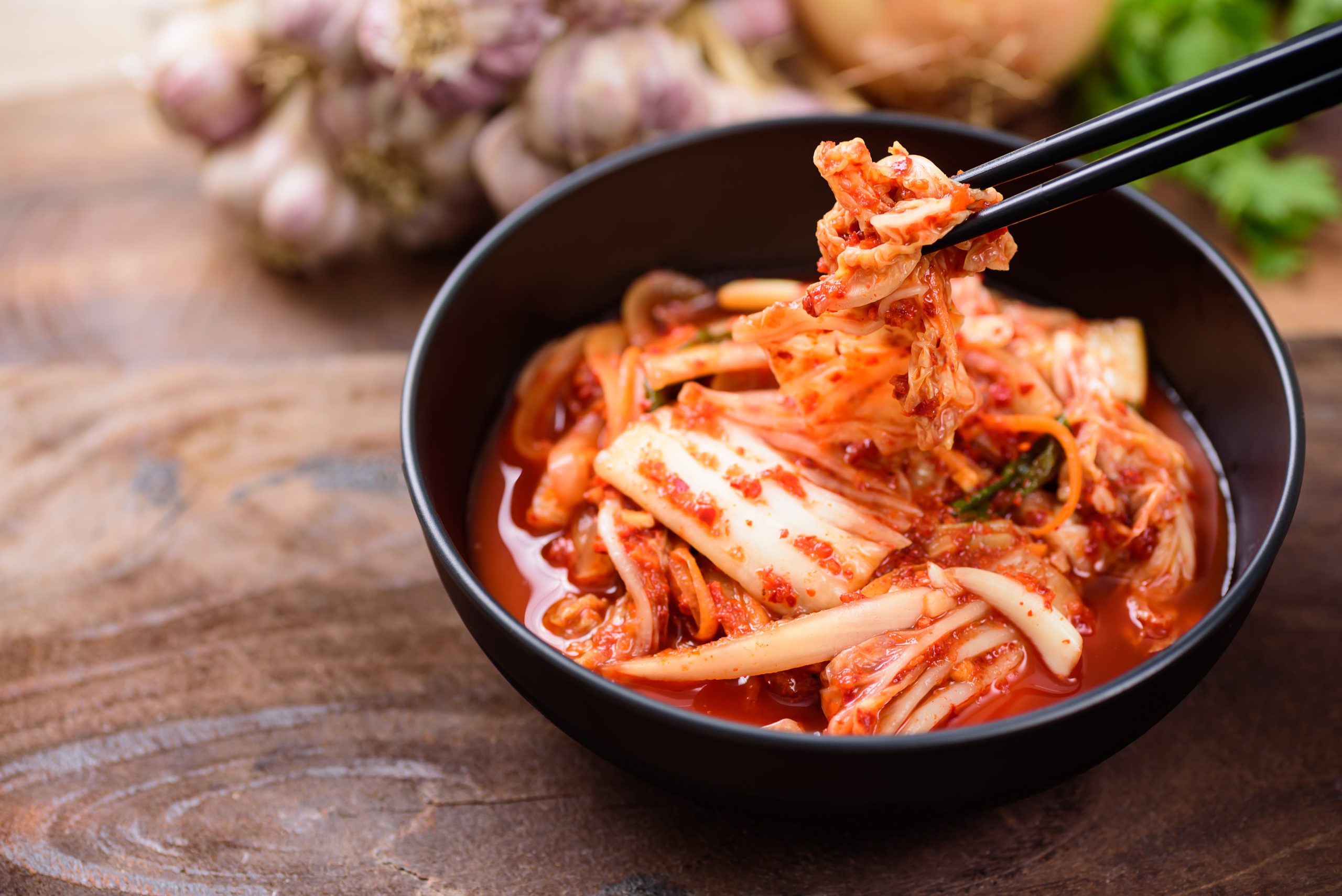
- Sauerkraut and kimchi (refrigerated, raw — not the shelf-stable canned versions, which are pasteurized)
- Kombucha (be mindful of sugar content)
- Miso (added to soups after cooking, not boiled)
- Tempeh
- Aged cheeses (small servings)
- Lacto-fermented vegetables and brines
A daily serving — even half a cup — is meaningful.
Probiotic supplements are useful when you need:
- A specific clinically studied strain at a clinically validated dose (e.g., for bloating, mood, vaginal health, post-antibiotic recovery)
- Consistency that fermented foods can’t always provide
- A dose during travel, illness, antibiotic courses, or high-stress periods
The pairing that wins: daily fermented food + a targeted probiotic supplement when you need one + 25–35g of fiber daily to feed both. Probiotics without fiber is like seeding a garden in dry dirt. The fiber is what they eat.
For more on getting fiber up in midlife without GI distress, see our fibermaxxing article and our FiberMend supplement is specifically blended for women who want consistent fiber support without bloating from a single source.
Free Macro Calculator
Personalized to your body, goals, and measurements. You will receive detailed macros for meals, sample day of eating, food selection guidance, hydration + daily supplement suggestions, and more.
When and How to Take Probiotics for Best Results
The timing question matters more than most people realize.
Stomach acid kills a portion of any probiotic. The ideal window is when acid is lowest and food is buffering it — for most women, that’s right before or with the first meal of the day, or just before bed. Taking a probiotic on an empty mid-afternoon stomach with no food and a coffee chaser is the worst case.
Consistency matters more than dose. Probiotic effects build over weeks. A daily moderate dose for 8–12 weeks beats a giant dose taken sporadically.
Pair with prebiotics. Prebiotics are the fibers and resistant starches that feed beneficial microbes. Garlic, onions, leeks, asparagus, chicory root, slightly green bananas, oats, beans, lentils, sunchokes. You don’t need a separate prebiotic supplement if you eat plants.
Antibiotic course? Take probiotics during the course (separated by at least 2 hours from the antibiotic dose) and continue for 4–8 weeks after. Saccharomyces boulardii and L. rhamnosus GG have the best evidence for protecting against antibiotic-associated diarrhea.
Travel? Start a probiotic 1–2 weeks before you go and continue throughout the trip. S. boulardii is the standout strain for travel.
If you feel worse the first few days, you may have gas, bloating, or shifts in stool. That’s usually transient — the microbiome is rearranging. Drop to half the dose for a week and ramp back up. If symptoms persist beyond two weeks, the strain isn’t right for you, or there’s something else going on (SIBO, for instance, where adding more bacteria to an already-overgrown small intestine can backfire).
Common Mistakes Women Over 40 Make With Probiotics
Let me save you some money and frustration.
Mistake #1: Buying based on CFU count. A 50-billion-CFU probiotic with no named strains is worse than a 10-billion-CFU probiotic with five named strains that have clinical research.
Mistake #2: Taking probiotics without fiber. Fiber is the food. Without fiber, you’re seeding without watering.
Mistake #3: Quitting after a week. Real probiotic effects take 4–12 weeks to settle. Sleep and digestion improvements often show up first; mood and immunity later.
Mistake #4: Switching brands every month. Pick one quality product, stick with it 12 weeks, then evaluate. Constant switching means you never let any strain establish.
Mistake #5: Treating probiotics as a replacement for fixing the rest. I’ve watched women take a $60/month probiotic while drinking three glasses of wine a night, sleeping five hours, eating low-fiber meals, and wondering why their gut is still a mess. The probiotic can’t out-supplement the lifestyle.
Mistake #6: Ignoring that you might have SIBO. If your bloating gets worse on probiotics, fiber, and fermented foods, you may have small intestinal bacterial overgrowth, where the issue is bacteria in the wrong place rather than not enough good bacteria. That requires a different approach (often a breath test and a structured protocol with a clinician).
Mistake #7: Skipping fermented foods. No supplement matches the diversity benefit of regular fermented food intake.
Mistake #8: Not addressing sleep, stress, or alcohol. All three rearrange the microbiome faster than a probiotic can fix it.
For the broader nutritional foundation that makes probiotics actually do their job, see our midlife nutrition hierarchy and our work on nutritional deficiencies and emotional cravings in women over 40.
A 12-Week Probiotic Protocol for Women Over 40
Here’s how I’d actually run this.
Weeks 1–2: Set the baseline. – Pick one probiotic with named, evidence-based strains and a moderate CFU count – Take it daily, with food, same time each day – Add one daily serving of fermented food (yogurt, kefir, kimchi, sauerkraut) – Start tracking: bloating, mood, digestion, energy, sleep
Weeks 3–4: Build the fiber. – Slowly increase fiber to 25–30g/day from food (5g/day per week, not all at once) – Hydrate to match (more fiber + same water = constipation) – Notice which foods make you feel better and worse — keep a simple list
Weeks 5–8: Reinforce. – Maintain probiotic + fermented food + fiber – Add one cruciferous vegetable serving daily (this supports estrobolome) – Audit alcohol — even a few drinks a week disrupt the microbiome more than most women realize – Audit sleep — gut quality tracks sleep quality almost 1:1
Weeks 9–12: Evaluate. – Most genuine improvements show up in this window – If bloating, mood, or digestion are clearly better, you have your protocol – If nothing has changed, the strain may be wrong for you, or there’s another factor (SIBO, food sensitivity, hormone shift) that needs investigation
Throughout: pair this with strength training and protein. Gut health, hormones, body composition, and bone density are all interconnected — see our pieces on strength training for women over 40 and our Age With Strength 1:1 coaching program if you want a structured way to put it all together.
When to Skip Probiotics or Talk to Someone First
Probiotics are well-tolerated in most women. But there are a few cases where you should pause or check with your clinician first.
- Severely immunocompromised — chemo, transplant, advanced HIV. Probiotic-related infections are rare but possible.
- Confirmed or suspected SIBO — adding more bacteria to a small intestine that’s already overgrown can worsen symptoms.
- Active Crohn’s flare or ulcerative colitis flare — strain choice matters, and not all probiotics are appropriate during a flare.
- Recent abdominal surgery — get clearance from your surgeon.
- Central venous catheter — case reports of bacteremia.
- History of pancreatitis — talk to your gastroenterologist before adding S. boulardii.
For everyone else, the risk profile of well-formulated probiotics is low and the upside is real if matched to symptoms.
The Bottom Line on the Best Probiotics for Women Over 40
Your gut runs more of midlife than you’ve been told. It metabolizes your hormones, regulates your immune system, talks to your brain through the vagus nerve, and decides how much of your food you actually absorb. After 40, with estrogen falling and stress climbing, it needs more deliberate care than it did at 30.
The best probiotic for women over 40 is not the one with the biggest CFU number. It’s the one with named, clinically studied strains that match your goals — bloating, mood, vaginal and urinary health, post-antibiotic recovery, bone support — taken consistently with food, paired with fiber, fermented foods, sleep, and a sane relationship with alcohol.
Get the foundation right. Add a targeted probiotic. Give it 12 weeks. Watch what happens.
Our Women’s Daily Probiotic and FiberMend are formulated for exactly this protocol — evidence-based strains, midlife-appropriate dose, fiber blend that doesn’t bloat. And if you want the full nutrition framework that makes probiotics actually do their job, the free online macro calculator and the 80 Macro-Friendly Mediterranean Recipes cookbook are where I’d send you next.
Your gut wants to work for you. Most of midlife is just listening.
Free Macro Calculator
Personalized to your body, goals, and measurements. You will receive detailed macros for meals, sample day of eating, food selection guidance, hydration + daily supplement suggestions, and more.
FAQ — Best Probiotics for Women Over 40
What is the best probiotic for women over 40?
There is no single “best.” The best probiotic is the one whose strains match your goal — Bifidobacterium lactis HN019 and Lactobacillus plantarum 299v for bloating, L. helveticus R0052 + B. longum R0175 for mood, L. rhamnosus GR-1 + L. reuteri RC-14 for vaginal and urinary health, S. boulardii for travel and post-antibiotic recovery. Look for named strains, third-party testing, and a moderate CFU count (10–25 billion).
Do probiotics help with menopause weight gain?
Indirectly, yes — probiotics support gut function, which affects estrogen metabolism, blood sugar regulation, and inflammation, all of which affect midlife body composition. But probiotics alone are not a weight loss intervention. They’re one piece of a larger picture that includes protein, fiber, strength training, sleep, and stress regulation.
When is the best time to take probiotics?
Right before or with the first meal of the day, or just before bed. Both work; consistency matters more than exact timing. Avoid taking probiotics on an empty mid-afternoon stomach with coffee — stomach acid will kill more of the dose.
How long until probiotics start working?
Bloating and digestion improvements often show up in 2–4 weeks. Mood, immunity, and vaginal health changes typically take 6–12 weeks. Give any new probiotic at least 8–12 weeks before you decide it isn’t working.
Can I just eat fermented foods instead of taking probiotics?
For general gut diversity and inflammation, yes — fermented foods are powerful and one Stanford trial found them to outperform high fiber alone for microbial diversity. For a specific clinical effect (bloat reduction, post-antibiotic recovery, mood support), a targeted strain at a known dose has stronger evidence. The best protocol uses both.
Are probiotics safe to take during perimenopause?
For most women, yes, and many find them helpful for the bloating, mood, and immune changes that come with this season. If you’re immunocompromised, recovering from surgery, or have suspected SIBO, talk to your clinician first.
Do I need a women’s probiotic specifically, or can I take a general one?
A “women’s” probiotic that includes L. rhamnosus GR-1 and L. reuteri RC-14 has additional benefits for vaginal and urinary tract health, which become more relevant as estrogen drops. If those strains aren’t included, it’s basically a general probiotic with women’s branding. Check the label.
Can probiotics cause bloating?
Yes, transiently — most people notice some gas or bloating in the first 1–2 weeks as the microbiome shifts. It usually resolves. If it gets worse and lasts beyond 2 weeks, you may have SIBO or the strain isn’t right for you. Drop the dose, reassess, and consider a breath test if it persists.
Do probiotics help with vaginal dryness or yeast infections in menopause?
L. rhamnosus GR-1 and L. reuteri RC-14 specifically have evidence for restoring vaginal flora and reducing recurrent UTIs and yeast infections. They support — they don’t replace — vaginal estrogen if your clinician recommends it.
What’s the difference between probiotics and prebiotics?
Probiotics are the live microbes. Prebiotics are the fibers that feed them — chicory root, garlic, onions, oats, beans, slightly green bananas. You need both. Most women already get probiotic strains but undereat prebiotic fiber, which is why the strains never establish.
Should I take a probiotic if I’m on hormone replacement therapy?
Generally yes — probiotics support estrogen metabolism through the estrobolome and may improve how your body uses HRT. Talk to your prescriber if you have specific concerns, but the combination is well-tolerated for most women.
Are soil-based probiotics better than regular probiotics?
They’re different, not necessarily better. Soil-based organisms (SBOs) like Bacillus species are spore-formers that survive stomach acid well, but they have less long-term safety data than traditional Lactobacillus and Bifidobacterium strains. They can be helpful in specific cases but I wouldn’t make them your daily probiotic without clinician guidance.
Do probiotics help with brain fog in menopause?
Some women notice clearer thinking on probiotics, particularly with the L. helveticus + B. longum combination shown to affect anxiety and cortisol. Brain fog has many drivers in midlife — sleep, hormone fluctuation, blood sugar, stress, nutrient status — and gut health is one of them, not the only one.
Can I take probiotics with my other supplements?
Yes — probiotics don’t typically interact with other supplements. The main thing is separating probiotic doses from antibiotic doses by at least 2 hours (during an antibiotic course), and not taking probiotics with very hot beverages.
Free Macro Calculator
Personalized to your body, goals, and measurements. You will receive detailed macros for meals, sample day of eating, food selection guidance, hydration + daily supplement suggestions, and more.
Sources & References
- Baker, J. M., Al-Nakkash, L., & Herbst-Kralovetz, M. M. (2017). Estrogen–gut microbiome axis: Physiological and clinical implications. Maturitas, 103, 45–53.
- Peters, B. A., Lin, J., Qi, Q., Usyk, M., Isasi, C. R., Mossavar-Rahmani, Y., et al. (2022). Menopause is associated with an altered gut microbiome and estrobolome. mSystems, 7(3), e00273-22.
- Claesson, M. J., Jeffery, I. B., Conde, S., Power, S. E., O’Connor, E. M., Cusack, S., et al. (2012). Gut microbiota composition correlates with diet and health in the elderly. Nature, 488(7410), 178–184.
- Waller, P. A., Gopal, P. K., Leyer, G. J., Ouwehand, A. C., Reifer, C., Stewart, M. E., & Miller, L. E. (2011). Dose-response effect of Bifidobacterium lactis HN019 on whole gut transit time and functional gastrointestinal symptoms in adults. Scandinavian Journal of Gastroenterology, 46(9), 1057–1064.
- Niedzielin, K., Kordecki, H., & Birkenfeld, B. (2001). A controlled, double-blind, randomized study on the efficacy of Lactobacillus plantarum 299v in patients with irritable bowel syndrome. European Journal of Gastroenterology & Hepatology, 13(10), 1143–1147.
- Ibarra, A., Latreille-Barbier, M., Donazzolo, Y., Pelletier, X., & Ouwehand, A. C. (2018). Effects of 28-day Bifidobacterium animalis subsp. lactis HN019 supplementation on colonic transit time and gastrointestinal symptoms in adults with functional constipation. Beneficial Microbes, 9(2), 161–169.
- Messaoudi, M., Lalonde, R., Violle, N., Javelot, H., Desor, D., Nejdi, A., et al. (2011). Assessment of psychotropic-like properties of a probiotic formulation (Lactobacillus helveticus R0052 and Bifidobacterium longum R0175) in rats and human subjects. British Journal of Nutrition, 105(5), 755–764.
- Reid, G., Charbonneau, D., Erb, J., Kochanowski, B., Beuerman, D., Poehner, R., & Bruce, A. W. (2003). Oral use of Lactobacillus rhamnosus GR-1 and L. fermentum RC-14 significantly alters vaginal flora. FEMS Immunology & Medical Microbiology, 35(2), 131–134.
- Pu, F., Guo, Y., & Li, M. (2017). Yogurt supplemented with probiotics can protect the healthy elderly from respiratory infections: A randomized controlled open-label trial. Clinical Interventions in Aging, 12, 1223–1231.
- Nilsson, A. G., Sundh, D., Bäckhed, F., & Lorentzon, M. (2018). Lactobacillus reuteri reduces bone loss in older women with low bone mineral density: A randomized, placebo-controlled, double-blind, clinical trial. Journal of Internal Medicine, 284(3), 307–317.
- Plottel, C. S., & Blaser, M. J. (2011). Microbiome and malignancy. Cell Host & Microbe, 10(4), 324–335.
- Wastyk, H. C., Fragiadakis, G. K., Perelman, D., Dahan, D., Merrill, B. D., Yu, F. B., et al. (2021). Gut-microbiota-targeted diets modulate human immune status. Cell, 184(16), 4137–4153.e14.
- Tompkins, T. A., Mainville, I., & Arcand, Y. (2011). The impact of meals on a probiotic during transit through a model of the human upper gastrointestinal tract. Beneficial Microbes, 2(4), 295–303.
- Hempel, S., Newberry, S. J., Maher, A. R., Wang, Z., Miles, J. N., Shanman, R., et al. (2012). Probiotics for the prevention and treatment of antibiotic-associated diarrhea: A systematic review and meta-analysis. JAMA, 307(18), 1959–1969.
- Heitkemper, M. M., & Chang, L. (2009). Do fluctuations in ovarian hormones affect gastrointestinal symptoms in women with irritable bowel syndrome? Gender Medicine, 6(Suppl 2), 152–167.
- Kim, Y. A., Keogh, J. B., & Clifton, P. M. (2018). Probiotics, prebiotics, synbiotics and insulin sensitivity. Nutrition Research Reviews, 31(1), 35–51.
- Sanders, M. E., Merenstein, D. J., Reid, G., Gibson, G. R., & Hutkins, R. W. (2019). Probiotics and prebiotics in intestinal health and disease: From biology to the clinic. Nature Reviews Gastroenterology & Hepatology, 16(10), 605–616.

Terry Tateossian is a Menopause Lifestyle Medicine Coach, Certified Personal Trainer & Nutritionist and the Founder of THOR: The House of Rose, a wellness brand serving women over 40 through retreats, coaching, macro-nutrition and community. As 25-year founder and entrepreneur, Terry spent two and a half decades building and running successful start-up businesses, an experience that put her on the front line of founder burnout long before she could name it. After facing serious health challenges, early onset menopause, and emotional eating while running her agency and raising two children, Terry rebuilt her health in her 40s and lost more than 80 pounds through evidence-based nutrition, training, and mindset work. Today, she helps women get strong, improve confidence, support hormone health, and create a stronger second half of life. Terry has been featured in major media outlets and is available for podcasts, expert commentary, brand collaborations, and speaking engagements on midlife health, reinvention, emotional eating, menopause wellness, and strength training for longevity. Get her free macro calculator (her cookbook companion) to start your journey to back to health.