
 By Team THOR
Zinc Bisglycinate for Women Over 40: Benefits, Dosing, and Why Form Matters
Here’s a conversation that happens in my coaching calls almost every week. A woman in her late 40s or 50s will list everything she’s doing right: clean eating, strength training, collagen in her morning coffee, magnesium at night, fish oil with dinner. But something’s still off. She catches every cold that sweeps through her house. A small cut on her knuckle takes two weeks to heal. Her hair feels thinner than it did a year ago. Her taste buds are weirdly dull. Her skin doesn’t bounce back the way it used to. She’s frustrated because on paper she’s doing all the things.
Nine times out of ten, we end up talking about zinc. It’s one of the most overlooked minerals in a midlife woman’s supplement picture, and when we run bloodwork, a stunning number of my clients turn out to be either low or borderline low. The fix is surprisingly simple but only if you pick the right form, at the right dose, and take it the right way. Zinc bisglycinate is the form I default to for women over 40, and this article will walk you through exactly why, along with everything else you should know about this unassuming little mineral that’s doing a surprising amount of heavy lifting inside your body.
What Is Zinc and What Does It Actually Do in the Body?
Zinc is an essential trace mineral. Your body doesn’t make it and doesn’t store large reserves of it, which means you need a steady supply from your diet every single day to keep your systems running properly. It’s involved in more than 300 enzymatic reactions, which is a fancy way of saying it’s a helper molecule that dozens of different body processes literally cannot complete without it.
Zinc sits at the center of four major body systems. First, your immune system — zinc is required for the development and function of white blood cells, for controlling inflammation, and for the thymus gland (the organ that trains your immune cells). Second, your skin, hair, and nail health — zinc is essential for keratin production, collagen synthesis, and wound healing. Third, your hormone and reproductive system — zinc is needed for the production of progesterone, testosterone, thyroid hormones, and even for insulin signaling. Fourth, your senses — zinc affects taste, smell, and vision; this is why one of the first signs of zinc deficiency is food tasting “off” or “flat.”
Beyond those big four, zinc is also a cofactor in DNA synthesis, protein synthesis, brain signaling, blood clotting, and antioxidant defense. It’s quietly involved in almost every recovery and repair process your body does. If you think of vitamin D and magnesium as the two famous background-support nutrients, zinc is the less glamorous third member of that trio. It doesn’t get the PR, but the body can’t do much without it.
Why Zinc Matters More for Women Over 40
Several things change in midlife that push zinc demand up and zinc absorption down, which is exactly the wrong combination.
Stomach acid drops with age.
Zinc requires adequate stomach acid to be absorbed from food. Production of hydrochloric acid naturally declines in most women after 40, and that decline is steeper in women on acid-reducing medications like proton pump inhibitors (common for reflux). Less stomach acid means less zinc extracted from even a zinc-rich meal.
Hormonal changes increase zinc needs.
Estrogen and progesterone fluctuations affect zinc transport and utilization. Research published in journals like Biological Trace Element Research has found that zinc status tends to drop during the menopausal transition, and that lower zinc is associated with more severe hot flashes, mood changes, and sleep disruption. It’s not a coincidence.
Chronic low-grade inflammation, which is more common after 40, burns through zinc.
When your immune system is mildly activated — by anything from poor sleep to autoimmune issues to visceral fat to gut inflammation — zinc is pulled out of circulation and into the inflammatory response. Chronic stress does the same thing. The more midlife life stressors you’re juggling, the more zinc your body is spending.
Diet patterns often shift toward less zinc.
Women over 40 tend to eat less red meat, shellfish, and whole grains than they did earlier in life — often for excellent reasons (weight management, cholesterol, ethical choices). But those are also the densest whole-food sources of bioavailable zinc. A plant-forward diet that isn’t carefully designed can easily leave you chronically under-zinced.
Menopause reshuffles body composition, and zinc plays a role.
Zinc is involved in insulin signaling and thyroid function, both of which are part of the reason midlife women can struggle with stubborn belly fat and a slower metabolism. We’ve written a whole piece on the quiet drivers of perimenopause weight gain — zinc status turns out to be one of them, and it’s one you can actually do something about.
The combination of rising demand and falling absorption is why zinc is often one of the most impactful supplements a midlife woman can add. Not because zinc is magic — it isn’t — but because so many women over 40 are running low enough that topping up produces an obvious felt change.
Signs of Zinc Deficiency in Midlife Women
Clinical zinc deficiency is uncommon in the US, but sub-optimal zinc — meaning, you have enough to not be diagnosed but not enough to run well — is everywhere. Here’s what it tends to look like in women over 40.
Frequent colds and infections. You catch whatever’s going around and you hold onto it longer than you used to. Cold sores that keep coming back. Urinary tract infections that seem to cycle.
Slow wound healing. Cuts, bruises, and scratches take weeks to close instead of days. Acne scars linger. Any kind of skin injury moves slowly.
Changes in taste and smell. Food tastes muted. Salt doesn’t taste as salty. You find yourself dumping more seasoning on everything. Coffee tastes flat. These are some of the earliest and most reliable signs.
Skin changes. Persistent adult acne (especially hormonal acne along the jawline), eczema or dermatitis that won’t clear, dry patches, slow-to-fade hyperpigmentation.
Hair thinning and slow nail growth. Brittle nails with ridges or white spots. Hair that breaks more easily or thins noticeably over months.
Low mood and sleep issues. Zinc affects neurotransmitter balance. Low zinc has been associated in research with depression, anxiety, and insomnia — not as the sole cause, but as a contributing factor.
Digestive issues. Bloating, food sensitivities that weren’t there before, and a sense that your gut “doesn’t work” the way it used to. Zinc is critical for gut lining integrity.
Low libido. Zinc supports sex hormone production. Low zinc plus low estrogen plus midlife stress is a triple-hitter that a lot of women blame entirely on hormones when zinc is actually part of the story.
If three or more of these apply to you, it’s worth asking your doctor for a serum zinc test or, ideally, a red blood cell zinc test (which is more accurate). It’s not expensive, and knowing your baseline lets you supplement strategically rather than guessing.
Zinc and Immunity: The Real Science
This is the piece of zinc most people know and the piece where the science is strongest. Research going back to the 1970s, including landmark work by Dr. Ananda Prasad, has documented zinc’s role in supporting the development, maturation, and function of immune cells. Without adequate zinc, your T-cells can’t multiply properly, your natural killer cells don’t function well, and your antibody response to infections is weaker.
The classic “zinc for colds” data has actually held up across multiple systematic reviews. A 2011 Cochrane review found that zinc lozenges taken within 24 hours of cold symptoms shortened duration and reduced severity. The caveat is that dose and form matter a lot — most of the benefit comes from zinc acetate or zinc gluconate lozenges at around 75 mg of elemental zinc per day for the duration of the cold, and only for that short window. Long-term high-dose zinc has the opposite effect — it can actually suppress immune function and deplete copper.
For midlife women, the practical takeaway is that a moderate daily dose of well-absorbed zinc (from supplement or food) supports baseline immune resilience year-round, while a short-term higher-dose lozenge strategy at the first sign of a cold can shorten its course. Two different tools, two different uses. Also, our immune system support stack can provide immune function support during times of high stress, seasonal changes, and when you just aren’t feeling your best.
Zinc and Your Skin, Hair, and Nails
Zinc is a cornerstone of skin health at any age, but especially after 40, when collagen synthesis slows, wound healing takes longer, and the skin’s immune function starts to change.
Zinc is required for the enzymes that build collagen and elastin- the two proteins that give skin its bounce, firmness, and springiness. When zinc is low, collagen formation slows, wound repair stalls, and skin takes on that slightly “tired” look that midlife women often notice creeping in. Zinc also regulates sebum production, which is why it’s one of the most research-backed nutrients for adult acne. And it has mild antioxidant and anti-inflammatory effects at the skin surface, which means it helps calm rosacea, eczema, and inflamed breakouts.
If you’re already supplementing with collagen peptides, adding zinc makes the collagen supplement work harder — you need zinc to convert the building blocks into actual new collagen fibers. We’ve written about collagen peptides for women over 40 in detail here , and zinc is one of the nutrients we always pair it with for maximum effect.
For hair and nails, zinc-related changes are slower to show up and slower to reverse. Hair shafts grow about half an inch a month, which means improvement from better zinc status takes 3 to 6 months to be visible. Brittle nails can clear up faster — usually within a few months.
Zinc, Hormones, and Menopause: The Unfair Connection
This is the section that most zinc articles leave out, and it’s the one that matters most for midlife women.
Zinc is required for the production of progesterone, the hormone that tends to drop fastest in perimenopause. Zinc is also required for thyroid hormone conversion, specifically, for the enzyme that converts inactive T4 into active T3. And zinc is required for insulin signaling, which affects how your body handles carbohydrates and whether you store fat around your middle.
This three-part connection: progesterone, thyroid, insulin, explains why so many midlife women with borderline-low zinc feel like their whole endocrine system is off. You can’t always fix the hormones directly, but you can absolutely feed the raw materials your body needs to produce and use them.
There’s also a zinc-cortisol link that’s worth knowing about. Chronic stress elevates cortisol, which depletes zinc. Zinc deficiency then impairs the HPA-axis regulation that controls cortisol, which elevates cortisol further. It’s another one of those midlife loops that, once you break into it, tends to improve several seemingly unrelated symptoms at once.
If the hormonal picture is where you’re struggling most, you might also want to read our guide to 20 signs of perimenopause. Zinc is threaded through more of that picture than people realize.
Forms of Zinc — Why Bisglycinate Is Different
Walk into any vitamin aisle and you’ll see zinc sold in at least six different forms: zinc sulfate, zinc oxide, zinc gluconate, zinc citrate, zinc picolinate, and zinc bisglycinate (sometimes called zinc glycinate). They are not interchangeable.
Zinc oxide is the cheapest and most common in generic multivitamins. It’s also the worst absorbed — bioavailability can be as low as 10-20%. If the bottle is cheap, it’s usually this.
Zinc sulfate is inexpensive and reasonably well-absorbed, but notoriously hard on an empty stomach. Nausea, stomach cramps, and that metallic-taste-in-the-back-of-your-throat feeling are common. Many women can’t tolerate it.
Zinc gluconate is the form in most cold lozenges. Well-absorbed, generally well-tolerated, affordable. Good all-around choice.
Zinc citrate has slightly better absorption than gluconate and is usually gentle on the stomach. A solid option.
Zinc picolinate has been shown in some studies to have superior absorption compared to gluconate and citrate. It’s a strong choice for targeted supplementation.
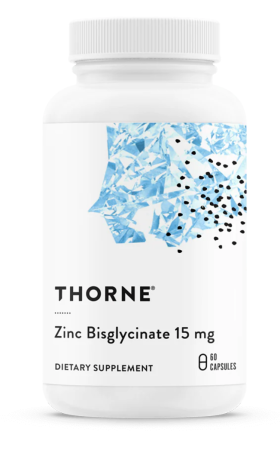
Zinc bisglycinate (zinc bound to two molecules of the amino acid glycine) is the form most research supports as both highly absorbed AND gentle on the stomach. Because it’s bound to an amino acid, it’s absorbed through amino acid transport pathways in the small intestine, which means it bypasses some of the competition zinc normally faces from other minerals like calcium and iron. Glycine itself is a calming amino acid, so people tend to tolerate zinc bisglycinate even on an empty stomach, and many women find it actually supports sleep when taken in the evening.
For most midlife women, especially those with any kind of stomach sensitivity, those taking magnesium or calcium alongside, or those who’ve tried zinc before and felt nauseous, zinc bisglycinate is the form I recommend first. It’s also the form stocked in our curated vitamins and supplements collection because after years of coaching women through supplement stacks, it’s the form that causes the fewest complaints and produces the clearest results.How Much Zinc Do Women Over 40 Actually Need?
The RDA (recommended daily allowance) for adult women is 8 mg per day. That’s the floor, not the ceiling, and it’s based on preventing frank deficiency in a reasonably healthy adult. For midlife women with any of the absorption issues, inflammation, or life stressors we covered above, optimal intake is typically higher.
Most integrative practitioners working with midlife women will target a total zinc intake (from food and supplements combined) of 15 to 25 mg per day. If you’re eating a diet with regular shellfish, red meat, eggs, and pumpkin seeds, you may only need 5 to 10 mg from supplementation. If you’re mostly plant-based or rarely eating those foods, 15 to 20 mg from a supplement is more reasonable.
The upper tolerable limit set by the Institute of Medicine is 40 mg per day for adults. Going meaningfully above that long-term (beyond short courses for acute cold treatment) can deplete copper and cause issues. That’s the main safety note — you don’t need to be scared of zinc, but you also don’t need megadoses.
A practical daily target for most of my midlife clients: 15 mg of zinc bisglycinate with an evening meal, combined with modest zinc-rich food intake through the day. Simple, effective, well-tolerated.
Best Food Sources of Zinc for Midlife Women
Whole-food zinc is always the first line. Supplementation fills gaps — it doesn’t replace real food. Here are the densest sources, roughly ranked.
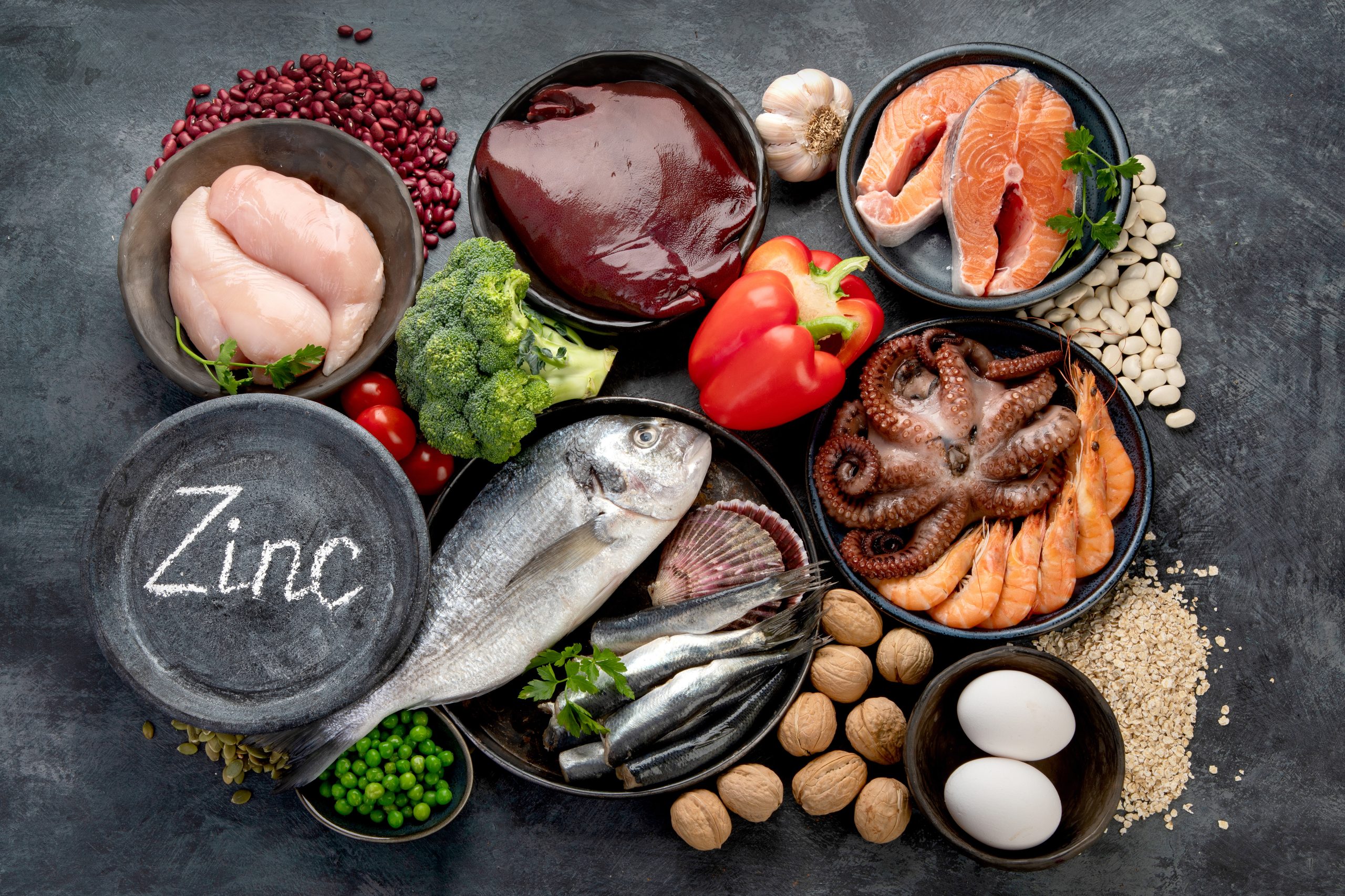
Oysters. The king of zinc. A single medium oyster has about 8-10 mg of zinc. Six oysters will blow past an entire day’s target.
Beef, lamb, and bison. A 3-oz serving of beef has 5-7 mg of zinc. Red meat is dramatically more bioavailable than plant-source zinc.
Pumpkin seeds. About 2 mg per 1-oz serving. Easy to throw into a salad or yogurt bowl.
Cashews and almonds. 1.5 mg per ounce. Not as dense but useful in daily rotation.
Chicken thigh. About 2 mg per 3-oz serving. The thigh is zinc-richer than the breast.
Eggs. About 0.6 mg per egg. Modest but reliable with daily eggs.
Chickpeas, lentils, and beans. 1-2 mg per cup, though the phytates in legumes reduce absorption. Soaking, sprouting, and fermenting helps.
Shellfish beyond oysters. Crab, lobster, and mussels are all moderately zinc-rich.
Dark chocolate. 0.9 mg per ounce. A small win.
Fortified whole grains. Varies widely; check labels.
If you want to stack high-protein, high-zinc whole foods into an anti-inflammatory eating pattern that also supports midlife body composition, The Macro Miracle Mediterranean Cookbook is built exactly around this approach. The recipes lean on the zinc-rich proteins and the ingredients you actually want in a midlife kitchen. And if you’re not sure whether your current protein intake is enough to support your zinc needs in the first place, our free macro calculator will give you a personalized target in about three minutes.
Zinc Supplementation: How to Take It, When to Take It, What to Avoid
The boring details that make or break whether a supplement actually works.
Take zinc with food unless your bottle specifies otherwise. Empty-stomach zinc causes nausea for most people. With a small meal, you avoid that and still absorb well — bisglycinate is the form most forgiving of this.
Don’t take zinc at the same time as calcium, iron, or a high-fiber meal. All three compete for absorption. If you take a calcium supplement, space it at least 2 hours away from zinc. Same for iron.
Take zinc at least 2 hours away from antibiotics (especially tetracyclines and fluoroquinolones). Zinc binds to these antibiotics and reduces effectiveness of both.
Pair zinc with copper if you’re supplementing daily for more than a few months. A 15:1 zinc-to-copper ratio is a common target (so 15 mg zinc to 1 mg copper). Many high-quality zinc supplements include copper built in for exactly this reason.
Evening is a sensible default for zinc bisglycinate. The glycine component has a mild calming effect, and zinc supports melatonin synthesis, so evening dosing plays nicely with sleep.
Cycle if you’re on high doses. If you’re ever using 30+ mg for an acute reason (like cold treatment), don’t stay there. Drop back to 15 mg once the acute situation resolves.
Test, don’t guess. If you’re supplementing for more than 3 months, a serum zinc or RBC zinc test every 6 to 12 months is reasonable. It confirms you’re in range without being too high.
For women who want a fully personalized supplement plan that accounts for bloodwork, lifestyle, and other supplements, we build those inside our 1:1 fitness and nutrition coaching program. You don’t have to piece it together alone.
Frequently Asked Questions About Zinc for Women Over 40
How long does it take to feel a difference after starting zinc?
Taste and smell changes often improve within 2 to 4 weeks. Skin and immune benefits usually show up within 6 to 8 weeks. Hair, nails, and deeper tissue changes take 3 to 6 months. Give it a real trial — zinc is not an overnight fix.
Can I take zinc bisglycinate with my other supplements?
Yes, with some spacing. Separate it from calcium, iron, and high-dose magnesium by at least 2 hours. Zinc plays fine with vitamin D, omega-3s, and most adaptogens.
Is it safe to take zinc every day long-term?
Yes, at reasonable doses. Staying in the 8 to 25 mg range with occasional copper support is fine indefinitely. Problems show up at 40+ mg/day for months on end. That’s when copper deficiency, impaired immunity, and GI issues start to surface.
What’s the difference between zinc bisglycinate and zinc glycinate?
Basically nothing. “Bisglycinate” just emphasizes that each zinc atom is bound to two glycine molecules, which is the technically correct form. “Zinc glycinate” on a label almost always means the same thing. Marketing departments, not chemists, drive the naming.
Does zinc help with menopause symptoms?
Research is emerging but promising. Studies have found associations between low zinc and worse hot flashes, mood changes, and sleep disruption in perimenopause. Supplementing won’t make menopause go away, but it addresses one layer of the nutrient picture that can make symptoms worse. Combined with adequate protein, anti-inflammatory eating, and hormone support where appropriate, it’s a useful piece of the puzzle.
Can I get a copper deficiency from too much zinc?
Yes. At doses above 40 mg/day sustained for months, zinc can interfere with copper absorption. Symptoms include fatigue, neurological issues, and anemia. The fix is either dropping the dose or adding copper. This is why professional guidance matters if you’re doing aggressive supplementation.
Is zinc picolinate better than zinc bisglycinate?
Both are excellent. Picolinate may have a slight absorption edge in some studies. Bisglycinate tends to be gentler on the stomach and pairs well with sleep. If you tolerate one and not the other, stay with what works. For women over 40 who often have some digestive sensitivity or are already on a stacked supplement routine, bisglycinate wins on overall experience for most people.
Can vegetarians and vegans get enough zinc without supplementing?
It’s possible but harder. Plant foods contain phytates that bind to zinc and reduce absorption by up to 50%. Soaking, sprouting, fermenting, and prioritizing sources like pumpkin seeds, cashews, lentils, and fortified grains helps. For most midlife women who are plant-forward, a modest zinc supplement (10 to 15 mg of bisglycinate) is a reasonable insurance policy.
Can I take zinc during a cold?
Yes, and there’s good evidence it helps if started within 24 hours. The protocol most research supports is zinc acetate or zinc gluconate lozenges, 13-25 mg every 2-3 waking hours (up to 75 mg total per day), for the duration of cold symptoms — not longer than 5 to 7 days. Follow label directions.
What’s the best zinc supplement for women over 40 who want to take just one thing?
Zinc bisglycinate, 15 mg, with an evening meal, ideally paired with 1 mg of copper. Consistent over months. Simple, well-tolerated, effective. That’s the default I recommend and what we stock in our vitamins and supplements collection for exactly this reason.
The Takeaway
Zinc is one of those nutrients that’s quietly doing a ton of work in your body every day — and midlife is exactly the life phase when your demand climbs and your absorption drops. Most women over 40 are running lower than optimal without realizing it. The symptoms are vague enough to get blamed on “just getting older,” when in reality they’re blameable on something you can fix.
The fix is simple: eat the whole foods, pick the right form (bisglycinate, for most midlife women), take it consistently with food, test your levels every 6 to 12 months, and pair it with the broader nutritional foundation that supports midlife well-being. If you want a retreat-style reset that folds supplements, strength, food, and recovery into a single week, our women’s wellness retreats are built for exactly this kind of rebuild.
You don’t need every supplement on the shelf. You need the right few, taken well, for long enough to matter. Zinc is one of the few.
Sources and References
- Prasad AS. Zinc in human health: effect of zinc on immune cells. Molecular Medicine. 2008;14(5-6):353-357. PubMed
- Wessells KR, Brown KH. Estimating the global prevalence of zinc deficiency. PLoS ONE. 2012;7(11):e50568.
- Gammoh NZ, Rink L. Zinc in infection and inflammation. Nutrients. 2017;9(6):624. PubMed
- Roohani N, Hurrell R, Kelishadi R, Schulin R. Zinc and its importance for human health: an integrative review. Journal of Research in Medical Sciences. 2013;18(2):144-157.
- Science M, Johnstone J, Roth DE, et al. Zinc for the treatment of the common cold: a systematic review and meta-analysis of randomized controlled trials. CMAJ. 2012;184(10):E551-561.
- Singh M, Das RR. Zinc for the common cold. Cochrane Database of Systematic Reviews. 2013;(6):CD001364.
- Gandia P, Bour D, Maurette JM, et al. A bioavailability study comparing two oral formulations containing zinc. International Journal for Vitamin and Nutrition Research. 2007;77(4):243-248.
- DiSilvestro RA, Koch E, Rakes L. Moderately high dose zinc gluconate or zinc glycinate: effects on plasma zinc and erythrocyte superoxide dismutase activities in young adult women. Biological Trace Element Research. 2015;168(1):11-14.
- Yasuda H, Tsutsui T. Infants and elderlies are susceptible to zinc deficiency. Scientific Reports. 2016;6:21850.
- Chasapis CT, Ntoupa PA, Spiliopoulou CA, Stefanidou ME. Recent aspects of the effects of zinc on human health. Archives of Toxicology. 2020;94(5):1443-1460.
- Nimni ME, Han B, Cordoba F. Are we getting enough sulfur in our diet? Nutrition & Metabolism. 2007;4:24. (Referenced for glycine as amino acid carrier context.)
- Ervin RB, Kennedy-Stephenson J. Mineral intakes of elderly adult supplement and non-supplement users in the third National Health and Nutrition Examination Survey. Journal of Nutrition. 2002;132(11):3422-3427.
- Mahmoodianfard S, Vafa M, Golgiri F, et al. Effects of zinc and selenium supplementation on thyroid function in overweight and obese hypothyroid female patients. Journal of the American College of Nutrition. 2015;34(5):391-399.
- Maret W. Zinc biochemistry: from a single zinc enzyme to a key element of life. Advances in Nutrition. 2013;4(1):82-91.
- Haase H, Rink L. Multiple impacts of zinc on immune function. Metallomics. 2014;6(7):1175-1180.

Terry Tateossian is a Menopause Lifestyle Medicine Coach, Certified Personal Trainer & Nutritionist and the Founder of THOR: The House of Rose, a wellness brand serving women over 40 through retreats, coaching, macro-nutrition and community. As 25-year founder and entrepreneur, Terry spent two and a half decades building and running successful start-up businesses, an experience that put her on the front line of founder burnout long before she could name it. After facing serious health challenges, early onset menopause, and emotional eating while running her agency and raising two children, Terry rebuilt her health in her 40s and lost more than 80 pounds through evidence-based nutrition, training, and mindset work. Today, she helps women get strong, improve confidence, support hormone health, and create a stronger second half of life. Terry has been featured in major media outlets and is available for podcasts, expert commentary, brand collaborations, and speaking engagements on midlife health, reinvention, emotional eating, menopause wellness, and strength training for longevity. Get her free macro calculator (her cookbook companion) to start your journey to back to health.