
 By Cindy Adoptante
Get 11 Free Recipes from Our Bestseller Cookbook.
12 Best High Protein Snacks You Can Buy at the Grocery Store
I stood in a grocery aisle with a client a few months ago watching her read the back of three different “protein” bars, all of which had a bigger marketing claim on the front than actual protein on the label. One had 6 grams. Another was mostly sugar alcohol.
She’d been told to “eat more protein between meals” by about four different sources and had no idea which of the forty products screaming “PROTEIN” at her from the shelf actually delivered. That confusion is the norm, not the exception. Food companies know protein sells right now, and the front-of-package claims have gotten a lot louder than the nutrition panels back them up.
This list skips the recipes and the prep. These are twelve real, widely available grocery store products, the actual protein, calorie, and sugar numbers for each pulled from the label, organized so you can walk into nearly any grocery store and leave with a protein-forward snack drawer in one trip.
How Do All 12 Snacks Compare Side by Side?
| Snack | Serving Size | Calories | Protein | Notes |
|---|---|---|---|---|
| Premier Protein Shake | 1 bottle (11.5 fl oz) | 160 | 30g | 1g sugar, 24 vitamins/minerals added |
| Fairlife Core Power (26g) | 1 bottle (14 fl oz) | 170 | 26g | 5g sugar, dairy-based |
| Fage Total 0% Greek Yogurt | 1 container (6 oz) | 90 | 18g | Fat-free, minimal sugar |
| Frozen Shelled Edamame | 1 cup, cooked | 189 | 18g | Plant-based, complete protein |
| Quest Protein Bar | 1 bar (60g) | 190-200 | 20-21g | Contains sugar alcohols |
| Good Culture Cottage Cheese | 1/2 cup (113g) | 110-120 | 14-19g | Varies by fat %, low sugar |
| RXBAR | 1 bar (52g) | 210 | 12g | Whole-food ingredients, dates for sweetness |
| Beef Jerky | 1 oz | 80-100 | 9-13g | High sodium, check label |
| 2 Hard-Boiled Eggs | 2 large eggs | 140-155 | 12g | No packaging, zero added sugar |
| String Cheese | 1 stick | 80 | 7g | Portion-controlled, shelf-stable-ish |
| Roasted Chickpeas | 1 oz serving | 130 | 6g | Plant-based, good fiber |
| Almonds | 1 oz (about 23) | 165 | 6g | Healthy fats, easy to overeat by volume |
Get 11 Free Recipes from Our Bestseller Cookbook.
What Are the 12 Best High Protein Snacks?
These 12 snacks offer different ways to add protein to your day, from ready-to-drink shakes and bars to yogurt, eggs, and plant-based options. Compare the protein per serving with the sugar, sodium, fiber, and calories, then choose what fits your appetite and routine.
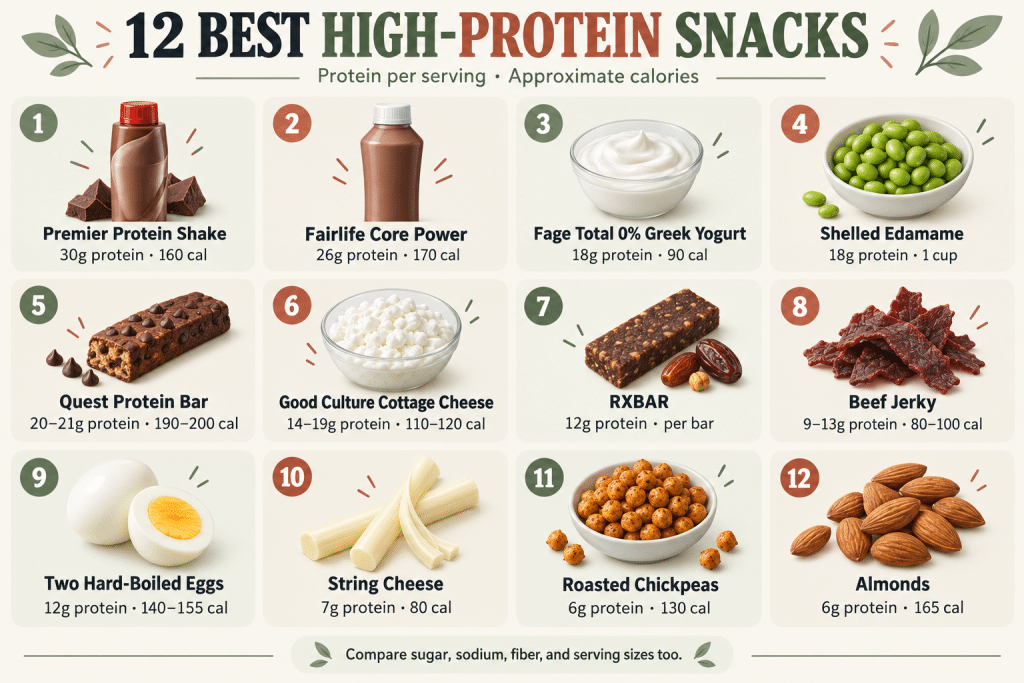
- Premier Protein Shake: At 30 grams of protein for 160 calories and just 1 gram of sugar, this is one of the highest protein-to-calorie ratios of anything on this list, ready-to-drink shakes included. It’s shelf-stable, doesn’t need refrigeration until opened, and works as a genuine meal-replacement-level snack when you’re short on time. The tradeoff is that it’s a formulated product with added vitamins and a milk protein concentrate blend rather than a whole food, which isn’t a problem for most people but is worth knowing.
- Fairlife Core Power (26g): A dairy-based shake built on ultra-filtered milk, delivering 26 grams of protein for 170 calories. It has a cleaner, closer-to-real-milk taste than many protein shakes, and the ultra-filtration process is also what gives fairlife products their naturally lower sugar content compared to regular milk. Good option if Premier Protein’s flavor profile isn’t your thing.
- Fage Total 0% Greek Yogurt: An unflavored, strained Greek yogurt with 18 grams of protein in a 6-ounce container for just 90 calories, with minimal natural sugar and zero fat. The straining process that makes Greek yogurt “Greek” is exactly what concentrates the protein this high. Add your own fruit or a drizzle of honey to control sugar rather than buying a pre-flavored cup, which typically doubles the sugar content for the same protein.
- Frozen Shelled Edamame: A cup of cooked shelled edamame delivers 18 grams of complete plant protein along with 8 grams of fiber, making it one of the most filling entries on this list per calorie. Keep a bag in the freezer, microwave a portion for two minutes, and add salt. It’s an unusually good option for anyone eating mostly or entirely plant-based, since soy is a rare plant protein source that supplies all nine essential amino acids.
- Quest Protein Bar: Quest bars run 20 to 21 grams of protein for around 190 to 200 calories, made primarily with milk protein isolate. These bars use sugar alcohols to keep sugar content low, which some people tolerate fine and others find causes digestive discomfort in larger amounts. Try one before committing to a box.
- Good Culture Cottage Cheese: Protein content varies by fat percentage, running from about 14 grams in some low-fat varieties up to 19 grams in the 2% small-curd classic, all for around 110 to 120 calories per half cup. Cottage cheese has quietly become one of the most searched high-protein foods for a reason: it’s a whole food, it’s versatile (sweet or savory), and it delivers casein protein, which digests more slowly than whey and can support fullness between meals.
- RXBAR: With 12 grams of protein per bar built from egg whites, nuts, and dates rather than a protein powder blend, RXBAR is the whole-food option among the bars on this list. It has noticeably less protein than a Quest bar, but no sugar alcohols and a shorter, more recognizable ingredient list, worth the tradeoff for anyone who prioritizes ingredient simplicity over maximum protein grams.
- Beef Jerky: A one-ounce serving typically delivers 9 to 13 grams of protein for around 80 to 100 calories, with close to zero carbs in most plain and savory varieties. Sodium runs high, often 300 to 600 milligrams per serving, so this is worth moderating if you’re managing blood pressure, and worth reading labels across brands since sodium and sugar content vary considerably.
- Hard-Boiled Eggs: Two large hard-boiled eggs deliver about 12 grams of complete protein for roughly 140 to 155 calories, with zero added sugar and zero packaging waste if you boil your own. Pre-peeled, pre-packaged versions are increasingly common in grocery store refrigerated sections if boiling your own isn’t practical on a given week.
- String Cheese: A single mozzarella string cheese stick delivers 7 grams of protein for about 80 calories, in a portion size that’s actually hard to overeat since it comes pre-divided. It’s a modest protein contribution on its own, which makes it a better pairing snack (with fruit, with jerky, with a handful of nuts) than a standalone high-protein choice.
- Roasted Chickpeas: Brands like Biena and Saffron Road deliver about 6 grams of plant protein and roughly 5 to 6 grams of fiber per one-ounce serving, for around 130 calories. The fiber content matters as much as the protein here for keeping you full, and the crunch makes this one of the better swaps for anyone replacing a chip habit.
- Almonds: One ounce, about 23 almonds, delivers 6 grams of protein alongside healthy monounsaturated fats, for 165 calories. Almonds are calorie-dense and easy to overeat by the handful without measuring, so pre-portioned single-serve packs tend to work better than a bulk bag left open on the counter.
“I tell my clients to stop asking which snack has the most protein and start asking which one they’ll actually eat consistently. A 14-gram cottage cheese cup you eat every day beats a 30-gram shake sitting in your pantry because you didn’t like the taste. Pick two or three from this list that you’d actually reach for, not the ones that look best on paper.”
Terry Tateossian, Founder of The House of Rose
Get 11 Free Recipes from Our Bestseller Cookbook.
How Much Protein Do You Need Per Snack?
There’s a reasonable amount of research suggesting that spreading protein intake across the day, rather than concentrating it all at dinner, supports muscle protein synthesis more effectively, particularly in adults over 40 as the body becomes somewhat less efficient at using protein from any single meal.
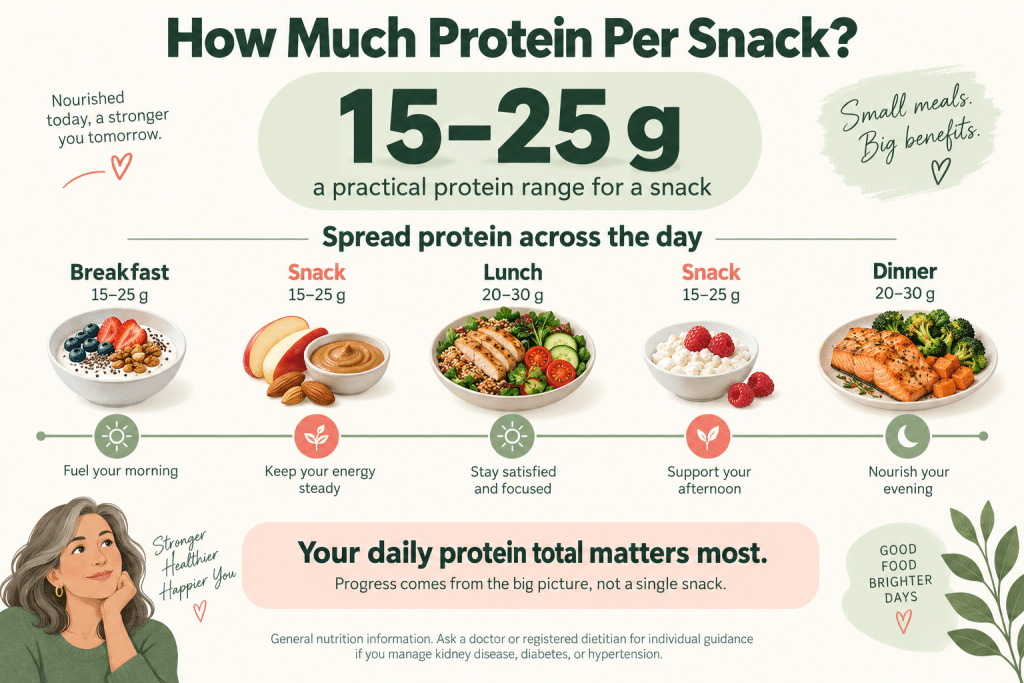
A snack in the 15 to 25 gram range is generally considered enough to meaningfully contribute to that pattern, though anything containing protein is better than nothing if the alternative is skipping the gap between meals entirely.
This is also where total daily protein target matters more than any single snack. If you’re not sure what your daily number should be, THOR’s macro calculator will get you there, and Top 6 Macro Tracking Mistakes Women Make covers the most common ways that number gets thrown off in practice.
Important: These snacks are general nutrition information, not individualized medical or dietary advice. If you’re managing a condition like kidney disease, diabetes, or hypertension, check with your doctor or a registered dietitian about how much protein and sodium is appropriate for you specifically.
What Should You Watch for on the Label?
A few patterns are worth knowing before you shop, since front-of-package marketing and back-of-package nutrition facts don’t always agree.
- A big “protein” claim on the front doesn’t guarantee a big number on the back: Some products marketed heavily around protein deliver 5 or 6 grams per serving, technically true but far below what a shake or a Quest bar delivers. Always flip to the actual panel.
- Sugar alcohols aren’t sugar, but they’re not nothing either: Ingredients like erythritol and maltitol let manufacturers advertise “low sugar” while keeping a product sweet. Most people tolerate small amounts fine; larger amounts across multiple products in a day can cause GI discomfort for some people.
- Sodium adds up fast in shelf-stable protein snacks: Jerky and some bars especially. If you’re eating several of these products in a day, add up the sodium the same way you’d add up the protein.
- Serving size on the label isn’t always the whole package: Some bars and shake bottles list two servings per container even though nearly everyone eats or drinks the whole thing in one sitting; check whether the protein number on the front matches a single serving or the full package before you do the math on your day.
Get 11 Free Recipes from Our Bestseller Cookbook.
What Are Your Next Steps?
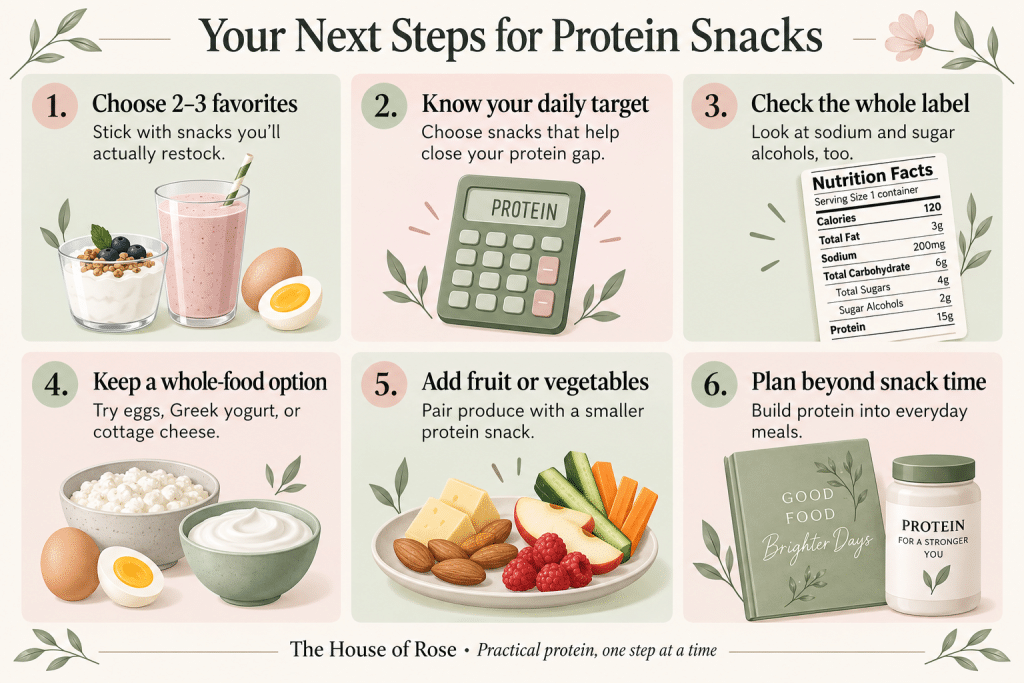
- Pick two or three snacks from this list, not all twelve: Based on Terry’s coaching experience, consistency with a few reliable options beats buying a wide variety you won’t actually restock.
- Check your daily protein target first: Use the macro calculator to estimate how much protein you’re aiming for each day, then choose snacks that help close the gap between your meals and that target.
- Read labels for sodium and sugar alcohols: The protein number matters, but so do the other ingredients, especially in packaged options such as bars, jerky, and ready-to-drink products.
- Keep at least one no-packaging option on hand: Hard-boiled eggs, plain Greek yogurt, cottage cheese, or another simple whole-food choice can give you an easy alternative when you don’t want a packaged snack.
- Pair a smaller snack with produce: String cheese, almonds, or another lighter protein option can feel more complete when paired with fruit or vegetables for extra fiber and volume.
- Make protein easier beyond snack time: THOR’s supplement collection can help fill specific nutritional gaps, while the macro-friendly cookbook offers more structured meal ideas for reaching your protein and macro targets with everyday food.
Frequently Asked Questions
What is the highest protein snack you can buy at a grocery store?
Among common, widely available options, ready-to-drink shakes tend to lead, with Premier Protein delivering 30 grams and fairlife Core Power Elite (a higher-protein version) delivering up to 42 grams per bottle.
What’s a good high protein snack for weight loss?
Options with a high protein-to-calorie ratio and minimal added sugar, like Fage 0% Greek yogurt (18g protein, 90 calories) or Premier Protein Shake (30g protein, 160 calories), tend to be the most efficient choices for supporting fullness without a large calorie cost.
Are protein bars actually healthy?
It depends on the bar. Whole-food-based bars like RXBAR have shorter ingredient lists but less protein; bars like Quest have more protein but rely on sugar alcohols and processed protein isolates. Neither is automatically “unhealthy”; it comes down to your priorities and how your body handles sugar alcohols specifically.
Get 11 Free Recipes from Our Bestseller Cookbook.
What high protein snacks don’t need refrigeration?
Beef jerky, roasted chickpeas, almonds, RXBAR, and Quest bars are all shelf-stable, making them good options for bags, desks, or travel. Premier Protein and fairlife shakes are also shelf-stable unopened.
How much protein should a snack have?
A range of 15 to 25 grams is a reasonable target if you’re trying to meaningfully support muscle protein synthesis between meals, though smaller amounts still contribute to your daily total.
Is cottage cheese a good high protein snack?
Yes. It delivers 14 to 19 grams of protein per half cup depending on the variety, works in both sweet and savory combinations, and provides casein protein, which digests more slowly than whey.
What’s a good plant-based high protein snack?
Edamame (18g protein per cup) and roasted chickpeas (6g per ounce) are both solid plant-based options from this list, with edamame standing out as a rare complete plant protein source.
Are protein shakes as good as whole-food protein snacks?
They’re a legitimate, convenient option, particularly when time is the limiting factor, but they shouldn’t fully replace whole-food protein sources in your overall diet. Use them as one tool among several rather than your only source.
How many hard-boiled eggs count as a good snack?
Two large hard-boiled eggs provide about 12 grams of protein for roughly 140 to 155 calories, a reasonable snack-sized portion for most people.
What should I watch out for with beef jerky?
Sodium content, typically 300 to 600 milligrams per one-ounce serving, varies significantly by brand. Compare labels if you’re managing sodium intake.
Get 11 Free Recipes from Our Bestseller Cookbook.
Can I eat too many almonds as a snack?
Yes, easily, since they’re calorie-dense and easy to eat past a single serving without noticing. Pre-portioned packs help more than a bulk bag left open.
Do sugar alcohols in protein bars cause digestive issues?
For some people, yes, particularly in larger amounts or when eating multiple sugar-alcohol-sweetened products in one day. Tolerance varies significantly by individual; trying a single bar before buying in bulk is a reasonable approach.
What’s the best snack to keep at my desk for an afternoon slump?
Shelf-stable options like almonds, roasted chickpeas, jerky, or an RXBAR work well without refrigeration. If a mini-fridge is available, string cheese or a protein shake are good additions.
Should I count these snacks toward my daily macros?
Yes. Every one of these snacks contains calories and macronutrients that count toward your daily intake, so checking your macro targets can help you see how each option fits into the rest of your day.
Get 11 Free Recipes from Our Bestseller Cookbook.
References
- Schoenfeld, B.J., & Aragon, A.A. (2018). How Much Protein Can the Body Use in a Single Meal for Muscle-Building? Implications for Daily Protein Distribution. Journal of the International Society of Sports Nutrition, 15, 10.
- Moore, D.R. (2019). Maximizing Post-Exercise Anabolism: The Case for Relative Protein Intakes. Frontiers in Nutrition, 6, 147.
- Paddon-Jones, D., & Rasmussen, B.B. (2009). Dietary Protein Recommendations and the Prevention of Sarcopenia. Current Opinion in Clinical Nutrition and Metabolic Care, 12(1), 86-90.
- Leidy, H.J., Clifton, P.M., Astrup, A., et al. (2015). The Role of Protein in Weight Loss and Maintenance. American Journal of Clinical Nutrition, 101(6), 1320S-1329S.
- U.S. Department of Agriculture, FoodData Central. Nutrient data for eggs, edamame, almonds, and cheese products.
- Grembi, J.A., et al. (2020). Gut Microbiota Plasticity Is Correlated with Sustained Weight Loss on a Low-Carb or Low-Fat Diet. Scientific Reports (sugar alcohol digestive tolerance context).
- National Institutes of Health, Office of Dietary Supplements. Protein: Fact Sheet for Health Professionals.
Disclaimer: This article is educational and does not constitute medical or individualized nutrition advice. Protein needs, calorie requirements, and tolerance for ingredients such as sugar alcohols and sodium vary from person to person. If you have kidney disease, diabetes, hypertension, food allergies, digestive concerns, or another health condition that affects your dietary needs, consult a healthcare provider or registered dietitian before significantly increasing your protein intake or regularly adding these products to your diet.

Kara Krysinski is a yoga teacher (in training) and retreats coordinator at THOR Yoga Retreats, where she brings a deep understanding of movement, nourishment and dietary sensitivity into her work. She is the co-author of The Macro Miracle Mediterranean Cookbook – 80 Macro-Friendly Recipes for Fat Loss, Strength, Metabolism & Health. Her passion lies in creating flavorful, satisfying gluten-free meals that allow people to enjoy food without compromise. After developing a severe gluten allergy that led to a seven-day hospitalization, Kara began reimagining her relationship with food from both a personal and practical standpoint. What started as necessity evolved into purpose: developing gluten-free recipes that are nourishing, accessible, and genuinely enjoyable. Many of the recipes in her cookbook are her original creations, inspired by her own journey of healing and adaptation. Kara is currently working on furthering her studies and culinary creativity using evidence-based macro-based nutrition principles, as well as strength training and growth mindset. Her work reflects a belief that dietary restrictions do not have to mean restriction in pleasure, connection or quality of life. Get her free macro calculator for her cookbook here.