
 By Cindy Adoptante
Get 11 Sample Recipes from Our Bestselling Mediterranean Cookbook.
Get our 11 Sample Recipes from our Best Selling Mediterranean Protein Friendly Cookbook. These are the most delicious recipes our retreat guests love the most. Easy, simple with few ingredients per meal. Make delicious heart-friendly and healthy meals you enjoy every day.
Menopause Face & Skin Changes: Why Your Skin Itches, Dries Out, and Looks Different
It’s 2:07 a.m., and you’re awake again.
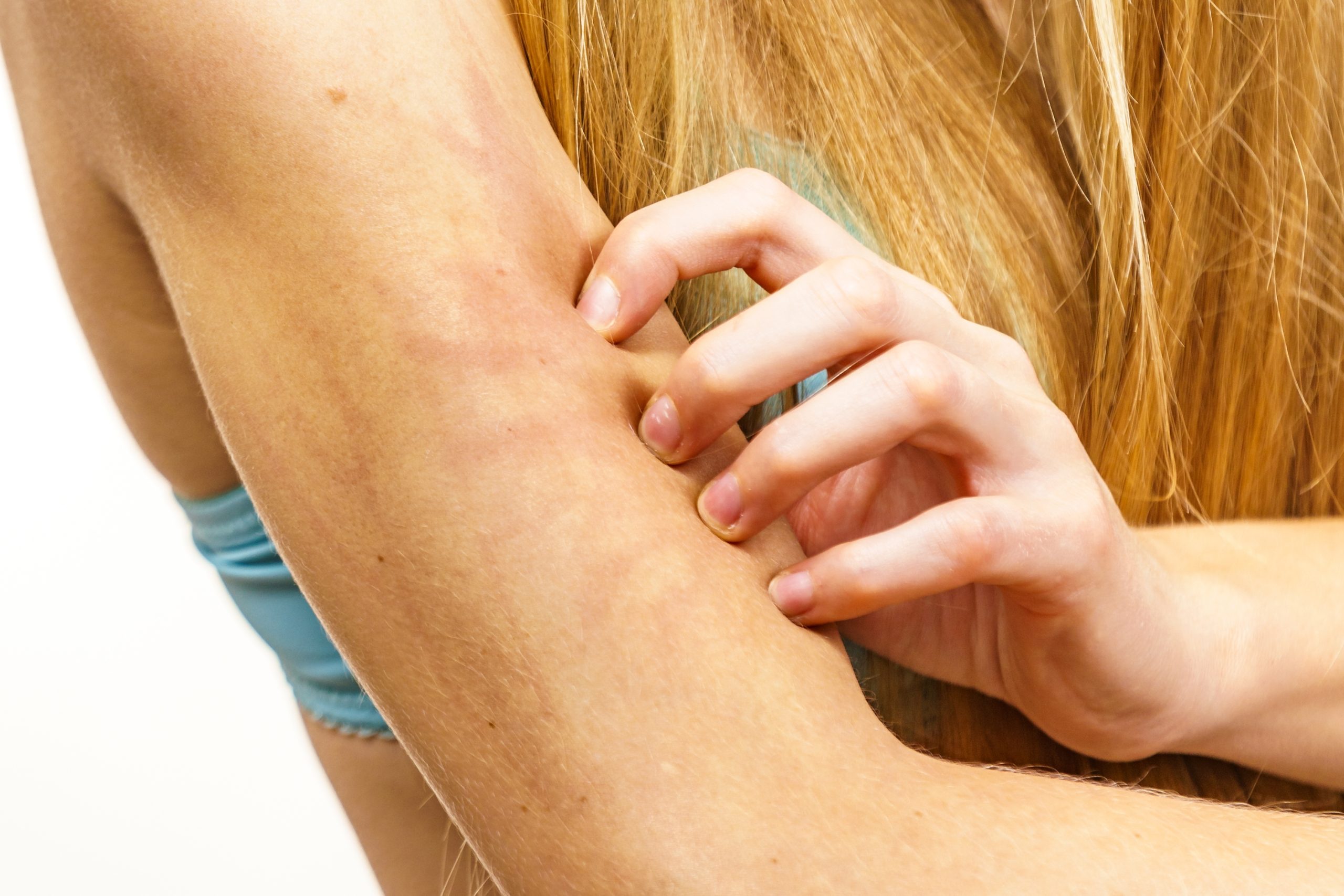
Not from a hot flash this time. It’s your shins. Then your forearms. Then a spot between your shoulder blades you can’t quite reach. It isn’t a normal itch, either. It feels like something is moving just under the surface of your skin, like a line of tiny ants that won’t stop marching. You check the sheets. Nothing. You scratch until the skin goes pink and warm, and eventually you fall back asleep.
In the morning, you reach for the moisturizer you’ve loved for ten years. It used to feel like a drink of water for your face. Now it sits on top of your skin, and by lunchtime you’re tight and flaky again.
Then you catch yourself in the bathroom mirror, in that harsh overhead light, and you pause. It isn’t just a new line or two. Your face looks thinner somehow. Less full. A little tired, even though you slept eight hours (well, minus the ants). It’s hard to name, but you know it: the woman looking back at you looks slightly different from the one you’re used to.
Maybe you’ve wondered if it’s an allergy. A new laundry detergent. Stress. Maybe you’ve quietly wondered if you’re imagining the crawling part altogether.
You’re not imagining any of it. And there’s a twist most women never hear about: the same shift that’s changing your skin may be changing something you can’t see in the mirror at all.
The Collagen Cliff: Why the change feels so fast
If it feels like your skin changed almost overnight, there’s a reason.
Before menopause, collagen declines slowly with age, roughly 1 percent or so a year. After menopause, it speeds up. Research led by gynecologist Mark Brincat and colleagues suggests women may lose up to about 30 percent of their skin collagen in the first five years after menopause, followed by an average decline of about 2 percent a year for the next 15 years.
Less collagen means thinner skin, less firmness, less bounce, and less ability to hold on to water. It’s the thread connecting nearly everything else in this article.
And it traces back to a specific, well-documented hormonal mechanism, and one of the more interesting findings in this area comes from a Yale research team that found something most people would never expect: the depth and number of a woman’s facial wrinkles in early menopause tracked with her bone density.
Skin and bone, it turns out, are more connected than they look.
What’s Happening to Menopausal Skin?
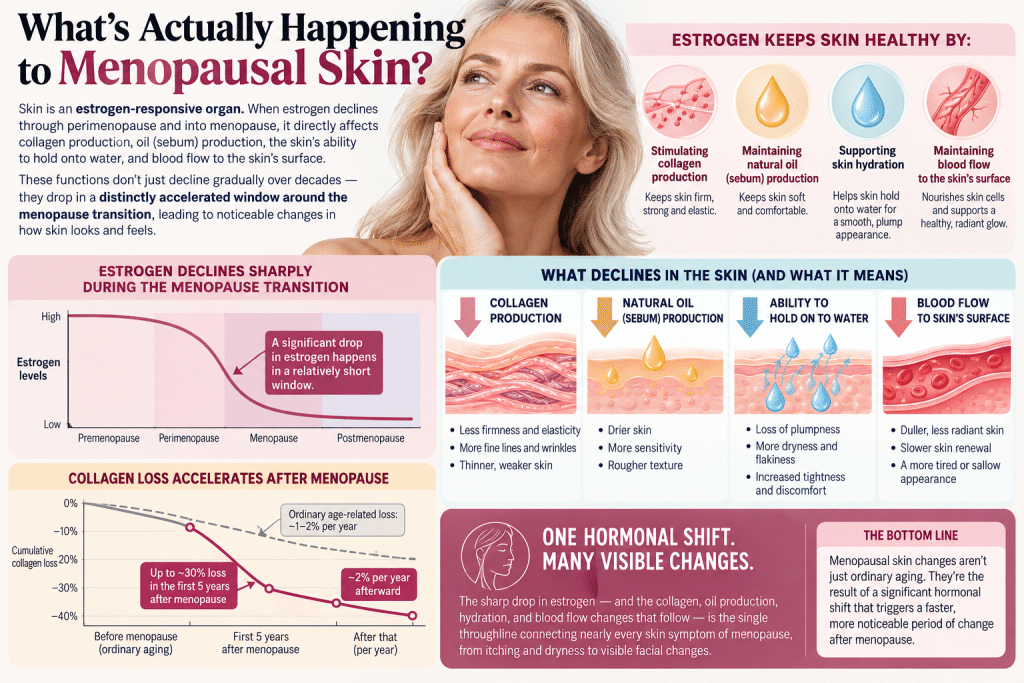
Skin is, among other things, an estrogen-responsive organ. Estrogen receptors are present throughout the skin, and estrogen plays a direct role in stimulating collagen production, maintaining the skin’s natural oil (sebum) production, supporting the skin’s ability to hold onto water, and maintaining blood flow to the skin’s surface. When estrogen declines through perimenopause and into menopause, all of these functions decline with it, not gradually over decades the way ordinary skin aging tends to unfold, but in a distinctly accelerated window concentrated around the menopause transition itself.
The collagen decline specifically is dramatic relative to ordinary aging. Research indicates women can lose up to roughly 30 percent of their skin’s collagen in the first five years after menopause, with continued loss of approximately 2 percent per year afterward. For comparison, ordinary age-related collagen decline before menopause runs closer to 1 to 2 percent per year overall, meaning the early postmenopausal years represent a distinctly accelerated period of change, not simply a continuation of the same slow curve.
This single mechanism, the sharp drop in estrogen and the collagen, oil production, and hydration changes that follow it, is the throughline connecting nearly every skin symptom covered in this article: the itching, the dryness, and the visible facial changes all trace back to the same hormonal shift, just expressed in different ways.
What Does the Yale Study Reveal About Bone Density?
One of the more truly surprising findings connected to menopausal skin change comes from a research team at Yale led by Dr. Lubna Pal, presented at The Endocrine Society’s 93rd Annual Meeting. The study examined 114 menopausal women, assessing facial and neck wrinkles using a standardized tool called the Lemperle wrinkle scale at eleven separate sites on the face and neck, measuring skin rigidity directly with a durometer (a device that measures the firmness of a material) at the forehead and cheek, and measuring bone mineral density via DXA scan (the standard bone density imaging technology) at the spine, hip, and total body.
What the Researchers Found
Worse facial wrinkling and lower skin rigidity were both associated with lower bone mineral density, an inverse relationship that held at the spine, the femoral neck (hip), and for total body bone density. Women with firmer, more rigid facial and forehead skin had correspondingly greater bone density than women with looser, more wrinkled skin.
Why This Connection Exists
The proposed mechanism is refreshingly direct: skin and bone share a common structural building block, collagen. The same hormonal and biological processes that degrade collagen in skin, producing visible wrinkling and reduced firmness, also degrade collagen quality and quantity in bone, contributing to reduced bone density.
Rather than being two unrelated symptoms that happen to occur around the same time in life, the researchers’ interpretation is that visible skin changes and bone density changes may be two expressions of the same underlying collagen-degradation process, occurring in different tissues simultaneously.
What This Does and Does Not Mean for You
This is not a diagnostic tool, and no one should attempt to estimate their own bone density by looking in the mirror. It was a single study of 114 women, presented at a research conference, examining a population-level association, not a validated individual screening method.
What it does offer is a truly useful piece of context: if you are noticing more pronounced facial skin changes in early menopause, it is a reasonable, low-stakes prompt to make sure your bone health is part of the conversation at your next physical, alongside the standard risk factors (family history, calcium and vitamin D status, weight-bearing exercise) that matter regardless of what your skin looks like.
“This is one of my favorite pieces of research to talk about, because it reframes something that usually gets treated as purely cosmetic into something worth paying real attention to. I am not a physician, and this is not a diagnosis of anyone’s bone health. But I love that it exists as a reminder that our bodies are talking to us constantly, in ways we don’t always know how to listen for. If noticing your skin changing is what finally gets you to ask your doctor about a bone density scan, that’s a truly useful thing to come out of paying attention to your own reflection.”
Terry Tateossian, Founder of The House of Rose
Get 11 Sample Recipes from Our Bestselling Mediterranean Cookbook.
Get our 11 Sample Recipes from our Best Selling Mediterranean Protein Friendly Cookbook. These are the most delicious recipes our retreat guests love the most. Easy, simple with few ingredients per meal. Make delicious heart-friendly and healthy meals you enjoy every day.
Why Does Menopause Make Skin Itch and Feel Like It’s Crawling?
Itchy skin during menopause, clinically referred to as pruritus, has a specific, well-documented hormonal mechanism behind it, not a vague or unexplainable cause.
The Estrogen-Histamine Connection
Estrogen and histamine (the compound the body releases in response to irritation, allergy, or injury, producing the sensation of itch) interact in a specific, somewhat counterintuitive way. Estrogen stimulates mast cells, the immune cells responsible for releasing histamine, while simultaneously reducing the activity of diamine oxidase, the enzyme responsible for breaking histamine back down.
As estrogen fluctuates unpredictably through perimenopause rather than declining smoothly, this creates what is sometimes described as a flood-and-clog effect: more histamine gets released, and less of it gets cleared, which can worsen itching, flushing, and hive-like symptoms independent of any actual skin irritant being present.
The Direct Nerve-Sensitivity Mechanism
Separately from the histamine pathway, research has demonstrated that estrogen directly influences itch sensitivity through its effects on specific spinal neurons (gastrin-releasing peptide receptor neurons) involved in processing itch signals. This is a more direct hormonal effect on how the nervous system interprets and transmits itch sensations, independent of histamine release.
Formication: The Crawling Sensation
Some women experience something more specific and more unsettling than ordinary itching: a sensation often described as insects crawling on or under the skin, known clinically as formication. This is a recognized symptom of the menopause transition, believed to result from the effect of declining and fluctuating estrogen on nerve sensitivity, largely nerve endings misfiring and sending itch or crawling signals to the brain without any actual external trigger present.
It can be truly distressing, and it is worth knowing that it is a real, physiologically explainable symptom, not an imagined one, and one that a healthcare provider familiar with menopause should be able to recognize and discuss without dismissing it.
Why This Often Gets Worse Before It Gets Better
Because the mechanism is tied to estrogen fluctuation, not just decline, itching and formication symptoms are frequently most pronounced during the more hormonally erratic stretch of perimenopause, rather than settling into a predictable pattern, which can make the symptom feel especially confusing and hard to anticipate.
Why Is Menopausal Dry Skin Different From Ordinary Dry Skin?
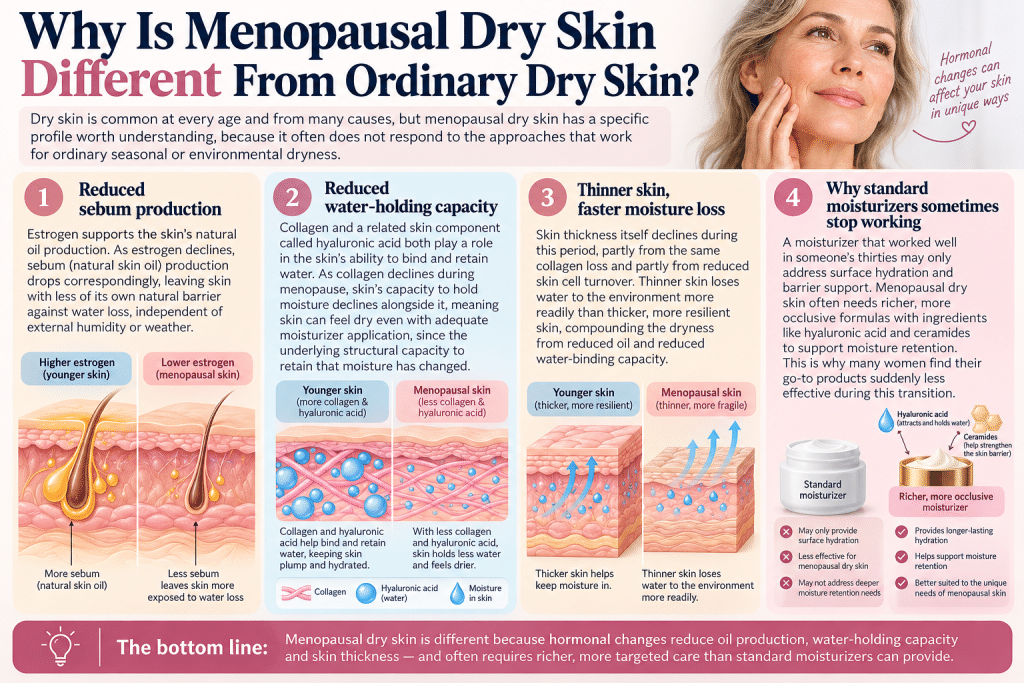
Dry skin is common at every age and from many causes, but menopausal dry skin has a specific profile worth understanding, because it often does not respond to the approaches that work for ordinary seasonal or environmental dryness.
- Reduced sebum production: Estrogen supports the skin’s natural oil production. As estrogen declines, sebum (natural skin oil) production drops correspondingly, leaving skin with less of its own natural barrier against water loss, independent of external humidity or weather.
- Reduced water-holding capacity: Collagen and a related skin component called hyaluronic acid both play a role in the skin’s ability to bind and retain water. As collagen declines through the mechanism described in Section 1, skin’s capacity to hold moisture declines alongside it, meaning skin can feel dry even with adequate moisturizer application, since the underlying structural capacity to retain that moisture has changed.
- Thinner skin, faster moisture loss: Skin thickness itself declines during this period, partly from the same collagen loss and partly from reduced skin cell turnover. Thinner skin loses water to the environment more readily than thicker, more resilient skin, compounding the dryness from reduced oil and reduced water-binding capacity.
- Why standard moisturizers sometimes stop working: A moisturizer that worked well in someone’s thirties may only address surface hydration and barrier support. Menopausal dry skin often needs richer, more occlusive formulas with ingredients like hyaluronic acid and ceramides to support moisture retention. This is why many women find their go-to products suddenly less effective during this transition.
What Changes in Your Face During Menopause Beyond Wrinkles?
“My face looks different” is one of the most common, and most difficult to articulate, observations women make during menopause, and it is worth naming specifically what is changing beyond the wrinkles already covered.
- Volume and fat pad changes: The face contains distinct fat pads that provide youthful volume and contour. These fat pads can shift and diminish with hormonal change and aging, contributing to a hollowed or deflated appearance distinct from simple wrinkling, particularly around the cheeks and temples.
- Facial bone changes: Facial bone itself, particularly around the jaw, chin, and eye sockets, can undergo subtle density and structural changes with age and with the same estrogen-related bone density shifts discussed in Section 2, contributing to changes in facial shape and proportion that are structural rather than purely skin-deep.
- Reduced firmness and elasticity: Beyond visible lines, skin firmness itself, its resistance to gentle pressure and its ability to spring back into place, changes measurably, which is exactly what the durometer measurements in the Yale study were capturing directly.
- Changes in facial redness and vascular reactivity: Some women notice increased facial flushing or redness during the menopause transition, related to the same vasomotor instability responsible for hot flashes, since blood vessels in facial skin respond to the same hormonal fluctuations affecting temperature regulation elsewhere in the body.
- The honest summary: What women are perceiving as “my face looks different” is rarely one single change; it is usually several of these mechanisms, collagen loss, fat pad shifts, skin thickness changes, and bone-related structural shifts, occurring together during the same compressed window, which is part of why the change can feel more dramatic and harder to pinpoint than ordinary, gradual aging.
Get 11 Sample Recipes from Our Bestselling Mediterranean Cookbook.
Get our 11 Sample Recipes from our Best Selling Mediterranean Protein Friendly Cookbook. These are the most delicious recipes our retreat guests love the most. Easy, simple with few ingredients per meal. Make delicious heart-friendly and healthy meals you enjoy every day.
Which Supplements for Menopause Itchy Skin Have Evidence?
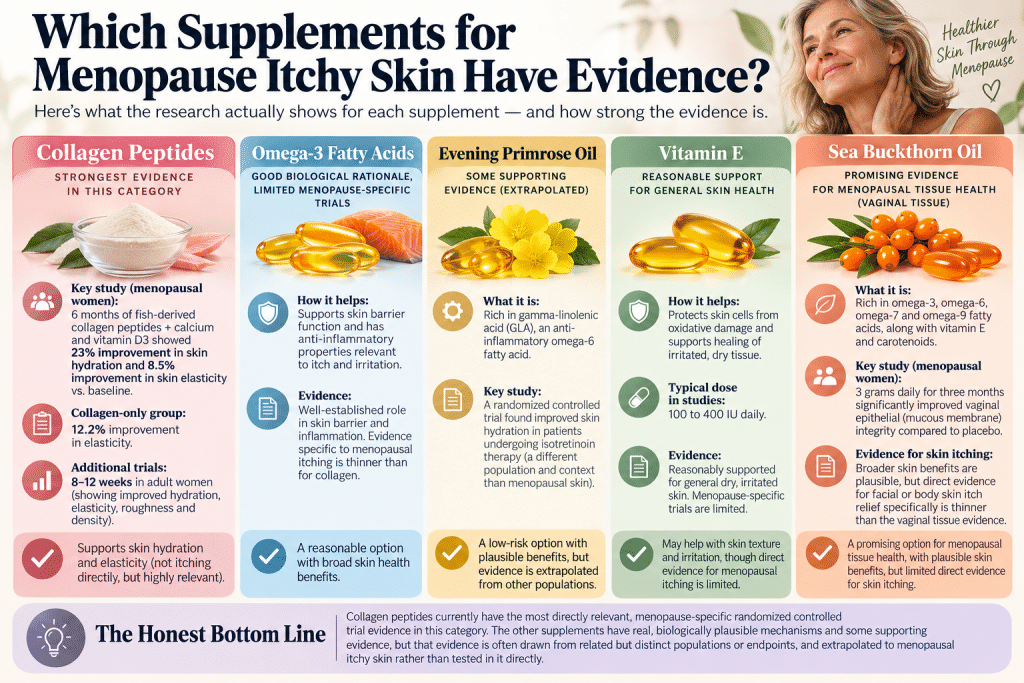
Given how much commercial interest exists around this topic, it is worth being unusually careful and specific here about what each supplement’s evidence actually supports, rather than grouping them all together as equally proven.
Collagen Peptides
This has the strongest and most directly relevant evidence in this category. A randomized controlled trial specifically in menopausal women tested fish-derived collagen peptides combined with calcium and vitamin D3 over six months; the combined group showed a 23 percent improvement in skin hydration and an 8.5 percent improvement in skin elasticity compared to baseline, while the collagen-only group showed a 12.2 percent improvement in elasticity on its own.
Several additional randomized, placebo-controlled trials in broader adult female populations (not menopause-specific) have found consistent improvements in skin hydration, elasticity, roughness, and density with oral collagen peptide supplementation over 8 to 12 weeks. This is one of the more consistently evidence-backed supplement categories for skin specifically, though it is worth noting most trials measure hydration and elasticity rather than itching directly.
Omega-3 Fatty Acids
Omega-3s support skin barrier function and have anti-inflammatory properties relevant to itch and irritation, and are commonly recommended for menopausal skin concerns. The evidence base specific to menopausal itching, rather than skin health more generally, is thinner than the collagen research, and most support comes from omega-3’s broader, well-established role in skin barrier and inflammation rather than menopause-specific trials.
Evening Primrose Oil
Rich in gamma-linolenic acid, an anti-inflammatory omega-6 fatty acid. A randomized controlled trial found evening primrose oil supplementation improved skin hydration in patients undergoing a specific dermatological treatment (isotretinoin therapy), a different population and context than menopausal skin. It is a reasonable, low-risk option worth understanding honestly as extrapolated evidence, not as a trial conducted in menopausal women specifically.
Vitamin E
Vitamin E has a well-established role in protecting skin cells from oxidative damage and supporting the healing of irritated, dry tissue, with typical studied doses in the range of 100 to 400 IU daily. Evidence for its impact on skin texture and itching is reasonably supported for general dry, irritated skin, though menopause-specific trials are limited.
Sea Buckthorn Oil
Rich in omega-3, omega-6, omega-7, and omega-9 fatty acids along with vitamin E and carotenoids. The most rigorous available evidence comes from a clinical trial finding that 3 grams daily for three months significantly improved vaginal epithelial (mucous membrane) integrity in menopausal women compared to placebo, a directly relevant finding for menopausal tissue health, though it measured vaginal tissue specifically rather than facial or body skin itching.
Broader skin benefits are plausible given its fatty acid and antioxidant profile, but the direct evidence for facial or body skin itch relief specifically is thinner than the vaginal tissue evidence.
The Honest Bottom Line
Collagen peptides currently have the most directly relevant, menopause-specific randomized controlled trial evidence in this category. The other supplements discussed here have real, biologically plausible mechanisms and some supporting evidence, but that evidence is often drawn from related but distinct populations or endpoints, extrapolated to menopausal itchy skin rather than tested in it directly, which is worth knowing before treating any of them as equivalently proven.
What Does the Evidence Show at a Glance?
The following table summarizes the strength of evidence behind the major claims about menopausal skin changes, including the findings on collagen loss, bone density, itching, and supplements.
| Claim | Evidence Strength | What the Research Shows |
|---|---|---|
| Menopause accelerates skin collagen loss dramatically | Strong | Research indicates up to ~30% collagen loss in the first 5 postmenopausal years, versus ~1-2%/year in ordinary aging |
| Facial wrinkling and skin rigidity correlate with bone density | Moderate to Strong | Yale study (Pal et al., n=114): inverse relationship between wrinkle severity/skin rigidity and bone density at spine, hip, and total body |
| Estrogen changes directly affect itch sensitivity | Strong (mechanism) | Estrogen affects mast cell histamine release, DAO enzyme activity, and spinal itch-processing neurons |
| Formication (crawling sensation) is a real menopause symptom | Moderate to Strong | Recognized clinical symptom attributed to estrogen’s effect on nerve sensitivity, not merely anecdotal |
| Collagen peptide supplements improve skin hydration/elasticity | Strong | Menopause-specific RCT: 23% hydration, 8.5-12.2% elasticity improvement over 6 months |
| Omega-3 improves menopausal itchy skin specifically | Weak to Moderate | Strong general skin-barrier evidence; limited menopause-itch-specific trials |
| Evening primrose oil improves menopausal skin | Weak (extrapolated) | RCT evidence exists in a different patient population (isotretinoin therapy), not menopausal women |
| Sea buckthorn oil improves menopausal skin | Weak to Moderate (context-dependent) | Strong RCT evidence for vaginal tissue integrity specifically; thinner evidence for facial/body skin itch |
| Vitamin E supports dry, irritated skin | Moderate | Well-established general mechanism; limited menopause-specific trial evidence |
Which Topical and Lifestyle Approaches Help Menopausal Skin?
Several practical approaches can help manage the dryness and itching associated with menopause. These focus on supporting the skin barrier, reducing irritation, and improving moisture retention.
- Switch to richer, barrier-supporting moisturizers: Look for ingredients like ceramides, hyaluronic acid, and glycerin, applied to slightly damp skin to help lock in moisture, rather than lightweight formulations designed for oilier, younger skin.
- Lower water temperature and shorten shower time: Hot water strips natural oils faster than warm water, worsening dryness and itch. Shorter, cooler showers, followed promptly by moisturizer, measurably reduce dryness-related itching for many women.
- Use a humidifier, particularly in dry climates or seasons: Environmental humidity directly affects how much moisture skin loses to the air, and this is a truly modifiable factor independent of any product or supplement.
- Avoid known irritant triggers: Fragranced products, harsh soaps, and certain fabric detergents can compound histamine-related itching described in Section 3. Simplifying a skincare and laundry routine during a particularly itchy stretch is a reasonable, low-cost first step.
- Cool compresses for acute itching or crawling sensations: A cool, damp cloth applied to an affected area can interrupt the itch-scratch cycle in the moment, which matters because scratching itself can further damage the skin barrier and worsen the underlying dryness.
Get 11 Sample Recipes from Our Bestselling Mediterranean Cookbook.
Get our 11 Sample Recipes from our Best Selling Mediterranean Protein Friendly Cookbook. These are the most delicious recipes our retreat guests love the most. Easy, simple with few ingredients per meal. Make delicious heart-friendly and healthy meals you enjoy every day.
When Does Menopausal Itchy Skin Need Medical Evaluation?
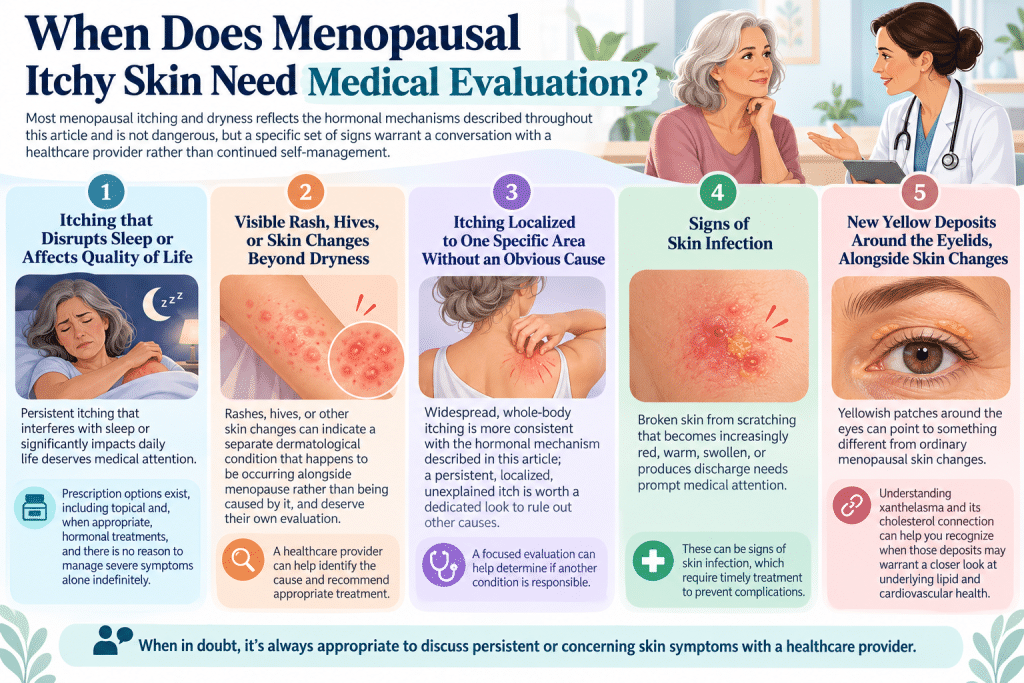
Most menopausal itching and dryness reflects the hormonal mechanisms described throughout this article and is not dangerous, but a specific set of signs warrant a conversation with a healthcare provider rather than continued self-management:
- Itching that disrupts sleep persistently or significantly affects quality of life: Prescription options exist, including topical and, when appropriate, hormonal treatments, and there is no reason to manage severe symptoms alone indefinitely.
- Visible rash, hives, or skin changes beyond dryness: These can indicate a separate dermatological condition that happens to be occurring alongside menopause rather than being caused by it, and deserve their own evaluation.
- Itching localized to one specific area without an obvious cause: Widespread, whole-body itching is more consistent with the hormonal mechanism described in this article; a persistent, localized, unexplained itch is worth a dedicated look to rule out other causes.
- Signs of skin infection: Broken skin from scratching that becomes increasingly red, warm, swollen, or produces discharge needs prompt medical attention.
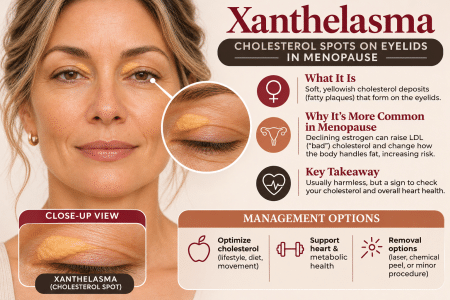
- New yellow deposits around the eyelids, alongside skin changes: Yellowish patches around the eyes can point to something different from ordinary menopausal skin changes. Understanding xanthelasma and its cholesterol connection can help you recognize when those deposits may warrant a closer look at underlying lipid and cardiovascular health.
How Does Nutrition Affect Menopausal Skin Health?
Because so much of what drives menopausal skin change traces back to collagen availability, protein and nutrient intake are directly relevant, not incidental wellness advice.
- Adequate protein intake: Collagen itself is a protein, built from specific amino acids the body needs a reliable supply of to synthesize new collagen and repair skin tissue. Undereating protein during exactly the period when the body’s collagen synthesis is already under hormonal pressure compounds the problem. Readers building out a nutrition framework can start with our free macro calculator to establish protein targets sized to their body and goals.
- Hydration from the inside out: While topical moisturizer addresses the skin’s surface, adequate fluid intake supports the body’s overall capacity to maintain tissue hydration, a simple but directly relevant piece of the picture alongside topical care.
- Antioxidant-rich foods: Given the oxidative stress dimension discussed in the vitamin E research above, a diet rich in colorful vegetables, fruit, and healthy fats supports the same protective mechanism that supplement is aimed at, through food rather than a pill alone. This is the same dietary pattern behind our mediterranean diet for menopause guide.
- Overall dietary pattern: A well-structured menopause diet plan can support skin, bone, and metabolic health at the same time, which matters because these systems become increasingly interconnected through the menopause transition.
Get 11 Sample Recipes from Our Bestselling Mediterranean Cookbook.
Get our 11 Sample Recipes from our Best Selling Mediterranean Protein Friendly Cookbook. These are the most delicious recipes our retreat guests love the most. Easy, simple with few ingredients per meal. Make delicious heart-friendly and healthy meals you enjoy every day.
Frequently Asked Questions
Why does my skin itch so much during menopause?
Declining and fluctuating estrogen affects histamine release and clearance (estrogen stimulates mast cells to release histamine while reducing the enzyme that breaks it down) and directly influences nerve pathways involved in processing itch sensations. This combination produces genuine, physiologically explainable itching that is not caused by an external irritant.
What does the crawling sensation on my skin mean?
This sensation, known clinically as formication, is a recognized menopause symptom caused by estrogen’s effect on nerve sensitivity, largely nerve endings misfiring and sending itch or crawling signals without any actual external trigger. It is a real, physiological symptom, not an imagined one.
What did the Yale study find about wrinkles and bone density?
Researchers led by Dr. Lubna Pal studied 114 menopausal women and found that more severe facial wrinkling and lower skin rigidity were associated with lower bone mineral density at the spine, hip, and total body. The proposed explanation is that skin and bone share collagen as a structural building block, so the same collagen-degrading process may affect both tissues around the same time.
Does this mean I can tell my bone density just by looking at my wrinkles?
No. This was a single study examining a population-level statistical association, not a validated individual diagnostic tool. It is a reasonable, low-stakes prompt to discuss bone health at your next physical, not a way to assess your own bone density from a mirror.
Why doesn’t my regular moisturizer work anymore?
Menopausal dry skin involves reduced natural oil production, reduced water-binding capacity from collagen loss, and thinner skin that loses moisture faster, a different profile than ordinary environmental dryness. Richer, more occlusive formulations with ingredients like ceramides and hyaluronic acid typically work better than lighter, surface-hydrating products.
What supplements actually have evidence for menopause itchy skin?
Collagen peptides currently have the strongest, most directly relevant evidence, including a randomized controlled trial specifically in menopausal women showing meaningful improvements in skin hydration and elasticity. Omega-3, evening primrose oil, vitamin E, and sea buckthorn oil all have plausible mechanisms and some supporting evidence, but much of it comes from different populations or measures different outcomes than menopausal skin itching specifically.
Are my face changes during menopause just cosmetic?
Not necessarily. Beyond wrinkles, changes include facial fat pad shifts, bone density changes, reduced skin firmness, and vascular reactivity. The Yale research specifically connects some of these visible changes to bone density elsewhere in the body, making this potentially relevant to broader health, not purely appearance.
When should I see a doctor about menopause itching?
If itching disrupts sleep or significantly affects quality of life, if you notice a rash, hives, or skin changes beyond dryness, if itching is localized to one unexplained area, or if you see signs of skin infection from scratching, these warrant medical evaluation rather than continued self-management.
How much collagen loss actually happens during menopause?
Research indicates women can lose up to approximately 30 percent of skin collagen in the first five years after menopause, with continued loss of around 2 percent per year afterward, a meaningfully faster rate than the roughly 1 to 2 percent annual decline typical of ordinary pre-menopausal skin aging.
Can diet actually help with menopausal skin itching and dryness?
Diet cannot replace targeted treatment for severe symptoms, but adequate protein intake directly supports the collagen synthesis the skin needs during exactly the period when hormonal changes are working against it, and antioxidant-rich foods support the same protective mechanisms some skin supplements target.
Is itchy skin worse during perimenopause or after menopause is complete?
Because the mechanism is tied significantly to estrogen fluctuation, not just decline, itching and formication symptoms are often most pronounced during the more hormonally erratic stretch of perimenopause, though they can persist into postmenopause for some women.
I write 3 essays per week on Lifestyle Medicine for women in midlife on what is happening in the body and what to do about it. No fluff, no hype. Free Subscription.
References
- Pal, L., et al. Severity of facial wrinkles and skin rigidity predicts bone mineral density in early postmenopausal women. Presented at The Endocrine Society’s 93rd Annual Meeting, Boston, 2011.
- Zouboulis, C. C., Blume-Peytavi, U., Kosmadaki, M., et al. (2022). Skin, hair and beyond: the impact of menopause. Climacteric, 25(5), 434-442.
- Mucci, T., et al. Estrogens influence female itch sensitivity via the spinal gastrin-releasing peptide receptor neurons. Science Advances / PMC8346901.
- Larmo, P. S., Yang, B., Hurme, S. A., et al. (2014). Effects of sea buckthorn oil intake on vaginal atrophy in postmenopausal women: a randomized, double-blind, placebo-controlled study. Maturitas, 79(3), 316-321.
- Calcium and Vitamin D Supplementation with and Without Collagen on Bone Density and Skin Elasticity in Menopausal Women: A Randomized Controlled Study. PMC12468524.
- Choi, F. D., Sung, C. T., Juhasz, M. L. W., & Mesinkovsk, N. A. (2019). Oral Collagen Supplementation: A Systematic Review of Dermatological Applications. Journal of Drugs in Dermatology, 18(1), 9-16.
- Proksch, E., Segger, D., Degwert, J., et al. (2014). Oral supplementation of specific collagen peptides has beneficial effects on human skin physiology: a double-blind, placebo-controlled study. Skin Pharmacology and Physiology, 27(1), 47-55.
- American College of Obstetricians and Gynecologists. (2023). The Menopause Transition.
Disclaimer: This article is for educational purposes only and does not constitute medical advice, diagnosis, or treatment. Menopause-related itching, dryness, and facial changes can have causes beyond hormonal fluctuations, and visible skin changes cannot reliably indicate bone density. Supplements such as collagen peptides, omega-3 fatty acids, evening primrose oil, and vitamin E may not be appropriate for everyone and can interact with medications or existing health conditions. Consult a qualified healthcare provider before starting new supplements or treatments, and seek medical evaluation for persistent itching, unusual skin changes, or concerns about bone health.
Get 11 Sample Recipes from Our Bestselling Mediterranean Cookbook.
Get our 11 Sample Recipes from our Best Selling Mediterranean Protein Friendly Cookbook. These are the most delicious recipes our retreat guests love the most. Easy, simple with few ingredients per meal. Make delicious heart-friendly and healthy meals you enjoy every day.

Terry Tateossian is a Menopause Lifestyle Medicine Coach, Certified Personal Trainer & Nutritionist and the Founder of THOR: The House of Rose, a wellness brand serving women over 40 through retreats, coaching, macro-nutrition and community. As 25-year founder and entrepreneur, Terry spent two and a half decades building and running successful start-up businesses, an experience that put her on the front line of founder burnout long before she could name it. After facing serious health challenges, early onset menopause, and emotional eating while running her agency and raising two children, Terry rebuilt her health in her 40s and lost more than 80 pounds through evidence-based nutrition, training, and mindset work. Today, she helps women get strong, improve confidence, support hormone health, and create a stronger second half of life. Terry has been featured in major media outlets and is available for podcasts, expert commentary, brand collaborations, and speaking engagements on midlife health, reinvention, emotional eating, menopause wellness, and strength training for longevity. Get her free macro calculator (her cookbook companion) to start your journey to back to health.