
 By Team THOR
Free 28-Day Fascia Reset Email Course
Get our Free 28-day email course series to help with 1 or 2 exercises per day to release your fascia. One short lesson per day. Two minutes to read each.
How the Parasympathetic Nervous System Drives Aging in Midlife Women
A new theoretical framework published in npj Aging proposes that chronic sympathetic nervous system dominance, combined with declining parasympathetic tone, may help drive the biological processes associated with aging. In practical terms, the long-term stress state many women live in may be accelerating cellular aging rather than simply resulting from it.
This matters especially during perimenopause, menopause, and post-menopause. Declining estrogen, disrupted sleep, changing cortisol patterns, and years of caregiving or career pressure can reduce the body’s ability to return to a calm, restorative state. The body needs deeper recovery at the same time many women have the least space to prioritize it.
I am Terry Tateossian, founder of The House of Rose and a certified lifestyle medicine coach who works with midlife women through 1:1 coaching, group programs, and restorative retreats in the Smoky Mountains. The framework below guides the work we do across every THOR program.
This article translates the research into practical lifestyle medicine strategies.
Why Does This Research Matter for Midlife Women?
The standard narrative around aging focuses on several cellular processes that deteriorate over time, including mitochondrial dysfunction, inflammaging, loss of proteostasis, telomere attrition, and epigenetic drift. Each has been studied extensively, and each has produced its own set of interventions intended to slow or reverse it.
The npj Aging perspective paper proposes a different way of understanding how these processes may be connected.
Is Autonomic Imbalance an Upstream Driver?
Rather than treating the hallmarks of aging as separate problems that each require their own solution, the researchers argue that they may share a common upstream regulator: the balance between the two arms of the autonomic nervous system.
When chronic sympathetic activation overwhelms parasympathetic recovery, the cellular hallmarks of aging may accelerate in a self-reinforcing cascade. When parasympathetic tone is restored, that cascade may slow across several processes at the same time.
This framing shifts the focus from addressing each hallmark in isolation to supporting the nervous system’s ability to move out of chronic activation and back into recovery.
Why Does Midlife Shift the Nervous System Toward Stress?
For midlife women, this framework has practical weight. The hormonal transition of perimenopause and menopause can shift autonomic balance toward sympathetic dominance through several converging mechanisms:
- Estrogen Decline: Estrogen has a parasympathetic-supporting effect, and its decline removes part of that protective buffer.
- Progesterone Loss: Progesterone supports calm and restful sleep, but it often begins declining earlier and faster than estrogen.
- Evening Cortisol Changes: Cortisol may remain elevated later in the day, disrupting the recovery window the body has historically relied on.
- Fragmented Sleep: Shallower, interrupted sleep reduces time spent in the parasympathetic-dominant state where much of the body’s repair work happens.
The result is that many women enter perimenopause with a less favorable autonomic baseline than they had at 30, often without the language to explain what has changed.
Symptoms are frequently blamed on hormones alone. The deeper issue is that hormonal changes are interacting with a nervous system that may no longer recover from the same daily demands as efficiently as it once did.
What Can Midlife Women Do About It?
The encouraging part of this framework is that the practices used to restore parasympathetic tone are well documented, accessible, and capable of producing measurable changes within weeks.
The rest of this article translates the research into practical strategies that midlife women can use to support nervous system regulation, recovery, and healthier aging.
Free 28-Day Fascia Reset Email Course
Get our Free 28-day email course series to help with 1 or 2 exercises per day to release your fascia. One short lesson per day. Two minutes to read each.
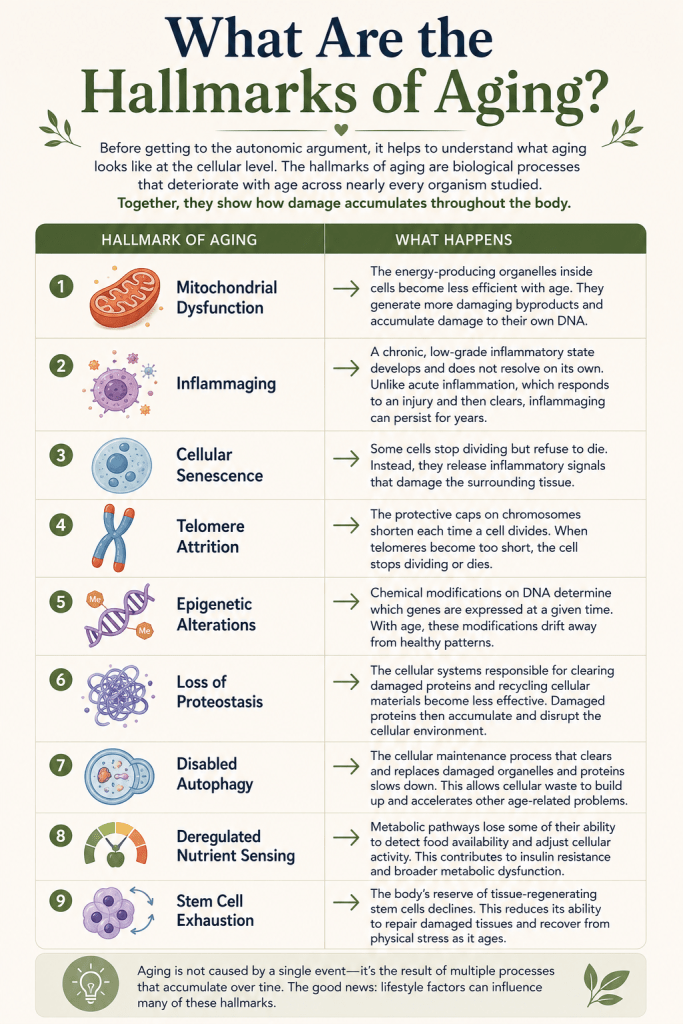
What Are the Hallmarks of Aging?
Before getting to the autonomic argument, it helps to understand what aging looks like at the cellular level. The hallmarks of aging are biological processes that deteriorate with age across nearly every organism studied. Together, they show how damage accumulates throughout the body.
| Hallmark of Aging | What Happens |
| Mitochondrial Dysfunction | The energy-producing organelles inside cells become less efficient with age. They generate more damaging byproducts and accumulate damage to their own DNA. |
| Inflammaging | A chronic, low-grade inflammatory state develops and does not resolve on its own. Unlike acute inflammation, which responds to an injury and then clears, inflammaging can persist for years. |
| Cellular Senescence | Some cells stop dividing but refuse to die. Instead, they release inflammatory signals that damage the surrounding tissue. |
| Telomere Attrition | The protective caps on chromosomes shorten each time a cell divides. When telomeres become too short, the cell stops dividing or dies. |
| Epigenetic Alterations | Chemical modifications on DNA determine which genes are expressed at a given time. With age, these modifications drift away from healthy patterns. |
| Loss of Proteostasis | The cellular systems responsible for clearing damaged proteins and recycling cellular materials become less effective. Damaged proteins then accumulate and disrupt the cellular environment. |
| Disabled Autophagy | The cellular maintenance process that clears and replaces damaged organelles and proteins slows down. This allows cellular waste to build up and accelerates other age-related problems. |
| Deregulated Nutrient Sensing | Metabolic pathways lose some of their ability to detect food availability and adjust cellular activity. This contributes to insulin resistance and broader metabolic dysfunction. |
| Stem Cell Exhaustion | The body’s reserve of tissue-regenerating stem cells declines. This reduces its ability to repair damaged tissues and recover from physical stress as it ages. |
The hallmarks framework has been extraordinarily useful for organizing aging research. What it has not fully answered is why these processes deteriorate together. Emerging research suggests that autonomic nervous system imbalance may be a unifying upstream factor.
Which Two Nervous Systems Run Your Body?
The autonomic nervous system regulates the body’s involuntary functions, including heart rate, blood pressure, digestion, breathing, immune activity, hormone secretion, and the cellular repair processes that keep tissues functioning.
It has two main arms that work together: the sympathetic nervous system and the parasympathetic nervous system.
What Does the Sympathetic Nervous System Do?
The sympathetic nervous system is the body’s activation arm. When it engages, the body shifts into fight-or-flight mode and prepares to respond to an immediate demand or threat.
During sympathetic activation:
- Heart Rate Rises: More blood and oxygen are delivered to the muscles.
- Blood Pressure Increases: Circulation shifts to support rapid action.
- Glucose Mobilizes: Stored energy becomes available for immediate use.
- Immune Activity Changes: The body moves toward inflammatory readiness.
- Digestion Slows: Energy is redirected away from nonessential short-term functions.
- Repair Functions Pause: Reproductive and cellular maintenance processes are temporarily deprioritized.
This system evolved to handle acute threats. It was designed to activate briefly and then settle once the demand had passed.
What Does the Parasympathetic Nervous System Do?
The parasympathetic nervous system is the body’s recovery arm. When it engages, the body shifts into rest-and-repair mode.
During parasympathetic activation:
- Heart Rate Slows: The cardiovascular system returns toward its resting state.
- Blood Pressure Falls: The body reduces its state of alertness.
- Digestion Resumes: Energy becomes available for breaking down and absorbing nutrients.
- Immune Activity Regulates: The body shifts away from inflammatory readiness and toward tissue repair.
- Cellular Maintenance Activates: Processes such as autophagy and mitochondrial quality control become more active.
- Growth and Reproductive Functions Return: Longer-term biological processes receive more energy and attention.
This is the state in which the body performs much of the slow work required to maintain health over time.
How Should the Two Systems Work Together?
In a healthy nervous system, the sympathetic and parasympathetic systems shift according to the body’s needs. The sympathetic system supports effort and alertness, while the parasympathetic system restores balance through recovery, digestion, sleep, and cellular repair.
The problem is that many midlife women remain in low-grade sympathetic activation throughout the day. Constant demands, screens, caregiving, and insufficient recovery reduce the sustained parasympathetic activity the body needs, potentially contributing to faster cellular aging over time.
Free 28-Day Fascia Reset Email Course
Get our Free 28-day email course series to help with 1 or 2 exercises per day to release your fascia. One short lesson per day. Two minutes to read each.
How Does Sympathetic Overdrive Accelerate Aging?
The mechanistic argument in the npj Aging paper is detailed. Below are the five major mechanisms that matter for midlife women and how they can affect daily life.
- Mitochondrial Damage: Chronic sympathetic activation increases energy demand and reactive oxygen species production. This damages mitochondria, contributing to fatigue, slow recovery, and metabolic resistance.
- Inflammatory Cascade: Long-term catecholamine exposure weakens the body’s short-term anti-inflammatory response. Persistent inflammation can show up as joint pain, brain fog, skin sensitivity, and water retention.
- Disabled Cellular Maintenance: Sympathetic overdrive suppresses AMPK and slows autophagy. Damaged proteins, mitochondria, and cellular waste then accumulate.
- Accelerated Telomere Shortening: Oxidative stress and inflammation damage the protective ends of chromosomes. Faster telomere shortening promotes cellular senescence and further inflammation.
- Epigenetic Drift: Oxidative and inflammatory stress disrupts healthy DNA methylation patterns. Gene expression gradually shifts in ways that accelerate biological aging.
The cumulative effect is a self-reinforcing cycle in which sympathetic overdrive causes cellular damage, and that damage creates further stress. Restoring parasympathetic tone may help interrupt this cycle.
“Most women I work with in their forties and fifties describe the same constellation of symptoms: tired in ways sleep cannot fix, inflamed, brain foggy, gaining weight on the same eating patterns that used to work. They have been told this is hormonal. The deeper truth is that the hormones are interacting with a nervous system that has been in low-grade sympathetic activation for so many years that it has lost the capacity to recover. The hormonal piece matters. The nervous system piece is what most of us were never taught to address.”
Terry Tateossian, Founder of The House of Rose
Why Is the Vagus Nerve Important for Midlife Recovery?
The vagus nerve is the tenth cranial nerve and the longest nerve in the autonomic nervous system. It travels from the brainstem through the neck, chest, and abdomen, connecting with the heart, lungs, stomach, liver, pancreas, kidneys, intestines, and other major organs.
Around 80 percent of its fibers carry information from the body to the brain, while the remaining 20 percent send signals from the brain back to the body. It serves as the primary pathway for parasympathetic activation throughout most major organ systems.
For midlife women, three properties of the vagus nerve are particularly important:
- The Cholinergic Anti-Inflammatory Pathway: Vagal activation releases acetylcholine, which suppresses the production of pro-inflammatory cytokines. As vagal tone declines with age, the body may have more difficulty controlling chronic inflammation.
- The Gut-Brain Axis: The vagus nerve helps regulate digestive motility, gut barrier integrity, and the gut microbiome. Declining vagal tone can weaken gut function, increase systemic inflammation, and create a feedback loop that further reduces vagal activity.
- Recovery From Sympathetic Activation: The vagus nerve helps return the body to baseline after stress, exercise, or another acute demand. Strong vagal tone supports faster recovery, while weak vagal tone can leave the body activated long after the original trigger has passed.
The decline in vagal tone with age is consistent and measurable across populations. By the time many women reach their fifties, their resting vagal tone is significantly lower than it was in their twenties, influencing how efficiently the body controls inflammation, stress, and cellular recovery.
The vagus nerve is also affected by many lifestyle medicine practices used for nervous system restoration. Exercise, sleep, breathwork, cold exposure, meditation, and social connection can all support vagal tone through different pathways, making their shared effect one of the most compelling features of the emerging research.
Free 28-Day Fascia Reset Email Course
Get our Free 28-day email course series to help with 1 or 2 exercises per day to release your fascia. One short lesson per day. Two minutes to read each.
What Can Heart Rate Variability Reveal About Aging?
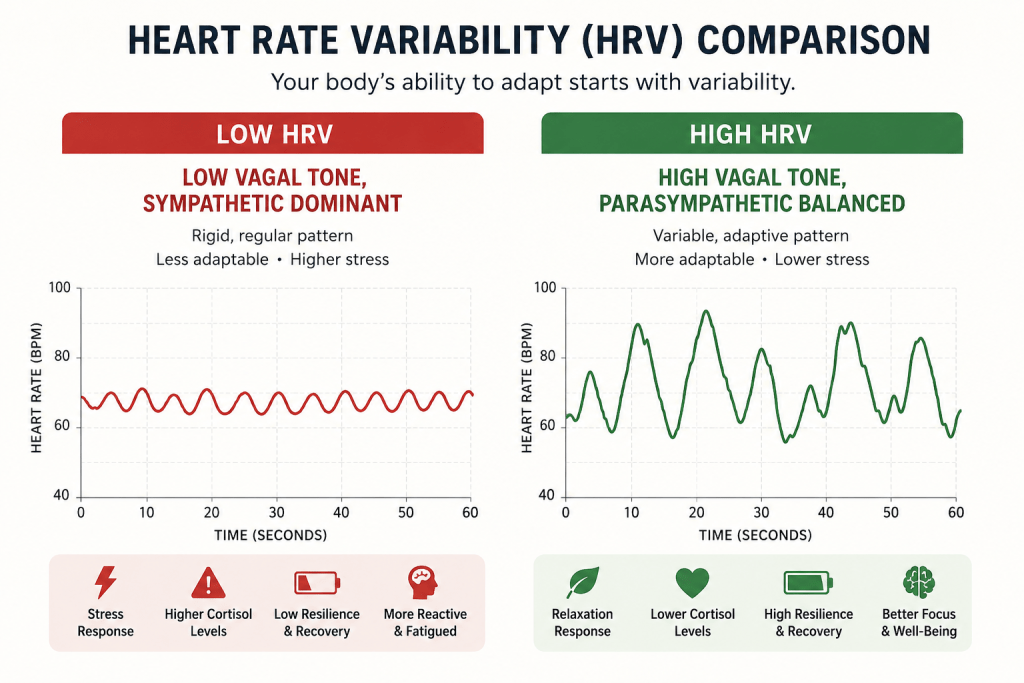
Heart rate variability is the variation in time between successive heartbeats. A heart with greater variability is generally under stronger parasympathetic influence, while rigid regularity can indicate lower vagal input.
HRV does not measure how fast or slowly the heart beats. It reflects how responsive and adaptable the autonomic nervous system is.
Higher HRV is associated with better cardiovascular health, lower inflammation, stronger cognitive function, greater psychological resilience, and longer life. Lower HRV is associated with cardiovascular events, inflammatory disease progression, cognitive decline, and all-cause mortality.
For midlife women, HRV tracking is now widely accessible. Devices such as Oura, Whoop, Apple Watch, and Garmin measure HRV during sleep, often using RMSSD, a metric sensitive to vagal activity.
Tracking HRV trends over several weeks or months can provide a real-time view of autonomic balance. A few practical points can help you interpret the data:
Free 28-Day Fascia Reset Email Course
Get our Free 28-day email course series to help with 1 or 2 exercises per day to release your fascia. One short lesson per day. Two minutes to read each.
- Individual Baseline: Absolute HRV values vary widely from person to person. Compare your current HRV with your own three-month average rather than someone else’s score.
- Age-Related Decline: HRV naturally tends to decrease with age. The direction of your personal trend matters more than a single number.
- Long-Term Trajectory: A woman in her fifties whose HRV is gradually increasing may be improving her recovery capacity. A woman in her forties whose HRV is consistently falling may be experiencing stress that has not yet become obvious.
- Daily Fluctuations: Poor sleep, intense exercise, alcohol, illness, or emotional stress can temporarily lower HRV. Weekly and monthly patterns provide more useful information than one isolated reading.
- Lifestyle Response: The practices that improve HRV are also connected to better nervous system regulation and healthier aging. A rising trend can indicate that your body is responding well to sleep, exercise, breathwork, meditation, and other recovery practices.
When HRV improves in response to the practices below, it suggests that parasympathetic regulation and recovery capacity are strengthening at the same time.
Why Does Menopause Disrupt Autonomic Balance?
The hormonal transition of midlife affects autonomic balance in ways that compound the sympathetic drift described in emerging research. Five specific mechanisms matter:
- Estrogen Withdrawal: Estrogen supports parasympathetic tone and helps control inflammation. As levels decline, the nervous system shifts toward sympathetic dominance.
- Progesterone Loss: Progesterone supports GABA activity, relaxation, and restful sleep. Its early decline can make winding down more difficult during perimenopause.
- Evening Cortisol Elevation: Cortisol may remain elevated later into the evening during midlife. This delays parasympathetic activation and interferes with deep sleep.
- Reduced Sleep Quality: Hot flashes, night sweats, and fragmented sleep reduce time spent in deep sleep. This limits cellular maintenance and weakens vagal tone.
- Life-Stage Stress: Caregiving, career demands, financial pressure, and family responsibilities often peak during midlife. These pressures increase sympathetic activation when the body is already less resilient.
The combined effect is a less favorable autonomic baseline for many women in their late forties and fifties. This is the biological backdrop against which lifestyle medicine interventions must work.
Free 28-Day Fascia Reset Email Course
Get our Free 28-day email course series to help with 1 or 2 exercises per day to release your fascia. One short lesson per day. Two minutes to read each.
Which 7 Practices Restore Parasympathetic Tone?
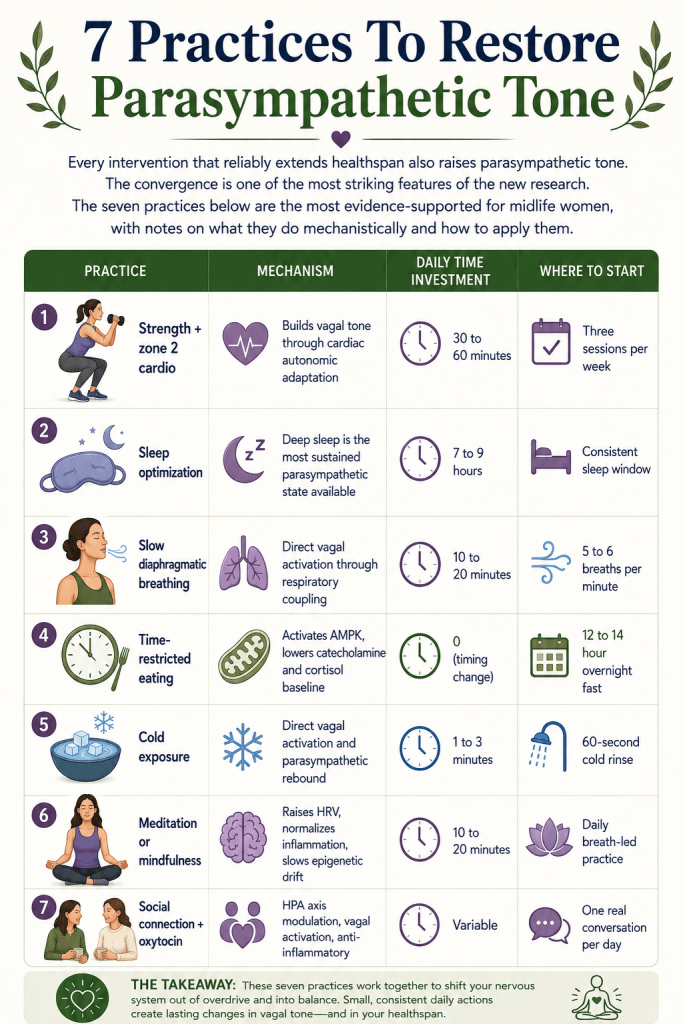
Every intervention that reliably extends healthspan also raises parasympathetic tone. The convergence is one of the most striking features of the new research. The seven practices below are the most evidence-supported for midlife women, with notes on what they do mechanistically and how to apply them.
|
Practice |
Mechanism |
Daily Time Investment |
Where to Start |
|
Strength + zone 2 cardio |
Builds vagal tone through cardiac autonomic adaptation |
30 to 60 minutes |
Three sessions per week |
|
Sleep optimization |
Deep sleep is the most sustained parasympathetic state available |
7 to 9 hours |
Consistent sleep window |
|
Slow diaphragmatic breathing |
Direct vagal activation through respiratory coupling |
10 to 20 minutes |
5 to 6 breaths per minute |
|
Time-restricted eating |
Activates AMPK, lowers catecholamine and cortisol baseline |
0 (timing change) |
12 to 14 hour overnight fast |
|
Cold exposure |
Direct vagal activation and parasympathetic rebound |
1 to 3 minutes |
60-second cold rinse |
|
Meditation or mindfulness |
Raises HRV, normalizes inflammation, slows epigenetic drift |
10 to 20 minutes |
Daily breath-led practice |
|
Social connection + oxytocin |
HPA axis modulation, vagal activation, anti-inflammatory |
Variable |
One real conversation per day |
Each one deserves a brief expansion.
Strength Training and Zone 2 Cardio
Of all interventions, exercise has the strongest evidence base for raising vagal tone and HRV in midlife women. The combination of resistance training (which preserves the lean muscle that protects metabolic rate) and zone 2 cardio (which builds cardiovascular and mitochondrial efficiency) produces the largest sustained HRV improvements in the available evidence. Three sessions per week is the realistic minimum.
Sleep Optimization
Sleep is the biological context in which parasympathetic tone is most fully expressed. Deep slow-wave sleep is when the glymphatic system clears metabolic waste from the brain, growth hormone supports tissue repair, and cellular maintenance runs at full capacity.
Habitual sleep below seven hours is associated with accelerated epigenetic aging, shorter telomeres, and higher all-cause mortality. The single most important intervention most midlife women can make is protecting an eight-hour sleep window with consistent timing.
Slow Diaphragmatic Breathing
Breathing at approximately five to six breaths per minute (roughly a five to six second inhale and five to six second exhale) maximizes respiratory sinus arrhythmia, the natural coupling between breath and heart rate variability. The effect is direct and measurable within minutes. Daily practice produces lasting changes in resting HRV. This is the single most accessible vagal training tool available, requires no equipment, and works at any age.
Time-Restricted Eating
A 12 to 14 hour overnight fast reduces circulating catecholamines and cortisol, activates AMPK, and supports the cellular maintenance processes that chronic sympathetic activation suppresses. Most women in midlife do better with a moderate fasting window (12 to 14 hours) than with the more aggressive 16 to 18 hour protocols popular online, because longer fasting can elevate cortisol in ways that work against the goal.
The Macro Calculator and the Macro Miracle Mediterranean Cookbook give you the nutrition framework to pair with the fasting window.
Free 28-Day Fascia Reset Email Course
Get our Free 28-day email course series to help with 1 or 2 exercises per day to release your fascia. One short lesson per day. Two minutes to read each.
Cold Exposure
Brief cold water immersion or cold rinses at the end of a shower trigger the diving reflex and activate the vagus nerve directly. The downstream effect is a parasympathetic rebound that, with regular practice, raises resting HRV. Sixty seconds of cold water at the end of a regular shower is enough to start.
Meditation or Mindfulness
Meditation practices that emphasize slow diaphragmatic breathing and sustained attentional focus produce reliable HRV improvements. There is also encouraging epigenetic evidence: studies of regular meditators show methylation patterns at aging-relevant gene loci that are more favorable than matched controls. The practice does not need to be elaborate. Ten minutes per day of breath-led meditation is enough.
Social Connection and Oxytocin
Real social contact (in-person, sustained, with people who know you) activates oxytocin pathways that converge on parasympathetic activation. Chronic social isolation produces a sympathetic overdrive state with elevated inflammation, lower HRV, and accelerated epigenetic aging. One real conversation per day with someone who genuinely sees you is biologically active.
“The intervention I find most underestimated by women in midlife is sleep. They will do the workouts, take the supplements, try the breathwork. Sleep gets treated as flexible because it has always been the thing that gets cut first when life gets full. I tell every coaching client the same thing: protect the eight-hour sleep window before you optimize anything else. The other six practices in the list work two or three times harder when sleep is in place underneath them, and they barely move the needle when it is not.”
Terry Tateossian, Founder of The House of Rose
Why Can a Retreat Combine All Seven Practices?
The seven practices can all be done at home. The challenge is that daily life rarely allows more than two or three of them to happen consistently in the same week.
A late work email pushes sleep back. Breathwork gets skipped because the laundry is not finished. The cold rinse loses out to a warm shower because the rest of the day has already felt difficult.
Why Is Consistency Hard at Home?
The problem is not that women do not understand what supports recovery. The problem is that each practice has to compete with work, caregiving, household responsibilities, and constant interruptions.
Even when one or two habits stay consistent, the full combination of movement, sleep, breathing, eating patterns, cold exposure, meditation, and social connection is difficult to maintain at the same time.
How Does a Retreat Bring the Practices Together?
A retreat is designed to make all seven practices happen together for five days:
- Strength and Movement: Sessions are already built into the daily schedule.
- Sleep Optimization: The environment removes many of the inputs that delay or disrupt sleep.
- Slow Breathing: Breathwork is included as part of the structured practice.
- Time-Restricted Eating: The eating window is naturally organized around the meals served.
- Cold Exposure: Cold water and recovery practices are integrated into the program.
- Meditation: The group practices together, making consistency easier.
- Social Connection: Meaningful interaction happens naturally within the small retreat group.
The cumulative effect on the autonomic nervous system is what many guests describe as a noticeable shift around day three. Sleep becomes deeper, the chest begins to relax, and the mental looping that has been running for years starts to quiet down.
By day five, the nervous system has experienced a more consistent recovery pattern than most women can create at home in the same amount of time. Home practices can then help sustain that shift after the retreat ends.
This is the structural logic behind the Deeply Restorative Women’s Yoga Retreats at THOR. The five-day experience takes place at the Smoky Mountain property and is capped at twelve women.
The retreat is not simply a vacation. It is a concentrated nervous system reset built around the mechanisms described in the emerging research.
“By day three of any retreat we run, I can see the shift in the room. Women are sleeping through the night for the first time in years. The shoulders drop. The voice slows down. The eye contact opens up. None of that is performance. That is the parasympathetic nervous system coming back online after years of suppression. The fact that the science now explains exactly why this happens, and why it slows biological aging at the cellular level, is what makes me hopeful about what this kind of work can do for midlife women over the next decade.”
Terry Tateossian, Founder of The House of Rose
Which Health Metrics Should You Track or Ignore?
The wearable and biometric tracking space has expanded rapidly, but much of the available data is noise. Only a small group of metrics clearly reflects autonomic balance and recovery.
Focus on these metrics:
- Heart Rate Variability: Track RMSSD or your wearable’s normalized HRV score during sleep. Focus on weekly and monthly trends rather than daily fluctuations.
- Resting Heart Rate: Look for a gradual downward trend over several months. A lower resting heart rate at the same fitness level often reflects improving vagal tone.
- Sleep Duration and Continuity: Monitor total sleep time, deep sleep minutes, and time spent awake during the night. These measures can show whether your body is getting enough uninterrupted recovery.
- Subjective Energy: Rate your energy from 1 to 10 at the same time each day. Watch the long-term pattern rather than focusing on one difficult day.
- Body Weight: Track your weight weekly instead of daily. Interpret the trend within the context of the Macro Calculator framework.
Ignore or treat these metrics as low priority:
- Daily Step Counts: Steps are loosely associated with health but reveal little about autonomic function on their own. They can also be increased without improving recovery or overall fitness.
- Calorie Tracking: Detailed calorie counting is unnecessary unless you are actively working on body composition with a coach. For many women, it creates more stress than useful insight.
- Single-Day HRV Readings: One unusually high or low reading provides little meaningful information. HRV becomes useful when viewed across several weeks or months.
- Wearable Biological Age Estimates: The science behind these estimates is still developing, and the numbers are often inaccurate. They may create anxiety without providing actionable information.
Important: Wearable data can offer useful insight, but it is not a diagnostic tool. Persistent changes in sleep, mood, energy, or physical symptoms should be discussed with a clinician rather than evaluated through wearable HRV alone.
Free 28-Day Fascia Reset Email Course
Get our Free 28-day email course series to help with 1 or 2 exercises per day to release your fascia. One short lesson per day. Two minutes to read each.
What Are Your Next Steps?
If the framework in this article resonates and you want to act on it, here are the four next steps in order of friction.
- Get a baseline HRV reading. Most modern wearables (Oura, Whoop, Apple Watch, Garmin) will produce a usable HRV trend within two weeks. Knowing your starting point makes everything else measurable.
- Pick three of the seven practices to start with. The realistic combination for most midlife women is sleep, strength + zone 2 cardio, and slow diaphragmatic breathing. Add the others as those three become habitual.
- Build the nutrition foundation underneath. The free Macro Calculator gives you your personalized starting numbers. The Macro Miracle Mediterranean Cookbook is the kitchen-side companion. The foundational supplement collection supports magnesium, omega-3, vitamin D, and the other nutrients that sleep and parasympathetic function depend on.
- Consider an immersive reset. The Deeply Restorative Yoga and Nature Retreat at THOR concentrates all seven practices into five days at the Smoky Mountain property. For sustained 1:1 work alongside or in place of a retreat, the Monthly Personal Training and Nutrition Coaching Program is the longer-arc option.
Frequently Asked Questions
What is the parasympathetic nervous system in simple terms?
The parasympathetic nervous system is the rest-and-repair half of the autonomic nervous system. It slows the heart, supports digestion, lowers blood pressure, and activates the cellular maintenance processes that keep tissues healthy over time. The sympathetic nervous system is its counterpart, the fight-or-flight half that activates during stress and acute demand.
Why does the parasympathetic nervous system matter more after age 40?
Hormonal changes during perimenopause and menopause shift the autonomic balance toward sympathetic dominance. Estrogen withdrawal reduces parasympathetic buffering, progesterone loss removes a calming signal, cortisol patterns shift toward evening elevation, and sleep architecture becomes more fragmented.
The result is that midlife women have less autonomic recovery capacity than they did a decade earlier and need to be more deliberate about restoring it.
What is heart rate variability and how do I check mine?
Heart rate variability (HRV) is the variation in time intervals between successive heartbeats. Higher HRV indicates stronger parasympathetic tone and better autonomic regulation. Most modern wearables (Oura, Whoop, Apple Watch, Garmin) calculate HRV during sleep and report it as a trend. Read your own HRV against your three-month rolling average rather than against population norms or other people’s numbers.
How does menopause affect vagal tone?
Vagal tone declines with age generally, and the hormonal changes of menopause accelerate that decline through several mechanisms. Estrogen loss removes a parasympathetic-supporting signal. Sleep disruption during perimenopause reduces the deep-sleep windows in which vagal tone gets restored.
Cortisol dysregulation prolongs the evening sympathetic activation that suppresses parasympathetic recovery. The combination produces measurably lower vagal tone in the average woman by her early fifties compared to her early forties.
Can I rebuild vagal tone in my fifties or sixties?
Yes, and the research is consistent on this. Vagal tone responds to deliberate practice at any age. Women in their fifties and sixties who add strength training, sleep optimization, breathwork, and the other practices in this article typically see measurable HRV improvements within four to eight weeks, with larger gains accumulating over months and years.
What is the single most effective practice for raising parasympathetic tone?
Sleep is the single most underestimated and highest-impact practice. Deep slow-wave sleep is the most sustained parasympathetic state available, and protecting an eight-hour sleep window with consistent timing produces larger improvements in HRV, inflammation, and energy than any other single intervention. The other six practices in the list work harder when sleep is in place underneath them.
Free 28-Day Fascia Reset Email Course
Get our Free 28-day email course series to help with 1 or 2 exercises per day to release your fascia. One short lesson per day. Two minutes to read each.
Is slow breathing actually effective for vagal tone?
The evidence on slow diaphragmatic breathing is strong. Breathing at approximately five to six breaths per minute produces acute and measurable increases in HRV through direct vagal activation. Regular practice (ten to twenty minutes daily) produces lasting changes in resting HRV. The technique requires no equipment and can be started today.
Should I try cold exposure?
Cold exposure is one of the most direct ways to activate the vagus nerve. A sixty-second cold rinse at the end of a regular shower is enough to start, and the parasympathetic rebound that follows is what produces the benefit. If you have cardiovascular conditions, talk to your clinician before starting. For most healthy midlife women, brief cold exposure is safe and effective.
Does intermittent fasting help or hurt vagal tone in midlife women?
A moderate fasting window (12 to 14 hours overnight) supports parasympathetic tone in most women by reducing baseline catecholamines and cortisol while activating AMPK. More aggressive protocols (16 to 18 hours or more) can elevate cortisol in midlife women in ways that work against the goal. Start with 12 hours and see how your body responds before extending.
Can stress accelerate aging?
The new research suggests that chronic stress, through its effect on autonomic balance, drives many of the cellular processes that produce aging biology. Stress is not just a quality-of-life issue. It is a biological aging input. Restoring parasympathetic tone is one of the most evidence-supported ways to slow that input.
How does social connection fit into nervous system aging?
Real in-person social connection activates oxytocin pathways that converge on parasympathetic activation. Chronic social isolation produces a sympathetic overdrive state with elevated inflammation, lower HRV, and accelerated epigenetic aging. One real conversation per day with someone who genuinely sees you is biologically active.
What is vagus nerve stimulation and should I be using it?
Vagus nerve stimulation (VNS) is the direct electrical stimulation of the vagus nerve, available either through surgically implanted devices (FDA-approved for epilepsy, depression, and now rheumatoid arthritis) or non-invasive transcutaneous devices applied at the ear or neck.
The disease-specific evidence is strong. The longevity-specific evidence in healthy aging populations is still being built. For most midlife women, the lifestyle interventions in this article are the right starting point. VNS is worth tracking as the clinical evidence matures.
How does this connect to menopause symptoms specifically?
Many menopause symptoms (hot flashes, night sweats, sleep disruption, anxiety, mood changes, brain fog, joint pain, weight gain) are amplified by autonomic dysregulation. Restoring parasympathetic tone often improves these symptoms even when hormone levels remain unchanged, because the symptoms are partly driven by the nervous system’s reduced capacity to recover from the hormonal turbulence.
Should I see a doctor before starting these practices?
Always consult your healthcare provider before starting any new routines, programs, or nutrition plans to ensure you receive the best medical advice and strategy for your specific individual needs. This is especially important if you have cardiovascular conditions, are on medications that affect heart rate or blood pressure, or have any chronic health concerns.
References
- Errico, J. P., Ben-Azu, B., Gargus, M., et al. (2025). Sympathetic-parasympathetic system deregulation theory of aging. npj Aging, 11, 100.
- López-Otín, C., Blasco, M. A., Partridge, L., Serrano, M., & Kroemer, G. (2013). The hallmarks of aging. Cell, 153(6), 1194–1217.
- López-Otín, C., Blasco, M. A., Partridge, L., Serrano, M., & Kroemer, G. (2023). Hallmarks of aging: An expanding universe. Cell, 186(2), 243–278.
- Tracey, K. J. (2002). The inflammatory reflex. Nature, 420(6917), 853–859.
- Borovikova, L. V., Ivanova, S., Zhang, M., et al. (2000). Vagus nerve stimulation attenuates the systemic inflammatory response to endotoxin. Nature, 405(6785), 458–462.
- Shaffer, F., & Ginsberg, J. P. (2017). An overview of heart rate variability metrics and norms. Frontiers in Public Health, 5, 258.
- Thayer, J. F., & Lane, R. D. (2007). The role of vagal function in the risk for cardiovascular disease and mortality. Biological Psychology, 74(2), 224–242.
- Antonelli, M., Donelli, D., & Barbieri, G. (2019). Effects of forest bathing (shinrin-yoku) on levels of cortisol as a stress biomarker: a systematic review and meta-analysis. International Journal of Biometeorology, 63(8), 1117–1134.
- Hopper, S. I., Murray, S. L., Ferrara, L. R., & Singleton, J. K. (2019). Effectiveness of diaphragmatic breathing for reducing physiological and psychological stress in adults: a quantitative systematic review. JBI Database of Systematic Reviews and Implementation Reports, 17(9), 1855–1876.
- Lehrer, P. M., & Gevirtz, R. (2014). Heart rate variability biofeedback: how and why does it work? Frontiers in Psychology, 5, 756.
- Poganik, J. R., Zhang, B., Baht, G. S., et al. (2023). Biological age is increased by stress and restored upon recovery. Cell Metabolism, 35(5), 807–820.e5.
- Slusher, A. (2025). How stress alters DNA methylation to accelerate biological age and how oxytocin may modulate this epigenetic pathway. Healthspan Research Briefings.
- Maltais, M. L., Desroches, J., & Dionne, I. J. (2009). Changes in muscle mass and strength after menopause. Journal of Musculoskeletal and Neuronal Interactions, 9(4), 186–197.
- Sipilä, S., Törmäkangas, T., Sillanpää, E., et al. (2020). Muscle and bone mass in middle-aged women: role of menopausal status and physical activity. Journal of Cachexia, Sarcopenia and Muscle, 11(3), 698–709.
- Cramer, H., Lauche, R., Langhorst, J., & Dobos, G. (2018). Yoga for menopausal symptoms: a systematic review and meta-analysis. Maturitas, 109, 13–25.
- Bauer, J., Biolo, G., Cederholm, T., et al. (2013). Evidence-based recommendations for optimal dietary protein intake in older people: a position paper from the PROT-AGE Study Group. Journal of the American Medical Directors Association, 14(8), 542–559.
- Boyle, N. B., Lawton, C., & Dye, L. (2017). The effects of magnesium supplementation on subjective anxiety and stress: a systematic review. Nutrients, 9(5), 429.
- Hannuksela, M. L., & Ellahham, S. (2001). Benefits and risks of sauna bathing. American Journal of Medicine, 110(2), 118–126.
- Genuis, S. J., & Genuis, R. A. (2012). Forest bathing, salutogenesis, and the architecture of healing. Journal of Environmental and Public Health, 2012, 681926.
- Holt-Lunstad, J., Smith, T. B., Baker, M., Harris, T., & Stephenson, D. (2015). Loneliness and social isolation as risk factors for mortality: a meta-analytic review. Perspectives on Psychological Science, 10(2), 227–237.
Disclaimer: Always consult with a healthcare professional before starting any new routines, programs, or nutrition plans to ensure you receive the best medical advice and strategy for your specific individual needs.
Free 28-Day Fascia Reset Email Course
Get our Free 28-day email course series to help with 1 or 2 exercises per day to release your fascia. One short lesson per day. Two minutes to read each.

Terry Tateossian is a Menopause Lifestyle Medicine Coach, Certified Personal Trainer & Nutritionist and the Founder of THOR: The House of Rose, a wellness brand serving women over 40 through retreats, coaching, macro-nutrition and community. As 25-year founder and entrepreneur, Terry spent two and a half decades building and running successful start-up businesses, an experience that put her on the front line of founder burnout long before she could name it. After facing serious health challenges, early onset menopause, and emotional eating while running her agency and raising two children, Terry rebuilt her health in her 40s and lost more than 80 pounds through evidence-based nutrition, training, and mindset work. Today, she helps women get strong, improve confidence, support hormone health, and create a stronger second half of life. Terry has been featured in major media outlets and is available for podcasts, expert commentary, brand collaborations, and speaking engagements on midlife health, reinvention, emotional eating, menopause wellness, and strength training for longevity. Get her free macro calculator (her cookbook companion) to start your journey to back to health.