
 By Cindy Adoptante
Get 11 Sample Recipes from Our Bestselling Mediterranean Cookbook.
Get our 11 Sample Recipes from our Best Selling Mediterranean Protein Friendly Cookbook. These are the most delicious recipes our retreat guests love the most. Easy, simple with few ingredients per meal. Make delicious heart-friendly and healthy meals you enjoy every day.
Why Am I Getting Chin Hairs? The Hormone Shift Behind It
Does this sound familiar?
You’re at a red light on the drive home from work, already thinking about the grocery store and how fast you can get dinner on the table. The sun is coming in low through the driver’s side window, the kind of light that shows you everything. You tip your chin toward the rearview mirror for a quick check, and there it is.
One dark, wiry hair, maybe half an inch long, standing straight out from the left side of your chin like it has every right to be there.
You’re sure you plucked one just like it not long ago. And now it’s back, and it brought a friend.
Before long, there’s a pair of tweezers in your car, another in your purse, and one in the bathroom drawer. You’ve got a little morning ritual by the window where the light is best. You haven’t mentioned it to anyone. Not your sister, not your friends, not your doctor. Privately, you may have already decided what it means: your testosterone must be climbing, something is off, your body is quietly turning on you.
Here is the kicker. For most women, testosterone hasn’t gone up at all. Something else has gone down. And for a lot of us, there’s a second factor working alongside it that has nothing to do with tweezers and everything to do with breakfast.
If this is happening to you in your late thirties, forties, or fifties, you’re far from alone.
Chin hair in women is incredibly common. It just doesn’t get talked about, so nobody warns you it’s coming or explains why. It isn’t random, either. It follows a well-documented hormonal pattern, and for many women it’s tied to something even more useful to understand: how your body is handling insulin and blood sugar.
That’s the part most articles skip, and it’s where your plate, not just your tweezers, becomes part of the solution.
In this guide, you’ll learn what’s happening with your hormones, why blood sugar and insulin matter more than you’d think, what the evidence says about every major removal option, and when a new chin hair is worth bringing up with your doctor instead of just plucking and moving on.
Why Does Chin Hair Suddenly Appear in Women?
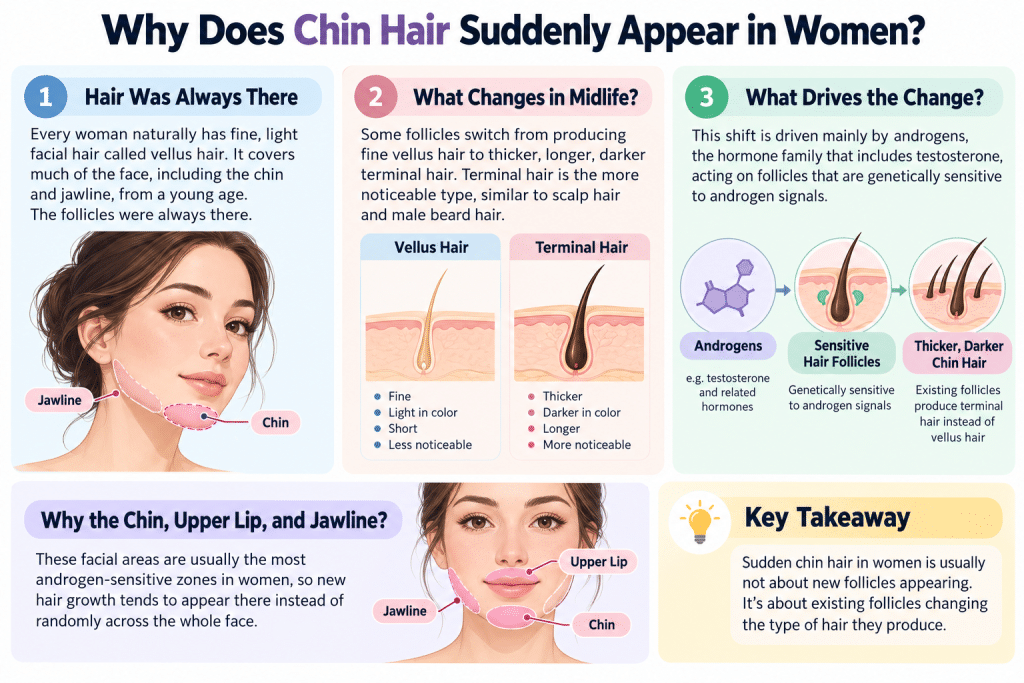
Every woman has fine, light, mostly invisible hair (called vellus hair) covering most of her face, including her chin and jawline, from a young age. What changes in midlife is not the presence of hair follicles, they were always there, but the conversion of some of those follicles from producing fine vellus hair into producing thicker, longer, darker terminal hair, the same type of hair that grows on the scalp or, in men, across the beard area.
This conversion is driven almost entirely by androgens, the hormone family that includes testosterone, acting on hair follicles that are genetically sensitive to androgen signaling. The chin, upper lip, and jawline are, for most women, the most androgen-sensitive facial zones, which is exactly why new hair growth concentrates there rather than appearing randomly across the whole face.
It’s Not Rising Testosterone. It’s Falling Estrogen.
This is the part that surprises most women: in the majority of midlife cases, testosterone isn’t climbing.
Estrogen is dropping.
Through perimenopause and menopause, the ovaries’ estrogen production falls steeply.
Androgens decline too, but much more slowly and gently. Some women’s androgen levels barely move. What changes is the ratio.
For decades, estrogen balanced and softened the effect of androgens on your hair follicles. As estrogen steps back faster than androgens do, the androgen effect that was always there gets unmasked. Doctors sometimes call this relative androgen dominance.
There’s a second player at the follicle itself. An enzyme in the skin called 5-alpha reductase converts testosterone into dihydrotestosterone, or DHT, a much more potent form. In androgen-sensitive facial follicles, DHT is what drives the switch from soft vellus hair to coarse terminal hair. Here’s the irony: on your scalp, the same hormone tends to do the opposite and shrink follicles.
That’s why some women notice their part widening at the same time new hairs appear on their chin. It feels like two opposite problems. It’s one hormonal shift showing up in two places.
“I think this is one of the most freeing things a woman can learn about her body in midlife. So many of us quietly assume that a new chin hair means something has gone wrong. Understanding that it’s usually estrogen stepping back, not testosterone surging forward, changes the whole emotional weight of it. It becomes an explainable part of a transition, not a malfunction. I’m not a physician, and this isn’t medical advice, but knowing the mechanism is often what takes the shame and the worry out of it, and it’s something we talk about openly in our community for exactly that reason.”
Terry Tateossian, Founder of The House of Rose
Get 11 Sample Recipes from Our Bestselling Mediterranean Cookbook.
Get our 11 Sample Recipes from our Best Selling Mediterranean Protein Friendly Cookbook. These are the most delicious recipes our retreat guests love the most. Easy, simple with few ingredients per meal. Make delicious heart-friendly and healthy meals you enjoy every day.
Why the Chin and Jawline?
Androgen receptors aren’t spread evenly across your face and body. The chin, jawline, and upper lip carry a high concentration of androgen-sensitive follicles compared with the cheeks or forehead. It’s the same blueprint that creates a male beard.
Women have the same map; it’s just usually activated by a much smaller signal. Once the estrogen-to-androgen ratio shifts, those high-sensitivity follicles are the first to respond.
That’s why a few new chin hairs can feel far more noticeable (and far more upsetting) than a little extra hair on your arms or legs during the same years. If you’re noticing scalp thinning at the same time, our guide to menopause hair loss covers that side of the picture
The Blood Sugar & Chin Hair Connection
This is the piece that gets skipped in most chin hair discussions, and it’s one of the most useful parts of the whole story, because it’s something you can work on.
Insulin does more than manage blood sugar. It also affects a protein your liver makes called sex hormone-binding globulin (SHBG). SHBG grabs testosterone in your bloodstream and holds it in an inactive, bound form.
When insulin runs high for long stretches, as it does with insulin resistance, the liver makes less SHBG. Less SHBG means more free, active testosterone available to reach your hair follicles, even if your total testosterone hasn’t changed at all.
High insulin can also nudge the ovaries and adrenal glands to make more androgens. The research backs this up.
A 2019 study in Clinical Endocrinology looked at 2,139 Korean women aged 15 to 39 who didn’t have polycystic ovary syndrome (PCOS). A standard marker of insulin resistance (HOMA-IR) was linked to more facial and body hair, even after accounting for their androgen levels.
In plain language: insulin resistance tracked with more hair growth on its own. That study was in younger women, but the mechanism matters even more in midlife.
Falling estrogen tends to push insulin sensitivity in the wrong direction and shift fat toward the belly.
So for many women, two things are happening at once: the estrogen-androgen ratio is shifting, and insulin is creeping up.
That’s why blood sugar isn’t a side note in this conversation. It’s one of the few levers in the whole mechanism that you can pull.
How Common Is Chin Hair in Midlife?
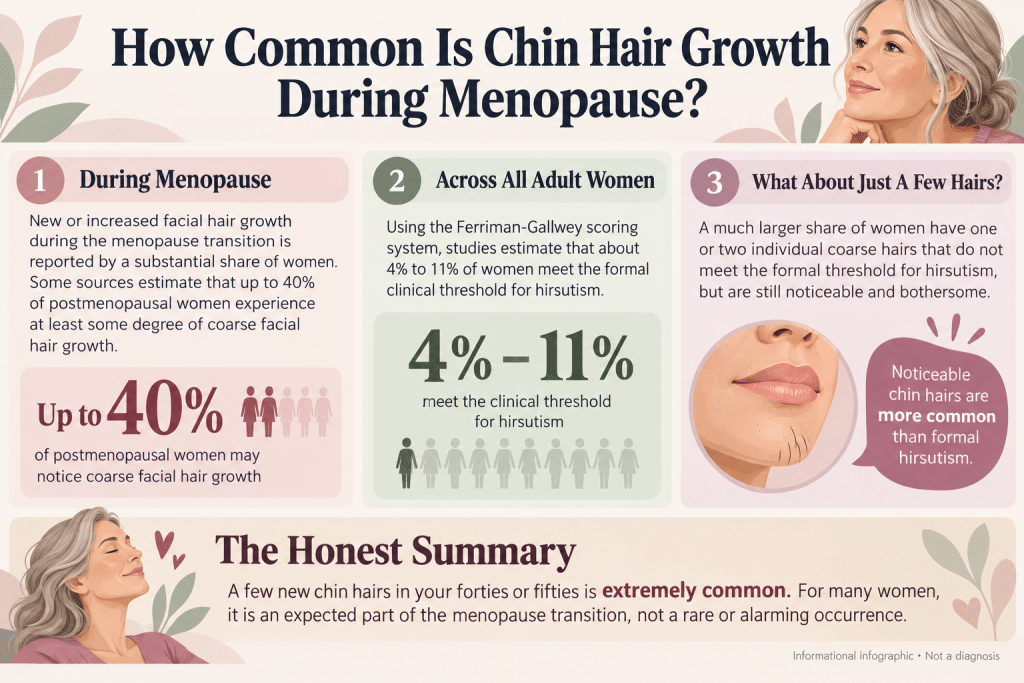
Very. It’s just rarely talked about.
- In surveys of postmenopausal women, roughly 4 in 10 report noticeable new or increased facial hair, most often on the chin.
- Clinically defined hirsutism (more on that next) affects about 5 to 10 percent of women of reproductive age.
- Far more women fall in between: a few coarse hairs that don’t meet any medical definition but are absolutely noticeable in the rearview mirror.
If you’ve got a few new chin hairs in your forties or fifties, you’re not unusual. You’re in very good company.
Get 11 Sample Recipes from Our Bestselling Mediterranean Cookbook.
Get our 11 Sample Recipes from our Best Selling Mediterranean Protein Friendly Cookbook. These are the most delicious recipes our retreat guests love the most. Easy, simple with few ingredients per meal. Make delicious heart-friendly and healthy meals you enjoy every day.
What Is the Difference Between Hirsutism and a Few Stray Chin Hairs?
Hirsutism is the medical term for excess coarse hair in a male-pattern distribution in women: chin, upper lip, chest, back, belly, and inner thighs.
Doctors assess it with the modified Ferriman-Gallwey scale, which scores hair growth in nine body areas from 0 to 4, for a total of 0 to 36.
A score around 8 or higher is a common threshold, though normal ranges vary by ethnicity and some studies use lower cutoffs.
A handful of chin hairs you pluck every few weeks, without new hair on your chest, back, or belly, usually sits well below that threshold. It reflects the chin’s local sensitivity to a normal midlife hormone shift, not a broader hormonal disorder. Hirsutism that’s more widespread
When Is Chin Hair Growth a Sign of Something More Serious?
The gradual, chin-and-jawline-focused hair growth described throughout this article is, for the overwhelming majority of midlife women, a normal expected consequence of the menopause transition. But a specific set of warning signs point toward something that deserves prompt medical evaluation rather than at-home management, because they can indicate an androgen-secreting tumor of the ovary or adrenal gland or another underlying endocrine condition, both rare but documented in the medical literature, including in postmenopausal women.
- Rapid onset: Hair growth that develops and progresses over weeks to a few months, rather than gradually over a year or more, is a meaningfully different pattern than the typical slow menopausal shift and warrants evaluation.
- Signs of virilization: Deepening of the voice, significant increase in muscle mass, enlargement of the clitoris, or significant scalp hair thinning occurring alongside the new facial hair are signs that go beyond typical relative androgen dominance and should be evaluated promptly.
- Hirsutism starting well after menopause is established: New-onset significant hirsutism appearing years after menopause, rather than during the perimenopausal transition itself, is a pattern that has been specifically documented in case reports of postmenopausal ovarian hyperthecosis and androgen-secreting tumors, and is worth flagging to a physician specifically for that reason.
- Accompanying symptoms: Unexplained weight gain, irregular bleeding after menopause, or new acne alongside the hair growth are worth mentioning together rather than addressing each in isolation.
None of this is meant to cause alarm. The overwhelming majority of chin hair in midlife women reflects the normal hormonal mechanism described throughout this article, not a rare underlying tumor. But because the rare cause exists and is treatable when caught, it is worth knowing the difference between “the expected pattern” and “worth a conversation with your doctor.”
What Are the Best Temporary Methods for Removing Chin Hair?
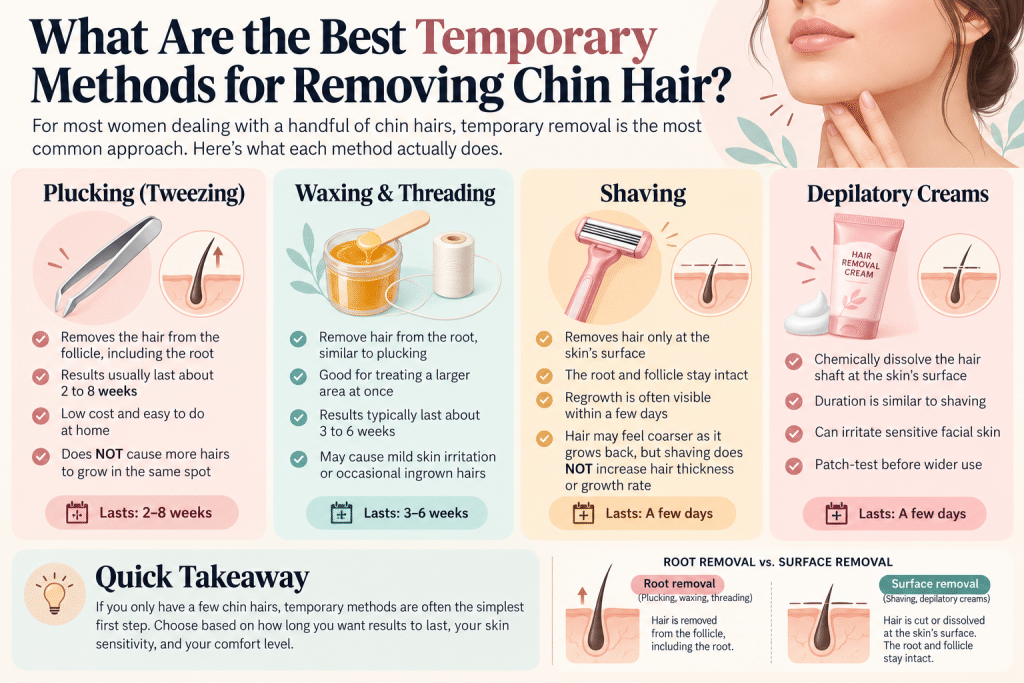
For the vast majority of women dealing with a handful of chin hairs, temporary removal remains the most common approach, and it is worth being clear-eyed about what each method actually does.
- Plucking (tweezing): Removes the hair from the follicle, including the root, giving results that last roughly two to eight weeks depending on the individual hair’s growth cycle. It is the most accessible and lowest-cost option and, contrary to a persistent myth, does not cause more hairs to grow in the same spot (covered in detail in Section 11).
- Waxing and threading: Both remove hair from the root similarly to plucking but can treat a larger area at once. Results last on a similar general timeframe to plucking, roughly three to six weeks, and both carry a modest risk of skin irritation or, less commonly, ingrown hairs in the treated area.
- Shaving: Removes hair at the skin’s surface only, leaving the root and follicle intact, which means regrowth is faster, often within a few days, and the cut hair tip can initially feel coarser as it grows back, though shaving does not change the actual thickness or rate of hair growth at the follicle level despite the common perception that it does.
- Depilatory creams: Chemically dissolve the hair shaft at the skin surface, similar in duration to shaving, and carry a real risk of skin irritation on the more sensitive facial skin, worth patch-testing before broader use.
None of these methods affect the underlying hormonal or follicular process driving the hair growth in the first place; they manage the visible symptom, which is a completely reasonable and valid approach for many women, but it is worth understanding that as the nature of what these methods do.
Get 11 Sample Recipes from Our Bestselling Mediterranean Cookbook.
Get our 11 Sample Recipes from our Best Selling Mediterranean Protein Friendly Cookbook. These are the most delicious recipes our retreat guests love the most. Easy, simple with few ingredients per meal. Make delicious heart-friendly and healthy meals you enjoy every day.
Laser Hair Removal vs Electrolysis For Chin Hair?
For women looking for a longer-term reduction rather than ongoing temporary removal, laser hair removal and electrolysis are the two established clinical options, and the comparative data between them is worth understanding honestly.
Laser Hair Removal
Uses targeted light energy absorbed by pigment in the hair follicle to damage the follicle’s ability to produce hair. Comparative studies have found laser treatment achieves substantial hair reduction, with one study reporting roughly 77 percent reduction after five treatment sessions, and continued clearance sustained at follow-up months later.
Laser tends to work best on darker, coarser hair against lighter skin tones, since it relies on pigment contrast, though modern laser systems have expanded effectiveness across a broader range of skin tones. Studies comparing laser to electrolysis directly have found laser treatment generally requires fewer total sessions, with one comparative study reporting an average of roughly 8 sessions for laser versus roughly 24 sessions for electrolysis to reach comparable endpoints.
Electrolysis
Uses a fine probe inserted into the individual hair follicle to deliver an electrical current that damages the follicle at its base, treating one hair at a time. It is the only hair removal method cleared by the FDA under the specific “permanent hair removal” classification, compared to laser’s “permanent hair reduction” classification, a regulatory distinction related to how each device clearance process is structured, not necessarily a reflection of a clear difference in ultimate clinical outcome for a given individual.
Electrolysis is more time-intensive per session and requires more total sessions, but it is not limited by hair or skin pigment in the way laser is, making it a more universally applicable option regardless of hair or skin color.
The Honest Comparison
Across the available studies, laser tends to show faster, higher-percentage reduction in fewer sessions for most candidates, while electrolysis offers a treatment mechanism not dependent on pigment contrast and is formally classified as permanent.
Neither method addresses the underlying hormonal driver, which is why some hair regrowth over time, particularly during ongoing hormonal transitions like perimenopause, is a realistic expectation with either method rather than a sign either failed.
What Topical and Prescription Treatments Can Help With Chin Hair Growth?
Several medical treatment options can help manage unwanted facial hair growth. These approaches work differently and require consideration of individual health needs and the underlying hormonal factors involved.
Eflornithine Cream (Brand Name Vaniqa)
A prescription topical cream that works by inhibiting an enzyme needed for hair growth at the follicle, slowing new hair growth rather than removing existing hair. In clinical trials, roughly 32 percent of women using eflornithine cream showed marked improvement or better after 24 weeks, compared to roughly 8 percent using the inactive vehicle cream alone.
Improvement builds gradually over 4 to 8 weeks or longer, and discontinuing the cream results in hair growth returning to baseline within roughly 8 weeks, meaning it functions as an ongoing management tool rather than a one-time fix. Notably, combining eflornithine cream with laser hair removal has been shown to meaningfully outperform laser alone, with one study reporting complete or near-complete hair clearance in roughly 93.5 percent of combined-treatment cases compared to roughly 68 percent with laser alone.
Oral Anti-Androgen Medications
For women with more significant hirsutism, particularly those with an underlying diagnosed condition, a physician may discuss prescription oral anti-androgens such as spironolactone, which works by blocking androgen receptor activity.
These require a prescription, medical supervision, and are not appropriate for every woman, particularly those who might become pregnant, and represent a decision to make directly with a physician rather than a self-directed option.
Hormone Therapy
For appropriate candidates going through the menopause transition, menopausal hormone therapy can help restore some of the estrogen-androgen balance described in Section 2, and some women notice a secondary benefit of reduced new hair growth alongside its primary indications.
This is a significant medical decision with its own distinct risk-benefit profile that deserves its own dedicated conversation with a physician, not a decision to make based on hair growth alone.
Get 11 Sample Recipes from Our Bestselling Mediterranean Cookbook.
Get our 11 Sample Recipes from our Best Selling Mediterranean Protein Friendly Cookbook. These are the most delicious recipes our retreat guests love the most. Easy, simple with few ingredients per meal. Make delicious heart-friendly and healthy meals you enjoy every day.
Does Plucking Chin Hair Make It Grow Back Thicker or Faster?
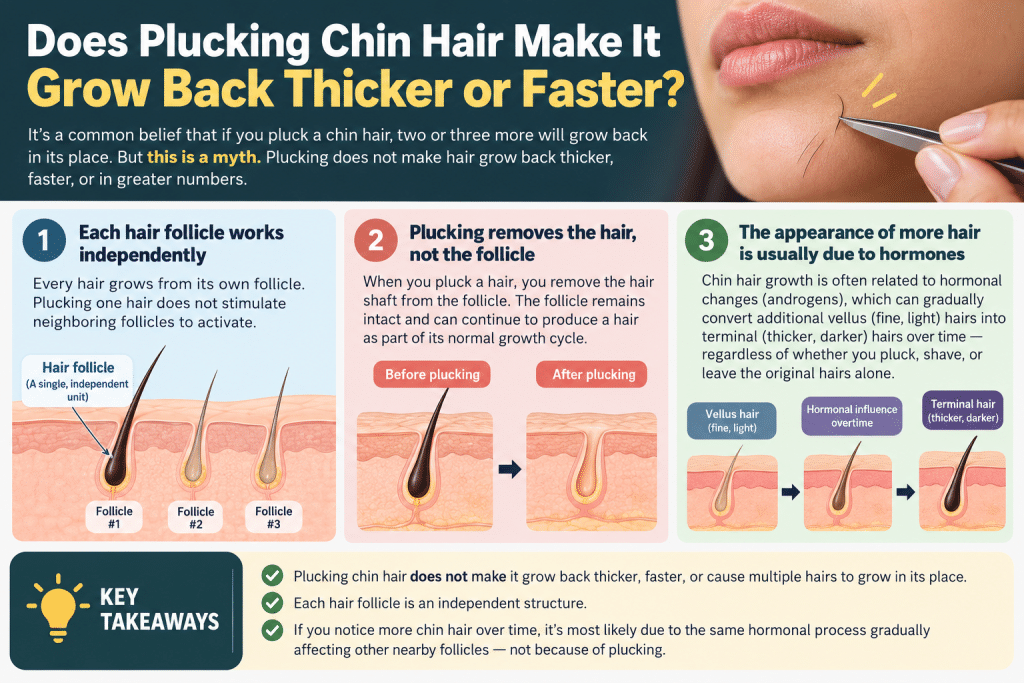
No. This is one of the most stubborn myths out there. Each hair follicle works on its own.
Plucking one hair doesn’t wake up the follicles around it, and it doesn’t make the same hair grow back thicker. So why does it feel like plucking makes it spread?
Because the hormonal shift that converted the first follicle is still happening. Nearby follicles are switching over on their own timeline, whether you pluck, shave, or leave them alone. The plucking just happens to be the thing you were doing when you noticed.
How Can Nutrition and Blood Sugar Management Help With Chin Hair?
Given the insulin and SHBG mechanism detailed in Section 4, dietary and lifestyle approaches that improve insulin sensitivity are not a vague wellness suggestion here; they are directly mechanistically connected to one of the two documented pathways driving increased free testosterone availability at the follicle.
- Stabilizing blood sugar through protein and fiber: Protein- and fiber-rich meals help reduce glucose and insulin spikes. Chronically high insulin suppresses SHBG and increases free testosterone, making stable blood sugar especially important. Our Menopause Diet Plan follows this approach to support the metabolic changes of this life stage.
- Prioritizing protein intake specifically: Adequate protein supports insulin sensitivity, satiety, and lean body mass, all of which intersect with the metabolic picture discussed in Section 4. Readers building out a personalized nutrition framework can start with our Free Macro Calculator to establish protein, fat, and carbohydrate targets sized to their body and activity level.
- Reducing refined carbohydrate and added sugar load: Diets heavy in refined carbohydrates and added sugar are more likely to drive the insulin spikes that suppress SHBG. This does not mean eliminating carbohydrates; it means favoring whole-food carbohydrate sources with fiber and protein alongside them rather than isolated refined sugar and starch.
- Movement’s role in insulin sensitivity: Regular movement, particularly resistance training, independently improves insulin sensitivity, adding a second lever alongside diet.
None of this will remove existing coarse hair or reverse the underlying hormonal shift of menopause itself. But for the specific insulin-driven pathway that compounds the hormonal one, nutrition is a concretely actionable, evidence-connected piece of the picture, not a stretch.
Does Spearmint Tea Reduce Chin Hair Growth?
Spearmint tea comes up constantly in discussions of natural approaches to hirsutism, and it deserves an honest look rather than either dismissal or overstatement.
A small 2007 study found that women with hirsutism who drank spearmint tea twice daily for five days showed an average 30 percent decrease in free testosterone, alongside increases in luteinizing hormone, follicle-stimulating hormone, and estradiol. A more rigorous 2008 randomized controlled trial out of the UK, involving 42 women over a 30-day period comparing spearmint tea to a placebo herbal tea, found that free and total testosterone were significantly reduced in the spearmint group compared to placebo. Participants’ own subjective ratings of their hirsutism also improved significantly in the spearmint group.
Here is the honest caveat: in that same rigorous trial, the objective, clinician-scored Ferriman-Gallwey hirsutism rating did not show a statistically significant difference between the spearmint and placebo groups over the 30-day study period.
The researchers noted this may reflect the relatively short study duration relative to how long an existing coarse hair takes to be affected by a hormonal change, rather than a definitive absence of any effect, but it means the current evidence supports a measurable hormonal effect (lower free testosterone) without yet supporting a clearly proven reduction in visible hair growth over a short study window.
Longer-duration research would be needed to say more definitively whether sustained spearmint tea intake meaningfully reduces visible hair growth over time, as opposed to just circulating hormone levels.
The fair summary: spearmint tea has real, repeatedly documented anti-androgen hormonal effects in randomized trials, worth knowing about, but the current evidence for a directly measurable reduction in visible facial hair specifically is not yet as strong as the hormonal evidence, and it should be understood as a modest, low-risk complement to the removal and nutrition strategies in this article, not a replacement for them.
Get 11 Sample Recipes from Our Bestselling Mediterranean Cookbook.
Get our 11 Sample Recipes from our Best Selling Mediterranean Protein Friendly Cookbook. These are the most delicious recipes our retreat guests love the most. Easy, simple with few ingredients per meal. Make delicious heart-friendly and healthy meals you enjoy every day.
What Does the Scientific Evidence Say About Chin Hair Growth and Treatment?
The following table summarizes the research findings behind the hormonal mechanisms, removal methods, medications, and lifestyle approaches discussed throughout this article.
| Claim | Evidence Strength | What the Research Shows |
|---|---|---|
| Menopause-related chin hair reflects relative androgen dominance, not rising testosterone | Strong | Well-documented mechanism: estrogen drops faster and further than androgens through the transition |
| Insulin resistance independently worsens hirsutism | Strong | Song et al. 2019, Clinical Endocrinology (n=2,139): HOMA-IR predicted mFG score independent of testosterone and BMI |
| Plucking causes more hairs to grow back | Not supported | Each follicle functions independently; apparent “spreading” reflects the ongoing hormonal process, not plucking itself |
| Laser hair removal produces substantial reduction | Strong | Comparative studies report approximately 77 percent reduction after five sessions |
| Electrolysis is more time-intensive but pigment-independent | Strong | Comparative studies report roughly 24 sessions for electrolysis vs. roughly 8 for laser to reach similar endpoints |
| Eflornithine cream meaningfully slows new hair growth | Moderate to Strong | RCT data: ~32 percent marked improvement vs. ~8 percent with vehicle at 24 weeks |
| Spearmint tea lowers free testosterone | Moderate to Strong | Multiple small RCTs show significant reductions in free and total testosterone |
| Spearmint tea reduces objective hirsutism score | Weak/Not yet supported | UK RCT found no significant change in clinician-scored Ferriman-Gallwey rating over 30 days |
| Nutrition/blood sugar management improves the underlying insulin-SHBG pathway | Strong (mechanism) | Well-established insulin/SHBG/free testosterone pathway; direct trial evidence specific to chin hair outcomes is more limited |
How Can You Build a Realistic Plan for Managing Chin Hair?
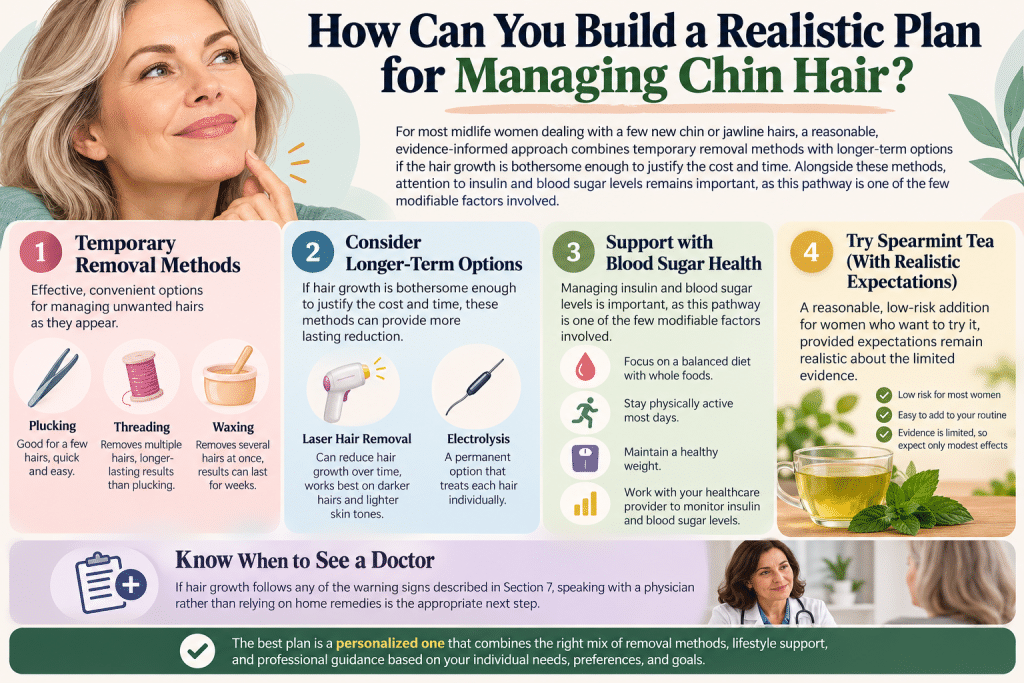
For most midlife women dealing with a few new chin or jawline hairs, a reasonable, evidence-informed approach combines temporary removal (plucking, threading, or waxing) with longer-term options like laser or electrolysis if the hair growth is bothersome enough to justify the cost and time. Alongside these methods, attention to insulin and blood sugar levels, as discussed in Sections 4 and 12, remains important because this pathway is one of the few modifiable factors involved.
Spearmint tea is a reasonable, low-risk addition for women who want to try it, provided expectations remain realistic about the limited evidence. However, if hair growth follows any of the warning signs described in Section 7, speaking with a physician rather than relying on home remedies is the appropriate next step.
What Are the Most Common Misconceptions About Chin Hair?
Several persistent misconceptions about chin hair can make normal hormonal changes more confusing than they need to be. Understanding what the evidence actually shows helps separate common myths from the mechanisms discussed throughout this article.
- Misconception: “It means my testosterone is high”: Not necessarily. In most cases, it reflects estrogen dropping faster than androgens, a shift in ratio rather than an absolute rise in testosterone.
- Misconception: “Plucking makes it grow back thicker or in greater numbers”: Not supported. Each follicle operates independently; the appearance of spreading reflects the ongoing hormonal process affecting nearby follicles over time, not the act of plucking itself.
- Misconception: “There’s nothing I can do about it besides removal”: Not accurate. The insulin-SHBG pathway described in Section 4 is a truly modifiable piece of the mechanism, even though it will not eliminate an already-converted terminal hair.
- Misconception: “Laser and electrolysis are basically the same thing”: Not accurate. They use different mechanisms, have different session requirements, and have different regulatory classifications, detailed in Section 9.
- Misconception: “Any new facial hair in your forties is just normal aging, no need to ever mention it to a doctor”: Mostly true, but with real exceptions. The pattern, pace, and accompanying symptoms matter, as detailed in Section 7.
Get 11 Sample Recipes from Our Bestselling Mediterranean Cookbook.
Get our 11 Sample Recipes from our Best Selling Mediterranean Protein Friendly Cookbook. These are the most delicious recipes our retreat guests love the most. Easy, simple with few ingredients per meal. Make delicious heart-friendly and healthy meals you enjoy every day.
How Does Chin Hair Awareness Fit Into the Broader THOR Framework?
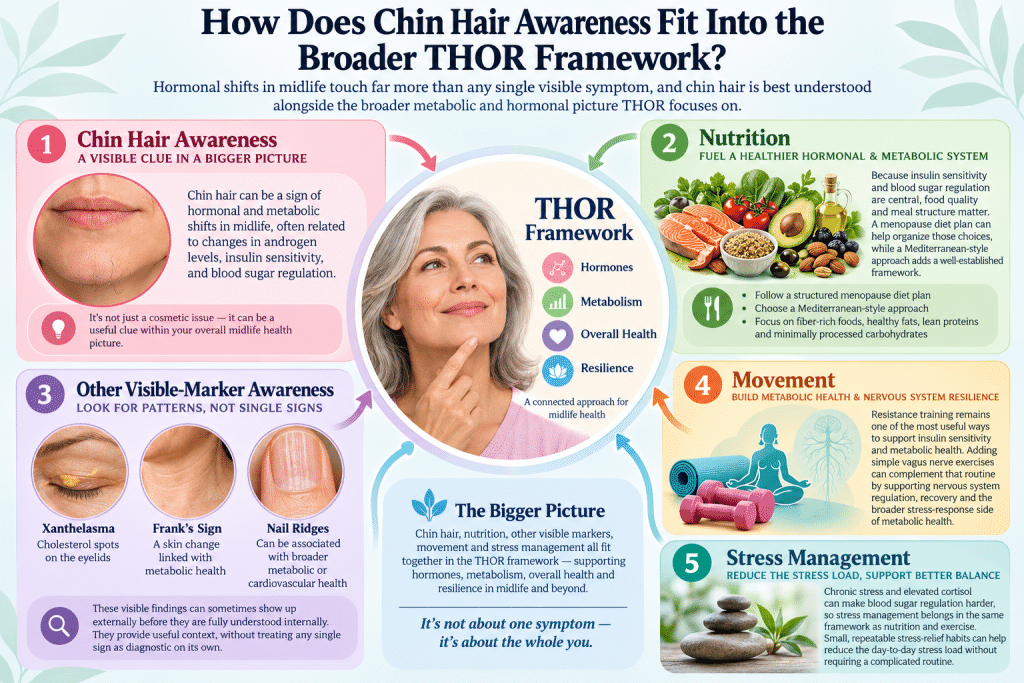
Hormonal shifts in midlife touch far more than any single visible symptom, and chin hair is best understood alongside the broader metabolic and hormonal picture THOR focuses on.
- Combine with nutrition: Because insulin sensitivity and blood sugar regulation are central to the mechanism discussed here, food quality and meal structure matter. A practical menopause diet plan can help organize those choices, while a Mediterranean-style approach adds a well-established framework built around fiber-rich foods, healthy fats, lean proteins, and minimally processed carbohydrates.
- Combine with other visible-marker awareness: Midlife changes can sometimes show up externally before they are fully understood internally. Learning more about xanthelasma, Frank’s sign, and nail ridges can provide useful context for other visible findings linked with broader metabolic or cardiovascular health, without treating any single sign as diagnostic on its own.
- Combine with movement: Resistance training remains one of the most useful ways to support insulin sensitivity and metabolic health. Adding simple vagus nerve exercises can complement that routine by supporting nervous system regulation, recovery, and the broader stress-response side of metabolic health.
- Combine with stress management: Chronic stress and elevated cortisol can make blood sugar regulation harder, so stress management belongs in the same framework as nutrition and exercise. Small, repeatable stress-relief habits can help reduce the day-to-day stress load without requiring a complicated routine.
This article is educational and is not a substitute for professional medical advice, diagnosis, or treatment. Always seek the advice of a qualified healthcare provider with any questions regarding a medical condition or before making changes based on information found here.
Get 11 Sample Recipes from Our Bestselling Mediterranean Cookbook.
Get our 11 Sample Recipes from our Best Selling Mediterranean Protein Friendly Cookbook. These are the most delicious recipes our retreat guests love the most. Easy, simple with few ingredients per meal. Make delicious heart-friendly and healthy meals you enjoy every day.
Frequently Asked Questions
Why am I suddenly getting chin hair in my forties or fifties?
The most common cause is relative androgen dominance: estrogen drops faster and more steeply than androgens through the menopause transition, unmasking an androgen effect on androgen-sensitive follicles in the chin and jawline that estrogen had been softening for decades. It typically reflects a shift in hormone ratio, not necessarily a rise in testosterone itself.
Does chin hair mean my testosterone is too high?
Not necessarily. In most midlife cases, total testosterone has not risen; what changed is the ratio between estrogen and androgens, along with, in some women, increased free testosterone availability due to insulin’s effect on SHBG (Section 4).
What does insulin have to do with chin hair?
Elevated insulin lowers sex hormone-binding globulin (SHBG), a protein that keeps testosterone in an inactive, bound state. Less SHBG means more free, active testosterone available to affect hair follicles. A large 2019 study found insulin resistance independently predicted hirsutism severity, separate from total testosterone level or BMI.
Does plucking make chin hair grow back thicker or in more spots?
No. This is a persistent myth. Each hair follicle functions independently, and plucking one does not stimulate neighboring follicles. The appearance of “spreading” reflects the same underlying hormonal process converting additional nearby follicles over time, not the act of plucking.
What actually works to remove chin hair long-term?
Laser hair removal and electrolysis are the two established options for longer-term reduction. Laser tends to achieve faster, higher-percentage results in fewer sessions for most candidates; electrolysis is more time-intensive but not limited by hair or skin pigment and is formally classified as permanent by the FDA.
Does spearmint tea actually work for chin hair?
The evidence is mixed and worth understanding honestly. Randomized trials show spearmint tea meaningfully lowers free and total testosterone. However, the most rigorous trial did not find a statistically significant change in objectively scored hirsutism over a 30-day period, possibly due to the study’s short duration. It is a reasonable, low-risk addition to a broader plan, not a proven standalone fix.
Can diet actually affect chin hair growth?
Diet cannot remove an already-converted terminal hair, but because insulin resistance is one of two documented drivers of increased free testosterone at the follicle, dietary and lifestyle approaches that improve insulin sensitivity (adequate protein, fiber, reduced refined sugar, regular movement) are mechanistically relevant to slowing new hair conversion, not just generally healthy advice.
When should I actually see a doctor about chin hair?
If hair growth develops rapidly over weeks rather than gradually over a year or more, if it appears alongside voice deepening, significant muscle gain, or other signs of virilization, if significant hirsutism starts well after menopause is already established, or if it comes with unexplained weight gain or postmenopausal bleeding, these patterns warrant prompt medical evaluation rather than at-home management.
Is chin hair in midlife women actually common?
Yes. Estimates suggest as many as 40 percent of postmenopausal women experience some degree of new coarse facial hair growth, and even outside that specific estimate, a few new chin hairs in your forties or fifties is a widely reported, expected part of the menopause transition for many women.
What is the Ferriman-Gallwey scale?
It is the standardized clinical tool used to assess hirsutism, scoring hair growth across nine body areas on a 0-to-4 scale for a total possible score of 0 to 36, with a score of 8 or higher generally considered the clinical threshold for hirsutism, though normal ranges vary somewhat by population.
Is eflornithine cream (Vaniqa) worth trying?
It has real, RCT-backed evidence for slowing new hair growth, with roughly 32 percent of users showing marked improvement by 24 weeks compared to roughly 8 percent using a placebo cream. It requires ongoing use, since hair growth returns to baseline within about 8 weeks of stopping, and works especially well when combined with laser treatment.
Can hormone therapy help with chin hair?
For appropriate candidates going through the menopause transition, restoring estrogen through hormone therapy can help shift the estrogen-androgen ratio back toward a more premenopausal balance, and some women notice reduced new hair growth as a secondary effect. This is a significant medical decision that should be made with a physician based on a woman’s full health picture, not decided on the basis of hair growth alone.
I write 3 essays per week on Lifestyle Medicine for women in midlife on what is happening in the body and what to do about it. No fluff, no hype. Free Subscription.
References
- Song, D. K., Hong, Y. S., Sung, Y. A., & Lee, H. (2019). Insulin resistance is associated with hirsutism in unselected reproductive-aged women. Clinical Endocrinology, 90(6), 862-868.
- Yildiz, B. O. (2013). Diagnosis of hyperandrogenism: clinical criteria. Best Practice & Research Clinical Endocrinology & Metabolism, 27(1), 1-13.
- Grant, P. (2010). Spearmint herbal tea has significant anti-androgen effects in polycystic ovarian syndrome. A randomized controlled trial. Phytotherapy Research, 24(2), 186-188.
- Akdoğan, M., Tamer, M. N., Cüre, E., Cüre, M. C., Köroğlu, B. K., & Delibaş, N. (2007). Effect of spearmint (Mentha spicata Labiatae) teas on androgen levels in women with hirsutism. Phytotherapy Research, 21(5), 444-447.
- Haedersdal, M., & Wulf, H. C. (2006). Evidence-based review of hair removal using lasers and light sources. Journal of the European Academy of Dermatology and Venereology, 20(1), 9-20.
- Gan, S. D., & Graber, E. M. (2013). Laser hair removal: a review. Dermatologic Surgery, 39(6), 823-838.
- Balfour, J. A., & McClellan, K. (2001). Topical eflornithine. American Journal of Clinical Dermatology, 2(3), 197-201.
- Escobar-Morreale, H. F., Carmina, E., Dewailly, D., Gambineri, A., Kelestimur, F., Moghetti, P., Pugeat, M., Qiao, J., Wijeyaratne, C. N., Witchel, S. F., & Azziz, R. (2012). Epidemiology, diagnosis and management of hirsutism: a consensus statement by the Androgen Excess and Polycystic Ovary Syndrome Society. Human Reproduction Update, 18(2), 146-170.
Disclaimer: This article is educational and does not constitute medical advice, diagnosis, or treatment. New or increased chin hair growth can be associated with hormonal changes, insulin resistance, or underlying medical conditions. Hair removal methods, dietary changes, supplements, and prescription treatments carry different risks and may not be appropriate for everyone. If you experience sudden or excessive facial hair growth, significant scalp hair loss, voice changes, or other unusual symptoms, consult a qualified healthcare provider for proper evaluation before starting any treatment.
Get 11 Sample Recipes from Our Bestselling Mediterranean Cookbook.
Get our 11 Sample Recipes from our Best Selling Mediterranean Protein Friendly Cookbook. These are the most delicious recipes our retreat guests love the most. Easy, simple with few ingredients per meal. Make delicious heart-friendly and healthy meals you enjoy every day.

Terry Tateossian is a Menopause Lifestyle Medicine Coach, Certified Personal Trainer & Nutritionist and the Founder of THOR: The House of Rose, a wellness brand serving women over 40 through retreats, coaching, macro-nutrition and community. As 25-year founder and entrepreneur, Terry spent two and a half decades building and running successful start-up businesses, an experience that put her on the front line of founder burnout long before she could name it. After facing serious health challenges, early onset menopause, and emotional eating while running her agency and raising two children, Terry rebuilt her health in her 40s and lost more than 80 pounds through evidence-based nutrition, training, and mindset work. Today, she helps women get strong, improve confidence, support hormone health, and create a stronger second half of life. Terry has been featured in major media outlets and is available for podcasts, expert commentary, brand collaborations, and speaking engagements on midlife health, reinvention, emotional eating, menopause wellness, and strength training for longevity. Get her free macro calculator (her cookbook companion) to start your journey to back to health.