
 By Cindy Adoptante
Free 28-Day Fascia Reset Email Course
Get our Free 28-day email course series to help with 1 or 2 exercises per day to release your fascia. One short lesson per day. Two minutes to read each.
5 Days to Better Lymphatic Flow: A Movement Program Grounded in Research
“Lymphatic detox” is one of the most overused phrases in wellness, often tied to expensive massage devices, yoga inversions, or routines promising to “flush toxins.” The science behind lymphatic flow is real, but it looks nothing like the marketing suggests. The truth is simpler, cheaper, and far more sustainable.
Unlike your bloodstream, which relies on the heart, your lymphatic system has no central pump. It depends on muscle contractions, joint movement, and breathing to keep fluid moving. Sitting for hours slows this process, while even gentle movement helps support it. No special “detox exercise” can replace the benefits of consistent, everyday movement.
I am Terry Tateossian, founder of The House of Rose and a certified lifestyle medicine coach working with women in perimenopause, menopause, and post-menopause. Fluid retention, puffiness, and lymphatic health are common concerns, especially for women who have undergone lymph node removal during cancer treatment. In this article, I’ll explain how the lymphatic system works, what detoxification actually means, what research supports, and share a science-backed 5-day movement program.
Important: New or unexplained swelling, especially in one leg, requires medical evaluation to rule out blood clots or other serious conditions. If you have diagnosed lymphedema, consult your clinician or certified lymphedema therapist before starting a new exercise program.
What Does the Lymphatic System Do?
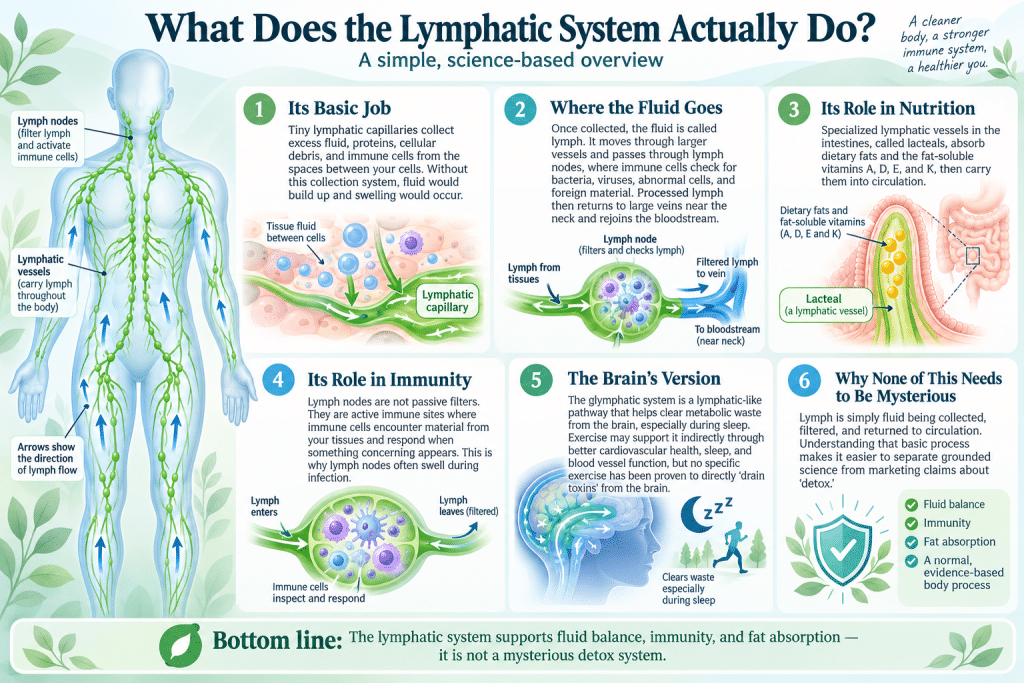
Before talking about exercise, it helps to understand what this system is actually built to do, since most of the confusion around “lymphatic detox” comes from not knowing this part.
- Its basic job: Tiny lymphatic capillaries sit throughout most of your body’s tissues, collecting fluid, proteins, cellular debris, and immune cells from the spaces between your cells. Without this collection system, that fluid would simply accumulate, and you would swell.
- Where the fluid goes: Once collected, this fluid (now called lymph) travels through progressively larger vessels and passes through lymph nodes, where immune cells inspect it for anything that shouldn’t be there: bacteria, viruses, abnormal cells, foreign material. Eventually, the processed lymph empties back into large veins near the neck and rejoins your bloodstream.
- Its role in nutrition: Specialized lymphatic vessels in your intestines, called lacteals, absorb dietary fats and the fat-soluble vitamins A, D, E, and K, carrying them into circulation. This is a truly distinct function from what your bloodstream handles directly.
- Its role in immunity: Lymph nodes are not passive filters. They are active sites where immune cells encounter material from your tissues and mount responses when something concerning shows up. This is why lymph nodes swell during an infection: your immune system is actively working in that exact location.
- The brain’s version: The glymphatic system is a developing area of research involving a lymphatic-like pathway that helps clear metabolic waste from the brain, especially during sleep. Exercise may support this process by improving cardiovascular health, sleep, and blood vessel function, but no specific exercise has been proven to directly “drain toxins” from the brain.
- Why none of this needs to be mysterious: Once you understand that lymph is simply fluid being collected, filtered, and returned to circulation, the idea of “detoxing” it starts to make more concrete sense, and it becomes much easier to tell which claims about how to support it are grounded in the actual mechanism and which are marketing.
Why Does the Lymphatic System Need You to Move?
This is the single most important mechanical fact in this entire article, so it is worth explaining clearly.
No Central Pump
Blood circulation is driven primarily by the heart, a dedicated muscular pump working continuously. The lymphatic system has lymphatic vessels containing smooth muscle and one-way valves that allow some self-propulsion, but this alone is not enough. It relies heavily on external forces.
The Muscle Pump
When your skeletal muscles contract, they physically compress the lymphatic vessels running near and through them, pushing lymph forward. One-way valves prevent it from flowing backward. When the muscle relaxes, the vessel refills.
Repeated contraction and relaxation, the ordinary rhythm of walking, moving, and exercising, creates what is often called the muscle pump, and it assists both venous return (blood heading back to the heart) and lymphatic return.
Increased Lymph Flow During Exercise
Research using scintographic imaging (a technique that tracks a radioactive tracer through tissue) found that submaximal muscle contractions increased the clearance rate, a marker of lymph flow, by three- to sixfold compared to rest (Havas et al., 1997).
The exact magnitude depends on the tissue measured, the type and intensity of contraction, and individual factors, but the core finding, that movement dramatically increases lymph flow compared to stillness, is well established.
Why Your Calves Matter
The calf muscles sit in an especially important position because they work directly against gravity to help move fluid out of your lower legs. Walking, climbing stairs, cycling, and simple ankle movement all activate this specific pump.
This is also the direct explanation for why your ankles and lower legs can feel swollen, heavy, or tight after a long flight, a long car ride, or a day spent mostly seated: the calf pump has been idle.
How Joint Movement Helps
Lymphatic vessels frequently run close to joints, muscles, arteries, and veins. Moving a joint through its range changes the pressure in these surrounding tissues and promotes additional fluid exchange, which is one reason a body that stays still for long stretches loses several of its natural pumping mechanisms at once.
“This is the fact I wish more women in midlife understood: your lymphatic system is not passively working in the background the way your heart is. It needs your participation. Every time you get up from your desk, walk to the mailbox, or do a few slow ankle circles while you’re on a call, you are doing something your lymphatic system cannot do for itself. That reframes movement from ‘exercise you should do’ to ‘maintenance your body is actually asking for.”
Terry Tateossian, Founder of The House of Rose
Free 28-Day Fascia Reset Email Course
Get our Free 28-day email course series to help with 1 or 2 exercises per day to release your fascia. One short lesson per day. Two minutes to read each.
How Does Breathing Support Lymphatic Flow?
Muscle contraction is not the only mechanical force moving lymph. Breathing plays a real, measurable role too.
How Breathing Changes Pressure
When your diaphragm descends during inhalation, it changes the pressure relationships between your chest and abdomen. This pressure shift helps draw fluid upward toward the chest. Exhalation creates another pressure change in the opposite direction.
These alternating pressures assist the movement of lymph through major central vessels, including the thoracic duct, the largest lymphatic vessel in the body.
Why Shallow Breathing Matters
Quick, shallow, upper-chest breathing produces much smaller pressure changes than slow, full diaphragmatic breathing. Many people, particularly under chronic stress, default to this shallower pattern without realizing it, quietly reducing one of the mechanical forces that would otherwise support lymphatic flow.
Activities That Combine Breathing and Movement
Walking, swimming, yoga, tai chi, Pilates, rowing, and controlled resistance training all naturally coordinate breathing with movement, engaging the muscle pump and the respiratory pump simultaneously.
This combination is part of why these activities show up consistently as sensible choices for lymphatic support, not because of any special or mystical property, but because they layer two real mechanical forces together.
What Breathing Exercises Cannot Do
Breathing exercises alone cannot resolve lymphatic damage from surgery, radiation, infection, or disease. Diaphragmatic breathing is a legitimately useful, low-effort tool that supports the system’s normal function; it is not a substitute for professional treatment when a lymphatic problem already exists.
What Does “Detox” Mean in Your Body?

The word detoxification gets used so loosely in wellness marketing that it has drifted from what it actually describes physiologically.
What Detoxification Really Means
In physiology, detoxification refers to your body’s coordinated processing of medications, hormones, alcohol, environmental compounds, metabolic byproducts, and damaged cellular material, carried out by specific organs built for exactly this purpose.
Which Organs Do the Work
The liver transforms many substances through enzymatic processes. The kidneys filter your blood and excrete water-soluble waste through urine. Your gastrointestinal tract eliminates material through stool. Your lungs remove carbon dioxide and certain volatile compounds. Your immune system identifies and processes microbes and damaged cells.
The Lymphatic System’s Role
The lymphatic system transports fluid, immune cells, proteins, fats, and tissue debris so this material can be inspected, recycled, or handed off to the organs listed above for actual processing and elimination.
Lymph nodes are not storage containers for toxins, and lymph itself does not leave your body; it returns to your bloodstream, and whatever it carried still has to be handled by your liver, kidneys, immune system, lungs, or intestines.
Why You Can’t Squeeze Out Toxins
No exercise, stretch, or massage technique squeezes an undefined category of “toxins” directly out of your body. What exercise legitimately does is support the health and efficiency of the organs and systems that are actually doing the detoxification work.
How Exercise Supports the Liver
Regular exercise can reduce liver fat and improve insulin sensitivity, sometimes even without substantial weight loss, in people with metabolic dysfunction-associated fatty liver disease, and this benefit appears with both aerobic and resistance training.
Exercise doesn’t scrub the liver clean; it changes the metabolic environment the liver operates within, and a liver working with better insulin sensitivity and less excess fat is better positioned to do its many jobs well.
How Exercise Supports the Kidneys
Your kidneys continuously filter blood and regulate fluid, electrolytes, and acid-base balance regardless of whether you exercise that day. Exercise’s real benefit to kidney health is indirect and long-term: better blood pressure regulation, blood sugar control, and cardiovascular health all reduce the conditions that damage kidneys over years.
Intense exercise can actually reduce kidney blood flow temporarily by redirecting it to working muscles, and severe dehydration, heat illness, or extreme exertion can substantially stress the kidneys, which is a reason more exercise is not automatically better exercise.
Free 28-Day Fascia Reset Email Course
Get our Free 28-day email course series to help with 1 or 2 exercises per day to release your fascia. One short lesson per day. Two minutes to read each.
Why Is Sweating Not the Same as Detoxing?
This deserves its own section because it is one of the most persistent and least accurate claims in popular wellness content.
- Sweat’s actual job: Sweating exists primarily to regulate your body temperature. It can contain small quantities of certain metals and metabolic compounds, but for the vast majority of substances your body needs to eliminate, urine and stool handle far more than sweat does.
- Why sweat volume is a poor detox metric: Producing more sweat does not mean you are removing more of anything meaningful in a health sense. A hot yoga class that leaves you drenched is not more “detoxifying” than a brisk walk that leaves you barely damp; it is simply a session that generated more heat.
- The real risk of chasing sweat: Excessive sweating without proper fluid and electrolyte replacement can lead to dehydration, dizziness, headaches, low blood pressure, heat illness, and kidney stress. People with POTS, dysautonomia, kidney or heart disease, adrenal insufficiency, or those taking certain blood pressure medications should be especially cautious about activities that encourage excessive sweating.
What Does the Research Actually Show?
Several specific findings are worth knowing directly, since they separate the well-supported claims in this space from the exaggerated ones.
- Exercise substantially increases lymph flow: As noted in Section 2, scintographic research found lymph clearance rates increased three- to sixfold with submaximal muscle contraction compared to rest (Havas et al., 1997), confirming the basic mechanism this article is built around.
- Resistance training is safe and helpful for lymphedema, contrary to older advice: Women at risk for breast cancer-related lymphedema were once advised to limit resistance training. However, a randomized controlled trial found that slowly progressive weight lifting reduced symptom flare-ups in women with stable lymphedema, challenging older restrictions (Schmitz et al., 2009).
- Broader exercise research confirms safety across cancer-related lymphedema generally: A systematic review and meta-analysis found that people with secondary lymphedema can safely participate in progressive, regular exercise without a resulting worsening of their lymphedema or related symptoms (Singh et al., 2016).
- No single exercise has been shown to be uniquely superior: Despite popular claims about rebounding on a mini-trampoline, no strong clinical evidence shows it provides greater lymphatic benefits than walking, swimming, cycling, or resistance training. Rebounding is a reasonable form of movement, not a uniquely powerful lymphatic tool.
- The dose-response pattern for immunity: Moderate exercise temporarily mobilizes immune cells, while regular activity supports immune function and reduces chronic inflammation. However, excessive exercise without proper recovery, nutrition, or sleep may temporarily weaken immune defenses. Consistent, manageable effort is more beneficial than occasional intense workouts.
- The honest overall takeaway: Exercise supports the lymphatic system through the combined effects of muscle contractions, breathing, improved circulation, better metabolic health, and reduced inflammation. These benefits build over time rather than coming from one specific exercise or mechanism.
Free 28-Day Fascia Reset Email Course
Get our Free 28-day email course series to help with 1 or 2 exercises per day to release your fascia. One short lesson per day. Two minutes to read each.
What Should You Know About Exercising With Lymphedema?
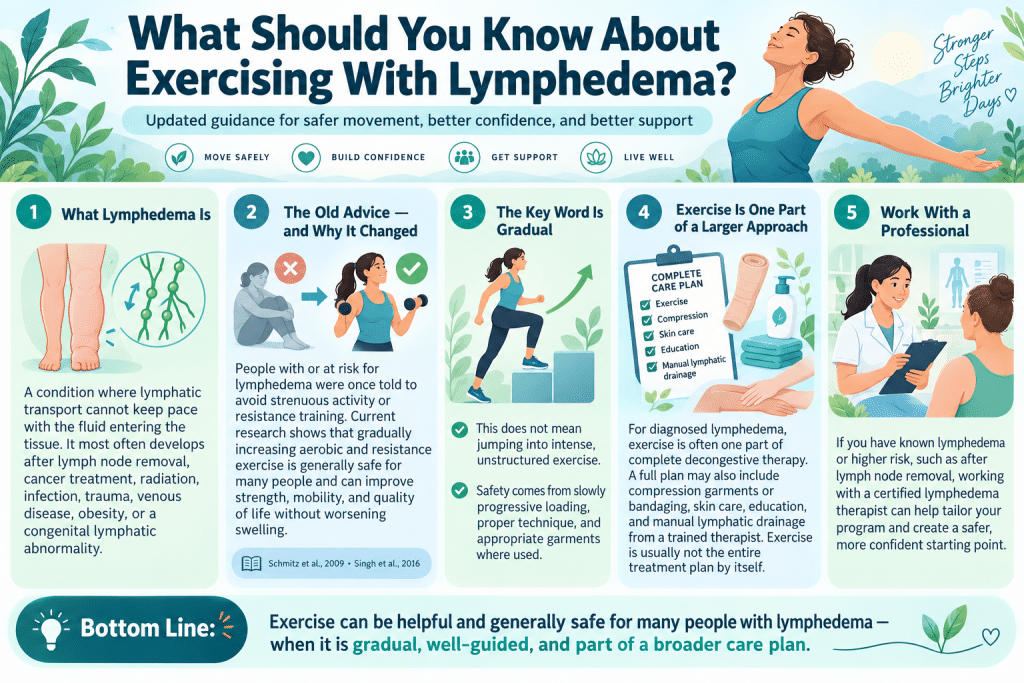
Lymphedema deserves its own dedicated discussion given how much outdated caution still circulates around it.
- What lymphedema is: A condition where lymphatic transport cannot keep pace with the fluid entering the tissue, most often developing after lymph node removal, cancer treatment, radiation, infection, trauma, venous disease, obesity, or a congenital lymphatic abnormality.
- The old advice, and why it changed: People with or at risk for lymphedema were once advised to avoid strenuous activity or resistance training. However, research shows that gradually increasing aerobic and resistance exercise is generally safe for many people and can improve strength, mobility, and quality of life without worsening swelling (Schmitz et al., 2009; Singh et al., 2016).
- The key word is gradual: None of this research supports jumping into intense, unstructured exercise. Slowly progressive loading, proper technique, and appropriate garments (where used) matter for safety.
- Exercise as one part of a larger approach: For diagnosed lymphedema, exercise is often one component of complete decongestive therapy, which may also include compression garments or bandaging, skin care, education, and manual lymphatic drainage performed by a trained therapist. Exercise is not typically the entire treatment plan on its own.
- Working with a professional: If you have known lymphedema or are at elevated risk (following lymph node removal, for example), working with a certified lymphedema therapist to individualize your program, particularly early on, gives you a much safer and more confident starting point than self-directing entirely alone.
How Should You Prepare Before Starting?
Several principles apply across the five exercises and the 5-day program that follow.
- Consistency and frequency matter more than intensity: The muscle pump and respiratory pump respond to regular activation throughout the day and week, not to occasional intense sessions.
- Movement breaks count: Standing up, walking for a few minutes, or doing a set of calf raises every thirty to sixty minutes during a long seated stretch reactivates the muscle and respiratory pumps meaningfully, even without a formal workout.
- Progress gradually, especially with any history of lymphedema: Sudden large increases in resistance, duration, or intensity are more likely to cause problems than a steady, gradual build.
- Breathe fully throughout: Favor slow, diaphragmatic breathing rather than shallow upper-chest breathing during all five exercises.
- Hydration supports, but does not override, the mechanism: Adequate fluid intake supports healthy blood volume and circulation; drinking excessive amounts of water does not make the lymphatic system drain faster.
- Watch for warning signs: New swelling accompanied by redness, warmth, pain, fever, chest pain, shortness of breath, or a sudden change in function warrants stopping exercise and seeking medical care rather than continuing.
Free 28-Day Fascia Reset Email Course
Get our Free 28-day email course series to help with 1 or 2 exercises per day to release your fascia. One short lesson per day. Two minutes to read each.
What Are the Best 5 Exercises to Support Lymphatic Drainage in Midlife Women?
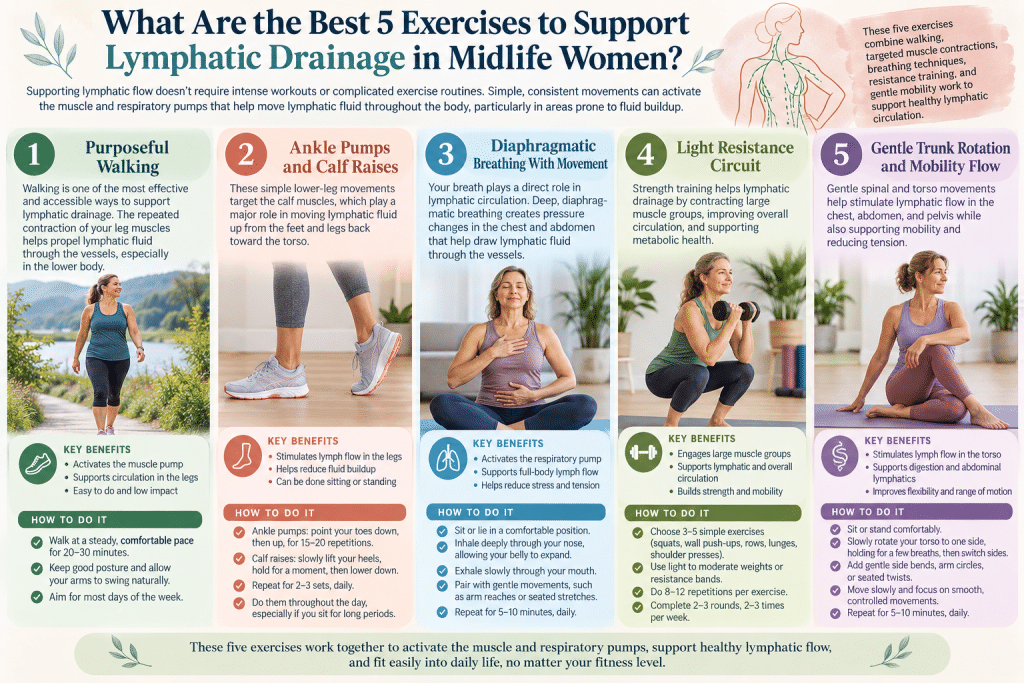
Supporting lymphatic flow doesn’t require intense workouts or complicated exercise routines. Simple, consistent movements can activate the muscle and respiratory pumps that help move lymphatic fluid throughout the body, particularly in areas prone to fluid buildup, such as the legs and lower extremities.
The following five exercises combine walking, targeted muscle contractions, breathing techniques, resistance training, and gentle mobility work to support healthy lymphatic circulation while accommodating different fitness levels and mobility needs.
Exercise 1: Purposeful Walking
Purposeful Walking is the most accessible and, arguably, the single most useful lymph-supporting movement available, because it activates the calf pump, the respiratory pump, and general circulation simultaneously.
- How it works: Every step contracts and relaxes muscles throughout the feet, calves, thighs, hips, and trunk, activating the muscle pump broadly rather than in one isolated location, while natural arm swing and breathing add further mechanical assistance.
- Sets and reps: 20 to 30 minutes as a continuous session, or broken into two or three shorter walks across the day.
- Common mistakes: Walking so briskly that breathing becomes ragged and shallow rather than deep and rhythmic, holding the arms rigid instead of allowing natural swing, treating a 10-minute walk as pointless compared to a longer session (shorter, frequent walks meaningfully help too).
- Why this exercise for midlife women: It requires no special equipment or fitness level, fits into virtually any schedule, and is the most sustainable long-term option in this entire protocol.
- Modification for limited mobility: Slow, supported walking indoors or short hallway laps still activates the same mechanisms, just at a gentler intensity.
Walking is a simple way to support lymphatic circulation by encouraging muscle movement and steady breathing. It requires no special equipment and can easily fit into your daily routine.
- Setup: Wear comfortable, supportive shoes with a wide toe box. No other equipment is needed.
- Walk at a Moderate Pace: Walk fast enough to raise your breathing rate slightly while still allowing conversation.
- Swing Your Arms Naturally: Let your arms move freely as you walk rather than holding them still.
- Breathe Deeply: Breathe through your nose when possible, taking full, relaxed breaths instead of short, shallow ones.
Exercise 2: Ankle Pumps & Calf Raises
Ankle Pumps and Calf Raises directly and specifically activate the calf muscle pump, the single most important localized pump for fluid in the lower legs.
- How it works: Repeated contraction of the calf muscles compresses the lymphatic and venous vessels running through the lower leg, actively pushing fluid upward against gravity.
- Execution (seated version): Sitting with feet flat on the floor, lift your heels while keeping your toes down, then lower. Follow with lifting your toes while keeping your heels down. Alternate.
- Sets and reps: 2 to 3 sets of 15 to 20 repetitions, standing or seated version, once or twice daily, and especially useful during any prolonged period of sitting (travel, desk work).
- Common mistakes: Moving too quickly to get a full contraction and stretch, skipping this exercise during long sedentary stretches when it matters most.
- Why this exercise for midlife women: It takes under two minutes, requires no equipment or change of clothing, and directly targets the exact mechanism responsible for the swollen, heavy feeling many women notice in their lower legs after travel or long sitting.
- Modification for balance concerns: Perform the seated version, or stand facing a wall with both hands lightly supported.
Calf raises help support lymphatic circulation by activating the calf muscles and encouraging fluid movement in the lower legs. This simple exercise can be performed seated or standing without special equipment.
- Setup: Stand with your feet hip-width apart. Hold a wall or chair back for balance if needed.
- Raise Your Heels: Slowly rise onto the balls of your feet, lifting your heels off the ground.
- Pause Briefly: Hold the raised position for a moment while maintaining your balance.
- Lower With Control: Slowly lower your heels back to the floor.
- Repeat: Continue the movement at a steady, controlled pace.
Exercise 3: Diaphragmatic Breathing With Movement
Diaphragmatic Breathing With Movement combines the respiratory pump described in Section 3 with gentle limb movement, layering two mechanical forces together in one simple practice.
- How it works: Slow, full diaphragmatic breathing maximizes the pressure changes in the chest and abdomen that assist central lymphatic flow, and pairing it with simple overhead arm movement adds a gentle upper-body muscle pump component.
- Sets and reps: 8 to 10 slow breaths, once or twice daily, or as a warm-up before other movement.
- Common mistakes: Breathing shallowly into the upper chest instead of the belly and lower ribs, rushing the breath cycle rather than allowing it to fully slow down, raising the shoulders toward the ears during the arm raise.
- Why this exercise for midlife women: It is one of the gentlest tools in this protocol, suitable even during recovery from illness or surgery (with clearance from your treating clinician), and it directly reinforces a fuller breathing pattern that supports lymphatic flow throughout the rest of the day.
- Modification for limited shoulder mobility: Raise the arms only as high as comfortable, or keep the movement at shoulder height rather than fully overhead.
Deep breathing with arm movements helps support lymphatic circulation by engaging the diaphragm and encouraging gentle muscle activity. This exercise can be performed seated or standing and requires no equipment.
- Setup: Sit or stand in a comfortable position that allows you to move freely.
- Inhale Deeply: Breathe slowly through your nose, allowing your belly and lower ribs to expand without lifting your shoulders.
- Raise Your Arms: Slowly lift both arms overhead as you inhale.
- Exhale Slowly: Breathe out gently through your mouth while lowering your arms back down.
- Repeat: Continue coordinating your breathing and arm movements at a slow, relaxed pace.
Exercise 4: Light Resistance Circuit
The Light Resistance Circuit builds the muscle strength that powers the pump over the long term, following directly from the research showing resistance training is safe and beneficial even for lymphedema populations when progressed gradually.
- How it works: Resistance exercise creates strong, repeated cycles of muscular contraction and relaxation across major muscle groups, directly supporting the muscle pump mechanism while also building the underlying strength that sustains it.
- Sets and reps: 2 sets of 10 to 12 repetitions per movement, resting briefly between sets.
- Common mistakes: Starting with resistance too heavy for good form, holding the breath during effort (exhale on the exertion phase of each movement), progressing resistance too quickly rather than gradually.
- Why this exercise for midlife women: It follows the same slowly-progressive principle that research specifically validated for lymphedema safety (Schmitz et al., 2009), while also addressing the broader muscle loss that accelerates through midlife.
- Modification for beginners: Start with bodyweight sit-to-stands and very light band tension for the upper body movements, progressing resistance only after several sessions of comfortable, well-controlled repetitions.
Light resistance exercises help support lymphatic circulation by activating major muscle groups and encouraging fluid movement throughout the body. This simple routine combines three movements to improve strength, mobility, and circulation.
- Setup: Prepare a light resistance band or a pair of light dumbbells and a sturdy chair.
- Sit-to-Stands: Sit on the chair with your feet flat on the floor. Use your legs to stand up, then slowly lower yourself back into the chair with control.
- Perform Rows: Using a resistance band or light dumbbells, pull toward your ribs while gently squeezing your shoulder blades together. Return to the starting position.
- Overhead Presses: Press the resistance band or light dumbbells upward with control, then slowly lower your arms.
- Repeat: Perform all three movements in sequence, maintaining a comfortable range of motion and steady breathing throughout.
Exercise 5: Gentle Trunk Rotation & Mobility Flow
Gentle Trunk Rotation and Mobility Flow addresses the large lymphatic pathways running through the trunk, an area that purely lower-body-focused movement can miss.
- How it works: Controlled trunk rotation and reciprocal arm-and-leg movement change pressure throughout the abdomen and chest while engaging core musculature, complementing the walking, calf, and breathing work already in the protocol.
- Sets and reps: 1 to 2 minutes of continuous, gentle rotation.
- Common mistakes: Rotating too fast or forcefully, holding the breath, restricting the movement to only the arms rather than allowing the trunk to actually rotate.
- Why this exercise for midlife women: It closes the sequence with a whole-body, low-impact movement that most women find distinctly pleasant, making it easy to sustain as a regular practice.
- Modification for balance concerns: Perform seated, rotating the trunk gently from side to side with feet planted.
Gentle torso rotations with arm swings help support lymphatic circulation by encouraging natural movement through the upper body. This simple exercise promotes mobility and can be performed without equipment.
- Setup: Stand with your feet hip-width apart, leaving enough space to swing your arms comfortably.
- Relax Your Knees: Stand tall with your knees slightly bent and your arms resting loosely at your sides.
- Rotate to the Right: Gently turn your torso to the right, allowing your arms to swing naturally and your left heel to lift slightly.
- Rotate to the Left: Return through the center and slowly turn to the left, repeating the movement on the opposite side.
- Repeat: Continue alternating sides in a slow, fluid rhythm while breathing naturally throughout.
Free 28-Day Fascia Reset Email Course
Get our Free 28-day email course series to help with 1 or 2 exercises per day to release your fascia. One short lesson per day. Two minutes to read each.
How Can You Follow the 5-Day Movement Program?
The five exercises above combine into a 5-day program designed to build a sustainable daily movement habit rather than a short-term intensive fix, reflecting the research’s emphasis on consistent, gradual, repeated activity over dramatic single sessions.
Day 1: Foundation (15 Minutes)
| Exercise | Duration |
|---|---|
| Diaphragmatic Breathing With Movement | 3 min |
| Purposeful Walking | 10 min |
| Ankle Pumps and Calf Raises | 2 min |
Day 2: Add Trunk Mobility (18 Minutes)
| Exercise | Duration |
|---|---|
| Diaphragmatic Breathing With Movement | 3 min |
| Purposeful Walking | 10 min |
| Ankle Pumps and Calf Raises | 2 min |
| Gentle Trunk Rotation and Mobility Flow | 3 min |
Day 3: Add Resistance (25 Minutes)
| Exercise | Duration |
|---|---|
| Diaphragmatic Breathing With Movement | 3 min |
| Purposeful Walking | 10 min |
| Light Resistance Circuit | 10 min |
| Ankle Pumps and Calf Raises | 2 min |
Day 4: Full Sequence (28 Minutes)
| Exercise | Duration |
|---|---|
| Diaphragmatic Breathing With Movement | 3 min |
| Purposeful Walking | 12 min |
| Light Resistance Circuit | 10 min |
| Gentle Trunk Rotation and Mobility Flow | 3 min |
Day 5: Full Sequence Plus Movement Breaks (30 Minutes Plus Breaks)
| Exercise | Duration |
|---|---|
| Diaphragmatic Breathing With Movement | 3 min |
| Purposeful Walking | 15 min |
| Light Resistance Circuit | 10 min |
| Ankle Pumps and Calf Raises | 2 min |
| Hourly movement break (calf raises or ankle pumps) | 1 to 2 min per break |
What Should You Do After the 5-Day Program?
From day six forward, aim to sustain something close to the Day 5 pattern most days of the week: a walk, some form of resistance work at least twice weekly, and hourly movement breaks during any long seated period. This maps onto general physical activity guidance (roughly 150 minutes of moderate aerobic activity weekly, resistance training at least twice weekly) while specifically emphasizing the movement breaks that keep the muscle and respiratory pumps active throughout the day, not just during a formal workout window.
Expected timeline for results: Reduced heaviness or puffiness, especially in the lower legs after long sitting, is often noticeable within days of adding regular movement breaks. Broader benefits (immune regulation, metabolic health, reduced chronic low-grade inflammation) build gradually over weeks and months of consistent practice, consistent with how the underlying research measures these outcomes.
“The women who get the most out of this are rarely the ones who add one intense workout a week. They’re the ones who start noticing the hours they spend sitting still and start interrupting them, even briefly. A two-minute calf raise break during a long work call sounds almost too simple to matter, but the physiology backs it up. Your lymphatic system is responding to what your body does all day, not just what you do for thirty minutes at the gym.”
Terry Tateossian, Founder of The House of Rose
Free 28-Day Fascia Reset Email Course
Get our Free 28-day email course series to help with 1 or 2 exercises per day to release your fascia. One short lesson per day. Two minutes to read each.
What Common Mistakes Can Undermine the Practice?
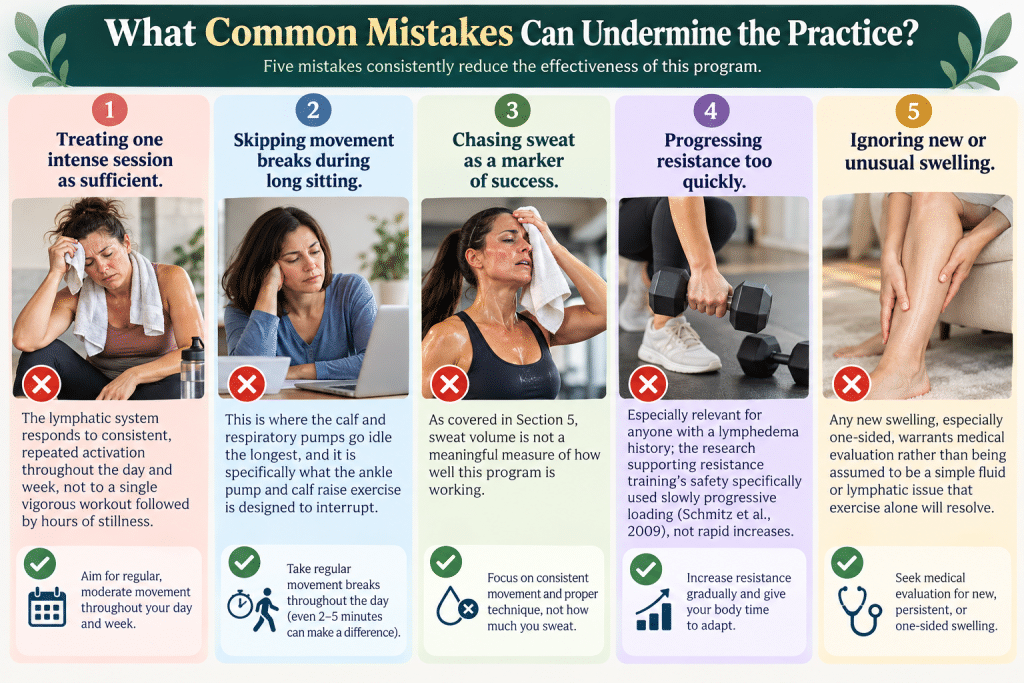
Five mistakes consistently reduce the effectiveness of this program.
- Treating one intense session as sufficient: The lymphatic system responds to consistent, repeated activation throughout the day and week, not to a single vigorous workout followed by hours of stillness.
- Skipping movement breaks during long sitting: This is where the calf and respiratory pumps go idle the longest, and it is specifically what the ankle pump and calf raise exercise is designed to interrupt.
- Chasing sweat as a marker of success: As covered in Section 5, sweat volume is not a meaningful measure of how well this program is working.
- Progressing resistance too quickly: Especially relevant for anyone with a lymphedema history; the research supporting resistance training’s safety specifically used slowly progressive loading (Schmitz et al., 2009), not rapid increases.
- Ignoring new or unusual swelling: Any new swelling, especially one-sided, warrants medical evaluation rather than being assumed to be a simple fluid or lymphatic issue that exercise alone will resolve.
How Does This Fit Into the Broader THOR Framework?
This movement-and-lymphatic-flow framework connects to several other components of the broader lifestyle medicine approach taught at THOR.
- Complementary lymphatic and fascia work: Movement-based lymphatic support can pair well with more targeted stretching and release work. Practices that address tight fascia and lymphatic flow or incorporate lymphatic drainage exercises can add a more release-focused layer to the daily movement framework used here.
- Daily movement habits: Consistent movement throughout the day matters just as much as dedicated exercise sessions. Adding short micro walks between longer periods of sitting can help keep movement frequent without requiring another formal workout.
- Broader muscle and strength foundation: The Light Resistance Circuit also supports the larger goal of preserving muscle through midlife. Understanding sarcopenia helps explain why even modest resistance work becomes increasingly important for maintaining strength, mobility, and physical function.
- Foot-to-hip mechanics: Comfortable walking depends on how force travels from the ground through the foot, knee, and hip. The foot cascade effect helps explain how foot mechanics influence the rest of the chain, while fascia work for knee pain addresses restrictions that can affect movement higher up.
- Nutrition foundation: Adequate protein and hydration help support muscle recovery, tissue health, and normal fluid balance. The free Macro Calculator can help you estimate calorie and macro targets that fit your activity level and broader goals.
Free 28-Day Fascia Reset Email Course
Get our Free 28-day email course series to help with 1 or 2 exercises per day to release your fascia. One short lesson per day. Two minutes to read each.
When Should You See a Healthcare Professional?
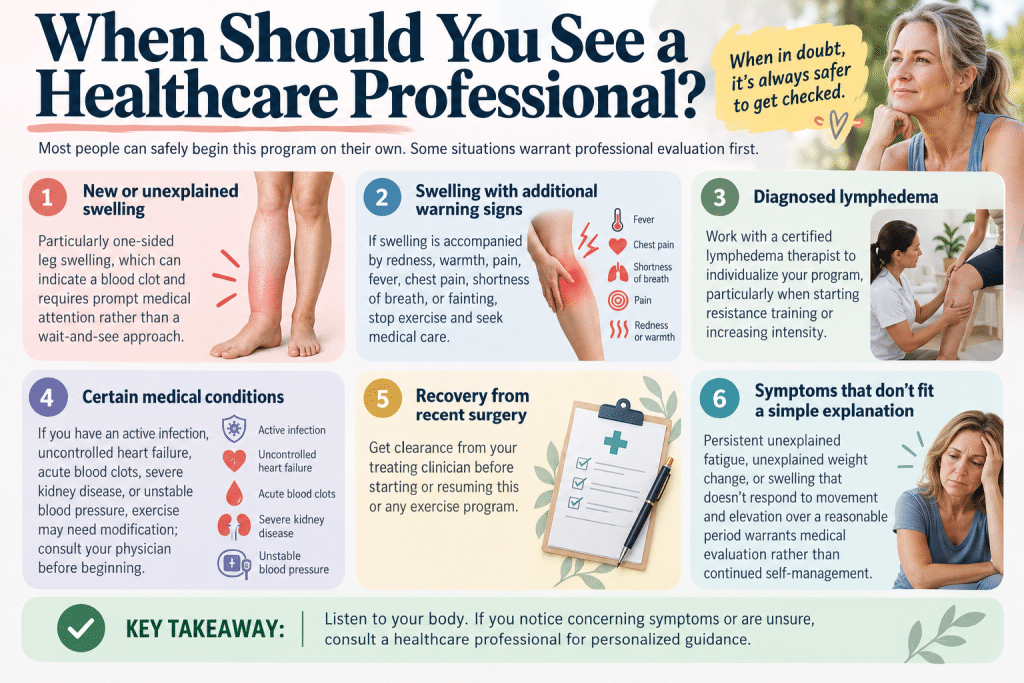
Most people can safely begin this program on their own. Some situations warrant professional evaluation first.
- New or unexplained swelling: Particularly one-sided leg swelling, which can indicate a blood clot and requires prompt medical attention rather than a wait-and-see approach.
- Swelling accompanied by redness, warmth, pain, fever, chest pain, shortness of breath, or fainting: Stop exercise and seek medical care.
- Diagnosed lymphedema: Work with a certified lymphedema therapist to individualize your program, particularly when starting resistance training or increasing intensity.
- Active infection, uncontrolled heart failure, acute blood clots, severe kidney disease, or unstable blood pressure: Exercise may need modification; consult your physician before beginning.
- Recovery from recent surgery: Get clearance from your treating clinician before starting or resuming this or any exercise program.
- Symptoms that don’t fit a simple explanation: Persistent unexplained fatigue, unexplained weight change, or swelling that doesn’t respond to movement and elevation over a reasonable period warrants medical evaluation rather than continued self-management.
Free 28-Day Fascia Reset Email Course
Get our Free 28-day email course series to help with 1 or 2 exercises per day to release your fascia. One short lesson per day. Two minutes to read each.
Frequently Asked Questions
Does exercise actually help lymphatic drainage?
Yes. Research using scintographic imaging found that muscle contraction during exercise increased lymph clearance rate three- to sixfold compared to rest, confirming that movement is a genuine, substantial driver of lymphatic flow, not a marketing exaggeration.
What is the best exercise for the lymphatic system?
No single exercise has been shown to be uniquely superior. Walking, resistance training, swimming, cycling, and mobility work like yoga or tai chi all activate the muscle pump and respiratory pump. A combination of these, practiced consistently, is more supported by research than searching for one perfect lymphatic exercise.
Is rebounding on a mini-trampoline really the best exercise for lymphatic drainage?
Rebounding is a physiologically reasonable form of movement that likely does support circulation and lymph flow, but no strong comparative research shows it is uniquely superior to walking, swimming, cycling, or resistance training for this purpose. It may be enjoyable for people with adequate balance and joint stability, and inappropriate for people with significant dizziness, fall risk, severe osteoporosis, or joint instability.
Does sweating more mean I’m detoxing more?
No. Sweat’s primary function is temperature regulation, and while it can contain trace amounts of some compounds, urine and stool handle the vast majority of what your body actually needs to eliminate. Sweat volume is not a meaningful measure of detoxification.
Can I exercise if I have lymphedema?
For many people with lymphedema, gradually progressed aerobic and resistance exercise is considered safe and beneficial, a significant shift from older advice that recommended avoiding vigorous use of the affected limb. Work with a certified lymphedema therapist to individualize your program, particularly when starting or increasing intensity.
What does “lymphatic detox” actually mean?
Physiologically, detoxification refers to the coordinated work of the liver, kidneys, gastrointestinal tract, lungs, and immune system in processing and eliminating waste. The lymphatic system supports this process by transporting fluid, immune cells, and debris for inspection and processing, but it does not independently “detoxify” the body on its own, and lymph nodes are not storage sites for toxins.
How often should I do lymphatic-supportive exercise?
Daily movement, including brief movement breaks during long sitting, is more valuable than a single weekly intense session. A practical target is roughly 150 minutes of moderate aerobic activity weekly, resistance training at least twice weekly, and movement breaks every thirty to sixty minutes during sedentary stretches.
Can breathing exercises alone improve lymphatic flow?
Diaphragmatic breathing creates real pressure changes that support central lymphatic flow and is a truly useful, low-effort addition to a movement routine. It cannot resolve lymphatic damage from surgery, radiation, or disease on its own and should not replace movement or professional treatment when needed.
Why do my legs feel swollen after a long flight or car ride?
Prolonged sitting keeps the calf muscle pump, one of the most important localized mechanisms for moving fluid out of the lower legs, largely idle. Simple ankle pumps, calf raises, and brief walking breaks during and after travel directly address this mechanism.
Is drinking more water the key to better lymphatic drainage?
Adequate hydration supports healthy blood volume and circulation generally, but drinking excessive amounts of water does not force the lymphatic system to drain faster. Movement, not water volume, is the primary lever for lymphatic flow.
Can weight training make lymphedema worse?
Research specifically testing this question found that slowly progressive weight training reduced symptom flare-ups in women with stable lymphedema rather than worsening them, directly challenging older advice that recommended avoiding resistance training in the affected limb.
How is this different from a general lymphatic drainage exercise article?
This article focuses specifically on the exercise physiology and mechanisms behind lymphatic flow, what “detox” actually means in the body, and safety considerations for lymphedema, rather than a stretching or belly-fat-focused approach. For a fascia-release and stretching-based approach, see THOR’s other lymphatic and fascia articles linked in Section 16.
Should I feel anything specific during these exercises if they’re “working”?
Not necessarily. You may notice reduced heaviness or puffiness over time, particularly in the legs after long sitting, but there is no specific sensation that confirms lymphatic flow is improving in the moment. Consistency, not a felt sensation, is what the research connects to meaningful benefit.
What is the glymphatic system, and does exercise affect it?
The glymphatic system is a lymphatic-like clearance pathway around the brain that appears to help move cerebrospinal fluid and clear metabolic waste, particularly during sleep. Exercise may indirectly support this through improved cardiovascular function, sleep quality, and vascular health, though no specific exercise has been shown to directly clear brain waste in a predictable, measurable way.
I write 3 essays per week on Lifestyle Medicine for women in midlife on what is happening in the body and what to do about it. No fluff, no hype. Free Subscription.
References
- Havas, E., Parviainen, T., Vuorela, J., Toivanen, J., Nikula, T., & Vihko, V. (1997). Lymph flow dynamics in exercising human skeletal muscle as detected by scintography. The Journal of Physiology, 504(1), 233-239.
- Schmitz, K. H., Ahmed, R. L., Troxel, A., et al. (2009). Weight lifting in women with breast-cancer-related lymphedema. New England Journal of Medicine, 361(7), 664-673.
- Singh, B., Disipio, T., Peake, J., & Hayes, S. C. (2016). Systematic review and meta-analysis of the effects of exercise for those with cancer-related lymphedema. Archives of Physical Medicine and Rehabilitation, 97(2), 302-315.
Disclaimer: New or unexplained swelling, especially one-sided leg swelling, should always be evaluated by a healthcare provider before assuming it is a lymphatic or fluid-balance issue. If you have diagnosed lymphedema, discuss any new exercise program with your treating clinician or a certified lymphedema therapist first. This article is educational and does not constitute medical advice.
Free 28-Day Fascia Reset Email Course
Get our Free 28-day email course series to help with 1 or 2 exercises per day to release your fascia. One short lesson per day. Two minutes to read each.

Terry Tateossian is a Menopause Lifestyle Medicine Coach, Certified Personal Trainer & Nutritionist and the Founder of THOR: The House of Rose, a wellness brand serving women over 40 through retreats, coaching, macro-nutrition and community. As 25-year founder and entrepreneur, Terry spent two and a half decades building and running successful start-up businesses, an experience that put her on the front line of founder burnout long before she could name it. After facing serious health challenges, early onset menopause, and emotional eating while running her agency and raising two children, Terry rebuilt her health in her 40s and lost more than 80 pounds through evidence-based nutrition, training, and mindset work. Today, she helps women get strong, improve confidence, support hormone health, and create a stronger second half of life. Terry has been featured in major media outlets and is available for podcasts, expert commentary, brand collaborations, and speaking engagements on midlife health, reinvention, emotional eating, menopause wellness, and strength training for longevity. Get her free macro calculator (her cookbook companion) to start your journey to back to health.