
 By Cindy Adoptante
Free 28-Day Fascia Reset Email Course
Get our Free 28-day email course series to help with 1 or 2 exercises per day to release your fascia. One short lesson per day. Two minutes to read each.
Fascia Release for Knee Pain: How to Have Healthy Knees in Midlife (5 Exercises and a 5-Day Program)
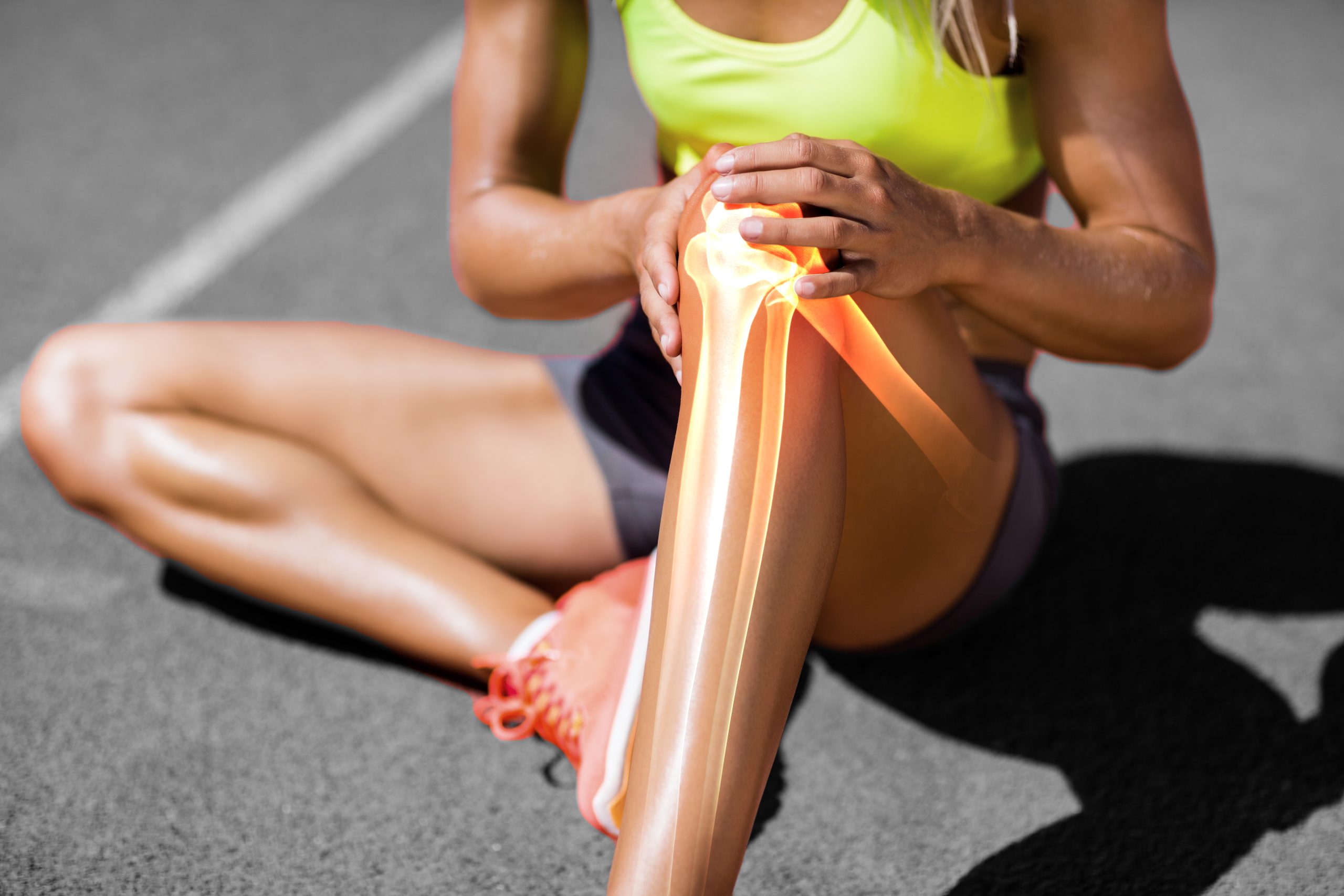
Fascia release for knee pain is an often-overlooked approach to midlife women’s health. Knee osteoarthritis becomes significantly more common between a woman’s forties and sixties, particularly around age 50, when hormonal changes may play a role. But knee pain is not always just “wear and tear.” It can also involve tight fascia, the iliotibial (IT) band, and weakened hip stabilizing muscles.
The knee sits between the hip and ankle, absorbing imbalances from both. When hip muscles weaken or surrounding fascia becomes tight, the knee compensates. Over time, this can lead to stiffness after sitting, discomfort on stairs, or aching along the outside of the knee.
I am Terry Tateossian, founder of The House of Rose and a certified lifestyle medicine coach who runs yoga and hiking retreats for women in perimenopause, menopause, and post-menopause in East Tennessee. Knee discomfort is a common concern among my guests and clients, often alongside hip and lower back tension. In this article, I share five exercises targeting the fascia and supporting muscles, plus a practical 5-day program to help build a sustainable routine.
Important: Consult your healthcare provider before starting a new movement program, especially if you have a history of knee surgery, ligament injuries, meniscus tears, significant swelling, or osteoarthritis. Seek medical evaluation for severe or sudden pain, swelling, locking, instability, or symptoms that do not improve with appropriate self-care.
Why Is the Knee Rarely the Real Problem?
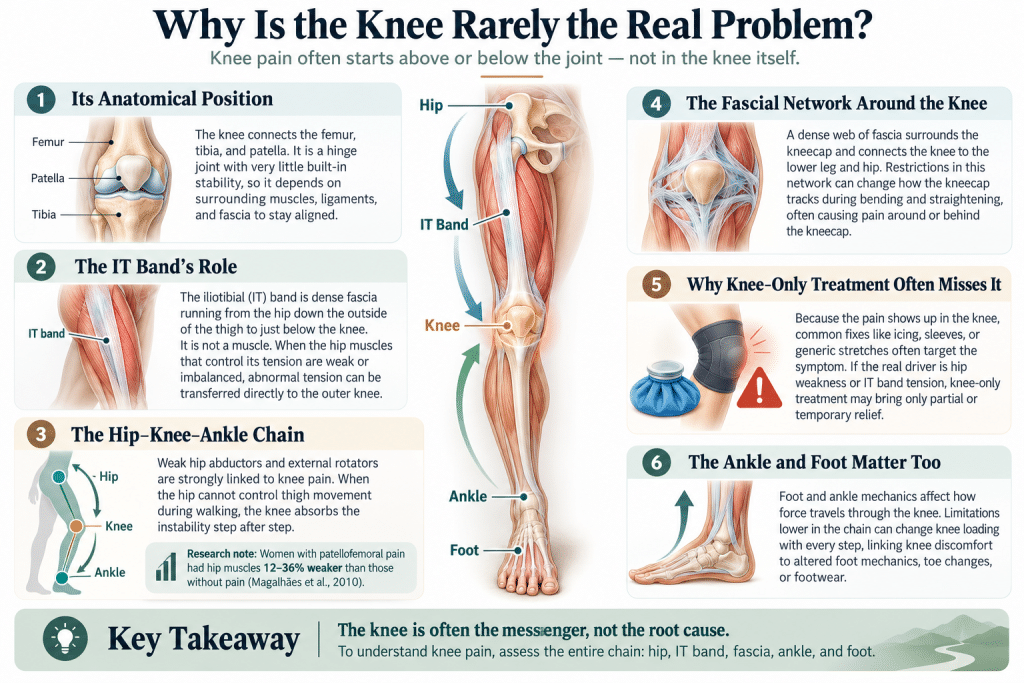
Understanding why the knee hurts starts with understanding how the knee actually works: a hinge joint with almost no ability to generate its own stability. Nearly all of the knee’s stability comes from what happens above and below it.
- Its anatomical position: The knee joint connects the femur (thigh bone) to the tibia (shin bone), with the patella (kneecap) riding in a groove at the front. Unlike the hip, which is a deep ball-and-socket joint with substantial inherent stability, the knee relies almost entirely on surrounding muscles, ligaments, and fascia to stay properly aligned during movement.
- The IT band’s role: The iliotibial band is a thick band of fascia running from the hip down the outside of the thigh to just below the knee. It is not a muscle. It is dense connective tissue that the tensor fasciae latae and gluteus maximus attach into and pull on. When the hip muscles that control the IT band’s tension are weak or imbalanced, the IT band develops abnormal tension patterns that transmit directly to the outside of the knee, where it attaches.
- The hip-knee-ankle chain: Research consistently links weakness in the hip abductors and external rotators to knee pain. A 2010 study found that women with patellofemoral pain had hip muscles 12 to 36 percent weaker than those without pain (Magalhães et al., 2010). When the hip cannot properly control the thigh bone’s movement during walking, the knee absorbs that instability with every step.
- The fascial network around the knee: Beyond the IT band, a dense web of fascia surrounds the patella itself (the retinaculum) and connects the knee to the fascia of the lower leg and hip. When this network becomes restricted through disuse, prior injury, or chronic muscular imbalance, it can alter how the kneecap tracks during bending and straightening, which is a common source of the ache many women describe as “behind” or “around” the kneecap.
- Why standard knee-focused treatment often misses this: Because the knee is where the pain shows up, most home remedies (icing, knee sleeves, generic quad stretches) target the knee itself. If the actual driver is upstream hip weakness or IT band tension, knee-only interventions provide only partial or temporary relief. The exercises in this article are chosen specifically because they address the hip and fascial drivers rather than only the knee.
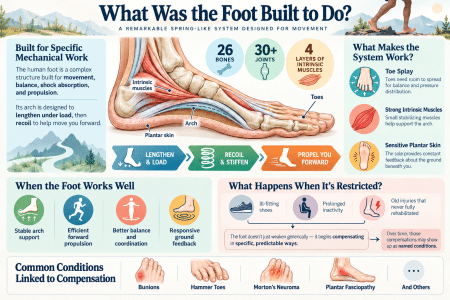
- The bidirectional relationship with the ankle and foot: Foot and ankle mechanics influence how force travels through the knee, so limitations lower in the chain can change knee loading with every step. Understanding the broader foot cascade effect can help connect knee discomfort with issues such as altered foot mechanics, toe changes, or footwear that affects how force is absorbed and transferred from the ground up.
Free 28-Day Fascia Reset Email Course
Get our Free 28-day email course series to help with 1 or 2 exercises per day to release your fascia. One short lesson per day. Two minutes to read each.
Why Does Knee Pain Increase So Sharply in Midlife Women?
The timing of when knee pain and knee osteoarthritis appear is specific and worth naming directly.
- The prevalence numbers: Knee osteoarthritis affects roughly 10 percent of women in their forties, rising to approximately 35 percent of women in their sixties, and overall prevalence is meaningfully higher in women than men (42.1 percent versus 31.2 percent) (Osteoarthritis Action Alliance, UNC). The annual rate of new knee osteoarthritis diagnoses is highest between ages 55 and 64.
- The specific midlife inflection point: Researchers have identified a sharp increase in osteoarthritis rates specifically around age 50 in women, a pattern that does not appear the same way in men, which has focused research attention on hormonal status as a contributing factor rather than age or wear alone (Dennison, 2022).
- Estrogen’s role in connective tissue: Estrogen supports the hydration, elasticity, and collagen turnover of connective tissue throughout the body, including the fascia, ligaments, and cartilage of the knee. The estrogen decline of perimenopause and menopause changes the composition and behavior of this tissue, which can make the knee less resilient to the mechanical stress patterns described in Section 1.
- Muscle mass and strength decline: Midlife is also when age-related muscle loss can become more noticeable, particularly without deliberate resistance training. Weaker hip and thigh muscles provide less support for the knee during everyday movement, which is why understanding sarcopenia in midlife matters when building a knee-protection strategy around strength and mobility.
- Quadriceps strength as a specific protective factor: A prospective cohort study following adults at high risk for knee osteoarthritis found that greater quadriceps strength at baseline was associated with reduced risk of developing symptomatic knee osteoarthritis (Segal et al., 2010). Strength, not just joint alignment, appears to be a meaningful protective factor.
- Decades of accumulated movement patterns: By midlife, most women have spent decades in movement patterns (prolonged sitting, one-sided loading, reduced variety of movement) that quietly reinforce hip weakness and fascial restriction without producing symptoms until a tipping point is reached.
- Body composition shifts: Changes in fat distribution and posture through midlife can shift how load moves through the hip and knee during standing and walking, adding another layer to the mechanical picture.
- Reduced daily movement variety: Fewer varied movement patterns per day mean the hip stabilizers and fascia around the knee get less of the varied loading that keeps them resilient.
“Knee pain or “crunchy” and cranky knees is one of the complaints I hear most often and the majority of the time, the pain is connected to a different part of the body. Women come in expecting to talk about their knees and end up doing hip strengthening work, and within days they report the knee feeling more stable and less cranky. That disconnect between where the pain is and where the actual problem lives is the single most important thing to understand about knee pain in this life stage.”
Terry Tateossian, Founder of The House of Rose
What Are the Signs of Fascia-Driven Knee Pain?
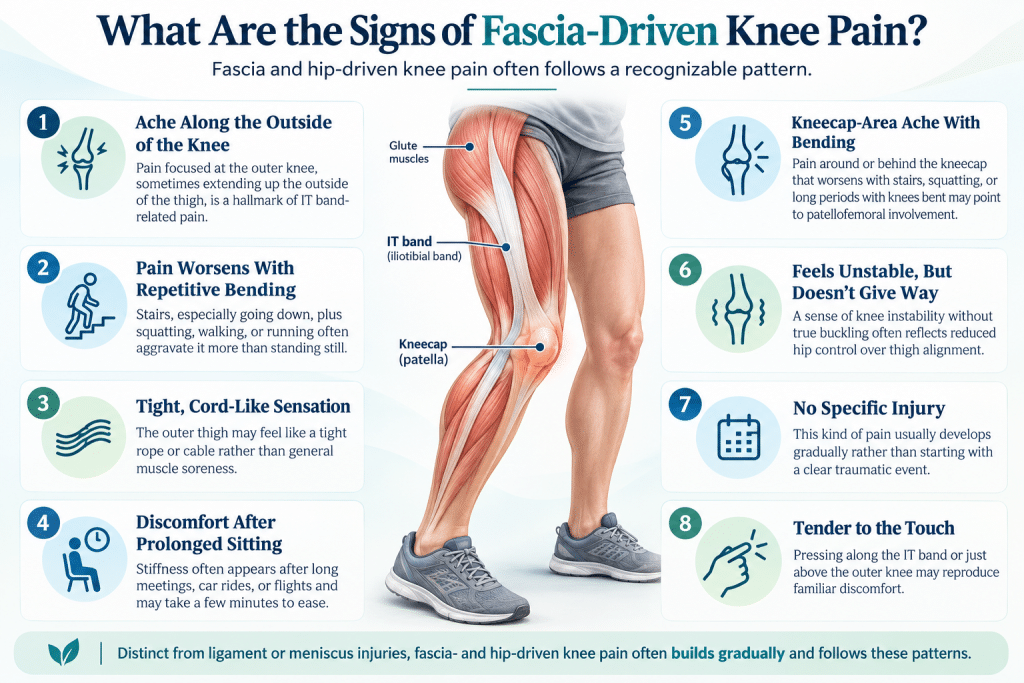
Fascia and hip-driven knee pain has a recognizable pattern, distinct from other causes of knee pain.
- Ache along the outside of the knee: Pain concentrated at the outer knee, sometimes extending up the outside of the thigh, is the hallmark of IT band-related knee pain.
- Pain that worsens with repetitive bending: Stairs (especially going down), squatting, and prolonged walking or running tend to aggravate this pattern more than standing still.
- A tight, cord-like sensation down the outer thigh: Many women describe the outer thigh as feeling like a tight rope or cable, distinct from general muscle soreness.
- Discomfort after prolonged sitting: Stiffness that takes a few minutes to work out after sitting for a long meeting, a car ride, or a flight.
- Kneecap-area ache with bending: Pain around or behind the kneecap, worse with stairs, squatting, or after sitting with knees bent for a long time, suggests patellofemoral involvement in addition to or instead of IT band tension.
- A feeling that the knee is “unstable” without actual giving-way: This is different from true instability (a sense the knee will buckle) and usually reflects the hip’s reduced ability to control the thigh bone’s position.
- No history of a specific injury: Fascia and hip-driven knee pain typically develops gradually without a clear traumatic event, distinct from a ligament tear or meniscus injury with a specific onset.
- Tenderness to palpation along the IT band or lateral knee: Pressing along the outer thigh or just above the outer knee often reproduces some of the familiar discomfort.
A note on individual variation: Not every case includes every sign. Some women experience primarily outer-knee ache, others primarily kneecap-area discomfort, and some experience both. The pattern is common enough that recognizing several of these signs together is worth taking seriously and worth addressing with the framework in this article.
Free 28-Day Fascia Reset Email Course
Get our Free 28-day email course series to help with 1 or 2 exercises per day to release your fascia. One short lesson per day. Two minutes to read each.
What Is the Difference Between Knee Pain and Knee Osteoarthritis?
Fascia and hip-driven knee pain and diagnosed knee osteoarthritis are related but distinct, and understanding the difference affects how the framework applies.
- Fascia and hip-driven knee pain: Discomfort produced primarily by soft tissue tension (IT band, surrounding fascia) and muscular imbalance (hip weakness), without significant structural joint damage. This is the most common pattern in women who have not been diagnosed with osteoarthritis, and it responds well to the exercise framework in this article.
- Knee osteoarthritis: A structural condition involving progressive breakdown of the cartilage lining the knee joint, visible on imaging as joint space narrowing or bone changes. Osteoarthritis often coexists with the soft tissue pattern described in this article, since weak hip muscles and fascial restriction can both contribute to osteoarthritis progression and result from the altered movement patterns osteoarthritis produces.
- Why the exercises still matter with diagnosed osteoarthritis: Even with a formal osteoarthritis diagnosis, building hip and quadriceps strength remains one of the most evidence-supported interventions available, since greater quadriceps strength has been specifically associated with reduced risk of progression to symptomatic disease (Segal et al., 2010). This framework is not a substitute for medical management of diagnosed osteoarthritis, but it is a legitimate complementary practice.
- How to think about your situation: If your knee pain is primarily activity-related, gradual in onset, and without swelling, locking, or a sense of true instability, the framework in this article is a reasonable self-directed starting point. If you have a formal osteoarthritis diagnosis, significant swelling, locking, catching, or a history of ligament or meniscus injury, professional guidance alongside this framework is the safer path.
What Does the Research Show?
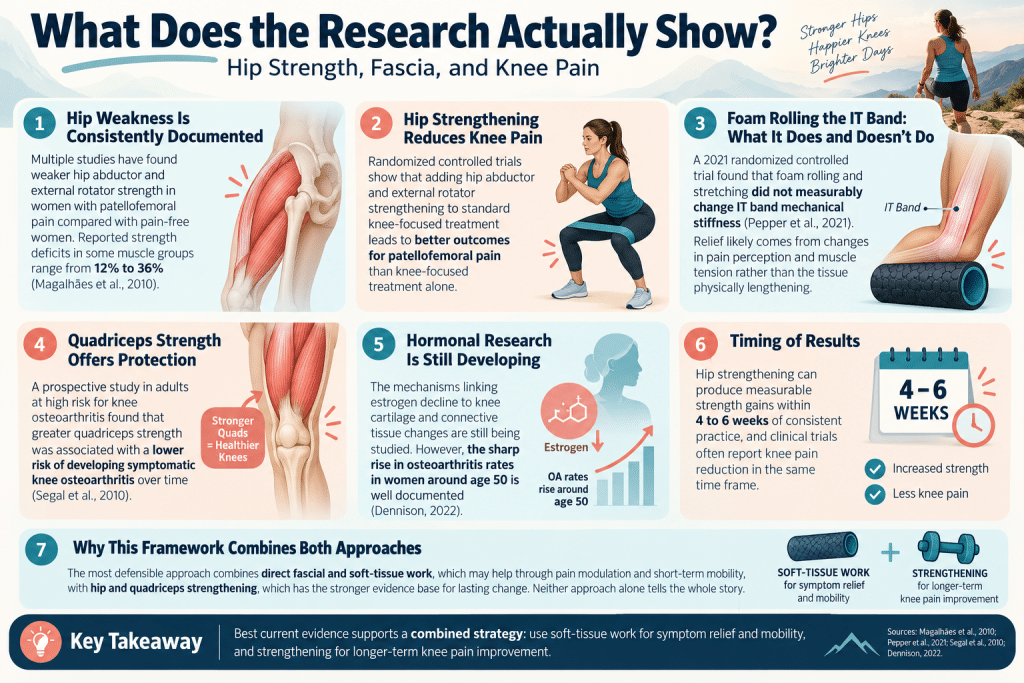
The research on hip strength, fascia, and knee pain has grown substantially, and some of it is more nuanced than popular fitness content suggests, which is worth being honest about.
- Hip weakness is a consistently documented finding: Multiple studies have found measurably weaker hip abductor and external rotator strength in women with patellofemoral pain compared to pain-free women, with strength deficits in some muscle groups reaching 12 to 36 percent (Magalhães et al., 2010).
- Hip strengthening reduces knee pain: Randomized controlled trials have found that adding hip abductor and external rotator strengthening to standard knee-focused treatment produces better outcomes for patellofemoral pain than knee-focused treatment alone, which is the core evidence basis for the hip-strengthening exercises that make up most of this program.
- What foam rolling the IT band does (and does not do): A 2021 randomized controlled trial found that foam rolling and stretching did not measurably change the IT band’s mechanical stiffness (Pepper et al., 2021). This does not mean foam rolling is ineffective. The feeling of “release” likely comes from changes in pain perception and muscle tension rather than the tissue physically lengthening or loosening. It is a different mechanism, but one that can still provide relief.
- Quadriceps strength as protection: A prospective study following adults at high risk for knee osteoarthritis found that greater quadriceps strength was associated with a reduced risk of developing symptomatic knee osteoarthritis over time (Segal et al., 2010).
- The hormonal research is still developing: The specific mechanisms connecting estrogen decline to knee cartilage and connective tissue changes are an active area of research rather than a fully settled question, though the epidemiological pattern (the sharp rise in osteoarthritis rates in women specifically around age 50) is well documented (Dennison, 2022).
- Timing of results: Hip strengthening produces measurable strength gains within four to six weeks of consistent practice, with corresponding reductions in knee pain frequently reported in the same timeframe in clinical trials.
- Why this framework combines both approaches: Given the research, the most defensible approach combines direct fascial and soft-tissue work (which likely helps through pain modulation and short-term mobility even without literally changing tissue stiffness) with hip and quadriceps strengthening (which has the stronger evidence base for lasting change). Neither alone tells the complete story.
Free 28-Day Fascia Reset Email Course
Get our Free 28-day email course series to help with 1 or 2 exercises per day to release your fascia. One short lesson per day. Two minutes to read each.
What Should You Know Before Starting the Exercises?
Several principles apply to all five exercises in this article and are worth internalizing before beginning.
- Strength matters as much as release: Do not skip the strengthening exercises in favor of only the release work. The research base for lasting change is stronger for hip strengthening than for tissue release alone.
- Slow and controlled beats fast and forceful: Both the release work and the strengthening exercises are more effective performed slowly with full attention to form.
- Consistency beats intensity: Ten to twenty minutes daily produces more benefit than one long session weekly.
- Never work into sharp knee pain: Muscular fatigue and mild discomfort during strengthening work is normal. Sharp knee pain, swelling, or a locking or catching sensation are signals to stop and reassess.
- Equipment needed: A foam roller, a mini resistance loop band, a yoga mat or comfortable surface, and a wall. Total equipment investment approximately $25 to $40.
- Warm up briefly: Two or three minutes of gentle walking before starting improves the tissue and joint response.
- Both sides, even if only one knee hurts: Hip weakness is often present bilaterally even when pain is one-sided. Practicing both sides prevents developing new imbalances.
- Breathe throughout: Holding the breath during strengthening exercises reduces control and increases compensatory tension elsewhere.
- Time of day: Any time works. Practicing before a walk or workout can serve as an activation warm-up; practicing in the evening can help work out stiffness accumulated during the day.
What Are the Best Exercises for IT Band Relief & Knee Stability?
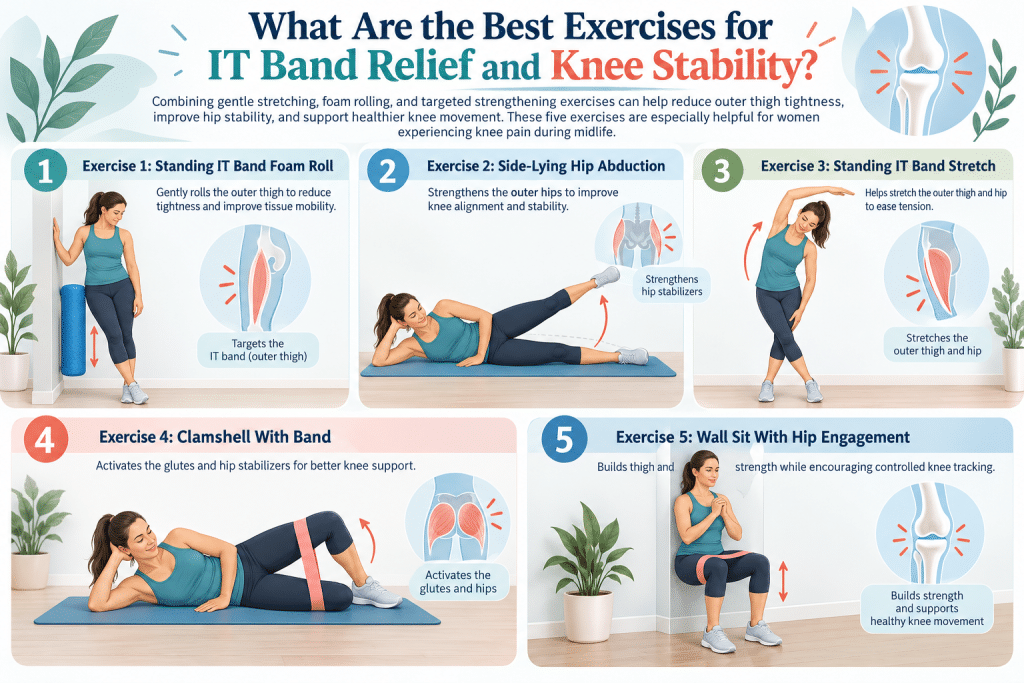
Combining gentle stretching, foam rolling, and targeted strengthening exercises can help reduce outer thigh tightness, improve hip stability, and support healthier knee movement. These five exercises focus on relieving discomfort, strengthening key muscles, and improving mobility, making them particularly helpful for women experiencing knee pain during midlife.
Exercise 1: IT Band Foam Roll
The IT Band Foam Roll addresses the outer thigh directly. Given the research on what foam rolling does and does not change mechanically, this exercise is included as a short-term mobility and pain-modulation tool rather than a claim that it permanently “releases” the IT band’s structure.
Foam rolling the outer thigh can help reduce perceived tightness and make movement more comfortable. Understanding how it works, the recommended duration, common mistakes, and possible modifications can help you get the most benefit without irritating sensitive areas.
- How it works: Sustained rolling pressure along the outer thigh appears to reduce perceived tension and improve short-term hip adduction range of motion, most likely through changes in pain perception and neuromuscular tone rather than a literal lengthening of the IT band itself.
- Sets and reps: 1 round per side, 60 to 90 seconds each.
- Common mistakes: Rolling too fast, holding the breath, applying excessive body weight into an already-irritated area, rolling directly over the kneecap or the bony point of the hip.
- Why this exercise for midlife women: It provides quick, accessible short-term relief that makes the strengthening work that follows more comfortable to perform.
- Modification for high sensitivity: Use a softer roller, or roll with less body weight by keeping more support on the forearm. Reduce duration to 30 to 45 seconds per side.
Foam rolling the outer thigh may help reduce muscle tension and improve comfort around the knee. Move slowly and apply gentle pressure throughout the exercise.
- Setup: Lie on your side on a mat with a foam roller under your outer thigh, just below the hip.
- Position: Support your upper body on your forearm. Stack or stagger your top leg for balance.
- Execution: Slowly roll from just below the hip to just above the knee, pausing for 20 to 30 seconds on any noticeably tender spot.
- Duration: Breathe steadily and continue for 60 to 90 seconds per side.
Free 28-Day Fascia Reset Email Course
Get our Free 28-day email course series to help with 1 or 2 exercises per day to release your fascia. One short lesson per day. Two minutes to read each.
Exercise 2: Side-Lying Hip Abduction
Side-Lying Hip Abduction directly targets the gluteus medius, the primary hip abductor consistently found to be weak in women with knee pain patterns.
Side-lying leg raises help strengthen the outer hip muscles that support knee stability and proper leg alignment. Knowing the correct technique, recommended repetitions, common mistakes, and ways to adjust the difficulty can help you build strength safely and effectively.
- How it works: Isolating hip abduction against gravity (and later against band resistance) builds the specific strength shown in research to be deficient in women with knee pain patterns (Magalhães et al., 2010).
- Sets and reps: 2 to 3 sets of 12 to 15 reps per side.
- Common mistakes: Rolling the hip backward to lift higher (this shifts the work away from the target muscle), lifting too fast, letting the top foot rotate toward the ceiling instead of staying forward-facing.
- Why this exercise for midlife women: This is the single most targeted exercise in the sequence for the hip weakness pattern most consistently linked to knee pain in the research.
- Modification for beginners: Bend the bottom knee slightly for stability. Reduce range of motion.
- Progression: Add a mini resistance loop band around the thighs, just above the knees, once bodyweight reps feel easy for all sets.
Side-lying leg raises strengthen the outer hip muscles, which help support knee stability and alignment. Focus on slow, controlled movements while keeping your hips stacked throughout the exercise.
- Setup: Lie on your side with your legs stacked and body in a straight line. Support your head on your lower arm or a folded towel.
- Lift: Keep your top leg straight and hips stacked as you slowly lift the leg toward the ceiling, using your outer hip rather than your lower back.
- Control: Lift only as high as you can without rotating your pelvis backward.
- Lower: Slowly lower your leg back to the starting position with control.
- Repeat: Complete 12 to 15 repetitions, then switch sides.
Exercise 3: Standing IT Band Stretch
The Standing IT Band Stretch is a simple, accessible stretch that most women can do anywhere, including at a desk or in a hallway.
This standing stretch helps relieve tension along the outer hip and thigh while improving short-term flexibility and comfort. Understanding the proper technique, recommended hold times, common mistakes, and balance modifications can help you stretch safely and effectively.
- How it works: Crossing one leg behind the other and leaning laterally away from the crossed leg produces a stretch sensation along the outer hip and thigh, contributing to the short-term mobility and comfort benefits discussed in Section 5.
- Sets and reps: 2 rounds per side, holding 20 to 30 seconds each.
- Common mistakes: Leaning forward instead of directly sideways, holding the breath, forcing the stretch aggressively.
- Why this exercise for midlife women: It is short, requires no equipment, and can be repeated multiple times throughout the day, particularly after prolonged sitting.
- Modification for balance concerns: Perform near a wall or the back of a sturdy chair for support.
This standing stretch helps relieve tension along the outer hip and thigh while improving flexibility. Use a wall or sturdy support for balance if needed.
- Stand upright near a wall or sturdy support.
- Cross your right leg behind your left, placing your right foot to the outside of your left foot.
- Reach your right arm overhead and gently lean your torso to the left.
- Feel the stretch along your outer right hip and thigh, keeping your balance steady.
- Hold for 20 to 30 seconds while breathing steadily.
- Return to the starting position and repeat on the other side.
Free 28-Day Fascia Reset Email Course
Get our Free 28-day email course series to help with 1 or 2 exercises per day to release your fascia. One short lesson per day. Two minutes to read each.
Exercise 4: Clamshell With Band
The Clamshell With Band is a second targeted hip abductor and external rotator exercise, adding rotational demand that the Side-Lying Hip Abduction does not fully address.
The clamshell exercise strengthens the hip stabilizing muscles that help support proper knee alignment during everyday movements like walking and climbing stairs. Understanding how it works, the recommended repetitions, common mistakes, and ways to adjust resistance can help you improve strength while maintaining proper form.
- How it works: The clamshell isolates hip external rotation and abduction in a position that makes compensatory movement easier to notice and correct, building the same muscle groups implicated in knee pain research from a different angle.
- Sets and reps: 2 to 3 sets of 12 to 15 reps per side.
- Common mistakes: Rolling the pelvis backward to lift higher, letting the feet separate, moving too quickly to maintain control.
- Why this exercise for midlife women: The rotational component of the clamshell complements the pure abduction of Exercise 2, covering the fuller range of hip stabilizer function needed to support the knee during walking and stairs.
- Modification for beginners: Start without the band, adding it once form is consistent.
- Progression: Increase band resistance as the exercise becomes easier.
This clamshell exercise strengthens the outer hip muscles and improves hip stability. Use a mini resistance band to add gentle resistance while keeping your movements controlled.
- Lie on your side with your hips and knees bent to about 45 degrees, keeping your feet in line with your spine.
- Place a mini resistance loop band around your thighs, just above your knees.
- Keep your feet together and your pelvis steady.
- Slowly lift your top knee toward the ceiling, like opening a clamshell.
- Lift only as high as you can without rolling your pelvis backward.
- Lower your knee with control.
- Repeat for 12 to 15 repetitions, then switch sides.
Exercise 5: Wall Sit With Hip Engagement
The Wall Sit With Hip Engagement is the functional integration exercise, combining quadriceps strengthening (shown to protect against knee osteoarthritis progression) with active hip engagement in a position that mimics real-world knee loading.
The wall sit strengthens the quadriceps while engaging the hip stabilizers to support better knee stability during everyday activities. Understanding the recommended hold times, common mistakes, and modifications for beginners or sensitive knees can help you perform this exercise safely and effectively.
- How it works: The wall sit builds quadriceps endurance and strength, the factor specifically associated with reduced risk of knee osteoarthritis progression (Segal et al., 2010). Adding a resistance band around the thighs and gently pressing the knees outward against it during the hold integrates hip abductor activation into a functional, weight-bearing position.
- Sets and reps: 2 to 3 rounds of 20 to 30 seconds.
- Common mistakes: Letting the knees cave inward, sliding too low too soon (increasing knee joint stress unnecessarily), holding the breath.
- Why this exercise for midlife women: It closes the sequence with an integrated, functional pattern that combines the two evidence-supported pillars of this framework, hip stability and quadriceps strength, in a single movement.
- Modification for beginners: Reduce the depth of the slide and the hold duration. Perform without the band initially.
- Modification for knee sensitivity: Reduce the angle further (a shallower “half-wall-sit”) and shorten hold time. If any sharp pain occurs, stop and reassess before continuing.
This wall sit exercise strengthens the thighs and hip stabilizers while improving knee alignment. Using a mini resistance band helps activate the outer hip muscles and prevents the knees from collapsing inward.
- Stand with your back against a wall and your feet shoulder-width apart.
- Place a mini resistance loop band around your thighs, just above your knees.
- Slowly slide down the wall until your thighs reach a comfortable angle, without forcing a full 90-degree bend.
- Gently press your knees outward against the band, keeping your kneecaps aligned with your toes.
- Hold the position for 20 to 30 seconds while breathing steadily.
- Slowly slide back up the wall to return to standing.
Free 28-Day Fascia Reset Email Course
Get our Free 28-day email course series to help with 1 or 2 exercises per day to release your fascia. One short lesson per day. Two minutes to read each.
How Can You Follow the 5-Day Progressive Program?
The five exercises above form the core of the practice. The 5-day program combines them into a structured progressive sequence designed to build meaningful hip stability and reduce knee discomfort within one to two weeks. Total time commitment per day ranges from 10 to 20 minutes.
Day 1: Foundation (10 Minutes)
| Exercise | Duration |
|---|---|
| Warm-up (gentle walking) | 2 min |
| Standing IT Band Foam Roll, both sides | 3 min |
| Side-Lying Hip Abduction, both sides | 5 min |
Day 2: Add the Stretch (13 Minutes)
| Exercise | Duration |
|---|---|
| Warm-up | 2 min |
| Standing IT Band Foam Roll, both sides | 3 min |
| Side-Lying Hip Abduction, both sides | 5 min |
| Standing IT Band Stretch, both sides | 3 min |
Day 3: Add the Clamshell (16 Minutes)
| Exercise | Duration |
|---|---|
| Warm-up | 2 min |
| Standing IT Band Foam Roll, both sides | 3 min |
| Side-Lying Hip Abduction, both sides | 4 min |
| Standing IT Band Stretch, both sides | 2 min |
| Clamshell With Band, both sides | 5 min |
Day 4: Add the Wall Sit (18 Minutes)
| Exercise | Duration |
|---|---|
| Warm-up | 2 min |
| Standing IT Band Foam Roll, both sides | 3 min |
| Side-Lying Hip Abduction, both sides | 4 min |
| Standing IT Band Stretch, both sides | 2 min |
| Clamshell With Band, both sides | 4 min |
| Wall Sit With Hip Engagement | 3 min |
Day 5: Full Sequence (20 Minutes)
| Exercise | Duration |
|---|---|
| Warm-up | 2 min |
| Standing IT Band Foam Roll, both sides | 3 min |
| Side-Lying Hip Abduction, both sides | 4 min |
| Standing IT Band Stretch, both sides | 2 min |
| Clamshell With Band, both sides | 4 min |
| Wall Sit With Hip Engagement | 3 min |
| Extra round of Standing IT Band Stretch | 2 min |
After the 5-Day Program
From day six forward, aim for the full sequence 4 to 5 days per week, allowing the strengthening exercises the recovery time muscles need to adapt. Add the Standing IT Band Stretch as a quick break after any prolonged sitting throughout the week.
Expected timeline for results: Short-term relief from the foam roll and stretch is often noticeable within the first session. Meaningful improvements in strength and a reduction in day-to-day knee discomfort generally appear within two to four weeks of consistent practice. Given that the strength-based mechanisms in this framework have the strongest research support, patience through the first few weeks matters.
“The women who get the best results from this program are the ones who do not skip the strengthening days in favor of just the foam rolling and stretching. It is tempting to stick with what feels immediately good, but the actual protection for the knee comes from building real strength in the outer hip and the quadriceps. I tell every client the same thing: the roller and the stretch are the appetizer, the strength work is the meal.”
Terry Tateossian, Founder of The House of Rose
Free 28-Day Fascia Reset Email Course
Get our Free 28-day email course series to help with 1 or 2 exercises per day to release your fascia. One short lesson per day. Two minutes to read each.
What Common Mistakes Can Undermine the Practice?
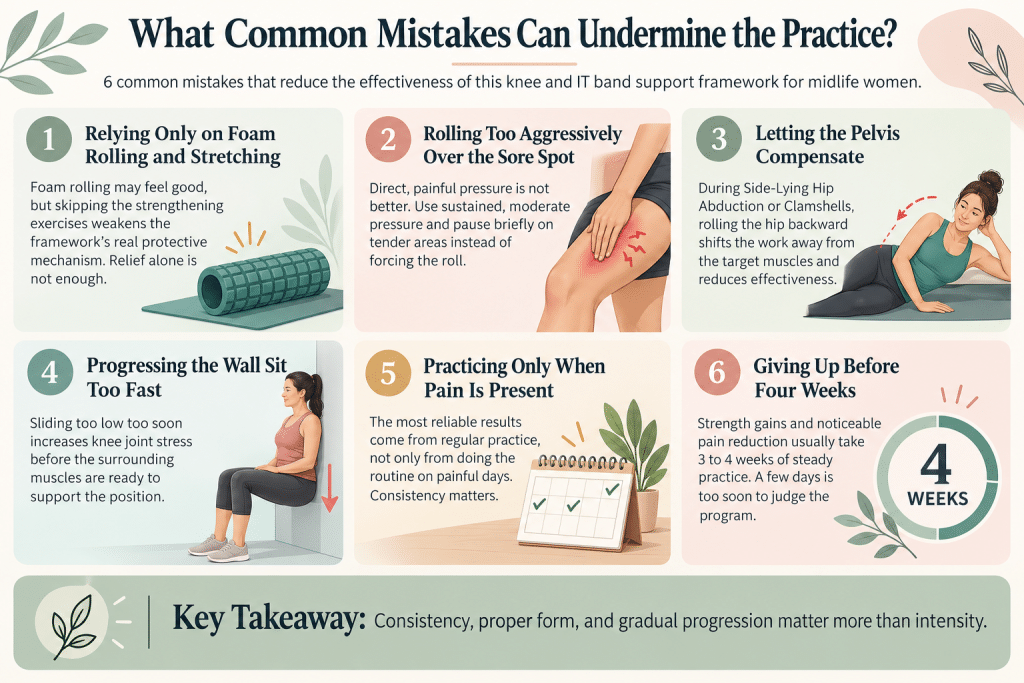
Six mistakes consistently reduce the effectiveness of this framework for midlife women.
- Relying only on foam rolling and stretching: Given that the research on tissue-level change from foam rolling is mixed at best, skipping the strengthening exercises in favor of only the parts that feel immediately good undermines the framework’s actual protective mechanism.
- Rolling directly and aggressively over the sore spot: Sustained, moderate pressure that pauses briefly on tender areas is more useful than aggressive, painful rolling.
- Letting the pelvis compensate during hip abduction exercises: Rolling the hip backward during Side-Lying Hip Abduction or the Clamshell shifts the work away from the target muscles and reduces the exercise’s effectiveness substantially.
- Progressing the wall sit too aggressively: Sliding too low too quickly increases knee joint stress before the surrounding muscles are ready to support it.
- Practicing only when pain is present: The most reliable results come from regular practice regardless of symptom intensity on a given day.
- Giving up before four weeks: Strength changes, and the pain reduction that follows from them, generally require three to four weeks of consistent practice to become clearly noticeable. Judging the program after a few days produces false negatives.
How Does This Fit Into the Broader THOR Framework?
Fascia release for knee pain is one component of the broader movement and lifestyle medicine framework taught at THOR.
- Nutrition foundation: Adequate protein intake supports muscle maintenance and recovery from the strengthening work in this program. The free Macro Calculator can help you estimate daily calorie and macro targets, while the Macro Miracle Mediterranean Cookbook offers practical ways to turn those targets into everyday meals.
- Foundational movement layer: Knee health is closely tied to the broader strength and muscle picture. Understanding sarcopenia in midlife helps explain why maintaining muscle matters, while focusing on the muscles that matter most with age and the difference between power and strength can help create a more complete training approach.
- Balance and stability: Strong hips and knees also need the balance and coordination to respond quickly when your footing changes. The single-leg stance test offers a simple way to assess stability, while understanding why balance can decline earlier than expected adds useful context for fall prevention.
- Foundation from the ground up: Knee mechanics are influenced by what happens at the foot and ankle with every step. The foot cascade effect helps explain how changes in foot structure, mobility, and footwear can alter the way force travels upward through the knee.
- Complementary fascia work: Knee discomfort can also be influenced by restrictions elsewhere in the fascial and movement chain. Working on areas such as the piriformis and a tight psoas can complement knee-focused mobility and strengthening when hip restrictions are affecting movement mechanics.
- Foundational supplements: Nutrition remains the foundation, but supplements such as collagen, magnesium, and omega-3s may play supporting roles depending on your individual needs. THOR’s foundational supplement collection brings those broader nutritional support options together in one place.
Free 28-Day Fascia Reset Email Course
Get our Free 28-day email course series to help with 1 or 2 exercises per day to release your fascia. One short lesson per day. Two minutes to read each.
When Should You See a Healthcare Professional?
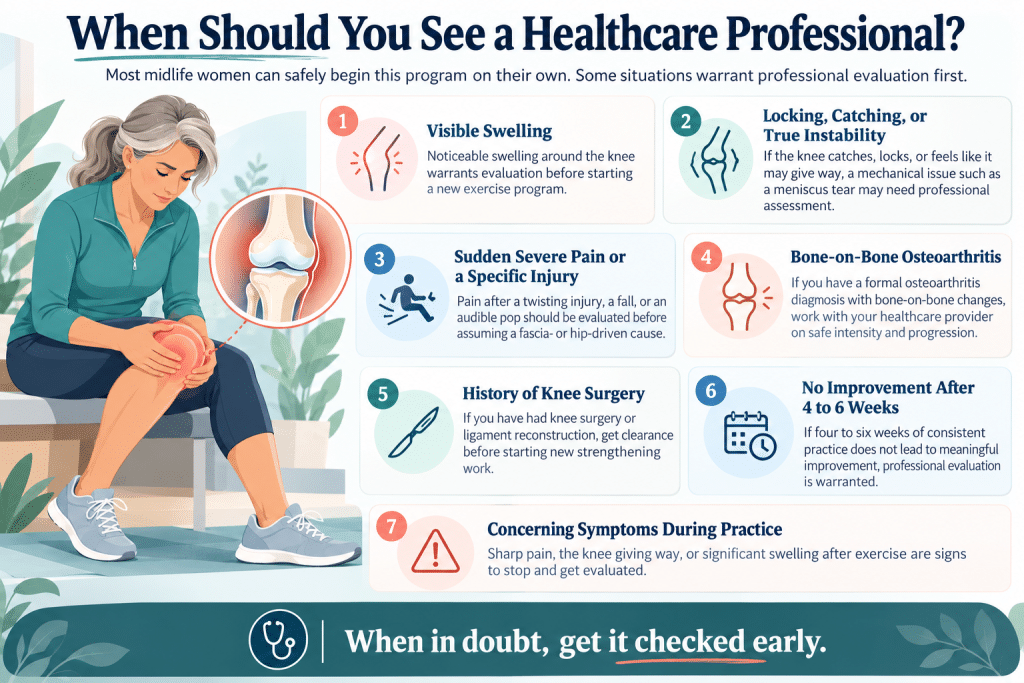
Most midlife women can safely begin this program on their own. Some situations warrant professional evaluation first.
- Visible swelling: Noticeable swelling around the knee warrants evaluation before starting a new exercise program.
- Locking, catching, or true instability: A sense that the knee will give way, or that it catches or locks during movement, suggests a mechanical issue (such as a meniscus tear) that needs professional assessment.
- Sudden severe pain or a specific injury event: Pain that began with a specific twisting injury, a fall, or an audible pop warrants evaluation before assuming a fascia or hip-driven cause.
- Formal osteoarthritis diagnosis with bone-on-bone changes: Work with your healthcare provider to determine the appropriate intensity and progression for this framework alongside your existing management plan.
- History of knee surgery or ligament reconstruction: Get clearance before starting new strengthening work.
- Failure to improve: If four to six weeks of consistent practice does not produce meaningful improvement, professional evaluation is warranted.
- Any concerning symptoms during practice: Sharp pain, a sense of the knee giving way, or significant swelling after exercise warrant stopping and evaluating.
What Are Your Next Steps?
If the framework in this article resonates and you want to install a knee health practice, here are the four next steps in order of friction.
- Start today with Day 1 of the program. Ten minutes and a foam roller. Foam roll plus Side-Lying Hip Abduction. Basic setup only.
- Complete the full 5-day program this week. Follow the daily protocols in Section 12. Track how your knees feel each day, particularly after stairs or prolonged sitting.
- Add the Standing IT Band Stretch as a workday break. Practice it after any prolonged sitting to prevent stiffness from accumulating.
Free 28-Day Fascia Reset Email Course
Get our Free 28-day email course series to help with 1 or 2 exercises per day to release your fascia. One short lesson per day. Two minutes to read each.
Frequently Asked Questions
Why do my knees hurt more since menopause?
Knee osteoarthritis prevalence rises sharply around age 50 in women specifically, a pattern researchers link to declining estrogen’s effect on connective tissue, combined with age-related muscle loss and decades of accumulated movement patterns that quietly weaken the hip muscles supporting the knee.
Is IT band pain the same as knee pain?
IT band pain typically presents as ache along the outer thigh and outer knee, and it is a common contributor to knee pain in midlife women, but it is one of several possible drivers. Kneecap-area pain, swelling, or a sense of instability suggest other contributing factors alongside or instead of IT band tension.
Does foam rolling actually fix a tight IT band?
Research using ultrasound elastography found that foam rolling and stretching did not produce a measurable change in the IT band’s actual tissue stiffness. Foam rolling likely helps through short-term pain modulation and perceived mobility rather than permanently lengthening the tissue, which is why this framework pairs it with hip and quadriceps strengthening for lasting change.
How long does it take to reduce knee pain with this program?
Short-term relief from the foam roll and stretch is often noticeable within the first session. Meaningful reductions in day-to-day knee discomfort generally appear within two to four weeks of consistent strengthening practice.
Can weak hips really cause knee pain?
Yes. Multiple studies have found measurably weaker hip abductor and external rotator strength in women with knee pain compared to pain-free women, and randomized trials show that adding hip strengthening to knee-focused treatment improves outcomes more than knee-focused treatment alone.
Do I need a foam roller and a resistance band for this program?
A foam roller and a mini resistance loop band together cost approximately $25 to $40 and are used across all five exercises. Both are widely available and reusable for other movement work.
Can I do this program if I have knee osteoarthritis?
Building hip and quadriceps strength is one of the most evidence-supported interventions for knee osteoarthritis, and greater quadriceps strength specifically has been linked to reduced risk of disease progression. Work with your healthcare provider to confirm the appropriate intensity for your specific situation, particularly with bone-on-bone changes.
What is the difference between knee pain and knee osteoarthritis?
Knee pain from fascia and hip-driven causes involves soft tissue tension and muscular imbalance without significant structural joint damage. Knee osteoarthritis is a structural condition involving progressive cartilage breakdown, visible on imaging. The two often coexist, and the strengthening approach in this article benefits both.
Should I stretch or strengthen for knee pain?
Both, but strengthening has the stronger research base for producing lasting change. Stretching and foam rolling provide useful short-term relief and mobility, but hip and quadriceps strengthening is what most directly addresses the underlying mechanical drivers of most midlife knee pain.
Can knee pain from tight fascia cause pain elsewhere?
Yes. The fascial and muscular chain connecting the hip, IT band, and knee also extends through the low back and ankle, so restriction or weakness in one area can create compensatory movement elsewhere. Understanding the foot cascade effect helps explain how changes in foot and ankle mechanics can travel upward and influence the knee, hip, and surrounding tissues.
How often should I do these knee exercises?
Four to five days per week produces reliable results while allowing adequate recovery time for the strengthening exercises. The Standing IT Band Stretch can be done daily, including as a quick break after prolonged sitting.
Is it normal for one knee to hurt more than the other?
Yes, and it is still worth strengthening both sides. Hip weakness is often present bilaterally even when pain is one-sided, and neglecting the less symptomatic side can create new imbalances over time.
Can I do these exercises if I’ve had a knee replacement?
Work with your surgeon and physical therapist to determine appropriate timing and modification. Many of the hip-strengthening exercises in this article are compatible with post-replacement rehabilitation protocols, but individualized clearance and guidance matter here.
What is the single most important exercise in this program?
Side-Lying Hip Abduction most directly targets the specific hip weakness pattern consistently linked to knee pain in the research, making it the highest-priority exercise if time is limited on any given day.
Should knee exercises ever hurt?
You may feel muscular fatigue and mild stretch sensation, but sharp knee pain, swelling, or a locking or catching sensation are signals to stop and reassess rather than push through.
I write 3 essays per week on Lifestyle Medicine for women in midlife on what is happening in the body and what to do about it. No fluff, no hype. Free Subscription.
References
- Magalhães, E., Fukuda, T. Y., Sacramento, S. N., Forgas, A., Cohen, M., & Abdalla, R. J. (2010). A comparison of hip strength between sedentary females with and without patellofemoral pain syndrome. Journal of Orthopaedic & Sports Physical Therapy, 40(10), 641-647.
- Pepper, T. M., Brismée, J. M., Sizer, P. S., et al. (2021). The immediate effects of foam rolling and stretching on iliotibial band stiffness: a randomized controlled trial. International Journal of Sports Physical Therapy, 16(3), 651-661.
- Segal, N. A., Glass, N. A., Torner, J., et al. (2010). Effect of quadriceps strength and proprioception on risk for knee osteoarthritis. Medicine & Science in Sports & Exercise, 42(11), 2081-2088.
- Dennison, E. M. (2022). Osteoarthritis: the importance of hormonal status in midlife women. Maturitas, 165, 8-11.
- Osteoarthritis Action Alliance, University of North Carolina. OA Prevalence and Burden. Accessed 2026.
- Powers, C. M. (2010). The influence of abnormal hip mechanics on knee injury: a biomechanical perspective. Journal of Orthopaedic & Sports Physical Therapy, 40(2), 42-51.
Disclaimer: Always consult with a qualified healthcare professional before starting any new movement program, particularly if you have a history of knee surgery, ligament injury, meniscus tears, significant joint swelling, or diagnosed osteoarthritis with bone-on-bone changes. This article is educational and does not constitute medical advice.
Free 28-Day Fascia Reset Email Course
Get our Free 28-day email course series to help with 1 or 2 exercises per day to release your fascia. One short lesson per day. Two minutes to read each.

Terry Tateossian is a Menopause Lifestyle Medicine Coach, Certified Personal Trainer & Nutritionist and the Founder of THOR: The House of Rose, a wellness brand serving women over 40 through retreats, coaching, macro-nutrition and community. As 25-year founder and entrepreneur, Terry spent two and a half decades building and running successful start-up businesses, an experience that put her on the front line of founder burnout long before she could name it. After facing serious health challenges, early onset menopause, and emotional eating while running her agency and raising two children, Terry rebuilt her health in her 40s and lost more than 80 pounds through evidence-based nutrition, training, and mindset work. Today, she helps women get strong, improve confidence, support hormone health, and create a stronger second half of life. Terry has been featured in major media outlets and is available for podcasts, expert commentary, brand collaborations, and speaking engagements on midlife health, reinvention, emotional eating, menopause wellness, and strength training for longevity. Get her free macro calculator (her cookbook companion) to start your journey to back to health.