
 By Cindy Adoptante
Free 28-Day Fascia Reset Email Course
Get our Free 28-day email course series to help with 1 or 2 exercises per day to release your fascia. One short lesson per day. Two minutes to read each.
Bunions (Hallux Valgus): Why They Form, What Slows Them Plus 5 Tools & 5-Day Protocol)
Bunions are one of the most visible, most misunderstood conditions in foot health. A bunion, medically known as hallux valgus, is not extra bone or simply a sign of aging.
It is a progressive structural shift: the big toe moves toward the second toe while its joint shifts outward, creating the familiar bump along the inside of the foot. Because the bones themselves change alignment, an established bunion cannot simply be stretched or massaged away.
The answer to “why do I have bunions” comes down to two forces.
Genetics loads the gun.
Footwear pulls the trigger.
Research involving 350 patients found that 90 percent had an affected family member (Piqué-Vidal, Solé, & Antich, 2007), while other studies have linked high-heeled footwear with hallux valgus (Barnish & Barnish, 2016).
The broader foot cascade effect helps explain how narrow toe boxes repeatedly compress the toes while elevated heels shift more pressure toward the forefoot. Neither genetics nor footwear tells the whole story alone, but together they help explain why bunions develop and progress.
This article offers that same honest perspective: the mechanics, evidence-supported treatment options, the limits of conservative care, and 5 practical tools combined into a 5-day protocol to help manage pain and slow progression.
Important: Consult a podiatrist or orthopedic foot specialist before starting new bunion interventions, especially if you experience significant pain, rapid progression, numbness, or circulation problems. This article is educational and does not replace an individual medical evaluation.
What Is a Bunion?
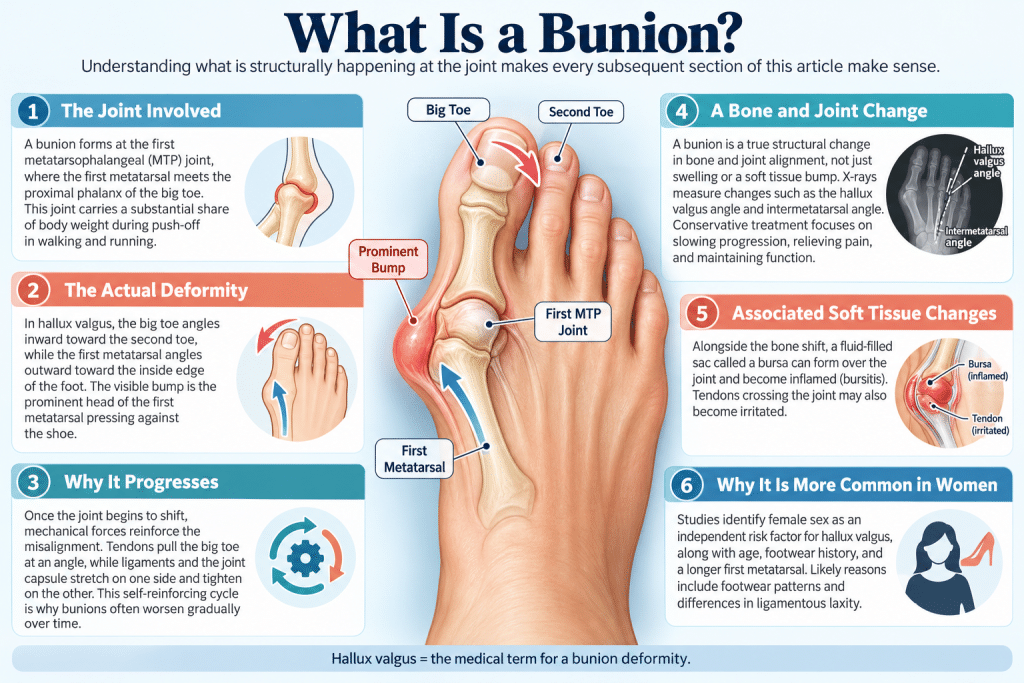
Understanding what is structurally happening at the joint makes every subsequent section of this article make sense.
- The joint involved: The bunion forms at the first metatarsophalangeal (MTP) joint, where the first metatarsal bone (running through the middle of the foot) meets the proximal phalanx of the big toe. This joint bears a substantial share of body weight during push-off in walking and running.
- The actual deformity: In hallux valgus, the big toe angles inward toward the second toe, while the first metatarsal angles outward toward the inside edge of the foot. The visible “bump” is the prominent head of the first metatarsal, now rotated into a position where it presses against the shoe.
- Why it progresses rather than staying static: Once the joint begins to shift, mechanical forces reinforce the misalignment. Tendons start pulling the big toe at an angle, while ligaments and the joint capsule stretch on one side and tighten on the other. This self-reinforcing cycle explains why bunions often worsen gradually over years rather than remaining stable.
- It is a true bone and joint change, not a soft tissue bump: A bunion involves measurable changes in bone alignment, including the hallux valgus and intermetatarsal angles seen on X-ray, not simply swelling or callus formation. This is why conservative treatments focus on slowing progression, relieving pain, and maintaining function rather than reversing an established structural deformity.
- Associated soft tissue changes: Alongside the bone shift, a fluid-filled sac (bursa) can form over the prominent joint and become inflamed (bursitis), and the tendons crossing the joint can develop their own secondary irritation.
- Why it is more common in women: Multiple epidemiological studies identify female sex as an independent risk factor for hallux valgus, alongside age, footwear history, and a longer first metatarsal bone. The reasons likely include a combination of footwear patterns and differences in ligamentous laxity.
Free 28-Day Fascia Reset Email Course
Get our Free 28-day email course series to help with 1 or 2 exercises per day to release your fascia. One short lesson per day. Two minutes to read each.
Why Do Bunions Form?
The honest mechanism behind bunion formation requires holding two categories of cause together rather than picking one.
- The genetic contribution: Research involving 350 bunion patients found that 90 percent had at least one affected family member, suggesting an inherited tendency that does not always lead to deformity (Piqué-Vidal, Solé, & Antich, 2007). More recent studies have identified gene variants linked to hallux valgus, further confirming that genetics plays a substantial role in its development.
- What “genetic predisposition” actually inherits: Family history likely passes down specific structural traits, including a longer first metatarsal bone, looser ligaments around the joint, and particular foot shapes, that make the joint mechanically more vulnerable to the footwear-driven forces described next.
- The footwear contribution: Research on high-heeled footwear has found consistent associations between greater heel height and hallux valgus, along with broader musculoskeletal pain (Barnish & Barnish, 2016). The broader foot cascade effect helps explain why: a tapered toe box repeatedly compresses the toes into a narrower position, while an elevated heel shifts more load toward the forefoot where that compression is already occurring.
- Why both factors matter together: A joint with strong genetic predisposition is more vulnerable to a given amount of footwear-driven compressive force than a joint without that predisposition. This is why some people wear narrow shoes for decades without developing a bunion, while others develop one relatively young, and it is also why footwear changes remain meaningfully protective even for people who cannot change their genetic starting point.
- Other contributing factors: Age (bunions become more prevalent with age as ligamentous laxity and years of footwear exposure accumulate), and more recent research identifying smoking history and higher body mass index as additional associated risk factors, though the strength of these associations is less established than genetics and footwear history.
- What this means practically: If bunions run in your family, footwear choices matter more for you, not less, since your joint has less margin to tolerate compressive forces before shifting begins. This is the opposite of the fatalistic “it’s just genetic, nothing to be done” framing that is common and, based on the actual research, incomplete.
“The women I coach who make the most peace with their bunions are the ones who understand both halves of the story. If you only hear ‘it’s genetic,’ it feels hopeless, like nothing you do matters. If you only hear ‘it’s your shoes,’ it feels like blame, like you did this to yourself by wearing cute shoes for thirty years. The truth, that genetics set your starting vulnerability and footwear determined how much of that vulnerability got expressed, is both more accurate and, honestly, more useful. It tells you exactly what you can still influence today.”
Terry Tateossian, Founder of The House of Rose
What Are the Signs & Stages of Bunion Progression?
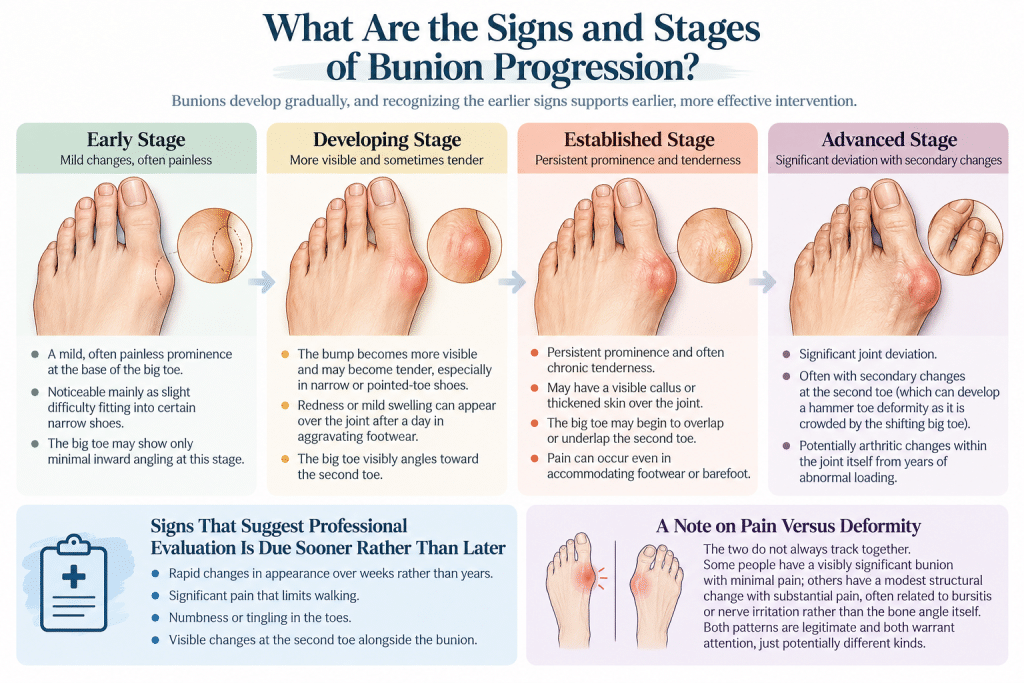
Bunions develop gradually, and recognizing the earlier signs supports earlier, more effective intervention.
- Early stage: A mild, often painless prominence at the base of the big toe, noticeable mainly as slight difficulty fitting into certain narrow shoes. The big toe may show only minimal inward angling at this stage.
- Developing stage: The bump becomes more visible and may become tender, especially in narrow or pointed-toe shoes. Redness or mild swelling can appear over the joint after a day in aggravating footwear. The big toe visibly angles toward the second toe.
- Established stage: Persistent prominence and often chronic tenderness, sometimes with a visible callus or thickened skin over the joint. The big toe may begin to overlap or underlap the second toe. Pain can occur even in accommodating footwear or barefoot.
- Advanced stage: Significant joint deviation, often with secondary changes at the second toe (which can develop a hammer toe deformity as it is crowded by the shifting big toe), and potentially arthritic changes within the joint itself from years of abnormal loading.
- Signs that suggest professional evaluation is due sooner rather than later: Rapid changes in appearance over weeks rather than years, significant pain that limits walking, numbness or tingling in the toes, or visible changes at the second toe alongside the bunion.
- A note on pain versus deformity: The two do not always track together. Some people have a visibly significant bunion with minimal pain; others have a modest structural change with substantial pain, often related to bursitis or nerve irritation rather than the bone angle itself. Both patterns are legitimate and both warrant attention, just potentially different kinds.
Free 28-Day Fascia Reset Email Course
Get our Free 28-day email course series to help with 1 or 2 exercises per day to release your fascia. One short lesson per day. Two minutes to read each.
How Do Bunions Differ From Other Forefoot Conditions?
Several forefoot conditions can resemble or coexist with bunions, and distinguishing them affects what actually helps.
- Bunionette (tailor’s bunion): A similar deformity at the base of the fifth toe (pinky toe) rather than the big toe, driven by a similar mechanism but on the opposite side of the foot.
- Hallux rigidus: Arthritis of the same big toe joint that restricts the toe’s ability to bend upward, distinct from hallux valgus’s sideways deviation, though the two can coexist in the same joint over time.
- Morton’s neuroma: Nerve irritation between the third and fourth metatarsal heads, distinct from the joint-level changes of a bunion, though both share narrow footwear as a contributing factor and can occur in the same foot simultaneously.
- Hammer toe: A clawing deformity of the smaller toes, which can develop as a secondary consequence of an advancing bunion crowding the second toe, or can occur independently.
- Why the distinction matters for this article: The tools discussed here specifically target hallux valgus, focusing on big toe alignment and muscle stability. If your discomfort comes from nerve pain, arthritis, or hammer toes, some approaches, especially footwear changes, may still help. However, a professional evaluation can confirm the underlying condition before you commit to a specific treatment plan.
What Does the Research Show About Bunion Treatments?
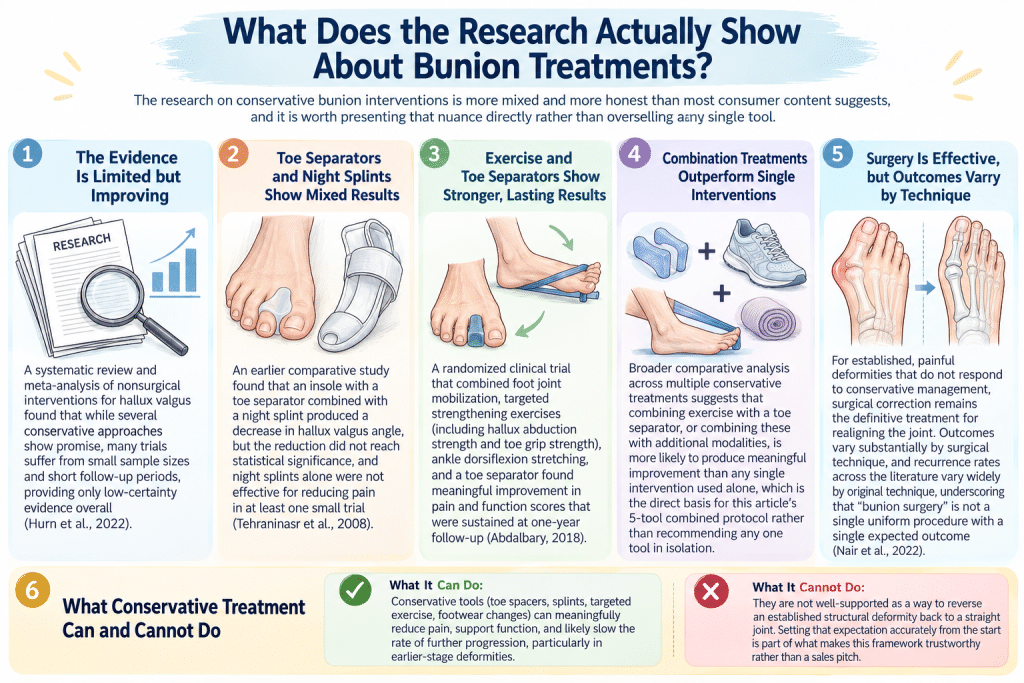
The research on conservative bunion interventions is more mixed and more honest than most consumer content suggests, and it is worth presenting that nuance directly rather than overselling any single tool.
The Evidence Is Limited but Improving
A systematic review and meta-analysis of nonsurgical interventions for hallux valgus found that while several conservative approaches show promise, many trials suffer from small sample sizes and short follow-up periods, providing only low-certainty evidence overall (Hurn et al., 2022).
Toe Separators & Night Splints Show Mixed Results
An earlier comparative study found that an insole with a toe separator combined with a night splint produced a decrease in hallux valgus angle, but the reduction did not reach statistical significance, and night splints alone were not effective for reducing pain in at least one small trial (Tehraninasr et al., 2008).
Exercise & Toe Separators Show Stronger, Lasting Results
A randomized clinical trial that combined foot joint mobilization, targeted strengthening exercises (including hallux abduction strength and toe grip strength), ankle dorsiflexion stretching, and a toe separator found meaningful improvement in pain and function scores that were sustained at one-year follow-up, a notably longer follow-up period than most studies in this area (Abdalbary, 2018).
Combination Treatments Outperform Single Interventions
Broader comparative analysis across multiple conservative treatments suggests that combining exercise with a toe separator, or combining these with additional modalities, is more likely to produce meaningful improvement than any single intervention used alone, which is the direct basis for this article’s 5-tool combined protocol rather than recommending any one tool in isolation.
Surgery Is Effective, but Outcomes Vary by Technique
For established, painful deformities that do not respond to conservative management, surgical correction remains the definitive treatment for realigning the joint. Outcomes vary substantially by surgical technique: a systematic review of surgery for recurrent hallux valgus found that patients undergoing modern minimally invasive revision techniques showed meaningfully greater improvement in functional outcome scores compared with open technique revisions (Nair et al., 2022), and recurrence rates across the literature vary widely by original technique, underscoring that “bunion surgery” is not a single uniform procedure with a single expected outcome.
What Conservative Treatment Can & Can’t Do
Based on this research, the honest framing is that conservative tools (toe spacers, splints, targeted exercise, footwear changes) can meaningfully reduce pain, support function, and likely slow the rate of further progression, particularly in earlier-stage deformities.
They are not well-supported as a way to reverse an established structural deformity back to a straight joint. Setting that expectation accurately from the start is part of what makes this framework trustworthy rather than a sales pitch.
Free 28-Day Fascia Reset Email Course
Get our Free 28-day email course series to help with 1 or 2 exercises per day to release your fascia. One short lesson per day. Two minutes to read each.
What Should You Know Before Starting a Bunion Management Protocol?
Several principles apply across all five tools in this protocol.
- Consistency matters more than intensity: The research showing durable one-year benefit (Abdalbary, 2018) used a sustained, combined program, not an occasional or single-tool approach.
- Pair release-oriented tools with strengthening tools: Passive tools (spacers, splints) support pain relief and positioning; the active exercises are what the evidence most directly connects to functional improvement over time. Use both categories.
- Footwear changes amplify everything else: No amount of exercise or spacer use fully offsets hours daily in a narrow, elevated shoe. Treat the footwear transition (Tool 5) as foundational rather than optional.
- Expect gradual change, not fast change: The strongest supporting trial in this area tracked outcomes over a full year (Abdalbary, 2018). Meaningful pain reduction and function improvement are realistic within weeks to a couple of months; meaningful change in the visible deformity, if it happens at all, takes much longer and has real limits.
- Stop if pain increases: Any tool that produces sharper pain, numbness, or tingling during or after use should be discontinued and discussed with a foot specialist.
- Equipment needed: A silicone toe spacer or toe separator, a bunion night splint, a light resistance band or loop, and at least one pair of authentically wide-toe-box shoes. Total equipment investment approximately $40 to $70, not including footwear.
- Introduce new tools one at a time: Especially the night splint, which some people find uncomfortable initially. Give each tool several days before judging it.
What Are the Five Best Tools and Exercises for Managing Bunions?
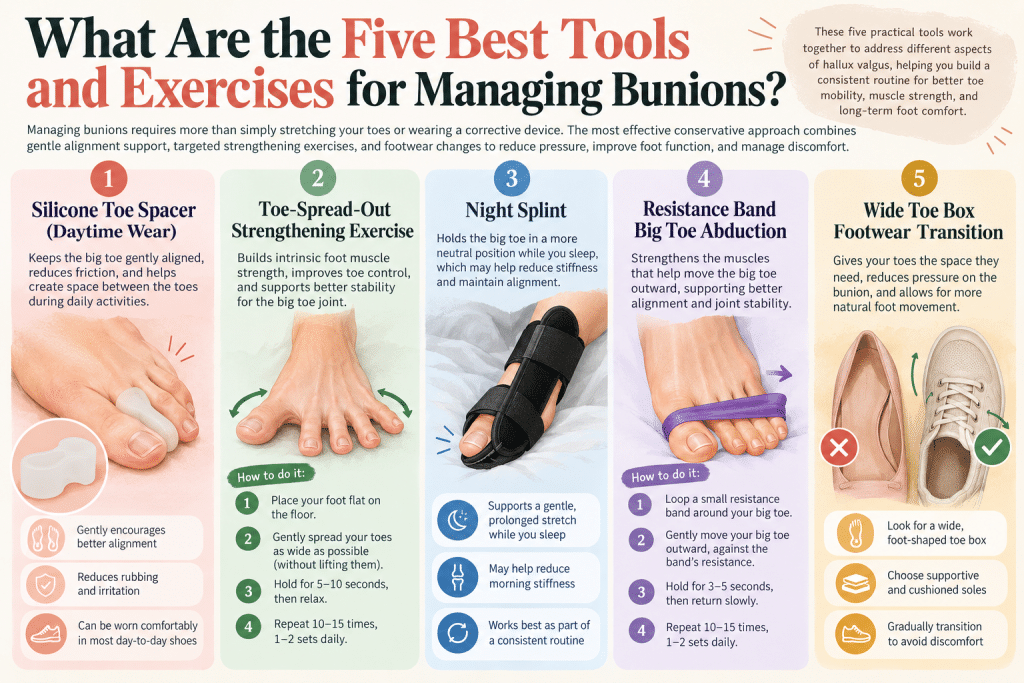
Managing bunions requires more than simply stretching your toes or wearing a corrective device. The most effective conservative approach combines gentle alignment support, targeted strengthening exercises, and footwear changes to reduce pressure, improve foot function, and manage discomfort.
These five practical tools work together to address different aspects of hallux valgus, helping midlife women build a consistent routine that supports better toe mobility, muscle strength, and long-term foot comfort. While they cannot fully reverse an established structural deformity, they may help relieve symptoms and improve everyday movement.
Tool 1: Silicone Toe Spacer (Daytime Wear)
The Silicone Toe Spacer is worn between the big toe and second toe during the day, inside wider footwear, to gently encourage better alignment and reduce friction-related irritation.
- How it works: The spacer applies gentle, continuous separating pressure between the first and second toes, which research combining spacers with exercise has linked to meaningful improvement in pain and function over time (Abdalbary, 2018), likely working alongside the strengthening component rather than through the spacer alone.
- Sets and reps: Daily wear, building toward as many waking hours as comfortable, worn inside appropriate footwear only.
- Common mistakes: Wearing a spacer inside narrow shoes (ineffective and can increase pressure), sizing too large and forcing the toes, expecting the spacer alone (without the exercises in this protocol) to produce the results seen in combined-intervention research.
- Why this tool for midlife women: It is low-cost, immediately wearable, and directly addresses the toe-crowding mechanism central to bunion discomfort.
- Modification for sensitivity: Start with shorter wear periods and a softer, more flexible spacer material.
Using a silicone toe spacer correctly helps encourage gentle toe alignment while reducing friction and discomfort. Follow these simple steps to ensure a comfortable fit and gradually build tolerance.
- Choose the Right Size: Select a soft silicone spacer that fits comfortably between your first and second toes. If it forces them too far apart, choose a smaller size.
- Position the Spacer: Place it gently between your big toe and second toe before putting on socks and shoes.
- Wear Proper Footwear: Use wide-toe-box shoes to prevent compression and allow the spacer to work effectively.
- Build Tolerance Gradually: Start with 2 to 3 hours of daytime wear, then gradually increase as comfort allows.
Free 28-Day Fascia Reset Email Course
Get our Free 28-day email course series to help with 1 or 2 exercises per day to release your fascia. One short lesson per day. Two minutes to read each.
Tool 2: Toe-Spread-Out Strengthening Exercise
The Toe-Spread-Out Exercise directly targets the abductor hallucis, the muscle responsible for pulling the big toe away from the other toes, which becomes weak and underused as the joint deviates.
- How it works: Strengthening exercises targeting hallux abduction, combined with a toe separator, have been linked to meaningful, durable improvement in hallux valgus-related pain and function at one-year follow-up (Abdalbary, 2018), making this the highest-priority active exercise in the protocol.
- Sets and reps: 3 sets of 10 repetitions, holding each for 5 seconds, performed 3 times per week at minimum (daily is acceptable and likely more effective given the research on consistency).
- Common mistakes: Curling the toes under instead of spreading them, moving too quickly to allow a real muscular contraction, only practicing occasionally rather than as a consistent habit.
- Why this exercise for midlife women: It is the most evidence-connected active exercise in this protocol and requires no equipment, making it the easiest tool to sustain long-term.
- Modification for difficulty isolating the movement: Use your fingers initially to gently guide the big toe into the spread position while you focus on activating the muscle, gradually reducing the manual assistance as control improves.
- Progression: Add manual resistance with a hand against the spreading toes, or progress to Tool 4 (resistance band big toe abduction) once basic control is established.
The toe-spreading exercise helps strengthen the small muscles that support big toe alignment and improve foot control. Follow these simple steps to perform the movement correctly without curling your toes.
- Get Into Position: Sit barefoot with your foot flat on the floor and your knee bent at roughly 90 degrees.
- Spread Your Toes: Actively spread all five toes apart without curling them, focusing on moving your big toe away from the second toe.
- Hold the Position: Maintain the spread for 5 seconds while keeping your foot relaxed and stable.
- Relax and Repeat: Release your toes, return to the starting position, and repeat the movement.
Tool 3: Night Splint
The Night Splint holds the big toe in a more neutral, straight alignment during sleep, when the joint is unloaded and more receptive to gentle repositioning.
- How it works: The splint applies a sustained, gentle corrective force overnight. The evidence for splints used in isolation is mixed, with one comparative study finding a non-significant reduction in hallux valgus angle (Tehraninasr et al., 2008), which is why this protocol positions the splint as one component of a combined approach rather than a standalone fix.
- Sets and reps: Nightly wear, building tolerance gradually.
- Common mistakes: Starting with too aggressive a correction setting (produces discomfort that disrupts sleep and reduces adherence), expecting the splint alone to reverse the deformity, giving up after a few nights of adjustment discomfort rather than gradually building tolerance.
- Why this tool for midlife women: It requires no active effort during use, making it one of the easiest tools to sustain consistently, which matters given that consistency is central to whatever benefit conservative treatment can offer.
- Modification for discomfort: Reduce the correction angle, or start with shorter wear periods (part of the night) before progressing to full-night wear.
- When to skip: If the splint produces sharp pain, numbness, or significantly disrupts sleep despite adjustment, discontinue and discuss alternatives with a foot specialist.
A night splint provides gentle support to the big toe while you sleep, helping maintain a more comfortable alignment. Follow these simple steps to ensure a proper fit and avoid excessive pressure.
- Choose the Right Splint: Select a properly sized night splint with adjustable straps to control the degree of correction.
- Position the Splint: Place it around your foot and big toe according to the manufacturer’s fitting instructions.
- Adjust the Correction: Start with a mild correction setting, ensuring the splint feels supportive without causing pain or excessive pressure.
- Wear During Sleep: Use the splint overnight as tolerated, gradually increasing wear time if needed. Remove it if you experience pain, numbness, or tingling.
Free 28-Day Fascia Reset Email Course
Get our Free 28-day email course series to help with 1 or 2 exercises per day to release your fascia. One short lesson per day. Two minutes to read each.
Tool 4: Resistance Band Big Toe Abduction
Resistance Band Big Toe Abduction progresses the strengthening work of Tool 2 by adding external resistance, building meaningful strength in the muscles that stabilize the big toe’s alignment.
- How it works: Progressive resistance training of the hallux abductor builds strength beyond what bodyweight toe-spreading alone can achieve, following the same general strengthening principle shown to support durable improvement when combined with a toe separator (Abdalbary, 2018).
- Sets and reps: 2 to 3 sets of 10 to 12 repetitions per foot.
- Common mistakes: Using a band too strong for controlled movement, moving the whole foot rather than isolating the big toe, neglecting the controlled return phase.
- Why this exercise for midlife women: It progresses the foundational toe-spreading work into genuine strength training, which is where the research suggests the more durable benefits come from.
- Modification for beginners: Master Tool 2 (bodyweight toe-spread-out exercise) for several weeks before introducing band resistance.
- Progression: Increase band resistance gradually as strength improves.
The resistance band exercise helps strengthen the muscles responsible for moving the big toe away from the second toe, supporting better alignment and foot stability. Follow these simple steps to perform the movement with proper control.
- Prepare the Band: Loop a small resistance band around the big toes of both feet.
- Get Into Position: Sit with your legs extended and feet together, or keep your feet flat on the floor if more comfortable.
- Pull Against Resistance: Keeping the rest of your feet relatively still, move your big toes away from your second toes against the band’s resistance.
- Hold and Release: Hold the position briefly, then slowly return your toes to the starting position.
- Repeat the Movement: Continue with controlled repetitions, avoiding excessive force or toe curling.
Tool 5: Wide Toe Box Footwear Transition
The Wide Toe Box Footwear Transition is the foundational, non-negotiable component of this protocol, since footwear is one half of the mechanism that created the problem in the first place.
- How it works: Removing the ongoing compressive force of a narrow toe box and elevated heel addresses the modifiable half of the genetics-plus-footwear mechanism described in Section 2, which research directly links to hallux valgus development and progression (Barnish & Barnish, 2016).
- Ongoing practice: Rotate in wide-toe-box options for as much of your daily footwear as practical, reserving narrower or higher-heeled shoes for occasional, shorter-duration wear rather than daily use.
- Common mistakes: Judging “wide enough” by the shoe’s marketed width category rather than actually tracing and comparing, assuming a shoe is fine because it feels acceptable at first try-on (narrow shoes often feel fine before hours of wear), keeping the transition to special occasions only rather than making it the daily default.
- Why this matters most for midlife women with bunions: Every other tool in this protocol works against the same compressive force that daily narrow footwear reintroduces. Without this change, the other four tools are working uphill.
Choosing shoes that match your foot’s natural width helps reduce toe compression and supports better alignment. Follow these simple steps to find footwear that provides enough space and comfort for daily wear.
- Trace Your Foot: Stand barefoot on a piece of paper and trace your foot’s outline to capture its true width while bearing weight.
- Compare the Shoe Width: Check your traced outline against the shoe’s widest toe area to see whether it provides enough room.
- Check for Toe Compression: Avoid shoes that are narrower than your foot outline around the toes, as they can increase pressure and discomfort.
- Choose a Wider Toe Box: Select shoes that allow your toes to spread naturally without squeezing them together.
- Prioritize a Low Heel: Choose footwear with a low heel-to-toe drop and minimal heel elevation for comfortable daily wear.
Free 28-Day Fascia Reset Email Course
Get our Free 28-day email course series to help with 1 or 2 exercises per day to release your fascia. One short lesson per day. Two minutes to read each.
How Can You Follow the 5-Day Bunion Management Protocol?
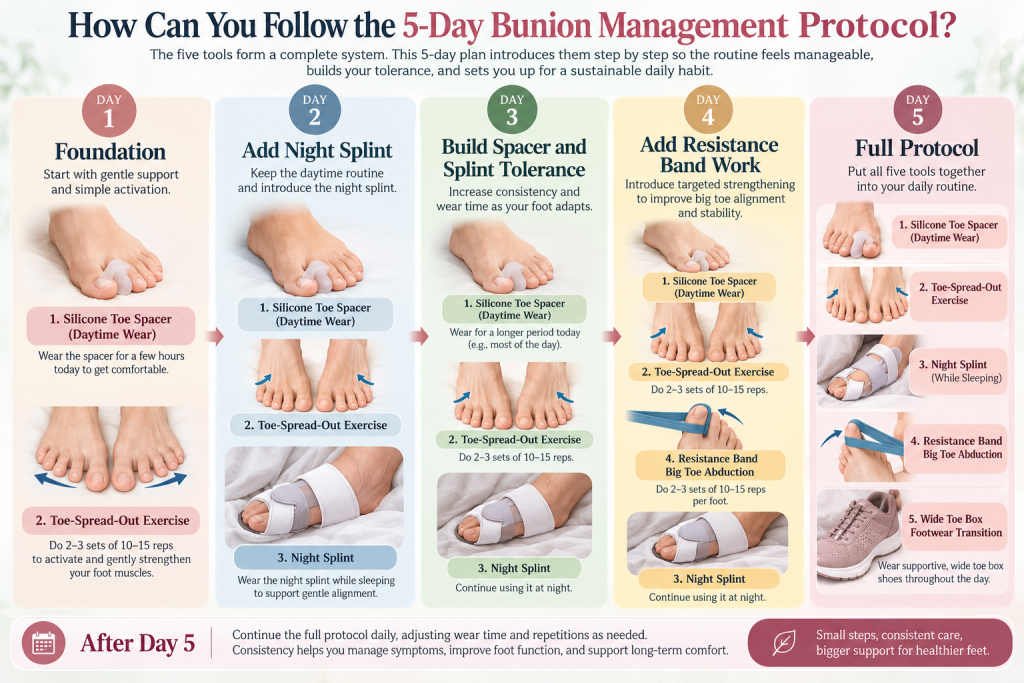
The five tools above form the complete protocol. The 5-day structure introduces them progressively so the routine feels manageable rather than overwhelming, and builds toward the sustained daily pattern the research supports.
Day 1: Foundation
Start with the foundational strengthening exercise, introduce the toe spacer, and assess your current footwear.
| Element | Details |
|---|---|
| Toe-Spread-Out Exercise (Tool 2) | 3 sets of 10, both feet |
| Toe spacer (Tool 1) | 2 to 3 hours, inside a wide shoe |
| Footwear audit (Tool 5) | Trace both feet; compare to your 3 most-worn shoes |
Day 2: Add Night Splint
Continue the strengthening exercise and daytime spacer while introducing the night splint with a gentle correction setting.
| Element | Details |
|---|---|
| Toe-Spread-Out Exercise | 3 sets of 10, both feet |
| Toe spacer | 3 to 4 hours |
| Night splint (Tool 3) | First night, mild correction setting |
Day 3: Build Spacer and Splint Tolerance
Gradually increase spacer wear, continue the night splint as tolerated, and spend more time in properly fitted footwear.
| Element | Details |
|---|---|
| Toe-Spread-Out Exercise | 3 sets of 10, both feet |
| Toe spacer | 4 to 6 hours |
| Night splint | Full night if comfortable |
| Footwear swap | Wear a properly wide-toe-box shoe for at least half the day |
Day 4: Add Resistance Band Work
Introduce resistance band strengthening while maintaining the toe spacer, night splint, and foundational exercises.
| Element | Details |
|---|---|
| Toe-Spread-Out Exercise | 2 sets of 10, both feet |
| Resistance Band Big Toe Abduction (Tool 4) | 2 sets of 10 to 12, both feet |
| Toe spacer | As many waking hours as comfortable |
| Night splint | Full night |
Day 5: Full Protocol
Bring all five tools together into a complete routine focused on consistent strengthening, alignment support, and comfortable footwear.
| Element | Details |
|---|---|
| Toe-Spread-Out Exercise | 2 sets of 10, both feet |
| Resistance Band Big Toe Abduction | 2 to 3 sets of 10 to 12, both feet |
| Toe spacer | Full day, inside wide-toe-box footwear |
| Night splint | Full night |
| Footwear | Wide-toe-box shoes as the daily default |
What Should You Do After the 5-Day Protocol?
From day six forward, maintain the full Day 5 pattern as your baseline: daily strengthening exercises, daily toe spacer wear inside appropriate footwear, nightly splint use, and wide-toe-box shoes as your default rather than your exception. The research supporting durable, one-year benefit used sustained daily practice over this timeframe (Abdalbary, 2018), so treat this as a long-term pattern rather than a short program with a defined endpoint.
Expected timeline for results: Reduced day-to-day irritation and friction is often noticeable within the first one to two weeks, particularly once the footwear transition is underway. Meaningful improvement in pain and function, consistent with the research, generally builds over 2 to 3 months of sustained practice, with the strongest evidence for durability extending to a full year of continued use.
“I tell women this directly because I think they deserve the honest version: none of these five tools are going to turn a visible bunion back into a perfectly straight toe. What they can do, and what the research actually supports, is reduce your pain, protect the joint from getting worse as quickly, and let you stay comfortable in the shoes and activities you want to keep doing. That is a real, worthwhile outcome, and it is a very different promise than what a lot of bunion products imply on their packaging.”
Terry Tateossian, Founder of The House of Rose
Free 28-Day Fascia Reset Email Course
Get our Free 28-day email course series to help with 1 or 2 exercises per day to release your fascia. One short lesson per day. Two minutes to read each.
What Common Mistakes Can Undermine the Bunion Management Protocol?
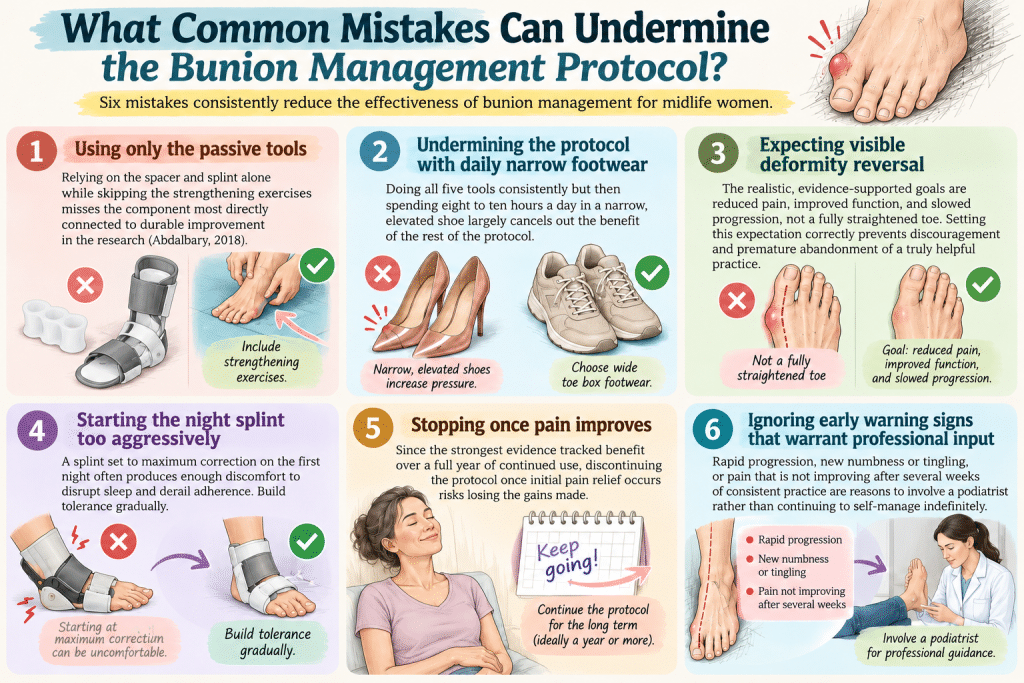
Six mistakes consistently reduce the effectiveness of bunion management for midlife women.
- Using only the passive tools: Relying on the spacer and splint alone while skipping the strengthening exercises misses the component most directly connected to durable improvement in the research (Abdalbary, 2018).
- Undermining the protocol with daily narrow footwear: Doing all five tools consistently but then spending eight to ten hours a day in a narrow, elevated shoe largely cancels out the benefit of the rest of the protocol.
- Expecting visible deformity reversal: The realistic, evidence-supported goals are reduced pain, improved function, and slowed progression, not a fully straightened toe. Setting this expectation correctly prevents discouragement and premature abandonment of a truly helpful practice.
- Starting the night splint too aggressively: A splint set to maximum correction on the first night often produces enough discomfort to disrupt sleep and derail adherence. Build tolerance gradually.
- Stopping once pain improves: Since the strongest evidence tracked benefit over a full year of continued use, discontinuing the protocol once initial pain relief occurs risks losing the gains made.
- Ignoring early warning signs that warrant professional input: Rapid progression, new numbness or tingling, or pain that is not improving after several weeks of consistent practice are reasons to involve a podiatrist rather than continuing to self-manage indefinitely.
How Does Bunion Management Fit Into the Broader THOR Framework?
Bunion management is one specific application of the broader ground-up foot health and movement framework taught at THOR.
- The foundational mechanism: Narrow toe boxes, elevated heels, and other footwear choices can change how the foot loads and moves over time. Understanding the broader foot cascade effect helps connect those changes with bunions, hammer toes, and other structural problems that can develop higher up the chain.
- The kinetic chain above the foot: Foot mechanics do not stop at the ankle. Changes in how you load the foot can influence the knee, hip, and surrounding tissues, which is why fascia release for knee pain can make more sense when viewed as part of a ground-up movement pattern rather than an isolated knee issue.
- Balance and fall prevention: Foot structure, strength, and sensory feedback all contribute to balance. The single-leg stance test offers a simple way to assess stability, while understanding why you can lose balance earlier than expected adds useful context for improving foot control and fall prevention.
- Broader muscle and strength foundation: Strong feet and toes are one piece of a larger muscle-preservation strategy in midlife. Understanding sarcopenia helps explain why maintaining strength throughout the lower body matters for mobility, balance, and long-term function.
- Nutrition foundation: Building stronger feet still depends on adequate recovery and nutrition. The free Macro Calculator can help estimate calorie and protein targets that support the muscle-building side of the protocol.
Free 28-Day Fascia Reset Email Course
Get our Free 28-day email course series to help with 1 or 2 exercises per day to release your fascia. One short lesson per day. Two minutes to read each.
When Should You See a Podiatrist or Consider Surgery?
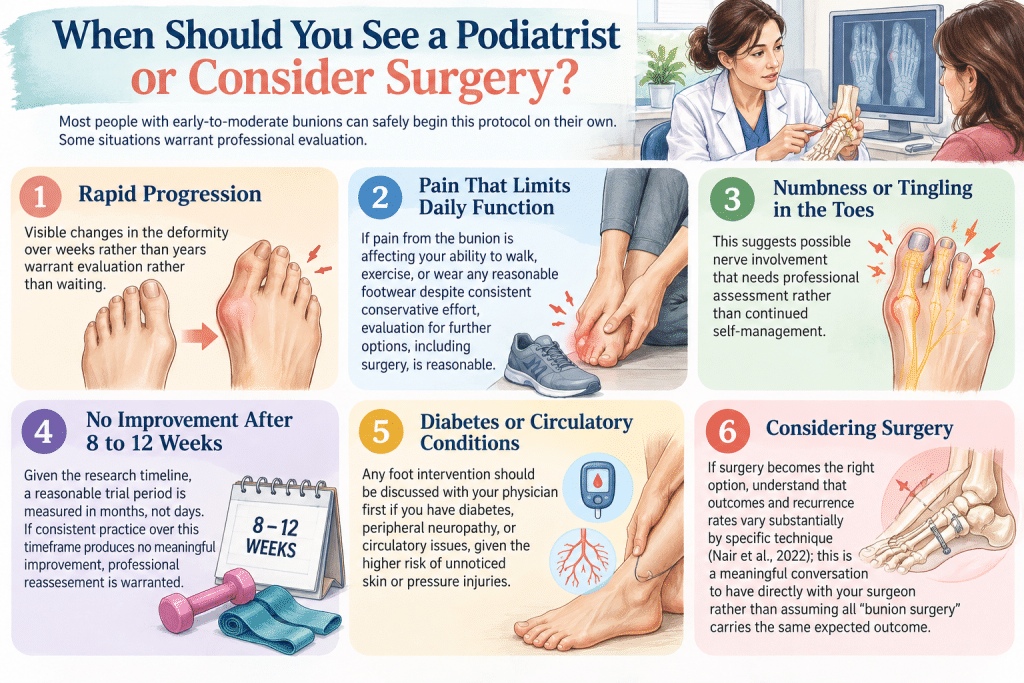
Most people with early-to-moderate bunions can safely begin this protocol on their own. Some situations warrant professional evaluation.
- Rapid progression: Visible changes in the deformity over weeks rather than years warrant evaluation rather than waiting.
- Pain that limits daily function: If pain from the bunion is affecting your ability to walk, exercise, or wear any reasonable footwear despite consistent conservative effort, evaluation for further options, including surgery, is reasonable.
- Numbness or tingling in the toes: This suggests possible nerve involvement that needs professional assessment rather than continued self-management.
- No improvement after 8 to 12 weeks of consistent protocol use: Given the research timeline, a reasonable trial period is measured in months, not days. If consistent practice over this timeframe produces no meaningful improvement, professional reassessment is warranted.
- Diabetes or circulatory conditions affecting the feet: Any foot intervention should be discussed with your physician first if you have diabetes, peripheral neuropathy, or circulatory issues, given the higher risk of unnoticed skin or pressure injuries.
- Considering surgery: If surgery becomes the right option, understand that outcomes and recurrence rates vary substantially by specific technique (Nair et al., 2022); this is a meaningful conversation to have directly with your surgeon rather than assuming all “bunion surgery” carries the same expected outcome.
Free 28-Day Fascia Reset Email Course
Get our Free 28-day email course series to help with 1 or 2 exercises per day to release your fascia. One short lesson per day. Two minutes to read each.
Frequently Asked Questions
Why do I have bunions if no one else in my family does?
Family history research found 90 percent of bunion patients had at least one affected relative, but 10 percent of cases appeared without a clear family pattern. Footwear history, foot shape, and other individual factors can produce a bunion even without a strong family history.
Can toe spacers actually fix a bunion?
Toe spacers used alone show mixed, often non-significant results on the hallux valgus angle in research. Combined with targeted strengthening exercises, spacers are linked to meaningful, durable improvement in pain and function, which is why this protocol pairs them with exercise rather than recommending the spacer alone.
Do bunion correctors and splints really work?
Night splints used alone have shown mixed results in research, including at least one trial finding no significant pain reduction. When combined with exercise and daytime spacer use as part of a fuller protocol, the combined approach shows stronger, more durable results than any single tool.
Can exercises reverse a bunion?
Exercises are not well-supported as a way to reverse an established structural deformity. What the research does support is meaningful improvement in pain and function, and likely some protective effect against further progression, when exercises are practiced consistently as part of a combined protocol.
Is bunion surgery my only real option?
No. Conservative management (footwear changes, toe spacers, night splints, and targeted exercise) can meaningfully reduce pain and support function for many people, particularly with earlier-stage deformities. Surgery remains the definitive option for realigning the joint structurally, and is most relevant when conservative measures are not sufficient or the deformity is advanced.
How long does it take to see results from a bunion protocol?
Reduced day-to-day irritation is often noticeable within one to two weeks, especially after a footwear change. Meaningful improvement in pain and function generally builds over two to three months of consistent practice, with the strongest supporting research tracking benefit out to a full year.
What shoes should I avoid if I have a bunion?
Avoid narrow or pointed-toe shoes and shoes with a significantly elevated heel, both of which compress the toe into the position that drives bunion discomfort and progression. Prioritize shoes with a toe box at least as wide as your foot’s actual traced width while standing.
Can bunions cause pain elsewhere in the body?
Yes. As a bunion progresses, it can change how pressure is distributed across the foot during walking, which may contribute to compensatory movement at the ankle, knee, hip, and lower back. Understanding the broader foot cascade effect helps explain how a structural change at the big toe can influence movement mechanics farther up the body.
Are bunions more common in women because of high heels?
High heels are one contributing factor, with research linking heel height to hallux valgus, but genetics and general footwear width history matter substantially as well. Female sex is an independent risk factor even accounting for footwear differences, likely related to additional factors like ligamentous laxity.
Can I wear a toe spacer all day, every day?
Build up to it gradually rather than starting with all-day wear. Wear the spacer inside actually wide footwear; wearing it inside a narrow shoe compresses the spacer along with your toes and reduces its usefulness.
Will losing weight help my bunion?
Higher body mass index has been identified as an associated risk factor in some research, though the relationship is less established than genetics and footwear history. Weight management may offer some general benefit to foot loading but should not be viewed as a primary bunion treatment.
Do bunions get worse with age no matter what I do?
Bunions do tend to progress gradually over time as the self-reinforcing mechanical pattern continues, but the rate of progression is influenced by footwear choices and other modifiable factors. Consistent use of this protocol is specifically aimed at slowing that rate of progression, not merely accepting it as inevitable.
What is the difference between a bunion and a bunionette?
A bunion (hallux valgus) affects the big toe joint. A bunionette (tailor’s bunion) is a similar deformity affecting the joint at the base of the fifth toe (pinky toe), driven by a comparable mechanism on the opposite side of the foot.
Should I see a podiatrist even if my bunion isn’t painful?
An evaluation can still be worthwhile, particularly to get a baseline assessment of the deformity’s current stage and an individualized opinion on footwear and prevention, even without significant pain currently present.
Can children develop bunions, and does that change anything about prevention?
Bunions can develop in adolescence, particularly with a strong family history, and footwear width during childhood and adolescent years is a modifiable factor worth attention given the genetic-plus-footwear mechanism described in this article.
I write 3 essays per week on Lifestyle Medicine for women in midlife on what is happening in the body and what to do about it. No fluff, no hype. Free Subscription.
References
- Piqué-Vidal, C., Solé, M. T., & Antich, J. (2007). Hallux valgus inheritance: pedigree research in 350 patients with bunion deformity. Journal of Foot and Ankle Surgery, 46(3), 149-154.
- Barnish, M. S., & Barnish, J. (2016). High-heeled shoes and musculoskeletal injuries: a narrative systematic review. BMJ Open, 6(1), e010053.
- Hurn, S. E., et al. (2022). Effectiveness of nonsurgical interventions for hallux valgus: a systematic review and meta-analysis. Arthritis Care & Research, 74(10).
- Tehraninasr, A., Saeedi, H., Forogh, B., Bahramizadeh, M., & Keyhani, M. R. (2008). Effects of insole with toe-separator and night splint on patients with painful hallux valgus: a comparative study. Prosthetics and Orthotics International, 32(1), 79-83.
- Abdalbary, S. A. (2018). Foot mobilization and exercise program combined with toe separator improves outcomes in women with moderate hallux valgus at 1-year follow-up: a randomized clinical trial. Journal of the American Podiatric Medical Association, 108(6), 478-486.
- Nair, A., Bence, M., Saleem, J., Yousaf, A., Al-Hilfi, L., & Kunasingam, K. (2022). A systematic review of open and minimally invasive surgery for treating recurrent hallux valgus. The Surgery Journal, 8(4).
Disclaimer: Always consult with a podiatrist or orthopedic foot specialist before starting any new intervention for a bunion, particularly if you have significant pain, a rapidly progressing deformity, numbness or tingling in the toes, or diabetes or any condition affecting foot sensation or circulation. This article is educational and does not constitute medical advice.
Free 28-Day Fascia Reset Email Course
Get our Free 28-day email course series to help with 1 or 2 exercises per day to release your fascia. One short lesson per day. Two minutes to read each.

Terry Tateossian is a Menopause Lifestyle Medicine Coach, Certified Personal Trainer & Nutritionist and the Founder of THOR: The House of Rose, a wellness brand serving women over 40 through retreats, coaching, macro-nutrition and community. As 25-year founder and entrepreneur, Terry spent two and a half decades building and running successful start-up businesses, an experience that put her on the front line of founder burnout long before she could name it. After facing serious health challenges, early onset menopause, and emotional eating while running her agency and raising two children, Terry rebuilt her health in her 40s and lost more than 80 pounds through evidence-based nutrition, training, and mindset work. Today, she helps women get strong, improve confidence, support hormone health, and create a stronger second half of life. Terry has been featured in major media outlets and is available for podcasts, expert commentary, brand collaborations, and speaking engagements on midlife health, reinvention, emotional eating, menopause wellness, and strength training for longevity. Get her free macro calculator (her cookbook companion) to start your journey to back to health.