
 By Team THOR
Free 28-Day Fascia Reset Email Course
Get our Free 28-day email course series to help with 1 or 2 exercises per day to release your fascia. One short lesson per day. Two minutes to read each.
10 Vagus Nerve Reset Exercises for Women Over 40 (With Videos)
Vagus nerve reset exercises have become a major topic in midlife women’s health for good reason. The vagus nerve helps regulate stress recovery, sleep, digestion, mood, heart rate variability, and inflammation. During perimenopause and menopause, hormonal changes, disrupted sleep, and ongoing stress can keep the nervous system stuck in low-grade activation, making deliberate regulation especially important.
I am Terry Tateossian, founder of The House of Rose and a certified lifestyle medicine coach who runs nutrition-focused wellness retreats for women in perimenopause, menopause, and post-menopause. Nervous system regulation is one of the foundational pillars I teach through retreats and coaching. The exercises in this guide draw from vagal tone research, polyvagal theory, clinical practice, breathwork, and the techniques that consistently help the women I coach.
Each exercise includes step-by-step instructions, a suggested video placement, its specific benefits for the midlife body, and modifications for common concerns such as neck tension, sinus issues, and low blood pressure.
Important: Consult your healthcare provider before trying a new nervous system practice, especially if you have cardiovascular concerns, low blood pressure, glaucoma, seizure disorders, or another significant medical condition.
What Is the Vagus Nerve and How Does It Work?
The vagus nerve is the tenth cranial nerve, and it is the longest nerve in the human body. It emerges from the base of the skull, travels down through the neck, and branches extensively through the throat, heart, lungs, liver, stomach, intestines, and other organs. The word vagus comes from the Latin for wandering, which is a good description of how widely this nerve travels.
Functionally, the vagus nerve is the primary conduit of the parasympathetic nervous system, which is the branch of the autonomic nervous system responsible for rest, digestion, recovery, and repair. When the vagus nerve is active, the body downshifts from stress activation into the physiological state that allows healing and restoration.
When vagal tone is low, the body remains in a background state of stress activation, which is a common pattern in midlife women whose sleep, hormones, and life stress are all pulling in the wrong direction at once.
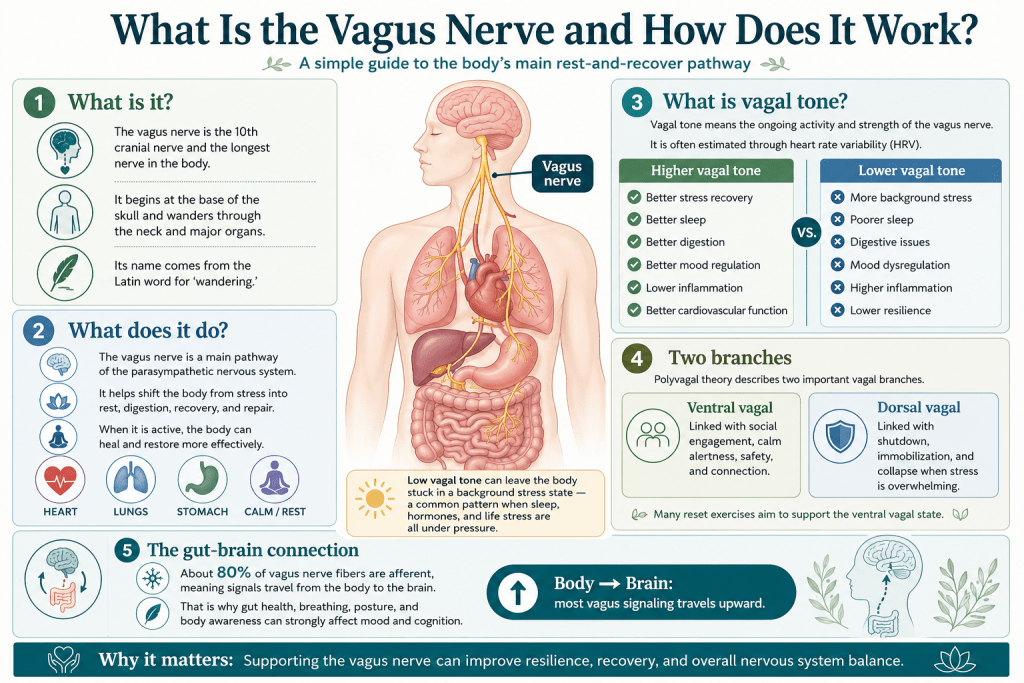
- What vagal tone means: Vagal tone refers to the ongoing activity of the vagus nerve, often measured indirectly through heart rate variability. Higher vagal tone is associated with better stress recovery, better sleep, better digestion, better mood regulation, lower inflammation, and better cardiovascular function. Lower vagal tone is associated with the opposite pattern.
- The two branches of the vagus: Stephen Porges’s polyvagal theory distinguishes between the ventral vagal branch (associated with social engagement, calm alertness, and connection) and the dorsal vagal branch (associated with shutdown and immobilization). The exercises in this article are targeted at supporting the ventral vagal system, which is the state most women in midlife need more of.
- The gut-brain connection: The vagus nerve carries approximately 80 percent afferent (sensory) fibers, meaning that most of the traffic on the vagus is information flowing from the body up to the brain. This is why gut health, breath, posture, and interoceptive practices have such powerful effects on mood and cognition. It is not woo. It is the specific neural anatomy of a nerve that sends most of its signal from the body to the brain.
For a deeper conceptual grounding, see our earlier article on the vagus nerve and gut health connection and our parasympathetic nervous system and aging article, which cover the underlying physiology in more depth. This article focuses on the specific reset exercises.
Free 28-Day Fascia Reset Email Course
Get our Free 28-day email course series to help with 1 or 2 exercises per day to release your fascia. One short lesson per day. Two minutes to read each.
Why Does Vagus Nerve Support Matter in Midlife?
Nervous system regulation becomes especially important during perimenopause, menopause, and post-menopause. Hormonal changes, disrupted sleep, and heavier life demands can all make it harder for the body to return to a calm, restorative state.
- Estrogen and Vagal Function: Estrogen supports parasympathetic nervous system activity and healthy heart rate variability. As estrogen declines, many women experience greater sympathetic activation and more difficulty shifting into rest and recovery.
- Sleep Disruption: Fragmented midlife sleep can lower vagal tone the following day, making stress harder to regulate. This can create a repeating cycle of poor sleep, nervous system activation, and reduced recovery.
- Cortisol Dysregulation: Midlife hormonal changes can contribute to elevated evening cortisol and lower morning energy. Vagal reset practices may help reinforce a healthier daily rhythm that supports sleep, mood, and metabolic health.
- Peak Life Stress: Career demands, parenting responsibilities, aging parents, and financial pressures often converge during midlife. Regular nervous system regulation gives the body a practical way to manage this heavier load with fewer hormonal buffers.
- Digestion and Gut Health: The vagus nerve helps regulate digestive motility, gut signaling, and the transition into the rest-and-digest state. Supporting vagal tone may help reduce bloating, irregularity, and stress-related digestive discomfort. See the midlife hydration article and the best probiotics article for the broader gut context.
- Systemic Inflammation: Vagal activation helps regulate inflammation through the cholinergic anti-inflammatory pathway. Regular reset practices may support a lower inflammatory burden during a stage of life when inflammation often increases.
What Are the Signs Your Vagus Nerve Needs a Reset?
Not every midlife symptom points to low vagal tone. However, a recurring cluster of the following signs may suggest that your nervous system is struggling to return to its healthy resting baseline.
- Disrupted Sleep: You may feel exhausted but still struggle to fall asleep or wake between 2:00 and 4:00 a.m. with a racing mind. Feeling wired but tired in the evening is another common sign of persistent nervous system activation.
- Digestive Changes: Chronic bloating, irregular bowel movements, or new food sensitivities can appear when the body has difficulty entering the rest-and-digest state. These symptoms may become more noticeable during periods of sustained stress.
- Declining Heart Rate Variability: A gradual drop in HRV over several months or years may reflect reduced parasympathetic activity. The long-term trend on your wearable is more informative than any single reading.
- Rising Resting Heart Rate: A resting heart rate that has slowly increased without a clear change in fitness, medication, or health may indicate greater sympathetic activation. Tracking the pattern over time can help reveal changes in recovery capacity.
- Cold Hands and Feet: Frequently cold extremities without an obvious medical cause may reflect changes in circulation linked to chronic stress activation. This sign is more meaningful when it appears alongside sleep, digestive, or emotional symptoms.
- Persistent Anxiety or Overwhelm: A constant background sense of tension can signal that the nervous system is spending too much time in a heightened state. Small demands may begin to feel disproportionately difficult or draining.
- Difficulty Resting: You may struggle to relax even when you have enough time and a calm environment. The body remains alert because it has lost some of its ability to transition smoothly into parasympathetic recovery.
- Increased Stress Reactivity: Minor inconveniences or ordinary pressures may trigger stronger emotional or physical reactions than they once did. This can indicate that the nervous system has less capacity to absorb stress before becoming overwhelmed.
Occasional episodes of these symptoms are a normal part of life. When several appear together most days for weeks or months, a consistent vagal reset practice may help restore nervous system balance.
Free 28-Day Fascia Reset Email Course
Get our Free 28-day email course series to help with 1 or 2 exercises per day to release your fascia. One short lesson per day. Two minutes to read each.
What Does Research Show About Vagal Tone?
Research on vagal tone has expanded considerably, but the strength of the evidence varies across practices. Some methods have well-established physiological effects, while others remain promising but less thoroughly studied.
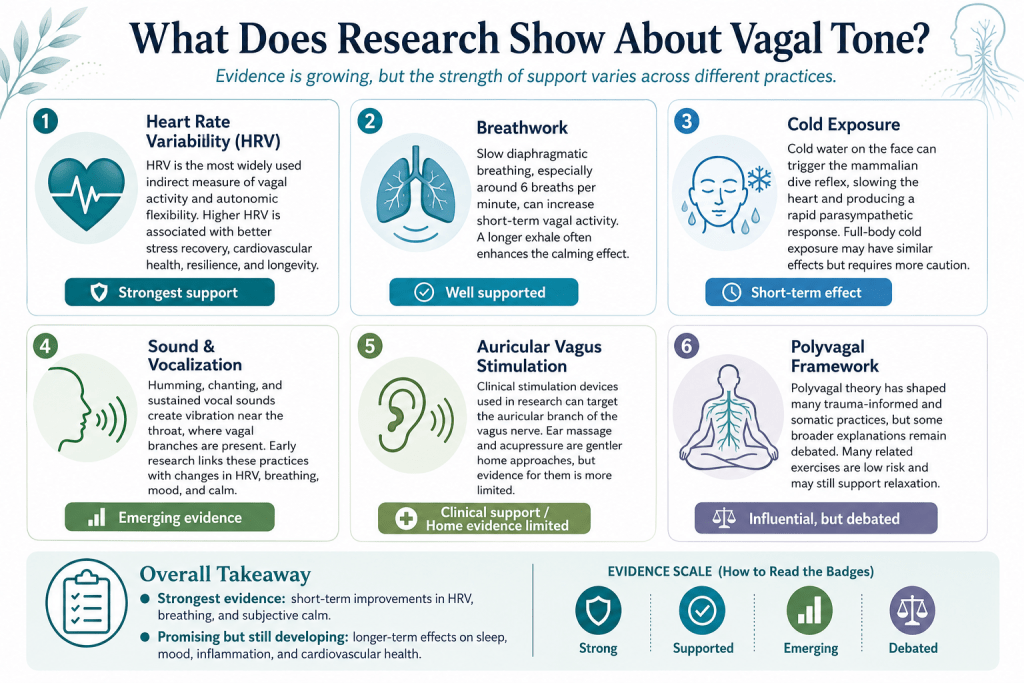
- Heart Rate Variability and Vagal Tone: HRV is the most widely used indirect measure of vagal activity and autonomic flexibility. Higher HRV is associated with better stress recovery, cardiovascular health, psychological resilience, and longevity, while long-term improvements can reflect stronger parasympathetic regulation.
- Breathwork and Parasympathetic Activation: Slow diaphragmatic breathing, particularly at around six breaths per minute, can activate the baroreflex and increase short-term vagal activity. Extending the exhale often strengthens this calming effect by helping the body shift away from sympathetic arousal.
- Cold Exposure and the Dive Reflex: Applying cold water to the face can trigger the mammalian dive reflex, slowing the heart and producing a rapid parasympathetic response. Full-body cold exposure may create similar effects, although the intensity and safety considerations are greater.
- Vibration, Sound, and Vocalization: Humming, chanting, and sustained vocal sounds create vibration around the throat and larynx, where branches of the vagus nerve are present. Early research links these practices with changes in HRV, breathing patterns, mood, and perceived calm.
- Auricular Vagus Stimulation: The auricular branch of the vagus nerve can be targeted through regulated clinical stimulation devices used in research and medical settings. Ear massage and acupressure are gentler at-home approaches, but their evidence is more limited and should not be treated as equivalent to clinical stimulation.
- The Polyvagal Framework: Polyvagal theory has strongly influenced trauma-informed therapy and somatic practices, but some of its broader explanations remain debated. Many exercises associated with the framework are low risk and may support relaxation, even when their proposed mechanisms have not been fully established.
Overall, the strongest evidence supports short-term improvements in HRV, breathing, and subjective calm. Research on lasting effects on sleep, mood, inflammation, and cardiovascular health is promising but still developing.
“The women who see the biggest change from vagus nerve reset practice are almost always the ones who resisted it the longest. There is a strong pattern of high-achieving midlife women assuming that nervous system work is soft, that it is not serious, and that their time is better spent on strategies that feel more productive. Then something forces the issue, whether it is a sleep crisis, a digestive collapse, or a period of anxiety that will not resolve. They finally add ten minutes of daily vagal reset practice, and within a month the sleep, the digestion, the mood, and the sense of internal weather all shift. What was invisible becomes visible. What felt soft becomes obviously load-bearing. This is one of the most reliably underestimated levers I have ever seen in midlife women’s health.”
Terry Tateossian, Founder of The House of Rose
How Can You Measure Your Progress?
Nervous system change is often invisible in the short term and dramatic in the medium term. Having some way to measure progress keeps the practice from feeling directionless during the first weeks.
- Heart rate variability tracking: If you use an Oura Ring, Whoop, Garmin, Apple Watch, or similar wearable, note your baseline HRV before starting daily vagal reset practice. Track it weekly. Expect fluctuations day to day. Over four to eight weeks of consistent practice, most women see a meaningful upward trend in their overnight HRV average.
- Resting heart rate: Resting heart rate tends to fall as vagal tone improves. This is a slower signal than HRV, but it is easily tracked on most wearables and phones.
- Subjective sleep quality: Track sleep quality on a simple one-to-ten scale each morning, or use your wearable’s sleep score. Look for the average over weeks rather than any single night.
- Subjective calm and stress recovery: A simple one-to-ten rating at the end of each day for how easily you moved between activation and calm during the day. Look for the average trend over weeks.
- Digestion and elimination regularity: Improvements in digestion are one of the earliest signals for many women. Regular bowel movements, less bloating, and better appetite regulation are all reasonable signals to notice.
Warning: Do not obsess over daily metrics. Vagal tone fluctuates naturally with sleep, stress, hormones, and life events. A single bad HRV reading is not a failure. Look at the four-week average, not the single reading.
Free 28-Day Fascia Reset Email Course
Get our Free 28-day email course series to help with 1 or 2 exercises per day to release your fascia. One short lesson per day. Two minutes to read each.
What Should You Know Before Starting?
Several principles apply to every exercise in this article and are worth internalizing before beginning.
- Consistency beats intensity: Ten minutes a day for eight weeks produces bigger nervous system change than an hour once a week. Build a small daily practice you can actually sustain.
- Nasal breathing is the default: Unless an exercise specifically instructs mouth breathing, breathe through the nose. Nasal breathing produces different physiological effects than mouth breathing and is generally more parasympathetic-activating.
- Slow is the direction: The vagus nerve responds to slowing down. Every exercise below can be done too fast. If in doubt, slow down further.
- Comfort matters more than form perfection: Force in nervous system work is counterproductive. If a position or exercise creates significant discomfort, modify or skip it. Ease is the goal.
- Do not hyperventilate: Some breath practices can trigger dizziness or light-headedness if done incorrectly. If you feel dizzy, stop, sit down, and breathe normally until it resolves. Never practice breath retention while driving or operating machinery.
- Cold exposure precautions: The cold water face immersion exercise is safe for most healthy adults but should be avoided by anyone with severe cardiovascular disease, uncontrolled high blood pressure, or a history of vasovagal syncope. Talk to your provider if you have any concerns.
- Pregnancy and specific conditions: Some of the more intense breath and cold practices need modification during pregnancy. If pregnant, work with a prenatal-certified practitioner.
- Time of day: Vagus nerve reset can be practiced any time. Morning practice supports the day. Evening practice supports sleep. Middle-of-the-day practice supports stress recovery. Choose the time that produces the highest adherence for you.
What Are the 10 Best Vagus Nerve Reset Exercises for Women Over 40?
Vagus nerve reset exercises can help women over 40 calm the nervous system, reduce stress, and feel more grounded throughout the day. These simple practices support the body’s natural shift from a tense, alert state into a more relaxed and restorative one.
They can be especially helpful during midlife, when hormonal changes, poor sleep, and ongoing stress may affect nervous system balance. The following 10 exercises are gentle, practical, and easy to incorporate into a daily routine.
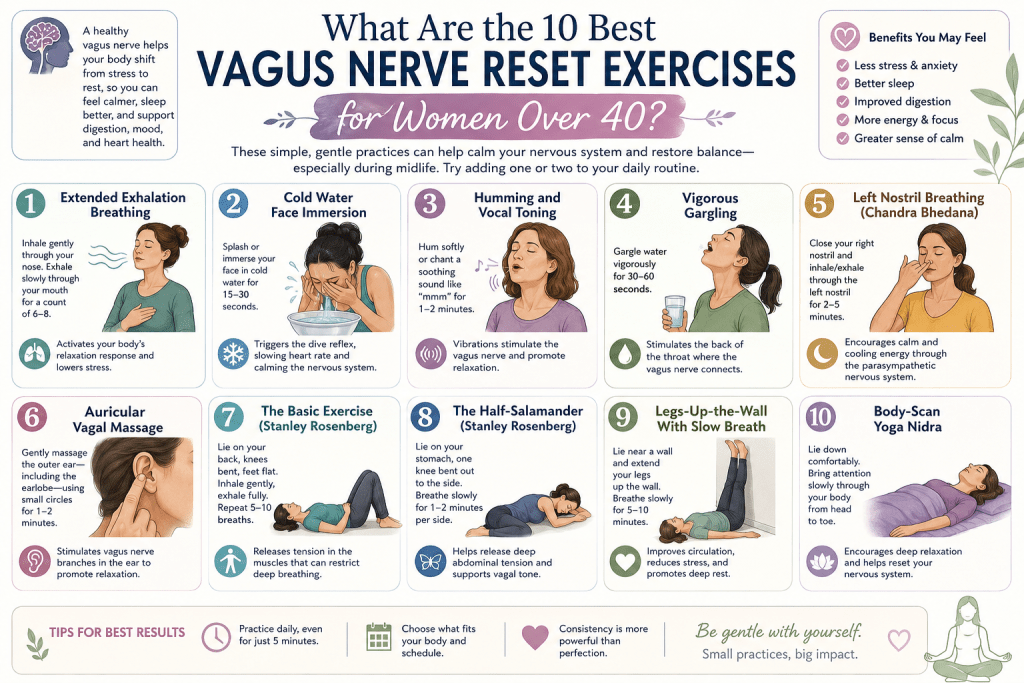
Exercise 1: Extended Exhalation Breathing
Extended exhalation breathing is the foundation of every vagus nerve reset practice. It reliably shifts the nervous system toward parasympathetic dominance within a few minutes and requires no equipment.
The vagus nerve activation is stronger during exhalation than during inhalation. Extending the exhalation relative to the inhalation therefore concentrates the parasympathetic effect. Slow breathing at roughly six breaths per minute has been shown in multiple studies to acutely increase heart rate variability and reduce sympathetic activation.
- Setup: Sit comfortably upright with a tall spine, or lie on your back with a small pillow under the head. Rest hands on the belly if it helps you feel the breath.
- The pattern: Inhale gently through the nose for four seconds. Exhale slowly through the nose for six to eight seconds. If eight seconds is comfortable, work up to it over weeks.
- Duration: Practice for five to ten minutes. Longer sessions are fine but not required.
- Common mistakes: Forcing the breath, holding tension in the chest or shoulders, breathing shallowly in the chest rather than deeply in the belly, rushing the exhalation.
- Why this exercise for midlife women: This is the safest, most accessible vagal reset available. It requires no equipment, no clothing change, no privacy, and can be done for two minutes in a parking lot or ten minutes before sleep. If you only add one exercise from this list, add this one.
- Modification for anxiety spikes: If you notice anxiety rising during the practice, shorten the exhalation slightly and focus more on the inhalation until the anxiety subsides. Extended exhalation is powerful and occasionally amplifies anxious sensations before it soothes them.
Free 28-Day Fascia Reset Email Course
Get our Free 28-day email course series to help with 1 or 2 exercises per day to release your fascia. One short lesson per day. Two minutes to read each.
Exercise 2: Cold Water Face Immersion
Cold water face immersion is one of the most powerful acute vagal activators available. It works through the mammalian dive reflex, the ancient physiological response that shifts the body into parasympathetic dominance the moment the face touches cold water.
Cold receptors on the face, particularly around the eyes and forehead, are directly wired to the trigeminal nerve, which activates a parasympathetic cascade including slowed heart rate, peripheral vasoconstriction, and increased vagal tone. The effect is measurable within seconds.
- Setup: Fill a bowl with cold water. If comfortable, add a few ice cubes to bring the temperature down to roughly 50 to 60 degrees Fahrenheit. Have a towel nearby.
- Execution: Take a full breath in. Lean forward and immerse the face in the water up to the temples, holding the breath. Stay submerged for 15 to 30 seconds. Come up, dry the face, and rest for 30 seconds. Repeat two to three times.
- Duration: The whole practice takes three to five minutes.
- Common mistakes: Water that is too cold (below 45 degrees F can be too intense), submerging for too long (staying under longer than 30 seconds does not add benefit), rushing between rounds without allowing recovery.
- Why this exercise for midlife women: Cold face immersion produces one of the fastest and most reliable subjective calming effects available. It is particularly useful for the wired-but-tired evening state, for pulling out of an anxious spiral, or for calming down before a difficult conversation.
- Modification for beginners: If full facial immersion feels too intense, start with a cold washcloth pressed over the eyes and forehead for one minute. Progress to the bowl immersion as tolerance builds.
- Safety note: Do not do this practice if you have severe cardiovascular disease, uncontrolled high blood pressure, or a history of fainting from vasovagal responses. Discuss with your provider first.
Exercise 3: Humming and Vocal Toning
Humming activates the vagus nerve through vibration in the throat and larynx, which are innervated by branches of the vagus. Regular humming practice has documented effects on heart rate variability, mood, and sinus function.
The vibration produced by humming stimulates the vagal branches that innervate the throat and larynx, and it also produces measurable nitric oxide release in the sinuses. The combination of vagal stimulation and sinus activation is why humming often feels immediately settling.
- Setup: Sit comfortably upright with a tall spine. Rest your hands wherever feels good.
- Execution: Inhale gently through the nose. On the exhalation, produce a low, steady hum. The specific note does not matter. Feel the vibration in the throat, chest, and face. Continue for the full exhalation. Inhale, and repeat.
- Duration: Practice for three to five minutes.
- Variations: The traditional yogic version is called Bhramari (bee breath) and involves gently closing the ears with the fingers to amplify the internal vibration. Ocean humming with the mouth slightly open produces a different vibrational pattern. Chanting the sound “om” produces vibration in the abdomen as well.
- Common mistakes: Straining the voice, humming too loudly, forcing a specific pitch. The point is the vibration, not the sound.
- Why this exercise for midlife women: Humming is accessible in almost any setting. It can be done in the car, in the shower, walking, or as a five-minute morning practice. Many women find it particularly effective for the transition from work stress to home presence at the end of the day.
Free 28-Day Fascia Reset Email Course
Get our Free 28-day email course series to help with 1 or 2 exercises per day to release your fascia. One short lesson per day. Two minutes to read each.
Exercise 4: Vigorous Gargling
Gargling activates the pharyngeal branches of the vagus nerve through mechanical stimulation of the throat muscles. It is one of the simpler and more overlooked vagal exercises.
The pharyngeal muscles that produce the gargling motion are innervated by the vagus nerve. Vigorous gargling produces mechanical stimulation of these muscles, which appears to increase vagal tone and stimulate saliva production, which is also a parasympathetic marker.
- Setup: A glass of water at any temperature. Cool or slightly warm water is easier than very cold water.
- Execution: Take a mouthful of water. Tip the head back slightly and gargle vigorously for 30 to 60 seconds. The gargle should be strong enough to produce sound and visible bubbling. Spit the water out. Repeat with a second and third mouthful.
- Duration: The whole practice takes two to three minutes.
- Common mistakes: Gentle gargling produces less vagal stimulation. The vigor of the gargle matters. If you are barely audible, gargle harder.
- Why this exercise for midlife women: Gargling is a natural companion to morning teeth-brushing routines, which builds a daily practice with almost no additional time cost. Adding two minutes of vigorous gargling to your morning routine is one of the lowest-friction vagal practices available.
Exercise 5: Left Nostril Breathing (Chandra Bhedana)
Left nostril breathing, called Chandra Bhedana in the yogic tradition (moon-piercing breath), has some research support for shifting the nervous system toward parasympathetic dominance more reliably than symmetric breath practices.
The mechanism is not fully understood, but multiple studies show that unilateral left nostril breathing tends to produce shifts toward parasympathetic dominance while right nostril breathing tends toward sympathetic activation. The vagus nerve appears to be part of the pathway.
- Setup: Sit comfortably upright with a tall spine. Rest the left hand in the lap. Bring the right hand to the face, using the thumb to close the right nostril and the ring finger available to close the left when needed.
- Execution: Close the right nostril with the right thumb. Inhale slowly through the left nostril for four to six seconds. At the top of the inhalation, release the thumb and use the ring finger to close the left nostril. Exhale slowly through the right nostril for six to eight seconds. That is one round. Repeat by inhaling through the left and exhaling through the right, keeping the left as the entry point throughout.
- Duration: Practice for five to ten minutes.
- Common mistakes: Alternating nostrils (that is a different practice called Nadi Shodhana), forcing the breath, gripping the nostrils too tightly, holding the shoulders up around the ears.
- Why this exercise for midlife women: Left nostril breathing is particularly effective for the evening wind-down or for the wired-but-tired state that many midlife women recognize from perimenopause and menopause. It is a good pre-sleep practice.
- Modification for stuffy sinuses: If one nostril is congested, do this practice sitting up with a warm shower running in the bathroom, or after using saline nasal rinse. Do not force air through a blocked nostril.
Free 28-Day Fascia Reset Email Course
Get our Free 28-day email course series to help with 1 or 2 exercises per day to release your fascia. One short lesson per day. Two minutes to read each.
Exercise 6: Auricular Vagal Massage
The auricular (ear) branch of the vagus nerve is the target of the transcutaneous vagus nerve stimulation devices used clinically. The at-home version uses gentle massage or acupressure to specific points on the ear.
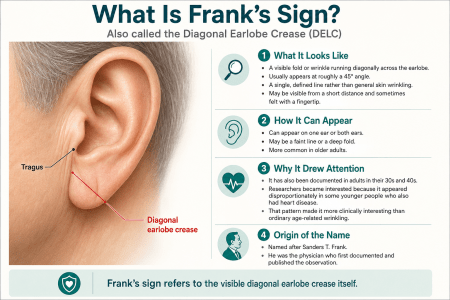
The auricular branch of the vagus nerve emerges through several specific points on the outer ear, including the cymba conchae (the deeper bowl of the ear near the ear canal) and the tragus (the small flap at the front of the ear canal). Gentle stimulation of these points activates the vagal afferent fibers that project to the brainstem.
- Setup: Sit comfortably. Warm hands help. A small amount of oil (jojoba, almond, or unscented) is optional but often makes the massage more comfortable.
- Execution: Using the index finger and thumb, gently massage the cymba conchae (the deep bowl of the ear just above the ear canal) in slow circles for 30 to 60 seconds per ear. Then move to the tragus (the small flap at the front of the ear canal) and pinch and release gently for 30 to 60 seconds per ear. Then work along the outer edge of the ear (the helix) from top to bottom in slow strokes for 60 seconds per ear.
- Duration: The whole practice takes three to five minutes.
- Common mistakes: Pressing too hard, moving too fast, treating the practice as a checklist rather than a settling. The touch should be gentle and slow.
- Why this exercise for midlife women: This practice pairs well with the extended exhalation breathing (Exercise 1) as a longer evening reset. It is also a good stress-recovery tool that can be done seated at a desk during a difficult work day.
Exercise 7: The Basic Exercise (Stanley Rosenberg)
The Basic Exercise is drawn from Stanley Rosenberg’s book Accessing the Healing Power of the Vagus Nerve. It uses gentle eye movement combined with head positioning to release tension in the suboccipital muscles at the base of the skull, which lie close to several important cranial nerve structures.
The exercise increases mobility in the upper cervical spine, which houses several cranial nerve structures including the accessory nerve, which coordinates with the vagus. The eye-and-head coordination produces a gentle unwinding of chronic tension patterns that often develop from prolonged desk work.
- Setup: Lie on your back on a comfortable surface with a small folded towel under the head if needed. Interlace the fingers behind the head with the elbows resting on the floor. The head is fully supported by the hands.
- Execution: Keeping the head still, look as far to the right as your eyes will comfortably go, without moving your head. Hold the gaze there. Within 30 to 60 seconds, most people will spontaneously yawn, sigh, or swallow. That is the sign of nervous system release. Return the eyes to center. Rest for a moment. Then look as far to the left as the eyes will comfortably go and hold until the same release response occurs. Return to center.
- Duration: The whole practice takes three to five minutes.
- Common mistakes: Moving the head with the eyes, straining the eye position, giving up before the release response occurs.
- Why this exercise for midlife women: The suboccipital tension that this exercise releases is extremely common in women who have spent decades at desks. Many women report immediate softening of chronic neck and jaw tension after this practice, which improves both vagal function and general comfort.
Free 28-Day Fascia Reset Email Course
Get our Free 28-day email course series to help with 1 or 2 exercises per day to release your fascia. One short lesson per day. Two minutes to read each.
Exercise 8: The Half-Salamander (Stanley Rosenberg)
The Half-Salamander is another Stanley Rosenberg exercise that pairs eye movement with subtle head positioning to release nervous system holding patterns.
The exercise uses lateral eye movement combined with subtle side-bending of the head to release specific tension patterns in the neck and jaw. It complements the Basic Exercise by working slightly different structures.
- Setup: Sit comfortably upright with a tall spine. Rest the hands wherever comfortable.
- Execution: Look with the eyes to the right, keeping the head facing forward. Then tilt the head slightly to the right, bringing the right ear toward the right shoulder while the eyes remain looking to the right. Hold for 30 to 60 seconds until you notice a release response (yawn, sigh, swallow, or a sense of settling). Return to neutral. Rest. Then repeat on the other side.
- Duration: The whole practice takes three to five minutes.
- Common mistakes: Tilting the head too far, moving the eyes and head in opposite directions, expecting immediate results in the first session.
- Why this exercise for midlife women: This practice is particularly effective for the chronic jaw and neck tension that many midlife women carry from stress, teeth grinding, and prolonged screen use. It is one of the gentlest exercises in the list and is safe for most bodies.
Exercise 9: Legs-Up-the-Wall With Slow Breath
Legs-up-the-wall (Viparita Karani in the yogic tradition) is a restorative posture that combines gentle inversion with the breath practices from earlier exercises. It is one of the most effective evening wind-down positions available.
The mild inversion produces a shift in blood pressure that activates baroreceptors in the neck and chest, which stimulate vagal response. The combination of the physical position and the slow breath work produces a strong parasympathetic activation.
- Setup: You need clear wall space and a folded blanket or yoga bolster for under the hips.
- Execution: Sit sideways with your hip against the wall. Slowly lie back and swing your legs up the wall so that the body forms an L shape with the buttocks close to the wall and the legs extending straight up. If your hamstrings are tight, move your buttocks slightly away from the wall. Rest the arms in a comfortable position. Close your eyes. Practice extended exhalation breathing (Exercise 1) or humming (Exercise 3) for the duration of the position.
- Duration: Ten to fifteen minutes is a strong baseline, and longer sessions are fine if time allows.
- Common mistakes: Forcing the buttocks against the wall despite tight hamstrings, holding tension in the shoulders and jaw, treating the practice as passive rather than actively softening.
- Why this exercise for midlife women: This is one of the best evening practices for midlife women dealing with sleep onset difficulties. Ten minutes of legs-up-the-wall before bed shifts the nervous system state substantially and often produces meaningfully improved sleep onset within the same evening.
- Modification: If lying flat is uncomfortable, place a folded blanket under the head. If the inversion is contraindicated (some blood pressure conditions, glaucoma), practice legs-on-a-chair instead, with the calves resting on a chair seat and the thighs vertical.
Free 28-Day Fascia Reset Email Course
Get our Free 28-day email course series to help with 1 or 2 exercises per day to release your fascia. One short lesson per day. Two minutes to read each.
Exercise 10: Body-Scan Yoga Nidra
Yoga Nidra (yogic sleep) is a guided body-scan practice that produces measurable shifts toward parasympathetic dominance and deep restorative rest. It is one of the most effective daily reset practices for accumulated nervous system load.
The guided body scan directs attention systematically through each part of the body, producing a shift in the balance between sympathetic and parasympathetic nervous system activity. Regular practice has documented effects on sleep quality, stress recovery, and heart rate variability.
- Setup: Lie on your back on a comfortable surface. Cover yourself with a light blanket for warmth. Have the audio guide ready.
- Execution: Follow the guided body scan for the duration of the recording. The typical pattern is a slow attention movement through the toes, feet, ankles, calves, knees, thighs, hips, abdomen, chest, back, shoulders, arms, hands, neck, face, and top of the head. Longer versions include more detailed attention.
- Duration: Fifteen to thirty minutes for most sessions.
- Common mistakes: Falling deeply asleep is actually fine and does not undermine the practice. Trying to force staying awake produces tension that undermines the practice. Rushing through the body regions defeats the purpose.
- Why this exercise for midlife women: This is the deepest single practice in the list and produces significant nervous system reset. It is particularly powerful as an afternoon practice for restoration or as an evening pre-sleep practice. Many women find that a regular Yoga Nidra practice is one of the most effective non-pharmaceutical interventions for the sleep disruption of perimenopause and menopause.
“The retreat schedule at the Smoky Mountains property includes a guided Yoga Nidra almost every day, and it is consistently one of the practices that guests are most surprised by. Women arrive assuming they will get the most from the workouts and the food, and they leave saying that the Yoga Nidra was the thing that shifted them the most. This is because most midlife women are chronically under-rested at a nervous system level even when their sleep hours look fine on paper. A daily deep-rest practice fills a hole that most women did not realize was there. If you can only add one longer practice from this article to a weekly routine, this is the one.”
Terry Tateossian, Founder of The House of Rose
How Can You Build a Daily Vagus Nerve Reset Practice?
The ten exercises can be arranged into a daily practice in several ways. The right approach depends on how much time you have, when it works, and which practices your nervous system responds to most.
- The five-minute daily reset (minimum viable practice): Choose two exercises from the list and pair them into a five-minute daily habit. A common effective pairing is one minute of vigorous gargling in the morning (Exercise 4) and four minutes of extended exhalation breathing in the evening (Exercise 1). This is the lowest-friction version of the practice and produces meaningful change within four to eight weeks.
- The ten-minute daily reset (recommended baseline): Add auricular massage (Exercise 6) and humming (Exercise 3) to the morning routine. Add left nostril breathing (Exercise 5) or the Rosenberg Basic Exercise (Exercise 7) to the evening routine. Total time about ten minutes per day.
- The fifteen-minute daily reset: The full baseline plus ten minutes of legs-up-the-wall (Exercise 9) in the evening. This is a strong practice for women who are dealing with sleep issues or chronic stress load.
- The weekly deep reset: Add a full 20 to 30 minute Yoga Nidra session (Exercise 10) once or twice per week, and one cold water face immersion session (Exercise 2) two or three times per week as needed for acute stress recovery.
Here’s a sample weekly schedule:
|
Day |
Morning |
Evening |
|
Monday |
Gargling + humming (3 min) |
Extended exhalation + legs-up-wall (12 min) |
|
Tuesday |
Auricular massage (3 min) |
Left nostril breathing (10 min) |
|
Wednesday |
Basic Exercise (5 min) |
Yoga Nidra (25 min) |
|
Thursday |
Gargling + humming (3 min) |
Extended exhalation + legs-up-wall (12 min) |
|
Friday |
Half-Salamander (5 min) |
Left nostril breathing (10 min) |
|
Saturday |
Cold face immersion (5 min) |
Extended exhalation (10 min) |
|
Sunday |
Rest day, gentle humming while walking |
Yoga Nidra (25 min) |
Weeks 1 to 4 focus on installing the daily habit and learning what each exercise feels like in your body. Weeks 5 to 8 focus on refining the mix based on what your nervous system responds to most. By month three or four, the practice is fully installed as background daily routine and produces the sleep, HRV, and mood benefits at their full magnitude.
Free 28-Day Fascia Reset Email Course
Get our Free 28-day email course series to help with 1 or 2 exercises per day to release your fascia. One short lesson per day. Two minutes to read each.
Which Mistakes Can Undermine Your Vagus Nerve Practice?
Several patterns consistently reduce the effectiveness of vagus nerve reset practice for midlife women.
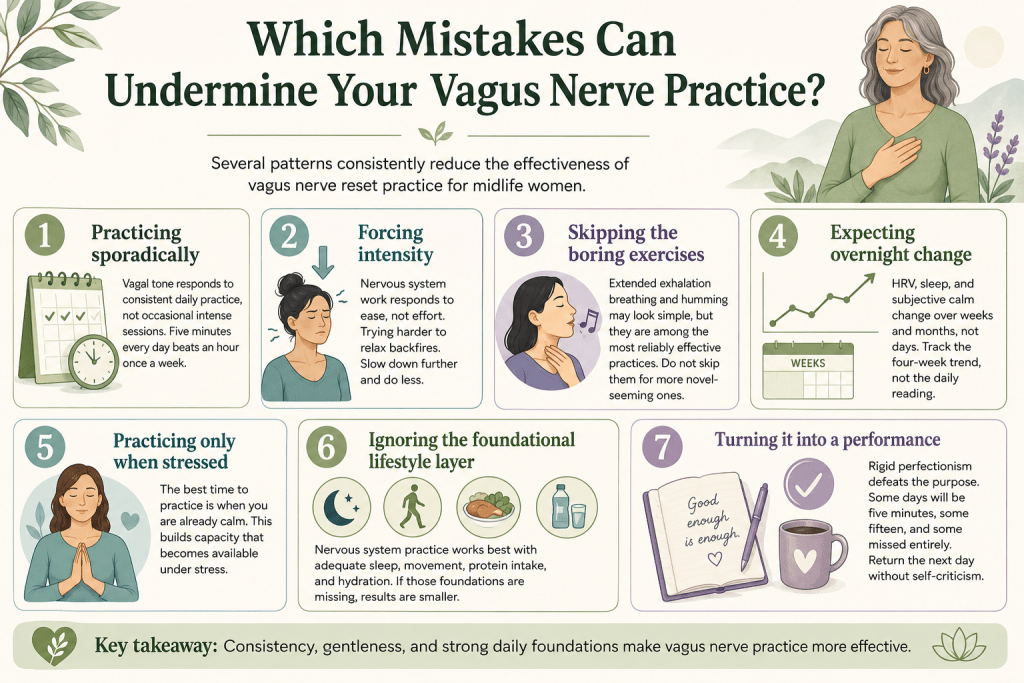
- Practicing sporadically: Vagal tone responds to consistent daily practice, not occasional intense sessions. Five minutes every day beats an hour once a week.
- Forcing intensity: Nervous system work responds to ease, not effort. Trying harder to relax is a category error. The correct move is to slow down further and do less, because that is the direction the vagus nerve responds to.
- Skipping the boring exercises: Extended exhalation breathing and humming look unimpressive on paper, and they are the most reliably effective practices in the list. Do not skip them for the more novel-seeming practices.
- Expecting overnight change: HRV, sleep, and subjective calm change over weeks and months, not days. Track the four-week trend, not the daily reading.
- Practicing only when stressed: The best time to practice is when you are already calm. This builds capacity that becomes available when you are under stress.
- Ignoring the foundational lifestyle layer: Nervous system practice works best when it sits on top of adequate sleep, movement, protein intake, and hydration. If those foundations are missing, the practice will produce smaller results.
- Turning it into a performance: Rigid perfectionism about the practice defeats its purpose. Some days you will do five minutes, some days you will do fifteen, and some days you will forget entirely. All of that is fine, and the practice simply returns the next day without self-criticism.
Free 28-Day Fascia Reset Email Course
Get our Free 28-day email course series to help with 1 or 2 exercises per day to release your fascia. One short lesson per day. Two minutes to read each.
When Should You See a Healthcare Professional?
Most midlife women can safely add all ten exercises to their daily routine. Some situations require professional evaluation first.
- Cardiovascular disease: Cold exposure and breath retention practices need clinician approval for anyone with significant heart disease, uncontrolled blood pressure, or a history of arrhythmia.
- History of fainting: Vasovagal syncope history is a reason to avoid the cold face immersion and to be careful with breath retention practices.
- Glaucoma: Inverted positions like legs-up-the-wall may increase intraocular pressure and should be discussed with an ophthalmologist.
- Seizure disorders: Breath work practices need clinician guidance for anyone with a seizure history.
- Severe anxiety or PTSD: Some breath practices and interoceptive exercises can amplify anxiety in vulnerable populations before they soothe it. Working with a trauma-informed practitioner is often better than solo practice for these situations.
- Persistent symptoms despite practice: If sleep, mood, digestion, or anxiety symptoms are severe and are not responding to daily practice after eight to twelve weeks, that is a reason to consult a healthcare provider for a broader clinical evaluation.
What Are Your Next Steps?
If the framework in this article makes sense and you want to install a daily vagus nerve reset practice, here are the four next steps in order of friction.
- Choose two exercises to start with tonight. Extended exhalation breathing (Exercise 1) and one other of your choice. Do them for five minutes before sleep.
- Establish the morning practice tomorrow. Add vigorous gargling and humming to your morning routine. This takes about three minutes and produces almost no schedule friction.
- Track a simple metric for eight weeks. Sleep quality on a one-to-ten scale each morning is the easiest. HRV if you have a wearable. Look at the four-week average.
- Consider personalized coaching or the retreat. The Deeply Restorative Yoga and Nature Retreat at our Smoky Mountains property is the primary CTA for this article and is where the full nervous system framework is installed in five days. For ongoing sustained support, the Monthly Personal Training and Nutrition Coaching Program is the coaching option.
Free 28-Day Fascia Reset Email Course
Get our Free 28-day email course series to help with 1 or 2 exercises per day to release your fascia. One short lesson per day. Two minutes to read each.
Frequently Asked Questions
How long does it take for vagus nerve reset exercises to work?
Acute effects on breath, heart rate, and subjective calm are often noticeable within the first session. Meaningful changes in HRV, sleep quality, and stress resilience generally develop over four to eight weeks of consistent daily practice. Deeper changes in mood, digestion, and inflammation continue to develop over three to six months.
Can I do all ten exercises every day?
You can, though most women do not need to. A daily practice of two to four exercises for a total of five to fifteen minutes produces the majority of the benefit. Reserve the longer practices like Yoga Nidra and cold face immersion for two or three days per week.
Are vagus nerve reset exercises safe during pregnancy?
Most of the exercises are safe during pregnancy with modification. Cold face immersion and breath retention practices need modification during pregnancy. Work with a prenatal-certified practitioner for individualized guidance.
What is the fastest vagus nerve reset for an anxiety spike?
Cold water face immersion (Exercise 2) produces the fastest acute parasympathetic shift. Extended exhalation breathing (Exercise 1) is the most accessible when cold water is not available. Both produce noticeable calming effects within one to three minutes.
Do I need any equipment?
None of the exercises require equipment beyond what you already have at home. A bowl for cold water, a wall for legs-up-the-wall, and a comfortable surface to lie on are the only items needed.
Can these exercises help with menopause symptoms?
Vagus nerve reset practices are one of the accessible interventions for the sleep disruption, anxiety, digestive changes, and stress reactivity that are common in perimenopause and menopause. They do not replace medical treatment when it is indicated, but they consistently produce meaningful improvement in the daily quality of life for women who practice them regularly. Discuss with your provider as part of a broader menopause management strategy.
Are these exercises safe for women with high blood pressure?
Most of the exercises are safe. Cold face immersion and breath retention practices need clinician approval for uncontrolled high blood pressure. Legs-up-the-wall may need modification for some blood pressure conditions. Extended exhalation breathing, humming, gargling, and the Rosenberg exercises are generally safe.
Can vagus nerve exercises help with sleep?
Regular daily practice consistently improves subjective sleep quality and overnight HRV in most practitioners. Evening-timed practices (extended exhalation, legs-up-the-wall, Yoga Nidra) are particularly effective for sleep onset. Multiple studies support the sleep-related effects of these categories of practice.
What is the difference between the vagus nerve and the parasympathetic nervous system?
The vagus nerve is the primary anatomical conduit of the parasympathetic nervous system, but the parasympathetic system also includes sacral nerves and some cranial nerves other than the vagus. In practice, the vagus nerve is where most of the parasympathetic activity happens, which is why vagus-focused practices are so effective.
Free 28-Day Fascia Reset Email Course
Get our Free 28-day email course series to help with 1 or 2 exercises per day to release your fascia. One short lesson per day. Two minutes to read each.
Can I overdo vagus nerve exercises?
The exercises in this article are safe at reasonable daily volumes. Extremely long sessions of breath work or cold exposure can produce fatigue or over-activation of the parasympathetic system in sensitive individuals. If you notice excessive fatigue or lightheadedness during or after the practice, reduce the duration.
Do I need to see a therapist alongside these exercises?
For most women, the exercises can be practiced safely as a self-directed daily practice. For women with a history of significant trauma, PTSD, or severe anxiety, working with a trauma-informed therapist alongside the practice often produces better results and reduces the risk of trigger responses to interoceptive practices.
How do I know if my vagus nerve is working properly?
Higher heart rate variability, easy transitions between activation and rest, regular digestion, restorative sleep, resilient mood, and steady energy through the day are all signs of good vagal function. The signs listed in section 3 of this article are the common indicators of reduced vagal function.
Can I do these exercises at work?
Several of them are workable in an office setting. Humming can be done softly at your desk. Auricular massage takes three minutes. The Rosenberg Basic Exercise can be done during a break with the head resting on the desk on interlaced fingers. Extended exhalation breathing works anywhere.
Are the Stanley Rosenberg exercises safe for everyone?
The Basic Exercise and Half-Salamander are gentle and safe for most bodies. Anyone with significant neck injury, cervical spine surgery history, or acute pain should discuss with their healthcare provider before starting.
What if I do not feel a release response during the Basic Exercise?
Some people do not experience the spontaneous yawn or sigh in the first few sessions. Continue the practice for several weeks. Most people begin to experience the release response as the nervous system learns the pattern. If nothing changes after several weeks, that is not a failure. The other exercises may work better for your particular nervous system.
References
- Porges, S. W. (2011). The Polyvagal Theory: Neurophysiological Foundations of Emotions, Attachment, Communication, and Self-Regulation. W. W. Norton.
- Porges, S. W. (2017). The Pocket Guide to the Polyvagal Theory: The Transformative Power of Feeling Safe. W. W. Norton.
- Rosenberg, S. (2017). Accessing the Healing Power of the Vagus Nerve: Self-Help Exercises for Anxiety, Depression, Trauma, and Autism. North Atlantic Books.
- Laborde, S., Allen, M. S., Borges, U., et al. (2022). Effects of voluntary slow breathing on heart rate and heart rate variability: a systematic review and a meta-analysis. Neuroscience and Biobehavioral Reviews, 138, 104711.
- Zaccaro, A., Piarulli, A., Laurino, M., et al. (2018). How breath-control can change your life: a systematic review on psycho-physiological correlates of slow breathing. Frontiers in Human Neuroscience, 12, 353.
- Russo, M. A., Santarelli, D. M., & O’Rourke, D. (2017). The physiological effects of slow breathing in the healthy human. Breathe, 13(4), 298–309.
- Bernardi, L., Sleight, P., Bandinelli, G., et al. (2001). Effect of rosary prayer and yoga mantras on autonomic cardiovascular rhythms: comparative study. BMJ, 323(7327), 1446–1449.
- Kox, M., van Eijk, L. T., Zwaag, J., et al. (2014). Voluntary activation of the sympathetic nervous system and attenuation of the innate immune response in humans. Proceedings of the National Academy of Sciences, 111(20), 7379–7384.
- Vickhoff, B., Malmgren, H., Åström, R., et al. (2013). Music structure determines heart rate variability of singers. Frontiers in Psychology, 4, 334.
- Lundberg, J. O., Weitzberg, E., & Gladwin, M. T. (2008). The nitrate-nitrite-nitric oxide pathway in physiology and therapeutics. Nature Reviews Drug Discovery, 7(2), 156–167.
- Telles, S., Nagarathna, R., & Nagendra, H. R. (1994). Breathing through a particular nostril can alter metabolism and autonomic activities. Indian Journal of Physiology and Pharmacology, 38(2), 133–137.
- Yoo, H. J., Nashiro, K., Min, J., et al. (2022). Heart rate variability biofeedback increases vagal tone and improves cognitive function in older adults. Applied Psychophysiology and Biofeedback, 47(2), 129–142.
- Yuan, H., & Silberstein, S. D. (2016). Vagus nerve and vagus nerve stimulation, a comprehensive review: Part I, II, and III. Headache: The Journal of Head and Face Pain, 56(1-3), 71–91, 259–266, 479–490.
- Butt, M. F., Albusoda, A., Farmer, A. D., & Aziz, Q. (2020). The anatomical basis for transcutaneous auricular vagus nerve stimulation. Journal of Anatomy, 236(4), 588–611.
- Streeter, C. C., Gerbarg, P. L., Saper, R. B., et al. (2012). Effects of yoga on the autonomic nervous system, gamma-aminobutyric-acid, and allostasis in epilepsy, depression, and post-traumatic stress disorder. Medical Hypotheses, 78(5), 571–579.
- Datta, K., Tripathi, M., & Mallick, H. N. (2017). Yoga Nidra: an innovative approach for management of chronic insomnia. Sleep Science and Practice, 1(1), 7.
- Pal, G. K., Velkumary, S., & Madanmohan. (2004). Effect of short-term practice of breathing exercises on autonomic functions in normal human volunteers. Indian Journal of Medical Research, 120(2), 115–121.
- Gerritsen, R. J. S., & Band, G. P. H. (2018). Breath of life: the respiratory vagal stimulation model of contemplative activity. Frontiers in Human Neuroscience, 12, 397.
- Bordoni, B., Marelli, F., Morabito, B., & Sacconi, B. (2018). Depression and anxiety in patients with chronic heart failure. Future Cardiology, 14(2), 115–119.
- Woodyard, C. (2011). Exploring the therapeutic effects of yoga and its ability to increase quality of life. International Journal of Yoga, 4(2), 49–54.
Disclaimer: Always consult with a healthcare professional before starting any new routines, programs, or nutrition plans to ensure you receive the best medical advice and strategy for your specific individual needs.
Free 28-Day Fascia Reset Email Course
Get our Free 28-day email course series to help with 1 or 2 exercises per day to release your fascia. One short lesson per day. Two minutes to read each.

Terry Tateossian is a Menopause Lifestyle Medicine Coach, Certified Personal Trainer & Nutritionist and the Founder of THOR: The House of Rose, a wellness brand serving women over 40 through retreats, coaching, macro-nutrition and community. As 25-year founder and entrepreneur, Terry spent two and a half decades building and running successful start-up businesses, an experience that put her on the front line of founder burnout long before she could name it. After facing serious health challenges, early onset menopause, and emotional eating while running her agency and raising two children, Terry rebuilt her health in her 40s and lost more than 80 pounds through evidence-based nutrition, training, and mindset work. Today, she helps women get strong, improve confidence, support hormone health, and create a stronger second half of life. Terry has been featured in major media outlets and is available for podcasts, expert commentary, brand collaborations, and speaking engagements on midlife health, reinvention, emotional eating, menopause wellness, and strength training for longevity. Get her free macro calculator (her cookbook companion) to start your journey to back to health.