
 By Team THOR
Free 28-Day Fascia Reset Email Course
Get our Free 28-day email course series to help with 1 or 2 exercises per day to release your fascia. One short lesson per day. Two minutes to read each.
Tai Chi Walking for Seniors: The Complete Guide to a Practice That Improves Balance, Reduces Falls, and Supports Aging Well
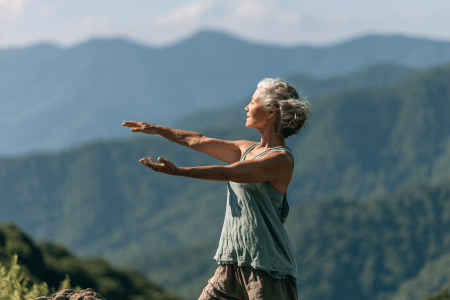
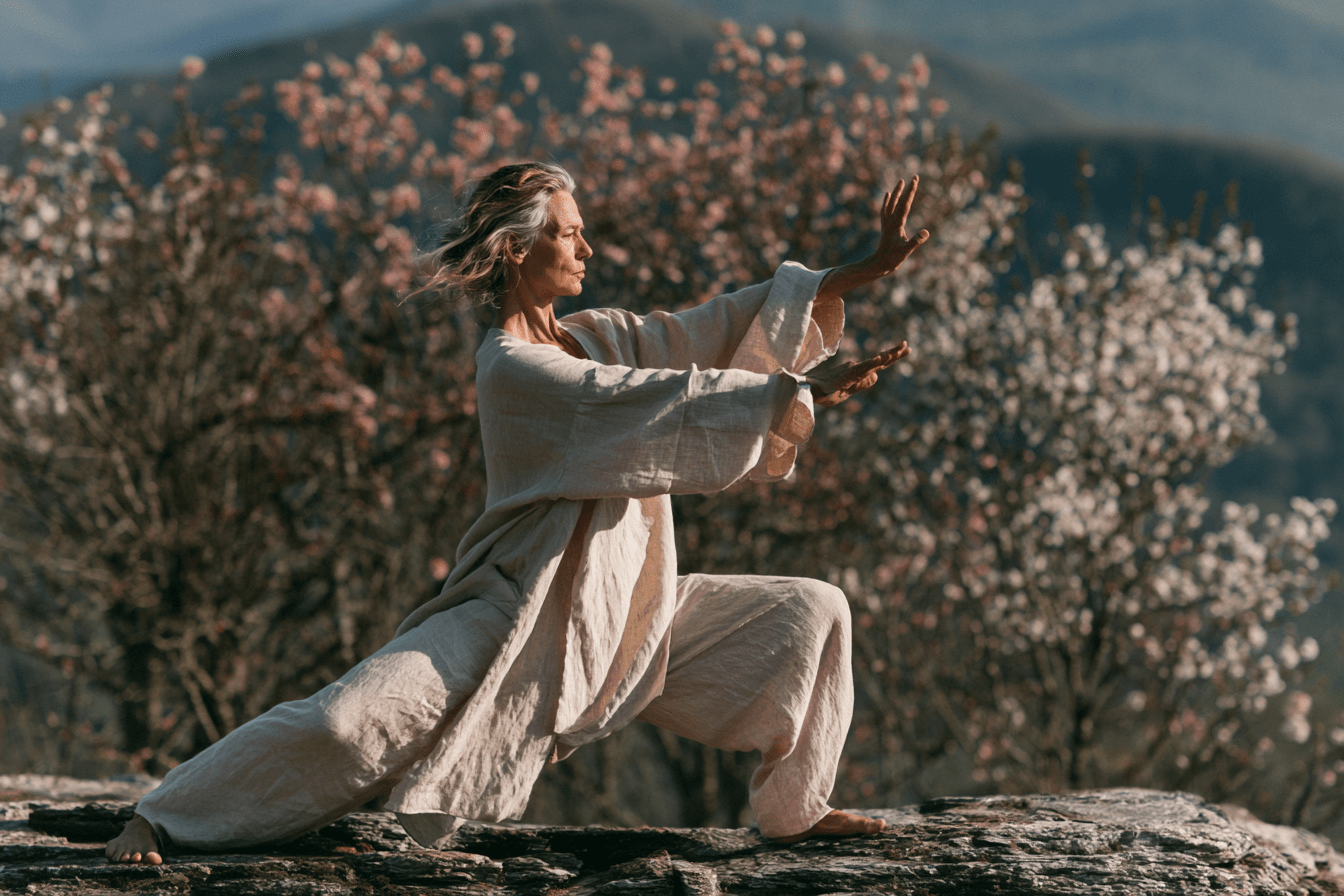
Tai chi walking for seniors is one of the most accessible movement practices for adults over 60. It combines slow, deliberate walking with tai chi principles to improve balance, reduce fall risk, support cognitive function, and create a greater sense of ease in the body. Research has consistently shown that it can benefit older adults across a wide range of fitness levels and movement experience.
This guide explains how tai chi walking differs from regular walking and formal tai chi, the research behind its benefits, the five core principles of the practice, and how to begin safely. It also includes a simple approach for building tai chi walking into a sustainable daily routine.
I am Terry Tateossian, founder of The House of Rose and a certified lifestyle medicine coach who runs nutrition-focused wellness retreats for women in midlife and beyond. Tai chi walking is one of the practices I teach because its benefits can remain valuable well into the seventies and eighties.
Important: Consult your healthcare provider before starting a new movement practice, especially if you have balance concerns, joint problems, cardiovascular conditions, or a history of falls.
What Is Tai Chi Walking and How Is It Different From Regular Walking?
Tai chi walking is a slow deliberate walking practice that applies the principles of tai chi to the natural motion of walking. The pace is roughly one third the speed of ordinary walking. Each step is taken with full attention to weight transfer, foot placement, breath coordination, and the position of the whole body. The practice is meditative, low-impact, and accessible in almost any location that has enough space for ten to twenty steps in a straight line.
Three properties distinguish tai chi walking from regular walking.
- The pace is deliberately slow. Where a typical walking pace is around 3 miles per hour (or roughly one step per second), tai chi walking runs at about 1 to 1.5 miles per hour or slower. Each step takes three to five seconds from initiation to completion. The slower pace is not just a stylistic choice. It is what allows the body to fully sense the weight transfer, engage the stabilizing muscles, and integrate the breath with the movement.
- Weight transfer is complete before the next step begins. In regular walking, the body is often in a state of controlled falling forward, with each step catching the fall and initiating the next one. In tai chi walking, each step is completed fully, with the weight transferred entirely to the new leg and the body balanced over that leg before the next step begins. This complete weight transfer is what builds balance and reduces fall risk.
- The breath is coordinated with the movement. Regular walking happens on autopilot, with breathing running in the background. Tai chi walking synchronizes the breath with each phase of the step. The inhale often accompanies the weight shift, and the exhale accompanies the settling into the new stance. This coordination supports parasympathetic activation and produces the meditative quality the practice is known for.
Tai chi walking also differs from formal tai chi practice, which involves complex sequences of movements performed in a specific choreography. Tai chi walking uses only the walking pattern itself, applying the same principles but without requiring the learning curve of memorizing forms. This makes it dramatically more accessible than traditional tai chi for beginners and for adults who prefer simplicity.
Where Did Tai Chi Walking Originate?
Tai chi walking comes from a centuries-old movement tradition that combines physical control, breath, attention, and gradual skill development.
- Historical Roots: Tai chi walking developed within tai chi chuan, a Chinese martial art and health practice with a documented history spanning several centuries. It is often taught early because it builds the weight transfer, rooted stance, balance, and breath coordination required for more advanced forms.
- Traditional Principles: The practice draws from Chinese medicine, qigong, and internal martial arts traditions centered on the concept of qi, or vital energy. Slow, deliberate movement coordinated with breathing and focused attention is traditionally believed to support the smooth circulation of qi throughout the body.
- Modern Research Perspective: Western research increasingly supports the physical and psychological benefits of tai chi without requiring practitioners to adopt its traditional philosophical explanations. The practice can be approached as an energy-based discipline, a mindfulness exercise, or a practical method of improving movement and balance.
- Suitability for Seniors: Tai chi walking emphasizes patience, gentleness, and gradual progress rather than speed, intensity, or exhaustion. This approach matches the needs of aging bodies and makes the practice accessible, adaptable, and effective across different levels of strength and mobility.
Free 28-Day Fascia Reset Email Course
Get our Free 28-day email course series to help with 1 or 2 exercises per day to release your fascia. One short lesson per day. Two minutes to read each.
Why Is Tai Chi Walking Ideal for Seniors?
Tai chi walking combines balance, mobility, mental focus, and nervous system regulation in a gentle format. Several factors make it especially practical and beneficial for older adults.
- Balance and Fall Prevention: Tai chi walking trains slow weight transfer, single-leg stability, body awareness, and coordination. These skills directly address declining balance, one of the main factors behind falls and serious injuries in adults over 65.
- Joint-Friendly Movement: The practice provides movement and circulation benefits without the repeated impact of running, jumping, or high-intensity cardio. This makes it more sustainable for seniors with osteoarthritis, previous joint replacements, stiffness, or chronic joint discomfort.
- Cognitive Support: Each step requires the brain to coordinate posture, breathing, movement, and attention at the same time. This combination can support executive function, concentration, processing speed, and overall mental engagement in older adults.
- Cardiovascular Health: Although the pace is slow, consistent practice can improve circulation, support healthier blood pressure, and strengthen autonomic regulation. Its low intensity also makes daily participation more realistic than demanding exercise programs that are difficult to maintain.
- Nervous System Regulation: The controlled breathing and meditative movement encourage parasympathetic activation, helping the body shift away from chronic stress. This can support calmer mood, improved recovery, and better sleep over time.
- Social Connection: Group classes in parks, community centers, and senior facilities combine physical activity with regular human interaction. This added social contact can reduce isolation and support emotional and cognitive well-being.
- Accessibility: Tai chi walking requires no machines, membership fees, or special clothing. It can be practiced in a small clear space, making it suitable for older adults with limited mobility, transportation, or financial resources.
“The women I work with who are in their sixties and seventies often arrive at coaching thinking they need to accept a slow physical decline as the new normal. What changes their picture is discovering that a practice as simple as tai chi walking, done for fifteen to twenty minutes a day, produces measurable improvements in balance, sleep, energy, and mood within four to six weeks. Many of them are stronger and more capable at 70 after six months of daily tai chi walking than they were at 65 before the practice. The practice does not stop aging. It does change how aging feels and how the body carries itself through it.”
Terry Tateossian, Founder of The House of Rose
What Does Research Say About Tai Chi and Aging?
The research on tai chi in older adults is extensive. Although many studies examine formal tai chi rather than tai chi walking alone, both use the same core principles of slow movement, weight transfer, focused attention, and coordinated breathing.
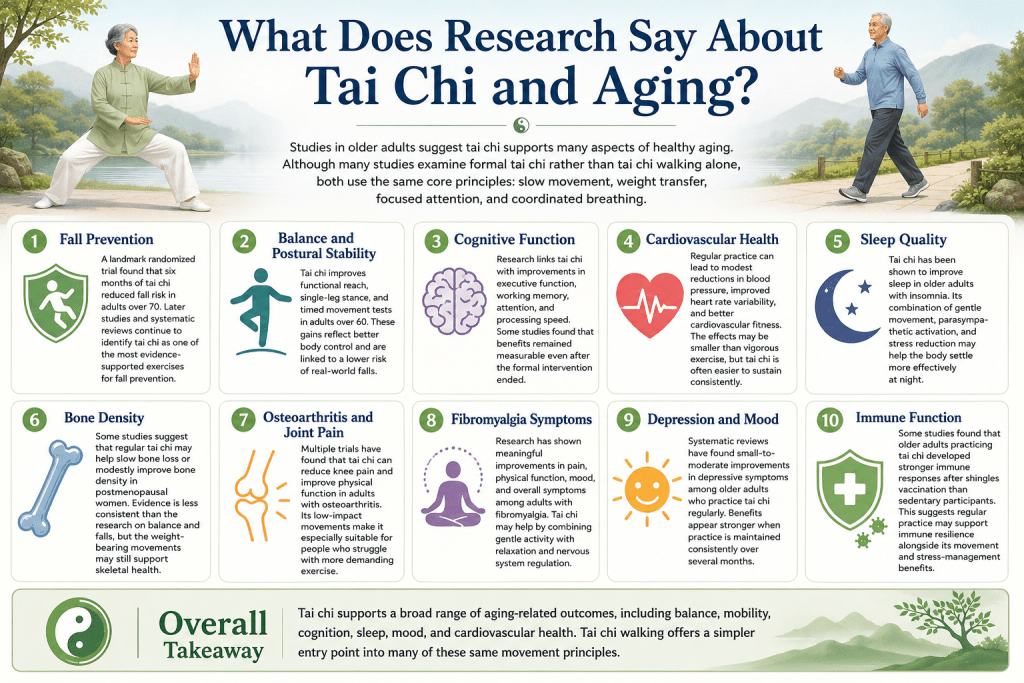
- Fall Prevention: A landmark randomized trial found that six months of tai chi reduced fall risk in adults over 70. Later studies and systematic reviews have continued to identify tai chi as one of the most evidence-supported exercises for fall prevention.
- Balance and Postural Stability: Tai chi improves functional reach, single-leg stance, and timed movement tests in adults over 60. These gains reflect better body control and are associated with a lower risk of real-world falls.
- Cognitive Function: Research has linked tai chi with improvements in executive function, working memory, attention, and processing speed. Some studies also found that cognitive benefits remained measurable after the formal intervention ended.
- Cardiovascular Health: Regular practice can produce modest reductions in blood pressure, improved heart rate variability, and better cardiovascular fitness. The effects may be smaller than vigorous aerobic exercise, but tai chi is often easier for older adults to sustain consistently.
- Sleep Quality: Tai chi has been shown to improve sleep in older adults experiencing insomnia. Its combination of gentle movement, parasympathetic activation, and stress reduction may help the body settle more effectively at night.
- Bone Density: Some studies suggest that regular tai chi may help slow bone loss or modestly improve bone density in postmenopausal women. The evidence is less consistent than the research on balance and falls, but the weight-bearing movements may still support skeletal health.
- Osteoarthritis and Joint Pain: Multiple trials have found that tai chi can reduce knee pain and improve physical function in adults with osteoarthritis. Its low-impact movements make it especially suitable for people who struggle with more demanding forms of exercise.
- Fibromyalgia Symptoms: Research has shown meaningful improvements in pain, physical function, mood, and overall symptoms among adults with fibromyalgia. Tai chi may help by combining gentle activity with relaxation and nervous system regulation.
- Depression and Mood: Systematic reviews have found small-to-moderate improvements in depressive symptoms among older adults who practice tai chi regularly. The benefits appear stronger when the practice is maintained consistently over several months.
- Immune Function: Some studies found that older adults practicing tai chi developed stronger immune responses after shingles vaccination than sedentary participants. This suggests that regular practice may support immune resilience alongside its movement and stress-management benefits.
Overall, tai chi supports a broad range of aging-related outcomes, including balance, mobility, cognition, sleep, mood, and cardiovascular health. Tai chi walking offers a simpler entry point into many of these same movement principles.
Free 28-Day Fascia Reset Email Course
Get our Free 28-day email course series to help with 1 or 2 exercises per day to release your fascia. One short lesson per day. Two minutes to read each.
What Are the Health Benefits of Tai Chi Walking for Seniors?
Building on the broader tai chi research base, the specific benefits of tai chi walking for seniors organize into eight practical categories.
- Improved balance and reduced fall risk: The most consistently documented benefit. Slow controlled weight transfer trains the neuromuscular systems that keep older adults upright.
- Better joint mobility and reduced joint pain: The gentle sustained movement supports joint fluid circulation and connective tissue mobility without producing the impact stress of higher-intensity exercise.
- Improved cognitive function: The requirement for sustained attention during the practice trains executive function and appears to produce measurable cognitive benefits over time.
- Better sleep quality: The parasympathetic activation of the practice supports the nervous system state that healthy sleep depends on.
- Reduced blood pressure and improved cardiovascular tone: Modest but real cardiovascular gains that accumulate over months of consistent practice.
- Better mood and reduced anxiety: The meditative quality combined with the physical movement produces reliable mood improvements comparable to other mind-body interventions.
- Improved posture: The sustained attention to body position during the practice gradually corrects the forward-flexed pattern that many older adults fall into.
- Increased daily energy and reduced fatigue: Counter-intuitively, a slow practice often produces more daily energy than more intense exercise, because the parasympathetic dominance the practice supports produces more efficient recovery between sessions.
- Enhanced social connection when practiced in groups: Community-based tai chi walking classes provide the social contact that solitary exercise does not.
Which 5 Principles Make Tai Chi Walking Effective?
The practice can be summarized in five core principles. Every step in tai chi walking should embody all five simultaneously. The principles are what make the difference between tai chi walking and slow walking that happens to look similar on the surface.
- Principle 1: Slow deliberate pace. Each step should take three to five seconds from initiation to completion. If you are walking at a pace where each step takes one second or less, you are walking rather than tai chi walking. The slow pace is what allows the other four principles to operate.
- Principle 2: Complete weight transfer. Each step ends with the full body weight fully transferred to the new leg. The other leg should be entirely free of weight, able to lift off the floor easily. Test this by pausing between steps and confirming you can lift the trailing foot without losing balance.
- Principle 3: Soft rounded joints. The knees are slightly bent and never fully locked. The hips are soft. The shoulders are relaxed down away from the ears. The elbows have a small bend. Nothing in the body is rigid or fully extended. This softness is what makes the practice safe for aging joints and what allows the internal weight shifts to happen smoothly.
- Principle 4: Coordinated breath. The breath synchronizes with the movement. Common patterns include inhaling as the weight shifts forward and exhaling as the body settles into the new stance, or inhaling on the step-in and exhaling on the step-out. Any consistent coordination works. The point is that the breath and the movement are linked rather than running independently.
- Principle 5: Sustained attention. The mind stays with the body throughout the practice. Attention on the weight shifting from one foot to the other. Attention on the breath. Attention on the position of the shoulders, the softness of the hips, the placement of the foot. When the mind wanders, gently return it to the body.
Every step should embody all five principles simultaneously. This is more difficult than it sounds at first, which is why tai chi walking is described as a practice rather than a technique. The principles become more automatic with repetition, and after several weeks the whole coordination happens without conscious effort.
Free 28-Day Fascia Reset Email Course
Get our Free 28-day email course series to help with 1 or 2 exercises per day to release your fascia. One short lesson per day. Two minutes to read each.
How Can Beginners Start Tai Chi Walking? A Step-by-Step Guide
Below is a step-by-step approach to a first tai chi walking session that beginners can follow without any prior experience.
Before you start, find a space with 10 to 20 feet of clear straight walking distance. Indoor spaces (living room, hallway, gym) work well because they eliminate weather and traction concerns. Outdoor spaces (park path, driveway, flat sidewalk) work well for the added benefit of natural light exposure. Wear flat comfortable shoes or bare feet on safe surfaces. Loose comfortable clothing.
- Step 1: Standing preparation. Stand at one end of your walking space. Feet parallel, hip-width apart. Knees slightly bent. Shoulders relaxed. Take three slow breaths, bringing attention to the body. Feel the weight balanced across both feet.
- Step 2: The weight shift. Slowly shift your weight entirely onto your right leg. Do not lift the left foot yet. Just move the weight. Feel the left leg become light. This takes three to five seconds.
- Step 3: The first step. With the weight fully on the right leg, slowly lift the left foot and step forward. The heel touches down first. The rest of the foot follows slowly. The step takes three to five seconds.
- Step 4: The weight transfer. Slowly transfer the weight forward onto the left leg. The right leg becomes light. Feel the balance settle over the left leg. Three to five seconds.
- Step 5: The second step. With the weight fully on the left leg, slowly lift the right foot and step forward. Heel first, then the rest of the foot. Three to five seconds.
- Step 6: Continue. Repeat this pattern for the full length of your walking space. When you reach the end, slowly turn around and continue. A single length of 10 to 20 feet, walked with the tai chi principles, might take one to two minutes.
- Step 7: Add the breath. Once the walking pattern feels familiar (usually after a few sessions), add the breath coordination. Inhale as you shift the weight. Exhale as you settle into the new stance. Keep the breath slow and comfortable.
- Step 8: Complete a first session. Continue the walking pattern for five to ten minutes for a first session. Do not try to walk any farther than a length of your space. The point is the pattern, not the distance.
- Step 9: Rest and integrate. After the session, stand still for a minute or two. Notice how the body feels different from before the practice.
For the first two weeks, sessions of five to ten minutes are appropriate. By week three, extend to fifteen minutes. By month two, twenty to thirty minutes is a sustainable daily practice for most seniors.
How Can You Build a Daily Tai Chi Walking Practice?
A daily practice is where the benefits accumulate. Below is the structure I recommend for building tai chi walking into a sustainable daily habit.
|
Week |
Session Length |
Frequency |
Focus |
|
1 |
5 to 10 min |
4 to 5 days |
Learn the basic weight transfer pattern |
|
2 |
10 min |
5 days |
Add breath coordination |
|
3 |
15 min |
5 to 6 days |
Sustain attention throughout the session |
|
4 |
15 to 20 min |
6 days |
Consolidate all five principles |
|
5 to 8 |
20 min |
6 to 7 days |
Refine the practice |
|
9+ |
20 to 30 min |
6 to 7 days |
Sustainable daily practice |
Tai chi walking is flexible enough to fit different schedules, environments, and fitness routines. Whether practiced in the morning, evening, indoors, outdoors, alone, or with a group, consistency matters more than following one perfect approach.
- Best time of day: Morning practice pairs well with natural light exposure and sets the parasympathetic tone for the day. Evening practice supports sleep onset. Either works. Some practitioners split their practice into two shorter sessions (10 minutes morning and 10 minutes evening).
- Weather and season considerations: Indoor practice on rainy or cold days keeps the daily consistency going. A hallway 10 to 15 feet long is enough space. The practice works in almost any environment.
- Group practice options: Local senior centers, community centers, and parks and recreation departments often offer group tai chi classes that include tai chi walking. Even one group session per week supplements a home practice with the social connection benefit and often improves the technical execution through instructor feedback.
- Combining with other movement: Tai chi walking works well alongside strength training (two to three sessions per week for lean muscle preservation) and gentle stretching or yin yoga (for connective tissue mobility). The micro walks practice and tai chi walking can complement each other, with the micro walks providing everyday practical movement and tai chi walking providing the deliberate practice element.
“The single element I emphasize most with coaching clients starting tai chi walking is the complete weight transfer. Everything else in the practice depends on it. If you cannot pause between steps with the weight fully on one leg, you cannot really train the balance system that the practice is meant to build. Slow the pace down further if needed. Take longer steps if it helps. Focus on being able to pause on one leg without wobbling before moving to the next step. That single element produces most of the balance improvement that seniors get from the practice within the first four weeks.”
Terry Tateossian, Founder of The House of Rose
Free 28-Day Fascia Reset Email Course
Get our Free 28-day email course series to help with 1 or 2 exercises per day to release your fascia. One short lesson per day. Two minutes to read each.
Which Mistakes Can Undermine Tai Chi Walking?
These mistakes consistently reduce the effectiveness of tai chi walking for seniors.
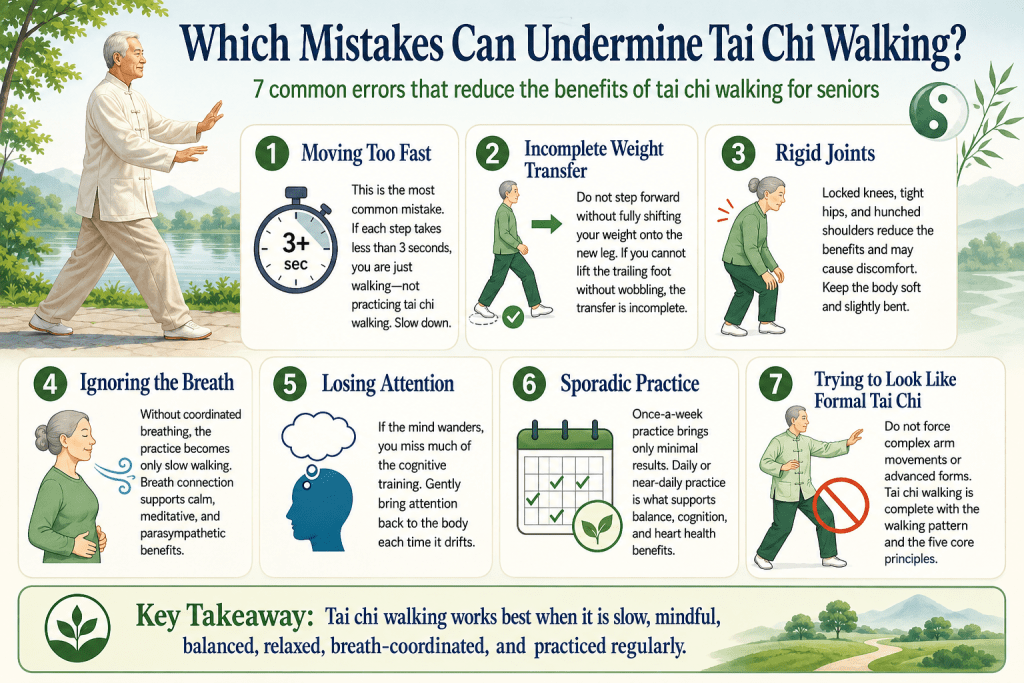
- Moving too fast: The single most common mistake. If your steps take less than three seconds each, you are walking rather than tai chi walking. Slow down.
- Incomplete weight transfer: Stepping forward without fully committing the weight to the new leg means the balance training does not happen. Test yourself: at any point in the practice, can you lift the trailing foot without wobbling? If not, the weight transfer is incomplete.
- Rigid joints: Locked knees, tight hips, or hunched shoulders make the practice ineffective and can cause joint discomfort. Keep everything soft and slightly bent.
- Ignoring the breath: Practice without coordinated breath is just slow walking. The breath connection is what produces the parasympathetic and meditative benefits.
- Losing attention: A wandering mind during practice produces the physical benefits partially but misses the cognitive training. Bring the mind back to the body every time it wanders. This is part of the practice, not a failure of it.
- Sporadic practice: Once-a-week practice produces minimal benefit. Daily or near-daily practice is what produces the balance, cognitive, and cardiovascular benefits documented in the research.
- Trying to look like formal tai chi: Some beginners try to add complex arm movements or postures they have seen in formal tai chi videos. Skip this. Tai chi walking is complete without added forms. The walking pattern with the five principles is the practice.
How Can Tai Chi Walking Be Adapted to Different Abilities?
Tai chi walking scales across a wide range of ability levels through modest adaptations.
- For seniors with strong balance and mobility: The standard practice as described in Section 7 is appropriate. Progress to 30-minute sessions over several months.
- For seniors with mild balance concerns: Practice near a wall or countertop that provides light support if needed. Use fingertips for balance rather than gripping. Shorter steps. Sessions of 10 to 15 minutes.
- For seniors using a cane or walker: Practice while holding the assistive device for stability. Focus on the principles (slow pace, weight transfer, breath, attention) rather than trying to eliminate the support. The practice still produces balance benefits and is safer with the support in place.
- For seniors recovering from surgery or injury: Consult with your physical therapist or healthcare provider before starting. Some post-surgical protocols specifically recommend tai chi walking during rehabilitation.
- For seniors with cognitive concerns or early dementia: Practice with a caregiver or family member who can provide gentle guidance. Group classes designed for adults with cognitive concerns are widely available. The cognitive benefit of the practice is particularly relevant in this population.
- For seniors with limited mobility: A seated version of the practice (sitting in a chair, shifting weight side to side while lifting one foot then the other) captures much of the benefit for adults who cannot safely walk.
Free 28-Day Fascia Reset Email Course
Get our Free 28-day email course series to help with 1 or 2 exercises per day to release your fascia. One short lesson per day. Two minutes to read each.
How Does Tai Chi Walking Fit the THOR Framework?
Tai chi walking is one component of the five-part lifestyle medicine framework I teach at THOR. Each component supports the others.
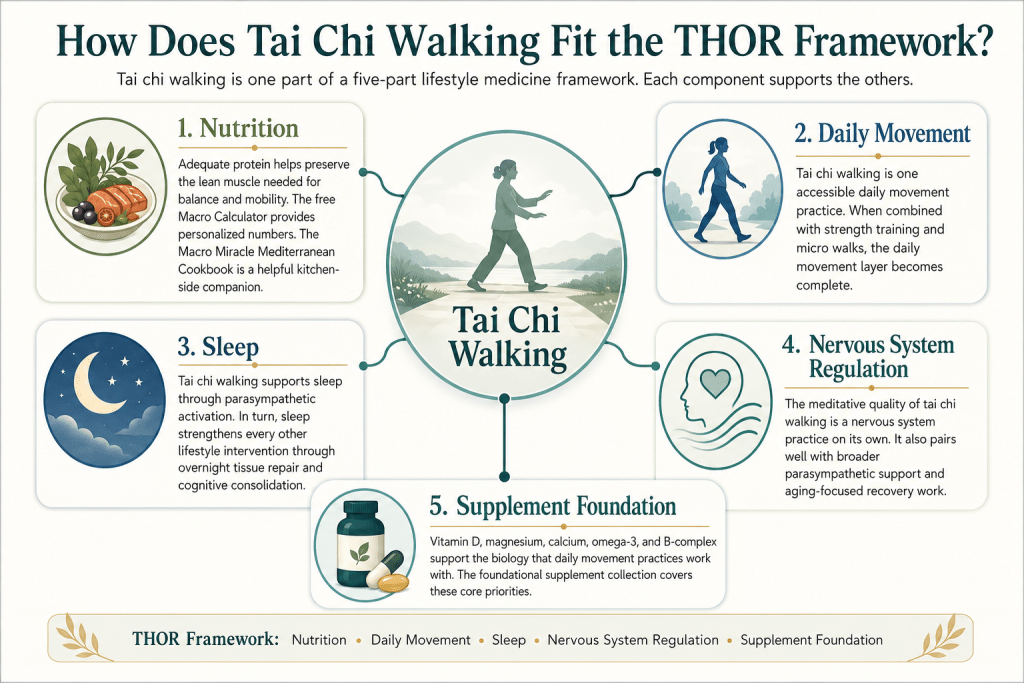
- Nutrition: Adequate protein preserves the lean muscle that balance and mobility depend on. The free Macro Calculator provides personalized numbers. The Macro Miracle Mediterranean Cookbook is the kitchen-side companion.
- Daily movement: Tai chi walking is one of several accessible daily movement practices. Combined with strength training and the micro walks practice, the daily movement layer of the framework is complete.
- Sleep: Tai chi walking supports sleep through parasympathetic activation. Sleep supports every other lifestyle intervention through overnight tissue repair and cognitive consolidation.
- Nervous system regulation: The meditative quality of tai chi walking is itself a nervous system practice. It pairs with the broader parasympathetic work we covered in our article on the parasympathetic nervous system and aging.
- Supplement foundation: Vitamin D, magnesium, calcium, omega-3, and B-complex all support the biology that daily movement practices work with. The foundational supplement collection covers the priorities.
For seniors and midlife women who want sustained 1:1 support on the full framework, the Monthly Personal Training and Nutrition Coaching Program provides personalized programming. For the immersive version, the Deeply Restorative Yoga and Nature Retreat at our Smoky Mountains property includes tai chi walking sessions and forest walks as part of the broader five-day program. Retreat guests learn the practice with expert guidance and take it home with them.
“Tai chi walking is one of the practices that seniors most consistently keep going with after leaving the retreat. Some of the more demanding practices we teach need a lot of infrastructure to maintain at home. Tai chi walking needs a hallway and ten minutes a day. Guests in their sixties and seventies leave the property with the practice already installed and come back a year later reporting that they still do it every morning. That kind of sustained adherence is what produces the long-term health outcomes the research documents.”
Terry Tateossian, Founder of The House of Rose
Free 28-Day Fascia Reset Email Course
Get our Free 28-day email course series to help with 1 or 2 exercises per day to release your fascia. One short lesson per day. Two minutes to read each.
When Should You See a Healthcare Professional?
Most seniors can start tai chi walking safely. Some situations warrant professional consultation first.
- Recent falls or significant balance concerns: A physical therapist can assess your specific balance profile and recommend appropriate modifications or supervision.
- Recent surgery, particularly joint replacements: Wait for surgical clearance before adding new movement practices.
- Cardiovascular conditions: Consult your cardiologist about appropriate exercise intensity before starting.
- Vestibular disorders or vertigo: The slow controlled movement may be helpful but should be started under professional guidance.
- Cognitive concerns: Group classes designed for adults with cognitive concerns are safer and more effective than solo home practice.
- Diabetic neuropathy or reduced sensation in the feet: Extra care is warranted. Practice with supervision initially.
- Osteoporosis with significant fracture risk: Tai chi is generally recommended for adults with osteoporosis, but appropriate modifications and safe environments are essential.
What Are Your Next Steps?
If the framework in this article resonates and you want to start a tai chi walking practice, here are the four next steps in order of friction.
- Start with a 10-minute session tomorrow. Find a clear space of 10 to 20 feet. Walk slowly, applying the weight transfer principle even if you skip the other four for now. Just experience what slow deliberate walking feels like.
- Add the breath coordination in week two. Once the walking pattern feels familiar, add the inhale-exhale synchronization described in Section 6.
- Consider a group class for technical refinement. Local senior centers, community centers, and YMCAs often offer tai chi classes. Even one group session per week significantly accelerates the learning curve and adds social benefit.
Free 28-Day Fascia Reset Email Course
Get our Free 28-day email course series to help with 1 or 2 exercises per day to release your fascia. One short lesson per day. Two minutes to read each.
Frequently Asked Questions
What is tai chi walking exactly?
Tai chi walking is a slow deliberate walking practice that applies the principles of tai chi (weight transfer, breath coordination, rooted stance, sustained attention) to the natural motion of walking. Each step takes three to five seconds and produces measurable benefits for balance, cognition, mood, and cardiovascular health when practiced daily.
How is tai chi walking different from regular walking?
Regular walking runs at about 3 miles per hour with each step taking about a second. Tai chi walking runs at about 1 mile per hour or slower, with each step taking three to five seconds. The pace, the complete weight transfer, and the coordinated breath are the three main differences.
Do I need any experience to start?
No prior experience is required. Tai chi walking is designed to be accessible without prior experience with tai chi, walking meditation, or any related practice. The step-by-step guide in Section 7 is enough to start.
How long should each session be?
Beginners should start with 5 to 10 minute sessions. Progress to 15 minutes over three weeks and to 20 to 30 minutes over the first two months. Longer sessions are fine but not necessary. Consistency of daily practice matters more than session length.
How often should I practice tai chi walking?
Daily or near-daily practice produces the strongest results. Five to seven sessions per week is the target. The benefits accumulate significantly with daily consistency and plateau at less frequent practice.
Can I do tai chi walking indoors?
Indoor practice works well. A hallway 10 to 15 feet long is enough space. Indoor practice removes weather and traction concerns and is often the most sustainable option for consistent daily practice.
Is tai chi walking safe for seniors with balance concerns?
Tai chi walking is generally safe and often recommended specifically for seniors with balance concerns. For adults with significant balance issues, practicing near a wall or countertop for light support is a safer starting point than solo practice. Group classes designed for balance concerns are widely available.
Can I do tai chi walking if I use a cane or walker?
Using an assistive device is fully compatible with the practice. Continue to use the cane or walker during your tai chi walking session. The principles (slow pace, weight transfer, breath, attention) still produce benefits, and the assistive device keeps the practice safe.
How long before I feel results?
Most seniors notice improved balance and reduced end-of-day fatigue within two to three weeks of daily practice. Measurable improvements in objective balance measures typically show up at six to eight weeks. Cognitive and sleep improvements accumulate over two to three months.
What should I wear for tai chi walking?
Flat comfortable shoes or bare feet on safe surfaces. Loose comfortable clothing that does not restrict movement. Nothing special is required.
Is tai chi walking the same as walking meditation?
They share similar elements and are related practices. Walking meditation is a broader category that includes various slow-walking mindfulness practices from Buddhist and other contemplative traditions. Tai chi walking is a specific practice within the tai chi tradition that emphasizes weight transfer, breath coordination, and the physical principles of tai chi in addition to the meditative attention.
Can tai chi walking replace other exercise?
Tai chi walking is a strong daily movement practice but does not fully replace strength training (which preserves lean muscle and bone density) or higher-intensity cardio (which produces stronger cardiovascular adaptations). A complete movement program for seniors typically combines tai chi walking with strength training two to three times per week and other daily gentle movement.
Are there any risks to tai chi walking?
Tai chi walking is one of the safer exercise modalities available. The risks are mainly related to falls during practice (mitigated by starting near a wall for support), aggravating existing joint issues (mitigated by soft joints and slow pace), or overdoing the practice too soon (mitigated by gradual progression). Consult your healthcare provider if you have specific concerns.
How does tai chi walking help with sleep?
The parasympathetic activation produced by the slow deliberate movement and coordinated breathing supports the nervous system state that healthy sleep depends on. Consistent daily practice reduces baseline sympathetic activation, which allows deeper and more restorative sleep at night.
Should I do tai chi walking in the morning or evening?
Both morning and evening practice produce benefits. Morning practice combines well with natural light exposure and sets the parasympathetic tone for the day. Evening practice supports sleep onset. Some practitioners split the practice into shorter morning and evening sessions. Consistency is more important than timing.
References
- Li, F., Harmer, P., Fisher, K. J., et al. (2005). Tai Chi and fall reductions in older adults: a randomized controlled trial. Journals of Gerontology Series A: Biological Sciences and Medical Sciences, 60(2), 187–194.
- Wolf, S. L., Barnhart, H. X., Kutner, N. G., et al. (1996). Reducing frailty and falls in older persons: an investigation of Tai Chi and computerized balance training. Journal of the American Geriatrics Society, 44(5), 489–497.
- Li, J. X., Hong, Y., & Chan, K. M. (2001). Tai chi: physiological characteristics and beneficial effects on health. British Journal of Sports Medicine, 35(3), 148–156.
- Wayne, P. M., Walsh, J. N., Taylor-Piliae, R. E., et al. (2014). Effect of Tai Chi on cognitive performance in older adults: systematic review and meta-analysis. Journal of the American Geriatrics Society, 62(1), 25–39.
- Wang, C., Bannuru, R., Ramel, J., et al. (2010). Tai Chi on psychological well-being: systematic review and meta-analysis. BMC Complementary and Alternative Medicine, 10, 23.
- Wang, C., Schmid, C. H., Rones, R., et al. (2010). A randomized trial of tai chi for fibromyalgia. New England Journal of Medicine, 363(8), 743–754.
- Irwin, M. R., Olmstead, R., Carrillo, C., et al. (2014). Cognitive behavioral therapy vs. Tai Chi for late life insomnia and inflammatory risk: a randomized controlled comparative efficacy trial. Sleep, 37(9), 1543–1552.
- Irwin, M. R., Olmstead, R., Motivala, S. J. (2008). Improving sleep quality in older adults with moderate sleep complaints: a randomized controlled trial of Tai Chi Chih. Sleep, 31(7), 1001–1008.
- Wang, C., Schmid, C. H., Iversen, M. D., et al. (2016). Comparative effectiveness of tai chi versus physical therapy for knee osteoarthritis: a randomized trial. Annals of Internal Medicine, 165(2), 77–86.
- Kim, T. H., Pascual-Leone, J., Johnson, J., & Tamim, H. (2016). The mental-attention Tai Chi effect with older adults. BMC Psychology, 4(1), 29.
- Rogers, C. E., Larkey, L. K., & Keller, C. (2009). A review of clinical trials of tai chi and qigong in older adults. Western Journal of Nursing Research, 31(2), 245–279.
- Sherrington, C., Fairhall, N. J., Wallbank, G. K., et al. (2019). Exercise for preventing falls in older people living in the community. Cochrane Database of Systematic Reviews, 1, CD012424.
- Lomas-Vega, R., Obrero-Gaitán, E., Molina-Ortega, F. J., & Del-Pino-Casado, R. (2017). Tai Chi for risk of falls: a meta-analysis. Journal of the American Geriatrics Society, 65(9), 2037–2043.
- Zheng, G., Lan, X., Li, M., et al. (2015). The effectiveness of tai chi on the physical and psychological well-being of college students. Journal of Sports Science and Medicine, 14(4), 780–786.
- Antonelli, M., Donelli, D., & Barbieri, G. (2019). Effects of forest bathing on stress and immune function. International Journal of Biometeorology, 63(8), 1117–1134.
- Maltais, M. L., Desroches, J., & Dionne, I. J. (2009). Changes in muscle mass and strength after menopause. Journal of Musculoskeletal and Neuronal Interactions, 9(4), 186–197.
- Sipilä, S., Törmäkangas, T., Sillanpää, E., et al. (2020). Muscle and bone mass in middle-aged women: role of menopausal status and physical activity. Journal of Cachexia, Sarcopenia and Muscle, 11(3), 698–709.
- Boyle, N. B., Lawton, C., & Dye, L. (2017). The effects of magnesium supplementation on subjective anxiety and stress: a systematic review. Nutrients, 9(5), 429.
Disclaimer: Always consult with a healthcare professional before starting any new routines, programs, or nutrition plans to ensure you receive the best medical advice and strategy for your specific individual needs.
Free 28-Day Fascia Reset Email Course
Get our Free 28-day email course series to help with 1 or 2 exercises per day to release your fascia. One short lesson per day. Two minutes to read each.

Terry Tateossian is a Menopause Lifestyle Medicine Coach, Certified Personal Trainer & Nutritionist and the Founder of THOR: The House of Rose, a wellness brand serving women over 40 through retreats, coaching, macro-nutrition and community. As 25-year founder and entrepreneur, Terry spent two and a half decades building and running successful start-up businesses, an experience that put her on the front line of founder burnout long before she could name it. After facing serious health challenges, early onset menopause, and emotional eating while running her agency and raising two children, Terry rebuilt her health in her 40s and lost more than 80 pounds through evidence-based nutrition, training, and mindset work. Today, she helps women get strong, improve confidence, support hormone health, and create a stronger second half of life. Terry has been featured in major media outlets and is available for podcasts, expert commentary, brand collaborations, and speaking engagements on midlife health, reinvention, emotional eating, menopause wellness, and strength training for longevity. Get her free macro calculator (her cookbook companion) to start your journey to back to health.