
 By Team THOR
Free 28-Day Fascia Reset Email Course
Get our Free 28-day email course series to help with 1 or 2 exercises per day to release your fascia. One short lesson per day. Two minutes to read each.
Ear Lobe Crease (Frank’s Sign): Myth or Fact? Can Your Earlobes Predict Heart Attack Risk?
In 1973, a family physician in Alabama named Sanders T. Frank was working through his patient charts when he noticed something odd enough to write down. Several of his patients who had suffered heart attacks shared a small physical feature that seemed too specific to be coincidence: a diagonal crease running across the earlobe, at an angle, from the top of the tragus down to the edge of the lobe.
It was not in every patient. It was not something anyone had taught him to look for in medical school. But it kept showing up, again and again, in the charts of people with confirmed coronary artery disease.
Frank published a short letter about the observation in the American Heart Journal. He was cautious in his own writeup, calling it a possible clinical clue rather than a diagnosis.
Fifty years and dozens of studies later, that small fold of skin, now known formally as Frank’s sign, has become one of the most argued-about physical findings in cardiology: a real, statistically documented association that gets wildly oversold in popular media as a home heart attack test, and just as wildly dismissed by skeptics as pure coincidence.
The truth sits in the middle, and the middle is far more interesting than either extreme. This article walks through exactly what the research shows, what it does not show, why the sign exists at all, and what a midlife woman noticing a crease in her own earlobe should do about it.
What Is Frank’s Sign?
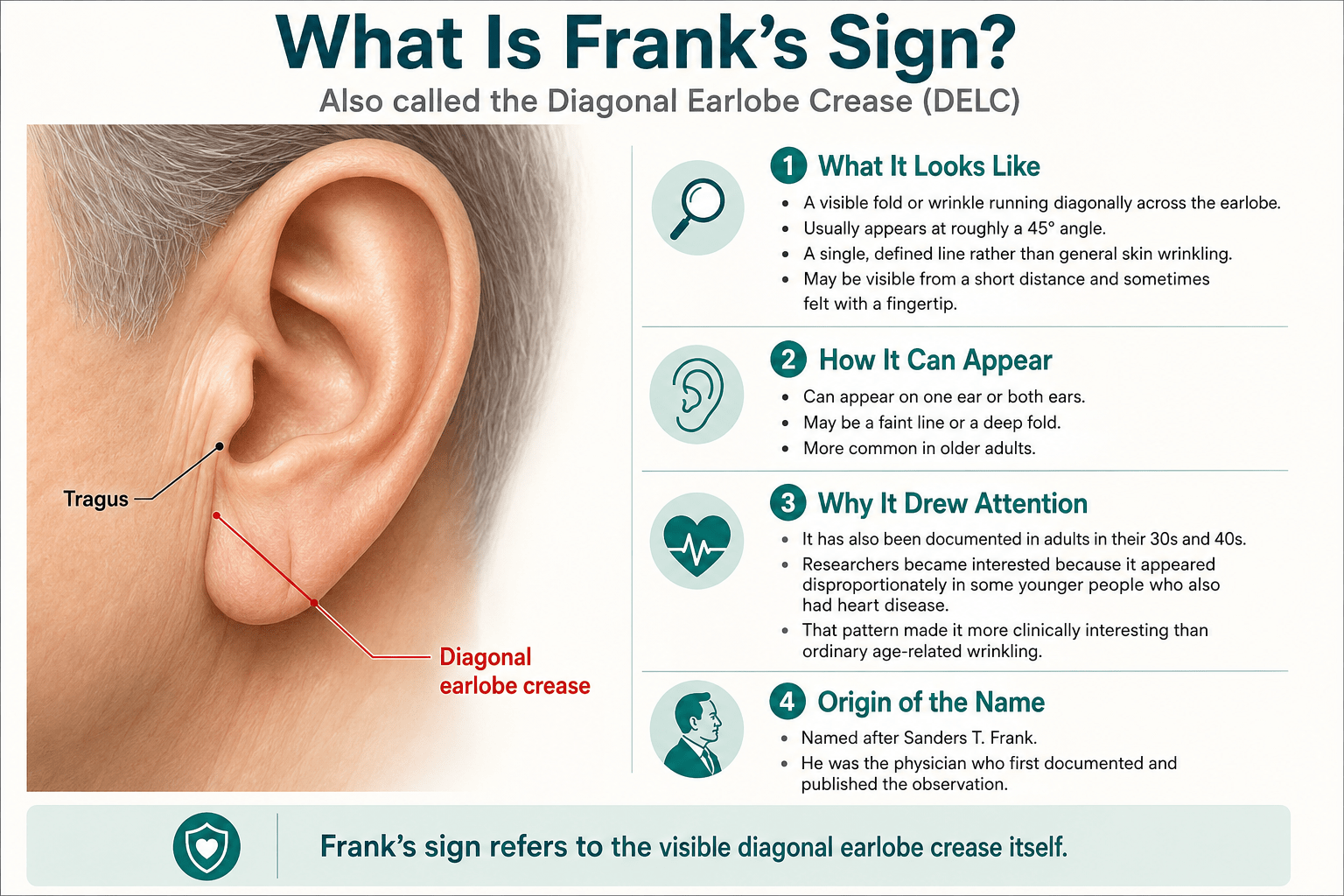
Frank’s sign, also called the diagonal earlobe crease (DELC), is a visible fold or wrinkle that runs diagonally across the earlobe, typically at roughly a 45-degree angle from the top of the tragus (the small cartilage flap in front of the ear canal) down toward the back edge of the lobe.
It is distinct from the general, all-over wrinkling that comes with age; the diagonal crease is a single, defined line, often deep enough to be visible from a short distance and sometimes deep enough to feel with a fingertip.
It can appear on one ear or both. It can appear as a faint line or a deep fold. It is more common in older adults but has been documented in people as young as their thirties and forties, which is part of what caught researchers’ attention: a crease that increases in prevalence with age is expected, but a crease that shows up disproportionately in younger people who also happen to have heart disease is a different, more clinically interesting pattern.
The name comes directly from Sanders T. Frank, the physician who first documented and published the observation.
How Did Dr. Frank Make the Discovery?
Sanders T. Frank was not a cardiologist chasing a grand theory. He was a practicing physician who noticed a pattern the way careful clinicians often do, by seeing the same small detail repeat itself across enough patient encounters that it stopped looking random.
In his 1973 letter to the American Heart Journal, he described the diagonal earlobe crease appearing in a notable number of his patients with coronary artery disease and proposed, carefully and without overstating it, that the finding might have some correlation worth investigating further.
What happened next is a fairly unusual story in medical history: instead of being ignored or dismissed, the observation triggered a wave of formal investigation. Over the following decades, researchers around the world ran their own studies, autopsy correlations, and eventually meta-analyses trying to determine whether Frank’s casual clinical observation held up under rigorous scrutiny.
Some studies found a strong association. Others found a weaker one, or one that disappeared once age was properly accounted for. The debate itself became a small but persistent thread in cardiology literature, revived periodically whenever a new study added fresh data to either side.
That fifty-year back-and-forth is exactly why “myth or fact” is the right framing for this topic. It has never been simply proven or simply debunked. It has been studied, argued over, refined, and is best understood today as a real but limited and imperfect statistical association, not a diagnostic tool and not a fabrication.
Is Frank’s Sign a Myth or a Fact?
For readers who want the verdict before the detail: Frank’s sign is fact, with important limitations.
It is a fact that numerous peer-reviewed studies, including systematic reviews and meta-analyses spanning thousands of patients, have found a statistically significant association between the presence of a diagonal earlobe crease and coronary artery disease, and in some studies, with cardiovascular mortality.
It is also a fact that the association is not perfectly consistent across every study, that it weakens substantially once age is statistically controlled for, that plenty of people with confirmed heart disease do not have the crease, and that plenty of people with the crease never develop heart disease.
It is not a diagnostic sign. It is not a home test. It is a soft clinical clue, most useful as one small data point among many, not as a standalone predictor.
The myth version of this story is the one that shows up in viral health content: “doctors can predict your heart attack by looking at your ear.” That version overstates a real, modest, imperfect association into a magic trick, and it is worth being precise about the difference.
“What I find most useful about Frank’s sign is not the sign itself, it’s what it represents about how the body gives us small, honest clues if we pay attention. I am not a physician, and this is not medical advice, but as someone who has spent years helping women pay closer attention to their own bodies, I love that this particular finding exists at all. It is a reminder that skin, of all things, can reflect what is happening in blood vessels we cannot see. That is worth noticing, even if it is not worth panicking over.”
Terry Tateossian, Founder of The House of Rose
Free 28-Day Fascia Reset Email Course
Get our Free 28-day email course series to help with 1 or 2 exercises per day to release your fascia. One short lesson per day. Two minutes to read each.
What Does the Research Show?
Early and Mid-Era Studies (1970s Through 1990s)
Following Frank’s original 1973 observation, a series of studies through the following decades generally supported an association between the diagonal earlobe crease and coronary artery disease, with some studies reporting notably elevated odds of coronary disease in patients presenting with the crease compared to those without it.
Meta-Analytic Evidence
A widely cited meta-analysis published in the mid-1990s pooled results across multiple studies and found a statistically significant association between diagonal earlobe crease and coronary artery disease, supporting the idea that the observation was not simply a product of a few outlier studies.
The Twin Study That Complicated the Picture
One of the most methodologically interesting studies on this topic used twin pairs, comparing identical twins where one twin had the crease and the other did not, allowing researchers to control for shared genetics and much of shared environment.
This design found that the twin with the crease had a meaningfully higher likelihood of cardiovascular disease and mortality than their genetically identical sibling without the crease, which is a stronger piece of evidence than a simple population correlation, since it controls for so many confounding factors that plague other observational designs.
The Age Confound
Multiple studies have shown that when age is statistically controlled for, the strength of the association between earlobe crease and coronary disease weakens considerably, and in some analyses becomes non-significant.
This is one of the most important nuances in the entire body of research: earlobe creases become more common with age, and coronary artery disease also becomes more common with age, so some (though evidently not all) of the raw association reflects the fact that older people are more likely to have both, independent of any direct biological link between the two.
Autopsy and Angiographic Correlation Studies
Several studies have directly correlated the presence of the crease with angiographically confirmed coronary artery disease (meaning disease confirmed by direct imaging of the coronary arteries, the strongest form of evidence in this literature) and found a positive association, lending weight to the idea that the connection is not purely an artifact of aging.
The Honest Summary of the Evidence
The overall body of research supports a real, positive, but modest association between diagonal earlobe crease and coronary artery disease, strongest in studies with rigorous designs (twin studies, angiographic correlation) and weaker or attenuated in studies that do not adequately control for age.
It is best understood as one contributing clue that correlates with cardiovascular risk, not as an independent diagnostic marker.
Why Might an Earlobe Crease Relate to Heart Disease?
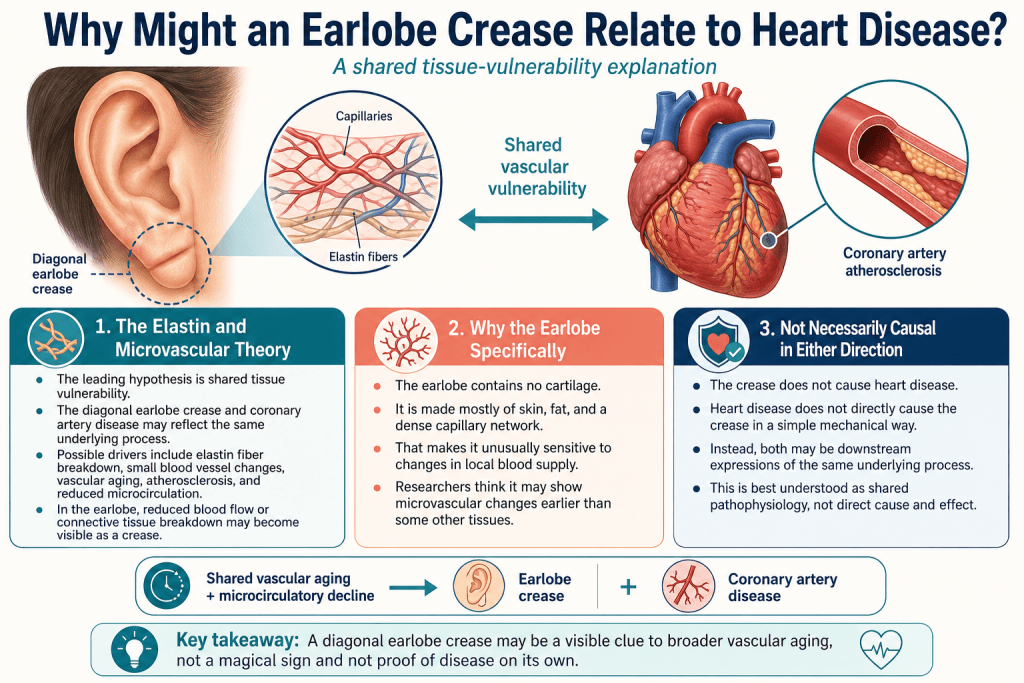
The leading biological explanation is not mystical or magical: it comes down to shared tissue vulnerability.
The Elastin and Microvascular Theory
The most widely supported hypothesis proposes that the diagonal earlobe crease and coronary artery disease share a common underlying process: the breakdown of elastin fibers and small blood vessel changes that occur with vascular aging, atherosclerosis, and reduced microcirculation.
The earlobe is a small, cartilage-poor structure with a dense network of tiny blood vessels, and reduced blood flow or connective tissue / fascia breakdown in this specific area may manifest visibly as a crease, acting as a small, visible window into changes happening more broadly in the body’s small vessels.
Why the Earlobe Specifically
Unlike most of the ear, the earlobe contains no cartilage, just skin, fat, and a dense capillary network. This makes it unusually sensitive to changes in local blood supply compared to more cartilage-supported areas of the ear, which is part of why researchers believe it may show early signs of microvascular changes before they become clinically obvious elsewhere.
Not Necessarily Causal in Either Direction
It is important to be precise about the relationship: the crease does not cause heart disease, and heart disease does not directly cause the crease in a simple mechanical sense.
Instead, both may be downstream expressions of the same underlying process, chronic vascular aging and micro-circulatory decline, occurring in different tissues of the same body at roughly the same time. This is sometimes described as a shared pathophysiology rather than a direct causal chain.
How Are Frank’s Sign Creases Graded?
Researchers have developed grading systems to standardize how the crease is documented in clinical studies, most commonly a scale used to describe severity:
- Grade 0: No crease present.
- Grade 1: A faint, partial crease visible only on close inspection.
- Grade 2: A clear, complete diagonal crease across the lobe, moderate depth.
- Grade 3: A deep, well-defined crease, sometimes described as a “wrinkle” you could catch a fingernail on.
Some study designs have found that more severe grades (deeper, more complete creases) correlate with a stronger association to coronary artery disease than faint, partial creases, which is consistent with the idea of the crease reflecting a graded underlying vascular process rather than a simple present-or-absent marker.
Bilateral creases (present on both ears) have also been associated with a somewhat stronger correlation in some studies compared to a crease on only one ear, though this finding is less consistently replicated than the general presence-versus-absence finding.
Free 28-Day Fascia Reset Email Course
Get our Free 28-day email course series to help with 1 or 2 exercises per day to release your fascia. One short lesson per day. Two minutes to read each.
Who Is Most Likely to Have Frank’s Sign?
- Age: Prevalence increases steadily with age, consistent with a connective tissue and microvascular aging process. It is uncommon in people under 30 and becomes increasingly common through the 50s, 60s, and beyond.
- Established cardiovascular risk factors: People with hypertension, diabetes, high cholesterol, a history of smoking, and obesity, all established coronary artery disease risk factors, appear to have a higher prevalence of the crease in several studies, consistent with the shared-vascular-aging hypothesis.
- Sex differences: Some studies have found a modestly higher prevalence in men, though the difference is not dramatic, and the finding has been documented in both sexes.
- Ethnic and population variation: Some studies suggest prevalence and the strength of the crease-to-heart-disease association may vary somewhat across different population groups, though this is a less thoroughly studied area of the literature and specific conclusions should be held loosely.
- Sleep position and mechanical factors: A secondary hypothesis, less central to the mainstream cardiovascular literature but worth acknowledging, suggests that repeated mechanical compression of the earlobe (for example, consistently sleeping on the same side for years) could theoretically contribute to crease formation independent of any cardiovascular process. This has not been rigorously studied and remains speculative, but it is one reason the sign is not treated as perfectly specific to cardiovascular causes.
What Is Frank’s Sign Not?
- It is not a diagnostic test: No physician diagnoses coronary artery disease based on an earlobe crease alone. It is, at most, one small observational data point that might prompt a more thorough risk conversation, never a replacement for actual cardiovascular testing (blood pressure, cholesterol panels, stress tests, imaging, and a full clinical history).
- It is not proof you will have a heart attack: Having the crease does not mean a heart attack is coming. It reflects a statistical association across populations, not an individual prediction. Many people live long healthy lives with a visible crease and no cardiovascular disease.
- It is not proof you are safe if you don’t have it: The absence of a crease does not rule out coronary artery disease. Plenty of people with confirmed heart disease, including some with severe disease, have no visible earlobe crease at all.
- It is not unique to heart disease: A small number of other conditions and processes have been anecdotally or occasionally associated with earlobe creasing in the broader dermatological and clinical literature, and simple aging-related skin changes alone can produce a crease with no cardiovascular significance whatsoever.
- It is not a modern myth invented for viral content, but it is often presented that way: The frustrating part of this topic online is that it frequently gets flattened into a viral “one weird trick to predict your heart attack” framing that strips out every nuance described above. The actual science is more interesting and more useful than the viral version, precisely because it is honest about its own limitations.
Should You Be Worried If You Have a Crease?
A single observation of Frank’s sign, on its own, in someone with no other cardiovascular risk factors and no symptoms, is not a reason for alarm. It is, at most, a reason for mild curiosity and perhaps a nudge to make sure you are current on standard cardiovascular screening for your age, which is worth doing regardless of any earlobe finding.
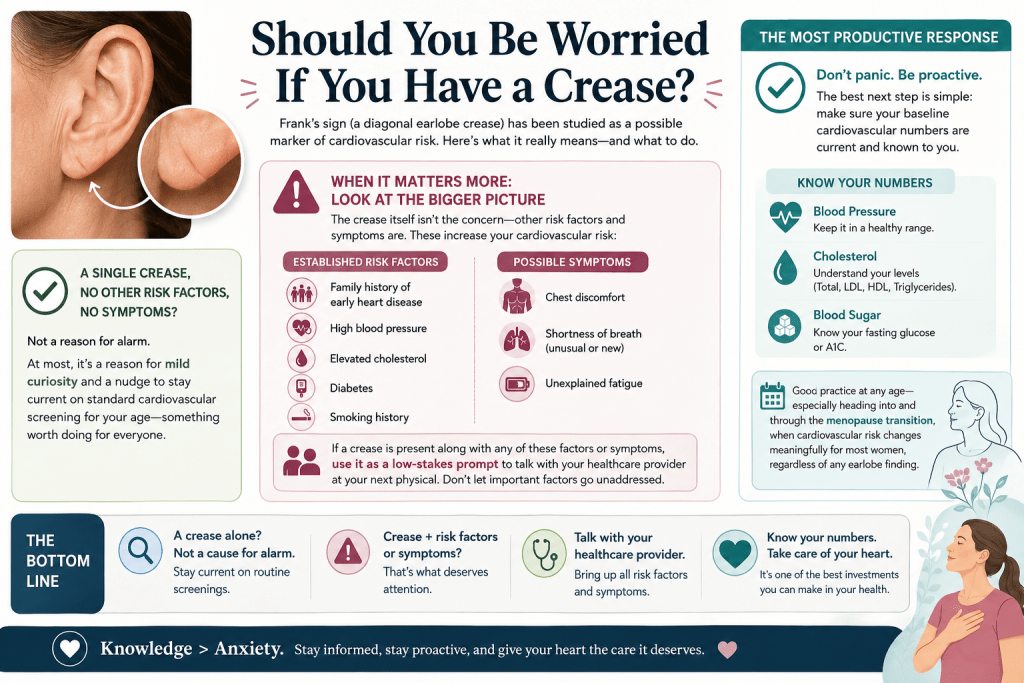
The situation is different if the crease appears alongside other established risk factors: a family history of early heart disease, high blood pressure, elevated cholesterol, diabetes, a smoking history, or symptoms like chest discomfort, unusual shortness of breath, or unexplained fatigue.
In that context, the earlobe finding is not the reason for concern, the other risk factors and symptoms are, but noticing the crease can be a reasonable, low-stakes prompt to bring those factors up explicitly at your next physical rather than letting them go unaddressed.
The most productive response to noticing Frank’s sign in yourself is not anxiety. It is simply making sure your baseline cardiovascular numbers (blood pressure, cholesterol, blood sugar) are current and known to you, which is good practice at any age and especially so heading into and through the menopause transition, when cardiovascular risk profile changes meaningfully for most women regardless of any earlobe finding.
Free 28-Day Fascia Reset Email Course
Get our Free 28-day email course series to help with 1 or 2 exercises per day to release your fascia. One short lesson per day. Two minutes to read each.
What Should You Do If You Notice Frank’s Sign?
- Do not panic: A single physical sign is not a diagnosis.
- Check your baseline numbers: If it has been more than a year since you had blood pressure, cholesterol, and blood sugar checked, schedule that appointment regardless of the earlobe finding.
- Review your family history: Early heart disease in first-degree relatives (before roughly age 55 in men, 65 in women) is a more significant risk factor than the earlobe crease itself and worth discussing directly with your doctor.
- Mention it to your doctor if you want to, but don’t lead with anxiety: It is completely reasonable to say “I read that this might be associated with heart disease risk, can we talk about my overall cardiovascular picture,” which uses the observation productively without overstating its individual significance.
- Focus on the modifiable risk factors that matter regardless of any earlobe finding: Blood pressure, cholesterol, blood sugar, smoking status, physical activity, and sleep quality are the levers that move cardiovascular risk, and they matter identically whether or not you have a visible crease.
How Does Frank’s Sign Relate to Midlife Women?
Cardiovascular disease risk changes substantially for women through the menopause transition, and this context matters for how to think about a finding like Frank’s sign.
Estrogen has a protective effect on the cardiovascular system through multiple mechanisms, including favorable effects on cholesterol profiles and blood vessel function. As estrogen declines through perimenopause and menopause, this protective effect diminishes, and cardiovascular disease risk in women rises accordingly, closing much of the gap that exists between men’s and women’s heart disease rates at younger ages.
This is one of the most under-discussed aspects of the menopause transition: heart disease, not breast cancer, is the leading cause of death for women in the United States, and the years around menopause are when that risk begins its most significant climb.
This context is exactly why a finding like Frank’s sign, imperfect and limited as it is, can still serve a useful purpose for midlife women specifically: not as a diagnostic tool, but as a small, visible prompt that lands at precisely the life stage when cardiovascular vigilance matters far more than it did a decade earlier.
If noticing a crease in the mirror is what finally prompts someone to schedule the cholesterol panel or blood pressure check they have been putting off, it has done something useful regardless of what the underlying research ultimately proves about the sign itself.
What Other Physical Signs Do Doctors Watch For?
Frank’s sign is one of several external physical findings that have been studied for possible associations with cardiovascular or metabolic health, though all share the same core caveat: none are diagnostic on their own.
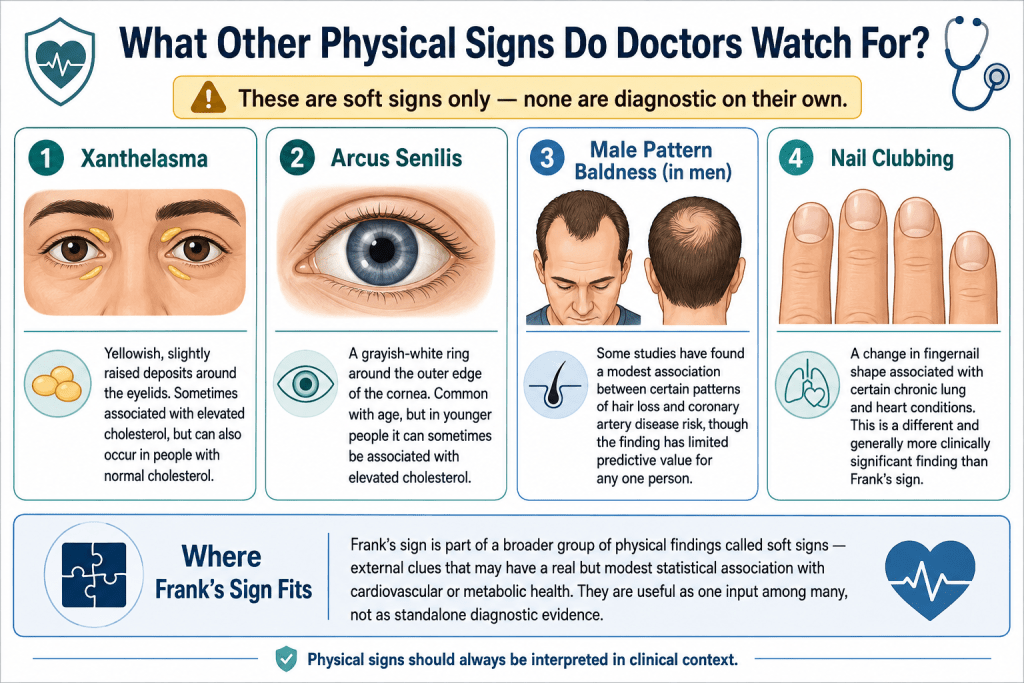
- Xanthelasma: Yellowish, slightly raised deposits around the eyelids, associated with elevated cholesterol in some cases, though also occurring in people with normal cholesterol.
- Arcus senilis: A grayish-white ring around the outer edge of the cornea, more common with age and, in younger people, sometimes associated with elevated cholesterol.
- Male pattern baldness (in men): Some studies have found a modest association between certain patterns of hair loss and coronary artery disease risk, again with the same caveats about individual predictive value.
- Nail clubbing: A change in the shape of the fingernails, associated with certain chronic lung and heart conditions, though a different and generally more clinically significant finding than the earlobe crease.
Frank’s sign fits into this broader category of “soft signs,” physical findings with a real but modest statistical association to underlying disease, useful as one input among many rather than as standalone diagnostic evidence.
Free 28-Day Fascia Reset Email Course
Get our Free 28-day email course series to help with 1 or 2 exercises per day to release your fascia. One short lesson per day. Two minutes to read each.
What Are Common Misconceptions About Frank’s Sign?
- Misconception: “If I have the crease, I definitely have heart disease”. False. It is a statistical association across populations, not an individual diagnosis.
- Misconception: “If I don’t have the crease, my heart is fine”. False. Absence of the sign does not rule out coronary artery disease.
- Misconception: “This is a scientifically debunked myth”. Also false, and this is the misconception this article was specifically written to correct. The research base, while imperfect and confounded by age in some studies, does show a real, statistically significant association, including in more rigorous designs like the twin study described in Section 4.
- Misconception: “Doctors use this as a routine screening tool”. Not really. While some physicians may note the finding as part of a general physical exam, it is not part of standard cardiovascular risk screening protocols and is not used as a formal diagnostic criterion in modern cardiology guidelines.
- Misconception: “It only appears in old age, so it’s just wrinkles”. Partially false. While prevalence rises with age, the finding has been documented in younger people, and the age-independent portion of the association (as shown in the twin study) is exactly what has kept researchers interested for fifty years.
How Can You Combine Awareness With the Broader THOR Framework?
Cardiovascular health during the menopause transition deserves the same proactive attention THOR encourages for fascia, movement, and metabolic health.
- Combine with movement: Regular movement supports cardiovascular health while also helping maintain mobility, circulation, and overall physical function. Alongside your movement routine, simple vagus nerve exercises can add a nervous system regulation component that supports the shift into a calmer, more restorative state.
- Combine with nutrition: Food choices influence several modifiable cardiovascular risk factors, including cholesterol, blood pressure, blood sugar, and body composition. A Mediterranean-style diet provides a practical framework centered on vegetables, whole grains, legumes, healthy fats, and other nutrient-dense foods. It also helps to understand how perimenopause can affect weight as hormonal and metabolic changes begin influencing body composition.
- Combine with sleep: Consistent, restorative sleep belongs in the cardiovascular health conversation alongside movement and nutrition. Building a practical midlife sleep routine can help address the hormonal, behavioral, and environmental factors that often disrupt sleep during perimenopause and menopause.
- Combine with stress management: Chronic stress can affect cardiovascular health through changes in autonomic activity and other physiological pathways. Small practices are often easier to sustain than an elaborate stress-management routine, and incorporating tiny stress-relief habits throughout the day can create regular opportunities to interrupt tension and support recovery.
Free 28-Day Fascia Reset Email Course
Get our Free 28-day email course series to help with 1 or 2 exercises per day to release your fascia. One short lesson per day. Two minutes to read each.
Frequently Asked Questions
Is Frank’s sign a real medical finding, or is it a myth?
It is real. Numerous peer-reviewed studies, including a widely cited meta-analysis and a methodologically strong twin study, have found a statistically significant association between the diagonal earlobe crease and coronary artery disease. It is not a myth, but it is also not a diagnostic test, which is the nuance most viral content leaves out.
What exactly does Frank’s sign look like?
A diagonal crease or fold running across the earlobe at roughly a 45-degree angle, from the top near the tragus down toward the outer edge of the lobe. It is distinct from general age-related wrinkling and typically presents as a single, more defined line.
Can Frank’s sign appear on only one ear?
Yes. It can appear unilaterally (one ear) or bilaterally (both ears). Some research suggests bilateral presentation may correlate somewhat more strongly with cardiovascular risk than a crease on only one side, though this finding is less consistently replicated across studies than the general presence-versus-absence association.
Does having Frank’s sign mean I will have a heart attack?
No. It reflects a population-level statistical association, not an individual prediction. Many people with the crease never develop heart disease, and having the crease alone is not a reason for alarm, particularly without other risk factors or symptoms present.
Is Frank’s sign reversible?
There is no established treatment or intervention specifically aimed at reversing the crease itself, since it appears to reflect an underlying tissue and microvascular aging process rather than a standalone cosmetic issue. Addressing modifiable cardiovascular risk factors (blood pressure, cholesterol, blood sugar, smoking, activity level) is the meaningful action to take, not attempting to treat the earlobe itself.
At what age does Frank’s sign typically appear?
Prevalence increases with age and is uncommon before roughly age 30, though it has been documented in younger adults, particularly those with other cardiovascular risk factors present.
Why would an earlobe crease have anything to do with the heart?
The leading explanation involves shared vascular aging: the earlobe has a dense capillary network and no cartilage, making it sensitive to microvascular changes, and researchers believe the same elastin breakdown and reduced blood flow processes that contribute to atherosclerosis in the coronary arteries may also produce visible changes in the earlobe’s small vessels and connective tissue.
Do doctors check for Frank’s sign during checkups?
It is not part of standard, formal cardiovascular risk screening protocols in modern medicine, though an observant physician might note it as part of a general physical exam. It should never replace standard testing like blood pressure measurement, cholesterol panels, or other cardiovascular assessments.
Is Frank’s sign more common in men or women?
Some studies show a modestly higher prevalence in men, but the finding has been well documented in both sexes, and its cardiovascular association has been studied in women specifically as well.
Should I ask my doctor about this if I notice it?
It is reasonable to mention it, particularly as a prompt to review your overall cardiovascular risk factors and screening status, but it should be framed as one small observation worth discussing, not a cause for urgent concern on its own.
What is the difference between Frank’s sign and just having wrinkled earlobes from age?
General age-related skin wrinkling tends to be diffuse and irregular across the ear, while Frank’s sign specifically refers to a distinct, diagonal crease. Simple aging-related skin changes alone, without any cardiovascular significance, can also produce a crease, which is part of why the sign is not perfectly specific to heart disease.
Does this apply differently to women going through menopause?
The underlying biology of Frank’s sign is not sex-specific, but its practical relevance may be heightened for midlife women because cardiovascular disease risk rises substantially through the menopause transition as estrogen’s protective cardiovascular effects diminish, making this a particularly relevant life stage to stay current on cardiovascular screening regardless of any earlobe finding.
References
- Frank, S. T. (1973). Aural sign of coronary-artery disease. New England Journal of Medicine, 289(6), 327-328.
- Elliott, W. J. (1983). Ear lobe crease and coronary artery disease: 1,000 patients and review of the literature. American Journal of Medicine, 75(6), 1024-1032.
- Elliott, W. J., & Powell, L. H. (1996). Diagonal earlobe creases and prognosis in patients with suspected coronary artery disease. American Journal of Medicine, 100(2), 205-211.
- Lichstein, E., Chadda, K. D., Naik, D., & Gupta, P. K. (1974). Diagonal ear-lobe crease: Prevalence and implications as a coronary risk factor. New England Journal of Medicine, 290(11), 615-616.
- Christoffersen, M., Frikke-Schmidt, R., Schnohr, P., Jensen, G. B., Nordestgaard, B. G., & Tybjærg-Hansen, A. (2014). Visible age-related signs and risk of ischemic heart disease in the general population: A prospective cohort study. Circulation, 129(9), 990-998.
- Kenny, D. A., Fajardo, L. F., & Silver, E. (1979). Frank’s sign: A correlation with sudden death and myocardial infarction. Angiology, 30(5), 312-317.
- Nazari, M., & Ebrahimi, S. (2007). Earlobe crease and coronary artery disease. Iranian Cardiovascular Research Journal, 1(2), 89-92.
- Mehta, J., Hamby, R. I., & Correa, R. J. (1975). Ear lobe crease as a marker of coronary artery disease: An autopsy study. American Heart Journal, 90(6), 795-796.
- Wright, K. E., Skinner, S., & Zhu, S. (2023). The musculoskeletal syndrome of menopause. Climacteric, 26(4), 366-371.
- American Heart Association. (2023). Heart disease and stroke statistics update. Circulation, 147(8), e93-e621.
Disclaimer: This article is for educational and informational purposes only and does not constitute medical advice, diagnosis, or treatment. Frank’s sign, or a diagonal earlobe crease, has been associated with coronary artery disease in some studies, but it cannot diagnose heart disease or predict a heart attack on its own. If you notice an earlobe crease, have cardiovascular risk factors, or experience symptoms such as chest discomfort, shortness of breath, dizziness, or unusual fatigue, consult a qualified healthcare provider for appropriate evaluation and screening.
Free 28-Day Fascia Reset Email Course
Get our Free 28-day email course series to help with 1 or 2 exercises per day to release your fascia. One short lesson per day. Two minutes to read each.

Terry Tateossian is a Menopause Lifestyle Medicine Coach, Certified Personal Trainer & Nutritionist and the Founder of THOR: The House of Rose, a wellness brand serving women over 40 through retreats, coaching, macro-nutrition and community. As 25-year founder and entrepreneur, Terry spent two and a half decades building and running successful start-up businesses, an experience that put her on the front line of founder burnout long before she could name it. After facing serious health challenges, early onset menopause, and emotional eating while running her agency and raising two children, Terry rebuilt her health in her 40s and lost more than 80 pounds through evidence-based nutrition, training, and mindset work. Today, she helps women get strong, improve confidence, support hormone health, and create a stronger second half of life. Terry has been featured in major media outlets and is available for podcasts, expert commentary, brand collaborations, and speaking engagements on midlife health, reinvention, emotional eating, menopause wellness, and strength training for longevity. Get her free macro calculator (her cookbook companion) to start your journey to back to health.