
 By Team THOR
Free 28-Day Fascia Reset Email Course
Get our Free 28-day email course series to help with 1 or 2 exercises per day to release your fascia. One short lesson per day. Two minutes to read each.
Perimenopause Bloating: Why It Happens & How to Get Rid of It
Nora is fifty-three and she has a rule about jeans. She buys them one size up and she buys them with stretch, because the pair that buttons comfortably at seven in the morning will not button at four in the afternoon. She has been tracking this for about two years now, and the pattern is reliable enough to set a watch by. She wakes up flat, she is slightly rounded by eleven, and by late afternoon her stomach pushes forward hard enough that a woman at her office once congratulated her.
Nothing about her eating has changed in over a decade. Same oatmeal, same salad, same grilled chicken, same two coffees. She has cut out dairy, then gluten, then raw vegetables, then beans, then all four at once. She spent nine weeks on an elimination protocol she found online and lost four pounds and none of the swelling. Her bloodwork is clean. Her doctor told her it was probably stress and suggested she try to relax.
The food was never really the variable. Somewhere in the last three years the machinery that processes her food changed, quietly, on a hormonal schedule nobody handed her. Her gut is moving slower than it used to. Her body is holding water differently than it used to. The bacteria in her large intestine are producing a different mix of gas than they did at forty. She is eating the same breakfast into an entirely different system.
Medical Disclaimer: This article is educational and is not a substitute for personalized medical advice. Bloating that is persistent, severe, or accompanied by any of the warning signs listed in Section 10 needs evaluation by a physician. Always talk to your doctor before starting supplements, especially if you take prescription medication.
What Is Menopause Bloating?
Bloating is two separate things that women almost always describe as one. There is the sensation of pressure, fullness, and tightness inside the abdomen, which doctors call bloating. And there is the visible increase in the size of your waist, which doctors call distension. You can have either one without the other. Most women in midlife get both, which is why the experience is so hard to explain at an appointment.
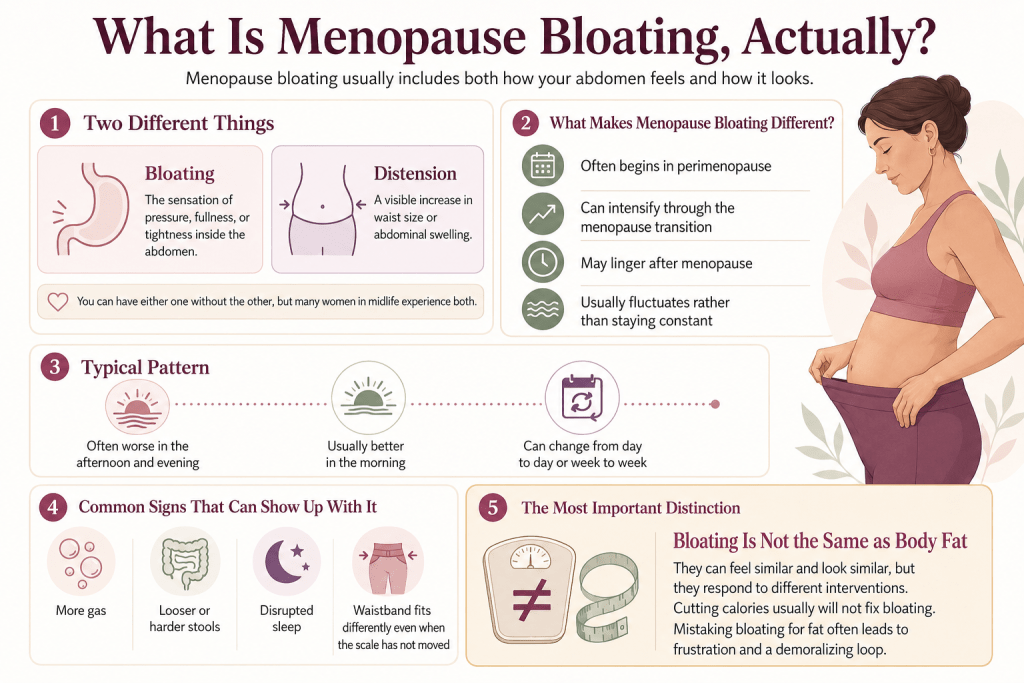
Menopause bloating is the version of this that shows up during perimenopause, intensifies through the menopause transition, and often lingers into the postmenopausal years. It has a signature pattern that separates it from ordinary indigestion. It tends to be worse in the afternoon and evening than in the morning. It tends to fluctuate across days or weeks rather than staying constant. And it tends to arrive alongside other changes you may not have connected to it, including looser or harder stools, more gas, disrupted sleep, and a waistband that fits differently even when the scale has not moved.
That last part matters more than anything else in this article. Bloating and body fat feel identical from the inside and look similar in the mirror, but they respond to completely different interventions. Women spend months cutting calories to fix something that calorie restriction cannot touch, and then conclude their metabolism is broken. It is a demoralizing loop, and it usually starts with a misdiagnosis in the bathroom mirror.
“I have watched hundreds of women start a fat loss phase because of how their stomach looked at nine o’clock at night. That is the single most expensive mistake in midlife nutrition. You end up eating less, which slows your gut down further, which makes the bloating worse, which convinces you to eat even less. I ask every new client to photograph her midsection first thing in the morning for one week before we change a single thing about her food. About half of them discover their body composition was never the problem.”
Terry Tateossian, Founder of The House of Rose
Why Does Menopause Bloating Happen?
There are four distinct mechanisms at work, and most women have more than one running at the same time. Understanding which ones apply to you is what turns a frustrating symptom into a solvable problem.
Estrogen, Fluid Regulation, and the Puffy Kind of Bloat
Estrogen influences how your body handles sodium and water. It affects the hormonal signals that govern fluid balance, including the way your kidneys decide what to keep and what to release, and it shifts the threshold at which your body triggers thirst and water conservation. Research on fluid regulation across the menopause transition has documented that these regulatory set points change as estrogen levels fall and fluctuate, which affects total body water and how it is distributed between your cells and the space around them.
In practical terms, that means the same salty restaurant meal that produced no visible effect at thirty-five can leave you visibly puffy for two days at fifty-two. Fluid bloat has a different texture than gas bloat. It is diffuse rather than localized, it often shows up in your fingers and ankles as well as your midsection, and it tends to be worse the morning after a high-sodium day rather than at the end of a long day of eating.
The other thing about perimenopause specifically is that estrogen does not decline smoothly, it swings hard in both directions. A cycle with a high estrogen peak followed by a sharp drop can produce a week of fluid retention that resolves on its own and then returns the following month. This is one of the reasons perimenopause bloating feels so random compared to postmenopausal bloating, which is usually steadier.
Progesterone, Gut Motility, and the Slow-Transit Kind of Bloat
Progesterone relaxes smooth muscle. That is a useful property during pregnancy and an inconvenient one for your digestive tract, because your intestines are made of smooth muscle. Higher progesterone slows the wave-like contractions that move food through your system. Classic research on gastrointestinal transit across the menstrual cycle established this link decades ago by measuring how transit time shifted between the follicular and luteal phases.
During perimenopause, progesterone typically declines earlier and more steeply than estrogen. You might reasonably expect that to speed everything up. In practice, the picture is messier, because the cycles where you do not ovulate produce almost no progesterone at all while the cycles where you do can produce a strong luteal surge. The result is a digestive system that behaves inconsistently from one month to the next, which is exactly what women describe.
Slow transit produces bloating in a specific way. Food and residue sit longer in the colon. Bacteria have more time to ferment what is there, and fermentation produces gas. Gas in a slow-moving colon does not clear efficiently, so pressure builds and the abdomen distends. This is why constipation and bloating almost always travel together in midlife, and why treating the constipation frequently resolves the bloating without any other changes.
Spotlight: The Estrobolome and Your Gut Bacteria
Here is the mechanism most women have never heard of, and it is the one that connects hormones and digestion in both directions.
A subset of the bacteria in your gut produce an enzyme called beta-glucuronidase. Its job in this context is to act on estrogens that your liver has packaged for excretion, freeing them so they can be reabsorbed into circulation instead of leaving the body. Researchers named this collection of estrogen-handling microbes the estrobolome. It is a real and active part of how much circulating estrogen you actually have.
Studies comparing premenopausal and postmenopausal women have found meaningful differences in gut microbial composition, including reduced overall microbial diversity after menopause and shifts in the specific species that carry out this estrogen recycling. A large community-based analysis found that postmenopausal women differed significantly from premenopausal women in overall microbiome composition, with lower abundance of beta-glucuronidase-producing capacity and depletion of species such as Akkermansia muciniphila.
What that means for your stomach is straightforward. A shifting microbial community ferments food differently. Different fermentation produces a different volume and mix of gas. The exact same bowl of lentils you have eaten for twenty years can now generate noticeably more gas than it used to, not because anything is wrong with you, but because the population doing the digesting has changed.
There is a hopeful side to this. Microbial communities respond to what you feed them faster than almost any other system in your body. Fiber diversity, fermented foods, and protein adequacy all shift the picture within weeks, not years. If you want to go deeper on the fiber side of this, our guide to fibermaxxing covers how to build intake up without triggering the exact symptom you are trying to fix.
The Fourth Mechanism: Body Composition Change
This one is not bloating, but it gets counted as bloating constantly, so it belongs here.
The menopause transition is associated with a measurable shift in where the body stores fat. Longitudinal research tracking women through the transition has documented increases in fat mass and a redistribution toward the abdomen, with visceral fat around the organs increasing during the years surrounding the final menstrual period. Visceral fat sits behind the abdominal wall and pushes it outward. It creates a firm, rounded profile that does not fluctuate across the day.
That last detail is your diagnostic tool. Bloating changes within hours, while body fat stays put for months. If your stomach measures the same at 7 a.m. and 9 p.m., you are looking at body composition rather than bloating, and the solution is completely different. Understanding the factors behind perimenopause weight gain can help you address that change through the appropriate body-composition strategies.
Free 28-Day Fascia Reset Email Course
Get our Free 28-day email course series to help with 1 or 2 exercises per day to release your fascia. One short lesson per day. Two minutes to read each.
How Can You Tell Whether You Have Gas Bloating, Fluid Bloating, or Visceral Fat Gain?
Before you change anything, spend three days identifying which pattern you are dealing with. The interventions barely overlap.
| Gas Bloating | Fluid Bloating | Visceral Fat Gain | |
|---|---|---|---|
| Timing | Builds through the day, worst after meals and in the evening | Worse the morning after high sodium, alcohol, or a poor night’s sleep | Constant, no daily fluctuation |
| Feel | Tight, pressured, sometimes painful, relieved by passing gas | Soft, puffy, spongy to press | Firm, does not indent |
| Location | Localized to the abdomen, often lower | Abdomen plus fingers, face, ankles | Abdomen only, above and around the navel |
| Waist Change | 1 to 4 inches within a single day | 1 to 2 inches, holds for 24 to 72 hours | Gradual over months |
| Scale Change | Little to none | 2 to 5 pounds overnight, resolves | Slow, sustained upward drift |
| Responds To | Fiber timing, FODMAP adjustment, probiotics, walking, transit support | Sodium and potassium balance, hydration, sleep, alcohol reduction | Protein, resistance training, sustained energy deficit |
| Timeline to Improvement | 3 to 14 days | 2 to 5 days | 12 weeks or more |
Here is the three-day test I give clients. Every morning after using the bathroom and before eating or drinking anything, measure your waist at the navel with a soft tape and note the number. Do it again at 9 p.m. Also step on the scale each morning. Three days gives you a pattern.
A daily swing of two inches or more with a stable morning number points to gas. A morning number that jumps two to four pounds and two inches after specific days points to fluid. A morning number that barely moves between morning and night but has crept up over months points to composition. Many women find they have two of the three at once, and that is normal.
“The tape measure is more useful than the scale for this. I went through a stretch in my forties where I was convinced I had gained fifteen pounds around my middle in six weeks. I measured morning and night for a week and found a consistent three-inch daily swing. Three inches of swing is not fat. Fat does not arrive at two in the afternoon and leave overnight. Once I stopped treating it as a fat problem and started treating it as a digestion problem, it took about a month to resolve.”
Terry Tateossian, Founder of The House of Rose
How Long Does Menopause Bloating Last?
This is one of the most searched questions in this topic, and the honest answer has two parts.
The perimenopausal phase of bloating, the erratic kind that comes and goes with hormonal swings, generally tracks with the perimenopause transition itself. For most women that is somewhere between four and eight years, though it varies widely. Bloating during this window is typically worst in the late transition, when hormone fluctuations are largest.
Postmenopausal bloating behaves differently. Once hormone levels settle at a consistently lower baseline, the fluid-driven fluctuation usually calms down. What often persists is the slower gut transit and the altered microbiome, which are structural rather than cyclical. That is the good news buried in the question, because structural causes respond well to structural solutions. Slow transit responds to fiber, hydration, movement, and magnesium. An altered microbiome responds to dietary diversity and targeted probiotics.
In my coaching practice, women who address transit and microbiome directly usually see meaningful change within two to four weeks and substantial change by eight to twelve weeks. Women who only wait it out often report bloating that continues for years past their final period, not because menopause is still causing it, but because the downstream habits never changed.
If your bloating started abruptly, has been worsening steadily for more than three weeks, or is accompanied by any warning sign in Section 10, the timeline question is the wrong one to be asking and you should get it evaluated by a physician.
Which Bloating Triggers Do Women Commonly Miss During Menopause?
Hormones set the stage. These are the things that walk onto it.
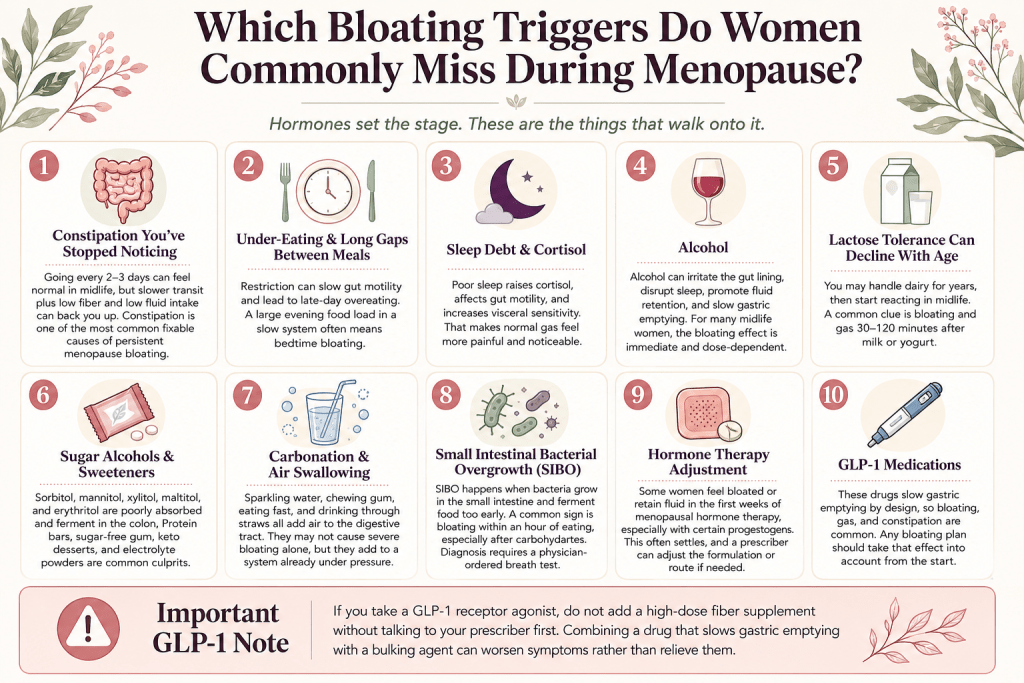
- Constipation You Have Stopped Noticing: Many women in midlife have normalized going every second or third day. Slower transit plus lower fiber plus lower fluid intake is a reliable recipe for a backed-up colon, and a backed-up colon distends. Constipation is the single most common fixable cause of persistent menopause bloating I see in practice.
- Under-Eating and Long Gaps Between Meals: Restriction slows gut motility. It also drives the late-day overeating that dumps a large volume of food into a slow system all at once. Women who eat 900 calories by 6 p.m. and 900 more between 7 and 10 p.m. are almost always bloated at bedtime.
- Sleep Debt and Cortisol: The gut-brain axis is not a wellness slogan; it is a physical nerve and hormone pathway. Poor sleep raises cortisol, cortisol alters gut motility and visceral sensitivity, and heightened visceral sensitivity means you perceive normal gas volumes as painful. Menopause disrupts sleep, and disrupted sleep worsens bloating.
- Alcohol: Alcohol irritates the gut lining, disrupts sleep architecture, drives fluid retention through several routes, and slows gastric emptying. For many midlife women it is the single largest bloating input, and the effect is dose-dependent and immediate. We cover this in detail in alcohol and menopause.
- Lactose Tolerance Declining With Age: Lactase production commonly decreases over the decades. A woman who handled yogurt and milk without issue at thirty-five can develop symptoms at fifty without any other change. The tell is bloating and gas 30 to 120 minutes after dairy.
- Sugar Alcohols and Sweeteners: Sorbitol, mannitol, xylitol, maltitol, and erythritol are poorly absorbed by design, which is why they are low in calories, and they ferment in the colon. Protein bars, sugar-free gum, sugar-free candy, keto desserts, and many electrolyte powders are dense sources. This one catches health-focused women hardest because the offending products are marketed as the good choice.
- Carbonation and Air Swallowing: Sparkling water, chewing gum, eating quickly, and drinking through straws all put air into the digestive tract. None of these cause severe bloating on their own, but they add to a system already under pressure.
- Small Intestinal Bacterial Overgrowth: SIBO occurs when bacteria normally found in the colon grow in the small intestine and ferment food too early. It is more common in people with irritable bowel syndrome, and slower gut transit can increase the risk, making midlife hormonal changes a possible contributor. A common sign is bloating within an hour of eating, especially after carbohydrates, even healthy ones. Diagnosis requires a physician-ordered breath test.
- Hormone Therapy Adjustment: Some women experience bloating and fluid retention in the first weeks of starting menopausal hormone therapy, particularly with certain progestogens. This is a known adjustment effect and usually settles. It is worth a conversation with your prescriber rather than quietly stopping, because formulation and route can often be changed.
- GLP-1 Medications: These medications slow gastric emptying by design, and bloating, gas, and constipation are among the most commonly reported effects. If you are taking one, your bloating protocol needs to account for that from the start, including the key things to know about GLP-1s.
If you take a GLP-1 receptor agonist, do not add a high-dose fiber supplement without talking to your prescriber first. Combining a drug that slows gastric emptying with a bulking agent can worsen symptoms rather than relieve them.
Free 28-Day Fascia Reset Email Course
Get our Free 28-day email course series to help with 1 or 2 exercises per day to release your fascia. One short lesson per day. Two minutes to read each.
Which Food Changes Help Stop Menopause Bloating First?
Start here before you spend money on supplements. Food changes are free, they address the underlying mechanism rather than the symptom, and in my experience they resolve the majority of cases on their own.
Fix Transit Before You Fix Anything Else
If you are not having a comfortable bowel movement most days, that is the first target. Everything else is downstream.
Three levers move transit: fiber, fluid, and movement. They only work together. Fiber without adequate fluid makes constipation worse, which is the most common self-inflicted wound in this entire category.
Aim for 25 to 35 grams of fiber daily from food, built up gradually. Gradually is the operative word. Going from 12 grams to 32 grams in one day will produce spectacular bloating and convince you fiber is the enemy. Add 5 grams per week. Give your microbial community time to adapt.
Prioritize soluble fiber sources, which form a gel and are generally gentler on a sensitive gut than large volumes of insoluble fiber. Oats, chia, ground flax, psyllium, cooked and cooled potatoes, peeled apples, oranges, carrots, and well-cooked squash are good starting points. Raw kale salads and giant bowls of raw cruciferous vegetables are not, at least not at first.
Get Your Protein Up, and Not at Dinner
Most midlife women I work with are eating well under what they need, and most of what they do eat lands after 5 p.m. Protein adequacy supports muscle retention through the transition, but the bloating-relevant part is that a real breakfast anchors the entire day’s eating pattern and prevents the evening volume dump that leaves you distended at bedtime.
Target 30 grams of protein at breakfast. If you are unsure what your overall targets should be, our free macro calculator will give you personalized numbers for protein, fat, and carbohydrate based on your age, weight, activity, and goals. It takes about two minutes and it is the single most useful starting point for any midlife nutrition change.
Balance Sodium With Potassium
Fluid bloating responds to the ratio between these two minerals more than to sodium alone. Most women in midlife eat too much sodium and far too little potassium. Rather than cutting salt aggressively, which backfires for many women who train hard or sweat a lot, raise potassium.
Good sources: potatoes with skin, white beans, lentils, spinach, Swiss chard, avocado, salmon, cantaloupe, bananas, plain yogurt, and tomato products. Aim to include two or three of these daily.
Also drink more water, not less. Under-hydration triggers fluid conservation. It is counterintuitive and it is consistent.
Try a Short, Structured Low-FODMAP Trial
FODMAPs are fermentable carbohydrates found in a long list of otherwise healthy foods including wheat, onions, garlic, apples, pears, beans, cauliflower, and dairy. A low-FODMAP approach has the strongest evidence base of any dietary intervention for bloating and irritable bowel symptoms, and dietary network meta-analyses continue to rank it at the top for symptom improvement.
Two rules if you try it. Keep the restriction phase to two to six weeks, and reintroduce systematically afterward. Long-term FODMAP restriction reduces the fiber diversity your microbiome depends on, which can worsen the underlying problem over time. Treat it as a diagnostic tool with a defined end date.
Working with a dietitian or a coach through the reintroduction phase makes a large difference, because the value is entirely in identifying your specific triggers rather than in avoiding everything forever.
A Worked Example: Rebuilding a Day Around Transit and Protein
Here is what this looks like in practice for a 54-year-old woman, 5’5”, 168 pounds, lightly active, dealing with afternoon gas bloating and every-other-day bowel movements.
| Meal | Before | After | Protein | Fiber |
|---|---|---|---|---|
| 7 a.m. | Coffee | Coffee plus 16 oz water | 0 g | 0 g |
| 8 a.m. | Nothing | 2 eggs, 1 cup Greek yogurt, 1 tbsp ground flax, ½ cup berries | 34 g | 7 g |
| 12 p.m. | Large raw kale salad, chicken | Roasted vegetable and chicken bowl over cooled quinoa, olive oil, ½ avocado | 35 g | 11 g |
| 3 p.m. | Protein bar with sugar alcohols | Cottage cheese and an orange | 20 g | 3 g |
| 7 p.m. | Most of the day’s calories | Salmon, roasted potatoes with skin, sautéed spinach | 38 g | 8 g |
| Evening | Two glasses of wine | Herbal tea | 0 g | 0 g |
| Total | 127 g | 29 g |
Three changes did the heavy lifting there. Breakfast moved a third of the day’s protein to the morning. Raw cruciferous volume was replaced with cooked vegetables and resistant starch from cooled quinoa and potatoes. The sugar-alcohol protein bar came out entirely.
If you want a full library of meals built to these targets, The Macro Miracle Mediterranean Cookbook contains 80 recipes designed around exactly this balance of protein, fiber, and gut-friendly fats. The Mediterranean pattern is also the eating style with the strongest overall evidence base for midlife women, which we cover in the Mediterranean diet for menopause.
Which Supplements for Menopause Bloating Are Supported by the Evidence?
Supplements work best on a foundation of adequate fiber, protein, hydration, and movement. On top of that foundation, several have credible evidence.
| Supplement | What the Evidence Supports | Typical Range | Best For |
|---|---|---|---|
| Multi-strain probiotic | Meta-analyses of probiotics in IBS show benefit for global symptoms and bloating, with effects that appear strain-specific | Follow product labeling; give it 4 to 8 weeks | Gas bloating, altered microbiome, post-antibiotic |
| Bifidobacterium infantis 35624 | Randomized placebo-controlled work in people with abdominal discomfort and bloating outside a formal IBS diagnosis | 1 capsule daily, 4 to 8 weeks | Everyday functional bloating |
| Magnesium oxide or citrate | Randomized placebo-controlled trial evidence for improving stool frequency and consistency in chronic constipation | 200 to 400 mg elemental at night, titrate to effect | Constipation-driven bloating |
| Psyllium husk | Well-established soluble fiber with evidence in chronic constipation | Start 3 g daily with a full glass of water, build slowly | Low fiber intake, irregular transit |
| Enteric-coated peppermint oil | Meta-analysis evidence for improving global IBS symptoms and abdominal pain | 180 to 225 mg, two to three times daily before meals | Cramping and spasm-type bloating |
| Ginger | Traditional and clinical use for supporting gastric emptying and nausea | 500 to 1,000 mg daily, or fresh in tea | Sluggish digestion, post-meal fullness |
| Digestive enzymes | Useful for specific deficits such as lactase; general blends have weaker evidence | With meals | Known lactose or specific intolerance |
Important: Magnesium oxide is poorly absorbed and works largely by drawing water into the bowel, which is why it helps constipation. If loose stools appear, cut the dose. Peppermint oil should be enteric-coated to avoid reflux, and it is not appropriate for everyone with reflux or hiatal hernia. Talk to your doctor before adding any of these if you take prescription medication, particularly thyroid medication, diuretics, or anticoagulants.
Probiotics deserve one extra note. The strain matters more than the count. A product boasting 100 billion CFU of an unstudied strain is not better than 1 billion CFU of a strain with published trials behind it. Look for named strains with the letter-and-number designation, and give any product a full eight weeks before judging it. The connection between probiotics, the gut-brain axis, and emotional eating also shows why probiotic benefits can extend beyond digestion alone.
If you want a curated starting point rather than turning supplements into a research project, the vitamins and supplements collection includes a women’s daily probiotic, a soluble fiber blend, and a magnesium option from the professional-grade Thorne line we use with coaching clients.
“I tell every client the same thing about supplements for bloating. They close the gaps your food leaves open, which means there has to be food underneath them doing the real work. If you are eating fourteen grams of fiber, sleeping five hours, drinking two glasses of wine most nights and going to the bathroom twice a week, no probiotic on the market is going to fix your stomach. Get the foundation in place for three weeks first. Then add one supplement at a time so you actually learn what is working for you.”
Terry Tateossian, Founder of The House of Rose
Free 28-Day Fascia Reset Email Course
Get our Free 28-day email course series to help with 1 or 2 exercises per day to release your fascia. One short lesson per day. Two minutes to read each.
How Can Movement, Breath, and Posture Help Menopause Bloating?
These are free, they work quickly, and almost nobody uses them.
Walk After You Eat
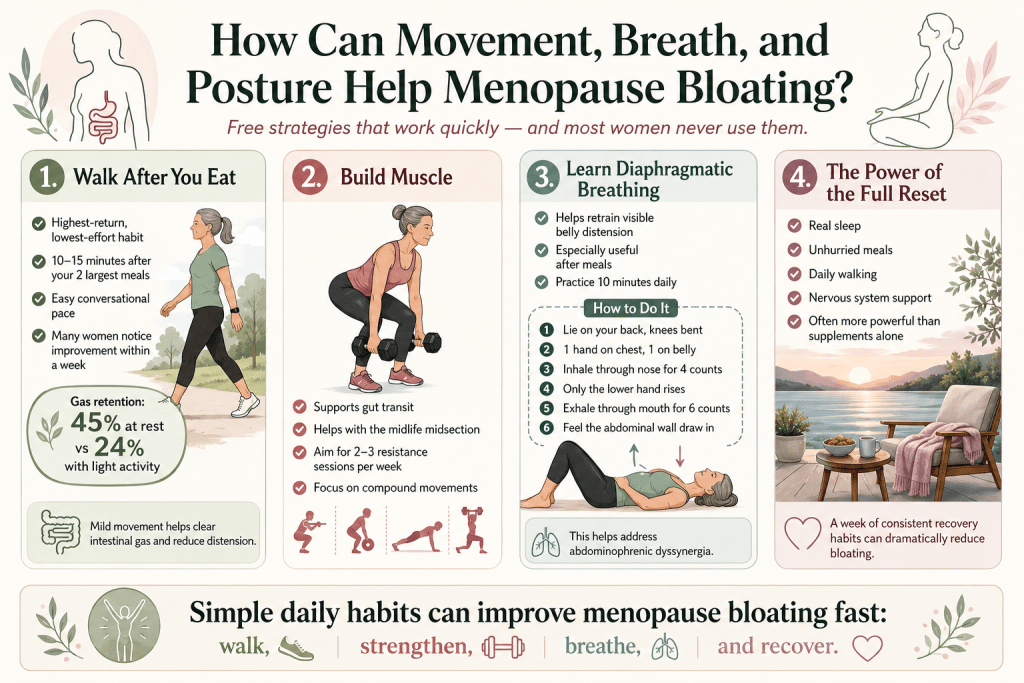
This is the highest-return, lowest-effort intervention available. Controlled research on people with bloating found that mild physical activity substantially improved the clearance of intestinal gas compared with rest, and that symptom scores improved along with it. In that work, gas retention dropped from 45 percent during rest to 24 percent during light pedaling, and abdominal distension tracked with how much gas was retained.
Ten to fifteen minutes of easy walking after your two largest meals is enough to get the benefit, and it should be a comfortable conversational pace rather than a workout. Women who add this one habit and change nothing else often report noticeable improvement within a week.
Build Muscle
Resistance training supports transit through several routes, and it is the primary lever for the body composition side of the midlife midsection. Two to three sessions per week focused on compound movements is the standard target. Our complete guide to deadlifts is a good place to start if you are building a program from scratch.
Learn Diaphragmatic Breathing
There is a mechanism behind visible distension called abdominophrenic dyssynergia, in which the diaphragm contracts downward and the abdominal wall relaxes outward in response to gut contents, producing far more visible swelling than the actual gas volume would explain. It is a reflex, it is involuntary, and it is trainable. Biofeedback approaches targeting this pattern have been studied specifically for abdominal distension.
The home version is simple. Lie on your back, knees bent, one hand on your chest and one on your belly. Breathe in through your nose for four counts so that only the lower hand rises. Exhale through your mouth for six counts, feeling the abdominal wall draw in. Ten minutes daily is the target, and practicing it in the half hour after a meal is particularly useful.
This is also one of the things that makes retreat settings so effective for gut symptoms. A week of real sleep, unhurried meals, daily walking, and nervous system work can change bloating in ways that no supplement protocol matches. That combination is central to our women’s wellness retreats in the Smoky Mountains, where those habits are built into the experience rather than added as an afterthought.
“The thing that surprises women at our retreats is how fast their stomach settles when nothing about their food has fundamentally changed. We are not running a cleanse. They are eating real meals, sleeping eight hours, walking the property twice a day and doing an hour of restorative work in the evening. By day three most of them tell me their waistband feels different. That tells you how much of midlife bloating is a nervous system and lifestyle problem wearing a digestive costume.”
Terry Tateossian, Founder of The House of Rose
What Is the 14-Day Plan to Reduce Menopause Bloating?
Run this in order. Do not compress it. The sequencing is what makes it work.
Days 1 to 3: Measure, Do Not Change
Measure your waist at the navel every morning after the bathroom and again at 9 p.m. Weigh yourself each morning. Write down everything you eat and when. Note bowel movements. You are establishing which of the three patterns from Section 3 you have.
Days 4 to 7: Remove the Obvious Inputs
Cut alcohol, carbonated drinks, chewing gum, and all products containing sugar alcohols. Slow your eating down and stop using straws. Add 16 ounces of water on waking and aim for 80 to 100 ounces total across the day. Add a 10-minute walk after your two largest meals. Keep measuring.
Days 8 to 11: Rebuild the Plate
Move 30 grams of protein to breakfast. Add 5 grams of fiber from soluble sources, not from raw cruciferous vegetables. Add two potassium-rich foods daily. Shift more of your total food volume into the first half of the day. Keep measuring.
Days 12 to 14: Add One Targeted Support
Choose one based on your pattern. Constipation-driven: magnesium at night. Gas-driven: a named-strain probiotic. Cramping-driven: enteric-coated peppermint oil before meals. One at a time, so you learn what actually works for your body.
After Day 14
Compare your morning and evening measurements to days 1 through 3. If your daily swing has decreased by an inch or more, continue and add the next lever. If nothing has changed, that is useful information too, and it is the point at which a low-FODMAP trial or a conversation with your physician about SIBO testing makes sense.
If two weeks of self-directed work does not move the needle, this is exactly the kind of problem that resolves faster with someone looking at the whole picture. Our monthly online nutrition coaching program builds nutrition, training, and habit work around your specific symptoms rather than a generic template.
When Is Bloating Not Menopause?
Most midlife bloating is benign and mechanical. A small percentage is not, and the symptoms overlap enough that it is worth knowing the difference.
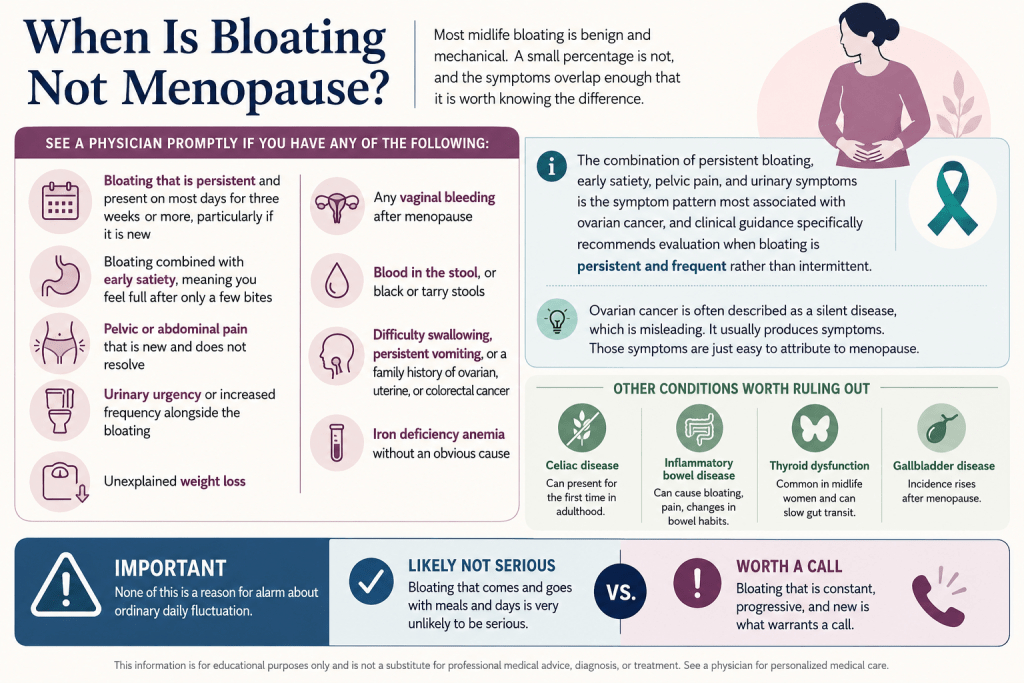
See a physician promptly if you have any of the following:
- Bloating that is persistent and present on most days for three weeks or more, particularly if it is new
- Bloating combined with early satiety, meaning you feel full after only a few bites
- Pelvic or abdominal pain that is new and does not resolve
- Urinary urgency or increased frequency alongside the bloating
- Unexplained weight loss
- Any vaginal bleeding after menopause
- Blood in the stool, or black or tarry stools
- Difficulty swallowing, persistent vomiting, or a family history of ovarian, uterine, or colorectal cancer
- Iron deficiency anemia without an obvious cause
The combination of persistent bloating, early satiety, pelvic pain, and urinary symptoms is the symptom pattern most associated with ovarian cancer, and clinical guidance specifically recommends evaluation when bloating is persistent and frequent rather than intermittent. Ovarian cancer is often described as a silent disease, which is misleading. It usually produces symptoms. Those symptoms are just easy to attribute to menopause.
Other conditions worth ruling out include celiac disease, which can present for the first time in adulthood, inflammatory bowel disease, thyroid dysfunction, which is common in midlife women and slows gut transit, and gallbladder disease, whose incidence rises after menopause.
Important: None of this is a reason for alarm about ordinary daily fluctuation. Bloating that comes and goes with meals and days is very unlikely to be serious. Bloating that is constant, progressive, and new is what warrants a call.
What Are Your Next Steps?
- Start the three-day measurement log tonight. Waist at the navel, morning and evening, plus morning weight. You cannot fix a bloating problem you have not correctly identified.
- Run the free macro calculator and get your personal protein and fiber targets. Most women discover they are eating roughly half the fiber and two-thirds of the protein they need.
- Add a 10-minute walk after your two largest meals, starting today. This is the single highest-return change in this entire article.
- Remove sugar alcohols and alcohol for one week and watch what happens. For many women this alone cuts the daily swing in half.
- Pick one supplement, not four, matched to your pattern, and give it eight weeks before you judge it.
Free 28-Day Fascia Reset Email Course
Get our Free 28-day email course series to help with 1 or 2 exercises per day to release your fascia. One short lesson per day. Two minutes to read each.
Frequently Asked Questions
Does menopause cause bloating?
Yes, menopause and perimenopause contribute to bloating through several mechanisms operating at the same time. Shifting estrogen affects fluid regulation and how your body handles sodium and water. Changing progesterone affects the smooth muscle contractions that move food through your intestines. The composition of your gut microbiome changes across the transition, which alters how food is fermented and how much gas is produced. On top of that, body composition shifts toward abdominal storage, which changes how your midsection looks even when actual bloating is not present.
How long does menopause bloating last?
The erratic, fluctuating bloating tied to hormonal swings generally tracks with perimenopause itself, which lasts roughly four to eight years for most women. Bloating driven by slower gut transit and microbiome change can persist past the final period unless it is addressed directly. In coaching practice, women who target transit and microbiome usually see meaningful improvement in two to four weeks and substantial improvement by eight to twelve weeks.
How do I get rid of menopause bloating fast?
The fastest levers are removing alcohol, carbonated drinks, and sugar alcohols; drinking more water rather than less; walking for ten minutes after meals; and making sure you are having a comfortable bowel movement daily. Fluid bloating often resolves in two to five days with sodium and potassium balance plus hydration. Gas bloating typically takes three to fourteen days. Anything promising results in twenty-four hours is selling a diuretic effect, not a solution.
What is the difference between menopause bloating and menopause weight gain?
Bloating fluctuates within a single day, often producing a one to four inch change in waist measurement between morning and evening. Body fat does not fluctuate that way. If your waist measures the same at 7 a.m. and 9 p.m. but has increased over months, that is body composition change and it responds to protein, resistance training, and a sustained energy deficit rather than to digestive interventions.
Why is my stomach flat in the morning and swollen at night?
That pattern points strongly to gas bloating from fermentation. Across the day you accumulate food residue in a colon that is moving more slowly than it used to, bacteria ferment that residue, and gas builds faster than it clears. Overnight fasting lets the system empty, which is why you wake up flat. The fix targets transit speed, fiber type and timing, and gas clearance through movement.
What are the best supplements for menopause bloating?
The options with the most credible evidence are named-strain probiotics, magnesium for constipation-driven bloating, psyllium husk for low fiber intake, and enteric-coated peppermint oil for cramping and spasm. Choose one that matches your specific pattern rather than taking all four. Give any probiotic a full eight weeks. Talk to your doctor first if you take prescription medication.
Do probiotics help with menopause bloating?
They can, and the effect is strain-specific. Meta-analyses of probiotics in irritable bowel syndrome show benefit for global symptoms including bloating, but results vary considerably between strains and products. Look for a product listing named strains with letter and number designations rather than one advertising only a large CFU count, and evaluate it after eight weeks rather than eight days.
Can perimenopause cause bloating even if my periods are still regular?
Yes, hormonal fluctuation begins well before cycles become irregular. Many women experience their first significant bloating changes while still cycling predictably, often in the second half of the cycle when progesterone is highest and gut transit slows. This is one of the earliest and most commonly missed perimenopause symptoms.
Is bloating worse in perimenopause or after menopause?
Most women report worse and more unpredictable bloating during perimenopause, because hormone levels are swinging rather than sitting at a stable low. After menopause the fluid-driven fluctuation usually calms, but bloating linked to slower transit and altered microbiome can continue if it is not addressed.
Does hormone therapy help or worsen menopause bloating?
Hormone therapy can go either way for bloating, and both outcomes are common. Some women find that stabilizing hormone levels reduces the erratic fluid retention of perimenopause. Others experience bloating and fluid retention in the first weeks of starting therapy, particularly with certain progestogens. This is a known adjustment effect that often settles, and formulation or delivery route can frequently be adjusted. Talk to your prescriber rather than stopping on your own.
Why do healthy foods like beans, broccoli, and apples make my bloating worse?
Those foods are high in fermentable carbohydrates known as FODMAPs. They are genuinely good for you and they feed beneficial bacteria, but in a gut with slower transit or an altered microbial community they produce more gas than they used to. The answer is usually adjustment rather than permanent elimination. Cook them thoroughly, reduce portion size, spread them across the day, and build tolerance gradually.
Can stress and poor sleep make menopause bloating worse?
Yes, through a well-documented pathway. The gut and brain communicate through direct nerve connections and shared hormone signaling. Elevated cortisol from poor sleep or chronic stress alters gut motility and increases visceral sensitivity, which means you perceive normal amounts of gas as painful and distending. Menopause disrupts sleep, and disrupted sleep worsens bloating, which is a loop worth breaking deliberately.
How much fiber should I eat for menopause bloating, and can too much make it worse?
Aim for 25 to 35 grams daily from food. Increasing too quickly is one of the most common causes of worse bloating in women who are actively trying to fix it. Add about 5 grams per week and always increase fluid alongside fiber. Prioritize soluble sources such as oats, chia, ground flax, psyllium, cooked squash, and citrus over large volumes of raw cruciferous vegetables at the start.
When should I see a doctor about bloating during menopause?
See a physician if bloating is present on most days for three weeks or more, especially if it is new or worsening; if it comes with early satiety, new pelvic pain, or urinary urgency; if you have unexplained weight loss, postmenopausal bleeding, or blood in your stool; or if you have a family history of ovarian, uterine, or colorectal cancer. Persistent, frequent, progressive bloating warrants evaluation. Bloating that fluctuates with meals and days is very unlikely to be serious.
Does drinking more water help or worsen bloating?
Drinking more water helps, and drinking less makes things worse. Under-hydration triggers fluid conservation, and it also makes fiber intake counterproductive because fiber requires water to move through the colon properly. Most women dealing with bloating are drinking too little, not too much. Aim for 80 to 100 ounces daily, more if you train or live somewhere hot.
Can exercise reduce menopause bloating?
Yes, and the evidence is direct. Controlled research in people with bloating found that light physical activity substantially improved intestinal gas clearance compared with rest, with retained gas dropping from 45 percent to 24 percent and symptom scores improving alongside it. Ten to fifteen minutes of easy walking after meals is enough to produce this effect. Resistance training helps separately by supporting transit and addressing the body composition side of the midlife midsection.
References
- Villoria A, Serra J, Azpiroz F, Malagelada JR. Physical activity and intestinal gas clearance in patients with bloating. American Journal of Gastroenterology. 2006;101(11):2552-2557. https://pubmed.ncbi.nlm.nih.gov/17029608/
- Dainese R, Serra J, Azpiroz F, Malagelada JR. Effects of physical activity on intestinal gas transit and evacuation in healthy subjects. The American Journal of Medicine. 2004;116(8):536-539. https://www.amjmed.com/article/S0002-9343(03)00821-0/abstract
- Stachenfeld NS. Hormonal changes during menopause and the impact on fluid regulation. Reproductive Sciences. 2014;21(5):555-561. https://pubmed.ncbi.nlm.nih.gov/24492487/
- Stachenfeld NS, Splenser AE, Calzone WL, et al. Estrogen influences osmotic secretion of AVP and body water balance in postmenopausal women. American Journal of Physiology. 1998;274(1):R187-R195. https://journals.physiology.org/doi/full/10.1152/ajpregu.1998.274.1.R187
- Wald A, Van Thiel DH, Hoechstetter L, et al. Gastrointestinal transit: the effect of the menstrual cycle. Gastroenterology. 1981;80(6):1497-1500. https://pubmed.ncbi.nlm.nih.gov/7227774/
- Peters BA, Lin J, Qi Q, et al. Menopause is associated with an altered gut microbiome and estrobolome, with implications for adverse cardiometabolic risk in the Hispanic Community Health Study/Study of Latinos. mSystems. 2022;7(3):e00273-22. https://journals.asm.org/doi/10.1128/msystems.00273-22
- Gut microbial beta-glucuronidase: a vital regulator in female estrogen metabolism. Gut Microbes. 2023. https://pubmed.ncbi.nlm.nih.gov/37559394/
- Diet, the gut microbiome, and estrogen physiology: a review in menopausal health and interventions. Nutrients. 2026;18(7):1052. https://www.mdpi.com/2072-6643/18/7/1052
- Estrogen-gut microbiome axis review. Frontiers in Cell and Developmental Biology. 2021;9:631552. https://www.frontiersin.org/articles/10.3389/fcell.2021.631552
- Chen B, Kim JJ, Zhang Y, Du L, Dai N. Prevalence and predictors of small intestinal bacterial overgrowth in irritable bowel syndrome: a systematic review and meta-analysis. Journal of Gastroenterology. 2018;53(7):807-818. https://pubmed.ncbi.nlm.nih.gov/29761234/
- Efficacy of dietary interventions in irritable bowel syndrome: a systematic review and network meta-analysis. The Lancet Gastroenterology & Hepatology. 2025. https://pubmed.ncbi.nlm.nih.gov/40258374/
- Efficacy of probiotics in irritable bowel syndrome: systematic review and meta-analysis. Gastroenterology. 2023. https://www.sciencedirect.com/science/article/pii/S0016508523048382
- Ringel-Kulka T, et al. Multi-center, double-blind, randomized, placebo-controlled, parallel-group study to evaluate the benefit of the probiotic Bifidobacterium infantis 35624 in non-patients with symptoms of abdominal discomfort and bloating. American Journal of Gastroenterology. 2017;112(1):145-151. https://pubmed.ncbi.nlm.nih.gov/27845337/
- Martoni CJ, Srivastava S, Leyer GJ. Lactobacillus acidophilus DDS-1 and Bifidobacterium lactis UABla-12 improve abdominal pain severity and symptomology in irritable bowel syndrome: randomized controlled trial. Nutrients. 2020;12(2):363. https://pmc.ncbi.nlm.nih.gov/articles/PMC7071206/
- Ingrosso MR, Ianiro G, Nee J, et al. Systematic review and meta-analysis: efficacy of peppermint oil in irritable bowel syndrome. Alimentary Pharmacology & Therapeutics. 2022;56(6):932-941. https://onlinelibrary.wiley.com/doi/abs/10.1111/apt.17179
- Mori H, Tack J, Suzuki H. Magnesium oxide in constipation. Nutrients. 2021;13(2):421. https://www.mdpi.com/2072-6643/13/2/421
- Morishita D, Tomita T, Mori S, et al. A randomized double-blind placebo-controlled trial on the effect of magnesium oxide in patients with chronic constipation. Journal of Neurogastroenterology and Motility. 2021;27(4):563-570. https://www.jnmjournal.org/journal/view.html?doi=10.5056%2Fjnm18194
- Bellini M, Tonarelli S, Barracca F, et al. Chronic constipation: is a nutritional approach reasonable? Nutrients. 2021;13(10):3386. https://www.mdpi.com/2072-6643/13/10/3386
- Dietary patterns and incident chronic constipation in three prospective cohorts of middle- and older-aged adults. Gastroenterology. 2025. https://www.gastrojournal.org/article/S0016-5085(25)00959-X/fulltext
- Barba E, Burri E, Accarino A, et al. Abdomino-phrenic dyssynergia in patients with abdominal bloating and distension. American Journal of Gastroenterology. 2011;106(5):815-819. https://pubmed.ncbi.nlm.nih.gov/21540894/
- Abdominophrenic dyssynergia: a narrative review. American Journal of Gastroenterology. 2023;118(1):53-59. https://journals.lww.com/ajg/fulltext/2023/01000/abdominophrenic_dyssynergia__a_narrative_review.15.aspx
- Thoracoabdominal wall motion-guided biofeedback treatment of abdominal distention: a randomized placebo-controlled trial. Gastroenterology. 2024. https://www.sciencedirect.com/science/article/pii/S0016508524002853
- Greendale GA, Sternfeld B, Huang M, et al. Changes in body composition and weight during the menopause transition. JCI Insight. 2019;4(5):e124865. https://insight.jci.org/articles/view/124865
- Janssen I, Powell LH, Kazlauskaite R, Dugan SA. Testosterone and visceral fat in midlife women: the Study of Women’s Health Across the Nation (SWAN) fat patterning study. Obesity. 2010;18(3):604-610. https://pubmed.ncbi.nlm.nih.gov/19696765/
- Kodoth V, Scaccia S, Aggarwal B. Adverse changes in body composition during the menopausal transition and relation to cardiovascular risk: a contemporary review. Women’s Health Reports. 2022;3(1):573-581. https://journals.sagepub.com/doi/full/10.1089/whr.2021.0119
- National Institute for Health and Care Excellence. Ovarian cancer: recognition and initial management. Clinical guideline recommendations. https://www.ncbi.nlm.nih.gov/books/NBK83852/
Disclaimer: This article is educational and does not constitute medical advice. Persistent or severe bloating can have causes unrelated to perimenopause or menopause and may require medical evaluation. If your symptoms are new, worsening, painful, or accompanied by unexplained weight loss, vomiting, bleeding, or other concerning changes, consult a healthcare provider. Always speak with your doctor before starting supplements, making significant dietary changes, or modifying medications, especially if you have an existing health condition or take prescription medication.
Free 28-Day Fascia Reset Email Course
Get our Free 28-day email course series to help with 1 or 2 exercises per day to release your fascia. One short lesson per day. Two minutes to read each.

Terry Tateossian is a Menopause Lifestyle Medicine Coach, Certified Personal Trainer & Nutritionist and the Founder of THOR: The House of Rose, a wellness brand serving women over 40 through retreats, coaching, macro-nutrition and community. As 25-year founder and entrepreneur, Terry spent two and a half decades building and running successful start-up businesses, an experience that put her on the front line of founder burnout long before she could name it. After facing serious health challenges, early onset menopause, and emotional eating while running her agency and raising two children, Terry rebuilt her health in her 40s and lost more than 80 pounds through evidence-based nutrition, training, and mindset work. Today, she helps women get strong, improve confidence, support hormone health, and create a stronger second half of life. Terry has been featured in major media outlets and is available for podcasts, expert commentary, brand collaborations, and speaking engagements on midlife health, reinvention, emotional eating, menopause wellness, and strength training for longevity. Get her free macro calculator (her cookbook companion) to start your journey to back to health.