
 By Team THOR
Free 28-Day Fascia Reset Email Course
Get our Free 28-day email course series to help with 1 or 2 exercises per day to release your fascia. One short lesson per day. Two minutes to read each.
Cold Plunge Benefits for Menopause and Perimenopause: The Complete Guide for Midlife Women (Including Sex-Specific Protocols, Safety Guidance, and Home Setup Recommendations)
Nora is forty-nine. She has done everything her functional medicine doctor told her to do. Bioidentical hormone therapy. Thirty grams of protein at breakfast. Resistance training three times a week. Ten thousand steps a day. Magnesium at night and morning light before coffee. Her sleep has improved, her joint stiffness has faded, and her strength numbers are the best they have been in a decade.
And every afternoon at three-fifteen, she still has to fight to keep her head up at her desk. Not because she is exhausted. Something in her nervous system simply seems to run out of whatever keeps her alert through the second half of the day. She has been told this is normal for perimenopause. She has not accepted it.
What Nora has not tried is one input the human nervous system evolved to encounter regularly, but modern climate control has almost completely removed: cold.
On a Saturday morning, she stands chest-deep in fifty-two degree water. Her breath catches, then steadies, then finds a rhythm. Within ninety seconds, something shifts. And for the rest of that day, she feels noticeably different in a way supplements, light hacks, and sleep protocols have not quite delivered.
This article is about that kind of cold water exposure. Not the extreme version. Not the bro-culture version. And not the version that has produced justified skepticism around ice bath trends.
It is about how midlife women can use cold exposure safely and sustainably, with sex-specific protocols that account for how women respond differently than men. Done thoughtfully, it can be inexpensive to try and may offer benefits that will never show up on a hormone panel.
Why Does Cold Plunge Matter More in Midlife?
For most of human evolutionary history, cold exposure was not a wellness practice. It was Tuesday. Ancestors slept in unheated shelters. Bathed in cold rivers. Walked through cold air to gather food. Encountered the specific physiological stress of cold immersion regularly, throughout the year, as a background feature of ordinary life. The human body developed with the assumption that this input would arrive.
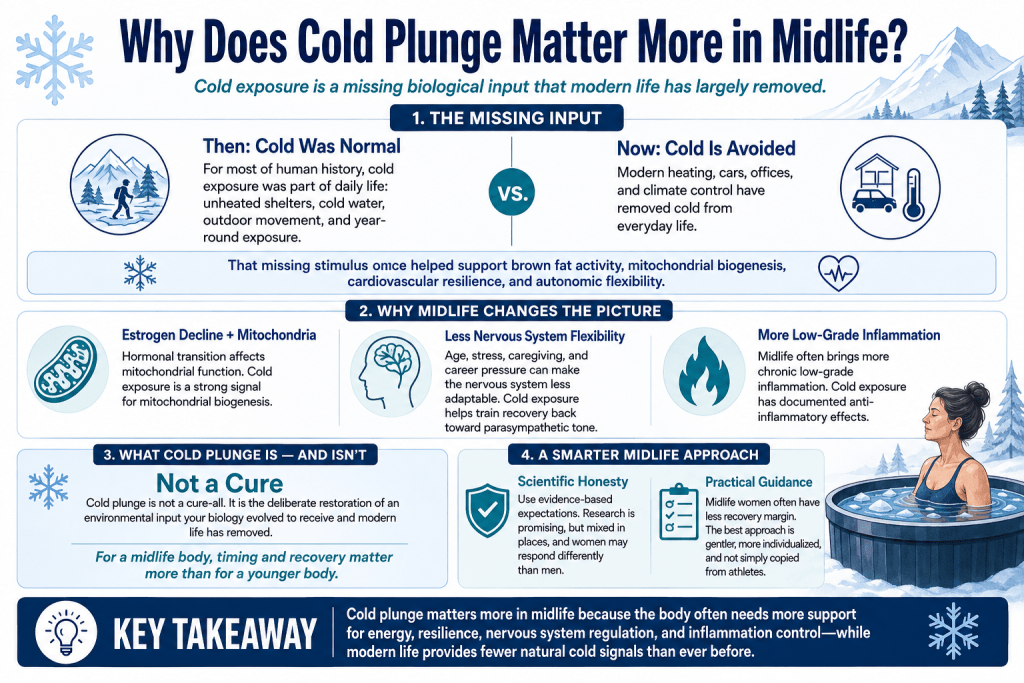
Modern climate control has removed that input almost entirely from the average American life. Homes are heated in winter. Cars are climate-controlled. Offices are kept in a narrow temperature band. Even a moderately cold day can be avoided by moving from garage to elevator to conditioned lobby. The specific stimulus that used to activate brown adipose tissue, mitochondrial biogenesis, cardiovascular resilience, and autonomic flexibility has been engineered out of ordinary experience.
For midlife women, this deficit compounds three other midlife realities. First, estrogen decline directly affects mitochondrial function. Cold exposure is one of the most potent known stimulators of mitochondrial biogenesis. The very system most affected by hormonal transition is the system most starved for the environmental input that used to keep it resilient.
Second, autonomic nervous system flexibility decreases with age and with sustained modern stress. Cold exposure is a controlled sympathetic challenge that, done correctly, trains the return to parasympathetic tone. Midlife women often need this training more than they realize because sustained caregiving, career pressure, and hormonal shifts have narrowed the range of autonomic states they can access.
Third, chronic low-grade inflammation increases through the midlife transition. Cold exposure has documented anti-inflammatory effects across multiple mechanisms including reduced pro-inflammatory cytokines and increased anti-inflammatory mediators.
Cold plunge is not a cure for any of these problems. It is the deliberate restoration of an input your biology evolved to receive and modern life has removed. For midlife women, the specific timing of that restoration matters more than for a twenty-year-old body that has more baseline resilience to draw on.
This article approaches cold plunge with two commitments. The first is scientific honesty about what the research shows, including where the research is mixed or where women’s responses differ from men’s. The second is practical guidance that respects the fact that midlife women have less recovery margin than they used to, and that “just do what athletes do” is often exactly the wrong protocol.
What Does Cold Plunge Do to a Female Body?
When you immerse yourself in cold water, several things happen in a rapid cascade.
- The cold shock response: Your body responds to sudden cold immersion with a gasp reflex, increased heart rate, and elevated blood pressure. This initial response typically lasts one to three minutes and represents the sympathetic nervous system’s alarm response to unexpected cold. Learning to control breathing during this window is one of the most important skills in cold plunge practice.
- Peripheral vasoconstriction: Blood vessels in your extremities constrict rapidly, shunting blood toward your core to protect internal organs and maintain core body temperature. This is why hands and feet feel intensely cold within seconds of immersion.
- Brown adipose tissue activation: Brown fat, a metabolically active tissue that generates heat by burning calories, activates in response to cold exposure. Women typically carry more brown fat than men, and cold exposure appears to increase both the amount and activity of brown fat over time. This is one of the mechanisms behind cold plunge’s effects on metabolism.
- Norepinephrine surge: Cold immersion triggers a substantial release of norepinephrine, a neurotransmitter and hormone involved in alertness, mood, and focus. Research has documented increases of two to five times baseline norepinephrine after cold water immersion, with effects persisting for hours. This is the mechanism behind the mood and energy effects many people report.
- Dopamine release: Cold exposure also increases dopamine, another neurotransmitter connected to mood, motivation, and reward. Unlike substances that produce a spike and crash, cold-induced dopamine rise is more sustained and appears to come without the same downregulation.
- Anti-inflammatory cascade: Cold exposure reduces certain pro-inflammatory markers and increases anti-inflammatory mediators. This has particular relevance for midlife women dealing with the low-grade inflammation that increases through hormonal transition.
- Vagal tone effects: After the initial sympathetic activation, the return to parasympathetic dominance is often enhanced by cold plunge, particularly when combined with breathing practice. Repeated exposure appears to train the autonomic nervous system to shift more flexibly between sympathetic and parasympathetic states.
- Mitochondrial biogenesis: Cold exposure is one of the most potent known stimulators of mitochondrial biogenesis, the process by which cells create new mitochondria. For midlife women whose mitochondrial function is affected by estrogen decline, this is one of the most important mechanisms of cold plunge.
- Effects specific to female physiology: Women’s core temperature regulation differs from men’s in ways relevant to cold exposure. Women typically have more subcutaneous fat but less muscle mass, which affects heat production and retention. Women’s peripheral vasoconstriction is often more pronounced.
Women’s response to cold varies across the menstrual cycle in ways men’s responses do not. All of this means that cold plunge protocols developed for men and marketed as universal often need adjustment for women.
Free 28-Day Fascia Reset Email Course
Get our Free 28-day email course series to help with 1 or 2 exercises per day to release your fascia. One short lesson per day. Two minutes to read each.
What Does the Sex-Specific Research Say About Cold Plunge for Women?
The research on cold exposure has historically been done predominantly on male subjects. This is changing, but the residue of male-default research has produced protocols that do not always serve women well. Understanding the specific sex-based differences is essential for safe practice.
- Cold tolerance differs: Women often reach thermal discomfort faster than men because of differences in body composition, vasoconstriction, and heat production. Starting with slightly warmer water or shorter sessions may be more appropriate.
- Menstrual cycle affects response: Cold tolerance can shift across the menstrual cycle, especially during the luteal phase and before menstruation. Track your response and adjust duration when needed.
- Perimenopause and menopause change the picture: Estrogen decline affects thermoregulation and contributes to hot flashes. Cold exposure may help some women manage vasomotor symptoms, although research is still limited.
- Cardiovascular response: Cold immersion raises heart rate and blood pressure. Midlife women with cardiovascular concerns should get medical clearance before starting.
- Muscle recovery research is mixed: Cold immersion immediately after resistance training may interfere with muscle-building adaptations. Consider plunging before training or on non-training days instead.
- The Søberg and Faber research: Susanna Søberg’s work suggests that modest cold exposure can activate brown fat and support metabolic health. Around 11 minutes per week across short sessions may be enough to produce measurable effects.
Start conservatively. Use slightly warmer water and shorter durations than the male-default protocols suggest. Track your response across your cycle if still cycling. Adjust based on how you feel, not based on Instagram influencers or male bodybuilders. And prioritize consistency over intensity.
How Can Cold Plunge Support Women During Perimenopause?
Perimenopause is the transition period, typically lasting four to ten years, during which hormonal cycles become irregular before menstruation stops entirely. This is often the time when women first notice the constellation of symptoms including sleep disruption, mood changes, weight redistribution, joint stiffness, and hot flashes. Cold plunge has specific applications during this window.
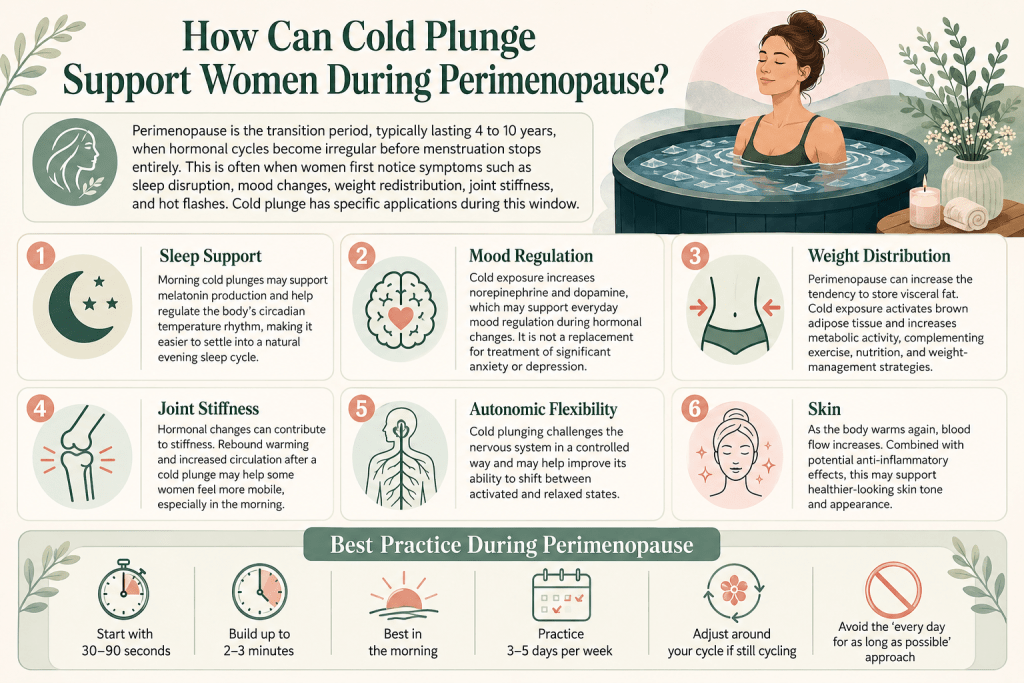
- Sleep support: Perimenopause can make restful sleep harder to maintain. Morning cold plunges may support melatonin production and help regulate the body’s circadian temperature rhythm. This may make it easier for the body to settle into its natural evening sleep cycle.
- Mood regulation: Cold exposure increases norepinephrine and dopamine, which may help with the mood shifts common during perimenopause. It is not a replacement for treatment of significant anxiety or depression, but it may support everyday mood regulation during hormonal changes.
- Weight distribution: Perimenopause can increase the tendency to store visceral fat. Cold exposure activates brown adipose tissue and increases metabolic activity, which may complement exercise, nutrition, and other weight management strategies.
- Joint stiffness: Hormonal changes can contribute to increased joint and connective tissue stiffness. The rebound warming and increased circulation after a cold plunge may help some women feel more mobile, especially in the morning.
- Autonomic flexibility: Many women experience a more “wired” nervous system during perimenopause, including tension, restlessness, and difficulty settling down. Cold plunging challenges the nervous system in a controlled way and may help improve its ability to shift between activated and relaxed states.
- Skin: Cold exposure is followed by increased blood flow as the body warms again. Combined with its potential anti-inflammatory effects, this may support healthier-looking skin tone and appearance, although it is usually considered a secondary benefit.
For perimenopausal women, the pattern of cold plunge practice that works best is typically: shorter durations (30 to 90 seconds initially, working up to 2 to 3 minutes), morning timing, three to five days per week, adjusted around cycle if still cycling. This is very different from the “cold plunge every day for as long as you can stand it” advice that dominates general cold plunge content.
Free 28-Day Fascia Reset Email Course
Get our Free 28-day email course series to help with 1 or 2 exercises per day to release your fascia. One short lesson per day. Two minutes to read each.
How Can Cold Plunge Support Women During Menopause Beyond Hot Flashes?
Postmenopausal women (defined as one full year without menstruation) enter a new phase where the hormonal environment stabilizes at a different set point than reproductive years. Cold plunge continues to offer benefits, and some benefits become more pronounced.
- Bone density support: Cold exposure has been linked in some research to markers of bone remodeling. This is not a replacement for the established interventions for menopausal bone health (resistance training, adequate protein and calcium, vitamin D, appropriate medical management if osteopenia is present), but cold exposure appears to be a supportive input.
- Cardiovascular training: The controlled cardiovascular challenge of cold plunge, done at appropriate intensity, provides regular training for the cardiovascular system. This has particular value in postmenopause when cardiovascular disease risk increases. Medical clearance is important before beginning if you have any known cardiovascular conditions.
- Hot flash management: For women still experiencing hot flashes in postmenopause, some anecdotal evidence and small studies suggest that regular cold exposure may modulate the frequency and intensity of vasomotor symptoms. The mechanism is not fully understood but may involve improved thermoregulatory response and central autonomic effects.
- Cognitive and mood support: The neurotransmitter effects of cold plunge continue to benefit mood, focus, and cognitive function in postmenopause. Many women report that morning cold exposure sharpens the cognitive performance they had been losing to age-related and hormonal factors.
- Insulin sensitivity: Postmenopause is associated with reduced insulin sensitivity for many women. Cold exposure has documented effects on insulin sensitivity, glucose disposal, and metabolic flexibility. Combined with strength training and adequate protein, cold plunge supports the metabolic goals that become more important in postmenopause.
- Longevity signal: While specific longevity claims should be held with appropriate skepticism, the physiological effects of cold exposure overlap substantially with the mechanisms that longevity research identifies as protective: mitochondrial biogenesis, hormesis (beneficial stress response), autonomic flexibility, and reduced chronic inflammation.
The pattern for postmenopausal women is often more forgiving than for perimenopausal women because the hormonal picture is more stable. Duration can gradually extend to 3 to 5 minutes for well-adapted practitioners. Frequency of 4 to 6 sessions per week is well-tolerated by most. Individual response still varies, and medical evaluation is important before starting for women with any relevant medical history.
“The mistake I see most often with cold plunge is midlife women trying to match protocols that were built for twenty-five-year-old men. Two minutes at thirty-eight degrees is not the entry point for a fifty-two-year-old woman in perimenopause. Ninety seconds at fifty-two degrees might be. And what matters is not how long or how cold. What matters is whether the practice teaches your nervous system something that carries into the rest of your day. When it does, you know within a week. When it does not, the practice is probably wrong for your body, not for cold plunge in general.”
Terry Tateossian, Founder of The House of Rose
How Does Cold Plunge Compare to Sauna, Contrast Therapy, and Other Thermal Practices?
Cold plunge sits within a broader family of thermal practices. The table below places it in context.
|
Practice |
Mechanism |
Best for |
Limitations |
Home practice friendly |
|
Cold Plunge |
Sudden cold immersion; norepinephrine, dopamine, brown fat, mitochondrial biogenesis |
Mood, energy, inflammation, metabolic support |
Requires courage and appropriate protocol; not for everyone |
Yes, with tub setup |
|
Cold Shower |
Milder cold exposure through shower |
Introduction to cold exposure, daily maintenance |
Less powerful than immersion but more accessible |
Yes, no equipment |
|
Ice Bath |
Cold immersion with added ice for lower temperatures |
Athletic recovery, higher-intensity practice |
More extreme; not necessary for midlife women’s applications |
Yes, with tub and ice |
|
Sauna (traditional) |
Heat exposure via hot dry air |
Cardiovascular training, longevity signaling, relaxation |
Requires equipment or gym access |
Sometimes |
|
Infrared Sauna |
Heat exposure via infrared wavelengths |
Similar to traditional plus some tissue penetration |
Same as traditional |
Sometimes |
|
Contrast Therapy |
Alternating hot and cold exposure |
Circulation, recovery, autonomic training |
Requires access to both hot and cold |
Yes with setup |
|
Cold Air Exposure |
Time outdoors in cold weather |
Free, low-barrier introduction to cold |
Weather dependent |
Yes |
|
Wim Hof Method |
Breathing plus cold exposure protocol |
Structured introduction to cold with breathing |
Requires learning the technique properly |
Yes |
|
Cryotherapy Chamber |
Brief exposure to extreme cold air (-200°F) |
Convenience, brief exposure |
Expensive; less studied than water immersion |
No, requires facility |
Cold plunge occupies a specific niche: more intense than a cold shower, less extreme than an ice bath, and more directly targeted at nervous system effects than sauna.
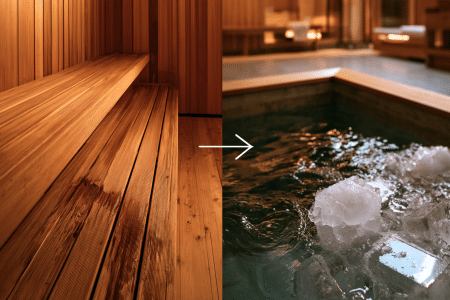
For midlife women, combining cold plunge with sauna through contrast therapy can create a more complete thermal practice, pairing cold exposure with the broader benefits of sauna for menopause and perimenopause to support both sides of autonomic training.
Free 28-Day Fascia Reset Email Course
Get our Free 28-day email course series to help with 1 or 2 exercises per day to release your fascia. One short lesson per day. Two minutes to read each.
What Does the Research Say About Cold Plunge?
The research base on cold exposure has grown substantially over the past decade. Study quality varies, and much of the highest-profile research has been done on male subjects, but a clear picture is emerging.
- Metabolic effects: Multiple studies have documented that regular cold exposure increases brown adipose tissue activity, improves insulin sensitivity, and modulates glucose metabolism. The 2021 research by Søberg and colleagues at the University of Copenhagen documented meaningful metabolic effects with relatively modest cold exposure protocols (approximately 11 minutes per week across multiple sessions).
- Mood and cognition: Studies have documented substantial increases in norepinephrine (200 to 500 percent above baseline) after cold water immersion, with effects persisting for hours. Dopamine effects have also been documented. These neurochemical changes correspond to the mood, focus, and energy benefits practitioners describe.
- Anti-inflammatory effects: Cold exposure has been shown to reduce certain pro-inflammatory cytokines and increase anti-inflammatory mediators. Effects appear across multiple studies and multiple protocols, though effect sizes vary.
- Cardiovascular effects: Regular cold exposure appears to improve cardiovascular resilience over time, though acute cold immersion produces significant cardiovascular stress that can be dangerous for individuals with certain conditions. The chronic and acute effects should be understood separately.
- Immune effects: Some studies suggest that regular cold exposure may modestly improve immune function, potentially through effects on circulating immune cells and inflammatory signaling. The evidence base is smaller here than for the metabolic or mood effects.
- Sex-specific research: The research on women specifically is smaller but growing. Where studies have compared responses, women typically show similar directional effects to men but with different magnitudes and thresholds. Practical protocols for women continue to be underdeveloped in the research literature.
- Menopause-specific research: Direct research on cold plunge for perimenopausal or menopausal symptoms is limited. The mechanisms suggest potential benefits, and small studies and case reports are largely positive, but rigorous randomized controlled trials on this specific application are lacking.
- Safety research: The most-established safety concerns are cardiovascular events in individuals with unrecognized cardiac conditions, cold shock response in extremely cold water, and hypothermia in excessive exposure. Standard cold plunge protocols with appropriate screening have excellent safety records.
Study protocols vary widely, making direct comparison difficult. Blinding is impossible with cold immersion. Sex-specific research remains underdeveloped. Menopause-specific research is minimal. Individual variability is substantial.
Despite these limitations, the direction of findings across multiple mechanisms and multiple research groups supports the general conclusion that appropriately-dosed cold exposure produces meaningful physiological benefits for most healthy adults, including midlife women.
What Cold Plunge Duration, Temperature, and Timing Work Best for Women?
Given the differences in how women’s bodies respond to cold, the following protocols are adapted from the Søberg research and general cold plunge best practices for midlife women specifically.
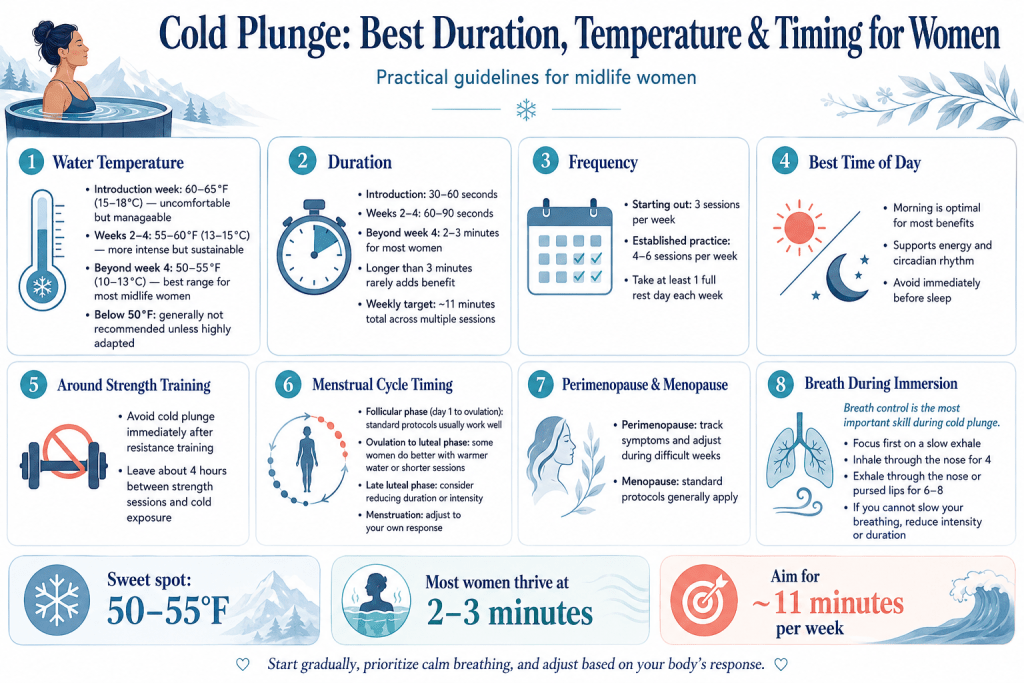
Water Temperature
- Introduction week: 60 to 65 degrees Fahrenheit (15 to 18 degrees Celsius). Uncomfortable but manageable.
- Weeks 2 to 4: 55 to 60 degrees Fahrenheit (13 to 15 degrees Celsius). More intense but sustainable.
- Beyond week 4: 50 to 55 degrees Fahrenheit (10 to 13 degrees Celsius). This is the range where most midlife women get maximum benefit without unnecessary risk.
- Not recommended for most midlife women: Below 50 degrees Fahrenheit unless you have adapted over many months and are working with specific athletic goals. Colder is not necessarily better for the physiological adaptations that matter.
Duration
- Introduction: 30 to 60 seconds per session.
- Weeks 2 to 4: 60 to 90 seconds per session.
- Beyond week 4: 2 to 3 minutes per session for most midlife women. Longer than 3 minutes rarely produces additional benefit and increases risk.
- Total weekly duration: Aim for approximately 11 minutes total per week across multiple sessions (the Søberg finding). More is not necessarily better.
Frequency
- Beginning: 3 sessions per week.
- Established practice: 4 to 6 sessions per week for most midlife women.
- Rest days: Give your body at least one full rest day per week from cold exposure.
Timing Within the Day
- Morning is optimal for most benefits: Sets circadian rhythm, energizes the day, provides the norepinephrine and dopamine effects when they support daily function.
- Avoid immediately before sleep: The sympathetic activation can interfere with sleep onset for some women.
- Avoid immediately after resistance training: Some research suggests cold exposure within 4 hours of resistance training may reduce hypertrophy adaptations. Time cold plunge away from strength sessions.
Timing Within the Menstrual Cycle (for Women Still Cycling)
- Follicular phase (day 1 to ovulation): Generally well tolerated. Standard protocols apply.
- Ovulation to luteal phase: May tolerate slightly warmer water or shorter durations.
- Late luteal phase (days before menstruation): Some women benefit from reducing duration or intensity during this window.
- Menstruation: Individual response varies. Some find cold plunge helpful for cramping. Others find it too intense. Adjust based on your own body.
Timing Across Perimenopause and Menopause
- Perimenopause with irregular cycles: Track how you respond and adjust. Sleep disruption weeks may warrant reduced intensity.
- Menopause (established, no cycles): The hormonal picture is more stable. Standard protocols generally apply.
Breath During Immersion
Breath control is the single most important skill in cold plunge. The initial cold shock triggers hyperventilation. Learning to slow the breath through the first 30 to 60 seconds is what transforms the experience from a panic response into a productive practice.
Basic breath protocol during immersion: On entering, focus immediately on slowing the exhale. Breathe in through the nose for a count of 4. Exhale through the nose or pursed lips for a count of 6 to 8. Continue this pattern for the duration of the immersion. If you cannot maintain slow breathing, you may be pushing too hard for your current adaptation.
Free 28-Day Fascia Reset Email Course
Get our Free 28-day email course series to help with 1 or 2 exercises per day to release your fascia. One short lesson per day. Two minutes to read each.
Who Should Avoid Cold Plunge or Get Medical Clearance First?
Cold plunge is powerful and produces significant physiological stress. It is not appropriate for everyone.
Do not cold plunge without medical clearance if you have:
- Any known cardiovascular disease (coronary artery disease, heart failure, arrhythmias)
- Uncontrolled hypertension
- History of stroke or transient ischemic attack
- Raynaud’s disease or severe peripheral vascular disease
- Any condition affecting your ability to regulate body temperature
- Pregnancy (discuss with your obstetric provider)
- Any implanted cardiac device
- Severe hypothyroidism
- Recent surgery or acute illness
Additional caution for midlife women:
- If you are on medications that affect blood pressure, discuss with your prescribing physician
- If you have osteoporosis (falls risk from wet floors)
- If you are dealing with active adrenal issues or significant chronic stress that has already depleted your capacity for additional sympathetic activation
- If you have significantly disrupted sleep, address sleep first before adding a strong sympathetic challenge
Do not cold plunge:
- Alone if you are new to the practice
- Immediately after alcohol
- If you have any signs of infection or fever
- If you have cuts or open wounds on your skin
- If water is contaminated (natural water bodies of unknown quality)
- If you cannot easily exit the water
- If you have hypoglycemia or have not eaten in many hours
Signs to stop immediately:
- Chest pain or pressure
- Uncontrolled shivering that continues after you attempt to warm the exhale
- Confusion or disorientation
- Numbness in extremities that is not resolving
- Any concerning symptom you cannot explain
When to seek immediate medical attention:
- Chest pain, shortness of breath, or symptoms suggesting cardiac event
- Prolonged difficulty warming after exposure
- Any symptom that concerns you
For midlife women considering cold plunge, having a conversation with a physician who understands both cold exposure and midlife women’s physiology is worth the appointment before starting. This is particularly important if you have any cardiovascular risk factors, take medications, or have any of the conditions listed above.
What Are the Best Home Cold Plunge Setup Options?
There are multiple ways to set up cold plunge at home, at very different price points. What follows are category-level recommendations. Specific products and prices change; verify current specifications when purchasing.
Note on affiliate links: THOR does not manufacture cold plunge equipment. The Amazon links below are placeholders for THOR to add its own affiliate links to specifically-vetted products. Prices and specifications should be verified at time of purchase. Products should be selected based on your specific situation (indoor vs outdoor, climate, budget, space).
Option 1: Ice Bath in Bathtub (Lowest Cost)
The simplest starting point requires no purchase. Fill your existing bathtub with cold tap water. Add ice from your freezer or purchased ice bags to reach target temperature. Use a thermometer to verify temperature.
- Cost: $10 to $30 for thermometer, ongoing cost of ice.
- Pros: No equipment purchase required. Good for testing whether you will maintain the practice before investing.
- Cons: Labor-intensive, uses a lot of ice, ties up the bathroom.
Option 2: Inflatable Cold Plunge Tub (Mid-Range Starter)
Inflatable cold plunge tubs are compact, affordable, and appropriate for indoor or outdoor use. They typically hold enough water for shoulder-deep immersion in a seated or kneeling position.
- Cost: $80 to $250 for the tub itself, plus ice.
- Pros: Affordable entry into dedicated equipment. Doesn’t tie up bathroom. Portable.
- Cons: Still requires ice or a separate chiller for temperature control. Not permanent installation.
Option 3: Cedar or Wooden Barrel Tub (Mid to Premium Range)
Traditional wooden or cedar barrel tubs offer a durable, aesthetically-appealing option for outdoor installation. Require separate chiller for consistent temperature control in warm climates.
- Cost: $500 to $2,000 for the tub, plus $500 to $1,500 for chiller if desired.
- Pros: Durable, attractive, permanent installation possible.
- Cons: Requires outdoor space, higher initial investment.
Option 4: Chest Freezer Conversion (Best Cost-to-Performance for Serious Practitioners)
Converting a standalone chest freezer with a temperature controller creates a highly effective cold plunge setup at a fraction of the cost of purpose-built systems. Requires basic DIY skills or willingness to hire a handyperson.
- Cost: $300 to $700 for freezer, $50 to $100 for temperature controller, plus liner if desired.
- Pros: Reliable temperature control, uses little electricity, produces very cold water reliably.
- Cons: Requires setup work, needs GFCI outlet, larger footprint than inflatable options.
Option 5: Purpose-Built Cold Plunge with Integrated Chiller (Premium)
Fully-integrated cold plunge tubs with built-in chillers, filtration, and temperature control offer the most convenient user experience. Prices vary widely.
- Cost: $2,000 to $10,000+.
- Pros: Simple to use, reliable, aesthetically-finished, filtration included.
- Cons: Significant investment, requires appropriate space and electrical setup.
Essential Accessories
- Waterproof thermometer to verify water temperature
- Non-slip mat outside the tub for safe exit
- Warm towel and robe within easy reach
- Warm dry clothing to change into
- Timer
How to Choose
Match the setup to your situation. If you live in a cold climate for much of the year, an outdoor barrel or freezer conversion may work with minimal chiller needs. If you live somewhere warm, you will need reliable cooling.
If you are testing the practice for the first time, start with the bathtub method or an affordable inflatable option before investing in premium equipment. The most expensive system produces no benefit if you do not use it consistently.
Free 28-Day Fascia Reset Email Course
Get our Free 28-day email course series to help with 1 or 2 exercises per day to release your fascia. One short lesson per day. Two minutes to read each.
How Can You Start Cold Plunging With a 5-Day Integration Program?
This program introduces cold plunge over five days in a way designed for midlife women. It starts with cold showers to teach the breathing and mental skills before moving to full immersion.
|
Day |
Focus |
Practice |
Duration |
|
Day 1 |
Cold shower introduction |
End your regular shower with 30 seconds of cold water, controlled breathing |
30 seconds cold |
|
Day 2 |
Extend cold shower |
Same as Day 1 but 60 seconds cold, focus on slowing the exhale |
60 seconds cold |
|
Day 3 |
First tub immersion |
Cold plunge at 60-65°F for 30 seconds, focus on breath control |
30 seconds tub |
|
Day 4 |
Extended tub immersion |
Cold plunge at 60-65°F for 60 seconds, maintain slow breathing throughout |
60 seconds tub |
|
Day 5 |
Integration and refinement |
Cold plunge for 90 seconds, notice the difference in how the rest of the day feels |
90 seconds tub |
Day 1 Detail: Cold Shower Introduction
Take your regular shower at your normal temperature. When you are ready to finish, turn the water to cold. Give yourself a count of three, then step into the cold stream. Focus immediately on slowing your exhale.
Breathe in for a count of 4. Exhale for a count of 6 to 8. Continue for 30 seconds. Turn off the water. Notice how you feel over the next 15 minutes.
Day 2 Detail: Extended Cold Shower
Follow the same protocol as Day 1, but extend the cold portion to 60 seconds. The second 30 seconds is where the breathing practice becomes essential. Do not let your breathing speed up.
If you cannot maintain slow breathing, exit and try again tomorrow. The practice is not about tolerating panic; it is about training your response.
Day 3 Detail: First Tub Immersion
Prepare your tub at 60 to 65 degrees Fahrenheit. Verify the temperature with a thermometer. Have a towel and warm clothes within reach. Make sure someone else in the home knows what you are doing, particularly for your first immersion. Enter the tub slowly. Do not jump in.
Submerge to at least shoulder depth. Immediately begin the slow-exhale breathing pattern. Count 30 seconds. Exit slowly and safely. Dry off. Dress warmly. Notice how you feel over the next hour.
Day 4 Detail: Extended Tub Immersion
Follow the same protocol as Day 3, but extend the immersion to 60 seconds. By now, the first 20 seconds should feel more manageable than they did on Day 3. This is your nervous system beginning to adapt. Maintain the breathing pattern throughout. Do not push past 60 seconds, even if you feel you could.
Day 5 Detail: Integration and Refinement
Follow the same protocol, but extend the immersion to 90 seconds. This is where meaningful adaptations start to become established. Pay attention to how you feel throughout the day.
Notice your mood, energy, focus, and sleep quality that night. Track these changes subjectively. This is your baseline data for determining whether the practice is serving you.
Post-Program: Ongoing Maintenance
After completing the 5-day introduction, most midlife women benefit from cold plunging 3 to 5 times per week for 2 to 3 minutes per session at 50 to 55 degrees Fahrenheit. Total weekly cold exposure of approximately 11 minutes appears to be the sweet spot based on Søberg’s research.
Adjust based on your specific response, and back off during weeks of high stress, illness, or menstrual difficulty.
How Can You Cold Plunge Safely at Home?
Before the Session
- Verify water temperature with a thermometer.
- Have towel and warm clothes within arm’s reach.
- Set a timer that you can see or hear.
- Have someone in the home aware of what you are doing, especially for first sessions.
- Do not consume alcohol before.
- Eat lightly if at all in the two hours before (a small snack is fine; a large meal is not ideal).
- Empty your bladder.
Entering the Water
- Enter slowly. Do not jump.
- Submerge to at least shoulder depth for full physiological effect.
- Begin controlled breathing immediately.
- The first 30 to 60 seconds are the hardest. Focus entirely on the breath.
During Immersion
- Slow exhale is the priority. Breathe in for 4, exhale for 6 to 8.
- Notice sensation without fighting it. The cold is not harming you. Your nervous system is adapting.
- Keep hands submerged. Do not lift them out to relieve the sensation.
- Watch the timer.
Exiting
- Exit slowly. Standing up quickly from cold water can drop blood pressure.
- Dry off promptly.
- Dress in warm layers.
- Move a little. Do not lie down or sit still immediately.
Rewarming
- Let your body rewarm naturally rather than jumping into a hot shower.
- Do not use a hot shower or sauna immediately after cold plunge unless you are specifically practicing contrast therapy.
- Drink water
- Continue normal activity as you rewarm.
- Rewarming should complete within 15 to 30 minutes. If you are still shivering after 30 minutes, the exposure was too long or too cold for your current adaptation.
Frequency
- 3 to 5 sessions per week is the sweet spot for most midlife women.
- At least one full day per week without cold exposure.
- Reduce frequency during illness, high stress, or menstrual difficulty.
Free 28-Day Fascia Reset Email Course
Get our Free 28-day email course series to help with 1 or 2 exercises per day to release your fascia. One short lesson per day. Two minutes to read each.
What Are the Most Common Cold Plunge Mistakes and How Can You Avoid Them?
Mistake 1: Matching Male Athlete Protocols
The two-minute-at-thirty-eight-degree protocols that dominate social media were developed for and by male athletes. Midlife women benefit from significantly shorter durations at warmer temperatures for the same physiological adaptations.
Mistake 2: Prioritizing Intensity Over Consistency
Weekly cold exposure totaling approximately 11 minutes across multiple short sessions produces the metabolic effects that research documents. Extreme single sessions do not produce proportionally more benefit and increase risk.
Mistake 3: Cold Plunge Immediately After Strength Training
Some research suggests cold exposure within 4 hours of resistance training may blunt hypertrophy adaptations. Time cold plunge away from strength sessions if strength maintenance is a priority (which it should be for midlife women).
Mistake 4: Ignoring the Menstrual Cycle
For women still cycling, response to cold exposure varies across the cycle. Ignoring this and pushing the same protocol every day of the month can undermine adaptation and quality of life. Adjust based on where you are in your cycle.
Mistake 5: Rushing Rewarming With Hot Showers
Immediately warming with hot water reduces some of the metabolic effects the cold exposure was intended to produce. Let your body rewarm naturally. If you want to practice contrast therapy, that is a distinct practice with its own protocol.
Mistake 6: Practicing Without Medical Clearance for Relevant Conditions
Cardiovascular events during cold immersion are rare but can be catastrophic. If you have any cardiovascular risk factors or take medications affecting blood pressure or heart rhythm, get medical clearance before starting.
Mistake 7: Practicing Alone as a Beginner
Have someone in the home aware of what you are doing for the first several weeks. This is a safety practice, not a sign of weakness.
Mistake 8: Assuming Colder Is Better
Below 50 degrees Fahrenheit rarely produces additional benefit for midlife women’s applications and increases risk. The optimal range is 50 to 55 degrees for most established practitioners.
Mistake 9: Pushing Through When Your Body Says Stop
If breathing becomes uncontrollable, if you cannot slow the exhale, if you feel any concerning symptom, exit. The practice is not about tolerating panic. It is about training the response.
Mistake 10: Investing in Expensive Equipment Before Establishing the Practice
Test with the bathtub method or an affordable inflatable tub for at least a month before investing in premium equipment. Many people who buy expensive setups discover they will not use them consistently.
What Should You Expect From Cold Plunge Over Time?
- During Immersion: Intense cold sensation. Gasp reflex upon entry. Racing heart. Instinct to breathe rapidly. If you have practiced the breathing technique, you can override this response within 15 to 30 seconds and settle into a manageable state.
- Immediately After: Rapid warming as blood returns to the peripheral tissues. Tingling in the extremities. A sense of alertness and focus. Some women report a brief euphoric feeling that peaks within the first 10 to 15 minutes after exposure.
- First Hour: Elevated energy and mental clarity. Reduced sense of tension. A slight sense of accomplishment that carries through the morning.
- Rest of the Day: Sustained energy without the crash that caffeine can produce. Improved mood. Some women report reduced hot flash frequency in the hours after a morning cold plunge. Better focus during afternoon work.
- First Week of Practice: Initial sessions can feel dramatic. Adaptations begin within the first several sessions. The gasp reflex becomes less intense. Breathing becomes easier to control. The overall response feels more manageable.
- Weeks 2 to 4: Neurological adaptations become more established. Duration can be extended more comfortably. Sleep quality often improves. Mood stability may also improve. Some women notice improvements in joint stiffness, particularly morning stiffness.
- Weeks 4 to 12: Metabolic adaptations become more established. Brown fat activation increases. Insulin sensitivity may improve. Body composition changes may become visible for some women, particularly around visceral fat.
- Beyond 12 Weeks: Cold plunging becomes an established part of the weekly routine. The practice becomes easier to maintain because the benefits may feel significant enough to make the discomfort worthwhile. Autonomic flexibility, stress resilience, and metabolic health may continue to improve gradually.
- When the Practice Is Not Working: If, after 4 to 6 weeks of consistent practice, you feel worse rather than better, several factors may be at play. Cold exposure may be too much for your current stress load. Sleep may need to be addressed first. Adrenal or thyroid factors may require medical evaluation. The practice is not universally beneficial for every woman at every life stage. If it is not serving you, adjust or pause.
“Cold plunge is one of the practices that separates the women who are committed to actual physiological change from the women who want to be seen as committed to physiological change. Nobody enjoys the first thirty seconds. Nobody. The women who make it stick are the ones who understand that the discomfort is the point, that the discomfort is exactly what is training the nervous system, and that the response you feel afterward is worth the discomfort you paid for it. This is one of the most honest practices I know. It gives you exactly what you put in. And for midlife women, whose bodies have often stopped responding to less demanding interventions, that direct relationship between effort and result can feel like reclaiming something you had lost.”
Terry Tateossian, Founder of The House of Rose
Free 28-Day Fascia Reset Email Course
Get our Free 28-day email course series to help with 1 or 2 exercises per day to release your fascia. One short lesson per day. Two minutes to read each.
How Can You Combine Cold Plunge With the Broader THOR Framework?
Cold plunge is one tool within a broader midlife wellness practice. At The House of Rose, we combine hormone-informed movement, nutrition, sleep, nervous system regulation, and thermal training to support women through midlife.
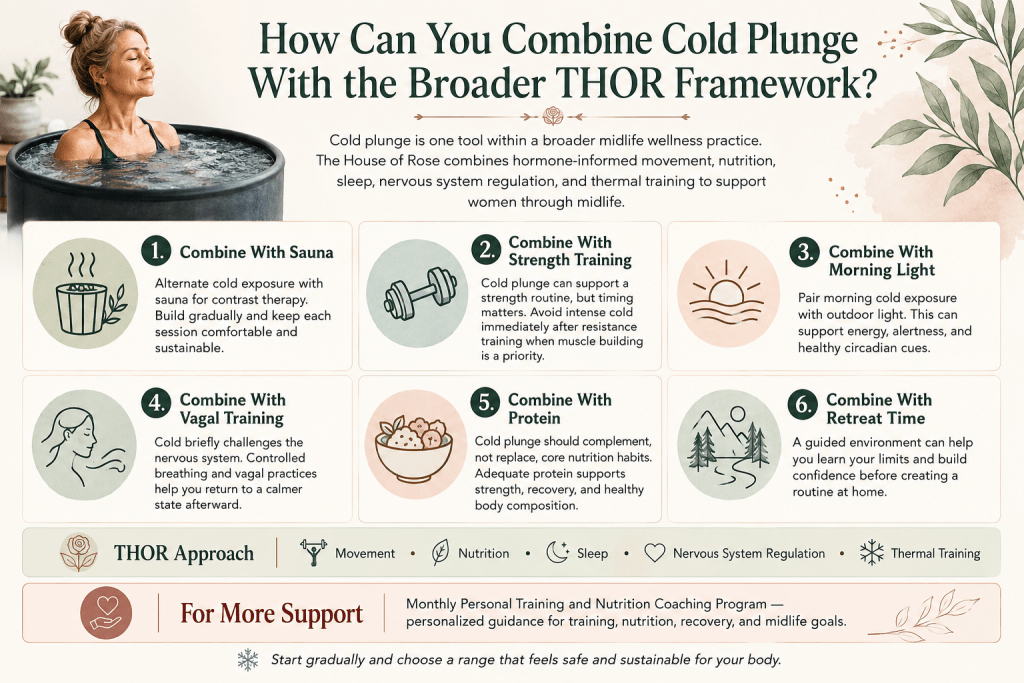
- Combine With Sauna: Alternating cold exposure with sauna creates a contrast therapy routine that challenges circulation and temperature regulation. If you use both, allow your body to adjust gradually and keep each session within a comfortable, sustainable range.
- Combine With Strength Training: Cold plunging can complement a strength-focused routine, but timing matters. Avoid using intense cold exposure immediately after resistance training when building or maintaining muscle is a priority. Our strength training routine for women over 40 can help you build the exercise side of your routine.
- Combine With Morning Light: Morning cold exposure can fit naturally alongside outdoor light exposure at the start of the day. Pairing the two can create a consistent morning routine that supports energy, alertness, and healthy circadian cues.
- Combine With Vagal Training: Cold exposure briefly challenges the autonomic nervous system, while controlled breathing and other vagus nerve reset exercises for midlife women can help you practice returning to a calmer state afterward.
- Combine With Protein: Cold plunging should complement, not replace, the nutrition habits that support muscle and metabolic health. Adequate protein remains especially important when your goals include strength, recovery, and healthy body composition.
Frequently Asked Questions
Is cold plunge good for perimenopause and menopause?
For most healthy midlife women without contraindications, yes. Cold plunge supports the specific systems most affected by hormonal transition: mitochondrial function, autonomic flexibility, mood regulation, and metabolic health. Sex-specific protocols (shorter durations, slightly warmer temperatures, adjustments for cycle if still cycling) matter for making the practice sustainable and safe.
How cold should the water be for midlife women?
Start at 60 to 65 degrees Fahrenheit. Work down to 50 to 55 degrees over several weeks. Below 50 degrees Fahrenheit rarely produces additional benefit for midlife women’s applications and increases risk.
How long should I stay in?
Start with 30 seconds. Work up to 2 to 3 minutes over weeks. Total weekly cold exposure of approximately 11 minutes across multiple sessions appears to produce the metabolic effects documented in research. Longer than 3 minutes per session is rarely necessary.
Is cold plunge bad for women?
Cold plunge is not inherently bad for women, but women benefit from modified protocols compared to men. Some concerns raised in the “cold plunge is bad for women” content circulating online focus on legitimate points about matching male protocols (which is not recommended) rather than about cold plunge being fundamentally unsuitable for women. Done with sex-specific protocols, cold plunge is a legitimate practice for midlife women.
Can cold plunge help with hot flashes?
Anecdotal reports and small studies suggest morning cold plunge may reduce the frequency and intensity of vasomotor symptoms in some women. The mechanism likely involves improved thermoregulatory response and central autonomic effects. This is not a substitute for other menopausal symptom management strategies, but for many women it is a supportive intervention worth trying.
When during the day should I cold plunge?
Morning is optimal for most women. The norepinephrine and dopamine effects support daytime function. Evening cold plunge can interfere with sleep for some women.
Can I cold plunge on my period?
Individual response varies. Some women find cold plunge helpful for cramping. Others find it too intense during menstruation. Adjust based on your own body. During the days immediately before menstruation, some women benefit from reduced duration or intensity.
Should I cold plunge before or after exercise?
Before exercise or on non-training days is often preferable. Some research suggests cold exposure within 4 hours after resistance training may blunt hypertrophy adaptations. If strength maintenance is a priority, avoid immediate post-training cold plunge.
Do I need an expensive tub?
No. Start with a bathtub and ice, or an affordable inflatable tub, to test whether you will maintain the practice. Invest in premium equipment only if you have established consistent use and want the convenience.
Is a chest freezer conversion safe?
Yes, when done correctly with a proper temperature controller and GFCI outlet. This approach produces reliable cold plunge at a fraction of the cost of purpose-built systems. Have the electrical setup verified by a qualified electrician if you are unsure.
Can I do cold plunge if I have Raynaud’s disease?
Cold plunge is generally not recommended for women with Raynaud’s disease because the peripheral vasoconstriction that Raynaud’s produces is exactly what cold plunge exacerbates. Consult your physician for individual guidance.
Can I combine cold plunge with sauna?
Yes. Contrast therapy alternating hot and cold has long history and documented benefits. Typical protocol is 15 to 20 minutes in the sauna followed by 1 to 2 minutes cold plunge, repeated 2 to 4 times. Introduce this after you have established both practices individually.
Will cold plunge help me lose weight?
Cold plunge activates brown adipose tissue and improves insulin sensitivity, which supports weight management goals. It is not a standalone weight loss strategy. Combined with strength training, adequate protein, and appropriate calorie management, cold plunge is a legitimate metabolic support.
How soon will I see benefits?
Some benefits (mood, alertness, sleep quality) can be noticeable within the first several sessions. Metabolic and body composition changes typically require 8 to 12 weeks of consistent practice. Individual response varies.
Can I do this with a heart condition?
Only with medical clearance. Cold plunge produces significant cardiovascular stress. Women with cardiovascular conditions or risk factors should have a specific conversation with a cardiologist familiar with cold exposure before beginning.
What if I have osteoporosis?
Cold plunge itself is not contraindicated for osteoporosis, but the fall risk from wet surfaces requires attention. Use non-slip mats. Consider having a stable rail or handhold at the entry and exit. Discuss with your physician if you have any concerns.
Can I do cold plunge during hormone therapy?
Hormone therapy is not a specific contraindication to cold plunge. Discuss with your prescribing physician if you have any concerns, particularly if you are on medications affecting blood pressure or cardiac function.
References
- Søberg, S., Löfgren, J., Philipsen, F. E., Jensen, M., Hansen, A. E., Ahrens, E., Nystrup, K. B., Nielsen, R. D., Sølling, C., Wedell-Neergaard, A. S., Berntsen, M., Loft, A., Kjær, A., Gerhart-Hines, Z., Johannesen, H. H., Pedersen, B. K., Karstoft, K., & Scheele, C. (2021). Altered brown fat thermoregulation and enhanced cold-induced thermogenesis in young, healthy, winter-swimming men. Cell Reports Medicine, 2(10), 100408.
- Šrámek, P., Šimečková, M., Janský, L., Šavlíková, J., & Vybíral, S. (2000). Human physiological responses to immersion into water of different temperatures. European Journal of Applied Physiology, 81(5), 436-442.
- Buijze, G. A., Sierevelt, I. N., van der Heijden, B. C., Dijkgraaf, M. G., & Frings-Dresen, M. H. (2016). The effect of cold showering on health and work: A randomized controlled trial. PLoS ONE, 11(9), e0161749.
- Tipton, M. J., Collier, N., Massey, H., Corbett, J., & Harper, M. (2017). Cold water immersion: Kill or cure? Experimental Physiology, 102(11), 1335-1355.
- Mooventhan, A., & Nivethitha, L. (2014). Scientific evidence-based effects of hydrotherapy on various systems of the body. North American Journal of Medical Sciences, 6(5), 199-209.
- Ihsan, M., Watson, G., & Abbiss, C. R. (2016). What are the physiological mechanisms for post-exercise cold water immersion in the recovery from prolonged endurance and intermittent exercise? Sports Medicine, 46(8), 1095-1109.
- Roberts, L. A., Raastad, T., Markworth, J. F., Figueiredo, V. C., Egner, I. M., Shield, A., Cameron-Smith, D., Coombes, J. S., & Peake, J. M. (2015). Post-exercise cold water immersion attenuates acute anabolic signalling and long-term adaptations in muscle to strength training. Journal of Physiology, 593(18), 4285-4301.
- Fuller, J. T., Thomson, R. L., Howe, P. R., & Buckley, J. D. (2015). Vibration therapy is no more effective than the standard practice of massage and stretching for promoting recovery from muscle damage after eccentric exercise. Clinical Journal of Sport Medicine, 25(4), 332-337.
- Yankouskaya, A., Williamson, R., Stacey, C., Totman, J. J., & Massey, H. (2023). Short-term head-out whole-body cold-water immersion facilitates positive affect and increases interaction between large-scale brain networks. Biology, 12(2), 211.
- van Marken Lichtenbelt, W. D., Vanhommerig, J. W., Smulders, N. M., Drossaerts, J. M. A. F. L., Kemerink, G. J., Bouvy, N. D., Schrauwen, P., & Teule, G. J. (2009). Cold-activated brown adipose tissue in healthy men. New England Journal of Medicine, 360(15), 1500-1508.
- Cypess, A. M., Lehman, S., Williams, G., Tal, I., Rodman, D., Goldfine, A. B., Kuo, F. C., Palmer, E. L., Tseng, Y. H., Doria, A., Kolodny, G. M., & Kahn, C. R. (2009). Identification and importance of brown adipose tissue in adult humans. New England Journal of Medicine, 360(15), 1509-1517.
- Hanssen, M. J., Hoeks, J., Brans, B., van der Lans, A. A., Schaart, G., van den Driessche, J. J., Jörgensen, J. A., Boekschoten, M. V., Hesselink, M. K., Havekes, B., Kersten, S., Mottaghy, F. M., van Marken Lichtenbelt, W. D., & Schrauwen, P. (2015). Short-term cold acclimation improves insulin sensitivity in patients with type 2 diabetes mellitus. Nature Medicine, 21(8), 863-865.
- Hausswirth, C., Louis, J., Bieuzen, F., Pournot, H., Fournier, J., Filliard, J. R., & Brisswalter, J. (2011). Effects of whole-body cryotherapy vs. far-infrared vs. passive modalities on recovery from exercise-induced muscle damage in highly-trained runners. PLoS ONE, 6(12), e27749.
- Wright, K. E., Skinner, S., & Zhu, S. (2023). The musculoskeletal syndrome of menopause. Climacteric, 26(4), 366-371.
- Freeman, E. W., Sammel, M. D., Boorman, D. W., & Zhang, R. (2014). Longitudinal pattern of depressive symptoms around natural menopause. JAMA Psychiatry, 71(1), 36-43.
- Bromberger, J. T., & Kravitz, H. M. (2011). Mood and menopause: Findings from the Study of Women’s Health Across the Nation (SWAN) over 10 years. Obstetrics and Gynecology Clinics of North America, 38(3), 609-625.
- Espeland, D., de Weerd, L., & Mercer, J. B. (2022). Health effects of voluntary exposure to cold water: A continuing subject of debate. International Journal of Circumpolar Health, 81(1), 2111789.
- Knechtle, B., Waśkiewicz, Z., Sousa, C. V., Hill, L., & Nikolaidis, P. T. (2020). Cold water swimming: Benefits and risks: A narrative review. International Journal of Environmental Research and Public Health, 17(23), 8984.
- Vosselman, M. J., Vijgen, G. H., Kingma, B. R., Brans, B., & van Marken Lichtenbelt, W. D. (2014). Frequent extreme cold exposure and brown fat and cold-induced thermogenesis: A study in a monozygotic twin. PLoS ONE, 9(7), e101653.
- Ouellet, V., Labbé, S. M., Blondin, D. P., Phoenix, S., Guérin, B., Haman, F., Turcotte, E. E., Richard, D., & Carpentier, A. C. (2012). Brown adipose tissue oxidative metabolism contributes to energy expenditure during acute cold exposure in humans. Journal of Clinical Investigation, 122(2), 545-552.
Disclaimer: This article is educational and does not constitute medical advice. Cold plunging creates an acute cardiovascular and nervous system stress response and requires gradual adaptation, appropriate temperatures, and controlled exposure times. If you have cardiovascular disease or risk factors, Raynaud’s disease, blood pressure concerns, take medications that affect blood pressure or heart rhythm, or have another condition that may affect your response to cold, consult a healthcare provider before starting the protocols in this article.

Terry Tateossian is a Menopause Lifestyle Medicine Coach, Certified Personal Trainer & Nutritionist and the Founder of THOR: The House of Rose, a wellness brand serving women over 40 through retreats, coaching, macro-nutrition and community. As 25-year founder and entrepreneur, Terry spent two and a half decades building and running successful start-up businesses, an experience that put her on the front line of founder burnout long before she could name it. After facing serious health challenges, early onset menopause, and emotional eating while running her agency and raising two children, Terry rebuilt her health in her 40s and lost more than 80 pounds through evidence-based nutrition, training, and mindset work. Today, she helps women get strong, improve confidence, support hormone health, and create a stronger second half of life. Terry has been featured in major media outlets and is available for podcasts, expert commentary, brand collaborations, and speaking engagements on midlife health, reinvention, emotional eating, menopause wellness, and strength training for longevity. Get her free macro calculator (her cookbook companion) to start your journey to back to health.