
 By Team THOR
Free 28-Day Fascia Reset Email Course
Get our Free 28-day email course series to help with 1 or 2 exercises per day to release your fascia. One short lesson per day. Two minutes to read each.
Why Your Calf Cramps Up in the Middle of the Night and What to Do About It: A Complete Guide for Midlife Women (Immediate Relief, Root Causes, and Prevention Protocol)
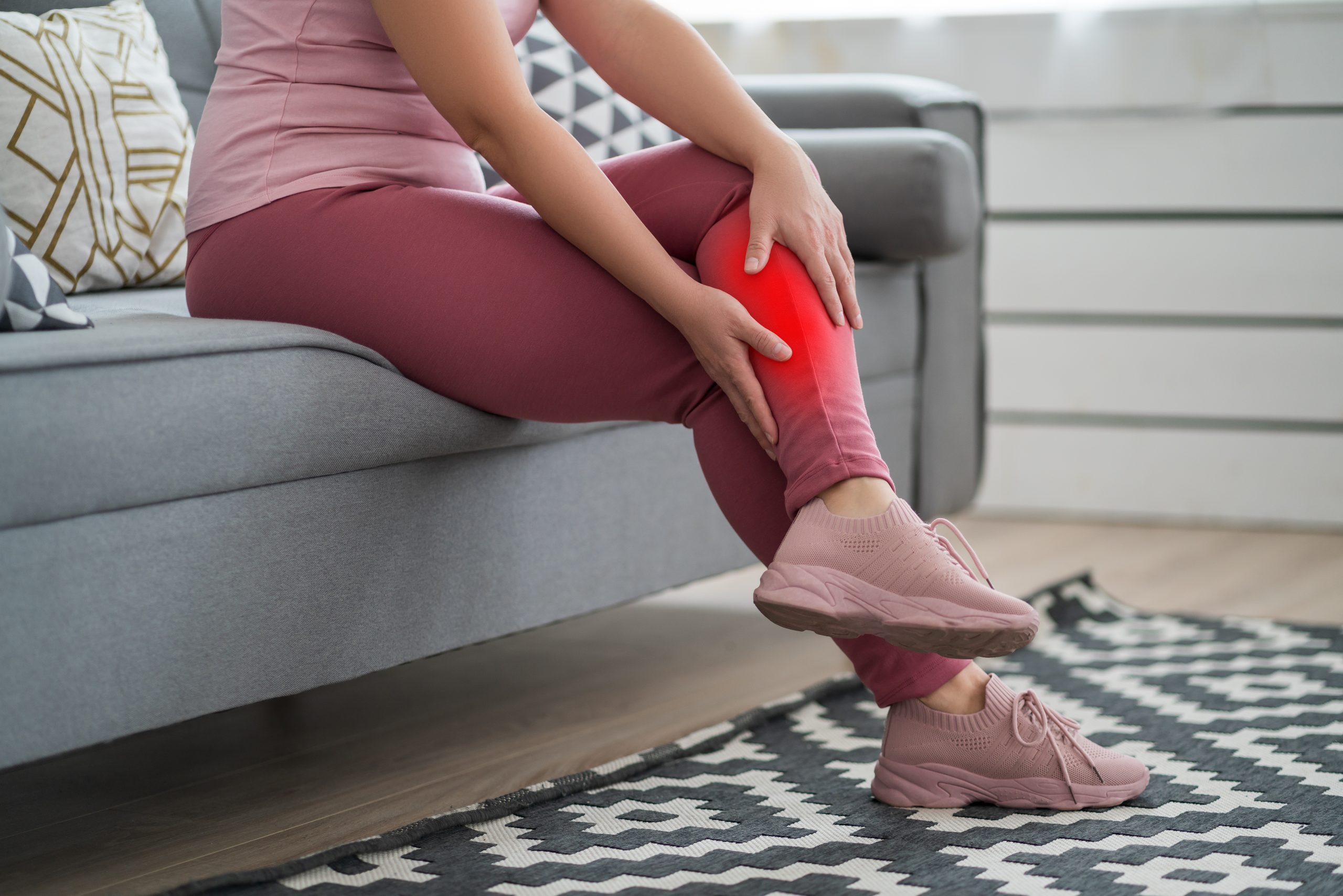
Delia is fifty-four. At 2:11 AM, she wakes as her right calf suddenly seizes. The muscle turns rock-hard, her toes curl, and for several painful seconds, nothing seems to make it release. She gets out of bed, plants her foot on the floor, and leans into the wall, pressing her heel down in the stretch she has learned from experience. Slowly, the cramp lets go.
But the pain does not completely disappear. Her calf stays tender, and she knows she may feel it on the stairs for the next day or two. Worse, she still does not know why it keeps happening. Her doctor told her nighttime leg cramps become more common after fifty and suggested magnesium. She tried it. The cramps still returned.
If this sounds familiar, this article is for you. We will break down what actually happens when a calf muscle cramps at night, what to do for immediate relief, why midlife women can be especially vulnerable, and what the evidence says about prevention.
You will also learn when recurring cramps may signal something that deserves medical attention, plus a practical prevention protocol that goes beyond simply being told to “try magnesium.” Nocturnal calf cramps often have several contributing causes. Once you identify which ones apply to you, targeted changes can make them much easier to manage and prevent.
What Happens When Your Calf Cramps at Night?
A nocturnal leg cramp, called a charley horse in casual language and nocturnal cramp in medical language, is a sudden, involuntary, sustained contraction of a skeletal muscle. In the calf, this typically involves the gastrocnemius (the large superficial muscle that gives the calf its rounded shape) or the soleus (the deeper flatter muscle underneath). Sometimes both. Occasionally, cramps also involve the muscles of the foot or the hamstring.
The muscle contracts so forcefully and sustainably that it is unable to relax on its own. Neurologically, this involves overactive motor neuron firing that fails to switch off. Metabolically, this involves depleted local resources including ATP, calcium handling in the muscle cell, and neurotransmitter clearance at the neuromuscular junction. The result is a hard, painful knot of muscle that resists efforts to relax it and typically lasts anywhere from a few seconds to several minutes.
Why Cramps Happen at Night Specifically
Nocturnal cramps are not random. They cluster during sleep for reasons that involve both muscle position and physiological rhythms. During sleep, we often assume postures that place calf muscles in a shortened position, particularly if we sleep on our backs with feet pointed slightly downward or on our sides with knees bent and feet plantar-flexed.
A muscle held shortened for hours is more likely to enter the neurological state that produces cramping when it does contract. Additionally, the parasympathetic nervous system dominance of deep sleep may affect blood flow and electrolyte handling in ways that increase susceptibility.
The Aftermath
After a cramp releases, the affected muscle is often tender and sore for hours to days. This soreness is real and reflects micro-damage to muscle fibers from the extreme forceful contraction. The muscle may feel “used” in a way that echoes the aftermath of an intense workout, because in a sense it was one, delivered involuntarily.
How Common They Are
Nocturnal leg cramps affect an estimated 30 to 50 percent of adults over 60 and around 20 percent of adults over 50. Women report them more often than men. During pregnancy, the incidence rises dramatically. And during perimenopause and menopause, the specific hormonal and metabolic shifts change the baseline risk in ways this article covers in detail.
Why Are Midlife Women More Prone to Nighttime Calf Cramps?
Multiple factors converge in midlife women to increase nocturnal cramp risk above the baseline seen in other demographic groups.
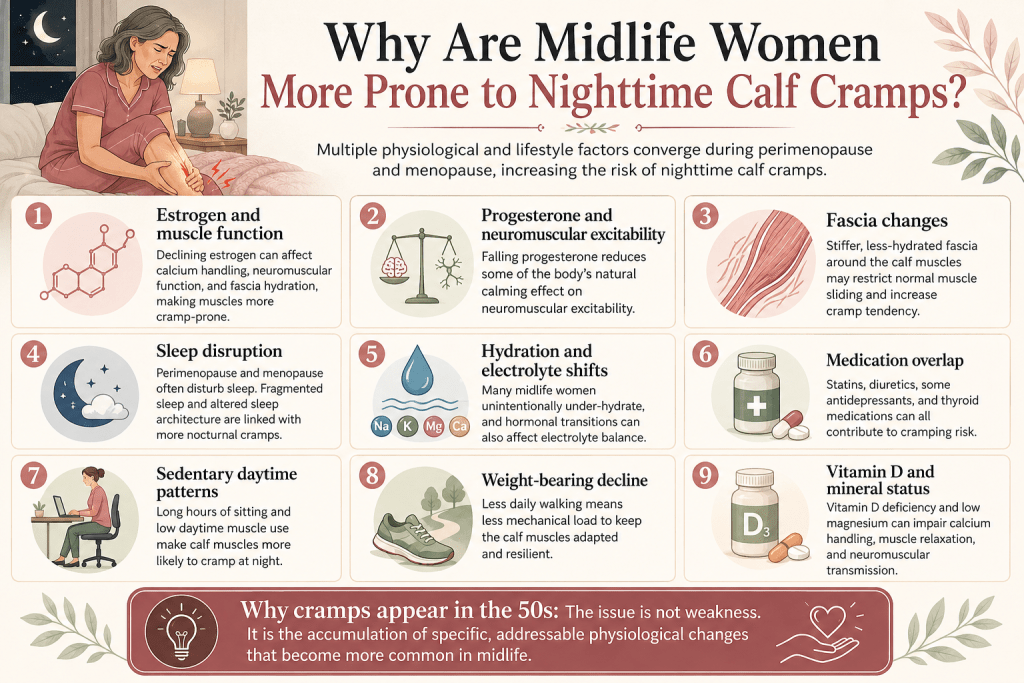
- Estrogen and muscle function: Estrogen has documented effects on skeletal muscle including calcium handling, neuromuscular junction function, and fascia hydration. Estrogen decline during perimenopause and menopause can shift each of these variables in ways that increase susceptibility to muscle cramping.
- Progesterone and neuromuscular excitability: Progesterone has calming effects on neuromuscular excitability through GABA-mediated pathways. Progesterone decline in perimenopause removes some of this natural buffering.
- Fascia changes: The connective tissue shifts that occur during menopause, including broader changes in fascia during menopause and the connection between estrogen and fascia, can directly affect calf muscle function. Stiffer, less-hydrated fascia surrounding the calf muscles may restrict normal muscle sliding and contribute to a greater tendency toward cramping.
- Sleep disruption: Perimenopause and menopause disrupt sleep for the majority of women who go through them. Fragmented sleep and altered sleep architecture affect the physiological environment in which cramps develop. Poor sleep quality is independently associated with increased nocturnal cramp frequency.
- Hydration and electrolyte shifts: Midlife women often unknowingly consume less water than their bodies need, particularly if hot flashes have made them wary of nighttime hydration that would drive bathroom trips. Electrolyte handling also shifts across the hormonal transition.
- Medication overlap: Midlife is the life stage when many women begin medications that can contribute to cramping. Statins for cholesterol, diuretics for blood pressure, some antidepressants, and thyroid medications all have cramping in their documented side effect profiles.
- Sedentary daytime patterns: Career, caregiving, and household demands often keep midlife women sedentary during the day. Calf muscles that spend eight to ten hours with minimal contraction during the day are more likely to cramp at night than calf muscles that have been used regularly.
- Weight-bearing decline: The reduction in incidental daily walking that comes with modern life reduces the specific mechanical stimulus that keeps calf muscles adapted to load. This is a use-it-or-cramp-it problem more than most people appreciate.
- Vitamin D and mineral status: Vitamin D deficiency is common in midlife women, and vitamin D has direct effects on calcium handling in muscle. Magnesium deficiency is also common and affects both muscle relaxation and neuromuscular transmission.
The compound of these factors explains why the same woman who never had a cramp in her thirties starts getting them in her fifties. This is not weakness. It is the accumulation of specific, addressable physiological changes.
Free 28-Day Fascia Reset Email Course
Get our Free 28-day email course series to help with 1 or 2 exercises per day to release your fascia. One short lesson per day. Two minutes to read each.
What Should You Do When a Calf Cramp Strikes?
When a cramp hits, the priority is to lengthen the muscle to force it out of the contracted state. The following protocol works for calf cramps specifically.
- Step 1 (first 5 seconds): Do not panic. Recognize what is happening. This is a muscle cramp. It will end. Panic activates sympathetic tone that can make the cramp worse.
- Step 2 (5 to 15 seconds): Get out of bed if you can. Swing your legs to the floor. Stand up if possible. Standing puts weight through the calf and mechanically stretches it.
- Step 3 (15 to 45 seconds): The wall stretch. Place your palms flat against a wall at shoulder height. Step your cramping leg back 12 to 18 inches. Keep the heel of the back foot flat on the floor. Lean into the wall with the back leg straight and the front leg bent. This puts a firm stretch on the gastrocnemius muscle of the back calf. Hold this position while the cramp releases. If the pain is severe, breathe slowly through it. Exhale for a count of 6.
- Step 4 (Alternative if you cannot stand): The sitting stretch. If standing is not possible, sit on the edge of the bed with the cramping leg extended straight in front of you. Reach for your toes and pull them toward your shin. If you cannot reach, use a belt, towel, or long strap looped around the ball of your foot to pull the toes toward you. Hold until the cramp releases.
- Step 5 (during the stretch): Deep breathing. Inhale through the nose for a count of 4. Exhale through the nose or pursed lips for a count of 6. Slow, controlled breathing during a cramp reduces the sympathetic nervous system spike and helps the muscle release faster.
- Step 6 (after the cramp releases): Gentle massage. Once the muscle has released, gently massage the affected area with your hands. Warm hands help. This helps clear the metabolic byproducts and reduces post-cramp soreness.
- Step 7 (before returning to bed): Warmth and hydration. Drink a glass of water. If you have magnesium, a small dose taken with the water may help prevent recurrence during the same night. A warm cloth on the calf can support the muscle as it returns to normal. Wait 5 to 10 minutes before returning to sleep to let the muscle fully release.
- Step 8 (next 24 hours): Gentle movement. The cramped muscle will be sore. Walk gently during the day. Do not skip movement out of fear of triggering another cramp. Gentle continued movement is one of the interventions that reduces cramp frequency.
What Causes Nighttime Calf Cramps?
Multiple factors contribute to nocturnal calf cramping. Most women who cramp regularly have several of these operating simultaneously.
Muscle-Related Factors
- Prolonged shortened positioning during sleep
- Sedentary daytime patterns
- Recent unusually intense exercise
- Fascia stiffness and restricted glide
- Weakened calf musculature
- Post-injury altered movement patterns
Fluid and Electrolyte Factors
- Dehydration (mild chronic more than acute)
- Sodium loss from heavy sweating (exercise, hot flashes, sauna)
- Magnesium deficiency
- Potassium imbalance
- Calcium handling issues
- Vitamin D deficiency (affects calcium handling)
Hormonal Factors
- Estrogen decline (perimenopause and menopause)
- Progesterone decline (perimenopause)
- Thyroid dysfunction (both hypo and hyperthyroidism)
- Adrenal dysregulation
- Pregnancy (different mechanism but relevant if applicable)
Medication Factors (Common Triggers)
- Statins (cholesterol medications)
- Diuretics (blood pressure medications, particularly loop and thiazide types)
- Beta agonists (some asthma medications)
- Some antidepressants (particularly SSRIs)
- Thyroid replacement in incorrect dose
- Some birth control formulations
- Alcohol (both acute intoxication and chronic use)
Medical Conditions Worth Investigating
- Peripheral vascular disease
- Peripheral neuropathy
- Diabetes (both types)
- Kidney disease
- Liver disease
- Restless legs syndrome (different condition but often co-occurs)
- Spinal stenosis affecting nerve roots
Lifestyle Factors
- Insufficient water intake
- Excessive alcohol
- Excessive caffeine (particularly in the second half of the day)
- Smoking
- Very tight bedding pulling feet into plantarflexion
- Sleeping on very soft mattresses that allow feet to sink
- Sleeping with feet outside the covers on cold nights
Environmental Factors
- Cold bedroom temperature (below 65°F for many people)
- Extremely warm bedroom temperature that increases sweating
- Certain shoes worn during the day (high heels, unsupportive footwear)
The complexity of this list is why “just take magnesium” rarely resolves the problem completely. Effective prevention typically requires addressing multiple factors simultaneously.
Free 28-Day Fascia Reset Email Course
Get our Free 28-day email course series to help with 1 or 2 exercises per day to release your fascia. One short lesson per day. Two minutes to read each.
What Does the Research Say About Preventing Nighttime Calf Cramps?
The research base on nocturnal leg cramps is smaller than many people assume, and some commonly-recommended interventions have weaker evidence than their popularity suggests.
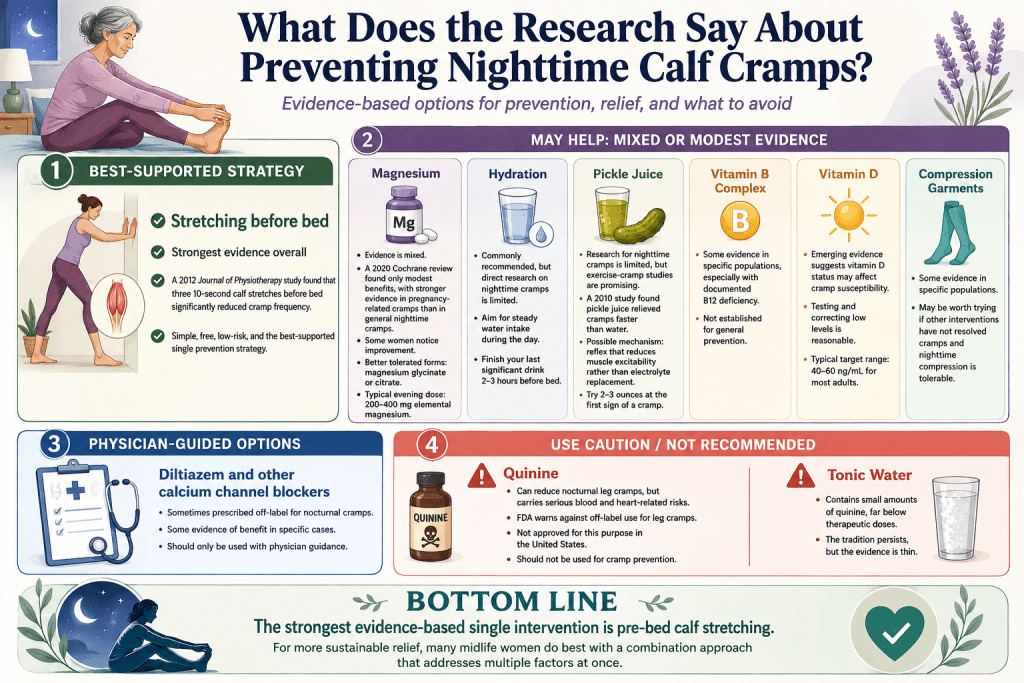
- Magnesium: Evidence for magnesium supplementation is mixed. A 2020 Cochrane review found only modest benefits for cramp prevention, with stronger evidence in pregnancy-related cramps than in general nighttime cramps. Individual response varies, though some women notice significant improvement. Magnesium glycinate or citrate are usually better tolerated than magnesium oxide. A typical evening dose is 200–400 mg of elemental magnesium.
- Stretching before bed: Evidence for nightly calf stretching is more consistent. A 2012 Journal of Physiotherapy study found that three 10-second calf stretches before bed significantly reduced cramp frequency. Similar findings have been reported elsewhere. It is simple, free, low-risk, and one of the best-supported strategies for preventing nighttime cramps.
- Hydration: Adequate hydration is commonly recommended, although direct research on nighttime cramps is limited. Aim for steady water intake throughout the day, then finish your last significant drink 2 to 3 hours before bed to reduce nighttime bathroom trips.
- Quinine: Quinine can reduce nocturnal leg cramps, but its risks include serious blood and heart-related side effects. The FDA warns against using quinine off-label for leg cramps, and it is not approved for this purpose in the United States. It should not be used for cramp prevention.
- Pickle juice: Research is limited for nighttime cramps, but studies on exercise-related cramps are promising. A 2010 study found pickle juice relieved cramps faster than water, possibly by triggering a reflex that reduces muscle excitability rather than by replacing electrolytes. If you want to try it, keep 2 to 3 ounces nearby and drink it at the first sign of a cramp.
- Tonic water: Contains small amounts of quinine but at doses far below therapeutic. The tradition persists but the evidence is thin.
- Diltiazem and other calcium channel blockers: Prescribed off-label for nocturnal cramps with some evidence of efficacy in specific cases. This is a physician-guided intervention, not something to try independently.
- Vitamin B complex: Some evidence in specific populations (particularly those with documented B12 deficiency) but not established for general prevention.
- Vitamin D: Emerging evidence that vitamin D status affects muscle cramp susceptibility. Getting your vitamin D level tested and supplementing to sufficient (typically 40 to 60 ng/mL for most adults) is reasonable and has broader health benefits beyond cramp prevention.
- Compression garments: Some evidence in specific populations. Worth trying if other interventions have not resolved cramps and if you can tolerate wearing compression at night.
The strongest evidence-based single intervention remains pre-bed calf stretching. The combination protocol described later in this article addresses multiple factors simultaneously and is what most midlife women who resolve cramps sustainably end up doing.
Which Nutrition and Electrolyte Factors Should You Investigate?
Nutrition and electrolyte status are frequently discussed in the context of cramps. What follows is a practical guide to what to actually check and how.
- Magnesium: Magnesium deficiency is common, especially with a typical American diet. Good food sources include leafy greens, pumpkin seeds, almonds, avocados, beans, dark chocolate, and whole grains. Magnesium glycinate or magnesium citrate is generally well tolerated at 200–400 mg of elemental magnesium in the evening. Do not exceed 400 mg without medical guidance. Adequate magnesium may also support better sleep quality.
- Potassium: Adequate intake is 2,600 to 3,400 mg per day for most adults. Food sources include bananas, oranges, potatoes, tomatoes, spinach, beans, and yogurt. Most women can get adequate potassium from food alone. Potassium supplementation without medical guidance is not recommended because excess can cause serious cardiac effects.
- Calcium: Adequate for midlife women is 1,200 mg per day, ideally from food. Food sources include dairy, dark leafy greens, sardines with bones, and fortified foods. Calcium supplementation is common but has come under increased scrutiny for cardiovascular effects. Food-based calcium is generally safer.
- Sodium: Often overlooked in cramp discussions. Very low sodium intake, particularly in women who follow strict low-sodium diets or who lose significant sodium through heavy sweating (exercise, hot flashes, sauna use), can contribute to cramps. Adequate sodium is important. Discuss with your physician if you are on blood pressure medications or have any cardiovascular conditions.
- Vitamin D: Have your level tested. Optimal range is generally 40 to 60 ng/mL. If deficient, supplement under physician guidance (typical dose 2,000 to 5,000 IU daily depending on baseline). Vitamin D affects calcium handling in muscle and is often the missing piece for women whose cramps do not respond to magnesium alone.
- B vitamins: B12 deficiency is common in women over 50, particularly those on acid-reducing medications, those with restricted diets, and those with malabsorption. Have B12 tested if cramps persist. Other B vitamins can also contribute.
- Adequate protein: Sometimes overlooked. Midlife women need at least 0.8 grams of protein per pound of body weight (approximately 1.6 grams per kg) to support muscle function. Inadequate protein intake affects muscle repair and function in ways that can contribute to cramping.
- Hydration: Consistent daily hydration of approximately half your body weight in ounces of water (approximately 75 to 90 ounces for most midlife women). Distributed across the day. Last major water intake completed 2 to 3 hours before sleep to avoid nighttime bathroom trips.
Do not take mega-doses of any single nutrient without physician guidance. Do not take random supplement stacks marketed for cramps. Do not use “electrolyte packets” designed for endurance athletes as a bedtime cramp prevention (they typically contain more sodium than most midlife women need and inadequate magnesium). Do have your baseline nutrient status tested if cramps have been persistent.
Free 28-Day Fascia Reset Email Course
Get our Free 28-day email course series to help with 1 or 2 exercises per day to release your fascia. One short lesson per day. Two minutes to read each.
Which Medications Can Trigger Nighttime Calf Cramps?
Medication side effects are one of the most common and most fixable causes of new-onset nocturnal cramps in midlife women. If your cramps started or worsened when you started a new medication, this is worth investigating with your prescribing physician.
- Statins: Cholesterol-lowering medications including atorvastatin, simvastatin, and rosuvastatin commonly cause muscle side effects including cramps. Different statins have different profiles; a change may resolve the problem while maintaining the cholesterol benefit.
- Diuretics: Loop diuretics (furosemide) and thiazide diuretics (hydrochlorothiazide) commonly cause cramps through their effects on potassium and magnesium. Some potassium-sparing diuretics have lower cramp risk.
- Beta agonists: Long-acting beta agonists used for asthma or COPD can cause cramps in some patients.
- SSRIs and some other antidepressants: Selective serotonin reuptake inhibitors can cause cramping in some patients. This does not mean you should stop your antidepressant. It means the cramp cause is potentially identifiable.
- Thyroid replacement: Both under-replacement and over-replacement can cause cramps. If you take thyroid medication and have cramps, verify your TSH and free T4 are appropriately controlled.
- Bisphosphonates: Medications for osteoporosis can cause muscle cramps in some patients.
- Some birth control formulations: Hormonal contraceptives can affect electrolyte handling in some women.
- Alcohol: Not a medication but has similar mechanism. Both acute intoxication and chronic use contribute to cramps.
If you suspect medication involvement, discuss with your prescribing physician. Do not stop prescribed medications on your own. Options often include dose adjustment, timing change, switching within a drug class, adding compensating interventions, or accepting the trade-off if the medication is essential for other reasons.
How Can Your Sleep Position and Bedding Affect Calf Cramps?
Position and bedding contribute more to nocturnal cramps than most people realize.
- The plantarflexion problem: When you sleep on your back with heavy blankets tucked in tightly, the weight of the blankets can push your feet into plantarflexion (toes pointed downward). This position holds the calf muscles in a shortened state for hours. A muscle held shortened is more susceptible to cramping when it does contract.
- The side-sleeper problem: Side sleepers often bend their knees and plantarflex their feet, also holding the calves in a shortened position.
- The very soft mattress problem: Extremely soft mattresses allow the feet to sink lower than the rest of the leg, again creating plantarflexion.
- The cold-foot problem: Cold feet increase muscle tension and can predispose to cramps. Feet outside the covers on cold nights, or a bedroom that is too cold, contribute.
Practical Adjustments
- Use looser bedding, or a footboard that keeps blankets elevated above your feet
- If you are a back sleeper, place a small pillow under your knees to reduce lower leg tension
- Consider a lightweight bed frame that allows blankets to drape without pulling down on your feet
- Keep bedroom temperature in the 65 to 68 degree range for most people
- Wear socks if your feet run cold, or add an extra layer at the foot of the bed
Sleep Position Changes
Some women benefit from changing sleep positions. If cramps consistently happen when sleeping on a specific side, try the opposite side or your back. Position changes take weeks to feel natural. Consistency matters.
Free 28-Day Fascia Reset Email Course
Get our Free 28-day email course series to help with 1 or 2 exercises per day to release your fascia. One short lesson per day. Two minutes to read each.
What Should a Complete Nightly Cramp-Prevention Protocol Include?
Based on the research and clinical experience with midlife women, the following combined protocol addresses the multiple factors that contribute to nocturnal calf cramps. Adopt what applies. Skip what does not.
During the Day
- Consistent hydration (approximately half your body weight in ounces of water)
- Walk daily. Even 20 to 30 minutes of gentle walking supports calf muscle function
- If you sit for long periods, stand and move every 45 to 60 minutes
- Include weight-bearing activity most days (walking counts; add strength training two or three times per week)
- Reasonable sodium intake (do not aggressively restrict unless medically indicated)
- Include magnesium-rich foods
Evening (2 to 3 Hours Before Bed)
- Complete your last major water intake
- Warm meal that includes some protein and vegetables
- Reduce or avoid alcohol
- Reduce or avoid caffeine (if you have not already stopped hours earlier)
Bedtime Routine
- Warm shower or bath if that is part of your routine
- Perform the pre-bed calf stretch protocol (below) for approximately 3 minutes
- Consider magnesium supplement (200 to 400 mg elemental) if trialing this intervention
- Verify bedroom is in the 65 to 68 degree range
- Adjust bedding to avoid tight tucking that pulls feet into plantarflexion
In Bed
- Preferred sleep position that does not sustain plantarflexion
- Small pillow under knees if back sleeping
- Socks or foot warmth if you tend to have cold feet
Weekly
- At least 2 to 3 strength training sessions including calf work
- Consider 1 to 2 longer walks or hikes to fully engage calf musculature
- Assess sleep quality and adjust as needed
Monthly
- If cramps persist, reassess what may be contributing
- If new patterns emerge, discuss with physician
- Track frequency in a simple journal to identify triggers
Every 6 to 12 Months
- Check vitamin D level
- Check magnesium status if possible (RBC magnesium is more useful than serum)
- Review all medications with physician for cramp side effects
- If cramps continue despite comprehensive approach, request evaluation for underlying medical causes
The women who resolve nocturnal cramps sustainably typically do most of the above rather than picking one intervention. This is not about doing everything at once. It is about steadily addressing the factors that apply to you until cramps become rare rather than routine.
Which Stretches and Movement Practices Can Help Reduce Calf Cramps?
Stretching has the strongest evidence base of any single cramp prevention strategy. The following stretches are the ones with documented effects.
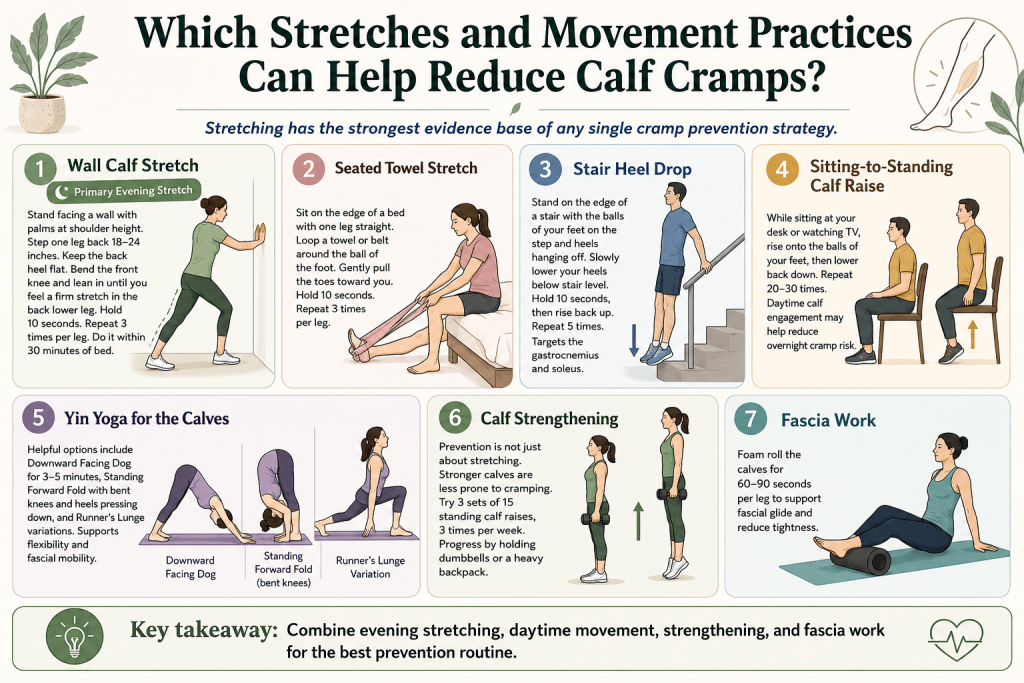
The Wall Calf Stretch (Primary Evening Stretch)
Stand facing a wall. Place palms flat against the wall at shoulder height. Step one leg back 18 to 24 inches. Keep the back heel flat on the floor. Bend the front knee and lean into the wall. You should feel a firm stretch along the back of the lower leg. Hold 10 seconds. Repeat 3 times per leg. Perform each evening within 30 minutes of bed.
The Seated Towel Stretch
Sit on the edge of a bed with one leg extended straight. Loop a towel or belt around the ball of the foot. Gently pull the towel to draw the toes toward you. Hold 10 seconds. Repeat 3 times per leg.
The Stair Heel Drop
Stand on the edge of a stair with the balls of your feet on the stair and your heels hanging off. Slowly lower your heels below the level of the stair. Hold for 10 seconds. Rise back to level. Repeat 5 times. Effective for gastrocnemius and soleus.
The Sitting-to-Standing Calf Raise
While sitting at your desk or watching television, rise onto the balls of your feet, then lower back down. Repeat 20 to 30 times. This active engagement of calf musculature during the day reduces overnight cramp risk.
Yin Yoga Poses for the Calves
Sustained hold poses that stretch the calves include Downward Facing Dog held for 3 to 5 minutes, Standing Forward Fold with bent knees and heels pressing down, and any variation of a runner’s lunge. These movements can also be incorporated into a broader practice using Yin Yoga poses for myofascial release to support flexibility and fascial mobility.
Calf Strengthening
Prevention is not just about stretching. Stronger calves are less prone to cramping. Simple strengthening: three sets of 15 standing calf raises three times per week. Progress by holding weights (dumbbells or a heavy backpack). Include in your regular strength training routine.
Fascia Work on the Calves
Foam rolling the calves for 60 to 90 seconds per leg can support fascial glide, especially when incorporated into a broader routine of fascia release exercises designed to address tight or restricted tissue.
Free 28-Day Fascia Reset Email Course
Get our Free 28-day email course series to help with 1 or 2 exercises per day to release your fascia. One short lesson per day. Two minutes to read each.
When Should You See a Doctor About Nighttime Calf Cramps?
Most nocturnal calf cramps are benign. Some are signs of underlying conditions that need attention. See a physician if you have:
Cramp-Related Red Flags
- Very frequent cramps (multiple per night, most nights of the week)
- Cramps that do not respond to any intervention
- New-onset severe cramps after starting a new medication
- Cramps accompanied by significant swelling, redness, or warmth
- Cramps that leave lasting weakness or numbness in the affected muscle
- Cramps that occur during the day at unusual times (during rest, not exercise)
- Cramps accompanied by other unusual symptoms
Cardiovascular Red Flags
- Leg pain with walking that improves with rest (claudication – suggests peripheral vascular disease)
- One-sided leg swelling, redness, or warmth (could suggest DVT)
- Skin color changes in the affected leg
- Cold, pale foot or leg
- Any suggestion of DVT (deep vein thrombosis) is a medical emergency
Neurological Red Flags
- Numbness or tingling that persists between cramps
- Weakness in the leg between cramps
- Difficulty walking normally
- Back pain accompanying leg symptoms (could suggest nerve root compression)
Systemic Red Flags
- Unexplained weight loss
- Persistent fatigue
- Excessive urination
- New-onset diabetes symptoms
- Any signs of thyroid dysfunction
- Kidney symptoms
Medication Situations Warranting Review
- Cramps that started or worsened with a new prescription
- Cramps in the context of multiple medications
- Any concerning changes in health while on medications
When you see a physician, come prepared with: a log of when cramps have occurred, what preceded them, a complete list of medications and supplements, any relevant medical history, what you have already tried. This information dramatically improves the likelihood of identifying contributing factors.
Which Common Calf Cramp Remedies Actually Work?
The table below summarizes common interventions with an honest assessment of evidence quality.
|
Intervention |
Evidence quality |
Effect size |
Best for |
Notes |
|
Pre-bed calf stretching |
Strong |
Moderate to large |
Everyone |
Best single intervention, free, low-risk |
|
Mixed |
Small to moderate individual |
Some women (especially those with deficiency) |
Try magnesium glycinate; response varies |
|
|
Adequate hydration |
Weak direct, plausible mechanism |
Small to moderate |
Everyone |
Low-risk, broader health benefits |
|
Vitamin D correction |
Emerging |
Moderate for those deficient |
Women with confirmed deficiency |
Test level first |
|
Bedroom temperature adjustment |
Weak but plausible |
Small |
Those with cold-foot pattern |
Free adjustment |
|
Sleep position change |
Weak but plausible |
Small to moderate |
Those with plantarflexion patterns |
Takes weeks to establish |
|
Adequate protein |
Indirect |
Small |
Undernourished women |
Broader benefits |
|
Regular calf strengthening |
Weak direct, strong mechanism |
Moderate |
Everyone |
Broader benefits including bone health |
|
Compression garments |
Small evidence base |
Variable |
Some patients |
Try if others do not work |
|
Pickle juice at onset |
Limited but interesting |
Effective for stopping |
Acute intervention |
Odd but harmless |
|
Cinnamon, other herbs |
Weak to none |
Unclear |
Not established |
Skip |
|
Quinine (tonic water) |
Real efficacy but risks |
Moderate |
Not recommended |
FDA warns against |
|
Prescription diltiazem |
Some evidence |
Moderate |
Refractory cases with physician |
Physician-guided only |
|
Cinnamon roll before bed |
Zero evidence |
Zero |
Nothing |
Social media only |
|
Bar of soap under sheets |
Zero evidence |
Zero |
Nothing |
Persistent folk remedy without support |
|
Mustard packets |
Weak, similar to pickle juice mechanism |
Small |
Acute intervention |
Alternative to pickle juice |
The point of this table is not to declare that only interventions with the highest evidence quality are worth trying. The point is to help you allocate time and money to what has the best evidence-to-cost ratio. Pre-bed stretching is free and effective. Try it before you buy supplements. Magnesium is worth trying for many women. Compression garments are worth trying if other interventions have not resolved things. The bar of soap under the sheets can be skipped.
“The single most useful thing I tell women about nocturnal cramps is that this is not one problem. It is five or six problems that happen to produce the same symptom. Which means you cannot solve it with one intervention. Women who take magnesium and stretch and drink more water and check their vitamin D and adjust their bedding and add calf work to their strength routine are the ones who see cramps disappear. Women who try one thing at a time and give each a week are the ones who conclude nothing works and give up. The compound approach is what works. The single-intervention approach almost never works alone.”
Terry Tateossian, Founder of The House of Rose
Free 28-Day Fascia Reset Email Course
Get our Free 28-day email course series to help with 1 or 2 exercises per day to release your fascia. One short lesson per day. Two minutes to read each.
How Does the 5-Day Cramp-Prevention Program Work?
This program introduces the core prevention strategies over five days. It is designed to give you the practices that most reliably reduce cramps, applied in a sequence you can actually maintain.
|
Day |
Focus |
Practice |
Time investment |
|
Day 1 |
Baseline and evening stretch |
Complete cramp log for prior 30 days; add nightly wall calf stretch protocol |
5 minutes evening |
|
Day 2 |
Hydration foundation |
Continue Day 1; establish daytime hydration target and evening cutoff |
5 minutes evening + water tracking |
|
Day 3 |
Add magnesium and bedding assessment |
Continue Day 1-2; start magnesium supplement; adjust bedding for plantarflexion |
5 minutes evening + setup |
|
Day 4 |
Add strength foundation |
Continue Day 1-3; add 3 sets of 15 calf raises during a daytime break |
12 minutes total daily |
|
Day 5 |
Full protocol integration |
All Days 1-4 practices integrated; assess vitamin D testing need; review medications |
15 minutes daily |
Day 1 Detail: Baseline and Evening Stretch
Take 15 minutes to log any cramps you have had in the past 30 days: dates, times, severity, what preceded them, what you did to resolve. This baseline helps you evaluate what changes over time. Then, this evening within 30 minutes of getting into bed, perform the wall calf stretch protocol: 3 stretches per leg, 10 seconds each, per leg. This alone has the strongest evidence base of any intervention.
Day 2 Detail: Hydration Foundation
Continue the nightly stretch. Add a hydration protocol: calculate your target as half your body weight in ounces of water (a 150-pound woman aims for approximately 75 ounces per day). Distribute across the day. Complete your last significant water intake 2 to 3 hours before bedtime. Track for the first week to establish the habit.
Day 3 Detail: Add Magnesium and Bedding Assessment
Continue Days 1 and 2. If magnesium is a candidate intervention (most midlife women could reasonably try it), begin magnesium glycinate 200 to 400 mg elemental in the evening. Then assess your bedding. If your blankets tuck tightly enough to hold your feet in plantarflexion, either loosen the tucking or add a bed frame that keeps blankets elevated. Adjust bedroom temperature to 65 to 68 degrees.
Day 4 Detail: Add Strength Foundation
Continue Days 1 through 3. Add three sets of 15 standing calf raises during a daytime break (mid-morning or afternoon). If you can hold onto a wall for balance, this is safe for most people. Progress over weeks by holding weights.
Day 5 Detail: Full Protocol Integration
All prior practices continue. Assess whether vitamin D testing is warranted (particularly if you have never had it tested). Review all your medications with awareness of cramp side effects; discuss with your physician if any candidates emerge. This is now a comprehensive protocol you can maintain long-term.
Post-Program: Ongoing Maintenance
After the 5-day introduction, the practices become an ordinary part of the evening routine. Most women who apply this comprehensive protocol see meaningful cramp reduction within 2 to 4 weeks. Continued reduction typically follows over 8 to 12 weeks. If cramps have not substantially reduced after 12 weeks of consistent application, the situation warrants medical evaluation for underlying causes.
What Common Cramp-Prevention Mistakes Should You Avoid?
Mistake: Trying One Thing at a Time
Cramps result from multiple contributing factors. Trying magnesium alone for two weeks and concluding it does not work misses that magnesium plus stretching plus hydration plus bedding adjustment might have. Approach comprehensively.
Mistake: Ignoring Medication Contributors
Statins, diuretics, and other medications are among the most common triggers of new-onset midlife cramps. If you started cramping when you started a medication, this is worth investigating with your physician.
Mistake: Skipping the Stretch Because It Seems Too Simple
Pre-bed calf stretching has the strongest evidence of any single intervention. It is free and takes 3 minutes. Do not skip it because it does not feel important enough.
Mistake: Aggressive Supplement Stacking
Do not take large doses of multiple supplements without testing your baseline status. Excess of some nutrients (especially calcium in some contexts and vitamin D in extreme excess) has its own risks.
Mistake: Restricting Sodium Excessively
Many midlife women follow low-sodium recommendations even when they do not have hypertension. Very low sodium intake in the context of sweating (exercise, hot flashes) can contribute to cramping. Adequate sodium is important. Discuss with your physician if you take blood pressure medications.
Mistake: Trying Quinine or Tonic Water
The FDA specifically warns against quinine for leg cramps due to serious safety concerns. Tonic water contains too little quinine to help but the tradition persists. Skip both.
Mistake: Assuming It Will Pass on Its Own
Some women wait months or years hoping cramps will resolve. They rarely do without intervention. The compound protocol works. Start it.
Mistake: Not Seeking Medical Evaluation for Red Flags
Some cramps signal serious conditions including cardiovascular disease, thyroid dysfunction, or neurological issues. If you have any of the red flags listed above, see a physician.
Mistake: Overtraining During the Day and Then Wondering Why You Cramp at Night
Unusually intense exercise can trigger cramps that night or the next. This is different from ordinary training. If you have added significant exercise volume and cramps have started or worsened, consider whether recovery, hydration, and nutrition are matching the increased demand.
Mistake: Blaming Yourself
Cramps are physiological events, not moral failings. The women most likely to solve them are the ones who approach them as a solvable problem rather than as evidence of personal deficiency.
Free 28-Day Fascia Reset Email Course
Get our Free 28-day email course series to help with 1 or 2 exercises per day to release your fascia. One short lesson per day. Two minutes to read each.
How Long Does It Take for Calf Cramp Prevention to Work?
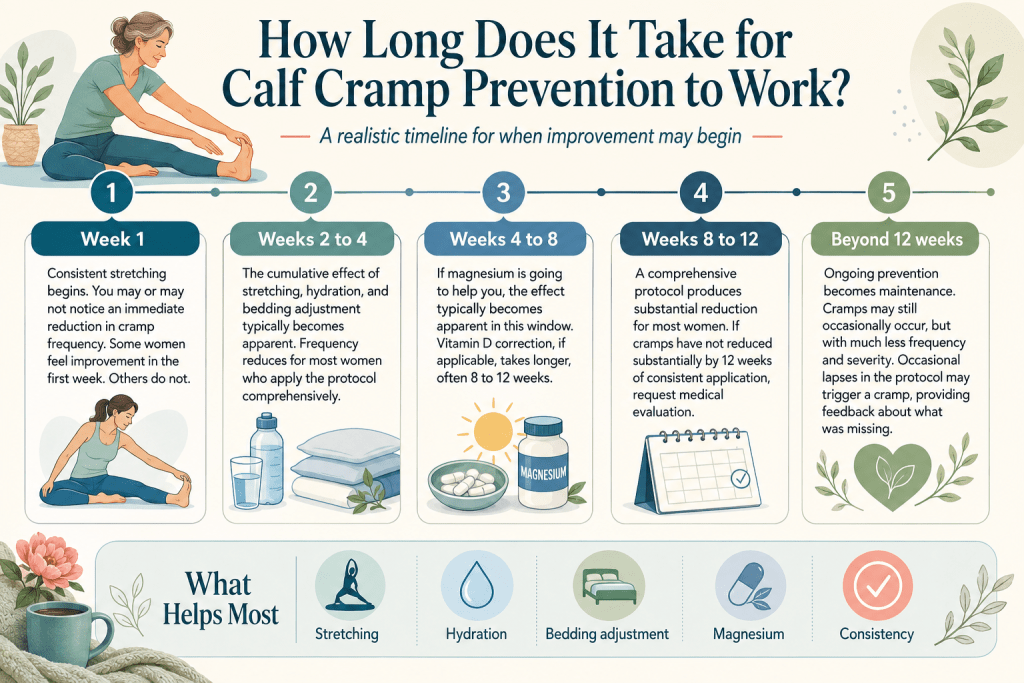
- Week 1: Consistent stretching begins. You may or may not notice immediate reduction in cramp frequency. Some women feel improvement in the first week. Others do not.
- Weeks 2 to 4: Cumulative effect of stretching plus hydration plus bedding adjustment typically becomes apparent. Frequency reduces for most women who apply the protocol comprehensively.
- Weeks 4 to 8: If magnesium is going to help you, the effect typically becomes apparent in this window. Vitamin D correction (if applicable) takes longer, often 8 to 12 weeks.
- Weeks 8 to 12: Comprehensive protocol produces substantial reduction for most women. If cramps have not reduced substantially by 12 weeks of consistent application, request medical evaluation.
- Beyond 12 weeks: Ongoing prevention becomes maintenance. Cramps may occasionally still occur but with much less frequency and severity. Occasional lapses in the protocol may trigger a cramp, providing feedback about what specifically was missing.
When to reassess:
- No improvement after 12 weeks of consistent protocol
- New pattern of cramps different from before
- Cramps accompanied by any red flag symptoms
- Significant change in medications
- Significant change in exercise routine
Free 28-Day Fascia Reset Email Course
Get our Free 28-day email course series to help with 1 or 2 exercises per day to release your fascia. One short lesson per day. Two minutes to read each.
Frequently Asked Questions
What causes leg cramps at night?
Nocturnal leg cramps result from multiple contributing factors including muscle position during sleep, sedentary daytime patterns, hydration and electrolyte status, hormonal shifts, medications, and underlying medical conditions. Most women who cramp regularly have several factors operating simultaneously, which is why comprehensive approaches work better than single interventions.
Why do I get calf cramps at night in menopause?
Estrogen decline affects skeletal muscle function including calcium handling and neuromuscular junction stability. Progesterone decline reduces neuromuscular calming. Fascia changes reduce calf muscle glide. Sleep disruption alters the physiological environment. Together, these hormonal shifts explain why midlife women are hit harder than any other demographic.
Does magnesium help leg cramps at night?
The evidence is mixed. Some women respond dramatically to magnesium supplementation. Others do not. Magnesium glycinate at 200 to 400 mg elemental in the evening is worth trying for most midlife women, with 6 to 8 weeks of consistent use to assess response. Magnesium is not a magic bullet, and it works best alongside other prevention strategies.
What deficiency causes leg cramps at night?
Multiple deficiencies can contribute: magnesium (common), vitamin D (very common in midlife women), potassium (less common), B12 (common in women over 50). If cramps are persistent, having magnesium, vitamin D, and B12 levels tested is reasonable. Do not assume you know which deficiency you have; test if possible.
What vitamins help leg cramps at night?
Vitamin D (particularly if you are deficient), magnesium (technically a mineral), and B vitamins (particularly B12 if deficient) have the best evidence for cramp support. Comprehensive multivitamins are less effective than targeted supplementation of the specific nutrients you may be low in.
Free 28-Day Fascia Reset Email Course
Get our Free 28-day email course series to help with 1 or 2 exercises per day to release your fascia. One short lesson per day. Two minutes to read each.
How do I stop a leg cramp when it happens?
Get out of bed. Perform the wall calf stretch (heel flat on floor, lean into a wall with the leg back). Hold until the cramp releases. Breathe slowly. Gently massage the muscle after it releases. Drink water. Wait a few minutes before returning to sleep.
When should I worry about leg cramps at night?
See a physician if you have very frequent cramps, cramps that do not respond to any intervention, cramps that started with a new medication, cramps accompanied by swelling or redness, cramps with lasting weakness or numbness, one-sided leg pain that could suggest a blood clot, or cramps accompanied by any concerning systemic symptoms.
Can dehydration cause leg cramps at night?
Yes, but often less directly than commonly assumed. Chronic mild dehydration contributes more than acute dehydration. Adequate daily hydration (about half your body weight in ounces) is worth establishing as one part of prevention.
Does pickle juice really work for cramps?
Some evidence suggests pickle juice can help stop a cramp faster than water, possibly through an oropharyngeal reflex rather than direct electrolyte effect. A small shot at cramp onset is harmless to try. Not a prevention strategy, only an in-the-moment intervention.
Is quinine or tonic water safe for cramps?
Quinine has documented cramp efficacy but has serious safety concerns. The FDA specifically warns against quinine for leg cramps. Tonic water contains only trace quinine. Skip both. Better options exist.
Can medications cause leg cramps?
Yes. Statins, diuretics, some antidepressants, thyroid medications, some birth control formulations, beta agonists, and bisphosphonates all can cause cramping. If your cramps started with a new medication, discuss with your prescribing physician.
How do I know if my thyroid is causing cramps?
Both hypothyroidism and hyperthyroidism can cause muscle cramps. If you have not had thyroid function tested (TSH and free T4 at minimum) in the past year, this is reasonable to add to your annual physical, particularly if you have other thyroid symptoms including fatigue, temperature intolerance, weight changes, or hair changes.
Are night leg cramps a sign of diabetes?
Diabetes can contribute to cramps through peripheral neuropathy and other mechanisms. If you have not had blood glucose testing recently, this is reasonable to add. Cramps are not a specific diabetes symptom, but they can occur alongside undiagnosed diabetes.
Free 28-Day Fascia Reset Email Course
Get our Free 28-day email course series to help with 1 or 2 exercises per day to release your fascia. One short lesson per day. Two minutes to read each.
Can I do anything during the day to prevent nighttime cramps?
Yes. Daily walking, regular strength training with calf work, consistent hydration, avoiding prolonged sitting, and eating adequate magnesium and vitamin D from food all reduce nighttime cramp risk. Prevention is not just an evening practice.
Do compression socks help?
Some evidence in specific populations. Worth trying if other interventions have not resolved cramps. Wearing compression stockings during the day rather than at night may be more comfortable and equally effective.
Should I stop exercising to avoid cramps?
No. Regular movement including calf-loading exercise reduces cramp risk. Do not stop exercising. Ensure adequate hydration and recovery around training.
Why do the cramps hurt for days afterward?
The sustained forceful contraction causes micro-damage to muscle fibers, similar to intense exercise. Post-cramp soreness typically resolves in 1 to 3 days. Gentle movement supports faster recovery. Persistent or worsening soreness beyond 3 to 4 days warrants medical evaluation.
Can perimenopause cause cramps to start?
Yes. Many women report new-onset nocturnal cramps in perimenopause. The mechanism involves multiple hormonal, nutritional, and lifestyle factors converging during this transition. Comprehensive approaches typically resolve most perimenopausal cramps.
Are there any specific foods that help?
Foods rich in magnesium (dark leafy greens, pumpkin seeds, almonds, dark chocolate, avocados), potassium (bananas, potatoes, tomatoes, spinach), calcium (dairy, sardines with bones, leafy greens), and vitamin D-fortified foods contribute. Adequate protein throughout the day is also important.
References
- Garrison, S. R., Allan, G. M., Sekhon, R. K., Musini, V. M., & Khan, K. M. (2020). Magnesium for skeletal muscle cramps. Cochrane Database of Systematic Reviews, 9(9), CD009402.
- Hallegraeff, J. M., van der Schans, C. P., de Ruiter, R., & de Greef, M. H. G. (2012). Stretching before sleep reduces the frequency and severity of nocturnal leg cramps in older adults: A randomised trial. Journal of Physiotherapy, 58(1), 17-22.
- Miller, K. C., Mack, G. W., Knight, K. L., Hopkins, J. T., Draper, D. O., Fields, P. J., & Hunter, I. (2010). Reflex inhibition of electrically induced muscle cramps in hypohydrated humans. Medicine and Science in Sports and Exercise, 42(5), 953-961.
- Katzberg, H. D., Khan, A. H., & So, Y. T. (2010). Assessment: Symptomatic treatment for muscle cramps (an evidence-based review): Report of the therapeutics and technology assessment subcommittee of the American Academy of Neurology. Neurology, 74(8), 691-696.
- Allen, R. E., & Kirby, K. A. (2012). Nocturnal leg cramps. American Family Physician, 86(4), 350-355.
- Grandner, M. A., & Winkelman, J. W. (2017). Nocturnal leg cramps: Prevalence and associations with demographics, sleep disturbance symptoms, medical conditions, and cardiometabolic risk factors. PLoS ONE, 12(6), e0178465.
- Hawke, F., Sadler, S. G., Katzberg, H. D., Pourkazemi, F., Chuter, V., & Burns, J. (2021). Non-drug therapies for the secondary prevention of lower limb muscle cramps. Cochrane Database of Systematic Reviews, 5(5), CD008496.
- Blyton, F., Chuter, V., Walter, K. E., & Burns, J. (2012). Non-drug therapies for lower limb muscle cramps. Cochrane Database of Systematic Reviews, 1(1), CD008496.
- Barbagallo, M., Belvedere, M., & Dominguez, L. J. (2009). Magnesium homeostasis and aging. Magnesium Research, 22(4), 235-246.
- Roguin Maor, N., Alperin, M., Shturman, E., Khairaldeen, H., Friedman, M., Karkabi, K., & Milman, U. (2017). Effect of magnesium oxide supplementation on nocturnal leg cramps: A randomized clinical trial. JAMA Internal Medicine, 177(5), 617-623.
- Butler, J. V., Mulkerrin, E. C., & O’Keeffe, S. T. (2002). Nocturnal leg cramps in older people. Postgraduate Medical Journal, 78(924), 596-598.
- Coppin, R. J., Wicke, D. M., & Little, P. S. (2005). Managing nocturnal leg cramps: Calf-stretching exercises and cessation of quinine treatment: A factorial randomised controlled trial. British Journal of General Practice, 55(512), 186-191.
- Serrao, M., Rossi, P., Cardinali, P., Valente, G., Parisi, L., & Pierelli, F. (2000). Gabapentin treatment for muscle cramps: An open-label trial. Clinical Neuropharmacology, 23(1), 45-49.
- Wright, K. E., Skinner, S., & Zhu, S. (2023). The musculoskeletal syndrome of menopause. Climacteric, 26(4), 366-371.
- Schwellnus, M. P., Drew, N., & Collins, M. (2011). Increased running speed and previous cramps rather than dehydration or serum sodium changes predict exercise-associated muscle cramping: A prospective cohort study in 210 Ironman triathletes. British Journal of Sports Medicine, 45(8), 650-656.
- Uwaifo, G. I. (2019). The magnesium status of adult American women: Time for a reappraisal. Journal of the Endocrine Society, 3(11), 2013-2016.
- Kruse, P., Ladefoged, J., Nielsen, U., Paulev, P. E., & Sørensen, J. P. (1986). Beta-blockade used in precision sports: Effect on pistol shooting performance. Journal of Applied Physiology, 61(2), 417-420.
- Blyton, F., Chuter, V., & Burns, J. (2012). Unknotting night-time muscle cramp: A survey of patient experience, help-seeking behaviour and perceived treatment effectiveness. Journal of Foot and Ankle Research, 5(1), 7.
- Naylor, J. R., & Young, J. B. (1994). A general population survey of rest cramps. Age and Ageing, 23(5), 418-420.
- Delacour, C., Chambe, J., Lefebvre, F., Bodot, C., Bigerel, E., Epifani, L., Granda, C., Haller, D. M., & Maisonneuve, H. (2020). Association between physical activity and nocturnal leg cramps in patients over 60 years old: A case-control study. Scientific Reports, 10(1), 2638.
Disclaimer: This article is educational and does not constitute medical advice. Nighttime calf cramps can have many causes, including medication effects, nutrient imbalances, and underlying medical conditions, and the stretching, hydration, and supplement strategies discussed may not be appropriate for everyone. If your cramps are frequent, severe, begin after starting a medication, or occur with swelling, redness, warmth, weakness, numbness, or one-sided leg symptoms, consult a healthcare provider before following the prevention protocol or using supplements.
Free 28-Day Fascia Reset Email Course
Get our Free 28-day email course series to help with 1 or 2 exercises per day to release your fascia. One short lesson per day. Two minutes to read each.

Terry Tateossian is a Menopause Lifestyle Medicine Coach, Certified Personal Trainer & Nutritionist and the Founder of THOR: The House of Rose, a wellness brand serving women over 40 through retreats, coaching, macro-nutrition and community. As 25-year founder and entrepreneur, Terry spent two and a half decades building and running successful start-up businesses, an experience that put her on the front line of founder burnout long before she could name it. After facing serious health challenges, early onset menopause, and emotional eating while running her agency and raising two children, Terry rebuilt her health in her 40s and lost more than 80 pounds through evidence-based nutrition, training, and mindset work. Today, she helps women get strong, improve confidence, support hormone health, and create a stronger second half of life. Terry has been featured in major media outlets and is available for podcasts, expert commentary, brand collaborations, and speaking engagements on midlife health, reinvention, emotional eating, menopause wellness, and strength training for longevity. Get her free macro calculator (her cookbook companion) to start your journey to back to health.