
 By Team THOR
Free 28-Day Fascia Reset Email Course
Get our Free 28-day email course series to help with 1 or 2 exercises per day to release your fascia. One short lesson per day. Two minutes to read each.
Sauna Benefits for Menopause and Perimenopause: The Complete Research-Backed Guide for Women Over 40
Sauna benefits for menopause and perimenopause are a major wellness subject among women over 40. Yet much of the available content overlooks the specific cardiovascular, sleep, mood, and body composition changes women experience during midlife.
Regular sauna use has been associated with better cardiovascular health, blood pressure, sleep, inflammation control, and nervous system regulation. These benefits align closely with many common challenges of perimenopause and menopause. However, questions about hot flashes, sauna type, temperature, session length, and frequency require more nuanced, evidence-based answers.
I am Terry Tateossian, founder of The House of Rose and a certified lifestyle medicine coach. I run wellness-focused yoga retreats for women over 40 who are in perimenopause, menopause, and post-menopause at our Smoky Mountains property in East Tennessee. Sauna is included in our programming because it supports the broader lifestyle medicine framework I teach and use personally after experiencing early-onset menopause at 41.
This guide explains how sauna affects the body, what the research shows for midlife women, and whether it can help with hot flashes. I also compare Finnish and infrared saunas and outline an effective starter protocol, covering important safety considerations, and explain how sauna fits into the broader wellness framework. Where evidence is limited or contested, that is made clear.
Important: Consult your healthcare provider before starting regular sauna use, especially if you have cardiovascular disease, uncontrolled blood pressure, arrhythmia, a chronic medical condition, or take medications that affect heart rate or blood pressure. Sauna is generally safe for healthy adults, but it may carry risks in certain medical situations. This article is educational and does not constitute medical advice.
What Does Sauna Do in the Body?
Sauna exposure produces a specific set of physiological effects that give the intervention its documented health benefits. Understanding what happens in the body during a sauna session matters because it makes sense of both the evidence base and the practical protocol.
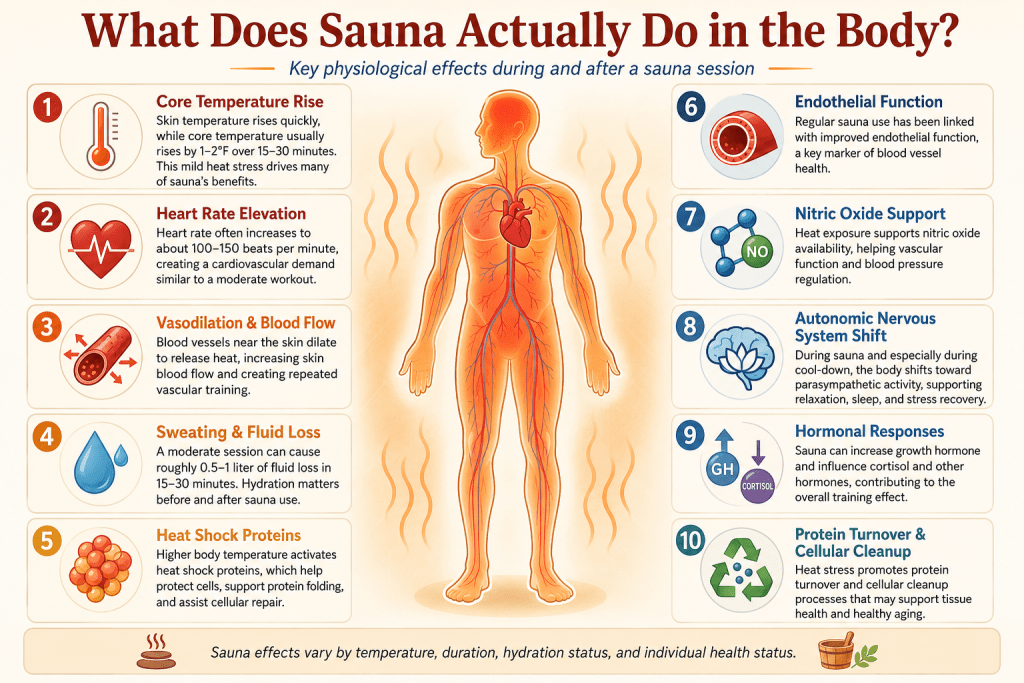
- Core temperature rise: During a sauna session, skin temperature rises rapidly and core body temperature rises gradually, typically by one to two degrees Fahrenheit over 15 to 30 minutes of exposure. This mild elevation of core temperature is the primary driver of most sauna benefits.
- Heart rate elevation: Heart rate typically rises to approximately 100 to 150 beats per minute during a moderate sauna session, which is comparable to a moderate cardiovascular workout. This cardiovascular stress produces adaptive responses similar to exercise over time.
- Vasodilation and blood flow changes: Blood vessels near the skin dilate significantly to shed heat, which produces temporary increases in skin blood flow and rerouting of circulation. This vascular training over repeated sessions supports endothelial function and blood pressure regulation.
- Sweating and fluid loss: A moderate sauna session produces substantial sweating, typically 0.5 to 1 liter of fluid loss over 15 to 30 minutes. This is one reason hydration is essential before, during, and after sauna use.
- Heat shock protein activation: Elevated body temperature triggers the production of heat shock proteins, which are specialized molecules that help cells manage protein folding, respond to stress, and support cellular repair. Heat shock protein activation is one of the specific molecular mechanisms behind sauna benefits.
- Endothelial function improvements: Regular sauna use has been documented to improve endothelial function, which is the health of the inner lining of blood vessels. Endothelial function is one of the primary markers of cardiovascular health and one of the specific areas that declines through the menopause transition.
- Nitric oxide production: Heat exposure supports nitric oxide availability, which supports vascular health and blood pressure regulation.
- Autonomic nervous system shift: During a sauna session and particularly during the cool-down period afterward, the autonomic nervous system shifts significantly toward parasympathetic dominance. This is one of the specific mechanisms behind the mood, sleep, and stress benefits.
- Hormonal responses: Sauna produces measurable increases in growth hormone, moderate changes in cortisol (with reductions during regular practice), and various other hormonal shifts that contribute to the overall training effect.
- Increased protein turnover: The heat stress triggers cellular clean-up and protein turnover processes that support tissue health and may contribute to some of the longevity signals in the research.
Why Does Sauna Matter During Perimenopause & Menopause?
The general population case for sauna is strong. The case for women in perimenopause and menopause is even stronger for reasons that are specific to this life stage.
How Can Sauna Support Cardiovascular and Metabolic Health?
Several changes during menopause increase cardiovascular and metabolic risks, making sauna’s potential benefits especially relevant.
- Cardiovascular risk climbs after menopause: Estrogen decline through the perimenopause and menopause transition removes one of the major cardiovascular protective factors. Cardiovascular disease also becomes the leading cause of death in women over 50. Sauna’s specific cardiovascular benefits, discussed in Section 3, are directly relevant to this heightened risk.
- Body composition changes are widespread: The pattern of increased abdominal fat and reduced lean mass that many midlife women experience aligns with the metabolic effects that regular sauna use appears to modestly support.
- Muscle mass preservation matters: Sarcopenia begins accelerating in midlife women. The growth hormone response and protein turnover effects of regular sauna may modestly support the muscle preservation especially in the top four muscle groups for aging well.
How Can Sauna Support Sleep & Nervous System Regulation?
Sleep problems, cortisol changes, and chronic nervous system activation often reinforce one another during the menopause transition.
- Sleep disruption is common and consequential: Perimenopause and menopause frequently disrupt sleep quality, which can lead to changes in fatigue, mood, cognition, and body composition. Regular sauna use has been documented to improve sleep quality in ways that are directly relevant to this window.
- Cortisol dysregulation is common: Midlife often shifts the cortisol curve in unfavorable directions. Regular sauna use has been documented to support cortisol regulation over time.
- Nervous system dysregulation is widespread: Chronic sympathetic activation is one of the most common midlife patterns. Sauna produces reliable parasympathetic activation, particularly during the cool-down period.
What Role Can Sauna Play in Hot Flashes and the Broader THOR Framework?
Sauna may also support the symptoms and underlying systems targeted by a broader midlife lifestyle medicine approach.
- Vasomotor symptoms are the hallmark complaint: The relationship between sauna use and hot flashes is nuanced and covered in detail in Section 4. The honest picture is more supportive than most women expect.
- The overlap with the broader THOR framework is strong: Regular sauna use supports the same underlying systems—cardiovascular health, sleep, nervous system function, and hormonal regulation—that the broader lifestyle medicine framework targets. Adding sauna to an already strong foundation produces compounding benefits.
“The reason we included sauna in the retreat programming from the beginning is that the intervention hits multiple systems that midlife women particularly need to support, in one session, with a strong safety profile, and with adherence rates that most other interventions envy. Women who arrive skeptical about sauna almost always leave asking how to add it to their home routine. The felt-sense change after a well-run sauna session, particularly when combined with adequate hydration and appropriate cooling, is often more immediately noticeable than most other single interventions. That combination of felt benefit and documented long-term evidence is why I have consistently recommended sauna to coaching clients who have access to it, and why I use it myself regularly.”
Terry Tateossian, Founder of The House of Rose
Free 28-Day Fascia Reset Email Course
Get our Free 28-day email course series to help with 1 or 2 exercises per day to release your fascia. One short lesson per day. Two minutes to read each.
What Does the Cardiovascular Evidence Show for Midlife Women?
The strongest research base for sauna health benefits is in the cardiovascular literature. This matters for midlife women whose cardiovascular risk climbs meaningfully through the menopause transition.
What Did the Finnish Cohort Research Find?
A landmark prospective cohort study followed more than 2,300 middle-aged Finnish men over roughly 20 years and found dose-response relationships between sauna frequency and cardiovascular outcomes.
Compared with men who used a sauna once per week, those who used one four to seven times per week had:
- Approximately 40 percent lower all-cause mortality
- Approximately 50 percent lower cardiovascular mortality
- A reduced risk of stroke and dementia
Similar patterns have been observed in follow-up analyses.
What Does the Women-Specific Research Show?
Follow-up work has included women and generally shown similar patterns of benefit. However, the specific mortality data in women is smaller than in men because the original Finnish cohort included only male participants. Even with this limitation, the direction of effect is consistent.
How May Sauna Support Cardiovascular Health?
The cardiovascular benefits appear to be driven by several connected effects:
- Improved endothelial function
- Reduced blood pressure
- Reduced arterial stiffness
- Favorable changes in inflammatory markers
- A possible training effect from the elevated heart rate during sessions
These mechanisms are particularly relevant during menopause because hormonal changes can affect blood pressure, vascular function, and inflammation.
What Are the Effects on Blood Pressure & Vascular Function?
Regular sauna use has been documented to modestly reduce both systolic and diastolic blood pressure. The effect size is meaningful for midlife women whose blood pressure often rises through the menopause transition.
Improvements in endothelial function also align directly with the vascular changes of menopause that place midlife women at increased cardiovascular risk.
Can Sauna Help Reduce Inflammation?
Regular sauna use is associated with reductions in inflammatory markers, including C-reactive protein. This is one of the specific markers of cardiovascular risk that often rises through midlife.
Some research also suggests that using a sauna after aerobic exercise may produce additive cardiovascular benefits compared with exercise alone.
What Is the Practical Translation for Midlife Women?
For midlife women concerned about the cardiovascular risk shift of menopause, regular sauna use is one of the most evidence-supported, low-risk interventions available.
Combined with the broader cardiovascular framework—including adequate protein, quality sleep, appropriate cardio exercise, and a flavanol-rich diet – sauna is a meaningful addition rather than a magical intervention.
Can Sauna Help With Hot Flashes?
Sauna and hot flashes deserves a careful answer because the intuitive response: “If I am already having hot flashes, why would I intentionally overheat?” is understandable but is not quite the whole picture.
Can Controlled Heat Improve Temperature Regulation?
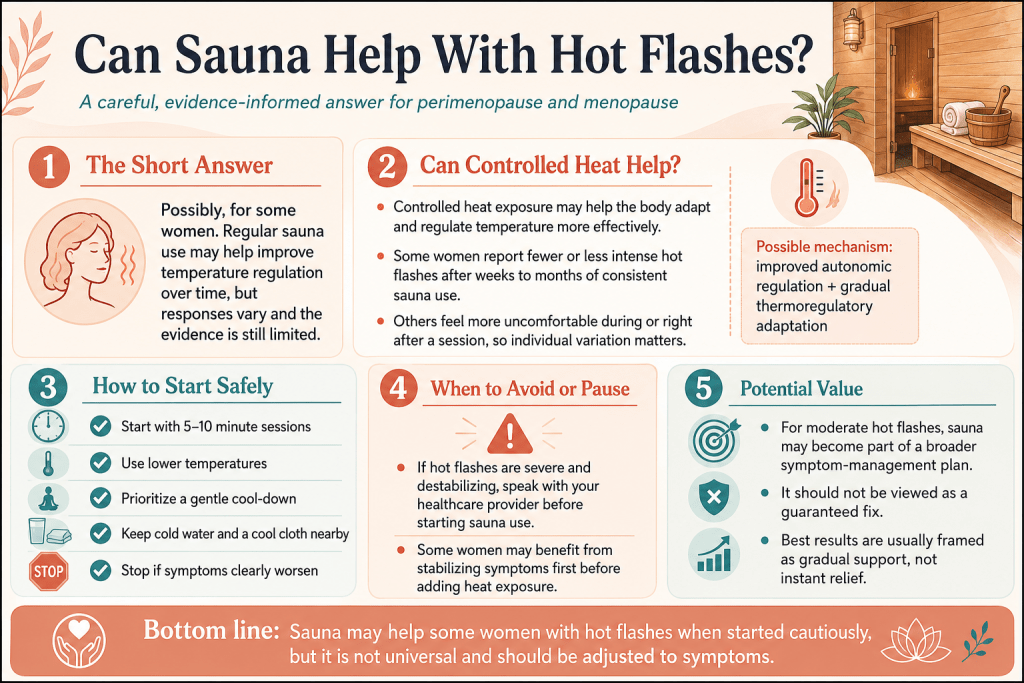
Regular exposure to controlled heat, including sauna, may improve the body’s temperature regulation over time and reduce the intensity and frequency of unwanted hot flashes. The mechanism is thought to involve improved autonomic regulation of body temperature and gradual adaptation of the thermoregulatory system.
Some women experience their hot flashes as more uncomfortable during or immediately after a sauna session. Others find that intentional, controlled heat exposure feels different from unpredictable hot flashes and does not trigger the same distress. Individual variation is significant.
The most common report from women who use sauna regularly through the perimenopause and menopause transition is that hot flash frequency and intensity gradually decrease over weeks to months of consistent practice. However, this is not universal, and controlled trial evidence remains limited.
How Should Women With Active Hot Flashes Start?
Women experiencing active hot flashes should begin cautiously rather than starting with a full session at maximum temperature.
- Start with shorter sessions of 5 to 10 minutes.
- Use lower temperatures.
- Prioritize the cool-down period.
- Keep cold water and cool cloths available.
- Discontinue use if any session significantly worsens symptoms.
When Should Sauna Be Avoided?
Any woman whose hot flashes are severe and destabilizing should discuss sauna use with her provider before starting. Some women may benefit from stabilizing severe symptoms with hormone therapy or other interventions before adding heat exposure.
What Is the Potential Value of Sauna?
For women whose hot flashes are moderate rather than severe, regular sauna use may contribute over time to a broader hot flash management framework rather than triggering worsening.
The evidence base is not conclusive on this specific question. However, the broader research supports the general framework of controlled heat exposure helping to improve autonomic regulation.
Complementary interventions such as a better menopause diet plan may also help address hot flashes and other vasomotor symptoms.
Free 28-Day Fascia Reset Email Course
Get our Free 28-day email course series to help with 1 or 2 exercises per day to release your fascia. One short lesson per day. Two minutes to read each.
How Does Sauna Affect Sleep in Midlife Women?
Sleep is one of the most important midlife women’s health topics, and the specific relationship between sauna and sleep is one of the most immediate benefits many women notice.
- The sleep quality research: Regular sauna use has been documented to improve subjective sleep quality in multiple studies. The mechanism appears to involve parasympathetic activation, cortisol regulation, and the pleasant post-sauna body relaxation that supports sleep onset.
- The timing question: Sauna use in the late afternoon or early evening (approximately two to four hours before bedtime) appears to support sleep quality more reliably than sauna use immediately before sleep or in the morning. The mechanism is thought to involve the body-temperature drop after sauna that mimics the natural evening temperature decline associated with sleep onset.
- Sauna as a wind-down ritual: For women who have difficulty transitioning from evening activity to sleep, a sauna session followed by a cool shower and quiet time serves as an effective wind-down ritual that supports parasympathetic dominance and sleep readiness.
- The specific menopause sleep application: The sleep disruption of perimenopause and menopause is one of the largest quality-of-life issues in this window.
- Combined with cold exposure: Sauna followed by cool water immersion or cool shower produces an intensified parasympathetic response that many women find particularly supportive for sleep quality. This traditional contrast bathing pattern has centuries of precedent and modern research support.
How Does Sauna Affect Cortisol and Stress Recovery?
The relationship between sauna and cortisol is nuanced. Understanding it accurately supports better decisions about how to integrate sauna into a midlife framework.
- The acute cortisol response: During a sauna session, cortisol typically rises modestly in response to the heat stress. This acute rise is a normal adaptive response and is not a concern for most healthy adults.
- The chronic effect of regular use: Over weeks and months of regular sauna use, most research suggests that resting cortisol and cortisol reactivity to stress modestly decrease. The training effect of controlled heat exposure appears to make the stress response system more efficient over time.
- The parasympathetic activation window: The 30 to 90 minutes after a sauna session is often the most parasympathetic-dominant window many midlife women experience during their day. This post-sauna window is when the specific stress recovery benefits appear.
- Combined with breath work: Extended exhalation breathing during or immediately after a sauna session amplifies the parasympathetic effect.
- The cortisol pattern in midlife: The cortisol dysregulation common in perimenopause and menopause often shows up as elevated evening cortisol and blunted morning cortisol. Regular sauna use, particularly evening use, may help re-anchor this pattern toward its healthier shape over time.
- The specific consideration for burnout: Women in acute burnout or severe HPA axis dysfunction may not tolerate sauna well initially. Starting with shorter, cooler sessions and building gradually is important. In some cases, addressing the underlying burnout through other interventions first is more appropriate than adding heat stress.
Free 28-Day Fascia Reset Email Course
Get our Free 28-day email course series to help with 1 or 2 exercises per day to release your fascia. One short lesson per day. Two minutes to read each.
Can Sauna Support Body Composition?
The relationship between sauna and body composition is often oversold in marketing and undersold in scientific caution. The honest picture sits somewhere between.
Does Sauna Cause Weight Loss?
Sauna produces temporary weight loss from fluid loss through sweating. This is not fat loss. The scale weight returns as soon as hydration is restored, which is what should happen and what is healthy.
What Metabolic and Fitness Benefits May Sauna Provide?
Regular sauna use may offer several supportive effects:
- Metabolic effects: Regular sauna use is associated with modest metabolic benefits, including improved insulin sensitivity in some studies. The effect size is smaller than dietary or exercise interventions, but it may be additive.
- Cardiovascular fitness training effect: Sauna use produces an elevated heart rate and vascular stress that are similar in some ways to moderate cardiovascular exercise. Regular use may modestly support cardiovascular fitness, but it is not equivalent to actual exercise and should only complement an exercise program.
- Growth hormone response: Sauna produces a documented increase in growth hormone during and after sessions. Whether this translates to meaningful body composition changes in midlife women is less well-established, but the direction of effect is favorable.
Can Sauna Support Exercise Recovery?
Post-exercise sauna use may support recovery from resistance training. Better recovery can make it easier to train consistently over time, supporting midlife muscle preservation goals.
How Should Sauna Be Positioned for Body Composition?
Sauna should not be sold as a weight loss intervention. It is a supportive intervention that complements the primary drivers of midlife body composition:
- Adequate protein
- Appropriate calorie balance
- Resistance training
- Quality sleep
- Stress management
Approaching sauna with realistic expectations produces the best outcomes.
Which Is Better: Finnish Sauna or Infrared Sauna?
The Finnish sauna versus infrared sauna question comes up frequently and deserves a clear answer based on the evidence. Both types raise core body temperature and promote sweating, but they differ in temperature, session length, comfort, and the amount of research supporting their benefits.
How Do Finnish and Infrared Saunas Differ?
- Traditional Finnish sauna: Finnish sauna uses hot air, typically 176 to 194 degrees Fahrenheit, or 80 to 90 degrees Celsius. Humidity is generally low but can be raised by pouring water on hot stones. Sessions are typically 15 to 20 minutes.
- Infrared sauna: Infrared sauna uses infrared light to heat the body directly at lower ambient temperatures, typically 120 to 150 degrees Fahrenheit, or 49 to 66 degrees Celsius. Sessions are typically 30 to 45 minutes. The direct radiant heating produces core temperature elevation and sweating at lower air temperatures.
Which Type Has the Stronger Evidence Base?
Finnish sauna has the strongest evidence base because most of the cardiovascular, mortality, and longevity research has been conducted in Finnish sauna users. The specific evidence base for infrared sauna is smaller and more limited. This does not mean infrared sauna does not work. It means the extrapolation of Finnish sauna benefits to infrared sauna requires some caution.
What Are the Practical & Tolerance Considerations?
Finnish sauna produces its effects in shorter sessions at higher temperatures. Infrared sauna produces similar core temperature elevations at lower ambient temperatures, which some people find more tolerable.
Some women find the high ambient temperature of Finnish sauna uncomfortable, particularly those with active hot flashes. Infrared sauna at a lower ambient temperature may feel more accessible for these women.
Individual preference, comfort, and access matter. Traditional Finnish saunas are common in gyms, spas, and some homes, while infrared saunas have become widely available in wellness centers and home units. Both have significant cost variability.
What Is the Honest Recommendation?
For midlife women who have access to a Finnish sauna and tolerate it well, Finnish sauna has the strongest evidence base and is the first choice. For women who prefer infrared sauna, infrared sauna is a reasonable choice that likely produces meaningful benefits, even if its specific evidence base is smaller. Either type is better than no sauna use, and both should be integrated into a broader framework rather than treated as standalone interventions.
What Should You Know About Infrared Wavelength Claims?
Some infrared sauna marketing claims specific benefits from particular wavelengths, including near, mid, and far infrared. These claims are not well-supported by evidence, so approaching them with caution is appropriate.
Free 28-Day Fascia Reset Email Course
Get our Free 28-day email course series to help with 1 or 2 exercises per day to release your fascia. One short lesson per day. Two minutes to read each.
What Sauna Dose & Frequency Does the Research Support?
The specific dose and frequency of sauna use that produces documented benefits is worth being clear about.
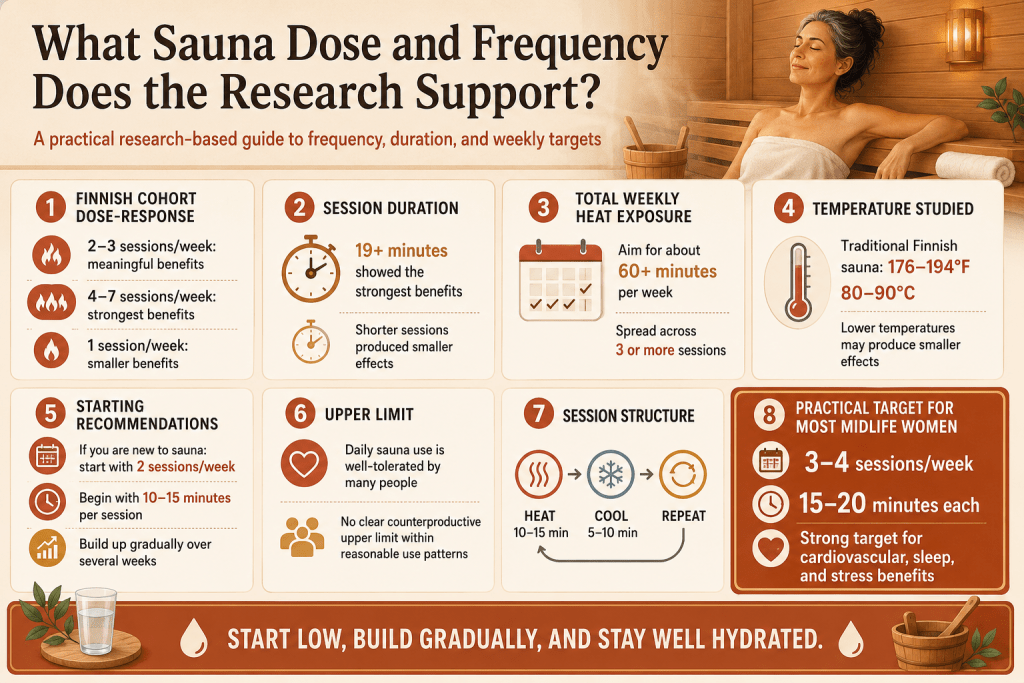
- The Finnish cohort dose-response: The mortality benefits observed in the Finnish research showed clear dose-response relationships. Two to three sessions per week produced meaningful benefits. Four to seven sessions per week produced the strongest benefits. Once per week produced smaller benefits than higher frequencies.
- Session duration: The strongest benefits in the Finnish research were observed at session durations of 19 minutes or longer. Shorter sessions produced smaller benefits.
- Total weekly heat exposure: A useful working target is approximately one hour or more of total weekly sauna time distributed across three or more sessions. Higher weekly totals are associated with greater benefits within the range studied.
- Temperature considerations: Traditional Finnish sauna temperatures (176 to 194 degrees Fahrenheit) were the temperatures studied. Lower temperatures likely produce smaller effects.
- Starting recommendations: For midlife women new to sauna, starting with two sessions per week of 10 to 15 minutes each and building over weeks toward the 4-plus sessions per week target is a reasonable protocol.
- The upper limit: Daily sauna use is well-tolerated by many people and appears safe. There does not appear to be a specific upper limit that becomes counterproductive within reasonable use patterns.
- Session structure: Traditional Finnish sauna often involves multiple heat rounds separated by cooling periods (heat 10 to 15 minutes, cool 5 to 10 minutes, repeat). This structure may produce different effects than single continuous heat exposure and is well-tolerated by most people.
- The practical target for most midlife women: Three to four sessions per week of 15 to 20 minutes each represents a strong target that produces meaningful cardiovascular, sleep, and stress benefits without excessive time investment.
What Is a Practical Sauna Starter Protocol?
For midlife women new to sauna, a structured starter protocol reduces the risk of unpleasant experiences and increases the likelihood of building the practice into a sustainable habit.
- Week 1 to 2: Introduction. Two sessions per week of 8 to 12 minutes each at a moderate temperature (160 to 180 degrees Fahrenheit for Finnish sauna, or lower for infrared). Follow with 5 minutes of cool-down in a comfortable temperature environment. Drink 16 to 20 ounces of water before, during, and after each session.
- Week 3 to 4: Building. Three sessions per week of 12 to 15 minutes each. Consider multiple rounds within a session (heat 8 to 10 minutes, cool 3 to 5 minutes, heat 8 to 10 more minutes). Continue emphasis on hydration.
- Week 5 to 8: Progressive. Three to four sessions per week of 15 to 20 minutes each. This is the target that produces meaningful long-term benefits based on the research.
- Beyond week 8: Maintenance. Continue three to four sessions per week or increase to four to seven for the strongest benefit signal from the Finnish research. Adjust based on personal tolerance, schedule, and how you feel.
- Timing of sessions. Late afternoon or early evening (approximately three hours before bedtime) tends to produce the best sleep benefit. Morning sessions work for some women. Immediately after resistance training is another common pattern that may support recovery.
- What to bring. Two large water bottles. A small towel to sit on and a larger towel for cool-down. Light comfortable clothing for the cool-down period. A cool cloth for the face if temperature feels overwhelming.
- What to avoid. Alcohol before or during. Heavy meals immediately before. Intense exercise immediately after (light stretching is fine, hard training should wait an hour or more). Prolonged standing immediately after the session (sit or lie down during cool-down to reduce risk of blood pressure drop).
- Cool-down protocol. After the sauna, cool down gradually rather than jumping into a cold shower without adjustment. A room-temperature shower is often more comfortable than very cold water for beginners. Sit or lie down for 10 to 15 minutes in a cool environment after showering. Continue hydrating.
- Signs to stop mid-session. Dizziness, nausea, extreme heart rate, chest discomfort, extreme fatigue, or any sensation that feels seriously wrong is a signal to leave the sauna, sit or lie down in a cool area, and hydrate. If symptoms do not resolve quickly, seek medical evaluation.
- When to skip a session. Illness with fever. Severe dehydration. Recent alcohol consumption. Recent significant meal. Feeling seriously off in a way that concerns you.
Free 28-Day Fascia Reset Email Course
Get our Free 28-day email course series to help with 1 or 2 exercises per day to release your fascia. One short lesson per day. Two minutes to read each.
What Safety Considerations Should Midlife Women Know?
Sauna is generally safe for healthy adults, but specific safety considerations matter particularly for midlife women.
When Should You Seek Medical Clearance?
Some health conditions require professional guidance before starting regular sauna use:
- Cardiovascular disease: Any known cardiovascular disease, including coronary artery disease, arrhythmia, or heart failure, requires physician clearance before starting sauna use. In many cases, sauna is safe or beneficial for these conditions when properly supervised, but individual evaluation is essential.
- Uncontrolled hypertension: Blood pressure that is not well-controlled with medication should be addressed before starting regular sauna use. Well-controlled blood pressure is generally compatible with sauna.
- Severe hot flashes: As covered in Section 4, women with severe, destabilizing hot flashes should discuss sauna use with their provider before starting.
- History of heat intolerance: Any history of heat stroke or significant heat intolerance warrants medical evaluation before starting sauna.
- Pregnancy: Sauna use during pregnancy has historically been approached with caution because of concerns about elevated maternal core temperature affecting fetal development. Discuss sauna use with your prenatal provider.
Which Medications and Substances Can Interact With Sauna?
Certain medications and substances can affect how the body responds to heat.
- Medications: Some medications affect blood pressure, heart rate, hydration, or sweating in ways that may interact with sauna use. Diuretics, beta blockers, and blood pressure medications warrant discussion with your prescriber.
- Recent alcohol: Alcohol combined with sauna significantly increases the risk of arrhythmia, blood pressure drops, and dehydration. Do not combine the two.
- Dehydration: Starting a sauna session already dehydrated increases the risk of adverse events. Hydrate well before starting.
When Should You Skip a Sauna Session?
Skip any individual session when you are feeling generally unwell, including when you have:
- A fever
- An acute illness
- Unexplained weakness
- Signs of dehydration
- Unusual dizziness or lightheadedness
What Skin Considerations Should You Keep in Mind?
Some skin conditions may be aggravated by heat and sweating. Discuss sauna use with a dermatologist if you are unsure whether it is appropriate for your condition. Sauna does not directly damage sun-damaged skin, but heat can temporarily worsen the appearance of certain skin conditions. Sun protection remains important independent of sauna use.
Are There Additional Considerations for Older Women?
For women in later life, particularly those aged 70 and older, starting with shorter sessions and lower temperatures is especially important. Physician clearance is also more strongly recommended before beginning regular sauna use.
What Common Mistakes Can Undermine Sauna Practice?
Six common mistakes reduce the effectiveness or safety of sauna practice for midlife women.
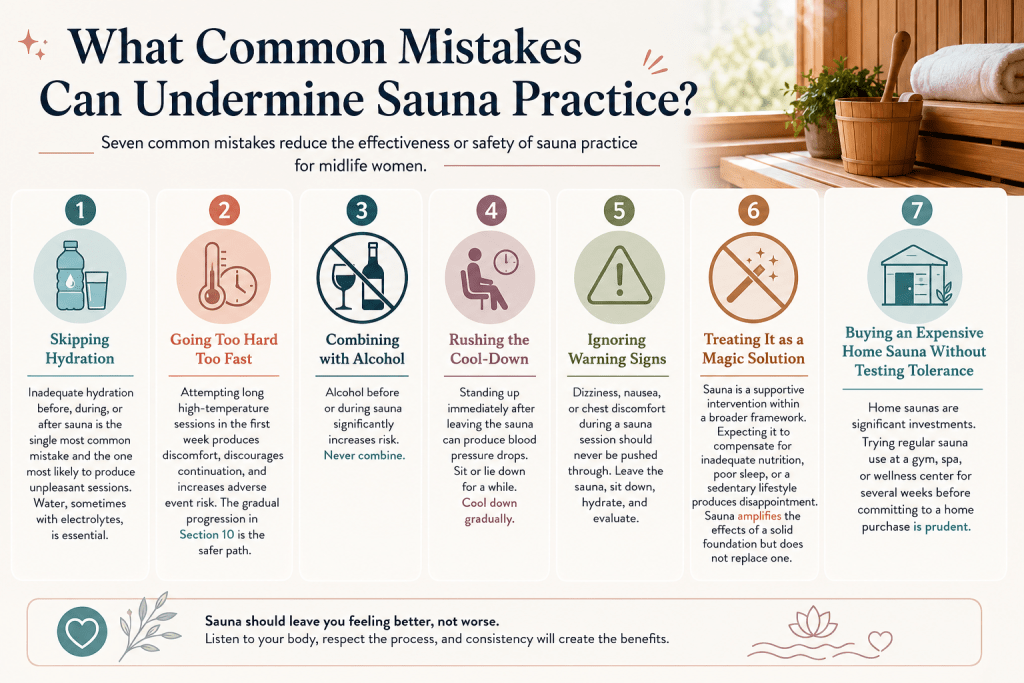
- Skipping hydration: Inadequate hydration before, during, or after sauna is the single most common mistake and the one most likely to produce unpleasant sessions. Water, sometimes with electrolytes, is essential.
- Going too hard too fast: Attempting long high-temperature sessions in the first week produces discomfort, discourages continuation, and increases adverse event risk. The gradual progression in Section 10 is the safer path.
- Combining with alcohol: Alcohol before or during sauna significantly increases risk. Never combine.
- Rushing the cool-down: Standing up immediately after leaving the sauna can produce blood pressure drops. Sit or lie down for a while. Cool down gradually.
- Ignoring warning signs: Dizziness, nausea, or chest discomfort during a sauna session should never be pushed through. Leave the sauna, sit down, hydrate, and evaluate.
- Treating it as a magic solution: Sauna is a supportive intervention within a broader framework. Expecting it to compensate for inadequate nutrition, poor sleep, or a sedentary lifestyle produces disappointment. Sauna amplifies the effects of a solid foundation but does not replace one.
- Buying an expensive home sauna without testing tolerance: Home saunas are significant investments. Trying regular sauna use at a gym, spa, or wellness center for several weeks before committing to a home purchase is prudent.
Free 28-Day Fascia Reset Email Course
Get our Free 28-day email course series to help with 1 or 2 exercises per day to release your fascia. One short lesson per day. Two minutes to read each.
How Does Sauna Support the Core Health Foundations?
- Nutrition foundation: Adequate protein, hydration, appropriate electrolyte balance, and quality overall nutrition support recovery from sauna sessions and amplify the benefits.
- Movement layer: Sauna complements resistance training and cardiovascular exercise, potentially supporting recovery.
- Sleep foundation: Regular sauna use supports sleep quality, which then supports every other health outcome.
When Should You See a Healthcare Professional?
Regular sauna use is generally safe for healthy adults but requires professional evaluation in specific situations.
- Any known cardiovascular disease: Coronary artery disease, arrhythmia, or heart failure requires physician clearance.
- Uncontrolled blood pressure: Address blood pressure control before starting regular sauna use.
- On multiple medications: Certain combinations may interact with heat exposure.
- Pregnancy or trying to conceive: Discuss with your prenatal provider.
- Severe menopause symptoms: Discuss with your menopause specialist or gynecologist before starting.
- Any recent surgery: Wait for surgical clearance before starting or resuming sauna use.
- Any acute symptoms during use: Chest pain, severe dizziness, or other alarming symptoms during a sauna session require immediate medical evaluation.
- Persistent adverse effects: Sessions that consistently produce headaches, extreme fatigue, or other unpleasant effects warrant medical evaluation to rule out underlying conditions.
Free 28-Day Fascia Reset Email Course
Get our Free 28-day email course series to help with 1 or 2 exercises per day to release your fascia. One short lesson per day. Two minutes to read each.
Frequently Asked Questions
Does sauna help with menopause symptoms?
Regular sauna use has been documented to support several of the specific challenges of perimenopause and menopause including cardiovascular protection, sleep quality, stress recovery, and possibly hot flash regulation over time. It is not a treatment for menopause but is a supportive intervention that addresses several underlying systems that decline through this window.
Is sauna good for menopause?
For most healthy midlife women, regular sauna use is beneficial and safe. It is particularly relevant for the cardiovascular risk shift that accompanies menopause. Women with specific medical conditions or severe hot flashes should discuss with their provider before starting.
How often should I use a sauna for menopause?
The Finnish research suggests dose-response benefits with two to seven sessions per week. A realistic starting target for most midlife women is three to four sessions per week of 15 to 20 minutes each. Building up to this frequency over several weeks is the safest approach.
What temperature should the sauna be for menopause?
Traditional Finnish sauna temperatures (176 to 194 degrees Fahrenheit) are the temperatures studied in the mortality research. Infrared sauna at lower ambient temperatures (120 to 150 degrees Fahrenheit) produces similar core temperature elevations and is a reasonable alternative for women who find the high-temperature Finnish sauna intolerable.
Free 28-Day Fascia Reset Email Course
Get our Free 28-day email course series to help with 1 or 2 exercises per day to release your fascia. One short lesson per day. Two minutes to read each.
Is infrared sauna as good as regular sauna for menopause?
Most of the cardiovascular and longevity research is in traditional Finnish sauna. Infrared sauna has a smaller specific evidence base but likely produces meaningful benefit through similar mechanisms. For women who prefer or tolerate infrared sauna better, it is a reasonable choice. Either type of sauna is better than no sauna use.
Does sauna help with hot flashes?
The relationship is nuanced. In the short term, some women find that sauna use worsens their hot flashes while others find it feels different from unpredictable hot flashes. Over weeks to months of regular use, many women report gradual improvement in hot flash frequency and intensity, possibly through improved autonomic thermoregulation. Individual response varies significantly.
Can sauna help with menopause weight loss?
Sauna produces temporary weight loss from fluid loss, which is not fat loss and returns as soon as you rehydrate. Regular sauna use has modest metabolic benefits that support weight management as part of a broader framework of adequate protein, appropriate calorie balance, resistance training, and sleep. Sauna alone is not a weight loss intervention.
Is sauna safe during perimenopause?
Sauna is generally safe during perimenopause for women without specific contraindications. Women with cardiovascular disease, uncontrolled blood pressure, severe hot flashes, or other conditions listed in Section 11 should discuss with their provider before starting.
How long before I see benefits from sauna use?
Subjective effects on sleep and stress often appear within the first two or three sessions. Cardiovascular and metabolic benefits develop over weeks to months of consistent regular use. The mortality signals from the Finnish research reflect years to decades of regular practice.
Can I sauna every day?
Daily sauna use is well-tolerated by many people and appears safe. Some women prefer daily short sessions while others prefer three to four longer sessions per week. Both patterns work. The most important factor is consistency and appropriate hydration.
Should I sauna before or after exercise?
Both patterns work. Sauna after exercise may support recovery and produce complementary cardiovascular effects. Sauna before exercise is generally not recommended because of dehydration and cardiovascular stress considerations.
What should I eat before sauna?
Eat a light meal or snack one to two hours before sauna, not immediately before. Avoid heavy meals right before. Adequate carbohydrate and protein along with hydration support the session. Avoid alcohol entirely.
How much water should I drink for sauna?
Approximately 16 to 20 ounces of water in the hour before sauna, and another 16 to 20 ounces after. Some women benefit from adding electrolytes (sodium, potassium, magnesium) to their water for longer sessions or higher weekly frequencies to prevent electrolyte imbalance.
Free 28-Day Fascia Reset Email Course
Get our Free 28-day email course series to help with 1 or 2 exercises per day to release your fascia. One short lesson per day. Two minutes to read each.
Does sauna help with sleep in menopause?
Regular sauna use, particularly in the late afternoon or early evening, has been documented to support sleep quality. Combined with the broader menopause sleep framework, sauna is a meaningful addition for women dealing with sleep disruption.
Can sauna help my mood in perimenopause?
Regular sauna use has been associated with improvements in mood and reductions in symptoms of depression and anxiety in several studies. The parasympathetic activation during the cool-down period is a specific mechanism behind this effect. For clinical depression, sauna is a supportive intervention rather than a substitute for appropriate mental health care.
References
- Laukkanen, T., Khan, H., Zaccardi, F., & Laukkanen, J. A. (2015). Association between sauna bathing and fatal cardiovascular and all-cause mortality events. JAMA Internal Medicine, 175(4), 542–548.
- Laukkanen, T., Kunutsor, S., Kauhanen, J., & Laukkanen, J. A. (2017). Sauna bathing is inversely associated with dementia and Alzheimer’s disease in middle-aged Finnish men. Age and Ageing, 46(2), 245–249.
- Kunutsor, S. K., Khan, H., Zaccardi, F., et al. (2018). Sauna bathing reduces the risk of stroke in Finnish men and women: a prospective cohort study. Neurology, 90(22), e1937–e1944.
- Hussain, J., & Cohen, M. (2018). Clinical effects of regular dry sauna bathing: a systematic review. Evidence-Based Complementary and Alternative Medicine, 2018, 1857413.
- Laukkanen, J. A., Laukkanen, T., & Kunutsor, S. K. (2018). Cardiovascular and other health benefits of sauna bathing: a review of the evidence. Mayo Clinic Proceedings, 93(8), 1111–1121.
- Kunutsor, S. K., Laukkanen, T., & Laukkanen, J. A. (2018). Sauna bathing reduces the risk of respiratory diseases: a long-term prospective cohort study. European Journal of Epidemiology, 32(12), 1107–1111.
- Hannuksela, M. L., & Ellahham, S. (2001). Benefits and risks of sauna bathing. American Journal of Medicine, 110(2), 118–126.
- Crinnion, W. J. (2011). Sauna as a valuable clinical tool for cardiovascular, autoimmune, toxicant-induced and other chronic health problems. Alternative Medicine Review, 16(3), 215–225.
- Beever, R. (2009). Far-infrared saunas for treatment of cardiovascular risk factors: summary of published evidence. Canadian Family Physician, 55(7), 691–696.
- Scoon, G. S. M., Hopkins, W. G., Mayhew, S., & Cotter, J. D. (2007). Effect of post-exercise sauna bathing on the endurance performance of competitive male runners. Journal of Science and Medicine in Sport, 10(4), 259–262.
- Rissanen, S., Oksa, J., Rintamäki, H., & Tokura, H. (2008). Effects of sauna bathing on health-related outcomes. European Journal of Applied Physiology, 104(5), 831–839.
- Zaccardi, F., Laukkanen, T., Willeit, P., et al. (2017). Sauna bathing and incident hypertension: a prospective cohort study. American Journal of Hypertension, 30(11), 1120–1125.
- Podstawski, R., Boraczyński, T., Boraczyński, M., et al. (2014). Sauna-induced body mass loss in young sedentary women and men. Scientific World Journal, 2014, 307421.
- Kukkonen-Harjula, K., & Kauppinen, K. (2006). Health effects and risks of sauna bathing. International Journal of Circumpolar Health, 65(3), 195–205.
- Ohori, T., Nozawa, T., Ihori, H., et al. (2012). Effect of repeated sauna treatment on exercise tolerance and endothelial function in patients with chronic heart failure. American Journal of Cardiology, 109(1), 100–104.
- Miyata, M., & Tei, C. (2010). Waon therapy for cardiovascular disease: innovative therapy for the 21st century. Circulation Journal, 74(4), 617–621.
- Sutkowy, P., Woźniak, A., Boraczyński, T., et al. (2014). The effect of a single Finnish sauna bath after aerobic exercise on the oxidative status in healthy men. Scandinavian Journal of Clinical and Laboratory Investigation, 74(2), 89–94.
- Laukkanen, T., Kunutsor, S. K., Khan, H., et al. (2018). Sauna bathing is associated with reduced cardiovascular mortality and improves risk prediction in men and women: a prospective cohort study. BMC Medicine, 16(1), 219.
- Patrick, R. P., & Johnson, T. L. (2021). Sauna use as a lifestyle practice to extend healthspan. Experimental Gerontology, 154, 111509.
- Kunutsor, S. K., Häkkinen, A., Zaccardi, F., et al. (2019). Combined effect of cardiorespiratory fitness and sauna bathing on cardiovascular disease risk. American Journal of Cardiology, 123(4), 699–704.
Disclaimer: Always consult with a qualified healthcare professional before starting regular sauna use, particularly if you have cardiovascular disease, uncontrolled blood pressure, are pregnant, take medications that affect blood pressure or heart rate, or have any chronic medical condition. This article is educational and does not constitute medical advice.
Free 28-Day Fascia Reset Email Course
Get our Free 28-day email course series to help with 1 or 2 exercises per day to release your fascia. One short lesson per day. Two minutes to read each.

Terry Tateossian is a Menopause Lifestyle Medicine Coach, Certified Personal Trainer & Nutritionist and the Founder of THOR: The House of Rose, a wellness brand serving women over 40 through retreats, coaching, macro-nutrition and community. As 25-year founder and entrepreneur, Terry spent two and a half decades building and running successful start-up businesses, an experience that put her on the front line of founder burnout long before she could name it. After facing serious health challenges, early onset menopause, and emotional eating while running her agency and raising two children, Terry rebuilt her health in her 40s and lost more than 80 pounds through evidence-based nutrition, training, and mindset work. Today, she helps women get strong, improve confidence, support hormone health, and create a stronger second half of life. Terry has been featured in major media outlets and is available for podcasts, expert commentary, brand collaborations, and speaking engagements on midlife health, reinvention, emotional eating, menopause wellness, and strength training for longevity. Get her free macro calculator (her cookbook companion) to start your journey to back to health.