
 By Team THOR
Free Macro Calculator
Personalized to your body, goals, and measurements. You will receive detailed macros for meals, sample day of eating, food selection guidance, hydration + daily supplement suggestions, and more.
Flavanols: The Compound Most Midlife Women Are Not Getting Enough Of (And Why It Matters for Heart, Brain, and Skin)
Flavanols for women over 40 have become an important topic in midlife nutrition, yet most women I coach have never heard of them. A 2026 biomarker study involving more than 30,000 adults found that roughly four out of five people were not getting enough of these plant compounds, even when they followed standard dietary recommendations.
Flavanols are a subgroup of polyphenols that includes epicatechin, catechin, and related compounds. Research has linked higher intake with cardiovascular health, cognitive function, blood sugar regulation, exercise capacity, and healthier skin aging. The problem is that many foods commonly considered healthy do not provide enough flavanols to close the gap.
I am Terry Tateossian, founder of The House of Rose and a certified lifestyle medicine coach who leads nutrition-focused wellness retreats for women in perimenopause, menopause, and post-menopause at our Smoky Mountains property in East Tennessee. I built THOR after experiencing early-onset menopause at 41, an 80-pound midlife body composition shift, and 25 years of running businesses while raising two children.
This guide explains what flavanols are, why they matter for women over 40, what studies such as the COSMOS trial found, and why standard dietary advice may not provide enough.
Important: Always consult your healthcare provider before making significant dietary changes or starting a supplement, especially if you have cardiovascular disease, take blood-thinning medication, or manage a health condition that requires dietary supervision.
What Are Flavanols?
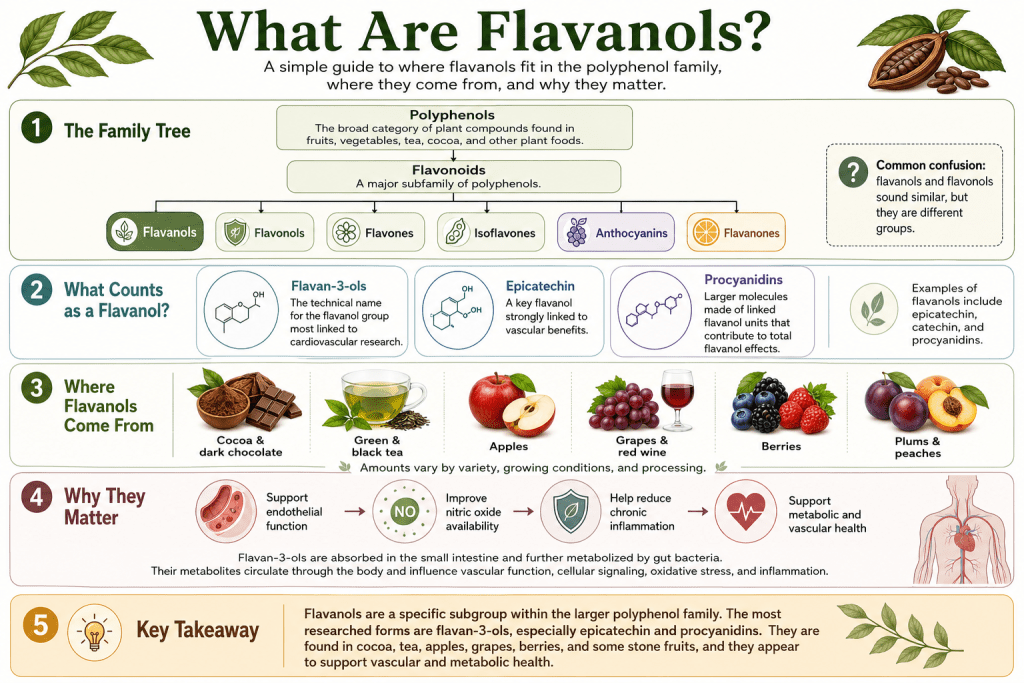
Flavanols are a subfamily of plant compounds within the broader category of polyphenols. Understanding this structure matters because the specific molecules that produce the health effects sit within a larger and often confusing family tree.
How Do Flavanols Fit Within the Polyphenol Family?
- Polyphenols: The overarching category. Polyphenols are plant compounds produced by fruits, vegetables, and other plant foods largely as protective molecules against sun, insects, and stress. Thousands of individual polyphenols exist across the plant kingdom.
- Flavonoids: A major subfamily of polyphenols. Flavonoids include several groups: flavanols, flavonols, flavones, isoflavones, anthocyanins, and flavanones. The naming similarity between flavanols and flavonols is a common source of confusion. Flavanols, the group covered in this article, include epicatechin, catechin, and their oligomers called procyanidins. Flavonols include quercetin and kaempferol. Both are important, but they are different molecules with different effects.
- Flavan-3-ols: The technical name for the specific flavanol group most relevant to recent cardiovascular research. When the Academy of Nutrition and Dietetics issued its 2022 dietary bioactive guideline for cardiometabolic health, the specific recommendation was for flavan-3-ols. This is broadly the same group of compounds this article addresses.
- Epicatechin: The specific flavanol molecule most strongly linked to vascular benefits in the research literature. It is one of the primary flavanols found in cocoa, tea, apples, and grapes.
- Procyanidins: Larger molecules made of linked flavanol units. Procyanidins are abundant in cocoa, apples, and certain berries, and they contribute to the total flavanol effect.
Where Do Flavanols Come From?
The primary dietary sources of flavan-3-ols include:
- Cocoa and dark chocolate, specifically non-alkalized products
- Green and black tea
- Apples
- Grapes and red wine
- Certain berries, particularly strawberries and blackberries
- Stone fruits such as plums and peaches
The specific amount of flavanols in these foods can vary substantially depending on the variety, growing conditions, and processing methods.
Why Do Flavanols Matter Physiologically?
Flavan-3-ols are absorbed in the small intestine and further metabolized by gut bacteria. The resulting metabolites circulate through the body and appear to affect several biological processes, including:
- Vascular function
- Cellular signaling
- Oxidative stress
- Inflammation
The specific mechanisms are still being mapped, but the overall pattern suggests that flavan-3-ols support vascular endothelial function, improve nitric oxide availability, reduce chronic inflammation, and contribute to several downstream metabolic outcomes.
Why Do Flavanols Matter for Women Over 40?
The general population case for adequate flavanol intake is strong. The case for women over 40 is stronger, and it is worth understanding why the intersection matters.
- Cardiovascular disease is the leading cause of death in women over 50: More than one in three women in the United States dies of cardiovascular disease. The risk rises meaningfully after menopause because the cardiovascular protection that estrogen provided declines. Any intervention with meaningful cardiovascular benefit is worth serious attention in this population.
- The menopause vascular transition: The specific vascular changes of perimenopause and menopause include reduced endothelial function, increased arterial stiffness, altered lipid profiles, and changes in blood pressure regulation. Flavan-3-ols support endothelial function and nitric oxide availability, which addresses one of the primary vascular changes in this window.
- Cognitive changes in midlife: Many women in perimenopause and menopause experience measurable changes in memory, processing speed, and mental stamina. The flavanol research on cognitive function (particularly hippocampal memory) is directly relevant to this concern.
- Metabolic changes: Perimenopause and menopause produce measurable declines in insulin sensitivity and changes in body composition that increase cardiometabolic risk. The flavanol research on insulin function and glucose regulation is directly relevant.
- Skin aging: The skin aging that accelerates in midlife women is driven partly by the same oxidative and inflammatory processes that flavanols address. The specific research on flavanols and skin aging in women is one of the few studies conducted in a female-specific population.
- Longevity signal: The Danish cohort research linking total flavonoid intake to reduced all-cause, cardiovascular, and cancer mortality is not specific to midlife women, but the mortality signal is directly relevant to a population thinking about the next thirty or forty years of life.
- Exercise capacity for aging well: The flavanol research on cardiorespiratory fitness and exercise capacity is directly relevant to the muscle preservation and functional aging framework that midlife women need. See our four muscle groups for aging well article for the strength side of this picture.
- The gap in most midlife diets: Even women who eat what most people would consider a healthy diet often fall short of the flavanol threshold associated with the strongest research findings. This means the gap is closable through specific dietary choices rather than through massive dietary overhaul.
Free Macro Calculator
Personalized to your body, goals, and measurements. You will receive detailed macros for meals, sample day of eating, food selection guidance, hydration + daily supplement suggestions, and more.
“One of the most under-addressed pieces of the menopause transition is the specific cardiovascular risk shift. Most women I coach have been so focused on weight, sleep, and mood that the fact that their cardiovascular disease risk climbs dramatically after menopause has not really registered. The flavanol conversation is important precisely because it gives midlife women a specific, evidence-informed, food-based, low-cost intervention that addresses one of the actual biggest health risks they face over the next three decades. It is not a supplement pitch. It is a specific reframe of what to prioritize in the produce section, in the tea aisle, and in the chocolate purchase, that changes the flavanol load enough to matter over years. Small daily choices, compounded over decades, in one of the specific categories where the compounding has been documented.”
Terry Tateossian, Founder of The House of Rose
What Did the COSMOS Trial Show?
The COSMOS trial, or Cocoa Supplement and Multivitamin Outcomes Study, is the largest randomized controlled trial conducted on cocoa flavanols and cardiovascular outcomes.
Understanding both what the trial found and what it did not find is essential for interpreting the evidence accurately.
How Was the COSMOS Trial Designed?
COSMOS enrolled more than 21,000 older adults, primarily women over 65 and men over 60. Participants were randomly assigned to receive either a cocoa flavanol supplement or a placebo for a median follow-up period of approximately 3.6 years.
The main features of the trial included:
- Daily Dose: The supplement provided 500 mg of total cocoa flavanols and 80 mg of epicatechin.
- Participant Group: The study primarily included older adults, with women representing a large portion of the sample.
- Comparison Group: Participants received either the cocoa flavanol supplement or an inactive placebo.
- Follow-Up Period: Researchers tracked cardiovascular outcomes for approximately 3.6 years.
The dose used in COSMOS later became an important reference point for flavanol recommendations. The Academy of Nutrition and Dietetics’ 2022 guideline recommends 400 to 600 mg of flavan-3-ols per day for cardiometabolic health, a range centered closely on the COSMOS dose.
What Did the Primary and Secondary Outcomes Show?
The primary outcome was a combination of major cardiovascular events, including heart attack, stroke, cardiovascular death, coronary revascularization, and other cardiovascular endpoints.
The main findings were:
- Primary Endpoint: The cocoa flavanol group experienced a 10% reduction in the combined cardiovascular endpoint. However, this result did not reach conventional statistical significance.
- Cardiovascular Death: Cardiovascular deaths were reduced by 27% in a pre-specified secondary analysis.
- Total Cardiovascular Events: A separate pre-specified cardiovascular composite also showed a meaningful reduction.
- Consistent Supplement Use: Participants who took their supplements consistently showed larger benefits across several outcomes.
The distinction between primary and secondary findings matters. The 27% reduction in cardiovascular death was not discovered through an unplanned analysis after the trial ended. It was a pre-specified secondary outcome that researchers had decided to examine before the trial began.
However, because it was a secondary endpoint, it carries somewhat less evidentiary weight than it would have if the primary endpoint had reached statistical significance.
How Should the Results Be Interpreted?
The most accurate interpretation is that COSMOS found a promising cardiovascular signal for cocoa flavanols at a daily dose of 500 mg. The strongest individual finding was the reduction in cardiovascular death.
The evidence is meaningful, but it is not definitive. The primary cardiovascular endpoint did not reach statistical significance, so the trial does not prove that cocoa flavanols prevent cardiovascular disease. However, its findings align with broader observational research connecting higher flavonoid intake with lower cardiovascular and mortality risk.
The results should also be understood within the population studied:
- Most Directly Applicable Group: Older adults similar to the COSMOS participants.
- Midlife Women: The same benefits in younger women were not directly tested, although the biological mechanisms and observational research suggest the findings may still be relevant.
- Specific Product Tested: The trial used a standardized cocoa flavanol supplement, not ordinary dark chocolate or general cocoa products.
In 2023, the FDA authorized a qualified health claim stating that high-flavanol cocoa powder may reduce the risk of cardiovascular disease. The word qualified reflects that the evidence is promising but not yet conclusive.
The claim applies specifically to high-flavanol cocoa powder. It does not apply broadly to dark chocolate or every product containing cocoa.
Why Do Most Midlife Women Fall Short on Flavanols?
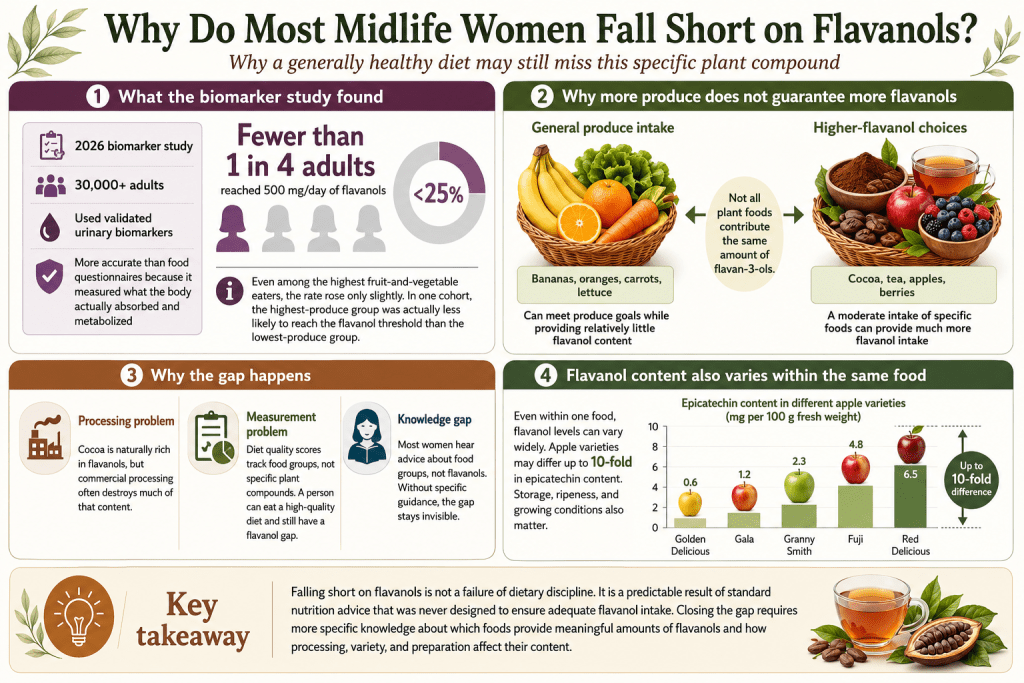
The 2026 biomarker study cited at the top of this article measured actual flavanol intake in more than 30,000 adults through validated urinary biomarkers. This method is significantly more accurate than food frequency questionnaires because it measures what the body absorbed and metabolized rather than what people reported eating.
What Did the Biomarker Study Find?
Fewer than one in four adults reached the 500 mg per day flavanol intake associated with the strongest research findings.
Among people in the top quartile of fruit and vegetable consumption—the ones eating the most produce—the rate only rose slightly. In one cohort, the highest-produce quartile was less likely to reach the flavanol threshold than the lowest-produce quartile.
Why Does Eating More Produce Not Guarantee More Flavanols?
The fruits and vegetables that deliver meaningful amounts of flavanols are only a subset of the broader produce category. A banana and a piece of dark chocolate both count as plant foods in a general sense, but they contribute very different amounts of flavan-3-ols.
Someone who eats large amounts of bananas, oranges, carrots, and lettuce may be meeting general produce recommendations while receiving relatively little flavanol content. Someone who eats moderate amounts of specific high-flavanol foods may receive a much higher intake in less overall food volume.
Some of the most significant sources include:
- Cocoa
- Tea
- Apples
- Berries
Even within the same food, flavanol content can vary substantially. Different apple varieties can differ tenfold in epicatechin content, while storage conditions, ripeness, and growing conditions can all change the specific flavanol load. The upper and lower ends of the same food category may therefore provide very different amounts.
What Other Factors Contribute to the Flavanol Gap?
Several additional issues make it difficult for midlife women to consistently reach the recommended flavanol intake:
- The processing problem: Cocoa is one of the richest natural sources of flavanols, but most commercial cocoa is processed in ways that destroy much of its flavanol content. This is covered in detail in Section 7.
- The measurement problem: Standard dietary quality indices score whether a diet includes an appropriate variety of food groups. They do not typically measure specific plant compounds. It is entirely possible to score in the highest bracket of dietary quality while still having a substantial flavanol deficit because the scoring system was not designed to detect this specific gap.
- The knowledge gap: Most midlife women have never heard specific advice about flavanols. Standard nutrition education emphasizes food groups—such as fruits, vegetables, and whole grains—rather than individual plant compounds. Without specific knowledge, the flavanol gap remains invisible.
Falling short of the flavanol threshold is not a failure of dietary discipline. It is a predictable consequence of following standard advice that was never designed to ensure adequate flavanol intake.
Closing the gap requires more specific knowledge about which foods provide meaningful amounts of flavanols and how processing, variety, and preparation affect their content. That is what the rest of this article provides.
Free Macro Calculator
Personalized to your body, goals, and measurements. You will receive detailed macros for meals, sample day of eating, food selection guidance, hydration + daily supplement suggestions, and more.
What Are the Six Health Effects That Make Flavanols Worth Attention?
The reason the flavanol conversation matters more than most single-compound conversations in nutrition is that the effects span several body systems in ways that are particularly relevant to midlife women. Six specific effect areas are worth understanding in detail.
Effect 1: Cardiovascular Health
The COSMOS trial found a 27% reduction in cardiovascular death and meaningful reductions in cardiovascular events at 500 mg daily. The mechanism involves improved endothelial function, better nitric oxide availability, reduced arterial stiffness, and improvements in blood pressure and lipid profiles. For midlife women whose cardiovascular risk rises significantly through the menopause transition, this is the single most important effect.
Effect 2: Cognitive Function and Hippocampal Memory
A sub-study of COSMOS looked specifically at cognition. The overall primary cognitive outcome was not significant across the whole sample, but among participants with lower baseline diet quality and lower baseline flavanol intake, the intervention appeared to restore hippocampal memory function. The pattern suggests a depletion-repletion effect where the flavanols help brains that were most depleted. Midlife women often have some cognitive shifts around perimenopause that map onto this pattern.
Effect 3: Blood Sugar and Insulin Regulation
A meta-analysis of nineteen randomized trials of cocoa flavanols found significant improvements in fasting insulin, HOMA-IR (a marker of insulin resistance), and fasting glucose. A separate large observational cohort found that higher flavonoid-rich diets were associated with 26% lower risk of developing type 2 diabetes. For midlife women whose insulin sensitivity declines through the menopause window, this metabolic effect is directly relevant.
Effect 4: Exercise Capacity
A trial in older adults (age 55 to 79) using a higher dose (1000 mg per day of cocoa flavanols split into two doses) over 30 days found significant improvements in peak oxygen uptake, maximum exercise capacity, blood pressure, and vascular function. For midlife women trying to maintain the fitness and function that support aging well, this effect is meaningful.
Effect 5: Skin Aging
A 24-week randomized trial in women with moderate photo-aging used 320 mg per day of cocoa flavanols and found reductions in facial wrinkles and improvements in skin elasticity. This is one of the few flavanol trials conducted specifically in a female population and specifically for a skin outcome that midlife women often care about.
Effect 6: Longevity
A Danish cohort study followed more than 56,000 adults over 23 years and found that total flavonoid intake was associated with lower all-cause mortality, cardiovascular mortality, and cancer mortality. The benefit appeared to plateau at approximately 500 mg per day of total flavonoids. This finding tracks a broader compound family than just flavan-3-ols, but the convergence around the same intake threshold is notable.
The pattern across effects. When a single dietary compound demonstrates meaningful effects across cardiovascular, cognitive, metabolic, physical fitness, dermatological, and mortality outcomes at roughly the same intake level, that pattern is unusual in the nutrition literature. Most single-compound interventions show benefit in one or two areas but not across multiple systems. The flavan-3-ol pattern suggests a fundamental biological role rather than a narrow niche effect.
What Are the Best Food Sources of Flavanols?
Reaching the 500 mg daily threshold through food requires knowing which specific foods deliver meaningful amounts. The list is not long, and it is not what most people would guess.
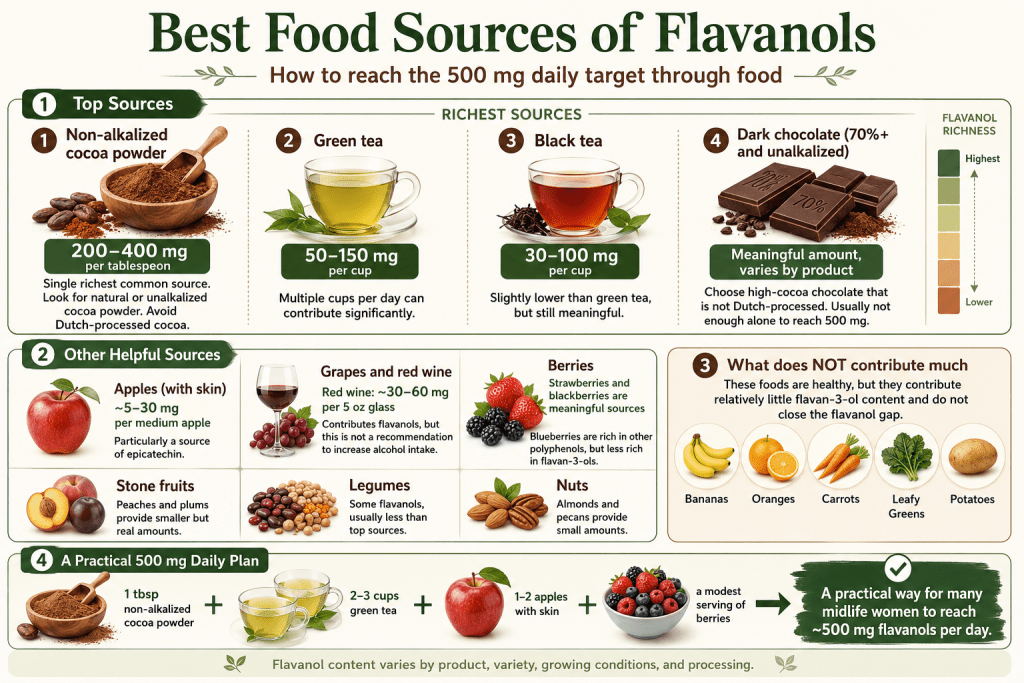
- Non-alkalized cocoa powder: The single richest common source. A tablespoon of unalkalized (natural) cocoa powder can contain 200 to 400 mg of flavanols depending on the specific product. This is the single most efficient food-based way to close the flavanol gap. Look for “natural cocoa powder” or “unalkalized cocoa powder” on the label. Avoid Dutch-processed cocoa (see Section 7).
- Dark chocolate (specifically high-cocoa, unalkalized): Dark chocolate can contribute meaningful flavanols but the amount varies substantially by product. Chocolate with a high cocoa percentage (70% or higher) that has not been Dutch-processed is preferable. Even good dark chocolate typically requires eating more than most people would want to reach 500 mg from chocolate alone.
- Green tea: A cup of well-brewed green tea can contain 50 to 150 mg of flavanols. Multiple cups per day can contribute significantly. The specific flavanol content depends on brewing time, water temperature, and tea quality.
- Black tea: Slightly lower in flavanols than green tea, but still meaningful. A cup of well-brewed black tea can contain 30 to 100 mg of flavanols.
- Apples: Apples contribute meaningful flavanols, particularly epicatechin. The amount varies enormously by variety and growing conditions (up to tenfold differences between apples of the same variety grown in different conditions). Estimates range from 5 to 30 mg per medium apple. Eating apples with the skin captures the most flavanols.
- Grapes and red wine: Grapes and red wine contribute flavanols. A five-ounce glass of red wine can contribute approximately 30 to 60 mg of flavanols, though the alcohol content complicates the health equation for midlife women and this is not a recommendation to increase alcohol intake.
- Berries: Strawberries and blackberries contain meaningful amounts of flavanols. Blueberries contain other beneficial polyphenols (anthocyanins) that are health-supportive but less rich in the specific flavan-3-ol group.
- Stone fruits: Peaches and plums contribute smaller but real amounts of flavanols.
- Legumes: Certain legumes contain some flavanols, though generally in smaller amounts than the top sources.
- Nuts: Almonds and pecans contribute small amounts of flavanols along with their broader nutritional value.
- What does not contribute much: Bananas, oranges, carrots, most leafy greens, potatoes, and most other common produce items contribute relatively little flavan-3-ol content. This is not a reason to eat less of them (they have other benefits), but they do not close the flavanol gap.
- A practical daily target: For most midlife women, reaching 500 mg per day is achievable through a combination of one tablespoon of non-alkalized cocoa powder in a morning drink or oatmeal, two to three cups of green tea, one to two apples with skin, and modest berry intake. This total is not difficult once the specific foods are identified.
Free Macro Calculator
Personalized to your body, goals, and measurements. You will receive detailed macros for meals, sample day of eating, food selection guidance, hydration + daily supplement suggestions, and more.
Why Does Most Cocoa Powder Contain So Few Flavanols?
The processing problem for cocoa is one of the most important pieces of the flavanol conversation because cocoa is the single richest natural source, and most commercially available cocoa products have been processed in ways that destroy the flavanol content.
- What Dutching (alkalization) does: Dutching is a manufacturing process that treats cocoa with alkaline solutions to reduce bitterness, darken the color, and improve mixing properties. The process was developed in the Netherlands in the 1820s and has become the dominant processing method for commercial cocoa. Most cocoa powder found in grocery stores has been Dutch-processed.
- The impact on flavanols: A 2008 analysis of commercial cocoa powders found that non-alkalized (natural) cocoa averaged approximately 34.6 mg of flavanols per gram. Light alkalization dropped this to approximately 13.8 mg per gram. Medium alkalization dropped it to approximately 7.8 mg per gram. Heavy alkalization dropped it to approximately 3.9 mg per gram. The difference between the least processed and the most processed cocoa is roughly ninefold.
- Reading labels: The distinction is important enough to check labels carefully. Look for “natural cocoa powder” or “unalkalized cocoa powder.” Products labeled “Dutch-processed,” “processed with alkali,” “cocoa processed with alkali,” or “European style” have been alkalized and contain much less flavanol content. Some products are silent on the processing method, which usually indicates alkalization.
- The taste and color difference: Natural cocoa is lighter in color and has a more acidic, sharper taste. Dutch-processed cocoa is darker in color and has a smoother, milder taste. Most familiar dark cocoa aesthetics come from Dutching, which is why some people find natural cocoa unfamiliar initially. Combining natural cocoa with sweetness (a small amount of maple syrup, honey, or dates) and warm milk creates a hot chocolate that tastes rich without needing the Dutch-processed profile.
- The dark chocolate question: Not all dark chocolate is Dutch-processed, but many mass-market dark chocolates are. Reading labels carefully or choosing brands that specifically state their cocoa is non-alkalized helps. A 70% cocoa dark chocolate that has not been Dutched will contain much more flavanol content than a 90% cocoa dark chocolate that has been.
- The FDA qualified health claim: The FDA’s 2023 qualified health claim for cocoa flavanols specifies high-flavanol cocoa powder, not dark chocolate or other cocoa products generally, precisely because the flavanol content of common cocoa products is often insufficient to produce the cardiovascular effects.
- The practical implication: Adding a tablespoon of natural cocoa powder to your morning oatmeal, coffee, or smoothie is the single easiest way to close a significant portion of the flavanol gap. Doing the same with Dutch-processed cocoa contributes much less. The specific choice of cocoa product matters more than the amount consumed.
How Many Flavanols Do You Need Per Day?
The specific daily target for flavanols is worth being clear about because it shapes every food decision that follows.
- The Academy of Nutrition and Dietetics 2022 guideline: The professional guideline for cardiometabolic health is 400 to 600 mg per day of flavan-3-ols, with 500 mg as a reasonable central target.
- The COSMOS trial dose: The trial used 500 mg of total cocoa flavanols including 80 mg of epicatechin per day. This is the reference point for most current recommendations.
- The Danish longevity study: The mortality benefit associated with total flavonoid intake (a broader category than just flavan-3-ols) plateaued at approximately 500 mg per day.
- The convergence: Three separate lines of evidence (professional guideline, largest cardiovascular trial, largest longevity cohort) converge on approximately 500 mg per day as a meaningful target. This convergence is one of the reasons to treat 500 mg per day as a working goal.
- Whether more is better: Some trials have used higher doses (1000 mg per day for exercise capacity studies) and shown additional effects. The relationship between dose and benefit above 500 mg per day is not fully mapped, but there does not appear to be strong evidence for pushing well above 600 to 800 mg for most healthy adults.
- Whether less is beneficial: Even amounts below 500 mg per day are almost certainly better than very low intake. The 500 mg target is a specific evidence-informed goal, not a minimum threshold below which the compound stops working. If you can move from 100 mg per day to 300 mg per day, that is meaningful progress even if you do not immediately reach the 500 mg mark.
- Consistency matters: Daily intake produces stronger evidence-based effects than occasional intake. Building the flavanol-rich foods into a daily routine matters more than occasionally high-intake days.
- Individual variability: Different people metabolize flavanols differently, and gut microbiome differences affect the specific metabolites produced. The 500 mg population target is a reasonable working goal but individual responses vary.
Free Macro Calculator
Personalized to your body, goals, and measurements. You will receive detailed macros for meals, sample day of eating, food selection guidance, hydration + daily supplement suggestions, and more.
How Can You Build a Flavanol-Rich Daily Framework?
Reaching 500 mg per day through food is achievable with a specific framework that adds flavanol-rich foods to the daily rhythm without disrupting the broader nutrition foundation.
- The morning cocoa anchor: One tablespoon of natural (unalkalized) cocoa powder mixed into oatmeal, a protein shake, warm milk, or coffee contributes 200 to 400 mg of flavanols. This single practice provides the majority of the daily target. Adding a small amount of natural sweetness (a teaspoon of maple syrup, honey, or a chopped date) makes the taste enjoyable without turning the practice into a dessert.
- Green or black tea throughout the day: Two to three cups of well-brewed tea contribute 100 to 300 mg of flavanols. Substituting tea for one cup of coffee is often easier than adding tea on top of an existing coffee habit.
- Daily apple with skin: A whole apple with skin contributes 5 to 30 mg of flavanols. Choosing higher-flavanol varieties like Granny Smith, Fuji, or Red Delicious over lower-flavanol varieties helps.
- Berries at least three times a week: A cup of strawberries or blackberries contributes meaningful flavanols. Frozen berries are as good as fresh for this purpose.
- A small piece of high-quality dark chocolate: One ounce of 70% or higher non-alkalized dark chocolate contributes 20 to 100 mg of flavanols. As a dessert or afternoon snack, this is a pleasant addition rather than a restrictive imposition.
- Cooking with cocoa: Beyond drinks, natural cocoa can be added to smoothies, oatmeal, chia pudding, energy bars, savory recipes (mole, chili), and baked goods. The bitterness of natural cocoa softens when balanced with other flavors.
- The nutrition foundation underneath: Flavanols work best as an addition to an already-solid nutrition foundation of adequate protein, appropriate calorie balance, and whole-food emphasis. The free Macro Calculator and Macro Miracle Mediterranean Cookbook cover the foundation.
- The realistic daily total: For most midlife women, a daily pattern of morning cocoa plus two to three cups of tea plus one apple plus modest berry intake reaches or exceeds 500 mg of flavan-3-ols without any exotic ingredients or complicated preparation.
“The morning cocoa is the most impactful single practice I have added to my own routine and to what I recommend to coaching clients in the last two years. It costs almost nothing, tastes better than most morning drinks, and delivers what the recent research suggests is a meaningful daily dose of the compound most associated with cardiovascular protection in this life stage. A tablespoon of natural cocoa powder, warmed with milk of choice, a teaspoon of maple syrup, and a pinch of salt. That is thirty seconds of preparation and about 200 to 300 mg of flavanols. Combined with two cups of tea and an apple, most women can hit the 500 mg mark by early afternoon without anything else changing about their diet. This is the kind of small, high-value change that makes evidence-based nutrition feel accessible rather than complicated.”
Terry Tateossian, Founder of The House of Rose
What Does a 7-Day Flavanol Framework Look Like?
The following 7-day framework provides a specific structure for building the flavanol-rich foods into a daily rhythm. Total daily flavanol content targets 500 mg or higher through food alone. All foods are compatible with the broader THOR nutrition framework.
Day 1: Anchor the Morning Cocoa
|
Meal |
Flavanol source |
Approx mg |
|
Breakfast |
1 tbsp natural cocoa in oatmeal |
250 |
|
Morning |
1 cup green tea |
100 |
|
Lunch |
Apple with lunch |
15 |
|
Afternoon |
1 cup green tea |
100 |
|
Total |
~465 |
Day 2: Add the Second Apple
|
Meal |
Flavanol source |
Approx mg |
|
Breakfast |
1 tbsp natural cocoa in coffee |
250 |
|
Morning |
1 cup black tea |
60 |
|
Lunch |
Apple with lunch |
15 |
|
Afternoon |
1 cup green tea |
100 |
|
Snack |
Apple with almonds |
15 |
|
Total |
~440 |
Day 3: Introduce Berries
|
Meal |
Flavanol source |
Approx mg |
|
Breakfast |
Berries with yogurt + 1 tbsp cocoa |
300 |
|
Morning |
1 cup green tea |
100 |
|
Lunch |
Apple with lunch |
15 |
|
Afternoon |
1 cup green tea |
100 |
|
Total |
~515 |
Day 4: Add Dark Chocolate
|
Meal |
Flavanol source |
Approx mg |
|
Breakfast |
1 tbsp natural cocoa in smoothie |
250 |
|
Morning |
1 cup green tea |
100 |
|
Lunch |
Apple with lunch |
15 |
|
Afternoon |
1 oz 85% dark chocolate |
60 |
|
Evening |
1 cup black tea |
60 |
|
Total |
~485 |
Day 5: Full Flavanol Day
|
Meal |
Flavanol source |
Approx mg |
|
Breakfast |
Berries + 1 tbsp cocoa oatmeal |
320 |
|
Morning |
1 cup green tea |
100 |
|
Lunch |
Apple with lunch |
20 |
|
Afternoon |
1 oz dark chocolate + green tea |
160 |
|
Total |
~600 |
Day 6: Simple Pattern
|
Meal |
Flavanol source |
Approx mg |
|
Breakfast |
1 tbsp natural cocoa in coffee |
250 |
|
Morning |
1 cup green tea |
100 |
|
Lunch |
Apple with lunch |
15 |
|
Afternoon |
1 cup green tea + berries |
180 |
|
Total |
~545 |
Day 7: Rest Day Pattern
|
Meal |
Flavanol source |
Approx mg |
|
Breakfast |
1 tbsp natural cocoa smoothie with berries |
350 |
|
Lunch |
Apple with lunch |
15 |
|
Afternoon |
1 cup green tea |
100 |
|
Evening |
1 oz dark chocolate |
60 |
|
Total |
~525 |
Continuing after the first week. The pattern is not complicated. Morning cocoa is the anchor. Tea throughout the day is the multiplier. Apple with lunch and berries several times a week are the reliable adds. Dark chocolate is the pleasant flexibility. Once these habits are installed, hitting 500 mg per day becomes automatic rather than deliberate.
Free Macro Calculator
Personalized to your body, goals, and measurements. You will receive detailed macros for meals, sample day of eating, food selection guidance, hydration + daily supplement suggestions, and more.
Should You Take Flavanol Supplements?
The supplement question is worth addressing directly because flavanol supplements are available and heavily marketed, and the honest picture is more nuanced than the marketing suggests.
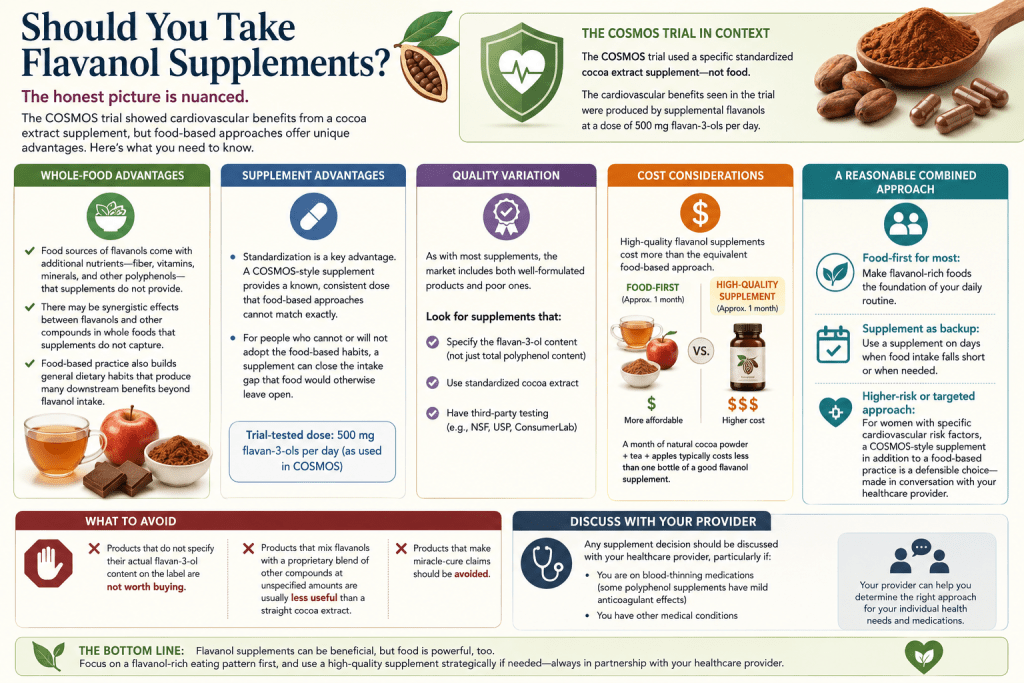
- The COSMOS trial used a supplement: The trial itself used a specific standardized cocoa extract supplement, not food. This means the cardiovascular benefits shown in the trial were produced by supplemental flavanols rather than by dietary changes.
- Whole-food advantages: Food sources of flavanols come with additional nutrients (fiber, vitamins, minerals, other polyphenols) that supplements do not provide. There may be synergistic effects between flavanols and other compounds in whole foods that supplements do not capture. Food-based practice also builds general dietary habits that produce many downstream benefits beyond flavanol intake.
- Supplement advantages: Standardization is one advantage. A COSMOS-style supplement provides a known, consistent dose that food-based approaches cannot match exactly. For people who cannot or will not adopt the food-based habits, a supplement can close the intake gap that food would otherwise leave open.
- Quality variation: As with most supplements, the market includes both well-formulated products and poor ones. Look for supplements that specify the flavan-3-ol content (not just total polyphenol content), that use standardized cocoa extract, and that have third-party testing.
- Cost considerations: High-quality flavanol supplements cost more than the equivalent food-based approach. A month of natural cocoa powder plus tea plus apples typically costs less than one bottle of a good flavanol supplement.
- A reasonable combined approach: For most midlife women, a food-first approach with supplementation as a backup on days when food intake falls short is a reasonable framework. For women with specific cardiovascular risk factors who want the trial-tested standardized dose, a COSMOS-style supplement in addition to a food-based practice is a defensible choice made in conversation with a healthcare provider.
- What to avoid: Products marketed as flavanol supplements that do not specify their actual flavan-3-ol content on the label are not worth buying. Products that mix flavanols with a proprietary blend of other compounds at unspecified amounts are usually less useful than a straight cocoa extract. Products that make miracle-cure claims should be avoided.
- Discussion with your provider: Any supplement decision should be discussed with your healthcare provider, particularly if you are on blood-thinning medications (some polyphenol supplements have mild anticoagulant effects) or have other medical conditions.
What Common Mistakes Can Undermine Your Flavanol Intake?
Six common mistakes consistently reduce the flavanol benefit for midlife women trying to close the intake gap.
- Buying Dutch-processed cocoa without realizing it: Most grocery-store cocoa is Dutch-processed. Reading the label carefully is essential. If the label does not specify natural or unalkalized, assume it has been Dutched and buy something else.
- Assuming all dark chocolate is flavanol-rich: Percentage of cocoa is only part of the picture. A 90% dark chocolate that has been Dutch-processed contains less flavanol than a 70% dark chocolate that has not. Read the ingredient list for processing method.
- Eating flavanol-rich foods sporadically rather than daily: The evidence base is built on daily intake. Occasional bursts of flavanol-rich eating do not produce the same effects as consistent daily intake.
- Overrelying on general produce recommendations: Eating more bananas, oranges, and lettuce does not close the flavanol gap. Specific high-flavanol foods matter more than general produce volume.
- Skipping the tea because coffee is preferred: Tea is one of the most convenient flavanol delivery vehicles. Even substituting one afternoon coffee for tea makes a meaningful difference. Green tea has more flavanols than black, but black tea still contributes significantly.
- Waiting for supplements to close the gap: Supplements can close the gap, but food-based practice provides broader nutritional benefits that supplements do not. Start with food. Consider supplements only if food-based practice consistently falls short.
- Ignoring the nutrition foundation underneath: Flavanols cannot compensate for inadequate protein, poor sleep, chronic stress, or a diet built around processed foods. The flavanol layer sits on top of a foundational nutrition framework, not in place of one.
Free Macro Calculator
Personalized to your body, goals, and measurements. You will receive detailed macros for meals, sample day of eating, food selection guidance, hydration + daily supplement suggestions, and more.
What Are Your Next Steps for Increasing Flavanol Intake?
If the framework in this article resonates and you want to close the flavanol gap in your own diet, here are the four next steps in order of friction.
- Buy natural cocoa powder this week. Read labels carefully. Look for “natural cocoa powder” or “unalkalized cocoa powder.” Avoid anything labeled “processed with alkali,” “Dutch-processed,” or “European style.”
- Establish the morning cocoa habit. One tablespoon of natural cocoa in oatmeal, a protein shake, warm milk, or coffee every morning for the next four weeks. This single habit closes the majority of the flavanol gap.
- Add tea and apples on top. Two to three cups of green or black tea daily. An apple with lunch. Three servings of berries per week. These additions bring most women well past the 500 mg target.
Frequently Asked Questions
What are flavanols?
Flavanols are a subfamily of plant compounds within the flavonoid group of polyphenols. The specific flavan-3-ol group (which includes epicatechin and catechin) is the subgroup most linked to cardiovascular and cognitive health in recent research. The richest food sources are non-alkalized cocoa, tea, apples, grapes, and certain berries.
How much flavanols per day do I need?
The Academy of Nutrition and Dietetics 2022 guideline for cardiometabolic health recommends 400 to 600 mg per day of flavan-3-ols. The specific target of 500 mg per day aligns with the dose used in the COSMOS cardiovascular trial and with the plateau observed in the Danish longevity study. Most midlife women can reach this target through a combination of natural cocoa, tea, apples, and berries.
Are flavanols safe during menopause?
Flavanols from food sources are generally safe during perimenopause and menopause and may be particularly beneficial given the cardiovascular risk shifts of this window. Flavanol supplements should be discussed with your healthcare provider, particularly if you are on any medications.
Free Macro Calculator
Personalized to your body, goals, and measurements. You will receive detailed macros for meals, sample day of eating, food selection guidance, hydration + daily supplement suggestions, and more.
What is the difference between flavanols and flavonoids?
Flavonoids are the broader family of plant compounds. Flavanols (specifically flavan-3-ols) are one subfamily within flavonoids. Other flavonoid subfamilies include flavonols (like quercetin), anthocyanins, and isoflavones. The recent cardiovascular research on 500 mg per day addresses the flavan-3-ol group.
Can I get enough flavanols from a healthy diet?
Recent biomarker research suggests that roughly four out of five adults do not reach the 500 mg per day threshold even when following standard dietary recommendations. Closing the gap requires specific choices around cocoa, tea, apples, and berries rather than general produce increases.
What is the best cocoa powder for flavanols?
Look for natural (unalkalized) cocoa powder. Read labels carefully. Avoid anything labeled Dutch-processed, processed with alkali, or European style, because these processing methods destroy most of the flavanol content. Quality natural cocoa powder is widely available at reasonable cost.
How much dark chocolate should I eat for flavanols?
One ounce (approximately 28 grams) of high-quality non-alkalized dark chocolate at 70% cocoa or higher contributes 20 to 100 mg of flavanols depending on the specific product. Even the best dark chocolate typically requires larger amounts than most people would want to eat to reach 500 mg from chocolate alone. Cocoa powder is a more efficient source per calorie.
Do flavanol supplements work?
The COSMOS trial used a supplement and produced meaningful cardiovascular effects, so supplements can work when they contain standardized doses of actual flavan-3-ols. Look for products that specify flavan-3-ol content on the label. Discuss with your healthcare provider before starting any supplement, particularly if you are on blood-thinning medications.
What is the COSMOS trial?
COSMOS (Cocoa Supplement and Multivitamin Outcomes Study) is the largest randomized trial ever conducted on cocoa flavanols and cardiovascular outcomes. It enrolled more than 21,000 older adults and found a 27% reduction in cardiovascular death (a pre-specified secondary endpoint) with 500 mg per day of cocoa flavanols including 80 mg of epicatechin. The primary endpoint of the combined cardiovascular events was reduced 10%, which did not reach conventional significance.
Can flavanols help with menopause brain fog?
The COSMOS cognitive sub-study found that flavanol intervention appeared to restore hippocampal memory function in participants who started with the lowest baseline diet quality and flavanol intake, suggesting a depletion-repletion pattern. The direct research on menopause-specific brain fog is limited, but the mechanism is plausible and the food-based intervention is low-risk.
Are flavanols good for skin aging?
A 24-week randomized trial in women with moderate photo-aging found that 320 mg per day of cocoa flavanols reduced facial wrinkles and improved skin elasticity. This is one of the few flavanol trials in a female-specific population targeting a skin outcome. The evidence supports flavanols as a supportive intervention for skin aging alongside other approaches.
Can I take flavanols with my heart medication?
Some polyphenols including flavanols have mild anticoagulant effects. If you are on blood-thinning medications like warfarin or apixaban, discuss any significant change in flavanol intake or any flavanol supplement with your prescribing physician. Normal food-based intake of flavanol-rich foods is generally considered safe but disclosure to your provider is appropriate.
Do flavanols help with type 2 diabetes?
A meta-analysis of nineteen randomized trials of cocoa flavanols found significant improvements in fasting insulin, insulin resistance (HOMA-IR), and fasting glucose. A large observational cohort found that higher flavonoid intake was associated with 26% lower risk of developing type 2 diabetes. Discuss any dietary changes with your diabetes care team if you are managing diabetes.
Free Macro Calculator
Personalized to your body, goals, and measurements. You will receive detailed macros for meals, sample day of eating, food selection guidance, hydration + daily supplement suggestions, and more.
Is green tea or black tea better for flavanols?
Green tea contains higher amounts of flavanols per cup than black tea on average, but both contribute meaningfully. Black tea also contains flavanols along with other polyphenols. Choosing whichever tea you enjoy and will actually drink consistently matters more than optimizing for the specific type.
How long before I see benefits from flavanols?
Cardiovascular biomarkers like blood pressure and vascular function can improve within days to weeks of consistent flavanol intake. Deeper cardiovascular protection develops over years of consistent intake. The mortality signals in the observational literature are based on years to decades of dietary patterns. Flavanol optimization is a long-term intervention, not a short-term fix.
References
- Sesso, H. D., Manson, J. E., Aragaki, A. K., et al. (2022). Effect of cocoa flavanol supplementation for the prevention of cardiovascular disease events: the COcoa Supplement and Multivitamin Outcomes Study (COSMOS) randomized clinical trial. American Journal of Clinical Nutrition, 115(6), 1490–1500.
- Baker, L. D., Manson, J. E., Rapp, S. R., et al. (2023). Effects of cocoa extract and a multivitamin on cognitive function: a randomized clinical trial. Alzheimer’s and Dementia, 19(4), 1308–1319.
- Crowe-White, K. M., Evans, L. W., Kuhnle, G. G. C., et al. (2022). Flavan-3-ols and cardiometabolic health: first ever dietary bioactive guideline. Advances in Nutrition, 13(6), 2070–2083.
- Bondonno, N. P., Dalgaard, F., Kyrø, C., et al. (2019). Flavonoid intake is associated with lower mortality in the Danish Diet Cancer and Health Cohort. Nature Communications, 10(1), 3651.
- Lin, X., Zhang, I., Li, A., et al. (2016). Cocoa flavanol intake and biomarkers for cardiometabolic health: a systematic review and meta-analysis of randomized controlled trials. Journal of Nutrition, 146(11), 2325–2333.
- Miller, K. B., Hurst, W. J., Payne, M. J., et al. (2008). Impact of alkalization on the antioxidant and flavanol content of commercial cocoa powders. Journal of Agricultural and Food Chemistry, 56(18), 8527–8533.
- Neshatdoust, S., Saunders, C., Castle, S. M., et al. (2016). High-flavonoid intake induces cognitive improvements linked to changes in serum brain-derived neurotrophic factor: two randomised, controlled trials. Nutrition and Healthy Aging, 4(1), 81–93.
- Sansone, R., Rodriguez-Mateos, A., Heuel, J., et al. (2015). Cocoa flavanol intake improves endothelial function and Framingham Risk Score in healthy men and women: a randomised, controlled, double-masked trial: the Flaviola Health Study. British Journal of Nutrition, 114(8), 1246–1255.
- Ostertag, L. M., O’Kennedy, N., Kroon, P. A., et al. (2010). Impact of dietary polyphenols on human platelet function: a critical review of controlled dietary intervention studies. Molecular Nutrition and Food Research, 54(1), 60–81.
- Rodriguez-Mateos, A., Cifuentes-Gomez, T., Tabatabaee, S., et al. (2012). Procyanidin, anthocyanin, and chlorogenic acid contents of highbush and lowbush blueberries. Journal of Agricultural and Food Chemistry, 60(23), 5772–5778.
- Buijsse, B., Weikert, C., Drogan, D., et al. (2010). Chocolate consumption in relation to blood pressure and risk of cardiovascular disease in German adults. European Heart Journal, 31(13), 1616–1623.
- Yamashita, Y., Wang, L., Nakamura, A., et al. (2016). Cacao liquor procyanidins prevent postprandial hyperglycaemia by increasing glucagon-like peptide-1 activity and glucose uptake in mice. Journal of Nutritional Science, 5, e37.
- Grassi, D., Desideri, G., & Ferri, C. (2013). Blood pressure and cardiovascular risk: what about cocoa and chocolate? Archives of Biochemistry and Biophysics, 501(1), 112–115.
- Farah, A. R., Faramarzi, H., & Rafraf, M. (2020). The effect of dark chocolate consumption on facial wrinkles and skin elasticity in women with moderate photo-aging: a randomized clinical trial. Journal of Cosmetic Dermatology, 19(9), 2237–2243.
- Sarriá, B., Martínez-López, S., Sierra-Cinos, J. L., et al. (2014). Regular consumption of a cocoa product improves the cardiometabolic profile in healthy and moderately hypercholesterolaemic adults. British Journal of Nutrition, 111(1), 122–134.
- Ellinger, S., & Stehle, P. (2016). Impact of cocoa consumption on inflammation processes: a critical review of randomized controlled trials. Nutrients, 8(6), 321.
- Corti, R., Flammer, A. J., Hollenberg, N. K., & Lüscher, T. F. (2009). Cocoa and cardiovascular health. Circulation, 119(10), 1433–1441.
- Ottaviani, J. I., Britten, A., Lucarelli, D., et al. (2020). Biomarker-estimated flavan-3-ol intake is associated with lower blood pressure in cross-sectional analysis in EPIC Norfolk. Scientific Reports, 10(1), 17964.
- Kroon, P. A., Iyer, A., Chunduri, P., et al. (2010). The cardiovascular nutrapharmacology of resveratrol: pharmacokinetics, molecular mechanisms and therapeutic potential. Current Medicinal Chemistry, 17(23), 2442–2455.
- Tsang, C., Higgins, S., Duthie, G. G., et al. (2012). The effect of consumption of red wine on antioxidant status in healthy subjects. Journal of Human Nutrition and Dietetics, 25(3), 195–202.
Disclaimer: Always consult with a qualified healthcare professional before making significant changes to your diet or starting any new supplement, particularly if you have cardiovascular disease, diabetes, are taking blood-thinning medications, or have any specific health conditions that require dietary management. This article is educational and does not constitute medical advice.
Free Macro Calculator
Personalized to your body, goals, and measurements. You will receive detailed macros for meals, sample day of eating, food selection guidance, hydration + daily supplement suggestions, and more.

Terry Tateossian is a Menopause Lifestyle Medicine Coach, Certified Personal Trainer & Nutritionist and the Founder of THOR: The House of Rose, a wellness brand serving women over 40 through retreats, coaching, macro-nutrition and community. As 25-year founder and entrepreneur, Terry spent two and a half decades building and running successful start-up businesses, an experience that put her on the front line of founder burnout long before she could name it. After facing serious health challenges, early onset menopause, and emotional eating while running her agency and raising two children, Terry rebuilt her health in her 40s and lost more than 80 pounds through evidence-based nutrition, training, and mindset work. Today, she helps women get strong, improve confidence, support hormone health, and create a stronger second half of life. Terry has been featured in major media outlets and is available for podcasts, expert commentary, brand collaborations, and speaking engagements on midlife health, reinvention, emotional eating, menopause wellness, and strength training for longevity. Get her free macro calculator (her cookbook companion) to start your journey to back to health.