
 By Team THOR
Free 28-Day Fascia Reset Email Course
Get our Free 28-day email course series to help with 1 or 2 exercises per day to release your fascia. One short lesson per day. Two minutes to read each.
Ayurveda for Women Over 40: A Complete Guide to Doshas, Daily Routines, and What Midlife Women Should Know
Ayurveda is a living tradition rooted in South Asian civilization and developed over several thousand years. It is not a Western wellness trend, lifestyle brand, or aesthetic. Yet in Western wellness culture, it is often reduced to simple dosha quizzes, borrowed terms, and product marketing that does not reflect classical practice.
This article offers a respectful educational introduction from the perspective of a modern midlife women’s health coach, not an Ayurvedic practitioner. Where Ayurveda and evidence-based health practices overlap, I explain the connection. Where they differ, I address those differences honestly. The tradition belongs to South Asian communities and the trained practitioners who continue to preserve it.
Ayurveda appeals to many women over 40 because it recognizes that bodies, needs, and life stages differ. It also treats food, stress, digestion, sleep, hormones, and daily routines as interconnected rather than separate concerns. This whole-person framework can feel especially relevant during perimenopause, menopause, and post-menopause.
I am Terry Tateossian, founder of The House of Rose and a certified lifestyle medicine coach. I lead nutrition-focused wellness retreats for midlife women at our Smoky Mountains property in East Tennessee. THOR is not an Ayurvedic clinic, and my training is in evidence-based lifestyle medicine rather than classical Ayurveda. This guide draws from my study of the tradition, current research, and years of coaching women through the menopause transition.
Important: This article is educational and does not constitute medical advice. Consult a qualified healthcare provider before using herbal supplements, treatments, or making significant lifestyle changes.
What Is Ayurveda?
Ayurveda is a system of health and medicine that developed within the broader Vedic tradition of South Asia over a period of several thousand years. The word itself is derived from two Sanskrit terms: ayus (meaning life or lifespan) and veda (meaning knowledge or science). Ayurveda therefore translates roughly as the science of life or the knowledge of longevity.
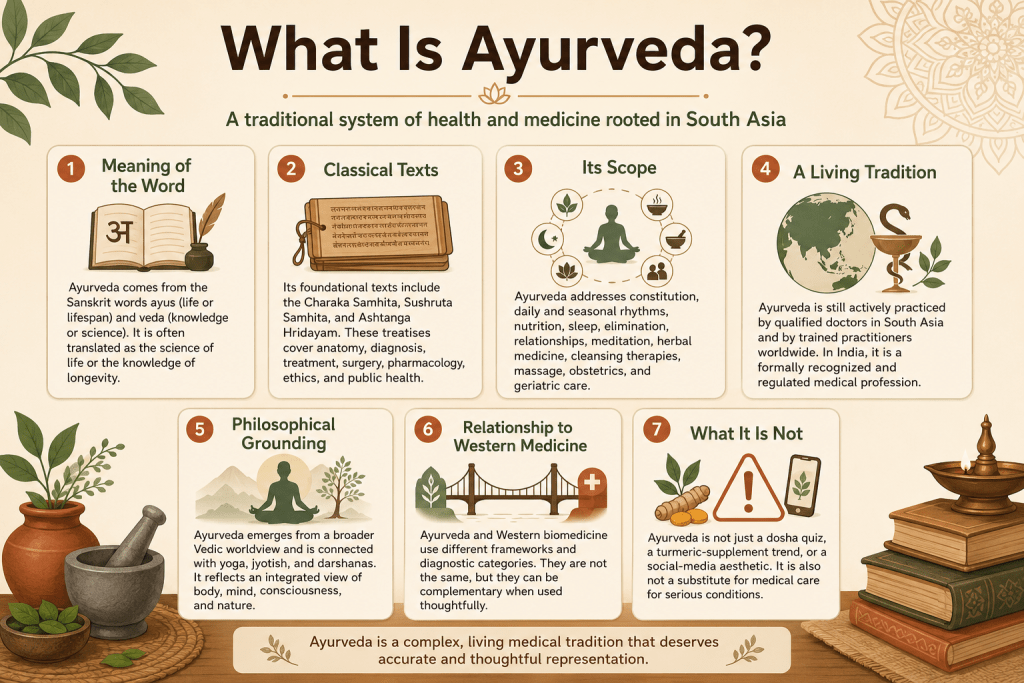
- Its classical texts: The foundational texts of Ayurveda include the Charaka Samhita, the Sushruta Samhita, and the Ashtanga Hridayam. These works are extensive treatises on anatomy, physiology, diagnosis, treatment, surgery, pharmacology, ethics, and public health. They are not simple herbal manuals. They represent one of the most detailed pre-modern systems of medicine ever compiled.
- Its scope: Ayurveda addresses individual constitution, seasonal and daily rhythms, nutrition, sleep, elimination, sexuality, relationships, meditation, ethics, herbal medicine, cleansing therapies, massage, oil applications, minor surgery, obstetrics, and geriatric care. In classical practice it functions as a complete healthcare system that has served entire populations for millennia.
- Its living status: Ayurveda is not a historical curiosity. It is a living tradition practiced by thousands of qualified doctors in South Asia and by trained practitioners worldwide. In India specifically, Ayurvedic medicine is a recognized medical profession with formal education, licensure, and regulation.
- Its philosophical grounding: Ayurveda emerges from a broader Vedic worldview that includes yoga, jyotish (traditional astrology), and darshanas (philosophical schools). These systems share the same underlying assumptions about consciousness, the body, and the natural world. Ayurveda cannot be fully understood without some familiarity with this broader philosophical context, which is covered in Section 3 of this article.
- Its relationship to Western medicine: Ayurveda and Western biomedicine operate from different philosophical foundations, use different diagnostic categories, and often prescribe different interventions. They are not the same. They are also not always incompatible. The most productive framing is that they are complementary systems that address overlapping but not identical questions, and that midlife women can benefit from the insights of both when the recommendations are handled thoughtfully.
- What it is not: Ayurveda is not a dosha quiz on a wellness website. It is not a brand of turmeric supplements. It is not a lifestyle aesthetic on Instagram. It is not a substitute for medical care for serious conditions. Reducing it to any of these is a disservice to the tradition and often to the person doing the reducing.
Why Are Midlife Women Exploring Ayurveda?
Search interest in Ayurveda among midlife women has grown substantially over the last five years, and the reasons are specific to this life stage.
- Menopause is under-served in conventional Western medicine: Many midlife women have discovered that their conventional providers offer limited support for perimenopause and menopause beyond hormone therapy and antidepressants. When women seek a more comprehensive framework for the transition, they often begin exploring traditions that have always addressed life-stage transitions systematically. Ayurveda is one of those traditions.
- The exhaustion of the reductionist approach: The Western medical model of one symptom, one diagnosis, one prescription often falls short for the interconnected, whole-body, hormonally-driven changes of midlife. Ayurveda’s insistence on treating the whole person over long time horizons resonates with women who have grown tired of fragmented care.
- The daily routine emphasis: The Ayurvedic focus on daily routines (dinacharya) speaks to midlife women who have realized that occasional interventions do not produce the changes they need, and that consistent daily practice is where transformation actually happens.
- The food-as-medicine framing: The Ayurvedic view that food is medicine, that meals should match the body’s constitution and the season, and that digestion is central to health, aligns with the intuitive understanding many midlife women have developed after years of trying to figure out why they feel differently after different foods.
- The stress and nervous system framing: The Ayurvedic recognition that stress affects digestion, sleep, hormones, and mood as a unified system speaks directly to what most midlife women are experiencing.
- The specific dosha resonance: Many midlife women immediately recognize themselves in one of the three dosha descriptions, and that recognition creates an experience of being seen and understood that conventional medicine often does not provide.
- The cultural moment: Yoga has been mainstreamed in the West over the last several decades, and Ayurveda is now following a similar trajectory. High-profile books, podcasts, and wellness content have brought the tradition into general awareness in a way that was not true a decade ago.
- The perimenopause peak: Perimenopause specifically produces the vata-imbalance pattern that Ayurveda has always addressed as one of its most common presentations. Women in this window often find Ayurvedic frameworks describing their experience with unusual precision.
“The most common way I see midlife women enter the Ayurveda conversation is through a specific moment of recognition. They read a description of vata imbalance, and something in them says, that is me. Or they read a description of the pitta pattern under stress, and they see a decade of their own frustration reflected back to them clearly for the first time. That moment of felt recognition is often what pulls them into the tradition. My role in coaching is not to be their Ayurvedic practitioner, because that is not my training. My role is to help them separate the parts of the tradition that overlap with the evidence base I do work in from the parts that require a qualified Ayurvedic practitioner. Where the overlap is strong, most notably in the daily routines, nutrition, sleep support, and nervous system regulation, the practical value is significant and easy to access. Where the tradition requires deeper knowledge, I refer them to a properly trained practitioner. That is the honest bridging role.”
Terry Tateossian, Founder of The House of Rose
Free 28-Day Fascia Reset Email Course
Get our Free 28-day email course series to help with 1 or 2 exercises per day to release your fascia. One short lesson per day. Two minutes to read each.
What Is the Vedic Worldview Behind Ayurveda?
Ayurveda emerged from a specific philosophical worldview that shapes how the tradition thinks about the body, health, and disease. Understanding this worldview in accessible terms is essential for making sense of the specific recommendations that follow.
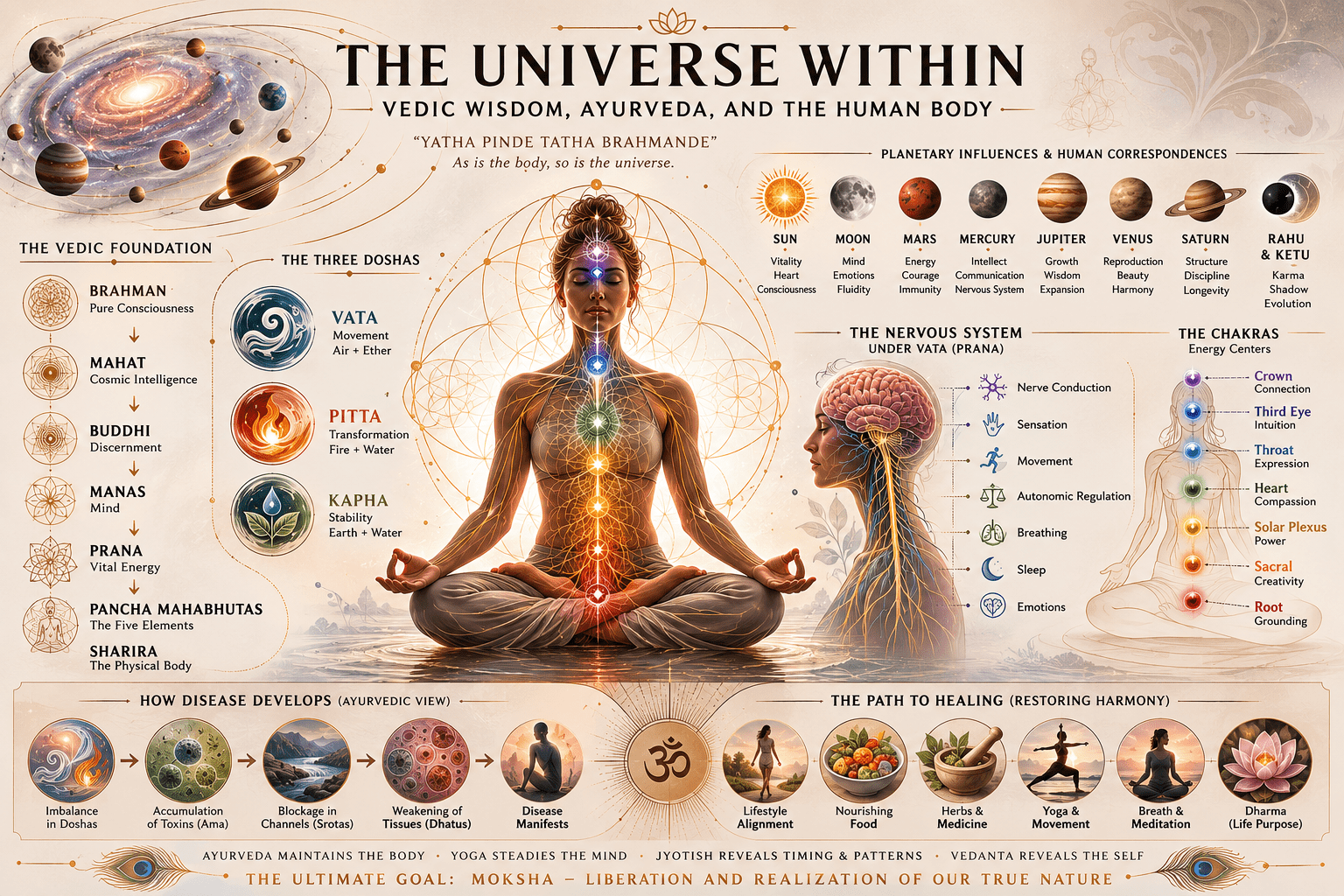
- The universe as interconnected: The Vedic tradition views the universe as a single interconnected whole rather than as a collection of separate objects. Every part of nature is understood to be in continuous relationship with every other part. This is not mysticism. It is a specific philosophical position with implications for how the tradition views health.
- The body as a small version of the universe: A well-known Ayurvedic principle holds that the human body reflects the same organizing patterns that shape the natural world. Not literally (the body does not contain miniature planets), but structurally (the same principles that produce rhythm in the seasons produce rhythm in the body).
- The primacy of consciousness: The Vedic tradition places consciousness at the foundation of the natural world rather than viewing consciousness as a byproduct of brain activity. This is a significant philosophical difference from modern neuroscience, which generally holds the opposite view. Whether one accepts the Vedic position or the modern scientific position, the difference matters because it shapes how each system approaches health and disease.
- The five great elements: The Vedic tradition describes the natural world as expressing five fundamental qualities: earth (structure and stability), water (cohesion and flow), fire (transformation and heat), air (movement and change), and space (openness and receptivity). These are not the elements of modern chemistry. They are qualities that appear at every level of the natural world and that combine in different proportions to produce different phenomena. Understanding this five-quality framework is essential for understanding the doshas that follow.
- The concept of dosha: From the five elements arise three functional patterns called doshas: vata (space and air, governing movement and communication), pitta (fire and a small amount of water, governing transformation and metabolism), and kapha (earth and water, governing structure and cohesion). Every person contains all three doshas in some proportion. The specific proportion is called the individual constitution or prakriti.
- The concept of imbalance: Health in Ayurveda is defined not as the absence of disease but as the presence of balance among the doshas, appropriate to the person’s constitution, life stage, season, and situation. Disease arises when the doshas fall out of the balance that person needs. The imbalance may be vata excess, pitta excess, kapha excess, or various combinations. Understanding the specific imbalance is the diagnostic goal, and correcting the imbalance is the therapeutic goal.
- The role of consciousness in health: Because the tradition views consciousness as foundational, mental states are understood to affect physical health directly and continuously. Chronic anxiety, chronic anger, and chronic dullness are considered health issues in their own right, not just secondary consequences of physical illness. This is a framework that modern medicine has increasingly moved toward but that Ayurveda has held for millennia.
- Modern parallels and modern differences: Modern systems biology has moved somewhat closer to the Ayurvedic view of interconnection over the last several decades, though the philosophical grounding remains different. The Vedic view that consciousness is fundamental has not been supported by modern neuroscience but also has not been definitively refuted, because the hard problem of consciousness remains an open question. The most productive attitude toward these philosophical differences is intellectual humility rather than false certainty in either direction.
What Are the Three Ayurvedic Doshas?
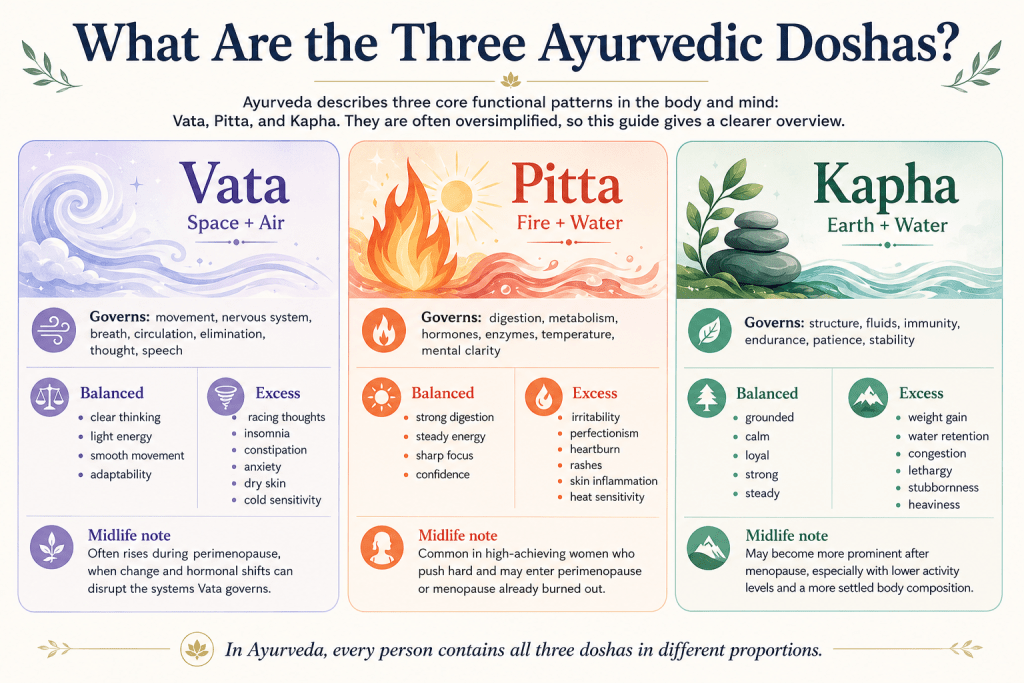
The three doshas are the most well-known concept in Ayurveda in the West, and they are also the most frequently misunderstood. Approaching them accurately requires setting aside the oversimplified wellness-website versions.
Vata
The vata dosha combines the qualities of space and air. It governs all movement in the body: nervous system function, respiration, circulation, elimination, thought, speech, and every form of internal transport. When vata is balanced, movement is smooth, thought is clear, and the person feels light and energetic. When vata is in excess, movement becomes irregular (racing thoughts, insomnia, constipation, anxiety, dry skin, cracking joints, sensitivity to cold, difficulty with routine). Vata imbalance is one of the most common presentations in midlife women, particularly during perimenopause when the hormonal shift disrupts the systems that vata governs.
Pitta
The pitta dosha combines fire with a small amount of water. It governs all transformation in the body: digestion, metabolism, hormone conversion, enzymatic activity, temperature regulation, and mental clarity. When pitta is balanced, digestion is strong, energy is steady, mental focus is sharp, and the person is intelligent and confident. When pitta is in excess, transformation becomes overheated (irritability, criticism, perfectionism, heartburn, skin inflammation, rashes, sensitivity to heat, judgment of self and others). Pitta imbalance is common in midlife women who have been high-achievers with driving personalities and who often experience burnout in the perimenopause and menopause window.
Kapha
The kapha dosha combines earth and water. It governs all structure and cohesion in the body: bones, connective tissue, body fluids, immunity, patience, and endurance. When kapha is balanced, the person is stable, grounded, loyal, calm, and physically strong. When kapha is in excess, structure and cohesion become excessive (weight gain, water retention, congestion, lethargy, stubbornness, difficulty starting new things, depression that shows up as heaviness rather than agitation). Kapha imbalance can develop in post-menopausal women who have moved through the vata and pitta phases and settled into a more stable body composition with reduced activity levels.
What Should You Know About Your Dosha Constitution?
Understanding your dosha constitution involves more than identifying yourself as vata, pitta, or kapha. Every person has a unique combination of all three doshas, along with a natural birth constitution and a current state that can shift over time. These three points explain how dosha types work, why imbalances change, and why online quizzes should be treated as a starting point rather than a diagnosis.
- The multi-dosha nature of every person: Every person contains all three doshas in some proportion. Some people are strongly single-dosha (mostly vata, mostly pitta, or mostly kapha). Many people are dual-dosha (vata-pitta, pitta-kapha, or vata-kapha). A smaller number are relatively balanced across all three (tri-doshic). Understanding your specific proportion is what makes personalized Ayurvedic recommendations possible.
- Prakriti versus vikriti: The tradition distinguishes between your prakriti (your birth constitution, which does not change) and your vikriti (your current state of imbalance, which fluctuates with season, life stage, stress, and behavior). Meaningful Ayurvedic practice involves working with both.
- A note on wellness-quiz doshas: Most online dosha quizzes are so simplified that they produce results of limited value. A ten-question quiz cannot capture the constitutional complexity that a trained Ayurvedic practitioner assesses through pulse reading, tongue examination, physical characteristics, medical history, family history, and extended conversation. Use online quizzes as a starting point for interest, not as a diagnostic.
Free 28-Day Fascia Reset Email Course
Get our Free 28-day email course series to help with 1 or 2 exercises per day to release your fascia. One short lesson per day. Two minutes to read each.
How Can You Identify Your Dominant Dosha?
If you want to develop a working sense of your dominant dosha, the honest approach involves observing yourself across multiple dimensions over time rather than relying on a quick quiz. Below are the general patterns that characterize each dosha.
- Physical characteristics: Vata-dominant people tend to be thin, with light bones, dry skin, cool hands and feet, small features, and difficulty gaining weight. Pitta-dominant people tend to be medium build, with warm skin, moderate features, tendency toward freckles or moles, and a moderate ability to gain or lose weight. Kapha-dominant people tend to be larger frame, with soft moist skin, thick hair, large features, tendency toward easy weight gain, and difficulty losing it.
- Mental and emotional patterns: Vata-dominant people tend toward creativity, quickness, enthusiasm, and anxiety under stress. Pitta-dominant people tend toward intelligence, ambition, precision, and irritability under stress. Kapha-dominant people tend toward patience, loyalty, groundedness, and lethargy under stress.
- Sleep patterns: Vata sleepers are light, easily disturbed, and often struggle with insomnia. Pitta sleepers are moderate, wake for a few hours in the middle of the night if imbalanced, and tend to run hot. Kapha sleepers are deep, long, and sometimes struggle to wake up.
- Digestive patterns: Vata digestion is variable, with sensitivity to cold foods, tendency toward gas and bloating, and irregular appetite. Pitta digestion is strong, with intense hunger, tendency toward heartburn, and difficulty skipping meals. Kapha digestion is slow, with less hunger, tendency toward heaviness after eating, and better tolerance of skipped meals.
- Response to stress: Vata under stress becomes anxious, scattered, and depleted. Pitta under stress becomes angry, critical, and burned out. Kapha under stress becomes withdrawn, heavy, and unmotivated.
- Response to weather: Vata dislikes cold, wind, and dryness. Pitta dislikes heat, sun, and humidity. Kapha dislikes cold damp weather.
- Movement style: Vata movement is quick, light, and sometimes uncoordinated. Pitta movement is purposeful, focused, and controlled. Kapha movement is steady, deliberate, and graceful.
- A practical observation practice: For the next two weeks, notice your patterns across each of these dimensions. You may find you match one dosha across most dimensions, or you may find you are a combination. Both outcomes are legitimate. The point of the observation is to build a working understanding of your patterns rather than to arrive at a specific label.
- If you want a professional assessment: A trained Ayurvedic practitioner can provide a much more accurate constitutional assessment than any self-directed approach. If you decide to pursue Ayurvedic care, that assessment is one of the primary values a practitioner offers.
How Do the Doshas Shift During Perimenopause and Menopause?
One of the most useful applications of Ayurvedic frameworks for midlife women specifically is the tradition’s clear articulation of how the doshas shift through life stages, and particularly through the perimenopause and menopause window.
The Life-Stage Framework
Ayurveda divides adult life into three broad stages according to the dominant dosha. Childhood and early adulthood are considered a kapha stage (growth, structure-building). Middle adulthood is considered a pitta stage (achievement, transformation, drive). Later adulthood is considered a vata stage (drying, thinning, more nervous system activity, greater sensitivity). Perimenopause and menopause represent the transition from the pitta stage into the vata stage, which is why so many midlife women experience the specific pattern of vata excess that this transition produces.
The Vata Excess of Perimenopause
The perimenopause window frequently produces or amplifies vata imbalance. This shows up as sleep disruption, anxiety, dry skin, thinning hair, joint aches, digestive irregularity, difficulty with routine, and a general felt-sense of ungroundedness. The Ayurvedic framing of this cluster as a single pattern (vata excess) rather than as several unrelated symptoms is one of the most immediately useful insights of the tradition for midlife women.
The Pitta Component
Many midlife women also experience pitta excess during the transition, particularly if they have been high-achievers running on ambition and driving through years of accumulated stress. The pitta excess shows up as irritability, hot flashes (which have a clear pitta quality), inflammation, criticism (of self and others), and burnout. Addressing this specific pattern is often required alongside the vata support.
The Kapha Component
Post-menopause frequently sees kapha excess develop, particularly as activity levels decline and body composition shifts. This shows up as weight gain, water retention, congestion, and reduced motivation. Addressing this pattern often becomes the focus once the vata and pitta transitions have stabilized.
The Traditional Recommendations for Each Pattern
For vata excess, the tradition recommends warm cooked foods, oil-rich meals, regular routine, warm sesame oil massage, calming practices, extra sleep, and reduced stimulation. For pitta excess, the tradition recommends cooling foods, reduced spice, cooling practices, appropriate rest, and reduced striving. For kapha excess, the tradition recommends lighter foods, warming spices, more movement, less sleep, and stimulation.
The Overlap With Modern Evidence
Most of these recommendations align surprisingly well with modern evidence-based recommendations for the specific patterns they describe. Warm cooked foods and regular routine for a stressed nervous system. Adequate rest and cooling practices for a burned-out achiever. More movement and less caloric density for post-menopausal weight management. The specific mechanisms are described differently in Ayurveda than in modern medicine, but the practical recommendations often converge.
The Specific Caution
The traditional Ayurvedic pharmacology for menopause includes some herbal formulations that have not been rigorously tested for safety or efficacy in modern studies. Some Ayurvedic herbs have documented interactions with common medications and some have been contaminated with heavy metals in commercial products. Any herbal Ayurvedic recommendation should be run by a qualified practitioner and, ideally, by your Western physician as well.
Free 28-Day Fascia Reset Email Course
Get our Free 28-day email course series to help with 1 or 2 exercises per day to release your fascia. One short lesson per day. Two minutes to read each.
What Is Dinacharya and How Does It Work?
Dinacharya is the traditional Ayurvedic daily routine. It is one of the most practical and immediately usable aspects of the tradition for modern midlife women, and it is one of the areas where the overlap with modern evidence-based recommendations is strongest.
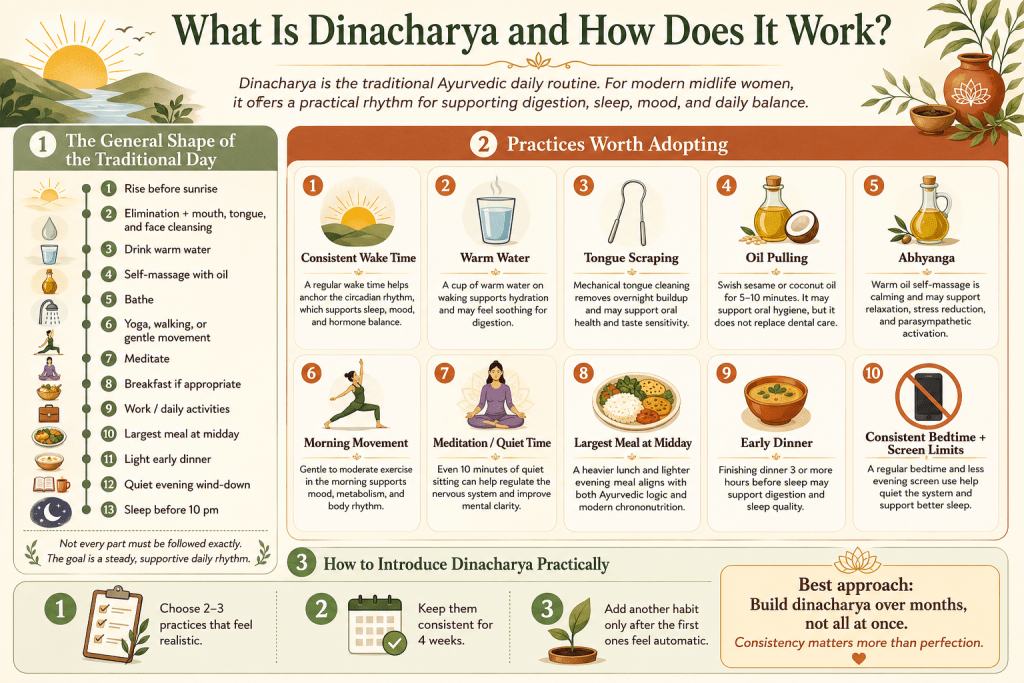
- The general shape of the traditional day: Rise before sunrise. Move through elimination and mouth, tongue, and face cleansing. Drink warm water. Apply oil to the body and self-massage. Bathe. Move through a chosen practice such as yoga or walking. Meditate. Eat breakfast if appropriate for the constitution. Move into work. Eat the largest meal at midday. Continue work. Eat a light early dinner. Wind down with quiet activity. Sleep before ten in the evening.
- The specific practices worth adopting: Not every element of the traditional routine fits every modern life, and forcing all of it produces stress that undermines the point. The following elements are particularly well-supported by modern evidence and particularly accessible for midlife women.
- Consistent wake time: Rising at the same time each day supports the circadian rhythm, which supports hormone balance, sleep quality, and mood. This is one of the most researched interventions in modern sleep science and one of the oldest recommendations in Ayurveda. The specific time (traditionally before sunrise) matters less than the consistency.
- Warm water in the morning: Drinking a cup of warm water on waking supports digestion and hydration after the overnight fast. Modern evidence for this specific practice is limited but plausible. It is safe, cheap, and often subjectively pleasant.
- Tongue scraping: Scraping the tongue with a copper or stainless steel scraper removes overnight bacterial buildup and may support oral health and taste sensitivity. Modern dental research broadly supports mechanical tongue cleaning.
- Oil pulling: Swishing with sesame or coconut oil for five to ten minutes is a traditional oral hygiene practice. Some modern research supports oral health benefits, though evidence is not strong enough to replace conventional dental care.
- Self-massage with warm oil (abhyanga): Traditional self-massage with warm sesame or coconut oil is deeply calming and often produces both physical and psychological benefit. Modern evidence supports touch therapy generally for cortisol reduction and parasympathetic activation.
- Morning movement: Traditional Ayurveda recommends gentle to moderate morning movement. Modern evidence broadly supports morning exercise for circadian rhythm anchoring, mood, and metabolic health.
- Meditation or quiet time: Even ten minutes of quiet sitting supports nervous system regulation and cognitive function. This is one of the most consistent recommendations across the tradition and one of the most researched in modern practice.
- Largest meal at midday: Eating the biggest meal when digestive fire (agni) is strongest, and eating lighter in the evening, supports metabolic health, sleep, and body composition. Modern chrononutrition research broadly supports this pattern.
- Early dinner: Finishing dinner three or more hours before sleep supports digestion and sleep quality. Modern research on early time-restricted eating aligns with this recommendation.
- Consistent bedtime: Going to bed at a similar time each night supports circadian rhythm. Traditional recommendations of bedtime before ten in the evening are more consistent with agricultural life than with modern schedules, but the principle of a consistent, appropriately early bedtime is well-supported.
- Screen limits in the evening: Not a traditional Ayurvedic practice per se, but consistent with the tradition’s emphasis on quieting activity in the evening. Modern evidence supports evening screen reduction for sleep quality.
- How to introduce dinacharya practically: Do not attempt to install the entire traditional routine at once. Choose two or three practices that resonate most and install them for four weeks. Add another practice once the first ones feel automatic. Build the routine over months rather than weeks.
Which Ayurvedic Nutrition Principles Support Midlife?
Ayurvedic nutrition is one of the most immediately applicable areas of the tradition for midlife women. The general principles align well with modern evidence-based approaches to metabolic health while adding some specific frameworks that are worth understanding.
- Six tastes at every meal: The tradition identifies six tastes (sweet, sour, salty, pungent, bitter, astringent) and suggests that a balanced meal includes some representation of all six. This principle roughly maps to modern dietary variety recommendations and often produces more nutritionally diverse meals than a Western diet built around a single main flavor per meal.
- Match the food to the constitution: Different doshas benefit from different foods. Vata benefits from warm, cooked, moist, oily foods. Pitta benefits from cooling, moderately sweet, less spicy foods. Kapha benefits from lighter, warmer, drier foods with more pungent spices. Understanding your constitution helps you understand which foods support your specific pattern.
- Eat the biggest meal at midday: The specific chrononutrition recommendation from the previous section. Digestive capacity is highest around noon, and heavier meals are better metabolized at that time than in the evening. Modern research broadly supports this.
- Eat warm cooked food more than raw: Ayurveda generally prefers warm cooked foods over cold raw foods, particularly for vata and kapha constitutions. Modern research on food preparation is mixed. Some argument favors more cooked and less raw for improved digestion and nutrient absorption in the midlife body, particularly during periods of vata excess.
- Eat mindfully and without distraction: The tradition emphasizes eating in a calm environment without work or screens. Modern mindful eating research supports this recommendation for improved digestion, portion regulation, and satiety recognition.
- Include appropriate spices: Ayurvedic cooking uses spices intentionally for both flavor and physiological effect. Ginger and cumin support digestion. Turmeric has anti-inflammatory effects. Fennel supports post-meal comfort. Modern nutrition research supports many of these traditional uses.
- Consider seasonal eating: The tradition adjusts recommendations by season. Summer favors cooling foods. Winter favors warming foods. Spring focuses on lighter foods to clear accumulated winter heaviness. This approach aligns with local, seasonal eating traditions in many parts of the world.
- A caution on herbal supplements: Traditional Ayurvedic pharmacology involves complex herbal formulations that should not be self-prescribed based on internet reading. Some Ayurvedic herbs have documented drug interactions. Some commercial Ayurvedic supplements have been contaminated with heavy metals. Consult a qualified practitioner and your Western physician before taking any Ayurvedic herbal formulation.
Free 28-Day Fascia Reset Email Course
Get our Free 28-day email course series to help with 1 or 2 exercises per day to release your fascia. One short lesson per day. Two minutes to read each.
How Does Ayurveda Support Sleep and the Nervous System?
The Ayurvedic approach to sleep and nervous system regulation is one of the areas where the traditional recommendations align most closely with modern evidence-based practice. This is worth understanding in detail because sleep and nervous system regulation are two of the largest levers for midlife women’s health.
- Sleep timing: The tradition emphasizes consistent, appropriately early bedtimes. Modern circadian research strongly supports this recommendation.
- Wind-down practices: The tradition includes specific evening practices to prepare the body for sleep: warm oil foot massage, warm milk with spices, gentle yoga, meditation, and reduced stimulation. Modern evidence supports evening parasympathetic activation practices, warm baths, and screen reduction.
- Vata support at night: For women in perimenopause and menopause experiencing vata-driven sleep disruption, the tradition recommends specific warming and grounding practices. Modern approaches to menopause sleep support align with much of this. See our menopause sleep remedies article and midlife sleep stack article for the modern evidence-based framework.
- Meditation and pranayama: The traditional practices of meditation and pranayama (breath work) are among the most well-supported interventions in modern research for stress reduction, cortisol regulation, and nervous system health. See our vagus nerve reset exercises article for ten specific modern practices that share ancestry with traditional pranayama.
- Yoga: The traditional physical practice of yoga was developed alongside Ayurveda as part of the same framework. Modern research on yoga supports many of the traditional claims for mood, sleep, flexibility, and stress reduction. See our five yin yoga poses article for a specific home practice.
- Massage and touch: Traditional oil massage (abhyanga) is understood as a nervous system regulation practice as much as a physical one. Modern research on touch therapy supports the cortisol-lowering and mood-supporting effects.
- The framework overlap: The Ayurvedic recognition that sleep, nervous system regulation, digestion, hormonal function, and mood are a single interconnected system is one of the tradition’s most important contributions and one of the areas where modern medicine has moved closer to the traditional view over the last several decades. This overlap is where a midlife woman can most confidently draw on the tradition.
“The parts of Ayurveda that most reliably help midlife women are the parts that have always been true regardless of tradition. These practices include consistent sleep, warm cooked food eaten without distraction, daily movement matched to the season and the body, regular self-touch and self-care, reduced evening stimulation, and attention to the digestive system as a foundation of mood and hormonal health. These are the practices where the tradition and modern evidence agree, and they are the practices I can recommend without any qualification. The parts that require deeper training (specific herbal prescriptions, pulse-based constitutional assessment, panchakarma cleansing therapy) belong in the hands of qualified practitioners. Knowing where the line is between the accessible foundation and the deeper practice is what keeps this a respectful engagement with the tradition rather than a shallow appropriation of it.”
Terry Tateossian, Founder of The House of Rose
Where Do Ayurveda and Modern Medicine Overlap?
The overlap between Ayurvedic recommendations and modern evidence-based practice is more substantial than the surface differences suggest. Where these two systems agree is where the most confident practical value for midlife women shows up.
- Daily routine and circadian rhythm: Both systems support consistent daily patterns of eating, sleeping, and moving as foundational to health.
- Whole-food, minimally processed eating: Both systems favor whole foods, minimal processing, and appropriate variety.
- Meal timing: Both systems favor eating the larger meal earlier in the day and a lighter meal earlier in the evening.
- Movement: Both systems favor regular daily movement appropriate to age and constitution rather than sporadic intense exercise.
- Meditation and breath work: Both systems recognize the health value of meditation and breath practices for stress reduction and cognitive function.
- Nervous system regulation: Both systems recognize the interconnection between mental state, digestion, hormones, and general health.
- Sleep as foundational: Both systems emphasize sleep as a foundation of health rather than as a lower priority.
- Individual variability: Both systems recognize that different bodies benefit from different specific interventions, though they characterize the individual differences differently.
- The importance of digestion: Both systems emphasize digestive health as central to overall health, though they use different specific frameworks.
- The role of stress: Both systems recognize chronic stress as a major driver of disease.
- Preventive care: Both systems emphasize prevention over treatment of established disease.
- Multi-system integration: Both systems reject the reductionist single-cause single-treatment model in favor of multi-factor multi-intervention approaches.
This overlap is not incidental. It reflects the fact that both systems have observed the same human bodies over long time periods and have arrived at some of the same practical conclusions through different methods.
Free 28-Day Fascia Reset Email Course
Get our Free 28-day email course series to help with 1 or 2 exercises per day to release your fascia. One short lesson per day. Two minutes to read each.
Where Do Ayurveda and Modern Medicine Differ?
Being honest about where Ayurveda and modern evidence-based practice diverge is as important as being clear about where they overlap. This honesty is what makes a thoughtful bridging position possible.
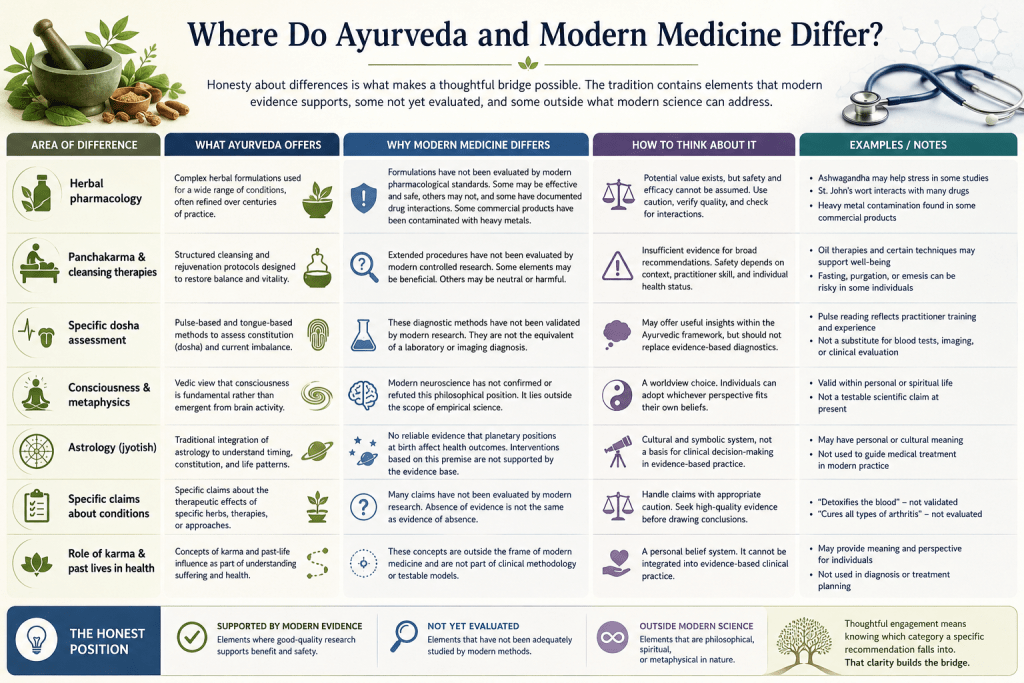
- Herbal pharmacology: Ayurvedic herbal medicine involves complex formulations that have not been evaluated by modern pharmacological standards. Some formulations may be effective and safe, while others may not be, and some have documented drug interactions. Some commercial products have been contaminated with heavy metals. Modern evidence-based practice cannot endorse specific herbal recommendations without the safety and efficacy data that current evaluation methods require.
- Panchakarma and cleansing therapies: Traditional cleansing protocols involve extended procedures that have not been evaluated by modern controlled research. Some elements may be beneficial. Others may be neutral or harmful. This is an area where modern medicine cannot make confident recommendations.
- Specific dosha assessment: The pulse-based and tongue-based diagnostic methods used by trained Ayurvedic practitioners have not been validated by modern research. This does not mean they are without value, but it does mean that specific dosha assessments are not the equivalent of a laboratory diagnosis.
- Consciousness and metaphysics: The Vedic view that consciousness is fundamental rather than emergent from brain activity is a philosophical position that modern neuroscience has not confirmed or refuted. Individuals can adopt whichever view fits their own worldview.
- Astrology (jyotish): The traditional integration of Ayurveda with astrology is one of the areas where modern evidence-based practice cannot follow the tradition. There is no reliable evidence that planetary positions at birth affect health outcomes, and interventions based on this premise are not supported by the evidence base.
- Specific claims about specific conditions: Some Ayurvedic claims for specific therapeutic effects of specific interventions have not been evaluated by modern research. Absence of evidence is not the same as evidence of absence, but it does mean these claims should be handled with appropriate caution.
- The role of karma and past lives in health: Traditional Ayurveda includes concepts of karma and past-life influence that are outside the frame of modern medicine. Individuals can hold these views personally, but they cannot be integrated into evidence-based clinical practice.
The honest position is that the tradition contains some elements that modern evidence supports, some elements that modern evidence does not evaluate, and some elements that fall outside what modern science can address. All three categories are real, and being clear about which category any specific recommendation falls into is what allows a thoughtful engagement.
What Are the Most Common Misconceptions About Ayurveda?
Several common misconceptions about Ayurveda circulate in Western wellness culture and are worth naming directly.
- Ayurveda is not a lifestyle brand: Ayurveda is a living medical tradition. The tea, the essential oils, the copper cups, and the tongue scrapers marketed as Ayurvedic products in Western stores are marketing, not medicine. Some of the products may be useful. Others are not. Distinguishing product marketing from the tradition itself matters.
- Doshas are not personality types: The doshas are functional physiological patterns, not personality quizzes. Reducing them to Buzzfeed-quiz personality types trivializes the tradition and produces recommendations of limited practical value.
- Ayurveda is not a religion: Ayurveda emerged from a specific cultural and philosophical context that includes religious elements, but the tradition itself is a medical system that can be studied and practiced by people of any religious background.
- Ayurveda is not a magic bullet: The tradition is a long-term framework for maintaining balance over a lifetime, not a quick fix for specific symptoms. Approaching it as a source of miracle interventions produces disappointment.
- Ayurveda is not the same as yoga: Yoga and Ayurveda are sister disciplines within the same broader Vedic tradition. They share some principles and often support each other, but they are distinct practices.
- Ayurveda is not primitive: The tradition includes highly sophisticated frameworks for anatomy, physiology, diagnosis, and treatment that were developed over thousands of years by generations of educated practitioners. Dismissing it as pre-scientific misses the depth of the actual tradition.
- Ayurveda is not always safe: Some traditional preparations contain herbs with known drug interactions or heavy metal content. The general public perception that natural means safe does not apply to Ayurvedic pharmacology, and any herbal use should involve qualified guidance.
- Ayurveda is not a substitute for Western medicine for serious conditions: For acute medical emergencies, serious chronic diseases, mental health crises, and many other conditions, Western medicine offers evaluations and treatments that Ayurveda cannot replace. The most productive approach is complementary use of both systems where appropriate.
Free 28-Day Fascia Reset Email Course
Get our Free 28-day email course series to help with 1 or 2 exercises per day to release your fascia. One short lesson per day. Two minutes to read each.
How Can You Explore Ayurveda Safely?
If the tradition interests you and you want to explore it in a way that respects both the tradition and your health, several principles apply.
- Start with the lifestyle recommendations, not the pharmacy: The traditional daily routine, nutrition principles, and meditation practices are safe, accessible, and immediately useful. The herbal formulations require qualified guidance.
- Do not self-prescribe herbs: Ayurvedic herbal preparations should be prescribed by trained practitioners after appropriate assessment, not selected from wellness websites.
- Investigate any product carefully: If you decide to purchase Ayurvedic products, look for reputable brands with third-party testing for heavy metal content and other contaminants. Some commercial Ayurvedic supplements have been contaminated with lead, mercury, and arsenic.
- Tell your Western physician about any Ayurvedic care you pursue: Drug and herb interactions can be significant. Your physician needs to know what you are taking.
- Do not stop prescribed medications without professional guidance: Any decision to stop or modify Western medications requires consultation with the prescribing physician.
- Approach the tradition with cultural humility: Ayurveda is a South Asian tradition with deep cultural roots. Engaging with it respectfully means learning from qualified practitioners from the tradition, supporting South Asian voices in the field, and not appropriating the tradition as a Western wellness brand.
- Give it time: Ayurvedic changes work slowly. Six months of consistent daily routine will produce noticeable change. Six days will not.
What Should You Look for in an Ayurvedic Practitioner?
If you decide to pursue Ayurvedic care in the United States, the practitioner field is currently unregulated at the federal level, which means quality varies significantly.
- Look for formal training: Legitimate Ayurvedic practitioners have completed multi-year formal training programs. In the United States, look for graduates of programs recognized by the National Ayurvedic Medical Association (NAMA). In India, look for BAMS (Bachelor of Ayurvedic Medicine and Surgery) graduates.
- Look for professional membership: NAMA is the primary professional organization for Ayurveda in the United States. Membership is not required to practice but is a positive signal of engagement with the professional community.
- Look for continuing education: Legitimate practitioners continue to study and update their practice.
- Ask about intake: A qualified practitioner will conduct a thorough intake including medical history, current medications, family history, physical examination (often including pulse and tongue), and detailed conversation about lifestyle. Practitioners who prescribe from a brief conversation or an online quiz should be avoided.
- Ask about the herbs: A qualified practitioner will use herbal formulations from suppliers with quality control processes and will be willing to explain what they are prescribing and why.
- Ask about coordination with Western medicine: A qualified practitioner will support your continued relationship with your Western physicians and will communicate with them when appropriate.
- Trust your judgment: If a practitioner discourages you from following your Western physician’s recommendations, discourages you from telling other providers what you are taking, or promises miraculous cures, look for someone else.
Free 28-Day Fascia Reset Email Course
Get our Free 28-day email course series to help with 1 or 2 exercises per day to release your fascia. One short lesson per day. Two minutes to read each.
When Should You See a Healthcare Professional?
Ayurvedic frameworks and lifestyle recommendations can complement standard medical care, but certain situations require Western medical evaluation.
- Any acute or severe symptoms: Chest pain, shortness of breath, severe headaches, neurological symptoms, and other acute presentations require immediate medical evaluation.
- Any persistent unexplained symptoms: Persistent unexplained fatigue, weight changes, mood changes, digestive changes, or other symptoms warrant medical workup regardless of any Ayurvedic exploration.
- Any mental health crisis: Active suicidal ideation, severe depression, or severe anxiety require mental health care. Ayurvedic principles can complement but cannot substitute for appropriate mental health treatment.
- Any decision about medications: Never stop prescribed medications based on Ayurvedic recommendations alone.
- Any interest in Ayurvedic herbal treatment: Consult both a qualified Ayurvedic practitioner and your Western physician before taking any Ayurvedic herbal formulation.
- Menopause symptoms that impair daily life: A menopause specialist can offer evaluation and evidence-based treatment options that Ayurveda alone may not fully address.
- Pregnancy: Some Ayurvedic recommendations need modification during pregnancy. Work with practitioners familiar with prenatal care.
Free 28-Day Fascia Reset Email Course
Get our Free 28-day email course series to help with 1 or 2 exercises per day to release your fascia. One short lesson per day. Two minutes to read each.
Frequently Asked Questions
What is Ayurveda in simple terms?
Ayurveda is a health tradition that developed in South Asia over several thousand years. It views health as balance among three functional patterns (vata, pitta, kapha) that combine differently in different people, and it prescribes daily routines, nutrition, herbal medicine, meditation, and other practices tailored to individual constitution, life stage, and season. It is a living tradition still practiced by qualified doctors worldwide.
Is Ayurveda safe for women over 40?
The lifestyle recommendations of Ayurveda (daily routine, nutrition principles, meditation, appropriate movement) are generally safe for women over 40 and often particularly well-suited to the perimenopause and menopause window. The herbal pharmacology requires qualified guidance because some Ayurvedic herbs have drug interactions and some commercial products have been contaminated with heavy metals. Consult a qualified practitioner and your Western physician before taking any Ayurvedic herbal formulation.
What is my dosha?
Determining your dosha accurately requires observation across many dimensions over time, and ideally an assessment by a trained Ayurvedic practitioner. Online dosha quizzes are usually too simplified to be reliable. Section 5 of this article gives you the dimensions to observe. If you want a professional assessment, look for a graduate of a program recognized by the National Ayurvedic Medical Association (NAMA).
Does Ayurveda help with menopause?
Ayurvedic principles align well with many of the challenges of perimenopause and menopause, particularly the vata-excess pattern that this transition often produces. The daily routine, nutrition principles, sleep support, and nervous system regulation practices are broadly supportive. Some Ayurvedic herbal formulations for menopause exist but should be evaluated with a qualified practitioner and your Western physician.
Free 28-Day Fascia Reset Email Course
Get our Free 28-day email course series to help with 1 or 2 exercises per day to release your fascia. One short lesson per day. Two minutes to read each.
Can Ayurveda help with weight loss?
Ayurvedic principles can support the general framework for midlife weight loss (regular meals, appropriate portion sizes, digestive support, stress reduction, sleep), but Ayurveda alone is not a specific weight loss protocol. Most midlife weight loss for women requires the combined framework of adequate protein, appropriate calorie balance, strength training, sleep, and nervous system regulation covered in our broader THOR content.
Is Ayurvedic medicine evidence-based?
Some elements of Ayurveda have been evaluated in modern research and have supporting evidence (daily routine, meditation, some yoga applications, some herbal interventions). Other elements have not been evaluated. Some traditional practices fall outside what modern research can address. The most productive framing is that Ayurveda contains a mix of empirically supported, empirically untested, and philosophically-grounded elements, and thoughtful engagement means understanding which category any specific recommendation falls into.
What is dinacharya?
Dinacharya is the traditional Ayurvedic daily routine. Elements include consistent wake time, morning hygiene practices, oil self-massage, movement, meditation, meal timing, and consistent bedtime. Many elements have strong overlap with modern evidence-based recommendations for circadian rhythm, stress reduction, and metabolic health. Section 7 of this article covers the practices in detail.
Do I need to see an Ayurvedic practitioner?
For general lifestyle recommendations (daily routine, nutrition principles, meditation, appropriate movement), you can begin exploring on your own with reliable sources. For deeper personalized guidance including any herbal treatment, working with a qualified practitioner is important. Look for graduates of NAMA-recognized programs in the United States or BAMS graduates from India.
Are Ayurvedic supplements safe?
Some Ayurvedic supplements are safe and effective. Others have been contaminated with heavy metals in independent testing. Some interact with common medications. Any Ayurvedic supplement should be from a reputable brand with third-party testing, should be used under qualified guidance, and should be disclosed to your Western physician.
Is Ayurveda the same as yoga?
No, Ayurveda and yoga are related but distinct disciplines within the broader Vedic tradition. Yoga is primarily a system of physical, mental, and spiritual practice for personal development. Ayurveda is a system of medicine. They share underlying assumptions and often support each other, but they are not the same.
Can Ayurveda replace Western medicine?
For acute medical emergencies, serious chronic diseases, mental health crises, and many other conditions, Western medicine offers evaluations and treatments that Ayurveda cannot replace. Ayurveda is best understood as a complementary framework that can enhance overall health alongside appropriate Western medical care.
What is a good beginner book on Ayurveda?
Ayurveda: The Science of Self-Healing by Vasant Lad is a widely respected accessible introduction. The Complete Book of Ayurvedic Home Remedies by Vasant Lad is a practical starting resource. David Frawley’s books offer another accessible entry point. Books by qualified practitioners from the tradition itself are preferable to books by Western wellness writers who have adapted the material.
Does Ayurveda have anything to say about hormones?
Ayurveda addresses hormone-mediated conditions extensively, though it uses different terminology than modern endocrinology. The framework describes many of the same patterns Western medicine describes and prescribes different interventions. For hormone-specific concerns, work with both a qualified Ayurvedic practitioner and a Western physician or menopause specialist.
How long before Ayurvedic practices show results?
Ayurvedic changes work slowly. Some daily routine practices produce noticeable subjective changes within days (better sleep, easier digestion). Deeper constitutional rebalancing typically takes months of consistent practice. This is a long-term framework rather than a short-term intervention.
Free 28-Day Fascia Reset Email Course
Get our Free 28-day email course series to help with 1 or 2 exercises per day to release your fascia. One short lesson per day. Two minutes to read each.
Is Ayurveda appropriate during pregnancy?
Some Ayurvedic practices are supportive during pregnancy and some need modification. Work with practitioners familiar with prenatal care. Herbal formulations should generally not be self-prescribed during pregnancy. Consult both a qualified Ayurvedic practitioner and your prenatal provider.
What is panchakarma?
Panchakarma is a traditional Ayurvedic cleansing and rejuvenation protocol involving specific therapies over a period of days to weeks. It is not something to attempt independently. If you are interested, seek a qualified practitioner and be aware that the specific safety and efficacy data supporting panchakarma is limited in modern research terms.
References
- Lad, V. (2002). Textbook of Ayurveda: Fundamental Principles (Vol. 1). The Ayurvedic Press.
- Lad, V. (1985). Ayurveda: The Science of Self-Healing. Lotus Press.
- Frawley, D. (2000). Ayurvedic Healing: A Comprehensive Guide (2nd ed.). Lotus Press.
- Frawley, D. (1997). Ayurveda and the Mind: The Healing of Consciousness. Lotus Press.
- Svoboda, R. E. (1998). Prakriti: Your Ayurvedic Constitution (2nd ed.). Lotus Press.
- Sharma, P. V. (Trans.). (1994). Charaka Samhita (Vols. 1–4). Chaukhambha Orientalia.
- Bhishagratna, K. K. (Trans.). (2005). Sushruta Samhita. Chaukhambha Sanskrit Series.
- Chopra, D., & Simon, D. (2000). The Chopra Center Herbal Handbook. Three Rivers Press.
- Ranade, S., Deshpande, R. R., & Chobhe, S. (2011). Ayurveda and Marma Therapy: Energy Points in Yogic Healing. North Atlantic Books.
- Patwardhan, B., Warude, D., Pushpangadan, P., & Bhatt, N. (2005). Ayurveda and traditional Chinese medicine: a comparative overview. Evidence-Based Complementary and Alternative Medicine, 2(4), 465–473.
- Chopra, A., Saluja, M., Tillu, G., et al. (2013). Ayurvedic medicine offers a good alternative to glucosamine and celecoxib in the treatment of symptomatic knee osteoarthritis: a randomized, double-blind, controlled equivalence drug trial. Rheumatology, 52(8), 1408–1417.
- Furst, D. E., Venkatraman, M. M., McGann, M., et al. (2011). Double-blind, randomized, controlled, pilot study comparing classic ayurvedic medicine, methotrexate, and their combination in rheumatoid arthritis. Journal of Clinical Rheumatology, 17(4), 185–192.
- Saper, R. B., Phillips, R. S., Sehgal, A., et al. (2008). Lead, mercury, and arsenic in US- and Indian-manufactured Ayurvedic medicines sold via the Internet. JAMA, 300(8), 915–923.
- National Center for Complementary and Integrative Health. (2023). Ayurvedic medicine: in depth. National Institutes of Health.
- Sharma, H., Chandola, H. M., Singh, G., & Basisht, G. (2007). Utilization of Ayurveda in health care: an approach for prevention, health promotion, and treatment of disease. Part 1—Ayurveda, the science of life. Journal of Alternative and Complementary Medicine, 13(9), 1011–1019.
- Sharma, H., Chandola, H. M., Singh, G., & Basisht, G. (2007). Utilization of Ayurveda in health care: an approach for prevention, health promotion, and treatment of disease. Part 2—Ayurveda in primary health care. Journal of Alternative and Complementary Medicine, 13(10), 1135–1150.
- Wallace, R. K. (2020). Ayurgenomics and modern medicine. Medicina, 56(12), 661.
- Payyappallimana, U., & Venkatasubramanian, P. (2016). Exploring Ayurvedic knowledge on food and health for providing innovative solutions to contemporary healthcare. Frontiers in Public Health, 4, 57.
- Sarris, J., de Manincor, M., Hargraves, F., & Tsonis, J. (2019). Harnessing the four elements for mental health. Frontiers in Psychiatry, 10, 256.
- Streeter, C. C., Gerbarg, P. L., Saper, R. B., et al. (2012). Effects of yoga on the autonomic nervous system, gamma-aminobutyric-acid, and allostasis in epilepsy, depression, and post-traumatic stress disorder. Medical Hypotheses, 78(5), 571–579.
- National Ayurvedic Medical Association. (n.d.). NAMA scope of practice and code of ethics. Retrieved from ayurvedanama.org.
Additional Resources: For further information on qualified Ayurvedic practitioners in the United States, see the National Ayurvedic Medical Association (NAMA) at ayurvedanama.org. For information on evidence-based evaluation of complementary and integrative health practices, see the National Center for Complementary and Integrative Health at nccih.nih.gov.
Disclaimer: Always consult with a qualified healthcare professional before making any decisions about your health, particularly if you are considering herbal supplements, treatments, or lifestyle changes for specific health conditions. This article is educational and does not constitute medical advice, treatment recommendation, or endorsement of Ayurvedic care for any specific condition. THOR is not an Ayurvedic clinic and does not provide Ayurvedic services.
Free 28-Day Fascia Reset Email Course
Get our Free 28-day email course series to help with 1 or 2 exercises per day to release your fascia. One short lesson per day. Two minutes to read each.

Terry Tateossian is a Menopause Lifestyle Medicine Coach, Certified Personal Trainer & Nutritionist and the Founder of THOR: The House of Rose, a wellness brand serving women over 40 through retreats, coaching, macro-nutrition and community. As 25-year founder and entrepreneur, Terry spent two and a half decades building and running successful start-up businesses, an experience that put her on the front line of founder burnout long before she could name it. After facing serious health challenges, early onset menopause, and emotional eating while running her agency and raising two children, Terry rebuilt her health in her 40s and lost more than 80 pounds through evidence-based nutrition, training, and mindset work. Today, she helps women get strong, improve confidence, support hormone health, and create a stronger second half of life. Terry has been featured in major media outlets and is available for podcasts, expert commentary, brand collaborations, and speaking engagements on midlife health, reinvention, emotional eating, menopause wellness, and strength training for longevity. Get her free macro calculator (her cookbook companion) to start your journey to back to health.