

 By Team THOR
Free 28-Day Fascia Reset Email Course
Get our Free 28-day email course series to help with 1 or 2 exercises per day to release your fascia. One short lesson per day. Two minutes to read each.
5 Fascia Release Exercises for Weight Loss and Belly Fat in Midlife Women (Plus a 5-Day Program With Videos)
Fascia release exercises do not directly burn fat, despite what many articles claim. Their real value is supporting the conditions that make weight loss easier, especially during midlife.
Fascia work may help reduce physical tension, improve breathing, support lymphatic flow, encourage nervous system regulation, and make everyday movement feel more comfortable. Over time, these benefits can support the nutrition, strength training, and lifestyle habits that drive meaningful changes in weight and body composition.
I am Terry Tateossian, founder of The House of Rose and a certified lifestyle medicine coach. After experiencing early-onset menopause at 41 and an 80-pound change in my body composition, I made body-based practices, including fascia release, part of my recovery and the framework I now teach at our nutrition-focused wellness retreats.
The five exercises below were selected for their fascia benefits and their ability to support the midlife body. The included 5-day program combines them into a practical routine that takes about 10 to 20 minutes per day, with video placement notes to support clear demonstrations.
Important: Speak with your healthcare provider before beginning a new movement program, especially if you have a history of abdominal surgery, hernia, pregnancy, pelvic organ prolapse, hiatal hernia, or an acute abdominal condition.
What Is Fascia?
Fascia is the connective tissue network that runs throughout the entire body. It surrounds every muscle, wraps every organ, envelops every nerve and blood vessel, and forms continuous sheets that link every body region to every other body region. Understanding what fascia actually is helps make sense of what fascia release can and cannot do.
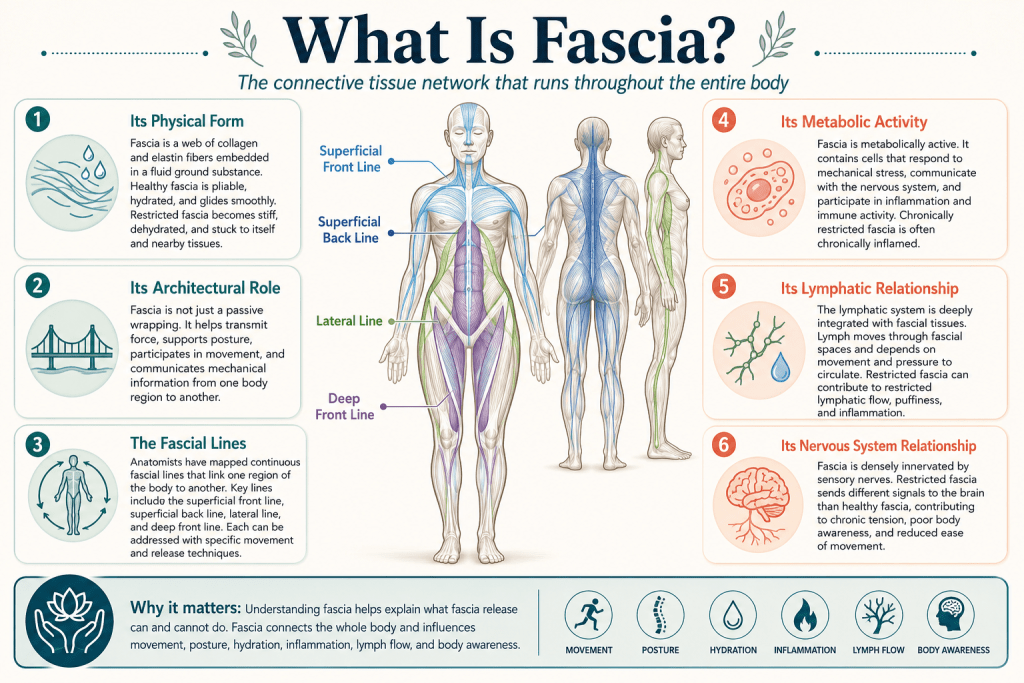
- Its physical form: Fascia is a web of collagen and elastin fibers embedded in a fluid ground substance. Healthy fascia is pliable, hydrated, and glides smoothly against itself and against the tissues it surrounds. Restricted fascia becomes stiff, dehydrated, and stuck to itself and to adjacent tissues.
- Its architectural role: Fascia is not just a passive wrapping. It transmits force through the body, contributes to posture, participates in movement, and communicates mechanical information from one region of the body to another. When you feel tension in a shoulder that is actually driven by a restriction in the opposite hip, fascia is often the transmission line.
- The fascial lines: Anatomists have mapped several continuous fascial lines that run through the body from one region to another. The superficial front line runs from the top of the foot to the side of the skull. The superficial back line runs from the sole of the foot to the top of the head. The lateral line runs along the side of the body from the ankle to the ear. The deep front line runs through the deep core, the pelvic floor, the inner leg, and up through the neck.
- Its metabolic activity: Fascia is not metabolically inert. It contains cells that respond to mechanical stress, communicate with the nervous system, and participate in the inflammatory and immune systems. Chronically restricted fascia is often chronically inflamed, and chronic inflammation has direct effects on hormonal function, insulin sensitivity, and body composition.
- Its lymphatic relationship: The lymphatic system is deeply integrated with fascial tissues. Lymph flows through fascial spaces and depends on movement and pressure to circulate. Restricted fascia often means restricted lymphatic flow, and restricted lymphatic flow contributes to the sluggish, puffy, inflammation-driven state that many midlife women recognize.
- Its nervous system relationship: Fascia is densely innervated by sensory nerves. Restricted fascia sends different signals to the brain than healthy fascia, contributing to the felt-sense of chronic tension, poor body awareness, and reduced ease of movement. See our earlier articles on the fascia and lymphatic system connection and the lymphatic reset and fascia connection for deeper dives into these mechanisms.
Why Is Midlife Belly Fat Different From Other Belly Fat?
Midlife belly fat is not just the same body fat that showed up in your twenties. The physiology, the drivers, and the treatment approach are meaningfully different, and understanding the difference is what makes the fascia release intervention make sense.
- The hormonal shift: As estrogen declines through perimenopause and menopause, body fat begins to redistribute from the hips and thighs toward the abdomen. This is not a lifestyle failure. It is a specific biological response to changing hormone ratios that happens to almost every woman in this window.
- The visceral fat problem: The abdominal fat that accumulates in midlife is often visceral fat, meaning it sits deep in the abdomen around the organs rather than just under the skin. Visceral fat is metabolically active in a way that subcutaneous fat is not. It produces inflammatory signals, disrupts hormone balance, worsens insulin sensitivity, and reinforces its own accumulation.
- The cortisol connection: Chronic cortisol elevation drives visceral fat storage specifically. The stress of midlife life, combined with sleep disruption, undereating from restrictive dieting, and often the anxiety of watching body composition change, keeps cortisol elevated in a pattern that feeds the belly fat cycle.
- The insulin resistance shift: Perimenopause and menopause often produce measurable declines in insulin sensitivity. Reduced insulin sensitivity makes the body more likely to store carbohydrate calories as fat and specifically as belly fat.
- The inflammatory state: The combination of visceral fat, disrupted sleep, chronic stress, and often reduced anti-inflammatory food intake produces a low-grade inflammatory state that promotes further weight gain and makes weight loss harder.
- The muscle loss compounding: Sarcopenia in midlife reduces resting metabolic rate, which means the same food intake produces more fat storage than it would have a decade earlier. See our four muscle groups for aging well article for the strength training foundation that addresses this piece.
- The sleep disruption compounding: Poor sleep raises cortisol, worsens insulin sensitivity, elevates hunger hormones, reduces prefrontal control, and increases cravings for calorie-dense foods, all of which feed into the belly fat pattern.
- The fascial contribution: Chronic restriction of the abdominal fascia, the diaphragm fascia, and the fascial connections through the deep core contributes to reduced breath depth, restricted lymphatic flow in the abdomen, elevated sympathetic tone, and a physical sense of holding that layers on top of every other driver.
This last piece is where fascia release earns its place in the picture. It does not directly burn belly fat. It addresses the physical drivers that make the other drivers harder to correct.
Free 28-Day Fascia Reset Email Course
Get our Free 28-day email course series to help with 1 or 2 exercises per day to release your fascia. One short lesson per day. Two minutes to read each.
How Does Fascia Release Support Weight Loss?
The specific mechanisms by which fascia release supports midlife weight loss and belly fat reduction are worth understanding clearly because the mechanisms are the reason the intervention works, and understanding them helps you use the intervention correctly.
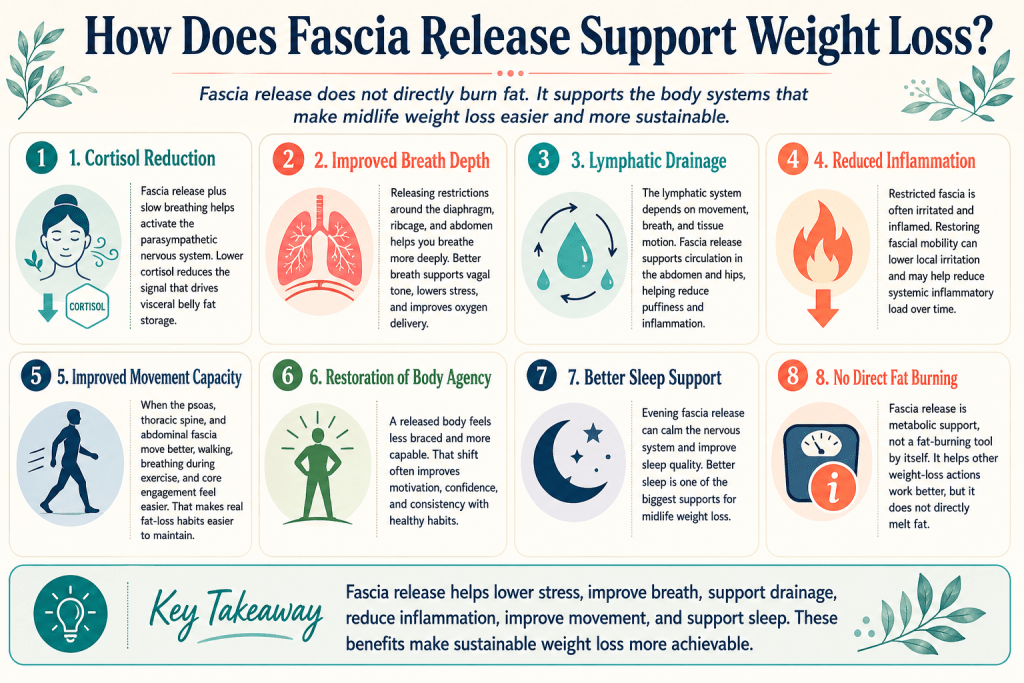
- Cortisol reduction: Fascia release, particularly when combined with slow breath, produces measurable reductions in cortisol through parasympathetic nervous system activation. Lower cortisol reduces the biological signal that drives visceral fat storage. This is the largest single mechanism.
- Improved breath depth: The fascial restrictions around the diaphragm, ribcage, and abdominal wall directly restrict the depth of the inhale. Fascia release in these regions consistently produces improvements in breath depth within days. Deeper breath activates vagal tone, reduces cortisol, and improves oxygen delivery to metabolically active tissues.
- Lymphatic drainage: The lymphatic system does not have a heart. It depends on movement, breath, and the mechanical squeeze of surrounding tissues to circulate. Restricted fascia impairs this circulation. Fascia release, particularly in the abdominal region and the deep hip, supports lymphatic drainage that reduces the puffiness and inflammation that contribute to the felt-sense of belly fat.
- Reduced systemic inflammation: Chronically restricted fascia is chronically inflamed. Restoring fascial mobility reduces the local inflammation and, over weeks, contributes to lower systemic inflammatory markers.
- Improved movement capacity: When the psoas is chronically restricted, walking is harder. When the thoracic spine is chronically restricted, breathing during exercise is harder. When the abdominal fascia is chronically restricted, core engagement during strength training is harder. Fascia release removes friction from all of these movement patterns, which increases the likelihood that you will actually do the movement work that produces the fat loss.
- Restoration of body agency: The felt-sense of a released body is dramatically different from the felt-sense of a chronically braced body. This subjective shift often produces psychological changes that support the sustained behavior change required for meaningful weight loss.
- Support of sleep quality: The parasympathetic activation from evening fascia release practice supports the sleep quality that is essential for weight loss in midlife. Poor sleep is one of the largest single obstacles to midlife weight loss, and anything that supports sleep supports weight loss.
- No direct fat burning: None of the above is fat burning. All of it is metabolic support that makes the actual fat loss interventions more effective. This distinction matters because it prevents disappointment when fascia release alone does not produce weight loss and it prevents overselling of the specific mechanism.
“The honest positioning of fascia release for midlife weight loss is that it removes several specific obstacles that keep the primary interventions (nutrition, strength training, sleep, nervous system regulation) from working as well as they should. When I coach a midlife woman who is doing all the right things nutritionally and still not seeing results, one of the first things I look at is whether her cortisol pattern, her breath depth, and her lymphatic flow are creating an internal environment that resists fat loss no matter what she eats. Fascia release is often the specific intervention that shifts that internal environment. Within four to six weeks of daily practice combined with the nutrition foundation, most women start seeing the movement of the scale, the tape measure, or the way clothes fit that had been stuck for months. It is not the fascia work that burned the fat. It is the fascia work that allowed the rest of the picture to actually produce results.”
Terry Tateossian, Founder of The House of Rose
What Does Fascia Release Not Do?
Being explicit about what fascia release does not do is as important as being clear about what it does do. This section prevents the disappointment and cynicism that come from overselling.
- It does not burn fat directly: No exercise in this article, and no fascia release exercise anywhere, produces meaningful fat loss purely through fascial mechanisms. Fat loss requires an energy deficit, produced by some combination of dietary changes and increased activity.
- It does not replace nutrition: The largest single lever for midlife body composition change is dietary intake, particularly adequate protein and appropriate calorie balance. The free Macro Calculator is where the nutrition foundation starts.
- It does not replace strength training: Preserving and building lean muscle mass is the second largest lever. The four muscle groups for aging well article covers the strength training foundation.
- It does not replace sleep: Sleep is the third largest lever. The midlife sleep stack article and menopause sleep remedies article cover the sleep interventions.
- It does not spot-reduce belly fat: Belly fat is lost through overall body fat reduction. You cannot burn belly fat specifically by working on the belly. What abdominal fascia release does is support the systemic changes that produce overall fat loss.
- It does not work in a week: Meaningful body composition changes take weeks to months. Fascia release supports those changes but does not accelerate them beyond what the underlying interventions can produce.
- It does not substitute for medical evaluation of persistent weight issues: Thyroid dysfunction, PCOS, medication effects, and other medical conditions can drive weight patterns that lifestyle interventions alone will not resolve. Persistent unexplained weight changes warrant medical evaluation.
Free 28-Day Fascia Reset Email Course
Get our Free 28-day email course series to help with 1 or 2 exercises per day to release your fascia. One short lesson per day. Two minutes to read each.
What Does the Research Actually Show?
The research on fascia release for weight loss specifically is limited because the direct claim is not well-supported. What has been studied is the effect of fascia release on the intermediate mechanisms (cortisol, breath, lymphatic flow, inflammation, sleep, movement capacity) that in turn influence weight and body composition.
- Fascia release and cortisol:Multiple studies of self-myofascial release and manual myofascial therapy have documented reductions in cortisol within a single session and over weeks of regular practice. The effect size is meaningful when combined with slow breath.
- Fascia release and breath: Research on thoracic mobility work, foam roller thoracic extension, and diaphragmatic release has consistently documented improvements in breath depth, respiratory function, and vagal tone.
- Fascia release and lymphatic flow:The research on manual lymphatic drainage, abdominal self-massage, and specific fascia work in the abdominal region has documented improvements in lymphatic circulation and reductions in the puffy, inflamed state associated with fluid stasis.
- Fascia release and inflammation:Regular self-myofascial release has been associated with reductions in inflammatory markers in some studies, though the research is smaller than for the other mechanisms.
- Fascia release and sleep: Evening-timed fascia release practice combined with slow breath has been documented to improve sleep quality and duration in multiple small studies.
- Fascia release and movement performance: The strongest research base for fascia release specifically is in movement performance. Self-myofascial release before or after training consistently improves range of motion, reduces perceived soreness, and supports subsequent training performance.
- The indirect weight loss argument: All of the above effects are documented. The direct effect on body composition of fascia release alone is not documented, and would not be expected based on the mechanism. The argument for fascia release as a weight loss support is the indirect argument: it addresses each of the intermediate factors that make midlife weight loss harder.
The overall picture supports fascia release as a legitimate supportive layer within a broader midlife weight loss framework, with realistic expectations set correctly.
What Should You Know Before Starting Fascia Release?
Several principles apply to all five exercises in this article and are worth internalizing before beginning.
- Breath is essential: Every fascia release exercise is significantly more effective when combined with slow diaphragmatic breathing. Extended exhalation amplifies the parasympathetic effect and enhances the release.
- Slow is the direction: Fascia responds to sustained gentle pressure and slow movement. Fast or forceful work is less effective and more likely to produce muscle guarding.
- Comfort matters: Use props (folded blankets, small pillows, cushions) generously. If a position produces sharp pain, modify or skip it.
- Consistency beats intensity: Ten to fifteen minutes a day for four weeks produces more benefit than an hour once a week.
- Never work into sharp pain: Discomfort at a stretch is normal. Sharp pain, radiating pain, or pain in unrelated regions is a signal to stop and reassess.
- Hydration matters: Well-hydrated fascia releases more readily than dehydrated fascia. Drink water throughout the day, particularly on practice days.
- Equipment needed: A therapy ball or tennis ball, a foam roller, a yoga mat or comfortable surface, and a wall or countertop for support. Total investment approximately $30 to $50 for everything.
- Time of day: Fascia release can be practiced any time. Morning practice supports the day. Evening practice supports sleep. Middle-of-the-day practice interrupts accumulated tension.
- What to expect subjectively: Some releases feel immediate and satisfying, while others feel subtle or produce nothing observable during the session and only produce felt-sense changes hours or days later. Some produce emotional release. All of these responses are normal. Track how you feel over the week rather than expecting a specific response from each session.
Free 28-Day Fascia Reset Email Course
Get our Free 28-day email course series to help with 1 or 2 exercises per day to release your fascia. One short lesson per day. Two minutes to read each.
What Are the 5 Best Fascia Release Exercises for Weight Loss and Belly Fat?
These five fascia release exercises target common areas of fascia tightness in the abdomen, upper back, hips, side body, and front of the body. When practiced with slow breathing and gentle pressure, they can support better mobility, deeper breathing, lymphatic flow, posture, and nervous system relaxation. Follow the instructions carefully, use the suggested modifications when needed, and avoid forcing any movement or applying painful pressure.
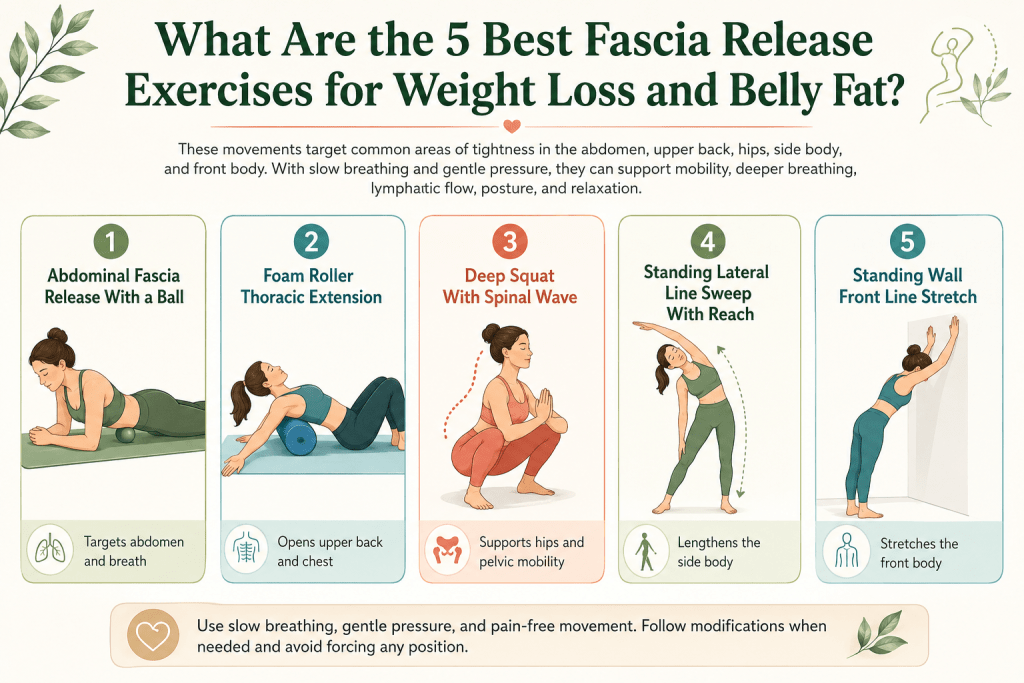
Exercise 1: Abdominal Fascia Release With a Ball
Abdominal fascia release is the most directly targeted exercise for the belly fat and midlife belly picture. It addresses the fascial restrictions in the abdominal wall, supports lymphatic drainage in the abdomen, and produces the parasympathetic activation that reduces cortisol.
This gentle abdominal release exercise helps relax tight tissue around the belly and improve comfort through slow, controlled pressure. Start with a softer ball and keep the pressure light, especially if you are new to this technique.
- Choose a therapy ball, tennis ball, or lacrosse ball. Beginners should use a softer ball, while a rolled-up towel can be used if a ball feels too intense.
- Lie face down on a comfortable, supportive surface.
- Place the ball about two inches to the right of your belly button, level with it or slightly above.
- Slowly lower your body onto the ball while supporting most of your weight with your forearms. Apply only gentle, comfortable pressure.
- Take slow, deep breaths into your belly for 60 to 90 seconds.
- Lift your body off the ball slowly and carefully.
- Move the ball slightly farther to the side, higher, or lower, then repeat the process.
- Cover four to six positions on the right side of your abdomen.
- Repeat the same steps on the left side.
This gentle abdominal release uses light, sustained pressure and slow breathing to ease fascial tension, support deeper breathing, and promote relaxation. Before beginning, review the safety guidance, proper technique, expected sensations, and common mistakes to ensure the practice remains comfortable and controlled.
- Safety note: This exercise applies gentle pressure to the abdominal region. Skip this exercise entirely if you are pregnant, have a hernia, have had recent abdominal surgery, have a known abdominal aortic aneurysm, have active abdominal pain, or have any acute abdominal condition. Discuss with your provider if you have any concern.
- How it works: Gentle sustained pressure on the abdominal fascia produces a release response through the myofascial system and the local nervous system. The prone or side-lying position uses body weight to provide the pressure without requiring active work. Combined with slow diaphragmatic breathing, the effect on cortisol and lymphatic flow is amplified.
- Sets and reps: 4 to 6 positions per side. Total time approximately 8 to 12 minutes.
- Common mistakes: Using too hard a ball, applying too much pressure, holding the breath, placing the ball directly on the belly button (which puts pressure on the aorta) or too close to the ribcage (which can be uncomfortable). Never apply significant weight to the ball. Gentle is the direction.
- Why this exercise for midlife women: This exercise directly addresses the abdominal fascial restrictions that contribute to reduced breath depth, restricted lymphatic drainage, and chronic sympathetic activation. Many midlife women report a distinct softening in the belly and a felt-sense of lightness after regular practice.
- What is normal: Some borborygmus (belly rumbling) during the practice is common and often indicates improved circulation and vagal activation. Some mild emotional response (a wave of feeling, a spontaneous sigh, brief tearfulness) is also common and generally passes quickly.
Exercise 2: Foam Roller Thoracic Extension
Foam roller thoracic extension is one of the most impactful single exercises for the midlife body. It addresses the chronic upper back rounding that limits breath depth, supports the diaphragm, and opens the ribcage in ways that directly support the parasympathetic and lymphatic effects.
This gentle foam roller exercise helps improve mobility through the mid and upper back while encouraging fuller ribcage expansion. Move slowly, keep the pressure comfortable, and avoid forcing the spine into a deeper arch.
- Place a foam roller horizontally on a yoga mat or another comfortable surface. Softer rollers are better for beginners.
- Sit on the floor with the roller positioned behind you.
- Slowly lie back so the roller rests across your mid-back, around bra-strap level.
- Bend your knees and place both feet flat on the floor.
- Support your head with your hands, keeping your elbows open to the sides.
- Take a slow breath in and gently allow your upper back to arch over the roller. Focus on feeling your ribcage expand.
- Exhale slowly and return your spine to a neutral position.
- Repeat the movement for 8 to 10 slow breaths.
- Slide your body slightly so the roller rests a few inches higher or lower along the thoracic spine.
- Repeat 8 to 10 breaths at each of three different positions.
This gentle foam roller exercise helps open the mid-back, improve posture, and create more space for deeper breathing. Below, you’ll learn how it works, how often to perform it, common mistakes to avoid, and ways to modify or progress the movement.
- How it works: The foam roller placed horizontally across the mid-back allows the thoracic spine to extend gently over it. This releases the chronic upper-back rounding that decades of desk work produce and creates room for the ribs to expand and the diaphragm to move fully.
- Sets and reps: 3 positions with 8 to 10 breaths at each. Total time approximately 5 to 8 minutes.
- Common mistakes: Placing the roller on the lower back (which is not the target and can be uncomfortable), forcing the extension aggressively, holding the breath, letting the neck strain from unsupported weight.
- Why this exercise for midlife women: The upper back rounding that develops from years of desk work and increasingly common phone use directly restricts the breath and contributes to the chronic sympathetic state that feeds the midlife weight pattern. This exercise addresses that restriction more effectively than almost any other single intervention.
- Modification for beginners: Start with a softer roller. Reduce the depth of the extension. Support the head fully with the hands to reduce neck strain.
- Progression: Extend the arms overhead during the extension for an additional stretch through the shoulders and front line.
Free 28-Day Fascia Reset Email Course
Get our Free 28-day email course series to help with 1 or 2 exercises per day to release your fascia. One short lesson per day. Two minutes to read each.
Exercise 3: Deep Squat With Spinal Wave
The deep squat, sometimes called Malasana in the yogic tradition, addresses the deep pelvic fascia and the posterior chain simultaneously. The added spinal wave introduces a dynamic release that opens the fascial layers between the hips and the shoulders.
This deep squat exercise helps open the hips, improve lower-body mobility, and gently release tension through the spine. Slow breathing and controlled spinal waves make the movement more comfortable and effective.
- Stand with your feet slightly wider than hip-width apart and turn your toes slightly outward.
- Place a folded blanket or yoga block under your heels if they do not comfortably reach the floor in a deep squat.
- Slowly lower your hips into a deep squat, going only as low as feels comfortable.
- Bring your palms together at your chest and use your elbows to gently press your knees wider.
- Hold the position and breathe slowly for 30 seconds.
- On an inhale, gently arch your lower back and lift your chest.
- On an exhale, round your lower back and allow your chest to drop slightly.
- Continue moving slowly through 5 to 8 complete spinal waves.
- Rest in the deep squat for another 30 seconds while breathing steadily.
- Press through your feet and slowly return to standing.
The deep squat with a slow spinal wave helps open the hips, release tight fascia, and improve mobility through the pelvis and torso. The guidance below explains how the movement works, how often to perform it, common mistakes to avoid, and safe modifications for tight hips or knee concerns.
- How it works: The deep squat position places the pelvis at its lowest habitual position, opens the deep hip fascia, and creates space for the pelvic lymphatic system. Adding a slow spinal wave (rounding and arching the spine while in the squat) mobilizes the fascial connections along the entire back and front of the torso.
- Sets and reps: 2 to 3 rounds. Total time approximately 5 to 7 minutes.
- Common mistakes: Forcing the depth of the squat beyond what is comfortable, letting the knees collapse inward, forgetting the breath timing on the spinal wave, coming up too quickly.
- Why this exercise for midlife women: Deep squat opens the pelvic fascia, supports lymphatic drainage through the deep hip, and restores mobility that decades of chair-based sitting have taken away. Many midlife women cannot access a deep squat at all initially. Progress here is often rapid and produces meaningful subjective benefit.
- Modification for tight hips: Support with a wall or countertop for balance, place folded blankets under the heels, and reduce the depth of the squat while holding for shorter periods. Progress over the following weeks as flexibility improves.
- Modification for knee issues: Anyone with significant knee issues should skip the deep squat and substitute a supported low seat on a low bench or chair with the hips lower than the knees.
Exercise 4: Standing Lateral Line Sweep With Reach
The lateral line runs along the side of the body from the ankle to the ear. It gets chronically shortened by prolonged sitting, one-sided carrying patterns, and the general slumping posture that develops in midlife. This exercise addresses the entire line in one flowing movement.
This standing side stretch lengthens the outer line of the body from the feet to the fingertips. Slow breathing and gentle rotation help release tension through the waist, ribs, hips, and shoulders.
- Stand with your feet slightly wider than hip-width apart, keeping them parallel or turned slightly inward.
- Reach your right arm straight overhead while keeping your shoulders relaxed.
- Exhale slowly and gently bend to the left, reaching your right arm up and over toward the left side.
- Feel the stretch along the right side of your body, from the outer edge of your right foot to your right fingertips.
- Hold the position for 20 to 30 seconds while breathing slowly and evenly.
- Add a small rotation forward and backward to stretch different areas along the side of the body.
- Slowly return to the starting position.
- Repeat on the opposite side, reaching your left arm overhead and bending gently to the right.
This side-bending movement combines a long reach with gentle rotation to release tension along the outer body, from the foot and hip to the ribs, shoulder, and arm. Practicing it regularly can improve ribcage mobility, deepen the breath, and create a greater sense of space and length through the side body.
- How it works: The combined side-bend and reach lengthens the lateral fascial line from the outer foot up through the outer hip, the ribs, the shoulder, and the arm. Adding gentle rotation into the reach amplifies the release through the spiral fascial connections.
- Sets and reps: 2 to 3 rounds per side. Total time approximately 4 to 6 minutes.
- Common mistakes: Bending forward instead of laterally (which stretches the wrong tissues), letting the hips shift toward the side you are bending away from, holding the breath, rushing the movement.
- Why this exercise for midlife women: The lateral line restriction that develops from prolonged sitting contributes to reduced ribcage expansion, restricted breath, and the compressed chest and belly pattern that many midlife women recognize. Regular practice produces improvements in breath depth and a felt-sense of length through the side body.
- Progression: Add a slight side bend at the knee of the standing leg for additional depth. Practice on a stability challenge (soft foam pad) for additional demand.
Free 28-Day Fascia Reset Email Course
Get our Free 28-day email course series to help with 1 or 2 exercises per day to release your fascia. One short lesson per day. Two minutes to read each.
Exercise 5: Standing Wall Front Line Stretch
The front fascial line runs from the top of the foot up through the front of the leg, the belly, the chest, and up through the front of the neck. It gets chronically shortened by sitting, phone use, and general forward-leaning postures. This exercise addresses the entire front line and closes the sequence with an opening rather than a compression, which supports the parasympathetic finish.
This gentle wall stretch opens the front of the body while encouraging better posture and deeper breathing. Move slowly and keep the stretch comfortable from your feet through your chest and arms.
- Stand facing a wall with your feet hip-width apart, parallel, and about one foot away from the wall.
- Place both palms flat against the wall at shoulder height with your arms extended.
- Slowly walk your hands upward until your arms are fully extended overhead and your palms remain flat against the wall.
- Step your feet slightly farther back so your body forms a gentle diagonal line from your ankles to your fingertips.
- Allow the front of your body to lengthen, feeling the stretch through the tops of your feet, belly, chest, shoulders, and arms.
- Hold the position for 30 to 45 seconds while breathing slowly and evenly.
- Slowly walk your hands back down the wall and return to an upright standing position.
This full-body stretch lengthens the front fascial chain while encouraging deeper, more relaxed breathing. It includes guidance on proper form, recommended rounds, common mistakes, benefits for midlife women, and an easier arm position for those with shoulder discomfort.
- How it works: With the arms extended overhead against a wall and the body leaning slightly forward, the front fascial chain from foot to fingertip lengthens along its entire path. Combined with slow breath, the stretch produces both fascial release and parasympathetic activation.
- Sets and reps: 2 to 3 rounds. Total time approximately 3 to 5 minutes.
- Common mistakes: Overarching the low back (which shifts the stretch to the wrong tissues), holding tension in the shoulders, holding the breath, standing too close to the wall.
- Why this exercise for midlife women: The front line shortening that develops from years of forward-leaning posture is one of the most common invisible drivers of restricted breath, poor digestion, and the compressed felt-sense that many midlife women recognize. This exercise opens the front line in a way that supports both breath and digestive function.
- Modification for shoulder issues: Keep the arms lower on the wall if fully extended overhead is uncomfortable. Even a lower arm position produces meaningful front line stretch.
How Does the 5-Day Progressive Fascia Release Program Work?
The five exercises above form the core of the practice. The 5-day program combines them into a structured progressive sequence designed to introduce the practice comfortably and produce meaningful benefit within one week. Total time commitment per day ranges from 8 to 20 minutes.
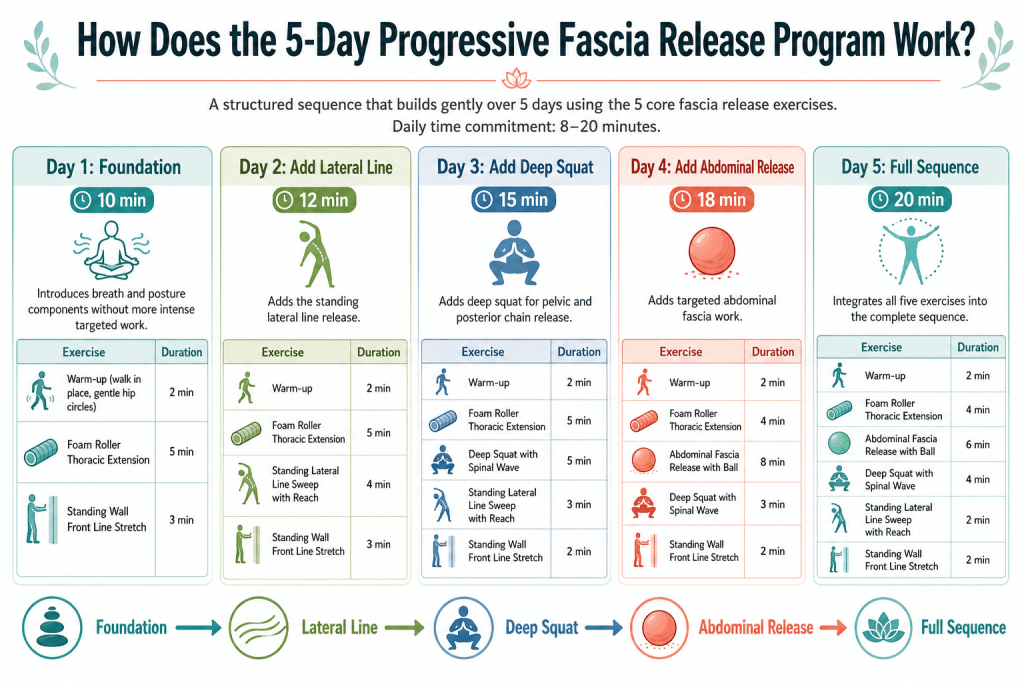
Day 1: Foundation (10 minutes)
The first day establishes the foundation with two accessible exercises.
|
Exercise |
Duration |
|
Warm-up (walk in place, gentle hip circles) |
2 min |
|
Foam Roller Thoracic Extension |
5 min |
|
Standing Wall Front Line Stretch |
3 min |
Day 1 introduces the breath and posture components without the more intense targeted work.
Day 2: Add Lateral Line (12 minutes)
The second day adds the standing lateral line release.
|
Exercise |
Duration |
|
Warm-up |
2 min |
|
Foam Roller Thoracic Extension |
5 min |
|
Standing Lateral Line Sweep with Reach |
4 min |
|
Standing Wall Front Line Stretch |
3 min |
Day 3: Add Deep Squat (15 minutes)
The third day adds the deep squat for pelvic and posterior chain release.
|
Exercise |
Duration |
|
Warm-up |
2 min |
|
Foam Roller Thoracic Extension |
5 min |
|
Deep Squat with Spinal Wave |
5 min |
|
Standing Lateral Line Sweep with Reach |
3 min |
|
Standing Wall Front Line Stretch |
2 min |
Day 4: Add Abdominal Release (18 minutes)
The fourth day adds the targeted abdominal fascia work.
|
Exercise |
Duration |
|
Warm-up |
2 min |
|
Foam Roller Thoracic Extension |
4 min |
|
Abdominal Fascia Release with Ball |
8 min |
|
Deep Squat with Spinal Wave |
3 min |
|
Standing Wall Front Line Stretch |
2 min |
Day 5: Full Sequence (20 minutes)
The fifth day integrates all five exercises into the complete sequence.
|
Exercise |
Duration |
|
Warm-up |
2 min |
|
Foam Roller Thoracic Extension |
4 min |
|
Abdominal Fascia Release with Ball |
6 min |
|
Deep Squat with Spinal Wave |
4 min |
|
Standing Lateral Line Sweep with Reach |
2 min |
|
Standing Wall Front Line Stretch |
2 min |
Free 28-Day Fascia Reset Email Course
Get our Free 28-day email course series to help with 1 or 2 exercises per day to release your fascia. One short lesson per day. Two minutes to read each.
What Should You Do After the 5-Day Program?
The first five days establish the pattern. From day six forward, the most effective practice is a daily session of 15 to 20 minutes, five or six days per week, cycling through the exercises with slight variation. Once a week, repeat the full Day 5 sequence for a deeper integration. The maintenance practice pairs well with any strength training or cardio program, either as a warm-up, a cool-down, or a separate short session.
Subjective release and easier breath is often noticeable within the first two or three sessions. Improved sleep, reduced puffiness, and better body composition response to nutrition efforts generally appear within three to six weeks of consistent daily practice combined with the nutrition foundation. Structural changes in fascial mobility develop over three to six months.
“The women who see the biggest changes from this program are always the ones who combine it with the nutrition foundation and adequate sleep. On its own, fascia release produces a felt-sense change that is meaningful but that does not move the scale much. Combined with 30 grams of protein at breakfast, consistent sleep, and appropriate strength training, the fascia work becomes the specific piece that allows the rest of the picture to actually work. That is the honest answer to the fascia-and-weight-loss question. It is a combination effect. Everything works better together than any single piece works alone.”
Terry Tateossian, Founder of The House of Rose
What Should You Combine With Fascia Release?
Fascia release produces its best weight loss support when combined with the other elements of a midlife-appropriate framework. The combination effect is real and worth understanding.
- Combine with adequate protein: Protein at every meal, roughly 25 to 40 grams per meal for most midlife women, is the foundation. The free Macro Calculator provides a personalized starting point. The Macro Miracle Mediterranean Cookbook is the kitchen-side companion.
- Combine with strength training: Two to three strength training sessions per week targeting the four major muscle groups (quadriceps, glutes, core, grip) preserves and builds the lean mass that drives resting metabolic rate. The four muscle groups for aging well article covers this foundation.
- Combine with adequate sleep: Seven to nine hours per night, with consistent bed and wake times. The midlife sleep stack article and menopause sleep remedies article cover the sleep framework.
- Combine with daily walking: Ten to fifteen thousand steps per day, ideally in shorter frequent walks rather than one long walk. The micro walks article covers the practical framework.
- Combine with nervous system regulation: Daily vagal reset practice supports the cortisol reduction that is part of what fascia release contributes. The vagus nerve reset exercises article covers ten specific practices.
- Combine with foundational supplements: Magnesium, omega-3s, and vitamin D support the anti-inflammatory picture and nervous system function. The THOR foundational supplement collection covers the priorities.
- Combine with emotional eating awareness: The emotional eating article covers the specific pattern that undermines nutrition efforts for many midlife women. Addressing this pattern is often the specific missing piece that turns the entire framework from theoretical to actual.
What Common Mistakes Can Undermine Your Fascia Release Practice?
Six mistakes consistently reduce the effectiveness of fascia release practice for midlife women pursuing weight loss support.
- Expecting fat loss from fascia work alone: This is the single most common mistake and the one most likely to produce disappointment. Fascia release supports the interventions that produce fat loss rather than replacing them, and setting expectations correctly at the start prevents the frustration that ends the practice prematurely.
- Forcing the release: Fascia responds to sustained gentle pressure. Forcing produces muscle guarding and reduces the release, so the correct direction is slow, gentle, and patient work with the tissue.
- Skipping the breath: Breath is not a nice addition. It is a core mechanism. Practice without conscious breath produces less than half the effect.
- Practicing sporadically: Twice a week produces small effects. Five or six times a week for 15 to 20 minutes produces meaningful support of the metabolic picture. The daily rhythm matters.
- Ignoring the nutrition foundation: Fascia release without adequate protein and appropriate calorie balance produces subjective improvements without body composition changes. The nutrition foundation is not optional.
- Ignoring sleep: Poor sleep undermines every other intervention. Fascia release combined with poor sleep produces less benefit than fascia release combined with adequate sleep. Address sleep as a peer intervention rather than an afterthought.
- Focusing only on the abdominal work: The abdominal fascia release is the most directly targeted exercise but the whole-body approach produces better outcomes. Do not skip the thoracic extension, the deep squat, and the standing releases in favor of only the belly work.
Free 28-Day Fascia Reset Email Course
Get our Free 28-day email course series to help with 1 or 2 exercises per day to release your fascia. One short lesson per day. Two minutes to read each.
How Does Fascia Release Fit Into the Broader THOR Framework?
Fascia release is one supporting component of the broader lifestyle medicine framework I teach at THOR. Placing it in the correct position matters.
- Nutrition foundation: The largest single lever for midlife body composition change, covered in the resources linked throughout this article.
- Movement layer: Fascia release complements strength training and daily walking. It does not replace either.
- Sleep and recovery: Sleep is one of the largest levers for midlife weight loss. Fascia release supports sleep quality but does not replace addressing sleep directly.
- Nervous system regulation: Fascia release is itself a form of nervous system regulation. The vagus nerve reset exercises article covers the broader nervous system work.
- Supplement foundation: The THOR foundational supplement collection covers the priorities.
For personalized support that combines all of these elements, the Monthly Personal Training and Nutrition Coaching Program is the coaching option. For the immersive version, our Yoga Retreats at our Smoky Mountains property installs the full framework in five days.
When Should You See a Healthcare Professional?
Most midlife women can safely begin this program on their own. Some situations require professional evaluation first.
- Pregnancy: Skip the Abdominal Fascia Release with Ball. Modify other exercises with prenatal-certified guidance.
- Recent abdominal surgery: Wait for surgical clearance before starting.
- Hernia or abdominal wall issues: Skip the Abdominal Fascia Release with Ball. Discuss other exercises with your provider.
- Persistent unexplained weight changes: Rapid unexplained weight gain or loss warrants medical evaluation for thyroid dysfunction, PCOS, medication effects, or other conditions.
- Severe cardiovascular disease: Any exercise program warrants clearance if you have significant heart disease.
- Chronic pelvic pain or pelvic floor issues: Work with a pelvic floor physical therapist for individualized guidance before starting deep squat work.
- Any severe unresolved pain: Any pain that has not been evaluated warrants medical assessment.
Free 28-Day Fascia Reset Email Course
Get our Free 28-day email course series to help with 1 or 2 exercises per day to release your fascia. One short lesson per day. Two minutes to read each.
Frequently Asked Questions
Can fascia release actually help with belly fat?
Fascia release does not directly burn belly fat, but it supports several factors that make belly fat reduction easier in midlife women. It reduces cortisol through parasympathetic activation, improves breath depth, supports lymphatic drainage, reduces inflammation, and improves movement capacity for the strength training and walking that drive actual fat loss. Combined with adequate nutrition, protein, and sleep, fascia release is a legitimate supportive layer within a midlife weight loss framework.
How long before I see results from fascia release?
Subjective release, easier breath, and reduced puffiness are often noticeable within the first two or three sessions. Body composition changes require the combination with adequate nutrition, protein, and sleep, and generally become visible within four to eight weeks of consistent daily practice combined with the nutrition foundation.
Is fascia release safe during menopause?
Yes, fascia release is generally safe and often particularly beneficial for women in perimenopause, menopause, and post-menopause. The specific hormonal changes of this window include increased fascial stiffness, elevated cortisol, and reduced lymphatic flow, all of which fascia release directly addresses. Some exercises need modification for specific conditions, which is covered in the individual exercise sections.
Can I do the abdominal fascia release if I have a hernia?
No, skip the Abdominal Fascia Release with Ball if you have a hernia. Discuss the other exercises in this article with your provider. The other four exercises in the program are generally safe for most people with abdominal wall issues.
Do I need any equipment for these exercises?
The two most impactful exercises (Foam Roller Thoracic Extension and Abdominal Fascia Release with Ball) require a foam roller and a therapy ball respectively. Total investment is approximately $30 to $50. The other three exercises can be done with no equipment beyond a comfortable surface and a wall.
How often should I practice fascia release?
Five or six sessions per week of 15 to 20 minutes produces meaningful support of the midlife metabolic picture. Once or twice a week produces smaller effects. Daily practice is fine and often preferred by women who find the practice enjoyable. The daily rhythm is where the training effects accumulate.
Free 28-Day Fascia Reset Email Course
Get our Free 28-day email course series to help with 1 or 2 exercises per day to release your fascia. One short lesson per day. Two minutes to read each.
Can fascia release replace strength training for weight loss?
No, fascia release complements strength training but does not replace it. Preserving and building lean muscle mass is one of the largest levers for midlife body composition. The four muscle groups for aging well article covers the strength training foundation.
What is the best time of day for fascia release?
Any time of day works, and consistency matters more than timing. Morning practice supports the day and often produces a felt-sense of openness that carries into activity. Evening practice supports sleep by activating the parasympathetic nervous system. Middle-of-the-day practice interrupts accumulated tension from sitting. Choose the time that produces the highest adherence for you.
Does fascia release help with menopause bloating?
Yes, many midlife women report meaningful reductions in bloating and puffiness with regular fascia release practice, particularly the abdominal work combined with the deep squat and standing releases. The mechanism includes improved lymphatic drainage and reduced fluid stasis in the abdominal region.
Can I do fascia release if I have chronic low back pain?
Most of the exercises in this program are generally supportive for chronic low back pain, particularly the thoracic extension and the deep squat. Any acute or severe back pain should be evaluated by a healthcare provider before starting. Modify or skip exercises that produce sharp pain.
Does the foam roller hurt?
Foam roller work often produces mild discomfort at first, particularly in areas of significant restriction. Sharp pain is not appropriate. Start with a softer roller and reduce pressure until the sensation is manageable. Discomfort generally reduces over the first two weeks of consistent practice as the fascia becomes more mobile.
Can fascia release help with hormonal weight gain?
Fascia release supports the interventions that address hormonal weight gain (nutrition, strength training, sleep, cortisol management, nervous system regulation) rather than directly changing hormones. Combined with the broader framework, it is a legitimate supportive layer for women dealing with the specific weight patterns of perimenopause and menopause.
Free 28-Day Fascia Reset Email Course
Get our Free 28-day email course series to help with 1 or 2 exercises per day to release your fascia. One short lesson per day. Two minutes to read each.
How is this different from yoga?
Yoga includes many fascia release elements and shares some principles, but the specific exercises in this article are more targeted at fascial release than at the broader mind-body practice of yoga. The five yin yoga poses article covers a specifically yin yoga sequence for myofascial release. Yoga and this fascia work are complementary rather than substitutes.
Should I combine this with walking?
Yes, walking is one of the strongest complementary practices for fascia release. Daily walking supports lymphatic flow, cardiovascular health, and mood, all of which amplify the benefits of the fascia work. The micro walks article covers the practical framework for building walking into a daily rhythm.
Can fascia release make me feel emotional?
Yes, some women experience emotional release during fascia work, particularly in the abdominal and hip regions. This is a documented phenomenon in body-based practice and is generally considered a healthy sign of stored tension releasing. The response usually passes quickly. If emotional response is intense or persistent, working with a trauma-informed body practitioner or therapist alongside the practice is often supportive.
References
- Schleip, R., & Müller, D. G. (2013). Training principles for fascial connective tissues: scientific foundation and suggested practical applications. Journal of Bodywork and Movement Therapies, 17(1), 103–115.
- Stecco, C., Stern, R., Porzionato, A., et al. (2011). Hyaluronan within fascia in the etiology of myofascial pain. Surgical and Radiologic Anatomy, 33(10), 891–896.
- Ajimsha, M. S., Al-Mudahka, N. R., & Al-Madzhar, J. A. (2015). Effectiveness of myofascial release: systematic review of randomized controlled trials. Journal of Bodywork and Movement Therapies, 19(1), 102–112.
- Beardsley, C., & Škarabot, J. (2015). Effects of self-myofascial release: a systematic review. Journal of Bodywork and Movement Therapies, 19(4), 747–758.
- Behm, D. G., & Wilke, J. (2019). Do self-myofascial release devices release myofascia? Rolling mechanisms: a narrative review. Sports Medicine, 49(8), 1173–1181.
- Wiewelhove, T., Döweling, A., Schneider, C., et al. (2019). A meta-analysis of the effects of foam rolling on performance and recovery. Frontiers in Physiology, 10, 376.
- Cheatham, S. W., Kolber, M. J., Cain, M., & Lee, M. (2015). The effects of self-myofascial release using a foam roll or roller massager on joint range of motion, muscle recovery, and performance: a systematic review. International Journal of Sports Physical Therapy, 10(6), 827–838.
- Bordoni, B., & Zanier, E. (2013). Anatomic connections of the diaphragm: influence of respiration on the body system. Journal of Multidisciplinary Healthcare, 6, 281–291.
- Epel, E. S., McEwen, B., Seeman, T., et al. (2000). Stress and body shape: stress-induced cortisol secretion is consistently greater among women with central fat. Psychosomatic Medicine, 62(5), 623–632.
- Vicennati, V., Pasqui, F., Cavazza, C., et al. (2009). Stress-related development of obesity and cortisol in women. Obesity, 17(9), 1678–1683.
- van der Valk, E. S., Savas, M., & van Rossum, E. F. C. (2018). Stress and obesity: are there more susceptible individuals? Current Obesity Reports, 7(2), 193–203.
- Beccuti, G., & Pannain, S. (2011). Sleep and obesity. Current Opinion in Clinical Nutrition and Metabolic Care, 14(4), 402–412.
- Douchi, T., Yamamoto, S., Yoshimitsu, N., et al. (2002). Relative contribution of aging and menopause to changes in lean and fat mass in segmental regions. Maturitas, 42(4), 301–306.
- Toth, M. J., Tchernof, A., Sites, C. K., & Poehlman, E. T. (2000). Effect of menopausal status on body composition and abdominal fat distribution. International Journal of Obesity, 24(2), 226–231.
- Lovejoy, J. C., Champagne, C. M., de Jonge, L., et al. (2008). Increased visceral fat and decreased energy expenditure during the menopausal transition. International Journal of Obesity, 32(6), 949–958.
- Tremollieres, F. A., Pouilles, J. M., & Ribot, C. A. (1996). Relative influence of age and menopause on total and regional body composition changes in postmenopausal women. American Journal of Obstetrics and Gynecology, 175(6), 1594–1600.
- Chikly, B. J. (2005). Manual techniques addressing the lymphatic system: origins and development. Journal of the American Osteopathic Association, 105(10), 457–464.
- Zaleska, M., Olszewski, W. L., Cakala, M., & Cwikla, J. (2013). Intermittent pneumatic compression enhances formation of edema tissue fluid channels in lymphedema of lower limbs. Lymphatic Research and Biology, 11(2), 76–83.
- Field, T. (2016). Massage therapy research review. Complementary Therapies in Clinical Practice, 24, 19–31.
- Ernst, E. (2009). Massage therapy for cancer palliation and supportive care: a systematic review of randomised clinical trials. Supportive Care in Cancer, 17(4), 333–337.
Disclaimer: Always consult with a healthcare professional before starting any new routines, programs, or nutrition plans to ensure you receive the best medical advice and strategy for your specific individual needs. Fascia release exercises support but do not replace evidence-based nutrition, resistance training, and medical care for weight-related concerns.
Free 28-Day Fascia Reset Email Course
Get our Free 28-day email course series to help with 1 or 2 exercises per day to release your fascia. One short lesson per day. Two minutes to read each.

Terry Tateossian is a Menopause Lifestyle Medicine Coach, Certified Personal Trainer & Nutritionist and the Founder of THOR: The House of Rose, a wellness brand serving women over 40 through retreats, coaching, macro-nutrition and community. As 25-year founder and entrepreneur, Terry spent two and a half decades building and running successful start-up businesses, an experience that put her on the front line of founder burnout long before she could name it. After facing serious health challenges, early onset menopause, and emotional eating while running her agency and raising two children, Terry rebuilt her health in her 40s and lost more than 80 pounds through evidence-based nutrition, training, and mindset work. Today, she helps women get strong, improve confidence, support hormone health, and create a stronger second half of life. Terry has been featured in major media outlets and is available for podcasts, expert commentary, brand collaborations, and speaking engagements on midlife health, reinvention, emotional eating, menopause wellness, and strength training for longevity. Get her free macro calculator (her cookbook companion) to start your journey to back to health.