
 By Team THOR
Free 28-Day Fascia Reset Email Course
Get our Free 28-day email course series to help with 1 or 2 exercises per day to release your fascia. One short lesson per day. Two minutes to read each.
5 Chair Tai Chi Exercises for Seniors (Plus a 5-Day Beginner Program With Videos)
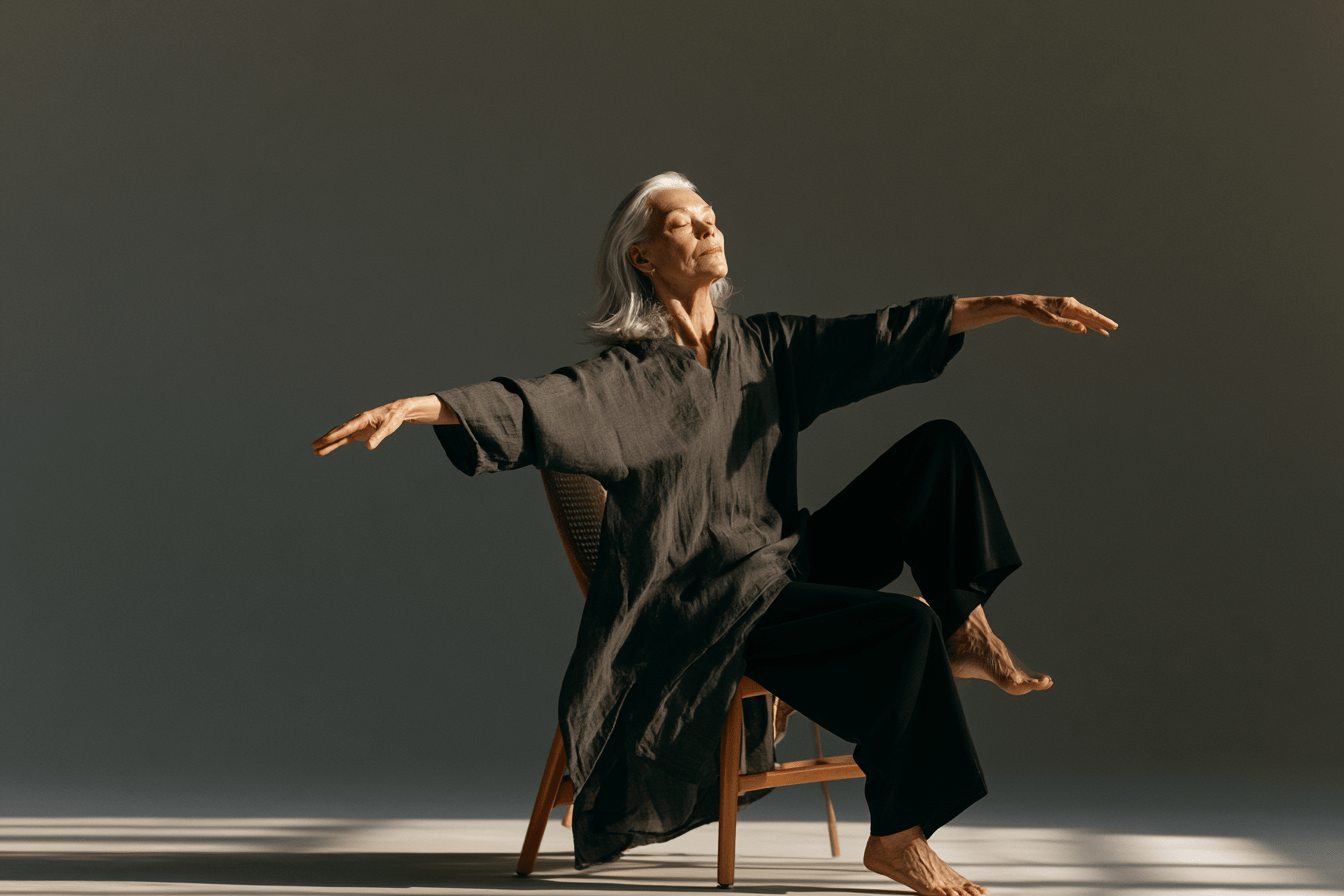
Chair tai chi has become increasingly popular as more seniors and caregivers search for safe, gentle ways to stay active. Research has linked tai chi with better balance, fall prevention, cognitive function, cardiovascular health, sleep, pain management, and mood. Chair adaptations preserve the practice’s essential movements while making it more accessible for seniors who cannot safely perform standing exercises.
This guide is designed for seniors who find standing exercise uncomfortable or unsafe, as well as midlife women seeking evidence-based movement options for aging parents. It includes authentic tai chi movements adapted for seated practice, a structured 5-day beginner program, and video placement notes for readers who prefer visual demonstrations.
I am Terry Tateossian, founder of The House of Rose and a certified lifestyle medicine coach. I run nutrition-focused wellness retreats for women in perimenopause, menopause, and post-menopause at our Smoky Mountains property in East Tennessee. Many of my clients also care for aging parents, making safe movement options a frequent topic in our coaching program.
Important: Consult a healthcare provider before beginning a new movement program, especially for seniors with cardiovascular conditions, recent surgery, severe arthritis, dementia, dizziness, uncontrolled blood pressure, recent falls, or other acute health concerns.
What Is Chair Tai Chi?
Chair tai chi is the adaptation of traditional tai chi principles and movements to a seated position. It preserves the essential elements of the practice while removing the balance demands of standing forms. Understanding what makes it authentic tai chi rather than just seated exercise is worth a moment of attention.
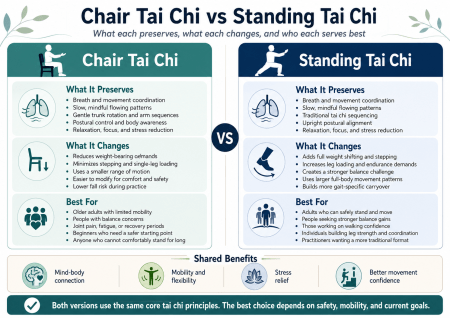
- The essential elements of tai chi: Tai chi is characterized by slow flowing movement, coordinated breath, gentle spinal rotation, weight-shifting patterns (in standing forms), and focused attention. The movements are traditionally sequenced into forms, which are structured sequences of postures performed in a continuous flow. Every posture has a name, a functional meaning, and a specific set of internal principles that guide the movement.
- What chair adaptation changes: Chair versions modify the leg and weight-shifting elements while preserving the arm movements, breath coordination, spinal rotation, and attentional focus. Some chair forms include gentle leg lifts and heel raises when appropriate. The core practice remains recognizable to any traditional tai chi practitioner.
- What chair adaptation preserves: The slow tempo, the continuous flow, the breath coordination, the attentional focus, the traditional posture names and their symbolic meaning, and the internal principles of relaxation, alignment, and gentle spiral movement.
- The lineage question: Chair tai chi is not a modern invention. Traditional tai chi teachers have adapted the practice for elderly and disabled students for as long as the practice has existed. The current visibility of chair tai chi in senior communities and healthcare settings reflects both the growing evidence base and the recognition by traditional teachers that the practice can serve broader populations than the standing forms alone.
- Distinction from chair yoga: Chair tai chi and chair yoga share some visual similarities but come from different traditions and produce somewhat different training effects. Chair yoga emphasizes flexibility, individual posture holds, and often more static stretching. Chair tai chi emphasizes continuous flowing movement, breath coordination, and the traditional internal principles of tai chi.
Why Is Tai Chi Well Suited to Seniors?
Several features of tai chi as a practice make it particularly well suited to older adults, and several features of chair adaptation extend that suitability to seniors who cannot safely stand for extended movement practice.
- Low joint impact: Tai chi does not involve jumping, pounding, or high-force movements. The joints move through their full range of motion under low load, which is exactly what arthritic joints tolerate best.
- Gradual progression: Tai chi is designed to be practiced across a lifetime. The learning curve is gentle. The movements can always be simplified. The intensity can always be modified. There is no minimum ability level required to begin.
- Breath integration: The coordinated breathing in tai chi produces immediate parasympathetic activation and supports respiratory health, which becomes more important with age.
- Balance without falls: The seated version specifically removes the balance risk while still training many of the neuromuscular patterns that support balance. Some standing balance components can be added back gradually as ability allows.
- Cognitive engagement: Learning and remembering the sequences engages memory, attention, and coordination in ways that produce documented cognitive benefits.
- Social component: Tai chi can be practiced alone or in groups. Group practice adds a social layer that is particularly protective for seniors who are at risk of isolation.
- Cultural depth: The traditional names, meanings, and metaphors give the practice a richness that keeps many practitioners engaged for decades rather than months.
- Time efficiency: A 10 to 15 minute daily practice produces meaningful benefit, which is a realistic time investment for most seniors.
- Cost accessibility: No equipment beyond a chair, no membership required, and no specialized clothing needed. The economic accessibility matters at every income level.
- Documented safety: Tai chi has one of the strongest safety records of any exercise intervention studied in older adults, with adverse event rates comparable to gentle walking.
“One of the most rewarding conversations I have with coaching clients is when they realize that their aging parent, who they had been quietly worrying about because Dad had stopped moving after his fall or Mom cannot do the walking group she used to love, actually has an accessible movement option that fits her current body. Chair tai chi is often that option. Within two or three weeks of daily practice, most seniors report better balance, easier breath, less joint stiffness, and often a noticeable shift in mood. That change is meaningful for the senior, and it is meaningful for the adult child who has been carrying the anxiety of watching a parent decline. This practice returns some sense of agency to a body that had lost it, and it does so in less time than most people expect.”
Terry Tateossian, Founder of The House of Rose
Free 28-Day Fascia Reset Email Course
Get our Free 28-day email course series to help with 1 or 2 exercises per day to release your fascia. One short lesson per day. Two minutes to read each.
What Does Research Show About Tai Chi for Older Adults?
Tai chi is one of the most rigorously studied movement practices for older adults. The research base is substantial and consistent, and it directly supports the specific benefits most relevant to senior populations.
- Fall prevention: Multiple meta-analyses have found that regular tai chi practice reduces fall risk in older adults by 20 to 45 percent depending on the study population and protocol. The effect size is comparable to or better than most other single-intervention fall prevention programs.
- Balance improvement: Even for participants who cannot yet do standing tai chi, seated practice produces measurable improvements in trunk stability, coordination, and confidence in movement. These improvements often make it possible to progress to standing practice over months.
- Cognitive function: Regular tai chi practice has been associated with improvements in memory, executive function, and processing speed in older adults, with several trials showing effects comparable to more effortful cognitive training programs. The cognitive engagement of learning and remembering forms appears to be part of the mechanism.
- Cardiovascular health: Regular tai chi practice has been associated with modest improvements in blood pressure, cardiovascular function, and cardiac rehabilitation outcomes. It is safe for most cardiac patients when done at appropriate intensity.
- Arthritis and joint pain: Tai chi has been specifically studied for knee osteoarthritis, hip pain, and general joint stiffness. It consistently produces reductions in pain and improvements in function comparable to standard physical therapy protocols in many trials.
- Sleep quality: Regular practice has been associated with improved sleep quality and reduced insomnia in older adults, with effects that appear to build over weeks and months.
- Mood and mental health: Multiple trials have documented reductions in symptoms of depression, anxiety, and general distress with regular tai chi practice. The effect is comparable to some other exercise interventions and is well-tolerated.
- Chronic disease management: Tai chi has been studied as an adjunct in the management of Parkinson’s disease, chronic obstructive pulmonary disease, cancer survivorship, dementia, and various other conditions with generally positive findings in each area.
- Adherence and enjoyment: One of the specific advantages of tai chi in seniors is that adherence rates are unusually high compared to other exercise interventions. People stick with it, which is part of why the outcomes are so consistent.
For a broader framing of tai chi in midlife women specifically, see our earlier articles on tai chi walking for seniors and tai chi for weight management, stress, and cortisol, which cover the standing and walking practices.
Who Is Chair Tai Chi For, and Who Should Avoid It?
Chair tai chi is safe for the great majority of adults, including many with significant limitations. Understanding the specific inclusion and exclusion criteria matters.
- Clearly appropriate for: Seniors with mild to moderate balance concerns who cannot safely stand for long periods. Seniors recovering from illness, surgery, or hospitalization who need to rebuild activity gradually. Seniors with arthritis, joint pain, or reduced range of motion. Seniors with mild cognitive changes who benefit from the memory and coordination demands. Seniors with cardiovascular conditions that require low-intensity exercise. Adults with disabilities that make standing exercise difficult. Adults of any age recovering from injury.
- Also appropriate for: Midlife women who want a gentle daily movement practice they can do at their desk during the workday. Adults with anxiety who benefit from the breath and attention components. Anyone recovering from a burnout period who needs low-demand movement to reintroduce daily activity.
- Requires medical clearance: Anyone with recent cardiac events, active heart failure, uncontrolled arrhythmia, uncontrolled blood pressure, recent stroke, or acute illness should have physician clearance before beginning.
- May need modification: Seniors with severe cognitive impairment may need direct hands-on guidance from a trained practitioner. Seniors with severe visual impairment may need adapted verbal instruction. Seniors with severe hearing impairment may need visual demonstration or written cues.
- Not appropriate for: Adults in acute medical crisis. Adults with active chest pain, uncontrolled dizziness, or acute injuries that have not been evaluated. Adults for whom any movement produces sharp or severe pain that has not been evaluated.
- The general rule: If a senior can sit comfortably in a chair for 15 minutes and can move the arms and torso without severe pain, chair tai chi is almost certainly safe. When in doubt, consult a physician.
Free 28-Day Fascia Reset Email Course
Get our Free 28-day email course series to help with 1 or 2 exercises per day to release your fascia. One short lesson per day. Two minutes to read each.
How Should You Prepare for Chair Tai Chi?
Several principles apply to all five exercises in this article and are worth internalizing before beginning.
- The chair: Use a sturdy dining-height chair without arms if possible. A kitchen chair works well. Avoid armchairs, recliners, and soft chairs. The chair should be stable, and the feet should reach the floor when seated. If the feet do not reach, place a folded towel or a low footstool under the feet.
- The seated posture: Sit toward the front half of the seat with the back straight and lengthened, feet flat on the floor roughly hip-width apart, knees bent at approximately 90 degrees, and hands resting on the thighs to start. The spine is upright but not stiff, and the shoulders are relaxed and low.
- Breath is essential: Every tai chi movement is coordinated with breath. Inhale as the arms rise, exhale as they descend, unless otherwise noted. Breath is slow and diaphragmatic. Never hold the breath.
- Slow is the direction: Tai chi is meant to be practiced slowly. Movements that would take one second to complete quickly should take three to five seconds in tai chi practice. The slowness is part of what produces the training effect.
- Fluid, not jerky: The movements are continuous and flowing rather than segmented. One motion melts into the next without pauses.
- Attention is part of the practice: Watch your hands as they move. Notice the sensation in your arms, spine, and breath. This attentional focus is what distinguishes tai chi from ordinary arm exercise and is part of what produces the cognitive benefits.
- No pain: No exercise in this article should produce sharp pain. Some mild stretching sensation is normal. Sharp pain, joint pain, or pain that radiates is a signal to stop and reassess.
- Consistency matters: Ten minutes a day, five days a week produces meaningful benefit within a month. Sporadic longer sessions produce less benefit.
- Time of day: Any time works. Morning practice supports the day. Afternoon practice interrupts stiffness. Evening practice supports sleep. Choose the time that produces the highest adherence.
What Are the 5 Best Chair Tai Chi Exercises for Seniors?
The following chair tai chi exercises create a gentle, structured routine that combines slow breathing, coordinated arm movements, spinal rotation, and focused attention. Each movement can be performed while seated, making the sequence accessible for seniors with limited mobility, balance concerns, or joint discomfort.
Begin with the opening breath, progress through the flowing coordination exercises, and finish with the closing form to help the body and mind return to a calm, settled state.
Exercise 1: Seated Opening Breath
The Seated Opening Breath is the foundation of every chair tai chi session. It establishes the posture, the breath, and the attentional focus that carry through the rest of the practice. In traditional tai chi, this corresponds to the Wu Ji (empty stance) preparation and the opening movement of most forms.
This gentle arm-raising exercise combines slow movement with controlled breathing to support relaxation and upper-body mobility. Keep your movements smooth and comfortable throughout each repetition.
- Sit upright with your spine comfortably lengthened, shoulders relaxed, and both hands resting palms-down on your thighs.
- Inhale slowly for about four seconds as you gently raise both arms forward and upward.
- Continue lifting until your arms reach approximately shoulder height, allowing your palms to face downward.
- Pause briefly at the top of the inhalation with your arms extended in front of you.
- Exhale slowly for about four to six seconds as you gently lower your arms.
- Sweep your palms downward through the space in front of your body until your hands return to your thighs.
- This completes one repetition.
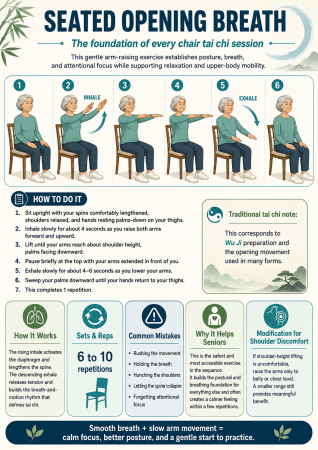
The details below explain how the movement works, how many repetitions to perform, common mistakes to avoid, its benefits for seniors, and ways to modify it for shoulder discomfort.
- How it works: The slow inhalation with rising arms activates the diaphragm and lengthens the spine. The slow exhalation with descending arms releases tension throughout the body. The combined movement establishes the coordinated breath-and-motion pattern that defines tai chi.
- Sets and reps: 6 to 10 repetitions.
- Common mistakes: Rushing the movement, holding the breath, hunching the shoulders as the arms rise, letting the spine collapse, forgetting the attentional focus.
- Why this exercise for seniors: This is the safest and most accessible exercise in the sequence. It establishes the postural and breath foundation for everything else, and it produces immediate parasympathetic activation. Many seniors report feeling meaningfully calmer within two or three repetitions.
- Modification for shoulder issues: If raising the arms to shoulder height is uncomfortable, keep the arms lower. Even raising the arms to belly level while coordinating with the breath produces meaningful benefit.
Free 28-Day Fascia Reset Email Course
Get our Free 28-day email course series to help with 1 or 2 exercises per day to release your fascia. One short lesson per day. Two minutes to read each.
Exercise 2: Seated Wave Hands Like Clouds
Seated Wave Hands Like Clouds is the chair adaptation of one of the most beloved and studied movements in traditional tai chi. In Chinese it is called Yun Shou, and it appears in nearly every major tai chi form. It combines lateral arm movement with gentle trunk rotation and coordinated breath.
This gentle seated movement coordinates the arms, trunk, and breathing in a smooth side-to-side pattern. Move slowly and stay within a comfortable range throughout each repetition.
- Sit in the recommended position with your spine upright and shoulders relaxed.
- Raise your right hand to shoulder height in front of your right shoulder, with the palm facing you.
- Place your left hand at belly height in front of your abdomen, also with the palm facing you, forming a soft vertical stack with both hands.
- Slowly rotate your trunk to the right as your right hand sweeps horizontally toward the right side.
- At the same time, raise your left hand to shoulder height in front of your left shoulder.
- Finish with your left hand at shoulder height and your right hand at belly height, creating a mirror image of the starting position.
- Pause briefly, then slowly rotate your trunk to the left as your left hand sweeps across and your right hand rises.
- Continue alternating sides, inhaling as one arm rises and exhaling as the other arm sweeps across.
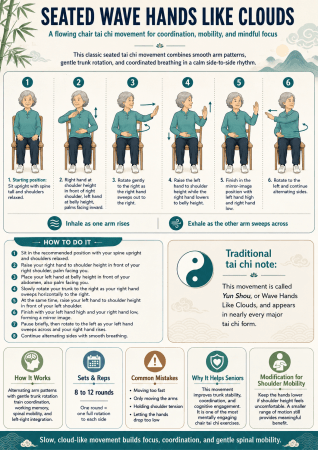
This gentle chair tai chi movement combines flowing arm patterns with slow trunk rotation to challenge both the body and mind. The details below explain its benefits, recommended repetitions, common mistakes, and simple modifications for limited shoulder mobility.
- How it works: The alternating arm movement combined with gentle trunk rotation trains coordination, working memory, spinal mobility, and left-right integration. The graceful cloud-like quality of the arm movements is what gives the posture its name.
- Sets and reps: 8 to 12 rounds (one round is one full rotation to each side).
- Common mistakes: Moving too fast, forgetting the trunk rotation and only moving the arms, holding tension in the shoulders, letting the hands drop below their proper heights.
- Why this exercise for seniors: Wave Hands Like Clouds produces significant training effects in trunk stability, coordination, and cognitive engagement. It is one of the most cognitively demanding of the chair tai chi exercises and often the one that produces the most noticeable mental engagement.
- Modification for shoulder mobility: Keep the hands lower if shoulder height is uncomfortable. Even a smaller version of the movement produces meaningful benefit.
Exercise 3: Seated Grasping the Bird’s Tail
Seated Grasping the Bird’s Tail is a chair adaptation of one of the most fundamental sequences in traditional tai chi. In Chinese it is called Lan Que Wei, and it contains four essential energies (Peng, Lu, Ji, An, which translate roughly to ward off, roll back, press, and push). This exercise gives the practitioner a taste of the deeper energetic principles of tai chi.
This flowing sequence combines four gentle tai chi movements to improve coordination, posture, and breath control. Move slowly through each step, allowing the arms, trunk, and breathing to work together smoothly.
- Begin in the Starting Position: Sit comfortably with proper posture and rest both hands on your thighs.
- Ward Off (Peng): Slowly raise your right arm to shoulder height in front of your body, with the palm facing you as though holding a large ball. Raise your left hand just below the right elbow with the palm facing downward, inhaling as both arms rise.
- Roll Back (Lu): Gently rotate your trunk to the right while drawing both hands backward and downward toward your right hip in a smooth arc. Exhale as the hands move back.
- Press (Ji): Place your left hand against the inside of your right wrist. Press both hands forward together at chest height, inhaling as the movement begins.
- Push (An): Separate the hands slightly, then press them forward and gently downward. Exhale as you complete the push.
- Return to the Starting Position: Slowly lower both hands back onto your thighs. This completes one full round.
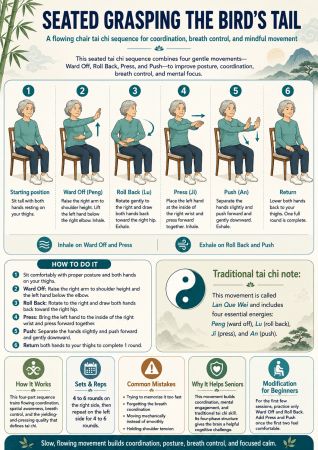
Grasping the Bird’s Tail combines four flowing movements that build coordination, breath control, spatial awareness, and mental focus. The following guidance explains its benefits, recommended repetitions, common mistakes, and beginner-friendly modifications.
- How it works: The four movements sequenced together train continuous flowing coordination, spatial awareness, breath control, and the internal principles of yielding and pressing that give tai chi its distinctive character. This is where chair tai chi begins to feel like a real practice rather than a set of isolated exercises.
- Sets and reps: 4 to 6 rounds on the right side. Then repeat the entire sequence on the left side (mirror image) for 4 to 6 rounds.
- Common mistakes: Trying to memorize the sequence too quickly, forgetting the breath coordination, moving mechanically without the flowing quality, holding tension in the shoulders. The sequence takes a few sessions to feel comfortable, so give it time to settle in.
- Why this exercise for seniors: Grasping the Bird’s Tail produces the largest cognitive engagement of any exercise in this sequence and connects the practice to traditional tai chi principles that keep many practitioners engaged for years. The four-phase structure gives the brain the kind of learning demand that supports cognitive health.
- Modification for beginners: For the first two or three sessions, practice only the first two phases (Ward Off and Roll Back). Add Press and Push once the first two feel comfortable.
Free 28-Day Fascia Reset Email Course
Get our Free 28-day email course series to help with 1 or 2 exercises per day to release your fascia. One short lesson per day. Two minutes to read each.
Exercise 4: Seated Brush Knee With Rotation
Seated Brush Knee is a chair adaptation of the traditional Brush Knee and Twist Step (Lou Xi Ao Bu), one of the classic postures of tai chi. The seated version preserves the upper body coordination, spinal rotation, and breath integration while omitting the leg stepping component.
This gentle movement combines trunk rotation with coordinated pushing and brushing motions to improve upper-body mobility and balance. Move slowly with the breath, keeping the shoulders relaxed throughout.
- Sit in the recommended position with both hands resting on your thighs.
- Raise your right hand beside your right ear with the palm facing forward. Keep your left hand palm-down near your left thigh.
- Gently rotate your trunk to the right while inhaling.
- Slowly unwind and rotate to the left as you push your right hand forward at chest height, as though gently pressing against a wall.
- At the same time, sweep your left hand down and across your left thigh, as though brushing something off your knee.
- Exhale as you complete the pushing and brushing movements, then return to the neutral starting position.
- Raise your left hand beside your left ear and gently rotate your trunk to the left while inhaling.
- Unwind and rotate to the right as your left hand pushes forward and your right hand brushes across your right thigh.
- Exhale as the movement finishes, then return both hands to your thighs.
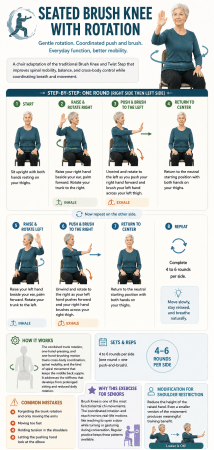
This movement combines gentle trunk rotation with coordinated pushing and brushing actions to improve mobility, balance, and cross-body control. It also helps maintain the natural turning and reaching patterns used in everyday activities.
- How it works: The combined trunk rotation, one-hand-pressing, and one-hand-brushing motion trains cross-body coordination, spinal mobility, and the kind of spiral movement that keeps the middle back supple. The rotation component addresses the specific stiffness that develops in older adults from prolonged sitting and reduced daily rotation.
- Sets and reps: 4 to 6 rounds per side (one round is one push-and-brush).
- Common mistakes: Forgetting the trunk rotation and only moving the arms, moving too fast, holding tension in the shoulders, letting the pushing hand lock at the elbow.
- Why this exercise for seniors: Brush Knee is one of the most functional tai chi movements because the coordinated rotation and reach mirrors many real-life motions like reaching to open a door while turning, or gesturing during conversation. Regular practice keeps these patterns available.
- Modification for shoulder restriction: Reduce the height of the raised hand. Even a smaller version of the movement produces training benefit.
Exercise 5: Seated Closing Form and Gathering Qi
The Seated Closing Form is the traditional way to complete a tai chi session. It gathers the effects of the practice, quiets the nervous system, and prepares the body to move back into daily activity. In traditional forms this often includes a movement called Gathering Qi (Shou Shi), which is what this exercise adapts for chair practice.
This calming movement combines slow breathing with wide, flowing arm motions to encourage relaxation and body awareness. It finishes with the hands resting over the lower abdomen to create a quiet, centered pause.
- Sit in the recommended position with both hands resting on your thighs, palms facing upward if comfortable.
- Inhale slowly for about four seconds as you extend both arms outward in a wide arc.
- Continue raising the arms until your hands reach approximately shoulder height, keeping the palms facing upward and the elbows softly bent.
- Form a gentle bowl shape with both arms at the sides of the body.
- Exhale slowly for about four to six seconds as you bring both hands together in front of your body.
- Lower the hands slowly down the center of the torso, keeping the palms facing inward.
- When the hands reach the lower abdomen, rest them palm-over-palm. Traditionally, women place the right hand under the left, while men place the left hand under the right, although this may vary.
- Remain in this position and take three to five slow, relaxed breaths.
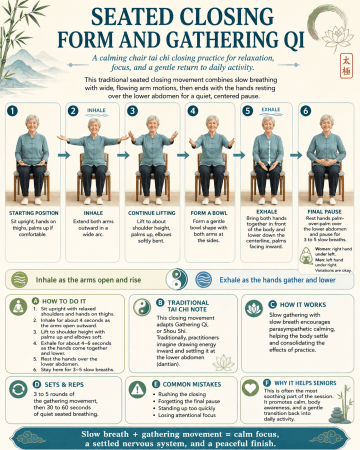
This gentle closing movement helps the body settle into a deeper state of calm while bringing the practice to a peaceful finish. It also gives seniors a quiet moment to focus on their breathing before returning gradually to daily activities.
- How it works: The slow gathering movement combined with slow breath produces a final parasympathetic activation that consolidates the effects of the session. Traditionally the practitioner imagines drawing energy inward and storing it at the lower abdomen (the dantian in Chinese terminology). The imagery is not required for the physiological benefit but adds a meaningful attentional focus for practitioners who resonate with it.
- Sets and reps: 3 to 5 rounds of the gathering movement. Finish with 30 to 60 seconds of quiet seated breathing.
- Common mistakes: Rushing the closing, forgetting the pause at the end, standing up abruptly at the completion of the practice, dropping the attentional focus.
- Why this exercise for seniors: The closing form is often the most subjectively pleasant part of the session. Many seniors report a distinct sense of calm settling after this exercise. It also functions as a transition ritual between practice and daily activity, which supports the sustainability of the daily habit.
Free 28-Day Fascia Reset Email Course
Get our Free 28-day email course series to help with 1 or 2 exercises per day to release your fascia. One short lesson per day. Two minutes to read each.
How Does the 5-Day Progressive Chair Tai Chi Program Work?
The five exercises above form the core of the practice. The 5-day program combines them into a structured progressive sequence designed to introduce the practice comfortably and to produce meaningful benefit within one week. Total time commitment per day ranges from 8 to 20 minutes.
Day 1: Introduction (8 minutes)
The first day introduces only the opening and closing movements, which are the safest and most accessible.
|
Exercise |
Reps or Duration |
|
Seated Opening Breath |
8 reps |
|
Rest and breathe |
1 min |
|
Seated Closing Form and Gathering Qi |
3 rounds + 30 sec quiet breath |
Day 1 is deliberately simple. The purpose is to establish the seated posture, the breath coordination, and the flowing quality of movement without introducing anything overwhelming.
Day 2: Add Wave Hands (12 minutes)
The second day adds the Wave Hands sequence for coordination and rotation.
|
Exercise |
Reps or Duration |
|
Seated Opening Breath |
8 reps |
|
Seated Wave Hands Like Clouds |
10 rounds |
|
Seated Closing Form |
3 rounds + 30 sec quiet breath |
Day 3: Add Grasping the Bird’s Tail (16 minutes)
The third day adds the four-energy sequence for the cognitive engagement layer.
|
Exercise |
Reps or Duration |
|
Seated Opening Breath |
6 reps |
|
Seated Wave Hands Like Clouds |
8 rounds |
|
Seated Grasping the Bird’s Tail |
4 rounds each side |
|
Seated Closing Form |
3 rounds + 30 sec quiet breath |
Day 3 is where the practice starts to feel like a real tai chi session. Give yourself extra time to learn the Grasping the Bird’s Tail sequence.
Day 4: Add Brush Knee (18 minutes)
The fourth day adds the rotation and reach pattern.
|
Exercise |
Reps or Duration |
|
Seated Opening Breath |
6 reps |
|
Seated Wave Hands Like Clouds |
8 rounds |
|
Seated Grasping the Bird’s Tail |
4 rounds each side |
|
Seated Brush Knee With Rotation |
4 rounds each side |
|
Seated Closing Form |
3 rounds + 30 sec quiet breath |
Day 5: Full Sequence (20 minutes)
The fifth day integrates all five exercises into the complete sequence with slightly more repetitions of each.
|
Exercise |
Reps or Duration |
|
Seated Opening Breath |
8 reps |
|
Seated Wave Hands Like Clouds |
10 rounds |
|
Seated Grasping the Bird’s Tail |
5 rounds each side |
|
Seated Brush Knee With Rotation |
5 rounds each side |
|
Seated Closing Form |
5 rounds + 60 sec quiet breath |
Free 28-Day Fascia Reset Email Course
Get our Free 28-day email course series to help with 1 or 2 exercises per day to release your fascia. One short lesson per day. Two minutes to read each.
What Should You Do After Completing the 5-Day Program?
The first five days establish the practice. From day six forward, the most effective practice is a daily session of the full sequence (approximately 20 minutes) five or six days per week. Once the sequence feels familiar, most practitioners find that adding an extra round or two of their favorite exercises extends the session naturally. The practice becomes a friend rather than an assignment.
Subjective calm and easier breath is often noticeable within the first two or three sessions. Better balance, less joint stiffness, and improved sleep generally appear within two to three weeks of consistent daily practice. Deeper benefits including improved cognitive function and reduced fall risk develop over three to six months.
“The most common report I hear from coaching clients whose parents have started a chair tai chi practice is that within a month the parent starts asking for the daily video, looks forward to it, and treats it as one of the best parts of the day. Chair tai chi has a specific quality of being enjoyable rather than obligatory, which is the opposite of most exercise recommendations at any age. For seniors who have been quietly avoiding movement because everything felt hard or scary, having a practice that actually feels good is a significant psychological shift. That shift often opens the door to other movement over the following months, including gradual return to walking, gentle strength work, and social activity. Chair tai chi is often the beginning of a broader reawakening of the body in later life, not just an isolated intervention.”
Terry Tateossian, Founder of The House of Rose
What Common Mistakes Can Undermine Chair Tai Chi Practice?
Six mistakes consistently reduce the effectiveness of chair tai chi practice for seniors and for caregivers introducing the practice.
- Moving too fast: Tai chi is defined by its slowness. Rushing through the movements converts the practice into ordinary arm exercise that misses most of the training effect. If in doubt, slow down further.
- Holding the breath: Every movement is coordinated with breath. Practicing without conscious breath coordination reduces the benefits significantly. Inhale as the arms rise. Exhale as they descend.
- Skipping the opening and closing: The opening establishes the practice state. The closing consolidates it. Many practitioners want to skip straight to the middle exercises. These bookends are part of what makes the practice work.
- Practicing too infrequently: Once or twice a week produces small benefits. Five or six times a week for 15 to 20 minutes produces meaningful benefits. The daily rhythm is where the training effect accumulates.
- Introducing too many exercises too fast: The 5-day progression is deliberate. Trying to learn all five exercises on day one produces overwhelm and reduces the likelihood of continuing, so follow the progression as designed.
- Forcing form perfection: Perfect form matters less than consistent practice with reasonable form. A senior who practices imperfectly for a year produces vastly better results than one who waits for perfect instruction and does not practice.
- Skipping the attentional focus: The mental focus (watching the hands, feeling the breath, noticing sensations) is part of what produces the cognitive benefits. Practicing while watching TV or thinking about other things reduces these benefits.
How Does Chair Tai Chi Fit Into a Broader Healthy Aging Framework?
Chair tai chi is one component of the broader framework for movement, mind, and body in later life. Placing it in context helps determine how to combine it with other practices.
- Complements walking: Chair tai chi does not replace daily walking for seniors who can walk, and it complements walking rather than substituting for it. Daily walking builds cardiovascular fitness and outdoor exposure. Chair tai chi adds coordination, breath, cognitive engagement, and postural work.
- Complements strength work: Chair tai chi is not primarily a strength intervention. Seniors who can do resistance training benefit from adding it. See our four muscle groups for aging well article for the strength framework adapted to older adults, and the tai chi walking for seniors article for the walking-based standing practice.
- Complements nutrition: Adequate protein intake supports the muscle preservation that tai chi does not directly address. The free Macro Calculator gives a starting protein target. The Macro Miracle Mediterranean Cookbook is the kitchen-side companion for eating this way sustainably.
- Complements sleep: The parasympathetic activation of chair tai chi supports the sleep quality that consolidates the training effects. The menopause sleep remedies article and the midlife sleep stack article cover the sleep framework.
- Complements nervous system regulation: The breath and attention components of chair tai chi are themselves a form of vagal reset. The practice pairs well with the vagus nerve reset exercises article framework.
- For midlife caregivers specifically: The Monthly Personal Training and Nutrition Coaching Program supports the caregiver’s own health, which is often neglected during periods of parental caregiving. The Deeply Restorative Yoga and Nature Retreat at our Smoky Mountains property is the deep-reset option for caregivers who need their own restoration time.
Free 28-Day Fascia Reset Email Course
Get our Free 28-day email course series to help with 1 or 2 exercises per day to release your fascia. One short lesson per day. Two minutes to read each.
When Should You See a Healthcare Professional?
Most seniors can safely begin chair tai chi on their own or with a caregiver’s support. Some situations warrant professional evaluation first.
- Any acute or new symptoms: New chest pain, shortness of breath, dizziness, or neurological symptoms warrant medical evaluation before starting any exercise.
- Recent cardiac events: Recent heart attack, arrhythmia, or heart failure exacerbation should be evaluated and cleared before beginning.
- Recent stroke: Post-stroke movement work should be guided by a physical or occupational therapist for at least the first months.
- Recent falls: A pattern of recent falls warrants a fall risk assessment and often a physical therapy consultation before beginning independent practice.
- Uncontrolled dizziness or vertigo: Address the underlying cause before beginning movement practice that could exacerbate symptoms.
- Severe cognitive impairment: Advanced dementia may require hands-on practitioner guidance rather than self-directed practice or family-guided practice.
- Recent orthopedic surgery: Recent joint replacement, spinal surgery, or other significant orthopedic surgery needs surgical clearance and often physical therapy guidance.
- Any severe unresolved pain: Any pain that has not been evaluated and is severe or worsening warrants medical assessment.
How Can Adult Children Introduce Chair Tai Chi to Their Parents?
Many readers of this article are midlife women thinking about introducing chair tai chi to an aging parent. This introduction is a specific relational moment that benefits from some thought.
- Do not push the topic: Any suggestion to an aging parent that lands as a criticism of their current activity level tends to produce resistance. Present chair tai chi as something you are doing yourself, or as something you found interesting, or as an option they might enjoy exploring. Do not present it as an intervention for their perceived decline.
- Offer to do it together: Practicing alongside a parent, either in person or over video call, removes the awkwardness of asking them to try something new alone. It also makes the practice a shared activity rather than a prescribed one.
- Set up the space: If you visit your parent, take the extra minute to move a sturdy chair into a convenient space and cue up a video on their tablet or television. Removing the setup friction significantly increases the likelihood they will actually practice.
- Do not overload them with information: Starting with just the opening breath is often enough for the first visit. Layer in additional exercises only as they express interest.
- Respect their pace: Some parents will engage quickly, while others will resist for months and then quietly start practicing on their own. The relational approach is patience and consistency, not intensity.
- Take care of yourself: Caregiver burnout is real. Your own health matters as much as your parent’s. The Monthly Personal Training and Nutrition Coaching Program is one option for sustained support during a caregiving period. The Deeply Restorative Yoga and Nature Retreat is the deep-reset option for caregivers who have been running on empty.
Free 28-Day Fascia Reset Email Course
Get our Free 28-day email course series to help with 1 or 2 exercises per day to release your fascia. One short lesson per day. Two minutes to read each.
What Are Your Next Steps for Starting Chair Tai Chi?
If the framework in this article resonates and you want to begin a chair tai chi practice for yourself or introduce it to a parent, here are the four next steps in order of friction.
- Start today with Day 1 of the program. Fifteen minutes and a sturdy chair. Seated Opening Breath followed by Seated Closing Form. No prior experience required.
- Complete the full 5-day program this week. Follow the daily protocols in section 11. Track how the body feels each day.
- Continue with the maintenance practice. After day five, keep the daily 20 minute practice going five or six days per week. Add the extra rounds of your favorite exercises as they emerge as favorites.
- Consider deeper support. If you are a midlife woman caring for an aging parent, the Monthly Personal Training and Nutrition Coaching Program supports your own health during the caregiving period. The Deeply Restorative Yoga and Nature Retreat at our Smoky Mountains property is the deep-reset option for caregivers who need restorative time for themselves.
Frequently Asked Questions
Is chair tai chi safe for seniors with balance problems?
Yes, chair tai chi is specifically designed to be safe for seniors with balance concerns. The seated position removes the fall risk of standing exercise while still training many of the neuromuscular patterns that support balance. Seniors with balance concerns can begin chair practice safely and progress gradually toward standing practice as balance improves. Seniors with recent falls should have a fall risk assessment before starting any new exercise.
How long does it take to see benefits from chair tai chi?
Subjective calm and easier breath is often noticeable within the first two or three sessions. Better balance, less joint stiffness, and improved sleep generally appear within two to three weeks of consistent daily practice. Deeper benefits including improved cognitive function and reduced fall risk develop over three to six months of regular practice.
Can seniors with arthritis do chair tai chi?
Yes, chair tai chi is particularly well suited to seniors with arthritis. The slow gentle movement takes joints through their full range of motion under low load, which is exactly what arthritic joints tolerate best. Many clinical studies of tai chi for knee osteoarthritis and other joint conditions have shown pain reduction and functional improvement comparable to standard physical therapy protocols.
How often should seniors practice chair tai chi?
Five or six sessions per week of 15 to 20 minutes each produces meaningful benefits. Once or twice a week produces smaller effects. Daily practice is fine and often preferred by seniors who find the practice enjoyable. The rhythm of daily practice is where the training effects accumulate.
Do I need special equipment for chair tai chi?
No, chair tai chi requires only a sturdy dining-height chair without arms, a small amount of open space, and comfortable clothing. No mat, no special shoes, no equipment. This economic and logistical accessibility is part of what makes the practice suitable for widespread senior use.
Can chair tai chi help with dementia or memory problems?
Regular tai chi practice has been associated with improvements in memory, executive function, and processing speed in older adults. The cognitive engagement of learning and remembering forms appears to be part of the mechanism. For seniors with mild cognitive impairment or early dementia, chair tai chi is a reasonable practice to include in a broader cognitive-support strategy. For seniors with advanced dementia, hands-on guidance from a trained practitioner is often needed rather than self-directed video-based practice.
Free 28-Day Fascia Reset Email Course
Get our Free 28-day email course series to help with 1 or 2 exercises per day to release your fascia. One short lesson per day. Two minutes to read each.
Is chair tai chi the same as chair yoga?
No, they come from different traditions and produce somewhat different training effects. Chair yoga emphasizes flexibility, individual posture holds, and often more static stretching. Chair tai chi emphasizes continuous flowing movement, breath coordination, and the traditional internal principles of tai chi. Both are valuable, and many seniors benefit from doing both.
Can I do chair tai chi if I have heart problems?
Chair tai chi is generally safe for seniors with stable cardiovascular conditions and is often included in cardiac rehabilitation programs. Anyone with recent cardiac events, uncontrolled arrhythmia, uncontrolled blood pressure, or active heart failure should have physician clearance before beginning. When cleared, chair tai chi is one of the gentlest and most heart-friendly forms of exercise available.
How do I introduce chair tai chi to my elderly parent?
Present it as something you are doing yourself or as something interesting you found rather than as an intervention for their perceived decline. Offer to do it together in person or over video call. Set up the chair and cue up the video for them. Start with just the opening breath. Layer in more exercises only as they express interest. Respect their pace. Do not push.
What is the best time of day to practice chair tai chi?
Any time works, and consistency matters more than timing. Morning practice supports the day and often produces a calmer sense of purpose entering activities. Afternoon practice interrupts sitting-related stiffness. Evening practice supports sleep. Choose the time that produces the highest adherence for you or your loved one.
Can chair tai chi help with anxiety or depression in seniors?
Multiple studies have documented reductions in symptoms of depression, anxiety, and general distress with regular tai chi practice in older adults. The combination of movement, breath, focused attention, and often social engagement addresses several drivers of low mood in later life. Chair tai chi is not a substitute for appropriate mental health treatment for clinical depression, but it is a reasonable component of a broader mental wellness approach.
Is there research showing that chair tai chi actually works?
Yes, the tai chi research base is extensive. Multiple meta-analyses have documented benefits for balance, fall prevention, cognitive function, cardiovascular health, arthritis pain, sleep quality, and mood in older adults. Chair-adapted versions preserve many of these benefits while remaining safer for seniors who cannot do standing practice. The 5-day program in this article is a beginner introduction rather than a comprehensive replacement for group class practice or individual instruction.
What if I cannot follow the video?
The written instructions in this article are designed to be followable without video. If video does not fit your situation (visual impairment, no device, no internet), the written instructions plus the illustrations of each exercise are sufficient to establish the practice. Some seniors also benefit from having a family member read the instructions aloud while they practice.
Can I do chair tai chi if I am recovering from surgery?
Recent surgery is a reason to check with your surgeon before beginning any new exercise program. Once cleared, chair tai chi is often an appropriate re-entry point to movement because of its gentle nature. Many seniors find that chair tai chi during recovery periods maintains a sense of physical agency and supports the return to fuller activity as healing progresses.
How does chair tai chi compare to walking for seniors?
Both are excellent, and they address different things. Walking builds cardiovascular fitness, outdoor exposure, and simple stamina. Chair tai chi builds coordination, breath control, gentle rotation, cognitive engagement, and postural work. Seniors who can walk safely benefit from doing both. Seniors who cannot walk safely can still get significant benefit from chair tai chi alone. See our tai chi walking for seniors article for the walking-based practice option.
Free 28-Day Fascia Reset Email Course
Get our Free 28-day email course series to help with 1 or 2 exercises per day to release your fascia. One short lesson per day. Two minutes to read each.
References
- Wayne, P. M., & Fuerst, M. L. (2013). The Harvard Medical School Guide to Tai Chi. Shambhala Publications.
- Lauche, R., Wayne, P. M., Dobos, G., & Cramer, H. (2016). Prevalence, patterns, and predictors of t’ai chi and qigong use in the United States: results of a nationally representative survey. Journal of Alternative and Complementary Medicine, 22(4), 336–342.
- Huang, Z. G., Feng, Y. H., Li, Y. H., & Lv, C. S. (2017). Systematic review and meta-analysis: tai chi for preventing falls in older adults. BMJ Open, 7(2), e013661.
- Lomas-Vega, R., Obrero-Gaitán, E., Molina-Ortega, F. J., & Del-Pino-Casado, R. (2017). Tai chi for risk of falls: a meta-analysis. Journal of the American Geriatrics Society, 65(9), 2037–2043.
- Li, F., Harmer, P., Fitzgerald, K., et al. (2012). Tai chi and postural stability in patients with Parkinson’s disease. New England Journal of Medicine, 366(6), 511–519.
- Wayne, P. M., Walsh, J. N., Taylor-Piliae, R. E., et al. (2014). Effect of tai chi on cognitive performance in older adults: systematic review and meta-analysis. Journal of the American Geriatrics Society, 62(1), 25–39.
- Wang, C., Schmid, C. H., Iversen, M. D., et al. (2016). Comparative effectiveness of tai chi versus physical therapy for knee osteoarthritis: a randomized trial. Annals of Internal Medicine, 165(2), 77–86.
- Yeh, G. Y., Wang, C., Wayne, P. M., & Phillips, R. S. (2008). The effect of tai chi exercise on blood pressure: a systematic review. Preventive Cardiology, 11(2), 82–89.
- Chan, A. W., Yu, D. S., Choi, K. C., et al. (2016). Tai chi qigong as a means to improve night-time sleep quality among older adults with cognitive impairment: a pilot randomized controlled trial. Clinical Interventions in Aging, 11, 1277–1286.
- Wang, F., Lee, E. K., Wu, T., et al. (2014). The effects of tai chi on depression, anxiety, and psychological well-being: a systematic review and meta-analysis. International Journal of Behavioral Medicine, 21(4), 605–617.
- Chen, W., Ju, Y. J., & Sun, T. L. (2020). Chair-based tai chi for older adults: a systematic review. Journal of Clinical Nursing, 29(15-16), 2765–2776.
- Yang, G. Y., Wang, L. Q., Ren, J., et al. (2015). Evidence base of clinical studies on tai chi: a bibliometric analysis of controlled trials. PLoS One, 10(3), e0120655.
- Zheng, G., Lan, X., Li, M., et al. (2015). The effectiveness of tai chi on the physical and psychological well-being of college students: a study protocol for a randomized controlled trial. Trials, 15, 129.
- Lan, C., Chen, S. Y., Lai, J. S., & Wong, A. M. (2013). Tai chi chuan in medicine and health promotion. Evidence-Based Complementary and Alternative Medicine, 2013, 502131.
- Klein, P. J., & Adams, W. D. (2004). Comprehensive therapeutic benefits of tai chi: a critical review. American Journal of Physical Medicine and Rehabilitation, 83(9), 735–745.
- Tsang, W. W., & Hui-Chan, C. W. (2004). Effect of 4- and 8-wk intensive tai chi training on balance control in the elderly. Medicine and Science in Sports and Exercise, 36(4), 648–657.
- Field, T. (2011). Tai chi research review. Complementary Therapies in Clinical Practice, 17(3), 141–146.
- Barrow, D. E., Bedford, A., Ives, G., et al. (2007). An evaluation of the effects of tai chi chuan and chi kung training in patients with symptomatic heart failure: a randomised controlled pilot study. Postgraduate Medical Journal, 83(985), 717–721.
- Rogers, C. E., Larkey, L. K., & Keller, C. (2009). A review of clinical trials of tai chi and qigong in older adults. Western Journal of Nursing Research, 31(2), 245–279.
Disclaimer: Always consult with a healthcare professional before starting any new routines, programs, or nutrition plans to ensure you receive the best medical advice and strategy for your specific individual needs.
Free 28-Day Fascia Reset Email Course
Get our Free 28-day email course series to help with 1 or 2 exercises per day to release your fascia. One short lesson per day. Two minutes to read each.

Terry Tateossian is a Menopause Lifestyle Medicine Coach, Certified Personal Trainer & Nutritionist and the Founder of THOR: The House of Rose, a wellness brand serving women over 40 through retreats, coaching, macro-nutrition and community. As 25-year founder and entrepreneur, Terry spent two and a half decades building and running successful start-up businesses, an experience that put her on the front line of founder burnout long before she could name it. After facing serious health challenges, early onset menopause, and emotional eating while running her agency and raising two children, Terry rebuilt her health in her 40s and lost more than 80 pounds through evidence-based nutrition, training, and mindset work. Today, she helps women get strong, improve confidence, support hormone health, and create a stronger second half of life. Terry has been featured in major media outlets and is available for podcasts, expert commentary, brand collaborations, and speaking engagements on midlife health, reinvention, emotional eating, menopause wellness, and strength training for longevity. Get her free macro calculator (her cookbook companion) to start your journey to back to health.