
 By Team THOR
Free 28-Day Fascia Reset Email Course
Get our Free 28-day email course series to help with 1 or 2 exercises per day to release your fascia. One short lesson per day. Two minutes to read each.
Tai Chi Lymphatic and Fascia Release Exercises for Midlife Women (5 Movements, 5-Day Program, With Videos)
Tai chi is one of the most underrated practices for supporting both lymphatic flow and fascial health in midlife women. Its gentle rotation, rhythmic weight-shifting, coordinated breathing, and slow, flowing movements provide the physical inputs both systems need to function well.
This is especially important for women over 40. During perimenopause and menopause, reduced movement, shallow breathing, chronic stress, and hormonal changes can contribute to fluid buildup, morning puffiness, stiffness, restricted breathing, and a general feeling of physical sluggishness.
The lymphatic system relies on movement, breathing, and pressure changes to circulate lymph fluid. The fascial system depends on regular movement, hydration, and gentle rotation to maintain smooth movement between tissue layers. Tai chi supports both systems through the same simple daily practice, making it an efficient body-based intervention for this stage of life.
Important: Always consult your healthcare provider before starting a new movement program, especially if you have cardiovascular concerns, active injuries, recent surgery, severe balance problems, or an acute health condition.
What Is Tai Chi?
Tai chi is a traditional Chinese movement practice with roots that trace back several centuries. It combines slow flowing movement, coordinated breath, gentle rotation, weight-shifting, and focused attention into structured sequences called forms. The core principles that define tai chi as a distinct practice are worth understanding before working with the specific movements.
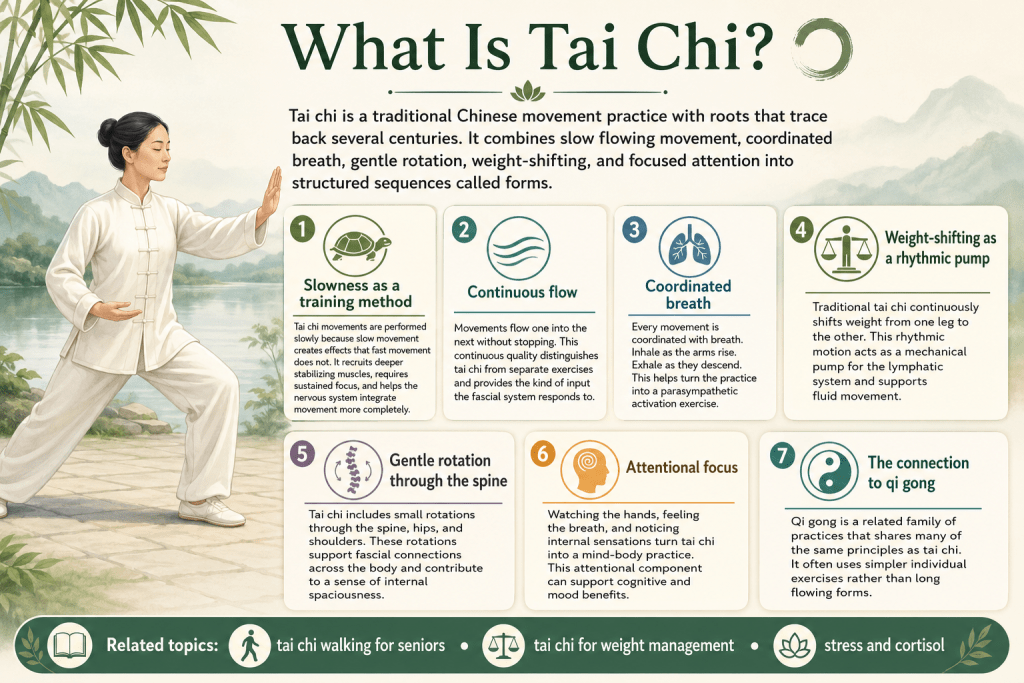
- Slowness as a training method: Tai chi movements are performed slowly not because slow is easy but because slow is a specific training method that produces effects different from fast movement. Slow movement recruits deeper stabilizing muscles, requires continuous attentional focus, and allows the nervous system to integrate the movement pattern more completely than fast movement does.
- Continuous flow rather than segmentation: Tai chi movements flow one into the next without stopping. This continuous quality is what distinguishes tai chi from a sequence of separate exercises and is one of the specific inputs the fascial system responds to.
- Coordinated breath: Every movement is coordinated with breath. Inhale as arms rise, exhale as they descend, and always slower rather than faster. Coordinated breath is what turns the physical movement into a parasympathetic activation practice.
- Weight-shifting as a rhythmic pump: Traditional tai chi involves continuous weight-shifting from one leg to the other. This rhythmic weight-shifting acts as a mechanical pump for the lymphatic system and produces the specific fluid movement patterns the lymphatic system depends on.
- Gentle rotation through the spine: Tai chi movements involve continuous small rotations through the spine, hips, and shoulders. This rotation addresses the fascial planes that connect different body regions and is one of the reasons tai chi produces the felt-sense of internal spaciousness that regular practitioners describe.
- Attentional focus: Watching the hands, feeling the breath, noticing internal sensations. This attentional component is what turns tai chi from ordinary exercise into a mind-body practice with cognitive and mood benefits.
- The connection to qi gong: Qi gong is a related family of practices that shares many principles with tai chi but tends to involve simpler individual exercises rather than long flowing forms. Many of the movements in this article are found in both tai chi and qi gong traditions.
For a broader introduction to tai chi as a general practice, see our earlier articles on tai chi walking for seniors and tai chi for weight management, stress, and cortisol.
Why Is Tai Chi Uniquely Suited to Lymphatic and Fascial Support?
Several specific features of tai chi align particularly well with the physical inputs that the lymphatic and fascial systems require. Understanding these features is what makes the combination make sense rather than being a marketing claim.
- Rhythmic weight-shifting for lymphatic pumping: The lymphatic system does not have a heart. It depends on movement, breath, and mechanical pressure to circulate lymph fluid. The rhythmic weight-shifting from foot to foot in tai chi acts as a mechanical pump that supports lymphatic circulation, particularly in the legs where lymphatic stasis is most common in midlife women.
- Deep diaphragmatic breath for the thoracic duct: The largest lymphatic vessel in the body (the thoracic duct) drains lymph from most of the body back into the venous circulation just below the collarbones. The pressure changes produced by deep diaphragmatic breathing act as one of the primary drivers of thoracic duct flow. The slow deep breath of tai chi produces this pressure effect continuously throughout the practice.
- Gentle rotation for fascial planes: Fascial planes run in specific patterns throughout the body. The lateral fascial line runs along the side of the body. The spiral fascial line wraps around the torso and limbs. These fascial planes need regular rotational input to maintain their glide function. Tai chi provides continuous gentle rotation that specifically addresses these planes.
- Sustained slow movement for connective tissue: Fascia responds to sustained slow loading, not to fast repetitive movement. Tai chi’s slow tempo is one of the specific reasons the practice supports fascial health where faster exercise modalities may not.
- Whole-body integration: Both the lymphatic system and the fascial system are whole-body networks. Interventions that address multiple body regions at once produce better outcomes than interventions that isolate single areas. Tai chi is fundamentally a whole-body practice.
- Parasympathetic activation for tissue recovery: Both systems do most of their repair during parasympathetic states. Tai chi produces reliable parasympathetic activation through the breath, slowness, and attentional focus, which supports the recovery both systems depend on.
- Low-impact accessibility: Tai chi is safe for almost every midlife body, including bodies dealing with joint issues, cardiovascular concerns, or general deconditioning. This means the daily practice that both systems require is actually sustainable.
- Time efficiency: A 15 to 20 minute tai chi practice produces meaningful lymphatic and fascial benefit. This is a realistic time investment for most midlife women, unlike more elaborate protocols.
“The women at the retreat who benefit most from the daily tai chi programming are almost always the ones who arrived carrying the specific pattern of morning puffiness, chronic stiffness, and reduced physical fluidity that midlife has produced. Within three to four days of consistent tai chi practice combined with the nutrition and sleep support of the retreat schedule, most guests describe a noticeable reduction in that stuck-fluid feeling. Their faces look different in the morning. Their movement feels different by afternoon. The intervention is not exotic. It is thirty minutes a day of slow rotational movement with breath, and it produces effects that isolated lymphatic massage or isolated fascia work alone often does not match. The synergy is what makes tai chi one of the most efficient midlife interventions in the entire body-based toolkit.”
Terry Tateossian, Founder of The House of Rose
Free 28-Day Fascia Reset Email Course
Get our Free 28-day email course series to help with 1 or 2 exercises per day to release your fascia. One short lesson per day. Two minutes to read each.
What Should Midlife Women Know About the Lymphatic System?
Understanding what the lymphatic system does and why it needs specific support in midlife makes sense of why tai chi practice matters.
What Does the Lymphatic System Do?
The lymphatic system is a network of vessels, nodes, and organs that circulates lymph fluid throughout the body. It performs three primary functions:
- Draining excess fluid from tissues
- Transporting immune cells to sites where they are needed
- Carrying absorbed dietary fats from the intestines into circulation
Unlike the cardiovascular system, the lymphatic system does not have a central pump. Its circulation depends on movement, breathing, and mechanical pressure from surrounding tissues.
Sedentary behavior directly impairs lymphatic circulation because these primary drivers are missing.
Why Can Lymphatic Function Decline During Midlife?
Perimenopause and menopause can reduce lymphatic function through several overlapping mechanisms:
- Reduced daily movement
- Chronic stress and shallow breathing
- Hormonal changes that affect connective tissue and vessel function
- Increased visceral fat that can impair abdominal lymphatic flow
Common signs of impaired lymphatic function in midlife women include morning facial or ankle puffiness, general fluid heaviness, sluggish digestion, increased susceptibility to infection, and a felt sense of stagnation that does not resolve with sleep.
What Supports Healthy Lymphatic Flow?
Several daily habits and movement practices can support lymphatic circulation:
- Regular gentle movement
- Deep breathing
- Adequate hydration
- Appropriate protein intake
- Tai chi
- Walking
- Rebounding
- Skin brushing
See our earlier articles on the fascia and lymphatic system connection and the lymphatic reset and fascia connection for the broader lymphatic framework.
Why Is Tai Chi Especially Helpful?
The rhythmic weight-shifting, coordinated deep breathing, and gentle rotation used in tai chi address multiple lymphatic drivers within a single practice.
This combination can make tai chi more efficient than relying on one isolated lymphatic intervention alone.
What Should Midlife Women Know About the Fascial System?
Fascia is the connective tissue network that surrounds every muscle, wraps every organ, and forms continuous sheets linking every body region to every other body region. A brief refresh helps make sense of the tai chi connection.
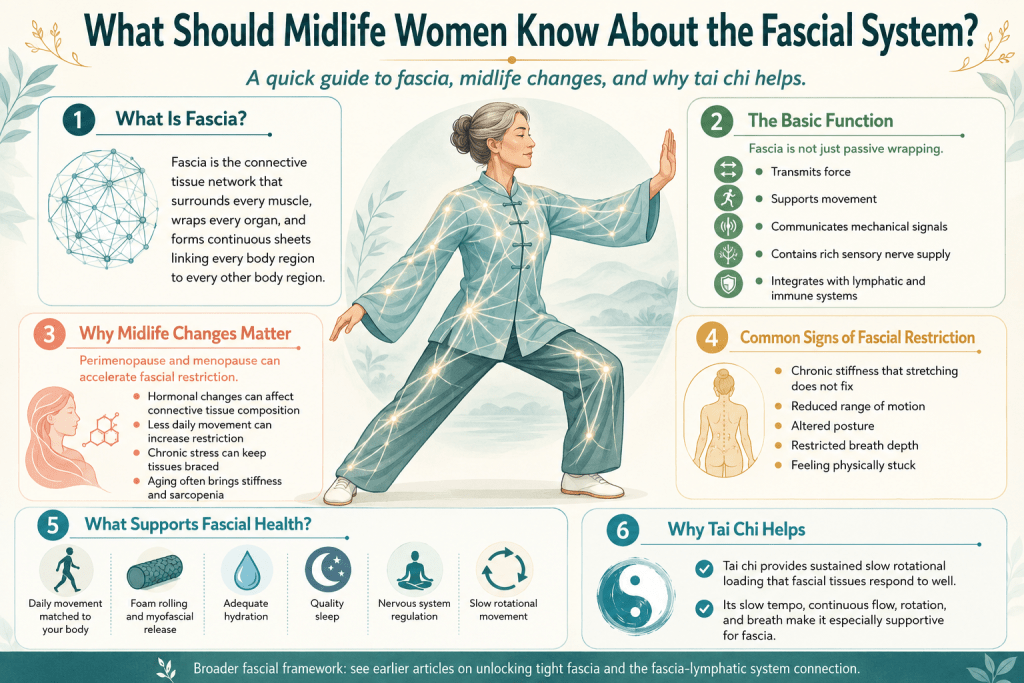
- The basic function: Fascia is not just passive wrapping. It transmits force, participates in movement, communicates mechanical signals from one body region to another, contains extensive sensory nerve innervation, and integrates with the lymphatic and immune systems.
- The midlife decline: Perimenopause and menopause accelerate fascial restriction through hormonal changes affecting connective tissue composition, reduced daily movement, chronic sympathetic activation that keeps fascial tissues braced, and the general sarcopenia and stiffness pattern of aging.
- The specific midlife signs: Common signs of fascial restriction in midlife women include chronic stiffness that does not resolve with stretching, reduced range of motion, altered posture, restricted breath depth, and the felt-sense of being physically stuck.
- What supports fascial health: Daily movement matched to the body, targeted fascia work including foam rolling and myofascial release, adequate hydration, quality sleep, nervous system regulation, and the specific slow rotational movement that tai chi provides.
- Why tai chi specifically: Tai chi provides the sustained slow rotational loading that fascial tissues respond to in ways that faster or more repetitive exercise does not. The specific combination of slow tempo, continuous flow, rotation, and breath makes tai chi particularly well-suited to fascial support.
For the broader fascial framework, see our earlier articles on how to unlock tight fascia, and the fascia and lymphatic system connection.
Free 28-Day Fascia Reset Email Course
Get our Free 28-day email course series to help with 1 or 2 exercises per day to release your fascia. One short lesson per day. Two minutes to read each.
What Does the Research Actually Show?
The tai chi research base is one of the most extensive of any body-based practice. Understanding what has been documented—and what remains more inferential—helps calibrate expectations.
What Does the General Tai Chi Evidence Show?
Multiple meta-analyses document benefits of regular tai chi practice across several areas, including:
- Improved balance
- A 20 to 45 percent reduction in falls among older adults
- Modest reductions in blood pressure
- Better cognitive function and mood
- Improved sleep quality
- Reduced arthritis pain
- Better overall quality of life
The safety record is also excellent.
How Does Tai Chi Support Cardiovascular and Respiratory Function?
Regular tai chi has been shown to improve endothelial function, reduce arterial stiffness, and modestly reduce blood pressure. These effects are relevant because healthy cardiovascular circulation supports lymphatic function through the pressure gradients that drive lymphatic flow. It also supports fascial health through adequate tissue perfusion.
Regular practice has also been associated with improvements in respiratory function, including deeper breathing, better breath capacity, and improved diaphragmatic activity. These respiratory effects are directly relevant to lymphatic circulation because thoracic duct flow depends partly on breath.
What Does the Research Show About Inflammation and Immunity?
Regular tai chi practice has been associated with reductions in inflammatory markers in several studies. Lower inflammation supports both lymphatic function and fascial mobility.
Some research also supports improvements in immune function, including a stronger antibody response to vaccination among older adults who practice tai chi regularly. This is relevant because supporting immune function is one of the lymphatic system’s primary roles.
Is Tai Chi Proven to Support Lymphatic Drainage?
The specific research on tai chi as a lymphatic intervention is smaller than the general tai chi literature. Some studies involving post-mastectomy lymphedema and other lymphatic conditions have shown benefits.
The broader framework of movement and breath supporting lymphatic flow is well-established, and tai chi fits that framework through its rhythmic weight-shifting, coordinated breathing, and continuous movement.
What Does the Research Say About Tai Chi and Fascia?
Research on tai chi as a direct fascial intervention is emerging rather than mature. The general principles of slow rotational movement supporting fascial glide are well-established, and tai chi fits those principles.
However, dedicated tai chi trials measuring fascial outcomes remain limited, even though the biomechanical rationale is strong.
What Is the Overall Research Picture?
The general tai chi evidence base is strong. Its specific application to the lymphatic and fascial systems is supported more by biomechanical rationale than by dedicated clinical trials, although the underlying mechanisms are well-established.
Tai chi is also safe, accessible, and low-cost. This is a case where waiting for perfect research before acting may not be necessary because the general practice is already well-supported and the specific application is physiologically plausible.
What Should You Know Before Starting Tai Chi?
Several principles apply to all five movements in this article and are worth internalizing before beginning.
- Wear loose comfortable clothing: Tai chi is traditionally practiced in soft, unrestrictive clothing that allows full range of motion. Avoid tight waistbands and restrictive fabrics.
- Practice in a space with room to move: You need approximately six feet by six feet of clear floor space. Any room in the house with a small clear area works.
- Practice without shoes: Traditional tai chi is practiced barefoot or in soft flat shoes. Barefoot allows better feedback from the feet, which supports balance and the weight-shifting quality of the practice.
- Slow is essential: Every movement is performed slowly. If in doubt, slow down further. The most common beginner mistake is moving too fast.
- Breath is coordinated with movement: Generally inhale as arms rise or expand, exhale as arms lower or contract. Slow, diaphragmatic, through the nose when comfortable.
- Soft not stiff: The body is held with a specific quality of alertness that is neither tense nor collapsed. Shoulders are relaxed, the chest is not puffed, the spine is long, the knees are slightly bent, and the face stays soft throughout the practice.
- Weight-shifting is part of the practice: For most movements, weight moves from one leg to the other in a rhythmic pattern. This weight-shifting is one of the specific reasons tai chi supports lymphatic circulation.
- Focus attention: Watch your hands. Feel the breath. Notice the sensations in your body. This attentional component is what turns physical movement into tai chi rather than ordinary exercise.
- Consistency beats intensity: Fifteen minutes daily produces more benefit than one hour weekly.
- No pain: No movement in this article should produce sharp pain. Some mild stretching sensation is normal. Sharp pain is a signal to stop and reassess.
- Time of day: Any time works. Traditional practice is often morning (to prepare the body for the day) but evening practice supports sleep, and midday practice interrupts sitting.
Free 28-Day Fascia Reset Email Course
Get our Free 28-day email course series to help with 1 or 2 exercises per day to release your fascia. One short lesson per day. Two minutes to read each.
What Are the 5 Best Tai Chi Movements for Lymphatic Flow and Fascial Release?
These five traditional tai chi movements combine slow breathing, gentle rotation, rhythmic weight-shifting, and controlled muscle engagement to support both the lymphatic and fascial systems. Each movement targets the body differently, from improving circulation through the arms and legs to encouraging fascial glide, hip mobility, balance, and full-body relaxation. Practice each movement slowly, stay within a comfortable range, and use a wall, or chair for Tai Chi, or countertop whenever additional balance support is needed.
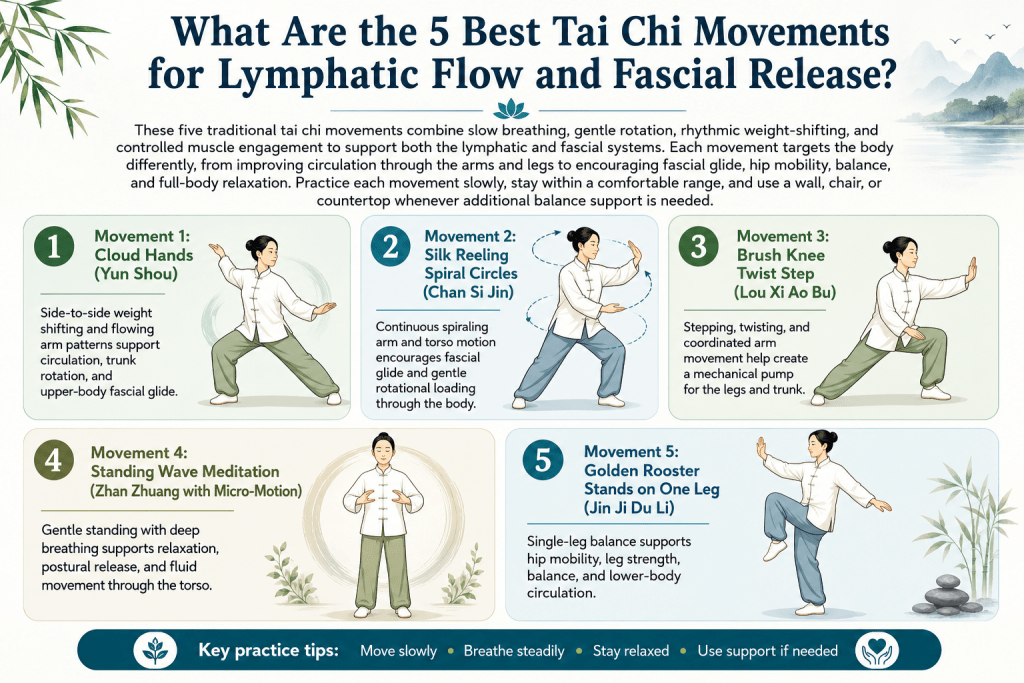
Movement 1: Cloud Hands (Yun Shou)
Cloud Hands, called Yun Shou in Chinese, is one of the most beloved movements in the traditional tai chi repertoire. The combination of horizontal arm movement, gentle trunk rotation, and continuous weight-shifting makes it particularly well-suited to combined lymphatic and fascial support.
This flowing movement combines gentle weight shifting, torso rotation, and coordinated arm movements. Move slowly and keep your knees relaxed as you transition from side to side.
- Stand with your feet approximately shoulder-width apart, keeping them parallel or slightly turned outward. Bend your knees slightly and relax your shoulders.
- Raise your right hand to shoulder height in front of your right shoulder, with the palm facing you.
- Position your left hand at belly height in front of your body, with the palm facing you. Your hands should form a soft vertical stack.
- Slowly shift your weight onto your right leg while gently rotating your torso to the right.
- Sweep your right hand horizontally toward the right side at shoulder height while allowing your left hand to rise.
- Finish with your left hand at shoulder height and your right hand at belly height, creating a mirror image of the starting position. Pause briefly.
- Slowly shift your weight onto your left leg while rotating your torso gently to the left.
- Sweep your left hand horizontally toward the left side as your right hand rises to shoulder height.
- Continue alternating from side to side. Inhale as one arm rises and exhale as the other arm sweeps across.
Cloud Hands combines coordinated arm movements, gentle trunk rotation, weight-shifting, and deep breathing to support both lymphatic flow and fascial mobility. The guidance below explains how long to practice, which mistakes to avoid, why it is especially helpful for midlife women, and how to modify it for better balance.
- How it supports the two systems: The horizontal arm movement across the chest and torso supports lymphatic drainage from the arms toward the axillary (armpit) lymph nodes. The continuous weight-shifting acts as a mechanical pump for leg lymphatic flow. The gentle trunk rotation addresses the lateral fascial line and the spiral fascial connections through the torso. Combined with slow deep breath, the movement produces meaningful effect on both systems in a single practice.
- Duration: Practice for 3 to 5 minutes.
- Common mistakes: Moving too fast, forgetting the weight-shifting and only moving the arms, holding tension in the shoulders, letting the trunk stay static instead of rotating gently, holding the breath.
- Why this movement for midlife women: Cloud Hands produces the most complete combined lymphatic and fascial effect of any single tai chi movement, and it is accessible enough for beginners. Most women can feel the effects within the first practice session.
- Modification for balance concerns: Practice near a wall or countertop for light support. Reduce the depth of the weight-shift. Keep the arms at lower heights if raising them is uncomfortable.
Movement 2: Silk Reeling Spiral Circles (Chan Si Jin)
Silk Reeling, called Chan Si Jin in Chinese, is a family of movements that emphasize the spiraling quality of tai chi. The name refers to the delicate, continuous, spiral motion of unreeling silk from a cocoon. These spiraling movements are particularly well-suited to fascial support because they load the fascial system through its natural spiral organization.
Arm circling gently mobilizes the shoulders, wrists, and forearms while encouraging smooth, coordinated movement. Move slowly and allow the palm and forearm to rotate naturally throughout each circle.
- Stand with your feet shoulder-width apart and parallel, keeping your knees slightly bent.
- Rest both arms comfortably at your sides and relax your shoulders.
- Begin with your right arm and slowly draw a large circle in front of your body.
- Move the right hand up and outward to the right side, continue overhead, sweep across toward the left, and lower it along the left side until it returns to the starting position.
- Allow the palm to rotate naturally as the arm moves, facing down, outward, upward, and inward at different points in the circle.
- Keep the wrist and forearm spiraling continuously without forcing the movement.
- Complete six to eight full circles in this direction.
- Reverse the direction and complete another six to eight circles.
- Switch to the left arm and repeat the same sequence in both directions.
Silk Reeling builds on the basic arm circle by introducing coordinated two-arm movement and gentle weight-shifting. The guidance below explains how these variations support lymphatic flow and fascial mobility, along with recommended duration, common mistakes, benefits, and shoulder-friendly modifications.
- How it supports the two systems: The continuous spiral movement addresses the spiral fascial line that wraps around the torso and limbs, producing fascial glide effects that isolated linear movements do not produce. The rotation supports lymphatic flow through the torso and limbs. The sustained continuous nature of the movement provides the slow rotational loading that fascial tissues respond to.
- Execution (both arms version): Add the second arm doing the same circle but slightly offset in timing. When one hand is at the top, the other is at the bottom. Both hands spiral continuously.
- Execution (with weight-shift): Once the arm circles feel comfortable, add gentle weight-shifting from one leg to the other in rhythm with the arms. The whole body becomes involved in the spiraling motion.
- Duration: Practice for 4 to 6 minutes total across the variations.
- Common mistakes: Moving too fast, keeping the wrists static instead of allowing them to spiral, holding tension in the shoulders, forgetting the breath coordination.
- Why this movement for midlife women: Silk Reeling addresses fascial tissues in a way that produces distinctly different felt-sense benefits than linear movements. Many women report a noticeable sense of internal spaciousness and easier arm movement after regular practice.
- Modification for shoulder issues: Reduce the size of the circles. Keep the arms at lower heights.
Free 28-Day Fascia Reset Email Course
Get our Free 28-day email course series to help with 1 or 2 exercises per day to release your fascia. One short lesson per day. Two minutes to read each.
Movement 3: Brush Knee Twist Step (Lou Xi Ao Bu)
Brush Knee Twist Step, called Lou Xi Ao Bu in Chinese, is one of the classic postures of traditional tai chi. The combination of one-hand pressing forward, one-hand brushing across the thigh, weight-shifting through the step, and trunk rotation makes it exceptionally rich for combined lymphatic and fascial support.
This flowing movement combines a forward step, gentle trunk rotation, and coordinated arm actions to engage the whole body. Move slowly and match each phase with steady breathing.
Brush Knee Twist Step combines coordinated pressing, brushing, stepping, and trunk rotation to support lymphatic flow and fascial mobility throughout the body. The guidance below explains its key benefits, recommended duration, common mistakes, functional value for midlife women, and balance-friendly modifications.
- How it supports the two systems: The pressing hand supports lymphatic drainage from the arm toward the axillary nodes. The brushing hand supports lymphatic flow through the leg toward the inguinal (groin) nodes. The stepping and weight-shifting act as a mechanical pump for lower body lymphatic circulation. The rotation through the trunk addresses the spiral fascial line. Combined, this single movement provides more comprehensive lymphatic and fascial input than most other single movements.
- Duration: Practice for 4 to 5 minutes, alternating sides.
- Common mistakes: Forgetting the trunk rotation, moving too fast, letting the front knee move past the front toe, holding tension in the shoulders, letting the pushing arm lock at the elbow.
- Why this movement for midlife women: Brush Knee Twist Step is one of the most functional tai chi movements because the coordinated rotation and reach mirrors many real-life motions. Regular practice keeps these functional patterns available while supporting the lymphatic and fascial systems through the coordinated movement.
- Modification for balance concerns: Practice near a wall or chair for light support. Reduce the length of the step. Keep the stance shorter and more upright.
Movement 4: Standing Wave Meditation (Zhan Zhuang with Micro-Motion)
Standing Wave Meditation, drawn from the Zhan Zhuang (standing tree) family of practices, is a mostly static posture with gentle continuous micro-movements. It appears deceptively simple but produces significant effects on both the lymphatic and fascial systems through sustained gentle loading.
This standing posture builds body awareness, alignment, and calm through stillness and steady breathing. Keep the body relaxed while allowing small, natural adjustments to maintain balance and comfort.
- Stand with your feet shoulder-width apart and parallel, keeping your knees slightly bent.
- Lengthen your spine and tuck your tailbone slightly.
- Relax your shoulders downward and gently lift your head as if a string were pulling from the crown.
- Hold your arms in front of your chest in a soft, rounded shape, as if embracing a large tree.
- Face your palms toward your chest, keeping your elbows relaxed and slightly lower than your wrists.
- Hold the posture and breathe slowly and deeply through your nose.
- Allow the body to make tiny, continuous adjustments without deliberately moving.
- Keep your attention on your breath and the sensations throughout your body.
- Continue holding the position even if the arms begin to feel heavy, as this is a normal part of the practice.
Standing Wave Meditation combines gentle stillness, slow breathing, and subtle postural adjustments to support lymphatic circulation and fascial release. The guidance below explains its benefits, recommended duration, common mistakes, beginner modifications, and situations when a seated alternative may be safer.
- How it supports the two systems: The sustained gentle standing posture combined with slow deep breathing produces continuous thoracic pressure changes that support lymphatic flow through the thoracic duct. The subtle micro-movements maintain circulation in the tissues and prevent the fluid stasis that pure static standing might cause. The extended posture allows fascial tissues to gradually settle and lengthen in ways that dynamic movement does not.
- Duration: Start with 3 to 5 minutes. Progress to 10 to 15 minutes over weeks.
- Common mistakes: Locking the knees, holding the arms too rigidly, holding the breath, giving up too quickly, moving deliberately when subtle micro-movement is the target.
- Why this movement for midlife women: Standing Wave Meditation is one of the most restorative single practices in this collection because it combines the parasympathetic activation of breath and stillness with the postural challenge that maintains circulation. Many women find it deeply calming and physically restorative in ways that dynamic practices do not match.
- Modification for beginners starting Tai Chi: Start with only 2 to 3 minutes. Rest the hands lower (at the belly rather than the chest) to reduce the arm effort. Practice against a wall for spine feedback.
- When to skip: Anyone with acute knee, hip, or back pain that this posture makes worse should skip and substitute a seated version.
Free 28-Day Fascia Reset Email Course
Get our Free 28-day email course series to help with 1 or 2 exercises per day to release your fascia. One short lesson per day. Two minutes to read each.
Movement 5: Golden Rooster Stands on One Leg (Jin Ji Du Li)
Golden Rooster Stands on One Leg, called Jin Ji Du Li in Chinese, is a single-leg standing movement that addresses the deep hip fascia, the inguinal lymphatic drainage pathway, and balance simultaneously.
This balance-focused movement strengthens the legs while encouraging control, coordination, and steady breathing. Move slowly and keep your gaze fixed on one point to help maintain stability.
- Stand with your feet together and your posture tall but relaxed.
- Bring one hand to shoulder height as though you are gently holding a small ball.
- Slowly lift your right knee toward your chest until your thigh is approximately parallel to the floor.
- At the same time, raise your right hand beside your head to forehead height, with the palm facing forward.
- Keep your left hand near your left thigh with the palm facing downward.
- Hold the position for three to five slow breaths, making small adjustments as needed to maintain your balance.
- Slowly lower your right foot to the floor and return your hands to the starting position.
- Repeat the same movement on the left side.
Golden Rooster combines a controlled knee lift and single-leg balance to support lower-body lymphatic flow, deep hip fascia, and nervous system coordination. The guidance below explains the recommended duration, common mistakes, benefits for midlife women, balance modifications, and ways to progress safely.
- How it supports the two systems: The lifted leg engages the hip flexors and psoas in a way that supports drainage of the inguinal (groin) lymph nodes, which are one of the primary drainage points for lower body lymphatic flow. The single-leg posture loads the fascial system in specific ways that address the deep hip fascia and the lateral fascial line of the standing leg. The balance challenge itself is a nervous system input that supports the coordination between fascial mechanoreception and neural signaling.
- Duration: 4 to 5 rounds per side.
- Common mistakes: Rushing the lift and lower, holding tension in the standing hip, holding the breath during balance, giving up too quickly if balance feels unstable.
- Why this movement for midlife women: Golden Rooster addresses a specific vulnerable pattern in midlife women: reduced single-leg strength, reduced hip flexor mobility, and reduced balance. The inguinal lymphatic drainage effect is a specific bonus for women who experience lower body puffiness.
- Modification for balance concerns: Practice near a wall or countertop for light support. Reduce the height of the knee lift. Reduce the duration of the balance hold.
- Progression: Increase the duration of the hold. Close your eyes briefly (if safe) for additional balance challenge. Add subtle micro-movements of the standing leg while maintaining the balance.
What Is the 5-Day Progressive Tai Chi Program?
The five movements above form the core of the practice. The 5-day program combines them into a structured progressive sequence that fits into 15 to 25 minutes daily and produces meaningful lymphatic and fascial benefit within the first week of consistent practice.
Day 1: Foundation (15 minutes)
The first day establishes the foundation with two accessible movements.
|
Movement |
Duration |
|
Warm-up (gentle walking or shoulder rolls) |
3 min |
|
Cloud Hands (Yun Shou) |
8 min |
|
Standing Wave Meditation |
4 min |
Day 1 is deliberately simple. The purpose is to establish the breath, the slow tempo, and the felt-sense of tai chi practice.
Day 2: Add Silk Reeling (18 minutes)
The second day adds the spiral fascial input.
|
Movement |
Duration |
|
Warm-up |
3 min |
|
Cloud Hands |
5 min |
|
Silk Reeling Spiral Circles |
6 min |
|
Standing Wave Meditation |
4 min |
Day 3: Add Brush Knee (22 minutes)
The third day adds the classical stepping and pushing pattern.
|
Movement |
Duration |
|
Warm-up |
3 min |
|
Cloud Hands |
4 min |
|
Silk Reeling Spiral Circles |
5 min |
|
Brush Knee Twist Step |
6 min |
|
Standing Wave Meditation |
4 min |
Day 4: Add Golden Rooster (24 minutes)
The fourth day adds the balance and single-leg component.
|
Movement |
Duration |
|
Warm-up |
3 min |
|
Cloud Hands |
4 min |
|
Silk Reeling Spiral Circles |
4 min |
|
Brush Knee Twist Step |
5 min |
|
Golden Rooster Stands on One Leg |
4 min |
|
Standing Wave Meditation |
4 min |
Day 5: Full Sequence (25 minutes)
The fifth day integrates all five movements into the complete practice.
|
Movement |
Duration |
|
Warm-up |
3 min |
|
Cloud Hands |
5 min |
|
Silk Reeling Spiral Circles |
4 min |
|
Brush Knee Twist Step |
5 min |
|
Golden Rooster Stands on One Leg |
4 min |
|
Standing Wave Meditation |
4 min |
Free 28-Day Fascia Reset Email Course
Get our Free 28-day email course series to help with 1 or 2 exercises per day to release your fascia. One short lesson per day. Two minutes to read each.
What Should You Do After the 5-Day Program?
The first five days establish the pattern. From day six forward, the most effective practice is the full sequence performed daily or five to six days per week. Total time approximately 25 minutes. Once the sequence feels familiar, small variations (extra rounds of a favorite movement, longer Standing Wave Meditation, gentler days when tired) keep the practice sustainable.
Subjective effects on lymphatic flow and fascial fluidity are often noticeable within the first two or three sessions. Meaningful reductions in morning puffiness, improved breath depth, better sleep quality, and easier daily movement generally appear within two to three weeks of consistent practice. Deeper structural changes in fascial mobility and cardiovascular function develop over three to six months.
“The most consistent report I hear from coaching clients who install this practice at home is that within two weeks, the morning felt-sense of puffiness and stiffness has meaningfully shifted. They wake up feeling less swollen. Their faces look less puffy. Their movement through the first hour of the day feels easier. These are not dramatic transformations. They are the specific quiet improvements that midlife women often stop expecting because so much has been trending in the other direction for years. Tai chi combined with breath and rotation produces the kind of body-level shift that most other interventions do not, particularly for the specific lymphatic and fascial systems that most standard fitness routines do not directly address. That is the specific value of this practice.”
Terry Tateossian, Founder of The House of Rose
What Common Mistakes Can Undermine the Practice?
Six mistakes consistently reduce the effectiveness of this practice for midlife women.
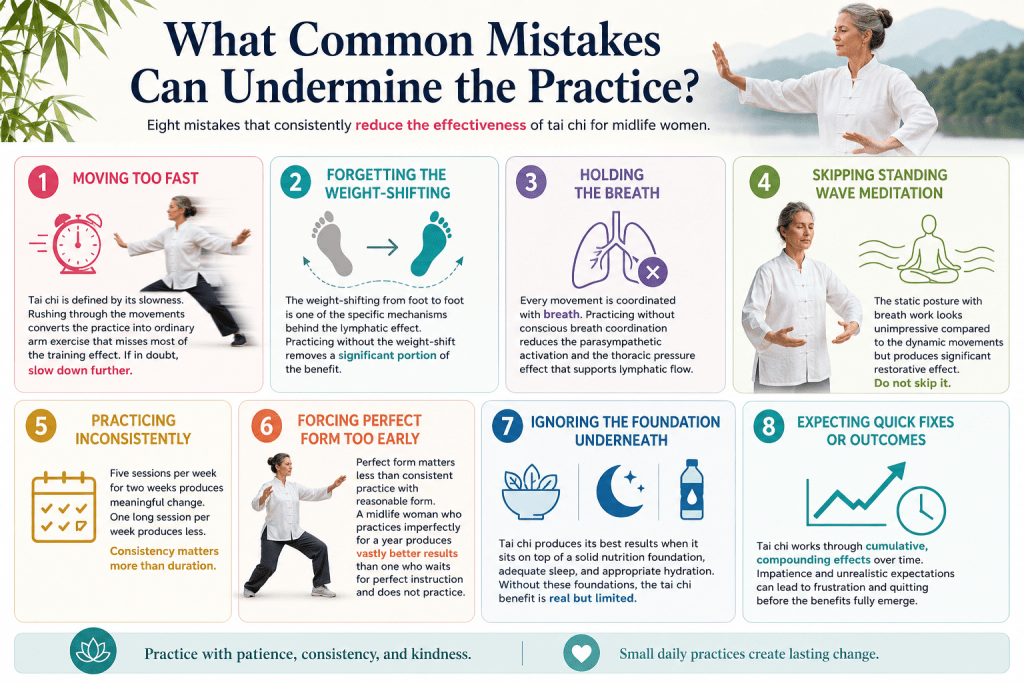
- Moving too fast: Tai chi is defined by its slowness. Rushing through the movements converts the practice into ordinary arm exercise that misses most of the training effect. If in doubt, slow down further.
- Forgetting the weight-shifting: The weight-shifting from foot to foot is one of the specific mechanisms behind the lymphatic effect. Practicing without the weight-shift removes a significant portion of the benefit.
- Holding the breath: Every movement is coordinated with breath. Practicing without conscious breath coordination reduces the parasympathetic activation and the thoracic pressure effect that supports lymphatic flow.
- Skipping Standing Wave Meditation: The static posture with breath work looks unimpressive compared to the dynamic movements but produces significant restorative effect. Do not skip it.
- Practicing inconsistently: Five sessions per week for two weeks produces meaningful change. One long session per week produces less. Consistency matters more than duration.
- Forcing perfect form too early: Perfect form matters less than consistent practice with reasonable form. A midlife woman who practices imperfectly for a year produces vastly better results than one who waits for perfect instruction and does not practice.
- Ignoring the foundation underneath: Tai chi produces its best results when it sits on top of a solid nutrition foundation, adequate sleep, and appropriate hydration. Without these foundations, the tai chi benefit is real but limited.
How Does Tai Chi Fit Into the Broader THOR Framework?
Tai chi lymphatic and fascia release is one component of the broader lifestyle medicine framework I teach at THOR. Placing it in context helps combine it with other practices.
How Does Tai Chi Complement Movement and Strength Practices?
- Complements walking: Daily walking supports lymphatic and fascial health through general movement and outdoor exposure. Tai chi adds the specific rotational and breath components that walking alone does not provide.
- Complements strength training: Tai chi does not build strength. It complements strength training by addressing the fascial and lymphatic systems that strength work does not directly reach.
- Complements targeted fascia work: Foam rolling, myofascial ball work, and specific fascial stretches address local restrictions more directly than tai chi does. Tai chi provides the whole-body flowing complement.
How Does Tai Chi Support Recovery and Regulation?
- Complements nervous system regulation: Tai chi is itself a form of nervous system regulation. It pairs well with the specific practices in our vagus nerve reset exercises article.
- Complements nutrition foundations: The free Macro Calculator, Protein Packed Mediterranean Recipes Cookbook, and flavanols article cover the nutritional foundation that supports the tissue health tai chi promotes.
How Can You Explore the Full THOR Framework?
For the immersive version that installs the full framework in five days, including daily guided tai chi programming, check out our Women’s Yoga Retreats at our Smoky Mountains property
Free 28-Day Fascia Reset Email Course
Get our Free 28-day email course series to help with 1 or 2 exercises per day to release your fascia. One short lesson per day. Two minutes to read each.
When Should You See a Healthcare Professional?
Most midlife women can safely begin this practice on their own. Some situations warrant professional evaluation first.
- Recent cardiac events: Any recent heart attack, uncontrolled arrhythmia, or heart failure exacerbation should be evaluated before starting any exercise program.
- Recent stroke: Post-stroke movement work should be guided by a physical or occupational therapist for at least the first months.
- Significant balance issues or recent falls: A fall risk assessment and possibly a physical therapy consultation before beginning are appropriate.
- Acute joint or back pain: Any acute pain should be evaluated before adding new movement.
- Persistent lymphedema: Established lymphedema (from cancer treatment or other causes) requires specialized care from a certified lymphedema therapist. Tai chi may be a supportive addition but should not replace professional lymphedema management.
- Pregnancy: Tai chi is generally safe during pregnancy with some modifications. Work with a prenatal-informed practitioner for individualized guidance.
- Any severe unresolved fatigue or pain: Symptoms that impair daily function warrant medical evaluation before assuming they are lymphatic or fascial.
What Are Your Next Steps?
If the framework in this article resonates and you want to install a tai chi lymphatic and fascia release practice, here are the four next steps in order of friction.
- Start today with Day 1 of the program. Fifteen minutes and clear floor space, working through Cloud Hands and Standing Wave Meditation. No equipment required beyond comfortable clothing.
- Complete the full 5-day program this week. Follow the daily protocols in Section 12. Track how the body feels each day.
- Continue with the maintenance practice. After day five, keep the full daily 25 minute practice going five or six days per week.
Frequently Asked Questions
Does tai chi actually help lymphatic drainage?
The rhythmic weight-shifting, deep coordinated breath, and gentle rotation of tai chi address multiple lymphatic circulation drivers simultaneously. The specific dedicated trials on tai chi as a lymphatic intervention are smaller than the general tai chi literature, but the biomechanical rationale is well-established and the general framework of movement-and-breath supporting lymphatic flow is supported by the broader research base. Regular practice consistently produces the subjective effects most midlife women associate with better lymphatic function.
Can tai chi release tight fascia?
Tai chi provides sustained slow rotational movement that fascial tissues respond to in ways that faster or more linear exercise does not. Regular practice supports fascial glide and mobility. Tai chi is most effective for fascial health when combined with more targeted fascia work like foam rolling and myofascial release for specific restrictions.
Is tai chi safe for women over 40 with balance issues?
Tai chi is one of the safest exercise modalities studied in older adults and is often specifically recommended for balance improvement. Women with significant balance concerns should practice near a wall or countertop for support and may want to work with an instructor initially. Chair-adapted versions are available for women who cannot safely stand for extended movement. See our chair tai chi exercises for seniors article for the seated version.
How long before I see benefits?
Subjective effects on breath depth and physical fluidity are often noticeable within the first two or three sessions. Reductions in morning puffiness, improved sleep, and easier daily movement generally appear within two to three weeks of consistent practice. Deeper structural changes develop over three to six months.
Free 28-Day Fascia Reset Email Course
Get our Free 28-day email course series to help with 1 or 2 exercises per day to release your fascia. One short lesson per day. Two minutes to read each.
How often should I practice?
Five or six sessions per week of 15 to 25 minutes produces meaningful results. Daily practice is fine and often preferred by women who find the practice enjoyable. Once or twice a week produces smaller effects.
Do I need to learn a full traditional tai chi form?
No. The five movements in this article are complete practices in themselves and produce the specific lymphatic and fascial effects that are the focus here. Learning a full traditional form provides additional depth and can be pursued through classes or video instruction if you develop deeper interest.
Can tai chi help with menopause bloating or puffiness?
The lymphatic drainage effects of tai chi are directly relevant to fluid stasis patterns like morning puffiness and general bloating. Many midlife women report meaningful reductions in these symptoms with regular practice. Combined with adequate hydration, appropriate protein intake, and the broader nutrition framework, tai chi is a legitimate supportive intervention for these patterns.
Do I need any equipment for tai chi?
No equipment is required. Comfortable loose clothing, a small clear floor space, and ideally practicing barefoot or in soft flat shoes is all that is needed. This economic and logistical accessibility is one of the reasons the practice is so sustainable.
Can I do tai chi if I have arthritis?
Yes, tai chi is one of the most well-researched interventions for arthritis pain and function. The slow gentle movement takes joints through their full range of motion under low load, which is exactly what arthritic joints tolerate best. Modify any movement that produces pain and progress slowly.
What is the difference between tai chi and qi gong?
Tai chi and qi gong are related practices from the same broader tradition. Tai chi tends to involve longer flowing forms combining many movements into structured sequences, often with martial arts origins. Qi gong tends to involve simpler individual exercises with more variation in style and purpose. The movements in this article draw from both traditions. Both practices share the core principles of slow flowing movement, coordinated breath, and focused attention.
Should I combine tai chi with strength training?
Yes. Tai chi and strength training address different aspects of midlife health. Strength training builds muscle mass and preserves bone density. Tai chi supports fascial mobility, lymphatic flow, balance, and nervous system regulation. Both are important. See our four muscle groups for aging well article for the strength training framework.
Can tai chi help with menopause sleep issues?
Regular tai chi has been associated with improved sleep quality in multiple studies. The evening practice option is particularly supportive for sleep because the parasympathetic activation of the breath and slowness prepares the nervous system for rest.
Is morning or evening practice better?
Both work. Morning practice supports the day and often produces a felt-sense of easier movement and clearer breath that carries into activity. Evening practice supports sleep by activating the parasympathetic branch. Some women benefit from a shorter morning practice plus a shorter evening practice. Choose the pattern that produces the highest adherence.
Free 28-Day Fascia Reset Email Course
Get our Free 28-day email course series to help with 1 or 2 exercises per day to release your fascia. One short lesson per day. Two minutes to read each.
Does tai chi help with stress and anxiety?
Multiple studies document reductions in stress and anxiety symptoms with regular tai chi practice. The specific combination of movement, breath, and focused attention produces reliable parasympathetic activation that shifts the nervous system toward calm.
How does tai chi help with immune function?
The lymphatic system is a primary component of the immune system. By supporting lymphatic circulation, tai chi indirectly supports immune function. Some research also shows direct improvements in immune measures like antibody response to vaccination in older adults who practice tai chi regularly.
I write 3 essays per week on Lifestyle Medicine for women in midlife on what is happening in the body and what to do about it. No fluff, no hype. Free.
References
- Wayne, P. M., & Fuerst, M. L. (2013). The Harvard Medical School Guide to Tai Chi. Shambhala Publications.
- Huang, Z. G., Feng, Y. H., Li, Y. H., & Lv, C. S. (2017). Systematic review and meta-analysis: tai chi for preventing falls in older adults. BMJ Open, 7(2), e013661.
- Wang, C., Bannuru, R., Ramel, J., et al. (2010). Tai Chi on psychological well-being: systematic review and meta-analysis. BMC Complementary and Alternative Medicine, 10, 23.
- Zeng, Y., Luo, T., Xie, H., et al. (2014). Health benefits of qigong or tai chi for cancer patients: a systematic review and meta-analyses. Complementary Therapies in Medicine, 22(1), 173–186.
- Loudon, A., Barnett, T., Piller, N., et al. (2014). Yoga management of breast cancer-related lymphoedema: a randomised controlled pilot-trial. BMC Complementary and Alternative Medicine, 14, 214.
- Fong, S. S. M., Ng, S. S. M., Luk, W. S., et al. (2014). Effects of qigong exercise on upper limb lymphedema and blood flow in survivors of breast cancer. Integrative Cancer Therapies, 13(1), 54–61.
- Schleip, R., & Müller, D. G. (2013). Training principles for fascial connective tissues: scientific foundation and suggested practical applications. Journal of Bodywork and Movement Therapies, 17(1), 103–115.
- Stecco, C., Fede, C., Macchi, V., et al. (2018). The fasciacytes: a new cell devoted to fascial gliding regulation. Clinical Anatomy, 31(5), 667–676.
- Chikly, B. J. (2005). Manual techniques addressing the lymphatic system: origins and development. Journal of the American Osteopathic Association, 105(10), 457–464.
- Bordoni, B., & Zanier, E. (2013). Anatomic connections of the diaphragm: influence of respiration on the body system. Journal of Multidisciplinary Healthcare, 6, 281–291.
- Yeh, G. Y., Wang, C., Wayne, P. M., & Phillips, R. S. (2008). The effect of tai chi exercise on blood pressure: a systematic review. Preventive Cardiology, 11(2), 82–89.
- Wayne, P. M., Walsh, J. N., Taylor-Piliae, R. E., et al. (2014). Effect of tai chi on cognitive performance in older adults: systematic review and meta-analysis. Journal of the American Geriatrics Society, 62(1), 25–39.
- Wang, C., Schmid, C. H., Iversen, M. D., et al. (2016). Comparative effectiveness of tai chi versus physical therapy for knee osteoarthritis: a randomized trial. Annals of Internal Medicine, 165(2), 77–86.
- Chan, A. W., Yu, D. S., Choi, K. C., et al. (2016). Tai chi qigong as a means to improve night-time sleep quality among older adults with cognitive impairment: a pilot randomized controlled trial. Clinical Interventions in Aging, 11, 1277–1286.
- Wang, F., Lee, E. K., Wu, T., et al. (2014). The effects of tai chi on depression, anxiety, and psychological well-being: a systematic review and meta-analysis. International Journal of Behavioral Medicine, 21(4), 605–617.
- Klingler, W., Velders, M., Hoppe, K., et al. (2014). Clinical relevance of fascial tissue and dysfunctions. Current Pain and Headache Reports, 18(8), 439.
- Field, T. (2016). Massage therapy research review. Complementary Therapies in Clinical Practice, 24, 19–31.
- Ajimsha, M. S., Al-Mudahka, N. R., & Al-Madzhar, J. A. (2015). Effectiveness of myofascial release: systematic review of randomized controlled trials. Journal of Bodywork and Movement Therapies, 19(1), 102–112.
- Klein, P. J., & Adams, W. D. (2004). Comprehensive therapeutic benefits of tai chi: a critical review. American Journal of Physical Medicine and Rehabilitation, 83(9), 735–745.
- Streeter, C. C., Gerbarg, P. L., Saper, R. B., et al. (2012). Effects of yoga on the autonomic nervous system, gamma-aminobutyric-acid, and allostasis in epilepsy, depression, and post-traumatic stress disorder. Medical Hypotheses, 78(5), 571–579.
Disclaimer: Always consult with a healthcare professional before starting any new routines, programs, or nutrition plans to ensure you receive the best medical advice and strategy for your specific individual needs.
Free 28-Day Fascia Reset Email Course
Get our Free 28-day email course series to help with 1 or 2 exercises per day to release your fascia. One short lesson per day. Two minutes to read each.

Terry Tateossian is a Menopause Lifestyle Medicine Coach, Certified Personal Trainer & Nutritionist and the Founder of THOR: The House of Rose, a wellness brand serving women over 40 through retreats, coaching, macro-nutrition and community. As 25-year founder and entrepreneur, Terry spent two and a half decades building and running successful start-up businesses, an experience that put her on the front line of founder burnout long before she could name it. After facing serious health challenges, early onset menopause, and emotional eating while running her agency and raising two children, Terry rebuilt her health in her 40s and lost more than 80 pounds through evidence-based nutrition, training, and mindset work. Today, she helps women get strong, improve confidence, support hormone health, and create a stronger second half of life. Terry has been featured in major media outlets and is available for podcasts, expert commentary, brand collaborations, and speaking engagements on midlife health, reinvention, emotional eating, menopause wellness, and strength training for longevity. Get her free macro calculator (her cookbook companion) to start your journey to back to health.