

 By Team THOR
Get 11 Free Macro-Friendly Sample Recipes
Download 11 macro-friendly sample recipes from our cookbook that will give you everything you need to start eating like a woman who’s done with the guesswork.
Emotional Eating in Perimenopause and Menopause: The Complete Guide to Breaking the Cycle
Emotional eating in perimenopause and menopause is one of the most common and misunderstood experiences in midlife women’s health. It may look like an evening pantry visit, reaching for sugar after a stressful call, or turning a small snack into dinner. This pattern is not a moral failure or lack of discipline. It is often the predictable response of a hormonally shifting, sleep-disrupted, stress-loaded nervous system.
I built The House of Rose after experiencing early-onset menopause at 41, an 80-pound body composition shift, and the demands of running businesses while raising two children. Emotional eating was one of the hardest patterns I had to work through. The framework in this article is not a diet or another set of rigid rules. It is a practical system for understanding the real drivers behind the behavior and addressing them directly.
This guide explains why emotional eating can intensify during perimenopause and menopause, how stress and brain chemistry affect cravings, and which evidence-based interventions support lasting change. Every principle is one I use in coaching and with retreat guests.
Important: Emotional eating is different from clinical eating disorders such as binge eating disorder, bulimia, and anorexia nervosa. If you are experiencing symptoms of an eating disorder, work with a qualified specialist rather than relying on this guide alone.
What Is Emotional Eating?
Emotional eating is the use of food to soothe, distract, numb, or regulate feelings that are not hunger. That is the entire definition. The specific feelings vary from woman to woman and from day to day, but the pattern is consistent: an internal state that is uncomfortable, a decision to reach for food that is not physically needed, a temporary reduction in the intensity of the uncomfortable state, and then a return of that state along with additional feelings that often include shame, self-criticism, and a sense of powerlessness.
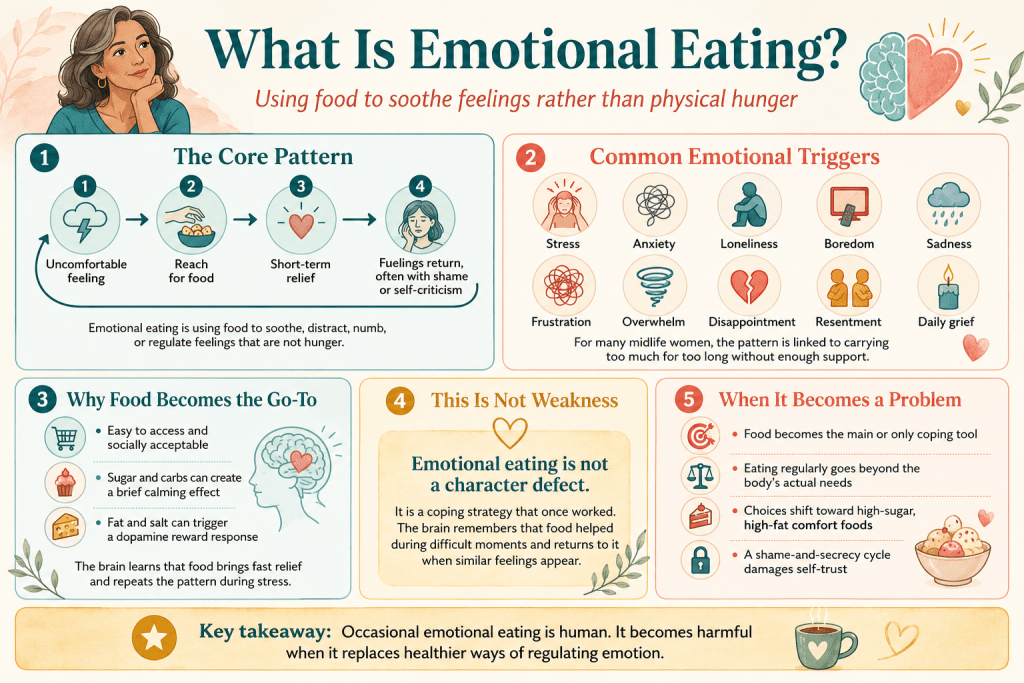
- The specific feelings that most often drive it: Stress is the most common single driver. Anxiety, loneliness, boredom, sadness, frustration, resentment, overwhelm, disappointment, and low-grade daily grief are all common. The pattern is often triggered less by acute distress than by a background sense of being asked to hold too much for too long without adequate support, which is a state most midlife women recognize.
- Why food specifically: Food is available, socially acceptable, quick to access, and produces a real short-term shift in brain chemistry. Carbohydrates and sugar cause a rapid rise in blood glucose and trigger serotonin production, which produces a short window of felt calm. Fat and salt produce a dopamine response. The brain files this away and returns to the pattern under future stress. Over time, food becomes the primary self-soothing tool for many women, particularly women who were taught in childhood to suppress emotions and who have therefore never developed a wider toolkit of emotional regulation.
- Why this is not weakness: Emotional eating is a coping strategy that once worked. It is often the strategy that got a young girl through a difficult family situation, a stressful school environment, a lonely period, or a hard relationship. The brain remembered that food helped, and now it reaches for food any time the internal state feels uncomfortable. This is not a character defect. It is the predictable result of an efficient learning brain that once found a working solution and returns to it under similar conditions.
- How it becomes a problem: Occasional emotional eating is part of being human. It becomes a problem when it becomes the primary or only tool for regulating uncomfortable feelings, when it consistently pushes food intake above the body’s actual needs, when it drives the food choice pattern toward high-sugar and high-fat foods that undermine metabolic health, and when it produces the shame-and-secrecy loop that damages self-trust and body relationship.
Get 11 Free Macro-Friendly Sample Recipes
Download 11 macro-friendly sample recipes from our cookbook that will give you everything you need to start eating like a woman who’s done with the guesswork.
Why Does Emotional Eating Intensify in Perimenopause and Menopause?
Emotional eating is not new for most women in midlife. What is new for many is that a pattern they had managed reasonably well in their thirties suddenly becomes harder to manage in their forties and fifties. Several distinct threads converge in this window.
- Estrogen decline changes brain chemistry: Estrogen has a supportive relationship with serotonin, dopamine, and other neurotransmitters that regulate mood and reward. As estrogen falls through perimenopause and menopause, mood regulation becomes harder for many women, background anxiety often rises, and the brain looks for external sources of the neurochemical support that it used to receive internally. Sugar and simple carbohydrates provide exactly that short-term neurochemical support, which is why cravings for these foods intensify.
- Cortisol rhythm dysregulation: The cortisol curve tends to shift in midlife, often producing higher evening cortisol and blunted morning cortisol. High evening cortisol drives evening cravings, which is why so many women recognize the six-to-nine PM pantry pattern as the peak emotional eating window. This is not a coincidence. It is a specific hormonal driver.
- Sleep disruption compounds everything: Poor sleep the night before produces elevated ghrelin (the hunger hormone), reduced leptin (the fullness hormone), and impaired prefrontal cortex function, which is the part of the brain responsible for impulse control and decision-making. The result is that after a poor night of sleep, hunger feels louder, fullness feels quieter, and the brain has less ability to override the pull toward comfort food. Multiple studies have documented this pattern in detail.
- The life-load intensifies: Perimenopause typically arrives during the years when careers are at maximum demand, children are teenagers or launching, aging parents may be requiring support, and financial responsibility is at peak load. The nervous system is being asked to hold more with fewer buffers than it had a decade earlier.
- Body composition shifts produce more shame: The redistribution of body fat toward the abdomen during menopause, along with the general weight gain that many women experience without any change in habits, produces a specific psychological load that often drives more restrictive dieting, which then produces more binge cycling, which then produces more emotional eating. The cycle self-reinforces if it is not addressed at the level of the drivers.
- Alcohol tolerance declines: Many women drink more socially in their forties and fifties than they did in earlier decades, and metabolism of alcohol declines simultaneously. Alcohol lowers prefrontal control and directly drives evening eating patterns.
The overall picture is that perimenopause and menopause are not merely a passive backdrop against which emotional eating happens to worsen. They are active drivers of the pattern through specific neurochemical and hormonal mechanisms.
“The single biggest shift in my own recovery from emotional eating was the moment I understood that this was not a character issue and it was not a moral issue. It was a neurochemical issue that was being amplified by my hormonal transition and my cortisol dysregulation and my sleep debt and my life load. Once I saw that clearly, the shame started to fall away, and the space that the shame had been occupying became available for actual repair. That is the shift I want every coaching client and retreat guest to have. You are not broken. You are not weak. You are a hormonally shifting midlife woman whose nervous system is asking for a different set of tools than the ones you were given. This article is those tools.”
Terry Tateossian, Founder of The House of Rose
What Happens in Your Brain During a Stress Craving?
Understanding what actually happens neurochemically during a craving is one of the most useful pieces of the recovery framework. It replaces the mystified sense of being pulled by an unknown force with a clear picture of specific biological signals that can be identified and worked with.
- The initial trigger: A trigger enters awareness. This can be a stressful email, a critical comment, an unresolved conflict, a wave of loneliness, a moment of boredom, a difficult conversation, a physical sensation, or a memory. The trigger produces a small activation of the sympathetic nervous system and a release of stress hormones.
- The amygdala responds: The amygdala (the brain region that handles threat detection) processes the trigger as a survival signal and pushes for action. In an ancestral environment, that action would have been fight or flight. In modern life, the action is often to reach for food, which is one of the few available and socially acceptable responses to acute stress.
- Cortisol and craving pathways activate: The stress response elevates cortisol, which increases appetite specifically for high-fat and high-sugar foods. This is not a psychological preference. It is a hardwired biological pathway. Cortisol activates specific brain regions that increase reward-value assignment to calorie-dense foods.
- The prefrontal cortex loses power: Under stress and low blood sugar and sleep debt, the prefrontal cortex (the impulse control and decision-making region) becomes less able to override the reward pull. The brain is now in a state where the pull toward food is amplified and the ability to resist it is reduced.
- The food produces a short-term neurochemical hit: Sugar and simple carbs produce a serotonin release and a dopamine hit. Fat produces additional dopamine. The stress state reduces temporarily. The nervous system files this away as a successful stress-management strategy.
- The rebound arrives: Within 30 to 90 minutes, blood sugar crashes, cortisol rebounds, the original emotional state returns, and shame and self-criticism arrive. The nervous system is now in a worse state than before the craving started, and often the response is another round of eating.
Understanding this sequence changes everything. Every intervention in this article addresses a specific part of this sequence rather than trying to muscle through the pull with willpower after it has already peaked.
Get 11 Free Macro-Friendly Sample Recipes
Download 11 macro-friendly sample recipes from our cookbook that will give you everything you need to start eating like a woman who’s done with the guesswork.
How Does the Cortisol-Sugar-Belly Fat Loop Work?
The specific relationship between stress, cortisol, sugar cravings, and menopause belly fat is one of the most important pieces to understand because it explains why midlife emotional eating produces such visible body composition changes.
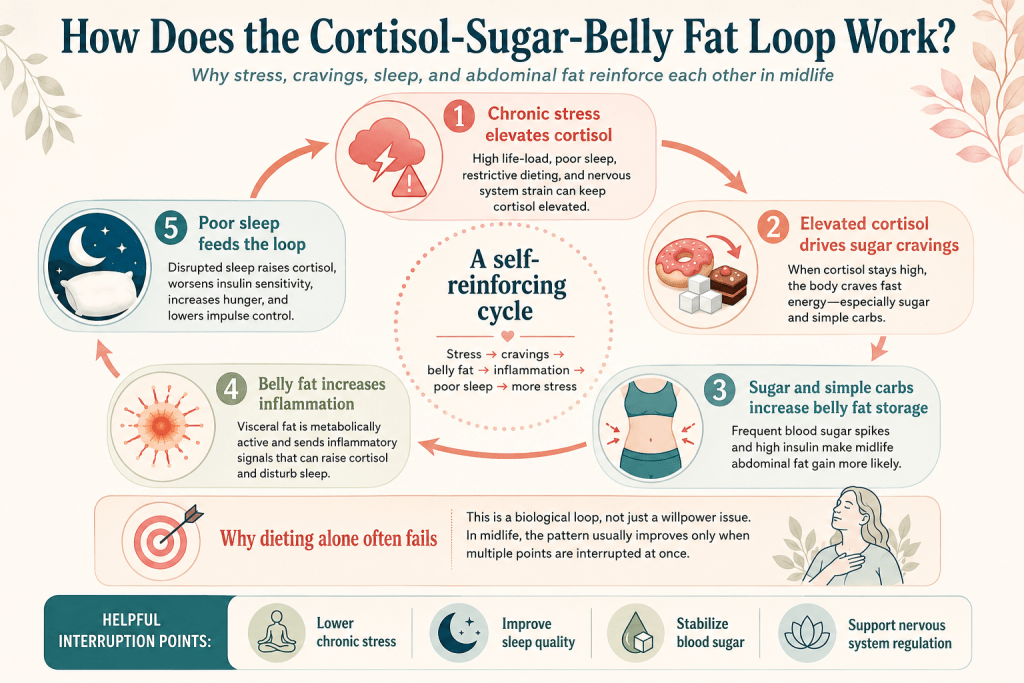
- Chronic stress elevates cortisol: Life-load, poor sleep, restrictive dieting, and unaddressed nervous system dysregulation all keep cortisol chronically elevated.
- Elevated cortisol drives sugar cravings: This is the specific biological pathway described in the previous section.
- Sugar and simple carbs drive belly fat storage: The specific fat distribution pattern of midlife women (increasing abdominal fat) is partly driven by the metabolic effects of chronic high insulin from repeated blood sugar spikes and the effect of cortisol on adipose tissue distribution.
- Belly fat produces its own inflammation: Visceral abdominal fat is metabolically active and produces inflammatory signals that further elevate cortisol and disrupt sleep.
- The disrupted sleep feeds back into the pattern: Poor sleep raises cortisol further, worsens insulin sensitivity, increases hunger hormone signaling, and reduces impulse control.
This is why isolated interventions like willpower-based dieting rarely work in midlife. The system is a loop, and it needs to be interrupted at multiple points simultaneously. See the cortisol and menopause weight gain article for a deeper dive into this specific pathway.
How Can You Tell Emotional Hunger From Physical Hunger?
One of the most useful practical skills in emotional eating recovery is learning to distinguish physical hunger from emotional hunger. They feel different once you know what to look for.
- Physical hunger builds gradually: Physical hunger tends to appear slowly, build over 30 minutes to a few hours, and involve specific physical signals including a rumbling stomach, mild low blood sugar sensations, slight fatigue, and often a mild irritability. Physical hunger is generally open to a range of foods, including foods you might not immediately crave. Physical hunger stops when you are physically full.
- Emotional hunger arrives suddenly: Emotional hunger tends to appear quickly, feel urgent, and demand a specific food or food type (usually sweet, salty, or high in fat). Emotional hunger does not stop reliably when you are physically full. Emotional hunger is often located in the head or the chest rather than the stomach. Emotional hunger frequently arrives in specific windows (evenings after work, weekend afternoons alone, immediately after difficult conversations, during boring meetings).
- The three-question check: When you notice a food urge, ask three questions. First, when did I last eat, and how much? Second, would I eat something simple and unglamorous right now (a plain apple, a hard-boiled egg, a plain piece of chicken)? Third, what am I feeling right now? Physical hunger will say yes to the plain food. Emotional hunger will resist plain food and want something specifically comforting.
- The location check: Physical hunger is felt in the stomach. Emotional hunger is often felt higher (chest, throat) or as a mental itch rather than a stomach signal. Learning to check the location of the urge is a fast diagnostic.
- Neither is wrong: Emotional hunger is not a bad state. It is a signal that something is happening in the internal life that needs attention. The point is not to shame the emotional hunger. The point is to recognize it accurately so you can respond appropriately, which usually means addressing the emotional signal rather than feeding it with food.
Get 11 Free Macro-Friendly Sample Recipes
Download 11 macro-friendly sample recipes from our cookbook that will give you everything you need to start eating like a woman who’s done with the guesswork.
What Are the Hidden Costs of Emotional Eating?
The obvious cost of an unaddressed emotional eating cycle is weight gain and its metabolic consequences. The less-obvious costs are often larger.
- Erosion of body trust: Repeated cycles of eating past fullness, ignoring physical hunger cues, and using food as a substitute for other needs damages the fundamental trust between a woman and her body. The body becomes something to be managed rather than partnered with, which makes every subsequent nutrition and movement intervention harder to sustain.
- Loss of energy and clarity: The blood sugar rollercoaster of emotional eating produces significant swings in energy, mood, and cognitive function that make everything else in life harder.
- Shame and secrecy: The eating-in-secret pattern that emotional eating often produces is corrosive to self-image and to relationships. Women often describe hiding evidence of a binge as one of the most damaging emotional experiences of the whole cycle.
- Missed emotional information: Emotional eating substitutes food for the information that emotions are trying to deliver. That information is often about needs, boundaries, or unresolved situations that are not going to resolve on their own. When food is the go-to response, the underlying issue keeps sending louder signals.
- Compounding metabolic damage: Repeated cycles of high sugar intake, high insulin spikes, and cortisol dysregulation compound over years and produce insulin resistance, visceral fat accumulation, and increased risk for the metabolic diseases that shorten healthy lifespan.
- The passing of time: Perhaps the largest hidden cost. Every year spent in the cycle is a year not spent building the systems and relationships and body that will support the next thirty or forty years of life.
Which Emotional Eating Strategies Do Not Work?
The pattern of interventions that most women try first is the pattern that most often makes the cycle worse. Understanding what does not work is as important as understanding what does.
- Restrictive dieting: The most common response to emotional eating is a stricter diet. This almost always makes the cycle worse. Restrictive eating produces hormonal changes (elevated cortisol, elevated ghrelin, reduced leptin) that increase cravings, worsen sleep, and reduce impulse control. It produces psychological effects (scarcity mindset, food obsession, all-or-nothing thinking) that set up the next binge. Nearly every clinical guideline for emotional eating recovery specifically warns against restrictive dieting as an intervention.
- Willpower: Emotional eating is often framed as a willpower problem, but it is a mismatched frame. Willpower is a limited resource that depletes throughout the day, is heavily reduced by stress and sleep debt, and is not available in useful amounts at the evening peak of emotional eating windows. Trying to solve emotional eating with willpower is asking the least available resource in your system to do the hardest job.
- Cutting out specific foods: The idea that if only chocolate or wine or bread were removed from the house, the problem would resolve, is almost never correct. The pull is at the emotional level. The specific food is interchangeable. Removing one option produces substitution with another.
- Rigid rules: Elaborate rule systems around food (no eating after 7 PM, only certain foods on certain days) often produce more emotional eating because the rules themselves become sources of stress and the inevitable rule violations become triggers for the shame-binge cycle.
- Self-shame: Speaking harshly to yourself after an emotional eating episode reliably makes the next episode more likely. Self-shame elevates cortisol, worsens sleep, and reduces the emotional resources available for healthier coping. This is one of the most important insights in the whole recovery framework.
- Trying to think your way out: Emotional eating happens at a lower brain level than cognitive analysis can easily reach. Thinking harder about it while continuing to be sleep-deprived, cortisol-dysregulated, and nutrient-depleted does not produce change.

Get 11 Free Macro-Friendly Sample Recipes
Download 11 macro-friendly sample recipes from our cookbook that will give you everything you need to start eating like a woman who’s done with the guesswork.
Which 10 Interventions Help Break Emotional Eating?
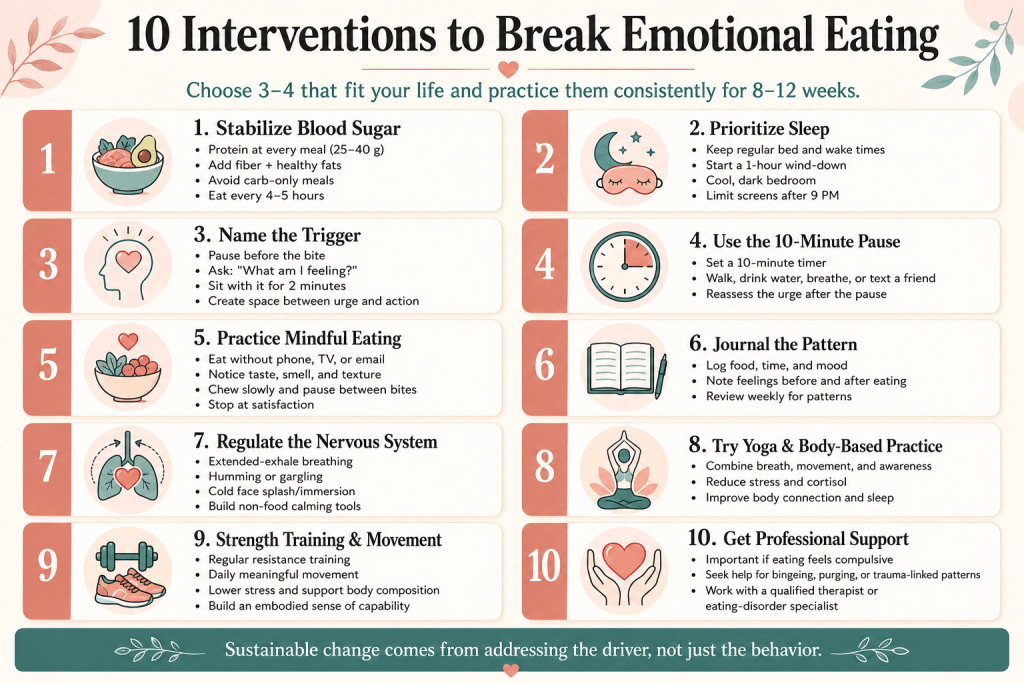
These ten interventions are what actually produce sustainable change. They work by addressing the specific drivers of the pattern rather than the surface behavior. Most women do not need all ten to see meaningful change. Choosing three or four that fit your situation and practicing them consistently for eight to twelve weeks typically produces significant improvement.
Intervention 1: Stabilize Your Blood Sugar Foundation
The single most impactful intervention for most midlife women is stabilizing the blood sugar curve. When blood sugar is stable, cravings drop dramatically because the biological signal to seek fast carbohydrates goes quiet. The specific practices are eating protein at every meal (roughly 25 to 40 grams), including fiber and healthy fats with every meal, avoiding standalone carbohydrate meals, and not going more than four to five hours between meals during the day.
The free Macro Calculator gives you a personalized protein and macronutrient target. The Macro Miracle Mediterranean Cookbook is the kitchen-side companion with recipes designed around this pattern. See also the menopause diet plan for the full framework.
Intervention 2: Prioritize Sleep as the Meta-Lever
Poor sleep multiplies every other driver of emotional eating. Adequate sleep reduces cortisol, restores ghrelin and leptin balance, improves prefrontal function, and reduces cravings for calorie-dense foods within a single night. Any recovery framework that does not address sleep as a foundation will produce less than half the results of one that does.
The specific practices are consistent bed and wake times, a wind-down routine that starts one hour before sleep, cool dark bedroom, screen restriction after 9 PM, and appropriate use of vagal reset practices from our vagus nerve reset article. The menopause sleep remedies article and the midlife sleep stack article cover the sleep framework in depth.
Intervention 3: Name the Trigger Before the Bite
The practice of pausing between the food urge and the food action long enough to name what is actually happening is one of the most powerful behavior changes available. The practice is simple in structure and hard in execution. When the urge arrives, notice it and do not act on it yet. Ask what am I feeling right now, and answer honestly even if the answer is I do not know. Sit with the not-knowing for two minutes if that is what is available, then make the decision from that steadier ground.
This practice does not eliminate emotional eating episodes overnight. What it does is start to insert space between trigger and action, which over weeks builds the capacity for different choices. Most women see a meaningful reduction in unconscious eating within two to three weeks of consistent practice.
Get 11 Free Macro-Friendly Sample Recipes
Download 11 macro-friendly sample recipes from our cookbook that will give you everything you need to start eating like a woman who’s done with the guesswork.
Intervention 4: The 10-Minute Pause
A specific implementation of the pause is the 10-minute rule. When you notice a food urge that is not physical hunger, set a timer for ten minutes and do something else during that time, whether that is walking around the block, drinking a glass of water, practicing extended exhalation breathing from our vagus nerve reset article, or texting a friend. After the ten minutes, if the urge is still there and you still want the food, eat it. Often, the urge has significantly reduced or disappeared. This is not deprivation. It is inserted space.
Intervention 5: Mindful Eating Practice
Mindful eating is the practice of paying full attention to the sensory experience of eating without distraction, which means no phone, no TV, and no email during the meal. The only two elements present are the food and the body. The specific practices include noticing the color, smell, and temperature of the food, chewing thoroughly, pausing between bites, checking fullness at intervals, and stopping when the body signals satisfaction rather than when the plate is empty.
Mindful eating produces a range of documented benefits including reduced portion sizes without any deliberate restriction, improved digestion, better recognition of hunger and fullness cues, and reduced emotional eating over time. Start with one mindful meal per day and build from there over the following weeks.
Intervention 6: Journaling the Pattern
A simple daily food and mood journal produces remarkable insight over four to six weeks. The practice is to note what you ate, roughly when, what you were feeling right before, and how you felt afterward. The point is not restriction or judgment. The point is data. Within a few weeks, most women see clear patterns: specific triggers, specific time windows, specific foods that show up in emotional eating episodes versus physical hunger episodes.
The simple structure is three lines per meal covering what you ate, what you were feeling before, and what you felt after. Continue for eight weeks and review the log weekly rather than daily. The insight this practice produces is often the biggest single lever for change.
Intervention 7: Nervous System Regulation Practice
Because emotional eating is fundamentally a nervous system regulation problem (the body is asking for regulation and food is the currently available tool), building a wider set of regulation tools directly addresses the driver. Daily practice of extended exhalation breathing, humming, gargling, cold face immersion, and the other exercises in our vagus nerve reset article gives the nervous system access to non-food regulation. Over weeks, the availability of these tools reduces the frequency of food-based regulation.
Intervention 8: Yoga and Body-Based Practice
Yoga combines breath, movement, mindfulness, and body awareness in a way that consistently reduces emotional eating in the research literature. The mechanism is likely multiple: reduced cortisol, improved body awareness, improved emotional regulation, better sleep, and a repaired relationship with the body. See our five yin yoga poses article for a specific home practice sequence.
For deep immersive body-based reset, the Deeply Restorative Yoga and Nature Retreat at our Smoky Mountains property combines daily yoga, guided restorative practice, and the nutrition foundation into a five-day intensive that consistently produces measurable shifts in emotional eating patterns.
Intervention 9: Strength Training and Meaningful Movement
Regular resistance training and daily movement address emotional eating from a different direction. Movement metabolizes stress hormones directly, improves sleep, supports body composition, and produces the felt-sense of embodied capability that reduces the psychological load driving food-seeking. The four muscle groups for aging well article covers the strength training foundation. The micro walks article covers the everyday movement layer.
Intervention 10: Professional Support When Appropriate
Some emotional eating patterns are woven into deeper histories that benefit from professional support. If your pattern feels compulsive, if it involves clinical binge eating (large quantities in short windows with a sense of loss of control), if it involves purging or compensatory behaviors, or if it is tied to significant unresolved trauma, please work with a qualified eating disorder specialist or therapist alongside any lifestyle changes.
For the coaching version of the framework focused on the midlife lifestyle medicine drivers, the Monthly Personal Training and Nutrition Coaching Program is the primary CTA for this article. This is where I work directly with women on installing the full framework over three, six, or twelve months.
Get 11 Free Macro-Friendly Sample Recipes
Download 11 macro-friendly sample recipes from our cookbook that will give you everything you need to start eating like a woman who’s done with the guesswork.
“The two highest-impact interventions from that list of ten, in my experience with hundreds of midlife women, are blood sugar stabilization and the ten-minute pause. If a woman does nothing else from this list except eat 30 grams of protein at breakfast and pause for ten minutes before every food decision that is not on a mealtime, she will see her emotional eating cut in half within two months. That is a real claim from years of coaching data. Everything else in the list amplifies that foundation, and the retreat and coaching work at the higher levels of the framework, but if resources are limited and time is short, start with those two. That is the eighty-twenty answer to emotional eating in midlife.”
Terry Tateossian, Founder of The House of Rose
How Can You Build a Personal Emotional Eating Toolkit?
The ten interventions are a menu. Not every woman needs all of them, and not every intervention will fit every situation. Building a personal toolkit means choosing the specific interventions that fit your particular pattern and life.
- Start with the foundation: Blood sugar stabilization (Intervention 1) and sleep prioritization (Intervention 2) belong in almost every toolkit because they address the biological drivers that make everything else harder. Install these as the foundation before adding anything else.
- Add the daily pause practice: The 10-minute pause (Intervention 4) and the trigger-naming (Intervention 3) are low-friction and high-impact. Add them within the first two weeks.
- Layer the nervous system regulation: Daily vagal reset practice (Intervention 7) supports the emotional regulation the body is asking for. Add within the first month.
- Layer the movement: Strength training and daily movement (Intervention 9) provide the metabolic and psychological support that makes the rest sustainable. Add within the first six weeks.
- Add mindful eating and journaling: Mindful eating practice (Intervention 5) and food and mood journaling (Intervention 6) require more effortful attention. Add when the earlier layers are in place.
- Consider the deeper layers: Yoga (Intervention 8) and professional support (Intervention 10) fit into the toolkit based on personal preference, resources, and clinical need. The Monthly Personal Training and Nutrition Coaching Program is the primary CTA for the coaching layer. The retreat is the immersive option.
- A sample first-month plan: Week 1: install 30 grams of protein at breakfast, establish a consistent bedtime. Week 2: add the 10-minute pause practice. Week 3: add ten minutes of daily vagal reset. Week 4: begin twice-weekly strength training. Continue building layers month by month.
What Should You Do After an Emotional Eating Slip?
Every woman working through emotional eating recovery will have episodes where the pattern reasserts itself. How those episodes are handled determines whether they become part of the recovery or become the start of a new spiral.
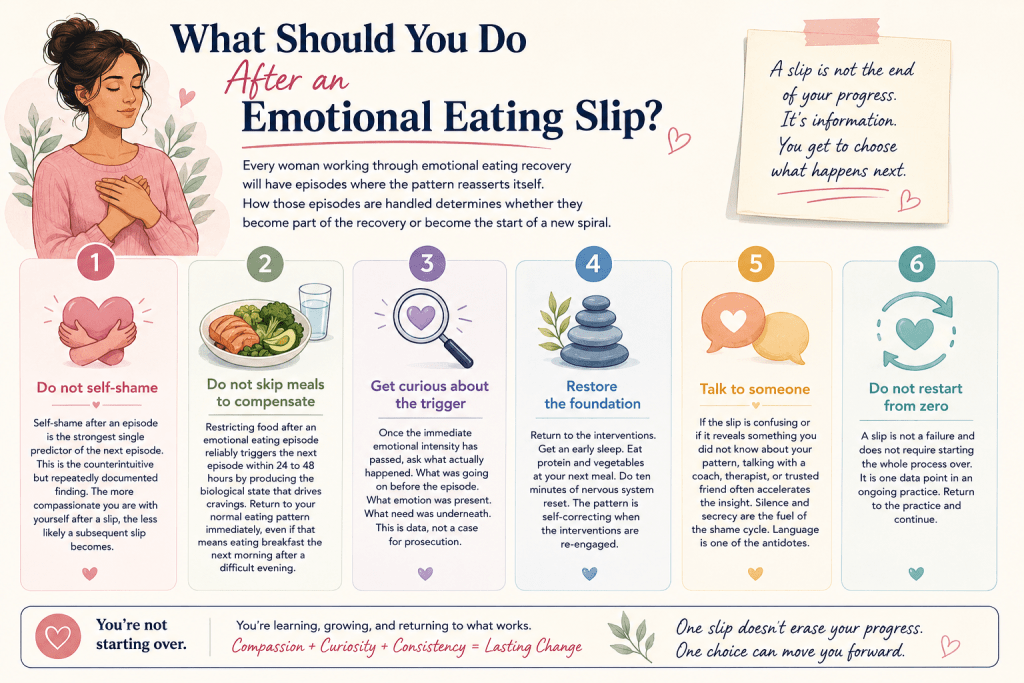
- Do not self-shame: Self-shame after an episode is the strongest single predictor of the next episode. This is the counterintuitive but repeatedly documented finding. The more compassionate you are with yourself after a slip, the less likely a subsequent slip becomes.
- Do not skip meals to compensate: Restricting food after an emotional eating episode reliably triggers the next episode within 24 to 48 hours by producing the biological state that drives cravings. Return to your normal eating pattern immediately, even if that means eating breakfast the next morning after a difficult evening.
- Get curious about the trigger: Once the immediate emotional intensity has passed, ask what actually happened. What was going on before the episode. What emotion was present. What need was underneath. This is data, not a case for prosecution.
- Restore the foundation: Return to the interventions. Get an early sleep. Eat protein and vegetables at your next meal. Do ten minutes of nervous system reset. The pattern is self-correcting when the interventions are re-engaged.
- Talk to someone: If the slip is confusing or if it reveals something you did not know about your pattern, talking with a coach, therapist, or trusted friend often accelerates the insight. Silence and secrecy are the fuel of the shame cycle. Language is one of the antidotes.
- Do not restart from zero: A slip is not a failure and does not require starting the whole process over. It is one data point in an ongoing practice. Return to the practice and continue.
Get 11 Free Macro-Friendly Sample Recipes
Download 11 macro-friendly sample recipes from our cookbook that will give you everything you need to start eating like a woman who’s done with the guesswork.
Which Mistakes Can Undermine Emotional Eating Recovery?
Six mistakes consistently derail emotional eating recovery for midlife women.
- Trying to fix everything at once: The temptation is to install all ten interventions in week one and quit the pattern by force. This produces overwhelm, fatigue, and a rebound to the old pattern within a few weeks. Layer the interventions gradually.
- Skipping the foundation: Blood sugar and sleep are not optional. Trying to work the higher-level interventions without these in place produces disappointing results and the false impression that the framework does not work.
- Weighing yourself constantly: Body composition change during emotional eating recovery is not linear. Daily weight tracking produces emotional volatility that itself triggers eating episodes. Track weekly at most, or ignore the scale entirely for the first eight weeks and use other metrics like sleep quality, energy, mood, and clothing fit.
- Comparing your recovery to someone else’s: Every woman’s timeline and pattern is different. Comparing your third-month progress to another woman’s third-month progress produces demoralization without producing information. Track your own trend, not the comparison.
- Restricting food after slips: Discussed above. Do not do it.
- Waiting until conditions are perfect to start: The perfect week never arrives. Start with imperfect implementation of one intervention this week.
Get 11 Free Macro-Friendly Sample Recipes
Download 11 macro-friendly sample recipes from our cookbook that will give you everything you need to start eating like a woman who’s done with the guesswork.
When Should You See a Healthcare Professional?
Most emotional eating patterns can be addressed through the lifestyle framework in this article, in combination with coaching or self-directed practice. Some situations require professional support first or alongside.
- Clinical binge eating: If you experience episodes of eating large amounts of food in short windows with a sense of loss of control, occurring twice a week or more for three months or longer, this may indicate binge eating disorder and warrants evaluation by a mental health professional.
- Purging or compensatory behaviors: Any pattern of vomiting, laxative use, excessive exercise, or restrictive eating in response to food intake indicates a clinical eating disorder and requires specialized treatment.
- Depression or anxiety that is not resolving: If underlying depression, anxiety, or trauma is not responding to lifestyle interventions and appears to be driving the eating pattern, working with a mental health provider is important.
- History of eating disorders: Any personal history of anorexia, bulimia, or binge eating disorder means that emotional eating recovery should be done in partnership with a qualified specialist.
- Medical concerns: Significant weight fluctuations, cardiovascular symptoms, or other medical concerns arising from the eating pattern warrant medical evaluation.
- Resources: The National Eating Disorders Association helpline (call or text 800-931-2237 in the US) is one starting point for professional referral. Ask your primary care provider for local resources.
What Are Your Next Steps?
If the framework in this article resonates and you want to begin the work of ending the emotional eating cycle, here are the four next steps in order of friction.
- Install the foundation this week. Aim for 30 grams of protein at breakfast, a consistent bedtime, and one glass of water before every food decision that is not a scheduled meal. These three changes alone will produce noticeable reduction in cravings within seven to ten days.
- Add the 10-minute pause next week. Every food urge that is not scheduled hunger gets a 10-minute pause with a walk, breath work, or a glass of water. Then decide.
- Layer in nervous system regulation. Choose two exercises from our vagus nerve reset article and practice them daily for a total of about ten minutes.
- Consider personalized support. The Monthly Personal Training and Nutrition Coaching Program is the primary CTA for this article. This is where I work directly with midlife women on installing the full framework. For the immersive version, the Deeply Restorative Yoga and Nature Retreat at our Smoky Mountains property installs the framework in five days.
Get 11 Free Macro-Friendly Sample Recipes
Download 11 macro-friendly sample recipes from our cookbook that will give you everything you need to start eating like a woman who’s done with the guesswork.
Frequently Asked Questions
What is emotional eating in menopause?
Emotional eating in menopause is the use of food to soothe or regulate difficult feelings, intensified specifically by the hormonal changes of perimenopause and menopause. The pattern is driven by declining estrogen (which affects serotonin and dopamine), cortisol dysregulation, sleep disruption, and the increased life-load typical of the midlife years. It is not a willpower problem. It is a specific hormonal and neurochemical pattern that responds well to targeted lifestyle interventions.
Why do I crave sugar and carbs in perimenopause?
Cravings for sugar and simple carbohydrates in perimenopause are driven by several converging biological factors. Declining estrogen reduces serotonin production. Cortisol elevation drives specific cravings for calorie-dense foods. Poor sleep raises hunger hormones. The combination produces a strong biological pull toward the exact foods that would provide the fastest neurochemical relief. Understanding this makes it easier to respond with the right interventions rather than blaming yourself.
How do I stop stress eating in menopause?
The most effective interventions for stress eating in menopause are stabilizing blood sugar (30 to 40 grams of protein at every meal, adequate fiber and fat), prioritizing sleep, adding daily nervous system regulation practices, and inserting a 10-minute pause between food urges and food actions. Restrictive dieting and self-shame reliably make the pattern worse and should be avoided.
Is emotional eating the same as binge eating disorder?
Emotional eating and binge eating disorder are different but overlapping. Emotional eating is a common pattern involving the use of food to regulate feelings. Binge eating disorder is a clinical diagnosis involving recurrent episodes of eating large amounts of food in short windows with a sense of loss of control, occurring frequently over a defined time period. Not every emotional eater has binge eating disorder, but every case of binge eating disorder involves emotional eating. If your pattern feels clinically severe, please consult a qualified mental health professional.
Can I stop emotional eating without dieting?
Yes, and dieting typically makes emotional eating worse rather than better. The most effective approach is to stop restricting food and instead address the drivers of the pattern (blood sugar instability, sleep debt, nervous system dysregulation, unmet emotional needs). Weight change often happens as a byproduct of the emotional eating recovery rather than as the primary target.
How long does emotional eating recovery take?
Meaningful reduction in emotional eating frequency typically appears within two to eight weeks of consistent practice. Deeper changes in the emotional patterns and body relationship develop over six to twelve months. This is not a quick fix, but the trajectory of improvement is generally steady if the foundation interventions are in place.
What is the connection between cortisol and emotional eating?
Cortisol drives specific cravings for high-fat and high-sugar foods through documented biological pathways. Chronically elevated cortisol (common in midlife due to stress, sleep loss, and hormonal changes) keeps this craving pathway activated. Cortisol also drives abdominal fat storage, which is part of why emotional eating produces such visible body composition changes in midlife women. Addressing cortisol through sleep, movement, nervous system regulation, and stress management is a central piece of recovery.
Why do I emotionally eat at night specifically?
Evening emotional eating is one of the most common patterns and is driven by several factors. Cortisol curves often shift in midlife toward higher evening levels. Willpower and prefrontal control are depleted by the end of the day. Alcohol consumption in the evening reduces impulse control further. Sleep debt from previous nights compounds. Emotional stress from the day accumulates. Evenings are often the first quiet moment after a full day of external demands, which allows suppressed emotions to surface.
Get 11 Free Macro-Friendly Sample Recipes
Download 11 macro-friendly sample recipes from our cookbook that will give you everything you need to start eating like a woman who’s done with the guesswork.
Does yoga help with emotional eating?
Yoga has documented benefits for emotional eating recovery, likely through multiple mechanisms including reduced cortisol, improved body awareness, better emotional regulation, improved sleep, and repaired body relationship. Regular practice of gentle or restorative yoga specifically appears to help. The Deeply Restorative Yoga and Nature Retreat at our Smoky Mountains property includes daily yoga programming specifically for this purpose.
What foods should I avoid to stop emotional eating?
The framing of foods to avoid is usually counterproductive. Restrictive food rules tend to worsen emotional eating rather than help it. The more effective approach is to build the foundation of what to eat consistently (adequate protein, fiber, healthy fats, colorful vegetables, whole foods) so that cravings for less nutritious foods reduce naturally. Occasional inclusion of comfort foods without the drama is often part of a healthy relationship with food.
Can medications help with emotional eating?
Some medications can play a supporting role. Antidepressants may help when emotional eating is driven by underlying depression. GLP-1 medications reduce appetite and may reduce emotional eating in some users, though they do not address the emotional drivers directly and should be combined with the lifestyle framework in this article. Any medication decision should be made in partnership with a qualified healthcare provider.
Get 11 Free Macro-Friendly Sample Recipes
Download 11 macro-friendly sample recipes from our cookbook that will give you everything you need to start eating like a woman who’s done with the guesswork.
What is mindful eating and does it work?
Mindful eating is the practice of paying full attention to the sensory experience of eating without distraction. Research supports its effectiveness for reducing portion sizes, improving satiety recognition, and reducing emotional eating over time. Start with one mindful meal per day and build from there. The specific practice is to remove phones and screens, chew thoroughly, pause between bites, and notice when the body signals fullness.
Should I keep a food journal?
A simple food and mood journal (what you ate, when, what you felt before, what you felt after) is one of the most powerful diagnostic tools for emotional eating recovery. The point is not restriction or judgment. The point is data. Most women see clear patterns within four to six weeks of consistent journaling. Reviewing weekly is more useful than reviewing daily.
How do I forgive myself after an emotional eating episode?
Self-shame after an episode is the strongest predictor of the next episode. The practical antidote is deliberate self-compassion, which usually needs to be practiced rather than felt naturally. Speak to yourself as you would speak to a friend who had had a difficult evening. Get curious rather than critical. Return to the foundation interventions immediately without restricting. Talk to someone you trust if the shame is overwhelming. Over time, the shame cycle loosens.
Can a retreat help with emotional eating?
An immersive retreat setting can produce shifts in emotional eating patterns that are difficult to achieve at home because the environment removes many of the daily triggers and provides intensive practice of the foundation interventions. The Deeply Restorative Yoga and Nature Retreat at our Smoky Mountains property is specifically designed for this purpose and consistently produces meaningful shifts for guests who arrive with emotional eating patterns as one of their focus areas.
References
- van Strien, T. (2018). Causes of emotional eating and matched treatment of obesity. Current Diabetes Reports, 18(6), 35.
- Adam, T. C., & Epel, E. S. (2007). Stress, eating and the reward system. Physiology and Behavior, 91(4), 449–458.
- Dallman, M. F., Pecoraro, N., Akana, S. F., et al. (2003). Chronic stress and obesity: a new view of comfort food. Proceedings of the National Academy of Sciences, 100(20), 11696–11701.
- Epel, E., Lapidus, R., McEwen, B., & Brownell, K. (2001). Stress may add bite to appetite in women: a laboratory study of stress-induced cortisol and eating behavior. Psychoneuroendocrinology, 26(1), 37–49.
- Yau, Y. H. C., & Potenza, M. N. (2013). Stress and eating behaviors. Minerva Endocrinologica, 38(3), 255–267.
- Konttinen, H., van Strien, T., Männistö, S., et al. (2019). Depression, emotional eating and long-term weight changes: a population-based prospective study. International Journal of Behavioral Nutrition and Physical Activity, 16(1), 28.
- Frayn, M., Livshits, S., & Knäuper, B. (2018). Emotional eating and weight regulation: a qualitative study of compensatory behaviors and concerns. Journal of Eating Disorders, 6, 23.
- Warren, J. M., Smith, N., & Ashwell, M. (2017). A structured literature review on the role of mindfulness, mindful eating and intuitive eating in changing eating behaviours. Nutrition Research Reviews, 30(2), 272–283.
- Katterman, S. N., Kleinman, B. M., Hood, M. M., et al. (2014). Mindfulness meditation as an intervention for binge eating, emotional eating, and weight loss: a systematic review. Eating Behaviors, 15(2), 197–204.
- Kristeller, J. L., & Wolever, R. Q. (2011). Mindfulness-based eating awareness training for treating binge eating disorder: the conceptual foundation. Eating Disorders, 19(1), 49–61.
- Chao, A. M., Jastreboff, A. M., White, M. A., et al. (2017). Stress, cortisol, and other appetite-related hormones: prospective prediction of 6-month changes in food cravings and weight. Obesity, 25(4), 713–720.
- Sominsky, L., & Spencer, S. J. (2014). Eating behavior and stress: a pathway to obesity. Frontiers in Psychology, 5, 434.
- Greeno, C. G., & Wing, R. R. (1994). Stress-induced eating. Psychological Bulletin, 115(3), 444–464.
- Torres, S. J., & Nowson, C. A. (2007). Relationship between stress, eating behavior, and obesity. Nutrition, 23(11-12), 887–894.
- Spencer, S. J., & Tilbrook, A. (2011). The glucocorticoid contribution to obesity. Stress, 14(3), 233–246.
- Beccuti, G., & Pannain, S. (2011). Sleep and obesity. Current Opinion in Clinical Nutrition and Metabolic Care, 14(4), 402–412.
- Chaput, J. P. (2014). Sleep patterns, diet quality and energy balance. Physiology and Behavior, 134, 86–91.
- Douglas, S., Cartmill, R., Brown, R., et al. (2020). The Women’s Health Initiative: menopause and cardiovascular disease. Menopause, 27(9), 1094–1099.
- Herriot, H., Wrosch, C., Hamm, J. M., & Pruessner, J. C. (2020). Stress-related trajectories of diurnal cortisol in older adulthood over 12 years. Psychoneuroendocrinology, 121, 104826.
- Stanton, A. V., James, K., Brennan, M. M., et al. (2021). Perimenopause: the complex, transitional time of the menopause. Irish Journal of Medical Science, 190(4), 1359–1368.
Disclaimer: Always consult with a healthcare professional before starting any new routines, programs, or nutrition plans to ensure you receive the best medical advice and strategy for your specific individual needs. If you are experiencing symptoms of a clinical eating disorder, please contact a qualified mental health professional or the National Eating Disorders Association helpline (call or text 800-931-2237 in the US).
Get 11 Free Macro-Friendly Sample Recipes
Download 11 macro-friendly sample recipes from our cookbook that will give you everything you need to start eating like a woman who’s done with the guesswork.

Terry Tateossian is a Menopause Lifestyle Medicine Coach, Certified Personal Trainer & Nutritionist and the Founder of THOR: The House of Rose, a wellness brand serving women over 40 through retreats, coaching, macro-nutrition and community. As 25-year founder and entrepreneur, Terry spent two and a half decades building and running successful start-up businesses, an experience that put her on the front line of founder burnout long before she could name it. After facing serious health challenges, early onset menopause, and emotional eating while running her agency and raising two children, Terry rebuilt her health in her 40s and lost more than 80 pounds through evidence-based nutrition, training, and mindset work. Today, she helps women get strong, improve confidence, support hormone health, and create a stronger second half of life. Terry has been featured in major media outlets and is available for podcasts, expert commentary, brand collaborations, and speaking engagements on midlife health, reinvention, emotional eating, menopause wellness, and strength training for longevity. Get her free macro calculator (her cookbook companion) to start your journey to back to health.







![vibrant plate of colorful menopause-friendly foods (salmon, leafy greens, berries, avocado, nuts) on a clean table]](https://www.thehouseofrose.com/wp-content/uploads/2026/06/vibrant-plate-of-colorful-menopause-friendly-foods-salmon-leafy-greens-berries-avocado-nuts-on-a-clean-table-e1782437703474-450x185.webp)