
 By Team THOR
Free 28-Day Fascia Reset Email Course
Get our Free 28-day email course series to help with 1 or 2 exercises per day to release your fascia. One short lesson per day. Two minutes to read each.
Cupping and Gua Sha for Fascial Release in Midlife Women: The Complete Guide (With a 5-Day Integration Program and Videos)
Cupping lifts and decompresses tissue, while gua sha uses controlled scraping to help fascial layers move more freely. Together, they offer midlife women practical ways to address persistent tightness, restricted movement, and tissue stiffness.
Fascia changes through perimenopause and menopause. Declining estrogen can affect collagen turnover, hydration, and fascial glide, contributing to tight areas that stretching alone may not resolve.
The two techniques work differently. Cupping uses negative pressure to create space and increase local circulation, while gua sha creates mechanical shear to improve microcirculation and mobilize restricted tissue.
I am Terry Tateossian, founder of The House of Rose and a certified lifestyle medicine coach and I run nutrition and restorative wellness & yoga retreats for women in perimenopause, menopause, and post-menopause in East Tennessee. After experiencing early-onset peri-menopause at 37, I built THOR around helping women better understand and support their changing bodies.
This guide covers how cupping and gua sha work, what the research says, when to use each technique, how to practice safely at home, and a five-day program for integrating both into a realistic midlife fascia routine.
Important: Cupping and gua sha should be used carefully. Avoid broken or irritated skin, active bruising, prominent varicose veins, and major blood vessels, and consult your healthcare provider if you take blood thinners, have a bleeding disorder or history of deep vein thrombosis, are pregnant, or have another condition that may affect safety.
Why Do Cupping and Gua Sha Belong Together in a Midlife Fascia Practice?
Cupping and gua sha are two of the oldest bodywork practices still in continuous use anywhere on the planet. Both come from East Asian medicine traditions. Both work directly on skin, connective tissue, and the fascial layers beneath. Both have moved from folk practice into a growing body of published research, and both are now used by physical therapists, sports medicine physicians, and integrative bodyworkers.
They also do different things. Cupping applies negative pressure to lift tissue upward, decompress compressed layers, and increase local blood flow. Gua sha applies mechanical friction along the skin to shear stuck fascial layers, mobilize lymph, and stimulate the microcirculation just beneath the surface. When you understand what each one does, you can use them together in a way that respects both traditions and takes advantage of both mechanisms.
For midlife women, this matters more than most people realize. Fascia changes measurably through perimenopause and menopause. The connective tissue matrix that holds every muscle, organ, and vessel in place becomes stiffer, less hydrated, and slower to respond to load. This is one of the reasons that stretching that used to work stops working, why old injuries flare up in new places, and why chronic tension patterns become harder to shake. Cupping and gua sha both offer ways to work with fascia that do not require you to force a range of motion, do not require you to be strong, and can be adapted to a body that is more sensitive than it used to be.
This article walks through the science, the practice, and the safe application of both. By the end, you will know what each tool does, when to use each one, how to use them together in a weekly practice, and how they fit into the broader midlife wellness framework we teach at The House of Rose.
What Is Fascia and Why Does It Change After 40?
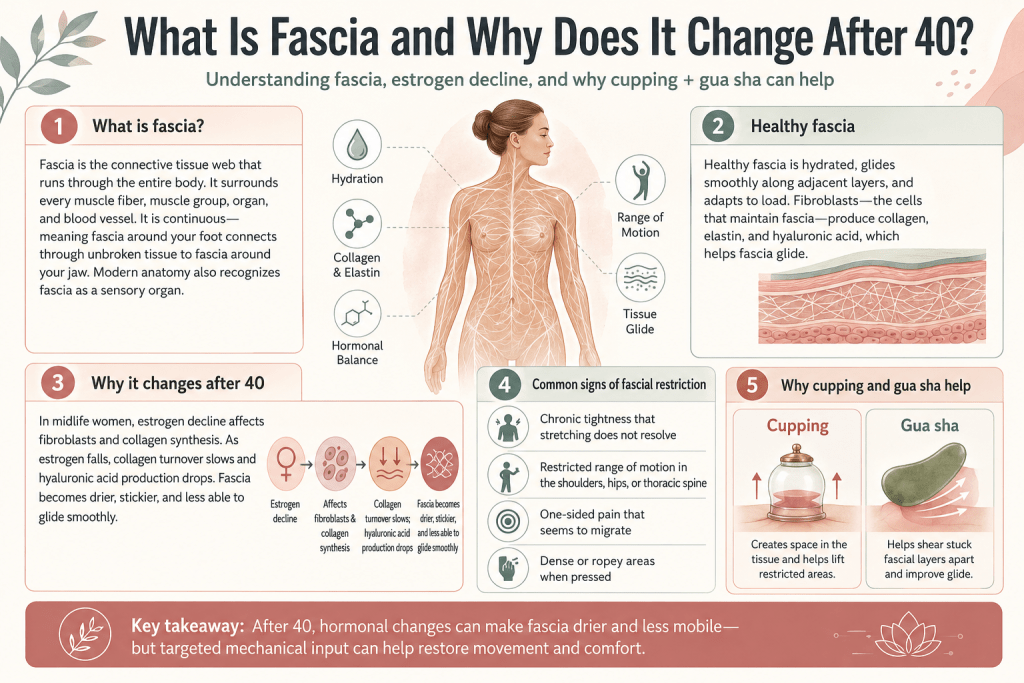
Fascia is the connective tissue web that runs through the entire body. It surrounds every muscle fiber, every muscle group, every organ, and every blood vessel. It is continuous, meaning that fascia around your foot connects through unbroken tissue to fascia around your jaw. Anatomists once considered it packing material to be scraped away in dissection. Modern anatomy now understands fascia as a sensory organ in its own right, with more nerve endings per square centimeter than skin in some regions.
Healthy fascia is hydrated, glides smoothly along adjacent layers, and adapts to load. Fibroblasts, the primary cells that build and maintain fascia, produce collagen, elastin, and the hyaluronic acid that makes fascia glide. In midlife women, estrogen decline directly affects each of these processes. Estrogen receptors on fibroblasts influence collagen synthesis, so falling estrogen means slower collagen turnover. Hyaluronic acid production drops, so fascia becomes drier and stickier. The result is that fascia does not glide the way it used to.
You feel this as chronic tightness that stretching does not resolve, restricted range of motion in the shoulders, hips, or thoracic spine, one-sided pain that migrates around the body, and areas that feel dense or ropey when you press on them. These are all signs of fascial restriction, and they respond well to mechanical input that either creates space in the tissue or shears stuck layers apart. Cupping does the first. Gua sha does the second.
Understanding how hormonal changes affect fascia helps explain why stiffness, reduced tissue glide, and slower recovery can become more noticeable in midlife. Pairing that knowledge with targeted fascia exercises that also support lymphatic flow creates a useful foundation before looking more closely at cupping and gua sha, two tools that provide different forms of mechanical input to fascial tissue.
Free 28-Day Fascia Reset Email Course
Get our Free 28-day email course series to help with 1 or 2 exercises per day to release your fascia. One short lesson per day. Two minutes to read each.
What Is the Ancient History and Modern Reintroduction of Cupping and Gua Sha?
Cupping predates most of what we consider modern medicine. Egyptian medical papyri from around 1550 BCE describe cupping for pain relief. Traditional Chinese Medicine texts describe cupping in detail from at least the Han dynasty. In Middle Eastern medicine, cupping is called hijama and remains a widely practiced treatment. In Greek and Roman medicine, cupping was standard practice, described by Hippocrates and Galen. Cupping traveled from these traditions into folk practice across Europe, into North African traditions, and into Latin American folk medicine through the Spanish and Portuguese.
Gua sha comes from Chinese folk medicine and is one of the oldest forms of scraping therapy documented. The name translates loosely to “scraping to bring out sha,” where sha refers to the reddish marks that appear when microcirculation is stimulated. Gua sha has been practiced continuously in China for at least two thousand years. Similar scraping practices exist in Vietnamese medicine as cạo gió, in Indonesian medicine as kerokan, and in various Southeast Asian traditions.
The modern reintroduction of both practices into Western wellness happened through several channels. Cupping came into public awareness during the 2016 Olympics when Michael Phelps competed with visible cupping marks on his back. Gua sha entered Western wellness first through facial applications, then broadened into body work through practitioners trained in the traditional methods. Both practices have moved from spa treatments into physical therapy clinics, sports medicine offices, and integrative pain management.
The research base has grown accordingly. There are now hundreds of published studies on cupping and dozens on body gua sha. The findings vary in quality and design, but they consistently show measurable effects on pain, range of motion, blood flow, and inflammatory markers. We will look at what the research actually says in section seven.
How Does Cupping Work on Fascia?
Cupping applies negative pressure to a localized area of skin and superficial fascia. In traditional practice, a cup was heated to create suction as it cooled on the skin. In modern practice, silicone cups create suction through compression, and pump cups create suction through mechanical vacuum. All three achieve the same basic mechanical effect.
The negative pressure lifts skin, superficial fascia, and the layer of loose connective tissue underneath. This creates several distinct effects.
First, it decompresses tissue that has been compressed for long periods. Chronic postural patterns like desk work, driving, and carrying children compress fascia in predictable ways. Cupping temporarily reverses that compression and gives the tissue space to rehydrate and reorganize.
Second, cupping dramatically increases local blood flow. Studies using laser Doppler flowmetry show that skin microcirculation increases substantially in the cupping zone and remains elevated for hours after the cup is removed. This increased perfusion delivers oxygen and nutrients to the tissue and clears metabolic waste that has accumulated in restricted areas.
Third, cupping affects the lymphatic system. The lymphatic capillaries in the superficial fascia respond to the mechanical lift, and lymphatic drainage increases in the treated zone. For midlife women who tend toward sluggish lymphatic flow because of hormone-related connective tissue changes, this can be particularly useful.
Fourth, cupping stimulates the sensory nerve endings in fascia. The mechanical stretch activates mechanoreceptors that communicate with the central nervous system. This is thought to be one of the mechanisms behind the pain-relieving effect of cupping. Recent research also suggests that cupping may influence the tone of the sympathetic and parasympathetic branches of the autonomic nervous system, which could explain the deep relaxation many people experience after a session.
The characteristic marks left by cupping, ranging from pink to deep red or purple, are the result of small blood vessels releasing red blood cells into the surrounding tissue under the pressure. These marks are not bruises in the traumatic sense, and they resolve on their own over three to ten days. Darker marks generally indicate more stagnant tissue, and areas that have been chronically restricted often produce darker marks the first few times they are cupped, with lighter marks appearing on subsequent sessions as the tissue responds.
Free 28-Day Fascia Reset Email Course
Get our Free 28-day email course series to help with 1 or 2 exercises per day to release your fascia. One short lesson per day. Two minutes to read each.
How Does Gua Sha Work on Fascia?
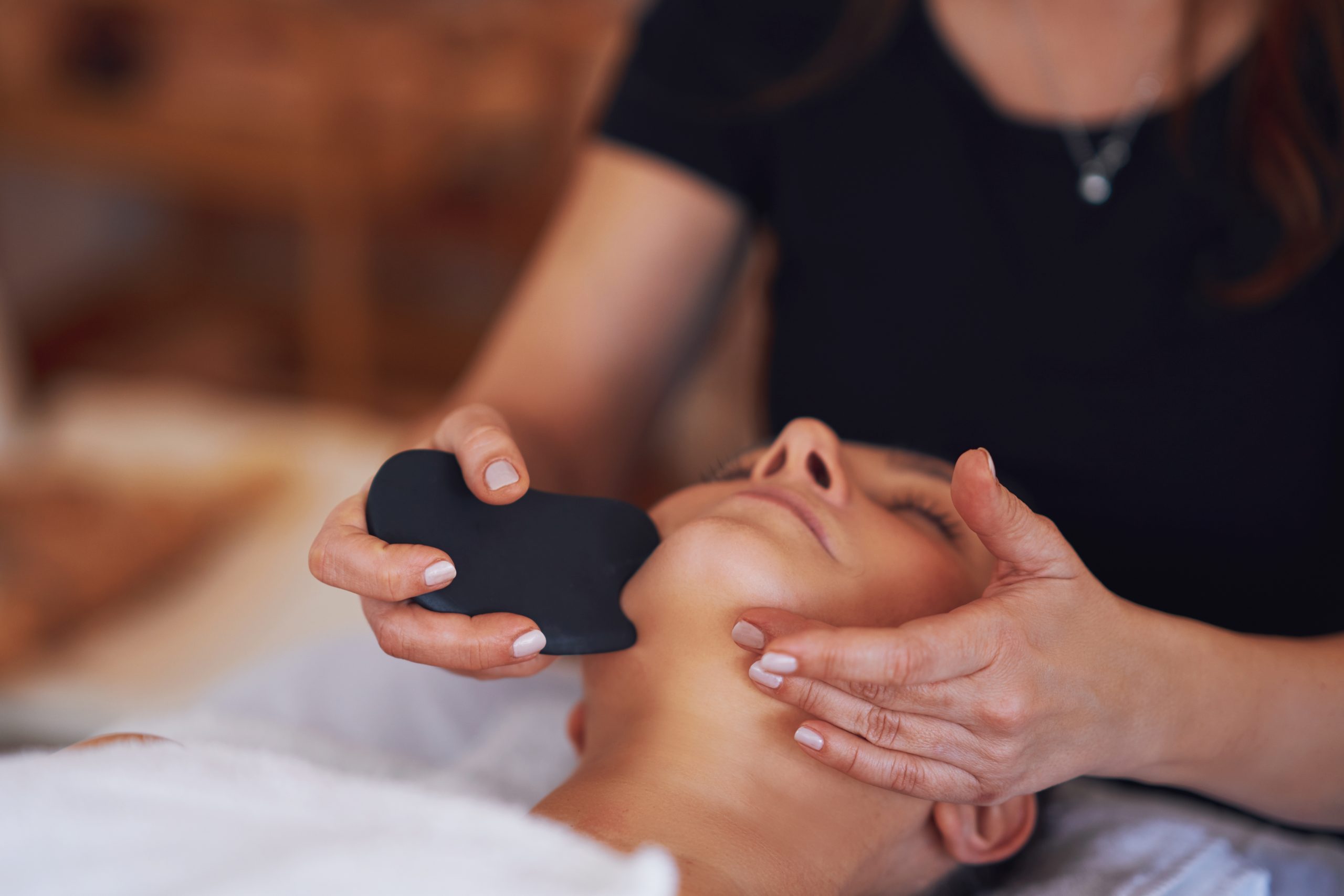
Gua sha applies mechanical shear along the skin using a smooth-edged tool. Traditional tools were made of jade, buffalo horn, or rose quartz. Modern tools include stainless steel instruments used in a technique called Instrument Assisted Soft Tissue Mobilization (IASTM), which physical therapists and chiropractors have adopted from traditional gua sha with modified language and technique.
The mechanical shear produced by gua sha creates several effects. The friction of the tool against oiled skin drags the surface layers over the layers just beneath. This shearing action is thought to help unstick fascial layers that have adhered to one another because of injury, chronic tension, or age-related connective tissue changes. The mechanical stimulation activates fibroblasts, which respond by remodeling collagen in the treated area. This remodeling response can take days to weeks and is one of the mechanisms behind the sustained changes reported after a course of gua sha treatments.
Gua sha also stimulates microcirculation intensely. The reddish marks that appear on the skin, called petechiae by physicians and sha by traditional practitioners, are the visible sign of increased blood flow to the surface. Studies using thermal imaging show a substantial rise in local skin temperature during and after gua sha treatment, indicating increased perfusion. Studies using near-infrared spectroscopy show sustained increases in tissue oxygenation.
Like cupping, gua sha activates fascial mechanoreceptors and appears to influence the autonomic nervous system. Many people experience gua sha as intensely calming, particularly in the neck and shoulder regions. That calming effect also fits into the broader goal of supporting parasympathetic activity, which is why simple vagus nerve reset exercises can complement hands-on fascia work as part of a wider nervous system regulation routine.
Gua sha and cupping produce complementary but distinct effects on fascia. Cupping lifts and decompresses. Gua sha shears and mobilizes. A body worked with both tools receives more complete mechanical input than a body worked with just one.
How Do Cupping and Gua Sha Compare to Other Fascial Release Methods?
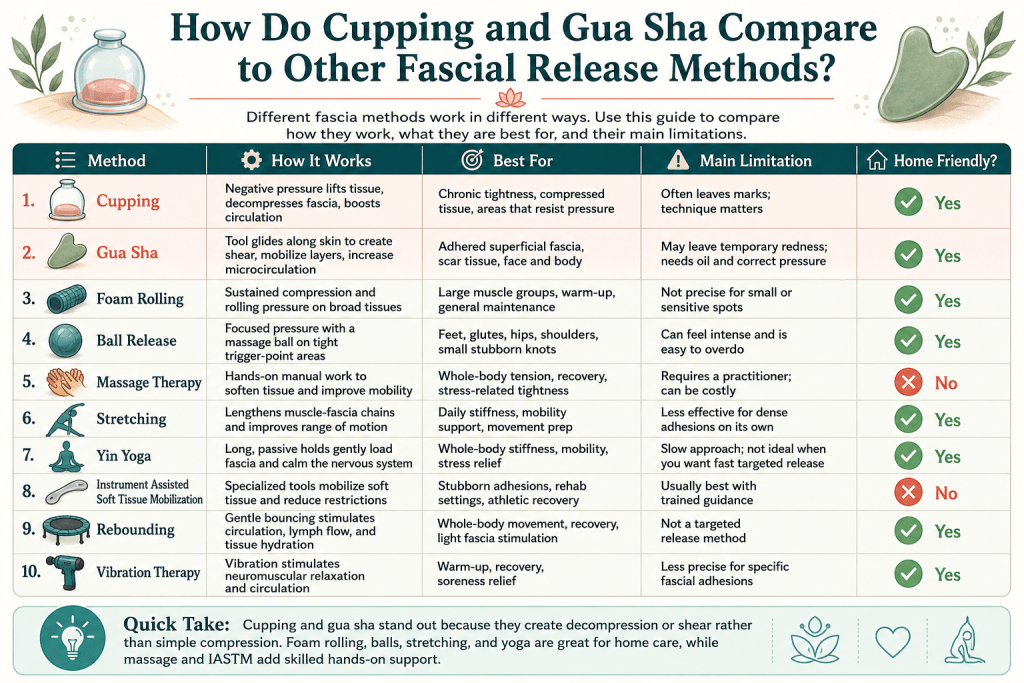
There are many ways to work on fascia. Each method has strengths and limitations. The table below compares cupping and gua sha to the other most common approaches.
|
Method |
Mechanism |
Best for |
Limitations |
Home practice friendly |
|
Cupping |
Negative pressure lifts tissue, decompresses fascia, increases blood flow |
Compressed, restricted, or chronically tight areas; deep tissue that resists other tools |
Leaves visible marks; requires practice for good technique |
Yes, with silicone or pump cups |
|
Gua Sha |
Mechanical shear along skin unsticks fascial layers, stimulates fibroblasts, increases microcirculation |
Adhered fascial layers; areas of old scar tissue; superficial fascia; face and body |
Leaves temporary red marks; requires oil and correct pressure |
Yes, with any smooth-edged tool |
|
Foam Rolling |
Sustained compression flattens and rehydrates fascia |
Large muscle groups; general fascia maintenance; warm-up |
Cannot reach small or deep areas; requires floor space; can compress rather than release if used aggressively |
Yes |
|
Ball Release |
Focal compression on trigger points and small fascial areas |
Piriformis, gluteal, foot, and specific knot release |
Can be too intense; may cause bruising if held too long |
Yes |
|
Massage Therapy |
Skilled hands work all layers of tissue |
Comprehensive full-body fascial work; skilled diagnosis |
Requires appointments; not free; not immediately accessible |
No |
|
Stretching |
Passive lengthening of muscle-fascia unit |
Range of motion improvements; warm-down; nervous system down-regulation |
Does not address stuck fascial layers directly |
Yes |
|
Yin Yoga |
Sustained low-load stretch to affect deep connective tissue |
Chronic tension patterns; slow, deep fascial hydration |
Requires time and patience; not appropriate for acute pain |
Yes |
|
Instrument Assisted Soft Tissue Mobilization |
Similar to gua sha, adopted by physical therapy |
Rehabilitation settings; scar tissue; sports injuries |
Usually clinical setting; can be aggressive |
Sometimes |
|
Rebounding |
Whole-body oscillation increases fascial glide and lymph flow |
Systemic fascial maintenance; lymphatic support; cardiovascular benefit |
Requires equipment; not focal |
Yes |
|
Vibration Therapy |
Rapid mechanical oscillation loosens fascial adhesions |
Muscle recovery; warm-up; general tension |
Requires equipment; can feel harsh |
Yes |
Cupping and gua sha occupy a specific niche in this list. They are the only two methods that create direct mechanical input to fascia without requiring you to be strong or flexible. They can be done seated, lying down, or in any position that gives you access to the target area. They cost very little to practice at home once you have the tools. And they scale well from very gentle applications for sensitive tissue to more intense applications for chronic restriction.
For midlife women who may be dealing with stiffer, drier fascia and are looking for tools that do not require athletic capacity, cupping and gua sha are exceptionally well-matched to the physiology.
Free 28-Day Fascia Reset Email Course
Get our Free 28-day email course series to help with 1 or 2 exercises per day to release your fascia. One short lesson per day. Two minutes to read each.
What Research Says About Cupping and Gua Sha?
The evidence base for cupping and gua sha has grown substantially over the past twenty years. The quality of studies varies, and both practices are difficult to blind in a way that meets pharmaceutical trial standards. That said, several consistent findings have emerged.
- Cupping and pain: Multiple systematic reviews and meta-analyses have examined cupping for chronic pain, low back pain, neck pain, and shoulder pain. The 2018 systematic review published in the Journal of Traditional and Complementary Medicine found that cupping produced clinically meaningful reductions in pain intensity across multiple pain conditions. A 2015 meta-analysis in PLOS One found similar results for chronic pain specifically, with the strongest effects for musculoskeletal pain.
- Cupping and range of motion: Studies measuring shoulder and cervical range of motion consistently show improvements after cupping. The mechanism appears to be a combination of fascial decompression, reduced protective muscle guarding, and improved local circulation. Effects are typically most pronounced immediately after treatment and persist for at least 24 to 48 hours.
- Cupping and blood flow: Studies using laser Doppler flowmetry and thermal imaging consistently show substantial increases in local blood flow during and after cupping, with effects persisting for hours. This is one of the most reproducible findings in the cupping literature.
- Gua sha and microcirculation: The most well-established finding for gua sha is its effect on microcirculation. Studies by Nielsen and colleagues, published in the Journal of Alternative and Complementary Medicine, demonstrated a fourfold increase in surface microperfusion at the treated site, lasting at least 25 minutes after treatment. Subsequent studies have confirmed similar findings.
- Gua sha and pain: A 2017 systematic review examining gua sha for musculoskeletal pain found that most included studies reported significant improvements in pain and function, with effects typically lasting several weeks after a course of treatment. A 2011 randomized controlled trial in the journal Pain Medicine compared gua sha to a heat pack for chronic neck pain, finding gua sha significantly more effective.
- Gua sha and inflammation: Interesting research has emerged on the systemic effects of gua sha. A 2007 study in Explore found that gua sha treatment upregulated heme oxygenase-1, an enzyme with anti-inflammatory effects, in the treated area. Subsequent research has suggested that the local sha response may trigger broader anti-inflammatory pathways.
- Cupping and gua sha and connective tissue: Both practices appear to influence fibroblast activity and collagen remodeling. Research on IASTM, which is technically similar to gua sha, has demonstrated changes in collagen alignment and improved tissue healing in tendon and ligament injuries. Research on cupping has shown effects on the extracellular matrix.
- Safety: Both practices have excellent safety profiles when performed correctly. The most common side effect is skin discoloration, which resolves on its own. Serious adverse events are rare and typically involve incorrect technique, contraindications that were missed, or wet cupping without proper training.
- Limitations of the research: Study quality varies widely. Sample sizes are often small. Blinding is difficult. Standardization of technique across studies is limited, so the treatment being tested may vary. That said, the consistent direction of findings across multiple methodologies and multiple research groups is meaningful.
The research is at a stage where cupping and gua sha are increasingly accepted as legitimate adjuncts to musculoskeletal care, particularly in physical therapy and sports medicine settings. They are not miracles, and they are not substitutes for movement, strength training, or medical care when medical care is needed. They are, however, evidence-supported tools with real mechanical effects on fascia and real clinical effects on pain and function.
When Should You Choose Cupping, Gua Sha, or Both?
Both tools work on fascia. That does not mean they are interchangeable. Each has situations where it excels.
Choose Cupping When You Have
- Chronically compressed tissue that feels stuck and restricted
- Deep tension that does not respond to surface work
- A specific spot you can identify that needs decompression
- Time to sit or lie still for 5 to 15 minutes with the cup in place
- Muscles that feel bound down to deeper structures
- The desire for a passive treatment (once cups are placed, you can rest)
Cupping is particularly good for the upper back between the shoulder blades, the low back, the hip region, the thighs, and areas of chronic restriction that other methods have not resolved.
Choose Gua Sha When You Have
- Restricted movement that suggests stuck fascial layers rather than deep compression
- Old scar tissue or adhesions from injury or surgery
- Areas that feel “sticky” when you press and slide
- Ropey or dense tissue that has resisted stretching or foam rolling
- The desire for an active technique you can adjust in real time
- Less than 10 minutes to work
Gua sha is particularly good for the neck, jaw, shoulders, forearms, calves, and areas where the tissue quality feels adhered rather than compressed.
Use Both When You Want To
- Address a chronic restriction from multiple mechanical angles
- Work through a stubborn area that has plateaued
- Create a comprehensive weekly fascia maintenance practice
- Support recovery from significant physical work or an athletic event
- Prepare tissue for a movement practice
The typical order when combining is to start with gua sha to warm the tissue and mobilize surface fascial layers, then move to cupping to decompress the deeper layers that have been made more accessible. This is not a rigid rule, and some practitioners prefer the reverse order for specific applications. In the 5-day integration program below, you will see how to sequence both tools thoughtfully.
Worked example: A woman in her early fifties comes to a session with chronic tension in her right upper trapezius and neck that has resisted stretching and general massage for months. The right side of her neck feels ropey when palpated, and her right shoulder sits noticeably higher than her left. Her upper back between her shoulder blades feels dense and compressed. A thoughtful protocol might start with three to five minutes of body gua sha along the trapezius and up into the neck, using light to moderate pressure to unstick the surface fascial layers.
This would be followed by placing silicone cups on the levator scapulae attachment point and along the medial border of the right scapula, leaving them in place for five to eight minutes to decompress the deeper compressed tissue. After removing the cups, gentle range of motion work and a warm shower complete the session. The tissue that has been mobilized by gua sha responds more readily to cupping decompression, and the two techniques together achieve what neither would achieve alone.
Free 28-Day Fascia Reset Email Course
Get our Free 28-day email course series to help with 1 or 2 exercises per day to release your fascia. One short lesson per day. Two minutes to read each.
What Tools and Setup Do You Need for At-Home Practice?
Home practice is safe and effective when you have the right tools and use them correctly.
For Cupping
- Silicone cups: These are the easiest starting point. You squeeze the cup to compress it, place it on oiled skin, and release. The suction is created by the cup returning to its shape. Sets of six to eight cups in different sizes cost between $15 and $40. Look for medical-grade silicone. Avoid cheap cups that lose suction quickly.
- Pump cups: These use a hand pump to create adjustable vacuum. Slightly more complex to use but offer precise pressure control. Sets cost between $30 and $80. Good for areas where you want higher decompression.
- Fire cupping: This is traditional and effective but should only be performed by a trained practitioner. Do not attempt fire cupping at home unless you have been formally trained.
- Wet cupping (hijama): This involves small skin incisions and is a medical procedure. It should only be performed by trained practitioners in appropriate settings.
For Gua Sha
- Body gua sha tool: A larger, flatter tool made for the body, typically 3 to 5 inches long. Materials include stainless steel, jade, rose quartz, or bian stone. Costs range from $15 to $80. The tool should have at least one straight edge and one curved edge.
- Face gua sha tool: Smaller and often shaped for facial contours. Not suitable for body work because it is too small to cover meaningful area.
- IASTM instruments: Physical therapist instruments like Graston tools are technically similar. Not necessary for home practice.
Additional Items
- Oil: Essential for both cupping and gua sha. Cold-pressed jojoba, sesame, sweet almond, or grapeseed oil work well. Avoid oils that are too thin (they run) or too thick (they stick). Add essential oils sparingly if desired, but not on inflamed or sensitive skin.
- Warm environment: Work in a warm room. Cold muscles do not respond as well.
- Towel: Oil can stain fabric. Keep a designated bodywork towel.
- Mirror: Useful for gua sha work on areas you cannot see directly.
- Timer: Useful for cupping to prevent leaving cups too long.
Contraindications for Home Practice
Do not cup or gua sha over:
- Broken skin, open wounds, active infections, or dermatitis
- Areas of active bruising or hematoma
- Areas where you have received cortisone injections in the past two weeks
- Areas directly over major blood vessels (front of the neck, groin, inside of elbow, back of knee)
- Areas over the abdomen if pregnant, or over the low back if pregnant
- Areas over kidneys or spine directly, without care
- Sunburned or otherwise damaged skin
Do not use these practices if you:
- Are on blood thinners (unless cleared by your physician)
- Have a bleeding disorder
- Have severe uncontrolled hypertension
- Have deep vein thrombosis or a history of one
- Have severe varicose veins in the treatment area
- Have active cancer in the treatment area (talk to your oncologist)
- Are in the first trimester of pregnancy
- Have any acute infection or fever
When in doubt, work with a licensed practitioner first and use home practice as a supplement.
How Does the 5-Day Integration Program Work?
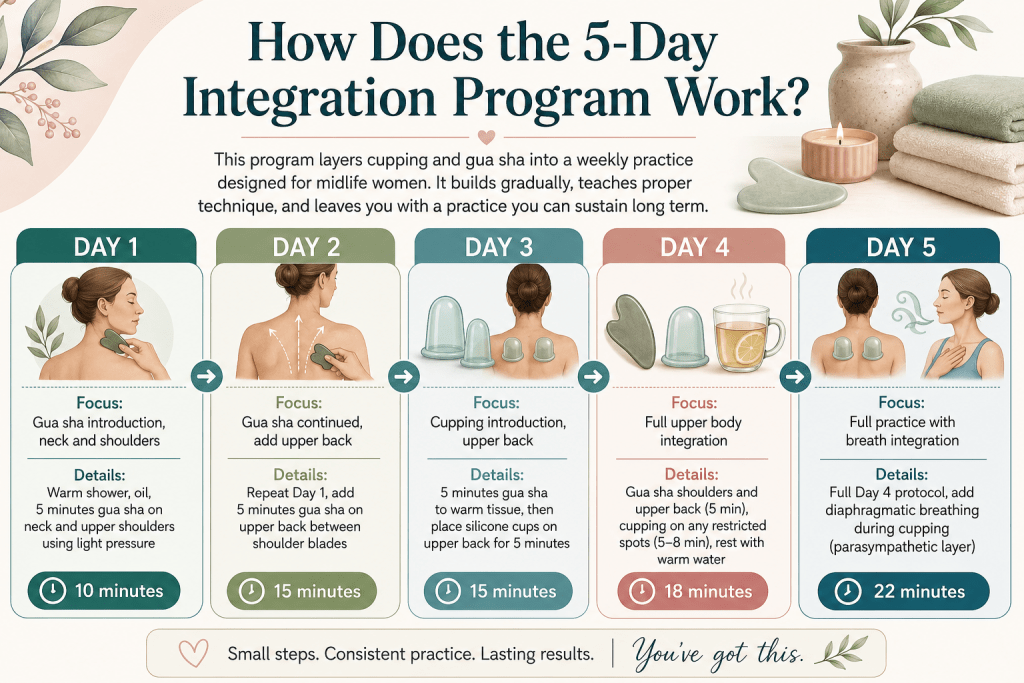
This program layers cupping and gua sha into a weekly practice designed for midlife women. It builds gradually, teaches proper technique, and leaves you with a practice you can sustain long term.
|
Day |
Focus |
Practice |
Duration |
|
Day 1 |
Gua sha introduction, neck and shoulders |
Warm shower, oil, 5 minutes gua sha on neck and upper shoulders using light pressure |
10 minutes |
|
Day 2 |
Gua sha continued, add upper back |
Repeat Day 1, add 5 minutes gua sha on upper back between shoulder blades |
15 minutes |
|
Day 3 |
Cupping introduction, upper back |
5 minutes gua sha to warm tissue, then place silicone cups on upper back for 5 minutes |
15 minutes |
|
Day 4 |
Full upper body integration |
Gua sha shoulders and upper back (5 min), cupping on any restricted spots (5-8 min), rest with warm water |
18 minutes |
|
Day 5 |
Full practice with breath integration |
Full Day 4 protocol, add diaphragmatic breathing during cupping (parasympathetic layer) |
22 minutes |
Day 1: Gua Sha for Neck and Shoulders
Take a warm shower to bring blood flow to the tissue. Apply oil generously to the back of the neck and along the tops of the shoulders. Using the curved edge of a body gua sha tool, work along the trapezius muscle from the base of the skull outward toward the acromion, using long smooth strokes at about a 30-degree angle to the skin. Pressure should be firm enough to see slight pinking but not so hard that you cause pain. Work each side for approximately two minutes. Then use the straight edge to work up either side of the cervical spine (not directly over it), from the top of the shoulders up to the base of the skull. Two minutes each side. Finish with gentle range of motion for the neck and shoulders.
Day 2: Add Upper Back
Repeat the Day 1 sequence. Then, with the tool at a 30-degree angle, work down along both sides of the thoracic spine, from the top of the shoulders down to the bottom of the shoulder blades. Long, smooth strokes, avoiding the spine itself. Between the shoulder blades is often dense and stuck; work slowly here and expect some sha to appear. Two to three minutes each side. Some areas may need a second pass with slightly firmer pressure. If you find a particularly ropey spot, hold the tool over it and rock it gently.
Day 3: Introduce Cupping
Warm the tissue with 5 minutes of the gua sha sequence from Days 1 and 2. Then apply light oil to the upper back. Place silicone cups on the following areas: two cups on the medial border of each scapula, one cup between the shoulder blades on either side of the spine (not directly on the spine). Squeeze each cup, place it, and release. The suction should be firm but not painful. If it hurts, release and use less pressure. Leave cups in place for 5 minutes. Rest quietly during this time. To remove, tilt the cup gently to break the seal. Do not pull cups off directly.
Day 4: Full Upper Body Integration
Follow Day 3’s sequence but add sinking into the sensation of the cups. This is where cupping starts to feel restorative rather than just mechanical. Notice areas that feel like they are opening. Notice your breath. After removing cups, drink water. Rest for at least 10 minutes before returning to activity.
Day 5: Add Breath Integration
Complete the Day 4 sequence with the addition of diaphragmatic breathing during cupping. As you rest with the cups in place, breathe slowly through the nose for a count of four, feeling the belly expand. Hold gently for a count of two. Exhale slowly through the nose for a count of six. Continue for the full duration of the cup placement. This layers vagal tone stimulation and parasympathetic activation onto the mechanical fascial work, which is why many people find this the most restorative version of the practice.
After completing the 5-day introduction, most women benefit from two to three sessions per week of some combination of gua sha and cupping. Rotate the areas you work. Give any specific spot at least 3 to 5 days between sessions to allow tissue to recover. Watch for changes in how the tissue feels, in your range of motion, and in your pain patterns. This is not a race, and slow, sustained practice produces better results than aggressive intermittent effort.
Free 28-Day Fascia Reset Email Course
Get our Free 28-day email course series to help with 1 or 2 exercises per day to release your fascia. One short lesson per day. Two minutes to read each.
How Can You Apply Cupping Safely at Home?
Cupping technique matters. Poor technique produces poor results at best and can cause harm at worst.
- Preparation: Take a warm shower or apply a warm cloth to the area you will treat. This brings blood flow to the tissue and makes it more responsive. Apply oil to the target area. Have a timer nearby.
- Placement: Choose your target area. Common self-cupping areas include the upper back (accessible by reaching), the calves, thighs, forearms, and glutes. Squeeze the silicone cup between your thumb and fingers to compress it. Place the cup on the oiled skin. Release the pressure. The cup should adhere with suction. Check that the suction is firm but not painful. If it hurts, release and use less compression.
- Duration: Leave cups in place for 5 to 15 minutes maximum. Beginners should start with 3 to 5 minutes. Do not leave cups longer than 15 minutes on any single area. Longer durations do not produce better results and can cause tissue damage.
- Movement: There are two techniques with silicone cups: stationary cupping (leave in place) and gliding cupping (move the cup along the tissue). Gliding cupping uses more oil and requires practice. For beginners, stationary cupping is the safer starting point.
- Removal: Tilt the cup gently to one side to break the seal. Do not yank cups off directly. This can be painful and can bruise more than necessary.
- After: Drink water. Rest for at least 10 minutes. The marks that appear are normal and will resolve in 3 to 10 days depending on the intensity of the treatment and how stagnant the tissue was.
- Frequency: Wait at least 3 to 5 days before cupping the same area again. Marks should be fully faded before repeat treatment. If marks are still dark after 10 days, extend the interval or use less suction next time.
How Can You Apply Gua Sha Safely at Home?
- Preparation: Warm the tissue with a shower, warm cloth, or gentle movement. Apply oil generously to the target area. More oil is better than less; if the tool drags rather than glides, you need more oil.
- Tool angle: Hold the tool at approximately a 30-degree angle to the skin. This is the angle that produces effective shear without excessive pressure. A steeper angle digs into tissue and can cause bruising. A flatter angle produces too little effect.
- Direction: Work in the direction of muscle fiber or in the direction that the tissue naturally moves. For the neck and shoulders, work from center outward. For the arms and legs, work distal to proximal (away from the heart) is traditional, though modern practice sometimes reverses this for lymphatic support. Follow the tissue’s natural response.
- Pressure: Start light. You should see slight pinking of the skin, not dark red or purple immediately. Firmer pressure can be applied on the second pass if the tissue responds well. Never continue pressing if pain increases with each stroke.
- Stroke length: Long, smooth strokes work better than short choppy ones. Cover 6 to 12 inches per stroke. Repeat each stroke 5 to 10 times before moving to the next area.
- Duration: Work each area for 2 to 5 minutes. Total session time of 10 to 20 minutes is typical. Longer sessions increase the risk of overdoing it.
- Areas to avoid: Do not gua sha directly over the spine. Do not work over lymph nodes with heavy pressure (front and side of neck, armpit, groin). Do not gua sha the front of the throat. Avoid the abdomen unless you have specific training.
- After: Drink water. Marks (sha) will appear and fade over 3 to 7 days. Wait until marks are fully faded before working the same area again.
Free 28-Day Fascia Reset Email Course
Get our Free 28-day email course series to help with 1 or 2 exercises per day to release your fascia. One short lesson per day. Two minutes to read each.
What Are the Common Cupping and Gua Sha Mistakes and How To Avoid Them?
- Using too much pressure: Both practices work through mechanical effects on fascia, not through brute force. Overdoing pressure causes bruising, muscle guarding, and inflammation without additional benefit. If in doubt, use less pressure.
- Working too long: More is not better. Cupping for 30 minutes is not better than cupping for 10 minutes. Aggressive long sessions cause tissue damage and delay recovery. Stay within reasonable durations.
- Working the same area too often: Tissue needs time to recover between sessions. Working the same spot every day does not accelerate progress. It causes inflammation and can create the very restrictions you are trying to release.
- Skipping the oil: Both practices require oil. Dry gua sha causes friction burns. Dry cupping does not seal properly and pulls at the skin without lifting fascia.
- Working on cold, unprepared tissue: Warm tissue responds. Cold tissue resists. A warm shower, warm cloth, or gentle movement to bring blood to the area should precede every session.
- Ignoring contraindications: Contraindications exist for reasons. If you have any of the listed conditions, either avoid these practices or work with a licensed professional who can assess the specific situation.
- Expecting immediate results: Some benefits appear immediately (increased range of motion, reduced tension). Others take weeks of consistent practice (structural changes, chronic pain reduction). Do not judge these practices by a single session.
- Using these as a substitute for movement: Cupping and gua sha are excellent tools, but they do not replace movement. Fascia needs both mechanical input (which these provide) and dynamic movement to remain healthy. Use these alongside a movement practice, not instead of one.
- Not communicating with your healthcare team: If you are managing a specific condition, tell your physical therapist, physician, or bodyworker what you are doing. These practices interact with other treatments in ways worth coordinating.
What To Expect From Cupping & Gua Sha: Marks, Sensations, and Timelines?
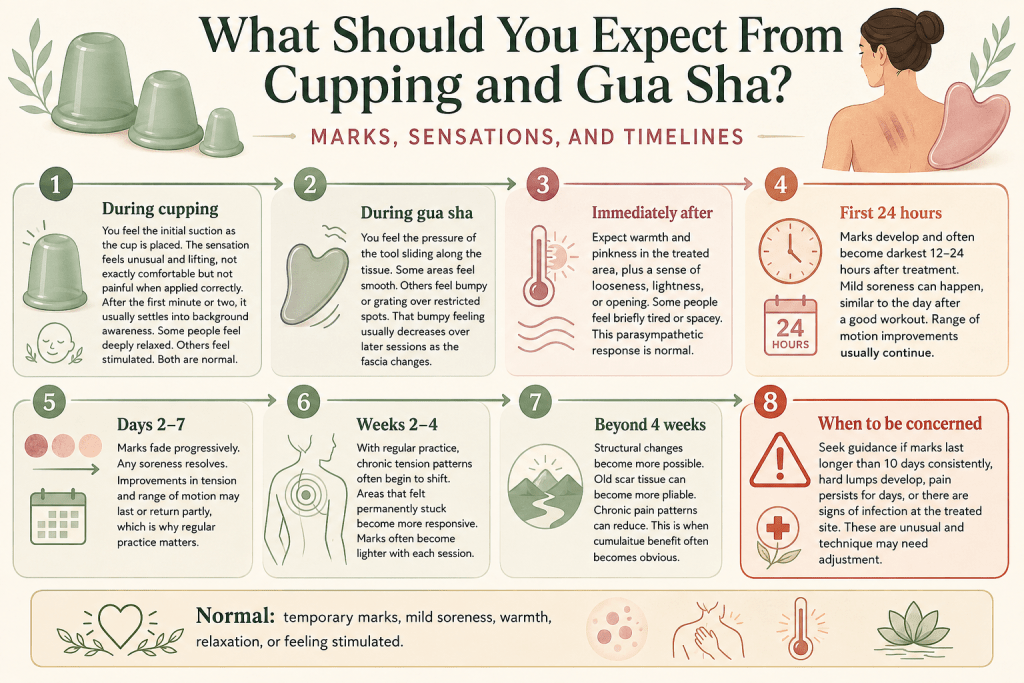
- During cupping: You feel the initial suction as the cup is placed. The sensation is unusual, a lifting feeling that is not exactly comfortable but not painful when applied correctly. Over the first minute or two, the sensation typically settles into background awareness. Some people find cupping deeply relaxing. Others find it stimulating. Both responses are normal.
- During gua sha: You feel the pressure of the tool sliding along the tissue. Some areas will feel smooth. Others will feel bumpy or grating as the tool passes over restricted spots. The bumpy sensation is the fascia responding, and it typically decreases over subsequent sessions as the tissue changes.
- Immediately after: Increased warmth and pinkness in the treated area. A sense of looseness in the tissue. Sometimes a feeling of lightness or opening. Some people feel briefly tired or a bit spacey; this is a parasympathetic response and is normal.
- First 24 hours: Marks develop and often become darkest 12 to 24 hours after treatment. Slight soreness in the treated area is normal, similar to the day after a good workout. Range of motion improvements typically persist.
- Days 2 to 7: Marks fade progressively. Any soreness resolves. Improvements in tension patterns and range of motion may sustain or may return partially, which is why regular practice matters.
- Weeks 2 to 4 of regular practice: Chronic tension patterns often begin to shift. Areas that had felt permanently stuck become more responsive. Marks become lighter with each session because tissue is more responsive.
- Beyond 4 weeks: Structural changes become possible. Old scar tissue can become more pliable. Chronic pain patterns can reduce. This is the timeline where cumulative benefit becomes obvious.
- When to be concerned: Marks lasting longer than 10 days consistently, marks that develop into hard lumps, pain that persists days after treatment, or any signs of infection at the treated site. These are unusual and warrant evaluation. Adjust technique or seek professional guidance if any of these occur.
Free 28-Day Fascia Reset Email Course
Get our Free 28-day email course series to help with 1 or 2 exercises per day to release your fascia. One short lesson per day. Two minutes to read each.
When Should You See a Trained Practitioner Instead?
Home practice is safe and effective for maintenance and self-care. Some situations call for professional guidance.
See a Licensed Practitioner When You Have
- Chronic pain that has not responded to self-care over several weeks
- Acute injury or recent trauma
- Post-surgical scar tissue that needs specialized attention
- A specific medical condition affecting connective tissue
- Any of the contraindications listed earlier and you still want to explore these therapies
- The desire to learn advanced techniques
- The need for cupping over the abdomen, chest, or other sensitive areas
Types of Practitioners Who Use Cupping and Gua Sha
- Licensed acupuncturists: Trained in traditional cupping and gua sha as part of Chinese medicine practice.
- Physical therapists: Some are trained in IASTM (similar to gua sha) and dynamic cupping for musculoskeletal rehabilitation.
- Massage therapists: Some specialize in myofascial techniques including cupping and gua sha.
- Chiropractors: Some incorporate these tools.
- Traditional Chinese medicine doctors: Practitioners of TCM often use cupping and gua sha as part of comprehensive treatment.
What To Look For in a Practitioner
- Appropriate licensing for their scope of practice
- Formal training in the specific technique they are using
- Experience treating clients similar to you
- Cleanliness and hygiene practices
- Clear communication about what to expect
- Willingness to answer questions and adjust based on your feedback
- Integration with your other healthcare providers
“The women who get the most out of cupping and gua sha are the ones who see these tools as part of a broader practice, not as a fix. If you are strength training two or three times a week, walking daily, sleeping seven to eight hours, eating enough protein for your body, and running some nervous system regulation practice each day, then adding cupping and gua sha two or three times per week produces beautiful results. If you are hoping cupping will replace any of those foundations, it will not. The fascia responds when the body has what it needs to respond. These tools give the tissue a chance. The rest of your practice gives your body the resources to take that chance.”
Terry Tateossian, Founder of The House of Rose
Frequently Asked Questions
Are cupping and gua sha the same thing?
Cupping and gua sha are different practices with different mechanisms. Cupping uses negative pressure to lift and decompress tissue. Gua sha uses mechanical shear along the skin to unstick fascial layers. Both work on fascia but through opposite physical directions. Many practitioners use both together because the effects are complementary.
Which is better for chronic tight shoulders and neck?
Both can help, and they work well together. Gua sha is often the better starting point for surface tension, restricted glide, and ropey tissue. Cupping is often the better choice for deep compression, stuck deeper layers, and specific trigger points. In practice, using gua sha first to warm and mobilize the tissue, then cupping to decompress the deeper layers, produces better results than either alone.
Do the marks mean I did it wrong?
No. The marks are the visible sign of increased microcirculation and are part of the mechanism, not a side effect. Darker marks indicate more stagnant tissue in that area. Marks fade over 3 to 10 days. If marks persist beyond 10 days or if you develop hard lumps, that indicates you used too much pressure and should ease off next time.
How often should I cup or gua sha the same area?
Wait at least 3 to 5 days between sessions on the same area. Marks should be fully faded before the next session. Working the same spot too often causes inflammation and can create restrictions.
Are these safe during perimenopause and menopause?
Cupping and gua sha are safe and often particularly useful during perimenopause and menopause. Fascial changes during hormone transition can make traditional exercise feel harder, and these tools offer a way to work with the tissue that does not require athletic capacity. Avoid the low back and abdomen if you are still menstruating and want to be conservative around your cycle. Otherwise, these practices integrate well with midlife self-care.
Can I cup or gua sha over surgery scars?
Older scars (typically 6 months or more after surgery) often respond well to gentle gua sha, which can help remodel scar tissue. Do not cup or gua sha over fresh scars, over incisions that are still healing, or over anything without clearance from your surgeon. Work with a licensed practitioner for significant scar work.
What about facial gua sha?
Facial gua sha is a related but distinct practice using smaller tools and lighter pressure. It has its own benefits (lymphatic support, facial tension release, mild cosmetic effects) but should not be confused with body work. Facial tools are too small to be effective on the body, and body tools are too aggressive for the face.
Do I need to see a professional first?
Not required, but recommended. One or two sessions with a licensed practitioner teaches you what appropriate pressure and technique feel like, which makes home practice much more effective. Look for licensed acupuncturists, trained massage therapists, or physical therapists with IASTM training.
Will cupping help with cellulite?
The cupping-for-cellulite claims common in wellness marketing are overstated. Cupping temporarily changes the appearance of tissue by increasing local blood flow, and repeated cupping may soften certain fibrous adhesions. It does not address the underlying hormonal, structural, and metabolic factors that contribute to cellulite. Approach these claims with skepticism.
Is cupping or gua sha better for lymphatic drainage?
Both help lymphatic flow through mechanical stimulation. Gua sha is often more focused on lymphatic support because the technique naturally moves fluid along the surface. Cupping affects deeper lymphatic vessels through decompression. For dedicated lymphatic work, gua sha in the direction of lymph flow is usually the first choice, and pairing it with rebounding is a powerful combination.
Can I do these on myself, or do I need someone else?
You can do both on yourself for most accessible areas. The upper back and center of the back are harder to reach; a foam roller with tennis balls can help place cups on your own back, or you can ask a partner. For most other areas (neck, shoulders, arms, legs, chest, sides), self-application is straightforward once you have practiced.
What if I have varicose veins?
Do not cup or gua sha directly over prominent varicose veins. Work around them, or seek professional guidance if the area you want to treat is heavily affected. Compression of surface veins can worsen the condition.
Should I stop if it hurts?
Yes. Both practices should feel intense at times but should not cause sharp, cutting, or increasing pain. If pain worsens as you continue, stop and reduce pressure. Well-applied cupping and gua sha feel like productive intensity, not injury.
Are there specific benefits for hot flashes or night sweats?
Some women report that regular gua sha along the neck and upper back reduces the intensity and frequency of hot flashes. The mechanism is likely through parasympathetic activation and improved sleep quality rather than a direct hormonal effect. Research on this specific application is limited, but the safety profile makes it worth trying as part of a broader hot flash management strategy.
How long until I see real changes?
Range of motion changes often appear within a single session. Chronic tension pattern changes typically require 3 to 8 sessions of regular practice. Structural changes to long-standing scar tissue or adhesions require 8 to 12 sessions or more. Expect gradual progress rather than dramatic single-session changes for anything beyond acute tension.
Can I do these while traveling?
Yes. Silicone cups are compact and travel-friendly. A good body gua sha tool fits in any suitcase. Both practices are excellent for travel-related tension in the neck, shoulders, and low back. Bring a small bottle of oil.
Free 28-Day Fascia Reset Email Course
Get our Free 28-day email course series to help with 1 or 2 exercises per day to release your fascia. One short lesson per day. Two minutes to read each.
References
- Cao, H., Li, X., & Liu, J. (2012). An updated review of the efficacy of cupping therapy. PLOS One, 7(2), e31793.
- Chi, L. M., Lin, L. M., Chen, C. L., Wang, S. F., Lai, H. L., & Peng, T. C. (2016). The effectiveness of cupping therapy on relieving chronic neck and shoulder pain. Evidence-Based Complementary and Alternative Medicine, 2016.
- Cramer, H., Klose, P., Teut, M., Rotter, G., Ortiz, M., Anheyer, D., Linde, K., & Brinkhaus, B. (2020). Cupping for patients with chronic pain: A systematic review and meta-analysis. Journal of Pain, 21(9-10), 943-956.
- Kim, T. H., Kang, J. W., Kim, K. H., Kang, K. W., Shin, M. S., Jung, S. Y., Kim, A. R., Jung, H. J., Choi, J. B., Hong, K. E., & Lee, S. D. (2012). Cupping for treating pain: A systematic review. Evidence-Based Complementary and Alternative Medicine, 2012.
- Lauche, R., Cramer, H., Choi, K. E., Rampp, T., Saha, F. J., Dobos, G. J., & Musial, F. (2012). The influence of a series of five dry cupping treatments on pain and mechanical thresholds in patients with chronic non-specific neck pain: A randomised controlled pilot study. BMC Complementary and Alternative Medicine, 11(1), 63.
- Nielsen, A., Knoblauch, N. T., Dobos, G. J., Michalsen, A., & Kaptchuk, T. J. (2007). The effect of Gua Sha treatment on the microcirculation of surface tissue. Explore, 3(5), 456-466.
- Braun, M., Schwickert, M., Nielsen, A., Brunnhuber, S., Dobos, G., Musial, F., Ludtke, R., & Michalsen, A. (2011). Effectiveness of traditional Chinese “gua sha” therapy in patients with chronic neck pain: A randomized controlled trial. Pain Medicine, 12(3), 362-369.
- Chan, S., Yuen, J., Gohel, M., Chung, C., Wong, H., & Kwong, K. (2011). Guasha-induced hepatoprotection in chronic active hepatitis B: A case series. Clinica Chimica Acta, 412(17-18), 1686-1688.
- Kwong, K. K., Kloetzer, L., Wong, K. K., Ren, J. Q., Kuo, B., Jiang, Y., Chen, Y. I., Chan, S. T., Young, G. S., & Kaptchuk, T. J. (2009). Bioluminescence imaging of heme oxygenase-1 upregulation in the Gua Sha procedure. Journal of Visualized Experiments, (30), e1385.
- Rozenfeld, E., & Kalichman, L. (2016). New is the well-forgotten old: The use of dry cupping in musculoskeletal medicine. Journal of Bodywork and Movement Therapies, 20(1), 173-178.
- Al-Bedah, A. M. N., Elsubai, I. S., Qureshi, N. A., Aboushanab, T. S., Ali, G. I. M., El-Olemy, A. T., Khalil, A. A. H., Khalil, M. K. M., & Alqaed, M. S. (2019). The medical perspective of cupping therapy: Effects and mechanisms of action. Journal of Traditional and Complementary Medicine, 9(2), 90-97.
- Cheatham, S. W., Kolber, M. J., & Salamh, P. A. (2016). Meta-analysis of the effects of instrument-assisted soft tissue mobilization on musculoskeletal disorders: Clinical implications. Journal of the Canadian Chiropractic Association, 60(3), 200-211.
- Loghmani, M. T., & Warden, S. J. (2013). Instrument-assisted cross-fiber massage accelerates knee ligament healing. Journal of Orthopaedic and Sports Physical Therapy, 39(7), 506-514.
- Kim, S., Lee, S. H., Kim, M. R., Kim, E. J., Hwang, D. S., Lee, J., Shin, J. S., Ha, I. H., & Lee, Y. J. (2018). Is cupping therapy effective in patients with neck pain? A systematic review and meta-analysis. BMJ Open, 8(11), e021070.
- Aboushanab, T. S., & AlSanad, S. (2018). Cupping therapy: An overview from a modern medicine perspective. Journal of Acupuncture and Meridian Studies, 11(3), 83-87.
- Furhad, S., & Bokhari, A. A. (2023). Cupping therapy. StatPearls Publishing.
- Wright, K. E., Skinner, S., & Zhu, S. (2023). The musculoskeletal syndrome of menopause. Climacteric, 26(4), 366-371.
- Schleip, R., Gabbiani, G., Wilke, J., Naylor, I., Hinz, B., Zorn, A., Jäger, H., Breul, R., Schreiner, S., & Klingler, W. (2019). Fascia is able to actively contract and may thereby influence musculoskeletal dynamics: A histochemical and mechanographic investigation. Frontiers in Physiology, 10, 336.
- Stecco, C., Stern, R., Porzionato, A., Macchi, V., Masiero, S., Stecco, A., & De Caro, R. (2011). Hyaluronan within fascia in the etiology of myofascial pain. Surgical and Radiologic Anatomy, 33(10), 891-896.
- Wilke, J., Schleip, R., Yucesoy, C. A., & Banzer, W. (2018). Not merely a protective packing organ? A review of fascia and its force transmission capacity. Journal of Applied Physiology, 124(1), 234-244.
Disclaimer: This article is for educational purposes only and does not constitute medical advice, diagnosis, or treatment. Cupping and gua sha can cause temporary skin discoloration, tenderness, and irritation and may not be appropriate for everyone. Avoid using these techniques on broken or irritated skin, active bruising, prominent varicose veins, or major blood vessels. Consult a qualified healthcare provider before practicing cupping or gua sha if you take blood thinners, have a bleeding disorder, a history of deep vein thrombosis, are pregnant, have a medical condition affecting circulation or connective tissue, or are unsure whether these practices are safe for you.
Free 28-Day Fascia Reset Email Course
Get our Free 28-day email course series to help with 1 or 2 exercises per day to release your fascia. One short lesson per day. Two minutes to read each.

Terry Tateossian is a Menopause Lifestyle Medicine Coach, Certified Personal Trainer & Nutritionist and the Founder of THOR: The House of Rose, a wellness brand serving women over 40 through retreats, coaching, macro-nutrition and community. As 25-year founder and entrepreneur, Terry spent two and a half decades building and running successful start-up businesses, an experience that put her on the front line of founder burnout long before she could name it. After facing serious health challenges, early onset menopause, and emotional eating while running her agency and raising two children, Terry rebuilt her health in her 40s and lost more than 80 pounds through evidence-based nutrition, training, and mindset work. Today, she helps women get strong, improve confidence, support hormone health, and create a stronger second half of life. Terry has been featured in major media outlets and is available for podcasts, expert commentary, brand collaborations, and speaking engagements on midlife health, reinvention, emotional eating, menopause wellness, and strength training for longevity. Get her free macro calculator (her cookbook companion) to start your journey to back to health.