
 By Team THOR
Free 28-Day Fascia Reset Email Course
Get our Free 28-day email course series to help with 1 or 2 exercises per day to release your fascia. One short lesson per day. Two minutes to read each.
Your Fascia and Your Hormones: How Estrogen Shapes the Connective Tissue That Explains Menopause Aches, Stiffness, and Joint Pain
Joint pain, stiffness, and unexplained body aches are common during perimenopause and menopause, yet they are often dismissed as normal aging. Many women experience stiff mornings, discomfort that moves between joints, reduced mobility, and the feeling that their body no longer moves as freely as it once did.
These changes may be connected to declining estrogen and its effects on fascia. Fascia is the connective tissue network that surrounds muscles, supports organs, and runs continuously throughout the body. Understanding this connection can make many midlife symptoms easier to explain and more effectively address.
Fascia is metabolically active, densely innervated, and connected to the immune and lymphatic systems. It also responds to hormonal signaling. Estrogen helps support fascial hydration, collagen organization, elasticity, and the smooth gliding of tissues.
As estrogen declines during the menopause transition, fascia may become less hydrated and pliable. This can contribute to stiffness, reduced range of motion, persistent aches, and joint discomfort that seems to appear without a clear cause.
I am Terry Tateossian, founder of The House of Rose and a certified lifestyle medicine coach who leads nutrition-focused yoga retreats for women in perimenopause, menopause, and post-menopause at our Smoky Mountains property in East Tennessee. I founded THOR after experiencing early-onset menopause at 41 and recognizing these same changes in my own body.
This guide explores how estrogen affects fascial tissue, why women’s fascia responds differently than men’s, what changes during menopause, and why pain and stiffness often appear in specific areas. It also covers six evidence-informed practices that can support fascia as part of a broader lifestyle medicine approach.
Important: Not all joint pain and body aches are caused by hormonal or fascial changes. Autoimmune conditions, thyroid dysfunction, medication effects, vitamin deficiencies, and other health issues can produce similar symptoms. Persistent, severe, or worsening symptoms should be evaluated by a medical professional.
What Is The Connective Tissue Called Fascia?
A brief refresh on what fascia is provides the foundation for understanding the hormonal connection.
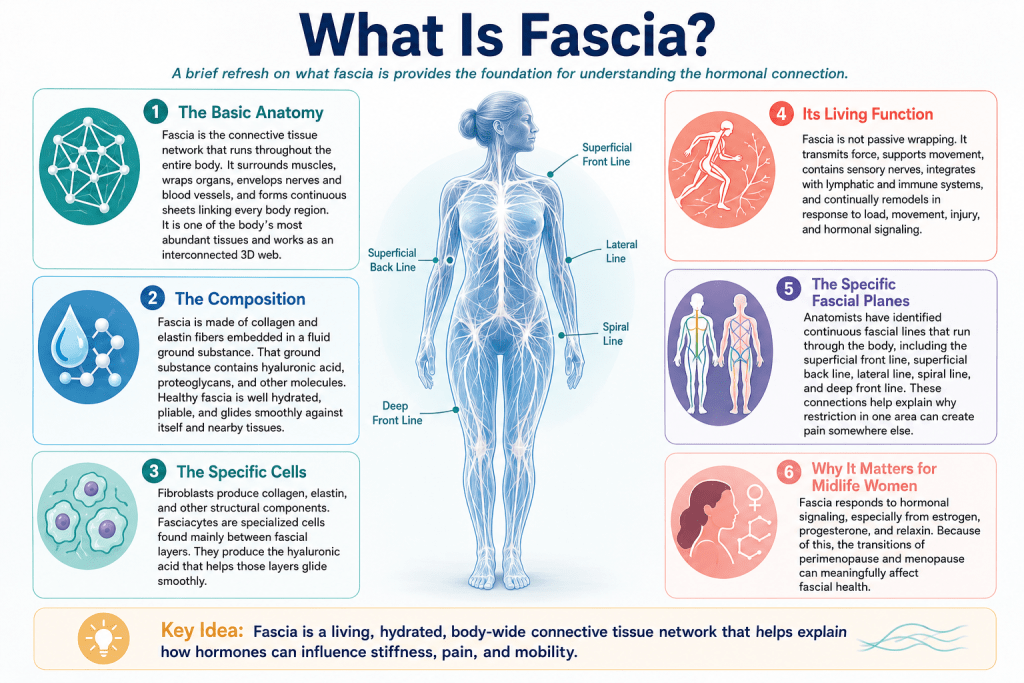
- The basic anatomy: Fascia is the connective tissue network that runs throughout the entire body. It surrounds every muscle, wraps every organ, envelops every nerve and blood vessel, and forms continuous sheets that link every body region to every other body region. It is one of the most abundant tissues in the body and forms an interconnected three-dimensional web rather than a set of discrete structures.
- The composition: Fascia is a web of collagen and elastin fibers embedded in a fluid ground substance. The ground substance includes hyaluronic acid (which holds enormous amounts of water), proteoglycans, and various other molecules. Healthy fascia is well hydrated, pliable, and glides smoothly against itself and against adjacent tissues.
- The specific cells: Two cell types matter most for the hormonal conversation. Fibroblasts produce collagen, elastin, and other structural components. Fasciacytes are a specialized cell type identified more recently that live primarily at interfaces between fascial layers and produce the hyaluronic acid that keeps fascial layers gliding.
- Its living function: Fascia is not passive wrapping. It transmits force, participates in movement, contains extensive sensory nerve innervation (which is why fascial restriction hurts), integrates with the lymphatic and immune systems, and continuously remodels in response to load, movement, injury, and hormonal signaling.
- The specific fascial planes: Anatomists have mapped several continuous fascial lines that run through the body from region to region. The superficial front line, superficial back line, lateral line, spiral line, deep front line, and others each connect distant body regions in ways that explain how restriction in one area can produce pain in another.
- Why it matters for midlife women: Fascia is responsive to hormonal signaling in ways that most other tissues are not, and the specific hormones women produce (estrogen, progesterone, relaxin) affect fascia meaningfully. This makes the hormonal transitions of perimenopause and menopause consequential for fascial health.
The Difference Between Women’s Fascia vs Men’s Fascia?
The specific ways in which women’s fascia differs from men’s are worth understanding because they explain the specific menopause-fascia connection.
- Baseline compositional differences: Research has documented that women’s fascia tends to have somewhat different collagen composition, higher water content, and greater baseline elasticity compared to men’s fascia at the same age. These differences appear to be largely driven by the higher circulating estrogen levels women maintain through their reproductive years.
- Baseline elasticity and springiness: Women’s fascia is generally more pliable and springy than men’s. This has practical implications for movement, flexibility, and injury patterns throughout adult life. It also has implications for what happens when estrogen levels shift.
- The specific joint effects: Women have generally greater joint range of motion than men throughout the reproductive years, again attributed largely to hormonal effects on connective tissue. The specific range of motion at hips, spine, and other joints tends to be greater in premenopausal women than in age-matched men.
- The pregnancy-specific adaptations: Women’s connective tissue is adapted to pregnancy, which requires substantial fascial and ligamentous laxity to accommodate a growing fetus and eventual birth. The hormone relaxin produces this laxity during pregnancy. The general responsiveness of female connective tissue to hormonal signaling is part of this broader adaptation.
- The specific vulnerabilities: The higher fascial elasticity that supports pregnancy also produces specific vulnerabilities. Women have higher rates of certain ligament injuries (particularly ACL injuries in athletes) and certain joint conditions that reflect the hormonal responsiveness of female connective tissue.
- What changes at menopause: As estrogen declines through perimenopause and menopause, the hormonal support for female fascial characteristics weakens. Fascia becomes stiffer, less hydrated, and less elastic. The specific baseline that women had through their reproductive years shifts toward a less-pliable state.
- Not the same as becoming men’s fascia: Postmenopausal women’s fascia does not become identical to men’s fascia. It becomes women’s fascia with reduced hormonal support. The specific pattern of change reflects the loss of estrogen-supported qualities rather than a shift to a fundamentally different tissue type.
- The practical implication: Because female fascia is responsive to hormonal signaling, the specific interventions that support fascia through menopause need to account for this hormonal responsiveness rather than treating fascia as a hormone-neutral tissue.
“The specific reason the fascia-hormone connection matters for coaching clients is that it names something that has often been dismissed or misdiagnosed. A coaching client in her late forties or early fifties who has been told repeatedly that her aches and stiffness are just aging often experiences meaningful relief simply from understanding that what she is experiencing is a specific hormonal shift affecting a specific tissue system in a specific way. The naming produces both intellectual clarity and practical direction. Once she understands why her body is different than it was five years ago, she can begin working with the specific practices that support fascia through this transition. Within two to three months of consistent daily fascial work combined with the broader lifestyle medicine framework, most coaching clients report meaningful reduction in the aches and stiffness that had been present. This is not a miracle. It is the specific application of a specific framework to a specific problem. The framing is what makes it possible.”
Terry Tateossian, Founder of The House of Rose
Free 28-Day Fascia Reset Email Course
Get our Free 28-day email course series to help with 1 or 2 exercises per day to release your fascia. One short lesson per day. Two minutes to read each.
What Is the Specific Role of Estrogen in Fascial Tissue?
Understanding the specific mechanisms by which estrogen affects fascia clarifies why the menopause transition produces such visible effects in this tissue system.
- Estrogen receptors on fascial cells: Fibroblasts and other fascial cells carry estrogen receptors. This means these cells respond directly to estrogen signaling. When estrogen levels are stable in the reproductive years, fascial cells receive consistent signaling that supports their function. When estrogen fluctuates through perimenopause and then declines through menopause, this signaling shifts substantially.
- Estrogen and hyaluronic acid production: Estrogen supports hyaluronic acid production by fascial cells and by other tissues. Hyaluronic acid is the specific molecule that holds enormous amounts of water in connective tissue and that provides the specific gliding function at fascial layer interfaces. Reduced estrogen typically reduces hyaluronic acid production, producing the specific pattern of reduced fascial hydration and reduced glide.
- Estrogen and collagen composition: Estrogen influences the specific ratio and organization of collagen types in fascial tissue. Postmenopausal shifts in collagen composition produce fascia that behaves differently mechanically than premenopausal fascia. The specific changes include altered ratio of Type I to Type III collagen and altered organization of the fibers.
- Estrogen and skin: The skin is a specific fascial tissue that many women can observe directly. Research documents that women lose approximately 30 percent of skin collagen in the first five years post-menopause, followed by continued loss of approximately 2 percent per year. Skin becomes thinner, drier, and less elastic. Analogous changes are occurring in fascia throughout the body, even though they are less visible than the skin changes.
- Estrogen and joint tissue: Estrogen affects cartilage, synovial fluid, and periarticular connective tissue. The specific changes in these tissues through the menopause transition contribute to the joint pain and stiffness that many women experience.
- Estrogen and lymphatic function: Fascia and the lymphatic system are functionally interconnected. Estrogen effects on both systems contribute to the specific patterns of fluid retention, puffiness, and lymphatic sluggishness some midlife women experience.
- The estrogen fluctuation of perimenopause: In the perimenopause window before final estrogen decline, hormone levels fluctuate irregularly. This produces the specific pattern of good weeks alternating with bad weeks in terms of fascial symptoms that many perimenopausal women describe. The fluctuation itself, not just the final decline, contributes to the felt experience.
- The post-menopause stabilization: Once estrogen has declined and stabilized at postmenopausal levels, the fascial changes stabilize as well. The specific practice of supporting fascia in this stabilized state can produce meaningful improvement even in the absence of restored estrogen.
What Happens to Fascia Through Perimenopause and Menopause?
The specific timeline and pattern of fascial changes through the menopause transition helps midlife women understand what they are experiencing and when to expect improvement with intervention: These changes can begin during perimenopause and continue gradually throughout post-menopause.
How Do Fascial Changes Progress Through the Menopause Transition?
- Perimenopause: the fluctuation phase: Perimenopause typically begins in the early to mid-forties and lasts from a few years to a decade. Estrogen levels fluctuate irregularly during this period. Fascial symptoms often begin in this window as intermittent stiffness, occasional joint aches, morning stiffness that comes and goes, and periods of feeling less flexible than usual. The specific fluctuation pattern often confuses women because good weeks are followed by bad weeks without obvious explanation.
- The final menstrual period and immediate post-menopause: After the final menstrual period, estrogen typically declines to postmenopausal levels over a period of months to a few years. This is often the window of most rapid fascial change. Women who had ignored earlier symptoms often become unable to ignore them during this window. Morning stiffness may become daily. Joint aches may become persistent. Skin changes become visible. General flexibility often reduces noticeably.
- The first five years post-menopause: Research has documented that women lose approximately 30 percent of skin collagen in the first five years after the final menstrual period. Analogous changes are occurring in fascia throughout the body. This is the specific window where fascial support interventions produce the most visible dividends because the loss is accelerating most rapidly.
- Continued gradual change afterward: After the first several years post-menopause, the rate of fascial change slows to approximately 2 percent per year loss in connective tissue support. This gradual decline continues throughout later life without appropriate intervention.
What Symptoms Can Fascial Changes Produce?
The specific symptom pattern associated with fascial changes can affect movement, flexibility, comfort, and the general felt-sense of the body: These symptoms may occur across several areas rather than remaining limited to one joint or muscle.
- Morning stiffness that improves with movement
- Joint aches that migrate around the body without clear injury
- Reduced range of motion at multiple joints
- Tightness that does not resolve with standard stretching
- A felt-sense of being stuck in the body
- Skin changes that many women notice concurrently
Why Do Fascial Changes Vary Between Women?
The rate and severity of fascial change varies significantly across individuals based on baseline fascial health, activity level, nutrition, sleep quality, stress load, and various other factors: Two women at the same age with the same estrogen levels can have meaningfully different fascial states based on these other factors.
Can Menopause-Related Fascial Changes Be Improved?
The good news is that fascia is one of the most responsive tissues to targeted intervention: Consistent daily practice combined with the broader lifestyle medicine framework can meaningfully improve fascial mobility, hydration, and glide even in postmenopausal women. The changes are not immediately reversible, but the trajectory can be shifted meaningfully.
The perimenopause and early post-menopause window is the specific time when intervention produces the largest returns because the loss is happening most rapidly and the tissue is most responsive to support: Starting fascial practice in this window produces better long-term outcomes than starting a decade later.
Free 28-Day Fascia Reset Email Course
Get our Free 28-day email course series to help with 1 or 2 exercises per day to release your fascia. One short lesson per day. Two minutes to read each.
Why Does This Produce the Specific Symptoms Midlife Women Experience?
The specific symptoms that midlife women experience are worth naming because they help identify when the fascia-hormone framework is the right explanation for what is happening.
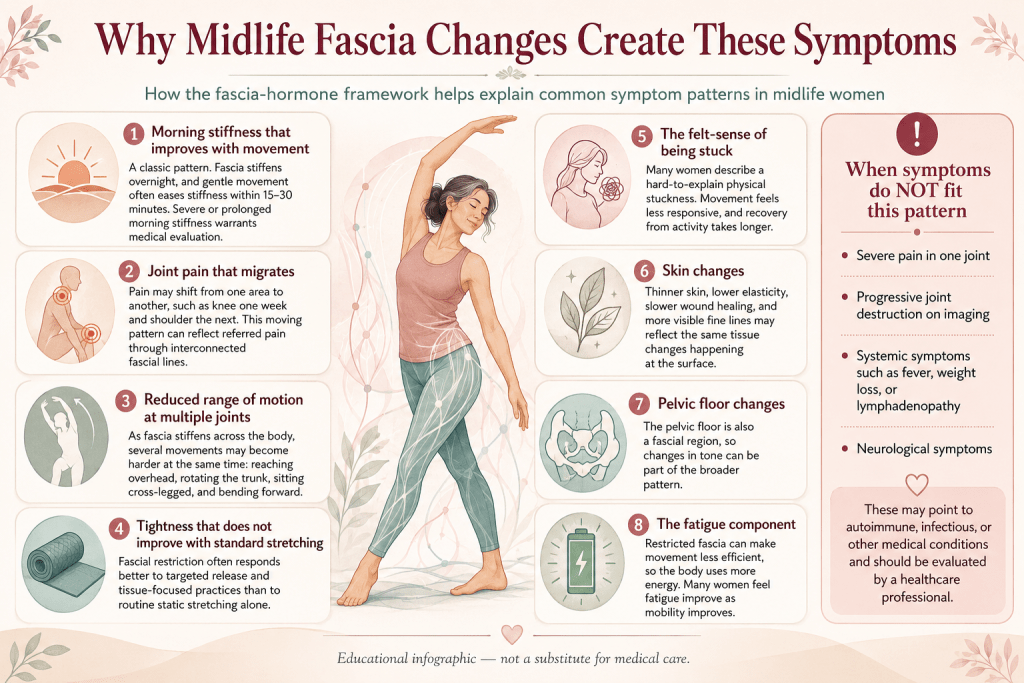
- Morning stiffness and joint pain that improves with movement: This is one of the most characteristic patterns. Fascia is more hydrated during rest and stiffens overnight in the absence of movement. Morning stiffness that resolves within 15 to 30 minutes of movement often reflects fascial rather than joint pathology. Morning stiffness that persists for hours or that is severe warrants medical evaluation for other causes.
- Joint pain that migrates around the body: Fascial restriction can refer pain to distant sites through the interconnected fascial lines. A woman may experience knee pain one week and shoulder pain the next, with no obvious injury explanation for either. This migratory pattern is characteristic of fascial referred pain.
- Reduced range of motion at multiple joints: As fascia stiffens across the body, range of motion at multiple joints reduces simultaneously. Reaching overhead. Rotating the trunk. Sitting cross-legged. Bending forward. These simple movements become progressively harder. The generalized nature of the restriction points toward system-wide fascial changes rather than specific joint pathology.
- Tightness that does not resolve with standard stretching: Fascial restriction responds differently to targeted release than to standard static stretching. Women who have been doing regular stretching without meaningful improvement may benefit from adding specific fascial practices that address the tissue quality directly.
- The felt-sense of being stuck: Beyond specific symptoms, many midlife women describe a general sense of physical stuckness that is hard to articulate. Movement feels harder than it should. The body feels less responsive. Recovery from any physical demand takes longer. This felt-sense often reflects the combined fascial and mitochondrial changes of the transition.
- Skin changes: The skin changes that many midlife women observe reflect fascial changes at the surface. Thinner skin. Reduced elasticity. Slower wound healing. More visible fine lines. These reflect the same underlying tissue changes happening deeper in the body.
- Pelvic floor changes: The pelvic floor is a specific fascial region. The changes in pelvic floor tone that many midlife women experience reflect the broader fascial pattern.
- The specific fatigue component: Chronically restricted fascia contributes to fatigue because moving a restricted body requires more energy than moving a fluid one. Many midlife women describe fatigue that improves as fascial mobility improves.
- When symptoms do not fit this pattern: Some symptoms do not fit the fascia-hormone framework and warrant medical evaluation. Severe joint pain in a single joint. Progressive joint destruction visible on imaging. Systemic symptoms including fever, weight loss, or lymphadenopathy. Neurological symptoms. These may indicate autoimmune conditions, infections, or other conditions requiring specific medical care.
What Does the Research Say About Estrogen, Connective Tissue, and Menopause?
The specific research supporting the fascia-hormone connection is worth understanding because it separates evidence-based framework from wellness speculation.
- Estrogen receptor research: Estrogen receptors have been documented on fibroblasts and other cells throughout connective tissue. This provides the specific mechanism by which estrogen affects fascia and confirms that fascia is a hormonally responsive tissue.
- Skin collagen research: Multiple studies have documented specific collagen changes in skin through the menopause transition. Women lose approximately 30 percent of skin collagen in the first five years after final menstrual period and continue losing approximately 2 percent per year afterward. This is one of the largest single hormonally-driven biological changes of the menopause transition.
- Joint and cartilage research: Estrogen effects on cartilage, chondrocytes, and joint tissues have been documented in multiple studies. Postmenopausal women have measurably different joint tissue characteristics than premenopausal women of similar age.
- Musculoskeletal syndrome of menopause: Some clinicians now use the specific term “musculoskeletal syndrome of menopause” to describe the specific pattern of joint pain, stiffness, and reduced function that many midlife women experience. This framing acknowledges the specific hormonal contribution rather than dismissing the symptoms as generic aging.
- Hyaluronic acid research: Research on hyaluronic acid production in connective tissue has documented estrogen effects on the specific molecule that most directly supports fascial hydration and glide.
- Tendon and ligament research: Studies of specific tendons and ligaments in postmenopausal women have documented mechanical changes consistent with the fascia-hormone framework. Tendon stiffness. Reduced tissue elasticity. Altered response to loading.
- Hormone therapy research: Studies of hormone therapy in postmenopausal women have documented specific effects on connective tissue including skin, joint function, and various other outcomes. This provides indirect confirmation that estrogen affects these tissues because restoring estrogen partially restores the tissue characteristics.
- The specific limitations of current research: Much of the research on female-specific fascial physiology is more limited than the equivalent research on male athletes. This is partly a consequence of historical bias in exercise science research toward male subjects. The specific mechanisms of fascia-hormone interaction in the specific pattern of menopause are still being actively investigated.
- What the current picture supports: The current evidence supports the general framework that estrogen meaningfully affects fascial tissue, that the menopause transition produces specific fascial changes contributing to the symptom pattern many midlife women experience, and that specific interventions can support fascia through this transition. The specific details are still being refined by ongoing research.
Free 28-Day Fascia Reset Email Course
Get our Free 28-day email course series to help with 1 or 2 exercises per day to release your fascia. One short lesson per day. Two minutes to read each.
When Is Fascia Not the Explanation?
Being honest about where the fascia-hormone framework does not explain midlife symptoms matters because it prevents misapplication of the framework. Several medical conditions can produce pain, stiffness, or other symptoms that resemble fascial changes but require different evaluation and treatment.
Medical Conditions That Can Resemble Fascial Symptoms
- Autoimmune conditions: Rheumatoid arthritis, lupus, and other autoimmune conditions can present with joint pain and stiffness that superficially resembles the fascia-hormone pattern. These conditions typically involve specific patterns, including symmetric joint involvement, prolonged morning stiffness lasting over an hour, systemic symptoms, and specific laboratory findings. They require specific medical treatment.
- Thyroid dysfunction: Both hypothyroidism and hyperthyroidism can produce muscle and joint symptoms that resemble the fascia-hormone pattern. Thyroid function warrants evaluation in any midlife woman with persistent musculoskeletal symptoms.
- Vitamin D deficiency: Vitamin D deficiency is common and can produce diffuse musculoskeletal aches. Testing and appropriate supplementation can resolve this contribution to symptoms.
- Fibromyalgia: Fibromyalgia is a specific chronic pain condition with defined diagnostic criteria that differs from the fascia-hormone pattern. Some overlap exists, but the conditions require different management.
Medication and Nerve-Related Causes
Certain symptoms may result from medication effects or nerve-related conditions rather than changes in the fascia.
- Statin-related muscle symptoms: Some women taking cholesterol-lowering statins experience muscle aches that can be attributed to fascia when the actual cause is a medication effect. Discuss new muscle symptoms with your prescribing physician if they develop after starting a statin.
- Peripheral neuropathy: Nerve pain from various causes, including diabetes, alcohol use, chemotherapy, and nutrient deficiencies, can be misattributed to fascia. Nerve pain has specific qualities, such as burning, shooting, tingling, or numbness, that distinguish it from typical fascial pain.
Structural Joint and Tissue Problems
Osteoarthritis, meniscal tears, rotator cuff injuries, and other specific structural conditions can produce joint symptoms that require specific management beyond general fascial support.
These conditions may involve localized pain, weakness, swelling, instability, or loss of function that does not improve through general movement and fascial support strategies.
Symptoms That Require Prompt Medical Evaluation
Some patterns of pain should not be assumed to come from fascia because they may indicate a more serious medical issue.
- Cardiac symptoms: Certain patterns of pain, particularly left arm, chest, or jaw pain associated with exertion, can indicate cardiac issues rather than musculoskeletal problems. Any concerning cardiac symptoms warrant immediate medical evaluation.
- Malignancy: Persistent unexplained pain, particularly if it is progressive or associated with weight loss, night sweats, or other systemic symptoms, warrants evaluation to rule out serious conditions.
The Practical Implication
The fascia-hormone framework explains a significant portion of midlife musculoskeletal symptoms. It does not explain all of them.
Persistent, severe, or atypical symptoms warrant medical evaluation before assuming the fascia-hormone framework is the right explanation.
These Six Evidence-Informed Practices Support Fascia Through Menopause:
The specific interventions that support fascia through the menopause transition are worth articulating clearly because most midlife women want a specific framework they can install rather than general advice.
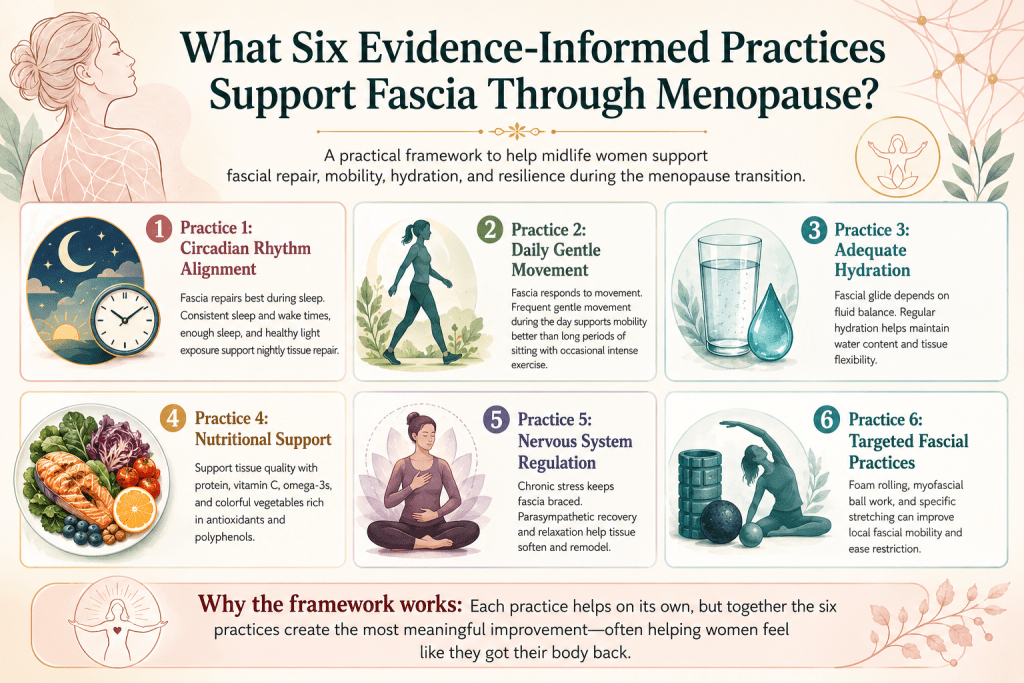
- Practice 1: Circadian rhythm alignment. Fascia repair happens preferentially during sleep. Consistent sleep and wake times, adequate sleep duration, and appropriate light exposure support the nightly fascial repair that keeps the tissue functioning well. This is not obviously a fascial practice, but it is one of the most impactful.
- Practice 2: Daily gentle movement. Fascia responds to movement. Sedentary behavior directly worsens fascial restriction. Regular gentle movement throughout the day is more supportive than intense sporadic exercise combined with prolonged sitting.
- Practice 3: Adequate hydration. Fascial hydration depends on adequate fluid intake. Chronic underhydration common in midlife directly affects fascial water content and glide.
- Practice 4: Nutritional support. Adequate protein for collagen synthesis. Vitamin C for collagen crosslinking. Omega-3s for anti-inflammatory support. Colorful vegetables for antioxidants and polyphenols. These nutritional foundations support fascial tissue quality.
- Practice 5: Nervous system regulation. Chronic sympathetic activation keeps fascia braced. Parasympathetic recovery time supports the tissue relaxation that allows fascial remodeling.
- Practice 6: Targeted fascial practices. Specific fascial release techniques including foam rolling, myofascial ball work, and specific stretching practices produce local improvements in fascial mobility.
Each of these six practices is covered in detail in the following sections. The specific value of the framework is that these six practices work together. Any single practice produces modest results. The combination produces the specific improvements that midlife women describe as feeling like they got their body back.
Free 28-Day Fascia Reset Email Course
Get our Free 28-day email course series to help with 1 or 2 exercises per day to release your fascia. One short lesson per day. Two minutes to read each.
How Does Your Circadian Rhythm Affect Your Fascia?
Circadian rhythm may not seem like an obvious fascial practice, but it is one of the specific foundations that supports fascial repair. Sleep quality, hormonal timing, and consistent daily rhythms all influence the processes that maintain healthy connective tissue.
The Nightly Repair Window
Most tissue repair, including fascial repair, happens preferentially during sleep. Compromised sleep directly reduces the specific repair processes that maintain fascial health.
The Hormone-Sleep Connection
Cortisol, growth hormone, and various other hormones that affect connective tissue function follow specific circadian patterns. Disrupted sleep disrupts these hormonal rhythms, producing downstream effects on fascia.
The Menopause Sleep Pattern
The sleep disruption of perimenopause and menopause is one of the largest quality-of-life issues in this life stage. It also has direct fascial consequences beyond the general effects on daytime function.
A Practical Circadian Framework
The specific practices that support the circadian foundation for fascial repair include:
- Consistent bed and wake times
- Adequate sleep duration, typically seven to nine hours
- A cool, dark bedroom
- Screen limits in the evening
- Morning light exposure
- Appropriate stress management
The Specific Value for Fascial Health
Addressing sleep as a fascial intervention often produces meaningful improvement in fascial symptoms that would otherwise remain persistent. Sleep is not optional for fascial health.
How Does Movement Affect Fascia?
The specific role of movement in fascial health is worth understanding because both too little and too much of certain kinds of movement can be problematic.
- Fascia requires movement: Sedentary behavior directly worsens fascial restriction because fascia adapts to the positions the body spends the most time in. Prolonged sitting produces the specific pattern of shortened hip flexors, tight lower back, restricted thoracic spine, and various other fascial restrictions.
- The specific supportive movement pattern: Daily walking, regular resistance training targeting the four major muscle groups, and periodic specific fascial practices produce the movement variety that supports fascial health. Even short micro walks throughout the day can add another practical layer of consistent movement without requiring long workout sessions.
- The rotation component: Fascia responds particularly well to gentle rotational movement. Yoga, tai chi, dance, and various other movement traditions that include rotation support fascial health in ways that pure linear movement does not.
- The sustained-hold component: Fascia responds to sustained gentle loading over minutes rather than brief bouts of stretching. Yin yoga works with this principle by holding postures for 3 to 5 minutes or longer.
- The dynamic warm-up importance: Fascia is stiffer when cold and more pliable when warm. Warming up before demanding movement supports fascial function. Cold static stretching is generally less supportive than dynamic warm-up.
- The specific caution against excessive intense exercise: Some midlife women respond to menopause aches by dramatically increasing intense exercise. This can worsen fascial symptoms because intense loading of an already stiffened tissue system produces more restriction. The specific pattern that works better is gentle daily movement combined with appropriate resistance training, not more intense endurance training.
- The frequency principle: Fascia benefits from consistent daily movement more than from occasional intense sessions. Five to fifteen minutes of daily fascial-focused practice produces better results than an hour once a week.
Free 28-Day Fascia Reset Email Course
Get our Free 28-day email course series to help with 1 or 2 exercises per day to release your fascia. One short lesson per day. Two minutes to read each.
How Does Hydration Affect Fascia?
Fascial hydration depends directly on adequate fluid intake, and chronic underhydration is one of the specific contributors to midlife fascial restriction.
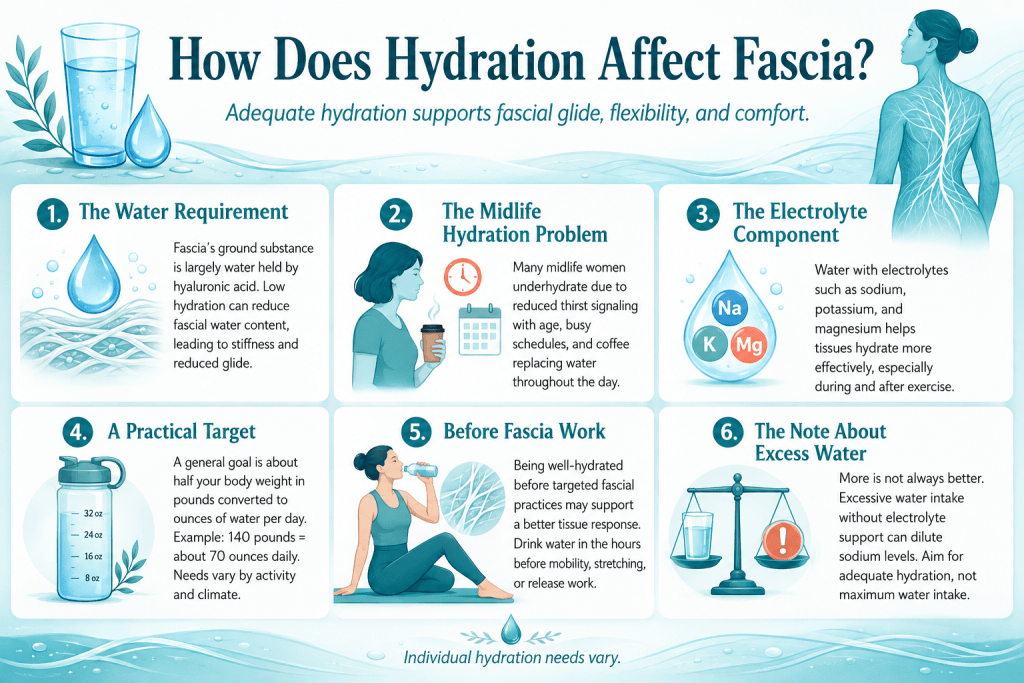
- The specific water requirement: Fascia’s ground substance is largely water held by hyaluronic acid. Reduced systemic hydration directly reduces fascial water content and produces the specific pattern of stiffness and reduced glide.
- The midlife hydration problem: Many midlife women underhydrate for various reasons, including reduced thirst signaling that comes with age, busy schedules, coffee replacing water throughout the day, and other common hydration mistakes that can make it harder to maintain consistent fluid intake.
- The electrolyte component: Water without appropriate electrolytes (sodium, potassium, magnesium) does not hydrate tissues as effectively as water with electrolytes. Some midlife women benefit from specific attention to electrolyte balance particularly during and after exercise.
- The specific practical target: Approximately half your body weight in pounds converted to ounces of water is a reasonable general target (a 140-pound woman would target approximately 70 ounces per day). Individual needs vary based on activity, climate, and other factors.
- The pre-fascia-work hydration: Being well-hydrated before doing targeted fascial practices produces better results than doing them dehydrated. Water intake in the hours before practice supports tissue response.
- The specific note about excess water: Excessive water intake without electrolyte support can dilute sodium levels and produce its own problems. The goal is adequate hydration, not maximum water intake.
How Does Nutrition Support Fascia?
The specific nutrients that support fascial tissue quality are worth naming because targeted nutrition supports fascial health in ways that hydration alone cannot.
- Adequate protein: Fascia is built from collagen and other proteins. Adequate daily protein intake provides the amino acid substrates. Approximately 1.6 to 2.2 grams per kilogram of body weight for midlife women is the general target, distributed across meals with 25 to 40 grams per meal.
- Vitamin C: Vitamin C is a required cofactor for collagen synthesis. Adequate intake (approximately 500 mg daily as a working target) supports the specific enzymatic processes that build fascial collagen.
- Omega-3 fatty acids: Omega-3s support anti-inflammatory function that reduces the chronic low-grade inflammation contributing to fascial restriction.
- Colorful vegetables and polyphenols: Antioxidants and polyphenols protect fascial tissue from oxidative damage and support cellular repair.
- Zinc and copper: These trace minerals support the enzymes involved in collagen synthesis and crosslinking.
- Vitamin D: Vitamin D supports bone and connective tissue health broadly. Deficiency is common in midlife women and warrants specific attention.
- The collagen supplementation question: Collagen peptide supplements have modest evidence for skin and joint outcomes. They are optional additions on top of the nutritional foundation, not substitutes for it.
- The bone broth alternative: Traditional slow-cooked bone broth provides collagen, gelatin, and specific amino acids in food form. Adding bone broth to the diet is one specific way to support fascial nutrition through food rather than supplements.
- The Mediterranean pattern: The general Mediterranean eating pattern with adequate protein, colorful vegetables, olive oil, and traditional food preparations aligns well with fascial nutritional support.
Free 28-Day Fascia Reset Email Course
Get our Free 28-day email course series to help with 1 or 2 exercises per day to release your fascia. One short lesson per day. Two minutes to read each.
How Does Nervous System Regulation Affect Fascia?
The specific role of nervous system regulation in fascial health is worth understanding because chronic sympathetic activation keeps fascia braced in ways that undermine every other intervention.
- The bracing effect: Chronic stress produces continuous low-grade muscle and fascial tension throughout the body. This bracing pattern is one of the specific contributors to midlife fascial restriction that even good movement and nutrition cannot fully address if the underlying sympathetic activation remains.
- The specific menopause-cortisol pattern: The cortisol dysregulation common in perimenopause and menopause contributes to the chronic bracing. Addressing cortisol through sleep, stress management, and nervous system practices supports fascial health.
- The parasympathetic recovery importance: Fascia can only fully repair during parasympathetic dominance. Chronic sympathetic activation reduces the time the body spends in the repair state.
- The specific vagal practices: Extended exhalation breathing, humming, gargling, cold face immersion, and other vagus nerve reset exercises can help encourage parasympathetic activation and support a calmer nervous system response.
- The daily rhythm: A few minutes of specific parasympathetic practice built into the daily rhythm supports fascial repair. Morning practice sets the day’s tone. Evening practice supports sleep.
- The specific menopause emotional layer: The mood changes and emotional intensity of perimenopause and menopause can add to the overall nervous system load, sometimes influencing everyday behaviors such as emotional eating and stress-related food habits.
Which Targeted Fascial Practices Support Mobility?
The specific fascial practices that address restriction directly are worth naming because they produce the most immediately visible effects on fascial mobility.
Foam Rolling and Targeted Ball Release
- Foam rolling: General foam rolling of major muscle groups produces measurable improvements in fascial mobility and range of motion. Short sessions of 10 to 15 minutes daily produce meaningful benefit.
- Myofascial ball release: Focused pressure with a therapy ball can target restricted areas more precisely than a foam roller, whether you’re working on a tight psoas, using piriformis fascia release techniques, or adding fascia release exercises that support weight-loss goals.
Slow, Sustained Movement Practices
- Yin yoga: Yin yoga uses sustained postures held for 3 to 5 minutes or longer to produce specific fascial responses. This is one of the most effective movement traditions for fascial support.
- Tai chi and slow rotational movement: The specific slow rotational movement of tai chi supports fascial planes in ways that linear movement does not.
- Static stretching with breath: Traditional static stretching held for 45 seconds or longer with slow breath produces fascial as well as muscular effects. This is different from brief pre-workout stretching.
Professional Massage Support
Professional massage supports fascial mobility. Regular sessions, either monthly or bi-monthly, can support the home practice.
A Practical Menopause Fascial Routine
For midlife women specifically, a combination of the following practices produces meaningful support for fascia through the transition:
- Daily 10-minute foam rolling
- Targeted ball work for restricted areas
- Twice-weekly yin yoga sessions
- Periodic professional massage
When to Stop and Reassess
Sharp pain, nerve-like symptoms such as numbness or tingling, or radiating pain are signs to stop and reassess. Discomfort at a stretch is normal. Pain that seems wrong is a signal.
Free 28-Day Fascia Reset Email Course
Get our Free 28-day email course series to help with 1 or 2 exercises per day to release your fascia. One short lesson per day. Two minutes to read each.
What Can You Expect With Consistent Practice?
Setting realistic expectations for what improves and when helps midlife women stay consistent with the practices long enough to see results.
What Changes During the First Six Weeks?
- Weeks 1 to 2: Some immediate subjective improvement in specific areas that receive targeted practice. Morning stiffness may reduce modestly. The felt-sense of tightness may soften. Improvements are typically modest at this stage.
- Weeks 3 to 6: More noticeable improvements in specific areas. Some general reduction in aches and stiffness. Range of motion may improve modestly at specific joints. The practice starts to feel automatic rather than deliberate.
What Changes Between Seven Weeks and Six Months?
- Weeks 7 to 12: Meaningful cumulative improvement. Many women describe feeling meaningfully better than at baseline. Chronic aches that had been persistent for years begin resolving. Movement feels easier. Sleep may improve. Skin may look better.
- Months 3 to 6: Deeper structural improvements. Body composition changes may become visible as improved fascial mobility supports better movement and improved training response. Emotional relationship with the body often shifts noticeably.
- Months 6 to 12: Substantial transformation for women who maintain consistent practice. The pattern of midlife aches and stiffness that had seemed permanent often resolves substantially. Some women describe feeling meaningfully more like their pre-menopause selves in terms of physical ease.
Why Does the Timeline Vary?
The individual variation. Timeline varies significantly across women. Baseline fascial health, consistency of practice, quality of the broader framework, and various other factors affect how quickly and how much improvement appears.
What May Not Return to the Pre-Menopause Baseline?
What does not return to pre-menopause baseline. Some fascial characteristics do not fully return to pre-menopause baseline without hormone therapy:
- Skin thickness
- Certain aspects of joint tissue
- The specific bounce and springiness of premenopausal fascia
What can improve substantially is the felt-sense of the body, the aches and stiffness, the mobility, and the general trajectory.
Why Does Consistency Matter?
The specific caution. Sporadic practice produces limited results. Consistent daily practice over months produces the improvements. Women who abandon the framework after a few weeks and then blame the framework rather than the inconsistency miss the specific value the framework provides.
“The specific pattern I see with coaching clients who successfully install the fascia-hormone framework is that the first six weeks feel like ordinary self-care. Some improvement. Modest changes. Nothing dramatic. Then somewhere between weeks 8 and 12, something shifts. They wake up one morning and realize they are not stiff. They finish a workout and realize they recovered easily. They reach for something on a high shelf and realize it did not feel like work. The specific transformation that many midlife women had stopped expecting starts becoming visible. That is when the framework earns its place in their daily routine indefinitely. The specific work that produced the shift becomes ordinary and non-negotiable because they can feel what it is doing. This is why I encourage coaching clients to commit to three months of consistent practice before evaluating whether the framework works for them. Anything less usually misses the specific window where the shift becomes visible.”
Terry Tateossian, Founder of The House of Rose
Can Hormone Therapy Support Fascial Health?
The specific question of hormone therapy and fascia deserves honest attention because it is one of the specific interventions with direct effects on the underlying mechanism.
How Does Hormone Therapy Affect Fascia?
Restoring estrogen through hormone therapy provides the specific hormonal signaling that fascial cells respond to. Research documents that hormone therapy modestly supports:
- Skin collagen
- Joint tissue characteristics
- Various other connective tissue outcomes
The specific concerns raised by the initial Women’s Health Initiative results have been substantially revised by subsequent analysis. For most women in the appropriate time window, hormone therapy is safer than the earlier interpretation suggested. Current North American Menopause Society position statements provide the specific evidence-based framework.
What Should You Consider Before Choosing Hormone Therapy?
Hormone therapy is a specific medical decision made in partnership with a menopause specialist. The specific considerations include:
- Your specific symptoms
- Medical history
- Family history
- Age at menopause
- Time since menopause
- Various other individual factors
This is not a decision to make based on general internet content.
For women considering the hormone therapy question, working with a menopause specialist rather than a general practitioner often produces better decision support. The North American Menopause Society directory can help identify specialists.
For some fascial concerns, particularly those involving the pelvic floor and skin, topical estrogen preparations produce specific local effects with fewer systemic implications than oral or transdermal hormone therapy. Discuss this option with your menopause specialist.
How Does Hormone Therapy Fit Into the Fascial Support Framework?
Hormone therapy does not eliminate the need for the fascial support framework. It complements the framework by addressing one specific mechanism.
- Women on hormone therapy still benefit from the six practices in this article.
- Women not on hormone therapy still benefit meaningfully from the framework alone.
Whether or not hormone therapy is part of your specific plan, the fascial support framework in this article addresses the specific tissue changes through appropriate practices. The framework is compatible with hormone therapy and produces meaningful results without it.
Free 28-Day Fascia Reset Email Course
Get our Free 28-day email course series to help with 1 or 2 exercises per day to release your fascia. One short lesson per day. Two minutes to read each.
What Are the Common Misinterpretations and Wellness Marketing Distortions?
Several specific misinterpretations and distortions of the fascia-hormone framework are worth naming directly.
- Distortion 1: The miracle supplement. Some marketing content promises specific supplements or protocols will reverse menopause fascial changes dramatically. The specific reality is that meaningful improvement requires sustained consistent practice over months. No supplement produces the specific transformation that the framework produces.
- Distortion 2: The one-secret protocol. Some content claims to know a specific hidden protocol that mainstream medicine does not share. The framework in this article is not secret. It is the specific application of well-known principles.
- Distortion 3: The expensive fascial devices. Various expensive fascial devices (specific rollers, guns, machines) are marketed for menopause fascia. Most of the fascial benefit comes from the practice itself, not from expensive equipment. A basic foam roller and therapy ball provide most of the tool value.
- Distortion 4: The bypass of hormone therapy consideration. Some content encourages women to reject hormone therapy consideration in favor of natural approaches. The honest framework treats hormone therapy as a specific medical decision worth evaluating with a qualified specialist, not as something to reject on principle.
- Distortion 5: The pain-is-inevitable framing. The opposite distortion suggests that midlife pain and stiffness are inevitable consequences of aging that cannot be meaningfully improved. The specific research and clinical experience both indicate that meaningful improvement is possible with the right framework.
- Distortion 6: The commercial packaging of standard practices. Some content packages basic movement, hydration, and nutrition practices with expensive branded programs. The specific practices are freely available. The value of a program is in the specific support for consistent execution, not in access to secret information.
Approach content with the same critical thinking you would apply to any other health topic. Look for specific evidence. Be skeptical of urgency, scarcity, and miracle claims. Distinguish between the specific practices that produce results and the marketing around them.
Free 28-Day Fascia Reset Email Course
Get our Free 28-day email course series to help with 1 or 2 exercises per day to release your fascia. One short lesson per day. Two minutes to read each.
When Should You See a Healthcare Professional?
Fascia-hormone framework is one component of midlife health but does not substitute for appropriate medical care.
- Any severe or progressive symptoms: Persistent severe pain, progressive joint destruction, or systemic symptoms warrant medical evaluation.
- Symptoms not fitting the fascial pattern: Numbness, weakness, systemic symptoms (fever, weight loss, night sweats), or symptoms suggesting cardiac issues warrant medical evaluation before assuming fascia is the explanation.
- Persistent morning stiffness over an hour: Prolonged morning stiffness is a specific sign of inflammatory arthritis and warrants rheumatology evaluation.
- Symmetric joint involvement: Symptoms affecting the same joints on both sides of the body simultaneously warrant evaluation for autoimmune conditions.
- Failure to improve: If eight to twelve weeks of consistent framework practice produces no meaningful improvement, medical evaluation for other conditions is appropriate.
- Consideration of hormone therapy: The hormone therapy decision requires professional guidance from a menopause specialist.
- Vitamin D and thyroid: These specific conditions can produce fascia-like symptoms and warrant testing.
- Medication review: New musculoskeletal symptoms after starting new medications warrant review with the prescribing physician.
- Falls or acute injuries: Any fall or acute injury warrants medical evaluation regardless of the general fascial framework.
Free 28-Day Fascia Reset Email Course
Get our Free 28-day email course series to help with 1 or 2 exercises per day to release your fascia. One short lesson per day. Two minutes to read each.
What Are Your Next Steps?
If the framework in this article resonates and you want to install the fascia-hormone practice, here are the four next steps in order of friction.
- Install the sleep foundation this week. Consistent bed and wake times, adequate sleep duration, and a cool, dark bedroom can provide more fascial benefit than most people realize, making a well-rounded midlife sleep-support routine an important part of the foundation.
- Add ten minutes of daily fascial practice. Foam roller, therapy ball, or yin yoga postures. Same time each day for four weeks.
- Address the protein and hydration foundation. Our free Macro Calculator provides your protein target. Aim for adequate daily water intake with appropriate electrolyte balance.
Frequently Asked Questions
Does menopause cause joint pain and stiffness?
Yes, in a specific sense. The hormonal changes of perimenopause and menopause affect connective tissue including fascia, joint capsules, cartilage, and related structures. This produces the specific pattern of joint pain and stiffness that many midlife women experience. The specific mechanism involves reduced estrogen support for connective tissue hydration, elasticity, and glide. Other conditions can also produce similar symptoms, so persistent or severe symptoms warrant medical evaluation.
How does estrogen affect fascia?
Estrogen supports fascia through multiple mechanisms including direct effects on fibroblasts via estrogen receptors, support for hyaluronic acid production that maintains fascial hydration, effects on collagen composition and organization, and support for the overall pliability that keeps fascia gliding smoothly. As estrogen declines through menopause, all of these fascial qualities shift measurably.
Can I improve my fascia after menopause?
Yes. Fascia is one of the most responsive tissues to targeted intervention. Consistent daily practice combined with the broader lifestyle medicine framework can meaningfully improve fascial mobility, hydration, and glide even in postmenopausal women. Improvements typically appear within 4 to 12 weeks of consistent practice and continue developing over months.
Why does my body ache more in menopause?
The specific hormonal changes affect multiple systems including fascia, joints, cartilage, and related structures. Reduced estrogen support produces reduced fascial hydration and elasticity, contributing to widespread aches and stiffness. Combined with chronic sympathetic activation, sleep disruption, and other menopause changes, the result is the specific pattern of aches many midlife women experience.
What is the best way to reduce menopause stiffness?
The evidence-informed framework includes six practices: consistent sleep and circadian rhythm, daily gentle movement, adequate hydration, appropriate nutrition including adequate protein, nervous system regulation practices, and targeted fascial practices. The combination produces meaningful improvement within 8 to 12 weeks of consistent practice.
Does hormone therapy help with menopause joint pain?
Hormone therapy provides the specific estrogen signaling that fascial and joint tissue respond to. Research documents that hormone therapy modestly supports connective tissue outcomes. Whether hormone therapy is right for your specific situation is a medical decision made in partnership with a menopause specialist. Hormone therapy complements rather than replaces the fascial support framework.
Can fascia be restored after menopause?
Fascia can be substantially improved through targeted practice, though it does not fully return to pre-menopause baseline without hormone therapy. What can improve substantially with consistent practice includes fascial hydration, mobility, glide, subjective aches and stiffness, and general range of motion. Full pre-menopause fascial characteristics typically require some level of hormonal support.
How long before I see improvement in menopause aches?
Timeline varies. Modest subjective improvement often appears within 2 to 4 weeks. Meaningful reduction in aches and stiffness typically appears at 8 to 12 weeks. Substantial improvement in overall body ease continues to develop over 3 to 6 months of consistent practice. Sporadic practice produces limited results.
Is fascia release safe during menopause?
Yes, generally. Standard fascia release practices (foam rolling, myofascial ball work, yin yoga, static stretching) are safe for most midlife women without acute injury or specific medical conditions. Avoid nerve-like symptoms (numbness, tingling, radiating pain). If you have specific conditions or acute pain, consult a healthcare provider before starting.
What foods support fascia during menopause?
Adequate protein (25 to 40 grams per meal). Vitamin C-rich foods (bell peppers, citrus, berries). Omega-3-rich foods (fatty fish, flaxseed, walnuts). Colorful vegetables and polyphenols. Bone broth as a specific collagen and gelatin source. Adequate hydration. The general Mediterranean pattern aligns well with fascial nutritional support.
Can supplements help with menopause fascia?
The evidence-supported foundational supplements (vitamin D, magnesium, omega-3s, adequate protein) support the general fascial framework. Collagen peptide supplements have modest evidence for skin and joint outcomes. Supplements complement rather than substitute for the broader framework.
Why does yoga help with menopause stiffness?
Yoga provides the specific combination of sustained holds (particularly in yin styles), breath work, and gentle movement that fascia responds to. Regular yoga practice supports fascial mobility, nervous system regulation, and general functional capacity.
Free 28-Day Fascia Reset Email Course
Get our Free 28-day email course series to help with 1 or 2 exercises per day to release your fascia. One short lesson per day. Two minutes to read each.
Are there specific stretches for menopause fascia?
Beyond general stretching, specific fascial practices including yin yoga postures held 3 to 5 minutes, myofascial ball work on restricted areas, and foam rolling major muscle groups produce specific fascial effects.
How is fascia different from muscle?
Muscle is contractile tissue that produces force. Fascia is connective tissue that surrounds, supports, and connects muscles and other structures throughout the body. The two are functionally connected but have different tissue characteristics and respond to different specific interventions. Both matter for midlife function.
Should I get professional massage for menopause fascia?
Regular professional massage supports fascial mobility and complements home practice. Monthly or bi-monthly massage is a reasonable frequency for most midlife women. The specific technique (Swedish, deep tissue, myofascial release, therapeutic) can be discussed with your massage therapist based on your specific needs.
References
- Stecco, C., Fede, C., Macchi, V., et al. (2018). The fasciacytes: a new cell devoted to fascial gliding regulation. Clinical Anatomy, 31(5), 667–676.
- Stecco, C., Stern, R., Porzionato, A., et al. (2011). Hyaluronan within fascia in the etiology of myofascial pain. Surgical and Radiologic Anatomy, 33(10), 891–896.
- Schleip, R., & Müller, D. G. (2013). Training principles for fascial connective tissues: scientific foundation and suggested practical applications. Journal of Bodywork and Movement Therapies, 17(1), 103–115.
- Brincat, M. P., Baron, Y. M., & Galea, R. (2005). Estrogens and the skin. Climacteric, 8(2), 110–123.
- Thornton, M. J. (2013). Estrogens and aging skin. Dermato-endocrinology, 5(2), 264–270.
- Sowers, M. F., Zheng, H., Jannausch, M. L., et al. (2010). Amount of bone loss in relation to time around the final menstrual period and follicle-stimulating hormone staging of the transmenopause. Journal of Clinical Endocrinology and Metabolism, 95(5), 2155–2162.
- Roman-Blas, J. A., Castañeda, S., Largo, R., & Herrero-Beaumont, G. (2009). Osteoarthritis associated with estrogen deficiency. Arthritis Research and Therapy, 11(5), 241.
- Vitale, J. A., Lombardi, G., Weydahl, A., & Banfi, G. (2018). Biological rhythms, chronodisruption and chrono-enhancement: the role of physical activity as synchronizer in correcting steroid circadian rhythm impairments. Chronobiology International, 35(9), 1185–1197.
- Wright, V. J. (2023). Musculoskeletal syndrome of menopause: an emerging concept. Journal of Women’s Health Physical Therapy, 47(3), 152–159.
- Ajimsha, M. S., Al-Mudahka, N. R., & Al-Madzhar, J. A. (2015). Effectiveness of myofascial release: systematic review of randomized controlled trials. Journal of Bodywork and Movement Therapies, 19(1), 102–112.
- Beardsley, C., & Škarabot, J. (2015). Effects of self-myofascial release: a systematic review. Journal of Bodywork and Movement Therapies, 19(4), 747–758.
- Klingler, W., Velders, M., Hoppe, K., et al. (2014). Clinical relevance of fascial tissue and dysfunctions. Current Pain and Headache Reports, 18(8), 439.
- Bordoni, B., & Zanier, E. (2013). Anatomic connections of the diaphragm: influence of respiration on the body system. Journal of Multidisciplinary Healthcare, 6, 281–291.
- Bauer, J., Biolo, G., Cederholm, T., et al. (2013). Evidence-based recommendations for optimal dietary protein intake in older people: a position paper from the PROT-AGE Study Group. Journal of the American Medical Directors Association, 14(8), 542–559.
- North American Menopause Society. (2022). The 2022 hormone therapy position statement of The North American Menopause Society. Menopause, 29(7), 767–794.
- Manson, J. E., Chlebowski, R. T., Stefanick, M. L., et al. (2013). Menopausal hormone therapy and health outcomes during the intervention and extended poststopping phases of the Women’s Health Initiative randomized trials. JAMA, 310(13), 1353–1368.
- Karvinen, S., Jergenson, M. J., Hyvärinen, M., et al. (2019). Menopausal status and physical activity are independently associated with cardiovascular risk factors of healthy middle-aged women. Frontiers in Endocrinology, 10, 589.
- Sipilä, S., Törmäkangas, T., Sillanpää, E., et al. (2020). Muscle and bone mass in middle-aged women: role of menopausal status and physical activity. Journal of Cachexia, Sarcopenia and Muscle, 11(3), 698–709.
- Wildman, R. P., Colvin, A. B., Powell, L. H., et al. (2013). Associations of endogenous sex hormones with the vasculature in menopausal women: the Study of Women’s Health Across the Nation (SWAN). Menopause, 20(1), 27–35.
- Chaitow, L. (2020). Fascia as a sensory organ: implications for practice. Journal of Bodywork and Movement Therapies, 24(4), 3–4.
Disclaimer: This article is educational and does not constitute medical advice. Persistent, severe, or atypical musculoskeletal symptoms warrant medical evaluation. Consider consultation with a menopause specialist for the specific hormone therapy question. Do not stop or change any medication based on general internet content.
Free 28-Day Fascia Reset Email Course
Get our Free 28-day email course series to help with 1 or 2 exercises per day to release your fascia. One short lesson per day. Two minutes to read each.

Terry Tateossian is a Menopause Lifestyle Medicine Coach, Certified Personal Trainer & Nutritionist and the Founder of THOR: The House of Rose, a wellness brand serving women over 40 through retreats, coaching, macro-nutrition and community. As 25-year founder and entrepreneur, Terry spent two and a half decades building and running successful start-up businesses, an experience that put her on the front line of founder burnout long before she could name it. After facing serious health challenges, early onset menopause, and emotional eating while running her agency and raising two children, Terry rebuilt her health in her 40s and lost more than 80 pounds through evidence-based nutrition, training, and mindset work. Today, she helps women get strong, improve confidence, support hormone health, and create a stronger second half of life. Terry has been featured in major media outlets and is available for podcasts, expert commentary, brand collaborations, and speaking engagements on midlife health, reinvention, emotional eating, menopause wellness, and strength training for longevity. Get her free macro calculator (her cookbook companion) to start your journey to back to health.