
 By Team THOR
Free 28-Day Fascia Reset Email Course
Get our Free 28-day email course series to help with 1 or 2 exercises per day to release your fascia. One short lesson per day. Two minutes to read each.
Best Creatine for Women Over 40: What the Research Shows for Muscle, Brain, Sleep, and Mood
Creatine for women over 40 has become one of the more useful conversations in midlife nutrition because the research now reaches far beyond athletic performance. Once marketed almost entirely to male bodybuilders, creatine is a supplement now being studied for concerns that matter directly in midlife, including muscle loss, brain energy, sleep recovery, mood, and healthy aging.
I am Terry Tateossian, founder of The House of Rose and a certified lifestyle medicine coach who runs nutrition-focused wellness retreats for women in perimenopause, menopause, and post-menopause. Creatine is a supplement I use personally and encourage coaching clients to discuss with their healthcare provider as part of a broader strength and cognitive-support plan.
This guide explains what creatine does, what the research shows for women, how to take it, and when medical guidance matters.
Important: Consult your healthcare provider before starting creatine, especially if you have kidney disease, reduced kidney function, one kidney, or another significant medical condition. Creatine can also affect blood creatinine results, so your provider should know you are taking it.
What Is Creatine and How Does It Work?
Creatine is a compound that plays a specific role in cellular energy production. Understanding that role in simple terms provides the foundation for the strength, brain, and recovery benefits discussed throughout this article.
How Does Creatine Help Cells Produce Energy?
Every cell in the body needs energy to function. The main energy currency cells use is adenosine triphosphate, or ATP.
When a cell needs energy to contract a muscle, fire a neuron, or synthesize a protein, it uses ATP. That process converts ATP into a lower-energy compound called ADP. The cell must then rebuild ATP from ADP so it can continue working.
Creatine helps this regeneration happen quickly. It acts as a rapid energy buffer, especially in cells that need to produce sudden bursts of work.
Where Is Creatine Stored and Where Does It Come From?
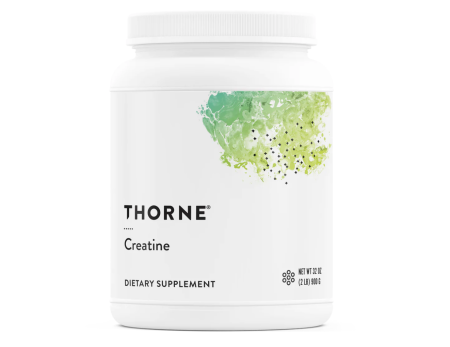
Creatine is stored throughout the body, but most of it is concentrated in tissues with high energy demands:
- Skeletal Muscle: Roughly 95 percent of the body’s creatine is stored in muscle, which is why its strength and performance benefits are the most consistent and well documented.
- The Brain: A smaller but meaningful amount supports brain energy production, particularly during periods of mental demand or metabolic stress.
- Other Tissues: Small amounts are also stored in organs and other tissues that require a steady energy supply.
The body produces some creatine naturally, mainly in the liver, kidneys, and pancreas. Creatine also comes from food, particularly meat and fish.
A person following a typical omnivorous diet consumes roughly 1 to 2 grams of creatine per day through food. Vegetarians and vegans consume very little dietary creatine and often have lower baseline stores. This may help explain why supplementation sometimes produces particularly noticeable cognitive effects in these groups.
What Does Creatine Do in Practical Terms?
Creatine helps cells recycle energy faster when demand suddenly increases.
- In Muscle: It provides more available energy during the first few seconds of lifting, sprinting, or another high-intensity effort.
- In the Brain: It may support cognitive performance during sleep deprivation, difficult mental tasks, or periods of low baseline nutrient status.
- During Recovery: Faster energy recycling can support the processes involved in repeated effort and tissue recovery.
Creatine is not a stimulant, hormone, fat burner, or metabolic booster. It does not work by artificially increasing alertness or changing hormone levels.
It is a compound that helps cells regenerate energy more efficiently. That basic mechanism produces downstream effects across muscle, brain, and recovery pathways that are increasingly well documented in the research.
Free 28-Day Fascia Reset Email Course
Get our Free 28-day email course series to help with 1 or 2 exercises per day to release your fascia. One short lesson per day. Two minutes to read each.
Why Is Creatine Different for Women Over 40?
Most of the creatine research from the 1990s and 2000s was conducted in young male athletes. That research established the muscle and performance case for creatine, and it produced the marketing that positioned creatine as a supplement for young men who wanted to get bigger. That framing is now decades out of date.
The recent wave of research has expanded significantly, and the findings that matter most for women in midlife look different from the findings that mattered for the twenty-year-old bodybuilders of the 1990s. Several distinct threads are worth understanding.
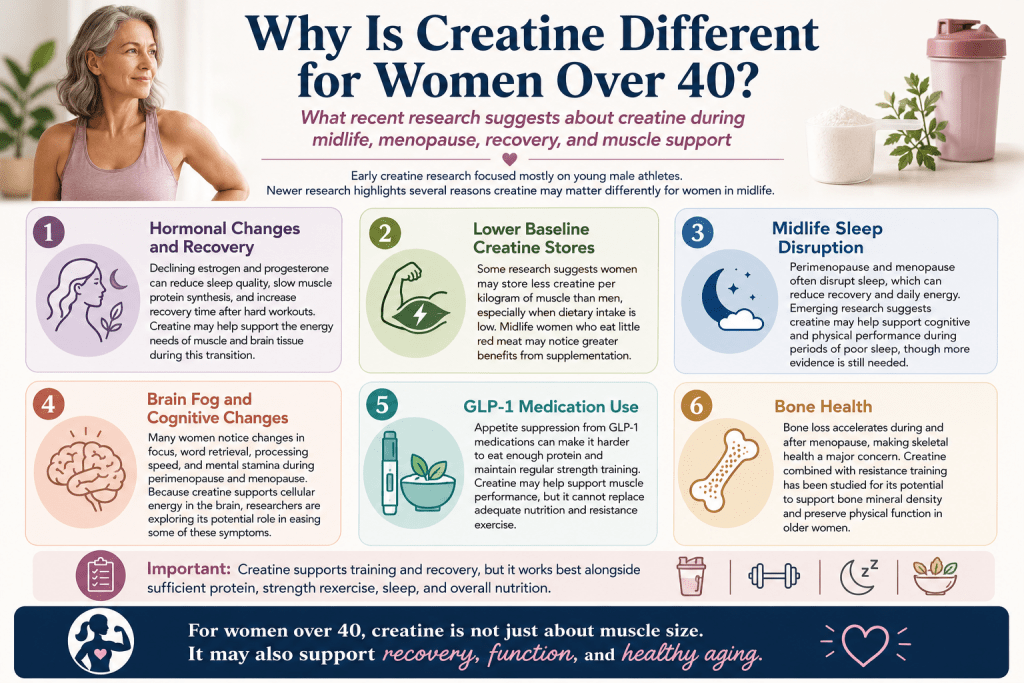
- Hormonal Changes and Recovery: Declining estrogen and progesterone can reduce sleep quality, slow muscle protein synthesis, and increase recovery time after demanding workouts. Creatine may help by supporting the energy needs of muscle and brain tissue during this transition.
- Lower Baseline Creatine Stores: Some research suggests that women may store less creatine per kilogram of muscle than men, especially when dietary intake is low. This may be particularly relevant for midlife women who eat little red meat and could experience more noticeable benefits from supplementation.
- Midlife Sleep Disruption: Perimenopause and menopause often cause fragmented or less restorative sleep, which can affect exercise recovery and daily energy. Emerging research on creatine suggests it may support cognitive and physical performance during periods of poor sleep, although more evidence is needed.
- Brain Fog and Cognitive Changes: Many women experience changes in focus, word retrieval, processing speed, and mental stamina during perimenopause and menopause. Because creatine supports cellular energy in the brain, researchers are studying its potential role in reducing some of these symptoms.
- GLP-1 Medication Use: Appetite suppression from GLP-1 medications can make it harder to consume enough protein and maintain consistent resistance training. Creatine may help support muscle performance, but it cannot replace adequate nutrition and regular strength exercise.
- Bone Health: Bone loss accelerates during and after menopause, making skeletal health a major concern for women over 40. Creatine combined with resistance training has been studied for its potential to support bone mineral density and preserve physical function in older women.
“The way I frame creatine to coaching clients is that it is one of the few supplements where the research now matches the marketing for midlife women, and where the marketing has finally caught up to where the science has been for a while. The muscle case is decades old. The brain case is newer. The sleep case is fresh. The mood case is emerging. What matters practically is that creatine costs about ten dollars a month for a high-quality product, it dissolves in water without much fuss, and it is one of the very few supplements that consistently produces measurable results within four to eight weeks. That combination of low cost, low effort, and reasonable evidence is rare. It earned its place in my daily routine, and it earns its place in the conversation I have with clients about a targeted supplement stack for this life stage.”
Terry Tateossian, Founder of The House of Rose
Free 28-Day Fascia Reset Email Course
Get our Free 28-day email course series to help with 1 or 2 exercises per day to release your fascia. One short lesson per day. Two minutes to read each.
How Does Creatine Support Muscle and Recovery?
The evidence for creatine’s effects on muscle is the most established and consistently demonstrated in the research. For midlife women, these benefits are especially practical because they help address the increasing risk of sarcopenia that begins during the fourth decade of life.
Creatine does not replace resistance training. It supports the energy, performance, and recovery processes that allow training to produce better results over time.
How Does Creatine Improve Muscle Performance?
During a set of squats or a hard interval on a treadmill, muscle cells use ATP rapidly and need to regenerate it quickly to keep working. Creatine supports this process by donating a phosphate group that converts ADP back into ATP.
Higher creatine stores allow the muscles to perform more work before fatigue sets in. Over weeks and months, this can support:
- More Training Volume: You may complete additional repetitions or maintain your performance across more sets.
- Greater Strength Gains: Consistent resistance training with creatine generally produces modest but reliable strength improvements compared with training alone.
- Increased Lean Mass: The ability to train more effectively can support greater muscle adaptation over time.
- Better Exercise Performance: Creatine is especially useful during short, demanding efforts that require rapid energy production.
The effect sizes are not enormous, but they can compound. For a midlife woman working against the hormone-related muscle changes of perimenopause and menopause, that gradual advantage matters.
Why Does Creatine Increase Water in Muscle?
One of the earliest measurable effects of supplementation is an increase in water inside the muscle cells. This accounts for some of the initial lean mass gain that may appear on the scale.
This is sometimes described negatively as bloating or water weight, but water stored inside the muscle is generally beneficial. Well-hydrated muscle cells function more effectively, recover better, and may receive stronger signals for growth.
The initial weight change is usually only a few pounds and often becomes less noticeable as the body adjusts.
Creatine may also support recovery between demanding sessions by helping muscle cells maintain their internal energy balance under exercise stress. In everyday terms, this may look like:
- Less Post-Workout Fatigue: You may feel less depleted after a demanding session.
- Faster Return to Training: You may be able to train again sooner without accumulating as much fatigue.
- Quicker Strength Recovery: Performance may return to baseline faster after harder workouts or training weeks.
What Does This Mean for Midlife Women?
Several trials have examined creatine supplementation in postmenopausal women who are participating in resistance training. The results generally show that creatine adds modest improvements to the muscle and strength gains produced by training alone, although the effects may be smaller than those seen in younger adults.
The practical takeaway is clear. If you already lift weights or perform serious resistance training two or three times per week, creatine may produce a small but measurable improvement in strength and lean mass over three to six months.
If you are not training, creatine alone is unlikely to create meaningful muscle changes. The supplement supports the training, but the training remains the foundation. The four muscle groups for aging well framework covers the exercise side, while creatine provides an additional nutritional support layer.
Free 28-Day Fascia Reset Email Course
Get our Free 28-day email course series to help with 1 or 2 exercises per day to release your fascia. One short lesson per day. Two minutes to read each.
Can Creatine Improve Brain Function and Focus?
The brain research on creatine has produced some of the most interesting findings in recent years. It is also one of the areas that often gets the most attention from midlife women dealing with brain fog, reduced focus, and faster mental fatigue.
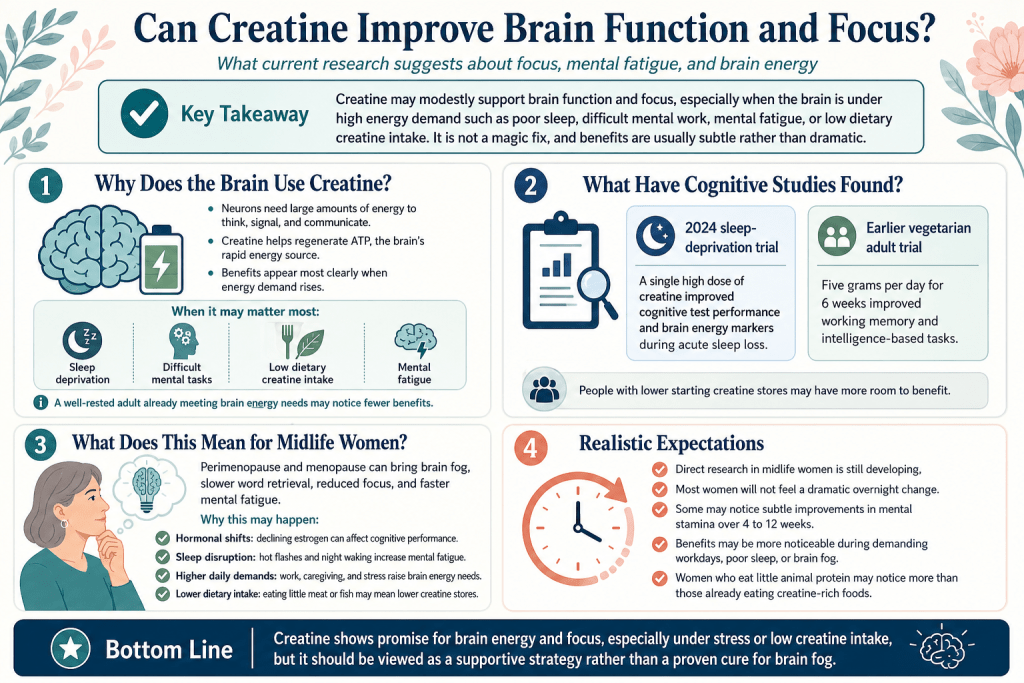
Creatine appears to be most helpful when the brain is under greater-than-usual energy demand rather than when a person is already well-rested and functioning at baseline.
Why Does the Brain Use Creatine?
Neurons are among the most metabolically demanding cells in the body. They need large amounts of energy to fire, communicate, and maintain the ionic gradients that make thinking possible.
Creatine supports rapid ATP regeneration in brain cells, particularly when energy demand rises. Its cognitive effects tend to appear most clearly under specific forms of stress:
- Sleep Deprivation: The brain has to work harder to maintain attention, memory, and decision-making.
- Difficult Mental Tasks: Extended periods of concentration increase cellular energy demand.
- Low Dietary Creatine Intake: Vegetarians and vegans often begin with lower baseline creatine stores.
- Mental Fatigue: Long or demanding days can reduce the energy available for sustained cognitive performance.
A well-rested adult who eats an omnivorous diet and is not under significant cognitive strain may notice fewer measurable benefits because the brain is already meeting its energy needs.
What Have Cognitive Studies Found?
A 2024 trial tested a single high dose of creatine during sleep deprivation. Participants who received creatine performed better on cognitive tests and showed changes in brain energy markers consistent with improved energy availability.
This finding is important because it suggests that creatine may influence brain function during acute stress, not only after several weeks of daily supplementation.
An earlier trial gave vegetarian adults five grams of creatine per day for six weeks. Participants showed measurable improvements in working memory and intelligence-based tasks.
The likely explanation is that people with lower starting creatine stores have more room to benefit. Those who regularly eat red meat and fish may already have higher baseline stores and may notice a smaller effect.
What Does This Mean for Midlife Women?
Perimenopause and menopause can produce noticeable cognitive changes. Word retrieval may slow, focus can become harder to sustain, and mental fatigue may build more quickly.
Several factors may contribute to these changes:
- Hormonal Shifts: Declining estrogen can affect brain function and cognitive performance.
- Sleep Disruption: Hot flashes, night waking, and fragmented sleep increase mental fatigue.
- Higher Daily Demands: Work, caregiving, and chronic stress place additional pressure on brain energy systems.
- Lower Dietary Intake: Women who eat little meat or fish may have lower creatine stores.
Direct research on creatine in midlife women is still developing, so expectations should remain realistic. Most women will not experience a dramatic overnight change.
Some may notice a subtle improvement in mental stamina over four to twelve weeks, particularly during demanding workdays, periods of poor sleep, or times when brain fog intensifies. Women who consume little animal protein may notice more than those who regularly eat creatine-rich foods.
Free 28-Day Fascia Reset Email Course
Get our Free 28-day email course series to help with 1 or 2 exercises per day to release your fascia. One short lesson per day. Two minutes to read each.
How Does Creatine Affect Sleep and Recovery?
The sleep research is one of the more surprising developments in the creatine literature. It is also directly relevant to midlife women dealing with sleep disruption during perimenopause and menopause.
Creatine is not a sleep aid and does not make you fall asleep. Its potential benefit appears to come from supporting the recovery demands created by resistance training.
What Did the 2024 Sleep Trial Find?
A double-blind randomized controlled trial published in Nutrients in 2024 examined creatine supplementation in naturally menstruating women who performed resistance training twice per week.
The researchers tracked sleep using Oura Ring data and found that:
- Longer Sleep on Training Days: Women taking creatine slept roughly 47 minutes longer than the placebo group on days when they trained.
- No Change on Rest Days: The effect did not appear on non-training days.
- Recovery-Specific Benefit: This pattern suggests that creatine may support the additional recovery required after challenging exercise.
The finding is important because it connects creatine’s energy-supporting role with sleep during periods of greater physical demand.
Why Might Creatine Support Recovery During Sleep?
Hard training places stress on the body, and much of the repair process happens during sleep. Creatine supports cellular energy availability and may reduce some of the metabolic disruption caused by demanding exercise.
In practical terms, this may support:
- Longer Sleep After Training: The body may remain asleep longer while completing recovery work.
- Better Physical Recovery: Muscle cells may restore their energy balance more efficiently between sessions.
- Improved Next-Day Function: Better sleep can support cognition, energy, food choices, movement, and stress management.
If you complete two or more challenging resistance sessions per week, creatine may help improve sleep duration and recovery on those specific days. Small benefits can compound over time as improved sleep supports better training and better daily decisions.
This matters during perimenopause and menopause, when disrupted sleep can already affect mood, energy, cognition, and quality of life. Creatine should not be treated as a replacement for broader sleep support. It is one supporting piece within a larger framework that includes consistent sleep timing, nervous system regulation, nutrition, and appropriate training.
Can Creatine Support Mood in Midlife Women?
The research on creatine and mood is smaller than the literature on muscle or cognitive performance, but it is developing quickly. The findings are promising enough to consider, especially for women in midlife, but they need to be interpreted carefully.
Creatine should not be viewed as a treatment for depression on its own. Its possible role is as a supporting layer within a broader, professionally guided treatment plan.
Why Might Creatine Affect Mood?
Depression is sometimes associated with disruptions in brain energy metabolism. Some depressive states show reduced availability of high-energy phosphate compounds that brain cells use to function.
Because creatine helps regenerate these energy compounds, researchers have explored whether it can support mood by improving energy availability in the brain. This provides a biological reason to study creatine as an addition to standard depression treatments.
What Have Clinical Studies Found?
Several clinical trials have tested creatine alongside established treatments such as antidepressant medication or cognitive behavioral therapy.
The general pattern suggests that:
- Adjunctive Support: Adding creatine may improve depressive symptoms more than standard treatment alone in some participants.
- Potential Benefit for Women: Some studies have found stronger effects in women, although more research is needed.
- Mixed Overall Evidence: Systematic reviews report modest benefits in some studies and inconsistent findings in others.
- Not a Stand-Alone Treatment: Current evidence does not support using creatine by itself to treat clinical depression.
The most accurate conclusion is that creatine shows enough potential to justify further research and may be a reasonable adjunct in appropriate cases.
What Does This Mean for Midlife Women?
Mood changes are common during perimenopause and menopause. They may be influenced by several overlapping factors:
- Hormonal Changes: Declining estrogen can affect neurotransmitters and emotional regulation.
- Sleep Disruption: Poor sleep can worsen irritability, anxiety, and low mood.
- Life Circumstances: Work, caregiving, relationships, and other midlife pressures can increase emotional strain.
- Changes in Brain Energy: Metabolic shifts may contribute to fatigue and reduced mental resilience.
Creatine is not the primary intervention for clinical depression. Anyone experiencing persistent depression needs support from a qualified healthcare provider and an appropriate treatment plan.
What creatine may offer is a nutritional support layer within a broader strategy that includes sleep, movement, nutrition, social connection, therapy, and medical care. Any decision to use creatine specifically for mood support should be discussed with a healthcare provider.
“The mood and brain-fog conversation is where midlife women most often start asking me about creatine, and it is the area where I am the most careful in my framing. The evidence base is real but still developing. It is not the same maturity as the muscle research. What I tell coaching clients is that creatine may be a helpful support layer for cognitive stamina and mood resilience during the difficult windows of perimenopause and menopause, but it does not replace sleep, nutrition, appropriate medical care, and the broader lifestyle medicine work that moves the needle. It is one small tool inside a much larger system. When it is used that way, the results tend to be quietly positive over months rather than dramatic over days.”
Terry Tateossian, Founder of The House of Rose
Free 28-Day Fascia Reset Email Course
Get our Free 28-day email course series to help with 1 or 2 exercises per day to release your fascia. One short lesson per day. Two minutes to read each.
Can Creatine Help With ADHD Symptoms?
The ADHD conversation deserves its own section because it comes up frequently in midlife women, particularly as more women receive ADHD diagnoses later in life and as awareness grows about how ADHD symptoms often intensify during perimenopause.
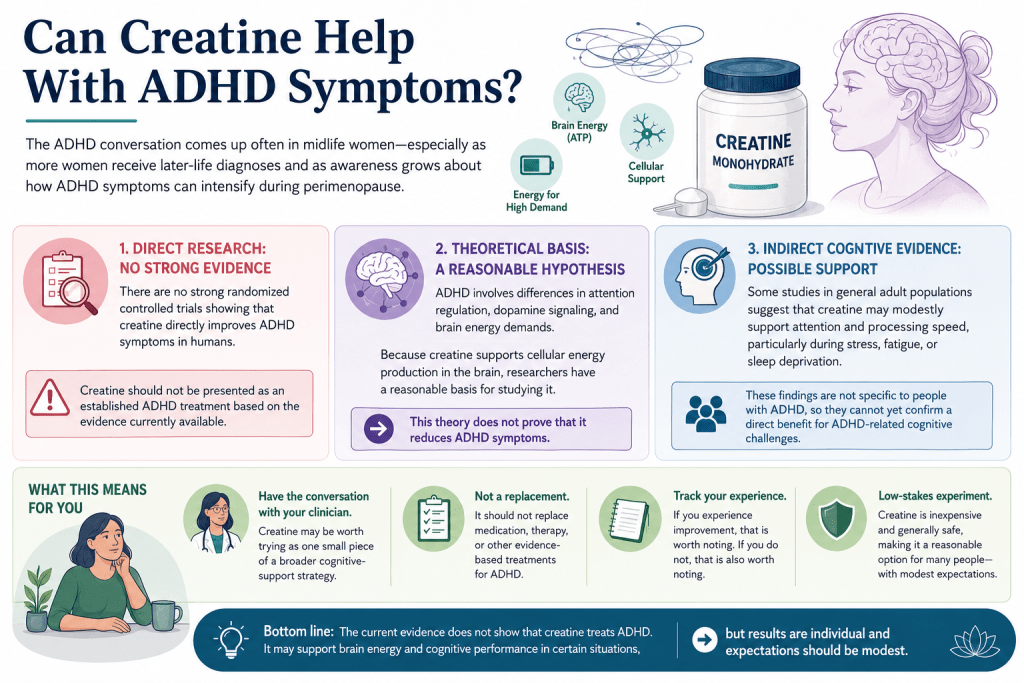
- Direct Research: There are no strong randomized controlled trials showing that creatine directly improves ADHD symptoms in humans. Creatine should not be presented as an established ADHD treatment based on the evidence currently available.
- Theoretical Basis: ADHD involves differences in attention regulation, dopamine signaling, and brain energy demands. Because creatine supports cellular energy production in the brain, researchers have a reasonable basis for studying it, but this theory does not prove that it reduces ADHD symptoms.
- Indirect Cognitive Evidence: Some studies in general adult populations suggest that creatine may modestly support attention and processing speed, particularly during stress, fatigue, or sleep deprivation. These findings are not specific to people with ADHD, so they cannot yet confirm a direct benefit for ADHD-related cognitive challenges.
If you have ADHD and are considering creatine, the honest position is that it may be worth trying as one small piece of a broader cognitive-support strategy, in conversation with your prescribing clinician. It should not be presented as a replacement for medication, therapy, or the other evidence-based treatments for ADHD.
If you experience improvement, that is worth noting. If you do not, that is also worth noting. Creatine is inexpensive and generally safe, which makes it a reasonable low-stakes experiment for many people, but the expectation should be modest.
Can Creatine Protect Muscle During GLP-1 Use?
The GLP-1 medication conversation has become one of the most practically important reasons to consider creatine in midlife women, and it deserves specific attention.
- Muscle Loss on GLP-1 Medications: Medications such as semaglutide and tirzepatide reduce appetite and help many users lose weight. However, some of that weight can come from lean muscle rather than body fat alone, with estimates varying across studies and populations.
- Why Lean Mass Declines: Appetite suppression can make it difficult to eat enough protein to preserve muscle during weight loss. Lower energy intake may also reduce training consistency, weakening the stimulus the body needs to maintain strength and lean tissue.
- How Creatine May Help: Creatine can support strength, training performance, and recovery during resistance exercise, which remains the main strategy for protecting muscle. It may help users get more from each workout, but it cannot replace sufficient protein, calories, or regular strength training.
Anyone using a GLP-1 medication should be prioritizing three things simultaneously to protect lean mass: adequate protein intake despite reduced appetite, consistent resistance training that targets the four major muscle groups, and a targeted supplement stack that includes creatine, adequate protein powder if needed, and the foundational supplements.
Free 28-Day Fascia Reset Email Course
Get our Free 28-day email course series to help with 1 or 2 exercises per day to release your fascia. One short lesson per day. Two minutes to read each.
How Does Creatine Support Healthy Aging?
The healthy aging case for creatine has grown significantly in recent years. It is especially relevant for midlife women who are thinking about maintaining strength, mobility, and cognitive function over the next thirty or forty years.
Creatine is not a stand-alone solution. Its value comes from supporting the effects of resistance training, adequate protein intake, and other healthy aging fundamentals.
Why Does Age-Related Muscle Loss Matter?
Muscle mass begins declining gradually in the fourth decade of life and accelerates through the sixth, seventh, and eighth decades. By age 80, the average person may have lost 30 to 40 percent of the muscle mass they had at age 30.
This age-related muscle loss, known as sarcopenia, contributes to:
- Frailty: Everyday movements require more effort as strength and muscle reserves decline.
- Falls: Weaker muscles and reduced coordination make it harder to recover from a loss of balance.
- Hospitalizations: Low muscle mass can reduce resilience during illness, injury, and surgery.
- Loss of Independence: Tasks such as climbing stairs, carrying groceries, and getting out of a chair become more difficult.
Sarcopenia is especially important for women because they begin with less muscle mass than men on average. The hormonal changes of perimenopause and menopause can also accelerate the decline.
A woman who does nothing intentional to preserve muscle from her forties onward may reach her seventies with less strength and functional capacity than she needs.
Where Does Creatine Fit Into Sarcopenia Prevention?
The evidence-based foundation for preventing sarcopenia is resistance training combined with adequate protein intake. Creatine adds a small but consistent advantage to that foundation, particularly in older adults.
The intervention works in layers:
- Resistance Training: Provides the stimulus that tells muscle tissue to adapt and grow stronger.
- Adequate Protein: Supplies the amino acids needed to repair and maintain muscle.
- Creatine Supplementation: Supports training performance, energy availability, and gradual improvements in strength and lean mass.
The effect of creatine is not enormous, but the benefit can accumulate over years or decades.
This also matters for fall prevention. Muscle strength, balance, and coordination are among the main factors that protect older adults from falls. Anything that helps preserve the strength and function developed through resistance training adds another layer of protection.
Can Creatine Also Support Cognitive Aging?
The cognitive case for creatine may become more relevant with age because the brain experiences greater metabolic stress over time. Research generally shows clearer cognitive benefits when the brain is under stress than when it is young, well-rested, and already meeting its energy needs.
For a midlife woman thinking about long-term function, creatine fits a useful profile:
- Low Cost: Creatine monohydrate is widely available and relatively inexpensive.
- Low Risk: It has a strong safety record when used appropriately by healthy adults.
- Muscle Support: It can add to the benefits of resistance training and adequate protein.
- Brain Support: It may help maintain energy availability during cognitive stress and aging.
Creatine is one of a small number of supplements with reasonable evidence for supporting both muscle and brain aging. Its benefits are strongest when paired with strength training, sufficient protein, quality sleep, and consistent movement.
Does Creatine Cause Bloating or Constipation?
Digestion is one of the areas where myths about creatine spread most widely. Some people do experience temporary bloating or mild stomach discomfort, but these effects are often misunderstood and can usually be managed by adjusting the dose or timing.
Why Can Creatine Cause Bloating?
The most commonly reported early side effect of creatine is a sense of bloating. This is real, but it is not always gastrointestinal bloating in the usual sense.
Creatine draws water into muscle cells, which increases muscle water content and may cause a small increase in scale weight. This is intramuscular water storage, not fluid collecting around the stomach, and it generally supports muscle function and recovery.
Some people also experience mild digestive bloating during the first week or two, especially when using a high-dose loading phase. This usually improves as the body adjusts.
How Can You Reduce Digestive Discomfort?
If creatine causes mild stomach discomfort, several simple adjustments may help:
- Use a Lower Dose: Take three to five grams per day instead of using a high-dose loading phase.
- Split the Dose: Divide the daily amount into two smaller servings taken with meals.
- Choose Micronized Creatine: Micronized creatine monohydrate usually dissolves more thoroughly.
- Take It With Food: This may reduce stomach irritation for some people.
- Drink Adequate Water: Proper hydration supports digestion and helps the body handle the increase in muscle water.
Most mild gastrointestinal symptoms improve within a few weeks after adjusting the dose or routine.
Does Creatine Cause Constipation?
A 2025 analysis of NHANES nutrition data found that higher dietary creatine intake was associated with lower rates of chronic constipation. Because the study was observational, it cannot prove that creatine prevents constipation, but the finding suggests that creatine is unlikely to be a common cause.
If constipation develops, the more likely factors to examine include:
- Hydration: Low fluid intake can slow stool movement.
- Fiber Intake: Too little fiber can reduce stool bulk and regularity.
- Electrolyte Balance: Mineral imbalances may affect digestion and hydration.
- Stress Levels: Chronic stress can interfere with normal gut motility.
- Overall Gut Function: Activity levels, diet, medications, and existing digestive issues can all contribute.
Some people experience mild digestive discomfort from creatine, while others notice no symptoms at all. If you tolerate it well, no adjustment is needed. If digestive problems persist after lowering the dose and changing how you take it, discontinue use and reevaluate with a healthcare provider.
Free 28-Day Fascia Reset Email Course
Get our Free 28-day email course series to help with 1 or 2 exercises per day to release your fascia. One short lesson per day. Two minutes to read each.
Is Creatine Safe for Long-Term Use?
Creatine has one of the most extensively studied safety profiles of any nutritional supplement. For healthy adults using appropriate doses, the available research generally supports long-term use.
Much of the confusion around safety comes from how creatine affects certain kidney-related blood tests rather than from evidence that it damages healthy kidneys.
Why Can Creatine Affect Kidney Lab Results?
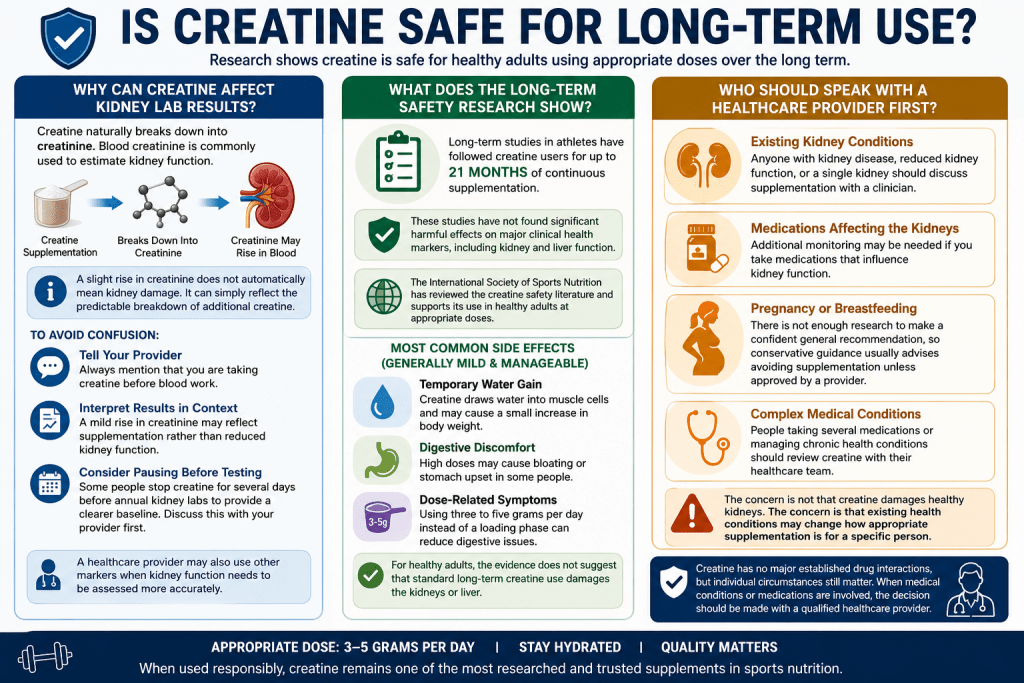
Creatine naturally breaks down into a byproduct called creatinine. Blood creatinine is commonly used to estimate kidney function.
Because supplementation increases the amount of creatine available in the body, creatinine levels may rise slightly. This does not automatically mean the kidneys are being damaged. It can simply reflect the predictable breakdown of the additional creatine.
To avoid confusion:
- Tell Your Provider: Always mention that you are taking creatine before blood work.
- Interpret Results in Context: A mild rise in creatinine may reflect supplementation rather than reduced kidney function.
- Consider Pausing Before Testing: Some people stop creatine for several days before annual kidney labs to provide a clearer baseline. Discuss this with your provider first.
A healthcare provider may also use other markers when kidney function needs to be assessed more accurately.
What Does the Long-Term Safety Research Show?
Long-term studies in athletes have followed creatine users for up to 21 months of continuous supplementation. These studies have not found significant harmful effects on major clinical health markers, including kidney and liver function.
The International Society of Sports Nutrition has also reviewed the creatine safety literature and supports its use in healthy adults at appropriate doses.
The most common issues are generally mild and manageable:
- Temporary Water Gain: Creatine draws water into muscle cells and may cause a small increase in body weight.
- Digestive Discomfort: High doses may cause bloating or stomach upset in some people.
- Dose-Related Symptoms: Using three to five grams per day instead of a loading phase can reduce digestive issues.
For healthy adults, the evidence does not suggest that standard long-term creatine use damages the kidneys or liver.
Who Should Speak With a Healthcare Provider First?
Creatine may require more careful medical guidance in certain situations:
- Existing Kidney Conditions: Anyone with kidney disease, reduced kidney function, or a single kidney should discuss supplementation with a clinician.
- Medications Affecting the Kidneys: Additional monitoring may be needed if you take medications that influence kidney function.
- Pregnancy or Breastfeeding: There is not enough research to make a confident general recommendation, so conservative guidance usually advises avoiding supplementation unless approved by a provider.
- Complex Medical Conditions: People taking several medications or managing chronic health conditions should review creatine with their healthcare team.
The concern is not that creatine damages healthy kidneys. The concern is that existing health conditions may change how appropriate supplementation is for a specific person.
Creatine has no major established drug interactions, but individual circumstances still matter. When medical conditions or medications are involved, the decision should be made with a qualified healthcare provider.
How Should Women Over 40 Take Creatine?
The practical dosing question can feel confusing because different sources give different advice. However, the current research is fairly consistent on the amount to take, whether loading is necessary, and how to build creatine into a daily routine.
What Is the Recommended Daily Dose?
The standard maintenance dose is three to five grams of creatine monohydrate per day. This amount gradually saturates muscle creatine stores within about three to four weeks and can maintain them with continued daily use.
Some people use an optional loading protocol to reach full saturation faster:
- Loading Dose: About 20 grams per day, divided into four five-gram servings, for five to seven days.
- Maintenance Dose: Three to five grams per day after the loading period.
- Time to Saturation: Loading may saturate muscle stores in about one week instead of three to four weeks.
- Overall Benefit: Loading speeds up the process but does not increase the final benefit.
Loading is not required. It may also cause mild digestive discomfort in some people. If you want a simpler routine, start with three to five grams daily and allow your stores to increase gradually.
When Should You Take Creatine?
The evidence on timing is less consistent than the evidence on dosage. Creatine is often taken close to a training session, either shortly before or after exercise.
Some research suggests that taking it after training with a meal may offer a small advantage because carbohydrate and protein intake can support muscle uptake. On rest days, take it with any meal.
The most important point is consistency. Taking creatine every day matters more than choosing the perfect time.
- Training Days: Take it before or after your workout, whichever is easier to remember.
- Rest Days: Take it with breakfast, lunch, dinner, or another regular meal.
- Missed Doses: Missing an occasional day is not a problem. Resume your normal dose the next day.
- Cycling: There is no research-supported need to take scheduled breaks from creatine.
Long-term continuous use is well studied in healthy adults, so creatine can be taken daily without cycling.
How Do You Mix and Take Creatine?
Mix three to five grams of creatine monohydrate powder into eight to twelve ounces of water, juice, or a protein shake. Stir it well and drink the entire serving.
Micronized creatine usually dissolves more easily, although a small amount of sediment at the bottom of the glass is normal. Swirl the drink again and finish the remaining powder.
That is the full protocol: three to five grams of creatine monohydrate, taken consistently each day.
Free 28-Day Fascia Reset Email Course
Get our Free 28-day email course series to help with 1 or 2 exercises per day to release your fascia. One short lesson per day. Two minutes to read each.
What Should You Look for When Buying Creatine?
The creatine supplement market has many products, and quality varies significantly. Understanding what to look for makes the buying decision straightforward.
- Form of Creatine: Choose creatine monohydrate, the most extensively studied form for effectiveness and safety. Alternatives such as creatine HCL, ethyl ester, and nitrate have not shown meaningful advantages and often cost more.
- Third-Party Testing: Look for certifications such as NSF, Informed Sport, or USP Verified. Independent testing helps confirm that the product contains the stated amount of creatine and has been screened for contaminants.
- Micronized Powder: Micronized creatine contains smaller particles that dissolve more easily in water. It offers the same benefits as regular monohydrate but may feel less gritty and be easier on the stomach for some users.
- Simple Ingredients: A basic creatine powder should list only creatine monohydrate as its ingredient. Added sugars, artificial colors, flavors, and proprietary blends usually increase the price without improving its effectiveness.
- Powder or Capsules: Powder is typically more affordable and makes daily dosing easier to adjust. Capsules provide more convenience for travel but may require taking several pills to reach a standard dose.
- Reasonable Price: A quality creatine monohydrate product should generally cost around $10 to $20 per month at standard dosing. Higher prices often reflect branding, while unusually low prices should prompt a closer look at testing and product quality.
- Reliable Seller: Buy from reputable supplement brands, pharmacies, established health retailers, or vetted collections such as the THOR supplement collection. Avoid sellers that provide little information about ingredients, manufacturing, or independent testing.
How Does Creatine Fit Into the THOR Framework?
Creatine is one component of the five-part lifestyle medicine framework I teach at THOR. Placing it in the correct position within that framework matters because supplements work when the foundation is in place and produce disappointing results when they are used as substitutes for foundational work.
- Nutrition foundation: Adequate protein intake is the essential foundation for muscle and metabolic health in midlife. The free Macro Calculator gives you a personalized protein target. The Macro Miracle Mediterranean Cookbook is the kitchen-side companion for eating that way sustainably. Creatine is a support layer under this foundation, not a substitute for it.
- Movement layer: Resistance training is the foundational stimulus for muscle preservation and building. The micro walks article covers cardiovascular fitness. Creatine amplifies the returns from training. It does not replace training.
- Sleep and recovery: The menopause sleep remedies article and the midlife sleep stack article cover the broader sleep intervention framework. Creatine may support recovery on training days but is not a sleep aid.
- Nervous system regulation: The parasympathetic aging article covers the nervous system side of midlife health. Creatine does not directly regulate the nervous system, but the mood and cognitive support layer may indirectly reduce some of the stress load on the system.
- Foundational supplement stack: Vitamin D, magnesium, omega-3s, and adequate protein form the foundational supplement stack for most midlife women. Creatine sits alongside this foundation as a targeted addition. The THOR foundational supplement collection is the primary CTA for this article.
For women who want personalized 1:1 support on the full framework including supplement stack review, the Monthly Personal Training and Nutrition Coaching Program is the coaching option. For the immersive version, the Deeply Restorative Yoga and Nature Retreat at our Smoky Mountains property installs the full framework in five days.
“The mistake I see most often with creatine and other targeted supplements is that women use them as a substitute for the harder work of nutrition, strength training, and sleep. Then they wonder why the supplement is not producing dramatic results. Creatine is not a shortcut. It is a small consistent edge for women who have the foundation in place. If you are hitting your protein target, training twice a week, and sleeping seven or eight hours most nights, creatine will earn its place in your routine. If those pieces are not yet installed, spend the ten dollars on the cookbook first. That will produce a bigger change than any supplement can, and it will make every future supplement more effective when you eventually add it.”
Terry Tateossian, Founder of The House of Rose
Free 28-Day Fascia Reset Email Course
Get our Free 28-day email course series to help with 1 or 2 exercises per day to release your fascia. One short lesson per day. Two minutes to read each.
Which Mistakes Can Undermine Creatine Use?
Several mistakes consistently reduce the effectiveness of creatine supplementation for midlife women.
- Expecting overnight results: Muscle creatine stores take three to four weeks to saturate at standard dosing. Cognitive and sleep effects, when they appear, generally take four to twelve weeks of consistent use. Judging creatine on the basis of the first week or two produces false negatives. Give it at least eight weeks of consistent use before assessing benefits.
- Taking it inconsistently: Creatine works by maintaining elevated muscle stores. Missing days here and there is not a disaster, but frequent gaps in dosing reduce the total benefit. Build a daily habit. Attach it to an existing routine like morning coffee or the post-workout protein shake.
- Skipping the training foundation: Creatine supports muscle adaptation to resistance training. Without resistance training, the muscle benefits are minimal. If you are taking creatine but not training seriously, the supplement is doing much less than it could be doing.
- Ignoring protein intake: Creatine helps muscle recover and grow, but muscle also needs adequate protein to build. Without hitting a protein target of roughly 1.6 to 2.2 grams per kilogram of body weight, muscle building is limited regardless of what supplements are on board.
- Loading unnecessarily: Loading is optional and produces no ultimate benefit over standard dosing. If loading causes GI distress, skip it and just take the standard three to five grams per day. You will get the same result three weeks later.
- Buying expensive products with no evidence advantage: Advanced creatine formulations marketed as superior to monohydrate are usually not worth the price premium. Monohydrate is the standard of care.
- Not telling your provider: Blood creatinine can rise modestly during creatine use, which can confuse standard lab work. Always tell your provider you are taking creatine when they order kidney function labs.
When Should You See a Healthcare Professional?
Most midlife women can safely start creatine on their own if they have no significant medical conditions and are otherwise healthy. Some situations require professional evaluation first.
- Any history of kidney disease: This is the most important escalation. Creatine changes creatinine metabolism and adds metabolic demand to the kidneys. Anyone with existing kidney compromise needs individualized guidance.
- Pregnancy or breastfeeding: The safety data during pregnancy and breastfeeding is not fully established. Discuss with your provider.
- On multiple medications: If you are on many prescriptions or have complex medical conditions, review with your provider before adding any new supplement.
- Persistent GI symptoms: If you experience persistent GI distress despite dose adjustments, evaluate for other causes.
- Persistent mood or cognitive concerns: If you are considering creatine specifically for depression, anxiety, ADHD, or cognitive changes, discuss the full clinical picture with your provider. Creatine is not a substitute for appropriate mental health care.
- Elevated creatinine on labs: If your annual labs show elevated creatinine, tell your provider you are taking creatine so the finding can be interpreted correctly.
Free 28-Day Fascia Reset Email Course
Get our Free 28-day email course series to help with 1 or 2 exercises per day to release your fascia. One short lesson per day. Two minutes to read each.
What Are Your Next Steps?
If the framework in this article makes sense and you want to add creatine to your routine, here are the four next steps in order of friction.
- Talk to your healthcare provider. Particularly if you have any of the escalation situations above. For most healthy midlife women, this is a brief conversation, but it belongs at the front of the process.
- Purchase a high-quality creatine monohydrate. The THOR foundational supplement collection includes vetted options. Buy a 90-day supply if you are able. This is a supplement worth committing to for a real trial.
- Build the foundation underneath. The free Macro Calculator gives you your protein target. The Macro Miracle Mediterranean Cookbook is the kitchen-side companion. Creatine amplifies these foundational practices rather than replacing them.
- Consider personalized coaching. The Monthly Personal Training and Nutrition Coaching Program is where I work with midlife women on the full framework including supplement stack review, form on strength training, and integration with the broader system. For the immersive version, the Deeply Restorative Yoga and Nature Retreat at our Smoky Mountains property installs the full framework in five days.
Frequently Asked Questions
Is creatine safe for women over 40?
Creatine has a strong safety profile in healthy adults, including women over 40. The primary safety consideration is kidney function. Women with a history of kidney disease, reduced kidney function, or a single kidney should consult their healthcare provider before starting. For most otherwise healthy midlife women, creatine is one of the best-studied and lowest-risk supplements available.
Will creatine make me gain weight?
Creatine draws water into muscle cells, which can produce a modest early increase in scale weight of approximately one to three pounds. This is muscle water content, not fat gain. Most women adapt to this change within a few weeks. The weight change is not clothing-visible for most women, and it may improve the look of muscle definition rather than reducing it.
How much creatine should a woman over 40 take?
The standard maintenance dose supported by the research is three to five grams of creatine monohydrate per day. Loading protocols using roughly 20 grams per day for five to seven days are optional and can shorten time to full effect, but they are not required. Taking three to five grams daily consistently is the sustainable long-term approach for most midlife women.
When should I take creatine?
Timing is less important than consistency. If you train, take it around your workout window, either shortly before or shortly after. On rest days, take it with any meal that contains some carbohydrate or protein. Missing occasional doses is not a problem. Taking it daily on average is what matters.
Can I take creatine with coffee?
Yes, most women can take creatine with coffee without any issue. The old concern that caffeine and creatine interact negatively has not been supported by strong research. Many women take creatine with morning coffee without issue. If you are sensitive to stimulants and take a very high caffeine dose pre-workout, separating the timing may feel better, but this is a personal preference rather than a scientific requirement.
How long before I see results from creatine?
Muscle creatine stores take three to four weeks to saturate at standard dosing (or about a week with loading). Strength and training performance benefits generally become noticeable at four to eight weeks. Cognitive and sleep effects, when they appear, generally develop over four to twelve weeks. Give creatine at least eight weeks of consistent use before assessing whether it is helping you.
Free 28-Day Fascia Reset Email Course
Get our Free 28-day email course series to help with 1 or 2 exercises per day to release your fascia. One short lesson per day. Two minutes to read each.
Do I need to lift weights to benefit from creatine?
The muscle and strength benefits of creatine depend on resistance training. Without training, muscle benefits are minimal. The cognitive, sleep, and mood benefits may occur independent of training, though the evidence for these is smaller. If you are not currently training, the most impactful thing you can do is start resistance training first and add creatine second.
Will creatine help with menopause brain fog?
Some midlife women report improvements in mental stamina and cognitive clarity after four to twelve weeks of consistent creatine use, particularly on days of poor sleep or high cognitive demand. The research on creatine and midlife-specific brain fog is still developing. Creatine may be one supportive layer within a broader brain-health strategy that includes sleep, exercise, adequate protein, and appropriate medical care for menopause symptoms.
Can I take creatine while on a GLP-1 medication?
Creatine is often particularly useful for women on GLP-1 medications because it supports the muscle preservation that becomes harder during rapid weight loss with reduced appetite. Discuss with your provider, particularly if you are on multiple medications or have kidney concerns. For most GLP-1 users, creatine is one of the highest-value additions to a muscle-protection supplement stack.
What form of creatine should I buy?
Buy creatine monohydrate, which is the most studied form, the form with the strongest evidence for effectiveness, and the least expensive form on the market. Look for third-party testing (NSF, Informed Sport, USP Verified) for quality assurance. Micronized formulations dissolve better and may cause fewer GI symptoms. Avoid proprietary blends and forms marketed as superior to monohydrate.
Does creatine cause bloating or GI issues?
Some early users experience mild bloating from water storage in muscle, which is not the same as gastrointestinal bloating. A smaller percentage experience actual GI symptoms in the first week or two. These usually resolve with time or by lowering the dose, splitting it across the day, or taking it with food. Persistent GI symptoms are worth evaluating with a provider.
Can creatine cause kidney problems?
Creatine does not cause kidney damage in healthy adults, based on extensive long-term research. Creatine does cause modest increases in blood creatinine, which can appear as reduced kidney function on standard labs but is a metabolic artifact of taking creatine rather than actual kidney damage. Always tell your provider you are taking creatine before any kidney lab work.
Should I cycle creatine or take it continuously?
Continuous daily use is the current standard supported by the research. Cycling protocols (using it for weeks, taking a break, resuming) were more common in older recommendations but are not supported by the current evidence base. Long-term continuous use in healthy adults is well studied and safe.
Does creatine affect sleep?
The 2024 research in naturally menstruating women showed that creatine may extend sleep duration by approximately 47 minutes on training days but not on rest days. The interpretation is that creatine supports the recovery that follows hard training, which shows up as improved sleep after those sessions. Creatine is not a sleep aid in the traditional sense, but it may indirectly support sleep quality on training days.
Can I take creatine forever?
The long-term safety data supports continuous creatine use in healthy adults. Studies have followed users for up to 21 months without adverse effects on clinical health markers. Discuss with your provider if you have specific medical conditions or are on multiple medications. For most healthy midlife women, creatine is reasonable to take indefinitely as part of a supported daily supplement stack.
References
- Kreider, R. B., Kalman, D. S., Antonio, J., et al. (2017). International Society of Sports Nutrition position stand: safety and efficacy of creatine supplementation in exercise, sport, and medicine. Journal of the International Society of Sports Nutrition, 14, 18.
- Antonio, J., Candow, D. G., Forbes, S. C., et al. (2021). Common questions and misconceptions about creatine supplementation: what does the scientific evidence really show? Journal of the International Society of Sports Nutrition, 18(1), 13.
- Smith-Ryan, A. E., Cabre, H. E., Eckerson, J. M., & Candow, D. G. (2021). Creatine supplementation in women’s health: a lifespan perspective. Nutrients, 13(3), 877.
- Candow, D. G., Forbes, S. C., Chilibeck, P. D., et al. (2019). Effectiveness of creatine supplementation on aging muscle and bone: focus on falls prevention and inflammation. Journal of Clinical Medicine, 8(4), 488.
- Chilibeck, P. D., Kaviani, M., Candow, D. G., & Zello, G. A. (2017). Effect of creatine supplementation during resistance training on lean tissue mass and muscular strength in older adults: a meta-analysis. Open Access Journal of Sports Medicine, 8, 213–226.
- Gordji-Nejad, A., Matusch, A., Kleedörfer, S., et al. (2024). Single dose creatine improves cognitive performance and induces changes in cerebral high energy phosphates during sleep deprivation. Scientific Reports, 14(1), 4937.
- Rae, C., Digney, A. L., McEwan, S. R., & Bates, T. C. (2003). Oral creatine monohydrate supplementation improves brain performance: a double-blind, placebo-controlled, cross-over trial. Proceedings of the Royal Society B: Biological Sciences, 270(1529), 2147–2150.
- Roschel, H., Gualano, B., Ostojic, S. M., & Rawson, E. S. (2021). Creatine supplementation and brain health. Nutrients, 13(2), 586.
- Dolan, E., Gualano, B., & Rawson, E. S. (2019). Beyond muscle: the effects of creatine supplementation on brain creatine, cognitive processing, and traumatic brain injury. European Journal of Sport Science, 19(1), 1–14.
- Forbes, S. C., Cordingley, D. M., Cornish, S. M., et al. (2022). Effects of creatine supplementation on brain function and health. Nutrients, 14(5), 921.
- Kious, B. M., Kondo, D. G., & Renshaw, P. F. (2019). Creatine for the treatment of depression. Biomolecules, 9(9), 406.
- Bakian, A. V., Huber, R. S., Scholl, L., et al. (2020). Dietary creatine intake and depression risk among U.S. adults. Translational Psychiatry, 10(1), 52.
- Lyoo, I. K., Yoon, S., Kim, T. S., et al. (2012). A randomized, double-blind placebo-controlled trial of oral creatine monohydrate augmentation for enhanced response to a selective serotonin reuptake inhibitor in women with major depressive disorder. American Journal of Psychiatry, 169(9), 937–945.
- de Guingand, D. L., Palmer, K. R., Snow, R. J., et al. (2020). Risk of adverse outcomes in females taking oral creatine monohydrate: a systematic review and meta-analysis. Nutrients, 12(6), 1780.
- Poortmans, J. R., & Francaux, M. (1999). Long-term oral creatine supplementation does not impair renal function in healthy athletes. Medicine and Science in Sports and Exercise, 31(8), 1108–1110.
- Kreider, R. B., Melton, C., Rasmussen, C. J., et al. (2003). Long-term creatine supplementation does not significantly affect clinical markers of health in athletes. Molecular and Cellular Biochemistry, 244(1-2), 95–104.
- Forbes, S. C., Candow, D. G., Ostojic, S. M., et al. (2023). Meta-analysis examining the importance of creatine ingestion strategies on lean tissue mass and strength in older adults. Nutrients, 15(9), 2091.
- Delpino, F. M., Figueiredo, L. M., Forbes, S. C., et al. (2022). Influence of creatine supplementation on cognitive function in adults: a systematic review and meta-analysis. Nutrients, 14(23), 4995.
- Wang, C., Chen, Z., Li, S., et al. (2025). Association between dietary creatine intake and chronic constipation in U.S. adults: evidence from NHANES 2005–2010. Frontiers in Nutrition, 12, 1586569.
- Marshall, R. N., Smeuninx, B., Morgan, P. T., & Breen, L. (2020). Nutritional strategies to offset disuse-induced skeletal muscle atrophy and anabolic resistance in older adults: from whole-foods to isolated ingredients. Nutrients, 12(5), 1533.
Disclaimer: Always consult with a healthcare professional before starting any new routines, programs, or nutrition plans to ensure you receive the best medical advice and strategy for your specific individual needs.
Free 28-Day Fascia Reset Email Course
Get our Free 28-day email course series to help with 1 or 2 exercises per day to release your fascia. One short lesson per day. Two minutes to read each.

Terry Tateossian is a Menopause Lifestyle Medicine Coach, Certified Personal Trainer & Nutritionist and the Founder of THOR: The House of Rose, a wellness brand serving women over 40 through retreats, coaching, macro-nutrition and community. As 25-year founder and entrepreneur, Terry spent two and a half decades building and running successful start-up businesses, an experience that put her on the front line of founder burnout long before she could name it. After facing serious health challenges, early onset menopause, and emotional eating while running her agency and raising two children, Terry rebuilt her health in her 40s and lost more than 80 pounds through evidence-based nutrition, training, and mindset work. Today, she helps women get strong, improve confidence, support hormone health, and create a stronger second half of life. Terry has been featured in major media outlets and is available for podcasts, expert commentary, brand collaborations, and speaking engagements on midlife health, reinvention, emotional eating, menopause wellness, and strength training for longevity. Get her free macro calculator (her cookbook companion) to start your journey to back to health.