
 By Team THOR
Free 28-Day Fascia Reset Email Course
Get our Free 28-day email course series to help with 1 or 2 exercises per day to release your fascia. One short lesson per day. Two minutes to read each.
Red Light Therapy for Perimenopause and Menopause: The Complete Guide for Midlife Women (Mitochondria, Skin, Recovery, Circadian Health, and a 5-Day Integration Program)
Red light therapy uses specific wavelengths of red and near-infrared light to support cellular energy, tissue repair, and recovery. For midlife women, that matters because many of the systems affected by aging and hormonal change depend heavily on healthy mitochondrial function.
Perimenopause and menopause can bring changes in collagen production, skin structure, recovery, sleep, and energy. At the same time, modern indoor life dramatically reduces exposure to the natural light spectrum our biology evolved around.
Red light therapy, also called photobiomodulation, uses controlled wavelengths that penetrate the skin and interact with cellular structures involved in energy production. It is not a tanning treatment, heat lamp, or cure for hormonal symptoms. It is a supportive tool that can complement sleep, movement, nutrition, and regular outdoor light exposure.
I am Terry Tateossian, founder of The House of Rose and a certified lifestyle medicine coach who runs nutrition and yoga and wellness retreats for women in perimenopause, menopause, and post-menopause in East Tennessee.
This guide explains how red light therapy works, what the research says about skin and recovery, how it relates to circadian health, when a device adds value, how to evaluate one, and how to build red light and natural sunlight into a practical five-day routine.
Important: Red light therapy is generally well tolerated when used appropriately, but more exposure is not always better. Follow device instructions for wavelength, distance, session length, and eye protection, and speak with your healthcare provider if you have a medical condition or are using red light therapy for a specific health concern.
Why Does Red Light Therapy Matter More After 40?
Human biology developed under an open sky. For most of the two hundred thousand years of our species’ existence, the average person spent the majority of their waking hours outdoors, receiving a continuous full-spectrum light exposure that included substantial amounts of red and near-infrared wavelengths. The human eye and human skin evolved to expect this input the way lungs evolved to expect oxygen.
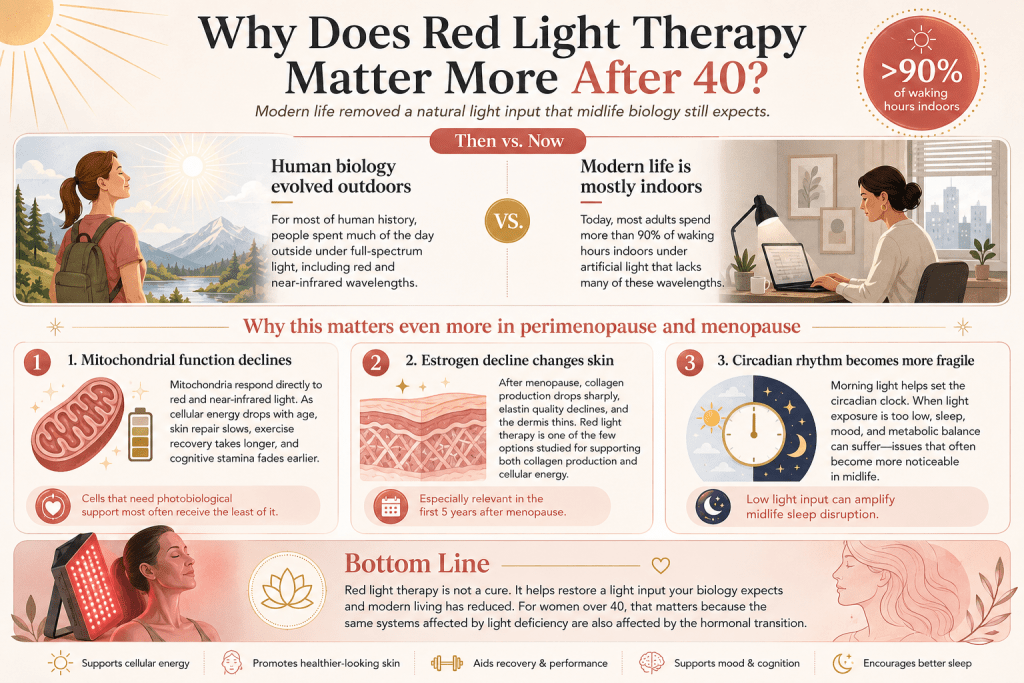
Modern life has almost entirely reversed that arrangement. Most adults in developed countries now spend more than 90 percent of their waking hours indoors under artificial light that lacks the wavelengths our cellular biology depends on. The average office worker receives less light exposure at noon at her desk than she would receive on an overcast winter afternoon outdoors. The average midlife woman receives significantly less than that, because the hours available for outdoor time shrink as career, family, and household demands grow.
This mismatch matters at every age. It matters more during perimenopause and menopause for three specific reasons.
First, mitochondrial function declines with age, and mitochondria are the cellular structures that respond directly to red and near-infrared light. As mitochondrial output drops, everything downstream drops with it. Skin repair slows. Recovery from exercise takes longer. Cognitive stamina flags earlier in the afternoon. The cells that need photobiological support the most are exactly the cells receiving the least of it.
Second, estrogen decline affects skin structure directly. Collagen production drops sharply in the first five years after menopause. Elastin quality degrades. The dermis thins. Skin repair processes that depend on adequate cellular energy struggle to keep up. Red light therapy is one of the few interventions with documented effects on both collagen production and cellular energy simultaneously.
Third, circadian rhythm disruption is one of the underappreciated drivers of midlife sleep problems, mood changes, and metabolic disruption. Adequate morning light exposure sets the circadian clock. Modern indoor life systematically undersupplies this input at exactly the age when the aging circadian system becomes more fragile and less resilient to disruption.
Red light therapy is not a cure for any of these problems. It is a way to restore an input your biology expects and modern living has removed. For midlife women specifically, this restoration has particular value because the systems most affected by the light deficiency are the same systems most affected by the hormonal transition.
What Is Red Light Therapy and What Is It Not?
Red light therapy is the clinical name for controlled exposure to specific wavelengths of red and near-infrared light for therapeutic benefit. Its scientific name is photobiomodulation, sometimes abbreviated PBM. Older terms in the research literature include low-level light therapy and low-level laser therapy, though the specific parameters used in modern devices differ from earlier laser-based approaches.
The mechanism is well documented. Specific wavelengths of red light (typically 630 to 700 nanometers) and near-infrared light (typically 810 to 940 nanometers) penetrate skin and superficial tissue. Once absorbed by cellular structures, they trigger a cascade of physiological effects that include increased mitochondrial energy production, modulated inflammation, and improved tissue repair. This is not mystical. It is biochemistry that has been reproduced in laboratory studies for more than four decades.
What red light therapy is:
- A specific range of wavelengths delivered at a specific dose
- Available naturally from sunlight (especially at sunrise and sunset)
- Available from purpose-built devices for at-home or clinical use
- Well-studied in dermatology, sports medicine, dentistry, and neurology
- FDA-cleared for specific applications including wound healing, muscle recovery, and certain skin conditions
What red light therapy is not:
- Not the same as heat lamps or infrared saunas (which primarily deliver heat)
- Not the same as tanning beds (which deliver ultraviolet radiation)
- Not the same as any red-colored bulb (which typically lacks therapeutic irradiance)
- Not a substitute for adequate sleep, nutrition, or movement
- Not a cure for any hormonal, autoimmune, or systemic condition
- Not immediately effective for most applications (results build over weeks to months)
The distinction between what red light therapy is and is not matters because the wellness market is crowded with products that use the aesthetic of red light therapy without providing the actual therapeutic parameters. A red-colored bulb screwed into a lamp does not do what a properly built red light therapy device does, and understanding this distinction is the difference between an investment that works and a shelf ornament that does not.
Free 28-Day Fascia Reset Email Course
Get our Free 28-day email course series to help with 1 or 2 exercises per day to release your fascia. One short lesson per day. Two minutes to read each.
How Does Red Light Therapy Affect Mitochondria and Cellular Energy?
Every cell in the human body except red blood cells contains mitochondria. These organelles produce adenosine triphosphate, or ATP, the molecule that fuels almost every energy-requiring process in the body. Muscle contraction, brain function, immune response, tissue repair, hormone production, and every other physiological process depend on adequate ATP supply from mitochondria.
Inside the mitochondrial inner membrane sits a complex called cytochrome c oxidase. This is the fourth enzyme complex in the electron transport chain, and it is a chromophore, meaning it absorbs specific wavelengths of light. Cytochrome c oxidase is particularly responsive to red light in the 630-to-700 nanometer range and near-infrared light in the 810-to-940 nanometer range.
When cytochrome c oxidase absorbs photons at these wavelengths, several things happen. First, nitric oxide molecules that had been bound to the enzyme complex are released. Nitric oxide is normally a signaling molecule with many roles, but when it binds to cytochrome c oxidase, it inhibits electron transport and slows ATP production. Displacing the nitric oxide restores full function to the enzyme.
Second, the released nitric oxide acts as a local vasodilator, increasing blood flow to the treated tissue. Third, the more efficient electron transport chain produces additional ATP. Fourth, cellular processes downstream of ATP availability accelerate, including protein synthesis, cellular repair, and inflammatory resolution.
For midlife women, this mechanism has particular relevance because mitochondrial function measurably declines with age. Multiple studies have documented reduced mitochondrial biogenesis, reduced mitochondrial density, and increased mitochondrial dysfunction in aging tissue. Cells that are producing less ATP simply cannot do as much repair, produce as much collagen, or recover from stress as effectively as younger cells. Red light therapy addresses this at the source by restoring the light input that cytochrome c oxidase evolved to expect.
Understanding the connection between mitochondria and fascia in midlife women helps explain why mitochondrial support is foundational rather than an optional wellness upgrade. Red light exposure, whether from sunlight or a device, is especially relevant because it can act directly on mitochondrial processes involved in cellular energy production.
“The moment I understood that cytochrome c oxidase was a light-absorbing enzyme, the whole conversation about aging changed for me. We had been talking about anti-aging as a topical or nutritional problem for so long that the light dimension had almost disappeared from the discussion. But every cell in your body except red blood cells is trying to run an electron transport chain, and that chain includes a step that specifically expects red and near-infrared photons. When you spend your life indoors, you starve that step. When you restore the input, either through sun exposure or a properly built device, you give the cell back a piece of its evolutionary birthright. This is not biohacking. This is biology doing what it evolved to do.”
Terry Tateossian, Founder of The House of Rose
Why Does Midlife Sleep Depend on Morning Light?
The human circadian rhythm is the roughly 24-hour internal clock that regulates sleep, alertness, hormone release, digestion, body temperature, and dozens of other physiological processes. This clock is coordinated primarily by the suprachiasmatic nucleus in the hypothalamus, which receives direct input from specialized cells in the retina that respond to light. These cells are most sensitive to light received in the first hour after waking.
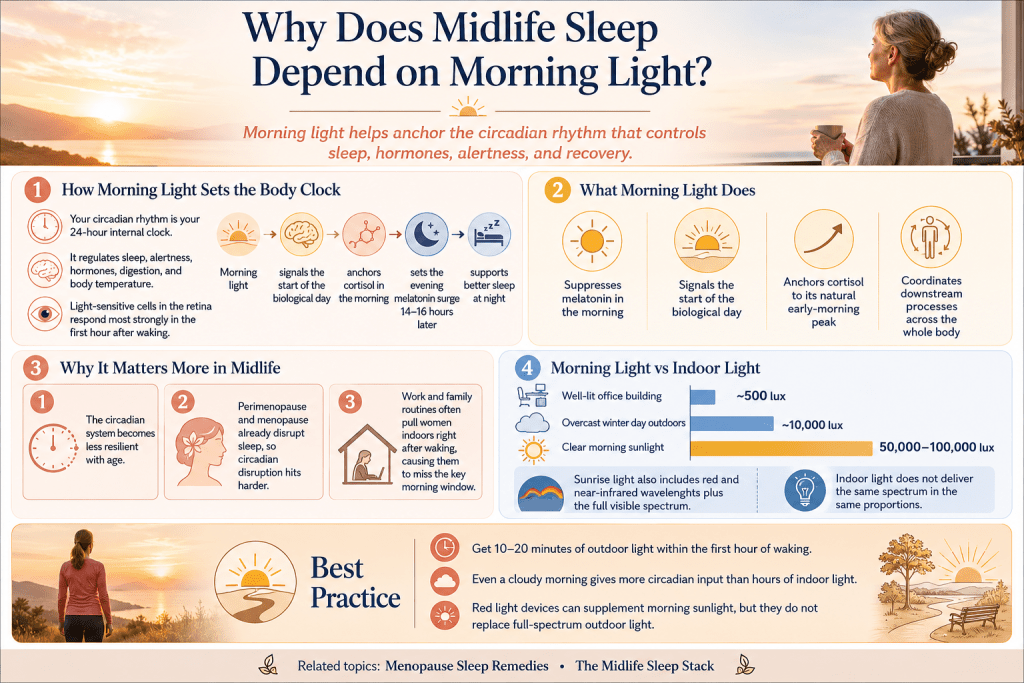
Morning light exposure does several things. It suppresses melatonin production and signals the start of the biological day. It sets the timing of the evening melatonin surge, which typically occurs about 14 to 16 hours after morning light exposure. It anchors cortisol to its natural early-morning peak. It coordinates thousands of downstream cellular processes across every organ system.
The morning light spectrum matters. Sunrise light contains high proportions of red and near-infrared wavelengths, along with the full visible spectrum. This combination is precisely what the circadian system evolved to recognize as the biological day starting.
Artificial indoor light, no matter how bright, does not deliver this spectrum in the same proportions. A well-lit office building at noon might deliver 500 lux of illumination. An overcast winter day outdoors delivers around 10,000 lux. Direct sunlight on a clear morning delivers 50,000 to 100,000 lux.
For midlife women, this matters for three reasons. First, the aging circadian system becomes less resilient to disruption. Younger people can compensate for suboptimal light exposure with reasonable ease. Older adults cannot. Second, perimenopause and menopause introduce hormonal changes that directly affect sleep quality independent of circadian rhythm. Compounding this with a disrupted circadian rhythm makes sleep problems substantially worse.
Third, midlife women often have work and family schedules that pull them into artificial light immediately after waking, missing the specific morning window when circadian anchoring is most effective.
Regular exposure to natural morning light, ideally within the first hour of waking, is one of the most effective interventions for midlife sleep quality. Ten to twenty minutes of outdoor light in the morning, even on a cloudy day, provides more circadian input than several hours of indoor light.
Red light devices cannot fully replace this exposure because morning light delivers a full spectrum, not just red and near-infrared wavelengths. Devices can supplement morning sunlight, and they can help specifically with the red-spectrum piece of the puzzle, but they do not substitute for time outdoors.
For a deeper look at improving sleep in midlife, menopause sleep remedies and a practical midlife sleep stack can help address the hormonal, behavioral, and lifestyle factors that influence sleep quality.
Free 28-Day Fascia Reset Email Course
Get our Free 28-day email course series to help with 1 or 2 exercises per day to release your fascia. One short lesson per day. Two minutes to read each.
How Does Red Light Therapy Compare to Other Midlife Skin and Recovery Tools?
Red light therapy sits in a crowded category of interventions for midlife skin, recovery, and cellular support. The table below places it in context.
|
Method |
Mechanism |
Best for |
Limitations |
Cost range |
|
Red Light Therapy (device) |
Specific wavelengths absorbed by mitochondria; increased ATP, collagen synthesis, tissue repair |
Skin, mitochondrial support, recovery, some pain applications |
Requires device investment; effects build over weeks; not all devices equal |
$50 to $2,000+ |
|
Sunlight (morning and evening) |
Full spectrum light including red/NIR; circadian anchoring |
Circadian rhythm, mood, vitamin D, mitochondrial support |
Weather and schedule dependent; requires actually going outside |
Free |
|
Topical Retinoids |
Increase cell turnover, stimulate collagen |
Fine lines, texture, tone |
Skin irritation; sun sensitivity; slow results |
$20 to $200 monthly |
|
Vitamin C Serum |
Antioxidant, collagen cofactor |
Skin brightness, environmental damage |
Requires proper formulation and storage |
$30 to $200 |
|
Provides amino acid building blocks |
Skin, joint, and connective tissue support |
Requires consistent use; results modest |
$30 to $80 monthly |
|
|
Microneedling |
Controlled skin injury triggers collagen response |
Texture, scarring, skin thickness |
Downtime; requires practitioner or at-home device |
$200 to $500 per session |
|
Chemical Peels |
Controlled exfoliation stimulates renewal |
Tone, texture, sun damage |
Downtime; series required |
$100 to $500 per session |
|
Laser Treatments |
Various wavelengths for specific concerns |
Sun damage, texture, deep wrinkles |
Expensive; series required; downtime |
$500 to $3,000+ per series |
|
Infrared Sauna |
Primarily heat, some red/NIR overlap |
Recovery, circulation, relaxation |
Not equivalent to red light therapy despite marketing overlap |
$2,000 to $6,000 |
|
Sleep |
Full-system repair and hormone regulation |
Everything |
Requires prioritization |
Free |
|
Protein Intake |
Amino acids for collagen synthesis |
Skin, muscle, connective tissue |
Requires daily attention |
Cost of food |
Red light therapy occupies a specific niche in this list. It is one of the few interventions that acts on cellular energy production directly. It combines well with almost every other item on this list because it addresses a different mechanism. Sun exposure remains foundational and free. Devices supplement the sun rather than replacing it. Topicals, supplements, and clinical treatments address different pieces of the aging picture and are complementary to red light rather than competitive with it.
The most common mistake in midlife skincare and wellness is choosing a single expensive intervention and expecting it to do the work of a comprehensive practice. Red light therapy contributes best when it sits inside a broader foundation of sleep, movement, protein, hydration, and daily time outdoors.
What Does the Research Actually Say About Red Light Therapy?
The research base for red light therapy has grown substantially over four decades. The volume of evidence is now considerable, though study quality varies and specific applications have stronger evidence than others.
- Skin and collagen: Multiple randomized controlled trials have documented improvements in skin appearance, elasticity, and collagen density after red light therapy. A 2014 study published in Photomedicine and Laser Surgery found significant improvements in skin complexion, feeling, roughness, and ultrasonographically measured collagen density in 136 women receiving red light therapy over 30 sessions. Effects were most pronounced in participants over 40.
- Wound healing: Red light therapy has strong evidence for accelerated wound healing across multiple wound types. This application has been FDA-cleared for years and is used in hospital settings, veterinary medicine, and specialized wound care clinics.
- Muscle recovery: A 2016 meta-analysis in Lasers in Medical Science examined 46 studies on photobiomodulation and muscle performance. Results consistently showed reduced muscle soreness, faster recovery from exercise-induced muscle damage, and in some studies, improved performance when used before exercise. Effects are most pronounced with treatment applied within 30 minutes of exercise.
- Joint pain: Systematic reviews have examined red light therapy for various joint conditions. Evidence is strongest for osteoarthritis of the knee and for jaw dysfunction. Effect sizes are typically modest but clinically meaningful.
- Hair growth: FDA-cleared red light devices for hair growth have documented efficacy for androgenetic alopecia in both men and women. Effects require consistent use over months and are more pronounced with combination therapy alongside conventional treatments.
- Cognitive function and mood: A growing body of research examines transcranial red light therapy for cognitive function, mood, and neurological conditions. This is an early-stage but promising area. Studies have documented improvements in cognitive performance, reductions in depression symptoms, and effects on Alzheimer’s-related biomarkers in small clinical trials. Larger trials are in progress.
- Menopausal symptoms: Direct research on red light therapy for menopausal symptoms is limited but suggestive. Studies on light therapy generally have documented improvements in mood, sleep, and hot flash intensity in perimenopausal and menopausal women. The evidence base for red light therapy specifically in this population is smaller but consistent with the broader mechanism of action.
- Safety: Red light therapy has an excellent safety profile in the wavelengths and doses used therapeutically. Serious adverse events are rare. Ultraviolet radiation is not part of red light therapy and does not carry the skin cancer risk associated with tanning devices. The most common side effects are mild eye discomfort if devices are used without eye protection at close range, and rarely, skin irritation with excessive use.
Study parameters vary widely, making direct comparison across studies difficult. Wavelengths, doses, treatment durations, and treatment intervals differ between studies. Blinding is inherently difficult for light-based interventions. Industry funding of some studies raises appropriate scrutiny questions.
Despite these limitations, the consistent direction of findings across multiple applications and multiple research groups supports the general conclusion that red light therapy at appropriate parameters produces measurable biological effects and clinical benefit for the applications where the evidence base is mature.
Free 28-Day Fascia Reset Email Course
Get our Free 28-day email course series to help with 1 or 2 exercises per day to release your fascia. One short lesson per day. Two minutes to read each.
How Can Red Light Therapy Support Perimenopause and Menopause?
The specific applications of red light therapy for midlife women deserve their own consideration. This section covers what the practice can reasonably offer and what it cannot.
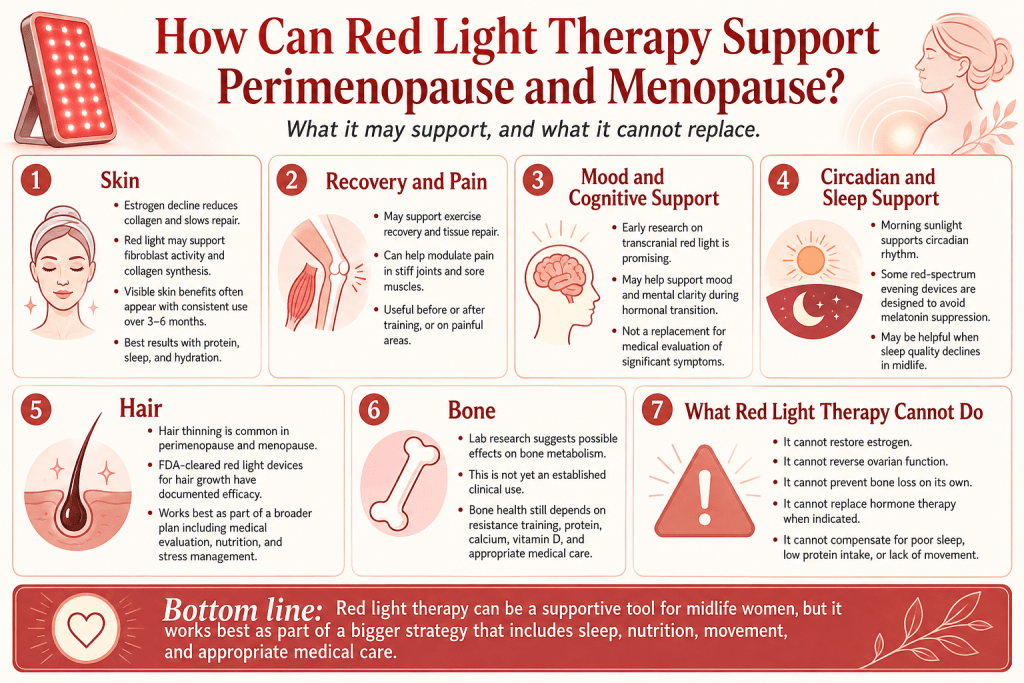
- Skin: The most immediate and visible application for many midlife women. Estrogen decline reduces collagen production, thins the dermis, and slows repair. Red light therapy directly stimulates fibroblast activity and collagen synthesis. Consistent practice over three to six months typically produces visible improvements in skin quality, particularly in fine lines, texture, and overall tone. Effects are most pronounced in women who combine device use with adequate protein intake, sleep, and hydration.
- Recovery and pain: Perimenopause and menopause often bring increased joint stiffness, slower recovery from exercise, and new patterns of musculoskeletal pain. Red light therapy has documented effects on these presentations. Used before or after training, it can support recovery. Used on specific painful areas, it can help modulate pain and support tissue repair.
- Mood and cognitive support: The emerging research on transcranial red light therapy suggests potential applications for the cognitive fog and mood changes that some women experience during hormonal transition. Evidence is early but promising. This should not replace medical evaluation for significant mood or cognitive symptoms.
- Circadian and sleep support: Regular morning sunlight exposure combined with strategic use of red-spectrum light in the evening can support circadian rhythm during a period when sleep quality often declines. Some red light devices are designed for evening use with wavelengths that do not suppress melatonin production the way blue-heavy light does.
- Hair: Hair thinning is common during perimenopause and menopause. FDA-cleared red light devices for hair growth have documented efficacy and can be part of a comprehensive approach that also includes appropriate medical evaluation, nutrition, and stress management.
- Bone: Some laboratory research suggests red light therapy may influence bone metabolism, though this is not yet an established clinical application. Do not use red light therapy as a substitute for the established interventions for bone health during menopause: resistance training, adequate protein and calcium, vitamin D, and appropriate medical management.
- What red light therapy cannot do for midlife women: It cannot restore estrogen. It cannot reverse ovarian function. It cannot prevent bone density loss on its own. It cannot substitute for hormone therapy when hormone therapy is indicated. It cannot compensate for inadequate sleep, protein, or movement. Women with significant menopausal symptoms should have a comprehensive conversation with a knowledgeable physician about the full range of options, of which red light therapy is one supportive tool.
How Can You Get Red Light Therapy Benefits From Sunlight for Free?
The single most important point in this article is that the best red light therapy is free.
Sunlight contains the full spectrum that human biology evolved to expect. Morning light, from sunrise through the first two hours of daylight, is particularly rich in red and near-infrared wavelengths. Evening light, from the golden hour through sunset, is similarly rich in these wavelengths. Midday light shifts toward blue-heavy wavelengths that are important for alertness but different in cellular effect.
A free daily practice for midlife women:
- First light exposure within the first hour of waking. Ten to twenty minutes outdoors, without sunglasses (but with any needed prescription lenses for safety). This anchors the circadian rhythm and delivers the highest proportion of red and near-infrared wavelengths of the entire day.
- A midday exposure whenever possible. Even ten minutes walking outside during lunch delivers substantial biological benefit. This is when vitamin D synthesis is most efficient, and when the alertness-supporting blue wavelengths are strongest.
- Sunset or evening light exposure. Ten to twenty minutes in the last hour of daylight, again outdoors when possible. This delivers the day’s second peak of red-spectrum wavelengths and signals the biological day is ending.
- Reduced artificial light after sunset. Dim the household lights. Wear blue-blocking glasses if you must be on screens after dark. Use warm-spectrum bulbs (2700 Kelvin or below) in bedrooms and evening spaces.
This practice costs nothing but time and attention. It provides more comprehensive light input than any device on the market. It sets the foundation on which any device you might purchase actually works. Skipping this foundation and relying solely on a device is like taking a multivitamin instead of eating food. It can supplement. It cannot replace.
For women whose schedules make consistent morning outdoor time difficult, devices become a reasonable addition. For women who can rearrange their mornings to include even ten minutes outdoors, the sunlight practice should come first and any device should be additive.
Free 28-Day Fascia Reset Email Course
Get our Free 28-day email course series to help with 1 or 2 exercises per day to release your fascia. One short lesson per day. Two minutes to read each.
When Does a Red Light Device Add Value Beyond Sunlight Alone?
A red light device is a reasonable addition to the free sunlight practice in specific situations:
- Winter months: In northern latitudes, meaningful outdoor light exposure becomes limited between November and February. Days are short. Weather is uncooperative. Time outdoors becomes harder. A device can supplement during this seasonal window when solar input drops.
- Chronic indoor schedules: Some careers do not accommodate outdoor time no matter how thoughtfully arranged. Healthcare shift workers, some corporate roles, and caregiving situations may make consistent outdoor exposure truly difficult. Devices become more valuable in these contexts.
- Specific therapeutic targets: A device delivers concentrated dose to a specific area (a joint, a spot on the face, a wound, a training-related sore muscle) that sunlight distributes across the entire body. For targeted applications, a device can be more efficient than time in the sun.
- Consistency and dose control: A device delivers a predictable, reproducible dose. Sunlight varies by season, weather, and time of day. For research-based protocols or specific applications, the reproducibility of a device is a genuine advantage.
- Skin applications requiring specific parameters: Some skin applications benefit from wavelengths and intensities that are difficult to obtain from sunlight alone. A well-built face-focused device can accelerate visible results for someone specifically pursuing skin improvements.
For most midlife women, a modest home device used two to four times per week for 10 to 20 minutes per session, added to a daily outdoor light practice, provides more than enough input to influence the biological processes that matter. Elaborate multi-device setups and long daily sessions are unnecessary and can actually reduce effectiveness through the biphasic dose response discussed later.
How Can You Evaluate a Red Light Device Without Getting Scammed?
The red light device market has expanded rapidly. Quality ranges from serious therapeutic tools to purely decorative products marketed with impressive claims. The following framework helps distinguish one from the other without requiring technical expertise.
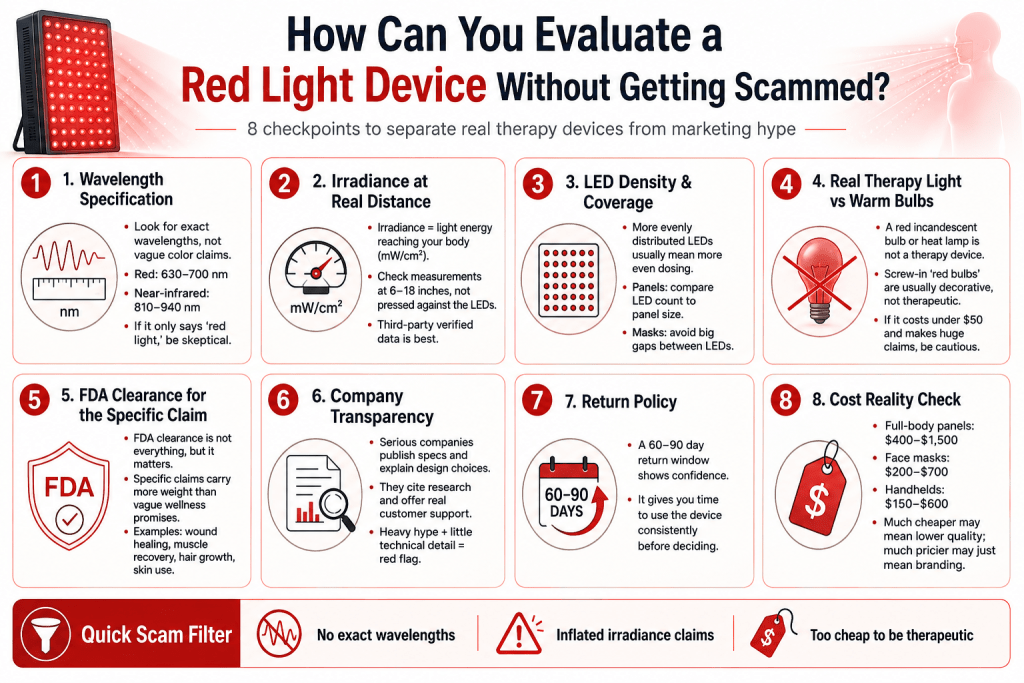
- Wavelength specification: The device should specify exact wavelengths, not vague color descriptions. Look for red light in the 630 to 700 nanometer range and near-infrared in the 810 to 940 nanometer range. Serious devices publish these numbers prominently. Devices that describe themselves only as “red light” without specifying wavelengths should be viewed skeptically.
- Irradiance measurement at a realistic distance: Irradiance is the measurement of how much light energy actually reaches the treatment area, expressed in milliwatts per square centimeter (mW/cm²). Manufacturers can inflate this number by measuring with the sensor pressed directly against the LEDs. Real use happens at 6 to 18 inches from the device, where the effective dose is a fraction of the surface measurement. Look for third-party testing at realistic treatment distance. Devices that will not publish independently verified irradiance data at typical use distance are likely overstating their effective dose.
- LED density and coverage: More LEDs distributed across the treatment area produce more even and effective dose than a few LEDs spaced far apart. For panel devices, look at the LED count relative to the panel size. For face masks, look for dense, evenly distributed LEDs rather than a scattering with gaps.
- Real light versus warm light: A red-colored incandescent bulb or a heat lamp is not a red light therapy device. It produces heat and warm ambient light but negligible therapeutic wavelengths. Screw-in “red bulbs” are decorative or environmental, not therapeutic. If a product costs less than $50 and claims to be a red light therapy device, it is almost certainly one of these decorative products rather than a genuine therapeutic tool.
- FDA clearance for the specific claim: FDA clearance is not a guarantee of effectiveness for every application, but it does indicate that the device met specific safety and efficacy standards for a defined use. Clearance for wound healing, muscle recovery, hair growth, or specific skin applications carries more weight than general wellness claims.
- Company transparency: Serious companies publish detailed technical specifications, cite the research supporting their design decisions, and provide reasonable customer service. Companies whose marketing is heavy on transformation claims and light on technical detail warrant skepticism.
- Return policy: A generous return window (60 to 90 days minimum) suggests confidence in the product. It also gives you time to actually try the device consistently before deciding whether it works for your specific situation.
- Cost as a proxy: Serious full-body panel devices typically cost between $400 and $1,500. Serious face masks range from $200 to $700. Serious handheld devices range from $150 to $600. Prices substantially below these ranges typically indicate cutting corners on LEDs, irradiance, or component quality. Prices substantially above these ranges are often paying for brand rather than additional therapeutic value.
This framework applies to any device on the market. THOR does not sell red light therapy devices and has no financial relationship with device manufacturers. Our recommendation is that you use the framework above to evaluate options and choose based on your specific needs and budget rather than defaulting to whichever brand happens to be running the most aggressive marketing at the moment.
Free 28-Day Fascia Reset Email Course
Get our Free 28-day email course series to help with 1 or 2 exercises per day to release your fascia. One short lesson per day. Two minutes to read each.
How Do Wavelengths, Dose, and the Goldilocks Zone Affect Red Light Therapy?
Two technical concepts matter for effective red light therapy: wavelength and dose.
How Do Wavelengths Affect Tissue Depth?
Different wavelengths penetrate to different tissue depths and produce different biological effects. The commonly used ranges include:
- Red light, 630 to 700 nanometers: Penetrates approximately 1 to 5 millimeters. Primary effects on skin, superficial tissue, and hair follicles.
- Near-infrared, 810 to 850 nanometers: Penetrates 3 to 5 centimeters. Reaches muscle, joint, and connective tissue.
- Deep near-infrared, 850 to 940 nanometers: Penetrates deepest. Used for joints, bones, and applications requiring the greatest tissue depth.
Well-designed devices combine multiple wavelengths for comprehensive coverage. A device offering only 660 nanometers or only 850 nanometers can be useful for specific applications but is less versatile than a combination device.
Why Does Dose Matter?
The therapeutic effect of red light follows a biphasic dose-response curve.
- Too little produces no benefit.
- Too much either produces no additional benefit or can actively inhibit the desired response.
This is different from most pharmaceutical dose-response curves where more typically means more.
The dose is a product of irradiance (intensity) and time (duration). Irradiance is measured in milliwatts per square centimeter. Dose is measured in joules per square centimeter.
- For most skin applications: The therapeutic dose is roughly 3 to 10 joules per square centimeter.
- For deeper applications like muscle and joint: The dose may be higher, up to 30 to 60 joules per square centimeter.
What Is the Goldilocks Zone?
Practically, this means that a 10-minute session at a properly powered device is often more effective than a 30-minute session. Longer is not better. Higher intensity is not better if it pushes you past the biphasic peak.
The device manufacturer should provide recommended session durations based on the device’s actual irradiance. Follow these recommendations rather than assuming more is better.
Why Does Treatment Distance Matter?
Irradiance falls off with distance from the device. A powerful device used from 18 inches away may deliver less effective dose than a lower-powered device used from 6 inches. The device manufacturer should specify optimal treatment distance. Position yourself accordingly.
How Can You Follow the 5-Day Red Light Integration Program?
This program builds a red light therapy practice alongside the free sunlight foundation. It works whether or not you own a device. For device owners, it integrates the device thoughtfully. For non-owners, it establishes the sunlight practice that comes first regardless.
|
Day |
Focus |
Practice |
Duration |
|
Day 1 |
Morning sun foundation |
10-15 minutes outdoors within first hour of waking, no sunglasses (use prescription lenses if needed) |
15 minutes |
|
Day 2 |
Add sunset exposure |
Repeat Day 1, add 10 minutes outdoors in the last hour of daylight |
25 minutes |
|
Day 3 |
Add midday walk |
Repeat Day 2, add 10-minute walk outside during lunch or midday break |
35 minutes |
|
Day 4 |
Introduce device (if you have one) |
Full sun practice from Day 3, add 10 minutes with a red light device on face or upper body |
45 minutes |
|
Day 5 |
Refine and integrate |
Full practice with attention to evening light hygiene: dim lights, warm bulbs, blue-blocking glasses after sunset |
45 minutes |
Day 1 Detail: Morning Sun Foundation
Set an intention to be outdoors within the first hour after waking. Ten to fifteen minutes is enough. Walk, sit on a porch, water plants, or simply stand facing the light. Do not wear sunglasses, but wear prescription glasses if you need them for safety.
On cloudy days, the exposure still counts and matters. Notice how the exposure affects your alertness, mood, and hunger for the rest of the day. This is your circadian anchor.
Day 2 Detail: Add Sunset Exposure
Complete the morning sun practice. In the last hour of daylight, get outdoors again for at least 10 minutes. This is often easier than the morning practice because most schedules have more flexibility in the evening than immediately after waking.
Sunset light delivers the day’s second peak of red-spectrum wavelengths and signals the biological day is ending. This exposure helps set the timing of evening melatonin production.
Day 3 Detail: Add Midday Walk
Continue morning and evening exposures. Add a 10-minute outdoor walk during your lunch break or a midday transition. Midday light is highest intensity and delivers the most efficient vitamin D synthesis (with reasonable skin exposure). It also breaks up the indoor light environment that dominates most workdays.
If your schedule truly does not permit even a 10-minute midday walk, this signals that your work environment needs a longer-term structural conversation, but do not let the midday piece be the reason you skip the morning and evening pieces.
Day 4 Detail: Introduce Device
Complete the full sun practice. If you own or have access to a red light device, add a 10-minute session. Position yourself at the manufacturer’s recommended distance. Use the device on your face for skin applications, on the upper body for general mitochondrial support, or on a specific area for targeted recovery or pain.
Do not exceed the manufacturer’s recommended session duration. Rest quietly during the session. Breathe. This is a good time to sit with a book, listen to something calm, or simply be still.
Day 5 Detail: Refine and Integrate
Complete the full practice from Day 4. Add attention to evening light hygiene. As sunset approaches, dim the household lights. Switch to warm bulbs (2700 Kelvin or below) in bedrooms and evening spaces. If you must be on screens after dark, wear blue-blocking glasses or use night mode on your devices. The goal is a light environment that mirrors the natural transition from day to night rather than one that keeps you in “daytime” light until you fall asleep.
After completing the 5-day introduction, most women benefit from daily sunlight practice (this is non-negotiable if health is a priority) and, if using a device, three to five device sessions per week. Rotate the areas you focus on with the device. Combine face sessions with skin care routines. Combine full-body panel sessions with meditation or breathwork.
Free 28-Day Fascia Reset Email Course
Get our Free 28-day email course series to help with 1 or 2 exercises per day to release your fascia. One short lesson per day. Two minutes to read each.
How Can You Use Red Light Therapy Safely at Home?
- Before the session: Read the device manufacturer’s instructions completely before first use. Check that the device is on a stable surface and that the treatment distance is appropriate. Have eye protection available if the manufacturer recommends it (most devices at typical treatment distance do not require eye protection, but bright direct exposure at close range can cause eye discomfort). Set a timer.
- Positioning: Position yourself at the manufacturer’s recommended distance. For skin applications, this is often 6 to 12 inches. For deep tissue applications, this may be 12 to 18 inches. Closer is not always better because it can push you past the biphasic peak.
- Duration: Follow the manufacturer’s recommended session duration. Beginners should start at the low end of the recommended range. Sessions of 10 to 20 minutes are typical for most applications. Longer sessions do not produce better results and can reduce effectiveness.
- Frequency: Two to five sessions per week is typical. Daily use is fine for some applications, particularly skin. For pain and recovery applications, alternating days often produces better results.
- During the session: Rest quietly. Breathe. This is not multitasking time if you want the full nervous system benefit. Many people combine sessions with meditation, breathwork, or simply sitting still.
- After the session: Drink water. Continue normal activities. Some people notice immediate skin flushing or warmth in the treated area; this is normal and resolves quickly.
- Skin care coordination: Use red light before applying serums or moisturizers rather than after. Some evidence suggests that penetration of topicals is enhanced by prior red light exposure. Avoid combining red light immediately with active retinoids or acid treatments that can increase skin sensitivity.
- Combining with other therapies: Red light combines well with almost all other wellness practices. It pairs particularly well with strength training (recovery support), with breathwork and meditation (both use quiet time productively), and with skincare routines (potential penetration enhancement).
What Are the Most Common Red Light Therapy Mistakes and How Can You Avoid Them?
- Mistake: Skipping the free sunlight practice. The single largest mistake is investing in devices while continuing to skip daily outdoor light exposure. Sunlight is more comprehensive, more powerful, and free. A device supplements the sun. It does not replace it.
- Mistake: Buying a decorative bulb and calling it therapy. Screw-in red bulbs, incandescent heat lamps, and decorative red lighting are not red light therapy devices. They may be pleasant environmental additions but do not produce therapeutic wavelengths or irradiance.
- Mistake: Assuming more is better. Longer sessions do not produce better results because red light therapy follows a biphasic dose-response curve. Follow the manufacturer’s recommended duration.
- Mistake: Standing too close to a powerful device. Positioning too close can push you past the therapeutic peak into the range where effects diminish. Follow the recommended treatment distance.
- Mistake: Inconsistency. Red light therapy produces cumulative effects over weeks to months. Sporadic use does not deliver the same benefits as consistent practice. Commit to a schedule you can maintain.
- Mistake: Expecting overnight results. Some applications produce visible results in a few sessions (immediate skin flushing, temporary muscle recovery). Structural changes to skin, ongoing pain patterns, or cellular energy typically require 8 to 12 weeks of consistent use.
- Mistake: Not verifying wavelength and irradiance. Marketing claims are not evidence. Look for published wavelength specifications and third-party verified irradiance measurements at realistic treatment distance.
- Mistake: Using red light therapy as a substitute for real fundamentals. Red light therapy does not replace sleep, protein, movement, or stress management. It is one supportive tool inside a comprehensive practice.
- Mistake: Ignoring contraindications. Some medications and conditions warrant caution or specific timing. See the contraindications section below.
Free 28-Day Fascia Reset Email Course
Get our Free 28-day email course series to help with 1 or 2 exercises per day to release your fascia. One short lesson per day. Two minutes to read each.
What Should You Expect From Red Light Therapy Over Time?
- During a session: You feel warmth in the treated area, particularly with near-infrared wavelengths. The sensation should be pleasant, not uncomfortable. If skin becomes hot or you feel discomfort, increase distance or reduce session duration. Many people find sessions deeply relaxing.
- Immediately after: Slight pink or flushed appearance in the treated skin. Sense of warmth that fades over 30 to 60 minutes. Sometimes brief feeling of increased energy or clarity.
- First week of practice: Small immediate effects on skin (temporary brightness, some reduction in redness or irritation). Improved sleep quality if practice includes morning sun. No dramatic changes yet.
- Weeks 2 to 4: More consistent skin quality changes begin to appear. Some improvement in recovery from exercise. Sleep patterns often more consistent for those who prioritized morning light.
- Weeks 4 to 12: Meaningful visible skin improvements including changes in fine lines, texture, and overall tone. Pain and recovery applications show cumulative benefit. Consistency during this period matters more than session length.
- Beyond 12 weeks: Structural changes become established. This is when the collagen density improvements documented in research typically become visible. Continued practice maintains and extends benefits.
- Realistic expectations for midlife skin: Red light therapy can improve skin quality meaningfully. It cannot substitute for procedures that address specific concerns (deep wrinkles, significant sun damage, laxity). It works best as part of a comprehensive approach that includes topical care, nutrition, sun protection, sleep, and hydration.
- Realistic expectations for recovery and pain: Red light therapy can meaningfully accelerate recovery and reduce pain. It cannot replace addressing the causes of pain (mechanical patterns, joint issues, systemic conditions).
If you have consistently used a properly parameterized device at the manufacturer’s recommended protocol for 12 weeks without noticeable benefit, consider whether the specific device is appropriate for your application, whether other factors (sleep, protein, stress) may be limiting response, or whether the specific application is one where red light therapy has weaker evidence.
“The women who get the most out of red light therapy are the ones who start with the free practice and add devices strategically. If you are outside for twenty minutes each morning, walking during lunch, watching a sunset, dimming your evening lights, sleeping seven or eight hours, eating enough protein for your body, and moving regularly, then adding a red light device two or three times a week produces beautiful compounding results. If you skip the fundamentals and expect a device to compensate, no device on the market will deliver what you are hoping for. Light is nutrition for cells. Devices are supplements. Both matter. Supplements never replace food.”
Terry Tateossian, Founder of The House of Rose
When Should You Avoid Red Light Therapy or Talk to Your Doctor?
Red light therapy has an excellent safety profile, but specific situations warrant medical consultation before starting.
Consult your physician before beginning red light therapy if you:
- Have active cancer, particularly melanoma or other skin cancers
- Are taking photosensitizing medications (some antibiotics, certain diuretics, certain psychiatric medications, some acne treatments)
- Have lupus, porphyria, or other photosensitivity conditions
- Have active hyperthyroidism (avoid direct treatment over the thyroid area)
- Are pregnant (avoid direct treatment over the abdomen; discuss general safety with your obstetric provider)
- Have implanted devices near the treatment area (typically not a contraindication but worth clarifying)
- Have recently used aggressive skin treatments (chemical peels, laser, deep microneedling) with active recovery in progress
- Have any condition affecting your skin’s response to light
Do not use red light therapy:
- Directly on the eyes (protect eyes at close range or with high-intensity devices)
- Over open wounds without medical guidance
- On sunburned or otherwise damaged skin
- To treat conditions where you should be seeking medical care first
- As a substitute for evaluation of concerning symptoms
Signs to stop and consult a professional:
- Persistent skin irritation
- Increased pain in a treated area
- Any new skin lesions or changes
- Any symptoms that concern you
Free 28-Day Fascia Reset Email Course
Get our Free 28-day email course series to help with 1 or 2 exercises per day to release your fascia. One short lesson per day. Two minutes to read each.
How Can You Combine Red Light Therapy With the Broader THOR Framework?
Red light therapy is one tool inside a larger midlife wellness framework. At The House of Rose, we teach a practice that integrates hormone-informed movement, nutrition, nervous system regulation, sleep, and body work.
- Combine with morning movement: Walking outdoors in the morning pairs circadian light exposure with the metabolic and cardiovascular benefits of movement. Adding micro walks for women over 40 can make this combination easier to build into a consistent morning routine.
- Combine with mitochondrial support: Red light may support mitochondrial function, while strength training, quality sleep, and targeted nutrition provide additional layers of support. Understanding the broader mitochondria and fascia connection in midlife women helps show how these strategies can work together.
- Combine with skin and collagen fundamentals: Red light can support collagen-producing processes, but those processes also depend on adequate nutritional building blocks. Understanding the roles of collagen types 1, 2, and 3 for women over 40 can help strengthen that nutritional foundation.
- Combine with fascia and myofascial work: Red light can complement connective tissue practices such as exercises to unlock tight fascia and support lymphatic flow, cupping and gua sha for fascial release, and acupuncture and myofascial release, creating a more comprehensive approach to fascial care.
- Combine with sleep support: Morning light plays an important role in circadian rhythm regulation, making it a natural addition to a broader menopause sleep-support framework.
- Combine with retreat time: The Deeply Restorative Yoga and Nature Retreat at our Smoky Mountains property naturally incorporates morning light exposure, outdoor movement, and evening light discipline into the daily schedule, giving women an immersive way to experience these habits consistently.
If you want structure around integrating light practices into a full midlife wellness routine, the Deeply Restorative Yoga and Nature Retreat provides a residential setting where the practice becomes the default rather than the exception. If you want support building a personal daily practice, our Monthly Personal Training and Nutrition Coaching Program helps you weave light exposure, movement, and nutrition into your specific weekly rhythm.
If you want to strengthen the nutrition foundation red light works best on top of, use the Macro Calculator to set your protein and hydration targets first.
Frequently Asked Questions
Does red light therapy really work?
For specific applications with adequate evidence bases, yes. Skin quality, muscle recovery, wound healing, and hair growth have the strongest evidence. Cognitive and mood applications are promising but earlier in the research pipeline. Effects require appropriate wavelengths, appropriate dose, and consistent use over weeks to months.
Is red light therapy safe during perimenopause and menopause?
Yes, when used appropriately. Red light therapy is one of the safer wellness interventions available. Contraindications are limited and specific. Discuss any concerns with your physician if you have specific medical conditions or take photosensitizing medications.
How is red light therapy different from an infrared sauna?
An infrared sauna primarily delivers heat. A red light therapy device delivers specific therapeutic wavelengths of red and near-infrared light. There is some overlap in wavelengths for some sauna types, but the primary purpose and mechanism differ substantially. Saunas support recovery and cardiovascular function through heat. Red light devices support mitochondrial function and tissue-level effects through specific photon absorption.
Can I use red light therapy every day?
Yes for most applications, though many people find that three to five sessions per week produces equivalent results with less time commitment. For muscle recovery specifically, alternating days often produces better results than daily use.
Will red light therapy help my hot flashes?
Direct research on this specific application is limited. Light therapy generally has documented effects on mood, sleep, and some vasomotor symptoms. The strongest circadian light intervention for perimenopausal symptoms is regular morning outdoor exposure, which is free and effective. A device may supplement this but should not replace the sunlight practice.
Does red light therapy help with hair loss during menopause?
FDA-cleared red light devices for androgenetic alopecia have documented efficacy in both men and women. Effects are modest but real, and require consistent use over months. For significant midlife hair changes, comprehensive evaluation by a dermatologist or endocrinologist is important because multiple factors contribute (thyroid, hormones, iron, stress).
How long before I see results on my skin?
Some immediate effects (temporary brightness, flushing) appear after the first session. Meaningful visible improvements in fine lines, texture, and tone typically require 8 to 12 weeks of consistent practice. Structural changes to collagen density require several months.
Can I combine red light with retinol or other active skincare?
Yes, but timing matters. Use red light before applying products. Avoid immediate combination with strong actives (high-percentage retinoids, strong acids) that can increase skin sensitivity.
Do I need to wear eye protection?
Depends on the device and treatment distance. Most home devices at recommended distance do not require eye protection but can cause temporary eye discomfort if you look directly at the LEDs. Follow manufacturer guidance. High-intensity devices used close to the face typically do require eye protection.
Is there a difference between LED and laser red light therapy?
Laser devices deliver more concentrated dose to smaller areas. LED devices deliver less intense dose to larger areas. For most home applications, LED devices are equivalent to laser for practical purposes, more affordable, and easier to use. Laser is used more in specialized clinical settings.
Can I do red light therapy in the evening?
Yes, and some evidence suggests evening use may support sleep more effectively than morning use for specific applications. Red-spectrum light does not suppress melatonin the way blue-spectrum light does, so evening use is compatible with the circadian goal of preparing for sleep. Some devices are specifically designed for evening use.
What is the difference between red light and near-infrared?
Red light is visible (roughly 630 to 700 nanometers) and penetrates skin and superficial tissue. Near-infrared is invisible (roughly 810 to 940 nanometers) and penetrates deeper into muscle, joint, and connective tissue. Well-designed devices combine both for comprehensive coverage.
Are red light face masks worth it?
A well-built, adequately powered, FDA-cleared face mask can produce meaningful skin improvements. The market includes many underpowered products marketed with impressive claims but insufficient irradiance to produce results. Evaluate carefully using the framework in section 10.
Can red light therapy help with joint pain in menopause?
Evidence supports red light therapy for various joint conditions including osteoarthritis of the knee. Effects are modest but consistent. This is one application where near-infrared depth of penetration matters. Combine with other joint health strategies including strength training, adequate protein, and appropriate medical evaluation.
Does red light therapy support bone density?
Laboratory research suggests possible effects on bone metabolism, but this is not yet an established clinical application for humans. Do not use red light therapy as a substitute for the established bone density interventions during menopause: resistance training, adequate protein and calcium, vitamin D, and appropriate medical management if osteopenia or osteoporosis is present.
Can I use red light therapy while breastfeeding?
Generally considered safe, but avoid direct treatment over breast tissue during active breastfeeding, and discuss with your healthcare provider if you have specific concerns.
Is red light therapy covered by insurance?
Rarely for wellness applications. Some clinical applications (wound healing, certain approved medical uses) may be covered when provided in a medical setting for specific diagnoses.
How do I choose between a panel, a mask, and a handheld device?
Panels are best for whole-body applications and general mitochondrial support. Masks are convenient for face-specific applications. Handheld devices are best for targeted spot treatment. Many women find that starting with either a panel or a mask, based on primary goals, covers most needs. Adding a handheld device later for specific concerns is a reasonable progression.
References
- Hamblin, M. R. (2017). Mechanisms and applications of the anti-inflammatory effects of photobiomodulation. AIMS Biophysics, 4(3), 337-361.
- Hamblin, M. R. (2018). Mechanisms and mitochondrial redox signaling in photobiomodulation. Photochemistry and Photobiology, 94(2), 199-212.
- Wunsch, A., & Matuschka, K. (2014). A controlled trial to determine the efficacy of red and near-infrared light treatment in patient satisfaction, reduction of fine lines, wrinkles, skin roughness, and intradermal collagen density increase. Photomedicine and Laser Surgery, 32(2), 93-100.
- Avci, P., Gupta, A., Sadasivam, M., Vecchio, D., Pam, Z., Pam, N., & Hamblin, M. R. (2013). Low-level laser (light) therapy (LLLT) in skin: Stimulating, healing, restoring. Seminars in Cutaneous Medicine and Surgery, 32(1), 41-52.
- Ferraresi, C., Huang, Y. Y., & Hamblin, M. R. (2016). Photobiomodulation in human muscle tissue: An advantage in sports performance? Journal of Biophotonics, 9(11-12), 1273-1299.
- Leal-Junior, E. C., Vanin, A. A., Miranda, E. F., de Carvalho, P. T. C., Dal Corso, S., & Bjordal, J. M. (2015). Effect of phototherapy (low-level laser therapy and light-emitting diode therapy) on exercise performance and markers of exercise recovery: A systematic review with meta-analysis. Lasers in Medical Science, 30(2), 925-939.
- Karu, T. I., Pyatibrat, L. V., Kolyakov, S. F., & Afanasyeva, N. I. (2005). Absorption measurements of a cell monolayer relevant to phototherapy: Reduction of cytochrome c oxidase under near IR radiation. Journal of Photochemistry and Photobiology B: Biology, 81(2), 98-106.
- Passarella, S., & Karu, T. (2014). Absorption of monochromatic and narrow band radiation in the visible and near IR by both mitochondrial and non-mitochondrial photoacceptors results in photobiomodulation. Journal of Photochemistry and Photobiology B: Biology, 140, 344-358.
- Chow, R., Armati, P., Laakso, E. L., Bjordal, J. M., & Baxter, G. D. (2011). Inhibitory effects of laser irradiation on peripheral mammalian nerves and relevance to analgesic effects: A systematic review. Photomedicine and Laser Surgery, 29(6), 365-381.
- Cotler, H. B., Chow, R. T., Hamblin, M. R., & Carroll, J. (2015). The use of low level laser therapy (LLLT) for musculoskeletal pain. MOJ Orthopedics & Rheumatology, 2(5).
- Lanzafame, R. J., Blanche, R. R., Bodian, A. B., Chiacchierini, R. P., Fernandez-Obregon, A., & Kazmirek, E. R. (2013). The growth of human scalp hair mediated by visible red light laser and LED sources in males. Lasers in Surgery and Medicine, 45(8), 487-495.
- Salehpour, F., Mahmoudi, J., Kamari, F., Sadigh-Eteghad, S., Rasta, S. H., & Hamblin, M. R. (2018). Brain photobiomodulation therapy: A narrative review. Molecular Neurobiology, 55(8), 6601-6636.
- Cassano, P., Petrie, S. R., Hamblin, M. R., Henderson, T. A., & Iosifescu, D. V. (2016). Review of transcranial photobiomodulation for major depressive disorder: Targeting brain metabolism, inflammation, oxidative stress, and neurogenesis. Neurophotonics, 3(3), 031404.
- Wright, K. E., Skinner, S., & Zhu, S. (2023). The musculoskeletal syndrome of menopause. Climacteric, 26(4), 366-371.
- Blume, C., Garbazza, C., & Spitschan, M. (2019). Effects of light on human circadian rhythms, sleep and mood. Somnologie, 23(3), 147-156.
- Wahl, S., Engelhardt, M., Schaupp, P., Lappe, C., & Ivanov, I. V. (2019). The inner clock: Blue light sets the human rhythm. Journal of Biophotonics, 12(12), e201900102.
- Reiter, R. J., Rosales-Corral, S., Sharma, R., Manchester, L. C., & Tan, D. X. (2017). Melatonin and the circadian regulation of cell proliferation: A response to viruses and cancer. Melatonin Research, 1(1), 128-142.
- Bumah, V. V., Aboualizadeh, E., Masson-Meyers, D. S., Eells, J. T., Enwemeka, C. S., & Hirschmugl, C. J. (2017). Spectrally resolved infrared microscopy and chemometric tools to reveal the interaction between blue light (470 nm) and methicillin-resistant Staphylococcus aureus. Journal of Photochemistry and Photobiology B: Biology, 167, 150-157.
- Tomé, R. F. F., Silva, D. F. B., Dos Santos, C. A. O., de Vasconcelos Neves, G., Rolim, A. K. A., & de Castro Gomes, D. Q. (2020). ILIB (intravascular laser irradiation of blood) as an adjuvant therapy in the treatment of patients with chronic systemic diseases: An integrative literature review. Lasers in Medical Science, 35(9), 1899-1907.
- Hanna, R., Dalvi, S., Bensadoun, R. J., & Benedicenti, S. (2021). Role of photobiomodulation therapy in modulating oxidative stress in temporomandibular disorders: A systematic review and meta-analysis of human randomised controlled trials. Antioxidants, 10(7), 1028.
Disclaimer: This article is educational and does not constitute medical advice, diagnosis, or treatment. Red light therapy should be used according to the device manufacturer’s instructions for wavelength, distance, session length, and eye protection. Consult a healthcare provider before use if you are pregnant, take photosensitizing medications, have a photosensitivity disorder, active cancer, a thyroid condition, implanted medical devices, or a condition affecting your skin’s response to light. Do not use red light therapy on damaged or sunburned skin, directly over the eyes, or as a substitute for medical evaluation or treatment.
Free 28-Day Fascia Reset Email Course
Get our Free 28-day email course series to help with 1 or 2 exercises per day to release your fascia. One short lesson per day. Two minutes to read each.

Terry Tateossian is a Menopause Lifestyle Medicine Coach, Certified Personal Trainer & Nutritionist and the Founder of THOR: The House of Rose, a wellness brand serving women over 40 through retreats, coaching, macro-nutrition and community. As 25-year founder and entrepreneur, Terry spent two and a half decades building and running successful start-up businesses, an experience that put her on the front line of founder burnout long before she could name it. After facing serious health challenges, early onset menopause, and emotional eating while running her agency and raising two children, Terry rebuilt her health in her 40s and lost more than 80 pounds through evidence-based nutrition, training, and mindset work. Today, she helps women get strong, improve confidence, support hormone health, and create a stronger second half of life. Terry has been featured in major media outlets and is available for podcasts, expert commentary, brand collaborations, and speaking engagements on midlife health, reinvention, emotional eating, menopause wellness, and strength training for longevity. Get her free macro calculator (her cookbook companion) to start your journey to back to health.