

 By Team THOR
Free 28-Day Fascia Reset Email Course
Get our Free 28-day email course series to help with 1 or 2 exercises per day to release your fascia. One short lesson per day. Two minutes to read each.
Collagen Types 1, 2, and 3 for Women Over 40: The Complete Guide to What They Do, How They Change Through Menopause, and What Supports Them
Collagen is the most abundant protein in the body and a key structural component of the skin, bones, tendons, ligaments, cartilage, blood vessels, and organs. Its production declines through perimenopause and menopause, contributing to thinner skin, fine lines, joint stiffness, slower exercise recovery, thinning hair, and weaker nails.
The collagen conversation is often oversimplified or shaped by supplement marketing. Although more than 28 collagen types have been identified, types 1, 2, and 3 make up most of the collagen in the body. Each supports different tissues and responds to different nutritional, hormonal, and lifestyle factors.
I am Terry Tateossian, founder of The House of Rose and a certified lifestyle medicine coach. After experiencing early-onset menopause at 41, I built THOR to support women through perimenopause, menopause, and post-menopause.
This guide explains what collagen types 1, 2, and 3 do, how menopause affects collagen production, what supports or damages it, and how food compares with supplements. It also covers product selection, realistic timelines, and common collagen myths.
Important: Consult your healthcare provider before making major dietary changes or starting a supplement, especially if you have kidney disease, take multiple medications, are pregnant or breastfeeding, or have a condition requiring dietary management. This article is educational and does not replace medical advice.
What Is Collagen?
Collagen is a family of structural proteins that make up approximately 30 percent of the total protein in the human body. Understanding the basic biology of collagen is the foundation for making sense of the types, the life cycle, and the practical interventions that support it.
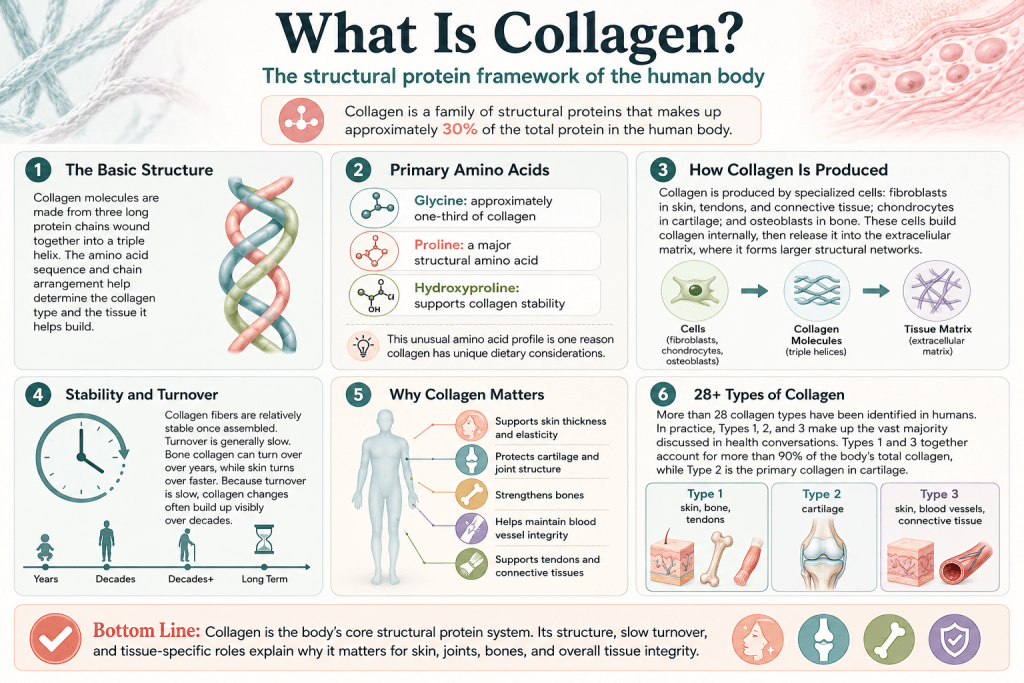
- The basic structure: Collagen molecules are built from three long protein chains wound together into a triple helix. The specific amino acid sequence and the specific arrangement of the chains determine which type of collagen the molecule becomes and what tissue it will build.
- The primary amino acids: Collagen is unusually rich in three specific amino acids: glycine (the smallest amino acid), proline, and hydroxyproline. Glycine makes up approximately one-third of the total amino acids in collagen. Proline and hydroxyproline together make up another significant portion. This unusual amino acid composition is one of the reasons collagen has specific dietary considerations that other proteins do not have.
- The production process: Collagen is produced primarily by specialized cells called fibroblasts (in skin, tendons, and general connective tissue), chondrocytes (in cartilage), and osteoblasts (in bone). These cells synthesize the collagen molecules internally, then secrete them into the surrounding extracellular matrix where they assemble into the larger structural networks that make up tissues.
- The stability question: Once assembled, collagen fibers are relatively stable. Collagen turnover is generally slow, with some tissues (like bone) turning over their collagen population over years and other tissues (like skin) turning over faster. This slow turnover is one of the reasons collagen changes accumulate visibly over decades.
- Why collagen matters: Collagen provides the structural framework for almost every tissue in the body. Without adequate collagen, skin thins and loses elasticity, joints lose their protective cartilage, bones become fragile, blood vessels lose their strength, tendons weaken, and the general architecture of the body degrades. Adequate collagen production is essential for tissue maintenance across every organ system.
- The 28-plus types: More than 28 different types of collagen have been identified in humans so far, distinguished by their molecular structure and tissue distribution. In practice, three types (1, 2, and 3) account for the vast majority of the total collagen in the human body. Types 1 and 3 together make up more than 90 percent of the total. Type 2 is the primary collagen in cartilage. The other types are important in specific tissues but are usually not the focus of general collagen discussions.
Why Does Collagen Matter for Women Over 40?
The general population case for collagen support is important. The case for women over 40 is heightened because of the specific hormonal changes that accelerate collagen loss in this life stage.
- The estrogen connection: Estrogen is one of the primary hormonal drivers of collagen synthesis. As estrogen declines through perimenopause and menopause, collagen production drops meaningfully. Research suggests that women lose approximately 30 percent of their skin collagen in the first five years after menopause, and continue to lose approximately 2 percent per year afterward. This is one of the largest single hormonally-driven biological changes of the menopause transition.
- Skin changes: The visible skin changes of midlife (thinning, reduced elasticity, more prominent fine lines, slower wound healing) are largely driven by the decline in Type 1 and Type 3 collagen production. These changes accelerate significantly in the first few years after menopause.
- Joint changes: The joint stiffness, morning stiffness, and slower recovery from exercise that many midlife women experience are largely driven by changes in Type 2 collagen production and cartilage integrity.
- Bone changes: The accelerated bone loss of postmenopausal women is driven partly by changes in the Type 1 collagen framework of bone as well as by mineral density changes.
- Hair and nail changes: The thinning hair and weakening nails common in midlife women reflect collagen changes in these tissues as well.
- Cardiovascular changes: The arterial stiffening that contributes to increased cardiovascular risk after menopause is influenced by collagen changes in vessel walls.
- Gut integrity: Type 3 collagen contributes to gut wall integrity, and the digestive changes many midlife women experience include contributions from collagen changes in gut tissue.
- Body composition: The visible loss of subcutaneous fat pad structure and the changes in body contour that many midlife women notice reflect not only fat and muscle changes but also collagen framework changes throughout connective tissue.
- Fascial mobility: The chronic stiffness and fascial restriction common in midlife women is partly a collagen story. See more on mitochondria and fascia connection and fascia release exercises for more.
“The collagen conversation is one of the specific places where midlife women deserve better information than the supplement industry usually provides. On one side you have the marketing claim that a scoop of collagen powder is going to reverse decades of skin aging. On the other side you have the dismissive claim that collagen supplements do nothing because they are just protein. The honest picture is more useful than either extreme. Collagen supplementation is one supportive intervention within a broader framework of adequate protein intake, appropriate resistance training, vitamin C sufficiency, quality sleep, and reduced ultraviolet exposure. Combined with these foundations it produces modest measurable benefits over months to years. Isolated from these foundations it produces disappointing results. The specific value of getting the framework right is that midlife women stop wasting money on the wrong things and start seeing the results that a well-executed approach produces.”
Terry Tateossian, Founder of The House of Rose
Free 28-Day Fascia Reset Email Course
Get our Free 28-day email course series to help with 1 or 2 exercises per day to release your fascia. One short lesson per day. Two minutes to read each.
What Is Type 1 Collagen and How Does It Support Skin, Bones, Tendons, and the Body?
Type 1 collagen is the most abundant collagen in the human body. It makes up approximately 90 percent of the total collagen and is present in almost every connective tissue. Understanding Type 1 in depth is worth the time because it is the type most directly relevant to the visible aging changes that most midlife women want to address.
Where Is Type 1 Collagen Found and What Does It Do?
- Where Type 1 collagen is found: Skin (approximately 80 percent of skin dry weight), bones (approximately 90 percent of bone protein), tendons, ligaments, teeth, and many organs. Type 1 is the primary structural collagen of the body.
- What Type 1 does: Type 1 provides tensile strength (resistance to pulling forces). It gives skin its firmness and resilience. It gives bones their structural framework, with mineral crystals attached to the collagen for hardness. It gives tendons their ability to transmit force from muscle to bone. It gives ligaments their stability at joints.
- How Type 1 is produced: Fibroblasts in skin, tendons, and connective tissue synthesize Type 1 collagen. Osteoblasts in bone synthesize Type 1 collagen as part of bone matrix. Production depends on adequate amino acid substrates (glycine, proline), adequate vitamin C, adequate zinc and copper, appropriate mechanical loading, and hormonal signals including estrogen.
How Does Type 1 Collagen Change in Midlife Women?
- What happens to Type 1 in midlife women: Type 1 collagen production drops meaningfully as estrogen declines. The specific pattern includes reduced synthesis of new Type 1 collagen and altered organization of existing collagen fibers. The result is thinner skin, more fragile bones, and reduced connective tissue integrity.
- The visible signs of Type 1 decline: Fine lines and wrinkles become more pronounced. Skin appears thinner and more translucent. Skin bruises more easily, and skin tears heal more slowly. Bone density measurements decline on DEXA scans. Tendon injuries become more common with less severe loading.
What Supports Type 1 Collagen?
- What supports Type 1 Collagen: Adequate protein intake at every meal (roughly 25 to 40 grams). Vitamin C at approximately 500 mg per day. Zinc and copper in adequate amounts. Vitamin D for bone-specific collagen. Weight-bearing exercise for bone and tendon collagen. Resistance training for tendon collagen. The free Macro Calculator provides your personalized protein target.
- Type 1-rich food sources: Bone broth (particularly beef bone broth) contains substantial Type 1 collagen. Other sources include chicken skin and connective tissue, fish (particularly skin-on preparations), and grass-fed beef with attention to connective tissue cuts. Egg whites contain proline. Citrus and colorful vegetables provide vitamin C.
- Type 1 collagen supplements: Marine collagen and bovine collagen are the two primary sources of Type 1 collagen supplements. Both provide the amino acid building blocks. Whether they end up in your skin or bones after digestion is a matter of some debate covered in Section 12.
What Is Type 2 Collagen and How Does It Support Cartilage, Joints, and the Aging Skeleton?
Type 2 collagen is the primary collagen of cartilage. It is a smaller portion of total body collagen than Type 1, but its concentration in cartilage makes it disproportionately important for joint health, which is a major midlife concern.
Where Is Type 2 Collagen Found, and What Does It Do?
Type 2 collagen is found in:
- Articular cartilage, which is the smooth cartilage that covers the ends of bones at joints
- Fibrocartilage, including the cartilage in intervertebral discs and menisci
- Tracheal cartilage
- The vitreous humor of the eye
Type 2 collagen provides the framework for cartilage, which allows joints to glide smoothly and absorb impact. It also holds water in cartilage tissue, which is essential for cartilage function. Without adequate Type 2 collagen, cartilage thins, joint surfaces become less smooth, and osteoarthritis develops.
How Is Type 2 Collagen Produced?
Chondrocytes, or cartilage cells, synthesize Type 2 collagen. Chondrocytes are relatively slow to turn over, and cartilage generally does not repair well after damage. This is one of the reasons joint problems become progressively harder to reverse as they develop.
What Happens to Type 2 Collagen in Midlife Women?
Type 2 collagen synthesis slows with aging generally and with the hormonal changes of menopause. Cartilage becomes thinner and less resilient.
The resulting joint changes contribute to:
- Progressive stiffness
- Morning stiffness
- Reduced joint resilience
- Osteoarthritis, which becomes increasingly common in this life stage
Signs of Type 2 collagen changes may include:
- Morning joint stiffness that resolves with movement
- Joint aching after prolonged sitting
- Reduced range of motion at specific joints
- Grating or crepitus sensations during movement
- Progressive knee, hip, or hand joint issues
What Supports Type 2 Collagen?
Several nutrition and lifestyle factors support Type 2 collagen and cartilage health:
- Adequate movement, because cartilage requires load and unload cycles to maintain nutrition
- Adequate protein intake
- Vitamin C
- Sulfur-rich foods, including garlic, onions, and cruciferous vegetables
- Type 2 collagen supplements, which are sometimes recommended for joint support
Type 2-rich food sources include chicken cartilage, particularly the cartilage at the ends of chicken bones in bone broth. Other sources include bone broth made with joints and cartilage and fish head broth. These sources are common in traditional cuisines and are experiencing renewed interest in modern nutrition.
What Should You Know About Type 2 Collagen Supplements?
Type 2 collagen supplements are typically derived from chicken sternum cartilage. Undenatured Type 2 collagen, or UC-II, has some specific research support for joint symptoms, particularly in osteoarthritis. This is a case where a specific collagen type has more evidence than the general collagen supplement literature.
What Other Interventions Support Joint Health?
Complementary joint interventions include:
- Adequate movement, such as tai chi walking and strength training.
- Appropriate weight management.
- Anti-inflammatory nutrition.
- Specific joint-supporting nutrients such as glucosamine and chondroitin
These interventions have their own evidence bases and can complement any collagen intervention.
Free 28-Day Fascia Reset Email Course
Get our Free 28-day email course series to help with 1 or 2 exercises per day to release your fascia. One short lesson per day. Two minutes to read each.
What Is Type 3 Collagen and How Does It Support Blood Vessels, Skin, and Gut Health?
Type 3 collagen is closely associated with Type 1 in most tissues where they appear together. It is often present in ratios of approximately 20 to 25 percent of the Type 1 content in most connective tissues.
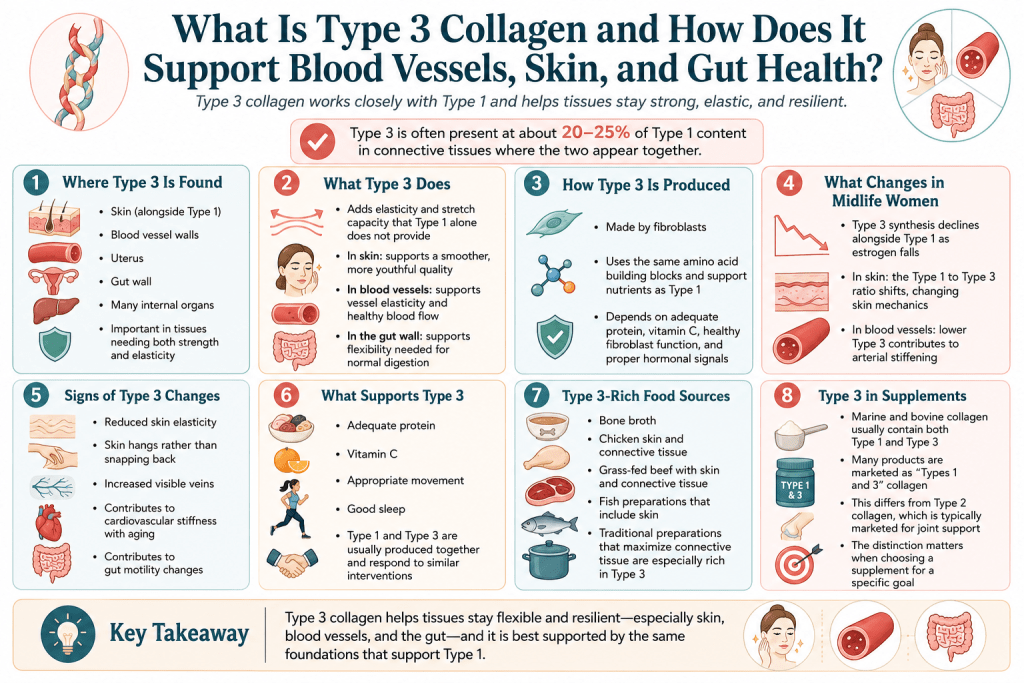
- Where Type 3 collagen is found: Skin (alongside Type 1), blood vessel walls, uterus, gut wall, and many internal organs. Type 3 is particularly important in tissues that need both strength and elasticity.
- What Type 3 does: Type 3 provides elasticity and stretch capacity that Type 1 does not provide. In skin, Type 3 supports the smooth youthful quality. In blood vessels, Type 3 supports vessel elasticity and appropriate blood flow. In the gut wall, Type 3 supports the flexibility that allows normal digestion.
- How Type 3 is produced: Fibroblasts synthesize Type 3 collagen using the same amino acid substrates and supporting nutrients as Type 1. Production depends on adequate protein intake, vitamin C, appropriate hormonal signals, and healthy fibroblast function.
- What happens to Type 3 in midlife women: Type 3 collagen synthesis declines alongside Type 1 as estrogen falls. The specific pattern in skin includes a shift in the ratio of Type 1 to Type 3, which changes the mechanical properties of aging skin. The specific pattern in blood vessels contributes to arterial stiffening.
- The signs of Type 3 changes: Reduced skin elasticity. Skin that “hangs” rather than snapping back. Increased visible venous prominence. Contributions to the cardiovascular stiffness of aging. Contributions to gut motility changes.
- What supports Type 3 Collagen: The same interventions that support Type 1 (adequate protein, vitamin C, appropriate movement, sleep). The two types are typically produced together and respond to similar interventions.
- Type 3-rich food sources: Bone broth (which contains both Type 1 and Type 3). Chicken skin and connective tissue. Grass-fed beef with skin and connective tissue. Fish preparations that include skin. The traditional preparations of these foods that maximize connective tissue content are particularly rich in Type 3.
- Type 3 in collagen supplements: Marine collagen and bovine collagen supplements generally contain both Type 1 and Type 3 collagen, which is why some products are marketed as “Types 1 and 3” collagen. The distinction from Type 2 collagen supplements (which are marketed for joint support) matters when choosing a product for a specific goal.
What Should You Know About Collagen Types 4, 5, 10, and Beyond?
Beyond the three primary types, several other collagen types have specific functions worth being aware of, though they are usually not the focus of general nutrition or supplementation discussions.
- Type 4 collagen: Forms the basement membranes that separate different tissue types throughout the body. Critical for kidney filtration function, skin structure, and many other roles. Not typically supplemented directly.
- Type 5 collagen: Present in small amounts in most tissues where Types 1 and 3 are present, and important in cell development. Present in cornea, placenta, and other specialized tissues. Some collagen supplements list Type 5 among their contents, though the specific relevance for supplementation is unclear.
- Type 10 collagen: Found in growth plate cartilage during bone development and in the hypertrophic cartilage layer during bone healing. Sometimes included in supplements marketed for bone support, though the specific evidence for supplementation is limited.
- The “all five types” marketing: Some collagen supplements are marketed as containing “all 5 major types” (typically 1, 2, 3, 5, and 10). This claim is technically accurate for products containing multiple sources including chicken, marine, and eggshell-derived collagens. Whether the “all 5 types” formulation produces meaningfully better results than a well-chosen Types 1 and 3 or Type 2 product is not well-established. The marketing may exceed the evidence.
- What the research supports: The strongest evidence bases are for Types 1, 2, and 3 in their specific applications (skin, joints, and skin-plus-vasculature respectively). Types 4, 5, and 10 have specific tissue roles but the case for direct supplementation is smaller.
Free 28-Day Fascia Reset Email Course
Get our Free 28-day email course series to help with 1 or 2 exercises per day to release your fascia. One short lesson per day. Two minutes to read each.
What Is the Collagen Life Cycle in Women?
Understanding the natural life cycle of collagen production in women is worth the time because it explains why the perimenopause and menopause window produces such visible changes and why the specific interventions that support collagen matter most in this life stage.
How Does Collagen Production Change With Age?
- Peak collagen production: ages 15 to 25. Collagen synthesis is at its lifetime peak during the teens and twenties. Skin, bones, and joints are in maximal repair and building capacity. Visible signs of aging are minimal.
- Gradual decline begins: ages 25 to 40. Collagen production begins declining slowly from around age 25 onward, approximately 1 percent per year. The decline is gradual and often not visible until later, but the cumulative effect over years is meaningful.
- Perimenopause acceleration: ages 40 to 55. As estrogen levels begin fluctuating and declining through perimenopause, collagen loss accelerates. The first visible signs of skin change often appear in this window, including fine lines around the eyes and mouth, reduced skin firmness, and slower wound healing.
- Menopause dramatic loss: the first 5 years post-menopause. Research has documented that women lose approximately 30 percent of their skin collagen in the first five years after the final menstrual period. This is one of the largest single hormonally driven biological changes of the menopause transition. The visible skin changes accelerate meaningfully in this window.
- Post-menopause continued loss: after the first 5 years. After the initial dramatic post-menopause loss, collagen continues to decline at approximately 2 percent per year for the rest of life. Cumulative loss over decades produces the specific pattern of very aged skin, fragile bones, and joint changes.
What Does the Collagen Timeline Look Like in Numbers?
By age 60, a woman who has not intervened may have approximately 50 percent less collagen in her skin than she had at age 25. By age 80, the loss may exceed 60 to 70 percent. These changes are visible, felt, and functional.
When Is the Most Important Intervention Window?
The specific value of collagen support interventions is greatest in the perimenopause and immediate post-menopause window because this is when the loss is accelerating most quickly and when the interventions can most effectively slow or partially offset the loss.
Starting collagen-supportive interventions in the forties produces better lifetime outcomes than starting in the sixties, though starting at any age is better than not starting.
What Happens to Collagen Through Perimenopause and Menopause?
The specific mechanisms by which perimenopause and menopause accelerate collagen loss are worth understanding because they inform the interventions that work.
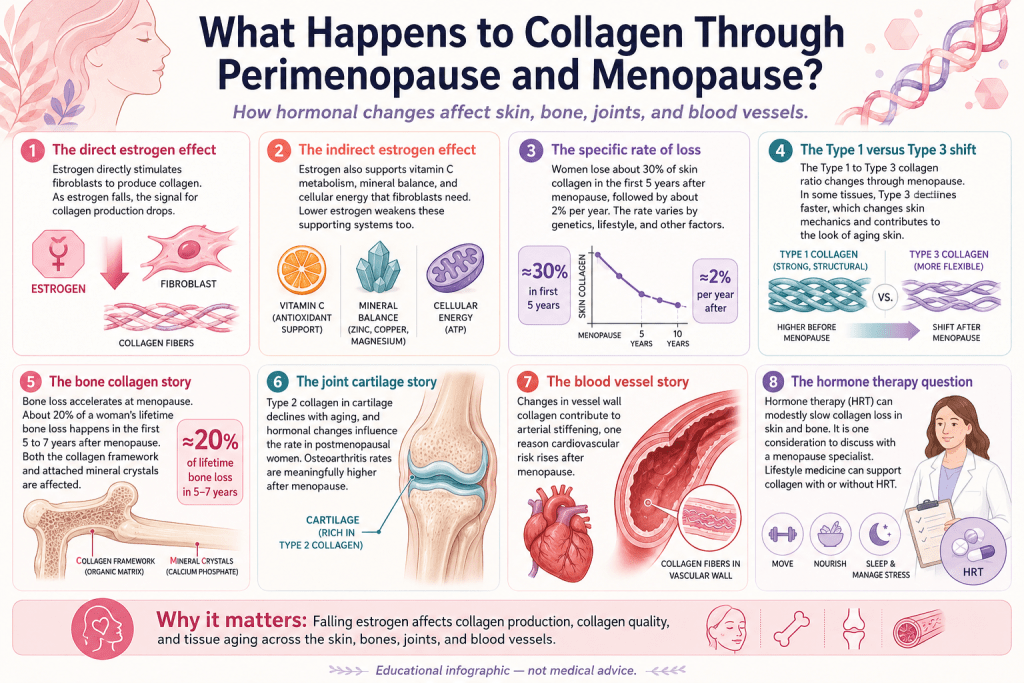
- The direct estrogen effect: Estrogen directly stimulates fibroblasts to produce collagen. Estrogen receptors are present on fibroblasts, and estrogen binding upregulates collagen synthesis. As estrogen falls, the signal for collagen production drops.
- The indirect estrogen effect: Estrogen also supports the vitamin C metabolism, mineral balance, and cellular energy that fibroblasts depend on for collagen production. The loss of estrogen affects these supporting systems as well.
- The specific rate of loss: Multiple studies have documented that women lose approximately 30 percent of skin collagen in the first five years post-menopause, followed by continued loss of approximately 2 percent per year. This rate of loss is not uniform across women; some experience faster loss and some experience slower loss based on genetics, lifestyle, and other factors.
- The Type 1 versus Type 3 shift: The ratio of Type 1 to Type 3 collagen in skin changes through menopause, with Type 3 declining faster in some tissues. This shift in the ratio changes the mechanical properties of skin and contributes to the specific appearance of aging skin.
- The bone collagen story: Bone loss accelerates dramatically at menopause. Approximately 20 percent of a woman’s lifetime bone loss occurs in the first five to seven years after menopause. The bone collagen framework and the mineral crystals attached to it are both affected.
- The joint cartilage story: Type 2 collagen in cartilage declines with aging generally, but the specific rate in postmenopausal women is influenced by the hormonal changes. Postmenopausal osteoarthritis rates are meaningfully higher than pre-menopausal rates.
- The blood vessel story: Vessel wall collagen changes contribute to arterial stiffening, which is one of the mechanisms behind the increased cardiovascular risk after menopause.
- The hormone therapy question: Hormone therapy (HRT) for menopause has been documented to modestly slow collagen loss in skin and bone. This is one of many considerations in the individual decision about hormone therapy, which is a discussion for you and your menopause specialist. Hormone therapy is not the only intervention available, and the lifestyle medicine framework outlined here works with or without hormone therapy.
Free 28-Day Fascia Reset Email Course
Get our Free 28-day email course series to help with 1 or 2 exercises per day to release your fascia. One short lesson per day. Two minutes to read each.
What Supports Collagen Synthesis at the Cellular Level?
The specific factors that support collagen synthesis in the body are worth understanding clearly because interventions that address these factors produce meaningful results.
- Adequate protein intake: Collagen synthesis requires amino acid substrates. Adequate daily protein intake (approximately 1.6 to 2.2 grams per kilogram of body weight for midlife women, or roughly 25 to 40 grams per meal for most women) provides the raw materials. This is the largest single dietary intervention. The free Macro Calculator provides your personalized target.
- Vitamin C: Vitamin C is a required cofactor for the enzymes that build collagen. Adequate vitamin C intake (approximately 500 mg per day is a reasonable target) is essential for collagen synthesis. Deficiency produces scurvy, which is fundamentally a collagen synthesis failure disease.
- Zinc and copper: These trace minerals support the enzymes involved in collagen synthesis and crosslinking. Adequate intake from whole food sources supports the collagen framework.
- Adequate glycine, proline, and hydroxyproline: Collagen is unusually rich in these amino acids, and some research suggests that supplementing them (through bone broth, collagen supplements, or gelatin) may support collagen synthesis more effectively than general protein alone.
- Vitamin D: Vitamin D supports bone collagen and general connective tissue health.
- Estrogen: As discussed above, estrogen directly stimulates collagen production. Hormone therapy is one option for supporting this signal.
- Appropriate mechanical loading: Tendons and bones respond to loading by increasing collagen production. Resistance training and weight-bearing exercise directly stimulate collagen synthesis in these tissues.
- Sleep: Collagen production, like most repair processes, happens preferentially during sleep. Consistent quality sleep supports collagen synthesis.
- Reduced sun exposure: Excessive ultraviolet exposure damages skin collagen and reduces synthesis. Sun protection is one of the most important interventions for skin collagen preservation.
- Reduced smoking and alcohol: Both damage collagen through multiple mechanisms including oxidative stress and impaired synthesis. Reducing exposure supports collagen maintenance.
- Adequate hydration: Hydration supports fibroblast function and the ground substance of connective tissue in which collagen sits.
- Antioxidant-rich nutrition: The oxidative stress that damages collagen is reduced by adequate intake of antioxidant-rich foods including colorful fruits and vegetables, tea, and cocoa.
- Blood sugar control: Chronic high blood sugar damages collagen through a process called glycation. Adequate blood sugar management supports collagen preservation.
What Destroys Collagen & Accelerates Loss?
Understanding what destroys collagen is as important as understanding what supports it because avoiding the specific damage factors often produces larger effects than adding new supportive interventions.
Environmental and Lifestyle Damage
- Ultraviolet radiation: Sun exposure directly damages skin collagen and is the largest single environmental factor in skin collagen loss over time. Consistent sun protection is essential.
- Smoking: Smoking damages collagen through multiple mechanisms and produces the specific pattern of premature skin aging that longtime smokers show.
- Excessive alcohol: Alcohol impairs collagen synthesis and produces oxidative damage that reduces existing collagen quality.
Metabolic Stress and Inflammation
- Chronic high blood sugar: Glycation of collagen molecules (a chemical reaction between sugars and proteins) damages the collagen structure and produces the specific stiff, brittle collagen pattern that contributes to diabetic complications and general aging.
- Chronic inflammation: Systemic inflammation drives collagen breakdown through matrix metalloproteinase enzymes.
- Chronic cortisol elevation: High cortisol reduces collagen synthesis and drives its breakdown. The chronic stress patterns common in midlife women contribute directly to accelerated collagen loss.
Inadequate Recovery and Nutrition
- Sleep deprivation: Chronic short sleep reduces the nightly collagen repair that would otherwise occur.
- Inadequate protein intake: Without adequate amino acid substrate, collagen synthesis cannot proceed at the required rate.
- Vitamin C deficiency: Even mild vitamin C deficiency impairs collagen synthesis.
- Sedentary behavior: Reduced mechanical loading signals for less collagen production in tendons and bones.
How Does Menopause Compound Collagen Damage?
Every one of these damage factors compounds the collagen loss produced by the menopause hormone shift. Women who manage these factors well have better collagen outcomes than women whose menopause overlaps with high sun exposure, chronic stress, poor sleep, and inadequate nutrition.
“The single most important framing I give to coaching clients is that collagen support is not primarily about what you add. It is primarily about what you protect. Adequate protein, vitamin C, and quality sleep are the foundational supports. Then the massive multiplier is what you stop damaging. Sun exposure without protection. Chronic sleep deprivation. Chronic cortisol elevation. Chronic high blood sugar from an over-carbohydrate diet. Excessive alcohol. These are the accelerators of collagen loss that compound with the natural menopause decline to produce the specific rapid aging pattern that some midlife women experience. Addressing these damage factors often produces more visible improvement than any supplement can, because it removes the ongoing loss that supplements cannot outrun.”
Terry Tateossian, Founder of The House of Rose
Free 28-Day Fascia Reset Email Course
Get our Free 28-day email course series to help with 1 or 2 exercises per day to release your fascia. One short lesson per day. Two minutes to read each.
Which Food Sources Support Each Type of Collagen?
The dietary support for collagen synthesis is both simpler and more powerful than most collagen supplement marketing suggests. Food-based collagen support has centuries of tradition and modern research support.
Collagen-Rich Animal Foods
- Bone broth: Traditional slow-cooked bone broth extracts collagen, gelatin, glycine, proline, and various minerals from bones and connective tissue. Beef bone broth is particularly rich in Type 1 and Type 3 collagen. Chicken bone broth, particularly if made with joint bones, contains Type 2 collagen. Fish bone broth provides marine collagen forms. Preparation matters: long, slow simmering for 12 to 24 hours with an acidic ingredient like vinegar extracts more collagen than quick preparation.
- Meat with connective tissue: Cuts of meat that include tendons, cartilage, and connective tissue, such as shanks, oxtail, and chicken with skin and joints, provide substantially more collagen than boneless, skinless preparations. Traditional cuisines that use “everything but the moo” produce naturally collagen-rich meals.
- Fish with skin: Fish preparations that include the skin provide marine collagen. Salmon, sardines, and mackerel with skin are good sources.
- Egg whites: Egg whites contain proline and other amino acids that support collagen synthesis, though they do not contain collagen itself.
Plant Foods That Support Collagen Production
- Colorful vegetables and fruits: These provide vitamin C, polyphenols, and antioxidants that support collagen synthesis and protect existing collagen from damage. Bell peppers, citrus, berries, dark leafy greens, and cruciferous vegetables are particularly valuable.
- Whole grains and legumes: These provide copper, zinc, and other trace minerals that support collagen enzymes.
- Nuts and seeds: These provide additional trace minerals and healthy fats that support connective tissue.
- Herbs and spices: Garlic, onions, and other allium vegetables provide sulfur that supports collagen crosslinking. Turmeric provides curcumin with anti-inflammatory effects that protect collagen.
Gelatin as a Practical Collagen Source
Traditional gelatin, made from animal bones and connective tissue, is simply cooked collagen. Adding gelatin to sauces, soups, and smoothies is a practical way to boost dietary collagen. Unflavored gelatin from grass-fed sources is a good option.
The Mediterranean Eating Pattern
The general Mediterranean eating pattern, with adequate protein, colorful vegetables, olive oil, moderate fish, and traditional preparations, aligns well with collagen support. See our Macro Miracle Mediterranean Cookbook for the recipe collection.
A Practical Daily Framework
For most midlife women, a strong food-based collagen support plan can include:
- 25 to 40 grams of protein at each meal
- One to two cups of bone broth or a soup or stew made with collagen-rich preparation
- Colorful vegetables at each meal
- Regular attention to hydration
This daily pattern provides strong food-based collagen support without any supplements.
What Does the Research Show About Collagen Supplements?
The collagen supplement industry has grown dramatically, and the marketing claims often exceed what the research supports. The honest picture is worth understanding clearly.
- How collagen supplements are made: Collagen supplements are typically produced by hydrolyzing (breaking down) animal collagen into smaller peptides. The resulting hydrolyzed collagen peptides are absorbed as amino acids and small peptides through the small intestine.
- The absorption question: Collagen is not absorbed intact through the gut and delivered directly to skin or joints. It is broken down into amino acids and small peptides during digestion, and these are used by the body to build various proteins throughout the body. The building blocks may or may not end up preferentially in collagen.
- What the specific research shows for skin: Multiple randomized controlled trials of hydrolyzed collagen supplements have documented modest improvements in skin hydration, elasticity, and appearance of fine lines over 8 to 12 weeks of consistent supplementation. Effect sizes are meaningful but modest. Meta-analyses generally support the specific skin outcomes.
- What the research shows for joints: Undenatured type 2 collagen (UC-II) at low doses (40 mg per day) has some randomized trial support for joint symptoms in osteoarthritis. Hydrolyzed collagen at higher doses (5 to 15 grams per day) also has some joint symptom research. Effect sizes are modest but present.
- What the research shows for bone: Collagen peptide supplementation has some research support for bone mineral density in postmenopausal women, though the effect sizes are modest and the interventions are typically combined with adequate calcium and vitamin D.
- Comparison to general protein: Some argument exists that the specific benefits attributed to collagen supplements may be partly explained by simply providing additional protein and specific amino acids that support connective tissue. Whether hydrolyzed collagen provides advantages over general protein powder or dietary protein for the same total intake is debated.
- Practical positioning: Collagen supplements are a reasonable adjunct within a broader nutrition framework. They are not miraculous. They are unlikely to produce visible changes in isolation from other supportive factors. They are also not risky (safety profile is generally good) and are relatively affordable.
- When to consider a supplement: If you struggle to meet protein targets through food, if you want to address skin or joint symptoms and have the foundation in place, if the practical convenience fits your life. Discuss with your healthcare provider.
- When to skip: If your protein intake is already adequate and you are addressing the collagen support foundations, additional supplementation may add cost without meaningful additional benefit. If you have kidney disease or other conditions affecting protein metabolism.
Free 28-Day Fascia Reset Email Course
Get our Free 28-day email course series to help with 1 or 2 exercises per day to release your fascia. One short lesson per day. Two minutes to read each.
What Should You Look for When Buying Collagen?
If you decide to add a collagen supplement, several factors distinguish quality products from poorly made ones.
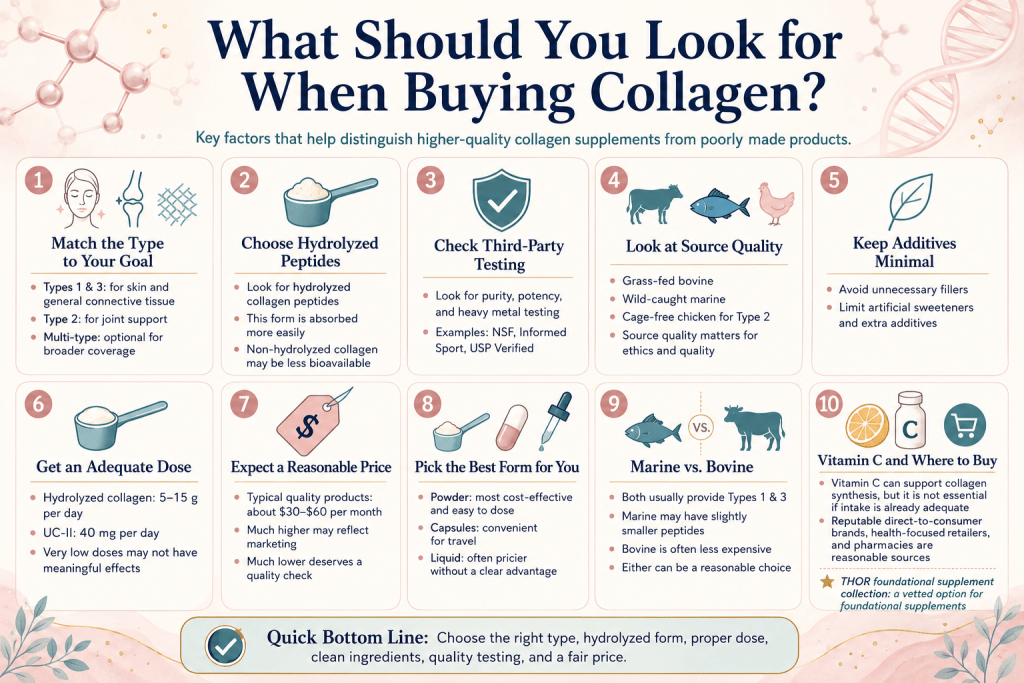
- Type of collagen matches your goal: Types 1 and 3 collagen (marine or bovine) for skin and general connective tissue. Type 2 collagen (usually chicken sternum) specifically for joint support. Multi-type collagen if you want general coverage, though the additional value beyond well-chosen 1 and 3 or Type 2 is debated.
- Hydrolyzed collagen peptides: Look for hydrolyzed collagen peptides on the label. This is the form that is absorbed. Non-hydrolyzed collagen requires more digestive work and may be less bioavailable.
- Third-party testing: High-quality products have third-party testing for purity, potency, and heavy metal content. Look for certifications like NSF, Informed Sport, or USP Verified.
- Source quality: Grass-fed bovine collagen. Wild-caught marine collagen. Cage-free chicken collagen for Type 2. Source quality matters for both ethical and quality reasons.
- Minimal additives: Look for products that contain collagen with minimal fillers, artificial sweeteners, or unnecessary additives.
- Adequate dose: Effective collagen supplementation is generally in the range of 5 to 15 grams per day for hydrolyzed collagen, or 40 mg per day for UC-II. Products that provide substantially lower doses may not produce meaningful effects.
- Reasonable price: High-quality collagen supplements typically cost $30 to $60 per month at standard doses. If you are paying substantially more, you are likely paying for marketing. If substantially less, review the quality carefully.
- Form: Powder is generally more cost-effective and easier to dose. Capsules are more convenient for travel. Liquid collagen is often more expensive without clear advantage. Choose based on personal preference.
- Marine versus bovine: Both provide Type 1 and Type 3 collagen. Marine collagen has smaller peptides that may be slightly more bioavailable. Bovine collagen is typically less expensive. Either is a reasonable choice.
- Vitamin C combination: Some collagen products include vitamin C, which supports collagen synthesis. This is a reasonable combination but is not necessary if you get adequate vitamin C from food or other supplements.
- Where to buy: The THOR foundational supplement collection covers vetted foundational supplements. Reputable direct-to-consumer brands, larger health-focused retailers, and pharmacies are all reasonable sources.
What Is a Realistic Timeline for Seeing Collagen Results?
Setting realistic expectations for collagen support results prevents disappointment and improves adherence. Different tissues respond at different rates, so progress should be measured over weeks, months, and years rather than individual days.
When Do Skin Improvements Appear?
- Subjective improvements in skin hydration often appear within 4 to 6 weeks of consistent daily practice combined with foundational supports.
- Measurable improvements in skin elasticity typically appear within 8 to 12 weeks.
- Visible improvements in fine lines and skin firmness develop over 3 to 6 months.
When Do Joint, Bone, Hair, and Nail Improvements Appear?
- Joint improvements: Reductions in joint stiffness and discomfort typically appear within 4 to 8 weeks of consistent daily practice. Deeper improvements in joint function develop over 3 to 6 months.
- Bone improvements: Bone changes are slow. Meaningful bone density improvements require 12 to 18 months of consistent practice combined with adequate calcium, vitamin D, and weight-bearing exercise.
- Hair and nail improvements: Improvements in hair and nail strength often appear within 8 to 16 weeks because these tissues have relatively fast turnover.
How Do Collagen Results Compound Over Time?
The most reliable pattern is that results compound over years:
- Six months produces modest visible improvements.
- One year produces meaningful improvements.
- Five years of consistent practice produces the difference between a 55-year-old who has done this work and a 55-year-old who has not.
What Should You Track?
- Take a photo of your face and hands at the start.
- Take another photo at 6 weeks.
- Track subjective sleep and energy.
- Track joint stiffness on a 1–10 scale each morning.
- Look at trends over months, not individual days.
What Can Produce Disappointing Results?
- Inconsistent daily practice.
- Inadequate protein and vitamin C alongside the supplement.
- Skipping damage-reduction interventions, including sun protection, sleep, and stress management.
- Expecting supplements to compensate for lifestyle factors that undermine collagen.
Free 28-Day Fascia Reset Email Course
Get our Free 28-day email course series to help with 1 or 2 exercises per day to release your fascia. One short lesson per day. Two minutes to read each.
What Are the Most Common Myths About Collagen?
Several myths circulate widely in collagen marketing and are worth naming directly.
- Collagen supplements go directly to your skin: Collagen is broken down into amino acids and small peptides during digestion. These are used by the body throughout many tissues, not preferentially targeted to skin.
- More collagen is always better: Very high collagen intake does not produce proportionally better results and may not be necessary once adequate baseline is reached.
- All collagen supplements are the same: Quality varies significantly. Source, processing, testing, and dose all matter.
- You need all 5 types of collagen: For most goals, well-chosen Types 1 and 3 (for skin and general connective tissue) or Type 2 (for joints) is sufficient. The marketing case for “all 5 types” is thinner than it appears.
- Collagen supplements replace protein needs: Collagen is a protein but is incomplete (lacking some essential amino acids). It should be additional to your general protein target, not a replacement.
- Vegan collagen supplements provide collagen: True collagen only comes from animal sources. Products marketed as vegan collagen typically contain ingredients that may support collagen synthesis (vitamin C, silica, amino acids) but do not contain actual collagen.
- Collagen produces immediate visible results: Meaningful results take months. Anyone claiming immediate transformation is overselling.
- Collagen alone reverses menopause skin changes: The full picture of skin support in menopause includes sun protection, sleep, stress management, adequate protein, and often topical retinoids and other dermatological interventions. Collagen is one supportive layer.
- You can outrun bad lifestyle habits with collagen: No supplement can compensate for chronic sun damage, chronic sleep deprivation, chronic stress, poor diet, or chronic high blood sugar.
How Does Collagen Support Fit Into the Broader THOR Framework?
Collagen support works best when it is combined with the broader nutrition, movement, recovery, and lifestyle foundations of the THOR framework.
- Nutrition foundation: Adequate protein provides the amino acids the body needs to produce and maintain collagen. A balanced diet that includes vitamin C, zinc, copper, healthy fats, and antioxidant-rich foods also supports collagen formation and protects existing connective tissue.
- Movement layer: Resistance training and weight-bearing exercise stimulate the tissues that depend on collagen, including the bones, tendons, ligaments, and muscles. Regular movement also supports joint mobility, circulation, balance, and long-term physical independence.
- Sleep foundation: Deep, consistent sleep gives the body time to repair damaged tissue and carry out important recovery processes. Poor sleep can interfere with tissue maintenance and may increase inflammation, making quality sleep an essential part of collagen support.
- Nervous system regulation: Chronic stress and prolonged cortisol elevation can reduce collagen production and accelerate tissue breakdown. Breathing exercises, gentle movement, time in nature, and other calming practices help support nervous system balance and improve the body’s ability to recover.
- Cardiovascular pillar: Healthy blood vessels depend on strong and flexible connective tissue. Regular exercise, blood sugar management, adequate hydration, and antioxidant-rich foods help protect vascular collagen and support healthy circulation.
- Foundational supplements: Vitamin C, vitamin D, minerals, and adequate dietary protein form the foundation of collagen production. Collagen supplements may provide additional support, but they should complement rather than replace a nutrient-rich diet and consistent healthy habits.
Within the THOR framework, collagen is not treated as an isolated beauty or joint concern. It is supported through a complete approach that strengthens the skin, bones, muscles, joints, blood vessels, and connective tissues while improving overall health through midlife and beyond.
Free 28-Day Fascia Reset Email Course
Get our Free 28-day email course series to help with 1 or 2 exercises per day to release your fascia. One short lesson per day. Two minutes to read each.
When Should You See a Healthcare Professional?
Collagen support is generally safe but certain situations warrant professional evaluation.
- Kidney disease: High protein intake, including from collagen supplements, requires medical supervision in kidney disease.
- Multiple medications: Some supplements interact with medications. Discuss any new supplement with your prescriber.
- Autoimmune joint disease: Persistent joint symptoms warrant evaluation to distinguish osteoarthritis from rheumatoid arthritis or other conditions with different treatment approaches.
- Rapid skin changes: Unusually rapid skin thinning or fragility warrants dermatological evaluation.
- Rapid bone density loss: Any significant declines on DEXA scans warrant discussion with a physician about the full framework including possible pharmaceutical interventions.
- Pregnancy or breastfeeding: The safety of specific collagen supplements during pregnancy and breastfeeding is not well-established. Discuss with your provider.
- Any concerning symptoms: New or worsening symptoms that could indicate underlying conditions warrant medical evaluation before assuming they are collagen-related.
Free 28-Day Fascia Reset Email Course
Get our Free 28-day email course series to help with 1 or 2 exercises per day to release your fascia. One short lesson per day. Two minutes to read each.
Frequently Asked Questions
What are the different types of collagen?
More than 28 types of collagen have been identified in humans. Three types (1, 2, and 3) account for the majority of the collagen in the body. Type 1 is present in skin, bones, tendons, and most connective tissue. Type 2 is the primary collagen of cartilage. Type 3 is present alongside Type 1 in skin, blood vessels, and gut wall. Types 4, 5, 10, and others have specific tissue roles but are less commonly the focus of general nutrition or supplementation.
What is the difference between collagen types 1, 2, and 3?
Type 1 provides tensile strength in skin, bones, and tendons (about 90 percent of body collagen). Type 2 provides the cartilage framework in joints. Type 3 provides elasticity alongside Type 1 in skin, blood vessels, and gut wall. Each type has different tissue distribution and different roles, which is why supplements are sometimes marketed for specific goals (Types 1 and 3 for skin, Type 2 for joints).
Do I need all 5 types of collagen?
For most goals, well-chosen Types 1 and 3 (for skin and general connective tissue) or Type 2 (for joints) is sufficient. The marketing case for “all 5 types” collagen supplements is thinner than it appears. Types 5 and 10 have specific tissue roles but the case for direct supplementation is smaller than for Types 1, 2, and 3.
What is the best collagen for women over 40?
For skin, hair, and general connective tissue, a high-quality Types 1 and 3 collagen from grass-fed bovine or wild-caught marine sources at 5 to 15 grams per day is the standard recommendation. For joint support, undenatured Type 2 collagen (UC-II) at 40 mg per day has specific research support. Combining a food-first approach with a well-chosen supplement produces the most reliable results.
Does collagen help with menopause skin changes?
Collagen supplementation has documented modest improvements in skin hydration, elasticity, and appearance of fine lines over 8 to 12 weeks of consistent use. It is not a reversal of menopause skin changes but is a supportive intervention that combines with adequate protein, vitamin C, sun protection, sleep, and other foundational factors to produce meaningful improvement over months to years.
How much collagen should I take per day?
For hydrolyzed collagen supplements, 5 to 15 grams per day is the range studied in most research. For undenatured Type 2 collagen (UC-II), 40 mg per day is the standard dose. Higher doses do not produce proportionally better results.
When should I take collagen?
Timing is less important than consistency. Take collagen at any time of day that supports daily consistency. Some evidence suggests morning use may support the day’s collagen synthesis, but the difference between morning and evening is minor.
Can I get collagen from food?
Yes. Bone broth, meat with connective tissue, fish with skin, and gelatin all provide dietary collagen. A traditional food-first approach can provide substantial collagen without any supplements. Combined with adequate protein and vitamin C from other foods, this framework often produces meaningful results.
Is vegan collagen real collagen?
No. True collagen only comes from animal sources. Products marketed as vegan collagen typically contain ingredients that may support collagen synthesis (vitamin C, silica, amino acids) but do not contain actual collagen molecules.
How long before I see results from collagen?
Skin improvements typically appear at 8 to 12 weeks. Joint improvements often appear at 4 to 8 weeks. Bone changes require 12 to 18 months. Consistent daily practice is essential.
Is bone broth as good as collagen supplements?
Traditional slow-cooked bone broth provides collagen, gelatin, glycine, proline, and minerals in a food form that has been consumed by humans for centuries. For many women, bone broth combined with adequate general protein and vitamin C provides collagen support comparable to supplements. Supplements offer convenience and standardized dosing.
Does collagen help with joint pain?
Some collagen supplements, particularly undenatured Type 2 collagen (UC-II), have specific research support for joint symptoms in osteoarthritis. Hydrolyzed collagen at higher doses also has some joint symptom research. Combined with appropriate movement, weight management, and other joint-supporting interventions, collagen is a reasonable adjunct.
Free 28-Day Fascia Reset Email Course
Get our Free 28-day email course series to help with 1 or 2 exercises per day to release your fascia. One short lesson per day. Two minutes to read each.
Can collagen supplements help with hair loss?
Some collagen research supports improvements in hair strength and growth over 8 to 16 weeks of consistent supplementation combined with adequate protein and general nutrition. Collagen is not a specific treatment for hair loss conditions like female-pattern baldness, which may require dermatological evaluation.
Are there side effects of collagen supplements?
Collagen supplements generally have a good safety profile. Some people experience mild gastrointestinal effects (bloating, feeling of fullness) initially. High doses in the context of kidney disease could theoretically stress the kidneys. Discuss with your provider if you have any concerns.
Should I take collagen forever?
Regular daily collagen support combined with the broader foundation is a reasonable long-term practice. There is no evidence of harm from continuous long-term use in healthy adults. The benefits are cumulative, and stopping generally allows the loss to resume at the age-appropriate rate.
References
- Ricard-Blum, S. (2011). The collagen family. Cold Spring Harbor Perspectives in Biology, 3(1), a004978.
- Shoulders, M. D., & Raines, R. T. (2009). Collagen structure and stability. Annual Review of Biochemistry, 78, 929–958.
- Brincat, M. P., Baron, Y. M., & Galea, R. (2005). Estrogens and the skin. Climacteric, 8(2), 110–123.
- Thornton, M. J. (2013). Estrogens and aging skin. Dermato-endocrinology, 5(2), 264–270.
- Verzijl, N., DeGroot, J., Thorpe, S. R., et al. (2000). Effect of collagen turnover on the accumulation of advanced glycation end products. Journal of Biological Chemistry, 275(50), 39027–39031.
- Choi, F. D., Sung, C. T., Juhasz, M. L., & Mesinkovsk, N. A. (2019). Oral collagen supplementation: a systematic review of dermatological applications. Journal of Drugs in Dermatology, 18(1), 9–16.
- de Miranda, R. B., Weimer, P., & Rossi, R. C. (2021). Effects of hydrolyzed collagen supplementation on skin aging: a systematic review and meta-analysis. International Journal of Dermatology, 60(12), 1449–1461.
- Bello, A. E., & Oesser, S. (2006). Collagen hydrolysate for the treatment of osteoarthritis and other joint disorders: a review of the literature. Current Medical Research and Opinion, 22(11), 2221–2232.
- Lugo, J. P., Saiyed, Z. M., & Lane, N. E. (2016). Efficacy and tolerability of an undenatured type II collagen supplement in modulating knee osteoarthritis symptoms: a multicenter randomized, double-blind, placebo-controlled study. Nutrition Journal, 15, 14.
- König, D., Oesser, S., Scharla, S., et al. (2018). Specific collagen peptides improve bone mineral density and bone markers in postmenopausal women: a randomized controlled study. Nutrients, 10(1), 97.
- Zdzieblik, D., Oesser, S., Baumstark, M. W., et al. (2015). Collagen peptide supplementation in combination with resistance training improves body composition and increases muscle strength in elderly sarcopenic men: a randomised controlled trial. British Journal of Nutrition, 114(8), 1237–1245.
- Proksch, E., Segger, D., Degwert, J., et al. (2014). Oral supplementation of specific collagen peptides has beneficial effects on human skin physiology: a double-blind, placebo-controlled study. Skin Pharmacology and Physiology, 27(1), 47–55.
- Asserin, J., Lati, E., Shioya, T., & Prawitt, J. (2015). The effect of oral collagen peptide supplementation on skin moisture and the dermal collagen network. Journal of Cosmetic Dermatology, 14(4), 291–301.
- Kim, D. U., Chung, H. C., Choi, J., et al. (2018). Oral intake of low-molecular-weight collagen peptide improves hydration, elasticity, and wrinkling in human skin: a randomized, double-blind, placebo-controlled study. Nutrients, 10(7), 826.
- Elam, M. L., Johnson, S. A., Hooshmand, S., et al. (2015). A calcium-collagen chelate dietary supplement attenuates bone loss in postmenopausal women with osteopenia: a randomized controlled trial. Journal of Medicinal Food, 18(3), 324–331.
- Sibilla, S., Godfrey, M., Brewer, S., et al. (2015). An overview of the beneficial effects of hydrolysed collagen as a nutraceutical on skin properties: scientific background and clinical studies. Open Nutraceuticals Journal, 8, 29–42.
- Wu, M., Cronin, K., & Crane, J. S. (2023). Biochemistry, collagen synthesis. StatPearls, StatPearls Publishing.
- Bolke, L., Schlippe, G., Gerß, J., & Voss, W. (2019). A collagen supplement improves skin hydration, elasticity, roughness, and density: results of a randomized, placebo-controlled, blind study. Nutrients, 11(10), 2494.
- Clark, K. L., Sebastianelli, W., Flechsenhar, K. R., et al. (2008). 24-Week study on the use of collagen hydrolysate as a dietary supplement in athletes with activity-related joint pain. Current Medical Research and Opinion, 24(5), 1485–1496.
- Zague, V. (2008). A new view concerning the effects of collagen hydrolysate intake on skin properties. Archives of Dermatological Research, 300(9), 479–483.
Disclaimer: Always consult with a qualified healthcare professional before making significant changes to your diet or starting any new supplement, particularly if you have kidney disease, take multiple medications, are pregnant or breastfeeding, or have specific health conditions requiring dietary management. This article is educational and does not constitute medical advice.
Free 28-Day Fascia Reset Email Course
Get our Free 28-day email course series to help with 1 or 2 exercises per day to release your fascia. One short lesson per day. Two minutes to read each.

Terry Tateossian is a Menopause Lifestyle Medicine Coach, Certified Personal Trainer & Nutritionist and the Founder of THOR: The House of Rose, a wellness brand serving women over 40 through retreats, coaching, macro-nutrition and community. As 25-year founder and entrepreneur, Terry spent two and a half decades building and running successful start-up businesses, an experience that put her on the front line of founder burnout long before she could name it. After facing serious health challenges, early onset menopause, and emotional eating while running her agency and raising two children, Terry rebuilt her health in her 40s and lost more than 80 pounds through evidence-based nutrition, training, and mindset work. Today, she helps women get strong, improve confidence, support hormone health, and create a stronger second half of life. Terry has been featured in major media outlets and is available for podcasts, expert commentary, brand collaborations, and speaking engagements on midlife health, reinvention, emotional eating, menopause wellness, and strength training for longevity. Get her free macro calculator (her cookbook companion) to start your journey to back to health.