

 By Team THOR
Free 28-Day Fascia Reset Email Course
Get our Free 28-day email course series to help with 1 or 2 exercises per day to release your fascia. One short lesson per day. Two minutes to read each.
The Mitochondria and Fascia Connection: What Midlife Women Need to Know About Cellular Energy, Fascial Restriction, and the Six Practices That Serve Both
Mitochondria and fascia are two closely connected systems in midlife women’s health, yet they are rarely discussed together. Most advice treats low energy as a mitochondrial issue and stiffness as a fascial issue. This guide explains how the two systems influence each other and why supporting both can improve energy, mobility, and recovery.
During perimenopause and menopause, declining estrogen can reduce mitochondrial energy production while also affecting fascial hydration, elasticity, and connective tissue health. These changes are not simply happening at the same time. Fascial cells need mitochondrial energy to maintain healthy tissue and produce the hyaluronic acid that supports smooth movement, while mitochondria benefit from the circulation, movement, and mechanical environment provided by healthy fascia.
I am Terry Tateossian, founder of The House of Rose and a certified lifestyle medicine coach. After experiencing early-onset menopause at 41, an 80-pound midlife body composition shift, and decades of balancing business and family life, mitochondrial support and fascia work became central to my recovery. They now form an important part of what I teach through coaching and at our women’s yoga & wellness retreats in the Smoky Mountains. This guide explains how mitochondria and fascia work, why their connection matters during midlife, and the six daily practices that support both systems.
Important: Consult your healthcare provider before beginning a new movement, nutrition, or supplement program, especially if you have a chronic condition, take multiple medications, or experience persistent unexplained fatigue or muscsuloskeletal restriction.
What Are Mitochondria?
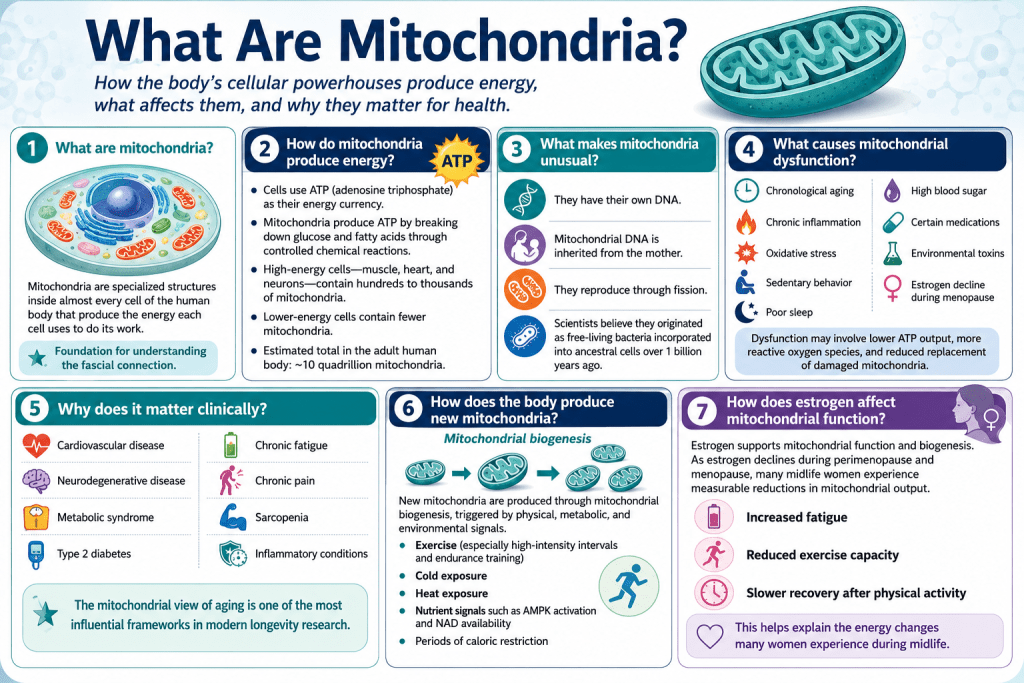
Mitochondria are the specialized structures inside almost every cell of the human body that produce the energy each cell uses to do its work. Understanding what mitochondria do, and why their function matters at the whole-body level, is the foundation for understanding the fascial connection that follows.
How Do Mitochondria Produce Energy?
Every cell needs energy to function. Muscle cells need energy to contract, neurons need energy to fire, and fascial cells need energy to synthesize collagen and hyaluronic acid.
The specific energy currency cells use is a molecule called ATP, or adenosine triphosphate. Mitochondria are the primary organelles that produce ATP by breaking down glucose and fatty acids through a controlled series of chemical reactions.
The number of mitochondria in each cell varies dramatically by cell type:
- High-energy cells, including muscle cells, heart cells, and neurons, contain hundreds to thousands of mitochondria.
- Cells with lower energy demands contain fewer mitochondria.
- The total number of mitochondria in an adult human body is estimated at approximately ten quadrillion.
What Makes Mitochondria Biologically Unusual?
Mitochondria have their own DNA, which is inherited from the mother. They also reproduce through a process called fission.
Scientists believe mitochondria originated as free-living bacteria that were incorporated into ancestral cells more than a billion years ago. This unusual biology has significant implications for how mitochondria respond to injury, aging, and environmental stress.
What Causes Mitochondrial Dysfunction?
Several factors can reduce mitochondrial number or impair mitochondrial function, including:
- Chronological aging
- Chronic inflammation
- Oxidative stress
- Sedentary behavior
- Poor sleep
- High blood sugar
- Certain medications
- Environmental toxins
- Estrogen decline during menopause
Mitochondrial dysfunction can appear as reduced ATP output per cell, increased leakage of reactive oxygen species, and a reduced ability to replace damaged mitochondria. These changes can create downstream effects across nearly every tissue in the body.
Why Does Mitochondrial Dysfunction Matter Clinically?
Mitochondrial dysfunction has been implicated in many major chronic diseases and conditions associated with aging, including:
- Cardiovascular disease
- Neurodegenerative disease
- Metabolic syndrome
- Type 2 diabetes
- Chronic fatigue
- Chronic pain
- Sarcopenia
- Inflammatory conditions
The mitochondrial view of aging has therefore become one of the most influential frameworks in modern longevity research.
How Does the Body Produce New Mitochondria?
New mitochondria are produced through a process called mitochondrial biogenesis. This process is triggered by specific physical, metabolic, and environmental signals, including:
- Exercise, particularly high-intensity intervals and endurance training
- Cold exposure
- Heat exposure
- Nutrient signals such as AMPK activation and NAD availability
- Periods of caloric restriction
Understanding what drives mitochondrial biogenesis is central to the practical intervention framework discussed later in this article.
How Does Estrogen Affect Mitochondrial Function?
Estrogen supports mitochondrial function and biogenesis through multiple mechanisms. As estrogen declines during perimenopause and menopause, many midlife women experience measurable reductions in mitochondrial output.
These changes can appear as:
- Increased fatigue
- Reduced exercise capacity
- Slower recovery after physical activity
This relationship between estrogen and mitochondrial function is one of the specific mechanisms behind the energy changes many women experience during midlife.
What Is Fascia?
Fascia is the connective tissue network that surrounds every muscle, wraps every organ, and forms continuous sheets that link every body region to every other body region. A brief refresh of what fascia is provides the foundation for the mitochondrial connection that follows.
- The physical structure: Fascia is a web of collagen and elastin fibers embedded in a fluid ground substance. Healthy fascia is pliable, well-hydrated, and glides smoothly against itself and against adjacent tissues. Restricted fascia becomes stiffer, less hydrated, and stuck to itself and to nearby structures.
- The whole-body network: Fascia is not just a passive wrapping. It transmits force through the body, contributes to posture, participates in movement, and communicates mechanical information from one region to another. When you feel tension in a shoulder that is driven by restriction in the opposite hip, fascia is often the transmission line.
- The specific cells within fascia: Two cell types matter most for this article. Fibroblasts are the primary cells that produce collagen and other structural components of fascia. Fasciacytes are a specialized cell type identified more recently, located primarily at the interfaces between fascial layers, that produce hyaluronic acid and contribute significantly to the glide function of healthy fascia.
- The living function: Fascia is not inert. It is metabolically active, densely innervated by sensory nerves, integrated with the lymphatic system, involved in immune signaling, and continuously remodeling in response to load, movement, injury, and inflammation.
- What restriction looks like: Restricted or fibrotic fascia is common in midlife women. It shows up as chronic tightness that does not resolve with stretching, reduced range of motion, felt-sense of being physically stuck, altered posture, restricted breath, and reduced tolerance for movement.
- The specific midlife pattern: Perimenopause and menopause accelerate fascial restriction through multiple mechanisms including estrogen decline (which affects connective tissue composition), reduced hydration (which affects the ground substance), reduced movement (which affects tissue remodeling), and increased inflammation (which drives fibrotic changes).
Free 28-Day Fascia Reset Email Course
Get our Free 28-day email course series to help with 1 or 2 exercises per day to release your fascia. One short lesson per day. Two minutes to read each.
How Do Mitochondria and Fascia Influence Each Other?
The connection between mitochondrial function and fascial health is bidirectional, meaning each system influences the other in ways that produce a self-reinforcing loop when one starts to fail.
How Do Mitochondria Affect Fascia?
The cells of fascia, particularly fibroblasts and fasciacytes, depend on mitochondrial ATP to do their work. Several essential fascial processes require energy:
- Synthesizing collagen
- Producing hyaluronic acid
- Maintaining fascia in a pliable, hydrated, and functional state
When mitochondrial output declines in fascial cells, these processes slow down. Over months and years, the result is fascia that becomes less mobile, less hydrated, and more prone to fibrotic changes.
How Does Fascia Affect Mitochondria?
The mechanical, thermal, and circulatory environment of the tissues significantly affects mitochondrial function. Healthy fascia supports:
- Adequate blood flow and lymphatic circulation
- The delivery of oxygen and nutrients to mitochondria
- The removal of metabolic waste
- Mechanotransduction signaling through healthy movement and appropriate fascial loading
Restricted fascia impairs blood flow and lymphatic circulation, which can reduce mitochondrial function. Healthy movement and appropriately loaded fascia also support mitochondrial biogenesis. In contrast, sedentary bodies with restricted fascia signal for fewer new mitochondria over time.
How Does the Reinforcing Loop Develop?
These two directions form a self-reinforcing loop:
- Mitochondrial decline reduces fascial cell function.
- Reduced fascial cell function decreases fascial mobility.
- Lower fascial mobility reduces circulation and mechanotransduction.
- Reduced circulation and mechanotransduction further impair mitochondrial function.
This loop is one of the specific mechanisms behind the pattern of accelerating stiffness, fatigue, and physical decline that many midlife women recognize.
Where Can the Loop Be Interrupted?
The loop is not one-way. Interventions that improve mitochondrial function often improve fascial mobility over time. Interventions that improve fascial mobility can also improve local mitochondrial function.
This is the practical reason the two systems should be addressed together rather than separately. It is also where the six-practice framework in Section 9 gets its power.
What Does the Research Show?
The specific bidirectional connection is still an active area of research. Some elements are well-established:
- Fascial cells require mitochondrial ATP.
- Movement stimulates mitochondrial biogenesis.
- Fibrotic tissue shows altered mitochondrial function.
Other elements are still being mapped in detail. The overall framework is supported by the current literature, although specific quantitative predictions have not yet been fully worked out.
“The moment this connection clicked for me in coaching was watching a client who had been working diligently on strength training and nutrition for six months without seeing the energy return she was hoping for. Her body composition was improving. Her sleep was better. But she still felt exhausted and stiff in a way that did not match her behavioral changes. When we added daily body-based work that targeted her fascia (a combination of foam roller, targeted release, and slow flowing movement), her energy started shifting within four weeks. It was not more calories, more supplements, or more sleep. It was addressing the fascial restriction that was throttling the mitochondrial supply chain in the tissues her strength work depended on. That experience is what convinced me that the two systems have to be worked together. Working on one without the other leaves progress on the table.”
Terry Tateossian, Founder of The House of Rose
How Does Menopause Accelerate Dysfunction in Both Systems?
Perimenopause and menopause accelerate dysfunction in both the mitochondrial and fascial systems, and the acceleration happens through overlapping mechanisms.
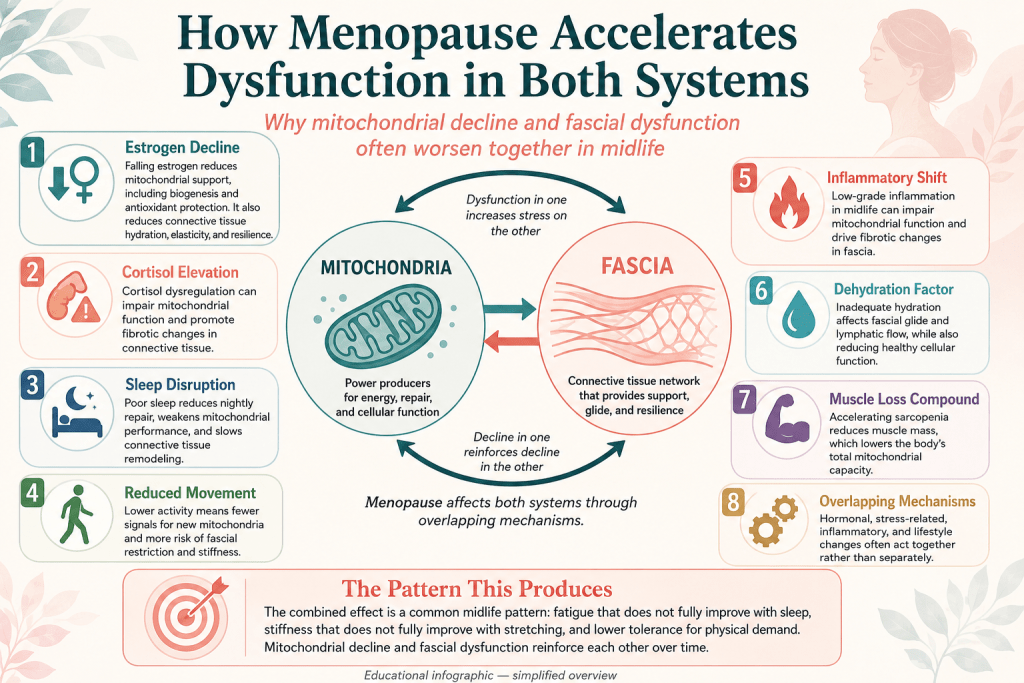
- The estrogen decline: Estrogen has direct effects on both mitochondrial function and fascial tissue. Estrogen supports mitochondrial biogenesis, mitochondrial membrane function, and the antioxidant defenses that protect mitochondria from oxidative damage. Estrogen also supports connective tissue composition, hydration, and elasticity. As estrogen falls through the menopause transition, both systems lose one of their major supportive signals.
- The cortisol elevation: Perimenopause and menopause are frequently accompanied by cortisol dysregulation. Elevated cortisol directly impairs mitochondrial function through several mechanisms and also drives fibrotic changes in connective tissue. See our cortisol and menopause weight gain article for the broader cortisol picture.
- The sleep disruption: The sleep disruption of perimenopause and menopause reduces the nightly repair that both systems depend on. Poor sleep reduces mitochondrial function and impairs the connective tissue remodeling that maintains fascial health.
- The reduced movement: Many midlife women reduce activity levels through the perimenopause and menopause window, sometimes due to fatigue, sometimes due to joint pain, sometimes due to life circumstances. Reduced movement signals for both fewer new mitochondria and more fascial restriction.
- The inflammatory shift: Midlife often produces a low-grade inflammatory state driven by visceral fat accumulation, sleep debt, dietary factors, and hormonal changes. Chronic inflammation impairs mitochondrial function and drives fibrotic changes in fascia.
- The dehydration factor: Many midlife women are chronically underhydrated, which affects both systems. Fascial hydration depends directly on adequate fluid intake and lymphatic function. Mitochondrial function also depends on adequate cellular hydration. See our hydration mistakes article for the broader hydration picture.
- The muscle loss compound: The sarcopenia that begins accelerating in midlife reduces the tissue population that carries most of the body’s mitochondria. Less muscle means fewer total mitochondria. The four muscle groups for aging well article covers the strength training foundation that addresses this piece.
- The specific pattern this produces: The combination of these factors produces the specific midlife pattern of fatigue that does not resolve with sleep, stiffness that does not resolve with stretching, and reduced tolerance for physical demand. Both systems are declining together, each reinforcing the other, and the specific complaints reflect the combined dysfunction rather than either system alone.
Free 28-Day Fascia Reset Email Course
Get our Free 28-day email course series to help with 1 or 2 exercises per day to release your fascia. One short lesson per day. Two minutes to read each.
How Do Fibroblasts and Fasciacytes Depend on Mitochondrial Energy?
Zooming in to the cellular level makes the mitochondrial-fascial connection concrete. Two specific cell types matter most for understanding this connection.
- Fibroblasts: Fibroblasts are the primary connective tissue cells throughout the body. They produce collagen, elastin, and other structural proteins that make up the extracellular matrix. Fibroblasts are metabolically active. Producing new collagen requires substantial ATP input. Maintaining the resident population of fibroblasts and their activity depends on adequate mitochondrial function.
- When fibroblast mitochondria fail: When mitochondrial output in fibroblasts declines, several changes occur. Collagen production shifts toward less organized forms. The balance between collagen production and collagen breakdown tilts toward accumulation. The resulting tissue becomes more fibrotic, less pliable, and less functional. This is one of the specific cellular mechanisms behind the fibrotic fascia pattern that many midlife women develop.
- Fasciacytes: Fasciacytes are a specialized cell type identified more recently in fascial research. They are located primarily at the interfaces between fascial layers and are the primary producers of hyaluronic acid in these interfaces. Hyaluronic acid is the specific molecule that allows fascial layers to glide against each other rather than sticking. Healthy fasciacyte function is essential for healthy fascial glide.
- The fasciacyte-mitochondrial connection: Producing hyaluronic acid requires energy. Fasciacytes depend on adequate mitochondrial ATP to maintain hyaluronic acid production. When mitochondrial function declines in fasciacytes, hyaluronic acid production drops, fascial glide reduces, and adjacent tissues start sticking. Many of the felt-sense stiffness patterns that midlife women describe map directly onto this specific cellular change.
- The oxidative stress problem: Fibroblasts and fasciacytes are particularly vulnerable to oxidative stress. Damaged mitochondria leak reactive oxygen species that damage these cells further. In midlife women whose antioxidant defenses have been challenged by hormonal changes and life-load stress, this vulnerability is amplified.
- The exercise stimulus: Fibroblast and fasciacyte function respond positively to appropriate mechanical loading. Movement stimulates these cells to produce healthier tissue over time. This is one of the specific mechanisms behind why regular gentle movement supports fascial health, and why sedentary behavior compounds fascial restriction.
- The nutritional support: These cells depend on adequate protein intake for the amino acids needed to synthesize new collagen. They also depend on adequate vitamin C for collagen synthesis, adequate zinc and copper for connective tissue enzyme function, and adequate polyphenols and antioxidants for protection from oxidative stress. The nutritional framework in the Macro Calculator and our Macro Friendly Recipe Book covers these foundations.
How Does the Fibrosis Loop Develop Between Mitochondrial Dysfunction and Fascial Restriction?
The specific pathological loop that develops when mitochondrial dysfunction meets fascial restriction is worth understanding in detail because it explains many of the specific patterns midlife women experience.
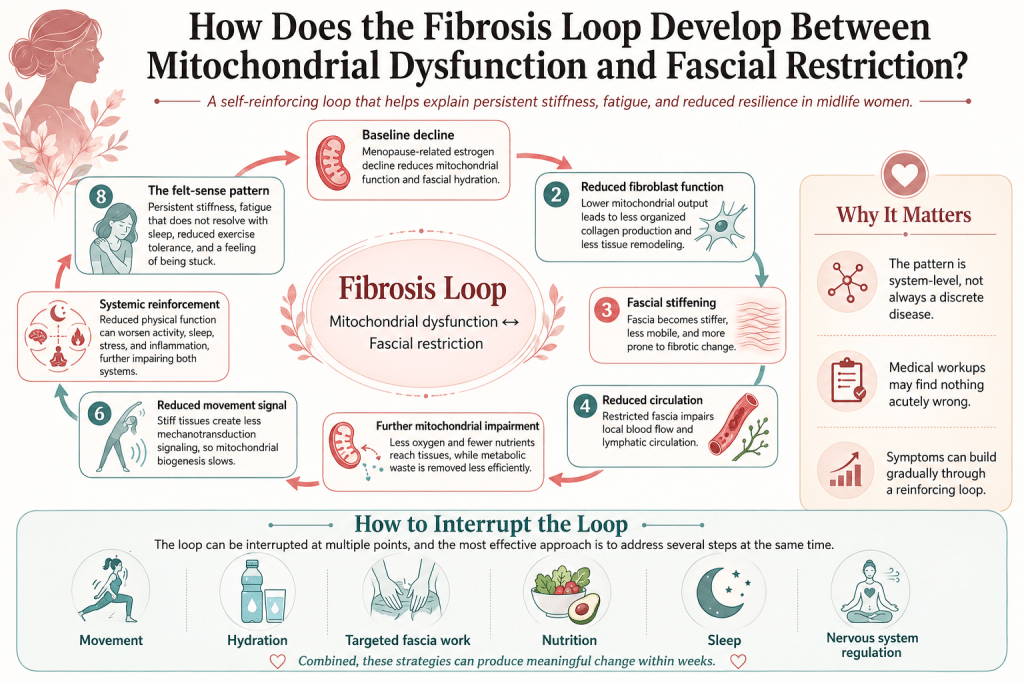
- Step 1: Baseline decline. Menopause-related estrogen decline reduces mitochondrial function and fascial hydration simultaneously. This is the initial condition.
- Step 2: Reduced fibroblast function. Reduced mitochondrial output in fibroblasts leads to less organized collagen production and reduced tissue remodeling.
- Step 3: Fascial stiffening. The tissue becomes progressively stiffer, less mobile, and more prone to fibrotic changes.
- Step 4: Reduced circulation. Restricted fascia impairs local blood flow and lymphatic circulation.
- Step 5: Further mitochondrial impairment. Reduced circulation delivers less oxygen and fewer nutrients to the mitochondria in the affected tissues, and removes metabolic waste less efficiently. Local mitochondrial function declines further.
- Step 6: Reduced movement signal. Restricted, stiff tissues produce less mechanotransduction signaling for mitochondrial biogenesis. New mitochondria are made more slowly.
- Step 7: Systemic reinforcement. The reduced physical function often leads to reduced overall activity, reduced sleep quality, increased stress, and increased inflammation, all of which further impair both systems.
- Step 8: The felt-sense pattern. By this point, the woman experiences persistent stiffness, chronic fatigue that does not resolve with sleep, reduced exercise tolerance, and a felt-sense of being stuck. Medical workup often finds nothing acutely wrong because the pattern is a combined system-level dysfunction rather than a discrete disease.
The loop can be interrupted at any of the eight steps. The interventions that work most reliably in practice are those that address multiple steps simultaneously, which is the specific value of the six-practice framework in Section 9. Movement, hydration, targeted fascia work, nutrition, sleep, and nervous system regulation each interrupt the loop at multiple points, and combined they produce meaningful change within weeks.
Free 28-Day Fascia Reset Email Course
Get our Free 28-day email course series to help with 1 or 2 exercises per day to release your fascia. One short lesson per day. Two minutes to read each.
How Do Mitochondria Support Hyaluronic Acid Production and Fascial Glide?
Hyaluronic acid deserves specific attention because it is one of the most direct points where the mitochondrial-fascial connection shows up in a form that midlife women can influence.
What Does Hyaluronic Acid Do?
Hyaluronic acid is a large sugar molecule that provides the ground substance for fascia, cartilage, skin, joint fluid, and other connective tissues. It has extraordinary water-holding capacity, which gives healthy fascia and skin their hydrated, gliding, and elastic quality.
Hyaluronic acid is produced in several areas throughout the body:
- Fibroblasts and fasciacytes produce it throughout the fascial system.
- Chondrocytes produce it in cartilage.
- Synovial cells produce it in joint fluid.
- Fasciacytes located at the interfaces between fascial layers are major producers within the fascial system.
Why Does Mitochondrial Function Matter?
Producing hyaluronic acid requires substantial ATP input from the cell’s mitochondria. This energy requirement is one reason mitochondrial dysfunction can directly impair fascial glide.
When fascial cells do not receive enough cellular energy, their ability to produce the hyaluronic acid needed to keep fascial layers hydrated and moving smoothly may decline.
How Does Estrogen Affect Hyaluronic Acid Production?
Estrogen supports hyaluronic acid production. As estrogen declines through menopause, hyaluronic acid production often declines as well.
This reduction may contribute to several changes commonly experienced by midlife women:
- Skin dryness
- Joint stiffness
- Reduced tissue hydration
- Fascial restriction
Can Oral Hyaluronic Acid Supplements Help?
Supplemental oral hyaluronic acid has become popular in recent years, but the evidence base remains mixed. Some studies support modest benefits for skin hydration and joint comfort.
The mechanism does not involve the swallowed molecule being directly incorporated into the tissues, as this is not how absorption works. Instead, oral hyaluronic acid may produce downstream signaling effects that support the body’s own hyaluronic acid production. If you are considering a supplement, discuss it with your healthcare provider.
What Is the Most Reliable Whole-Body Approach?
The more reliable way to support hyaluronic acid production is to support the cellular systems that make it. This means supporting fibroblast and fasciacyte mitochondrial function through the same six practices that support fascia and mitochondria generally. There is no shortcut around the underlying cell biology.
How Does the Nervous System Affect Fascia and Mitochondrial Signaling?
The nervous system deserves specific attention because it modulates both mitochondrial function and fascial health in ways that are directly addressable through daily practice.
- The autonomic nervous system: The autonomic nervous system has two branches. The sympathetic branch drives activation, alertness, and stress response. The parasympathetic branch drives rest, recovery, and repair. In perimenopause and menopause, many women experience chronic sympathetic dominance, which impairs both mitochondrial recovery and fascial repair.
- Cortisol and both systems: Chronic cortisol elevation impairs mitochondrial function and drives fibrotic changes in connective tissue. Both systems suffer from the same cortisol dysregulation that midlife hormonal shifts often produce.
- Vagal tone and both systems: Higher vagal tone supports parasympathetic recovery, which supports both mitochondrial repair and fascial remodeling. Practices that raise vagal tone (extended exhalation breathing, humming, gargling, cold face immersion, and the other practices in our vagus nerve reset exercises article) support both systems.
- Mechanotransduction: Every time the body moves, mechanical signals travel through fascial tissues to fibroblasts, fasciacytes, and their mitochondria. These signals trigger biogenesis, remodeling, and repair. Sedentary behavior removes these signals. Regular movement provides them. This is one of the reasons daily movement matters so much for both systems.
- The pain-restriction feedback loop: Restricted fascia often becomes painful, which drives further reduction in movement, which further impairs mitochondrial signaling. Breaking this loop with gentle appropriate movement is one of the earliest and most powerful interventions.
- Sleep as neural repair time: Sleep is when the nervous system consolidates learning, when the brain clears metabolic waste, when the parasympathetic branch has its extended dominance window, and when both mitochondrial repair and fascial remodeling can happen at their peak. Sleep is not optional for either system.
Free 28-Day Fascia Reset Email Course
Get our Free 28-day email course series to help with 1 or 2 exercises per day to release your fascia. One short lesson per day. Two minutes to read each.
Which Six Practices Support Both Mitochondria and Fascia?
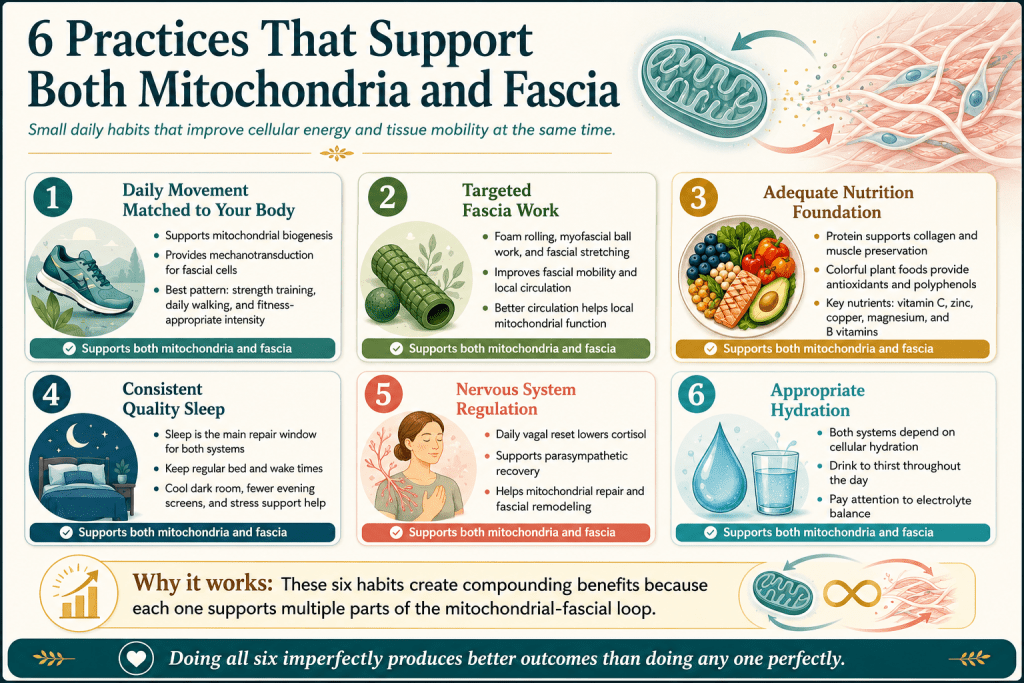
The specific value of understanding the mitochondrial-fascial connection is that a small number of practices address both systems simultaneously. Six practices consistently support both, and installing them in daily rhythm produces meaningful change within weeks rather than months.
Practice 1: Daily Movement Matched to Your Body
Regular movement supports mitochondrial biogenesis and provides the mechanotransduction signaling that fascial cells depend on. The most impactful pattern combines resistance training (two to three sessions per week covering the four major muscle groups), daily walking or gentle activity, and periodic higher-intensity efforts appropriate to your fitness. See our articles on micro walks and tai chi walking for seniors.
Practice 2: Targeted Fascia Work
Direct fascia interventions including foam rolling, myofascial ball work, and specific fascial stretches produce local improvements in fascial mobility that then support local mitochondrial function through improved circulation. The fascia release exercises for weight loss article, the tight psoas article, and the five yin yoga poses article cover specific home practices.
Practice 3: Adequate Nutrition Foundation
Both systems require adequate protein for collagen synthesis and muscle preservation, adequate colorful plant foods for antioxidants and polyphenols, appropriate calorie balance, and specific micronutrients including vitamin C, zinc, copper, magnesium, and B vitamins.
Practice 4: Consistent Quality Sleep
Sleep is where both systems do most of their repair. Consistent bed and wake times, cool dark bedroom, screen limits in the evening, and appropriate stress management all support the sleep quality that both systems depend on. See our menopause sleep remedies article and midlife sleep stack article.
Practice 5: Nervous System Regulation
Daily vagal reset practice reduces cortisol, activates parasympathetic recovery, and supports the internal environment that both mitochondrial repair and fascial remodeling require.
Practice 6: Appropriate Hydration
Both fascia and mitochondrial function depend on adequate cellular hydration. Drinking to thirst throughout the day with attention to appropriate electrolyte balance supports both systems.
These six practices produce individually meaningful benefits, but combined they produce compounding effects because each one addresses multiple aspects of the mitochondrial-fascial loop. The specific value of the framework is that no single practice needs to be perfect for the combination to move the needle. Doing all six imperfectly produces better outcomes than doing any one perfectly.
“The women who see the biggest change from this framework are the ones who stop trying to isolate a single intervention and instead install the whole six-practice pattern. Every single one of those practices supports both systems. Doing three of them well and skipping the other three produces meaningful results. Doing all six imperfectly for a year produces substantial results across every dimension of energy and mobility. The compounding is not linear. When mitochondrial function improves, movement feels better, which improves fascial mobility, which improves circulation, which further improves mitochondrial function, and the whole loop starts running in the healthy direction rather than the depleting direction. That reversal of the loop is what the practical framework is for.”
Terry Tateossian, Founder of The House of Rose
What Does This Connection Mean for Common Midlife Complaints?
The mitochondrial-fascial framework provides a specific way of understanding several of the most common midlife women’s complaints that often confuse both patients and providers.
How Does the Connection Affect Energy and Exercise?
- Fatigue that does not resolve with sleep: Reduced mitochondrial output produces fatigue that sleeping more does not fully address because the underlying constraint is cellular energy production. Combined with reduced circulation from fascial restriction, the fatigue pattern becomes entrenched. Addressing both systems together often resolves fatigue patterns that sleep interventions alone do not.
- Sluggish recovery from exercise: Recovery depends on mitochondrial repair of exercise-induced damage and fascial remodeling of the loaded tissues. When both systems are impaired, recovery slows dramatically. Older women often blame this on age, but it is more accurately attributed to the combined mitochondrial-fascial dysfunction that age has amplified.
- Reduced exercise tolerance: Reduced mitochondrial output limits how much work the tissues can do before fatigue sets in. Combined with fascial restriction that makes movement itself harder, the felt sense is of being unable to do what you used to do at the same effort level. Both systems must recover to restore tolerance.
How Does the Connection Contribute to Stiffness, Pain, and Limited Movement?
- Stiffness that does not resolve with stretching: Fibrotic fascial changes do not respond well to conventional stretching because the underlying tissue quality is the constraint. Combined with reduced mitochondrial function in fascial cells, which slows the tissue remodeling that stretching would normally stimulate, the stiffness becomes chronic. Addressing both systems together often produces improvements that stretching alone did not.
- Unexplained aches and pains: Fascial restriction can refer pain to distant sites through the interconnected network. Combined with the reduced cellular resilience associated with impaired mitochondrial function, ordinary loads produce more pain than they should. The workup often finds nothing structural because the problem is a system-level dysfunction rather than a discrete injury.
- Reduced range of motion: Chronic fascial restriction reduces the range of motion available in every joint. Combined with sarcopenia-related loss of strength, functional range gradually shrinks over the years. Both systems must be addressed to reverse the pattern.
How Does the Connection Affect Healing and Skin Health?
- Slower wound and injury healing: Fibroblast and fasciacyte function are directly involved in healing. Reduced mitochondrial output in these cells slows healing at the cellular level. Combined with the general age-related decline in healing capacity, the effect can be substantial.
- Skin changes: The skin is a fascial tissue. Reduced hyaluronic acid production and collagen turnover contribute to the dryness, thinning, and reduced elasticity associated with midlife skin. Supporting both mitochondrial and fascial health addresses the underlying cell biology.
What Is the Broader Reframe?
When a midlife woman recognizes several of these patterns in herself, the mitochondrial-fascial framework often provides the specific explanation that has been missing.
Individual workups may have found nothing wrong. General wellness advice may have produced only modest results. The specific combined framework is often the missing piece.
Free 28-Day Fascia Reset Email Course
Get our Free 28-day email course series to help with 1 or 2 exercises per day to release your fascia. One short lesson per day. Two minutes to read each.
Where Is the Research Still Developing?
Being honest about where the research is still developing matters for maintaining appropriate calibration on this framework.
Which Parts of the Mitochondrial-Fascial Connection Are Still Being Mapped?
The specific bidirectional connection is real but still being mapped.
- Mitochondria to fascia: The direction that mitochondrial function supports fascial cell function is well-established.
- Fascia to mitochondria: The direction that fascial mobility supports mitochondrial function through mechanotransduction and circulation is supported but less definitively established at the quantitative level.
Both directions have research support, and the overall framework is defensible, but specific numerical predictions are not yet available.
The estrogen-mitochondria-fascia axis is also under active investigation. How exactly menopausal estrogen decline drives combined dysfunction in these two systems remains a topic of ongoing research. The general pattern is well-supported, but the specific mechanisms and quantitative contributions of each pathway are still being worked out.
What Do We Still Need to Learn About Exercise and Nutrition?
The exercise dose-response is not fully mapped. The general observation that movement supports both systems is strong, but controlled research has not yet identified the optimal:
- Amount of movement
- Type of exercise
- Intensity level
- Frequency for midlife women
The recommendations in this article are based on general principles combined with clinical experience, not on specific dose-response trials focused on both mitochondrial and fascial health.
The nutritional support pattern is generally established, but specific interventions are less clearly mapped. A Mediterranean-style diet with adequate protein and colorful plant foods supports both systems. However, individual nutrients and their optimal doses within this combined framework are less well-established.
Following the general nutrition foundation is currently more supported than relying on any single-nutrient intervention.
What Does the Research Say About Supplements?
The supplement question remains open. Various supplements are marketed for mitochondrial support, fascial support, or both, including:
- CoQ10
- NAD precursors
- Hyaluronic acid
- Collagen
- Other targeted formulas
The evidence base for any specific supplement within the combined midlife women’s framework is limited. Some products may be helpful, while others are supported largely by marketing rather than strong evidence.
Any supplement decision should be made in consultation with a healthcare provider.
Is the Framework Still Worth Acting On?
The overall framework is worth acting on despite the remaining research gaps. The general principles are supported, the specific practices are safe, and the potential benefits are meaningful.
Waiting for perfect research before acting is not the right response to the current state of evidence. Acting on the general framework while remaining open to refinement as the research develops is the more appropriate approach.
Which Common Mistakes Undermine the Mitochondria-Fascia Framework?
Six common mistakes reduce the effectiveness of the mitochondrial-fascial framework for midlife women.
- Treating the two systems separately: Working on mitochondrial support alone (through supplements or exercise) while ignoring fascia often produces limited results. Working on fascia alone (through massage or stretching) while ignoring mitochondrial support often produces limited results. The specific value of the framework is treating them together.
- Expecting rapid results: Meaningful changes in both systems require weeks to months of consistent daily practice. Judging the framework on the basis of two weeks of practice produces false negatives.
- Skipping the boring practices: Sleep and hydration look unimpressive on paper compared to trendy supplements or fancy movement modalities. They are the foundational practices with the largest cumulative effects. Do not skip them.
- Focusing only on the practices that feel good: The full six-practice framework addresses different aspects of the loop. Skipping practices that feel less enjoyable (often the resistance training or the nutritional discipline) reduces the overall effect.
- Overcomplicating the movement piece: Complex specialized movement programs are not necessary. Regular resistance training, daily walking, and periodic fascia work covers the essentials. Consistency matters more than complexity.
- Not tracking anything: Subjective improvements in energy and mobility can be difficult to notice week-to-week. Tracking a simple metric or two (sleep quality, energy on a 1-10 scale, resting heart rate on a wearable) over months makes the progress visible when the daily changes feel invisible.
Free 28-Day Fascia Reset Email Course
Get our Free 28-day email course series to help with 1 or 2 exercises per day to release your fascia. One short lesson per day. Two minutes to read each.
When Should You See a Healthcare Professional?
Most midlife women can safely apply the framework in this article on their own. Some situations require professional evaluation first or alongside.
- Persistent unexplained fatigue: Fatigue that does not respond to any intervention over a period of months warrants medical workup for thyroid dysfunction, anemia, sleep disorders, chronic infections, autoimmune conditions, or other underlying causes.
- Progressive muscle weakness: Weakness that is progressing or interfering with daily function warrants evaluation for neurological or muscular conditions.
- Unexplained joint or muscle pain: New severe or progressing pain warrants evaluation before assuming it is fascial or mitochondrial.
- Cardiovascular symptoms: Chest pain, shortness of breath, palpitations, or reduced exercise tolerance that appears suddenly warrants medical evaluation.
- Post-viral or post-infectious fatigue: Long-COVID and other post-viral syndromes have specific evaluation and management considerations that require medical care.
- Chronic autoimmune or inflammatory conditions: These often affect both mitochondrial function and connective tissue and warrant specialist care alongside any lifestyle framework.
- Any decision about supplements: Discuss any supplement decision with your healthcare provider, particularly if you are on multiple medications or have complex medical conditions.
Free 28-Day Fascia Reset Email Course
Get our Free 28-day email course series to help with 1 or 2 exercises per day to release your fascia. One short lesson per day. Two minutes to read each.
Frequently Asked Questions
What is the connection between mitochondria and fascia?
The connection is bidirectional. Fascial cells (fibroblasts and fasciacytes) depend on mitochondrial ATP to produce collagen, hyaluronic acid, and other components that keep fascia healthy. Fascial mobility supports mitochondrial function through improved circulation and mechanotransduction signaling. When one system declines, the other tends to decline as well, producing a self-reinforcing loop that many midlife women recognize as combined stiffness and fatigue.
Why do both mitochondria and fascia decline in menopause?
Estrogen supports both mitochondrial biogenesis and fascial hydration. As estrogen falls through perimenopause and menopause, both systems lose one of their major supportive signals. The decline is compounded by sleep disruption, cortisol dysregulation, reduced movement, and increased inflammation that also often accompany the menopause transition.
Can I improve mitochondrial function through exercise?
Yes, and exercise is one of the strongest known triggers for mitochondrial biogenesis (the production of new mitochondria). Both resistance training and endurance training produce this effect. For midlife women, a combination of two to three resistance training sessions per week plus daily walking and periodic higher-intensity efforts is a strong general framework.
Free 28-Day Fascia Reset Email Course
Get our Free 28-day email course series to help with 1 or 2 exercises per day to release your fascia. One short lesson per day. Two minutes to read each.
What is a fasciacyte?
A fasciacyte is a specialized cell type located primarily at the interfaces between fascial layers. Fasciacytes produce hyaluronic acid, the specific molecule that allows fascial layers to glide against each other rather than sticking. Healthy fasciacyte function is essential for healthy fascial glide, and it depends on adequate mitochondrial ATP.
Do I need supplements for mitochondrial and fascial health?
Supplements can play a supporting role but are not necessary for most midlife women who install the six-practice framework consistently. The foundational supplement stack for midlife women (vitamin D, magnesium, omega-3s, adequate protein) covers most of what both systems need. Specific mitochondrial supplements and specific fascial supplements have variable evidence bases. Discuss any supplement decision with your healthcare provider.
How long before I feel results from the framework?
Subjective improvements in energy and mobility often appear within two to three weeks of consistent daily practice. Deeper changes in mitochondrial function and fascial mobility develop over three to six months. Full effects compound over one to two years of consistent practice.
Can hyaluronic acid supplements improve fascia?
The evidence base is mixed. Some studies support modest benefits of oral hyaluronic acid for skin hydration and joint comfort. The mechanism is not direct incorporation of the swallowed molecule but downstream signaling effects. The more reliable approach is to support the cellular systems that produce hyaluronic acid endogenously through the six-practice framework.
Does yoga help both mitochondria and fascia?
Yes, yoga combines movement, breath, mindfulness, and fascial stretching in ways that support both systems. Gentle to moderate yoga practice is well-tolerated by most midlife women. See our five yin yoga poses article for a specific home practice.
Is mitochondrial dysfunction the same as chronic fatigue?
They overlap but are not identical. Mitochondrial dysfunction can contribute to chronic fatigue but is not the only cause. Chronic fatigue syndrome is a specific clinical diagnosis with defined criteria. If you have persistent unexplained severe fatigue, work with a healthcare provider for evaluation.
Can this framework help with menopause weight gain?
Improved mitochondrial function supports better metabolism, and improved fascial mobility supports easier movement, both of which support the broader midlife body composition framework. Weight management is more directly driven by nutrition, protein intake, strength training, and sleep. The mitochondrial-fascial framework supports these interventions but does not replace them.
Does cold exposure help mitochondria?
Cold exposure is one of the documented triggers for mitochondrial biogenesis. Cold water face immersion, cold showers, and cold water immersion are all forms. Discuss with your healthcare provider before starting cold exposure practice if you have cardiovascular concerns.
Is fibrosis the same as fascial restriction?
Fibrosis and fascial restriction are related but not identical. Fibrosis refers to excessive accumulation of collagen and connective tissue in an organized but pathological pattern. Fascial restriction is a broader term that includes fibrosis but also includes reduced hydration, reduced glide, and other functional limitations that are not always driven by frank fibrotic changes.
Can massage help both systems?
Yes, and regular massage supports fascial mobility directly while also supporting the parasympathetic recovery that benefits mitochondrial function. Self-massage with a foam roller or therapy ball provides much of the benefit at lower cost than professional massage.
Free 28-Day Fascia Reset Email Course
Get our Free 28-day email course series to help with 1 or 2 exercises per day to release your fascia. One short lesson per day. Two minutes to read each.
Does sleep really matter that much for both systems?
Yes, and sleep is when both systems do most of their repair. Mitochondrial repair, connective tissue remodeling, hormonal regulation, and nervous system recovery all happen preferentially during sleep. Skimping on sleep undermines every other intervention in the framework. Consistent quality sleep is not optional for either system.
How does this framework fit with hormone therapy?
Hormone therapy for menopause is a separate decision made with a menopause specialist. Some women benefit from hormone therapy for the specific menopause symptoms it addresses. The mitochondrial-fascial framework in this article is compatible with hormone therapy and does not replace it. Both approaches address the same general life-stage challenges through different mechanisms and are complementary rather than competing.
References
- Schleip, R., & Müller, D. G. (2013). Training principles for fascial connective tissues: scientific foundation and suggested practical applications. Journal of Bodywork and Movement Therapies, 17(1), 103–115.
- Stecco, C., Fede, C., Macchi, V., et al. (2018). The fasciacytes: a new cell devoted to fascial gliding regulation. Clinical Anatomy, 31(5), 667–676.
- Stecco, C., Stern, R., Porzionato, A., et al. (2011). Hyaluronan within fascia in the etiology of myofascial pain. Surgical and Radiologic Anatomy, 33(10), 891–896.
- Bordoni, B., & Zanier, E. (2013). Anatomic connections of the diaphragm: influence of respiration on the body system. Journal of Multidisciplinary Healthcare, 6, 281–291.
- Zorov, D. B., Juhaszova, M., & Sollott, S. J. (2014). Mitochondrial reactive oxygen species (ROS) and ROS-induced ROS release. Physiological Reviews, 94(3), 909–950.
- López-Otín, C., Blasco, M. A., Partridge, L., et al. (2013). The hallmarks of aging. Cell, 153(6), 1194–1217.
- López-Otín, C., Blasco, M. A., Partridge, L., et al. (2023). Hallmarks of aging: an expanding universe. Cell, 186(2), 243–278.
- Klinge, C. M. (2020). Estrogenic control of mitochondrial function. Redox Biology, 31, 101435.
- Mattingly, K. A., Ivanova, M. M., Riggs, K. A., et al. (2008). Estradiol stimulates transcription of nuclear respiratory factor-1 and increases mitochondrial biogenesis. Molecular Endocrinology, 22(3), 609–622.
- Torres, M. J., Kew, K. A., Ryan, T. E., et al. (2018). 17β-estradiol directly lowers mitochondrial membrane microviscosity and improves bioenergetic function in skeletal muscle. Cell Metabolism, 27(1), 167–179.
- Zimmerman, B., Kundu, P., Rooney, W. D., & Raber, J. (2019). The effect of ovariectomy and estradiol replacement on mitochondrial function in the aging rat brain. Neuroscience, 421, 100–113.
- Wallace, D. C. (2005). A mitochondrial paradigm of metabolic and degenerative diseases, aging, and cancer: a dawn for evolutionary medicine. Annual Review of Genetics, 39, 359–407.
- Kelley, D. E., He, J., Menshikova, E. V., & Ritov, V. B. (2002). Dysfunction of mitochondria in human skeletal muscle in type 2 diabetes. Diabetes, 51(10), 2944–2950.
- Sun, N., Youle, R. J., & Finkel, T. (2016). The mitochondrial basis of aging. Molecular Cell, 61(5), 654–666.
- Findley, T. W., Chaudhry, H., & Dhar, S. (2015). Transmission of muscle force to fascia during exercise. Journal of Bodywork and Movement Therapies, 19(1), 119–123.
- Ajimsha, M. S., Al-Mudahka, N. R., & Al-Madzhar, J. A. (2015). Effectiveness of myofascial release: systematic review of randomized controlled trials. Journal of Bodywork and Movement Therapies, 19(1), 102–112.
- Beardsley, C., & Škarabot, J. (2015). Effects of self-myofascial release: a systematic review. Journal of Bodywork and Movement Therapies, 19(4), 747–758.
- Klingler, W., Velders, M., Hoppe, K., et al. (2014). Clinical relevance of fascial tissue and dysfunctions. Current Pain and Headache Reports, 18(8), 439.
- Chaitow, L. (2020). Fascia as a sensory organ: implications for practice. Journal of Bodywork and Movement Therapies, 24(4), 3–4.
- Chaudhry, H., Schleip, R., Ji, Z., et al. (2008). Three-dimensional mathematical model for deformation of human fasciae in manual therapy. Journal of the American Osteopathic Association, 108(8), 379–390.
- Bordoni, B., Marelli, F., Morabito, B., & Sacconi, B. (2019). The connective tissue and its properties as a peripheral communication system. Cureus, 11(3), e4187.
- Bishop, D. J., Botella, J., Genders, A. J., et al. (2019). High-intensity exercise and mitochondrial biogenesis: current controversies and future research directions. Physiology, 34(1), 56–70.
- Menshikova, E. V., Ritov, V. B., Fairfull, L., et al. (2006). Effects of exercise on mitochondrial content and function in aging human skeletal muscle. Journals of Gerontology Series A, 61(6), 534–540.
- Distefano, G., Standley, R. A., Zhang, X., et al. (2018). Physical activity unveils the relationship between mitochondrial energetics, muscle quality, and physical function in older adults. Journal of Cachexia, Sarcopenia and Muscle, 9(2), 279–294.
- Meex, R. C., Hoy, A. J., Morris, A., et al. (2015). Fetuin B is a secreted hepatocyte factor linking steatosis to impaired glucose metabolism. Cell Metabolism, 22(6), 1078–1089.
Disclaimer: Always consult with a qualified healthcare professional before starting any new movement, nutrition, or supplement program, particularly if you have chronic medical conditions, take multiple medications, or have unexplained persistent symptoms that have not been evaluated. This article is educational and does not constitute medical advice.
Free 28-Day Fascia Reset Email Course
Get our Free 28-day email course series to help with 1 or 2 exercises per day to release your fascia. One short lesson per day. Two minutes to read each.

Terry Tateossian is a Menopause Lifestyle Medicine Coach, Certified Personal Trainer & Nutritionist and the Founder of THOR: The House of Rose, a wellness brand serving women over 40 through retreats, coaching, macro-nutrition and community. As 25-year founder and entrepreneur, Terry spent two and a half decades building and running successful start-up businesses, an experience that put her on the front line of founder burnout long before she could name it. After facing serious health challenges, early onset menopause, and emotional eating while running her agency and raising two children, Terry rebuilt her health in her 40s and lost more than 80 pounds through evidence-based nutrition, training, and mindset work. Today, she helps women get strong, improve confidence, support hormone health, and create a stronger second half of life. Terry has been featured in major media outlets and is available for podcasts, expert commentary, brand collaborations, and speaking engagements on midlife health, reinvention, emotional eating, menopause wellness, and strength training for longevity. Get her free macro calculator (her cookbook companion) to start your journey to back to health.